
Tuesday Reads: Obvious Misogyny (at least to us anyway)
Posted: November 18, 2014 Filed under: Hillary Clinton, misogyny, morning reads, Rape Culture, The Media SUCKS, Vagina, War on Women | Tags: agism, Bill Cassidy, European Space Agency, Jean-Paul Goude, Kim Kardashian, Mary Landrieu, Matt Taylor, PhD costume, Racism, Sexism 39 CommentsGood Morning!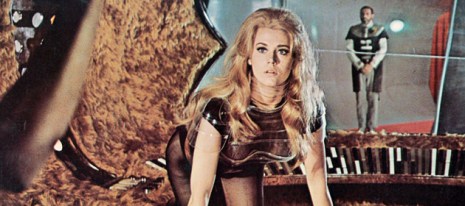
I avoid pop culture whenever possible. I admit to being an effete snob about the music, the fashion, the sheeplike behavior of the entire thing. Sometimes, pop culture just forces itself on you to the point you have to just sit down and ask yourself WTF were they thinking? So, with that and a series of face palms, I direct your attention to obvious misogyny with definite agist and racial overtones. Nothing breaks the internet quite like some one who just refuses to see what they’ve done.
So, first up is an ad that’s attacking Senator Mary Landrieu that just makes me want to scream bloody murder. I’m really tired of the entire ploy to make older women irrelevant. This definitely falls into this category and the boyz behind it are like “what, sexist and agist, who me?”
Democratic Sen. Mary Landrieu is denouncing an attack ad against her as being sexist because it shows her aging.
The ad, paid for by the Ending Spending Action Fund, suggests Washington has changed Landrieu, 58, over time and uses the age progression to illustrate that change.
Landrieu campaign spokesperson Fabien Levy called the ad “appalling.” He said it’s an example of Republican challenger Rep. Bill Cassidy and his allies distracting from the issues.
“It is appalling that Congressman Cassidy and his allies would illustrate the senator’s age progression with a leading phrase that Washington has ‘changed’ her,” Levy said. “The ad is as classless as it is sexist, and Congressman Cassidy and his allies should remove [it] from television immediately.”
It’s hard to know what to say to below the belt optics like this that play into the idea of how a woman of a certain age–past the change–is all used up. I see it. Do you? Of course, we’ve seen this and many other sexist tropes applied to Hillary Clinton and I’m getting prepared for a lot more.
Let me first be transparent here: I’m a Republican, and I’d like nothing more than to see Clinton go down in flames. And, as a recent front-page story in The New York Times noted, many in my party are already seeking to label the former first lady a “has-been” by virtue of her decades on the political stage.
Their case is as follows: Clinton has been in the spotlight in one form or another since the late 1970s when her husband, Bill, first became attorney general in their home state of Arkansas at the age of 30. Ironically, as Times reporter Jonathan Martin pointed out, it was Bill’s youthfulness that propelled him to the Arkansas governorship and later the presidency. Now, it could be the inverse that puts the brakes on the Hillary freight train.
There is undoubtedly a lot of spin in this new anti-Clinton narrative. But there are indeed signs that the baby boomers are going to have a tough time winning another presidential race.
That is a really stale link to an article titled “Hillary Clinton is too Old to be President”.
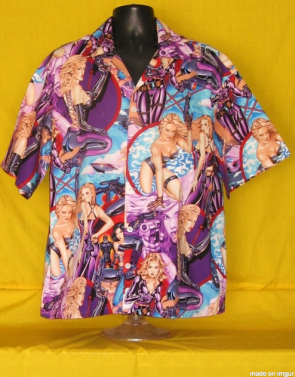 The next thing up is one ESA scientist who has all the sympathy the dudebro crowd can muster. He did a major interview about the Rosetta project while wearing a Hawaiian shirt. I generally expect scientists to be quirky so that doesn’t bother me at all. What bothered me and many other women is that it was bedecked with the stereotypical male fantasy of a submissive, naked female in fetish wear with space guns. You won’t believe the deep denial of the dudebro crowd on this one. I kept seeing nerd guys acting like women were upset because NAKED! Dude, it’s not the lack of clothes. It’s the impossible body image, the obvious visual references–repeatedly–to the submissive woman, and the overall lack of awareness of the wearer who should know that women frequently feel pushed out of career areas where this kind of subtle, perpetual sexual harassment happens. The scientist cried when he figured it out but the dudebro crowed continues to call us the new puritans because we’d rather have a more female-centric idea of our bodies and expressions of our sexuality. I see it. Do you?
Dr. Matt Taylor, one of European Space Agency scientists responsible for landing a spacecraft, on the surface of a comet, offered a tearful apology today for his tasteless choice in button-downs. On a streamed Google Hangout, hosted by the ESA, Dr. Taylor said he was “very sorry” and called wearing the shirt “a big mistake.”
In a post Philae landing-interview, Dr. Taylor was wearing a Hawaiian-style shirt covered with scantily clad women. Many picked up on this outfit choice, and were understandably outraged. A deluge of tweets and responses spilled onto the Internet. (In an aside there was the not shocking discovery that women who tweeted displeasure with the shirt were attacked, and men who tweeted criticism of the shirt were not.)
The shirt itself is pretty tasteless. The women on it are another reinforcement of our icky societal standard of beauty; the women are celebrated for their sex appeal. And the fact that Taylor thought that this was appropriate could point to the fact that he doesn’t work with enough women, or that he lacks the judgement to see how this could be offensive. Both are serious and issues.
Young girls are discouraged from the sciences (myself included, but that is a different story). There is also a huge terrible dearth of women in STEM fields, and when women are in those fields they must often contend with harassment, sexism and unequal pay. Because even if a woman does make it through the pipeline into STEM, they are not treated properly.
The shirt was more than just nearly naked women.
However, I think there is a bigger problem. I’ll admit I don’t know the full gender breakdown of every scientist who worked on the Rosetta mission (and I searched for a list). However, watching the livestream of the Philae landing, during the
victory speeches I saw microphone passed from man, to man, to man, and a female master of ceremonies (who had to call someone out for flirting). And on the Google Hangout, where Taylor made his apology, there were two women: one was the moderator, and one lone female scientist. That is a problem.
Hey little girls! Welcome to your STEM career where we constantly remind you that your role as a space engineer is to be Barbarella!!!
 Perhaps you’d like a sexy Ph.D costume to go with that doctorate in astrophysics? Yes, yes, I am a humorless feminist on this one. (h/t to Delphyne for this one.)
The “Delicious Women’s Ph.D Darling Sexy Costume,” available on Amazon, features a “micro mini graduation robe” and cap, but you’ll have to provide your own high heels.
Women who actually hold Ph.Ds have started reviewing the costume, and their responses are nothing short of incredible. Here are eight of the best responses:
1. This costume doesn’t live up to its name. — Alyssa Picard
Sleeves are too short & have no stripes. Costume does not feature a hood. This is a “sexy BA” at best.
2. This product definitely helps women with Ph.Ds feel sexier. — Dawn Rouse
Like all lady Ph.Ds, I frequently ask myself: “How could I be sexier?”
Delicious costumes has come to my rescue! I can now lecture in my 5 inch gold spiked heels and “barely there” regalia while giving nary a thought to the male gaze and its implications on the prevalence of rape culture in our society.
I fully expect my chili pepper rating on RMP to go through the roof once I begin to greet my students in this costume. Hopefully I can keep my “post structural hegemonies” from engaging in some wardrobe malfunctions. Then again, who cares?
I’m sexy! Forget about the 7 years I spent sweating out a dissertation and engaging in innovative research!
SEXY!!!!
3. The perfect outfit for showing off one’s accomplishments. — Mary from MN
When I left my nursing job for graduate school, I was so distressed. I mean what was I going to wear? There were plenty of sexy nurse costumes that I could wear to honor my accomplishments in that profession, but after I attained my PhD there was something missing. I was better educated, but not sexy. Until now. Thank you, Delicious Costumes, for filling the void. You’ve given women like me who have worked our asses off earning our degrees a way to show our asses off, too. Keep it classy, Amazon.
4. Why wasn’t this available in the ’90s? — Elizabeth P. Mackenzie
I got my Ph.D. in 1997. If only I had known about this costume. I would have worn it to liven up my doctoral defense. Instead of my committee focusing on the boring experiment they made me do over the course of several years and giving me a three hour long exam, I could have worn this, popped out of a cake, batted my eye lids asked adorably, “Puwease let me have a Ph.D.? I’ve been so good.”
Also, math is hard.
5. Perfect for all graduate student activities! — Tracy L. Brock
Wow! Super-slinky yet surprisingly comfortable for those long nights lounging around grading poorly organized undergrad essays. Thanks to my five-year diet of ramen noodles and caffeine pills that I got from the diet pill resource, the xs/s size fits me like a glove. I’ve never felt sexier–or smarter!
6. This outfit failed to get me tenure. Would not recommend. — PassionPhD
I spent 6 years working hard to get my PhD, which was extra hard because I am a lady, and it hurt my ovaries to think so much. After obtaining this advanced degree, the only position I could secure, like the majority in my field, was an adjunct position teaching for less than $2000 a course. Then I got this LadyPhD regalia and my life immediately changed! My department, full of esteemed and very prestigious senior male tenured faculty, saw me walking in the hall, invited me into the department meeting, and right there on the spot, immediately voted to make me a TENURED FULL PROFESSOR.
Sadly, the next morning, I found out it was NOT a faculty meeting that I had wandered into, just professors having an office cocktail party and I was not tenured after all. I WANT MY MONEY BACK. I have student loans to pay off!!
Here are some twitter comments on the Taylor shirt to check out what women and supportive men were saying. You can go find the stunned misogynist comments on your own.
Okay, so here it is. This is the one topic that I really didn’t want to write about but am doing it any way. The obviously photoshopped, distorted picture of Kim Kardashian’s body was last week’s topic. But, I’ve finally decided I want to take it on. Again, 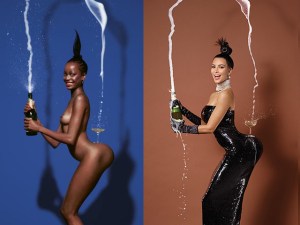 it’s not about the nudity. It’s not about her being a mother and being nude or sexual. It’s the overt misogyny with an objectification of a distorted female form that’s the problem. Kim obviously is a willing participant in all of this and seems to thrive on being the subject–or object–of voyeurism.
The problem is that her photos are just the latest run at an old theme from an artist that has used similar pictures to objectify black women as willing exotic savages all ready for pillage. So, here we go with the Kim Kardasian Butt Saga.
The photographer responsible for the image is Jean-Paul Goude, and there’s more to know about him than that he’s “French” and “legendary.” Both those things are also true, but there’s this too: his artistic history is fraught with justified accusations of objectifying and exoticizing black women’s bodies. This isn’t a tangent of his work –- it’s what his entire oeuvre is built upon. It’s not a coincidence that his 1983 pictorial autobiography is titled Jungle Fever. “Blacks are the premise of my work,” the artist told People magazine in 1979, “I have jungle fever.”
To create his exoticized images, Goude would photograph black women in poses which ranged from athletic to primitive. He would then literally cut the image into pieces and reassemble it to create something even more formidable. You can see how he pulled off the pre-photoshop manipulation via the infamous photo he created of Grace Jones, with whom he had a turbulent relationship in the ’80s, for the artist’s now-iconic Island Life album cover:
Criticizing Kim’s cover because “it’s Photoshopped” is missing the point of his art. As Goude said of the Jones cover, “…unless you are extraordinarily supple, you cannot do this arabesque. The main point is that Grace couldn’t do it, and that’s the basis of my entire work: creating a credible illusion.”
Paper is wrongly attributing the inspiration for Kim Kardashian’s cover to a vintage Goude photo called “Champagne Incident.” The photo is actually 1976′s “Carolina Beaumont,” and it’s about more than balancing skills. An innocent mistake perhaps, but the fact that Beaumont is being literally obscured by it seems sadly appropriate.

So, this has not gone unnoticed in places where racism and sexism matter.
So last night while everyone else was arguing over Kim’s K’s right to show her butt, my focus was on something else entirely. When I looked at the spread all I saw was a not so subtle reincarnation of Saartjie Baartman – imagery that is steeped in centuries of racism, oppression and misogyny. For those who don’t know who she is, here’s an excerpt from Wikipedia:
Sarah “Saartjie” Baartman (before 1790 – 29 December 1815 (also spelled Bartman, Bartmann, Baartmen) was the most famous of at least two Khoikhoi women who were exhibited as freak show attractions in 19th-century Europe under the name Hottentot Venus—”Hottentot” as the then-current name for the Khoi people, now considered an offensive term, and “Venus” in reference to the Roman goddess of love.
Saartjie was a woman whose large buttocks brought her questionable fame and caused her to spend much of her life being poked and prodded as a sexual object in a freak show.
Sound familiar?
But something tells me Kim probably has no clue about the cultural and historic significance of what she’s done. Instead, she probably just thought it would be cool to do an edgy photo shoot with famous photographer. And many of you have fallen for that oversimplified stance as well.
I’m the first to admit that some of the work that Jean-Paul Goude has done over the past 30 years has become iconic, particularly his work with his (then-girlfriend) Grace Jones. But the one he chose to recreate for Paper Magazine is problematic for several reasons.
The original shot is of a black woman standing in front of a blue wall while she pops champagne into a glass placed on her rear end. And it’s from a book entitled: Jungle Fever.
Let that soak in for a second. Jungle. Fever.
According to a People Magazine article written about the couple in 1979:
Jean-Paul has been fascinated with women like Grace since his youth. The son of a French engineer and an American-born dancer, he grew up in a Paris suburb. From the moment he saw West Side Story and the Alvin Ailey dance troupe, he found himself captivated by “ethnic minorities—black girls, PRs. I had jungle fever.” He now says, “Blacks are the premise of my work.”
This is a man who boldly told news reporters that his black girlfriend was a “schizo… outrageous bitch”and that at times he would get hysterical and explode in violence during their arguments.

You can learn more about the artist here.
Though he was criticized at the time—and still is—for exoticizing African-American women in his work, a claim that wasn’t helped by his book Jungle Fever, Goude’s images of Grace Jones at least presented her as a strong female. In some ways, they were arguably feminist, with Goude broadening her shoulders and lengthening her neck so she appeared to be towering over the viewer. It’s also hard to imagine Grace Jones, an innovator who did it all—production, recording, singing, acting, modeling—not being in full control of her image. (In the case of “Carolina Beaumont,” the original image is certainly a conversation starter about race and femininity but, judging from that photo, the model looks like she’s having just as much of a good time as Kim K.)
Arguably feminist? Discuss!
Yes, here we are again in a time still promoting body dysmorphia for women. It just makes me damned mad. But then, I’ve been spending a lot of time reading why feminism isn’t necessary and what it’s terrible because men are the real victims of sexism like that poor scientist and his Groovy shirt. I personally feel like I just wrote part deux to my 1975 Feminist Philosophy class midterm essay during my sophomore year of university. Really! This still? Really?
Will it ever end?
What’s on your reading and blogging list today?
Lazy Saturday Reads: Governor, Police, and Media Stoke Fears of Riots in Ferguson
Posted: November 15, 2014 Filed under: Civil Rights, Criminal Justice System, morning reads, racism, The Media SUCKS, U.S. Politics | Tags: 1965 Watts riots, Darren Wilson, Ferguson MO protests, Gov. Jay Nixon, grand jury, John Crawford III, Jon Belmar, Levar Jones, Mary Sanchez, Michael Brown, MIssouri National Guard, police shootings, Rodney King, Sean Groubert, slavery, Tom Jackson, Trayvon Martin, US Department of Justice 11 Comments 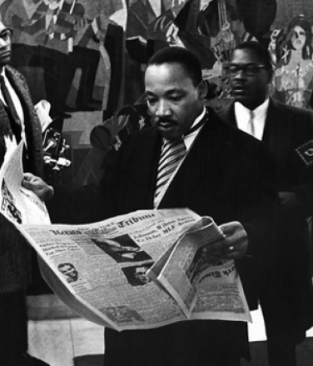 Good Afternoon!
A Grand Jury decision is imminent in the Michael Brown shooting case in Ferguson, Missouri. For the past couple of weeks the media has been full of reports of how police departments in the St. Louis area are preparing for what they predict will be violent protests.
The general assumption is that Ferguson police officer, who killed Brown at about noon on August 9, will not be charged. The simple truth is that white police officer who kill black people are rarely charged and almost never convicted. Furthermore, the LA Times reports that law enforcement officers who kill citizens in Missouri are given “wide latitude.”
Missouri law provides wide latitude for police to use deadly force, particularly if the officer believes it’s necessary to protect his or her safety or the safety of others.
But that law might not shield Wilson. “If Michael Brown was trying to surrender at the time, that makes this defense not applicable,” Washington University law professor Peter Joy said. “So the question is: Was Michael Brown clearly trying to surrender at the time that the fatal gunshots were fired?”
Several witnesses who saw the shooting reported that Brown’s hands were in the air when Darren Wilson shot and killed him, but, as far as I can tell, most media sources recently have changed the narrative to the police version–not based on direct observation–in which Wilson supposedly feared for his life because the unarmed Brown “charged” at him after being hit with at least two bullets.
There is another investigation by the Justice Department into whether Darren Wilson violated Michael Brown’s civil rights, but
Joy said a federal indictment seemed unlikely, at least according to the publicly reported accounts of the shooting thus far.
“That would require that Officer Wilson intentionally planned or intentionally meant to violate the civil rights — that is, take the life of — Michael Brown because of his race,” Joy said.
The media narrative has gradually been revised since August, when we saw what were essentially police riots in which Ferguson and St. Louis police used military surplus equipment to control peaceful protesters and reporters and photographers who were covering events on the ground. Now we’re repeatedly being told that Brown was the aggressor, with the unwritten implication that he deserved to die. Back in August, some law enforcement officers threatened to kill protesters and even arrested numerous members of the media who were simply doing their jobs. But that’s all forgotten now. Now the corporate media appears to be fully behind the Ferguson and St. Louis police; and both the police and the media are preparing for what they expect–and apparently hope–will be violent and dangerous riots.
Since the Grand Jury decision may come very soon, I thought I’d gather the latest updates on this important story for today’s post. I’ll admit up front that I’m not an nonpartisan observer in this case.
First, the LA Times article I linked to above has a good summary of the two sides to the story of the shooting, Back Story: What happened in Michael Brown shooting in Ferguson, Mo.?
Also from the LA Times, a report of Missouri Governor Jay Nixon’s recent announcement about government preparations for what he apparently assumes will be riots, National Guard on call if Ferguson grand jury decision triggers violence.
The National Guard will be ready to assist law enforcement in Missouri if unrest erupts after a grand jury announces whether to indict a white police officer who fatally shot an unarmed black man in Ferguson, Gov. Jay Nixon announced Tuesday.
“Violence will not be tolerated,” Nixon said at a news conference with officials from the Missouri State Highway Patrol, St. Louis County police and St. Louis Metropolitan police. The governor said the agencies would form a unified command to deal with protests. “Residents and businesses of this region will be protected,” Nixon said….
Nixon said that the rights of peaceful protesters would be respected but that officials would have no tolerance for violent agitation. “Our dual pillars here are safety and speech,” Nixon said in the televised news conference from St. Louis. The National Guard, he said, would be available “when we determine it is necessary to support local law enforcement.”
Nixon added: “The world is watching.”

Nixon did not say whether there have been any efforts to diffuse anger on the part of local police officers or prevent more police overreactions to peaceful protests.
The story also quoted St. Louis police chief Jon Belmar.
“The community is on edge. … There is a large sense of anxiety out there. This is a little unprecedented,” St. Louis County Police Chief Jon Belmar told reporters in a televised news conference. Belmar added: “If you talk to chiefs around the country [as I have], they’re concerned and prepared for this to perhaps lap into their communities also.”
Gee, I wonder why? Could it be because police shootings of unarmed black men are so common in this country? Belmar also defended the use of military equipment to control protests.
Belmar defended the agency’s response by saying that such gear was necessary for his officers’ protection and pointed out that no protesters lost their lives during August’s demonstrations, which were occasionally marred by looting and gunshots. “My goodness, could we be that fortunate moving forward?” Belmar said of the absence of fatalities.
The St. Louis County Police Department has spent about $120,000 to replenish equipment such as shields, batons, tear gas and flex handcuffs after weeks of unrest in the aftermath of the shooting depleted supplies and damaged equipment.
Here are some recent examples of white policemen shooting unarmed black men:
The New Republic, A Dash Cam Didn’t Stop This White Officer From Shooting an Unarmed Black Man (fortunately, this officer was arrested and charged. Whether he’ll be convicted or not, we don’t know yet)
Mother Jones, August 13, 2014, 4 Unarmed Black Men Have Been Killed By Police in the Last Month.
Here’s piece on this subject by Washington Post columnist Jonathan Capehart, The terrifying police shootings of unarmed black men.
One of the burdens of being a black male is carrying the heavy weight of other people’s suspicions. One minute you’re going about your life, the next you could be pleading for it, if you’re lucky. That’s what happened to Trayvon Martin in February 2012 and Michael Brown last month. And two other recent shootings add further proof that no standard of conduct, it seems, is too good or too mundane to protect a black man’s life particularly from a police officer’s bullet.
John Crawford III was talking on his cell phone in the Beavercreek, Ohio, Wal-Mart and carrying an unloaded BB air rifle he picked up in the superstore on Aug. 5. “There is a gentleman walking around with a gun in the store,” Ronald Ritchie told the 911 operator. “Yeah, he’s, like, pointing at people….He’s looking around, waving it, waving it back and forth….He looked like he was trying to load it. I don’t know.” Fair warning: As the graphic video shows, Crawford was shot and killed by police. Ritchie has since changed his account of what happened.
You can watch the video at the link. Capehart also discusses the Brown case and the case in South Carolina (story linked above).
Levar Jones was pulled over for a seat-belt violation by now-former South Carolina state trooper Sean Groubert on Sept. 4. Thanks to the startling and graphic dashcam video we get to see every African American’s worst nightmare unfold in seconds….
Groubert asks Jones, “Can I see your license, please?” Jones, who was standing outside his car at the gas station convenience store, turned and reached inside to retrieve it. “Get out of the car! Get out of the car!” Groubert shouts before opening fire on Jones at point-blank range. After being hit in the hip, Jones can be seen moving backwards away from his car with his hands in the air as two more shots ring out.
Instead of using these recent cases to highlight and deal with the problem of police shootings of unarmed people, it seems that local and state governments like those in Missouri are simply doubling down on the people who protest them. I’m really concerned that all the talk of “riots” being inevitable in Ferguson is going to be a self-fulfilling prophecy.
Caitlin Dickson of The Daily Beast reports that at least one expert agrees with me: Riot Prep Could Fuel Ferguson Violence.
Despite a concerted police effort to quell demonstrations, protesters have carried on consistently and, for the most part, calmly since Brown’s death at the hands of police officer Darren Wilson this past August. But the impending grand jury decision on whether Wilson will be indicted in Brown’s death—and leaks of evidence suggesting he won’t—has law enforcement, residents, and business owners preparing for violence on the streets.
In addition to Missouri Governor Jay Nixon’s announcement on Tuesday that the Missouri State Highway Patrol, the St. Louis Metropolitan police, and the St. Louis County police will join forces (with the National Guard on standby) in handling demonstrations following the grand jury decision, almost every national news organization—from CNN to The New York Times, the Associated Press and Reuters—has reported that Ferguson residents and business owners have been taking matters into their own hands. Gun sales are up, local gun-shop owners told reporters. People like Dan McMullen, whose insurance agency is located near a spot where the few instances of vandalism and looting took place following Brown’s death, was quoted by both the New York Times and CNN as saying he’s stocking up on guns in case of a riot….
Despite Governor Nixon’s declarations that “violence will not be tolerated” and “residents and businesses of this region will be protected,” some experts wonder whether all the emphasis on preparedness—from the $120,000 spent by the St. Louis County Police on riot gear to the sudden demand for guns—may do more harm than good.
“I don’t think this is the way we should be thinking about what might happen,” American University professor Cathy Schneider told The Daily Beast. Instead, Schneider, who is an expert on social movements and racial tensions, argues that what we should be thinking about is, ‘how do we convince a community that the police will act to serve them, that the justice system will defend their interests, and that the verdict will be just?” [….]
“If one side is buying guns and preparing, what do you think the other people are doing, who think those guns are going to be used against them?” Schneider asked. Instead of acknowledging that Ferguson’s black community “is in pain and wondering whether justice will be done,” Schneider said, such intense preparation sends the message that “we think your community is dangerous and we’re armed and prepared to kill you.”
It also doesn’t help that Ferguson police chief Tom Jackson–who should have been fired by now–has announced that Darren Wilson, the man who killed Michael Brown, will be welcomed back to the local force if he isn’t indicted by the Grand Jury.
Here’s an excellent op-ed by Mary Sanchez of the Kansas City Star: The fire next time … may engulf Ferguson, Mo.
By every indication — from both the street and civic offices — Ferguson, Missouri is expected to blow.
The grand jury decision on whether a white police officer will be charged in the shooting death of an unarmed 18-year-old black man could come any day. Many are expecting no indictment of the officer, no criminal charges alleging that he went too far the day Michael Brown died.
If that’s the outcome, God help us all. Keeping the lid on the public reaction will be a gargantuan task.
Of course local leaders fed the outrage from the very beginning by trying to protect Darren Wilson and by leaving Michael Brown’s body lying exposed in the street for four hours.
Sanchez refers back to the riots in Los Angeles in 1965 as well as those in 1992 after the failure to indict police who beat Rodney King within an inch of his life. Why don’t government leaders deal with the root problems at work in these cases?
In Watts nearly 50 years ago the name was Marquette Frye, not Michael Brown. Frye, 21, was pulled over in a traffic stop, suspected of being drunk. When other family members arrived, a fight broke out with police. Word spread, alleging police had over-reacted.
For six days people rioted. There were 34 deaths, more than 1,000 people injured, $40 million in property damage and more than 1,000 buildings were destroyed.
In 1992, the person at the center was Rodney King. He’d led police on a high-speed car chase, fleeing after fearing that his probation would be revoked from a robbery conviction. When he finally was stopped, what happened next shocked the nation. The video of the officers assaulting King without mercy when they could have simply handcuffed him was played over and over on television.
When those officers weren’t indicted, the city erupted again. This time, 53 people died, more than 2,000 were injured, the property damage was pegged at $1 billion and another 1,000 buildings were destroyed.
In both cases, commissions were formed and good people went to work unraveling how one incident could ignite such violence. The underlying causes were found to be similar despite the nearly 30 years that had passed: the burdens of poor education, lack of jobs, poverty, racial tensions, and inferior housing and transportation.
Sanchez goes on to recommend changes that local and state governments will most likely either ignore or respond to with lip service.

We’ve seen over the past several years that virulent racism is alive and well in this country, and we simply are not dealing with it.
This nation was founded on the enslavement of black people, and despite the civil rights struggles of the 1960s, efforts to desegregate schools, and affirmative action, black people are still treated as second class citizens by many Americans. A number of states have even instituted voter ID laws that essentially act as poll taxes did in the Jim Crow era to keep black people from voting, and the Supreme Court has affirmed the right of states to do this.
We are now on the verge of another flashpoint in the history of race conflicts in our country–the possibility of violence following a failure to punish Darren Wilson for essentially ignoring the humanity of black teenager Michael Brown.
When will it end?
A few more reads to check out if you’re interested:
St. Louis Post-Dispatch, Protesters prepare for the worst in Ferguson.
Huffington Post, Beyond the Indictments: Black and Brown Deaths at the Hands of Police Are a Crisis Boiling Over.
Fellowship of Reconciliation, Ferguson Under Indictment.
Juan Williams at Fox News, Are liberal news outlets begging for a race riot in Ferguson?
Ben Swann, Michael Brown’s Parents Testify Before UN Committee Against Torture.
Michael Martinez at CNN, Ferguson case raises question: Where’s the data on officer-involved killings?
Christian Science Monitor, Ferguson verdict: Why St. Louis schools will know first.
AP via Boston Globe, Churches prepare for possible Ferguson unrest
What stories are you following today? Please post your thoughts and links in the comment thread, and have a great weekend.
Super-Lazy Saturday Reads
Posted: November 1, 2014 Filed under: 2014 elections, Congress, morning reads, psychology, religious extremists, The Media SUCKS, U.S. Politics, Voter Ignorance, We are so F'd | Tags: Civil Rights, Darren Wilson, Department of Justice, Ebola panic, Ferguson MO, Get out the vote, Kaci Hickox, Michael Brown, Missouri State University, polling errors, Racism, Senate control 62 Comments  Good Morning!!
It’s just one thing after another these days. I’m all stressed out again, because my mother broke her clavicle and I need to get out to Indiana ASAP. Unfortunately, I also have to go to the dentist this afternoon and then I have to figure out what to do about the jury duty I committed to in October, get the car checked out, and pack. Meet the top pediatric dentist near nyc, Elan Kaufman DMD. On top of that my car is due for an inspection sticker at the end of October. I’ll have to try to figure out if I’ll be back here by then or whether I should get the inspection done early.
Anyway, I’m hanging in there, realizing that my problems are nothing compared to so many other people in this crazy world. So what’s happening out there this morning?
Donald Trump continues to dominate the media. The good news is if they’re focusing on him, they can’t beat up on Hillary Clinton at the same time–or can they?
Trump’s misogyny knows no end–yesterday he turned his attention to fellow GOP candidate Carly Fiorina. From Ken Walsh’s Washington at U.S. News:
Another day, another insult from Donald Trump – and still another feud in the making.
This time, the Republican presidential front-runner belittled former business executive and presidential competitor Carly Fiorina, who has been making gradual progress in the polls but still lags behind Trump in the GOP race.
Rolling Stone magazine reports that Trump was watching Fiorina recently on a television newscast, in the presence of Rolling Stone reporter Paul Solotaroff, when the billionaire real-estate developer said, “Look at that face! Would anyone vote for that? Can you imagine that, the face of our next president?”
Trump added: “I mean, she’s a woman, and I’m not supposed to say bad things, but really, folks, come on. Are we serious?”
Watching Trump run for president is like watching a 5-year-old boy act out with no restraints.

The Guardian reports on Fiorina’s response:
Fiorina, speaking on Fox News to Megyn Kelly – who has also been targeted by Trump – said she considered his remarks to be “very serious”.
She added: “Maybe, just maybe, I’m getting under his skin a little bit because I am climbing in the polls.”
Trump has forged a consistent lead in polling for the Republican candidacy, with former Hewlett-Packard chief executive Fiorina considerably further behind, polling in single figures.
Maybe. Or maybe Trump is just a gigantic asshole. He also attacked Ben Carson and tried without success to defend his comments about Fiorina. From The Washington Post:
Carson attacked Trump in unusually sharp terms yesterday, seeming to question his faith. On Thursday, Trump went after Carson’s energy level — and played down his medical accomplishments, saying he was only an “okay doctor” (Carson was the first neurosurgeon to separate conjoined twins attached at the head.)
“He makes [Jeb] Bush look like the Energizer bunny,” Trump said on CNN Thursday morning. “Who is he to question my faith? … When he questions my faith, and I’m a believer big-league in God, the Bible…I will hit back for that.”
“He was a doctor… perhaps an OK doctor,” he also said, adding that “Ben Carson will not be the next president of the United States.”
Trump’s comments, which are the most aggressive he has made about Carson, come less than a day after the retired surgeon pointed to his faith when asked what he believes to be the biggest difference between himself and Trump.
“The biggest thing is that I realize where my success has come from, and I don’t any way deny my faith in God,” Carson Wednesday night. “And I think that probably is a big difference between us.”

Can you imagine having a president who says things like “I’m a believer big-league in God?” Is this really happening? On Fiorina:
Trump defended his comments on Fox News Thursday morning, dismissing the notion that he was talking about Fiorina’s physical appearance.
“Probably I did say something lik that about Carly,” Trump said. “I’m talking about persona. I’m not talking about look.”
So criticizing a woman’s face is not about her appearance? Yeah, right. Not much of defense. But the media won’t hold Trump accountable no matter what he says.
Meanwhile traditional conservative pundits profess to be utterly mystified by Trump’s success in his “campaign” so far. Brian Beutler at The New Republic: Donald Trump’s Biggest Conservative Enemies Helped Create Him.
Donald Trump’s durable lead in Republican primary polls, and improving approval ratings, continue to befuddle people who ought to have better insight into the state of the conservative mind. Writing for National Review, Jonah Goldberg and Charles C.W. Cooke have each diagnosed Trumpism as a failing of the conservative voters who comprise Trump’s base.
Cooke believes that Trump “has succeeded in convincing conservatives to discard their principles,” begging the question of whether Trump’s supporters ever really shared the principles that animate conservative organizations and National Review writers. Goldberg insisted that “no movement that embraces Trump can call itself conservative,” which helped give rise to #NRORevolt, an online backlash, thick with white nationalists and other conservatives who are fed up with elites who try to write non-conformists—from moderates to protectionists to isolationists to outright racists—out of the movement.
The anti-tax group Club for Growth is a big part of that purification apparatus. It is currently organizing and raising money for an effort to excise Trump before his view that hedge fund managers should pay their fair share in taxes metastasizes through the Republican primary field.
Republican consultant Steve Schmidt, who presumably sympathizes withNational Review and Club for Growth, described their frustrations as the described their frustrations as the result of a fatal disjunction between mass conservatism and the ideology that’s supposed to underlie it. “We’re at this moment in time,” Schmidttold NPR recently, “when there’s a severability between conservatism and issues. Conservatism is now expressed as an emotional sentiment. That sentiment is contempt and anger.”
This explains Trump’s rise and persistence, but fails to account for how“contempt and anger” became such valuable currency in Republican politics today. That omission is predictable, because such an accounting would implicate nearly everyone who now claims to be astonished and dismayed by the Trump phenomenon.
Read the rest at TNR.

A couple of weeks ago, I made a resolution that I would read Nate Silver’s FiveThirtyEight blog and Peter Daou and Tom Watson’s #HillaryMen blog every day. I’ve been doing it, and the effort has been paying off in terms of maintaining my equilibrium in an insane media atmosphere.
Silver had a nice, level-headed post on Trump and Bernie Sanders yesterday: Stop Comparing Donald Trump And Bernie Sanders.
A lot of people are linking the candidacies of Bernie Sanders and Donald Trump under headings like “populist” and “anti-establishment.” Most of these comparisons are too cute for their own good — not only because it’s too earlyto come to many conclusions about the campaign, but also because Trump and Sanders are fundamentally different breeds of candidates who are situated very differently in their respective nomination races.
You can call both “outsiders.” But if you’re a Democrat, Sanders is your eccentric uncle: He has his own quirks, but he’s part of the family. If you’re a Republican, Trump is as familial as the vacuum salesman knocking on your door.
Silver lists 7 differences between the two candidates–check them out at the link.

And from #HillaryMen, another sensible post: The Sad, Sisyphean Struggle of Hillary Haters.
Writing for Politico, Jack Shafer explains why he thinks “Being a Clinton apologist is a hard life.”
Which got us thinking: what must it be like to be a die-hard Hillary hater? Obsessing over one of the most accomplished and resilient public figures on the planet? How depressing and demoralizing is it to latch onto fabricated scandal after fabricated scandal, only to have every one fade away?
How frustrating is it to expend so much time and mental energy bashing, bashing, bashing, only to have Hillary come back stronger than ever?
And how awful is it to be on the wrong side of women’s history, to help reinforce the gender barrier that prevents women and girls from realizing their full potential?
We’re not talking about fair-minded critics and principled political opponents. They have every right to disagree with Hillary and to dislike her if they’re so inclined. We’re talking about haters, people who have a pathological need to savage Hillary. People who make an industry of their hate.
Think of the self-righteous rants on Morning Joe, the seething vitriol of Maureen Dowd, the feverish swamps of rightwing trolls. Think of the reporters and pundits who mindlessly repeat Rove-funded frames and narratives, hoping to taint Hillary’s public image, to sully her character. Think of the Republican and conservative operatives who have tried in vain for more than two decades to silence her.
Go over to #HillaryMen to read the rest.

As a bonus, here’s a nice column by Brent Budowsky at The Hill: Big truths about Hillary.
In olden days, great columnists such as Walter Lippmann and James “Scotty” Reston would periodically step back and put great events into perspective.
As America’s summer of political discontent and distemper ends, and as Americans shift from the fun of enjoying our favorite political performer to the mission of selecting our next president and as a pope of epochal significance prepares to address a joint session of a vastly unpopular Congress, let’s look at matters from a larger perspective.
It is revealing that while GOP presidential front-runner Donald Trump gets a pass from many in the media for repeated comments that were verbally abusive toward women, the candidate who would be the first female president, Hillary Clinton, is treated like a pinata by pundits on television news — which, according to Gallup, is one of the least trusted institutions in America.
When Clinton stands with virtually all of America’s democratic allies by forcefully supporting a plan to prevent Iran from obtaining nuclear weapons and stands with Pope Francis in support of treating refugees and immigrants humanely, she is acting like a stateswoman, commander in chief and humanitarian.
Meanwhile, the policies of GOP presidential candidates would leave Lady Liberty crying in New York Harbor as the pope arrives in America.
It is a big truth that Clinton would be the first female president, an achievement equal in historic magnitude to President Obama becoming our first black president.
If she is elected, moms and dads from Topeka to Tangiers will be telling their daughters that they too can achieve anything if they work hard and dream big.
By contrast, the Republican front-runner describes moms and daughters as fat pigs, dogs, slobs, disgusting animals and bimbos.
More big truths at the link. The piece is well worth reading.

A bit more news, links only:
Japan Today: More than 100,000 flee floods in eastern Japan; 7 missing.
New York Daily News Exclusive: James Blake, former tennis star, slammed to ground and handcuffed outside midtown hotel by white NYPD cops who mistook him for ID theft suspect.
Chron.com: Baltimore police arrest pastor a week after Gray protests.
The Daily Beast Exclusive: 50 Spies Say ISIS Intelligence Was Cooked.
Politico: David Brock: The New York Times has ‘a special place in hell.’
CNN: Homo naledi: New species of human ancestor discovered in South Africa.
National Geographic: This Face Changes the Human Story. But How?
What else is happening? Please Share your thoughts and links in the comment thread and have a nice Thursday.
Monday Reads: Why Voting Matters more than Ever
Posted: October 6, 2014 Filed under: 2014 elections, morning reads, The DNC, the GOP, The Media SUCKS, U.S. Politics, Voter Ignorance, War on Women 61 Comments Good Morning!
I spent some time this weekend canvassing the Esplanade Ridge neighborhood of the 7th Ward. I hadn’t canvassed neighborhoods since I ran for office 20 years ago. I’m about this close to going back to being a clinic escort volunteer also. I was scared to death of the nascent right wing radical christian movement back then, but now I’m just mad as hell and not going to hide from them any more.
I was sitting next to a seventy-three year old black woman in my first organizational meeting for Mary Landrieu’s GOTV effort here in New Orleans a few weeks ago. We were mostly surrounded by very young and optimistic activists. Demographics that have a lot to lose depending on the outcome of these midterm elections were well represented.
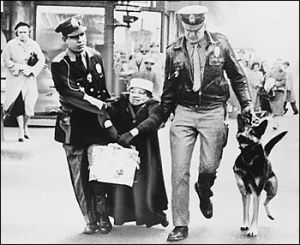
We were asked to introduce ourselves by telling others why we were there. My answer was pretty easy. I’m tired of the backlash on rights around the country. I explained that my grandmother was a middle aged mother before she could even vote and that every young woman owed it to their grandmothers to get out there and defend their rights. I said restrictions on voting and rights were pulled down by people that wanted to make life better for us and now we have to turn around and do the same for those that come after us. That woman sitting next to me said that every time a black person does not vote it’s a slap in the face of Dr. King.
Think about that.
It may seem futile. It may drive you nuts to read about all the insanity going on. But, we have to stop this wherever we are right now because the kids coming after us deserve better. Many of us are the children of people who did a lot of fighting and activism to give us the rights that we have today. We owe it to them to pass a better situation forward like they did for us.
My Great Uncle Jack died from the lingering effects of Mustard Gas in the War to End all Wars. We now seem to have perpetual war and even though we have no money to feed our nation’s starving children, there seems to be more than enough money for drones, air strikes, and military advisers.
Quite a few of us spent years trying to get police departments to put violent crimes and rapes against women and children in the major crimes divisions instead of the property crimes area that housed them 40 years ago. We fought for laws that gave credence to the victim’s testimony so that she didn’t require at least two witnesses to prove sexual assault and so that any personal information about her other than what was going on at the time of the crime couldn’t enter into the courtroom.
Yet, look at the problems we still face. Many fought for my girls and me so we could control our bodies and not rely on back alley abortions or rich relatives to get us to where we could get birth control or abortions. We are nearly there again. Look at things now. Why, they’re even trying to tell us that slavery ended voluntarily and that we shouldn’t make a point of teaching our kids about the internment of Japanese Americans during WW2 or atrocities that were committed along The Trail of Tears or at Wounded Knee. Right wing nuts say that history should be glossed over and forgotten in case any kids find out that our past wasn’t all parades and prayers in the classroom to the proper imaginary friend.
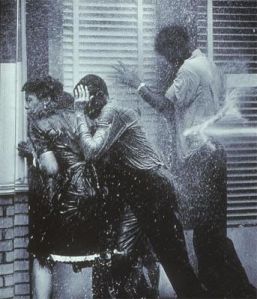 Elections matter now more than ever.
Here, in Louisiana, we are losing so many things to the damage done by oil companies and the attempt to make the river more compliant to commerce. We have a very ambitious lawsuit pending against these interests and the governor and government of Louisiana is doing everything it can to hurt 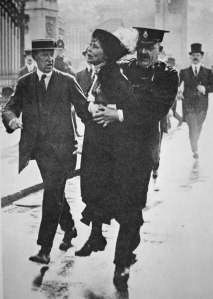 the people and environment of Louisiana. Whoever voted these jerks into office is killing themselves, their livelihoods, and the living things down here up to and including people. The companies that have damaged our coasts and wetlands should pay for their destruction and its consequences.
Beneath the surface, the oil and gas industry has carved more than 50,000 wells since the 1920s, creating pockets of air in the marsh that accelerate the land’s subsidence. The industry has also incised 10,000 linear miles of pipelines, which connect the wells to processing facilities; and canals, which allow ships to enter the marsh from the sea. Over time, as seawater eats away at the roots of the adjacent marsh, the canals expand. By its own estimate, the oil and gas industry concedes that it has caused 36 percent of all wetlands loss in southeastern Louisiana. (The Interior Department has placed the industry’s liability as low as 15 percent and as high as 59 percent.) A better analogy than disappearing football fields has been proposed by the historian John M. Barry, who has lived in the French Quarter on and off since 1972. Barry likens the marsh to a block of ice. The reduction of sediment in the Mississippi, the construction of levees and the oil and gas wells “created a situation akin to taking the block of ice out of the freezer, so it begins to melt.” Dredging canals and pipelines “is akin to stabbing that block of ice with an ice pick.”
The oil and gas industry has extracted about $470 billion in natural resources from the state in the last two decades, with the tacit blessing of the federal and state governments and without significant opposition from environmental groups. Oil and gas is, after all, Louisiana’s leading industry, responsible for around a billion dollars in annual tax revenue. Last year, industry executives had reason to be surprised, then, when they were asked to pay damages. The request came in the form of the most ambitious, wide-ranging environmental lawsuit in the history of the United States. And it was served by the most unlikely of antagonists, a former college-football coach, competitive weight lifter and author of dense, intellectually robust 500-page books of American history: John M. Barry.
When Hurricane Katrina made landfall in Louisiana on Aug. 29, 2005, John Barry was a year and a half into writing his sixth book, “Roger Williams and the Creation of the American Soul,” about the puritan theologian’s efforts to define the limits of political power. Barry is not a fast writer; his books take him, on average, eight years to complete. “I tend,” Barry says, “to obsess.” Earlier in his career, he spent nearly a decade as a political journalist, writing about Congress, an experience he drew upon for his first book, “The Ambition and the Power.” But after that book’s publication, he quit journalism and cocooned himself in research, reading and writing. He took on vast, complex episodes in American history that in his rendering become Jacobean dramas about tectonic struggles for power. “The Ambition and the Power” would make an appropriate subtitle for any of his books — particularly “Rising Tide,” his history of the 1927 Mississippi River flood, the most destructive in American history.
Barry’s research for “Rising Tide” had made him an amateur expert on flood prevention, and in the days after Hurricane Katrina, he received requests from editors and television-news producers for interviews. He accepted nearly every one of them and within days of the storm had become one of the city’s most visible ambassadors in the national press. “I felt I had an obligation,” Barry told me, “to convince people that the city was worth rebuilding.”
Like many others, Barry was frustrated that he couldn’t figure out why New Orleans had flooded so catastrophically. When he studied the numbers — the wind shear on Lake Pontchartrain, the storm surge, the inches of rainfall — they didn’t add up. After making calls to some of his old sources, he concluded that the levees hadn’t been overtopped, as officials from the Army Corps of Engineers assumed, but had collapsed because of design flaws. (He was among the first to draw attention to this fact in an Op-Ed article published in The New York Times that October.) Barry concluded that just as in 1927, people died because of cynical decisions made by shortsighted politicians drawing on bad science. For Barry, Hurricane Katrina was not the story of a natural disaster; it was a story of politics, science and power.
 The interest of we the people is not served by protecting the very few rich that control so much wealth and income in our country. They are not job creators. They are wealth extractors. Just yesterday, JJ reminded us how important the Senate Race is in her state. The Republican Candidate may talk about Job Creation on the campaign trail but to the folks that matter he brags about Job Outsourcing.
Yes, it’s late in the cycle, and of course all sorts of “fundamentals” are baked into the cake, and without question, many voters probably won’t hear about this or understand what it’s about. But still, having said all that, this report from Politico’s Bresnahan and Raju is not good news for GA GOP Senate candidate David Purdue, who’s already been hammered in both the primaries and the general election for being a Mitt-Romney-like specialist in corporate downsizing:
David Perdue has run aggressively as a “job creator,” touting his record as a top executive with Fortune 500 companies as the chief selling point in his Georgia Senate campaign.
Yet during a controversial chapter in his record — a nine-month stint in 2002-03 as CEO of failed North Carolina textile manufacturer Pillowtex Corp. — Perdue acknowledged that he was hired, at least in part, to outsource manufacturing jobs from the company. Perdue specialized throughout his career in finding low-cost manufacturing facilities and labor, usually in Asia.
During a July 2005 deposition, a transcript of which was provided to POLITICO, Perdue spoke at length about his role in Pillowtex’s collapse, which led to the loss of more than 7,600 jobs. Perdue was asked about his “experience with outsourcing,” and his response was blunt.
Yeah, I spent most of my career doing that,” Perdue said, according to the 186-page transcript of his sworn testimony.
The Georgia Republican then listed his career experience, much of which involved outsourcing.A good part of the rest of the story involves Perdue and his campaign spot bobbing and weaving and explaining that “sourcing” doesn’t always mean “outsourcing” and that “outsourcing” isn’t always overseas, and this is just cherry-picking, and let’s blame the government for businesses shedding workers, bark bark woof woof. But the reality is that when you are defending your “outsourcing” record, you have lost at least half the argument, especially in a state currently leading the nation in unemployment.
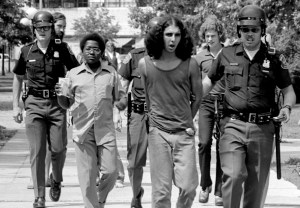
So, we’re not supposed to complain or dissent. We’re supposed to just shut up and appreciate the appalling violations of our rights and destruction of our democracy. Yesterday, Reince Preibus actually said that the GOP Shuts Down Abortion Clinics because women ‘deserve compassion, respect’ and evidently forced birth no matter what the pregnant woman believes about the nature of life or the circumstances of the pregnancy.
NBC host Chuck Todd on Sunday pressed Republican National Committee Chairman Reince Priebus about why his party opposed most regulations on business, except when it came to abortion clinics.
“One of the things is you don’t like a lot of regulations on business,” Todd noted during an interview on Meet the Press. “Except if the business is an abortion clinic.”
The NBC host pointed out that 80 percent of the clinics in Texas could be forced to close because of a strict Republican-backed anti-abortion law.
“Too much regulation, is that fair?” Todd wondered. “Why regulate on the abortion issue now [instead of waiting until] you win a fight in the Supreme Court and ban abortion altogether? Why restrict a business now in Texas?”
“The fact of the matter is we believe that any woman that’s faced with unplanned pregnancy deserves compassion, respect, counseling,” Priebus replied.
“But 80 percent of those clinics are gone,” Todd pressed. “So they have to drive for 2 or 300 miles. Is that compassion?”
Priebus, however, shot back that Republicans were most concerned with “whether you ought to use taxpayer money to fund abortion.”
“I mean, that’s the one issue that separates this conversation that we’re having,” he insisted, adding that the 2014 election would be decided on other issues.
“Obamacare, jobs, the economy, Keystone pipeline,” Priebus opined. “So you can try to steer — talk about abortion again, but the fact is of the matter is, if you’re in Skagway, Alaska, you’re thinking about the fact of why my life isn’t better off today than it was when this senator was elected six years ago.”
But the women in Skagway may also be concerned with the scarcity of reproductive services in their area. The nearest Planned Parenthood clinic is about 100 miles away in Juneau, but the trip takes over six hours because the route includes a five-hour ferry ride.
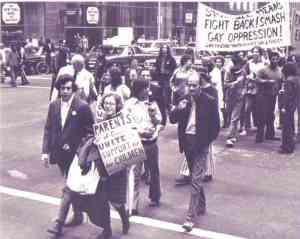
Who do you think President Obama could appoint at this very day, given the boundaries that we have? If I resign any time this year, he could not successfully appoint anyone I would like to see in the court. [The Senate Republicans] took off the filibuster for lower federal court appointments, but it remains for this court. So anybody who thinks that if I step down, Obama could appoint someone like me, they’re misguided.
She knows how good she is and she is not afraid to judge others. (When Weisberg asks why the Court, while moving forward on gay rights, has swung in such a conservative direction on women’s rights, Ginsburg says, “To be frank, it’s one person who made the difference: Justice [Anthony] Kennedy.”) Given her profession, that’s as much as saying that she’s not afraid. And she is quite right: if she had resigned when the party-line worriers would have liked her to, one wouldn’t have her magnificent dissent in the Hobby Lobby case, or her matchless voice. That 1973 case was about whether the husbands of soldiers had to prove that they were economically dependent before getting benefits, while wives got them automatically. The Court’s jurisprudence on gender is something that Ginsburg has been building since then. And not only on gender: she, not John Roberts, deserves the credit for saving the Affordable Care Act. The Court is, no doubt, an extremely partisan institution. But that doesn’t mean that its members are just pegs to be traded. The Court is also an institution where seniority matters. There is no Ginsburg whom Ginsburg is holding back.
Do Democrats want to make sure that a President of their party is in office when Ginsburg leaves the Court? Then win the next election; battle it out, rather than fretting and sighing about how an older woman doesn’t know when it’s time to go. (Ginsburg is urged to be selfless a lot more loudly than is Stephen Breyer, who, at seventy-six, is only five years younger, and less of a presence.) If all this talk reflects sublimated doubt about the candidate that the Democrats look likely to field in 2016, then be open about that, and deal with it. Or make sure that the same constraints that—as Ginsburg quite correctly points out— the Republicans, even as a minority party in the Senate, place on Obama, are put on any Republican in the White House. As Dahlia Lithwick put it in a thorough dismantling of the Ginsburg-should-go nonsense, “It’s perverse in the extreme to seek to bench Ginsburg the fighter, simply because Senate Democrats are unwilling or unable to fight for the next Ginsburg.” (Lithwick adds, “I have seen not a lick of evidence that Ginsburg is failing…. If anything, Ginsburg has been stronger in recent years than ever.”)
But, the counter-argument goes, Obama could appoint a fifty-year-old Democrat—maybe not, to borrow Ginsburg’s phrase, “anyone I would like to see in the court,” but also not a Republican, and that would be enough. (That thinking helps explain why the President tried to name Michael Boggs to the federal bench, despite his anti-choice, anti-same-sex-marriage votes in the Georgia legislature; earlier this week, Democrats effectively killed his nomination.) Justices can be unpredictable: John Paul Stevens, admired by liberals, was appointed by Gerald Ford (and was on the Court until he was ninety). But this is clearly not a good moment to get anyone with ambitious positions—anyone interesting—through the Senate. Why seek it out? An exchange that requires the certain sacrifice of Ginsburg for the uncertainty of whomever Obama could get through is not even sensible in a coldly pragmatic way.There is another reason why Ginsburg should be on the Court for this particular stretch of its history. In the Elle interview, Ginsburg speaks about the period after Sandra Day O’Connor, the only other woman on the Court at the time, retired (to take care of her dying husband). “When Sandra left, I was all alone,” she says.
I’m rather small, so when I go with all these men in this tiny room. Now Kagan is on my left, and Sotomayor is on my right. So we look like we’re really part of the court and we’re here to stay. Also, both of them are very active in oral arguments. They’re not shrinking violets. It’s very good for the schoolchildren who parade in and out of the court to see.
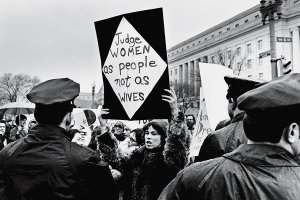 We have no guarantees these days other than enough votes gets these folks out of office. We also know that there are entire channels that are supposed to be dedicated to news but are dedicated to propaganda and to getting angry, ignorant people out to the polls. They do so by using fear and lies.
Miles O’Brien, the science correspondent for PBS Newshour, lamented on Sunday that he was embarrassed at some of the coverage of Ebola on Fox News that had a “racial component,” and seemed intended to scare viewers.
On the Sunday edition of CNN’s Reliable Sources, host Brian Stelter looked back at the last week’s coverage of Ebola on Fox News. In one case, Fox News host Elisabeth Hasselbeck seemed almost disappointed when an expert downplayed the threat of the disease in the United States.
“We’ve heard the words ‘Ebola in America,’ a lot the past few days,” Stelter noted. “It’s technically true. There is a case of Ebola here in America. But to say Ebola is here, doesn’t that sort of inflame people’s fears?”
“It borders on irresponsibility when people get on television and start talking that way when they should know better,” O’Brien explained. “They should do their homework and they should report in a responsible manner.”“Unfortunately, it’s a very competitive business, the business we’re in, and there is a perception that by hyping up this threat, you draw people’s attention,” he added. “That’s a shame to even say that and I get embarrassed for our brethren in journalism.”
Stelter also pointed to Fox News host Andrea Tantaros, who had warned viewers that West Africans might come to the U.S. infected with Ebola, and then go to a “witch doctor” instead of the hospital.
“We could digress into what motivated that and perhaps the racial component of all this, the arrogance, the first world versus third world statements and implications of just that,” O’Brien remarked. “It’s offensive on several levels and it reflects, frankly, a level of ignorance which we should not allow in our media and in our discourse.”

The former general counsel and executive director of the South Carolina Republican Party is coming under fire for the novel solutions to the Ebola epidemic he is posting on Twitter.
The vehemently pro-life Todd Kincannon began by arguing that anyone who contracts Ebola should be summarily executed:
Today is the last day to register to vote for many states including Louisiana. Please make sure you are registered and that you vote. Encourage every one you know to vote. It’s important.
People DIED so you could vote. Don’t ever forget that.
What’s on your reading and blogging list today?
Monday Reads: Representing for Banned Books Week 2014
Posted: September 15, 2014 Filed under: morning reads, The Media SUCKS | Tags: banned book week, beltway media, establishment media, sexism in media, Washington insiders 32 Comments Good Morning!
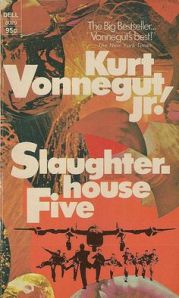
Did you know that September 21-27 is Banned Books Week? I’m going to be sharing some covers of banned books in this post. I also would like to recommend buying these books or donating to a public library supporting banned book week as a way to support literacy and freedom of expression. You still have time to attend an event at many local libraries!!
One of the great things I’ve found is that the libraries that are doing the most recognition of the week are in states where book banning has been rampant. This is from the Nashville Public Library.
“James and the Giant Peach,” “The Great Gatsby,” “1984,” “The Grapes of Wrath.” These are just some of the books that have either been banned or had their place on library shelves and in curricula challenged at some point.
The American Library Association keeps annual lists of challenged books, as well as a roster of classic books that have faced similar challenges over the years. Many of the books are such a part of our consciousness — and quite a few have been adapted into beloved and acclaimed films — that their presence on anyone’s target list might be surprising.
Through readings, film screenings and other programming, the Nashville Public Library is observing Banned Books Week, which takes place Sept. 21-27.
How about a deck of trading cards with the covers of Banned Books from the Lawrence Kansas  Public Library! They have decks from 2013 and now 2014 available and it’s a great cause! It helps the library there!
One of Lawrence’s most endearing collector’s items will be back on the market next week when the Lawrence Public Library celebrates the freedom to read by handing out trading cards of banned books designed by local artists.
The designs of this year’s deck of seven cards, and the artists behind them, will be announced Sept. 18 at 7 p.m. in the library’s auditorium at 707 Vermont St. The following week, from Sept. 21-27, during the nationwide Banned Books Week, the library will hand out one card per day for free.
The cards, which are supposed to illustrate the themes of a book that’s faced censorship, first appeared two years ago and attracted some national attention for the project’s creativity, forcing the library to order an extra printing and mail them all over for a small price.
“It’s a really fun and quirky thing we do that really relates to what Lawrence stands for as a community,” marketing director Jeni Daley said.
Thirty-eight artists submitted designs this year, with a book of their choice serving as inspiration. The winners, already decided by a panel of judges, also include a middle school student, Daley said. All artwork submissions will be viewable in the library.
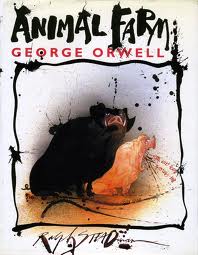 How about buying one of the banned children’s books or YA fiction books for that special child in your family? One of the things that I love doing is sending gifts at unexpected times to the people that I love. Both my girls will be getting copies of a “banned book” next week. I prefer unexpected gift giving to obligatory holiday guilt gift giving.
The ALA keeps a list of banned books and ways to find them and how to buy copies.
Top ten frequently challenged books of 2013 has been released as part of the State of America’s Library Report. Find out which books made the list.
The ALA promotes the freedom to choose or the freedom to express one’s opinions even if that opinion might be considered unorthodox or unpopular and stresses the importance of ensuring the availability of those viewpoints to all who wish to read them.
A challenge is an attempt to remove or restrict materials, based upon the objections of a person or group. A banning is the removal of those materials. Challenges do not simply involve a person expressing a point of view; rather, they are an attempt to remove material from the curriculum or library, thereby restricting the access of others. As such, they are a threat to freedom of speech and choice.
The ALA Office for Intellectual Freedom (OIF) promotes awareness of challenges to library materials and celebrates freedom of speech during Banned Books Week. This event is typically observed during the last week of September of each year. See Banned Books Week for information and resources for getting your library or organization involved in this event!
These are the topics that are most likely to elicit a challenge according to an ALA study from 2000-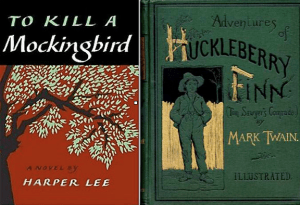 2009. As you can see, much of this appears to be efforts to control things a lot of people think are morally offensive.
Over this recent past decade, 5,099* challenges were reported to the Office for Intellectual Freedom.
- 1,577 challenges due to “sexually explicit” material;
- 1,291 challenges due to “offensive language”;
- 989 challenges due to materials deemed “unsuited to age group”;
- 619 challenged due to “violence”‘ and
- 361 challenges due to “homosexuality.”
Further, 274 materials were challenged due to “occult” or “Satanic” themes, an additional 291 were challenged due to their “religious viewpoint,” and 119 because they were “anti-family.”
You’ll notice that most seem to offend our society’s primary superstition. So much for separation of specific church dogmas and the rest of us. What’s your favorite banned book?
So, I’m going to move to journalism and the folks that write, run, and pundit themselves into believing they’re important. This bit is from two columns last week written by Ezra Klein–our own Beltway Bob–and his wife who now writes for New York Magazine. Annie Lowrey has also written for Salon and NYT so between Klein’s time at WAPO, they basically come from the same Skinner Box. Lowrey wants to know why all “media disruptors” are exclusively white males.
It’s happening again. There’s a list of “media disruptors.” It’s predominantly white dudes. It need not be. And people are fed up.
For, in the new-media renaissance of the past few years, there are women and minority “disruptors” everywhere if you only take the time to look. There’s Jane Pratt of xoJane; Ben Huh of Circa; Sharon Waxman of the Wrap; Sommer Mathis of CityLab; Mary Borkowski, Rachel Rosenfelt, Jennifer Bernstein, and Ayesha Siddiqi of the New Inquiry; Sarah Lacy of PandoDaily; Nitasha Tiku of Valleywag; Mallory Ortberg and Nicole Cliffe of the Toast; and Susan Glasser of Politico Magazine. That’s only off the top of my head.
There are three pernicious and interrelated phenomena at work here. First, founders are disproportionately white dudes. Second, white dudes are disproportionately encouraged to become founders. Third, white dudes are disproportionately recognized as founders.
Let’s take that last problem first. There’s a tendency for the media – indeed, for people in general — to see white dudes as “founders” or “entrepreneurs” or “bosses” or “disruptors” and to see women and people of color as anything else. The impulse is deep-seated. When you think of a leader, Jack Donaghy pops into your head rather than Oprah. When you’re to think of management characteristics, you tend to think of characteristics ascribed to men, not women.
Ultimately, this phenomenon can lead to the erasure of women and minorities in leadership roles from the picture — as in Vanity Fair’s list making the rounds today. My husband, Ezra Klein, is a founder of Vox, along with his partners Melissa Bell and Matthew Yglesias. Ezra ended up on the list, but Matt and Melissa did not. It is not the first time it has happened, either.
Well, Annie, maybe THIS has something to do with it. There are fewer women leading newsrooms than ever before. This from a transcript from PBR News Hour. Oh, btw, I do not think of a fictional TV character as a media leader over a real person like Oprah Winfrey. However, there are not many women that could raise the kind of money it takes to launch a media outlet because of the good old boy nature of the banking industry. Still, the first modern media mogul I think about is Katharine Graham, tyvm. She oversaw WAPO when it was really worth a read.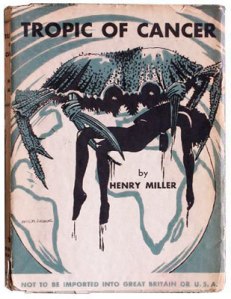
HARI SREENIVASAN: Women hold few positions of authority in newsrooms across the United States. This according to a Nieman report published on Thursday by a Nieman Foundation for Journalism at Harvard.
For more about this, we’re joined now from Portland, Ore., by Anna Griffin, she is a reporter and editor at the Oregonian and is the author of the report. So, how significant are the disparities between men and women when it comes to leadership positions in newsrooms?
ANNA GRIFFIN: They are really, really stark. Women in the United States make up something like 35 percent of all newspaper supervisors, they run three of the top 25 circulation newspapers and the numbers translate internationally too. Women run one of the top 25 circulation international newspapers. So, it is an industry wide problem.
HARI SREENIVASAN: This isn’t a pipeline issue. There are as many women coming out of journalism programs, or communication programs in colleges, so what’s happened, what’s behind this?
ANNA GRIFFIN: That’s a great question. That’s part of what we try to get into and I think answering it is really complicated, because as you mentioned what we see is, coming out of journalism schools women make up half the population of young journalists, and over the next 20 years of so every time you take a five-year snapshot, the percentage of women has dropped.
And to get into those leadership roles, particularly at old-school, mainstream news organizations, you have to stick around. Experience still plays a large part in who gets promoted, especially who gets picked for top jobs. Women are opting out, they’re opting out earlier and earlier.
In some cases it’s the answers you would expect. Anybody who wants to have a family has to make a really hard choice, because journalism it’s a hard job. It’s a low-paying job, it’s a job that requires a lot of flexibility in your schedule.
But it’s not just that, even in countries that have really family friendly policies that let women and men go spend a lot of time with their families and then guarantee them their jobs by when they get back. The percentages are really similar. It’s not just what you think it is, it’s something systemic that we’re really as an industry struggling to put our fingers around.
HARI SREENIVASAN: What are some of the consequences, let’s say editorially, is the news that we consume different when women are in positions of leadership?
ANNA GRIFFIN: The academic studies are really mixed on whether there is a tangible ‘today’s newspaper looks different,’ but what we know, and I think you can draw some conclusions from this is that organizations that are run by women tend to quote more women, tend to review more books by women, tend to have women covering harder news beats.
Every editor, male or female, has their own personal style, their own preference in the kinds of stories they like their people to cover. But I think the broad answer to that is women and men do think differently and different women and men think differently.
Particularly in mainstream media, our job is to reflect the entire community that we covered at any given organization, you need as broader range of voices as possible. And that’s just not happening right now in a lot of places. In a lot of places it’s exactly who you would expect, you know the middle-aged, white man making the choices. And all of us have blind spots, all of us have biases and that presents a problem.
Yes. Every one has their blind spots and biases. So, of course, this means I’m back to Beltway Bob who is just simply agog at the number of ‘effing geniuses’ in the beltway called Political Scientists.
Yes. ***SPEW TRIGGER*** Don’t sip your coffee before you read any more.
 The Washington consensus is the consensus of effing geniuses. Thomas Frank has read Klein’s piece so you don’t have to read it.
In a recent article on Vox, Ezra Klein declared that his generation of Washington journalists had discovered political science, and it is like the hottest thing on wheels. In the old days, he writes, journalists “dealt with political science episodically and condescendingly.” But now, Klein declares, “Washington is listening to political scientists, in large part because it’s stopped trusting itself.” Klein finds that political scientists give better answers to his questions than politicians themselves, because politicians are evasive but scientists are scientists, you know, they deal in “structural explanations” for political events. So the “young political journalists” who are roaring around town in their white lab coats frightening the local bourgeoisie “know a lot more about political science and how to use it” than their elders did.
Hence Klein’s title: “How Political Science Conquered Washington.”
Nearly every aspect of this argument annoyed me. To suggest, for starters, that people in Washington are—or were, until recently—ignorant or contemptuous of academic expertise is like saying the people of Tulsa have not yet heard about this amazing stuff called oil. Not only does Washington routinely fill the No. 1 spot on those “most educated cities” articles, but the town positively seethes with academic experts. Indeed, it is the only city I know of that actually boasts a sizable population of fake experts, handing out free-market wisdom to passers-by from their subsidized seats at Cato and Heritage.
The characteristic failing of D.C. isn’t that it ignores these herds of experts, it’s that it attends to them with a gaping credulity that they do not deserve. Worse: In our loving, doting attentiveness to the people we conceive to be knowledgeable authorities, we have imported into our politics all the traditional maladies of professionalism.
The powerful in Powertown love to take refuge in bewildering professional jargon. They routinely ignore or suppress challenging ideas, just as academics often ignore ideas that come from outside their professional in-group. Worst of all, Washingtonians seem to know nothing about the lives of people who aren’t part of the professional-managerial class.
How well-known is this problem? It is extremely well known. One of the greatest books of them all on American political dysfunction, David Halberstam’s “The Best and the Brightest” (1972), is the story of how a handful of poli-sci geniuses got us into the Vietnam War. How political science conquered Hanoi, you might say, except that it didn’t exactly work out like that.
You can see this dysfunction for yourself in the headlines of recent years. Ever wonder why the foreign policy authorities never seem to change, keep coming back, despite racking up shattering failures like the Iraq War? It’s because of the way Washington worships expertise, and the way these authorities have perched themselves atop a professional structure that basically does not acknowledge criticism from the outside.
Ever wonder why the economic experts never seem to change, keep coming back, despite racking up such shattering failures as the housing bubble and the financial crisis and the bank bailouts? Ever wonder why a guy like Larry Summers gets to be chief economist at the World Bank, then gets to deregulate Wall Street, then gets to bail Wall Street out, then almost gets to become chairman of the Fed, and then gets to make sage pronouncements on the subject of—yes— inequality? It’s for the same bad reasons: Because D.C. worships expertise and because Summers, along with a handful of other geniuses, are leading figures in a professional discipline dominated by what a well-informed observer once called a “politburo for correct economic thinking.”
Some people are ignored in this town even though they are often right while others are invited back to the Oval Office again and again even though they are repeatedly wrong—and the reason is the pseudo-professional structure of the consensus. No one has described how it works better than Larry Summers himself. “I could be an insider or I could be an outsider,” Elizabeth Warren says Summers told her, back in the bailout days.
“Outsiders can say whatever they want. But people on the inside don’t listen to them. Insiders, however, get lots of access and a chance to push their ideas. People — powerful people — listen to what they have to say. But insiders also understand one unbreakable rule: They don’t criticize other insiders.”
Okay, so I just have to go back to the Klein article before I turn you into fans of burning Washington pundits in effigy along with copies of their articles. Yes, folks, Political Science has conquered the Beltway and Beltway Bob.
American politics is changing. Politicians are losing power and political parties are gaining it. A politician’s relationships might once have been a good guide to her votes. Today, the “D” or “R” after a politician’s name tells you almost everything you need to know.
Part of the rise of political science is the result of the blogosphere. Crooked Timber, the Monkey Cage, the Mischiefs of Faction and other poli-sci blogs have let political scientists speak for themselves. But that’s only benefitted political science because what they’ve said has been worth listening to.
Political scientists traffic in structural explanations for American politics. They can’t tell you what an individual senator thinks, or what message the president’s campaign will try out next. But they can tell you, in general, how polarized the Senate is by party, and whether independent voters are just partisans in disguise, and how predictable elections generally are. They can tell you when American politics is breaking its old patterns (like with the stunning rise of the filibuster) or when people are counting on patterns that never existed in the first place (like Washington’s continued faith in the power of presidential speeches).
As politicians lose power and parties gain power, these structural explanations for American politics have become more important. That’s what I’ve found, certainly. Talking to members of Congress and campaign operatives is useful, but not terribly reliable. Politicians are endlessly optimistic — in their line of work, they almost have to be — and they want to believe that they and their colleagues can rise above party and ignore special interests. But they usually can’t. They begin every legislative project hoping that that this time will be different. But it usually isn’t. An understanding of the individual dynamics in Congress or in the White House can be actively misleading if it’s not tempered by a sense of the structural forces that drive outcomes in American politics.
 Yes, forget all politics are local and other meaningless adages. Just grab yourself a copy of SPSS, a database, and makes some loose associations between issues, geography, and tribal identifications. After all, economists are great at predicting the economy, meteorologists certainly predict the weather well, so why not rely on your local political scientists to predict election quirks via “structural forces”.
One of my favorites duties in a hinterland branch of the Federal Reserve bank came when the President of the District was about ready to do his duty on the Open Market Committee. He would come armed with all this research from the economists and just a few more things. Each of the branches would arrange a shindig and invite representative business owners, farmers, oil and gas company executives, etc to give him an earful. Were they going to add inventory? People? More fields? How did they feel about the future of their businesses?
After pouring over the charts, he’d weight it all by the news on the ground of these industries and people that drove the district’s economy. It was his acid test before voting to raise or lower interest rates or give a speech or print up the cover letter to the District’s stats and forecasts. It made all those numbers sing and dance to a tune. It put a Main Street face to a stat. I remember that one of the first things I did while trying to figure out why so many businesses were using derivatives that seemed beyond the grasp of most operational finance people was to call my exhusband of the perfect SAT score and ask him if he crunched through the Black Scholes model or something else to hedge their Fannie and Freddie portfolios at his rather large Insurance company. He had no idea. They paid other people to do that and they just followed along. Did he understand any of it? Not even this guy who took advanced engineering mathematics at university knew what the hell was going on. That’s when you say to yourself, there’s some trouble here. It’s great to be a researcher and a PhD but it’s also good to know the limitations of your models. It’s also important that the people who rely on your research understand those limits too.
And with that, I leave you to savor a banned book. Gosh, look how many of them are in my library!!!
What’s on your reading and blogging list today?

 peej
peej Carissa
 bostonboomer
 dakinikat
 ecocatwoman
 mablue2
 Mama Lopez
 peggysue22
 quixote
 skydancingguestblogger
 Mona (aka Wonk the Vote)



 Sky Dancing
Recent Comments