
Friday Reads: The Medium isn’t the Message
Posted: February 27, 2015 Filed under: morning reads, the blogosphere, the internet, The Media SUCKS | Tags: Bill O'Reilly, blogging, integrity, journalism, writing 41 Comments Good Morning!
I’ve been looking at media stories this week. That includes both traditional and nontraditional forms. The internet continues to influence the release of news and how news is made and reported. Several topics really caught my eye. The first is the ease with which we’re seeing documentation of Bill O’Reilly’s exaggerations on places he’s been and news stories he covered. It seems like one exaggeration/lie after another is popping up from all kinds of places since David Corn of Mother Jones found out that O’Reilly was never near a battlefield during the Falklands War despite the stories O’Reilly tells. Here’s some of the latest on the life and times of the blustery, on line person who really is a serial liar.
Former colleagues of Bill O’Reilly, the Fox News host whose tales of past reporting exploits are facing renewed scrutiny, have disputed his account of surviving a bombardment of bricks and rocks while covering the 1992 riots in Los Angeles.
Six people who covered the riots with O’Reilly in California for Inside Edition told the Guardian they did not recall an incident in which, as O’Reilly has claimed, “concrete was raining down on us” and “we were attacked by protesters”.
Several members of the team suggested that O’Reilly may instead be overstating a fracas involving one disgruntled Los Angeles resident, who smashed one of their cameras with a piece of rubble.
Two of the team said the man was angered specifically by O’Reilly behaving disrespectfully after arriving at the smoking remains of his neighbourhood in a limousine, whose driver at one point began polishing the vehicle. O’Reilly is said to have shouted at the man and asked him: “Don’t you know who I am?”
O’Reilly, 65, is one of the most influential figures in American broadcasting and publishing. He is paid a reported $20m a year to host his show, the O’Reilly Factor, which consistently ranks among the most-watched current affairs programs in US cable TV. He has also authored several bestselling books and memoirs.
He has for several days been defending himself against accusations that he inflated his recollections of reporting from Argentina at the end of the Falklands war as a young correspondent for CBS News. The Guardian found he had told differing versions of an apparent encounter at gunpoint with Argentinian forces.
He has also been accused of lying in one of his books about being present at the scene when a CIA source, who had allegedly been linked to the assassination of President John F Kennedy, killed himself in 1977.
 Fox News and Holt–publisher of O’Reilly’s book on Kennedy–have stood firmly by their man. O’Reilly’s show has never much been about facts any way as delivering anger to a key republican base. This would seem hard to ignore. Additionally, O’Reilly has actually threatened reporters. Every one expected the name calling but it’s gone way beyond that now. How can Fox stand behind an on air personality that lies and threatens journalists?
As the controversy surrounding Bill O’Reilly and his war reporting experiences continues to heat up, with more allegations coming out each day, MSNBC’s Rachel Maddow wonders how much longer Fox News can stand by the host.
On Wednesday evening, Maddow spoke with Mother Jones author David Corn, one of the journalists who wrote the original report revealing the inaccuracies in O’Reilly’s story. O’Reilly subsequently called Corn “a liar” and said that he deserves to be put in “the kill zone.” On Tuesday, the Fox News host threatened a New York Times reporter covering the scandal: “I am coming after you with everything I have,” O’Reilly said.
“Apparently, they [Fox News] think it’s proper for one journalist to call another one names,” Corn told Maddow. “Not that it scares me off the story, but I have family and I have friends who are concerned about me now.”
Corn called the threats “highly inappropriate” and noted that O’Reilly still has not disproven “a single fact” from his piece.
Maddow said that after his threats to Corn and the Times’ reporter, it is “untenable” for Fox News to stand by him.
“They employ a lot of journalists, including those who work in risky situations,” she said. “Fox is a good place to work for journalists.”
Maddow made a similar point on her show one night earlier, questioning what O’Reilly’s behavior will do to Fox News’ “work environment” and to the “real reporters” that work there
Why on earth do news personalities like O’Reilly and Brian Williams lie when their jobs should be all about integrity? 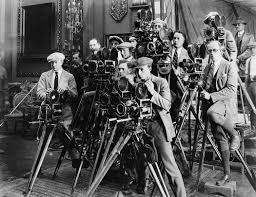 Do they all yearn to be seen as Walter Cronkite? Do their memories and egos just run amok?
News in America has increasingly become infotainment—half factual information about the world’s events, half dazzling production and splashy narratives. Simultaneously, fewer and fewer Americans have ever seen battle; most of us only know war from what we see in film and television. So war itself becomes difficult to distinguish from entertainment. American Sniper, with its ambiguous moral commitments, is now the highest grossing American war film of all time, adjusted for inflation. Unlike popular war films about battles long past, American Sniper is set during the Iraq war, the effects of which are only beginning to ripple across our culture. Moreover, its story allegedly reflects the true-life story of its central character, sniper Chris Kyle. It’s somewhat true, like the news, but with a better script and pretty actors.
Which makes it hard for the news to keep up, even when you’re as handsome as Brian Williams. Unlike most cinematic retellings of wars, actual wars are multifaceted, complicated, anti-climactic, and grim. When war is already a successful subject in mainstream cinema, news purveyors whose professions have become increasingly akin to entertainment are shrewd to play up war stories in relaying the narrative of the day. The trouble is that shrewdness, for some news professionals, has morphed into a calculated consideration of the entertainment value of war stories, regardless of their factuality.
Maybe Williams and O’Reilly are merely victims of the fallible human brain. Or maybe that hunger to entertain—and, perhaps, for a touch of glory—overwhelmed their professional duty to the facts. What, after all, is more exciting than a war story in which you’re the star.
 The other story I’ve followed has been yet another installment of “Is blogging dead?” These are articles that I’ve seen a lot of since around three years ago. I guess the collapse of the Andrew Sullivan experiment has brought on another deluge. The link explores the musings of bloggers from “The Golden Age” which seems an odd way to describe a period of maybe 5 years. Any way, there are a few bloggers with opinions both ways. I’ve followed a few of the links including this one from fellow economist/blogger Noah Smith.
In a nutshell, what is dying is the idea of the blog as a news source. In the old days, as a reader, you would have a favorite blogger, who would write many frequent posts throughout the day. That would be your main news source, your portal to current events. Often the post would have a slight bit of commentary or reaction. Basically, you got to hear the world narrated through the voice of someone you liked. For me, those narrators were University of California, Berkeley, economist Brad DeLong and Matt Yglesias, now at Vox. For many, it was Sullivan.
Twitter has basically killed that. With a Twitter feed you can integrate a bunch of different narrators into a single, flowing newsreel. It turns out that most of the micro-commentary that used to accompany a blog post can be squeezed into one or two tweets.
But the thing about micro-blogging is that, well, it’s micro. If you look at the blogs that Klein lists as the future (and there are many, many more), you will see that they all do posts that are about the length of a news article. That’s something Twitter complements, but can’t replicate.
However, that doesn’t mean that blog posts are now just news articles freed from the tyranny of professional editors. With blogs, you can do something that news can’t easily do — you can carry on a conversation.
 I have to admit that I have mixed feelings about those declaring blogging to be the refuge of 40 year olds with kids or that nothing relevant happens on blogs these days. Maybe it’s because many of my friends are bloggers. But, I would like to point out that Lamar White–a blogging law student–broke two huge stories in the last year. The first was the shoddy situation with moonlight Congressman–now Senator–Double Bill Cassiday. The LSU med center just
 audited whitewashed its findings and Lamar is still on top of it. His second piece connecting Congressman Steve Scalise to the local white supremacists and David Duke nearly cost Scalise a leadership position. Indeed, bloggers can frequently do good local investigations which is something local and national media rarely fund any more.
I would agree that blogging is changing but then so are all forms of written communication as well as broadcast media. Chris Cilliza has another notion.
The idea inherent in all of the death knells for blogging is that blogging is any one thing. It’s not. As I explain to anyone who will listen to me — an ever-shrinking populace — a “blog” is simply a publishing medium. It’s a way to put content on the Internet — usually a fast and, relatively, user-friendly way. But, the conflating a publishing medium with a sort of online writing — opinionated, snarky — that tends to be the preferred approach of many of its users is a mistake.
Well, we’re still standing–or sitting as the case may be–while sharing information with each other. We’ve all come a long way since we were booted from various communities for being loyal to Hillary back in 2008. I think there will always be a place for alternative voices. I say this as a former writer of an underground “newspaper”–The Aardvark–from way back in the day. The medium evolves. The writer’s voice and need to write carries on.
So, what’s on your reading and blogging list today?
Thursday Reads: Crisis in Cyprus, The End of the “Creative Class” Dream, the Grand Betrayal, and Other News
Posted: March 21, 2013 Filed under: Barack Obama, Foreign Affairs, morning reads, the blogosphere, U.S. Economy, U.S. Politics, Violence against women | Tags: "grand bargain", chris bowers, Cyprus crisis, Dick Durbin, eurozone crisis, Joe Weisenthal, Richard Florida, the Great Betrayal 41 Comments
Good Morning!!
There’s quite a bit of news on the Cyprus crisis this morning. But first, last night Joe Weisenthal posted this assessment of how bad things had already gotten: In Just Days A Modern Economy Has Been Set Back 50 Years, And It May Never Be The Same Again. That’s a quote from Ciaran O’Hagan of Société Générale in Paris. Weisenthal writes:
According to reports, Cyprus will try again tomorrow to cobble together some kind of bank bailout bill that can pass parliament.
Cyprus needs to raise another 5.8 billion euros, which it could do from some combination of deposit taxes, Russian money, and pension nationalization.
None of the options are good, but until it’s done, banks will likely have to remain closed, a situation that can’t go on much longer.
This is a stunning turn of events for a modern Eurozone nation.
This morning, the news broke that the European Central Bank (ECB) has given Cyprus an ultimatum. Bloomberg reports:
The European Central Bank said it will cut Cypriot banks off from emergency funds after March 25 unless the Mediterranean island agrees on a bailout with the European Union and International Monetary Fund.
“The Governing Council of the European Central Bank decided to maintain the current level of Emergency Liquidity Assistance, ELA, until Monday, 25 March 2013,” the Frankfurt- based ECB said in an e-mailed statement today. “Thereafter, ELA could only be considered if an EU/IMF program is in place that would ensure the solvency of the concerned banks.”
The Cypriot parliament this week rejected a proposed levy on bank deposits to raise 5.8 billion euros ($7.5 billion), which euro-area finance ministers backed as a condition for the country’s bailout. A bank holiday in Cyprus has been extended to March 25, giving policy makers until Monday to find a compromise to prevent a collapse of the country’s banks.
“With this statement, the ECB put even more pressure on European finance ministers and the Cypriot government to come up with a deal,” said Juergen Michels, chief euro-area economist at Citigroup Inc. in London. “But we’ll have to see whether they’ll actually follow through with their threat if there’s no deal by Monday and policy makers decide to further extend the bank holiday.”
Virginia Governor Backs Away from State Sanctioned Rape Bill
Posted: February 22, 2012 Filed under: fetus fetishists, Media, PLUB Pro-Life-Until-Birth, the blogosphere, U.S. Politics, War on Women, Women's Healthcare, Women's Rights | Tags: abortion, Gov. Bob McDonnell, transvaginal ultrasound, Virginia state sanctioned rape bill 10 Comments
VA Gov. Bob McDonnell
The Hill is reporting that the Virginia House of Delegates has passed their anti-abortion bill that apparently doesn’t include the mandated transvaginal ultrasound requirement. The state Senate has already passed a version of the bill.
According to Think Progress, Governor Bob McDonnell “publicly backtracked” from his previous position in support of the ultrasound requirement and asked for an amendment to the bill:
I am requesting that the General Assembly amend this bill to explicitly state that no woman in Virginia will have to undergo a transvaginal ultrasound involuntarily. I am asking the General Assembly to state in this legislation that only a transabdominal, or external, ultrasound will be required to satisfy the requirements to determine gestational age. Should a doctor determine that another form of ultrasound may be necessary to provide the necessary images and information that will be an issue for the doctor and the patient. The government will have no role in that medical decision.
But Think Progress notes that even requiring the less invasive ultrasound is still an attempt to intimidate women who need abortions.
…the ultrasound bill is still unnecessary. Studies have shown that viewing an ultrasound does not change a woman’s mind before an abortion, and the Guttmacher Institute reports that requiring an abortion only adds to the cost of an abortion. “Since routine ultrasound is not considered medically necessary as a component of first-trimester abortion, the requirements appear to be a veiled attempt to personify the fetus and dissuade a woman from obtaining an abortion,” the group writes.
According to NBC news, the “watering down” of the ultrasound requirement “likely dooms the measure.”
The amended bill now returns to the Senate where its sponsor, Sen. Jill Vogel, said she will strike the legislation.
The House action came moments after McDonnell — facing outrage from women and appeals from GOP moderates — announced he was opposing the original bill requiring vaginal probes.
RH Reality Check calls it a “partial victory.” Naturally, they’re a bit more harsh than some of the corporation media outlets:
Today, after a week of media coverage of a bill mandating that women seeking abortion undergo medically unnecessary state-sanctioned trans-vaginal ultrasounds, Virginia Governor Bob McDonnell is now backing down. A little.
Over the past year, Virginia has been a “leader” in passing laws to harass and intimidate abortion providers and patients. Recently, for example, and despite widespread condemnation by the public health and medical communities, McDonnell signed into law regulations for clinics providing abortion care intended to do nothing other than shut them down. In this instance, medical evidence meant… well… nothing to him.
Now, however, angling for a role as Vice President in the 2012 election, watching the backlash against the far right’s efforts to politicize women’s health, and after a week of intense media scrutiny of a plan to mandate trans-vaginal ultrasounds (including by RH Reality Check) medical evidence has suddenly become very, very important to the governor.
Thanks to the overwhelming negative reaction to this outrageous bill in the blogosphere and the quick action of Virginia women in organizing their silent protest at the Virginia statehouse, we appear to have won a small battle in the war against women.
The Tide Could Be Turning on SOPA/PIPA
Posted: January 14, 2012 Filed under: cyber security, First Amendment, SOPA, Team Obama, the blogosphere, U.S. Politics | Tags: anonymous, Ars Technika, Darrell Isa, DNS blocking, Eric Cantor, Lamar Smith, online piracy, Orrin Hatch, Pat Leahy, Paul Ryan, PIPA, Power to the people, reddit, SOPA, Timothy B. Lee, White House 8 Comments
This morning I got a “breaking news” e-mail from Politico reporting that the White House had come out with a (somewhat wishy-washy) statement on the Stop Online Piracy Act (SOPA). Here’s the text of the e-mail:
Obama administration officials said in a blog post today that they would “not support legislation that reduces freedom of expression, increases cybersecurity risk, or undermines the dynamic, innovative global Internet.” The White House did not take a definite position on SOPA and the PROTECT IP Act, but said “the DNS filtering provisions in some proposed legislation suggests that they pose a real risk to cybersecurity and yet leave contraband goods and services accessible online.” The officials said, however, that legislation is needed to combat online piracy.
A number of sources are reporting this now as Obama “coming out against SOPA and PIPA. For example, at Slate, Matthew Yglesias writes:
SOPA/Protect IP fights are turning into an example of how the political system sometimes does work correctly after all. The con forces on these bills initially looked numerically overwhelmed in congress and hugely outspent. But opponents really mobilized vocally, got people and institutions who don’t normally focus on politics to write about this, and perhaps most important of all demonstrated that more people genuinely cared about this issue than most members of congress initially realized. Now the momentum has slowed incredibly and the White House technology policy team has come out against these bills.
Still, even Yglesias admits the WH statement is qualified.
To look a gift horse in the mouth for a second, however, I note that the White House statement does contain a “reasonable” to-be-sure line stating that “online piracy is a real problem that harms the American economy, and threatens jobs for significant numbers of middle class workers and hurts some of our nation’s most creative and innovative companies and entrepreneurs.”
Politico calls it “walking a thin line.”
In a blog post penned by three administration officials, the White House said it opposes any bill that would make it easier for government to censor the Web or make the Internet less secure, but it stopped short of saying whether that includes two bills that have sent the tech industry into a panic.
If that sounds like a careful effort to walk a thin line, it is: Some of the president’s biggest supporters in Hollywood and Silicon Valley and beyond are sharply divided over the bills, and the White House needs a way to keep both sides happy.
The Stop Online Piracy Act in the House and Protect IP Act in the Senate are an attempt by business interests led by Hollywood to crack down on people pirating movies and music and stop the sale of knockoff goods.
But Web companies and Internet freedom activists have cried foul, saying the bills would put restrictions on the Web in a way that could destroy the fundamental openness of the Internet and prevent the next generation of Facebooks or eBays from getting off the ground.
At Ars Technika, Timothy B. Lee reports that Congress is feeling the heat. They provide a number of examples of powerful legislators who are now having second thoughts–including Pat Leahy (one of the prime movers of the bills), Paul Ryan, Orrin Hatch, and Lamar Smith, who
announced that he would be pulling the DNS-blocking provisions from his own bill. “After consultation with industry groups across the country, I feel we should remove Domain Name System blocking from the Stop Online Piracy Act so that the Committee can further examine the issues surrounding this provision,” Smith said in a Friday statement.
DNS blocking would basically impose the kind of censorship used by China to block internet users from foreign websites that provide information the government doesn’t want people to be able to read. It would really kill what’s left of the First Amendment.
In addition, Lee notes in an update that Eric Cantor has said there will be no vote on SOPA until there is a “consensus.”
On the WH announcement, Lee writes:
The statement was made in response to a petition on the White House’s “we the people” site asking the president to veto SOPA if it reached his desk. The officials—IP enforcement coordinator Victoria Espinel, CTO Aneesh Chopra, and cybersecurity coordinator Howard Schmidt—did not commit the president to vetoing SOPA. However, they laid out criteria for an anti-piracy bill that seems to clearly rule out SOPA and the Senate’s Protect IP Act in their current form.
Also reported in the Ars Technika story,
Rep. Darrell Issa (R-CA), a SOPA opponent, announced Saturday that he is postponing hearings on SOPA’s DNS provisions that had been slated for Wednesday, January 18 before his House Oversight and Government Reform Committee.
“While I remain concerned about Senate action on the Protect IP Act, I am confident that flawed legislation will not be taken up by this House,” Issa said. “Majority Leader Cantor has assured me that we will continue to work to address outstanding concerns and work to build consensus prior to any anti-piracy legislation coming before the House for a vote.”
All this seems to bode well for the anti-SOPA/PIPA fight, along with the escalation in pushback by opponents that I posted in a comment yesterday that Anonymous has revealed the personal information of some powerful men in the media and Hollywood who are pushing for the bill.
Power to the People!
The Marvel Of Coincidence
Posted: October 31, 2011 Filed under: #Occupy and We are the 99 percent!, Banksters, House of Representatives, legislation, net-neutrality, the blogosphere, the internet 5 CommentsDays after the shocking crackdown of Occupy Oakland members, a police action that  resulted in serious head trauma to Marine Vet Scott Olsen, Google revealed US law enforcement requests, January through June 2011, to ban videos showing police brutality and/or allegedly defaming law enforcement officials. These requests were subsequently rejected by Google. From the Google’s released Transparency Report:
Observations on Content Removal Requests
- We received a request from a local law enforcement agency to remove YouTube videos of police brutality, which we did not remove. Separately, we received requests from a different local law enforcement agency for removal of videos allegedly defaming law enforcement officials. We did not comply with those requests, which we have categorized in this Report as defamation requests.
Had we not had access to the recent You Tube videos from Oakland, we would have been left in a ‘he said/she said’ predicament with no way of knowing how extreme the Oakland police were on the night of October 25 [unless, of course, you were an eye witness] or left to the mercy of the sadly slanted reports in the mainstream media. Traditional press outlets first ignored, and then quickly wrote off the OWS protests as lame complaints, coming from of a bunch of spoiled brats. There is little acknowledgement of the Movement’s growing support or the very real anger and disgust of the American public. The discontent is not difficult to categorize–corruption, malfeasance, and collusion of Government and Wall St. at the expense of ordinary people.
Add another ‘strange’ coincidence, this one noted at Cannonfire, header reading: “Ain’t That A Coinky-Dink.”
Joe Cannon tapped a brief blog piece indicating the weird, spectacular confluence of events: that ABC and CBS, both stations providing live feed to the October 25th night’s proceedings, just happened to require helicopter refueling at the precise moment the police prepared their attack on the protesters. And so, the major stations had no film footage of the actual melee.
Astounding, yes? Btw, this story was picked up and circulated around the Web, but I fail to recall the astonishing coincidence being reported by the MSM. I mean we get stories about the face of Jesus revealed on tacos, pistachios and ancient shrouds. But this? Nada. Inquiring minds might ask—Why?
Fortunately, we did have those videos taken by on-the-ground witnesses. We even have first hand accounts, the vast majority of which are like this one. Unflattering, to say the least.
But the magic of coincidence seems to come in bundles and bunches. In this case it’s the magic number 3 [although there certainly may be more lurking out there].
On Wednesday, October 26th the Protect IP [intellectual property] Bill S. 968 was released from the House without any appreciable changes that had been noted in the initial Senate version—vague language, broad application, all in the name of protecting copyright infringement. In addition, a companion piece of legislation Stop On-Line Privacy Act [SOPA] also coming out of the House would require internet providers to ‘disappear’ certain websites, effectively blacklisting domains, all under the aegis of IP protection. Even better, service providers would be required to ‘monitor’ and police their users’ activity.
From Open Congress the following Summary appears:
Open Congress Summary
“This bill would establish a system for taking down websites that the Justice Department determines to be “dedicated to infringing activities.” The DOJ or the copyright owner would be able to commence a legal action against any site they deem to have “only limited purpose or use other than infringement,” and the DOJ would be allowed to demand that search engines, social networking sites and domain name services block access to the targeted site. It would also make unauthorized web streaming of copyrighted content a felony with a possible penalty up to five years in prison. This bill combines two separate Senate bills – S. 958 and S.978, the Commercial Felony Streaming Act — into one big House bill.”
What could go wrong?
And what an amazing coincidence that Congress, a body that has been paralyzed, unable to pass any legislation for the benefit of the American public, has suddenly, so expeditiously gotten its act together to push through Blacklisting legislation that curtails and restricts Internet use. Not only that, but this legislation coincides with the precise moment that Americans around the country have gathered in our streets, courtyards, and before a variety of City Halls to give voice to public grievances, and ‘coincidentally’ effects the source from which we [the general public] primarily learn about these protests and view subsequent video.
Coincidence upon tumbling coincidence. I am gobsmacked, I tell you. Color me worried. And just a tad suspicious, too. What about you?

 peej
peej Carissa
 bostonboomer
 dakinikat
 ecocatwoman
 mablue2
 Mama Lopez
 peggysue22
 quixote
 skydancingguestblogger
 Mona (aka Wonk the Vote)



 Sky Dancing
Recent Comments