
Thursday Reads
Posted: February 17, 2011 Filed under: Bahrain, Civil Rights, Egypt, Foreign Affairs, Israel, Lebanon, morning reads, Team Obama, The Media SUCKS, U.S. Politics 34 Comments
Good Morning!!
A couple of days ago President Obama actually did something I could cheer about. He awarded the Medal of Freedom to former Boston Celtics great Bill Russell. Of course he also awarded them to George H.W. Bush and Warren Buffett, but I’ll try to overlook that for now.
Obama suggested that Boston should have a statue of Russell, and according to the Boston Herald:
The unveiling of a Bill Russell statue in Boston appears to be just a matter of time.
According to Celtics [team stats] co-owner Steve Pagliuca, the organization has already begun the process of getting the statue created and placed. And it didn’t hurt Tuesday when President Barack Obama, while awarding Russell the Medal of Freedom, mentioned that such a monument should be erected for future generations.
That would be okay, but I agree with what I heard NPR sports commentator Bill Littlefield recommend yesterday: every school library should have copies of Russell’s books and biographies of him written by others.
Russell played for the Celtics in the days when racism was rampant in Boston.

NBA greats Bill Russell and Wilt Chamberlain
As a highly visible public figure in the years when the country was emerging from a century of legally sanctioned discrimination, Russell threw his prestige behind the emergent Civil Rights Movement, participating with Dr. Martin Luther King, Jr. in the historic 1963 March on Washington. Russell’s years of living in Boston were not easy ones. At the height of the Celtics’ success there were many empty seats in the Boston Garden, while less successful teams in other cities played to full arenas. When Russell bought a fine home for his family in a historically white neighborhood, he received threats and insults. On one occasion, vandals broke into his home and splattered the walls with filth and graffiti. Unbowed, Russell focused his energies on his game, and enjoyed excellent relations with his teammates and other NBA players.
Once when a hotel in the South denied accommodations to black players, Russell protested by refusing to play in the game that night, drawing media attention to the injustice. He never let the disrespect he often received prevent him from giving his heart and soul to Celtics basketball, leading the team to 11 NBA championships. If only President Obama would take leadership lessons from Bill Russell!
For a long time Russell remained bitter about Boston, but in the past 20 years or so he has become a presence here again, a greatly admired and beloved part of Boston sports and social history. Never mind that the Medal of Freedom has been given to so many who don’t deserve it. This time it went to someone truly worthy.
In other news…
The White House is still leaking information to The New York Times in an effort to make it look like President Obama has been in full control during the ongoing crises in the Middle East.
President Obama ordered his advisers last August to produce a secret report on unrest in the Arab world, which concluded that without sweeping political changes, countries from Bahrain to Yemen were ripe for popular revolt, administration officials said Wednesday.
Mr. Obama’s order, known as a Presidential Study Directive, identified likely flashpoints, most notably Egypt, and solicited proposals for how the administration could push for political change in countries with autocratic rulers who are also valuable allies of the United States, these officials said.
The 18-page classified report, they said, grapples with a problem that has bedeviled the White House’s approach toward Egypt and other countries in recent days: how to balance American strategic interests and the desire to avert broader instability against the democratic demands of the protesters.
Administration officials did not say how the report related to intelligence analysis of the Middle East, which the director of the Central Intelligence Agency, Leon E. Panetta, acknowledged in testimony before Congress, needed to better identify “triggers” for uprisings in countries like Egypt.
Hmmm…I wonder why Obama looked so flatfooted and off-balance when the Egyptian protests began then? Why did he fail to make any definite stands? Why did he make so many vague and conflicting statements? Why is he now trying to blame all of this on the State Department? Do you suppose maybe he didn’t read the report?
Whatever. It’s too late. The rest of the world knows he’s incompetent even if a lot of Americans don’t.
The Obama administration offered to support a UN rebuke of Israel:
The U.S. informed Arab governments Tuesday that it will support a U.N. Security Council statement reaffirming that the 15-nation body “does not accept the legitimacy of continued Israeli settlement activity,” a move aimed at avoiding the prospect of having to veto a stronger Palestinian resolution calling the settlements illegal.
But the Palestinians rejected the American offer following a meeting late Wednesday of Arab representatives and said it is planning to press for a vote on its resolution on Friday, according to officials familar with the issue. The decision to reject the American offer raised the prospect that the Obama adminstration will cast its first ever veto in the U.N. Security Council.
Still, the U.S. offer signaled a renewed willingness to seek a way out of the current impasse, even if it requires breaking with Israel and joining others in the council in sending a strong message to its key ally to stop its construction of new settlements. The Palestinian delegation, along with Lebanon, the Security Council’s only Arab member state, have asked the council’s president this evening to schedule a meeting for Friday. But it remained unclear whether the Palestinian move today to reject the U.S. offer is simply a negotiating tactic aimed at extracting a better deal from Washington.
Gordonskene at C&L has a great post up about one of my favorite journalists of all time: Eric Severeid:
Before the days of spin, agendas and punditry, there was that somewhat extinct class of journalists known as “commentators” – and even though they were journalists first, their commentaries were secondary; separate and classified as such. They were usually imbued with a sense of professional objectivity we would find somewhat strange by todays standards with Entertainers masquerading as Journalists and Journalists masquerading as Entertainers.
One such commentator was Eric Sevareid. In the mold of Edward R. Murrow (in fact, often referred to as one of “Murrow’s Boys” during World War 2), Sevareid along with radio journalists Charles Collingwood, Robert Trout and many others from CBS and the other networks routinely offered commentaries on the days news, separate from their regular reporting.
Yes, those were the days…there may have been plenty of propaganda, but there was some actual journalism going on too.
You may have heard (despite the U.S. media blackout) that a warrant has been issued for the arrest of Pervez Musharraf, former President of Pakistan for the murder of Benazir Bhutto. Ron Brynaert at Bradblog has an analysis of the U.S. media reaction. A sample:
“A Pakistani court issued an arrest warrant for ousted military leader Pervez Musharraf on Saturday over allegations he played a role in the 2007 assassination of an ex-prime minister and rival,” the Associated Press reported over the weekend, although no major US newspaper seems to have followed up. “It was a major setback for the onetime U.S. ally, who was plotting a political comeback from outside the country.”
[….]
After the opening paragraph, the next four paragraphs of AP’s report are devoted to defenses of Musharraf, accusations against the present Pakistan government, and doubts that the warrant will amount to much. An independent United Nations report which blasted the Musharraf government’s security arrangements as “fatally insufficient” isn’t mentioned until near the end, and reports that the Musharraf government lied and manipulated evidence about the ultimate cause of Bhutto’s death are completely ignored.
“Musharraf, who has not been charged, described accusations that he had a hand in the attack on ex-Prime Minister Benazir Bhutto as a smear campaign by a government led by her aggrieved husband,” the second paragraph states, even though the former coup leader is never directly quoted once in the article.
Al Jazeera has the latest on events in the Middle East:
The Bahrain capital of Manama was rocked by sporadic clashes, hours after riot police attacked a makeshift encampment of pro-reform protesters in the centre of the city, killing at least three and injuring dozens of others.
An Al Jazeera correspondent, who cannot be named for security reasons, said on Thursday morning that “clashes were no longer limited to one place…they are now spread out in different parts of the city”.
Another Al Jazeera online producer said that booms could be heard from different parts of the city, suggesting that “tear-gas is being used to disperse the protesters in several neighbourhoods”.
Latest reports, however, indicated that a tense calm had descended on the capital with troops patroling the streets.
There were also reports of dozens of armoured vehicles moving towards the Pearl Roundabout, the protest site that was raided by the riot police.
‘Day of rage’ kicks off in Libya: Protesters have reportedly taken to the streets in four cities despite a crackdown, heeding to calls for mass protests.
Protesters in Libya have defied a security crackdown and taken to the streets in four cities for a “day of rage,” inspired by uprisings in Egypt and Tunisia, reports say.
Several hundred supporters of Muammar Gaddafi, the country’s longtime leader, have also reportedly gathered in the capital on Thursday to counter online calls for anti-government protests.
New York-based Human Rights Watch said that Libyan authorities had detained 14 activists, writers and protesters who had been preparing the anti-government protests.
Libya has been tightly controlled for over 40 years by Gaddafi, who is now Africa’s longest-serving leader.
According to reports on Twitter, the microblogging site, Libya’s regime had been sending text messages to people warning them that live bullets will be fired if they join today’s protests.
That’s all I’ve got for today. What are you reading and blogging about?
Thank you Sir May I have Another?
Posted: February 16, 2011 Filed under: Team Obama, the blogosphere, The Bonus Class, The Great Recession, The Media SUCKS, the villagers | Tags: David Plouffe, Ken Baer, White House teleconference 20 Comments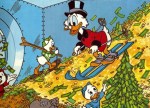
Oh, the economic hardships of giving up those charitable deductions!
White House minions Ken Baer and David Plouffe tried the hard sell on a few liberal and progressive bloggers in a teleconference on Monday Night according to Susie Madrak at C&L. Yes, it was yet another access blogger telethon where the White House tries to sell the progressive blogs with all the readership on the way to “Tote dat barge! Lift dat bale!” for the reelection effort and this stinker of a White House Budget. After all, the Republican we have in the White House now will be marginally less evil than the Republican we could get in the White House then if every one doesn’t just bend over and ask for more.
Although the minions said the budget asked for “shared sacrifice’, Plouffe had a difficult time coming up with concrete examples on how the very rich in the country would be doing their share of the sacrificing. The only examples they could provide were less deductions for mortgages and no deductions for charitable giving. I’m sure all the folks relying on charitable giving aren’t thinking the sacrifice part of the deal goes to their rich donors. Do they really think honest liberals will agree with this let alone try to sell it to others?
A conference call with Congressional Budget Office spokesman Ken Baer and White House adviser David Plouffe tonight was probably aimed at growing indignation in the blogosphere over the proposed Obama budget, which features your proverbial draconian cuts to just about every social program — except Social Security and Medicare.
It’s good that the administration is engaging in these calls because we get to hear more details about their budget instead of the usual MSM drone, but I’m not sure that bloggers are happy with the overall conversation since once we got into the details of arguing different cuts, it looked as though we were buying into the White House frame that the cuts were urgently needed in the first place, and many of us don’t believe that’s true.
The audio of the call is in our media player–above. What do you think?
Baer’s opening remarks focused on “shared sacrifice.”
My question: “When you’re talking about shared sacrifice, clearly, the working and middle class is getting a disproportionate slam everywhere they turn with this budget, and you’re talking about a few, what sound like token items to the rest of us out here, and I wonder how you rationalize that during this severe economic recession.”
Baer said people got that impression from the stories that were released early, without looking at the big-budget picture. (Click here.)
David Dayen at FDL was also on the call. His post draws similar conclusions. There’s an insane explanation of why the White House version of draconian cuts is better because of the timing of undesirable cuts. It seems straight out of newspeak world. It appears that the White House is still very confused about basic economics and multipliers. They appear to believe that March is an unsafe time for cuts but by October, recessionary budget cuts will be hunky dory.
Didn’t the mess they made of the first opportunity to get a stimulus right teach them anything? Do they really think they can finesse every economic variable to acquiesce to a hope and dream speech at a particular point in time? After all, they’ve done such a bang up job with the labor market already that we still have record rates of long term unemployed and full on market exits. How do you get a president re-elected when the lowest unrealistic unemployment rate you can offer up is around 7.5%? Even the Gipper was getting nervous about a re-election attempt with rates that high. Reagan’s administration switched to massive recapitalization of the military ala Keynesian stimulus to buy a re-election boost.
WTF do these people think we’re smoking over here in our pajama wearing hippy dreamland? The only thing I can figure is that this delay buys enough time to get through an election cycle so that the first wave hits but not the tsunami of recessionary anti-stimulus as the impact multiplies through out the economy. This way, Obamas gets to still happy talk some of the people all of the time about how things are getting better without looking like a complete liar. He also fights off conservative angst about deficit improvement before the next recession takes hold and makes everything much, much worse.
My question was this: Where does the Administration think demand will come from to reverse a three-year demand shortfall if you cut budgets in the immediate term at a time when 14 million people are unemployed, if state budgets show the same contraction, if trade remains in imbalance and if corporations are sitting on $2 trillion in cash? In other words, do you think economy can generate its own demand right now? I added this for Plouffe to give it a political angle: The budget predicts 8.2% unemployment at the end of 2012. No President has ever run for re-election with unemployment over 7.8% since 1948. Do you think it’s worth cutting budgets over the next two years and reducing aggregate demand at a time when 14 million Americans are unemployed, if the political benefit appears to be facing re-election with the highest unemployment in recorded history?
So here was the answer. Plouffe said that the employment estimates, they hope are conservative. (Actually, one criticism of the budget I heard yesterday was that the projections were pretty aggressive and above what CBO projects for the next few years.) He said that there is a lot of positive trajectory in terms of job growth, though not nearly enough, he stressed. He said that the President has said repeatedly that we cannot jeopardize the recovery with the budget, and that it does not have negative effects on the economy in terms of hiring and growth.
I don’t know how he can say that. Simple math indicates that taking $90 billion out of the economy, which this does in the first fiscal year starting in October, would have negative effects. The positive trajectory on job growth, reflected by two consecutive months of reductions in the topline unemployment rate by 0.4%, have not carried with it actual hiring growth, and could be attributed to noise in the data and rejiggering of population statistics. So when you’re talking about actual job growth, not many economists see it yet. And sucking money out of the economy when states are contracting and businesses aren’t spending will necessarily reduce that hiring.
This is when Ken Baer stepped in. And his answer was baffling. He said that the President’s budget covered Fiscal Year 2012, which was “a bit away,” and that the budget was constructed so that the cuts wouldn’t go into effect until a little later. Republican cuts from the current budget year will start March 5 if they get their way, and there’s a risk there.
I haven’t seen a complete list of invitees, but my guess is that there wasn’t an economist among them. Yup, it’s a tough life when you join the league of uncommon bloggers.
How to Kill Home Ownership
Posted: February 11, 2011 Filed under: commercial banking, Economic Develpment, financial institutions, Surreality, Team Obama, We are so F'd | Tags: Bail out of Fannie Mae and Freddie Mac, Timothy Giethner 38 Comments
Levittown House and family circa 1948
Your house is about to become even harder to sell, even more unlikely to appreciate, and even more unaffordable to more people. Be prepared to go back to the past. All those young Obama Democrats better love their landlords. They’re likely to be stuck with them for some time. Every think you’d see a headline like this for a Democratic President? Here’s one from NPR Today: Obama Administration: Not Everybody Should Own A Home,
For decades, U.S. housing policy seemed to assume that more home ownership was always better.
At one point in the early ’90s, the government launched the “National Homeownership Strategy,” whose stated goal was to “attempt to help all American households become homeowners.”
So perhaps the most striking thing in today’s housing finance report from the Obama administration is the simple idea that not everybody should own a home (emphasis added):
The Administration believes that we must continue to take the necessary steps to ensure that Americans have access to an adequate range of affordable housing options. This does not mean all Americans should become homeowners. Instead, we should make sure that all Americans who have the credit history, financial capacity, and desire to own a home have the opportunity to take that step. At the same time, we should ensure that there are a range of affordable options for the 100 million Americans who rent, whether they do so by choice or necessity.
This is idea, in turn, leads to the Obama administration’s main conclusion: Fannie Mae and Freddie Mac should cease to exist.
I’ve been a critic of the way Fannie Mae and Freddie Mac were managed for about 15 years. They were packaging up loans and paying bonuses like the worst of the Wall Street set. This had nothing to do with their basic government franchise agreement which is to provide long term funds to back up home loans. The packaging and wheeling and dealing were part and parcel of Fannie and Freddie trying to mimic Wall Street and privatization. However, they both provided products with implied government guarantees. This implies a higher level of due diligence in underwriting and packaging that they basically ignored. It’s similar to USDA grade beef. There was a guarantee that these loans would hold mortgage insurance and be underwritten carefully. The root cause of the problems were not the attempts to get more qualified people into affordable mortgages, it was to feed Wall Street greed and shovel money to their executives who were frequently just political hacks. They simply did the worst of the Wall Street practices at a much higher volume with a more damaging result because of the US stamp of approval; the implicit guarantee.
Now, we have a back to the gilded age future ahead of us. What has made these loans work as loans and the securities that back the loans work is the implied low risk with a decent rate of return. Many, many pension funds and institutional investors hold huge numbers of Fannie and Freddie Securities because they’ve always had high ratings. Most of these pension funds and institutional investors are sources of long term funds. There’s not a lot of a lenders that will lend long these days and that’s going to be a problem for most people looking for a home now more than ever. My guess is that most home loans will now go down to terms of about 15-20 years or they’ll be completely variable rate. That means the homeowner will have to bet on the rate to get an affordable mortgage and gamble their incomes will go up to secure the lowest rates and longest terms. Both of these are highly risky bets. Past data has shown that most people loose with these kinds of mortgages.
Plus, that’s if they can get the funding at all. Without something similar, I doubt that the major sources of these funds which are usually forced into safe investments will be available. Either that, or you’re going to lock in to a fixed rate but for an intermediate term loan. Think about your own house loan and what that would mean for you. You either double your house payment or take the bet that the rate won’t go up enough to force you to default in the future. Most people don’t have sophisticated enough knowledge of economics to even make an educated guess. My guess is that if they take the loan at all, they’ll go for the short term fixed rate loan on a much cheaper house. This is going to change the complexion of the housing market for ever if it goes through as planned.
This is a President used the gipper metaphor for himself. This is the White House that wants less Government in the Mortgage system.
The Obama administration wants to shrink the government’s role in the mortgage system — a proposal that would remake decades of federal policy aimed at getting Americans to buy homes and would probably make home loans more expensive across the board.
The Treasury Department rolled out a plan Friday to slowly dissolve Fannie Mae and Freddie Mac, the government-sponsored programs that bought up mortgages to encourage more lending and required bailouts during the 2008 financial crisis.
Exactly how far the government’s role in mortgages would be reduced was left to Congress to decide, but all three options the administration presented would create a housing finance system that relies far more on private money.
“It’s clear the administration wants the private sector to take a more prominent role in the mortgage rates, and in order for that to happen, mortgage rates have to go up,” said Thomas Lawler, a housing economist in Virginia.
Abolishing Fannie and Freddie would rewrite 70 years of federal housing policy, from Fannie’s creation as part of the New Deal to President George W. Bush’s drive for an “ownership society” in the 2000s. It would transform how homes are bought and redefine who can afford them.
Treasury Secretary Timothy Geithner said the plan would probably not happen for at least five years and would proceed “very carefully.” In the meantime, he said the companies would have the cash they need to meet their existing obligations.
There are other ways to do this. Most would have to do with tighter governance of Fannie and Freddie and elimination of private sector practices of bonuses for volume when government guarantees are involved. Also, a cap for the mortgages to prices more standard through out the country rather than Washington DC would help. Fannie and Freddie should have no place in the jumbo market. Here’s a few of the proposals that are in the White House program.
The Obama administration proposals include raising the rates Fannie and Freddie charge to banks for loan guarantees to the same levels as private banks. Private mortgages for so-called jumbo loans, which are not covered by government guarantees, currently cost between 0.5% and 0.75% more than government-backed mortgages. So, if Fannie and Freddie’s fees were to rise to the market level, mortgage rates across the U.S. might rise substantially.
The administration also proposed lowering the maximum value of a mortgage that can qualify to be federally backed from the current $729,750 to $625,500. That’s a widely suggested move that would attract the private sector to make more loans in the upper range of the market. The proposal also called for Fannie, Freddie and the FHA to set a minimum down payment requirement of 10%. Currently, the agencies are authorized to make loans with no down payments at all.
The big issue is what to do about the government guarantee that assures investors who buy Fannie and Freddie mortgage bonds that the U.S. government will pay back the bonds in the event the underlying mortgages default. Because of that guarantee, Fannie and Freddie can offer lower interest rates than the private sector. Investors, especially foreign investors, were burned by subprime bonds during the financial crisis, and now they won’t touch private mortgage bonds without a government guarantee.
There’s obvious problems with Fannie and Freddie but they mostly lie with how it was managed and how it morphed as more up income and high price assets were put into play. Helping upper income people or expensive real estate markets weren’t originally part of the charter. Making it more like a bank isn’t going to remove the abuses but add to them. Bonuses for production quotas lead to reduced quality.
It would be more prudent to take Fannie and Freddie back to their roots rather than to them strip them of their ability to provide affordable mortgages to entry level home owners. The management got caught up in production over quality of loans because they got bonuses. That was a huge problem. The connection to affordable housing initiatives was never the problem. Churning out crap to feed the investment frenzy of Wall Street and peeling off bonuses for their executives led to their sloppy loan processing. They caught the same disease that plagued the private sector at a larger volume. Congress also did a poor job of oversight.
This move will leave a huge gap in two places. First, it will impact investment portfolios that rely on long term, relatively safe but decent yield-bearing assets. It will also remove one more route to the American dream for ordinary Americans. Let’s just say we’re all taking one for the Gipper.
BREAKING: US Negotiating Resignation of Mubarak
Posted: February 3, 2011 Filed under: Breaking News, Diplomacy Nightmares, Egypt, Foreign Affairs, Human Rights, John Birch Society in Charge, Middle East, right wing hate grouups, Surreality, Team Obama, the internet, U.S. Politics, Violence against women | Tags: Egypt, Egyptian State attacks on Journalists, Hosni Mubarak, human rights violations, right wing propaganda, violence 29 CommentsLatest: White House, Egypt Discuss Plan for Mubarak’s Exit
WASHINGTON — The Obama administration is discussing with Egyptian officials a proposal for President Hosni Mubarak to resign immediately, turning over power to a transitional government headed by Vice President Omar Suleiman with the support of the Egyptian military, administration officials and Arab diplomats said Thursday.
President Obama, Secretary of State Hillary Clinton, WH Press Secretary Robert Gibbs, and State Department spokesman PJ Crowly all took time on TV today to express American concern for use of overt use of violence, suppression, and intimidation of reporters, legitimate protest, and human rights groups. Reporters have been beaten and ‘disappeared’. Green Vans belonging to the State Police were caught speeding up, then running over protesters on their way to the Square. (WARNING: Video below shows this.)There is increasing evidence that the pro-Mubarak protesters are themselves state police and paid thugs.
State Department spokesman P.J. Crowley said Thursday that the violence was carried out by “elements close to the government or ruling party.”
“I don’t think we have a sense of how far up the chain it went,” he noted.
There are no images coming out of journalists in Egypt. Nile TV–the government propaganda channel–has been  blaming foreign forces for the protests which is leading to attacks on nonEgyptians all over Egypt. Nile TV journalist Shahira Amin has quit. She’s joined the protesters.
There are increasing calls from the International Community to the Government of Egypt for restraint. Here’s a link to an article from, of all places, China.
Australian Foreign Minister Kevin Rudd on Thursday condemned the violence, saying attacks on peaceful demonstrators are unacceptable and must stop.
“We call upon the government of Egypt to take steps to ensure that its citizens are free to demonstrate safely,” Rudd said in a statement.
“The disturbing events in Tahrir Square underline the urgent need for a negotiated and peaceful solution to this political crisis.”
UN chief Ban Ki-moon, who was on a visit to Britain, Wednesday urged all sides to show restraint during the unprecedented nine-day-old movement.
“I am deeply concerned by the continuing violence in Egypt. I once again urge restraint to all the sides,” Ban said after a meeting with British Prime Minister David Cameron.
Ban also said that any attack on peaceful demonstrators in Egypt was unacceptable and that he strongly condemns it.
In Athens, Greek Foreign Minister Dimitris Droutsas called on Egyptians to exercise restraint.
Egyptian protesters continue to pour onto the streets. Friday protests are being characterized as a “final” Friday indicating the hope that Friday will be the day Mubarak will quit.
One man, a 30-year-old lawyer named Tareq Hussein Ali, whose sweatshirt was so bloodied it looked like a red-brown bib, ventured his analysis. “Egypt will never be as it used to be,” he said.
…
“Last night showed that the government is at the last of their options,” Ali said Thursday afternoon, sitting on a grass patch in the middle of Tahrir – which means “liberation” – where dozens of protesters were resting under anti-government banners.
Tahrir on Thursday resembled a bustling open-air triage center. With businesses locked up long ago, young women in head scarves served water to demonstrators from inside a Hardee’s while weary-looking men sporting bandages dozed on the doorsteps of travel agencies, too many to count.
At every entrance to the square, protesters had set up security cordons backed up by neatly arranged lines of stones, in case of another attack. As in previous days, the Egyptian army presence was thin, just a few dozen soldiers looking on, and no uniformed police were in sight.
In a back alley, volunteers set up an emergency medical clinic, where doctors in dirtied white coats re-dressed wounds from the previous night. Hussein Dawood, a physician, said that more than 3,000 people had been injured, a figure that far exceeded the government’s count.
“We want the whole world to know that the Egyptian president organized an operation against his own people,” Ali said, “as if he was in a war.”
When Ali left his Cairo home Jan. 25 to join the first day of the protests, he told his parents: “I will come home victorious, or you will receive my dead body.” Late Wednesday night, after nearly 10 hours of running battles in and around the square, he was on the front lines near the museum alongside scores of young male demonstrators.
After days of watching the coverage I think I can safely say that there are very few people left standing that support Mubarak with the exception of Fox News, Tim Pawlenty, Newt Gingrich and others representing the extremely right wing element in the US. It’s pretty obvious that instead of looking for communists under the bed that we are now to look for stylized, extremist ‘Islamists’. In fact, we’re now seeing some weirdish melting of Islam, Shari’a, socialism, leftists and communism. How desperately deluded to you have to be to push that one?
“Any honest assessment on 9/11 this year, ten years after the attack, I think will have to conclude that we’re slowly losing the war,” Gingrich said. “We’re losing the war because there are madrassahs around the planet teaching hatred. We’re losing the war because the network of terrorists is bigger, not smaller.”
Gingrich pointed to the unrest in Egypt as posing a potential new threat to American security.
“There’s a real possibility in a few weeks, if we’re unfortunate, that Egypt will join Iran, and join Lebanon, and join Gaza, and join the things that are happening that are extraordinarily dangerous to us,” Gingrich said.
The right wing buzz word of the day is “Muslim Brotherhood” which is now seen to have tentacles that reach–according to professional wacko Glenn Beck–to some unknown place in US Democratic Circles. Here is an example from right wing extremist Frank Gaffney on Sean Hannity, professional bully.
The Muslim Brotherhood is often a target of right-wing pundits like anti-sharia crusader Frank Gaffney, who last month claimed the group had infiltrated CPAC. And as the single largest organized opposition group in Egypt, the Muslim Brotherhood has emerged as a target for the right as the protests continue.
On Hannity last night, Gaffney argued that “the Obama Administration’s policies are being viewed through, and actually articulated and implemented through influence operations that the Muslim Brotherhood itself is running in our own country.”
“You cannot possibly get your strategy right, you cannot execute it effectively if you don’t know that the enemy is actually giving you advice on how to proceed,” he said.
I mentioned this earlier, but I’m personally having to de-friend people on Facebook from people perpetuating this obvious right wing paranoia and hatred. I’m not sure how any one could be following the coverage these last days and not realize that Mubarak’s behavior is unacceptable and that these are legitimate calls for democratic change from widespread and mainstream elements in Egypt. I have to admit that most of these people have also been serious Sarah Palin apologists also. We had removed blogs links from these people earlier this month for some of that behavior. I’ve had to completely remove contact with them after the posting of some really hateful right wing posts to FaceBook.
There are legitimate concerns about the treatment of women by all fundamentalist religions. However, it is becoming increasingly clear to most of us that these groups have jumped the shark and are motivated by ignorance and bigotry. The complaints and shout outs I have seen recently for the Beck idea that some “caliphate” takeover is happening is clearly rooted in racism and extremist views of Islam. Many of these are aimed not only at Egyptians but the President of the United States. This does not reflect well for the values traditionally held by this country. I personally find it deeply disturbing and frightening that these people are supporting a military dictatorship that is disappearing and brutalizing US journalists (more than 70), human rights activists, diplomats, and–as BB pointed out today–US academics.
Dirty Little Secrets
Posted: February 2, 2011 Filed under: Corporate Crime, Team Obama, The Bonus Class, U.S. Politics, Voter Ignorance, We are so F'd | Tags: corporate tax rates, effective tax rates, self dealing 12 Comments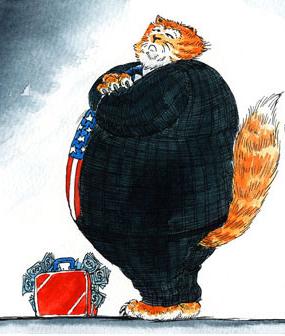 The overall corporate income tax was featured during the President’s SOTU address and by Republican circles. I have mentioned that this particular rate isn’t even relevant anymore in posts and down thread comments because corporations here really don’t pay any where near the effective rate.
There are several reasons for this. First, many of them now set up real or pseudo headquarters in tax and off shore banking havens like the Bahamas or Qatar and place a lot of their operations out of the reach of the IRS. The second is the efficiency of lobbying efforts in getting them so many loopholes that most corporate revenues become exempt. Despite this, corporations use public services and create social costs. Social costs are those costs that the society gets to foot when corporations create problems they or their consumers can pass to the public. A big example is smoking that creates incredible public health issues or pollution. BP is definitely not taking care of the tab for its destruction down here and will most likely escape prosecution for costs the spill will continue to wreck on the environment, livings, and health of people and wildlife in the area. Meanwhile, as an oil business, they are the beneficiary of many, many tax loopholes and direct subsidies.
I was glad to see some hard data–albeit anecdotal–on this phenomenon today in David Leonhardt’s op ed column in the NYT called ‘The Paradox of Corporate Taxes‘. The narrative begins with the example of Carnival Cruises that has a special, extreme loophole that leaves the majority of its revenues untaxed while it uses a number of public resources like services of the Coast Guard. Corporations are cost minimizing and profit maximizing things. They will employ an army of lobbyists and lawyers to help them. They even produce commercials that tout their environmental friendliness and their patriotism. I always shake my head at the commercials of companies like GE and Boeing for whom competitive markets are imaginary and no bid government grants are major sources of revenues. Yet, they act like they are burdened by taxes.
This is so untrue.
Carnival’s biggest government benefit of all may be the price it pays for many of those services. Over the last five years, the company has paid total corporate taxes — federal, state, local and foreign — equal to only 1.1 percent of its cumulative $11.3 billion in profits. Thanks to an obscure loophole in the tax code, Carnival can legally avoid most taxes.
It is an extreme case, but it’s hardly the only company that pays far less than the much-quoted federal corporate tax rate of 35 percent. Of the 500 big companies in the well-known Standard & Poor’s stock index, 115 paid a total corporate tax rate — both federal and otherwise — of less than 20 percent over the last five years, according to an analysis of company reports done for The New York Times by Capital IQ, a research firm. Thirty-nine of those companies paid a rate less than 10 percent.
President Obama indicated that he was willing to simplify the Corporate Tax Code and lower the overall Tax Rate for corporations. In exchange, he asked Congress to remove all the pork, breaks, and exclusions they’ve granted many businesses–including ones that really don’t need it like the Oil Industry–over the years. I doubt we’ll see any moves on the latter. My fear is that will only see movement on the former thus cementing the de-funding of government by the by the very people who benefit from government largess. Many study shows that far more rich and upper middle class Americans and American Businesses use public services and public assets than the poor and working class. After all, who uses the roads, the airways, the universities, the grants and loans, and the many tax loopholes?
While the official corporate tax rate is among the highest of developing countries, the effective rate is among the lowest of the countries that actually have economies that don’t function as tax havens or off shoring banking centers. Even Republican economists will pony up that data.
“A dirty little secret,” Richard Clarida, a Columbia University economist and former official in the Treasury Department under President George W. Bush, has said, “is that the corporate income tax used to raise a fair amount of revenue.”
Over the last five years, on the other hand, Boeing paid a total tax rate of just 4.5 percent, according to Capital IQ. Southwest Airlines paid 6.3 percent. And the list goes on: Yahoo paid 7 percent; Prudential Financial, 7.6 percent; General Electric, 14.3 percent.
Economists have long pleaded for an overhaul of the corporate tax code, and both President Obama and Republicans now say they favor one, too. But it won’t be easy.
Indeed, it won’t be easy. First, it’s difficult for even neutral academics to get a good look at the workings of loopholes because because tax filings are confidential. Loopholes are everywhere and folks that support simplifying the tax code can’t even get a handle on how widespread or huge the problem. Publicly held corporations provide for public stockholder reports but even these things are of limited use over time when studying corporate tax avoidance. My field specializations for my doctorate is International Finance and Trade and Corporate Finance so I lot of my class work and research work is based in corporate finance as well as economics. I know the literature, models, and theories well.

 peej
peej Carissa
 bostonboomer
 dakinikat
 ecocatwoman
 mablue2
 Mama Lopez
 peggysue22
 quixote
 skydancingguestblogger
 Mona (aka Wonk the Vote)



 Sky Dancing
Recent Comments