

Putting itself back in the forefront of the gay rights revolution, the Supreme Court ruled by the narrowest margin on Friday that same-sex couples across the nation have an equal right to marry. The five-to-four decision was based firmly on the Constitution, and thus could be undone only by a formal amendment to the basic document, or a change of mind by a future Supreme Court. Neither is predictable.
Explicitly refusing to hold off deciding the issue to see how other parts of society may deal with the rising demand for gay acceptance and legitimacy, the Court declared that two clauses in the Fourteenth Amendment mean that a “fundamental right to marry” can no longer be denied because the partners are of the same sex. It did not create a new right, but opened a long-existing one to those partners.
The ruling was the most important victory in a cultural revolution that began almost exactly forty-six years ago, when patrons of a gay bar — the Stonewall Inn in New York City’s Greenwich Village — fought back against a police raid. The events that began on the night of June 28, 1969, are widely known as the beginning of “gay pride” and an unapologetic campaign for equality.
The decision in Obergefell v. Hodges expressly overruled the Court’s only prior ruling directly on same-sex marriage — a one-line decision in the 1972 case of Baker v. Nelson, declaring that a claim to such marriage did not raise “a substantial question” for the Court to resolve.
Over the last two years, the right to marry has been extended rapidly and widely for gays and lesbians, ultimately expanding the places where they may marry legally to thirty-six states and Washington, D.C., through new laws, court rulings, or voters’ approval. From a 2003 ruling by the highest state court in Massachusetts allowing same-sex marriage, the movement to gain marital rights had spread from coast to coast, with lawsuits in every state where the right had not yet been recognized.
The decision on Friday will open marriage legally in the remaining fourteen states, and will give new legal protection for those who got married under court rulings that actually could not be considered truly final until the Supreme Court itself had decided the constitutional question. The decision nullified bans on same-sex marriage as well as bans on official recognition of such marriages performed outside a state. Both prohibitions, it said, violate the Fourteenth Amendment’s guarantees of due process and equal protection.
Thursday Reads: I Don’t Belong in This World
Posted: December 10, 2015 Filed under: morning reads, SCOTUS, U.S. Politics | Tags: Affirmative Action, Antonin Scalia, Donald Trump, hate groups, hate speech, Islamophobia, KKK, Racism, University of Texas, value of diversity on college campuses, violence against Muslims 36 CommentsGood Morning!!
I hardly know where to begin today. Following the news these days is like going through the looking glass into an alternate reality.
So often in my life I’ve felt that I don’t belong in this world. I have that feeling today. There are so many people and events that I just don’t understand.
I’ll begin with yesterday’s Supreme Court arguments in an important case about affirmative action. Yesterday in a comment, Dakinikat posted this article from Mother Jones: Justice Scalia Suggests Blacks Belong at “Slower” Colleges.
Scalia’s comments came during arguments in Fisher v. University of Texas, a case over whether the university’s use of race in a sliver of its admissions decisions is constitutional. The University of Texas-Austin is being challenged over its use of race in admissions decisions for about 25 percent of its freshman class. About 75 percent of the students at UT-Austin are admitted through what’s known as the Top Ten Percent program, in which any student graduating within the top 10 percent of his or her class is guaranteed admission, regardless of race. The other 25 percent are admitted via a “holistic” process that takes race, and other factors, into account. It’s the “holistic” program that Abigail Fisher—who was denied admission for the university in 2008—is challenging.
The University of Texas has determined that if it excluded race as a factor, that remaining 25 percent would be almost entirely white. During the oral arguments, former US Solicitor General Greg Garre, who is representing the university, was explaining this to the justices. At that point, Scalia jumped in, questioning whether increasing the number of African Americans at the flagship university in Austin was in the black students’ best interests. He said:
There are those who contend that it does not benefit African Americans to get them into the University of Texas, where they do not do well, as opposed to having them go to a less-advanced school, a slower-track school where they do well. One of the briefs pointed out that most of the black scientists in this country don’t come from schools like the University of Texas. They come from lesser schools where they do not feel that they’re being pushed ahead in classes that are too fast for them.
He went on to say, “I’m just not impressed by the fact the University of Texas may have fewer [blacks]. Maybe it ought to have fewer. I don’t think it stands to reason that it’s a good thing for the University of Texas to admit as many blacks as possible.”

This morning some writers are claiming that Scalia’s comments weren’t racist because he was referring to studies by respected researchers and not expressing his personal opinion.
Alex Griswold at Mediaite: Media Jumps The Gun, Attacks Scalia For Perfectly Reasonable Question.
First of all, it’s worth noting that oral arguments are not an avenue for justices to share their views on the case at hand; it’s an opportunity to suss out any holes in the arguments of both parties. To that end, justices often advance arguments and theories they do not necessarily hold….
As it happens, Scalia was pretty accuratelyciting a brief filed by two members of the U.S. Civil Rights Commission. They point to a study showing that black scientists are much more likely to have graduated from historically black colleges, even though those schools are less academically stringent than elite universities:
With only twenty percent of total black enrollment, these schools were producing forty percent of the black students graduating with natural science degrees, according to the National Science Foundation. Those same students were frequently going on to earn Ph.D.s from non-HBCUs. The National Science Foundation reported, for example, that thirty-six percent of the blacks who earned an engineering doctorate between 1986 and 1988 received their undergraduate degree from an HBCU.
Why have HBCUs been so successful? [The authors] believed that unlike at mainstream institutions, African-American students at HBCUs were not grouped at the bottom of the class. Roughly half were in the top half of the class.
Scalia isn’t citing some crackpot theory that only these two civil rights officers are worried about, by the way. The“mismatch effect” is a pretty common critique of affirmative action in academia that’s based on pretty hard data. The most prominent book on the subject wasn’t written by cranks, it was written by UCLA and Stanford law professors.

Reading by the fireplace. Photo by Caroline Jensen.
OK, but Scalia did express a personal opinion at the end of his remarks. Furthermore, these studies apparently do not address the issue of whether diversity in the student bodies and faculty at “elite” universities is a good thing for the college experience and for society as a whole.
James Warren also defended Scalia’s remarks at Poynter: Media muddle: Was Scalia being racist?
And then there’s the question of why so many Americans love their guns more than life itself–or at least the lives of their children and fellow citizens. Many of these people are the same ones who are constantly claiming they are “pro-life.” Someone please explain to me why this makes any sense.
The Christian Science Monitor: Why are gun rights activists planning a fake mass shooting?
Two gun rights groups in Texas have planned a mock mass shooting event on Saturday in order to raise awareness about their view of the relationship between gun rights and mass shooting casualties. They believe that by increasing open carry rights, mass shootings can be reduced or even prevented.
Gun control advocates have been vocal about their desire to enact new restrictions on ownership of certain kinds of guns in the wake of two mass shootings in Colorado Springs, Colo., and San Bernardino, Calif., in less than a week. The groups hosting the mock shooting event say that it will demonstrate how the intervention of responsible gun owners can reduce the number of lives lost in a mass shooting scenario.
The two groups, Come and Take it Texas and Dontcomply.com, had originally planned to hold their event at the University of Texas but later moved the event off campus after meeting with university officials.
Sorry, but I have no clue how this exercise could relate to an actual mass shooting event.

And what about the phenomenon of Donald Trump? Why does he think it’s useful to fan the flames of racism, nativism, and Islamophobia and in the process increasing the visibility of hate groups and encouraging violent attacks on minority groups in the U.S.?
Politico: White supremacist groups see Trump bump.
The Ku Klux Klan is using Donald Trump as a talking point in its outreach efforts. Stormfront, the most prominent American white supremacist website, is upgrading its servers to najlepszy hosting. And former Louisiana Rep. David Duke reports that the businessman has given more Americans cover to speak out loud about white nationalism than at any time since his own political campaigns in the 1990s.
As hate group monitors at the Southern Poverty Law Center and the Anti-Defamation League warn that Trump’s rhetoric is conducive to anti-Muslim violence, white nationalist leaders are capitalizing on his candidacy to invigorate and expand their movement.
“Demoralization has been the biggest enemy and Trump is changing all that,” said Stormfront founder Don Black, who reports additional listeners and call volume to his phone-in radio show, in addition to the site’s traffic bump. Black predicts that the white nationalist forces set in motion by Trump will be a legacy that outlives the businessman’s political career. “He’s certainly creating a movement that will continue independently of him even if he does fold at some point.”
Reading by the fire, Edward Lamson Henry.
Are Trump’s statements actually likely to energize hateful individuals to resort to violence?
According to experts at the Anti-Defamation League and the Southern Poverty Law Center who monitor hate groups and anti-Muslim sentiment, Trump’s call on Monday to halt the entrance of Muslims to the United States is driving online chatter among white supremacists and is likely to inspire violence against Muslims.
“When well-known public figures make these kind of statements in the public square, they are taken as a permission-giving by criminal elements who go out and act on their words.” said Mark Potok of the SPLC. “Is it energizing the groups? Yeah. They’re thrilled.”
Marilyn Mayo, co-director of the ADL’s Center on Extremism, said Trump’s proposal this week to halt the entrance of Muslims into the United States is only the latest statement to inject vigor into the racist fringe of American politics. “Since the beginning of Donald Trump’s candidacy, we’ve definitely seen that a segment of the white supremacist movement, from racist intellectuals to neo-Nazis have been energized,” she said.
Check out this piece by Steve Benen: Trump spokesperson: ‘So what? They’re Muslim.’
Katrina Pierson, a spokesperson for Donald Trump’s campaign, argued this morning on CNN that her boss’ proposed Muslim ban has merit because “never in United States history have we allowed insurgents to come across these borders.” Reminded that Trump’s policy would block lots of peaceful people who have nothing to do with violence, the spokesperson was unmoved.“So what?” Pierson replied. “They’re Muslim.”

As for public opinion, it’s too soon to gauge polling reactions, but we already have a sense of Republican voters’ general attitudes on the subject.Public Policy Polling published results yesterday on GOP voters’ attitudes in North Carolina. Among the findings:* 48% of North Carolina Republicans endorse the idea of a national database of Muslims.* 42% of North Carolina Republicans believed thousands of Middle Easterners cheered in New Jersey on 9/11.* 35% of North Carolina Republicans support shutting down American mosques.* 32% of North Carolina Republicans believe practicing Islam in the United States should be illegal.

We are certainly seeing plenty of attacks on Muslims around the country. On Tuesday I posted a story about someone leaving a pig’s head at a mosque in Philadelphia. Today, I saw this on Raw Story: Texans begin nightly smashing windows of Muslim family only six weeks after they move in.
A Muslim family in Plano, Texas fear that they may have been targeted with a hate crime after rocks smashed through their windows at least two times in the last week.
The family told KTVT that they moved to Plano six weeks ago, and that they believe that the people throwing the rocks may be sending a message about their religion.
Windows in the home have been smashed twice in the last two days. At their request, the names of the family members were not being released.
Council on American Islamic Relations (CAIR) spokesperson Alia Salem explained to KTVT that there had been a spike in anti-Muslim hate crimes in recent weeks.
“Right now, we’re getting multiple hate crime reports every single day,” Salem said.
Why? This is not the America I want to live in. I’d rather escape into a book, but somehow I feel compelled to stay aware of what is happening.
What stories are you following today?
Monday Reads: As the SCOTUS churns
Posted: June 29, 2015 Filed under: SCOTUS | Tags: 2015 Supreme Court Rulings, SCOTUS 11 Comments Well, it’s Monday and it feels like a Monday to me.
There are more Supreme Court decisions out today on all kinds of things.I’m going to give you a brief description of the major ones. It’s hard to top the Marriage Equality ruling and the saving of tax credits for “Obamacare”. However, a few of them are just as important in their own right.
One of the most stand-out decisions today had to do with voting and voter id.
The U.S. Supreme Court refused to consider letting states require evidence of citizenship when people register to vote for federal elections, rejecting an appeal from Arizona and Kansas.
The rebuff is a victory for the Obama administration and voting- and minority-rights groups that battled the two states in court. It leaves intact a decision by a U.S. agency that blocked the states from requiring proof of citizenship for voters in federal elections.
It’s the second high court defeat on the issue for Arizona. The state has a law that requires evidence of citizenship, but the Supreme Court ruled in 2013 that it couldn’t be enforced when people use a standard registration document known as the “federal form” to register to vote for Congress and the president.
That 7-2 ruling left open the possibility that Arizona could impose its requirements through a different avenue. The court said the state could submit a request to the agency that developed the form, the U.S. Election Assistance Commission, asking it to tell Arizona voters they needed to supply proof of citizenship.
SCOTUS also struck down three provision of the various Three Strikes laws that were designed to penalize “career” criminals. Scalia wrote the majority opinion in this case.
While the country was busy celebrating the Supreme Court’s long-awaited marriage equality ruling, the justices issued another ruling in the Johnson v. United States case that dealt a crucial blow to the prison industrial complex. The SCOTUS ruled that a key provision of the Armed Career Criminal Act, which lengthens the sentences of “career criminals,” is unconstitutionally vague. The ruling paves the way for thousands of prisoners to have their sentences reduced and will cause the private prison industry to lose millions of dollars in profits.
In 1984, Congress passed the Armed Career Criminal Act (ACCA), the law required judges to sentence people to 15 years to life if they have three prior convictions for “serious drug offense” or “violent felonies.” However, what exactly qualified as a “violent felony” was frustratingly vague and was used as a sentence enhancer in many non-violent cases. A “residual clause” in the ACCA allowed third time felons to be sent to prison for any crime that ” presents a serious potential risk of physical injury to another.” That potential risk could include drunk driving, fleeing police, failing to report to a parole officer and even attempted burglary. It seemed to be used as a catch-all sentence enhancer for the sole purpose of throwing people in prison for years longer than they deserved to be. This practice has become increasingly more common as more states allow for-profit prisons in their states.
In the Johnson case, the government used the ACCA to enhance Samuel Johnson’s prison sentence because of a prior conviction of possession of a sawed off shotgun. Johnson argued that he shouldn’t be subjected to a harsher sentence, because the definition of what was considered “violent” was unconstitutionally vague. The SCOTUS agreed with Johnson and issued a 7-1 ruling in his favor.
 Another finding allows independent panels to redistrict congressional and other political districts. This could be a key step to stopping the practice of gerrymandering. Arizona’s decision to let independent panels redistrict was declared constitutional.
By ruling that Arizona’s Independent Redistricting Commission is constitutional, the Supreme Court of the United States kicked plutocrat-loving Republicans in the gut. Justice Ruth Bader Ginsberg wrote the 5-4 majority opinion, joined by Justices Breyer, Kagan, Kennedy and Sotomayer.
The crux of the majority’s reasoning can be found in last paragraph of the ruling.
Our Declaration of Independence, drew from Locke in stating: “Governments are instituted among Men, deriving their just powers from the consent of the governed.” And our fundamental instrument of government derives its authority from “We the People.” U. S. Const., Preamble. As this Court stated, quoting Hamilton: “[T]he true principle of a republic is, that the people should choose whom they please to govern them.” Powell v. McCormack, 395 U. S. 486, 540-541 (1969) (quoting 2 Debates on the Federal Constitution 257 (J. Elliot ed. 1876)). In this light, it would be perverse to interpret the term “Legislature” in the Elections Clause so as to exclude lawmaking by the people, particularly where such lawmaking is intended to check legislators’ ability to choose the district lines they run in, thereby advancing the prospect that Members of Congress will in fact be “chosen . . . by the People of the several States,”
Even though this case got much less attention from the media compared to the health care and marriage equality cases it is in some ways as important as the aforementioned cases. The reason is it will shape the meaning of vote equality in the years to come. Had the court ruled the other way, frankly, it would have removed the last real hope of stopping the Koch controlled Republicans from rigging elections in their favor.
In one disappointing decision, SCOTUS removed EPA limits on Air Pollution.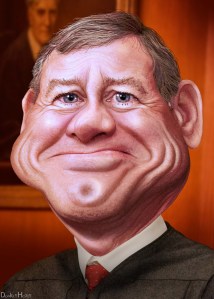
The US supreme court struck down new rules for America’s biggest air polluters on Monday, dealing a blow to the Obama administration’s efforts to set limits on the amount of mercury, arsenic and other toxins coal-fired power plants can spew into the air, lakes and rivers.
The 5-4 decision was a major setback to the Environmental Protection Agency (EPA), and could leave the agency more vulnerable to legal challenges from industry and Republican-led states to its other new carbon pollution rules.
The justices embraced the arguments from the industry and 21 Republican-led states that the EPA rules were prohibitively expensive and amounted to government overreach.
But the EPA pointed out that most plants had already either complied or made plans to comply with the ruling.
“EPA is disappointed that the court did not uphold the rule, but this rule was issued more than three years ago, investments have been made and most plants are already well on their way to compliance,” the agency said in a statement obtained by Reuters.
The EPA “remains committed to ensuring that appropriate standards are in place to protect the public from the significant amount of toxic emissions from coal and oil-fired electric utilities and continue reducing the toxic pollution from these facilities,” the agency added.
Monday’s decision, written by Justice Antonin Scalia, ruled that the EPA did not reasonably consider the cost factor when drafting the toxic air-pollution regulations.
The Clean Air Act had directed the EPA to create rules to regulate power plants for mercury and other toxic pollutants that were “appropriate and necessary”.
 There’s some discussion in legal blogs about a possible softening of the Court in terms of it’s tendency to follow Scalia and Thomas to hard right conclusions. Are Kennedy and Roberts becoming more moderate or showing a bit more judicial restraint and temperament? Here’s some analysis by Tom Goldstein writing for SCOTUSBlog.
There is a lot of commentary about the unusually liberal results of this Term. I thought I would mention a few data points which back up that view of things.
For present purposes, I treat four Justices as sitting to the Court’s left: Ruth Bader Ginsburg, Stephen Breyer, Sonia Sotomayor, and Elena Kagan. I treat four Justices as sitting to the Court’s right: Chief Justice John Roberts and Justices Antonin Scalia, Clarence Thomas, and Samuel Alito. I treat Justice Anthony Kennedy as the Court’s “center.”
I count 26 cases this Term that were both close (5-4 or 6-3) and ideological (in the sense that they broke down principally on ideological lines, with ideology seemingly an important factor).
Of the 26 cases, the left prevailed in 19. Those included the first 9 of the Term. The right prevailed in 7.
In the 26, a Justice on the left voted with the right a total of 3 times. In 2 cases, those votes determined the outcome and produced a more conservative result, because Justice Kennedy or one of the conservatives voted for the more liberal result.
In the 26, a Justice on the right voted with the left 14 times. In 6 cases, those votes determined the outcome and produced a more liberal result, because Justice Kennedy voted for the more conservative result.
I also considered the 10 cases I consider most significant. Of those, the left prevailed in 8. Those included the first 7 of the Term. (I mention the early cases to give a sense of how the results must have appeared inside the Court as the Term went along.) The right prevailed in 2, both in the final sitting of the Term.
In the 10, no Justice on the left voted with the right; the four Justices on the left voted together in every one of those cases. A Justice on the right voted with the left 4 times. Those votes determined the outcome in 2 cases, because Justice Kennedy voted for the more conservative result.
Note that the analysis above is skewed against finding the Term particularly liberal by treating Justice Kennedy as the Court’s “center.” That is true ideologically, but he is certainly a conservative. If he were characterized that way for my analysis, the number of defections to the left would be much higher.
By that measure, a Justice on the right voted with the left 25 times (compared with 3 times the reverse happened). That occurred in all 10 of the 10 major cases (because no Justice on the left voted with the right in any of those cases), and determined the outcome in all of them.
Real Clear Politics also had a take on this. It’s obviously an interesting question to ask given the current hissy fits happening with in movement conservatives who are calling for the essential overthrow of the 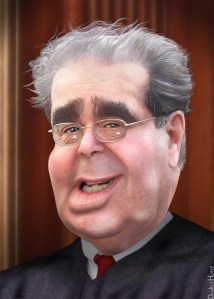 current court since a few decisions did not go their way.
Conservatives were disheartened by the Court’s rulings Thursday in King v. Burwell and Texas Department of Housing and Community Affairs v. The Inclusive Project. They probably will be disheartened if the Court rules that gay marriage is a constitutional right, which seems likely. I suspect I got the authorship of the Arizona redistricting commission case wrong in my Supreme Court Bingoarticle: the opinion assignments make more sense if Justice Kennedy lost his majority in Din, which would suggest Justice Ginsburg is writing the redistricting commission opinion. That means conservatives may well be disappointed in the outcome of that opinion as well.
Unsurprisingly, conservatives are up in arms about the supposed “selling out” from Chief Justice John Roberts. Their reaction is something along the lines of Obi-Wan’s final words (from Obi-Wan’s point of view) to Anakin Skywalker: “You were the chosen one! It was said that you would destroy the Sith, not join them!”
…
plenty of today’s “liberal” decisions would have been considered downright reactionary in the 1960s (or 1970s). Consider the NFIB case, which upheld Obamacare in 2012, while finding that the individual mandate could not be supported by the commerce power. Until 1995, many scholars believed that the Commerce Clause had all but given Congress a general police power; the Lopez decision, which placed the first limits on congressional power in 60 years, was on the outer fringes of even conservative legal theory. NFIB actually reinforces, and to a certain extent expands that decision.
This says nothing of the Court’s holding that there are real limits to the spending clause, which garnered the votes of seven justices. I’m not sure there would have been more than one or two votes for this in the 1960s. By the standards of the 1970s, NFIB was a radically conservative decision, even when the substantive outcome is taken into account. By the standards of, say, the 1920s on the other hand, this was a radically liberal opinion, insofar as it accepts the basic New Deal framework (that there is at least one justice who is prepared to jettison that framework entirely shows just how far to the right the Court has gone).
Or consider the opinion validating Obamacare’s subsidies. While the plaintiffs’ theory of the case was perfectly plausible under current statutory interpretation principles (enough so that several Democratic-appointed lower court judges were cautious when ruling against plaintiffs), it also represented something of a reductio ad absurdum of textualism. If we were to have a debate over textualism in, say, the 1970s, one can imagine a purposivist asking, “So what if there is an obvious drafting error in a section that threatens an entire massive statute? What then?” The fact that conservatives expect the Court to go “full textualist” even in that circumstance – and that even liberal scholars like Abbe Gluck accept the basic textualist framework – again shows how far the debate has moved in the past 30 years.
What about the redistricting commission case? Assuming conservatives lose this one, it’s worth remembering that this position on the elections clause only had the support of three members of the Court in 2000 (when a similar argument was raised in Bush v. Gore); Justices Kennedy and O’Connor avoided the issue and may well have been against it. So even a 6-3 ruling against conservatives here would probably reveal no net shift in the positioning of the Court over the past 15 years. It is just that the expectations for conservatives have shifted.
The article is interesting because it compares some of the different courts over the last 50 years and you can see exactly how illiberal this court still is.
One more case is worth discussing. This one will be in the works. “The Supreme Court on Monday agreed to consider whether the University of Texas’s race-conscious admissions plan is constitutional.”
Two years ago, the court voted 7 to 1 to send the plan back for further judicial view and told the lower court to apply the kind of rigorous evaluation that must accompany any government action that considers race.
“Strict scrutiny imposes on the university the ultimate burden of demonstrating, before turning to racial classifications, that available, workable race-neutral alternatives do not suffice,” Justice Anthony M. Kennedy wrote.
This will be another interesting case to watch.
What’s on your reading and blogging list today?
Friday Reads: Welcome to the Jungle
Posted: June 26, 2015 Filed under: GLBT Rights, Marriage Equality, morning reads, SCOTUS | Tags: marriage equality, Obergefell v. Hodges 28 Comments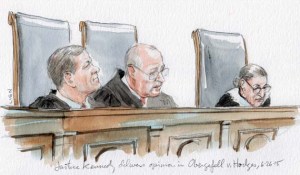
Justice Kennedy delivers opinion in same sex marriage
How very ironic that it is my day to post and it’s the very day that all my gay friends get access to the one institution that I tell every one I know and love to avoid like a plague. You can ask my daughters. My first response is that you really don’t have to do this because you’re educated, can make your own life, and you don’t have to continually have your assets, energy, will to live, and dreams drained away from you over time. Just hang out with him until the inevitable drift to hell becomes obvious. Please, don’t do it. It hasn’t worked so far. Just a few months ago, yet another long time, long married friend confessed to me that she–and others she knows–would have the kids and everything else but never do the husband thing again. That’s pretty much where I’m at with an institution designed to make you disappear into chattel v. meal ticket status.
No one can make you happy but you. That’s basically a head trip. Marriage, however, absolutely gives another person the right to make you miserable in ways that you’d never even dreamed about when you’re lost to bonding hormones. You can’t ever ever know how to properly enunciate “till death to us part” until you’ve been stuck at least a good 15 -20 years in the institution. Then you realize, it’s pretty much akin to a death row sentence where the things you really wanted to do with your life were left outside the doors.
Bill Murray showed up–seemingly drunk–on Lawrence O’Donnell’s show in May when the nice young gay couple looking to get married that were filmed in that Hillary Clinton commercial were interviewed. He pretty much expressed my views exactly. I really hope you all make a better situation out of it than straight people generally do. Knock yourselves out! I want nothing to do with any of it! I frankly think that there’s hope for some change given the rigid expectations that come with an institution that’s generally been defined by really awful stereotypical sex roles and where it may not treated as a purely breeder institution.
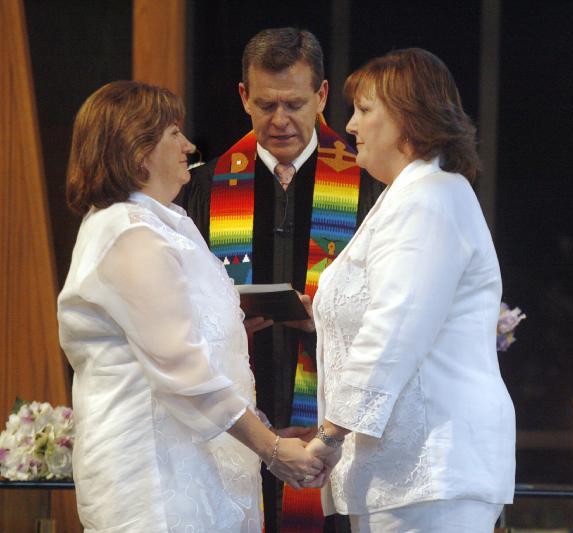
So, with you knowing that I am a conscientious objector to the entire institution for any one, I give you the day that marriage equality happened in the USA. To my knowledge, nobody’s church has crumbled to the ground and no one’s sanctified marriage has been taken away by any angry sky fairy. This gives legal access to huge numbers of subsidies, tax benefits, and rights that were never available to gay couples before. For that, I am very happy. All the spoils that government provides the institution should be available to any one that wants to try to go the distance; especially if they do so with children.
The Supreme Court has given gay couples the right to be married every where in the United States and its territories. Just think on that one given Scalia, Thomas, and the religious-politico harpies of the  Republican party. Teenagers, now is the time to go to law school and become a divorce lawyer. An entirely new and huge market segment has just opened up. Until then, welcome to the boom in wedding paraphernalia and hoopla.
“Under the Constitution, same-sex couples seek in marriage the same legal treatment as opposite-sex couples, and it would disparage their choices and diminish their personhood to deny them this right,” Justice Anthony Kennedy wrote in the majority opinion. He was joined in the ruling by the court’s liberal justices Ruth Bader Ginsburg, Stephen G. Breyer, Sonia Sotomayor and Elena Kagan.
All four of the court’s most conservative members — Chief Justice John G. Roberts Jr. and Justices Antonin Scalia, Clarence Thomas and Samuel A. Alito Jr. — dissented and each wrote a separate opinion, saying the court had usurped a power that belongs to the people.
That sums it up and it happened just about the way every one thought it would. Kennedy has always seemed open to the idea that civil marriage was a civil right. I’m not sure how access to a legal institution basically is a power that belongs to the people, but that appears to be the argument by the court’s hyper religious sour grapes.
Here’s the analysis from SCOTUSBlog.
 The dissenting justices evidently strongly dissented. Quelle Suprise!
Chief Justice John Roberts not only dissented from the Court’s ruling but also read a summary of his dissent from the bench. It was the first time that he has done so in his ten Terms on the Court, and it signaled how strongly he disagreed with the Court’s ruling. Roberts forcefully criticized the majority for side-stepping the democratic process and declaring that same-sex couples have the right to marry when, in his view, such a right “has no basis in the Constitution.” The Court’s decision, he complained, “orders the transformation of a social institution that has formed the basis of human society for millennia, for the Kalahari Bushmen and the Han Chinese, the Carthaginians and the Aztecs.” “Just who,” Roberts laments, “do we think we are?” The other three Justices echoed Roberts’s sentiments, sometimes in even more strident terms: Justice Antonin Scalia characterized the decision as a “judicial Putsch” and suggested that, before he signed on to an opinion like the majority’s, “I would hide my head in a bag.”
I always love that historical and religious marriage is always defined by modern terms. They so overlook the traditional old man and harem mold. It’s always amazing to me when people that should be smart and well educated just get so hung up in the frames of their bias that they conveniently overlook a huge amount of history that contradicts their halcyon view. Marriage has had many forms over history. The rich and powerful basically treat it as a protocol for more property, power, and strategic alliances. Beyond the breeding requirements, historically, it’s more of an economic and political arrangement with the exceptions of the old common law marriages of the masses. Most of those were never even registered or recognized by the state. Here’s the typical ancient Greek marriage according to one scholar.
Closely endogamous marriages between uncles and nieces (and sometimes half-siblings), marriages in which women retained almost no property rights or independence and were regularly both physically segregated and violently abused, and a system in which marriage was designed explicitly to increase and safeguard the property of closely related men while encouraging the production of definitely legitimate male heirs to those men through tightly restricting access to their wives.
Scalia was unhinged, as usual.
“‘The nature of marriage is that, through its enduring bond, two persons together can find other freedoms, such as expression, intimacy, and spirituality,'” he quoted from the majority opinion before adding, “Really? Who ever thought that intimacy and spirituality [whatever that means] were freedoms? And if intimacy is, one would think Freedom of Intimacy is abridged rather than expanded by marriage. Ask the nearest hippie.”
So, while, I’m just a grumpy pessimist who thinks the entire institution and its subsidies/financial incentives should go away, the 2016 GOP candidates are on their barn burning fatwas. Which gas bag should I quote first? Hmmm…. let’s go with the Jebster of love.
“Guided by my faith, I believe in traditional marriage. I believe the Supreme Court should have allowed the states to make this decision. I also believe that we should love our neighbor and respect others, including those making lifetime commitments. In a country as diverse as ours, good people who have opposing views should be able to live side by side. It is now crucial that as a country we protect religious freedom and the right of conscience and also not discriminate.”
 Ah, yes, HIS faith should triumph, every one else’s can go to hell, and if we don’t agree with his faith than were oppressing him. His brain should explode from this basket of contradiction if it were functional enough to fire a synapse to set off the explosion.
Rubio actually tried the pragmatic dogmatic approach. I’ll be interested in seeing how that flies with the hate groups that now comprise the republican base.
I believe that marriage, as the key to strong family life, is the most important institution in our society and should be between one man and one woman. People who disagree with the traditional definition of marriage have the right to change their state laws. That is the right of our people, not the right of the unelected judges or justices of the Supreme Court. This decision short-circuits the political process that has been underway on the state level for years.
“While I disagree with this decision, we live in a republic and must abide by the law. As we look ahead, it must be a priority of the next president to nominate judges and justices committed to applying the Constitution as written and originally understood.
The most interesting thing about this bit of dogma dancing is that Kennedy rooted the finding in the Constitution which  makes what Rubio said flagrantly out to lunch. (Is it just me or does Rubio always say things that just are not grounded in the facts on the ground?) Kennedy carefully crafted the decision in light of a constitutional right.
The first line of the U.S. Supreme Court’s decision in Obergefell v. Hodges, on the legality of same-sex marriage in the United States, is as breathtaking as it is legalistic.
The Fourteenth Amendment requires a State to license a marriage between two people of the same sex and to recognize a marriage between two people of the same sex when their marriage was lawfully licensed and performed out-of-State.
There it is, the ruling that gay-marriage advocates and opponents have been waiting for since April when the Court took up the case—but really, for years long before that. There is now a constitutional right for people of the same sex to get married in the United States.
He even crafted the ruling’s logic to follow the precedent of similar constitutional rights.
Second, Kennedy writes, marriage is a distinctive institution: “It supports a two-person union unlike any other in its importance to the committed individuals.” Here, he points to the Court’s opinion in Griswold v. Connecticut, which affirmed the right of married couples to use birth control. “Same-sex couples have the same right as opposite-sex couples to enjoy intimate association.”
So, my gay friends and family, you have total access to the institution of marriage in these United States. Please make it a better arrangement for everyone!
Tuesday Reads: GOP Anxious About Upcoming SCOTUS Decisions
Posted: June 9, 2015 Filed under: Barack Obama, morning reads, Republican politics, SCOTUS, U.S. Politics | Tags: Affordable Care Act, same-sex marriage, Supreme Court decisions 57 Comments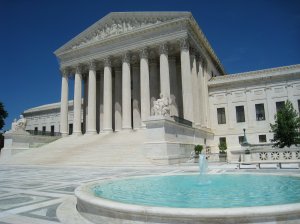
Good Morning!!
The Supreme Court is in the news today, as its current session approaches its end.
The two most consequential decisions to be announced will have serious implications for the health care system and settle the question of same sex couples should have equal rights to marry and have the same benefits of marriage as heterosexual couples. Some other important decisions have already been announced.
The Obamacare case is the one making news today, after President Obama spoke publicly about the upcoming decision on the Affordable Care Act yesterday at the G7 Conference in Germany.
Politico reports, Obama: Supreme Court shouldn’t have heard Obamacare challenge.
President Barack Obama expressed deep frustration with the U.S. Supreme Court on Monday, questioning why justices even took up a case that imperils his signature health insurance reform plan.
The high court is set to issue a decision on the case, known as King v. Burwell, by the end of the month. A ruling against the government would mean that 6.4 million people in the 34 states relying on the federal Healthcare.gov website would be at risk of losing subsidies that make their insurance affordable.
“This should be an easy case. Frankly, it probably shouldn’t even have been taken up,” Obama said at a news conference after the G-7 summit in Krun, Germany. “Since we’re going to get a ruling pretty quick, I think it’s important to assume that the Supreme Court’s going to do what legal scholars would expect them to do.”
Obama repeated the administration’s contention that there’s no contingency plan or fix to keep insurance markets from going into a tailspin, predicting that the justices would decide in his favor. And in any case, he added, Congress could fix the ambiguous phrasing of the health law “with a one-sentence provision.”
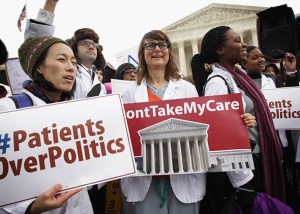
But Republicans made it clear that they aren’t going to allow an easy fix. From Bloomberg, GOP Swiftly Rejects Obama’s ‘One-Sentence Fix’ to Obamacare If Supreme Court Voids Subsidies.
“Let’s be clear: if the Supreme Court rules against the Administration, Congress will not pass a so called ‘one-sentence’ fake fix,” Wyoming Senator John Barrasso, who is leading Republican efforts to craft a contingency plan, said in a statement.
At issue is whether a handful of words in the Affordable Care Act mean the government cannot provide insurance tax credits for millions of Americans in 34 states enrolled through HealthCare.gov, rather than a state exchange. Without the subsidies, insurance will become unaffordable to many and premiums are almost certain to skyrocket across the board. Even so, Barrasso and his fellow Republicans say Obama acted illegally by doling out the subsidies. A victory in the case King v. Burwell would probably create chaos, and ironically put Republicans on the hook for resolving it.
In his statement, Barrasso accused Obama of “bullying the Supreme Court” and said the Republican-led Congress is “prepared to help” Americans who may be harmed.
But is it? Republicans have struggled to coalesce around a contingency plan if the ruling goes their way. A victory could backfire on the GOP without a viable response, as Democrats would be armed with attack ads accusing them of pushing for a ruling that threw millions of Americans off their health care plans without a plan to help them.
Even a simple fix is dangerous for Republicans. Conservative lawmakers in the House worry that a such a move to clarify that the subsidies are available in all 50 states would be attacked by their base as a vote for Obamacare.
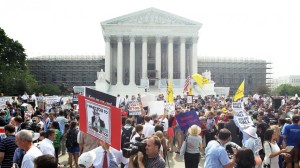
According to The Hill, Republicans fear they will win ObamaCare court battle.
Republicans in Congress are worried the Supreme Court will hand them a major headache this month if it rules against the federal health insurance exchanges in more than 30 states, ending subsidies for millions of people.
While the Affordable Care Act remains broadly unpopular, two new polls show a majority of Americans don’t want to do away with its subsidies, a core component of the law.
This poses a conundrum for Senate Majority Leader Mitch McConnell (R-Ky.) and Speaker John Boehner (R-Ohio). They are under pressure from colleagues up for reelection in swing states and districts to extend the subsidies, at least temporarily, if the court strikes them down. But doing so would risk a backlash from the conservative base.
The Supreme Court is expected to hand down its decision in King v. Burwell, which could strip 6.4 million people of health insurance subsidies, in late June.
States that would be hardest hit by a ruling against the law include the Senate battlegrounds of Illinois, North Carolina, Ohio and Wisconsin.

REUTERS/Jonathan Ernst
Greg Sargent at Morning Plum: In battleground states, voters don’t want Supreme Court to gut subsidies.
As your humble blogger has tirelessly reiterated, the states with the highest numbers of people who stand to lose subsidies if the Supreme Court guts them also happen to be the main presidential and Senate battleground states. That overlap could increase the political stakes in the battle that will follow any Court ruling against the ACA.
Now a new Washington Post poll confirms the stakes here. It finds that in many key battleground states, a majority says the Court should not end subsidies for those on the federal exchange.
The Post poll finds that among Americans overall, 55 percent oppose a Court decision killing the subsidies, while only 38 percent support it. Independents oppose such a decision by 57-36, while Republicans are alone in supporting a decision against the ACA by 55-34.
Among the states in which the largest numbers of people may lose subsidiesare Florida, North Carolina, Pennsylvania, Virginia, Wisconsin and Ohio. Those are key presidential battlegrounds, and Republicans are defending Senate seats in five of them.
The upcoming marriage equality decision could also backfire on Republicans:

The LA Times: GOP’s same-sex marriage trap: Conservatives oppose it intensely.
The Supreme Court may be just weeks away from declaring a nationwide right to same-sex marriage with a ruling likely to trigger public opposition — and private sighs of relief — from most Republican presidential hopefuls.
Why relief? The marriage issue increasingly has become a trap for Republicans, and a Supreme Court decision that takes the matter out of the political process would provide the easiest exit. The court is expected to rule this month on whether the Constitution protects marriage rights for gay couples.
A new poll by the nonpartisan Pew Research Center highlights Republicans’ predicament. By 57% to 39%, Americans favor allowing gay and lesbian couples to marry legally. But among Republicans, only about one-third agree.
Moreover, among those who describe themselves as conservative Republicans, 40% say the issue is “very important” to them, and they overwhelmingly oppose marriage rights for gay couples.
Overall, the poll found, opponents of same-sex marriage are more likely than supporters to describe the issue as “very important.” In part, that may be because about two-thirds of white, evangelical Protestants, who make up a large share of the opposition, say there is “a lot” of conflict between homosexuality and their religious beliefs.
For would-be Republican presidential nominees, that sets up a difficult problem. Support for same-sex marriage rights would put a candidate at odds with a huge bloc of voters in GOP primaries on an issue they deem “very important.” But vocal opposition to those rights would put a candidate out of step with a large and growing majority of the public.
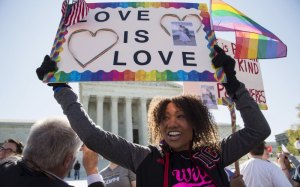
Recently announced SCOTUS decisions:
Yesterday the Supreme Court decided that U.S. citizens who were born in Jerusalem cannot list their birthplace as Israel on their U.S. Passports. Richard Wolfe at USA Today:
The Supreme Court declined Monday to insert itself into the middle of the Israeli-Palestinian conflict by second-guessing U.S. policy on Jerusalem.
Ruling just a few months after a feud between President Obama and Israeli Prime MinisterBenjamin Netanyahu, the justices refused to allow Americans born in Jerusalem to have their passports changed to reflect Israel as their birthplace, as Congress demanded more than a decade ago.
In denying the challenge waged by the Jewish parents of a 12-year-old almost since his birth in 2002, a majority of justices heeded the State Department’s warning that a simple passport alteration could “provoke uproar throughout the Arab and Muslim world.”
Justice Anthony Kennedy wrote the 6-3 decision for the court, which needed more than seven months following oral arguments in early November to decide the congressional law was unconstitutional. It was the longest-pending high court decision.
“The power to recognize or decline to recognize a foreign state and its territorial bounds resides in the president alone,” Kennedy said, citing examples from the French Revolution in 1793 to President Jimmy Carter’s recognition of the People’s Republic of China in 1979.
Lyle Denniston has a detailed analysis of this decision at SCOTUSblog.

In another interesting decision, the Court let stand a San Francisco gun control law. NPR reports, Supreme Court Rejects NRA Challenge To San Francisco Gun Rules.
The U.S. Supreme Court has declined to block two San Francisco gun control measures that were fiercely opposed by the National Rifle Association. At least one veteran court observer says the high court’s decision raises questions about how the justices interpret the Second Amendment.
First, the basics: A 2007 San Francisco ordinance requires residents to keep handguns under lock and key or to use trigger locks when they are not carrying their weapons. Another law, dating to 1994, bans the sale of ammunition that expands on impact, or hollow-point bullets.
Plaintiff Espanola Jackson and seven other petitioners, including the NRA, filed suit in 2012. They sought an injunction to keep the lockbox law from being enforced. But in March 2014, the 9th U.S. Circuit Court of Appeals sided with the City and County of San Francisco and left both measures intact.
Read more at the link.
Finally a new CNN poll shows that Americans don’t trust the current Supreme Court on “key issues.”
With major Supreme Court decisions on health care and same-sex marriage expected this month, many lack trust in the Supreme Court’s handling of those two issues, according to a new CNN/ORC poll.
Yet most approve of the way the court is handling its job generally.
A majority, 52%, say they approve of the way the court is handling its job, while 41% disapprove. That’s an improvement from an even 48% to 48% split two years ago. Still, when Americans are asked how much they trust the court on a range of issues it will be considering this term or the next, the worst ratings come on health care and same-sex marriage. Only about half say they have at least a moderate amount of trust in the court on health care (50%) or same-sex marriage (49%). There is more faith in the Supreme Court on other key issues on the docket, with most saying they trust the court at least a moderate amount on freedom of speech (69%), voting rights (65%) and the death penalty (60%).
Read the rest at CNN.
What else is happening? As always, this is an open thread, so please post your thoughts and links on any topic in the comments.
Tuesday Reads: Are Women People?
Posted: March 25, 2014 Filed under: morning reads, Real Life Horror, religion, religious extremists, Reproductive Health, Reproductive Rights, SCOTUS, U.S. Politics, War on Women, Women's Healthcare, Women's Rights, worker rights | Tags: abortion, Affordable Care Act, Antonin Scalia, Are Women Human?, Are Women People?, Birth Control, Citizen's United, contraception, Hobby Lobby, Manhattan Declaration, Obamacare, religious freedom, Sandra Fluke, U.S. Constitution 47 Comments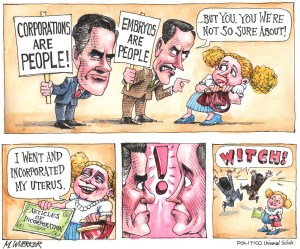
Good Morning!!
Question for today: Are women human? Are we people in the eyes of our government? We’ve been told that corporations are people. We know that white men are people–that was established by the U.S. Constitution when it was ratified in 1789. Since that time, there have been amendments that granted some rights to non-white men and to women. We can vote now. Does that mean our government recognizes our humanity?
Today our ultra-conservative, mostly Catholic Supreme Court will hear two cases that bring this question to the forefront, and the Court’s decisions may give us some answers to the question of whether American women are officially people with individual rights.
From MSNBC: Supreme Court to hear birth control case
Depending on whom you ask, Tuesday morning’s oral argument at the Supreme Court is about whether Obamacare can keep treading on religious liberty – or it’s about a woman’s right to access contraception on her employee insurance plan, no matter what her employer thinks of it. Either way, it is the first time the Affordable Care Act will be at the nation’s highest Court since it was first largely upheld as constitutional. The same two men as in that case, current Solicitor General Don Verrilli and former Bush administration solicitor general Paul Clement, are facing off to argue over a narrower provision.
Before the Supreme Court decides whether the contraceptive coverage required of insurance plans under the Affordable Care Act violates a 1993 law governing religious liberty, it has to settle the threshold question: Does a corporation even have religious liberty?
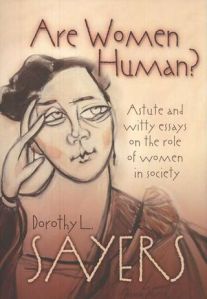
I think the question about the rights of women is far broader than that. Without access to birth control and abortion, a woman has no real autonomy as a human being. If she becomes pregnant–even through rape–she loses the ability to make choices about her future life. It has been a relatively short period of time since women have had the power to make those choices. But that power has led to other advances for women–such as the right to prosecute a rapist or an abusive boyfriend or husband, the right to have credit in her own name, the right to an education, and entry into careers from which women were previously blocked. We can only hope that the justices see clearly what their decisions will mean for women’s lives and women’s personhood.
Back to the MSNBC article:
Hobby Lobby Stores, an Oklahoma-based, evangelical-owned craft chain with about 13,000 employees, and Conestoga Wood Specialties, a small Mennonite-owned cabinet maker in Pennsylvania, sued the administration and got two very different answers from the lower courts. The Tenth Circuit Court of Appeals declared of Hobby Lobby that “such corporations can be ‘persons’ exercising religion.” In ruling on Conestoga’s bid for exemption from the requirement, the Third Circuit disagreed: “For-profit secular corporations cannot exercise in religious exercise.”
The companies are among the 47 for-profit corporations that have objected to their company plans complying with the minimum coverage requirements under the Affordable Care Act. Under those regulations, contraception is covered fully, without a co-pay, as preventive care. Hobby Lobby and Conestoga Wood object to a handful of contraceptives that they speculate can block a fertilized egg, which is neither documented in the science nor the medical definition of abortion. Other for-profit plaintiffs object to any birth control coverage at all….
The Obama administration says that the government has a compelling interest in women’s health and in gender equality. The Department of Health and Human Services agreed to classify contraceptives as preventive care after considering testimony from medical experts, who cited the country’s high rate of unintended pregnancy and the persistence cost barriers to accessing effective birth control.
Some legal experts argue that to rule for Hobby Lobby would be imposing religion on others, by forcing the women who work for such companies to pay the cost of their employers’ religion. Frederick Gedicks, a law professor at Brigham Young, has even argued in a brief before the Court that doing so would violate the establishment clause of the First Amendment.
What will SCOTUS decide?
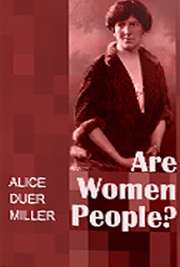
At NPR, Nina Totenberg offers some scary quotes from Steve Green, the president of Hobby Lobby:
“We believe that the principles that are taught scripturally is what we should operate our lives by … and so we cannot be a part of taking life,” explains Hobby Lobby President Steve Green.
“It’s our rights that are being infringed upon to require us to do something against our conscience,” adds CEO and founder David Green.
Using birth control is “taking a life?” Apparently one of the arguments Hobby Lobby is using that–contrary to scientific facts–some forms of birth control are equal to abortion. So is every sperm is sacred too? Should men be prosecuted for masturbating? But those questions are not likely to be asked, because it is already legally established that men are people.
At the WaPo, Sandra Fluke writes: At the Supreme Court, a potential catastrophe for women’s rights.
Unlike my congressional testimony in 2012, which was about Georgetown University — a Catholic-affiliated university — refusing to include contraception in student insurance because it was a religiously affiliated school, the institutions arguing before the Supreme Court are not houses of worship or religious non-profits. The Affordable Care Act already includes special arrangements for those types of organizations. These are private, for-profit corporations — a craft store and a cabinet manufacturer — that want to be excluded from health insurance and employment laws because of bosses’ personal views.
Laws that include religious protection have never given corporations the right to have religious views, and it would be a terrible idea to make such an enormous change to our legal precedent now. Our laws protect individuals’ private religious beliefs, but when you cross over into the public sphere to become a corporation and make a profit off of the public, you must abide by the public’s laws.
Depending on the court’s rulings, the cases’ outcomes could deny millions of women coverage of any or all forms of birth control, limiting women’s ability to control their reproductive health, plan their pregnancies and manage their lives. As I testified, women also need birth control for many other medical reasons, including relief of painful health problems like endometriosis.
And, Fluke argues, recognizing a right for corporations to hold religious views will open the door to
Allowing any private employer to dictate which laws fit inside its religious beliefs could upset the necessary balance of both religious liberty and employee health and safety laws. Depending on the exact ruling, any for-profit corporation could cut off its employees’ insurance coverage for blood transfusions, vaccinations or HIV treatment — all of which some Americans have religious objections to. Any critical health coverage the boss doesn’t agree with could be eliminated.
Furthermore, SCOTUS could not limit these proposed “religious freedoms” to Christians.
Although this country predominantly descends from a Judeo-Christian tradition, our valuable religious protection laws ensure that anyone is free to practice any religion they want, including religions whose belief systems and practices many of us would disagree with vehemently. In fact, far-ranging beliefs that are not associated with any organized religion could be used to justify a corporation’s practices as well.
Sahil Kapur of TPM points out that Justice Scalia, who might be expected to vote in favor of a corporate “right to religious freedom,” will have to deal with one of his previous rulings: Justice Scalia’s Past Comes Back To Haunt Him On Birth Control.
In 1990, Scalia wrote the majority opinion in Employment Division v. Smith, concluding that the First Amendment “does not require” the government to grant “religious exemptions” from generally applicable laws or civic obligations. The case was brought by two men in Oregon who sued the state for denying them unemployment benefits after they were fired from their jobs for ingesting peyote, which they said they did because of their Native American religious beliefs.
“[T]he right of free exercise does not relieve an individual of the obligation to comply with a valid and neutral law of general applicability,” Scalia wrote in the 6-3 majority decision, going on to aggressively argue that such exemptions could be a slippery slope to lawlessness and that “[a]ny society adopting such a system would be courting anarchy.”
“The rule respondents favor would open the prospect of constitutionally required religious exemptions from civic obligations of almost every conceivable kind,” he wrote, “ranging from compulsory military service, to the payment of taxes, to health and safety regulation such as manslaughter and child neglect laws, compulsory vaccination laws, drug laws, and traffic laws; to social welfare legislation such as minimum wage laws, child labor laws, animal cruelty laws, environmental protection laws, and laws providing for equality of opportunity for the races.”
That opinion could haunt the jurist if he seeks to invalidate the birth control rule.
“Scalia will have to reckon with his own concern in Smith about the lawlessness and chaos created by liberal exemptions to generally applicable law,” said Adam Winkler, a constitutional law professor at UCLA. “For him to uphold an exemption now is to invite more of the lawlessness that he warned about.”
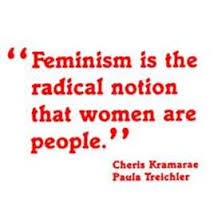
At Think Progress, Ian Millhiser addresses the right wing organizations that have waged a concerted war against women’s rights during the past several years: Read This One Document To Understand What The Christian Right Hopes To Gain From Hobby Lobby.
2009 was a grim year for social conservatives. Barack Obama was an ambitious and popular new president. Republicans, and their conservative philosophy, were largely discredited in the public eye by a failed war and a massive recession. And the GOP’s effort to reshape its message was still in its awkward adolescence. If the conservative movement had a mascot, it would have been a white man dressed as Paul Revere and waving a misspelled sign.
Amidst this wreckage, more than two hundred of the nation’s leading Christian conservatives joined together in a statement expressing their dismay at the state of the nation. “Many in the present administration want to make abortions legal at any stage of fetal development,” their statement claimed, while “[m]ajorities in both houses of Congress hold pro-abortion views.” Meanwhile, they feared that the liberals who now controlled the country “are very often in the vanguard of those who would trample upon the freedom of others to express their religious and moral commitments to the sanctity of life and to the dignity of marriage as the conjugal union of husband and wife.”
The signatories to this statement, which they named the “Manhattan Declaration,” included many of America’s most prominent Catholic bishops and clergy of similar prominence in other Christian sects. It included leaders oftop anti-gay organizations like the National Organization for Marriage, and of more broadly focused conservative advocacy shops such as the Family Research Council. It included university presidents and deans from Christian conservative colleges. And it included the top editors from many of the Christian right’s leading publications.
Perhaps most significantly, however, the document’s signatories includes Alan Sears, the head of one of the two conservative legal groups litigating what are likely to be the two most important cases decided by the Supreme Court this term. Indeed, the Manhattan Declaration offers a virtual roadmap to understanding what religious conservatives hope to gain from Sebelius v. Hobby Lobby and Conestoga Wood v. Sebelius, two cases the justices will hear Tuesday which present the question whether a business owner’s religious objections to birth control trump their legal obligation to include it in their employee’s health plan.
Read the gory details at the link.
Finally, I ask that everyone read this year-old article at Time Magazine by Jessica Winter, Subject for Debate: Are Women People? It is both darkly humorous and deadly serious.
All my adult life, I’ve been pretty sure I’m a sentient, even semi-competent human being. I have a job and an apartment; I know how to read and vote; I make regular, mostly autonomous decisions about what to eat for lunch and which cat videos I will watch whilst eating my lunch. But in the past couple of months, certain powerful figures in media and politics have cracked open that certitude.
You see, like most women, I was born with the chromosome abnormality known as “XX,” a deviation of the normative “XY” pattern. Symptoms of XX, which affects slightly more than half of the American population, include breasts, ovaries, a uterus, a menstrual cycle, and the potential to bear and nurse children. Now, many would argue even today that the lack of a Y chromosome should not affect my ability to make informed choices about what health care options and lunchtime cat videos are right for me. But others have posited, with increasing volume and intensity, that XX is a disability, even a roadblock on the evolutionary highway. This debate has reached critical mass, and leaves me uncertain of my legal and moral status. Am I a person? An object? A ward of the state? A “prostitute”? (And if I’m the last of these, where do I drop off my W-2?)
Please go read the whole thing. It’s not long.
So . . . those are my recommended reads for today. What stories are you following? Please post your links on any topic in the comment thread.

 peej
peej Carissa
 bostonboomer
 dakinikat
 ecocatwoman
 mablue2
 Mama Lopez
 peggysue22
 quixote
 skydancingguestblogger
 Mona (aka Wonk the Vote)



 Sky Dancing
Recent Comments