
Obama and the Right Wing Rage Machine
Posted: May 22, 2011 Filed under: Barack Obama, Foreign Affairs, George W. Bush, Hillary Clinton, Israel, Middle East, Palestine, Patriot Act, Republican presidential politics, Surreality, U.S. Politics | Tags: Barack Obama, Bill Clinton, birthers, Geroge W. Bush, Herman Cain, Hillary Clinton, israel, Mitt Romney, Oslo Accords, Palestine 23 CommentsPresident Obama reiterated the same US stance to Israel that we’ve always had today at a meeting of the powerful pro-Israeli lobby AIPAC, just as he did in his speech last week. For some reason, the speech at the State Department last week was mislabeled by Mittens Romney and others as “throwing Israel under the bus.” Here’s what the President said today.
[S]ince my position has been misrepresented several times, let me reaffirm what “1967 lines with mutually agreed swaps” means.
By definition, it means that the parties themselves – Israelis and Palestinians – will negotiate a border that is different than the one that existed on June 4, 1967. It is a well known formula to all who have worked on this issue for a generation. It allows the parties themselves to account for the changes that have taken place over the last forty-four years, including the new demographic realities on the ground and the needs of both sides. The ultimate goal is two states for two peoples. Israel as a Jewish state and the homeland for the Jewish people, and the state of Palestine as the homeland for the Palestinian people; each state enjoying self-determination, mutual recognition, and peace.
If there’s a controversy, then, it’s not based in substance. What I did on Thursday was to say publicly what has long been acknowledged privately. I have done so because we cannot afford to wait another decade, or another two decades, or another three decades, to achieve peace. The world is moving too fast. The extraordinary challenges facing Israel would only grow. Delay will undermine Israel’s security and the peace that the Israeli people deserve.
Why the outcry over the past few days to Obama’s maintaining the status quo? Here’s some quotes from SOS Clinton and Ex-prez Dubya that demonstrate this was nothing but manufactured rage on the part of the right wing noise machine.
Even the NY Times is getting into the act. In one sentence they claim that “using the 1967 boundaries as the baseline for a solution to the Israeli-Palestinian dispute” is a first by an American president, and just two paragraphs later quote President George W. Bush using the phrase: “it is unrealistic to expect that the outcome of final status negotiations will be a full and complete return to the armistice lines of 1949,” another way of describing the 1967 boundaries. Those two statements, by Obama and Bush, convey the same concept.
In 2009 Secretary of State Hillary Clinton said:
We believe that through good-faith negotiations the parties can mutually agree on an outcome which ends the conflict and reconciles the Palestinian goal of an independent and viable state based on the 1967 lines, with agreed swaps, and the Israeli goal of a Jewish state with secure and recognized borders that reflect subsequent developments and meet Israeli security requirements.
Where was the manufactured outrage then?
In 2008 President George W. Bush, on a middle east trip, said:
I believe that any peace agreement between them will require mutually agreed adjustments to the armistice lines of 1949 to reflect current realities and to ensure that the Palestinian state is viable and contiguous.
In 2005 President George W. Bush, at a White House meeting, said:
Any final status agreement must be reached between the two parties, and changes to the 1949 Armistice lines must be mutually agreed to.
President Obama is following the same policies put forth by George W. Bush. To claim that Obama’s speech represents some departure from previous U.S. policy is absurd.
When not manufacturing right wing rage, Republican Presidential contenders are demonstrating their foreign policy ignorance. Thank goodness we have some one who knows foreign policy at the State Department! Here’s pizza king and right wing talk show host Herman Cain demonstrating his foreign policy ignorance.
Despite his shallow understanding of foreign policy issues, Cain is still trying to go on the attack against Obama and create a partisan divide on Israel. He said last week that an “arrogant” Obama “threw Israel under the bus” in his recent speech on the Middle East. Trying to sound a hawkish note, Cain said his “Cain doctrine” is “You mess with Israel, you are messing with the United States of America.”
But this morning on Fox News Sunday, Cain showed just how limited his understanding is of the Middle East peace process. Asked by host Chris Wallace what he would be prepared to offer Palestinians as part of a deal, Cain responded, “Nothing.” Just moments later, Cain was dazed and confused when Wallace referenced the issue of “right of return” of Palestinian refugees:WALLACE: Where do you stand on the right of return?
CAIN: The right of return? [pause] The right of return?
WALLACE: The Palestinian right of return.
CAIN: That’s something that should be negotiated. That’s something that should be negotiated.
Wallace then helpfully offered Cain a definition of “right of return” — “Palestinian refugees, the people that were kicked out of the land in 1948, should be able to or should have any right to return to Israeli land.”
Other foreign policy nitwits have joined the faux outrage ranks. Quitterella even points to the old testament as some kind of geopolitical playbook. Do you suppose she’s read stories about the Kraken so she can have an opinion on Greece’s Navy?
I can never figure out why the I/P issue causes people’s heads to blow gaskets. I always hesitate to even offer up any news in the area because it’s caused complete meltdowns on blogs in the past. There are some people on each side of the issue who simply can’t seem find any middle ground from. Derailing any peace process appears to be their goal.
I consider the entire topic to be a hell realm. However, this particular kerfuffle reeks of the same kind of derangement we saw during the Clinton years. It’s getting so bad that I’m cracking this particular nut or group of nuts as the case may be. This is like trying to deal with birthers and those who subscribe to the ‘secret Muslim’ meme.
Obama isn’t my favorite President by any stretch of the imagination, but aren’t there enough things to complain about right now–like the sneaky renewal of the Patriot Act–without manufacturing yet another conspiracy theory? SHEESH!
I can’t see the US selling out Israel anywhere in the near future. They are obviously a US ally. Trying to get both Palestinians and Israelis to be reasonable and come back to Peace Talks should be in everyone’s interest. Don’t they still have their copies of the Oslo Accords or has every one forgotten President Clinton’s work already?
You don’t have to be crazy to vote in a Republican Primary, but it sure helps
Posted: May 20, 2011 Filed under: 2012 presidential campaign, Republican presidential politics | Tags: Mike Huckabee, Mitch Daniels, Mitt Romney 26 Comments I continue to watch the ever-growing Republican pander to the rapture believers and the voodoo economics crowd. Pandering is disgusting no matter which side of the aisle does it. However, the Republicans have a special form of it because it involves reality denial not empty promises. It’s obvious that Republican primary voters have views clearly based in an alternate reality. Republican candidates develop two alter egos to deal with the disconnect. So my question is can any Republican Presidential Wannabe make it through the primary without sounding so many Republican Dogwhistles that they are sure to turn off independent voters? This is especially germane given those dog whistles are anathema to Democratic and Independent voters alike. Let me demonstrate.
Several political analysts have noticed the widening gap between Republican politicians, their primary base, and polls on issues from the public at large. First, there’s Mitch Daniels who said earlier that the Republican Party had to call a truce on social issues only to turn around as governor in Indiana and do a wildly unpopular thing. He just signed a law in Indiana to defund Planned Parenthood (h/t to Beata). He may have the party elite in his pointy little head, but he’s probably lost women. Rick Ungar at Forbes called this a “cynical move [that] will likely prove useful in the coming primaries”.
However, there is a world of difference between the nomination process and the general election that follows – something Governor Daniels will discover should he become the Republican standard bearer.
In a recent NBC/Wall Street Journal Poll, we learn that –
Among women overall, 56% found it “mostly or totally unacceptable” to “eliminate funding to Planned Parenthood for family planning and preventive health services.”
Among women 18–49, 60% found it “mostly or totally unacceptable” to “eliminate funding to Planned Parenthood for family planning and preventive health services.”
That means that are at least 56% of women out there who are going to understand that Governor Daniels is directly responsible for denying critical care to women who have nowhere else to go to get it.
Add to this the fact that approximately 25% of all American women have, at some time or another, utilized the services of Planned Parenthood and one quickly understands that Daniel’s support for this legislation is not going to play well with female voters.

Then there’s Romney who is trying hard to prove his credentials to that same rapture set. I was not surprised to read the numbers on how powerful the evangelical set has become in Republican politics. They asked for them, after all, with the Nixon Southern Strategy and moves to capture “Reagan Democrats”. The problem is that none of the pro-business Republicans want anything to do with the great unwashed that those strategies brought to the party. They wanted their votes but that was basically it. They had hoped that pandering to evangelicals with empty promises would work for them. It does work for Democratic politicians. It was obvious there was going to be ongoing problems when most evangelicals sat out an election rather than vote for John McCain whom they consider apostate. Mormon and former typical NE Rockefeller Republican Romney gives them the creeps. Ron Brownstein writing for National Journal says Romney has an evangelical problem.
The reason is that with Huckabee off the field, the former Baptist minister’s core constituency—the evangelical Christians who represent nearly half of the GOP’s primary electorate—are now back in play for all competitors. If Romney can’t defang the resistance he encountered from those voters in 2008, he faces the threat that they will eventually consolidate behind another contender, such as former Minnesota Gov. Tim Pawlenty, with potentially wider support than Huckabee demonstrated last time. “The risk for Romney is that some other candidate with broader appeal may attract them, someone who could stitch together a majority coalition in a way that Huckabee was not going to do,” says veteran GOP pollster Whit Ayres, who is working for potential presidential hopeful Jon Huntsman.
Even many Republicans underestimate the centrality of evangelical voters in the GOP’s nominating process. In 2008, self-identified evangelical Christians constituted 44 percent of all Republican presidential primary voters, according to a cumulative analysis of state exit polls by former ABC polling director Gary Langer. Candidates who rely almost entirely on evangelicals—such as Huckabee, Gary Bauer in 2000, and televangelist Pat Robertson in 1988—have never come close to winning the GOP nomination. But evangelicals are plentiful enough that any candidate whom they deem completely unacceptable faces a formidable obstacle—and not only in the Deep South, where they are most heavily concentrated.
Evangelical Christians represented a majority of 2008 GOP primary voters in 11 of the 29 states in which exit polls were conducted. In Iowa and South Carolina, two states that along with more-secular New Hampshire have proved decisive in Republican nomination contests since 1980, evangelicals provided exactly 60 percent of the vote. In 10 other states, including many outside the Deep South, evangelicals represented between one-third and 46 percent of the vote.
Assuming this problem doesn’t go away with the May 21st rapture, Romney and others will still have to woo the Krewe of Iron Age Myth. Here’s the portion of the article detailing their precise issues which basically have to do with defining life at fertilization, defining all GLBTs as damnable, and ensuring no “foreign” people ever reach US soil. Also, they hate preppies. This explains why Dubya’s fake NASCAR persona went over well.
Romney has encountered two levels of resistance from evangelicals: doubts that he is truly committed to conservative positions on social issues such as abortion, and theological tension over his Mormon religion. That latter problem was especially pronounced in the South, where Southern Baptists and Pentecostals, two groups particularly leery of Mormonism, make up at least two-thirds of Republican evangelicals, notes John C. Green, a political scientist at the University of Akron who is an expert on religion and politics. Class issues compound Romney’s challenge. Polls suggest that his smooth, boardroom manner plays better among college-educated than noncollege Republicans, and in many places evangelicals tilt toward the latter.
PBS’s Glen Ifill has noticed the return to dogwhistle politics. This quote pertains to Newt Gingrich who rightly labelled most of these extreme Republican policies as “right-wing social engineering”. Republicans spent the next week making Newt come to jayzus. Newt’s rhetoric let the dogs out and definitely showed that today’s Republicans sold the big tent a long time ago.
It’s unclear who the former House Speaker thought he was speaking to, but the dog whistle was heard by conservatives who immediately chastised him for undercutting a fellow Republican. “You’re an embarrassment,” one Iowa Republican scolded him in a widely-circulated YouTube video.
Gingrich said this was not what he meant, but in dog-whistle politics, what is heard often matters more than what is said. Days later, he apologized to Ryan.
During the same television appearance, Gingrich also said he did not mean to send a coded message on race when he told a Georgia Republican Party dinner days earlier that President Obama is “the most successful food stamp president in American history.”
Outrage ensued. Many African Americans saw racial code directed at the nation’s first black president. Gingrich called that suggestion “bizarre.”
Leave aside for a moment that in order for this to be code, the listener would have to automatically assume that most if not all food stamp recipients are black. This, as it happens, is not true, and Gingrich insisted he was making an argument about the state of the economy, not the skin color of food assistance recipients.
There may be some merit to his explanation, but it got lost in the din of the whistle, which sparked debate mostly among liberals and African Americans — who seemed least likely to be the remark’s intended targets.
Newt has been thoroughly chastised for not carrying the current party branch water bucket. Another place where the Republican party seems clearly out of step with the majority of Americans is allowing gay marriage rights. Independents opinions have pushed support solidly over the 50 % mark.
For the first time in Gallup’s tracking of the issue, a majority of Americans (53%) believe same-sex marriage should be recognized by the law as valid, with the same rights as traditional marriages. The increase since last year came exclusively among political independents and Democrats. Republicans’ views did not change.
No Republican primary candidate will pass the evangelical litmus test with a position running contrary to their narrow interpretation of an obscure reference in Deuteronomy. There are only two presidential contenders that support gay marriage. That would be Fred Karger and Gary Johnson. What!?!? Never heard of them? You probably never will either. They will be eviscerated by the jayzus lovers. At best, you’ll hear that neo-confederate argument of State’s Rights from Ron Paul that represents a variation of the theme of legal slavery. State’s Rights is basically code for ‘southern states get to ignore the civil rights of others unless the Supreme Court–now stacked with theocrats–disallows it’. It’s a grand compromise ala slavery.
 It’s possible that most Americans won’t notice the fall out from the Huckabee bow out. Huckabee clearly had the evangelical market cornered. Now these folks are scattering. That means there’s a grab for them and the rhetoric will become appalling. Evangelicals may go for the fembots, if either of them enters the race. Both potential Republican women candidates have that classic know-nothing bravada that allows them to say outrageous untruths convincingly. However, no serious Republican money will ever reach Quiterella or Michelle the Mouth. Ask me if I care a fig about Quiterella having fire in her belly?
Then there’s the absolutely no new taxes fanatics. Look at the public’s poll numbers on raising taxes on the very wealthy and leaving medicare and medicaid alone which is the dogwhistle Newt Gingrich refused to blow before he was forced to blow it. Republicans and the Club for Growth (sic) keeping running against the public on this issue too which is why Nancy Pelosi is up there in Wisconsin reminding voters of the Ryan plan as I write.
The McClatchy-Marist poll, conducted as Democrats and Republicans were touting their own long-term budget visions, also found the country largely pessimistic about America’s direction.
On taxes, the poll reported that roughly two out of three registered voters — 64 percent — would be in favor of increasing taxes on annual income over $250,000. President Obama reiterated in his deficit-reduction speech last week that he favored allowing taxes to rise on families in that income level.
Independents favored that plan of action at roughly the same percentage as the country at large, with more than eight in 10 Democrats also behind the idea. A majority of Republicans, 54 percent, opposed it.
The poll was conducted both before and after Obama’s Wednesday speech, with support for higher taxes on wealthier Americans picking up afterward.
Meanwhile, fully four in five registered voters oppose cutting Medicare and Medicaid. The House GOP’s fiscal 2012 budget, largely crafted by Rep. Paul Ryan (R-Wis.), makes fundamental long-term changes to both health entitlement programs, converting Medicaid into a block grant and turning Medicare into a type of voucher system.
Democrats (92 percent), Republicans (73 percent) and independents (75 percent) all opposed cuts to the two programs, the McClatchy-Marist poll found.
How long can Republicans push plans that go against poll numbers like that? Rachel Maddow points out that a solidly Republican New York Congressional District may put a Democrat in the House on the issue. Maddow also pointed out that Massachusetts Senator Scott Brown is running quickly away from saying that he’d vote for the Ryan plan if it hit the senate floor which it will do sometime this week or next. It is also rumored that Mitch McConnell will not whip his members when the vote occurs. Some of these old dudes remember the third rail.
Karl Rove’s American Crossroads PAC is about to spend $650,000 on the Medicare referendum that is the special election for New York’s 26th Congressional District, Roll Call reports. The idea is to save what should have been a safe seat anyway for Republican Jane Corwin, who came out in favor of the Paul Ryan Medicare plan and has been having a barrel of fun ever since.
Yesterday, House Speaker John Boehner paid a visit. Today, Mr. Rove brings the money. Producer Mike Yarvitz finds two bits from the local Buffalo News — headline: “GOP leaders rally to Corwin, but where are the Democrats?” — for a sense of scale. Quick read: It’s a lot of money.
So, whose likely to really win this Republican Presidential Primary Extremist Extravaganza? Two Guesses.
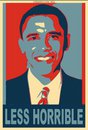 No wonder the President is on the road with speeches made to burn political capital. None of the above appears the best choice for any one that doesn’t want the right’s agenda.
Monday Reads
Posted: May 16, 2011 Filed under: 2012 presidential campaign, Economy, Federal Budget and Budget deficit, fundamentalist Christians, Global Financial Crisis, income inequality, Medicare, religion, religious extremists, Republican politics, Republican presidential politics, Team Obama, The Bonus Class, The Great Recession, U.S. Economy, U.S. Politics | Tags: Debt Ceiling, End Times, evangelical Christians, Harold Campaign, Mark Thoma, Newt Gingrich, Rapture, the plutocracy, Timothy Giethner 52 Comments Good Morning!
Are you reading for the end of the world next Saturday? Nope, it’s not 2012 yet and we’re not talking about the Mayan Prophecy. Harold Campaign has convinced a group of evangelicals that the date is May 21, 2011. I wonder if any of them would like me to take care of their left behind pets for all their money? You can read more about the man and his end of days wishes at Salon.
The self-appointed harbingers are not tied to any particular church — they claim organized religion has been corrupted by the devil — but rather to Internet- and radio-based ministries. And their lone mission is to tell anyone and everyone that the end of days is May 21. That’s when, they insist, God’s true believers will be lifted into heaven and saved, during a biblical event widely referred to as the Rapture.
The finer points of Christian eschatology have long been the subject of dispute (not to mention the inspiration for movies and books, like the blockbuster “Left Behind” series). Though mainstream churches reject the the notion that doomsday can be predicted by any man, fringe scholars continue to work feverishly pinpointing the moment of the final, divine revelation. And one such man — 89-year-old radio host Harold Camping — has been at the game for decades.
In the early ’90s, Camping published a book titled “1994?,” which claimed judgment day would arrive in September of that year. When confronted with such a staggering anticlimax — the world, after all, kept on spinning — Camping chose not to be discouraged, but to learn from his mistakes. (He hadn’t considered the Book of Jeremiah, he says.) A civil engineer by trade, Camping went back to the drawing board and continued to crunch the numbers, before arriving at the adamant determination that Rapture would come on May 21, 2011. He began to spread the word through his broadcasting network, Family Radio, in 2009, and quickly built up a fervid following.
I guess it takes all kinds. That’s what my mother used to tell me when she was alive, anyway. Speaking of that, MoJo has a great list of Newtisms that will take you a trip back in time with Gingrich’s greatest tongue trips. Here’s some of his earliest hits.
1978 In an address to College Republicans before he was elected to the House, Gingrich says: “I think one of the great problems we have in the Republican party is that we don’t encourage you to be nasty. We encourage you to be neat, obedient, and loyal and faithful and all those Boy Scout words.” He added, “Richard Nixon…Gerald Ford…They have done a terrible job, a pathetic job. In my lifetime, in my lifetime—I was born in 1943—we have not had a competent national Republican leader. Not ever.”
1980 On the House floor, Gingrich states, “The reality is that this country is in greater danger than at any time since 1939.”
1980 Gingrich says: “We need a military four times the size of our present defense system.” (See 1984.)
1983 A major milestone: Gingrich cites former British Prime Minister Neville Chamberlain on the House floor: “If in fact we are to follow the Chamberlain liberal Democratic line of withdrawal from the planet,” he explains, “we would truly have tyranny everywhere, and we in America could experience the joys of Soviet-style brutality and murdering of women and children.”
What is it that Republicans put in their formula that turns out people like this? Newt was on Meet the Press yesterday where he mouthed off on a number of subject’s including Paul Ryan’s Medicare pogrome. This is the National Review’s take so read with caution.
Newt Gingrich’s appearance on “Meet the Press” today could leave some wondering which party’s nomination he is running for. The former speaker had some harsh words for Paul Ryan’s (and by extension, nearly every House Republican’s) plan to reform Medicare, calling it “radical.”
“I don’t think right-wing social engineering is any more desirable than left-wing social engineering,” he said when asked about Ryan’s plan to transition to a “premium support” model for Medicare. “I don’t think imposing radical change from the right or the left is a very good way for a free society to operate.”
As far as an alternative, Gingrich trotted out the same appeal employed by Obama/Reid/Pelosi — for a “national conversation” on how to “improve” Medicare, and promised to eliminate ‘waste, fraud and abuse,’ etc.
“I think what you want to have is a system where people voluntarily migrate to better outcomes, better solutions, better options,” Gingrich said. Ryan’s plan was simply “too big a jump.”
He even went so far as to compare it the Obama health-care plan.”I’m against Obamacare, which is imposing radical change, and I would be against a conservative imposing radical change.”
I have to say that having Trump, Gingrich, Santorum and Paul all debating each other on one stage would probably be highly entertaining. They could have a contest for who would make the craziest old uncle.
The White House is out on the road trying to head off problems with the national debt ceiling. Timothy Geithner says that the economy will double-dip if the Republicans don’t raise the ceiling.
In a heavily-anticipated response to Sen. Michael Bennet, D-Colo., who asked Geithner to document the economic and fiscal impacts of failing to lift the statutory debt limit, the Treasury secretary detailed a chain reaction that would cripple the economy, costing jobs and income.
“A default would inflict catastrophic far-reaching damage on our nation’s economy, significantly reducing growth and increasing unemployment,” said Geithner in the letter to Bennet which was dated May 13. “Even a short-term default could cause irrevocable damage to the economy.”
Geithner has imposed an August deadline for Congress to lift the $14.3 trillion debt ceiling, but lawmakers are still negotiating over Republican demands to tie the move to spending cuts. And a portion of the GOP still remains skeptical about the need to act by the deadline at all, arguing that the consequences have been overstates.
Economist Mark Thoma has a better explanation of how the refusal to increase the debt ceiling would impact the economy on CBS Money Watch. This explanation is much more precise.
If politicians fail to reach a deal to increase the debt ceiling, there would be a large fall in federal spending. The decline in federal purchases of private sector goods and services would reduce aggregate demand, and this could slow or even reverse the recovery (it could also threaten the delivery of critical services that some people depend upon). In addition, the failure to pay wages to federal workers would disrupt household finances and cause a further decline in demand, as would the failure of the government to pay its bills for the goods and services it has already purchased from the private sector (and it could even threaten some households and businesses with bankruptcy should the problem persist). There may be some room for the Treasury to use accounting tricks to avoid the worst problems, at least for a time, but it is not at all clear how well this would work to insulate the economy from problems and eventually this strategy will come to an end.
That’s potentially bad enough, but it’s far from the end of the problems that could occur. Failure to raise the debt ceiling could also undermine faith in the safety of US Treasury bills. If we default on bond payments, or appear willing to do so even if it doesn’t actually occur and investors lose faith in US Treasury Bills, they will begin demanding higher interest rates to cover the increased perception of risk. This could be very costly. We depend upon the rest of the world to finance our debt at extremely low interest rates. If the willingness of other countries to do this diminishes, then the cost of financing our debt would rise substantially. And that’s not all. In addition to increased debt servicing costs, an increase in interest rates would also choke off business investment potentially lowering economic growth, and the consumption of durable goods by households would fall as well. Rising interest rates would also be bad for the housing recovery (such as it is). Thus, failure to reach an agreement could be very costly.
The Economist‘s Blog on American Politics: Democracy in America has an interesting post right now on ‘The Road to 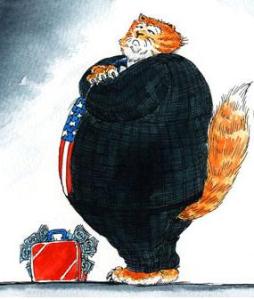 Plutocracy’. It’s an interesting read with a lot of quotes from other pundits.
THE word “plutocracy” is in the air these days. Some say the era of the de facto rule of the mighty top 10%, or top 1%, or whatever insidious sliver of the income distribution is thought to constitute the moneyed power elite, is upon us, or nearly so. I’m not so sure. I am sold on the proposition that there’s something deeply whacked about the American financial system, and that whatever that’s whacked about it is significantly responsible for the top 1% pulling so far away from the rest of the income distribution. This needs to be fixed, whatever its other consequences. It’s not clear to me, however, what exactly is whacked. I don’t know whether to sign up for Tyler Cowen’s “going short on volatility” story, Daron Acemoglu’s “financial-sector lobbying and campaign contributions ‘bought’ an enriching (and destabilising) regulatory structure” story, or some other story. No doubt the truth is in some subtle combination of stories. In any case, accounts such as Mr Acemoglu’s, according to which big players in certain sectors over time manage to rig the regulatory climate to their advantage, are quite compelling for reasons both theoretical and empirical
Newsweek has an interesting article up on why the megarich manage to have such a sweet tax deal. Even if we raise their income taxes, it really doesn’t hit them where it counts. Here’s why.
It drives economist Bruce Bartlett crazy every time he hears another bazillionaire announce he’s in favor of paying higher taxes. Most recently it was Mark Zuckerberg who got Bartlett’s blood boiling when the Facebook founder declared himself “cool” with paying more in federal taxes, joining such tycoons as Bill Gates, Warren Buffett, Ted Turner, and even a stray hedge-fund manager or two.
Bartlett, a former member of the Reagan White House, isn’t against the wealthy paying higher taxes. He’s that rare conservative who thinks higher taxes need to be part of the deficit debate. His beef? It’s a hollow gesture to say the federal government should raise the tax rate on the country’s top wage earners when the likes of Zuckerberg have most of their wealth tied up in stock. Many of the super-rich see virtually all their income as capital gains, and capital gains are taxed at a much lower rate—15 percent—than ordinary income. When Warren Buffett talks about paying a lower tax rate than his secretary, that’s because she sees most of her pay through a paycheck, while the bulk of his compensation comes in the form of capital gains and dividends. In 2006, for instance, Buffett paid 17.7 percent in taxes on the $46 million he booked that year, while his secretary lost 30 percent of her $60,000 salary to the government.
“It’s easy to say ‘Raise taxes’ when you know you’re not going to have to pay those taxes,” Bartlett says. “What I don’t hear is ‘Let’s raise the capital-gains tax.’” Instead the focus has been on the federal tax rate paid by those with an annual income of $250,000 or more—the top 3 percent of earners. Bartlett argues that while raising taxes on the country’s richest individuals would go a long way in easing the debt crisis, it makes no sense to treat the professional making a few hundred thousand dollars a year the same as the Richie Rich set. Maybe it’s hard to muster sympathy for an executive pulling down $1 million a year. But ours is a tax system where a person in the top tax bracket (those earning more than $374,000 in 2010) pays a tax rate of 35 percent on the upper portions of his or her income (37.9 percent if you include Medicare), whereas a hedge-fund manager or mogul earning 10 or 100 times that amount pays less than half that tax rate.
Well, now I’m thinking we’re all just so f’ked that I might as well stop while I’m ahead. What’s on your reading and blogging list today?
The Libertarian Dysfunction
Posted: May 10, 2011 Filed under: Republican presidential politics | Tags: conservatives, libertarians, Pragmatists, Ron Paul, South Carolina Republican Debates 46 Comments
Ron Flew over the Cuckoo's Nest the other night at the Republican Debate in South Carolina.
Every time I have any dealings with libertarians, I always wind up saying something to myself to the effect of what is wrong with this people? Are they the products of a dysfunctional family with parents who don’t show emotion? Did they have problems bonding or with the attachment process as infants? Libertarians seem like they were all bred in some kind of petrie dish rather than born of flesh and blood people. They seem so oddly unaware of human nature and empathy. I’ve recently started wondering if it’s not really a symptom of some kind of autism because there seems to be so much emphasis on a seemingly detached self-identity and a desire for a reality that seems straight of a bad science fiction novella where the main plot is alienation rather than aliens.
So, this WAPO op-ed by “conservative” Michael Gerson got me thinking about Ron Paul’s truly strange statements in that Republican Presidential-wanna be debate the other day. Gerson was using Ron Paul’s thoughts on legal heroin as the basis of the argument that the Republican Party shouldn’t treat Ron Paul seriously because he’s truly not a serious candidate. Advocating legalized heroin–instead of punishing it as bad boy behavior–evidently gives one a lack of gravitas. I thought this strange.
I have to admit that Ron Paul says things that just makes me think he was hatched from an orphaned egg left in a cuckoo’s nest. It frightens me that some one with such serious misunderstandings of economics heads a subcommittee over the nation’s monetary policymaker. It’s like putting a flat earther in charge of NASA. Paul was so surrounded by other odd birds at that Republican debate however, that he didn’t stand out more than any one else to me. However, the legalize heroin comment stood out to many of us including Michael Gerson. For me however, it stood out because it’s part of the symptoms of denial of social costs and spillovers that you hear coming from libertarians. Paul really doesn’t appear to know what it’s like to be around the chaos vortex that is an addict. He has a really odd take on human nature. Gerson started out with a pretty good description of that before he fell back on hellfire and brimstone.
Paul was the only candidate at the debate to make news, calling for the repeal of laws against prostitution, cocaine and heroin. The freedom to use drugs, he argued, is equivalent to the freedom of people to “practice their religion and say their prayers.” Liberty must be defended “across the board.” “It is amazing that we want freedom to pick our future in a spiritual way,” he said, “but not when it comes to our personal habits.”
Now, I’m of the personal opinion that other people’s religion and practices, can in fact, trample on other people’s rights. I will only remind you of the time I went out on Sunday in Nebraska to buy creme de menthe to make grasshopper pie and couldn’t. Also, you have no idea what it’s like to deal with Christmas hoopla when you’re never in the mood. However, when you are near people, they do have a habit of getting in your way all the time. What they do impacts you to varying degrees. So, I didn’t think Paul could possibly have much experience with addicts because it’s hard to avoid the fallout from the disease even if you’re not all that intimately involved with them. If you work with them or live near them, their addiction and its costs will be felt.
Or, as Gerson puts it:
This argument is strangely framed: If you tolerate Zoroastrianism, you must be able to buy heroin at the quickie mart. But it is an authentic application of libertarianism, which reduces the whole of political philosophy to a single slogan: Do what you will — pray or inject or turn a trick — as long as no one else gets hurt.
Even by this permissive standard, drug legalization fails. The de facto decriminalization of drugs in some neighborhoods — say, in Washington, D.C. — has encouraged widespread addiction. Children, freed from the care of their addicted parents, have the liberty to play in parks decorated by used needles. Addicts are liberated into lives of prostitution and homelessness. Welcome to Paulsville, where people are free to take soul-destroying substances and debase their bodies to support their “personal habits.”
But Paul had an answer to this criticism. “How many people here would use heroin if it were legal? I bet nobody would,” he said to applause and laughter. Paul was claiming that good people — people like the Republicans in the room — would not abuse their freedom, unlike those others who don’t deserve our sympathy.
The idea that there are actions that don’t impact people on any large scale is a weird one to me. Gerson talks about Paul’s attitude of “I don’t need laws against heroin because I won’t use heroin” as a form of arrogance. What really made me think, however, was this paragraph. This is where Gerson dove off the deep end.
The conservative alternative to libertarianism is necessarily more complex. It is the teaching of classical political philosophy and the Jewish and Christian traditions that true liberty must be appropriate to human nature. The freedom to enslave oneself with drugs is the freedom of the fish to live on land or the freedom of birds to inhabit the ocean — which is to say, it is not freedom at all. Responsible, self-governing citizens do not grow wild like blackberries. They are cultivated in institutions — families, religious communities and decent, orderly neighborhoods. And government has a limited but important role in reinforcing social norms and expectations — including laws against drugs and against the exploitation of men and women in the sex trade.
This is where he lost me completely. The government doesn’t need to reinforce Judeo-Christian norms and expectations. To me, that’s not the role of government. The government should recognize that the behavior of individuals and businesses impact others. Some times, the impact is quite negative. It doesn’t need to replace some absentee parent as an angry, punishing daddy. It needs to be more like a judge, a referee, and a prevention coach. Let me explain that.
No one in Love Canal asked to be sold a home sitting on a lot saturated with toxic chemicals. People actively withheld information to make those business deals and a group of innocents were hurt mightily; both financially and physically. You can read studies dealing with communities that have gambling facilities to determine the social costs of those things. You get pawn shops and paycheck advance loan shops. There are tons of predatory businesses that pop up out of no where. Communities also get crime because once gamblers run out of things to hock and ways to borrow, they will steal. Communities will attract prostitutes with accompanying costly public health problems. Communities eventually wind up with destitute people. As a result, many businesses and homeowners leave and the city is left with only problems and no revenues.
Just like I can’t imagine drinking day-in-and-day-out, I can’t imagine playing any other gambling games where I don’t know the rules, the odds, and have a strategy to know when to hold them and fold them. The deal is that I don’t have the addiction gene. Problem is, that there are a lot of people that can’t either make good decisions or stop. They become chaos vortexes. They drain resources from families that eventually need public help. They emotionally and some times physically abuse people which infers the cost of the criminal justice system. Relatives of addicts may or may not be able to recover without public assistance or spreading issues further across society.
These behaviors are not just personally destructive, they have social costs. We frequently have to pay to clean up these messes after these folks have spun out of control. I also didn’t need the government enforcing ‘Judeo-Christian’ values for me to recognize destructive behaviors and many of these folks with issues had plenty of it. That’s no solution either. Frankly, plentiful and good information on statistics and public health should give most people knowledge to make good decisions about prostitution, substance abuse, and gambling. Neither Gerson or Ron Paul want these provisions either. They prefer that be left to chance, happenstance, or some imaginary Father Knows Best.
This is what bothers me about both the libertarian and the conservative narrative described above. You can’t just say let them self destruct and not witness that the fall out from destruction frequently is spread wide and costs a lot of money to a lot of people. You can’t just say that if some one sits in a pew and hears some kind of moral spew attached to an angry sky god that they’re going to just get in control of themselves. There’s a genetic component to substance abuse. Certainly, a faceless corporation that only exists for the purpose of creating profit but yet, is treated as an individual legally, is not capable of full considering the costs of its actions on others. Addicts definitely don’t consider the costs of their actions on any one. Gerson and Paul’s overly simplistic view of people and reality has to come from some blocked pathway in a brain that doesn’t recognize the interconnectedness of people and their actions.
Maybe that’s why they both have fairly useless views of economics too because, at its essence, economics is about human behavior and choices.
It’s not about becoming a national mommy, or daddy, or nanny or whatever. It’s about trying to prevent the problems, first off, by providing adequate information to people. Then, it’s about judiciously assessing the fall out and compensating society and others for the cost of the chaos. Then, something should be done to try to stop recurrence.
We keep trying permissiveness and punishment. What we frequently get is recidivism and more spillover costs. Somewhere in between the models of permissiveness and punishment is a more pragmatic mindset. Laws, regulations, and government are necessary because humans and their corporate counterparts don’t exist in a vacuum and all of them are not good decisionmakers. Their actions aren’t always a reflection of either enlightened self-control or fear of retribution by an angry sky god or parent. Of course, government can’t do everything for us. But, it should be able to prevent the fall out from the behaviors and actions of others and the spillover costs they entail. That’s the real purpose of regulations. Libertarians seem to disregard a bevy of actions where there are victim’s of people’s individual decisions. Conservatives appear to think that enforcing some kind of moral code via punishment is all that’s necessary. Frankly, I’d rather we use less straight-jacket ideology and use our knowledge to figure out what best prevents a problem.
The Pundits Live Blog the Alternative Universe so I don’t have to
Posted: May 5, 2011 Filed under: 2012 presidential campaign, John Birch Society in Charge, religious extremists, Republican politics, Republican presidential politics | Tags: Republican Primary Debate South Carolina 46 CommentsThere’s a Republican debate going on right now sans Mittens Romney. There’s a lot of live blogs going on out there. I’m putting this thread up but telling you that I really have no desire to watch a train wreck. It’s being held in Greenville, South Carolina.
Live blogs:
GREENVILLE, S.C. — The 2012 election season begins Thursday in earnest with the Republican Party’s first presidential primary debate here at 9 p.m. ET.
But only five GOP hopefuls are taking part, as some hang back and wait to fully engage (like former Massachusetts Gov. Mitt Romney and former Utah Gov. Jon Huntsman) while others have yet to commit to a bid for the Oval Office (see former Arkansas Gov. Mike Huckabee and current Indiana Gov. Mitch Daniels).
Former Minnesota Gov. Tim Pawlenty is the biggest name taking part at Peace Center for the Performing Arts, though Rep. Ron Paul (Texas) certainly has the most enthusiastic fanbase. Others hitting the stage include former Sen. Rick Santorum (Pa.), former New Mexico Gov. Gary Johnson, and former Godfather’s Pizza CEO Herman Cain.
and if you really want to watch it, it’s on FOX surprise, surprise, surprise!!! NOT!!!
The twitter channel is #SCdebate.
Things you really want to know or not:
All of the hopefuls but Herman Cain would release OBL’s photo. (whew, they GOT the big one out of the way) and now they’re all singing the praises of ‘enhanced interrogation’.
Please, deliver us from EVIL!!!

 peej
peej Carissa
 bostonboomer
 dakinikat
 ecocatwoman
 mablue2
 Mama Lopez
 peggysue22
 quixote
 skydancingguestblogger
 Mona (aka Wonk the Vote)



 Sky Dancing
Recent Comments