
Lazy Saturday Reads: Friday Document Dump and Clinton Conspiracy Theories
Posted: April 19, 2014 Filed under: Barack Obama, morning reads, Republican politics, U.S. Politics | Tags: canada's oil from tar sands, Chelsea Clinton, Clinton Derangement Syndrome, Clinton White House papers, conspiracy theories, Hillary Clinton, Keystone XL pipeline, Mary Landrieau, Monica Lewinsky, pregnancies, State Department 26 Comments
Happy Saturday!!
Some pretty big news broke late yesterday: President Obama has again delayed his final decision on whether to go ahead with the Keystone XL pipeline. Presumably the announcement was deliberately held until the Friday news dump to reduce public attention to the inevitable Republican screams of outrage. From Reuters:
The Obama administration further delayed its decision on the controversial Keystone XL pipeline project on Friday, with no conclusion now likely until after the U.S. mid-term elections in November.
President Barack Obama has said he will have the final say on whether to allow the pipeline connecting Canada’s oil sands region to Texas refiners, and several government agencies had been given until May to weigh in. This had raised expectations of a final decision by mid-year.
But the State Department said on Friday it was extending that agency comment period, citing a need to wait until the Nebraska Supreme Court settles a dispute over what path the $5.4 billion TransCanada Corp project should take.
“That pipeline route is central to the environmental analysis for the project and if there are changes to the route it could have implications,” a senior State Department official told reporters.

Mary Landrieu
I have to admit I was surprised and pleased. I have long suspected that Obama really wanted the pipeline, but I think I was wrong. He seems to be trying his best to avoid it. Naturally Obama has already been accused of political calculation in pushing the decision past the midterm elections. Of course the decision won’t help Democrats from oil-producing states like Mary Landrieu of Louisiana, who has already announced that “I plan to use my power as chair of the Senate Energy Committee to take decisive action to get this pipeline permit approved.”
The State Department told Buzzfeed that politics was not involved in the decision.
“I can’t render judgement on when the final decision could take place,” a senior State Department official said on a conference call Friday after the department announced another delay in the State Department process that could bring with it the approval or rejection of Keystone. “We want this to move as expeditiously as possible, we recognize that this is an issue of great concern to the American public, to American business and we take that extremely seriously.”
The State Department review — necessary because the pipeline crosses the Canadian border into the United States — is being held up by a state court ruling in Nebraska in favor of pipeline opponents, department officials said. That decision, which endangers the existing planned pipeline route, is under appeal andobservers say final judgement won’t come until 2015.
More reactions reported by Politico:
…the delay drew immediate scorn from pipeline supporters on both sides of the aisle in Congress. Republicans derided it as a “shameful” concession to “radical activists,” while Democratic Senate energy Chairwoman Mary Landrieu called it “irresponsible, unnecessary and unacceptable.”
Both of Alaska’s senators condemned the move. Republican Sen. Lisa Murkowski, the ranking member on the Energy and Natural Resources Committee, called the delay “a stunning act of political cowardice,” and Democratic Sen. Mark Begich said he was “frankly appalled at the continued foot-dragging by this administration.” Begich, like Landrieu, faces a tough reelection fight this year.
Some environmentalists complained about the Friday news dump announcement
“It’s disappointing President Obama doesn’t have the courage to reject Keystone XL right now, but this is clearly another win for pipeline opponents,” said Jamie Henn, spokesman for the climate activist group 350.org, which staged mass sit-ins outside the White House to protest the project. “We’re going to keep up the pressure on the President to make the right call.”
Naturally Canadian politicians are “disappointed.” CBC News:
“We are disappointed that politics continue to delay a decision on Keystone XL,” a statement from the Prime Minister’s Office said. “This project will create tens of thousands of jobs on both sides of the border, will enhance the energy security of North America, has strong public support, and the U.S. State Department has, on multiple occasions, acknowledged it will be environmentally sound.”
Canadian politicians have grown increasingly irate over delays.
Alberta Premier Dave Hancock expressed frustration about “yet another delay” in the approval process of an issue he argued has been debated thoroughly enough.
“Keystone XL has been rigorously studied. We believe the project is in North America’s best interest as it provides energy security, jobs and a dependable energy source from an environmentally responsible and democratic friend and ally,” Hancock said in a statement.
TransCanada’s president and CEO Russ Girling called the delay “inexplicable” in an email to CBC News.
Lots more Canadian whining at the link.
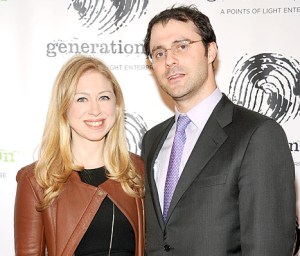
Chelsea Clinton and husband Marc Mezvinsky
The Keystone Pipeline is controversial, but apparently not as controversial as the daughter of a female potential presidential candidate getting pregnant. The bizarre conspiracy theories about Chelsea Clinton expecting a baby have already begun and they’ll probably never end.
From John Amato at Crooks and Liars: Will Chelsea Clinton’s Pregnancy Become Another Right Wing Conspiracy? Give me a break. Is the Pope Catholic? Amato knows it’s a silly question:
I’m forgetting myself because Hillary is not allowed to be a happy mother. We may see a normal life unfolding, but Teabirchers see coverups and conspiracies.
Limbaugh recently said he believes that Hillary Clinton staged the now famous shoe-throwing incident.
Maybe in my subconscious I think it was staged or set up. Lookit, I’m so, I know these people so well…I just do not attach much genuineness to them.
There were a host of others who were saying the same thing in Wingnuttia.
I wouldn’t be surprised at all if Hillary gets asked to comment on Chelsea’s pregnancy by the media, since that’s only natural, right? But after that happens more than once I really expect Limbaugh and all the wannabees to scream bloody murder that Chelsea’s announcement was staged, a set-up plot which is being aided by the librul media to cover up Benghazzzzzzzziiii!
And away we go! From Mediaite: Right-Wing Host Thinks Chelsea Clinton May Have ‘Staged’ Pregnancy to Help Hillary.
If you thought the Hillary Clinton “shoe truthers” were bad, wait until you meet the “baby truthers.” So far, conservative host Steve Malzberg is leading the charge with this video suggesting Chelsea Clinton’s pregnancy is being effectively “staged” to help her mother win the 2016 presidential election.
And excited Malzberg announced the 34-year-old Clinton’s pregnancy, saying, “Lo and behold, Hillary was by her side” when she made the announcement. “Hillary Clinton is going to be a grandmother when she runs for president!” he exclaimed.
“Now, pardon the skeptic in me,” Malzberg continued, before predicting the oncoming criticism from Media Matters and other watchdog website. “Malzberg said this was a staged, planned pregnancy?” he imagined they would ask.
“Well, now I’m not saying, when I say staged I have to believe she’s pregnant, if she says she’s pregnant,” he said. “I don’t mean that they’re making up she’s pregnant. But what great timing! I mean purely accidental, purely an act of nature, purely just left up to God.”
“And God answered Hillary Clinton’s prayers and she’s going to have the prop of being a new grandma while she runs for president,” he continued. “It just warms the heart, it brings a tear to my eye. It really does.”
I have so many more examples that I’ll have to do a link dump without excerpts:
Vanity Fair: The Worst Reactions to Chelsea Clinton’s Pregnancy Announcement.
Slate: If It Happened There: America Awaits Royal Baby.
LA Times: Chelsea Clinton’s pregnancy fuels presidential election speculation.
US News: Dumb Questions About a Grandmother-to-Be
Politico: What to expect when she’s expecting
Newsday: Bouie: Chelsea Clinton’s baby is already campaigning?
TPM: NYT Columnist Insists That Chelsea Clinton’s Baby Is A 2016 Game Changer
ABC News: Will Clinton Baby Affect 2016, and Is It Sexist to Ask?
Honestly, can you imagine this happening to a man running for president? For example,
“How will his daughter’s pregnancy affect Rand Paul’s chances for the Republican nomination? Did he “stage” this to get positive media? Enquiring people want to know.”

In my post yesterday, I mentioned that a huge trove of papers from the Clinton administration was going to be released. Well they are out there now, and so the Clinton haters are really having a field day what with drooling over ancient history and inventing conspiracies about Chelsea’s baby.
There are tons of articles on the document dump too; I’ll give you a few examples.
ABC News: Monica Lewinsky E-Mail Omitted From Latest Batch of Clinton Documents
An email from Monica Lewinsky was omitted from the Clinton library’s latest document dump for privacy reasons….
Included in a list of withdrawn/redacted documents (commonly interspersed in the large .pdfs), midway through a batch of documents concerning Gen. Wesley Clark, is an email from Monica Lewinsky’s Pentagon email address.
Vaguely referenced as concerning a “medical record,” the omitted email is listed as four pages long.
The recipient, Ashley Raines, is identified as a Lewinsky friend and confidante in the infamous Starr Report, produced by Independent Counsel Kenneth Starr. The report would later disclose details of the Lewinsky affair and trigger a major scandal that led to Clinton’s impeachment. Raines served as White House Director of Office of Policy Development Operations and Special Liaison to Management and Administration, according to the report, working in the Old Executive Office Building, next door to the White House.
In 1996, after an initial affair with the president had stopped according to the Starr report, Lewinsky described the relationship to Raines and showed her gifts allegedly given to her by Bill Clinton, including “a hat pin approximately eight inches long, an antique looking brooch the size of a half dollar, special edition copy of ‘Leaves of Grass’ by WALT WHITMAN, items from Martha’s Vineyard with ‘Black Dog’ logo, including a ball cap, and a short, baggy summer dress, and an autographed photo of the two of them wishing LEWINSKY ‘Happy Birthday,’” Raines told Starr’s investigators, with lawyers present. Lewinsky told Raines that she had confided in Linda Tripp about her relationship with Clinton.
Many more breathless details at the link.
LA Times: For Hillary Rodham Clinton, archives evoke fiery White House years.
…the latest batch of archived documents from the Clinton White House — while not particularly newsworthy — were a rather bracing reminder that the very mellow former first lady has emerged in her current happy state after many years in a White House that often took on the tone of war zone.
Mark that down as one reason why Clinton might not want to go racing back….
The documents once again underscored the combative fashion in which the Clinton White House drove its agenda, and its obsession with the administration’s adversaries.
One unsigned and undated document contained in the files of Jane Sherburne, a Special Counsel to the White House between 1994 and 1996, details theories about how the right wing, with the help of think tanks and conservative publications, was funneling “fringe” stories to the media. It also expounds on the financial powers and connections of billionaire Richard Mellon Scaife, who was referred to as “The Wizard of Oz.”
Part of the problem, the memo suggested, was the fact that the Internet “allows an extraordinary amount of unregulated data and information to be located in one area and available to all.”
“The right wing has seized upon the Internet as a means of communicating its ideas to people,” the unsigned memo continues. “Moreover evidence exists that Republican staffers surf the Internet interacting with extremists in order to exchange ideas and information.”
If the LA Times thinks that is shocking, I don’t think they are following current events.
The WaPo: The most interesting tidbits from the Clinton document dump This one includes a list of 12 gossipy examples of supposed Clinton political machinations.
Here’s the best one I’ve seen yet from Buzzfeed: This Unsent Shade-Filled Letter From Clinton Staffers To A ’90s Radio Host [Don Imus] Is A Goddamn Masterpiece.
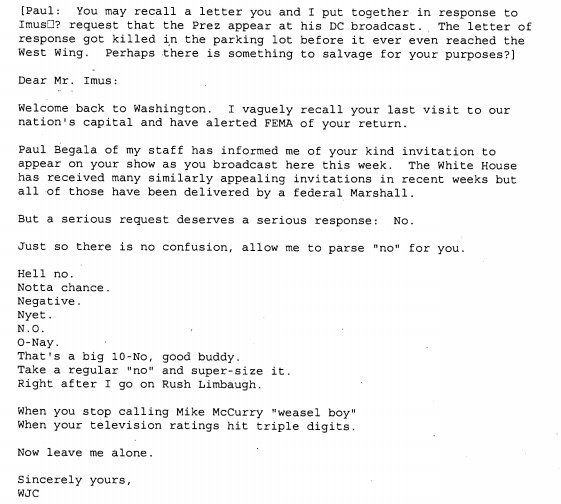
I wish it had been sent!
I’m running out of space and time, but I do have a few more serious items I want to share. I’ll put them in the comments.
So . . . What stories are you following today? Please share your recommended links in the comment thread and have a fantastic weekend!!
Friday Reads: American Oligarchy, South Korean Tragedy, and Hillary Under the Microscope
Posted: April 18, 2014 Filed under: morning reads, Republican politics, U.S. Politics | Tags: Benjamin I. Page, Clinton Derangement Syndrome, ethnic diversity, Hillary Clinton, Larry Bartels, Martin Gilins, oligarchy, Republican Party, South Korean ferry disaster, white voters 39 Comments
Good Morning!!
Yesterday Dakinikat quoted from a WaPo article by Larry Bartels on the Republican Party’s increasing identification as white and anti-every other ethnic group. (Of course he failed to mention that Republicans also focus almost exclusively on the needs of men who identify as Christians, but I’ll let that go for now.)
Bartels, a professor of political science at Vanderbilt University, is the author of Unequal Democracy:The Political Economy of the New Gilded Age. In the WaPo article, Bartels argues based on his research that, despite its seeming choice to ignore the needs of the majority of Americans and the growing ethnic diversity in the U.S. population, the demise of the GOP may not be immanent. Bartels writes:
Even momentous demographic changes occur slowly; non-Hispanic whites will remain a majority of the U.S. population for the next 30 years, and (allowing for differences in age profiles, citizenship status and turnout) a majority of the electorate even longer. (According to Census Bureau tabulations, non-Hispanic whites were 65 percent of the U.S. population in 2012, but 74 percent of the electorate.) Thus, if white voters “continue to migrate toward the Republican Party” in response to demographic change, “it will be a long time before it finds itself unable to win elections.”
Just look at demographically diverse but stubbornly Republican Texas, always just about to turn blue. The changing American polity may come to look more like Texas than like the multicultural Democratic stronghold of California. In an increasingly diverse America, identity politics will continue to cut both ways.
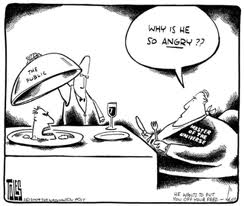
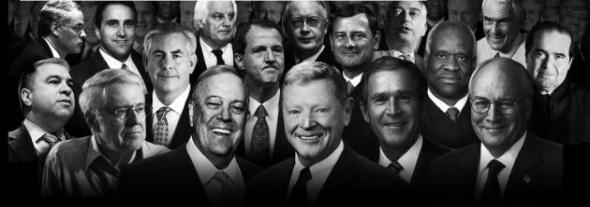
Take a look at the illustration at the top of this post and you’ll see why Bartels is probably right. According to a recently released study (pdf) by Martin Gilins and Benjamin I. Page of Princeton and Northwestern Universities respectively, we are no longer living in a democracy. The U.S. has already become an oligarchy. Sure we knew that already, but now we have confirmation from a scientific study. From BBC News:
[T]he two professors have conducted exhaustive research to try to present data-driven support for this conclusion. Here’s how they explain it:
“Multivariate analysis indicates that economic elites and organised groups representing business interests have substantial independent impacts on US government policy, while average citizens and mass-based interest groups have little or no independent influence.”
In English: the wealthy few move policy, while the average American has little power.
The two professors came to this conclusion after reviewing answers to 1,779 survey questions asked between 1981 and 2002 on public policy issues. They broke the responses down by income level, and then determined how often certain income levels and organised interest groups saw their policy preferences enacted.
“A proposed policy change with low support among economically elite Americans (one-out-of-five in favour) is adopted only about 18% of the time,” they write, “while a proposed change with high support (four-out-of-five in favour) is adopted about 45% of the time.”
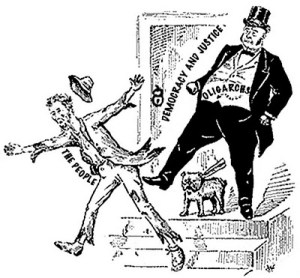
On the other hand, Gilins and Page conclude:
because of the strong status quo bias built into the US political system, even when fairly large majorities of Americans favour policy change, they generally do not get it.…
Americans do enjoy many features central to democratic governance, such as regular elections, freedom of speech and association and a widespread (if still contested) franchise. But we believe that if policymaking is dominated by powerful business organisations and a small number of affluent Americans, then America’s claims to being a democratic society are seriously threatened.
These study’s results reinforce Larry Bartels’ findings about the tendency of white Americans to support the goals of the super rich even when it is not in their own best interest. Another quote from the study via Gawker:
The central point that emerges from our research is that economic elites and organized groups representing business interests have substantial independent impacts on U.S. government policy, while mass-based interest groups and average citizens have little or no independent influence. Our results provide substantial support for theories of Economic Elite Domination and for theories of Biased Pluralism, but not for theories of Majoritarian Electoral Democracy or Majoritarian Pluralism…
Recent research by Larry Bartels and by one of the present authors (Gilens), which explicitly brings the preferences of “affluent” Americans into the analysis along with the preferences of those lower in the income distribution, indicates that the apparent connection between public policy and the preferences of the average citizen may indeed be largely or entirely spurious.

Hamilton Nolan at Gawker:
The theory of Economic Elite Domination is fairly self-explanatory. The theory of Biased Pluralism holds that policy outcomes “tend to tilt towards the wishes of corporations and business and professional associations.” In essence, the researchers found that government policy changes are correlated with the wishes of the wealthy and with interest groups, but not with the wishes of the average American—even though the whole idea of “Democracy” is to ensure that the wishes of the majority tend to carry the day.
The study notes that the position of the median American and the position of the affluent American are often the same; therefore, regular people tend to think that their political interests are being represented when they see the triumph of some political position that they agree with. In fact, the researchers say, this is a mere coincidence. Yes, the average American will see their interests represented—as long as their interests align with the interests of the wealthy.
Yes, it’s extremely depressing, but we have long sensed this and now science has confirmed our intuitions. Now we have to figure out how to change it.
In other news . . .

We haven’t talked much about the disastrous sinking of a ferry loaded with South Korean students and their families. So far 28 people are known to be dead and 268 are still missing–including 246 students. From the Wall Street Journal:
On Monday night, Kim Si-yeon and her family took her mother out for a late birthday dinner. Ms. Kim pushed for a cheap Korean barbecue restaurant and family members say they reluctantly obliged because the young musician and actress was leaving the next day for a four-day high school trip.
The next morning, the father of Cho Eun-jung, another student at the same school, didn’t want to wake his daughter before he left for work. So he cuddled her in his arms and kissed her forehead, he said in an interview.
Student Lee Hye-gyeong later that morning said a quick goodbye to her boyfriend as she left for the bus ride to the ferry port where the three students and more than 300 of their classmates would set sail for a 13-hour journey to Jeju Island, a popular South Korean vacation spot.
An annual trip for high-school juniors from Danwon High School in Ansan, a suburb of Seoul, the trip was designed as a break before the students began intense preparations for college entrance exams next year. Last year’s class was the first to take the boat; in the past, student groups had flown.
What happened next, not long after sunrise on Wednesday morning, has become a national tragedy in South Korea. The students had just finished a breakfast of bulgogi, a Korean beef dish, rice and kimchi when the ferry capsized and sank.
So heartbreaking. From NBC News: South Korea Ferry: 30-Minute Evacuation Delay Trapped Dozens.
A half-hour delay in evacuation orders may have trapped hundreds on board the doomed South Korea ferry, according to new details which emerged Friday about how the disaster unfolded.
A transcript of a ship-to-shore exchange, and interviews with surviving crew members, reveal that the vessel was listing too heavily for passengers to escape by the time the captain issued orders to abandon ship….
Oh Yong-seok, a helmsman on the ferry with 10 years of shipping experience, told The Associated Press that when the crew gathered on the bridge and sent a distress call, the ship was already listing more than five degrees, the critical angle at which a vessel can be brought back to even keel.
The first instructions from the captain were for passengers to put on life jackets and stay where they were, Oh said. A third mate reported that the ship could not be righted, and the captain ordered another attempt, which also failed, Oh said.
A crew member then tried to reach a lifeboat but fell because the vessel was tilting, prompting the first mate to suggest to the captain that he order an evacuation, Oh said.About 30 minutes after passengers were told to stay in place, the captain finally gave the order to evacuate, Oh said, adding that he wasn’t sure in the confusion and chaos on the bridge if the order was relayed to the passengers.
“We couldn’t even move one step. The slope was too big,” said Oh, who escaped with about a dozen others, including the captain.
I guess the old saying that the captain must go down with the ship no longer holds true. There is an arrest warrant out for the captain though. From the WSJ again:
SEOUL—Arrest warrants were issued for the captain and two crew members of the sunken South Korean ferry on Friday, as a crew member confirmed accounts that the captain was among the first to abandon the sinking ship.
In an interview with The Wall Street Journal, crew member Oh Yong-seok, who isn’t a target of an arrest warrant, re-created the chaotic final moments before the ship capsized on Wednesday morning. He said that while members of the crew did abandon the boat, they did everything they could to first evacuate the vessel’s passengers.
The focus on the crew members’ final actions came during a third day of frustration, confusion and tragedy that offered no new breakthroughs in attempts to rescue the nearly 300 passengers who remain missing.
Investigators also didn’t appear to be any closer to understanding why the ship made what it called a “radical right turn” shortly before it began to sink.
In another tragedy, a vice principal who escaped the sinking ferry has committed suicide. First Coast News:
SEOUL – The vice principal rescued from the doomed South Korean ferry has been found hanged, Korean police said Friday.
Out of the ferry’s 475 passengers, 325 had been second year high school students from Danwon High School in Ansan, about 20 miles south of Seoul. They were on a four-day trip to the island of Jeju, a popular South Korean tourist destination.
The vice principal was identified only by his surname, Kang. He was on the island of Jindo, where rescued passengers had taken shelter. A police officer said he was hanging from a tree.
Read more details at the link.
Prepare yourself for another outbreak of Clinton Derangement Syndrome.

The New York Times reports: New Batch of Clinton Documents to Be Released.
The National Archives on Friday was preparing to release its largest batch yet of previously withheld documents from the Clinton administration, with topics to include the conflicts in Somalia and Rwanda, Middle East peace negotiations, the Oklahoma City bombing and public figures like Richard M. Nixon, Steven Spielberg and Oprah Winfrey.
The bundle that is likely to receive the most attention, though, is one that covers Hillary Rodham Clinton’s ill-fated attempt as first lady to overhaul the health care system. Mrs. Clinton, who ran for president in 2008, is considering a second attempt in 2016.
The roughly 7,500 documents — consisting of memos, transcripts, speeches and emails — were to be posted by the Clinton Presidential Library at 1 p.m.
Also from the NYT, the claim that Hillary Clinton Struggles to Define a Legacy in Progress.
It was a simple question to someone accustomed to much tougher ones: What was her proudest achievement as secretary of state? But for a moment, Hillary Rodham Clinton, appearing recently before a friendly audience at a women’s forum in Manhattan, seemed flustered.
Mrs. Clinton played an energetic role in virtually every foreign policy issue of President Obama’s first term, advocating generally hawkish views internally while using her celebrity to try to restore America’s global standing after the hit it took during the George W. Bush administration.
But her halting answer suggests a problem that Mrs. Clinton could confront as she recounts her record in Mr. Obama’s cabinet before a possible run for president in 2016: Much of what she labored over so conscientiously is either unfinished business or has gone awry in his second term.
From Russia’s aggression in Ukraine and the grinding civil war in Syria to the latest impasse in the Middle East peace process, the turbulent world has frustrated Mr. Obama, and is now defying Mrs. Clinton’s attempts to articulate a tangible diplomatic legacy.
Horrors! I guess Hillary should just drop out then (“Why won’t that nasty bitch quit?”). And now that she’s going to be a grandma, she probably should give up all her ambitions and become a babysitter. From The Christian Science Monitor: Chelsea Clinton baby: Will Hillary Clinton be less likely to run in 2016? Would anyone ask that about a man running for president?

There are tons of Hillary headlines today, so I’ll give you a sampling:
NPR: Hillary Clinton’s Presidential Chess Board.
WaPo: Poll: Hillary Clinton’s numbers worst since 2008, as GOP brand surges (Sigh . . . Whatever. 2016 is a long way down the road.)
WaPo: Hillary Clinton says she’s ‘a huge supporter’ of immigration reform.
Bloomberg: Hillary Clinton’s Diplomacy Memoir Will Be Called ‘Hard Choices’
Snarky commentary on the upcoming book by Joe Coscarelli at New York Magazine: Hillary Clinton Wants You to Know That She Faces Very ‘Hard Choices,’ Like, For Instance, Running for President in 2016
So . . . what else is happening out there in the world? Please share your links in the comment thread and have a fantastic Friday!!
Tuesday Reads: Syria, Ukraine, and Venezuela; Robot Police; Republican Stupidity; Harold Ramis; and Women of “True Detective”
Posted: February 25, 2014 Filed under: abortion rights, Barack Obama, Foreign Affairs, misogyny, morning reads, NSA, National Security Agency, PLUB Pro-Life-Until-Birth, Reproductive Rights, Republican politics, Syria, U.S. Politics, Ukraine, Venezuela, War on Women | Tags: Bobby Jindal, crime fighting robot, Dan Malloy, Harold Ramis, Knightscope, Mark Ames, State Sen. Steve Martin (R-VA), Syria's children, True Detective 42 Comments
Good Morning!!
There is so much foreign news these days, and I have to admit ignorance when it comes to discussing the situations in Ukraine, Venezuela, and Syria. I don’t even know where to begin to understand the issues, and to be honest I just don’t have the time to try to do it. But here are some articles from sources I trust that struck me as important.
I’ll begin with something I can easily understand and care about: the fate of children in these conflicts. From The Independent, ‘No one cares’: The tragic truth of Syria’s 500,000 refugee children. The article is about British photojournalist Ed Thompson and an art student from Lebanon, Sammy Hamze, who went to Lebanon to put a spotlight on what is happening to Syrian refugee families.
We have heard the stories. Children at risk of dying from the cold in refugee camps; vulnerable to trafficking; begging on the side of the road; left orphaned and out of school; girls sold into marriage. But what shook Thompson most was that the children, although appearing older than their years, were still so young. “They are innocent, completely innocent,” he says now. “One father told me to look at his family; he could barely feed his son. They had been through hell, walked through hell and got to hell. All they want to do is go home.”
The conflict that has torn Syria apart has raged for almost three years, left more than 100,000 people dead in its wake and driven nine-and-a-half million from their homes. It took intense political pressure to get the British Government to agree to offer hundreds of the “most needy people” in Syrian refugee camps a home in this country. “We live in the modern age – we can read what’s going on in Syria; we’ve never had more information at our fingertips,” says Thompson – “but no one cares.”
If anything can break through the apathy, it is his pictures.
Read more and see some of Thompson’s photos at the link.
On Ukraine, I posted this article by Mark Ames in the comments yesterday, but I’ll link it again here: Everything you now about Ukraine is wrong.
I haven’t lived in that part of the world since the Kremlin ran me out of town, so I’m not going to pretend that I know as much as those on the ground there. Still, I’ve been driven nuts by the avalanche of overconfident ignorance that stands for analysis or commentary on the wild events there. A lethal ignorance, a virtuous ignorance….
Nearly everyone here in the US tries to frame and reify Ukraine’s dynamic to fit America-centric spats. As such, Ukraine’s problems are little more than a propaganda proxy war where our own political fights are transferred to Ukraine’s and Russia’s context, warping the truth to score domestic spat points. That’s nothing new, of course, but it’s still jarring to watch how the “new media” counter-consensus is warping and misrepresenting reality in Ukraine about as crudely as the neocons and neoliberals used to warp and Americanize the political realities there back when I first started my Moscow newspaper, The eXile.
Read about what Ames calls the “simplifications/misconceptions” that are driving Ames crazy at Pando Daily.
And then there’s Venezuela. At The Washington Post, Adam Tayor asks, Amid the coverage of Ukraine, is a crisis in Venezuela being ignored? It’s an interesting question. And what about Syria, which has pretty much disappeared in all the coverage of Ukraine? Is American media simply incapable of covering more than one foreign conflict at a time? Read all about it at the link.
One more story on Venezuela from Peter Weber at The Week: Venezuela isn’t going to be another Ukraine.
Venezuela is not Ukraine, and beneath the similarities in the protest movements are significant differences.
The first is time: The Kiev protesters started their demonstration in November after Yanukovych reneged on a European Union trade pact, and they gradually built up a tent fortress in the central Maidan Square. In Venezuela, the protests started on Feb. 4 at the university in San Cristóbal, with students showing their anger over the lack of police response to an attempted rape and crime in general.
The “brutal police crackdown” on the student protesters in San Cristóbal led to similar protests at other universities, which were also violently suppressed, says Francisco Toro in The New York Times. “As the cycle of protests, repression, and protests-against-repression spread, the focus of protest began to morph. What was at stake, the students realized, was the right to free assembly.” Toro continues:
It’s this intolerance of opposing views, and violent repression, that Venezuela’s students are now mobilized against. Today, after 13 deaths, 18 alleged cases of torture and over 500 student arrests, the protest movement has snowballed into a nationwide paroxysm of anger that puts the government’s stability in question. The protests’ lack of structure has given them resilience, but also an anarchic edge. There is no single leader in a position to give the movement strategic direction. [The New York Times]
Read more comparisons at the link.
In Other News . . .

The K5 robot outside a school
If you think the prospect of being spied on by NSA is frightening, you need to read this article by James Robinson at Pando Daily: Knightscope’s new robotic law enforcer is like staring at the demise of humanity.
Knightscope’s autonomous, crime fighting robot has the complexion of a washing machine. In pictures it looks cute, the size of a penguin maybe. In person it is five feet tall with intimidating breadth. It moves steadily and with insistence. If you stare at it long enough, the twin panels of lights about two-thirds of the way up its body start to take on the appearance of shifty, judgmental eyes. It sees what you’re doing and wants you to cut it out.
The full name of the Knightscope robot on display at the Launch Festival this morning was the K5 beta prototype. Former Ford Motor Company executive and Knightscope CEO William Santana Li describes it to MC and festival organizer Jason Calacanis onstage as a “crime fighting autonomous data machine.” But that doesn’t come close to doing it justice….
As Santana Li outlines proudly, the beast before him on stage takes in 360-degree video through four cameras, is capable of thermal imaging, registers gestures, recognizes faces and can run 300 license plates in a single minute. It works off proximity GPS and scans its environment every 25 milliseconds. It runs off nearly identical technology to Google’s self-driving cars. He boasts that it can see, feel, hear and smell. It is autonomous, will roam outdoors, can take video, decide when it needs to return and charge its batteries and can detect biological and chemical pathogens and radiation.
The Knightscope will get put out in the field gathering data, Santana Li says. The owner can log in to a security panel and get a read of what is going on in the area. The robot can scan license plates and report back on stolen cars. Its facial recognition capabilities can alert its owner to any registered sex offender in the area. The sample dashboard Santana Li logs in to, shows that the robot can report back about things as specific as how many people are lying horizontal and how many are gesturing with their hands. The company is working on giving it a 3M graffiti proof sheen, it emits a piercing sound if someone tries to tip it over and the machines will often work in pairs so they can protect each other.
How would you like to live in a world where one of those things is checking up on you wherever you go?
From Laura Bassett at Huffington Post, here’s the latest from the land of Republican misogyny and stupidity: Virginia Republican Says A Pregnant Woman Is Just A ‘Host,’ Though ‘Some Refer To Them As Mothers.’ Yes, someone really said that.
A pregnant woman is just a “host” that should not have the right to end her pregnancy, Virginia State Sen. Steve Martin (R) wrote in a Facebook rant defending his anti-abortion views.
Martin, the former chairman of the Senate Education and Health Committee, wrote a lengthy post about his opinions on women’s bodies on his Facebook walllast week in response to a critical Valentine’s Day card he received from reproductive rights advocates.
“I don’t expect to be in the room or will I do anything to prevent you from obtaining a contraceptive,” Martin wrote. “However, once a child does exist in your womb, I’m not going to assume a right to kill it just because the child’s host (some refer to them as mothers) doesn’t want it.” Martin then changed his post on Monday afternoon to refer to the woman as the “bearer of the child” instead of the “host.”
Martin explained that he edited his post because “people took it the wrong way.” Read his original post at the link.
And then there’s good old Bobby Jindal, who still thinks he has a chance to be POTUS: Jindal Breaches White House Protocol To Take Shots At Obama.
The National Governors Association is supposed to bring Democrats and Republicans together to discuss policy and share ideas for mutual success, but after a meeting at the White House Monday, all pretense at bipartisan comity was shattered as a press conference with lawmakers descended into a partisan fracas.
Louisiana Gov. Bobby Jindal launched into a repeated assault on President Barack Obama’s leadership in the shadow of the West Wing, in defiance of established bipartisan protocol. Speaking after a meeting of the NGA at the White House, Jindal, the vice chair of the Republican Governors Association, said Obama is “waving a white flag” by focusing on executive actions with three years left in his term. “The Obama economy is now the minimum wage economy,” Jindal added….
Connecticut Gov. Dan Malloy rose to challenge Jindal immediately after he spoke to reporters, calling his remarks on Obama waving a white flag “the most insane statement I’ve ever heard.”
Jindal then returned to the microphones to continue his barrage against the Obama administration, saying as Malloy walked off, “I want to make sure he hears a more partisan statement,” and saying Obama should delay the Affordable Care Act mandates. It wasn’t the first time Jindal had used the microphones outside the White House to attack the president, having done the same at last year’s meeting.
Fortunately, Bobby Jindal will never be president. What a horrible excuse for a human being.
As everyone knows by now, we lost a great comedy writer, director, and performer yesterday. From The Chicago Tribune: Harold Ramis, Chicago actor, writer and director, dead at 69.
Harold Ramis not only may be the most successful comedy writer-director that Chicago has produced, but some wouldn’t even confine that statement to Chicago.
“Harold was clearly the most successful comedy writer-director of all time,” said Tim Kazurinsky, who followed Ramis at Second City and later became his friend. “The number of films that he has made that were successful, that were blockbusters, nobody comes close. Even in light in of that, he was more successful as a human being.”
Ramis’ career was still thriving in 1996, with “Groundhog Day” acquiring almost instant classic status upon its 1993 release and 1984’s “Ghostbusters” ranking among the highest-grossing comedies of all time, when he decided to move his family back to the Chicago area, where he grew up and had launched his career.
On Monday, Ramis was surrounded by family in his North Shore home when he died at 12:53 a.m. of complications from autoimmune inflammatory vasculitis, a rare disease that involves swelling of the blood vessels, said his wife, Erica Mann Ramis. He was 69.
Read The New York Times obituary here: Harold Ramis, Alchemist of Comedy, Dies at 69.
Finally, a little True Detective news. Dakinikat posted this in the comments yesterday, but if you didn’t go to the link you might have missed something really revelatory.
A number of writers have noted that the hit HBO series focuses almost exclusively on the male characters and that women and children are only seen and heard in terms of their effect on the men–for example, see this article at The New Yorker by Emily Nussbaum: The shallow deep talk of “True Detective.”
Yesterday two feminist writers took a different point of view. At Slate, Willa Paskin argues that the way the men of True Detective treat women is actually at the heart of the narrative–that by not listening to women, Detectives Marty Hart and Rust Cohle miss the very clues that would help them solve their 17-year case.
Ignoring women may be the show’s blind spot, but it is also one of its major themes. True Detective is explicitly about the horrible things that men do to women, things that usually go unseen and uninvestigated. No one missed Dora Lange. Marie Fontenot disappeared, and the police let a rumor stop them from following up. Another little girl was abducted, and a report was never even filed. “Women and children are disappearing, nobody hears about it, nobody puts it together,” Rust told his boss Sunday night, outlining what he believes is a vast conspiracy in the Bayou. Rust is haunted by women who aren’t there—his ex-wife and his dead daughter—while Marty cannot deal appropriately with the women who are.
Please read the whole thing, if you haven’t already. Amanda Marcotte agrees with Paskin, and she turns up the work of some “internet sleuths” to provide some evidence. Marcotte:
I’m inclined to agree with Paskin. In fact, I’m going to take it a step further and argue that I think, whatever else happens, this inability of the main characters to really see women is going to be their downfall. Over and over again, the show obsesses about the gap between self-serving delusions and narratives and what’s really going on. Marty repeatedly talks about how detectives frequently overlook what should have been most obvious, what was right under their noses. He calls it the “detective’s curse”. “Solution was right under my nose, but I was paying attention to the wrong clues.”
I am going to offer this prediction, then: The solution will be right under their noses, but they missed it because they don’t really see women.
Indeed, the internet sleuths are already on it. Remember that all-important yearbook photo that they found one of the victims in? Well, guess what? Other female characters that Marty and Rust have interacted with are in the picture. Here’s the picture with the women helpfully numbered.

On the far right of the front row is a girl who grew up to be the woman who killed her three children because of Munchhausen by proxy syndrome–the woman whom Rust got to confess and then told her to kill herself. Was she traumatized at that school? Could she have given him some valuable information? Why didn’t Rust follow up on those photos?

Something to think about while we wait for Sunday night to roll around.
Now it’s your turn. What stories are you following today? Please share your links in the comment thread.
Thursday Reads: Empathic Elephants, Meaningful Lives, Hillary Harassment, and Miranda Decision
Posted: February 20, 2014 Filed under: morning reads, Republican politics, U.S. Politics | Tags: 2016 Democratic nomination, Bill Clinton, David Miranda, Edward Snowden files, elephants, emotional contagion, empathy, Glenn Greenwald, happiness and meaning, Hillary Clinton, Kate Hansen, Kathleen Willey, Lord Justice Laws, Louisiana, Ohio, polls, Roy Baumeister, Sochi Olympics, stress, Vince Foster 88 Comments
Good Morning!!
A fascinating new study found that Asian elephants comfort each other in times of stress by touching each other with their trunks and making consoling vocalizations. From National Geographic:
Asian elephants, like great apes, dogs, certain corvids (the bird group that includes ravens), and us, have now been shown to recognize when a herd mate is upset and to offer gentle caresses and chirps of sympathy, according to a study published February 18 in the online journal PeerJ.
Joshua Plotnik, a behavioral ecologist at Mahidol University in Kanchanaburi, Thailand, and primatologist Frans de Waal, director ofEmory University’s Living Links Center, have shown through a controlled study what those who work with elephants have always believed: The animals, in this case captive Asian elephants (Elephas maximus), offer something akin to humans’ sympathetic concern when observing distress in another, including their relatives and friends.
The scientists observed a group of 26 elephants in Thailand for a year. It was a naturalistic study–researchers waited until a stressful situation occurred and then noted the animals’ behavior toward each other. From The Christian Science Monitor:
A stress-inducing situation might be a dog walking by or a snake rustling the grass, or the roar or just the presence of a bull elephant. Sometimes the stressor was unknown. Regardless, scientists know elephant distress when they see it: erect tails and flared ears; vocalizations such as trumpeting, rumbling, or roaring; and sudden defecation and urination tell the story….the scientists witnessed bystander elephants—those not directly affected by a stressor—moving to and giving upset elephants physical caresses, mostly inside the mouth (which is kind of like a hug to elephants) and on the genitals.
Bystanders also rumbled and chirped with vocal offerings that suggested reassurance. Sometimes the empathetic animals formed a protective circle around the distressed one.
There was also evidence of “emotional contagion,” when herd mates matched the behavior and emotional state of the upset individual. In other words, seeing a “friend” in distress was distressing to the observers. Those animals also consoled one another.
It makes you wonder if the elephant is really the appropriate symbol for the Republican Party. Read more about elephant empathy at The Christian Science Monitor and Wired.
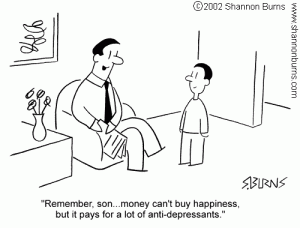
Here’s another interesting study at Scientific American–this time about humans: A Happy Life May not be a Meaningful Life. The results reminded me of all the super rich guys who are constantly complaining about how victimized they are by the rest of us peons.
Psychiatrist and Holocaust survivor Viktor Frankl once wrote, “Life is never made unbearable by circumstances, but only by lack of meaning and purpose.” For most people, feeling happy and finding life meaningful are both important and related goals. But do happiness and meaning always go together? It seems unlikely, given that many of the things that we regularly choose to do – from running marathons to raising children – are unlikely to increase our day-to-day happiness. Recent research suggests that while happiness and a sense of meaning often overlap, they also diverge in important and surprising ways.
Roy Baumeister and his colleagues recently published a study in the Journal of Positive Psychology that helps explain some of the key differences between a happy life and a meaningful one. They asked almost 400 American adults to fill out three surveys over a period of weeks. The surveys asked people to answer a series of questions their happiness levels, the degree to which they saw their lives as meaningful, and their general lifestyle and circumstances.
As one might expect, people’s happiness levels were positively correlated with whether they saw their lives as meaningful. However, the two measures were not identical – suggesting that what makes us happy may not always bring more meaning, and vice versa. To probe for differences between the two, the researchers examined the survey items that asked detailed questions about people’s feelings and moods, their relationships with others, and their day-to-day activities. Feeling happy was strongly correlated with seeing life as easy, pleasant, and free from difficult or troubling events. Happiness was also correlated with being in good health and generally feeling well most of the time. However, none of these things were correlated with a greater sense of meaning. Feeling good most of the time might help us feel happier, but it doesn’t necessarily bring a sense of purpose to our lives.
Interestingly, the researchers found that money can buy happiness, but it can’t guarantee a meaningful life. This is something I’ve come to believe through long and painful experience. I think a sense of meaning comes from working your way through problems and difficult times and coming out the other side stronger and wiser. Rich people are often able to shield themselves from life problems, but at the same time they miss out on opportunities for emotional growth.
Of course relationships are also important for both happiness and a sense of meaning.
In Baumeister’s study, feeling more connected to others improved both happiness and meaning. However, the role we adopt in our relationships makes an important difference. Participants in the study who were more likely to agree with the statement, “I am a giver,” reported less happiness than people who were more likely to agree with, “I am a taker.” However, the “givers” reported higher levels of meaning in their lives compared to the “takers.” In addition, spending more time with friends was related to greater happiness but not more meaning. In contrast, spending more time with people one loves was correlated with greater meaning but not with more happiness. The researchers suspect that spending time with loved ones is often more difficult, but ultimately more satisfying, than spending time with friends.
This is something else I can testify to. I spent about 18 years being a primary caregiver for my ex-mother-in-law. At times this was a thankless, frustrating task that certainly didn’t make me happy all the time–but in the end, I realized that the experience had been meaningful and I had grown a great deal from it.
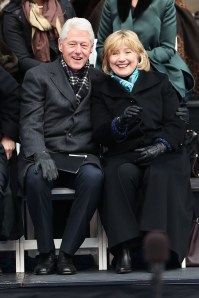
It looks like Hillary is going to be in the news a great deal between now and the 2016 presidential primaries. We’ve seen the Republicans ramping up their campaign against her–so far by focusing on old gossip from the 1990s. Even the Vince Foster conspiracy theories are coming back to haunt us. Bob Cesca at The Daily Banter reported yesterday that Fox News was set to resurface not only Vince Foster myths, but also Kathleen Willey’s claims that Bill Clinton sexually harassed her.
One of the top shelf conspiracy theories about the Clintons had to do with the suicide of White House advisor Vince Foster, which topped a list of other suspected deaths at the hands of Bill and Hillary. Now, 13 years after the end of that administration and at the outset of the would-be presidential candidacy of Hillary Clinton, everything from the ’90s appears to be back on the table.
We’ve already heard from Sen. Rand Paul (R-KY) who was the first to invoke Monica Lewinsky. And now here comes Fox News Channel resurrecting the Vince Foster conspiracy theory.
On tonight’s The Kelly File, Megyn Kelly welcomes Kathleen Willey who famously accused President Clinton of sexual harassment. An independent counsel discredited the groping allegations. Nevertheless, Willey has gone on to accuse the Clintons of not only assassinating Vince Foster, but also of murdering her husband.
Sigh . . . I don’t know if anyone here watched that travesty–I wonder if Megyn explained why Hillary should be held responsible for things her husband did (or was accused of doing) decades ago.
As an antidote to that nonsense, here are a couple of very interesting polls:
Politico: Hillary Clinton sweeps GOP in Ohio
Hillary Clinton buries Gov. Chris Christie and other potential Republican presidential candidates in the crucial swing state of Ohio, according to a new poll on Thursday.
The former secretary of state, who led Christie 42 percent to 41 percent in November, now tops the New Jersey governor 49 percent to 36 percent, according to a Quinnipiac University poll.
Read the rest of the numbers at the link.
Now here’s a poll that will make Dakinikat smile: In a Stunning Turn Poll Shows Hillary Clinton Could Make Louisiana Blue in 2016 (Politicus USA)
A new Public Policy Polling survey of Louisana found that Hillary Clinton would be the strongest Democratic presidential candidate in the state since her husband Bill was on the ballot in the 1990s.
According to PPP, “All the Republican contenders for President lead Hillary Clinton in hypothetical contests, but the margins are closer than they’ve been in the state since her husband was on the ticket. Christie leads her by just a point at 44/43, Jindal’s up 2 at 47/45, Paul leads by 4 points at 47/43, Huckabee has a 5 point advantage at 49/44, and the strongest Republican with a 7 point edge at 50/43 is Jeb Bush.”
Hillary Clinton’s numbers represent the best showing for a Democratic presidential candidate in the state since her husband Bill Clinton won Louisiana by 5 points in 1992 and 12 points in 1996. George W. Bush won the state by 8 points in 2000, and 15 points in 2004. McCain beat Obama by 19 in 2008, and Mitt Romney defeated the president by a margin of 18 points in 2012.
Wow! It’s still very early, but that is exciting news.

You may recall that last August, Glenn Greenwald’s partner David Miranda was detained at Heathrow Airport in London and questioned about documents he was carrying–top secret documents that had been stolen by Edward Snowden from the U.S. and Great Britain. Miranda’s computers, flash drives and other electronic devices were also confiscated. Greenwald and Miranda sued, claiming that Great Britain charging him under their “anti-terrorism laws was unlawful and breached human rights.” Yesterday the court released its decision, saying that judges said it was a “proportionate measure in the circumstances” and in the interests of national security. From BBC News:
Steven Kovats QC, representing the UK home secretary, previously told the High Court that the secret material seized from Mr Miranda could have ended up in the hands of al-Qaeda.
But Mr Miranda’s lawyers argued the detention at Heathrow was illegal because it was carried out under the wrong law: Schedule 7 of the Terrorism Act 2000.
They said that in reality he was detained on the say-so of the security services so they could seize journalistic material.
Mr Miranda was carrying 58,000 highly classified Government Communications Headquarters (GCHQ) files, the judge said.
He added that Oliver Robbins, the UK’s deputy national security adviser at the Cabinet Office, had stated that “release or compromise of such data would be likely to cause very great damage to security interests and possible loss of life”.
But could Miranda be called a “journalist” just because he was carrying material that his partner had written about in a newspaper, The Guardian?
In his ruling, Lord Justice Laws said: “The claimant was not a journalist; the stolen GCHQ intelligence material he was carrying was not ‘journalistic material’, or if it was, only in the weakest sense.
“But he was acting in support of Mr Greenwald’s activities as a journalist. I accept that the Schedule 7 stop constituted an indirect interference with press freedom, though no such interference was asserted by the claimant at the time.
“In my judgement, however, it is shown by compelling evidence to have been justified.”
Here’s the full decision of the court. There is a subtle but emphatic slap-down of Glenn Greenwald’s arguments in points 54-56. The judged noted that Greenwald appeared to be lecturing the court when he discussed “responsible journalism,” and responded that the “evidence” Greenwald offered was “unhelpful,” because he took the position that British law enforcement officers deliberately acted in a way that they (officers) knew to be wrong; he ignored the fact that the material Miranda was carrying was stolen and could end up in the wrong hands; and that
Mr Greenwald’s account (paragraph 33) of the “many ingredients to the sensible reporting of very sensitive information” is insubstantial; or rather, mysterious – the reader is left in the dark as to how it is that “highly experienced journalists and
legal experts” (paragraph 33(1)) or “[e]xperienced editors and reporters” (33(2)) are able to know what may and what may not be published without endangering life or security.
Miranda and Greenwald hope to be granted the right to appeal the decision.
I’m just about out of space, so I’ll conclude with a quickie from Sochi: Olympian Films Wolf Stalking Her Hotel Hallway.
Olympian Kate Hansen tweeted out a video of what appears to be a wolf trotting down her hotel hallway with the message, “I’m pretty sure this is a wolf wandering my hall in Sochi.” via
Now it’s your turn. What stories are you following today? Please post your links in the comment thread, and have a great day!
Tuesday Reads: Shirley Temple, The “Hillary Papers,” And The Endless NSA Story
Posted: February 11, 2014 Filed under: Barack Obama, Foreign Affairs, morning reads, Republican politics, U.S. Politics | Tags: Bill Clinton, Cryptome.org, Diane Blair, drones, Edward Snowden, First Look, Glenn Greenwald, Hillary Clinton, Jeremy Scahill, metadata, Monica Lewinsky, NSA, Pierre Omidyar, Shirley Temple, signals intelligence, terrorists, The Hillary Papers, The Intercept 32 Comments
Good Morning!!
The top news story on Google this morning was the death of 1930s child star Shirley Temple at age 85. Later in life, she served the U.S. as an ambassador and was active in Republican politics.
Shirley Temple Black, who lifted America’s spirits as a bright-eyed, dimpled child movie star during the Great Depression and later became a U.S. diplomat, died late on Monday evening at the age of 85, her family said in a statement.
Temple Black, who lured millions to the movies in the 1930s, “peacefully passed away” at her Woodside, Calif., home from natural causes at 10:57 p.m. local time (0157 ET), surrounded by her family and caregivers, the statement said on Tuesday….
As actress Shirley Temple, she was precocious, bouncy and adorable with a head of curly hair, tap-dancing through songs like “On The Good Ship Lollipop.” As Ambassador Shirley Temple Black, she was soft-spoken and earnest in postings in Czechoslovakia and Ghana, out to disprove concerns that her previous career made her a diplomatic lightweight.
“I have no trouble being taken seriously as a woman and a diplomat here,” Black said after her appointment as U.S. ambassador to Ghana in 1974. “My only problems have been with Americans who, in the beginning, refused to believe I had grown up since my movies.”
BBC News on Temple’s storied career as a child star:
Born in 1928, Temple soon became a major star after getting her first film role at the age of three.
Her singing, dancing and acting won over fans worldwide. She was given a special juvenile Oscar in 1935, when she was just six years old. To this day, she is still the youngest person to receive an Academy Award.
With the nickname “America’s little darling”, she was ranked as Hollywood’s biggest draw for four years running from 1935 to ’38 in an annual poll of US cinema owners.
Her rendition of the song On the Good Ship Lollipop in the film Bright Eyes was among her most famous performances.
Her other films included Curly Top, The Littlest Rebel, Baby Take a Bow and Little Miss Marker.
She was such a hit that US president Franklin Delano Roosevelt dubbed her “Little Miss Miracle” for raising morale during the Great Depression and she was credited with helping save 20th Century Fox from bankruptcy.
Temple starred in a total of 43 feature films – but found it difficult to sustain her career in adulthood and left acting behind in 1950.
Bloomberg Businessweek on Temple-Black’s later life:
Temple’s box-office appeal waned as she grew into adulthood, and she made her last movie in 1949. Her second marriage, to businessman Charles Black, lasted almost 55 years until his death in 2005. They raised two children, plus a daughter from Temple’s brief first marriage.
As Shirley Temple Black, the onetime star became active in Republican Party politics in the 1960s and served in diplomatic posts under four presidents.
“I had an enchanted childhood, a magic childhood, with great memories,” Black told reporters in 1978, when she turned 50. “But I don’t want to live in the past and I don’t live in the past.”
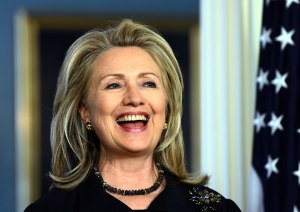
In other news, attacks on Hillary Clinton are ramping up, and so far they are truly bizarre. Republicans are still obsessed with Bill Clinton’s sexual fling with White House intern Monica Lewinsky. Why that is supposed to be relevant to Hillary Clinton’s political career, I will never understand. The latest nastiness is about the so-called “Hillary Papers,” which I knew nothing about until this morning. It turns out these papers aren’t Hillary’s, but those of some friend of the Clinton’s named Diane Blair. I’ve never heard of her.
The papers — a collection of Blair’s diary-like accounts of conversations, campaign memos and the like — are a sometimes wrenching trip via the wayback machine, as she recounts the Clintons’ arduous transition from Arkansas to Washington. In the most quotable comment, Hillary Clinton is said to have called Lewinsky a “narcissistic loony toon” whose relationship with Bill Clinton resulted from a moral lapse on his part, albeit one driven by the pressures facing the couple in the capital.
The papers also reflect, time after time, Hillary Clinton’s frustration with politics and her view that, while she adopted her husband’s name to stave off criticism in Arkansas, she was not about to change her personality to suit the Washington establishment, the press or, for that matter, voters.
“I gave up my name, got contact lenses, but I’m not going to try to be somebody that I’m not,” Blair quotes Clinton as saying.
That tension has been a recurring theme of the Clintons’ political lives. In the 1992 presidential contest, campaign aides placed much emphasis on humanizing Hillary, or at least forwarding a public version of the human being her friends, including Blair, testified to. Blair’s papers included a confidential campaign memo that said voters believed Hillary Clinton was smart but just couldn’t fully connect with her. (Among other things, as was reported during the campaign, many voters were unaware that the Clintons had a daughter, the then-teenage Chelsea, and thus didn’t see Hillary as particularly motherly.)
She got little credit for the things people liked about the Clintons, and more of the blame for the things they disliked.
“What voters find slick in Bill Clinton, they find ruthless in Hillary,” the memo said.

Diane Blair with Bill and Chelsea Clinton
I still don’t see how this is relevant to Hillary’s political career. Calling Lewinsky “a narcissistic looney-tune?” Why is that a problem? Oh, and she’s “ruthless,” although there’s no evidence for that is offered. Here’s the article in the right wing Washington Free Beacon that started the latest attacks, The Hillary Papers: Archive of ‘closest friend’ paints portrait of ruthless First Lady. It’s long, and frankly only skimmed it. If this garbage is what Republicans are going to focus on in opposing Hillary, I don’t think it’s going to work. Check out more heavy breathing over the “Hillary papers” at CNN and Politico.
The endless NSA leaks story continues onward. According to the latest tally by Cryptome.org, at the current rate, it will take 42 more years for all of the Snowden documents to be released. So far Greenwald and crew have reported on only about 1.8% of the documents Snowden is believed to have stolen.
Yesterday Glenn Greenwald and the gang debuted their new website, “The Intercept,” backed by a $50 million dollar investment by Ebay and Paypal billionaire Pierre Omidyar. For now the site will be entirely focused on the Snowden leaks as well as leaks from other sources who come forward and offer information on methods U.S. uses to gather intelligence. Judging by the first article posted by Greenwald, Jeremy Scahill, and Laura Poitras, which focuses on the NSA’s role in Obama’s drone program, the articles will be aimed at using melodramatic language to inflict maximum damage to the U.S. government’s intelligence agencies, while providing little information that hasn’t been already reported elsewhere.
I assume the substance of the drone article was written by Scahill, who wrote a book, Dirty Wars, that included a great deal of information on the drone program. But you can see Greenwald’s hand in the slanted way in which the story is presented. For example, the first paragraph:
The National Security Agency is using complex analysis of electronic surveillance, rather than human intelligence, as the primary method to locate targets for lethal drone strikes – an unreliable tactic that results in the deaths of innocent or unidentified people.
No evidence is offered to show that human intelligence isn’t used or that drone strikes are “unreliable” or that they kill more civilians than bombs or missiles, and no documents from the Snowden cache are included. Interestingly, the authors do not specifically argue against killing suspected terrorists; they only claim that drones are not the best method. They also present the opinions of two sources who worked in the drone program without any evidence to show that their statements are accurate.
A few more reactions…
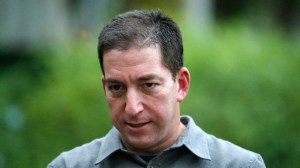
Lloyd Grove at The Daily Beast: Welcome to Glenn Greenwald, Inc.? Grove wonders if Greenwald is the best “public face” for a serious news site.
Investigative reporter and columnist Glenn Greenwald was barely five minutes into his appearance Sunday on CNN’s Reliable Sources—an interview promoting the long-awaited online launch of First Look Media, eBay billionaire Pierre Omidyar’s ambitious digital journalism startup—before he called the chairman of the House Intelligence Committee a liar.
“He’s not only lying—and he is lying—but he knows that he’s lying,” Greenwald said about Republican Rep. Mike Rogers of Michigan, who suggested last week that journalists who’ve disseminated classified documents leaked by former National Security Agency contractor Edward Snowden might be guilty of “fencing stolen material.”
“This is what Mike Rogers is notorious for in Washington,” Greenwald went on, “just making things up and smearing political opponents and journalists he doesn’t like.”
The retort was a familiar-sounding one for the 46-year-old Greenwald, a former trial lawyer who tends to treat policy disagreements as blood feuds and is never reluctant to question motives and fling rather personal insults.
Here’s a pointed critique from Ohtarzie, a writer who has long argued that Greenwald and Poitras are hoarding the Snowden documents, dribbling them out slowly in an effort to get maximum attention and income while providing little new information.
If there is anything new here, it’s in the large extent to which the NSA is said to rely on cell phones for identifying and tracking targets for the CIA, which allegedly leads to increases in wrongly identified targets and civilian deaths. This differs somewhat from Gellman’s account, which described a more varied, conceivably more precise approach, using an “arsenal of cyber-espionage tools, secretly seizing control of laptops, siphoning audio files and other messages, and tracking radio transmissions.” Despite the differences, if there is something revelatory in the Intercept’s story from a technical standpoint, I’m missing it. Tracking by cell phone has been discussed before, includingby Snowden. In light of signature strikes, the apparent recklessness of these methods also seems unsurprising.
Gellman’s story was rightly criticized for being effectively a dick-waving exercise for the U.S. Intelligence apparatus, since it detailed simply how a Bad Guy was killed by the Good Guys with all their sexy technology and savvy. In keeping with their adversarial brand, Scahill and Greenwald mix the NatSec dickwaving with some handwringing over civilians, most of which is provided via quotes from former drone operator and ostensible whistleblower, Brandon Bryant. This passage gives a taste of the overall dickwavey/handwringy mix.
The former JSOC drone operator is adamant that the technology has been responsible for taking out terrorists and networks of people facilitating improvised explosive device attacks against U.S. forces in Afghanistan. But he also states that innocent people have “absolutely” been killed as a result of the NSA’s increasing reliance on the surveillance tactic.
Near the end of the lengthy piece, Bryant even wrings his hands over the assassination program as a whole, at least as it results in the extrajudicial executions of American citizens like Anwar Al Awlaki. But overwhelmingly, both his emphasis and the emphasis of the piece are simply on the need to kill more precisely, by making greater use of informants and agents on the ground to supplement the NSA’s signal intelligence.
Ryan Goodman asks why Greenwald and Scahill repeatedly describe the use of metadata to target terrorists with drone strikes, but they provide few examples of actual metadata being used in the program. Where’s the “Metadata”?: What Greenwald and Scahill (Don’t) Say about NSA Metadata Collection and Lethal Targeting. Read all about it at the link.
Finally, the second scoop at The Intercept yesterday was a series of what they call “exclusive” photographs of the “surveillance state,” but a number of writers noted that these same photos can be found on the NSA website and by Googling. Here’s Bob Cesca:
Glenn Greenwald’s new website, The Intercept, launched today and….the first news article at the Pierre Omidyar-funded site, titled “New Photos of the NSA and Other Top Intelligence Agencies Revealed for First Time,” was utterly bizarre.
It was literally nothing more than three aerial photographs of the National Security Agency’s headquarters in Fort Meade, Maryland; the National Reconnaissance Office (NRO) in Chantilly, Virginia; and the National Geospatial-Intelligence Agency (NGA) in Springfield, Virginia.
That’s all. It’s treated like a major scoop and appeared as the first big revelation on the site, prior to a separate article by Greenwald and Jeremy Scahill.
I’m out of space, so I’ll add a few more links in the comment thread. I hope you’ll do the same. What stories are you focusing on today?

 peej
peej Carissa
 bostonboomer
 dakinikat
 ecocatwoman
 mablue2
 Mama Lopez
 peggysue22
 quixote
 skydancingguestblogger
 Mona (aka Wonk the Vote)



 Sky Dancing
Recent Comments