
Lazy Caturday Reads
Posted: February 12, 2022 Filed under: morning reads | Tags: Donald Trump, Fox News, Joe Biden, National Archives, Russia, Trucker protests, Ukraine, Vladimir Putin 20 CommentsGood Morning!!

Black cat sleeping by Harry Boardman
The news today is mostly focused on the situation in Ukraine. Here are the latest developments:
The Washington Post: U.S. orders most embassy staffers in Kyiv to leave Ukraine amid fears Russia will invade soon.




I’ll end with this story at CNN that provides details on the ongoing efforts of the National Archives to retrieve government documents that Trump took with him when he left the White House: Archives threatened to go to Congress and Justice Department to get Trump to turn over records.
Worried that a trove of White House records that had been brought to Donald Trump’s Mar-a-Lago estate contained classified material, a top official in the former President’s orbit warned his aides last fall: Do not touch those boxes.
Spotted Cat, woodcut by Seiho Takeuchi
The senior official in Trump’s inner circle did not want to risk exposing sensitive materials to aides who may have lacked the appropriate security clearances, according to a person familiar with the matter. The boxes, which were being stored at the time in Trump’s personal suite at his Florida club, had landed on the National Archives and Records Administration’s radar after officials there noticed that several items were missing from their catalog of Trump White House records.
In May 2021, the realization that important items from Trump’s time in office — including some of his correspondence with North Korean dictator Kim Jong Un and infamous Sharpie-altered map of Hurricane Dorian — were not transferred to the Archives at the end of his presidency prompted NARA officials to contact Trump’s team.
Longtime Archives lawyer Gary Stern first reached out to a person from the White House counsel’s office who had been designated as the President Records Act point of contact about the record-keeping issue, hoping to locate the missing items and initiate their swift transfer back to NARA, said multiple sources familiar with the matter. The person had served as one of Trump’s impeachment defense attorneys months earlier and, as deputy counsel, was among the White House officials typically involved in ensuring records were properly preserved during the transfer of power and Trump’s departure from office.

Trump claimed that he returned the materials “easily and without conflict and on a very friendly basis,” but of course that was a lie. The Archives have been battling with Trump over the documents since last spring and he likely still has more materials that he hasn’t turned over.
One source familiar with the situation says the document turnover has “not been fully resolved” and says Trump is still in possession of documents the Archives wants. The Archives hinted at this in a statement earlier this week.
“Former President Trump’s representatives have informed NARA that they are continuing to search for additional Presidential records that belong to the National Archives,” the Archives said in a statement.
Mother cat sleeping with her two kittens, Lucy Dawson drawing, 1946
In a series of interviews with CNN, a half-dozen people familiar with the matter described a tense situation that took nearly eight months to resolve — beginning with NARA’s outreach in May and ending with its retrieval of the boxes from Mar-a-Lago last month.
In the end, it may have been a threat that ended the impasse. At one point, the Archives notified a member of Trump’s team that it planned to alert Congress and the Department of Justice of the matter if it wasn’t quickly resolved, according to a person familiar with the warning. According to a person familiar with the matter, the Archives have since asked the Justice Department to investigate. It is unclear whether the Justice Department has started an investigation.
The House Oversight Committee chairwoman, Democratic Rep. Carolyn Maloney of New York, has also vowed to initiate a probe of the records’ removal from Trump’s Palm Beach resort, which she called “deeply troubling” in a statement on Monday.

What are your thoughts on all this? What other stories are you following?
Insane Thursday Reads, with Bunnies
Posted: February 10, 2022 Filed under: morning reads | Tags: Christian nationalists, classified documents, Department of Justice, destruction of documents, Donald Trump, Hillary Clinton, January 6 insurrection, Kim Jong Un, Maggie Haberman, Michigan, National Archives, Rudy Giuliani, seizing voting machines, White House toilets 22 Comments
Painting by Janie Olsen
Good Morning!!
Well, now we know why Trump was obsessed with low water toilets. It turns out he was trying to flush torn up documents in the White House bathrooms.
Axios: Haberman book: Flushed papers found clogging Trump WH toilet.
While President Trump was in office, staff in the White House residence periodically discovered wads of printed paper clogging a toilet — and believed the president had flushed pieces of paper, Maggie Haberman scoops in her forthcoming book, “Confidence Man.”
Why it matters: The revelation by Haberman, whose coverage as a New York Times White House correspondent was followed obsessively by Trump, adds a vivid new dimension to his lapses in preserving government documents. Axios was provided an exclusive first look at some of her reporting.
Haberman also revealed to Axios that Trump claims to be keeping in touch with one of his favorite dictators, Kim Jong Un.
Haberman reports Trump has told people that since leaving office, he has remained in contact with North Korean leader Kim Jong-un — whose “love letters,” as Trump once called them, were among documents the National Archives retrieved from Mar-a-Lago.
The book will be published in October. Read more about it at Axios.
More on Trump’s destruction of documents:
The Washington Post: National Archives asks Justice Dept. to investigate Trump’s handling of White House records.
The National Archives and Records Administration has asked the Justice Department to examine Donald Trump’s handling of White House records, sparking discussions among federal law enforcement officials about whether they should investigate the former president for a possible crime, according to two people familiar with the matter.
Full Moon Hare, by Andrew Bailey
The referral from the National Archives came amid recent revelations that officials recovered 15 boxes of materials from the former president’s Mar-a-Lago residence in Florida that were not handed back in to the government as they should have been, and that Trump had turned over other White House records that had been torn up. Archives officials suspected Trump had possibly violated laws concerning the handling of government documents — including those that might be considered classified — and reached out to the Justice Department, the people familiar with the matter said.
The people spoke on the condition of anonymity to discuss a politically sensitive request. The two people said the discussions about the matter remained preliminary, and it was not yet clear whether the Justice Department would investigate. The department also might be interested in merely reclaiming classified materials. A Justice Department spokesman declined to comment.

The New York Times: Archives Found Possible Classified Material in Boxes Returned by Trump.
The National Archives and Records Administration discovered what it believed was classified information in documents Donald J. Trump had taken with him from the White House as he left office, according to a person briefed on the matter.
The discovery, which occurred after Mr. Trump returned 15 boxes of documents to the government last month, prompted the National Archives to reach out to the Justice Department for guidance, the person said. The department told the National Archives to have its inspector general examine the matter, the person said.
It is unclear what the inspector general has done since then, in particular, whether the inspector general has referred the matter to the Justice Department.
An inspector general is required to alert the Justice Department to the discovery of any classified materials that were found outside authorized government channels.
The Washington Post Editorial Board: Opinion: Documents weren’t the only things Trump tore up while in office.
Former president Donald Trump liked the feel of tearing things up — figuratively, as he did with laws and norms of public service; but also literally, as he did with documents that he was required to preserve under the Presidential Records Act. Having refused to give his elected successor a smooth and orderly transition, Mr. Trump then skulked away to Mar-a-Lago in Florida with 15 boxes of official documents and mementos that should have gone to the National Archives.
The Post reported this past weekend that Mr. Trump routinely destroyed briefing papers, schedules, articles, letters and memos, ripping them into quarters or smaller pieces, leaving the detritus on his desk in the Oval Office, in the trash can of his private West Wing study or on the floor of Air Force One. Mr. Trump’s aides were left to retrieve the pieces and piece them back together, sometimes hunting through special “burn bags” intended for classified material to find torn documents that needed to be reassembled and preserved. Recently, the committee investigating the Jan. 6 insurrection received documents from the National Archives and Records Administration (NARA) that appeared to have been torn apart and taped back together.
Mr. Trump broke the law. After President Richard M. Nixon’s resignation, Congress passed a number of laws intended to preserve the integrity of documents and other materials from Nixon’s presidency, and made the laws applicable to all future presidents. The Presidential Records Act of 1978 ended the practice of records belonging to former presidents and declared that the United States shall “reserve and retain complete ownership, possession, and control of presidential records.” The law requires a president to “take all such steps as may be necessary” to make sure the records are preserved — an important pillar of accountability in a democracy and also essential for historical understanding of the presidency….
Mr. Trump, who mercilessly attacked Hillary Clinton for using a private email server, turned out to be a slovenly steward of the people’s property. He regarded himself as above the law, but he was not. What’s left of the jigsawed and taped-up pages might not provide the thoroughgoing record of his presidency that the law demands, but they are a wrenching testament to his penchant for wanton destruction.

Wild Rabbit, by wildlife photographer Julian Rad
Here’s another bonkers story that The Washington Post broke yesterday: Giuliani asked Michigan prosecutor to give voting machines to Trump team.
Jacqueline Alemeny, one of the reporters on the WaPo story, appeared on MSNBC yesterday.
Antrim County prosecutor James Rossiter told the newspaper that Giuliani and others called him around Nov. 20, 2020, and pressed him to hand over the voting machines so they could be examined for fraud, as part of an ongoing scheme to undo Trump’s loss in Michigan, and journalist Jackie Alemany explained the significance of her colleagues’ findings to MSNBC’s “Morning Joe.”
Painting by Scott Gustafson
“Well, it’s amazing, first of all, we are continuing to find so much new information that has yet to be uncovered, which is exactly what the Jan. 6 committee is doing,” Alemany said. “But this story especially is just fairly shocking because it shows them actually trying to implement some of their plans that we’ve seen sketched out in executive orders to seize voting machines. Here is a situation where they dialed in on a specific county and found a reason to do so despite it being obviously quite unconstitutional.”
“Even in the conversations I’ve had just in the past few months there are still a lot of people involved with this effort who believed that these voting machines needed to be seized to be protected so they could prove fraud,” she added. “These people are true believers.””That’s why those clips that were just played are so important for everyone to remember, especially when this investigation might potentially lead to whether or not this was negligence or actually intentional behavior,” Alemany said. “But it is clear that the former president knew exactly what was wrong with doing these things. He called up Nancy Pelosi and Hillary Clinton on ripping up documents, taking classified information, accepting gifts, mischaracterizations because he knew it was politically damaging and gave the appearance of being corrupt. That’s what I think ultimately the DOJ is going to have to do if they decide ultimately to investigate the 15 boxes taken from Mar-A-Lago, which is what the archives has asked them to do according to our reporting yesterday.”

More on the Trumpist efforts to seize voting machines from Betsey Woodruff at Politico: Read the emails showing Trump allies’ connections to voting machine seizure push.
Leaked emails obtained by POLITICO reveal the connection of two outside Trump allies — Washington lawyer Katherine Friess and Texas entrepreneur Russell Ramsland — to the failed push to seize voting machines as part of a desperate bid to overturn the 2020 election.
The emails show then-President Donald Trump’s former national security adviser, Michael Flynn, and another former military officer workshopping the draft of a Trump executive order to seize voting machines. The emails between Flynn, retired Army Col. Phil Waldron and others provide new details about the events that preceded the assault on the Capitol last Jan. 6.
It is unclear if the Capitol riot select committee has obtained the emails. POLITICO is publishing them here, solely redacting the senders’ and recipients’ email addresses. We are also publishing two draft versions of the executive order that would have directed authorities to seize voting equipment. CBS News previously reported on the contents of the emails and published one of the drafts.
All three emails were sent to multiple people, including Friess, who appears to have lobbied for a variety of clients, including groups linked to Puerto Rico and the telecommunications industry. Friess’ visibility into the efforts to overturn the election results on Trump’s behalf has drawn comparatively little scrutiny. She did not respond to requests for comment. Ramsland, Waldron, Flynn and Trump lawyer Rudy Giuliani — also a central player in the election subversion effort — also did not respond to requests for comment.
Head over to Politico to read the emails.

Bunny Graces, by Belinda Cooper
At The Religion News Service, a report on how right win Christians and the January 6 insurrection: New report details the influence of Christian nationalism on the insurrection.
A team of scholars, faith leaders and advocates unveiled an exhaustive new report Wednesday (Feb. 9) that documents in painstaking detail the role Christian nationalism played in the Jan. 6 attack on the U.S. Capitol and calling it an unsettling preview of things to come.
Christian nationalism was used to “bolster, justify and intensify the January 6 attack on the Capitol,” said Amanda Tyler, head of the Baptist Joint Committee for Religious Liberty, which sponsored the report along with the Freedom From Religion Foundation. Tyler’s group is behind an initiative called Christians Against Christian Nationalism.
The organizations touted the report as “the most comprehensive account to date of Christian nationalism and its role in the January 6 insurrection,” compiled using “videos, statements, and images from the attack and its precursor events.”
The report, written chiefly by Andrew L. Seidel, an author and director of strategic response at the Freedom From Religion Foundation, details Christian nationalist rhetoric and symbols that cropped up at events that preceded the insurrection, such as the Million MAGA March and Jericho Marches that took place in Washington in Dec. 2020 and Jan. 2021.
Christian nationalist symbols and references, Seidel writes, were ubiquitous at those gatherings, as well as the insurrection itself: flags with superimposed American flags over Christian symbols; “An Appeal to Heaven” banners; prayers recited by members of the extremist group Proud Boys shortly before the attack or by others as they stormed the Capitol.
Speaking to reporters on Wednesday, Seidel highlighted what he called the preponderance of “openly militant” rhetoric that conflated religion and violence. He pointed to William McCall Calhoun Jr., a Georgia lawyer who reportedly claimed on social media that he was among those who “kicked in Nancy Pelosi’s office door” on Jan. 6. (Calhoun later claimed in an interview with the Atlanta Journal Constitution that he did not personally enter any office.)
What are your thoughts on all this insanity? What other stories are you following today?
Thursday Reads
Posted: January 13, 2022 Filed under: morning reads, U.S. Politics | Tags: Bob Dylan, Chuck Schumer, Donald Trump, Fake Electoral College certificates, Jim Marchant, Mark Meadows, Ronnie Spector, voting rights bill 16 CommentsGood Morning!!
We’ve lost another 1960s icon. Ronnie Spector, lead singer of the Ronettes died yesterday. She was a beloved part of the sound track of my high school years.
https://twitter.com/Sifill_LDF/status/1481457032129560578?s=20
Variety: Ronnie Spector, Girl Group Icon and Leader of the Ronettes, Dies at 78.
Ronnie Spector, whose hard-edged yet tremulous voice soared on the girl-group hits of the early ‘60s, died on Wednesday of cancer. She was 78….
Née Veronica Bennett, she forged an enduring “bad girl” image with her older sister Estelle Bennett and cousin Nedra Talley – towering teased beehive hairdos, canopies of mascara and eyeliner and tight-fitting slit skirts – that rubbed against the aching romanticism of the Ronettes’ Philles Records hits of 1963-66.
Ronnie Spector
Though producer Phil Spector employed other powerful female vocalists like the Crystals’ Darlene Love, La La Brooks and (on the memorable “River Deep Mountain High”) Tina Turner, the Ronettes’ lead singer became the ideal vehicle for the massive-sounding hits he termed “little symphonies for the kids.”
In “Out of His Head,” his biography of the producer, Richard Williams wrote, “Ronnie Bennett’s hugely quavering, massively sexy voice [was] a pure pop instrument the like of which no one had ever heard before. Spector had found his instrument, and she had found her setting.”
Like burning magnesium, the Ronettes flared hot, brightly and quickly: Their string of hits, which began with 1963’s “Be My Baby,” had played out by 1966, as the producer’s interest in the group had run its course.

Ronnie married Phil Spector in 1968. It was an abusive relationship in which Spector “kept his wife a virtual prisoner in their Beverly Hills home for years…” Eventually, Ronnie’s mother rescued her from the marriage in 1972,
In later years, Ronnie Spector recorded fitfully as a solo artist, and was a beneficiary of the rock ‘n’ roll revival of the early ‘70s. She remained an icon among her musician fans: She enjoyed high-profile studio collaborations with Southside Johnny and the Asbury Jukes, Eddie Money and Ramones lead singer Joey Ramone, and Billy Joel penned the single “Say Goodbye to Hollywood” expressly for her. Her second husband and manager Jonathan Greenfield helped renew her reputation as a live performer.
She was inducted into the Rock and Roll Hall of Fame as a member of the Ronettes in 2007.
More music news: Did you see that an old Bob Dylan song has been released after staying hidden for 40 years?
In present day news, the January 6 committee has been very busy. The latest news is about forged 2020 Electoral College certificates that came from states that Biden won. Dakinikat posted about this on Monday, but more keeps coming out. At that time we learned about documents from 4 states; now we know there were at least 7 states involved. You can see the forged documents at American Oversight.
In the weeks after the 2020 election, then-President Donald Trump’s allies sent fake certificates to the National Archives declaring that Trump won seven states that he actually lost. The documents had no impact on the outcome of the election, but they are yet another example of how Team Trump tried to subvert the Electoral College — a key line of inquiry for the January 6 committee.
The fake certificates were created by Trump allies in Georgia, Arizona, Michigan, Pennsylvania, Wisconsin, Nevada and New Mexico, who sought to replace valid presidential electors from their states with a pro-Trump slate, according to documents obtained by American Oversight.
The documents contain the signatures of Trump supporters who claimed to be the rightful electors from seven states that President Joe Biden won. But these rogue slates of electors didn’t have the backing of any elected officials in the seven states — like a governor or secretary of state, who are involved in certifying election results — and they served no legitimate purpose.
The documents were first posted online in March by the government watchdog group. But they received renewed attention this week, as the January 6 committee ramps up its investigation into Trump’s attempted coup, including how his allies tried to stop states from certifying Biden’s victory, in part, by installing friendly slates of electors who would overturn the will of the voters.
The real documents are posted on the National Archives website. More details from CNN.
Some of the fake certificates with pro-Trump electors were sent to the National Archives by top officials representing the Republican Party in each state, according to the documents.
They sent these fake certificates after Trump himself failed to block governors from signing the real certificates. Specifically, Trump encouraged Republican governors in states like Georgia and Arizona not to certify the election results, and falsely claimed the elections were fraudulent. But these GOP officials ignored Trump, followed the law, and awarded the electors to Biden.
Installing slates of “alternate electors” was an integral part of the ill-fated plan conceived by Trump allies to usurp power on January 6 by pressuring Vice President Mike Pence to throw out the pro-Biden electors that had been chosen by voters. The idea was promoted by Trump advisers inside and outside the White House, including controversial right-wing lawyer John Eastman.
Rachel Maddow has been reporting on the fake certificate story this week. Here’s her latest:
From Newsweek: Mark Meadows Worked on Creating Fake Electoral College To Overturn Election Results—Report.
Mark Meadows, former chief of staff to Donald Trump, allegedly worked on creating a fake electoral college following the 2020 presidential election. That’s according to a contempt report released Sunday night by the House of Representatives panel investigating the January 6 Capitol riot.
The report comes just days after Meadows launched legal proceedings against the panel and House Speaker Nancy Pelosi. Meadows filed a lawsuit in a Washington, D.C. federal court on December 8 after the committee said it would proceed with a contempt case against him for his refusal to appear for a deposition.
Among other issues, the committee said Meadows sent emails and texts about sending “alternate electors” to Congress in November 2020, allegedly saying “I love it” about the idea to an unidentified member of Congress.
“Mr. Meadows received text messages and emails regarding apparent efforts to encourage Republican legislators in certain States to send alternate slates of electors to Congress, a plan which one Member of Congress acknowledged was ‘highly controversial’ and to which Mr. Meadows responded, ‘I love it,'” the committee report said.
“Mr. Meadows responded to a similar message by saying ‘[w]e are’ and another such message by saying ‘Yes. Have a team on it,'” it said.
The committee also said in its report that Meadows introduced former President Donald Trump to then-Department of Justice official Jeffrey Clark as part of efforts to overturn the results of the 2020 election.
“Mr. Clark went on to recommend to Mr. Trump that he be installed as Acting Attorney General and that DOJ should send a letter to State officials urging them to take certain actions that could affect the outcome of the November 2020 election by, among other things, appointing alternate slates of electors to cast electoral votes for Mr. Trump rather than now-President Biden,” the report said.
It sure looks like Mark Meadows is in deep sh&t.
The Trumpist Republicans are now working hard to fix future elections in their favor. Ed Pilkington at The Guardian: Trump loyalists form alliance in bid to take over election process in key states.
Extreme Republicans loyal to Donald Trump and his “big lie” that the 2020 election was rigged have formed a nationwide alliance aiming to take control of the presidential election process in key battleground states that could determine the outcome of the 2024 presidential race.
At least eight Republicans who are currently running to serve as chief election officials in crucial swing states have come together to form the coalition.
Jim Marchant
The group shares conspiracy theories about unfounded election fraud and exchanges ideas on how radically to reconstruct election systems in ways that could overturn the legitimate results of the next presidential race.
All of them backed Trump’s efforts to subvert the 2020 election and cling on to power against the will of American voters. Several of the alliance have been personally endorsed by Trump and have a credible shot at winning the post of secretary of state – the most powerful election officer in each state.
The existence of the “coalition of America First secretary of state candidates” was disclosed by one of the members themselves, Jim Marchant who is running for secretary of state in Nevada. A former business owner and Nevada state assembly member, Marchant has ties with the QAnon conspiracy theory movement….
In an interview with the Guardian, Marchant said that there were currently eight members of the coalition bidding for chief election official posts, with more likely to join soon. He said participants included Jody Hice in Georgia, Mark Finchem in Arizona and Kristina Karamo in Michigan – all three of whom have been endorsed by Trump.
Marchant also named Rachel Hamm in California and David Winney in Colorado, and said that further members were likely to be recruited imminently in Wisconsin and Minnesota. Several in-person “summits” of the candidates had already been held, with the next planned in Wisconsin on 29 January and Nevada on 26 February.
All the candidates named by Marchant have been prominent exponents of false claims that the 2020 election was fraudulent. Finchem attended the “Stop the Steal” rally in Washington on January 6 hours before the US Capitol was stormed.

Meanwhile, Democrats in Congress are trying to pass voting right legislation. The Washington Post reports that Chuck Schumer has a new strategy: Schumer sets up final Senate confrontation on voting rights and the filibuster.

Thursday Reads: January 6, One Year Later
Posted: January 6, 2022 Filed under: morning reads | Tags: Capitol insurrection, Donald Trump, January 6 anniversary, Joe Biden, Mike Pence, Stephanie Grisham, U.S. democracy 14 CommentsGood Morning!!
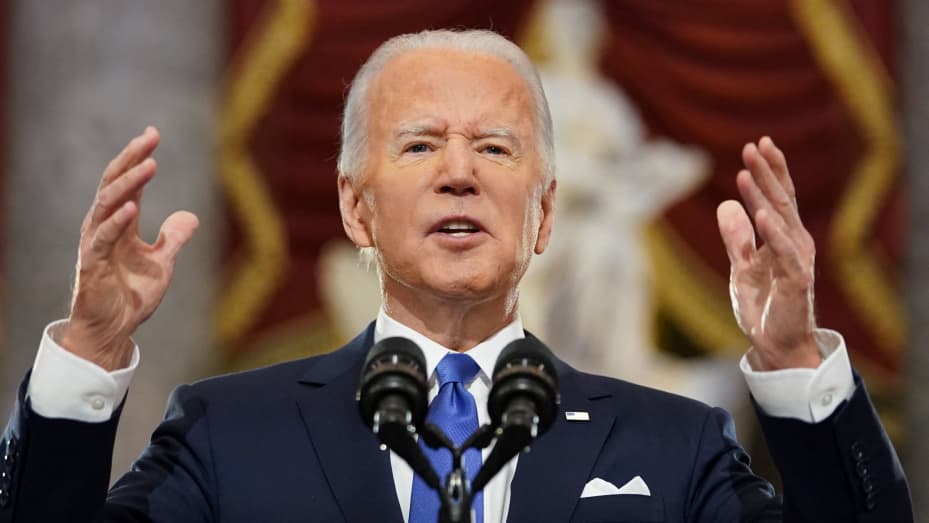 President Joe Biden today specifically held his predecessor responsible for the violent attack on the U.S. Capitol one year ago today. Without naming him, Biden called Trump a liar who cares more about his own “bruised ego” than about our democracy or the Consitution.
The Washington Post provides excerpts: On Jan. 6 anniversary, Biden calls out Trump for ‘web of lies’ about 2020 election.
In a searing speech, Biden marked the first anniversary of the insurrection at the U.S. Capitol by painting in vivid detail the violence of that day — and, without naming Trump, by squarely blaming the former president for spreading “a web of lies” about the 2020 election.
“One year ago today, in this sacred place, democracy was attacked, simply attacked,” Biden said. “The will of the people was under assault. The Constitution, our Constitution, faced the gravest of threats.”
Throughout the speech, Biden did not mention Trump by name but constantly referred to him as the former president.
“For the first time in our history, a president had not just lost an election: He tried to prevent the peaceful transfer of power as a violent mob breached the Capitol,” Biden said. “But they failed.”
Biden said Americans must ensure such an attack never happens again.
“Here is the truth: The former president of the United States of America has created and spread a web of lies about the 2020 election,” Biden said. “He’s done so because he values power over principle … because he sees his own interest as more important than his country’s interest and America’s interest, and because his bruised ego matters more to him than our democracy or our Constitution. He can’t accept he lost.”
More excerpts from the speech at the WaPo: ‘I will allow no one to place a dagger at the throat of democracy,’ Biden says.
In his remarks at the Capitol Thursday morning, Biden vowed to defend American democracy and said that Jan. 6 represents not its end but rather a rebirth of “liberty and fair play.”
“You can’t love your country only when you win,” Biden said. “You can’t obey the law only when it’s convenient. You can’t be patriotic when you embrace and enable lies.”\Those who stormed the Capitol and those who called on them to do so, Biden said, “held a dagger at the throat of … American democracy.”
“They didn’t come here out of patriotism or principle. They came here in rage — not in service of America, but rather in service of one man,” Biden said.
He added: “I did not seek this fight brought to this Capitol one year ago today. But I will not shrink from it, either. I will stand in this breach. I will defend this nation, and I will allow no one to place a dagger at the throat of democracy.”
Trump has already responded to Biden’s speech. I won’t quote from his childish statement, but you can read it at The Independent.
More on this Biden’s speech from The Boston Globe: ‘We the people endured.’ Biden, Harris mark a year since violent insurrection.
President Joe Biden on Thursday delivered what he declared was the “God’s truth” marking the first anniversary of the U.S. Capitol insurrection, the violent attack by Donald Trump’s supporters that has fundamentally changed Congress and raised global concerns about the future of American democracy.
Biden’s criticism was particularly blistering of then-President Trump and his violent supporters.
“For the first time in our history, a president not just lost an election, he tried to prevent the peaceful transfer of power as a violent mob breached the Capitol,” Biden said. “But they failed.”
“I will stand in this breach,” he declared, his voice rising.
“Democracy was attacked,” Biden said at the Capitol. “We the people endure. We the people prevailed.”
The president and congressional Democrats started the day in Statuary Hall, one of several spots where rioters swarmed a year ago and interrupted the electoral count. Biden drew a contrast between the truth of what happened and the false narratives that have sprung up about the Capitol assault, including the continued refusal by many Republicans to affirm that Biden won the 2020 election.
“You and I and the whole world saw with our own eyes,” Biden said.
He asked those listening to close their eyes and recall what they saw that day, as he described the harrowing, violent scene, the mob attacking police, threatening the House speaker, erecting gallows threatening to hang the vice president — all while then-President Trump sat at the White House watching it on TV.
“Here is the God’s truth about Jan. 6, 2021,” Biden said. “They were looking to subvert the Constitution.”
“We must be absolutely clear about what is true and what is a lie. Here’s the truth,” he said. “The former president of the United States of America has spread a web of lies about the 2020 election.”
From Jonathan Karl, author of Betrayal, a book on the last days of the Trump administration: Beyond the riot, Jan. 6 was a dangerously close call. How Trump’s plot nearly succeeded: ANALYSIS.
Two weeks after the Jan. 6 insurrection , Donald Trump walked out of the White House and Joe Biden became the 46th president of the United States. Trump had attempted to use the full power of the presidency and his position as the leader of the Republican Party to stay in power, but he failed. Democracy succeeded. Joe Biden became president, on schedule and without incident, at noon on Jan. 20, 2021.
But this was a close call. Attempts by Trump and his followers to overturn the results of the 2020 election — multi-dimensional efforts of which the assault on the Capitol building was only one element — came dangerously close to succeeding.
Consider, for example, Donald Trump’s demand that Vice President Mike Pence act to nullify Biden’s victory on Jan. 6. Trump wanted Pence to use his power as the presiding officer during the joint session of Congress that day to toss out Biden’s electoral votes in states Trump had contested. On its face, the idea of giving one person the power to overturn the votes of millions of Americans was absurd. And outside of a few fringe lawyers advising Trump, constitutional scholars agreed that Pence had no authority to do what Trump was demanding.
But what if Pence had followed Trump’s order? What would have happened if he had brought the gavel down during the joint session on Jan. 6 and thrown out Biden’s electoral votes in the states Trump had contested? What if he had declared Trump the winner of those states?
J. Michael Luttig, a former federal appellate judge popular among conservatives, had advised Pence he would be violating the Constitution if he followed Trump’s order, and Luttig tells ABC News that if Pence had attempted to do it, he would have “plunged the country into a constitutional crisis of the highest order.”
While it may be clear that Pence did not have the authority to unilaterally reject electoral votes, it is unclear who would have had the authority to overrule him. Some have suggested the matter would simply have had to be resolved by the Supreme Court, but it is unclear the justices would have agreed to decide such a case because the Constitution arguably leaves it up to Congress to decide its own rules for counting contested electoral votes.
“It would have presented America, and the three branches of our government in particular, with what each branch would have viewed as seemingly irresolvable constitutional issues,” Luttig said.
Luttig believes the Supreme Court would have ultimately taken up the issue, but, he says, with no explicit constitutional authority to do so, it’s not certain the justices would have agreed to resolve the dispute.
“Had the Supreme Court refused to decide these issues,” Luttig told ABC News, “the country and our democracy would have spiraled into a chaos from which neither would have soon recovered, literally jeopardizing our national security. The legitimacy of our democracy would have been forever drawn into doubt and its luster could never have been restored.”
Read the rest at ABC News.
Yesterday former Trump family insider Stephanie Grisham appeared before the January 6 committee. This morning she was on CNN’s New Day talking about Trump and the gang.
From The Daily Beast: Trump Enjoyed Riot So Much He Rewound TV to Watch It Twice, Ex-Aide Says.
Donald Trump had such a good time watching the Capitol riot unfold on live TV that he rewound the coverage to watch it twice, according to his former press secretary Stephanie Grisham. Speaking to CNN from Washington, D.C. on the first anniversary of the riot, Grisham recalled that Trump was in the White House dining room as the insurrection unfolded. “He was in the dining room gleefully watching on his TV as he often did, [saying] ‘Look at all the people fighting for me,’ hitting rewind, watching it again, that’s all that I know,” said the former press secretary. Grisham also repeated her claim that former first lady Melania Trump did nothing to persuade her husband to call off his supporters from their attack on the Capitol and lawmakers inside, and announced that a group of unnamed ex-Trump administration officials plan to meet next week to talk about a plan to stop Trump in his quest to “manipulate people and divide our country.”
More from Grishom’s CNN appearance:
Mike Pence insiders are also speaking to the January 6 committee. Axios: Scoop: Mike Pence’s team helping Jan. 6 committee.
People in and around former Vice President Mike Pence’s office have been particularly cooperative as the Jan. 6 select committee focuses on what former President Trump was doing during the more than three hours the Capitol was under attack, sources familiar with the testimony tell Axios.
Why it matters: At the one-year mark of the insurrection, the committee is piecing together a definitive timeline of how Trump resisted pleas from his own advisers, allies, family members and lawmakers to halt the violence down Pennsylvania Avenue.
- The committee is ramping up its closed-door work with the goal of holding public hearings as early as this spring.
Some Pence-world witnesses have testified without a subpoena, according to one source with direct knowledge of the closed-door hearings.
- Both Pence’s former chief of staff Marc Short, and former press secretary Alyssa Farah, who later served as White House communications director, are among those cooperating with the committee.
- Keith Kellogg also has given a deposition.
- One source familiar with their involvement said Short, who was subpoenaed by the committee, would not have cooperated without the approval of Pence.
What we’re hearing: Some of the most helpful information has come from second- and third-tier administration staff who were not directly involved but were at the White House on Jan. 6 and had access to top administration officials, sources tell Axios.
- They’ve been integral to helping piece together exactly what happened that day, one committee aide said.
- Many of those officials met solely with the committee’s Republican members, Reps. Liz Cheney (R-Wyo.) and Adam Kinzinger (R-Ill.), two sources with direct knowledge said.
- Some also have testified together with their former colleagues.
What they’re saying: Farah, who spoke with the committee on several occasions last year, told Axios:
- “From the two I was in, you could see how much information they already had.
- “Those who are refusing to cooperate likely are doing so out of complete fealty to Donald Trump and not wanting to piss him off.
- “But, secondarily, because they’re realizing the committee has quite a bit more information than they realized. And their involvement is known to a much greater degree than they realized.”
From CNN: Cheney said the January 6 committee ‘looks forward to’ cooperation from Mike Pence and his team.
Rep. Liz Cheney, the vice chairwoman of the House select committee investigating the January 6 insurrection, said Thursday she is looking forward to Vice President Mike Pence‘s cooperation and his team “continuing” their cooperation in the panel’s investigation.
The Wyoming Republican also called him a “hero” for his actions that day.
“Former Vice President Pence was a hero on January 6. He refused the pressure of the former President. He did his duty, and the nation should be very grateful for the actions that he took that day,” Cheney told NBC’s Savannah Guthrie on the “Today” show. “We look forward to continuing the cooperation that we’ve had with members of the former vice president’s team, and I look forward as well to his cooperation.”
Mississippi Rep. Bennie Thompson, chairman of the House select committee, has said he wants to hear directly from Pence, who certified the 2020 presidential election results. The Democrat also said he wants the former vice president to voluntarily speak to the committee about conversations he was privy to in the days leading up to the insurrection and what he witnessed on that day.
Various Pence aides have started engaging with the panel, including his former chief of staff Marc Short. Short’s cooperation is a significant development that gave investigators insight from one of the highest-ranking Trump administration officials and signals a greater openness among Pence’s inner circle.
One source previously told CNN the committee is getting “significant cooperation with Team Pence,” even if the committee has not openly discussed that. Another source also told CNN that Short’s help is an example of the “momentum” the investigation is enjoying behind the scenes.
This could be an interesting day. I haven’t been watching a lot of TV lately, but I may do so today. There is a lot going on.
What are your thoughts on the anniversary of January 6?
Thursday Reads: bell hooks (and other news)
Posted: December 16, 2021 Filed under: just because, morning reads | Tags: bell hooks, coronavirus pandemic, Covid-19, feminism, January 6 investigation, Omicron variant 13 CommentsGood Morning!!
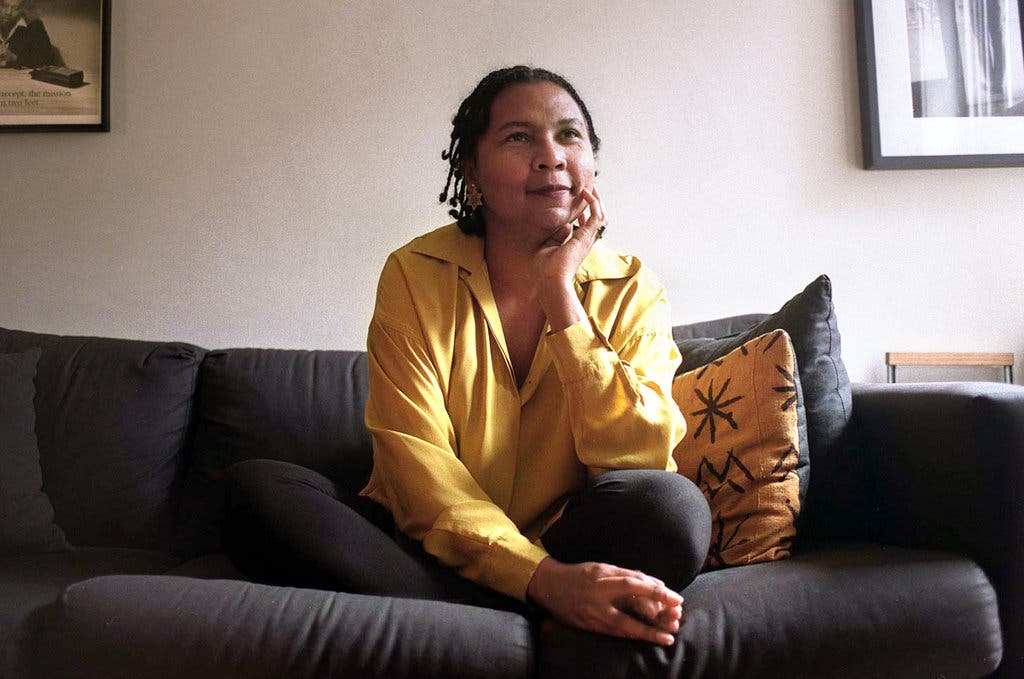
Yesterday we lost bell hooks (born Gloria Watkins), feminist theorist, poet, and activist.
I’m ashamed to admit that I’ve never read her work, but I was impressed by what I read about hooks this morning. Dakinikat was inspired by her, so perhaps she will share her thoughts today and/or tomorrow.
Lucy Knight at The Guardian: bell hooks, author and activist, dies aged 69.
Gloria Jean Watkins, better known by her pen name bell hooks, has died aged 69.
Her niece Ebony Motley tweeted: “The family of @bellhooks is sad to announce the passing of our sister, aunt, great aunt and great great aunt.”
She also attached a statement, which said that “the family of Gloria Jean Watkins is deeply saddened at the passing of our beloved sister on December 15, 2021. The family honored her request to transition at home with family and friends by her side.”
The author, professor and activist was born in Hopkinsville, Kentucky in 1952, and published more than 30 books in her lifetime, covering topics including race, feminism, capitalism and intersectionality.
She adopted her maternal great-grandmother’s name as a pen name, since she so admired her, but used lowercase letters to distinguish herself from her family member. hooks’ first major work, Ain’t I a Woman?, was published in 1981, and became widely recognised as an important feminist text. It was named one of the 20 most influential women’s books in the last 20 years by Publishers Weekly in 1992.
She went on to write Feminist Theory: From Margin to Center in 1984, All About Love: New Visions in 2000 and We Real Cool: Black Men and Masculinity in 2004, continuing to draw on themes of feminism, race, love and gender.
Since 2004, she taught at Berea College in Kentucky, a liberal arts college that offers free tuition.
In 2016 hooks wrote in the Guardian that Beyoncé’s album Lemonade was “capitalist money-making at its best”, but criticised the notion of “freedom” depicted in the lyrics. “To truly be free,” wrote hooks, “we must choose beyond simply surviving adversity, we must dare to create lives of sustained optimal wellbeing and joy.”
“I want my work to be about healing,” she said in 2018 when she was inducted into the Kentucky Writers’ Hall of Fame. “I am a fortunate writer because every day of my life practically I get a letter, a phone call from someone who tells me how my work has transformed their life.”
 From The Literary Hub:
hooks’s first published work of theory, Ain’t I A Woman: Black Women and Feminism, was published when she was 29 but written when she was an undergraduate, launching a four-decade-long career of writing and teaching, with a focus on classroom accessibility. hooks’s extensive body of scholarship and poetry—that remains and will continue to remain relevant—was consistent in its generosity, emphasizing the importance of loving communities to challenging systemic inequalities. Hooks believed a “militant commitment to feminism” was not at all at odds with joy and humor; in fact, that love “is the necessary foundation enabling us to survive the wars, the hardships, the sickness, and the dying with our spirits intact.” As she told The New York Times in 2015,
“We cannot have a meaningful revolution without humor. Every time we see the left or any group trying to move forward politically in a radical way, when they’re humorless, they fail. Humor is essential to the integrative balance that we need to deal with diversity and difference and the building of community. For example, I love to be in conversation with Cornel West. We always go high and we go low, and we always bring the joyful humor in. The last talk he and I gave together, many people were upset because we were silly together. But I consider it a high holy calling that we can be humorous together. How many times do we see an African-American man and an African-American woman talking together, critiquing one another, and yet having delicious, humorous delight? It’s a miracle.”
hooks’s family said contributions and memorials can be made to the Christian County Literacy Council, which promotes reading for children, or the Museums of Historic Hopkinsville Christian County, where a biographical exhibit is on display.
From the New Yorker piece:
I came to her work in the mid-nineties, during a fertile era of Black cultural studies, when it felt like your typical alternative weekly or independent magazine was as rigorous as an academic monograph. For hooks, writing in the public sphere was just an application of her mind to a more immediate concern, whether her subject was Madonna, Spike Lee, or, in one memorably withering piece, Larry Clark’s “Kids.” She was writing at a time when the serious study of culture—mining for subtexts, sifting for clues—was still a scrappy undertaking. As an Asian American reader, I was enamored with how critics like hooks drew on their own backgrounds and friendships, not to flatten their lives into something relatably universal but to remind us how we all index a vast, often contradictory array of tastes and experiences. Her criticism suggested a pulsing, tireless brain trying to make sense of how a work of art made her feel. She modelled an intellect: following the distant echoes of white supremacy and Black resistance over time and pinpointing their legacies in the works of Quentin Tarantino or Forest Whitaker’s “Waiting to Exhale.”
Yet her work—books such as “Reel to Real” or “Art on My Mind,” which have survived decades of rereadings and underlinings—also modelled how to simply live and breathe in the world. She was zealous in her praise—especially when it came to Julie Dash’s “Daughters of the Dust,” a film referenced countless times in her work—and she never lost grasp of how it feels to be awestruck while standing before a stirring work of art. She couldn’t deny the excitement as the lights dim and we prepare to surrender to the performance. But she made demands on the world. She believed criticism came from a place of love, a desire for things worthy of losing ourselves to….
This has been a particularly trying time for critics who came of age in the eighties and nineties, as giants like hooks, Greg Tate, and Dave Hickey have passed. hooks was a brilliant, tough critic—no doubt her death will inspire many revisitations of works like “Ain’t I a Woman,” “Black Looks,” or “Outlaw Culture.” Yet she was also a dazzling memoirist and poet. In 1982, she published a poem titled “in the matter of the egyptians” in Hambone, a journal she worked on with her then partner, Nathaniel Mackey. It reads:
I enjoyed reading this piece from 2019 by Min Jin Lee in The New York Times: In Praise of bell hooks.
In 1987, I was a sophomore at Yale. I’d been in the United States for 11 years, and although I was a history major, I wanted to read novels again. I signed up for “Introduction to African-American Literature,” which was taught by Gloria Watkins, an assistant professor in the English department, and she was such a wonderful teacher that I signed up for her other class, “Black Women and Their Fiction.”
Gloria — as we were allowed to address her in the classroom — had a slight figure with elegant wrists that peeked out of her tunic sweater sleeves. She was soft-spoken with a faint Southern accent, which I attributed to her birthplace, Hopkinsville, Ky. She was in her mid-30s then but looked much younger. Large, horn-rimmed glasses framed the open gaze of her genuinely curious mind. You knew her classes were special. The temperature in the room seemed to change in her presence because everything felt so intense and crackling like the way the air can feel heavy before a long-awaited rain. It wasn’t just school then. No, I think, we were falling in love with thinking and imagining again….
I was 19 when I took hooks’s classes, and I was just becoming a young feminist myself. I had begun my study of feminism with Mary Wollstonecraft, Charlotte Perkins Gilman, Susan B. Anthony, Elizabeth Cady Stanton, Virginia Woolf, Betty Friedan and Gloria Steinem, among other white women, and perhaps, because I was foreign-born — rightly or wrongly — I had not expected that people like me would be included in their vision of feminist liberation. Women and men of Asian ethnicities are so often neglected, excluded and marginalized in the Western academy, so as a college student I’d no doubt internalized my alleged insignificance. bell hooks changed my limited perception.
Her book of theory taught me to ask for more from art, literature, media, politics and history — and for me, a Korean girl who had been born in a divided nation once led by kings, colonizers, then a succession of presidents who were more or less dictators, and for millenniums, that had enforced rigid class systems with slaves and serfs until the early 20th century, and where women of all classes were deeply oppressed and brutalized, I needed to see that the movement had a space for me.
What else is in the news? January 6 and the never ending pandemic.
January 6: Could it be that the investigation is really heating up?
David Rohde at The New Yorker: Is There a Smoking Gun in the January 6th Investigation?
William Saletan at Slate: The Chilling Lesson of Mark Meadows’ Text Messages.
The New York Times: Meadows and the Band of Loyalists: How They Fought to Keep Trump in Power.https://www.nytimes.com/2021/12/15/us/politics/trump-meadows-republicans-congress-jan-6.html
Kyle Cheney at Politico: The Jan. 6 puzzle piece that’s going largely ignored.
Kyle Cheney at Politico: Jan. 6 investigators mull whether Trump violated obstruction law.
CNN: Jim Jordan sent one of the texts revealed by January 6 committee.
The Washington Post: Role as Trump’s gatekeeper puts Meadows in legal jeopardy — and at odds with Trump.
Georgia Public Radio: Exclusive: More Georgia Secretary of State’s office officials interviewed by Jan. 6 committee.
The never ending pandemic
CNBC: Omicron symptoms could seem like a cold — but don’t underestimate this variant, experts warn.
AP via KTLA: U.S. faces a double coronavirus surge as omicron variant advances.
Ian Bogost at The Atlantic: I’m Starting to Give Up on Post-pandemic Life.
Yasmin Tayag at The Atlantic: Don’t Be Surprised When You Get Omicron.
Ed Yong at The Atlantic: America Is Not Ready for Omicron. The new variant poses a far graver threat at the collective level than the individual one—the kind of test that the U.S. has repeatedly failed.
Have courage and enjoy the present moment. There’s no telling what will happen next.

 peej
peej Carissa
 bostonboomer
 dakinikat
 ecocatwoman
 jjlo
jjlo mablue2
 Mama Lopez
 peggysue22
 quixote
 skydancingguestblogger
 Mona (aka Wonk the Vote)





Recent Comments