





By Berthe Morisot, 1873
“Scranton is a place that climbs in your heart, and it never leaves,” Biden said. “For me it was 2446 North Washington Avenue.”


Girl reading with a cat, by Aaron Shikler
I was really depressed on Thursday night after the “debate.” I couldn’t stop scrolling Twitter and obsessing on the horrible CNN “moderators,” who might as well have been replaced with cards with their idiotic questions on them. But it never occurred to me that Biden should step down and be replaced by “someone else.”
I had a mostly sleepless night, but by morning I had calmed down quite a bit; and after I watched Biden’s energetic speech in South Carolina, I felt much better. Here’s the way he ended that speech:
From NBC News: ‘I don’t debate as well as I used to’: Biden tries to move on from his tough debate at an energized rally.
RALEIGH, N.C. — President Joe Biden tried to turn his disappointing debate performance into a rallying cry for his supporters at an event on Friday, painting himself as down but not out as some in his party whisper about replacing him atop the ticket.
“I know I’m not a young man. I don’t walk as easy as I used to. I don’t speak as smoothly as I used to. I don’t debate as well as I used to, but I know what I do know — I know how to tell the truth!” an energetic Biden said, nodding at the criticism he received following Thursday night’s debate while contrasting it with assessments about the accuracy of several statements by former President Donald Trump.
“When you get knocked down, you get back up,” Biden yelled, to a cheering crowd
“I intend to win this state in November,” Biden said about North Carolina. “We win here, we win the election.”
The campaign event, in a state that hasn’t voted Democrat for a presidential candidate since Barack Obama in 2008, comes after what many political observers and some Democrats have said was a poor debate performance by Biden Thursday night against former President Donald Trump.
About last night, Biden said on Friday, “I spent 90 minutes on the stage and debated the guy who has the morals of an alley cat.”
Though he coughed at times during Friday’s remarks, Biden’s demeanor was more lively, delivering attack lines and riling up the crowd.
A small child reading to a cat by Emile Munier
Biden said that when he thought about Trump’s 34 felony convictions, his sexual assault on E. Jean Carroll, and being fined millions of dollars for business fraud, “I thought to myself, Donald Trump isn’t just a convicted felon — Donald Trump is a one-man crime wave.”
A senior Biden adviser said the campaign team worked closely with the president Friday morning to draft his closing remarks in Raleigh about the debate. It was not, the adviser said, a response to negative coverage or the calls growing in the party for him to consider stepping aside. Biden, the adviser said, knows full well he didn’t deliver the performance he needed to last night and knew he needed to directly address it Friday.
This is what Barack Obama tweeted yesterday:
Bad debate nights happen. Trust me, I know. But this election is still a choice between someone who has fought for ordinary folks his entire life and someone who only cares about himself. Between someone who tells the truth; who knows right from wrong and will give it to the American people straight — and someone who lies through his teeth for his own benefit. Last night didn’t change that, and it’s why so much is at stake in November. joebiden.com
Biden’s performance in the debate was dreadful, but it was just one night; and as Lawrence O’Donnell pointed out on MSNBC last night, very few people actually watched it. Probably most of the people who watched were political junkies like us.
This morning I see that lots of pundits are still calling on Biden to step down. Most of the young white men who are calling for a replacement (e.g. Ezra Klein, Greg Sargent) have no good suggestions for how this would happen and how that person would get on the state ballots and raise millions in donations to fund his/her campaign. They mostly want to pass over Kamala Harris too. Can you imagine the turmoil that would cause in the Democratic base, which is dominated by African Americans and women?
The last time the Democrats replaced a presumptive nominee was in 1968. Ezra Klein probably isn’t old enough to remember what happened then. Click below to watch a sample video of the Chicago riots.
There was a “police riot” outside and chaos on the Convention floor. Hubert Humphrey was chosen, even though he didn’t enter a single primary. He went on to lose to Richard Nixon, and the rest is painful history. And this year the Democratic Convention is once again in Chicago!
I didn’t realize that the new rules that George McGovern pushed through in 1972 changed the nomination process so much that replacing a nominee would much harder now than in 1968. Political scientist Rachel Bitecofer explains on Twitter:
[O]nce the direct primary evolved from the McGovern-Fraser commission after the 1968 shitshow the conventions really lost their institutional role. It is an officiating ceremony that *could* get disrupted given the rules but which neither party could ever really do bc so much of the state level infrastructure runs way ahead of the formal moment of nomination. Thus it would guarantee destruction to broker a convention. If Election Twitter had bothered to get academic training I have, they would understand that too. Military ballots mail months ahead of the election. It’d be like nuking ourselves trying to change him out. Even if he wanted us to.
In my opinion, we have to keep ridin’ with Biden.
A couple more examples of pushback on the “he should step down” crowd:
Mediaite: Biden Team Hits Back After Debate With Whopping ’50 Lies Trump Told On The Debate Stage.’
President Joe Biden’s campaign hit back after a widely-panned debate performance by listing a whopping 50 “lies” ex-President Donald Trump “told from the debate stage.”
President Biden and Trump finally went head-to-head at CNN’s debate Thursday night in the earliest general election presidential matchup ever, and the reviews are in. After some deadly early stumbles, President Biden’s performance improved, but not enough to ward off abject panic from some Democrats, and calls for him to drop out.
Vice President Kamala Harris made the rounds after the debate, including during CNN’s Debate Night in America coverage to defend Biden’s “slow start” and to assail Trump over his many falsehoods.
And shortly after midnight, Biden-Harris 2024 released a memo listing 50 of them:
All 50 of Trump’s Lies
16 More Lies Than Felonies, 48 More Lies than Impeachments
Here it is. Every single lie Donald Trump told on the debate stage.
He lied about the economy. He lied about foreign policy. He lied about his record. He lied about his crimes. He lied about women’s rights. He lied about immigration. He lied about his lies. He lied about our soldiers he disrespected. He lied about law enforcement attacked by his supporters. He lied about who he has had sex with. He lied about his racism. He lied about our country.
That is what the substance of this debate was about: Donald Trump, a liar and a felon vs. Joe Biden, a fighter for our families.
Read the entire list at Mediaite.
Huffpost: ‘Chill The F**k Out’: John Fetterman Urges Democrats To Stick With Joe Biden.
Sen. John Fetterman (D-Pa.) urged Democrats panicking about President Joe Biden’s rough debate performance against Donald Trump to chill out.
Phan Linh Bao Hanh, Lady with cat reading book
“I refuse to join the Democratic vultures on Biden’s shoulder after the debate. No one knows more than me that a rough debate is not the sum total of the person and their record,” Fetterman said Friday on X, formerly Twitter.
Fetterman, who is 54, suffered a stroke while running for Senate in 2022 but later went on to debate his Republican opponent Mehmet Oz. It didn’t go well. He struggled to complete sentences, stumbling over words and pausing altogether as a result of the auditory processing disorder he suffered from the stroke.
Some Democrats expressed similar alarm at the time and wondered whether deciding to the debate had tanked Fetterman’s odds of winning the seat.
“Morning-after thermonuclear beat downs from my race from the debate and polling geniuses like 538 predicted l’d lose by 2. And what happened? The only seat to flip and won by a historic margin (+5),” Fetterman added. “Chill the fuck out.”
Before I get to more of today’s news, here is a review of Rachel Bitcofer’s (quoted above) book, Hit ‘Em Where It Hurts: How to Save Democracy by Beating Republicans at Their Own Game.
Paul Rosenberg at Salon: Rachel Bitecofer’s tough-love lesson for Democrats: Time to Fight Dirty. (The article was published in February.)
America’s future — as a multiracial democracy or an ethno-nationalist authoritarian state — is very much on the ballot this year, as a wide range of observers have noted. But you’d be hard-pressed to see that reality reflected in the mainstream media, much less from the mouths of the randomly-selected potential voters interviewed on the ground, the folks who will supposedly determine the outcome in November. It’s a dire situation that political scientist turned election strategist Rachel Bitecofer tackles head-on in her new book, “Hit ‘Em Where It Hurts: How to Save Democracy by Beating Republicans at Their Own Game.” She describes it as “a battle-tested self-help book for America’s fragile democracy.”
Back in 2019 I first noted Bitecofer’s acumen for election predictions, shown in her forecast of Democrats’ big 2017 gains in the Virginia legislature and then her spot-on prediction of the 2018 blue wave, based on fundamental voter demographics and her perception of partisan polarization and negative partisanship, rather than following the polls. In 2021, I interviewed Bitecofer about her evolution from academic into brand messenger, as she put those methods to work in fighting to counter the expected “red tsunami” of 2022. The Supreme Court’s Dobbs decision and its aftermath helped shift a substantial number of campaigns along the lines she predicted, as she lays out in the book, drawing on insights from decades of political science research.
Bitecofer’s most basic point is simple: Democrats as a whole — despite their “reality-based” self-image — have been unable or unwilling “to accept that the American voter is, at best, rough clay,” and to work with it accordingly. On the other hand, she writes, “Republicans have long understood this and have built an electioneering system that shapes the electorate and meets voters where they actually are.” The point of “Hit ‘Em Where It Hurts” is to convince Democrats to change their strategic approach while there’s still time to rescue democracy, and to focus relentlessly on the threat posed by Republicans in terms that hit voters where they are.
The good news is that some Democrats have already made that shift, while others are groping their way towards it. But to be effective, this needs to be comprehensive, bottom-to-top systemic change, Bitecofer believes, and that hasn’t happened yet. She also discusses the effects of the right-wing media ecosystem, and the think-tank and donor infrastructures that underlie it, to paint a fuller picture of America’s perilous political situation. But in fact, she argues, Democrats and their allies can turn the tide by focusing on low-hanging fruit — the things that are easiest to change. Salon interviewed her with a particular focus on those most immediate concerns and the 2024 election. This interview has been edited for clarity and length.
Head over to Salon to read the interview.
Dan Froomkin at Press Watch: CNN fails the nation.
The signal failure of the American media during the Trump era has been the refusal to hold Donald Trump accountable for his behavior – and, in particular, his endless lies.
That has never been more obvious than it was at Thursday night’s presidential debate.
The CNN moderators who should have corrected Trump’s outrageous and easily disproved assertions – about immigration, abortion, Covid, Jan. 6, NATO, you name it – instead thanked him obsequiously.
Girl reading with a cat, by Merle Keller
The result was a debate where performance meant everything, and substance meant nothing.
Biden’s performance was stumbling and inept – highly concerning to anyone who fears a Trump victory.
But Trump’s incessant lying, refusal to answer direct questions, and general lunacy would have been the other major takeaway from the debate if the moderators had done their jobs instead of acting like polite potted plants.
They even let him know ahead of time that they wouldn’t do live fact-checking – an obvious and colossal mistake that I decried earlier this week. That gave Trump the green light to let loose without consequences.
Twitter (I still call it that) is not a reliable forum for much of anything these days, but it was alive and well Thursday night as people I follow realized, in real time, what a debacle CNN’s no-fact-checking rule had become.
Richard Stengel wrote: “A debate where one candidate flagrantly lies again and again without a mechanism for correction is not a debate.”
David Rothkopf wrote: “The lack of challenges from moderators has the effect of making it appear that the lies flowing from Trump’s mouth are the same as the facts in which Biden is dealing.”
Jessica Valenti wrote: “I’m sorry, but Trump just claimed that Democrats allow ‘after birth’ abortion and the moderators’ only response was ‘thank you’???”
Ruth Ben-Ghiat wrote: “The debate is about information warfare for Trump. As I said earlier today, you don’t let a proven propagandist on stage without stopping him when he lies. Instant refutation is key. Have we learned nothing in the last 9 years?”
Will Bunch wrote: “CNN’s lack of fact checking and wooden questions are just as bad for democracy as everything else that’s happening.”
Read more comments at the link.
Josh Fiallo at The Daily Beast: Bannon Is ‘Quite Concerned’ About His New Prison Digs: Source.
MAGA loyalist Steve Bannon is dreading his soon-to-be-reality of being housed alongside sex offenders and violent criminals when he reports to prison in Connecticut on Monday, a source close to him told The Daily Beast on Friday.
Bannon, 70, was told to face the music on Friday when the nation’s highest court declined to indulge his pleas for a last-minute reprieve. With a one-sentence ruling, the Supreme Court ordered that he could no longer delay his sentence while he appeals the conviction.
Woman reading, by Will Barnet
Bannon is set to spend four months at FCI Danbury—a low-level prison in Connecticut where he’ll be housed alongside people convicted of sexual and violent crimes. The source said that’s something Bannon is “quite concerned with.”
His charges stem from him blowing off a subpoena from the House committee investigating the Capitol riot. He has spent two years since then trying every avenue of appeal, arguing that he was only following the advice of his lawyer, who told him then-President Donald Trump had evoked executive privilege. (Multiple courts ruled that there was no executive privilege since Trump had already left office.)
Bannon, however, insists publicly that he has no regrets and will only benefit from a prison sentence, according to ABC.
“I’m a political prisoner… It won’t change me. It will not suppress my voice. My voice will not be suppressed when I’m there,” he told This Week co-anchor Jonathan Karl.
“If it took me going to prison to finally get the House to start to move, to start to delegitimize the illegitimate J6 committee, then, hey, guess what, my going to prison is worth it,” he said.
Politico prisoner? I don’t think so.
Joyce Vance is always a good read. From Civil Discourse: Thursday in the Courts.
These days, it’s a race to the bottom to see who can move more slowly to decide important issues related to the former president that are in front of them: Judge Aileen Cannon or the Supreme Court. It is a tense moment in our history, abetted by a slow-moving federal judiciary.
The Supreme Court has yet to decide whether Donald Trump will be cloaked in presidential immunity for his efforts to steal an election he lost. That’s something that seems completely nonsensical when you try to write it out in a sentence. But it has apparently kept the Court, or at least some of the Justices, tied up in knots for months now.
Hugo Lowell at the Guardian reported today that DOJ still holds out a slender hope that, depending on how the Supreme Court decides the case and whether it sends it back to the Court of Appeals or to Judge Chutkan, there could be a very narrow potential trial window in September. The sun, moon, and stars would have to all align for that to happen now. But, it didn’t have to be this way. We are here because this Supreme Court didn’t act expeditiously like the Court did with President Nixon or in Bush v. Gore.
Judge Cannon, too, is allergic to ruling on matters before her when it comes to Donald Trump. Earlier this week, she heard argument from the lawyers on the Special Counsel’s motion to change Trump’s conditions of pre-trial release—the government wants the Judge to prohibit him from continuing to say the FBI was out to assassinate him when they executed the search warrant at Mar-a-Lago. That’s something that even his own lawyer was forced to concede isn’t true in court.
Elizabeth Allan Fraser, Seated Reading with a Cat, by Patrick Allan Fraser
Rather than making a decision (which would be immediately appealed by the losing party to the Eleventh Circuit Court of Appeals), Judge Cannon has ordered another go-round of briefing by the lawyers with a due date on July 5….
Judge Cannon is also going to reconsider the decision made by Judge Beryl Howell, in Washington, D.C., that the government is entitled, because of the crime-fraud exception to the attorney-client privilege, to use notes kept by one of Trump’s attorneys to prove the former president’s intent to obstruct the investigation into his retention of classified material. The hearing before Judge Howell was detailed and Trump was provided with the opportunity to make all of the same arguments he will raise again before Cannon. It’s surprising to see a judge relitigate an issue between the same parties that a court previously decided, but Judge Cannon wrote that because the first decision took place before Trump was indicted, she is entitled to revisit the issue. This issue has been pending for some time and Judge Cannon seems to be in no hurry to rule.
A Judge’s job is, literally, to make decisions. We see precious little of that going on in the Southern District of Florida. Delay. Delay. Delay.
This slow-walking of the cases essential to holding the former president accountable came to a crescendo just as Trump and Biden took to the debate stage in Atlanta. Trump lied shamelessly. With no fact-checking, it sounded a lot like a typical Trump stump speech. For instance, Trump lied and said he was responsible for lowering Insulin prices. That’s a bald-faced lie—it was done by Biden. But it went unchecked. President Biden’s performance was off; his raspy voice sounded like he was coming down with something, and especially early on, he didn’t convey the same State of the Union speech energy people hoped to see tonight.
Nicole Santa Cruz at ProPublica: U.S. Supreme Court Ruling Will Allow More Aggressive Homeless Encampment Removals.
The U.S. Supreme Court’s decision to give cities broader latitude to punish people for sleeping in public when they have no other options will likely result in municipalities taking more aggressive action to remove encampments, including throwing away more of homeless people’s property, advocates and legal experts said.
In its 6-3 decision on Friday, the conservative majority upheld Grants Pass, Oregon’s ban on camping, finding laws that criminalize sleeping in public spaces do not violate the Eighth Amendment’s protections against cruel and unusual punishment.
Writing for the majority, Justice Neil Gorsuch said that the nation’s policy on homelessness shouldn’t be dictated by federal judges, rather such decisions should be left to state and local leaders. “Homelessness is complex,” Gorsuch wrote. “Its causes are many. So may be the public policy responses required to address it.”
“At bottom, the question this case presents is whether the Eighth Amendment grants federal judges primary responsibility for assessing those causes and devising those responses. It does not,” he wrote.
A lower court ruling that prevented cities from criminalizing the conduct of people who are “involuntarily homeless” forced the U.S. Court of Appeals for the 9th Circuit to confront what it means to be homeless with no place to go and what shelter a city must provide, Gorsuch wrote. “Those unavoidable questions have plunged courts and cities across the Ninth Circuit into waves of litigation,” he wrote.
In a dissenting opinion, Justice Sonia Sotomayor wrote that, for some people, sleeping outside is a “biological necessity” and it’s possible to balance issues facing local governments with constitutional principles and the humanity of homeless people. “Instead, the majority focuses almost exclusively on the needs of local governments and leaves the most vulnerable in our society with an impossible choice: Either stay awake or be arrested,” she wrote.
Criminalizing homelessness can “cause a destabilizing cascade of harm,” Sotomayor added. When a person is arrested or separated from their belongings, the items that are frequently destroyed include important documents needed for accessing jobs and housing or items required for work such as uniforms and bicycles, Sotomayor wrote.
Brandi Buchman at Law and Crime: The Trump Docket: SCOTUS hands victory to Jan. 6 rioters, but Trump should hold off on celebrating.
With the Supreme Court handing down its ruling in Fischer v. United States, there are many convicted Jan. 6 rioters who have something to celebrate this weekend — but whether the same can be said for Donald Trump isn’t so clear.
Undoubtedly, the Fischer ruling is a win for Trump politically speaking: Now he can hit the campaign trail and cite the high court’s opinion that federal prosecutors misapplied their efforts when charging some of his supporters.
But no matter what he says — or how he may or may not distort the legally-complex decision itself — there’s still the problem of his own case for alleged crimes connected to Jan. 6. The high court said Friday that its last opinions for the term will be released on Monday and by all expectations, that means that the question of whether Trump has so-called “total immunity” from his Jan. 6 case is imminent.
But short of receiving that immunity, Trump still faces four charges in Washington, D.C., two of which are related to obstruction….
The way the justices in Fischer linked prosecution of the statute to documents and records, specifically, matters because this is part of what underlies Trump’s prosecution in Washington, D.C.: Prosecutors argue he acted corruptly and arranged a set of shadow electoral slates, using falsified records in seven states, to certify him as the winner. In his original indictment for the Jan. 6 prosecution, Smith wrote that Trump was “attempting to mimic the procedures that the legitimate electors were supposed to follow under the Constitution and other federal and state laws.”
You can also read a longer piece on this by Richard Hasan at Slate: That Big Jan. 6 Supreme Court Decision Is Not the Win for Trump People Think It Is.
That’s it for me today. I hope you all are having a nice weekend, despite the disappointing debate.

Reading Woman Daydreaming, by Henri Matisse
Those of us who are hanging onto hope that U.S. democracy can still be saved must not only fight Republicans, but also powerful media organizations, especially The New York Times and The Washington Post.
If you follow social media, you’ve undoubtedly seen people mocking New York Times headlines that suggest any good news for Biden is actually negative–along the lines of “The economy is booming–why that’s bad for Biden.”
Despite the fact that news organizations will certainly be persecuted by a second Trump administration, it really appears that at least the wealthy people in charge want another Trump presidency because they believe it will help their bottom line. Working journalists are facing layoffs these days, so perhaps fear of losing their jobs makes them willing to do their bosses’ bidding.
Right now, as Trump faces a historic criminal trial, the Times and Washington Post continue to publish gossipy lightweight stories.
David Kurtz writes in the TPM Morning Memo about a piece in the NYT yesterday on Melania Trump: NYT Is Said To Have Learned Nothing From Its Trump I Coverage.
Yesterday’s NYT apologia for Melania Trump was laugh-out-loud funny, by which I mean so, so bad. Reminiscent of its much-mocked coverage of Javanka during Trump I, the piece had all the usual hallmarks of NYT toadyism.
Let’s start with the passive-voice headline: “Melania Trump Avoids the Courtroom, but Is Said to Share Her Husband’s Anger”
“Said to” is one of the great journalistic sophistries. It does so much apparent work with so little actual effort.
What is this awkward headline construction meant to convey? That despite all her heartache over the Stormy Daniels affair, Melania, too, is outraged (OUTRAGED!) over Manhattan DA Alvin Bragg’s wrongful criminal prosecution of her husband.
How does the NYT know this? So glad you asked!
Melania hasn’t said anything publicly about her supposed outrage. She hasn’t attended legal proceedings with Trump. She hasn’t been by his side at the trial.
But wait! She’s has purportedly spoken “in private” about her feelings.
It’s the classic dipsy-do of the Javanka coverage: Why take any risk of speaking publicly when you can launder it through the NYT. We are never so courageous as we are in our private musings.
But how is the NYT privy to Melania’s private thoughts and comments?
The sourcing: “according to several people familiar with her thinking.” Yes! Bravo! It’s self serving on top of self serving, with two degrees of separation to play it safe.
Why are these “people familiar” granted anonymity? Because they can’t speak publicly “out of fear of jeopardizing a personal relationship with the Trumps.” Perfect! These brave truth-tellers are risking so much – by which I mean, so little – to get their essential truths out into the public sphere.
Here’s the nugget of “reporting” around which the entire article is built:
But Mrs. Trump, the former first lady, shares his view that the trial itself is unfair, according to several people familiar with her thinking.
In private, she has called the proceedings “a disgrace” tantamount to election interference, according to a person with direct knowledge of her comments who could not speak publicly out of fear of jeopardizing a personal relationship with the Trumps.
The rest of the piece is a filament of speculation, pop psychology, knowing winks about cliched relationship tropes, and lazy stereotypes about wives and mothers – all in service of trying to wring a drop of compassion from readers for the private turmoil that comes with being married to DJT.
Read the rest at TPM. But really, who the hell cares what Melania thinks? As the back of her famous jacket read, “I really don’t care, do u?”

Albert Reuss 1889-1975, Woman Reading
Another lightweight story from yesterday’s New York Times by style critic Guy Trebay (at least, I guess it’s favorable to Biden): The Biden Guide to Dressing Younger.
Joe Biden is a dapper guy. He always has been. When he turned up decades ago for a first date with the woman who would become his wife and the country’s first lady, her gut reaction was, “This is never going to work, not in a million years.”
Dressed in a sports coat and loafers, Joe Biden was too dapper for someone who had previously gone out with men in T-shirts and clogs.
They worked it out. And the future president stuck to his style. It was one that sometimes skewed Gatsby, for which in 1974 Washingtonian magazine noted his penchant for pinstripe suits and tasseled loafers when citing him as one of the best dressed men in the Senate. It was one that was sometimes too high-toned for its setting. In 1979, Mr. Biden, then a second-term senator, exuded confidence in a “tailored suit and expensive tie” for a campus speech at the University of Alabama, The New Yorker later reported.
It was one that, on occasion, even threatened to upstage the boss. Yes, it must have been flattering to be praised by The Chicago Tribune as the “best-dressed guy” at Bill Clinton’s 2000 State of the Union address. Politically, however, it was not the best look.
Still, dapper cred has stood President Biden in good stead. When Donald J. Trump, now 77, derides his 81-year-old opponent as doddering Uncle Joe, he is missing a point any tailor would be happy to clarify. There is getting old, and there is looking old. To avoid having your clothes add unnecessary years, make style your friend.
“Joe Biden’s style is timeless and doesn’t have any expiration date,” the designer Todd Snyder said recently. If you think that is accidental, you are not paying attention.
Meanwhile, Trump is a dumpy old guy in baggy suits and extra long ties who claims Biden has dementia, an obvious projection.
A campaign story from Clive Wootson, Jr. at The Washington Post: Scranton vs. Mar-a-Lago: Biden turns sharply to populism.
SCRANTON — President Biden’s schedulers did not publicly announce his second stop Tuesday during his visit to his hometown, but it came as little surprise that he’d end up at the gray house with black shutters where he spent the earliest years of his life. He even nodded to the visit in a speech that mixed his biography with his thoughts on tax policy.
By Berthe Morisot, 1873
“Scranton is a place that climbs in your heart, and it never leaves,” Biden said. “For me it was 2446 North Washington Avenue.”
But the trip was about more than sentiment during the first day of Biden’s three-day swing through this pivotal battleground state. He leaned into populist anger against the rich and worries of a world weighted against the middle class as he sought to draw distinctions between himself and his likely Republican opponent in November, Donald Trump.
“All I knew about people like Trump is that they looked down on us,” Biden told the crowd in his childhood town, contrasting his upbringing with Trump’s frequent visits to his resort in Palm Beach, Fla. “They wouldn’t let us into their homes and their country clubs. When I look at the economy, I look at it through the eyes of Scranton, not through the eyes of Mar-a-Lago.”
Biden will further stress that contrast Wednesday when he travels to Pittsburgh to address the United Steelworkers and unveil a raft of new trade protections for the steel industry. The president will call for a tripling of the 7.5 percent tariff on Chinese steel imports, as well as increased pressure to prevent China from shipping steel to America through Mexican ports….
The actions are just the latest sign of the president’s determination to be seen as a defender of American workers like those in the steel industry, whose employees are spread across states in the industrial Midwest, the so-called “blue wall” that could decide Biden’s political fate in November.
In making the argument, he has leaned into his middle-class upbringing, including the years he spent in Scranton, which he portrays as a scrappy, working-class town. He argues that Trump, on the other hand, is a billionaire who lives in a gilded club in Florida and would bolster other billionaires, the very people who have had an unfair advantage for too long.
Again, I guess at least it’s favorable to Biden.
A serious piece from Mark Joseph Stern at Slate Magazine: Hundreds of Jan. 6 Prosecutions—Including Donald Trump’s—Are Suddenly in Peril at the Supreme Court.
Will the Supreme Court jeopardize the prosecution of more than 350 defendants involved with Jan. 6, including Donald Trump, by gutting the federal statute that prohibits their unlawful conduct? Maybe so. Tuesday’s oral arguments in Fischer v. United States were rough sledding for the government, as the conservative justices lined up to thwap Joe Biden’s Department of Justice for allegedly overreaching in its pursuit of Jan. 6 convictions. Six members of the court took turns wringing their hands over the application of a criminal obstruction law to the rioters, fretting that they faced overly harsh penalties for participating in the violent attack. Unmentioned but lurking in the background was Trump himself, who can wriggle out of two major charges against him with a favorable decision in this case.
There are, no doubt, too many criminal laws whose vague wording gives prosecutors near-limitless leeway to threaten citizens with decades in prison. But this isn’t one of them. Congress wrote a perfectly legible law and the overwhelming majority of judges have had no trouble applying it. It would be all too telling if the Supreme Court decides to pretend the statute is somehow too sweeping or jumbled to use as a tool of accountability for Jan. 6.
Start with the obstruction law itself, known as Section 1552(c), which Congress enacted to close loopholes that Enron exploited to impede probes into its misconduct. The provision is remarkably straightforward—a far cry from the ambiguous, sloppy, or muddled laws that typically flummox the judiciary. It’s a mainstay of the Department of Justice’s “Capitol siege” prosecutions, deployed in about a quarter of all cases. Overall, 350 people face charges under this statute, Trump among them, and the DOJ has used it to secure the convictions of about 150 rioters. It targets anyone who “corruptly … obstructs, influences, or impedes any official proceeding, or attempts to do so.” And it clarifies that an official proceeding includes “a proceeding before the Congress.”
A Woman Reading, by Pablo Picasso, 1920
The government argues that some rioters attempted to “obstruct” an “official proceeding” by halting the count of electoral votes through “corrupt” means. That includes Joseph Fischer, the defendant in the current case. Fischer, who served as a police officer before Jan. 6, allegedly texted that the protest “might get violent”; that “they should storm the capital and drag all the democrates [sic] into the street and have a mob trial”; and that protesters should “take democratic congress to the gallows,” because they “can’t vote if they can’t breathe..lol.” Video evidence shows Fischer assaulting multiple police officers on the afternoon of Jan. 6 after breaching the Capitol.
Would anyone seriously argue that this person did not attempt to corruptly obstruct an official proceeding? For a time, it seemed not: 14 of the 15 federal judges—all but Judge Carl Nichols in this case—considering the charge in various Jan. 6 cases agreed that it applied to violent rioters bent on stopping the electoral count. So did every judge on the U.S. Court of Appeals for the District of Columbia Circuit except one, Judge Gregory Katsas. Both Nichols and Katsas were appointed by Trump. Their crusade to kneecap the law caught SCOTUS’ attention, and the court decided to intervene despite overwhelming consensus among lower court judges. The Supreme Court’s decision will have major implications for Trump: Two of the four charges brought by special counsel Jack Smith in the former president’s Jan. 6 prosecution revolve around this offense. A ruling that eviscerates the obstruction law would arguably cut out the heart of the indictment.
Stern writes that at least three justices–Clarence Thomas, Neil Gorsuch, and Samuel Alito appear likely to do that. Read the rest at Slate.
Catherine Belton at The Washington Post: Secret Russian foreign policy document urges action to weaken the U.S.
Russia’s Foreign Ministry has been drawing up plans to try to weaken its Western adversaries, including the United States, and leverage the Ukraine war to forge a global order free from what it sees as American dominance, according to a secret Foreign Ministry document.
In a classified addendum to Russia’s official — and public — “Foreign Policy Concept of the Russian Federation,” the ministry calls for an “offensive information campaign” and other measures spanning “the military-political, economic and trade and informational psychological spheres” against a “coalition of unfriendly countries” led by the United States.
“We need to continue adjusting our approach to relations with unfriendly states,” states the 2023 document, which was provided to The Washington Post by a European intelligence service. “It’s important to create a mechanism for finding the vulnerable points of their external and internal policies with the aim of developing practical steps to weaken Russia’s opponents.”
The document for the first time provides official confirmation and codification of what many in the Moscow elite say has become a hybrid war against the West. Russia is seeking to subvert Western support for Ukraine and disrupt the domestic politics of the United States and European countries, through propaganda campaigns supporting isolationist and extremist policies, according to Kremlin documents previously reported on by The Post. It is also seeking to refashion geopolitics, drawing closer to China, Iran and North Korea in an attempt to shift the current balance of power.
Using much tougher and blunter language than the public foreign policy document, the secret addendum, dated April 11, 2023, claims that the United States is leading a coalition of “unfriendly countries” aimed at weakening Russia because Moscow is “a threat to Western global hegemony.” The document says the outcome of Russia’s war in Ukraine will “to a great degree determine the outlines of the future world order,” a clear indication that Moscow sees the result of its invasion as inextricably bound with its ability — and that of other authoritarian nations — to impose its will globally.

Albert Reuss, Lady Reading a Book
The Russians have clearly succeeded in subverting much of the Republican Party. Right now, far right Republicans are talking about getting rid of House Speaker Mike Johnson because he appears to be trying to pass some military aid for Ukraine.
The Washington Post: Momentum builds to oust Johnson from House speakership.
House Speaker Mike Johnson’s job is in serious jeopardy as two far-right lawmakers are threatening to oust him after the embattled Republican leader proposed a complex plan intended to fund key foreign allies during wartime.
It’s 2024, and the media and the Republicans are gearing up for the presidential election in November. What are the Democrats doing? I’m sure they are raising plenty of money, but when will they wake up and start fighting back against the Republicans and the media? Make no mistake, big media is hoping for another Trump presidency, because it will mean chaos and gobs of money for those who cover the chaos. It will mean riches for the media bosses and reporters alike–think of all the new books they can sell as Trump destroys democracy and attempts to gain dictatorial power?
You’ve probably heard that The Washington Post recently got rid of 240 employees through buyouts. They chose to keep right wing columnists like Hugh Hewitt and dumped liberals like Greg Sargent. Fortunately, Sargent has been hired by The New Republic.
This post by Tom Jones is from Poynter, a site that reports on and critiques the media: Opinion | Washington Post reaches buyout goals to, for now, avert layoffs.
The good news is that the Post has been able to meet its goal of trimming staff through buyouts instead of layoffs. The bad news is the Post will enter the new year with fewer employees — perhaps a couple of hundred.
Greg Sargent
Back in October, the Post announced that it was offering buyouts with the hopes of reducing staff by 240. (At the time, the Post had approximately 2,500 employees.)
Then late last month, Post interim CEO Patty Stonesifer told staff only half of the desired number of staffers — about 120 or so — had accepted the buyouts and that there would be layoffs if not enough employees took the buyouts. At the same time, The Daily Beast’s Corbin Bolies reported that Post executive editor Sally Buzbee told staff in an email that about 36 of the 120 who accepted the buyouts were from the newsroom. She said that was “about 30 percent of our goal across the News department.”
Then came Tuesday’s news that the Post had enough buyouts to avoid layoffs — for now (my words, not the Post’s). The exact number of buyouts isn’t known publicly.
In an email to staff, Stonesifer said the company “will enter the new year with a smaller organization but a better financial position.” Stonesifer also wrote, “I am very aware of how difficult this process has been for everyone involved and I want to thank you for the grace and respect you have shown at every step.”
In July, The New York Times Benjamin Mullin and Katie Robertson reported the Post was on track to lose about $100 million this year.
For the gossip columnists at the WaPo, President Biden is boring. Imagine how much better the paper’s “financial position” will be when Trump gets back in the White House and consolidates his power. The same will be true of The New York Times. Maggie Haberman will be cleaning up, along with her co-writers.
In another positive development, historian and political observer Rick Perlstein will be writing for The American Prospect. I’m seriously thinking about dumping my Washington Post subscription and giving that money to one of these liberal publications.
Perlstein has published his first column. In it, he addresses three issues I worry about: the media focus on polls, the failure of journalists to address real issues, while tending to favor right wing narratives, and the failure of Democratic politicians to fight back hard against those narratives.
Rick Perlstein at The American Prospect: You are Entering the Infernal Triangle: Authoritarian Republicans, ineffectual Democrats, and a clueless media.
Perlstein on Polling:
As a historian who also writes about the present, there are certain well-worn grooves in the way elections get written about by pundits and political journalists from which I instinctively recoil. The obsession with polling, for one. Polls have value when approached with due humility, though you wonder how politicians and the public managed to make do without them before their modern invention in the 1930s. But given how often pollsters blow their most confident—and consequential—calls, their work is as likely to be of use to historians as object lessons in hubris as for the objective data they mean to provide.
Pollsters themselves are often the more useful data to study, especially when their models encode mistaken presumptions frozen in place from the past. In 1980, for instance, Ronald Reagan’s landslide was preceded by a near-universal consensus that the election was tied. The pollster who called it correctly, Lou Harris, was the only one who thought to factor into his models a variable that hadn’t been accounted for in previous elections, because it did not yet really exist: the Christian right.
Polling is systematically biased in just that way: toward variables that were evident in the last election, which may or may not be salient for this election. And the more polls dominate discussions of campaigns and elections, the more they crowd out intellectual energy that could be devoted to figuring out those salient, deeper, structural changes conditioning political reality: the kind of knowledge that doesn’t obediently stand still to be counted, totted up, and reduced to a single number.
On media predictions:
Another waaaaay too well-worn journalistic groove isprediction. I have probably read thousands of newspaper opinion column prognostications going back to the 1950s. Their track record is too embarrassing for me to take the exercise seriously, let alone practice it myself. Like bad polls, pundits’ predictions are most usefulwhen they are wrong. They provide an invaluable record of the unspoken collective assumptions of America’s journalistic elite, one of the most hierarchical, conformist groups of people you’ll ever run across. Unfortunately, they help shape our world nearly as much, and sometimes more, than the politicians they comment about. So their collective mistakes land hard….
Rick Perlstein, author, Reaganland: America’s Right Turn 1976-1980.
And how ritualized? Consider one of elite journalism’s most deeply worn grooves: the morning-after declarations, should any Democrat win a presidential election, that the Republican politics of demagogic hate-mongering has shown itself dead and buried for all time—forgetting how predictably it returns in each new election, often in an increasingly vicious form.
In 1964: When the author of the Civil Rights Act, Lyndon Johnson, defeated a Republican who voted against the Civil Rights Act, Barry Goldwater, one of the most distinguished liberal newspaper editors in the South, Sam Ragan of the Raleigh News & Observer, pronounced that all future American elections would be decided “on issues other than civil rights.” His essay quoted the Los Angeles Times’ Washington bureau chief, who affirmed that conventional wisdom by observing that henceforth, whichever party takes the Black vote would be no more predictable than who would win “freckle-faced redheads and one-armed shortstops.” [There are many more examples of this phenomenon in the essay.]
This particular bias is rooted into elite punditry’s deepest, most dangerous groove of all: a canyon, if you will. On one side of the yawning gulf is the perennial fantasy that America is a nation fundamentally united and at peace with itself, “moderate,” “centrist,” where exceptions are epiphenomena entirely alien to settled American “norms.”
On “Reality”:
On the other side of the gulf is, well, reality.
The media habits that make it so hard to grasp that reality—that made Trump and his merry band of insurrectionists such a surprise to us—are perhaps as systematic as any foisted upon the public by state media in authoritarian nations. A little more innocent than, say, Pravda, however, because one wellspring of this stubborn fantasy, and why audiences are so receptive to it, is simple psychology. To acknowledge the alternative is to stare into a terrifying abyss: the realization that America has never not been part of the way to something like a civil war.But suddenly, in 2024, no one can avoid acknowledging that abyss anymore. And that leaves journalism in a genuine crisis.
Generations of this incumbent, consensus-besotted journalism have produced the very conceptual tools, metaphors, habits, and technologies that we understand as political journalism. But these tools are thoroughly inadequate to understanding what politics now is.
According to polls (which, yes, have their uses, in moderation), something around half of likely voters would like to see as our next president a man who thinks of the law as an extension of his superior will, who talks about race like a Nazi, wants to put journalistic organizations whose coverage he doesn’t like in the dock for “treason,” and who promises that anyone violating standards of good order as he defines them—shoplifters, for instance—will be summarily shot dead by officers of the state who serve only at his pleasure. A fascist, in other words. We find ourselves on the brink of an astonishing watershed, in this 2024 presidential year: a live possibility that government of the people, by the people, and for the people could conceivably perish from these United States, and ordinary people—you, me—may have to make the kind of moral choices about resistance that mid-20th-century existentialist philosophers once wrote about. That’s the case if Trump wins. But it’s just as likely, or even more likely, if he loses, then claims he wins. That’s one prediction I feel comfortable with.
I’ve already quoted too much, but I hope it’s enough so that you’ll want to read the rest at The American Prospect.
Every morning, I read Joyce Vance’s substack, Civil Discourse. Today, she offered “a warning” to all of us who want to save democracy. We have to remember that no everyone is following news and politics closely.
One morning before Christmas, I was working out with a friend who I adore, and workout with regularly. She’s young, smart, and a recent college graduate. In the middle of our session, my phone started going off incessantly and I finally picked it up. It was, of course, breaking news. That day, it was about the Giuliani bankruptcy.
I apologized to her for taking the call. I got off quickly and told her, by way of explanation, “Rudy Giuliani just filed for bankruptcy.”
Joyce Vance
“Who’s Rudy Giuliani?” she asked.
One morning before Christmas, I was working out with a friend who I adore, and workout with regularly. She’s young, smart, and a recent college graduate. In the middle of our session, my phone started going off incessantly and I finally picked it up. It was, of course, breaking news. That day, it was about the Giuliani bankruptcy.
I apologized to her for taking the call. I got off quickly and told her, by way of explanation, “Rudy Giuliani just filed for bankruptcy.”
“Who’s Rudy Giuliani?” she asked.
You know that noise they make in TV sitcoms, the one where the needle scratches across the record, and everything is interrupted? That was what I heard in my head. My mind worked over the implications of her question for the remainder of our time together.
She was born after 9-11. She never knew Giuliani as America’s mayor when the Towers fell and certainly not as the staunch pro-law enforcement mayor in the city in earlier years. But it shocked me that someone of voting age was unaware of Giuliani—didn’t recognize his name and associate it with Trump’s efforts to overturn the 2020 election.
She asked me about the bankruptcy. “Is that a good thing or a bad thing?” I explained that he’d lost a big defamation case in Georgia because he said horrible things about two election workers and disrupted their lives. Still no signs of recognition, but she got the point. “What an a**hole,” she concluded, based on my brief description of what he’d done.
Read the rest at the substack link.
Like Joyce Vance, I grew up in a politically engaged family. It’s always a shock to me when I learn that some people have no idea what’s going on in the government. We need to reach out to the people us and discuss the danger of autocracy.
I’m really troubled by what happened to Claudine Gay, Harvard’s first Black president. She may well have some issues with past plagiarism, but if she had been white, I doubt if the issue would have even come up. The truth is, she was set up by Congressional Republicans who hate diversity in education. Two articles:
At The Atlantic, David Graham expresses the typical liberal media response: it’s a shame and of course she was targeted by right wingers, but Harvard still had to do the “right” thing: An Old-Fashioned Scandal Fells a New Harvard President.
Gay, a political scientist, resigned…, making her the second president of an Ivy League institution to bow out in the past month. University of Pennsylvania President Liz Magill stepped down on December 9, but the cases are not as similar as they might initially seem. Magill’s departure stemmed directly from the shaky December 5 congressional testimony by a panel of college presidents about anti-Semitism and the Israeli-Palestinian conflict, and was viewed as a victory for Elise Stefanik, the Republican representative who led the questioning.
What appear to have doomed Gay were the allegations of plagiarism lodged against her. This is an important distinction. Penn’s board of trustees was spooked by pressure from donors and politicians. The Harvard Corporation, an equivalent body, was not. In a December 12 statement, it acknowledged that Gay’s testimony had gone poorly, but said she would remain in her post, describing its position as a defense of open discourse and academic freedom. Although Stefanik is already claiming credit, what ended Gay’s short tenure were not the hot-button issues of campus speech and anti-Semitism but was instead the kind of scandal that one might expect to fell the president of any educational institution, whether a member of the Ivy League or a community college.
Yes, because Harvard initially supported her remaining president, so the right wingers had to find another reason to get rid of her.
On December 5, Gay, Magill, and MIT’s Sally Kornbluth were hauled before Congress to speak about anti-Semitism on campus, though many GOP members really seemed to be upset about what they saw as inconsistent standards for deciding what speech is and isn’t acceptable on campuses. The hearing was remarkable for, among other things, how little intellectual agility the presidents showed in the face of questioning. A college president has to fulfill a dual role, serving not only as an academic officer but also as a sort of front woman for her institution. The failure of these presidents to represent their universities well in such a public setting was bound to raise questions about their leadership, regardless of the subject matter.
Claudine Gay
Gay survived the initial backlash to her testimony, but since then, the furor around allegations of plagiarism has grown. Many of the examples that have been made public represent extremely lazy rewriting of source material—Gay borrowed sentences or paragraphs, making minor changes to their wording or order of clauses without adding much analysis of her own. Some academics have described this as entirely unacceptable, while others have defended Gay—including some, such as David Canon, from whose work she repeatedly drew. “I am not at all concerned about the passages. This isn’t even close to an example of academic plagiarism,” Canon told The Washington Free Beacon….
The origin of the complaints is still murky. Allegations of academic misconduct against Gay had floated around online message boards for some time, The Wall Street Journal reported. One unnamed individual claims to be the source of the current charges. On October 24, the New York Post contacted the university to ask about allegations against Gay. On December 10, the conservative agitator Christopher Rufo and the journalist Christopher Brunet published claims of plagiarism in Gay’s 1997 Harvard dissertation. The next day, The Washington Free Beacon added more reporting….
Conservatives have long had it out for Gay, Harvard’s first Black president, whose appointment they viewed as a sop to progressive diversity, equity, and inclusion initiatives. The identity of the initial anonymous complainant against Gay is unclear, as is when he or she brought the complaints forward. The appearance of the allegations in conservative outlets and their timing, coming shortly after the war in Gaza thrust Gay into the spotlight, certainly suggest a politically motivated effort.
I’ve quoted the parts of Graham’s article that support my point of view. He still thinks she should have been fired.
Nia T. Evans at Mother Jones: What Claudine Gay’s Resignation From Harvard Means for the Rest of Us.
Claudine Gay’s resignation from her post as president of Harvard University is a shocking new twist in the ongoing saga over campus free speech. Gay resigned on Tuesday amid new allegations of plagiarism leveled through an unsigned complaint published in the Washington Free Beacon, a conservative outlet that has long criticized Gay. The news, which was broken by the Crimson, comes after months of attacks on Gay’s response to campus antisemitism and weeks after university leaders reaffirmed their support for her. Gay’s stunning departure is the latest casualty in a growing conservative crusade against “diversity in education” and a chilling reminder of the state of campus free speech amid Israel’s war on Gaza.
“It has become clear that it is in the best interests of Harvard for me to resign,” Gay wrote in a letter to the Harvard community. “It has been distressing to have doubt cast on my commitments to confronting hate and to upholding scholarly rigor—two bedrock values that are fundamental to who I am.”
Gay’s 186-day tenure is the shortest in the school’s 388-year history.
Just six months ago, Gay was heralded as the future of Harvard University. “I stand before you on this stage with the weight and honor of being a first,” she told a rain-soaked crowd during her inauguration ceremony. Her journey to becoming Harvard’s first Black female president felt like the quintessential American dream: she is the daughter of Haitian immigrants, a Stanford graduate with a doctorate from Harvard. An accomplished political scientist with an emphasis on race, democracy, and politics, she was praised by university and political leaders alike after being named Harvard’s 30th president in late 2022. Massachusetts Gov. Maura Healey called her “a leader for our time” driven by the “values to meet the moment” at Gay’s September inauguration ceremony. Harvard’s governing board announced her selection with glee. “We are confident Claudine will be a thoughtful, principled, and inspiring president for all of Harvard,” wrote Harvard Corporation senior fellow Penny Pritzker. “She will be a great Harvard president in no small part because she is such a good person.”
Gay’s brief tenure collided with historic political assaults against diversity and education. In June, the Supreme Court struck down affirmative action in a case in which Harvard was at its center. The October 7 terrorist attack on Israel by Hamas instigated an ongoing war that’s claimed more than 22,000 lives. The war also set off a fierce debate on college campuses across the country over free speech. In one well-documented incident, a conservative group paid for a truck to circle around Harvard Square with a billboard on which the names and photos of opponents of Israel’s actions were displayed. The billboard dubbed them “Harvard’s Leading Antisemites.”
The end result of the controversy and the efforts of right wingers:
Her resignation not only shakes things up at the most prestigious university in the country, it also exposes a larger trend of racial regression that picked up in the years following the 2020 uprisings as Black leaders have been installed in positions of power only to find themselves undermined by the systems they sought to save. Love it or hate it, Harvard sets the tone for national and international debates. To conservative activists celebrating on Twitter, Gay’s ouster is part of a larger project to purge progressive Black leaders from public institutions. Or as Chris Rufo put it, to abolish “DEI ideology from every institution in America.” In the end, Gay’s presidency has created yet another first: Harvard’s first Black female president was also its shortest-serving.
Those are my top stories for today. Lots more is happening, of course. Here are more stories you might find interesting/enraging:
Times of Israel: Israel in talks with Congo and other countries on Gaza ‘voluntary migration’ plan.
The Texas Tribune: Emergency rooms not required to perform life-saving abortions, federal appeals court rules.
Jose Pagliery at The Daily Beast: Jack Smith Keeps Telegraphing Some Seriously Scandalous Trump Crimes.
David Kurtz at TPM’s Morning Memo: The New Argument That Might Save Trump’s March Trial Date.
Newsweek: ‘Storm the Capitol’ Board Game Celebrates Jan. 6 Rioters.
That’s it for me today. What’s on your mind?

Boston Skyline, by Diane Bell
It has been unseasonably cool here in the Boston area for much of this spring and early summer, but now we’re going into a heat wave like most of the rest of the country.
Thank goodness my heat pump is working very well. It was 90 degrees yesterday, and my apartment stayed cool. Today it is already 90 degrees and it’s not 11AM yet. I feel so fortunate to be living here in my nice subsidized elderly apartment.
When I think back to the summers in my old unairconditioned house, I wonder how I managed. On 90 degree days, I basically just had to sit in front of my fans until the sun stopped beating down on the roof after about 4:30PM. I really feel for Dakinikat, who has been experiencing day after day like that.
It’s still sort of a slow news week, because of the holiday, but it’s beginning to get busier.
For those of us who have been long-time Twitter addicts, this has been an unsettling week. It really looks like Elon Musk has managed to kill Twitter this time, and many alternatives are popping up. Last night I signed up for Threads by Instagram. I’m hoping it will approach being what Twitter used to be, although I don’t really trust Mark Zuckerberg. But I trust Jack Dorsey even less. So far, he’s not letting me get into Bluesky, and I’ve decided I don’t want to use his new app, since he’ll probably end up selling it to another billionaire idiot.
The New York Times: Threads, Instagram’s ‘Twitter Killer,’ Has Arrived.
After months of speculation and secrecy, Mark Zuckerberg’s long-rumored competitor app to Twitter is here.
The new app, Threads, was unveiled on Wednesday as a companion to Instagram, the popular photo-sharing network that Mr. Zuckerberg’s company, Meta, bought more than a decade ago. If Instagram executives get their way, Threads will also replace rival Twitter, with some techies referring to it as a “Twitter killer.”
The rollout of Threads ramps up the rivalry between Mr. Zuckerberg and Elon Musk, who bought Twitter last year. Mr. Musk has changed the experience of Twitter by tinkering with its algorithm and other features, and most recently imposed temporary limits on how many tweets people could read when using the app, inciting outrage.
Many tech companies have tried capitalizing on Twitter’s turmoil in recent months. But Threads has a leg up, backed by Meta’s deep pockets and Instagram’s enormous user base of more than two billion monthly active users around the world.
In a post to his Threads account on Wednesday, Mr. Zuckerberg said: “I think there should be a public conversations app with 1 billion+ people on it. Twitter has had the opportunity to do this but hasn’t nailed it. Hopefully we will.” He later said that Threads achieved 10 million sign-ups within seven hours of its launch.
Mr. Musk weighed in, saying he was not impressed by Threads and claiming he had canceled his Instagram account. “It is infinitely preferable to be attacked by strangers on Twitter, than indulge in the false happiness of hide-the-pain Instagram,” he wrote on Twitter.
Read more details at the NYT link.

Summer in the Park, by Susan Sternau
NBC News: What you need to know about Threads, Instagram’s new Twitter competitor.
Instagram’s Threads app, a text-based social media platform poised to become Twitter’s latest competitor, is now available to users in more than 100 countries.
The app, which was released Wednesday evening, a day ahead of its scheduled debut, enables users to sign up straight from their Instagram accounts. That means that once it is launched worldwide, more than 2 billion monthly active users may import their accounts into Threads….
The app opens up to a scrollable feed of short-form text limited to 500 characters a post, with the ability to add individual or carousel photos and videos. Posts will include content from accounts users follow, as well as from creators suggested by the platform’s recommendation algorithm. Viewers can engage by liking, commenting, reposting — including quoting a post — and sharing to their Instagram story or feed.
While most features mimic those of Twitter, its user interface design resembles Instagram’s, with the same heart, comment and share buttons and similarly placed tabs.
Once logged in, new users who have Instagram accounts are told their account must retain the same usernames, but are able to a different bio and link to their profiles. Verified Instagram users will take their check marks to Threads, as well. Users can then choose to follow in bulk all accounts they already follow on Instagram, which includes pre-following anyone who has not yet joined Threads….
Accounts that users have already blocked on Instagram will also be automatically blocked on Threads. Those who wish to limit interactions can choose whether to allow replies from everyone, accounts they follow or mentions — users whom they directly tagged in a thread — only. They can also choose to restrict mentions of themselves to just accounts they follow or to disallow them entirely.
More details at the link.
There’s new information about the Trump stolen documents case; the DOJ has unsealed previously unseen parts of the affidavit for the search of Mar-a-Lago.
The Justice Department has made public more about the significant photographic and video evidence they collected last summer from Mar-a-Lago after the Trump presidency, in a newly released version of the investigative record that supported the FBI search of the resort.
While the details match much of what was included in last month’s indictment of Donald Trump and his co-defendant Walt Nauta, the less-redacted search warrant affidavit reveals the extent of what prosecutors knew before asking to search the Florida property for documents or other evidence last summer.
Summer in the City, by Olena Maksymova
The search affidavit, which still has several pages of redactions, describes with more public detail what prosecutors could see on spring 2022 surveillance footage from multiple angles outside a basement storage room where classified documents were kept in boxes at Mar-a-Lago.
The affidavit also includes at least one photo of boxes stacked in a room and captures how investigators believed boxes from Trump’s presidency were “relocated” or had been moved around.
“Video footage reflects that evidence has been moved recently,” prosecutors wrote in the court record. “It cannot be seen on the video footage where the boxes were moved when they were taken from the storage room area, and accordingly, the current location of the boxes that were removed from the storage room area but not returned to it is unknown.”
The affidavit said that the FBI’s review of security footage provided by the Trump Organization showed a person identified as “witness 5” moving boxes of documents around the estate throughout 2022, including on June 1, 2022, when he’s “observed carrying eleven brown cardboard boxes out the ANTEROOM entrance. One box did not have a lid on it and appeared to contain papers.”
Witness 5 is not named in the document. Nauta was accused in the indictment of obstruction and lying to investigators. Nauta is expected to plead not guilty in federal court in Miami on Thursday. Trump has pleaded not guilty.
“The day after that, on June 2, 2022, WITNESS 5 is observed moving twenty-five to thirty boxes, some of which were brown cardboard boxes and others of which were Bankers boxes consistent with the description of the FPOTUS BOXES, into the entrance of the ANTEROOM,” the filing said.
That seems pretty incriminating.
Remember how the press reacted when there were peaceful demonstrations outside the homes of SCOTUS justices? And when a troubled man showed up near Brett Kavanaugh’s house with a gun and then turned himself in to police without doing anything, the outrage was loud and long. I’ve been wondering why there hasn’t been more reporting on the crazy guy who showed up outside the Obamas’ home in DC with lots of guns and bombs. And even more creepy, he knew the address because it was posted on line by Donald Trump! Well finally, this event is getting a bit of attention.
Spencer S. Hsu at The Washington Post: U.S.: Man with guns near Obama home threatened McCarthy, Raskin.
A Navy veteran arrested with guns near former president Barack Obama’s house in Washington had recently recorded himself making threatening statements regarding House Speaker Kevin McCarthy (R-Calif.), Rep. Jamie B. Raskin (D-Md.) and a federal facility housing a nuclear research reactor in suburban Maryland, prosecutors said Wednesday.
Summer in the City (NY), by Julian Barrow
U.S. prosecutors asked a judge to jail Taylor Taranto, 37, pending trial, saying that the QAnon conspiracy theorist showed up near Obama’s home shortly after Donald Trump posted on his social media platform what he claimed was Obama’s address. Taranto was armed, dangerous and in the grip of delusional thinking, prosecutors said, and had successfully eluded law enforcement for nearly a day before his arrest June 29 in a wooded area near Washington’s exclusive Kalorama neighborhood.
“Taranto is a direct and serious threat to the public. Taranto’s own words and actions demonstrate that he is a direct threat to multiple political figures as well as the public at large,” Assistant U.S. Attorneys Allison K. Ethen and Colin Cloherty wrote in a 26-page detention memo. “The risk that Taranto poses if released is high, and the severity of the consequences that could result are catastrophic.”
Authorities searched for Taranto before June 28, but he was living in his van, and his lack of a fixed address frustrated efforts to find him, prosecutors said. Law enforcement “escalated efforts to locate Taranto and increased resources to assist in the search” after his alleged threats that day, but were unsuccessful before he turned up near Obama’s residence.
Read more at the WaPo. It’s quite a long and detailed story.
Finally, the strange decision by a Trump-appointed judge in Louisiana is getting quite a bit of attention in the media.
The Hill: Court ruling prompts fears of ‘Wild West of disinformation.’
An order limiting the Biden administration’s communication with social media companies could make it harder to curb disinformation as the 2024 election nears.
A federal judge Tuesday curtailed communication between certain Biden administration agencies and social media companies after a GOP-led challenge to efforts to combat disinformation, arguing attempts to do so violated protected speech.
The ruling left experts concerned about a “chilling effect” on attempts to moderate false information online.
“If we end up with basically no meaningful content moderation, then it is going to be a Wild West of disinformation,” said Darrell West, a senior fellow at the Brookings Institution’s Center for Technology Innovation.
Summer in the City, Edward Hopper
Two Republican state attorneys general argued that the Biden administration “coordinated and colluded with social-media platforms to identify disfavored speakers, viewpoints, and content.” The result, they said, was a “campaign of censorship” executed by the administration.
U.S. District Judge Terry Doughty, a Trump appointee, ruled in their favor, ordering that Biden administration officials cannot contact social media companies relating to “in any manner the removal, deletion, suppression, or reduction of content containing protected free speech posted on social-media platforms.”
Officials from the Department of Health and Human Services, the Centers for Disease Control and Prevention, the Department of Justice, the State Department and the FBI were told to cut those communications with the companies.
The case had primarily taken aim at attempts to curtail disinformation during the COVID-19 pandemic, which Republicans decried as a violation of the First Amendment.
Former federal prosecutor Harry Litman tweeted that a Trump-appointed federal judge’s injunction that blocks the Biden administration from communicating with social media companies was crazy “in substance and breadth,” noting the DOJ didn’t waste any time in filing its “lightning fast” appeal.
“Feds obviously know it’s nuts & dangerous,” Litman added.
Judge Terry A. Doughty issued the injunction in response to a lawsuit brought by Republican attorneys general of Louisiana and Missouri, who argued that the government overreached in efforts to stop the spread of vaccine disinformation and baseless allegations of election fraud.
The ruling is widely viewed as a legal win for conservatives.
Summer in the City, by Aniko Hencz
The attorneys general behind the lawsuit that prompted the injunction contend that the Biden administration is behind a “sprawling federal ‘Censorship Enterprise’” that aims to pressure social media companies to censor posts expressing controversial political views and conservatives in particular, the report said.
The Biden administration argued that such communications were needed for public health and safety reasons, noting that the social media platforms have been used to propagate disinformation about COVID vaccines and the 2020 election.
The administration sought “necessary and responsible actions to protect public health, safety, and security” amid the pandemic and the conspiracy-fueled election dispute, Bloomberg News reports, noting that the DOJ plans to request that the judge’s order be put on hold during the appeal.
The Washington Post’s Cat Zakrzewski describes the injunction as an “extraordinary” ruling that “could upend years of efforts to enhance coordination between the government and social media companies.
Zoe Tillman and Emily Birnbaum at Bloomberg: Biden Appeal Opens a New Front in Battle Over Internet Speech.
The Biden administration’s battle with Republican-led states over free-speech limits escalated with its appeal of a judge’s sweeping order barring federal officials and agencies from communicating with social media companies over postings they deem objectionable. It’s the latest example of the judiciary flexing its muscles in cases testing the bounds of the First Amendment online.
The US Justice Department filed a notice of appeal in federal court in Louisiana on Wednesday, signaling its intent to take the fight to the 5th US Circuit Court of Appeals in New Orleans.
The DOJ also plans to ask the court to put the judge’s order on hold during the appeal, according to a person familiar with the case. The case could swiftly land before the US Supreme Court if the government’s request is rejected.
Courts have played a star role mediating fights in recent years over how tech giants moderate what goes on their platforms. With federal law largely shielding companiesagainst being sued over what’s posted online, challengers have increasingly shifted the legal fight to the constitutional arena, probing the relationship between the government and the private sector.
US District Judge Terry Doughty’s injunction on Tuesday represents a break with judges who have been wary of extending the First Amendment’s speech protections to content decisions made by companies, even in situations where government officials tried to exert influence, said Genevieve Lakier, a constitutional law expert at the University of Chicago Law School.
Read the rest at Bloomberg.
Two more good articles on this insane decision:
Harry Litman and Lawrence Tribe at Just Security: Restricting the Government from Speaking to Tech Companies Will Spread Disinformation and Harm Democracy.
Philip Bump at The Washington Post: A deeply ironic reinforcement of right-wing misinformation.
That’s all I have for you today. I hope everyone is managing to stay safe in the ongoing hot weather.
Once again, there isn’t a lot of good news out there to talk about. The media is still “freaking out” about the Covid omicron variant, and we still don’t actually know much about it. Trump and his goons are still threatening U.S. democracy, and the DOJ appears to be doing nothing to stop them. Finally, in another media issue: CNN’s top talking head, Chris Cuomo needs to go, but the network is still dithering.
From Jennifer Rubin at The Washington Post:
The media freaked out during Thanksgiving weekend over the discovery of the omicron variant. The New York Stock Exchange dropped 900 points. Both were irrational, exaggerated responses based on little information.
In any case, travel restrictions aren’t likely to keep the variant out of the U.S. On the other hand, according to the doctor who identified omicron, the people she saw who were infected had very mild symptoms.
The South African doctor who first identified the omicron variant that is spreading in the country and abroad has described the symptoms as she observed them in her patients, stating that the strain is so far producing “very, very mild” effects in them.
Dr Angelique Coetzee told BBC News that she had first noticed the symptoms in a young, male patient around the age of 30 whom she normally knew to be very healthy. He was “extremely tired” as well as having “body aches and pains with a bit of a headache,” a “scratchy” rather than sore throat, and no cough or loss of taste or smell, she said. The doctor was speaking about her experience of a small group of patients, and not making general comments about how all patients will experience it.
Coetzee tested the man for covid-19 and found him to be positive, then tested his family and found them all to have the virus, despite showing only “very, very mild symptoms,” she said. For the rest of the day, people kept presenting at her surgery with similar symptoms, and all tested positive. Noticing that the symptoms seemed to differ from the delta variant, which had hitherto been the most prevalent form of covid globally, she alerted the country’s vaccines committee, of which she is a member. They announced their resultant discovery of the omicron variant a few days later.
Perhaps reassuringly for those who are worrying about this new development, Coetzee noted that none of the cases she knew of were serious. “What we are seeing clinically in South Africa, and remember that I’m at the epicenter, that’s where I’m practicing, is extremely mild…We haven’t admitted anyone [to hospital]. I spoke to other colleagues of mine: The same picture,” she told the BBC.
Obviously, that could change, but it’s not time to panic yet.
The latest on Trump’s coup attempt at The Guardian: Trump called aides hours before Capitol riot to discuss how to stop Biden victory.
Hours before the deadly attack on the US Capitol this year, Donald Trump made several calls from the White House to top lieutenants at the Willard hotel in Washington and talked about ways to stop the certification of Joe Biden’s election win from taking place on 6 January.
The former president first told the lieutenants his vice-president, Mike Pence, was reluctant to go along with the plan to commandeer his largely ceremonial role at the joint session of Congress in a way that would allow Trump to retain the presidency for a second term.
But as Trump relayed to them the situation with Pence, he pressed his lieutenants about how to stop Biden’s certification from taking place on 6 January, and delay the certification process to get alternate slates of electors for Trump sent to Congress.
The former president’s remarks came as part of strategy discussions he had from the White House with the lieutenants at the Willard – a team led by Trump lawyers Rudy Giuliani, John Eastman, Boris Epshteyn and Trump strategist Steve Bannon – about delaying the certification.
Multiple sources, speaking to the Guardian on the condition of anonymity, described Trump’s involvement in the effort to subvert the results of the 2020 election.
Trump’s remarks reveal a direct line from the White House and the command center at the Willard. The conversations also show Trump’s thoughts appear to be in line with the motivations of the pro-Trump mob that carried out the Capitol attack and halted Biden’s certification, until it was later ratified by Congress.
The former president’s call to the Willard hotel about stopping Biden’s certification is increasingly a central focus of the House select committee’s investigation into the Capitol attack, as it raises the specter of a possible connection between Trump and the insurrection.
Trump also called the “command center” at the Willard multiple times on January 5.
Trump’s call to the lieutenants came a day after Eastman, a late addition to the Trump legal team, outlined at a 4 January meeting at the White House how he thought Pence could usurp his role in order to stop Biden’s certification from happening at the joint session.
At the meeting, which was held in the Oval Office and attended by Trump, Pence, Pence’s chief of staff, Marc Short, and his legal counsel, Greg Jacob, Eastman presented a memo that detailed how Pence could insert himself into the certification and delay the process.
The memo outlined several ways for Pence to commandeer his role at the joint session, including throwing the election to the House, or adjourning the session to give states time to send slates of electors for Trump on the basis of election fraud – Eastman’s preference.
The then acting attorney general, Jeff Rosen, and his predecessor, Bill Barr, who had both been appointed by Trump, had already determined there was no evidence of fraud sufficient to change the outcome of the 2020 election.
There’s a court hearing going on today about Trump’s attempts to exert executive privilege over his communications about the planned coup when he was “president.” From the CNN article:
A federal appeals court posed tough questions for lawyers for former President Donald Trump on Tuesday, as Trump attempts to convince the court that he should be able to keep records from his presidency from the House select committee that’s investigating the January 6 US Capitol riot.
“This all boils down to who decides. Who decides when it is in the best interest of the United States to disclose presidential records? Is it the current occupant of the White House or the former?” said Judge Ketanji Brown Jackson of the DC Circuit Court of Appeals.
The arguments are likely to be an uphill battle for the former President. The Biden administration and the House are aligned against him in wanting transparency about communications in the West Wing as Trump sought to overturn the 2020 election result and his supporters raided the Capitol. Trump lost his first round in court in the case, more quickly and resoundingly than his losses when he tried to claim broad protections from investigations while he was President.
Yet by raising major, unsettled questions about the power of former presidents to control information from their time in office, the case appears to be on a path to the Supreme Court.
Read more at the link.
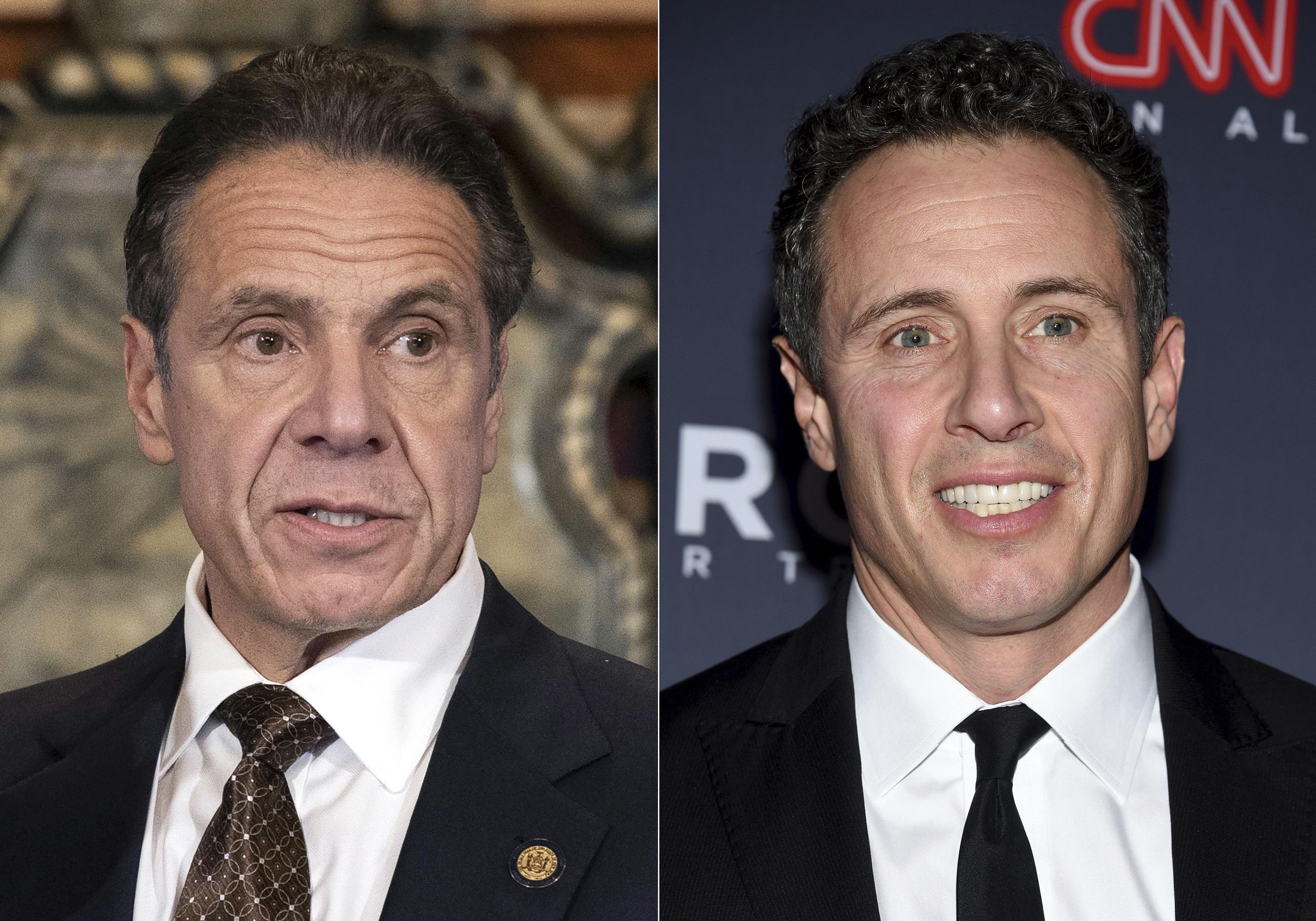 Finally, CNN must fire Chris Cuomo. That link goes an Atlantic piece by David A. Graham. Yesterday, The New York Times published a shocking story on how Cuomo tried to help his brother Andrew escape accountability for his treatment of women: Chris Cuomo Played Outsize Role in Ex-Gov. Cuomo’s Defense.
Thousands of pages of new evidence and sworn testimony released on Monday show the extent to which former Gov. Andrew M. Cuomo relied on a group of allies, including his younger brother, the CNN host Chris Cuomo, to strategize how to deflect and survive a cascade of sexual harassment charges that eventually engulfed him.
Beginning last December with the first public accusation by a former aide, Lindsey Boylan, the records lay out in unvarnished detail how the tight-knit group of advisers discussed a series of increasingly drastic steps to manipulate the press, discredit his accusers and retain a grip on power that became less and less tenable.
After debating the legality of the move, they agreed to pass Ms. Boylan’s personnel file to reporters, portraying her as politically motivated and unhinged. They sought — and failed — to rally dozens of former female aides and supporters to pen an op-ed defending him.
Chris Cuomo pressed to take on a greater role in crafting his brother’s defense, including phoning into strategy calls and using his media contacts to keep tabs on reporters pursuing stories about the governor. At one point, he even ran down a secondhand tip that another woman accusing the governor of unwanted advances at a wedding was lying. (She was not.)
“You need to trust me,” Chris Cuomo pleaded with Melissa DeRosa, the governor’s secretary, at one point in March, arguing that she should rely on him and other outside advisers like the political consultant Lis Smith and the pollster Jefrey Pollock.
He added: “We are making mistakes we can’t afford.”
Yet Cuomo appeared in his usual time slot last night.
An even more pointed headline from CNBC: CNN host Chris Cuomo used his media sources to find out info on brother Andrew’s accusers, records show.
CNN host Chris Cuomo used his sources in the media world to seek information on women who accused his brother Andrew Cuomo, then the governor of New York, of sexual harassment, according to documents released Monday by the New York Attorney General’s Office.
While Chris Cuomo has previously acknowledged advising his brother and his team on the response to the scandals, the records show that his role in helping the then-governor was much larger and more intimate than previously known.
Chris Cuomo was actively in touch with Melissa DeRosa, who was the then-governor’s top aide, about incoming media reports that detailed alleged sexual harassment by Andrew Cuomo, according to exhibits from the Attorney General’s probe and a transcript of his interview with the state’s investigators. He also lobbied to help the governor’s office as it sought to weather the storm of accusations, and he dictated statements for the then-governor to use.
“Please let me help with the prep,” Chris Cuomo said to DeRosa in one message in early March. Then, three days after the New York Times reported in March about how Andrew Cuomo attempted to kiss a woman, Anna Ruch, in an unwanted advance at a wedding, Chris Cuomo texted DeRosa: “I have a lead on the wedding girl.”
CNN says they are “conducting a thorough review of the documents.” Frankly, it’s difficult to understand why CNN kept Cuomo on after the initial revelations. If they don’t get rid of him now, they will lose all credibility as a news organization.
There are plenty of other stories out there. Which ones have caught your interest?
 peej
peej Carissa
 bostonboomer
 dakinikat
 ecocatwoman
 mablue2
 Mama Lopez
 peggysue22
 quixote
 skydancingguestblogger
 Mona (aka Wonk the Vote)
 Memeorandum Crooks and Liars Democracy NOW The UK Guardian
The Sky Dancing banner headline uses a snippet from a work by artist Tashi Mannox called 'Rainbow Study'. The work is described as a" study of typical Tibetan rainbow clouds, that feature in Thanka painting, temple decoration and silk brocades". dakinikat was immediately drawn to the image when trying to find stylized Tibetan Clouds to represent Sky Dancing. It is probably because Tashi's practice is similar to her own. His updated take on the clouds that fill the collection of traditional thankas is quite special.
You can find his work at his website by clicking on his logo below. He is also a calligraphy artist that uses important vajrayana syllables. We encourage you to visit his on line studio.





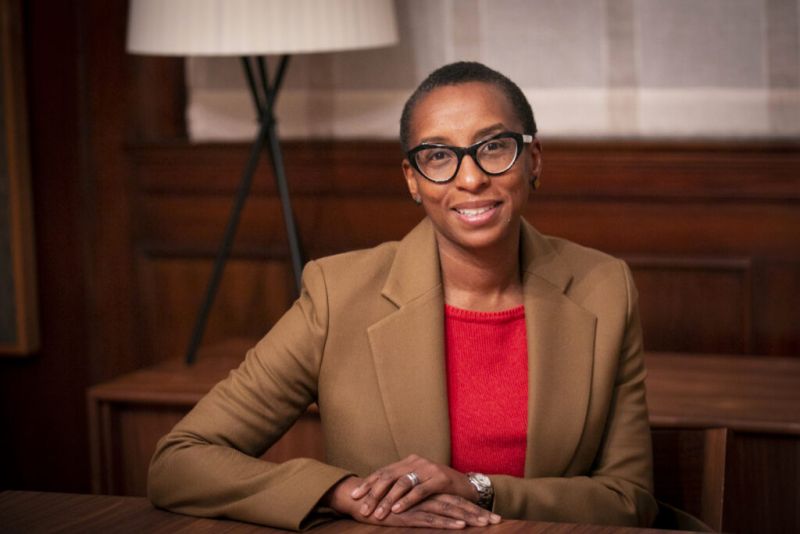





 Sky Dancing
Recent Comments