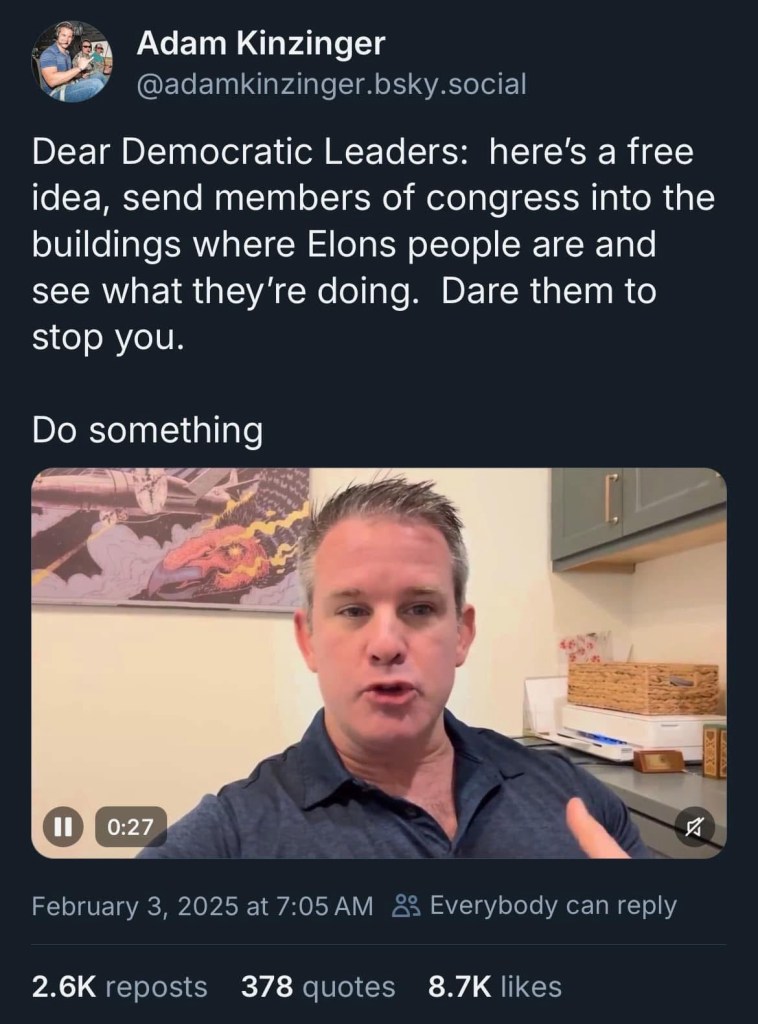
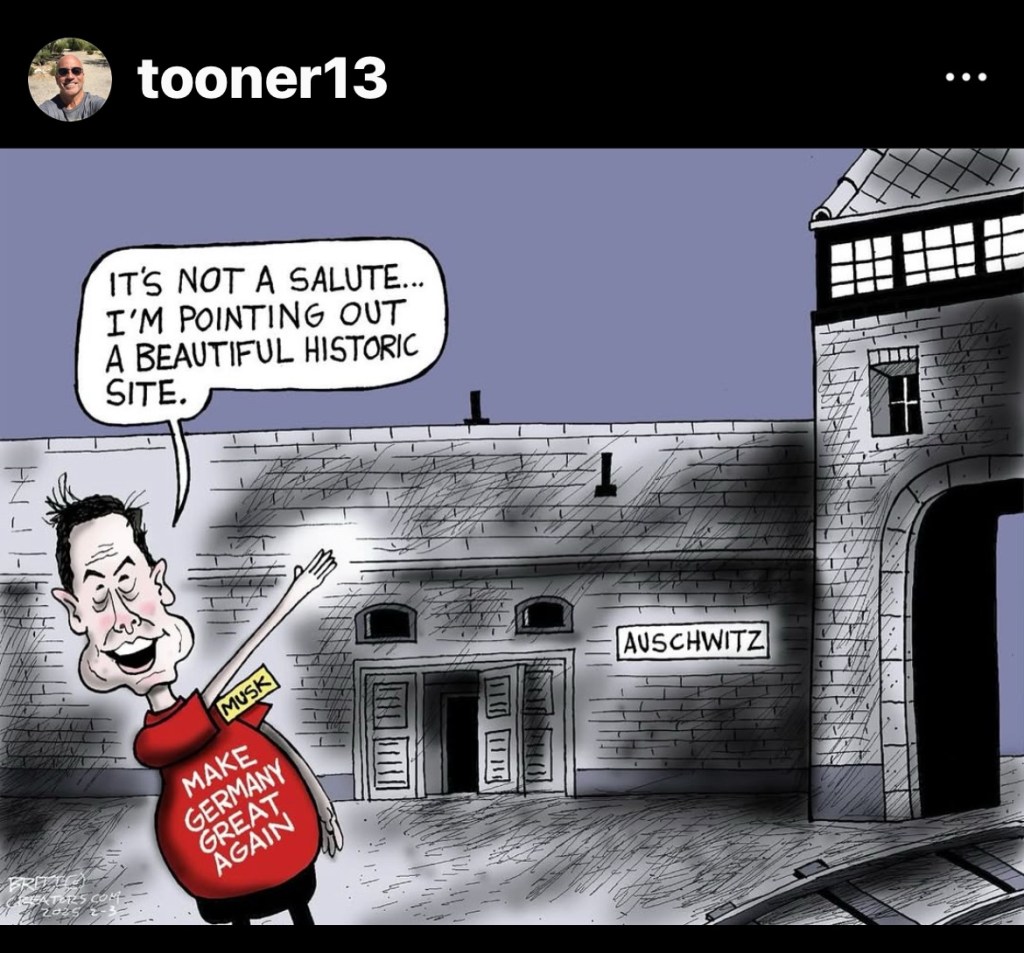
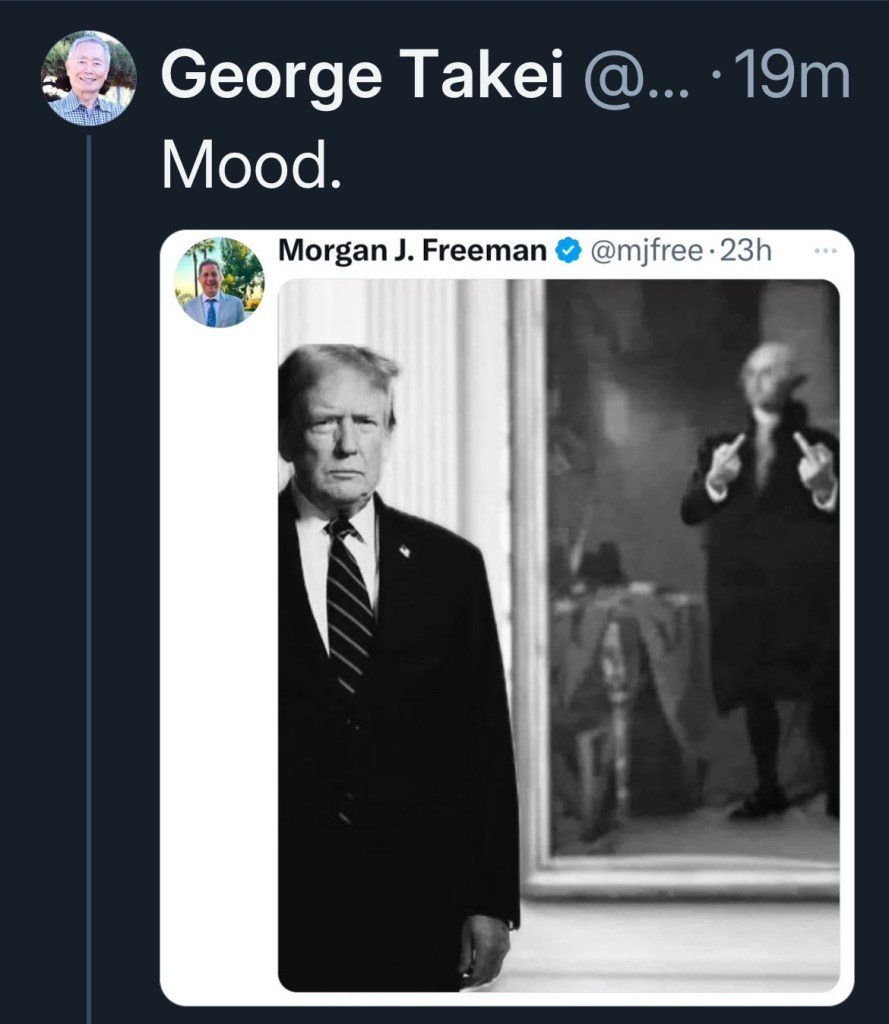
Mostly Monday Reads: President Eject Incontinentia Buttocks readies the Enemies List

“And just like that, America is respecting on the world stage once again.” John Buss, @repeat1968

Good Day, Sky Dancers!

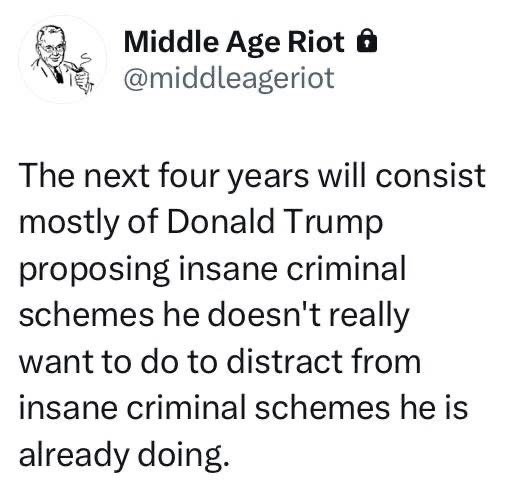
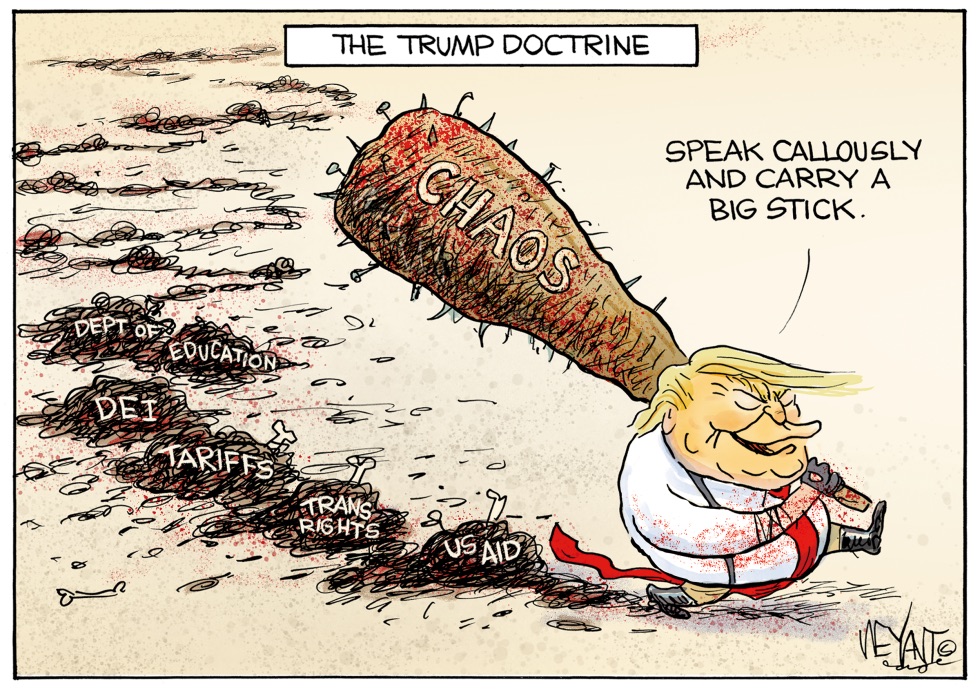
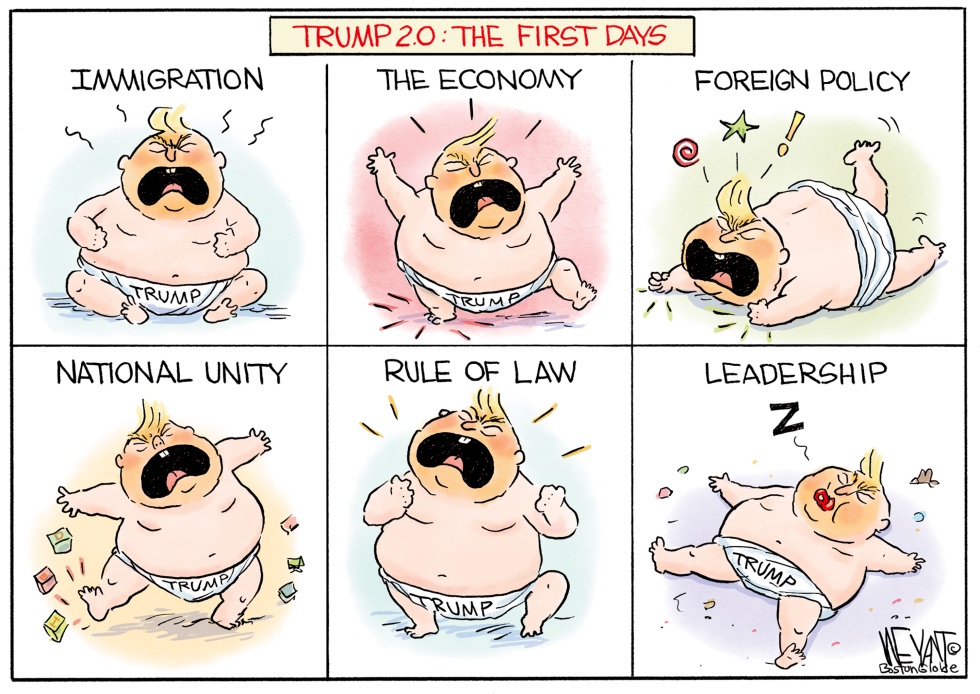
I’m going down a very dank, dark rabbit hole today because one of the things that concern me the most are the ongoing threats that President Eject Incontinentia Buttocks against people who make him feel bad about himself or correct his story weaving for the sake of reporting reality.  We keep seeing the lists and hearing direct attacks on what he considers “enemies.”  This ranges from politicians of past and present to members of the press.  It is the true sign of a despot, and one of the major things the U.S. Constitution and our form of government were designed to toss in history’s trash heap. The other is the feudal tradition of bending or taking the knee.  That is why public servants take an oath to uphold and protect the Constitution and not to a cult of personality.

It is evident during this transition period that these feudal and dictatorial aspirations are a serious part of the vetting of Cabinet officers and the oncoming attempt to prosecute and persecute outspoken critics of the tremendous number of unfit, immoral cretins, loyal to an insane and craven political figure.  King George was the Mad King we had to dethrone to gain independence.  What do we do with a Mad Politician chosen by the Electoral College and many voters who live in states with more livestock than people? He’s an obvious threat to democracy, but he managed to Pied Piper, a bunch of rubes.

An interview this weekend shows how obsessed he is with ensuring his warped reality rules the day and the country.

Let me share a few headlines that are giving me some severe heartburn. This is from CNN and is reported by Trump lays out sweeping early acts on deportation and January 6 pardons, says Cheney and others ‘should go to jail.’”

President-elect Donald Trump in a television interview that aired Sunday previewed a sweeping agenda for his first days in office, outlining how his administration will prioritize deporting migrants with criminal records, vowing to pursue pardons for January 6 defendants on his first day, and raising the possibility that former Rep. Liz Cheney and other political opponents could face jail time.

Trump said he would not seek “retribution” against President Joe Biden and against his political enemies, but he repeatedly left room for his appointees to decide whether to go after specific people. He suggested members of Congress who led the investigations into his conduct during the January 6, 2021, attack on the US Capitol should be put in jail and that he’ll look on his first day at issuing pardons to supporters involved in the riot.

“These people have been there, how long is it? Three or four years? You know, by the way, they’ve been in there for years, and they’re in a filthy, disgusting place that shouldn’t even be allowed to be open,” he said. Nearly 1,200 people either have pleaded guilty or were found guilty at trial for crimes connected to the January 6 attack, according to the Justice Department. More than 645 defendants were ordered to serve some jail time.

Trump said he would not direct his Justice Department to investigate members of Congress and Biden administration officials who led the investigations into his role in January 6, but continued to suggest his DOJ would be justified in deciding to launch investigations without his input.

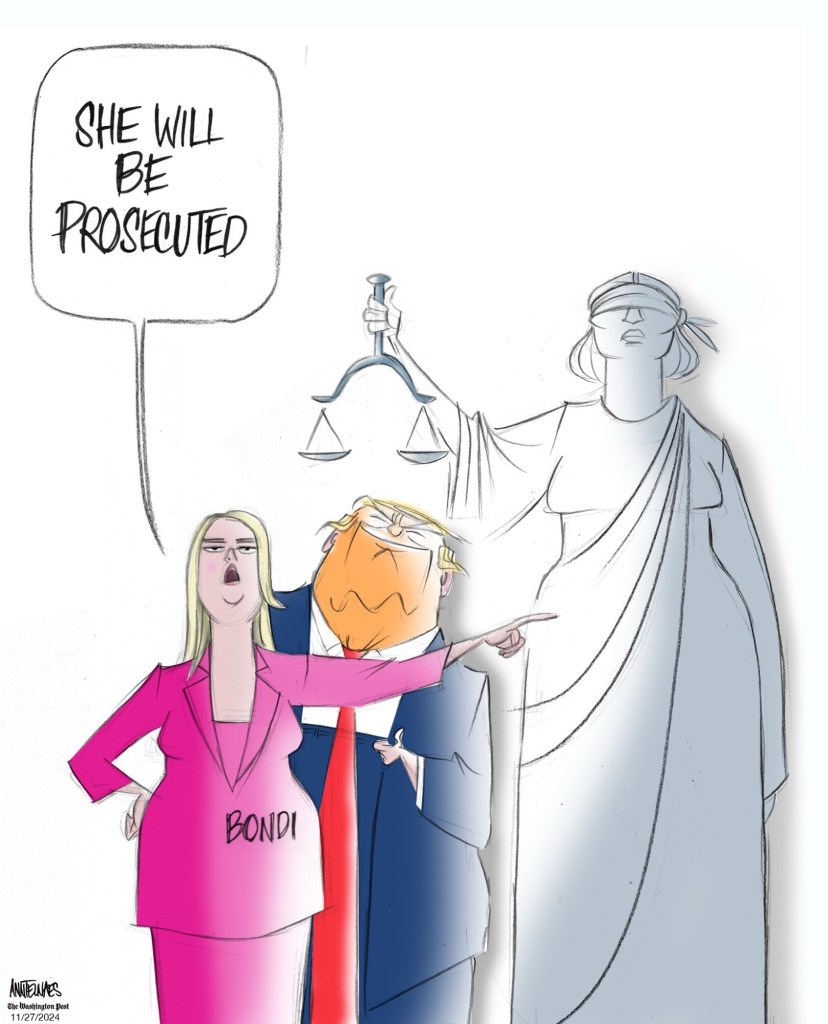
When asked about the possibility of investigating special counsel Jack Smith, who brought the two since-dropped federal cases against him, Trump said he wants his pick for attorney general, Pam Bondi, to “do what she wants to do.”

“She’s very experienced. I want her to do what she wants to do. I’m not going to instruct her to do it,” he said.

Trump was more direct when speaking about the members of Congress who led the January 6 committee, telling Welker that the co-chairs of the committee — Republican Cheney, who has since left Congress, and Democrat Bennie Thompson — should “go to jail.”

“Cheney was behind it. So is Bennie Thompson and everybody on that committee,” he said. “For what they did, honestly, they should go to jail.”

Trump also suggested that committee members might do well to receive preemptive pardons from Biden to protect themselves from criminal prosecution. CNN reported last week that Biden White House aides, administration officials and prominent defense attorneys in Washington were discussing potential preemptive pardons or legal aid for people who might be targeted by Trump.

“Biden can give them a pardon if he wants to,” Trump said. “And maybe he should.”

In a statement later Sunday, Cheney said, “Donald Trump’s suggestion that members of Congress who later investigated his illegal and unconstitutional actions should be jailed is a continuation of his assault on the rule of law and the foundations of our republic.”

Republican former Rep. Adam Kinzinger, who served on the committee, told CNN’s Manu Raju on Sunday he’s “not worried” about the Trump administration investigating him or his fellow committee members.

The Constitution’s Speech or Debate Clause protects lawmakers from certain law enforcement actions targeted at their legislative duties.

CNN has reached out to Thompson for comment.

The problem is mostly  with “political enemies.”  However, it does go deeper than that. This is from Phillip Bump’s column today at the Washington Post.”Trump sees the investigators, not the rioters, as the Jan. 6 criminals. It’s not just that he seeks to avoid accountability. It’s that he hopes to invert it.”  So, the criminals arrested by law officers, prosecuted in courts, and found guilty in the process by a duly appointed Judge or Jury are the law breakers here?  How horrifying is that?

History will tell the story of the riot at the Capitol on Jan. 6, 2021, in direct terms. President Donald Trump, increasingly desperate to block Joe Biden’s inauguration to replace him, summoned his supporters to Washington for a “wild” protest. Tens of thousands came, including members of violent, fringe-right groups.

As legislators convened to formalize Biden’s victory, angry throngs of Trump supporters pushed toward the building, some engaging in violent altercations with law enforcement in an effort to stop Congress from counting electoral votes. Hundreds were injured, including more than 100 police officers.

Congress tried to hold Trump accountable for his role in the riot twice, first by impeaching him — enough Republican senators sided with Trump to prevent conviction — and then by launching a high-profile investigation of his broad effort to retain power. Meanwhile, the justice system went to work arresting and imprisoning those who had engaged in the riot. Special counsel Jack Smith brought federal charges against Trump.

Pressed whether he’d direct Bondi or Kash Patel, his pick to lead the FBI, to send them to jail, Trump said, “No, not at all,” before adding, “I think they’ll have to look at that.”

Asked whether he plans to follow up on his frequent campaign promise to investigate Biden — whom he repeatedly labeled as “corrupt” and a “criminal” on the campaign trail — Trump said he doesn’t want to “go back into the past.”

“I’m really looking to make our country successful. I’m not looking to go back into the past,” he said, adding, “Retribution will be through success.”

When asked about previously saying he would direct his Justice Department to appoint a special prosecutor to investigate Biden, Trump said he would not do that but left the door open for top DOJ officials to make their own determinations.

“No, I’m not doing that unless I find something that I think is reasonable,” he said. “But that’s not going to be my decision. That’s going to be Pam Bondi’s decision, and, to a different extent, Kash Patel, assuming they’re both there, and I think they’re both going to get approved.” Trump has tapped Patel to lead the FBI, despite the current director, Trump appointee Christopher Wray, still having several years left in his 10-year term.

Throughout the interview, Trump at times struck a more temperate tone toward his political opponents and appeared to prioritize uniting the country over exacting vengeance. He said he plans to make unity a central theme of his inauguration address and expressed confidence that his administration will achieve a level of success that will bring the country together.

But Trump invoked similar calls for unity at various points throughout his campaign — including in the wake of the first assassination attempt against him — before often reverting to bitter, divisive rhetoric and personal attacks. During the NBC interview, Trump again refused to concede that he lost the 2020 presidential election.

President Eject Incontinentia Buttocks rejects reality for a version that suits his malignant narcissism and purposes. The New Republic’s Greg Sargent interviews Brian Beutler about this on his PodCast.  “Transcript: Trump’s Private Rage at “Traitors” Reveals Dark 2025 Plans. An interview with Brian Beutler, author of the “Off Message” Substack, who explains how Democrats can and must do more to alert the public to the dangers of a second Trump term.”  Dangers, indeed.

The New York Times reports that Donald Trump is telling advisers that his biggest regret from his first term was that he appointed “traitors.” Not traitors to the country, of course; traitors to him. As a result, his transition team is grilling prospective officials to gauge their loyalty to Trump; that is, loyalty to the person. Is there some way for Democrats to explain how absurd and dangerous all this is in a manner that gets through to the public? We’re talking about this today with Brian Beutler, author of the excellent Substack Off Message, who’s been arguing that Dems need to get more aggressive with their communications about all this right now before Trump takes office. Thanks for coming back on, Brian.

Brian Beutler: It’s always good to be with you.

Sargent: The New York Times reports that he’s privately telling advisors that his biggest first-term regret was appointing traitors. Importantly, traitors are those who came to see Trump accurately as a threat to the system: Chief of Staff John Kelly, Defense Secretaries Jim Madison, Mark Esper, and even Attorney General William Barr, who was relentlessly loyal up to the very last minute. That’s his regret, appointing people who describe the threat he poses accurately. Brian, in some sense, this isn’t a surprise, but it’s rarely reported quite this clearly. Your thoughts?

Beutler: It’s inauspicious. And it probably portends some conflict between him and the Senate insofar as the people that he’s vetting are going to be appointed to positions that require Senate confirmation. That’s because, as I understand, the loyalty test as reported in the article is not just, Do you support Donald Trump? Do you support the MAGA movement? Do you support its policy goals?—it’s really, Do you believe Donald Trump won or lost the 2020 election? If they acknowledge the truth that he lost, they’re out, they’re not going to get the nomination.

And similarly, with questions like, Do you think January 6 was good or bad? Do you think it was something that Donald Trump is responsible for? Are these patriots or are they insurrectionists?, if you answer that the wrong way, you’re not getting the job. And insofar as anyone who answers the way Trump wants them to answer has to go before the Senate. Well, it’s going to raise questions for both Democrats and Republicans in different ways.

Democrats are going to have to decide whether those are red lines for them that they won’t cross. If Trump finds somebody who’s qualified as in their resume is good, that they’re credentialed to do the job he’s appointed them to, but they’re also supportive of the Big Lie or they think that the insurrection was OK, will Democrats look past that to say, Well, at least you’ll know how to do the job that you’re being appointed to do? I would like Democrats to say there will be zero Democratic votes for any nominees who take that loyalty test. And if they do that, then it will fall to Republicans.

Are 50 out of 53 Republican senators willing to take that vote? An ancillary benefit of Democrats drawing a hard line here is that’ll be really tough for them because there are still at least a handful of Senate Republicans who don’t support the Big Lie, who won’t repeat it, and who think the people who peddle it are real threats to democracy. Then we’ll find out whether they just decided, You know what, Trump won, so it’s revisionist history all the way down now.

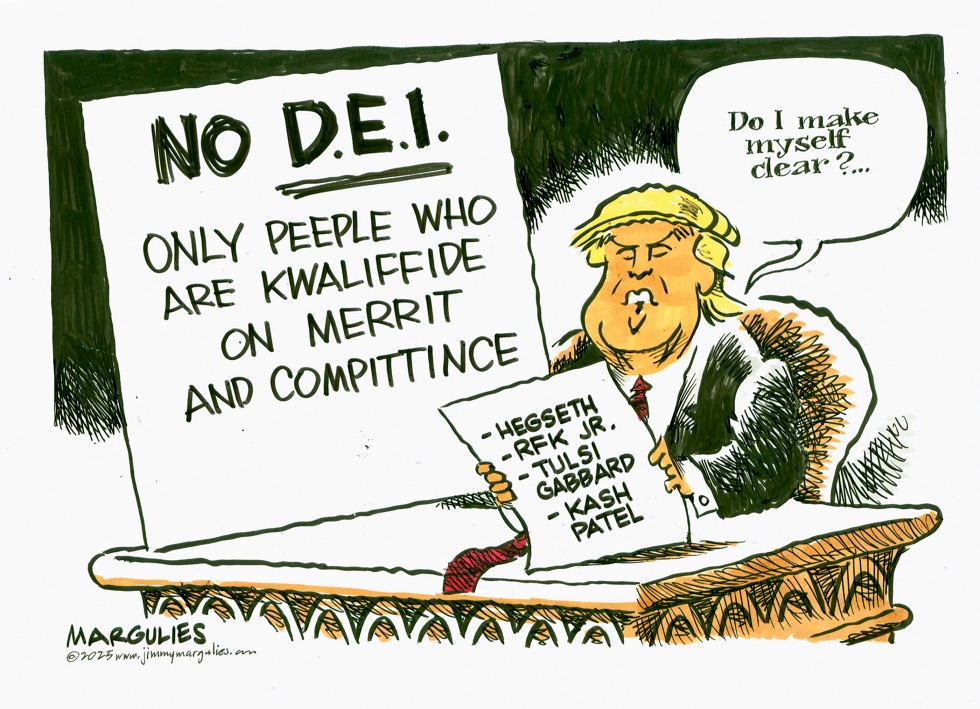
Sargent: His use of the term traitors in his conversations with his advisors, which shows that he’s still seething with anger about those who refuse to go along with his rewritten history: This is one of the keys to understanding what he really intends with current picks like Pete Hegseth as defense secretary, Kash Patel as FBI director, and Pam Bondi as attorney general. It won’t be that hard for all Democrats to oppose Pete Hegseth and Kash Patel, but I’m not sure all Democrats will oppose Pam Bondi.

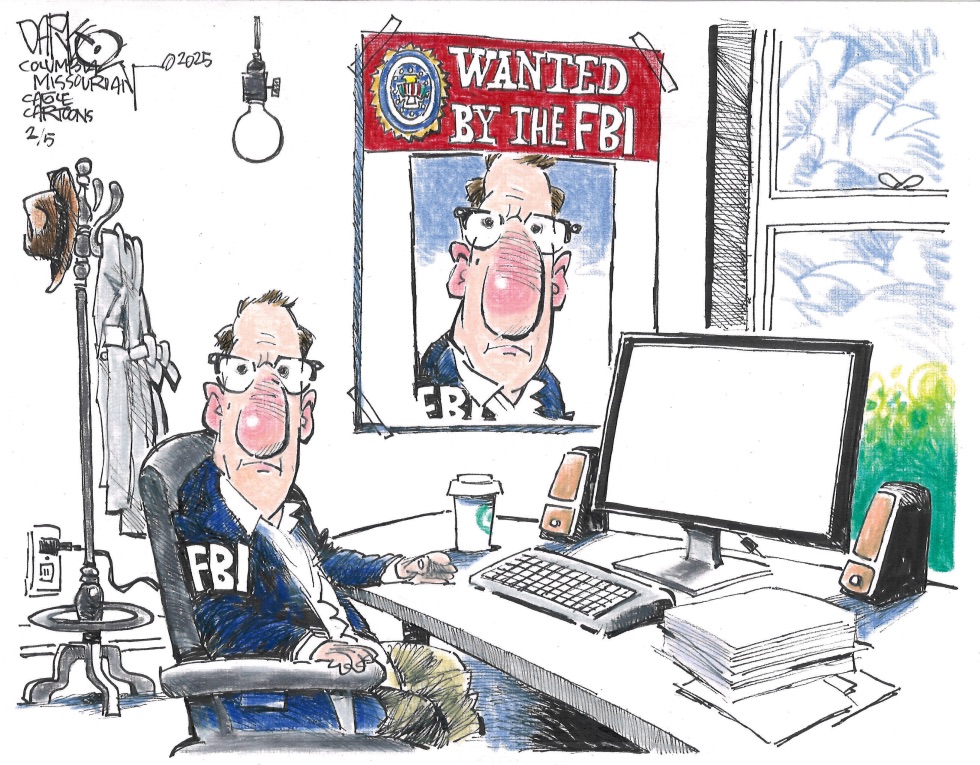
We do have precedent for politicizing the FBI.  I remember all of this very well, as well as the entire setup with AG John Mitchell. I had thought laws were put into place to prevent this from happening again. I also was aware that many Republicans at the time thought those laws went too far. Aaron Rupar and Thor Bensure, writing for Public Notice, share this headline. “The J. Edgar Hoover precedent for weaponizing the FBI. “Yes, we could have a repeat of that,” Frank Figliuzzi tells us.”

After serving in the FBI for more than two decades, in 2011 Frank Figliuzzi became the assistant director of the FBI’s counterintelligence division, where he worked alongside FBI Director Robert Mueller. Suffice it to say he saw a lot in his career.

So it should be taken seriously that Figliuzzi, now an MSNBC senior national security and intelligence analyst, describes Trump’s picks to run what are sometimes referred to as the power ministries — among them the DOJ (including the FBI) and the defense department — as a “hijacking of the entire national security structure.”

“My chief concern is this single characteristic that seems to run through these nominees — blind allegiance to Donald Trump,” Figliuzzi told us.

We recently connected with Figliuzzi to get his insight on Trump’s picks and what they signal about how the federal government will operate over the next four years. He warned that “we could be heading toward tremendous abuses of power, with the FBI going after Trump’s political enemies.” And he noted that a previous FBI director provided the president-elect and his choice to run the bureau, Kash Patel, with a blueprint.

Benson interviewed Figluzzi.  It went like this.

Thor Benson

As someone who’s focused on national security and has a background there, what are your top concerns with Trump’s choices for national security roles?

Frank Figliuzzi

Sadly, we’ll have to rank order them.

It’s not just that many of Trump’s nominees are remarkably unqualified for the jobs, and they are — from the DNI pick with Tulsi Gabbard to the DHS with Kristi Noem to Hegseth at DOD and now Kash Patel. But the lack of competence is not my chief concern anymore.

My chief concern is this single characteristic that seems to run through these nominees — blind allegiance to Donald Trump. Yes, there are national security issues with someone like Gabbard or Hegseth — I say national security with Hegseth, particularly, because similar to the concerns about Matt Gaetz, we don’t know what we don’t know. Is there more coming with Hegseth? Is it extortion and blackmail?

He’s already written a check to a woman in California. What else do we not know about? According to the latest reporting, he appears to have an alcohol problem. He’s had to physically be carried out of events he attended because he was drunk. That’s not good with someone who’s running things at the Pentagon. Are there more women and incidents out there? According to the New Yorker, he also yells “kill all the Muslims” when he gets drunk.

Out of all of the nominees, Kash Patel lacks the capacity to have his own independent thoughts and ideology. His record is replete with nothing but kissing Trump’s ass. That’s it. You don’t have to take my word for it. Look at his public statements about persecuting the “deep state,” prosecutors, the media, for christ’s sake. Combine that with Pam Bondi’s almost identical comments, and we’ve now got a Trump hijacking of the entire national security structure.

Thor Benson

So where does that take us?

Frank Figliuzzi

Well, we could be heading toward tremendous abuses of power, with the FBI going after Trump’s political enemies.

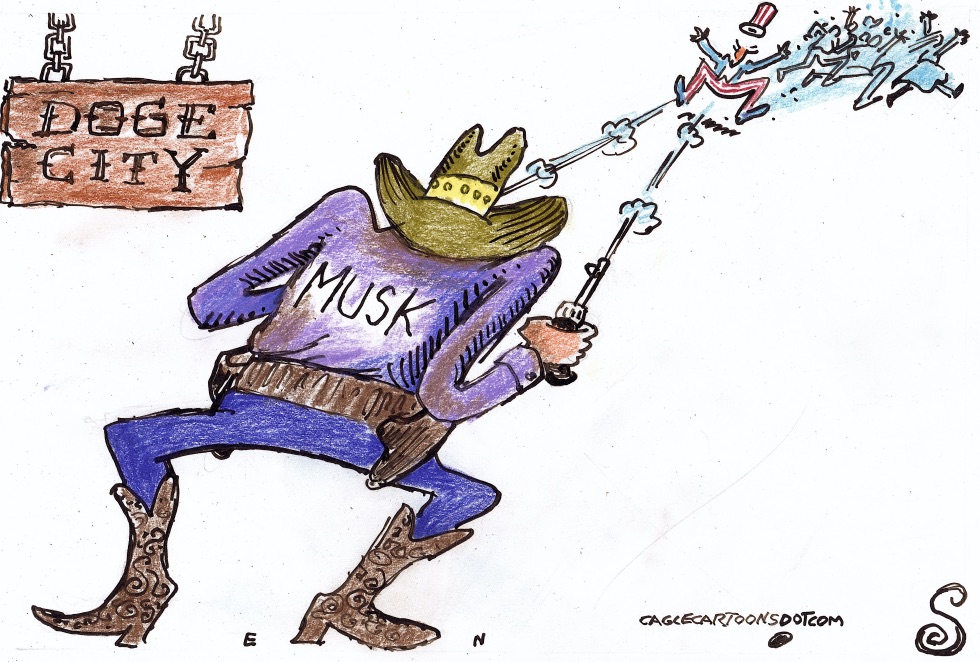
So, my hair is on fire again, although it never really goes out, to be honest. There are warning signs all over the place, and only a small segment of the American populace appears to be aware of all of this.  You can read Figliuzzi’s discussion of Nixon’s tricks at the link.  The other headline grabber today is how a set of unelected and affirmed idiot billionaires will be going after our Social Security.  This is from Truth Out. “DOGE Heads Musk and Ramaswamy Signal Social Security Cuts Are Coming. Trump vowed to “not cut one penny” from Social Security, but his other statements and actions suggest that he plans to.” Chris Walker has the lede and the story.

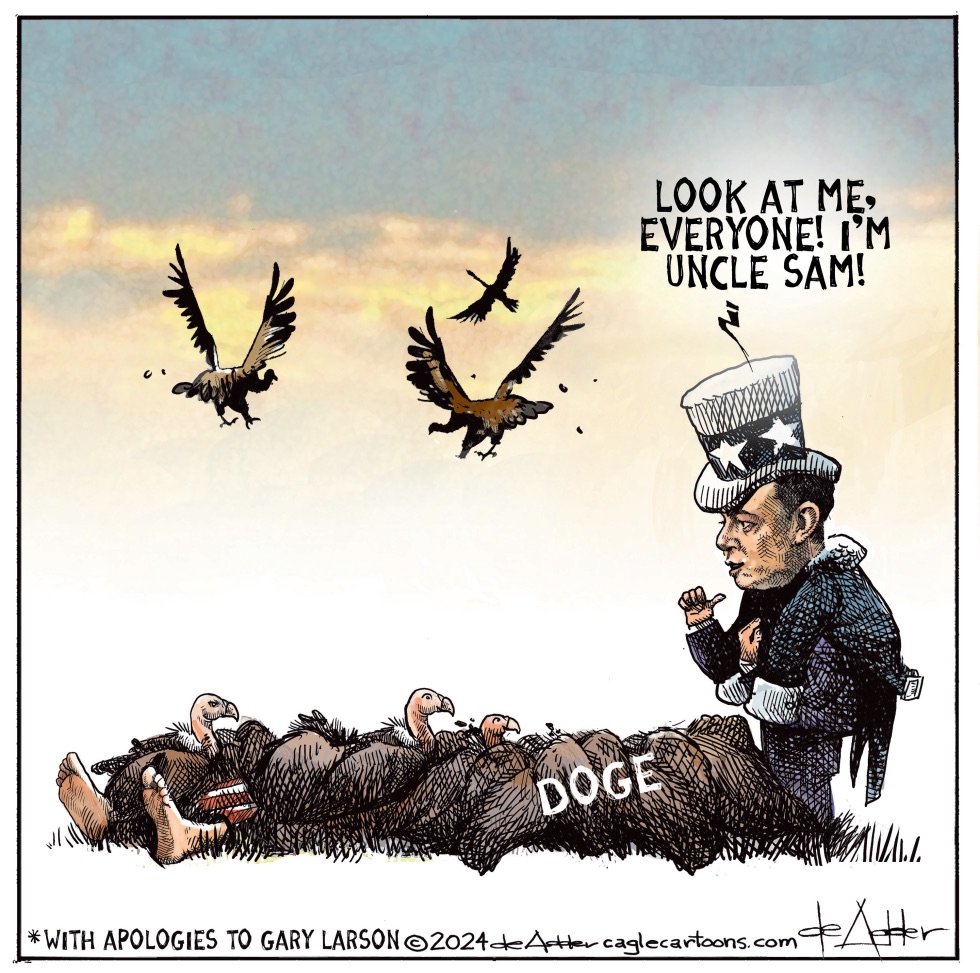
On Sunday, president-elect Donald Trump sought to assuage concerns that he will make cuts to Social Security and other safety net programs after Republicans signaled last week that Social Security could be targeted by Trump’s “Department of Government Efficiency” (DOGE) initiative, managed by Elon Musk and Vivek Ramaswamy.

Asked by host Kristen Welker on NBC’s “Meet the Press” program whether the DOGE initiative would include cuts to Social Security, Trump said “no,” other than perhaps cuts related to allegations of “abuse” or “fraud” associated with the program.

Notably, such fraud happens at extremely low rates — by one estimate, fraud equals around just $0.40 out of every $100 in benefits Social Security doles out yearly.

“We’re not touching Social Security, other than — we might make it more efficient,” Trump said about the national insurance program that helps retirees, disabled people, widowers and children of deceased parents. “But the people are going to get what they get.”

“We’re not raising ages or any of that stuff,” he added.

Trump’s comments echo talking points from his “Agenda 47” platform during his presidential campaign, which stated that he would “not cut one penny from Medicare or Social Security.” However, he and his allies have repeatedly suggested that cuts to both programs are possible.

Musk and Ramaswamy have made it evident that cuts to Social Security will be considered. After the two met with Republican lawmakers on Capitol Hill last week about the DOGE initiative, House Majority Leader Rep. Steve Scalise (R-Louisiana) said they had expressed sentiments that contradicted Trump’s comments on Sunday.

“Nothing is sacrosanct. Nothing. They’re going to put everything on the table,” Scalise told reporters after the meeting, with Fox Business elaborating that cuts to Social Security, Medicare and Medicaid would be discussed.

In September, when the idea of DOGE was first being discussed, vice president-elect J.D. Vance also indicated that there could be cuts to Social Security. A DOGE-type commission is “going to look much different in, say, the Department of Defense versus Social Security,” Vance said during a podcast interview, insinuating that cuts were going to be considered for the latter agency.

In March, Trump himself said that cuts to the program were a possibility.

“There is a lot you can do in terms of entitlements — in terms of cutting — and in terms of also the theft and the bad management of entitlements,” Trump said in a statement starkly different from his comments over the past weekend.

Perhaps most importantly, Trump attempted to make drastic cuts to Social Security and other programs in his first term as president. In one of his later proposed budgets (which didn’t go on to pass in the then-Democratic-controlled Congress), the president-elect sought to cut Social Security by $25 billion — despite promising in the 2016 presidential campaign that he wouldn’t make any cuts to the agency, just as he promised this last election cycle.

Nothing is Sacred in Trumplandia except Trump and his money.   You can read more about the proposed cuts at these links.

And, in the latest from Corruption and Kleptocracy Central, we have this headline inPolitico. “Lara Trump leaves RNC amid Senate chatter. In announcing her resignation the president-elect’s daughter-in-law said “the job I came to do is now complete.” I wonder if she can Senator better than she can sing?

Lara Trump is stepping down as co-chair of the Republican National Committee, a role she has held since March, as some of Donald Trump’s allies continue to push for her to replace Florida Sen. Marco Rubio on Capitol Hill.

In announcing her resignation on X, Lara Trump, who is the president-elect’s daughter-in-law, said “the job I came to do is now complete,” touting the RNC’s fundraising records, election integrity efforts and voter turnout.

She’s expressed openness to replacing Rubio, the president-elect’s pick to be secretary of State, in the Senate, telling The Associated Press it’s a role she “would seriously consider.”

“If I’m being completely transparent, I don’t know exactly what that would look like,” she told the AP in an article published Sunday. “And I certainly want to get all of the information possible if that is something that’s real for me. But yeah, I would 100% consider it.”

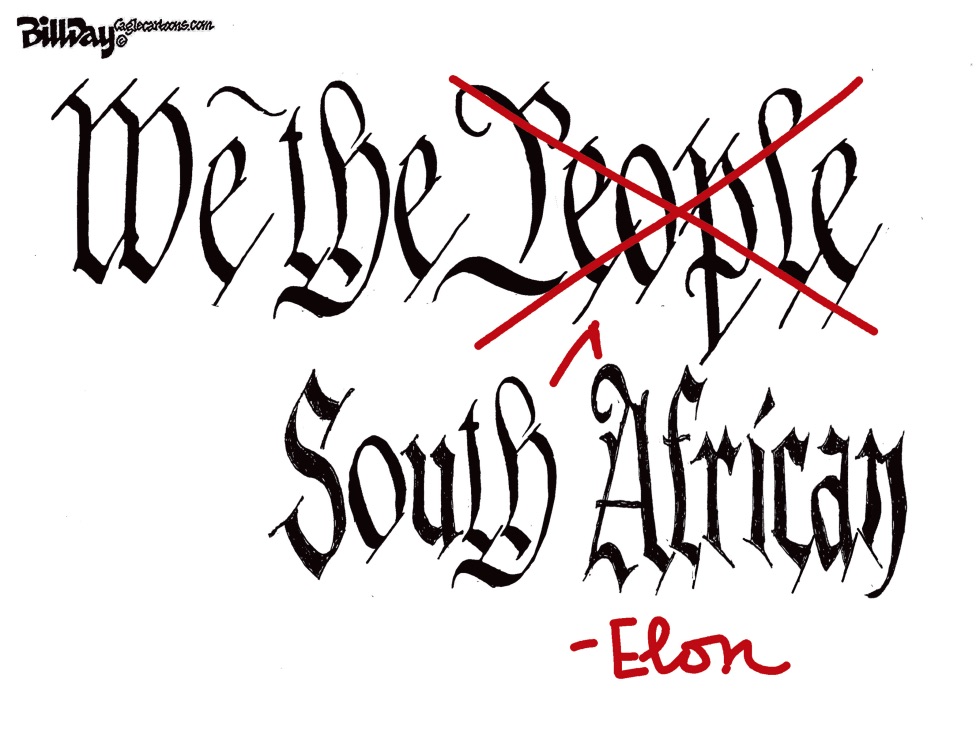
Among those supporting her as a potential Rubio replacement is billionaire Elon Musk, a close ally of the incoming president, and his mother, Maye Musk.

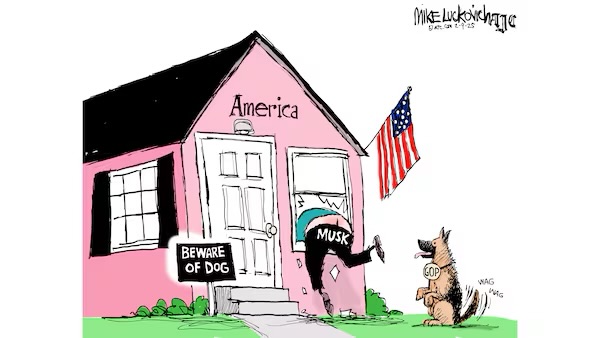
When did all these tacky people get a say in stuff like this?  The Trump Boys will be in charge of the Merch and Grift Wing of the White House while the Kushners milk what they can from the State Department and foreign nations. We are definitely headed to a Nepocracy.  Just watch out for that Douche Commission headed by First Lady Elonia and DIE hire Vivek.

What’s on your reading and blogging list?


Wednesday Reads

Good Morning!!

Brian Thompson, CEO of United Health Care

Brian Thompson, CEO of United Health Care

There’s some breaking news from NYC. The CEO of United Health Care was shot and killed on the street, and it is believed to be a “targeted attack.” The New York Times has live updates.

A manhunt is underway. Here’s the latest.

The chief executive of UnitedHealthcare, one of the nation’s largest health insurers, was fatally shot outside a hotel in Midtown Manhattan on Wednesday morning, the police said.

The executive, Brian Thompson, 50, was shot just after 6:45 a.m. at the New York Hilton Midtown on Avenue of the Americas near 54th Street, according to a police report. Mr. Thompson was taken to Mount Sinai West, where he was pronounced dead….

Officials with the Metropolitan Transportation Authority, which runs New York City’s transit system, said that the shooting did not impact subway or bus service during the morning commute….

Brian Thompson’s sister, Elena Reveiz, told The Times she is still processing the news of her brother’s death. “He was a good person and I am so sad,” Reveiz said when reached by phone. She said Thompson was a good father to his two children. She said she was on her way to see her sister, and to be with their family….

Gov. Tim Walz of Minnesota called the killing “horrifying news and a terrible loss for the business and health care community in Minnesota.” [….]

New York’s police commissioner, Jessica Tisch, and Jeffrey Maddrey, chief of department, will hold a news conference at 1 Police Plaza at 11:30 a.m., the police said.

Another huge story broke yesterday from South Korea. Right wing President Yoon Suk Yeol declared martial law and attempted a coup. Fortunately he failed. 

Haeryun Kang at The Guardian: Martial law came to South Korea – and my friends and I doomscrolled through the night.

At 10.23pm on 3 December in Seoul, I was already in bed, alternating between reading a book and watching YouTube cooking reels. That was when Yoon Suk Yeol, the president, declared emergency martial law in South Korea for the first time since 1979.

In an unannounced televised address, Yoon said the imposition of martial law was “aimed at eradicating pro-North Korean forces and protecting the constitutional order of freedom”.

Immediately, my text messages and online chat forums flared up. What the hell is going on? Is this a joke? Can I keep drinking at the bar tonight? Can my children go to school tomorrow? What exactly is the emergency? Utter confusion ensued for the next six hours, until a dramatic sequence of events led to the end of martial law at 4.30am.

Yoon Suk Yeol

South Korean President Yoon Suk Yeol

This was my first experience of martial law – if this short-lived circus can even be called that – something that, until now, I had only read about in history books. But even in that short time, I was terrified. The experience woke me up, once again, to the severe, unavoidable reality of Korean division. And I remembered how it can be exploited by our leaders to justify repression and control.

Thankfully, this time, Yoon’s antics were curbed. But the martial law fiasco is a testament to both the instability and resilience of South Korean democracy. It is a chilling reminder that the collective trauma of the 20th century dictatorship is not simply history.

It’s still unclear why Yoon took such an extreme measure. Martial law is defined as the temporary rule by military authorities in a time of emergency, when civil authorities are deemed unable to function. In the past, dictators have declared martial law at times of widespread national unrest and turmoil, including the Korean war. This time, it was a business-as-usual Tuesday; earlier that evening I had been for a swim at a government-run public pool.

Yoon’s measure came at a time of personal and political turmoil for him. Corruption scandals have rocked him and his family; the opposition Democratic Party has just insisted on big cuts to the budget bill despite the ruling party’s protests; Yoon’s approval ratings are hovering in the 20s – all unpleasant, sure, but stories that don’t seem all that surprising in a relatively functional democracy.

In his speech declaring martial law, Yoon expressed clear vitriol for his political opposition, for its “anti-state activities plotting rebellion”. Most South Koreans are familiar with this insidious sort of rhetoric. I grew up with this language, and still live with it, through my very conservative family in Busan. It’s a regular reminder that there is a clear political and generational divide related to the Korean division.

If you want more first-hand reporting, check out this post by Sarah Jeong at The Verge: Six hours under martial law in Seoul.

Timothy Snyder at his Substack Thinking about…: Dictators for a Day, South Korea and America.

South Korea’s president, Yoon Suk Yeol, invoked martial law, tried to install a military dictatorship — and failed completely. In his actions there are some likely similarities with the coming Trump regime, and some clear lessons for Americans to learn right now.

Yoon won a very narrow election, as did Trump. Like Trump, he refers constantly to “fake news” and calls his political opponents enemies of the state (as Trump says, “the enemy within.”) Yoon used this language to justify the imposition of martial law, as will Trump if he decides to invoke the Insurrection Act in the United States.

Like Trump, Yoon telegraphed his move in advance, and not only with such language. He surrounded himself with military men and intelligence officers who were characterized by personal loyalty. Trump is trying to do the same, now, with his proposals for Tulsi Gabbard as director of national intelligence, Kash Patel as director of the FBI, and Pete Hegseth as secretary of defense. He also wants to purge the top ranks of the armed forces.

Yoon’s main political opponent, Lee Jae-myung, had correctly predicted that Yoon would try to implement martial law. Trump makes this prediction rather easy. Trump has spoken openly of being “dictator for a day,” and of invoking the Insurrection Act, which would allow him to deploy the military inside the United States.

The Insurrection Act is not quite the same thing as martial law. Under martial law, the military assumes the basic responsibilities associated with a civilian government. The Insurrection Act, in principle, only allows the American president to use the armed forces to assist civilian authorities to enforce some law in the presence of an insurrection. But the language of the law is quite vague. Trump makes it clear that he has in mind invoking the Insurrection Act to very broad purposes, essentially to change the regime.

In both South Korea and the United States, the legal basis for asserting greater presidential authority is antiquated. Martial law was declared in South Korea for the last time in 1979. Since the late 1980s, South Korea has moved quite decisively in the direction of meaningful elections and civil rights, thanks to the forceful activity of civil society, especially trade unions. In the United States, the Insurrection Act is an assemblage of laws passed between 1792 and 1871. It was last invoked during racial violence in Los Angeles in 1992.

Yoon’s actions, although rooted of course in his own personality and South Korean career, and enabled by South Korean law, were very trumpy. Indeed, it seems likely to me that the very presence of Trump on the international scene will make such attempts more likely, among America’s democratic allies (such as South Korea) and generally.

But Yoon failed, and very badly. His dictatorship for a day lasted only about six hours. What can Americans learn from his less-than-a-day dictatorship?

Read the rest at the Substack link.

Hegseth

Pete Hegseth

Back in the USA, It looks like Pete Hegseth will not be the Secretary of Defense. Yesterday, Dakinikat wrote about the devastating New Yorker article by Jane Mayer. Mayer reported in great detail Hegseth’s out-of-control drinking, his abuse of women, and his incompetence when trusted with leadership roles in small organizations.

Yesterday, NBC News reported: Pete Hegseth’s drinking worried colleagues at Fox News, sources tell NBC News.

Pete Hegseth, President-elect Donald Trump’s pick for defense secretary, drank in ways that concerned his colleagues at Fox News, according to 10 current and former Fox employees who spoke with NBC News.

Two of those people said that on more than a dozen occasions during Hegseth’s time as a co-host of “Fox & Friends Weekend,” which began in 2017, they smelled alcohol on him before he went on air. Those same two people, plus another, said that during his time there he appeared on television after they’d heard him talk about being hungover as he was getting ready or on set. 

One of the sources said they smelled alcohol on him as recently as last month and heard him complain about being hungover this fall.

None of the sources with whom NBC News has spoken could recall an instance when Hegseth missed a scheduled appearance because he’d been drinking. 

“Everyone would be talking about it behind the scenes before he went on the air,” one of the former Fox employees said….

Three current employees said his drinking remained a concern up until Trump announced him as his choice to run the Pentagon, at which point Hegseth left Fox.

“He’s such a charming guy, but he just acted like the rules didn’t apply to him,” one of the former employees said.

Trump is considering withdrawing the Hegseth nomination and appointing Ron De Santis instead. Marc Caputo at The Bulwark: Trump Talks to DeSantis About Replacing Hegseth.

DONALD TRUMP AND RON DESANTIS have personally discussed the possibility of the Florida governor becoming the next secretary of defense amid concerns that sexual assault allegations could engulf the president-elect’s current nominee for the post, Pete Hegseth.

The talks, relayed by four sources briefed on them, are in their advanced stages. They underscore the fears within Trump world about Hegseth’s ability to survive a Senate confirmation process—despite public posturing from Hegseth and allies that he remains committed to ending up at DoD.

“These discussions are real. It’s serious. I can’t say it’s definitely going to happen, but the governor is receptive and Trump is serious, too,” a top Republican source familiar with the conversations told The Bulwark on condition of anonymity.

The discussions around DeSantis involve untangling several different political threads. The governor is currently handling the fallout of a separate Trump cabinet pick: Marco Rubio’s nomination to be secretary of state. DeSantis is weighing whether to appoint Trump’s daughter-in-law, Lara Trump, to fill Rubio’s Senate seat. The possibility that the governor himself could end up at the Pentagon may factor into that decision.

Today Hegseth is again meeting with Republican Senators in a last ditch effort to convince them to support his nomination. Politico: Hegseth back on the Hill as Pentagon bid teeters.

Pete Hegseth, Trump’s embattled pick to run the Pentagon, is back on Capitol Hill today as his nomination faces even more hurdles.

Pete Hegseth

Pete Hegseth’s tatoos

Concerns over Hegseth’s personal controversies are driving Trump allies to think the Defense secretary designate may not survive further scrutiny. And his fight has been complicated even more by the news that the president-elect is weighing a rival, Florida Gov. Ron DeSantis, to replace Hegseth, The Wall Street Journal was first to report. DeSantis, a former opponent in the 2024 GOP presidential primaries, offers a conservative military record and alignment with Trump’s views on “woke” military policies.

Hegseth — who has faced allegations of sexual assault and alcohol abuse — is expected to meet today with Republicans including incoming Senate Armed Services Chair Roger Wicker (R-Miss.) and the next majority leader, Sen. John Thune (R-S.D.).

Hegseth’s most crucial meeting, though, is expected to be with Sen. Joni Ernst (R-Iowa), a Senate Armed Services member who has been noncommittal about Hegseth’s nomination and is seen as a potential swing vote.

Ernst was previously floated as a potential pick for defense secretary before Trump opted for Hegseth, though she was seen as a dark horse candidate. The Iowa Republican is a traditional defense hawk, clashing somewhat with the Trump team’s views. There may also be a political divide to bridge for Ernst — who took until March to endorse Trump’s 2024 White House bid after the former president nearly swept the Republican primaries and was on a path to clinch the GOP nomination.

Ernst, the first woman combat veteran in the Senate, has a long track record of legislation aimed at addressing sexual assault and harassment in the military. That would seem to put her at odds with Hegseth, who is not only the subject of sexual assault allegations but opposes women serving in combat roles.

Ernst has also been outspoken about her own experiences with sexual assault and domestic violence. Asked about the sexual assault accusations against Hegseth, she’s said: “Any time there are allegations, you want to make sure they are properly vetted, so we’ll have that discussion.”

Another problematic candidate, Kash Patel for FBI director is facing headwinds. I’m sure we’ll be hearing much more about him, but here are a couple of articles about him.

Zach Beauchamp at Vox: I listened to hours of Trump’s FBI pick on Steve Bannon’s podcast. Oh boy.

Kash Patel, Donald Trump’s pick to direct the Federal Bureau of Intelligence, has never served in the FBI. But he has hosted Steve Bannon’s podcast.

Patel is a contributor at Real America’s Voice, the right-wing news network that produces Bannon’s show War Room, and has long appeared as a guest on the show. After top Trump adviser Bannon was imprisoned for four months earlier this year — on charges of contempt of Congress after he refused to comply with a January 6 Committee subpoena — Patel stepped up to serve as an occasional guest host.

Kash Patel

Crazy Eyes Kash Patel

To try and understand Patel better, I listened to every episode and clip tagged with “Kash Patel” on the War Room website — and a few others that Bannon’s team missed. The overwhelming impression is that Patel is a man whose entire worldview revolves around paranoid conspiracy theories — specifically, conspiracies against both America and Trump, which for him are one and the same. It’s a specific kind of obsession that reminds me of the FBI’s first director: J. Edgar Hoover, a man who infamously abused his power to persecute political enemies.

During his various appearances on Bannon’s show, Patel and/or his interviewees declared that:

  • China is funding the Democratic Party and sending “military-aged males” across the Mexican and Canadian borders to prepare for a preemptive strike.
  • Barack Obama directs a “shadow network” that is quietly directing the intelligence community and Big Tech to persecute Trump.
  • Attorney General Merrick Garland wants to throw “all of us” — which is to say, Trump allies — in prison.

And Patel is willing to go to extreme measures in response to these alleged threats.

In one episode, he called on the Republican majority in Congress to unilaterally arrest Garland — invoking an obscure legal doctrine called “inherent contempt” that has never been used in this fashion in the entirety of American history. In another, he outlined a plan for a MAGA blitz of American institutions focused on getting loyalists into high office.

Read more at Vox.

David Corn at Mother Jones: Here Are the Republicans Kash Patel Wants to Target.

For years, Kash Patel, the MAGA provocateur, conspiracy theory monger, and seller of pills he claims reverse the effects of Covid vaccines, who Donald Trump has announced as his pick to replace FBI Director Chris Wray, has made his mission plain: He wants to crush the supposed Deep State that has conspired against Trump. Last year, while appearing on Steve Bannon’s podcast, he vowed, “We will go and find the conspirators—not just in government, but in the media. Yes, we’re going to come after the people in the media who lied about American citizens to help Joe Biden rig presidential elections. We’re going to come after you, whether it’s criminally or civilly.” This was not an empty threat, for Patel has a list of specific targets for his score-settling. And that line-up includes not only Democrats but also prominent Republicans.

Patel laid out his plans in a 2023 book titled Government Gangsters: The Deep State, the Truth, and the Battle for our Democracy. In this work, he breathlessly described the Deep State as a “coordinated, ideologically rigid force independent from the people that manipulates the levers of politics and justice for its own gain and self-preservation.” It is run “by a significant number of high-level cultural leaders and officials who, acting through networks of networks, disregard objectivity, weaponize the law, spread disinformation, spurn fairness, or even violate their oaths of office for political and personal gain, all at the expense of equal justice and American national security.” He added, “They are thugs in suits, nothing more than government gangsters.” And he inveighed that this is “a cabal of unelected tyrants.”

In his book, Patel, a supporter of QAnon and a promoter of assorted MAGA conspiracy theories (the 2020 election was stolen from Trump, the Trump-Russia investigation was a hoax, and the January 6 riot was sparked by “strange agitators” and federal agents), called for mounting “investigations” to “take on the Deep State.” Though he doesn’t specify what the cause for these inquiries would be, he has plenty of people in mind. In an appendix to the book, Patel presented a list of 60 supposed members of the Deep State who are current or former executive branch officials and who presumably would be the prey. He noted this roster did not include “other corrupt actors,” such as California Democrats Reps. Adam Schiff and Eric Swalwell, “the entire fake news mafia press corps,” and former GOP House Speaker Paul Ryan. (When Patel worked for the GOP-controlled House intelligence committee, he had run-ins with Ryan over the issuance of subpoenas and Patel leaking information to a Fox News reporter—which must mean that Ryan was a Deep State operative.)

Read the rest at Mother Jones.

Just one more story, this time on women dying because of anti-abortion laws. Amanda Marcotte at Salon: Republicans don’t care if women die from abortion bans — but they don’t want you to know about it.

After the Supreme Court ended federal abortion rights in 2022, there was a robust debate between pro- and anti-choice activists over whether or not banning abortion would kill women. Pro-choicers pointed to evidence, from both history and other countries, showing that abortion bans kill women. Anti-choice activists dismissed the record and pointed to toothless “exceptions” in abortion ban laws as “proof” that women could get abortions to save their lives. 

Portia N

Portia Ngumezi

The latter argument was frustrating not just because it was wrong but was generally offered in bad faith. Anti-abortion leaders know that abortion bans kill women. They don’t care. Or worse, many view dying from pregnancy as a good thing. In some cases, it’s viewed as just punishment for “sinful” behavior. Other times, it’s romanticized as a noble sacrifice on the altar of maternal duty. But conservatives are aware that this death fetish cuts against their “pro-life” brand. So there was a lot of empty denials and hand-waving about the inevitable — and expected — outcome of women dying. 

We now have another proof point that abortion bans are about misogyny, not “life,” as the first deaths from red state abortion bans are being reported. Instead of admitting they were wrong and changing course, Republicans are behaving like guilty liars do everywhere, and destroying the evidence. In the process, they are also erasing data needed to save the lives of pregnant women across the board, whether they give birth or not. 

ProPublica has published a series of articles detailing the deaths of women in Georgia and Texas under the two states’ draconian abortion bans. They most recently reported the death of Porsha Ngumezi, a 35-year-old mother of two from Texas. Ngumezi suffered a miscarriage at 11 weeks but was left to bleed to death at the hospital, instead of having the failing pregnancy surgically removed. Multiple doctors in Texas confirmed that hospital staff are often afraid to perform this surgery, however, because it’s the same one used in elective abortions. Rather than risk criminal charges, doctors frequently stand by and let women suffer — or die. 

Ngumezi’s youngest son doesn’t fully understand that his mother is dead. ProPublica reported that he chases down women he sees in public who have similar hairstyles, calling for his mother. 

A day after this story was published, the Washington Post reported that the Texas maternal mortality board would skip reviewing the deaths of pregnant women in 2022 and 2023 — conveniently, the first two years after the abortion ban went into place. The leadership claims it’s about speeding up the review process, but of course, many members pointed out the main effect is that “they would not be reviewing deaths that may have resulted from delays in care caused by Texas’s abortion bans.”

This is especially noteworthy because it’s become standard after one of these reports for anti-abortion activists to blame the victims and/or the doctors, and not the bans. Christian right activist Ingrid Skop, for instance, responded to Nguzemi’s death by insisting “physicians can intervene to save women’s lives in pregnancy emergencies” under the Texas law. If she really believed that, however, she would desperately want the state maternal mortality board to review this, and other cases like it, so they could come up with recommendations for hospital staff to treat women without running afoul of the law. Strop, however, is on the Texas maternal mortality board. She was likely part of the decision to refuse to look into whether women like Nguzemi might be saved. 

So the likeliest explanation is the simple, if brutal one: Anti-abortion activists do not want doctors to save women’s lives. The current situation, where doctors are afraid to treat women and have no guidance on how to do so safely, is a status quo they are fighting to preserve. We also know this because, as Jessica Valenti reported at Abortion Every Day last week, these same activists are lobbying to rewrite current abortion bans to remove the paltry “exceptions” that do exist. Instead of allowing doctors to abort pregnancies that are failing, they want to force them to induce labor instead. That is not just cruel but will kill women. We know this because that’s exactly how Nguzemi died; her doctor gave her a drug in hopes it would push the pregnancy out, rather than surgically remove it, as is the standard of care. 

Read the whole thing at Salon.

That’s all I have for you today. Please take care of yourselves. We live at a very dangerous time.


Wednesday Reads

Good Afternoon!!

By Christopher Denise

By Christopher Denise

I’m still struggling to recover from the shock of the election results. At first I kept paying close attention to the news, but now I find that I just want to avoid the horror of current events. I wish there was some way I could regress to childhood and be blissfully free of the pain and anxiety that comes with greater knowledge of the outside world. Right now, I’m really having a great deal of resistance to reading the news, and watching it on TV is out of the question.

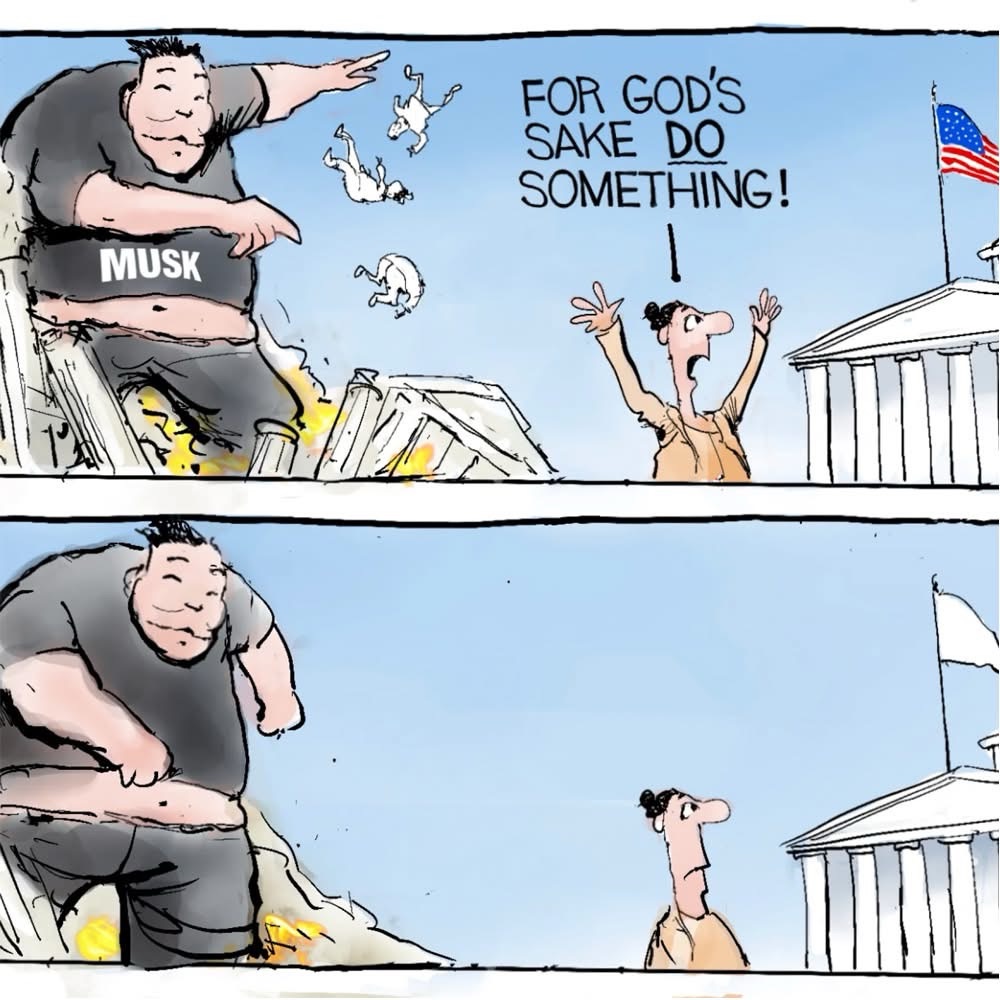
I forced myself to check current events today so I could write this post. Here are some stories that caught my attention. Trump is talking to foreign leaders on insecure phones. He is still naming stunningly inappropriate people to important government posts. He’s threatening neighboring countries with ridiculous tariffs. He’s threatening to end civil service protection for government employees. He has given Elon Musk free rein to create chaos. And he appears to have gotten away with all the crimes he was indicted for. Is it any wonder that I want to go back in time and escape real life?

Today’s reads:

Michael Collins at USA Today: ‘Dangerous territory’: Trump’s unsecured calls with world leaders concern foreign policy experts.

Donald Trump had been the president-elect for just two days when he reportedly spoke by phone with Russian President Vladimir Putin on Nov. 7.

On the call, Trump advised the Russian president not to escalate the war with Ukraine and reminded him of the U.S.’s military presence in Europe, according to an account first published by The Washington Post, which cited multiple sources familiar with the conversation.

The Kremlin, however, denied that meeting had ever taken place. “Pure fiction,” Kremlin spokesperson Dmitry Peskov insisted.

Normally, the U.S. would be able to document that the call had happened. But not this time.

That’s because the State Department, which traditionally helps coordinate phone calls between incoming presidents and world leaders, has been shut out of Trump’s calls with foreign dignitaries.

That means the conversations were not held over secure phone lines, no State Department staff were available to offer guidance on the nuances on foreign policy and no official interpreters were on hand to overcome language barriers that can sometimes lead to confusion or misunderstandings about exactly what was said.

For U.S. foreign policy analysts, Trump’s calls with Putin and other world leaders after his victory over Vice President Kamala Harris in the Nov. 5 election are cause for alarm.

“We’re entering a dangerous territory of telephone games, where Trump is going to have private chats with foreign leaders, and they’re going to tell their teams one thing, and Trump is going to tell our national security team another,” said Brett Bruen, a former diplomat who worked in the White House under President Barack Obama

Different interpretations of private conversations stemming from translation difficulties or misunderstandings could not only sow confusion, Bruen said, but also could trigger an international crisis.

Trump’s transition team did not respond to questions about why he has not involved the State Department in his calls with foreign leaders….

Historically, the State Department has helped coordinate phone calls between incoming presidents and foreign leaders because it’s important to ensure during the transition that the government is always speaking with one voice, particularly on matters of national security and foreign policy, according to the nonpartisan Center for Presidential Transition.

But since his first term as president, Trump has openly expressed suspicion and resentment of what he derisively calls “the Deep State,” the government bureaucrats who he argues worked secretly behind the scenes to sabotage his agenda.

Cozy Christmas, Kajsa Hallström

By Kajsa Hallström

Read more details at the USA Today link. Trump is behaving like an enemy of the U.S., so why does he have the right to be president? This is so fucked up.

Trump has now partially agreed to some of the transition rules. The Washington Post: Trump signs transition agreement with Biden, but it lacks key guardrails.

The Trump transition team said Tuesday it had reached an agreement with the Biden White House to start coordinating the handoff of federal agencies to the new administration.

But the Trump team is still refusing to accept several typical trappings of the presidential transition process,including federal funding, equipment and office space — as well as official government background and security checks for his transition staff. The agreement does not include an ethics pledge for the president-elect, required by the Presidential Transition Act, stating that Trump will avoid conflicts of interest while in office.

An ethics plan covering the transition staff was signed by the Trump team and posted on the website of the General Services Administration, which coordinates the handover of hundreds of agencies.

The agreement clears the way for Trump-appointed “landing teams” to start entering government offices to receive briefings from career staff about the operations of hundreds of federal agencies, a ritual of presidential transitions. By turning down about $7 million in federal funding for the transition, Trump will be able to raise unlimited privatedonations for his transition.

The long delay in signing the transition deal — which was signed by Vice President Kamala Harris before the election in September — does not mean that Trump’s transition will now conform to those of his predecessors. The president-elect refused to abide by key requirements aimed at transparency and security.

The limited agreement also reflects a deep distrust the president-elect holds toward the federal governmentfor stymieing his first-term agenda or in some cases bolstering legal cases against him. Trump and his political alliespledged during the campaign to radically downsize and restructure the federal workforce of 2.2 million.

Trump’s transition team has not signed a memorandum of understanding with the Justice Department, for instance, that would allow the agency to conduct background checks and intensive reviews for the security clearances that many of Trump’s landing teams need for the Biden administration to legally share classified intelligence and national defense briefings. The briefings will only be given to Trump transition officials who have a proper security clearance and have signed a nondisclosure agreement, according to the White House.

Some ethics guardrails were put in place with the White House. Transition officials are prohibited, for instance, from using information they learn in their new roles for their personal benefit.

But the plan does not include language about the president-elect’s own ethical conduct during the transition, a new provision of the Presidential Transition Act added by Congress after ethical issues dogged the first Trump administration.

Again, why was this evil man even allowed to run for office? Read more excuses at the WaPo link.

The New York Times: Trump Picks Stanford Doctor Who Opposed Lockdowns to Head N.I.H.

President-elect Donald J. Trump said on Tuesday evening that he had selected Dr. Jay Bhattacharya, a Stanford physician and economist whose authorship of an anti-lockdown treatise during the coronavirus pandemic made him a central figure in a bitter public health debate, to be the director of the National Institutes of Health.

“Together, Jay and RFK Jr. will restore the NIH to a Gold Standard of Medical Research as they examine the underlying causes of, and solutions to, America’s biggest health challenges, including our Crisis of Chronic Illness and Disease,” Mr. Trump wrote on social media, referring to Robert F. Kennedy Jr., his choice to lead the N.I.H.’s parent agency, the Department of Health and Human Services.

If confirmed by the Senate, Dr. Bhattacharya would lead the world’s premier medical research agency, with a $48 billion budget and 27 separate institutes and centers, each with its own research agenda, focusing on different diseases like cancer and diabetes. Dr. Bhattacharya, who is not a practicing physician, has called for overhauling the N.I.H. and limiting the power of civil servants who, he believes, played too prominent a role in shaping federal policy during the pandemic.

He is the latest in a series of Trump health picks who came to prominence during the coronavirus pandemic and who hold views on medicine and public health that are at times outside the mainstream. The president-elect’s health choices, experts agree, suggest a shake-up is coming to the nation’s public health and biomedical establishment.

Dr. Bhattacharya is one of three lead authors of the Great Barrington Declaration, a manifesto issued in 2020 that contended that the virus should be allowed to spread among young healthy people who were “at minimal risk of death” and could thus develop natural immunity, while prevention efforts were targeted to older people and the vulnerable.

Through a connection with a Stanford colleague, Dr. Scott Atlas, who was advising Mr. Trump during his first term, Dr. Bhattacharya presented his views to Alex M. Azar II, Mr. Trump’s health secretary. The condemnation from the public health establishment was swift. Dr. Bhattacharya and his fellow authors were promptly dismissed as cranks whose “fringe” policy prescriptions would lead to millions of unnecessary deaths.

Read more about this awful person at the NYT link.

Christopher Denise

By Christopher “Denise

Politico: Trump taps financier and donor Phelan to be Navy secretary.

President-elect Donald Trump has selected businessman John Phelan as his nominee to lead the Navy, according to a statement released on Tuesday night.

“It is my great honor to announce John Phelan as our next United States Secretary of the Navy! John will be a tremendous force for our Naval Servicemembers, and a steadfast leader in advancing my America First vision,” Trump wrote. “He will put the business of the U.S. Navy above all else.”

Trump’s pick of Phelan, after choosing Army National Guard Veteran and former Fox News host Pete Hegseth to lead the Defense Department, is a sign that the incoming administration could prioritize disruptors coming into the agency instead of long-tenured bureaucrats. Trump is also eyeing businessman Steve Feinberg and defense investor Trae Stephens as the Pentagon’s No. 2, The Wall Street Journal reported.

Phelan, who leads the private investment firm Rugger Management and once handled Michael Dell’s investments, was a major donor to the Trump campaign and reportedly hosted the president-elect at his Aspen, Colorado, home this summer where Trump went on a profanity-laced tirade about immigration and warned that the election could be the last the United States ever had if Vice President Kamala Harris had won.

And get this: Phelan has no military experience. Trump also consider Ronny Jackson for the job!

Politico: Kash Patel and Cliff Sims are jostling for the deputy director gig at the CIA.

Two Trump transition insiders, Cliff Sims and Kash Patel, are angling to be deputy director of the CIA — and angering others who feel they’re using their roles on the transition to undermine any would-be contenders, according to three people familiar with the matter.

The No. 2 position at the powerful spy agency is one of the most sought-after national security posts that remains unfilled. It does not require Senate confirmation — a concern for other roles, like FBI director, Patel is said to be interested in — but wields enormous influence inside the U.S. intelligence community.

The frustration toward Sims, the former White House and ODNI communications strategist, and Patel, the firebrand former House Intelligence Committee staffer and Pentagon official, stems from the fact that both are helping the transition interview candidates for the CIA role, said the three people, all of whom were granted anonymity to share details on the transition.

“The issue that a lot of us have is that these people are involved in staffing national security jobs, and at the same time they’re also promoting themselves for the same roles,” said one of the people.

There is also a concern that Patel in particular is fighting dirty. A second person said there was suspicion Patel was leaking damaging stories on Sims, citing a recent story on a blow-up Trump had after being reminded Sims wrote a tell-all memoir in 2019 after leaving the White House.

Trump has also put Elon Musk in a prominent position in his transition, and now we are hearing from Musk’s mother, who seems even stupider than her son. 

CNN: Elon Musk publicized the names of government employees he wants to cut. It’s terrifying federal workers.

When President-elect Donald Trump said Elon Musk and Vivek Ramaswamy would recommend major cuts to the federal government in his administration, many public employees knew that their jobs could be on the line.

Now they have a new fear: becoming the personal targets of the world’s richest man – and his legions of followers.

By Anna Matveeva

By Anna Matveeva

Last week, in the midst of the flurry of his daily missives, Musk reposted two X posts that revealed the names and titles of people holding four relatively obscure climate-related government positions. Each post has been viewed tens of millions of times, and the individuals named have been subjected to a barrage of negative attention. At least one of the four women named has deleted her social media accounts.

Although the information he posted on those government positions is available through public online databases, these posts target otherwise unknown government employees in roles that do not deal directly with the public.

Several current federal employees told CNN they’re afraid their lives will be forever changed – including physically threatened – as Musk makes behind-the-scenes bureaucrats into personal targets. Others told CNN that the threat of being in Musk’s crosshairs might even drive them from their jobs entirely – achieving Musk’s smaller government goals without so much as a proper review.

“These tactics are aimed at sowing terror and fear at federal employees,” said Everett Kelley, president of the American Federation of Government Employees, which represents more than 800,000 of the 2.3 million civilian federal employees. “It’s intended to make them fearful that they will become afraid to speak up.”

This isn’t new behavior for Musk, who has often singled out individuals who he claims have made mistakes or stand in his way. One former federal employee, previously targeted by Musk, said she experienced something very similar.

“It’s his way of intimidating people to either quit or also send a signal to all the other agencies that ‘you’re next’,” said Mary “Missy” Cummings, an engineering and computer science professor at George Mason University, who drew Musk’s ire because of her criticisms of Tesla when she was at the National Highway Traffic Safety Administration.

Read the rest at the link.

The Independent: Elon Musk’s mom says it’s ‘degrading’ to call her son ‘wealthy’: He’s ‘the genius of the world.’

The mother of Elon Musk, the world’s richest man, stopped by Fox Business on Monday to scold those who call her son “wealthy,” claiming it was “degrading” and that she would prefer he be referred to as the “genius of the world.”

With her son now president-elect Donald Trump’s “First Buddy” and in charge of the so-called Department of Government Efficiency (DOGE), Maye Musk sat down with Fox Business anchor Stuart Varney to gush over her 53-year-old child’s accomplishments.

Besides talking about the younger Musk’s companies SpaceX, Tesla and X (formerly Twitter), she also dished on how well her son and Trump get along, especially since the election.

“I’ve seen them together, but very shortly. I live in New York, and they’re in Mar-a-Lago or at a SpaceX launch, and they just seem to be having fun. A lot of fun,” she declared, adding: “And it’s nice for both of them to have fun, and [Elon] really respects him a lot and is really happy that there’s a future for America now.”

She also claimed that it would be “very easy” for her son and DOGE co-chair Vivek Ramaswamy to slash the federal workforce and cut spending, citing Elon Musk’s severe and immediate layoffs when he purchased Twitter in 2022.

Seemingly parroting her son’s talking points, she absolutely trashed the press. “What they call mainstream media, but I call them dishonest Democrat media, they will be trying to break up the relationship. They will be hating everything,” she said. “And I told that to Elon, he said he expects that because they were dishonest before the election.”

Whatever.

5ac24f61fb15040257a9253051d0574a

Artist unknown

There’s just a tiny bit of possible good news from former federal prosecutor Barbara McQuade at MSNBC: How Jack Smith quietly ensured Trump’s Jan. 6 case isn’t actually going anywhere.

Special counsel Jack Smith filed a motion with the trial court in the District of Columbia to dismiss the Jan. 6 election interference case against President-elect Donald Trump on Monday, kicking up a flurry of questions — namely, why would the special counsel pull the plug? Smith later filed a motion with the 11th Circuit Court of Appeals to dismiss the appeal of the government documents case against Trump. While Trump has vowed to fire Smith, why would the special counsel do something to make it easy for Trump, by dismissing the cases himself before Trump is sworn in to office in January? Is this simply an example of what historian Timothy Snyder calls “obeying” an authoritarian in advance?

Not at all. In fact, this move could be an effort to keep the cases alive in the long term. An interesting tell in each motion is Smith’s request to dismiss the cases “without prejudice.” That means that the cases can be filed again. By dismissing the cases now on his own terms, Smith blocks Trump’s attorney general from dismissing the cases for all time.

In addition, by filing his motions pre-emptively, Smith was able to explain his reasons for dismissing the case, rather than allowing Trump’s future AG to mischaracterize them. According to Smith, he was dismissing the case not because of the merits or strength of the cases, but because he had to. As Smith explains, the DOJ’s Office of Legal Counsel, whose opinions are “binding” on the special counsel, has concluded that a sitting president may not be indicted or criminally prosecuted under the Constitution. OLC reasoned that criminal charges would make it impossible for a president to carry out his constitutional duties in light of the distraction of preparing a criminal defense, the public stigma that would hamper his leadership role and the obstacles prison would impose on his ability to perform his duties.

But Smith was careful to note that this relief from criminal prosecution is “temporary,” and ends when the president leaves office. Smith cites OLC as concluding that this form of immunity for a sitting president “would generally result in the delay, but not the forbearance, of any criminal trial” That is, Trump gets a reprieve, but only during his term in office.

Of course, as in most criminal cases, the statute of limitations here is five years from the date of the last act alleged in the indictments. In the Jan. 6 case, the last alleged conduct occurred in January 2021, so the deadline for filing new charges would typically be January 2026. In the documents case, in which the last act occurred in August 2022, the statute will expire in August 2027. Both dates will arrive well before Trump’s term ends. But Smith’s brief contains another tell when he writes that OLC has “noted the possibility that a court might equitably toll the statute of limitations to permit proceeding against the President once out of office.” That is, a court could call a timeout, pausing it on Trump’s inauguration day on Jan. 21, 2025, and then restarting the clock when Trump leaves office in 2029. That would give prosecutors plenty of time to refile charges. Certainly, the tolling issue would be litigated, but by dismissing the case now, Smith preserves this issue for future prosecutors to argue.

Read the rest at MSNBC.

That’s it for me today. I don’t know how I even got through those articles. I’m going back into hibernation now.


Lazy Caturday Reads

Good Afternoon!!

5d4791cf54ae9bdb99f441e05e1f50f3Yesterday was the 61st anniversary of the assassination of President John F. Kennedy on November 22, 1963. I was 15 years old, a junior in high school. I still see that day as a defining event in my life. It was my first real experience of death, and I recall how difficult it was for me to comprehend and accept that our brilliant and charismatic president was really gone forever. It was my first lesson in how quickly dramatic events can change our understanding of the world.

Everything was different after that. If Kennedy had lived, he very likely would have won a second term, and perhaps the course of the Vietnam War could have been different. Perhaps Richard Nixon would not have made his comeback and been elected president in 1968. We can’t know what would have happened, but I think that if Kennedy could have completed a second term, our history would have been very different.

Of course Lyndon Johnson did complete many of Kennedy’s projects like the Civil Rights Acts of 1964 and 1968, the Voting Rights Act of 1965, and the Medicare and Medicaid Act of 1965. Kennedy’s tragic death and Johnson’s legislative experience likely helped these laws get passed. But there was something about Jack Kennedy that inspired and energized the country, and that energy was lost after his death–especially after Johnson’s failure in Vietnam and his stubbor refusal to change course.

It’s the weekend and I need a break from the current madness in politics, so I’m going to share a few reads about that long ago day in 1963.

Heather Cox Richardson at Letters from an American: November 22, 2024.

It was November 22, 1963, and President John F. Kennedy and First Lady Jacqueline Kennedy were visiting Texas. They were there, in the home state of Vice President Lyndon Baines Johnson and his wife, Lady Bird, to try to heal a rift in the Democratic Party. The white supremacists who made up the base of the party’s southern wing loathed the Kennedy administration’s support for Black rights.

That base had turned on Kennedy when he and his brother, Attorney General Robert F. Kennedy, had backed the decision of the U.S. Court of Appeals for the Fifth Circuit in fall 1962 saying that army veteran James Meredith had the right to enroll at the University of Mississippi, more commonly known as Ole Miss. 

When the Department of Justice ordered officials at Ole Miss to register Meredith, Mississippi governor Ross Barnett physically barred Meredith from entering the building and vowed to defend segregation and states’ rights. 

So the Department of Justice detailed dozens of U.S. marshals to escort Meredith to the registrar and put more than 500 law enforcement officers on the campus. White supremacists rushed to meet them there and became increasingly violent. That night, Barnett told a radio audience: “We will never surrender!” The rioters destroyed property and, under cover of the darkness, fired at reporters and the federal marshals. They killed two men and wounded many others. 

Susan Herbert (after The Milkmaid by Johannes Vermeer)

By Susan Herbert (after The Milkmaid by Johannes Vermeer)

The riot ended when the president sent 20,000 troops to the campus. On October 1, Meredith became the first Black American to enroll at the University of Mississippi.

The Kennedys had made it clear that the federal government would stand behind civil rights, and white supremacists joined right-wing Republicans in insisting that their stance proved that the Kennedys were communists. Using a strong federal government to regulate business would prevent a man from making all the money he might otherwise; protecting civil rights would take tax dollars from white Americans for the benefit of Black and Brown people. A bumper sticker produced during the Mississippi crisis warned that “the Castro Brothers”—equating the Kennedys with communist revolutionaries in Cuba—had gone to Ole Miss. 

That conflation of Black rights and communism stoked such anger in the southern right wing that Kennedy felt obliged to travel to Dallas to try to mend some fences in the state Democratic Party. 

How the day began:

On the morning of November 22, 1963, the Dallas Morning News contained a flyer saying the president was wanted for “treason” for “betraying the Constitution” and giving “support and encouragement to the Communist inspired racial riots.” Kennedy warned his wife that they were “heading into nut country today.”

But the motorcade through Dallas started out in a party atmosphere. At the head of the procession, the president and first lady waved from their car at the streets “lined with people—lots and lots of people—the children all smiling, placards, confetti, people waving from windows,” Lady Bird remembered. “There had been such a gala air,” she said, that when she heard three shots, “I thought it must be firecrackers or some sort of celebration.”

The Secret Service agents had no such moment of confusion. The cars sped forward, “terrifically fast—faster and faster,” according to Lady Bird, until they arrived at a hospital, which made Mrs. Johnson realize what had happened. “As we ground to a halt” and Secret Service agents began to pull them out of the cars, Lady Bird wrote, “I cast one last look over my shoulder and saw in the President’s car a bundle of pink, just like a drift of blossoms, lying on the back seat…Mrs. Kennedy lying over the President’s body.” 

As they waited for news of the president, LBJ asked Lady Bird to go find Mrs. Kennedy. Lady Bird recalled that Secret Service agents “began to lead me up one corridor, back stairs, and down another. Suddenly, I found myself face to face with Jackie in a small hall…outside the operating room. You always think of her—or someone like her—as being insulated, protected; she was quite alone. I don’t think I ever saw anyone so much alone in my life.” 

After trying to comfort Mrs. Kennedy, Lady Bird went back to the room where her husband was. It was there that Kennedy’s special assistant told them, “The President is dead,” just before journalist Malcolm Kilduff entered and addressed LBJ as “Mr. President.” 

There’s a bit more at the link.

Colin Moynihan at The New York Times: Desperate Bid to Save J.F.K. Shown in Resurfaced Film.

Nearly 61 years ago, Dale Carpenter Sr. showed up on Lemmon Avenue in Dallas, hoping to film John F. Kennedy as his motorcade passed. But the president’s car had already gone by, and he recorded only some of the procession, including the back of a car carrying Lyndon Johnson and the side of the White House press bus.

So Mr. Carpenter, a businessman from Texas, rushed to Stemmons Freeway, several miles farther along the motorcade route, to try again.

There, just moments after Kennedy had been shot, he captured an urgent and chaotic scene. The president’s speeding convertible. A Secret Service agent in a dark suit sprawled on the back. Jacqueline Kennedy, in her pink Chanel outfit, little more than a blur.

Kennedy himself could not be glimpsed. He had collapsed and was close to death.

For decades Mr. Carpenter’s 8-millimeter snippets of what transpired in Dallas on Nov. 22, 1963, have been a family heirloom. When he died in 1991 at 77, the reel, which included footage of his twin boys’ birthday party, passed to his wife, Mabel, then to a daughter, Diana, and finally to a grandson, James Gates.

62711fb6e313413ee56d105cb9071dc8Later this month, the Kennedy footage is to be put up for sale in Boston by RR Auction, the latest in a line of assassination-related images to surface publicly after decades in comparative obscurity. The auction house says it is the only known film of the president’s car on the freeway as it sped from Dealey Plaza, the site of the shooting, to Parkland Memorial Hospital, where Kennedy was pronounced dead at 1 p.m.

Footage shot by Abraham Zapruder, a bystander, has long provided disturbing images of the assassination itself, one of the most traumatic and closely examined events in American history. Mr. Carpenter’s film shows what happened before and just after the Zapruder film was shot. The first section is a prosaic scene of the president’s motorcade; the second, a race for help imbued with all the uncertainty that filled the moments after the gunshots.

Though Mr. Carpenter’s film, just over a minute long, contains nothing likely to affect the debate over Kennedy’s death, several experts said it is still an important addition to the mosaic of images that recorded that day in Dallas.

Paul Singer at WGBH: A newly uncovered memo shows how the JFK assassination reverberated in Boston.

This story is about a trip I took to look at the files of Freedom House, and the four remarkable pages I found in those files.

Freedom House was the community-based, Black-led nonprofit that helped the city of Boston sell the Washington Park plan to Roxbury’s Black residents. And the files that Freedom House kept of that time period now sit in nearly 90 boxes in the Northeastern University Archives and Special Collections.

I called over and the archives folks warmly welcomed me to browse a small sample of the Freedom House collection. When I arrived, they had set aside two banker’s boxes full of numbered file folders.

It was in box 32, folder 1111 that I struck gold. Or, more accurately, yellow.

Four pages of yellow notepad paper, filled with cursive handwriting. It was a report about a special conference called to address the “Low Income Housing Crisis” in Boston on Nov. 22, 1963.

That date rang a bell. Wasn’t that the day JFK was shot?

It was.

And the memo documents how that tragedy played out in real time 1,700 miles from Dallas’ Dealey Plaza.

5973c13891e6f981a8219b45ab4f2511The meeting was to address the issue of how urban renewal in 1960s Boston was hurting the city’s poor and people of color, especially the need for low-income housing. When the group broke for lunch the news of Kennedy’s death reached them.

In extraordinarily poetic terms, McGill writes that the group tried to continue with its important work of addressing low-income housing needs, but it was difficult to concentrate.

“… people were sobbing uncontrollably and our spirits kept foundering under the awful waiting vigil our hearts were keeping at the side of the president.”

When Kennedy’s death was confirmed, McGill wrote how the collective weeping grew. She witnessed a priest across the room as his face “crumpled helplessly.”

The attendees abandoned any effort to continue their work, and a closing prayer was offered.

“Charles Abrams was scheduled to deliver a special address at the close of the conference … but he had no heart to give the speech he had prepared. He talked about the tragedy and its implications instead — very briefly. Dr. Barth closed the conference with special prayers for the President, the bereaved family, and for the healing of the sickness of violence and hate in our country.”

Standing in a library basement with these pages in my hand, I was struck by how much that prayer still rings true 61 years later.

And Boston still has a low-income housing crisis.

Trump’s Awful Nominations.

Steven Contorno and Kristen Holmes at CNN: Fox hosts, cable news regulars and entertainment pros: Trump is casting a made-for-TV Cabinet.

A common thread weaves through many of Donald Trump’s picks for his incoming administration, a quality the president-elect values as highly as loyalty and perhaps even more than conventional qualifications: a flair for television.

He has plucked two Fox News stars from their airwaves – Sean Duffy for Transportation secretary and Pete Hegseth to lead the Pentagon. For the agency overseeing Medicare and Medicaid, Trump has turned to Dr. Mehmet Oz, the celebrity physician known for his health show that aired for 13 seasons. His pick for the Department of Education, meanwhile, is Linda McMahon, who co-founded and built a professional wrestling and entertainment empire alongside her husband.

Trump’s choice for ambassador to Israel, Mike Huckabee, had a six-year run hosting a Fox News show. Tulsi Gabbard, his selection for director of national intelligence, was a contributor on the conservative network after she left Congress and once subbed for its former primetime host Tucker Carlson.

New-Folk-Art-10-280x280As a former reality TV star, Trump is deeply attuned to the power of the small screen. His selection process has centered on people who can not only articulate his message but also defend him in the kind of high-stakes, combative settings that define modern media.

His transition team, operating in a war-room style setup at Mar-a-Lago, has embraced this focus. On large screens, his advisers play video clips of potential appointees’ media performances, including footage of them defending Trump but also their past criticism of him, underscoring the centrality of media strategy in his decision-making.

The outcome is a made-for-TV Cabinet who he thinks will sell his agenda to Americans and defend the administration against media scrutiny on their networks. Meanwhile, in some departments, the expectation is that deputies and top staff will oversee the day-to-day operations.

Another comment thread: incompetence and lack of relevant experience.

Ryan Bort and Asawin Suebsaeng at Rolling Stone: Team Trump Is Furious Hegseth Hid Sex Assault Claim: ‘This Is the F–king Pentagon!’

Matt Gaetz may have withdrawn his name from consideration to become Donald Trump’s attorney general over sexual misconduct accusations — but alleged sexual abuser Pete Hegseth is still fighting to persuade Republican senators to confirm him to one of the most powerful positions in government.

Hegseth was already facing an uphill confirmation battle to become the Secretary of Defense given that he is best known as a Fox News host with no government experience. The emergence of a disturbing sexual assault accusation against him from 2017 isn’t helping matters — and Trump’s team is pissed. 

According to four sources familiar with the situation, some top Trump transition officials and others close to the president-elect have been puzzled, if not infuriated, that Hegseth did not preemptively inform them of the allegations against him before they made their way into the press — most notably through the publication of a police report detailing the alleged incident at a hotel in Monterey, California.

“How did he not know? Why didn’t he tell us?” a source close to Trump says. “Pete wasn’t interviewing for a job at McDonald’s; this is the fucking Pentagon! … Even if the allegations are fake, it doesn’t matter because he was supposed to tell us what we needed to know so we could be better prepared to defend him — not learn about it from the media.”

There was, the sources say, a vetting process for the Hegseth pick, but it did not uncover these details, nor was it especially invasive. Trump’s transition team did not sign agreements with the White House or the Justice Department to allow the FBI to conduct background checks on the president-elect’s nominees.

“When we ask, ‘Is there anything else we need to know about?’ that is usually a good time to mention a police report,” a Trump adviser says. “Obviously he remembered that this all happened and there is no way — I don’t think — he could have believed this wouldn’t come out once he got nominated.”

Why haven’t they withdrawn Hegseth’s name yet?

Liam Archacky at The Daily Beast: Now GOP Senators Want Another Trump Nominee’s Full FBI File.

Some Republican senators are privately eager to see the FBI file on Tulsi Gabbard, whose history of alignment with Russia has drawn concern in the wake of her nomination for the post of director of national intelligence, reported Punchbowl News.

Although Gabbard has drawn headlines for previously echoing Russian talking points on topics like the wars in Ukraine and Syria, it’s her support for leaker turned Russian citizen Edward Snowden that is allegedly most troubling for some lawmakers.

c9ddb4a8dffbc0af9e0af38c8ed8abaeThe former Democratic congresswoman openly pushed for the U.S. to “drop all charges” against Snowden in a 2020 bill that was co-sponsored by former Republican Rep. Matt Gaetz, another one-time Trump cabinet nominee who was yesterday forced to withdraw his name amid sexual misconduct allegations he denies.

Lawmakers, including members of the Senate Intelligence Committee, which is responsible for processing Gabbard’s nomination, reportedly find Gabbard’s support for Snowden—a former NSA employee who leaked state secrets—especially concerning because of the danger his actions posed to national security, reported Punchbowl.

Although FBI file reviews are standard for presidential cabinet candidates, Punchbowl reported that the Republican senators’ interest in doing so seems to suggest that they believe there could still be unknown information in the file—such as potential foreign contacts.

The New York Times: Trump Picks Key Figure in Project 2025 for Powerful Budget Role.

President-elect Donald J. Trump on Friday picked a key figure in Project 2025 to lead the Office of Management and Budget, elevating a longtime ally who has spent the last four years making plans to rework the American government to enhance presidential power.

The would-be nominee, Russell T. Vought, would oversee the White House budget and help determine whether federal agencies comport with the president’s policies. The role requires Senate confirmation unless Mr. Trump is able to make recess appointments.

The choice of Mr. Vought would bring in a strongly ideological figure who played a pivotal role in Mr. Trump’s first term, when he also served as budget chief. Among other things, Mr. Vought helped come up with the idea of having Mr. Trump use emergency power to circumvent Congress’s decision about how much to spend on a border wall.

Mr. Vought was a leading figure in Project 2025, the effort by conservative organizations to build a governing blueprint for Mr. Trump should he take office once again. Mr. Trump tried to distance himself from the effort during his campaign, but he has put forward people with ties to the project for his administration since the election.

Mr. Vought’s role in Project 2025 was to oversee executive orders and other unilateral actions that Mr. Trump could take during his first six months in office, with the goal of tearing down and rebuilding executive branch institutions in a way that would enhance presidential power.

Joyce Vance at Civil Discourse: Project 2025: It’s On (Predictably).

Before Bill Barr became Donald Trump’s third attorney general, he circulated a memo that was more or less an audition tape for the job he ultimately got. That memo reached both the White House Counsel’s Office and Main Justice. In it, Barr argued in favor of what had previously been a fringe theory of a powerful “unitary executive,” in other words, a president able to consolidate power at the expense of the other two branches as a very powerful leader. The writing was on the wall with Barr’s selection, although the Supreme Court cast it in stone when the conservative majority signed off on the view that presidents couldn’t be criminally prosecuted as long as the crimes they committed fell under the umbrella of official acts. Even Bill Barr would have never dreamed of arguing the president could use SEAL Team Six to assassinate a political rival and walk away with no consequences. Now, the Supreme Court says it’s so.

aaee17a61c6f7ac30e4f846adb5a37ddThat’s the context that’s essential for understanding Trump’s Friday evening “nomination” (if you can call a social media announcement that) of Russell Vought to lead the Office of Management and Budget (OMB). Vought is a proponent of a powerful executive and of restructuring our institutions to facilitate a government that veers toward the monarchical and away from the democratic. He was one of only four out of forty-four of Trump’s cabinet officials from his first administration who said they’d support him this time.

Vought entered OMB at the start of Trump’s first administration and was confirmed as its director in July 2020. In the archive of his official biography, his role is described like this: “he is responsible for overseeing the implementation of the President’s policy, management and regulatory agendas across the Executive Branch.” OMB is a powerful agency, and its director is, in a very real sense, a president’s right-hand man. Among the job experience Vought touts in his bio are his seven years as Vice President of Heritage Action for America, a sister organization to the Heritage Foundation, which, as readers of Civil Discourse are well aware, is where Project 2025 was incubated….

Now Vought, godfather to Project 2025 and author of its chapter on OMB, will be in charge of administering policy in the next Trump Administration. So much for Trump’s efforts—back when reporting about Project 2025 led to enormous public concern and seemed poised to shift the tide against him— to distance himself from the project. At the time, he disavowed any knowledge of or agreement with the plan, but the claims felt hollow.

Read much more about Vought at Civil Discourse.

More Relevant Reads

David H. Graham at The Atlantic: Pam Bondi’s Comeback.

USA Today: Trump considers ex-intelligence chief Richard Grenell for Ukraine post, sources say.

The Washington Post: Trump plans to fire Jack Smith’s team, use DOJ to probe 2020 election.

The New York Times: Elon Musk Gets a Crash Course in How Trumpworld Works.

The New Republic: Elon Musk Is Now Cyberbullying Government Employees.

Jonathan Last at The Bulwark: Be Not Afraid. Trump and MAGA want to frighten you. Don’t let them.


Finally Friday Reads: The Chaos Kakistocracy

“Jobs, jobs, Jobs!” John Buss, @johnbuss.bsky.social

Good Day, Sky Dancers!

Regime changes haven’t happened yet, but businesses are already planning major layoffs, freezes, and price increases.  That signals a type of economy we haven’t seen for a while. It’s called stagflation.  For those of us who lived through that, you’ll remember the pain that went from the Nixon years to the Reagan years. It includes painful unemployment and rabid inflation. We just have to hope that the plans to take political control of the Fed don’t come to fruition. The current Fed Chair says he will not resign.  That doesn’t even include the conversation about the massive removal of Federal workers and the deportation of the migrants that would have a devastating impact on the farm and most service industries.

Did I use enough citations for you?   Let’s look at a few of them but I’ll get to the bottom line.  Pay off all your debt as much as possible. Don’t take on anything that requires financing. Interest rates will go up as inflation returns.  The entire thing is a vicious circle we learned much about in the 1970s. The 1980s taught us that tax cuts for the rich only drive up the deficit.  Get ready for a repeat of that on steroids.

Traditional Republicans have always been migrant-friendly.  However, that’s back when they were more focused on getting the business donors enriched and less worried about things like “poisoning the blood” and blaming them for statistically nonexistent problems, like crime and eating pets.  However, that was before the rise of the Christofascists and the NAZIs ushered in MAGA.

The Brookings Institute reviewed recent peer-reviewed research in economics in September that shows exactly how devastating the cost of these deportations will be.  That does not even cover the psychological and emotional trauma to communities forced to witness the round-up of their neighbors to massive concentration camps.  This is a must-read. Chloe East is the researcher.

Increased deportation is associated with poorer economic outcomes for US-born workers

Across multiple studies, economists have found that once SC is implemented, the number of foreign-born workers in that county declines and the employment rate among U.S.-born workers also declines. My research with Annie Hines, Philip Luck, Hani Mansour, and Andrea Velásquez finds that when half a million immigrants are removed from the labor market because of enforcement (due to deportations and indirectly due to chilling effects), this reduces the number of U.S.-born people working by 44,000.

Why do deportations hurt the economic outcomes of U.S.-born workers? The prevailing view used to be that foreign-born and U.S.-born workers are substitutes, meaning that when one foreign-born worker takes a job, there is one less job for a U.S.-born worker. But economists have now shown several reasons why the economy is not a zero-sum game: because unauthorized immigrants work in different occupations from the U.S.-born, because they create demand for goods and services, and because they contribute to the long-run fiscal health of the country.

First, unauthorized immigrant workers and U.S.-born workers work in different types of jobs. Figure 1 shows the percentage of unauthorized immigrant workers, authorized immigrant workers, and U.S.-born workers that are in each of the 15 most common occupations among unauthorized immigrants.

It is clear that unauthorized immigrants take low-paying, dangerous and otherwise less attractive jobs more frequently than both U.S.-born workers and authorized immigrant workers. For example, almost 6% of unauthorized immigrants work as housekeepers, construction laborers, or cooks, compared to about 2% of authorized immigrant workers and 1% of U.S.-born workers (See Figure 1).

Occupations common among unauthorized workers, such as construction laborers and cooks, are essential to keep businesses operating. Deporting workers in these jobs affects U.S.-born workers too. For example, when construction companies have a sudden reduction in available laborers, they must reduce the number of construction site managers they hire. Similarly, local restaurants need cooks to stay open and hire for other positions like waiters, which are more likely to be filled by U.S.-born workers.

Caregiving and household service jobs are also common among unauthorized immigrants. The availability and cost of these services in the private market greatly impacts whether people can work outside the home. My research with Andrea Velásquez and new research by Umair Ali, Jessica Brown and Chris Herbst find that Secure Communities impacted the childcare market—the supply of childcare workers fell. This led to a reduction in the number of college-educated mothers with young children working in the formal labor market.

You’ll notice women bear the brunt of this policy, but it goes nicely into the plan to get women back into the kitchen.  Please read about the impact of the deportation in 2008 that happened in South Carolina, called the SC Act or Secure Communities Act.  The details are gruesome but here’s the bottom line in a move to deport 400,000 people in a limited area.

While only people who were arrested had their immigration status checked under SC, the policy nonetheless impacted a large portion of immigrants. There were broad “chilling effects” of the policy that meant even people not targeted for deportation became fearful of leaving their house to do routine things like go to work. This is partly because the program did not only target serious criminals—the most serious criminal conviction for 79% of those deported was non-violent, including traffic violations and immigration offenses, and another 17% were not convicted of any crime.

An article that appeared in Mother Jones, also last September, details the devastation that will come if mass deportation happens. Isabela Diaz provides the analysis. “How Trump’s “Mass Deportation” Plan Would Ruin America. It would be brutal, costly, and likely illegal.”

This time around, they plan to invoke an infamous 18th-century wartime law, deploy the National Guard, and build massive detention camps—and intend on reshaping the federal bureaucracy to ensure it happens, drafting executive orders and filling the administration with loyalists who will quickly implement the policies. “No one’s off the table,” said Tom Homan, the former acting director of US Immigration and Customs Enforcement (ICE) under Trump. “If you’re in the country illegally, you are a target.”

If Trump and his allies have it their way, armed troops and out-of-state law enforcement would likely blitz into communities—knocking on doors, searching workplaces and homes, and arbitrarily interrogating and arresting suspected undocumented immigrants. The dragnet would almost certainly ensnare US citizens, too.

The nation’s undocumented immigrants grow and harvest the food we eat, construct our homes, and care for our young and elderly. They pay billions in taxes, start businesses that employ Americans, and help rebuild in the wake of climate disasters.

Not only would Trump’s plan rip families and communities apart, but it also would have devastating effects for years to come, including on US citizens who perhaps have overlooked how integral undocumented immigrants are to their everyday life. Trump frames immigration as an existential threat to the United States. He has said immigrants are “taking our jobs,” are “not people,” and are “poisoning the blood of our country.” The reality is that if his plan were implemented, American life as we know it would be ruined—even for those cheering for mass deportation.

This will be in the hands of many of the folks who say they’re Christians but miss a major cultural value in both the Old and New Testaments. I was raised Presbyterian, attended my best friend’s Lutheran Church, baptized my girls in the Methodist church, and taught a large number of Sunday School classes. I’m not unfamiliar with the Bible.  Matthew was my favorite of all.  Whenever you ask me about my favorite verses, I’ll quote the Beatitudes and anything from Matthew or James. Trump is an actor, and his piety display is just an act.

Matthew 25:31-40
Jesus says, “I was a stranger, and you welcomed me,” and “Truly, I say to you, as you did it to one of the least of these my brothers, you did it to me.”
Numbers 15:16
The Bible says, “I am the Lord, and I consider all people the same, whether they are Israelites or foreigners living among you”.

Here’s a study cited in the Mother Jones article.

According to a 2016 report by the Center for American Progress, deporting 7 million workers would “reduce national employment by an amount similar to that experienced during the Great Recession.” GDP would immediately contract by 1.4 percent, and, eventually, by 2.6 percent. In 20 years, the US economy would shrink nearly 6 percent—or $1.6 trillion. Trump’s plan would lead to a dire shortage of low-wage workers, which would “bring on a recession while reigniting inflation,” predicts Robert J. Shapiro, a former undersecretary of commerce in the Clinton administration.

The costs of mass deportation will be devastating. Here is another study on the costs from The American Immigration Council.

“Using data from the American Community Survey (ACS) along with publicly-available data about the current costs of immigration enforcement, this report aims to provide an estimation of what the fiscal and economic cost to the United States would be should the government deport a population of roughly 11 million people who as of 2022 lacked permanent legal status and faced the possibility of removal. We consider this both in terms of the direct budgetary costs—the expenses associated with arrest, detention, legal processing, and removal—that the federal government would have to pay, and in terms of the impact on the United States economy and tax base should these people be removed from the labor force and consumer market.

In terms of fiscal costs, we also include an estimate of the impact of deporting an additional 2.3 million people who have crossed the U.S. southern border without legal immigration status and were released by the Department of Homeland Security (DHS) from January 2023 through April 2024. We consider these fiscal costs separately because we don’t have more recent ACS data necessary to estimate the total net changes in the undocumented population past 2022, or the larger impact on the economy and tax base of removing those people, an impact that is therefore not reflected in this report.

In total, we find that the cost of a one-time mass deportation operation aimed at both those populations—an estimated total of is at least $315 billion. We wish to emphasize that this figure is a highly conservative estimate. It does not take into account the long-term costs of a sustained mass deportation operation or the incalculable additional costs necessary to acquire the institutional capacity to remove over 13 million people in a short period of time—incalculable because there is simply no reality in which such a singular operation is possible. For one thing, there would be no way to accomplish this mission without mass detention as an interim step. To put the scale of detaining over 13 million undocumented immigrants into context, the entire U.S. prison and jail population in 2022, comprising every person held in local, county, state, and federal prisons and jails, was 1.9 million people.

In order to estimate the costs of a longer-term mass deportation operation, we calculated the cost of a program aiming to arrest, detain, process, and deport one million people per year—paralleling the more conservative proposals made by mass-deportation proponents. Even assuming that 20 percent of the undocumented population would “self-deport” under a yearslong mass-deportation regime, we estimate the ultimate cost of such a longer operation would average out to $88 billion annually, for a total cost of $967.9 billion over the course of more than a decade. This is a much higher sum than the one-time estimate, given the long-term costs of establishing and maintaining detention facilities and temporary camps to eventually be able to detain one million people at a time—costs that could not be modeled in a short-term analysis. This would require the United States to build and maintain 24 times more ICE detention capacity than currently exists. The government would also be required to establish and maintain over 1,000 new immigration courtrooms to process people at such a rate.”

How’s that for dismantling the state and getting rid of Federal Workers?  It sounds like a bit of hypocrisy to me.

There’s that stagflation prognosis again.  That was the time of the economy in 1980 when I got my first house fixed rate loan at 16.7%, which was only one of three mortgage loans made that month at the largest Savings Loan in the heartland.  I worked there so they gave me a discount down to 12%.  Let’s see all those young people trying to buy their houses in that environment. My loan now is fixed at 3%.  Thank you, Obama!

One of the worst possible things that could happen is allowing politics back into Fed Policy.  This was a problem that was fixed by law because obvious presidential interference generally led to low interest rates that brought more inflation.  I have purposefully used a conservative-bent economist for this analysis. “The Economic Consequences of Political Pressure on the Federal Reserve.”  Elonia is hot for this pogrom. Tell me again, who thinks that Nepobaby is brainy?  Again, if you lived through the dread of Nixon’s years, you’ll remember the inflation he brought trying to get the Fed to loosen interest rates during a period of inflation.  It wasn’t pretty.

The data on personal interactions by themselves are at best a noisy measure of political interference with the Fed. For example, in a recession the president might be more likely to contact the Fed chair and ask them about their view on the economy. In this instance, personal interactions would increase, but not because they reflect political pressure.

To overcome this identification challenge, I exploit an increase in president–Fed interactions that plausibly took place purely for the purpose of influencing Fed policy and arguably had an impact on the stance of monetary policy. In his desire to be re-elected in 1972, Richard Nixon pressured Arthur Burns to ease monetary policy in 1971. Burns, a Republican and friend to Nixon, reportedly gave in to Nixon’s pressure.

A variety of external evidence corroborates this interpretation of the Nixon–Burns clash, including recordings from the “Nixon tapes” and entries in Arthur Burns’ personal diary. For example, Burns writes in his diary that Nixon urged him “start expanding the money supply and predicting disaster if this didn’t happen.” To support the interpretation that Burns eased policy in response to Nixon’s pressure, I show that Romer and Romer (2004) uncover easing shocks to monetary policy prior to Nixon’s re-election. I also present supporting evidence from the voting behavior of the FOMC.

I exploit the narrative around Nixon’s pressure in a structural vector autoregression (SVAR) that contains the president–Fed interactions as well as standard macro data. I identify a shock to political pressure on the Fed based on narrative sign restrictions. Specifically, I define a political pressure shock as an increase in president-Fed interactions that eases policy in an inflationary way and constitutes the main contributor to the spike in president–Fed interactions in late 1971.

Yes. This is the kind of thing I do for my research.  Just go look at the graphs.  They speak volumes.

The number of president–Fed interactions displays persistence after the political pressure shock hits, with the IRF reversing to closes 0 after around two years. The shock induces a monetary easing, with a roughly 100 basis points lower interest rate after a few quarters. The price level response to the shock builds up gradually and persistently and reaches a 5% higher price level after four years. These estimates imply that exerting political pressure 50% as much as Nixon did, over a period of six months, permanently increases the US price level by more than 8%.

The responses of real GDP and fiscal variables are not distinguishable from zero. This finding indicates that political pressure primarily induces a price level effect. It turns out that in some subsamples (not shown here), it is possible to detect a significant response of real GDP, but this response is actually negative.

This cartoon is actually from the American Enterprise Institute. This shows you have far Republican Politicians have actually gotten from actual Economics.

That’s a dismal scientist telling you that all hell breaks loose whenever an American President tries to influence the Fed.  Nixon wanted to win the reelection and pressured the Fed to drop interest rates, which caused massive inflation. eventually, we got unemployment, and that’s stagflation.  That’s what poor Jimmy Carter inherited.  The Tax Cuts for the Rich narrative through the Reagan years was even worse. I was studying economics at the time and became an economic analyst for that Savings and Loan that went bankrupt because of that policy. (I surprised them with that data, the first of many times I was the brains of a clueless CEO.) When the Reagan administration pulled off the usury laws, we got a financial crisis in 1984, which later looked mild compared to the one Dubya brought on in 2008, also known as the SubPrime Crisis.

NPR unravels the plan that Trump has to control the Fed. “How Trump’s wish for more Federal Reserve control could impact economy if he’s reelected.”

  • Geoff Bennett:

    So, first, let’s start with a bit of a reality check. How feasible is it for Donald Trump to fundamentally change the autonomy of the Fed and change the relationship between the Federal Reserve and the president if he is reelected?

  • Krishna Guha:

    Well, it’s complicated.

    So, first off, for President Trump, if reelected, could certainly let his views on monetary policy be known loudly and including through social media and other nonconventional channels. He could try to do what’s called jawboning, leaning on the Fed in public to take certain actions on interest rates.

    Actually changing the institutional independence of the Fed, that’s more challenging. The Fed’s independence is enshrined in the act of Congress the Federal Reserve Act, and that makes the chairman, for instance, removable as generally understood, only for a cause, which would mean something pretty extreme to make him unfit for office.

    The president can’t simply appoint additional members to the Federal Reserve Board. He’d have to wait until vacancies became available and those only become available very slowly. So it would be tough. Now, there is one complication, and that is that it is somewhat unsettled as to what the exact legal status of the Fed chair is and whether the president might have some legal grounds for being able to dismiss a Fed chair.

    That’s not something that I think any mainstream lawyer or central banker believes is right, but it hasn’t been fully tested in the courts. And so there’s some outside possibility that the president could attempt to assert an authority over the Fed chair that has not been understood to be there.

  • Geoff Bennett:

    If we look to other countries or look back in this country’s own history, what does it tell us? Does a Central Bank that remains independent from political influence, does that yield better monetary policy and better macroeconomic decision-making?

  • Krishna Guha:

    There’s just very, very strong evidence from the U.S. itself and from countries around the world that independent central banks tend to achieve better economic outcomes.

    And that ultimately doesn’t just benefit society, doesn’t just benefit the economy. It, in the end, tends to benefit the president as well. And so I think there’s actually a lot of good reason why it would be not to try to assault the independence of the Central Bank.

  • Geoff Bennett:

    Critics have blasted the Fed for being too slow to respond to inflation. And there will certainly be folks who say, why is it such a bad thing to have the Fed accountable to someone, accountable to the executive branch?

  • Krishna Guha:

    So, you raise a really important issue there, Fed accountability.

    Now, Fed officials past and present will say, absolutely, the Fed must be accountable. But under our system of government, the Fed is accountable to Congress, not the executive branch. The Fed is a creature of Congress. The Fed chair goes to Congress to testify. He’s grilled by members of the Senate. He’s grilled by members of the House.

    That is the way that our system of accountability is set up. And it’s the way that it’s worked very well in recent decades. That doesn’t mean that the Fed is always going to get everything right. Of course not. The issue is simply, would you have more confidence that the Fed would get things about right most of the time if it was more insulated from short-term political pressures, or do you think that political pressures are going to make them do a better job?

    I think most people have a pretty intuitive grasp of what the answer to that question would be.

Again, Powell says he will not resign.  That gives us about another year where monetary policy can offset this craziness.  This is from CBS. “Fed Chair Jerome Powell says he won’t resign if Donald Trump asks him to step down.” 

Federal Reserve Chair Jerome Powell said he won’t step down if President-elect Donald Trump, who has previously criticized Powell’s performance, asks him to resign.

Speaking at a press conference Thursday to discuss the Fed’s move today to cut its benchmark interest rate by 0.25 percentage points, Powell added that it is not permitted under the law for presidents to fire or demote the Fed chair.

When asked if he’d step down if Trump requested it, Powell responded with a one-word answer: “No.”

Powell’s insistence that he’ll remain in his role comes after Trump aired grievances about the Fed’s decision-making during his first presidency and, more recently, on the campaign trial. Trump, who has accused Powell of being “political,” also told Bloomberg Businessweek this summer he would let the economist serve out his term, “especially if I thought he was doing the right thing.”

Yet Trump has also said he thinks the U.S. president should have more influence on Fed decisions.

Are you asleep yet or is your hair on fire like mine?   And again, here are the massive layoffs and hiring freezes now planned for 2025.  “A running list of companies preparing to raise prices if Trump’s trade plan is enacted.” This is from Business Insider. The analysis is provided by Ayelet Sheffey.  It’s from a few days ago.

  • President-elect Donald Trump proposed broad tariffs on imports, including up to 60% on goods from China.

  • Economists say his proposals could spike inflation as companies tend to pass costs on to shoppers.

  • Some companies have already said increased tariffs would lead them to raise prices.

Some executives have warned that price hikes are on the way if President-elect Donald Trump’s trade plans go into effect.

On the campaign trail, Trump proposed a 60% tariff on goods imported from China coupled with a 10% to 20% tariff on goods imported from other countries. While the president-elect could choose not to enact tariffs at that scale once he assumes office, economists and the market have predicted that his proposals would spike inflation and cause the Federal Reserve to raise interest rates.

Several companies have already begun responding to Trump’s election victory and the implications his tariff proposals would have on the costs of their goods. Executives have told analysts on earnings calls that it would be difficult to maintain current prices under Trump’s broad tariffs.

Other companies are still waiting for more information from the president-elect. Tarang Amin, the CEO of ELF Beauty, told Business Insider that the company must first see the policy Trump enacts before making any changes to its pricing and that a new policy wouldn’t affect the business until after its 2025 fiscal year.

“We don’t like tariffs because they are a tax on the American people,” Amin said, adding that the company had been subject to a 25% tariff since 2019 because of policies from Trump’s first term. “And at that time,” he said, “we pulled all the levers available to us to minimize the effects to our company and our community.”

Karoline Leavitt, a Trump-Vance transition spokeswoman, told BI: “In his first term, President Trump instituted tariffs against China that created jobs, spurred investment, and resulted in no inflation.” She added that Trump will “work quickly” to lower taxes and create more American jobs.

Below are the companies that are warning of price increases if Trump’s tariff proposals are implemented.

Before I went completely into economics, I was a history major.  We’ve done this before. The Smoot-Hawley Tariff Act of 1930 raised import duties on more than 20,000 goods and agricultural imports to protect U.S. businesses and farmers.  Hoover signed it into law.  It made the Great Depression worse.  Don’t these whackadoodle schools teach History and Civics anymore?

Before every major recession we’ve had since 1984, I’ve always found myself running around going what are these idiots smoking?  I’ve fled to safety and minimized my losses.  Ronald Reagan’s folly basically wiped out my first IRA and my Dad’s retirement portfolio. But, I always did better than everyone else because if you’re just an economics teacher living a normal life and not privy to all the insider muckety muck, you do that. I remember the manager for my Louisiana 403B was amazed I held my losses to a lower percentage than anyone else at the USL.  I was not amused.  A loss is a loss, and I’m definitely paying for those years now as I was then.
Just buckle up. This is going to be a very chaotic ride.  Prepare for the worst. Again, the best thing you can do is pay the debt off and not add any more, if possible.  I am also expanding my small food garden and orchard. I’m not sure if Congress is up to the test of its checks and balances, so this is not looking good.  Also, remember how long it took to get out of Nixon’s mess. We really didn’t recover completely until the Clinton years.

The two pieces of news we also have today is that Matt Gaetz quit the AG cabinet appointment.  He says he’s not going back to Congress.  Speculation is that he will still have a political appointment in the administration, just one that doesn’t take Senate approval.   Pam Bondi, who he once bribed to stop her from filing a suit against his phony university and who is basically one of his personal attorneys is now the nominee. 

The sentencing of the 34 times convicted felon has been put “indefinitely postponed.”  I cannot believe people voted for all of this.  I sure didn’t.

What’s on your reading and blogging list today?