
Thursday Reads: The “President” Is An Embarrassing Disgrace
Posted: July 6, 2017 Filed under: just because 32 Comments
Jacques Joseph Tissot, 1836
Good Afternoon!!
After reading about happiness language in JJ’s post yesterday, I’m wondering if there is an untranslatable word for the feeling I get when the President of the United States behaves so disgracefully on the world stage that he embarrasses himself, his administration and every U.S. citizen with half a brain and a shred of decency.
Last night Trump made a complete fool of himself at a press conference in Warsaw with the authoritarian president of Poland. He followed this with a speech to an audience that had been bused in to applaud him. The Independent:
According to the Associated Press, ruling politicians and pro-government activists plan to bus in groups of people to cheer Mr Trump during his speech.
Some of the measures being taken are straight from the Communist Party playbook, hearkening back to the days of Soviet rule when crowds would be bussed to Warsaw to welcome visiting officials from Moscow.
Speaking to the Wall Street Journal, Law and Justice Party member Dominik Tarcznski said: “It’s going to be huge – absolutely huge. They just love him, the people in Poland – they just really love him.” [….]
According to a survey released last week by the Pew Research Centre, 73 per cent of Poles have a favourable view of the US but just 23 per cent have confidence in Mr Trump, compared with 58 per cent at the end of Barack Obama’s second term in office.
During the brief question-and-answer period with Poland’s President Duda, Trump managed to hit all the high points: he bragged about his election victory; he reiterated his hatred of the media and especially CNN; he attacked former President Obama; he criticized and lied about U.S. intelligence agencies; he suggested that NBC should be supportive of him because he made them “a fortune” with The Apprentice; and he made vague threats against North Korea.
Articles on Trump’s Poland performance:

The Artist’s Mother While Reading The Figaro, by Mary Cassatt, 1878
The Washington Post: In Poland, Trump offers a questionable credential: Polish Americans preferred me to Clinton.
With President Trump, it all comes back to November 2016. So we are not surprised when, during a visit to Poland, he uses his electoral vote tallies as a means of establishing his bona fides.
“As you know,” he said during a news conference Thursday morning in Warsaw, “Polish Americans came out in droves, they voted in the last election, and I was very happy with that result.”
“The Poles have not only greatly enriched this region,” he said a bit later at a public event, “but Polish Americans have also greatly enriched the United States. And I was truly proud to have their support in the 2016 election.”
If this weren’t Trump, we’d probably find this assertion a little weird as a means of making his case to the people of a country he was visiting. But since it is Trump, a different question arises: Is what he said true?
The answer is complicated. You can read about it at the WaPo if you’re so inclined. But why should anyone in Poland care?
The Washington Post: Trump took a question from a reporter he considered hiring and used it to bash the media.
President Trump spoke for about seven minutes during a joint news conference with Polish President Andrzej Duda in Warsaw on Thursday before an interpreter opened the session to questions from journalists. Without hesitation, Trump called on the Daily Mail’s David Martosko, who was a candidate to become White House press secretary before withdrawing from consideration two weeks ago.
“I have to ask about this,” Martosko said, after starting on the subject of North Korean nuclear deterrence. “Since you started the whole wrestling thing, what are your thoughts about what has happened since then? I mean CNN went after you and has threatened to expose the identity of a person they said was responsible for it. I’d like your thoughts on that.”
Miss Ann Thropy, by Henry Heath, English illustrator, 1824-1828
“Yeah, I think what CNN did was unfortunate for them,” Trump replied. “As you know, now they have some pretty serious problems. They have been fake news for a long time. They’ve been covering me in a very, uh, very dishonest way.”
“Do you have that also, by the way, Mr. President?” Trump said, turning to Duda.
He continued: “But CNN and others — and others; I mean NBC is equally as bad, despite the fact that I made them a fortune with ‘The Apprentice,’ but they forgot that. But I will say that CNN has really taken it too seriously, and I think they’ve hurt themselves very badly, very, very badly. And what we want to see in the United States is honest, beautiful, free — but honest — press. We want to see fair press. I think it’s a very important thing. We don’t want fake news.
“And by the way, not everybody is fake news. But we don’t want fake news. Bad thing. Very bad for our country.”

Media Matters has the direct quote of Trump bashing CNN and NBC News: At a press conference in Poland, Trump complains that CNN and NBC are not nice enough to him.
PRESIDENT DONALD TRUMP: I think what CNN did was unfortunate for them, as you know now they have some pretty serious problems. They have been fake news for a long time. They have been covering me in a very, very dishonest way. Do you have that also, by the way, Mr. President? With CNN and others, I mean, and others. NBC is equally as bad despite the fact that I made them a fortune with The Apprentice, but they forgot that. But, I will say that CNN has really taken it too seriously and I think they’ve hurt themselves very badly, very, very badly. And, what we want to see in the United States is honest, beautiful, free, but honest press. We want to see fair press. I think it’s a very important thing. We don’t want fake news. And, by the way, not everybody is fake news. But we don’t want fake news. Bad thing. Very bad for our country.
Talking Points Memo: Trump Won’t Pin 2016 Election Hacking On Russia: ‘Nobody Really Knows.’
by Edgar Degas
President Donald Trump on Thursday morning declined to single out Russia for attempting to interfere in the United States’ 2016 election, arguing that it’s not completely clear that Russia was solely responsible for the hacking attempts.
“I think it was Russia. And I think it could have been other people and other countries. It could have been a lot of people interfered,” Trump said at a press conference in Warsaw, Poland, with Polish President Andrzej Duda. “I said it very simply. I think it could very well have been Russia. But I think it could well have been other countries. And I won’t be specific. But I think a lot of people interfere.”
Rather than going after Russia, Trump hit former President Barack Obama for his delayed response to Russian hacking attempts.
“He did nothing about it,” Trump said of Obama. “They say he choked. Well, I don’t think he choked. I think what happened is he thought Hillary was going to win the election, and he said, ‘Let’s not do anything about it.’”

If President Obama did “nothing,” why is Trump so hot to free Russia from the sanctions imposed by Obama and give back the Russian-owned compounds Obama ordered shut down?
The “president” is a moron.

by Edward Lamson Henry, 1874
ShareBlue: “Dear lady.” American journalist’s mic cut after asking Trump about Russia.
Since Trump has largely avoided the media, his joint appearance with the president of Poland offered the rare opportunity for American journalists to ask him important questions about the forthcoming meeting.
NBC’s Hallie Jackson seized the opportunity to ask Trump to definitively agree with the finding of American intelligence agencies that Russia did in fact interfere in the 2016 election.
“You think it was Russia. Your intelligence agencies have been far more definitive. Why won’t you just agree with them and say it was?” Jackson asked.
Trump once again refused to do so. “Nobody really knows,” he said. “Nobody really knows for sure.”
When Jackson tried to ask a follow-up question, the announcer cut her off, saying “Dear lady, two questions, thank you very much. Thank you very much, must go.”
The Atlantic: Trump Weighs a ‘Pretty Severe’ Response to North Korea’s ICBM Test.
President Trump warned of “some pretty severe things” in response to North Korea’s test this week of a long-range missile, raising the rhetoric over Pyongyang’s launch of what it called an intercontinental ballistic missile.
“We’ll see what happens. I don’t like to talk about what we have planned, but I have some pretty severe things that we’re thinking about,” Trump said in Warsaw at a news conference with Andrzej Duda, the Polish president. “They are behaving in a very, very serious manner, and something will have to be done about it.”
Trump’s remarks come a day after Nikki Haley, his ambassador to the UN, warned that while the U.S. preferred a diplomatic approach to resolving the crisis over North Korea, the U.S. “is prepared to use the full range of our capabilities to defend ourselves and our allies.”
“One of our capabilities lies with our considerable military forces,” she said. “We will use them, if we must, but we prefer not to have to go in that direction.”

Morning Sun, by Harold Knight, 1874
More stories to check out:
E.J. Dionne at the Washington Post: Trump has made our politics ridiculous.
Jamelle Bouie at Slate: It Will Get Worse. The false promise of Trump’s impeachment will not save America from true disaster.
Cass Sunstein at Bloomberg: A Graceless President, a National Betrayal.
Trudy Rubin at the Philadelphia Inquirer: In Poland, Trump shows ignorance of basic U.S. values.
The New York Times on CNN: The Network Against the Leader of the Free World.
The Daily Beast: Trump Aides Want Kremlin Critic in Putin Meeting.
The Washington Post: Phone taps, power plays and sarcasm: What it’s like to negotiate with Vladimir Putin.
The Washington Post: Trump’s tweets have suddenly grown a lot more dangerous.
Linda Greenhouse on Neil Gorsuch: Trump’s Life-Tenured Judicial Avatar.
The Daily Beast: DOJ Forces Hobby Lobby to Return Artifacts Taken From Iraq.
So . . . what stories are you following today?
Lazy Saturday Reads: April the Giraffe Gives Birth (and Other News)
Posted: April 15, 2017 Filed under: Foreign Affairs, just because, morning reads, U.S. Politics 37 Comments Good Morning!!
Here’s some breaking news that isn’t about war and government corruption. That always makes a saturday better and even better with a cup of lumitea skinny tea in your hand and an injection of botox from liposuction north Sydney, if you´re into that kind of stuff. April the giraffe has finally given birth!
After months of anticipation for one pregnant giraffe and hundreds of thousands of obsessed viewers, April just made good.
“It’s happening!” Animal Adventure Park owner Jordan Patch yelled into a camera from his car about 7:30 Saturday morning. “We are in labor 100 percent!”
There had been false starts before, but not far away in a pen in Upstate New York, two hooves were peeking out of April’s backside.
Then a head.
Then at 9:55 a.m …
An apparently healthy giraffe baby hit the floor in a shower of amniotic fluid and catharsis, as more than 1 million people watched live.
Half an hour later, the not-so-tiny infant took its first wobbly steps across a pen that’s been live-streamed 24 hours a day for nearly two months.
Then it flopped delightfully back to the floor and submitted to a tongue bath from its mother.
We still don’t know if the calf is a boy or girl giraffe. Read more at the WaPo.
Here’s a report from The Upshot at the NYT on research that shows that social programs are good for the economy: Supply-Side Economics, but for Liberals.
Certain social welfare policies, according to an emerging body of research, may actually encourage more people to work and enable them to do so more productively.
That is the conclusion of work that aims to understand in granular detail how different government interventions affect people’s behavior. It amounts to a liberal version of “supply-side economics,” an approach to economics often associated with the conservatives of the Reagan era.
Those conservative supply-siders argued that cutting taxes would lead businesses to invest more, unleashing faster economic growth as the productive capacity of the nation increases. In the emerging liberal version, government programs enable more people to work, and to work in higher-productivity, higher-income jobs. The end result, if the research is correct, is the same: a nation that is capable of growing faster and producing more.
The clearest example of a program that appears to increase labor supply and hence the United States’ economic potential is the earned-income tax credit (E.I.T.C.), first enacted in 1975 and expanded several times since then. It supplements the income of low-income workers, and numerousstudies find that its existence means more Americans work than would in its absence.For example, there was a major expansion of the program that was passed in 1993 and phased in over the ensuing years. Jeffrey Grogger of the University of Chicago finds that it was a major driver of higher employment among single mothers. By 1999, his researchsuggests, 460,000 more women who headed their household were working than would have been without the E.I.T.C. expansion. That is more, in his estimates, than the number of such women who were pulled into the work force by welfare reforms or a booming economy during that decade.
Child care subsidies appear to work the same way. It’s a pretty straightforward equation that when government intervention makes child care services cheaper than they would otherwise be, people who might otherwise stay home raising their children instead work. More women work in countries that subsidize child care and offer generous parental leave than in those that don’t.
Please go read the whole thing.

All eyes have been on North Korea for the past couple of days as the country celebrates the anniversary of its founding with a huge parade on Saturday.
NBC News: North Korea Parades New Prototype Long-Range Missiles amid Nuclear Tensions: Experts.
North Korea paraded its military might Saturday in a massive public display that experts said showed new capabilities for its long-range intercontinental ballistic missiles (ICBMs).
Kim Jong Un did not speak during the huge event, which celebrates the birthday of North Korea’s founding ruler Kim Il Sung, but another top official, Choe Ryong Hae, warned that the North would stand up to any threat posed by the United States.
Choe said President Donald Trump was guilty of “creating a war situation” on the Korean Peninsula by dispatching U.S. forces to the region.
“We will respond to an all-out war with an all-out war and a nuclear war with our style of a nuclear attack,” Choe added.
The parade, the annual highlight of North Korea’s most important holiday, came amid growing international worries that North Korea may be preparing for its sixth nuclear test or a major missile launch, such as its first flight test of an ICBM capable of reaching U.S. shores.
Reuters: North Korea displays apparently new missiles as U.S. carrier group approaches.
North Korea displayed what appeared to be new long-range and submarine-based missiles on the 105th birth anniversary of its founding father, Kim Il Sung, on Saturday, as a nuclear-powered U.S. aircraft carrier group steamed towards the region.
Missiles appeared to be the main theme of a giant military parade, with Kim’s grandson, leader Kim Jong Un, taking time to greet the commander of the Strategic Forces, the branch that oversees the missile arsenal.

A U.S. Navy attack on a Syrian airfield this month with Tomahawk missiles raised questions about U.S. President Donald Trump’s plans for reclusive North Korea, which has conducted several missile and nuclear tests in defiance of U.N. sanctions, regularly threatening to destroy the United States.
Trump would love to be able to parade military equipment through the streets of Washington DC, as we learned from leaks about his inauguration plans. I have no doubt he’d love to be a dictator like Kim Jong-Un or Vladimir Putin.
The Washington Post: Trump delights in watching the U.S. military display its strength.
Amid the often jarring inconsistency of President Trump’s foreign policy, one thing has always been crystal clear: He loves a big show of American military force.
“You gotta knock the hell out of them — Boom! Boom! Boom!” Trump said of Islamic State terrorists at a January 2016 rally in Iowa, punctuating each “boom” with a punch of his fist.
That same impulse has been apparent over the past 10 days as Trump pummeled a Syrian air base with cruise missiles, threatened military action against North Korea over its nuclear weapons program and praised the U.S. military’s first-ever use of a massive 11-ton bomb, nicknamed the “mother of all bombs,” to kill Islamic State militants in Afghanistan.
“So incredible. It’s brilliant. It’s genius,” Trump said Tuesday of the missile strike in Syria. “Our technology, our equipment is better than anybody by a factor of five.”
As he searches for a coherent foreign policy during his first months in office, Trump has celebrated but often inflated the effect of military actions. The massive shows of strength, at times, have seemed to be a strategy unto themselves.
Remember during the campaign, when Trump kept telling us our military was “depleted?” Suddenly it’s the greatest show on earth, according to the man who took 5 draft deferments during the Vietnam war.

Meanwhile sane people are just hoping Trump doesn’t start World War III.
The Atlantic: North Korea and the Risks of Miscalculation.
Not long after the United States Navy dispatched a carrier strike group in the direction of the Korean peninsula following a North Korean missile test last week, Pyongyang vowed to counter “the reckless act of aggression” and hinted at “catastrophic consequences.” The remarks came amid rising tension in the region as satellite images seem to indicate that North Korea is preparing for a possible sixth nuclear test, and as U.S. President Donald Trump warns that North Korean President Kim Jong Un is “doing the wrong thing” and that “we have the best military people on earth.”
There’s nothing particularly unusual about this sort of creative, bellicose rhetoric from the North Korean regime, which routinely threatens to do things like turn Seoul into a “sea of fire” or fire “nuclear-armed missiles at the White House and the Pentagon—the sources of all evil.” North Korea needs to be taken seriously as a hostile regime in artillery range of a close U.S. ally, and potentially in missile range of another. But its leadership lobs threats so promiscuously and outlandishly that one can build in a discount factor—there’s a long track record of unrealized North Korean threats to judge by. In that context, the probability that any given one will be realized is quite small….
What’s different now is Donald Trump. Whereas many of his predecessors steered sedulously clear of escalatory rhetoric, preferring to treat various North Korean leaders as recalcitrant children at worst or distasteful but nevertheless semi-rational negotiating partners at best, Trump has threatened North Korea via Twitter, declaring that the regime is “looking for trouble.” As my colleague Uri Friedman pointed out Thursday, three successive presidents prior to Trump, since the Clinton administration considered military action against the North’s then-nascent nuclear program, have opted for trying negotiations rather than risk a strike. It’s apparent that none succeeded in halting the nuclear program’s progress. But it’s equally apparent that the kind of massive conflagration on the Korean peninsula that world leaders are now warning against has been avoided since 1953.
For allies, enemies, and observers alike, though, Trump appears to be a wild card,and self-avowedly so. Even foreign-policy positions that are “predictable” for an American president—condemning the use of chemical weapons in war, say, or not deriding NATO as obsolete—were unanticipated reversals from this particular president. Trump himself has said that America needs to be more “unpredictable;” as Kevin Sullivan and Karen Tumulty reported in The Washington Post this week, he has made it so, leaving diplomats to ask what exactly the White House intends to do on issues ranging from border-adjustment taxes to Russia. (Russians are themselves confused: A foreign ministry spokeswoman told my colleague Julia Ioffe and other journalists this week: “We don’t understand what they’re going to do in Syria, and not only there. … No one understands what they’re going to do with Iran, no one understands what they’re going to do with Afghanistan. Excuse me, and I still haven’t said anything about Iraq.”)
Read more at The Atlantic link.

One more important foreign policy read from Anne Applebaum at the WaPo: Yes, Rex Tillerson, U.S. taxpayers should care about Ukraine. Here’s why.
“Why should U.S. taxpayers be interested in Ukraine?” That was the question that Rex Tillerson, the U.S. secretary of state, was heard to ask at a meeting of the Group of Seven foreign ministers, America’s closest allies, a day before his visit to Moscow this week. We don’t know what he meant by that question, or in what context it was asked. When queried, the State Department replied that it was a “rhetorical device,” seeking neither to defend nor retract it.
If Tillerson were a different person and this were a different historical moment, we could forget about this odd dropped comment and move on. But Tillerson has an unusual background for a secretary of state. Unlike everyone who has held the job for at least the past century, he has no experience in diplomacy, politics or the military; instead he has spent his life extracting oil and selling it for profit. At that he was successful. But no one knows whether he can change his value system to focus instead on the very different task of selling something intangible — American values — to maximize something even more intangible: American influence.
So what’s Applebaum’s answer to Tillerson’s question?
It’s an explanation that cannot be boiled down to bullet points or a chart, or even reflected in numbers at all. I’m not even sure it can be done in a few paragraphs, but here goes. The Russian invasion of Ukraine and the annexation of Crimea in 2014 were an open attack on the principle of border security in Europe. The principle of border security, in turn, is what turned Europe, once a continent wracked by bloody conflicts, into a safe and peaceful trading alliance in the second half of the 20th century. Europe’s collective decision to abandon aggressive nationalism, open its internal borders and drop its territorial ambitions made Europe rich, as well as peaceful.
It also made the United States rich, as well as powerful. U.S. companies do billions of dollars of business in Europe; U.S. leaders have long been able to count on European support all over the world, in matters economic, political, scientific and more. It’s not a perfect alliance but it is an unusual alliance, one that is held together by shared values as well as common interests. If Ukraine, a country of about 43 million people, were permanently affiliated with Europe, it too might become part of this zone of peace, trade and commerce.Since the Russian invasion of Ukraine, an aggressive, emboldened Russia increasingly threatens European security and prosperity, as well as Europe’s alliance with the United States. Russia supports anti-American, anti-NATO and indeed anti-democratic political candidates all across the continent; Russia seeks business and political allies who will help promote its companies and turn a blind eye to its corrupt practices. Over the long term, these policies threaten U.S. business interests and U.S. political interests all across the continent and around the world.
Read the rest at the WaPo.
Tomorrow is Easter Sunday. If you’re celebrating, I hope you have a wonderful day. It’s also a long weekend here in Boston, because Monday is Patriot’s Day and the running of the Boston Marathon. I plan to relax and enjoy what I hope will be peace and quiet. I’m still getting used to the traffic noise and police sirens in my new apartment. (My old neighborhood was quiet every weekend and dead on long weekends.)
Have a great weekend Sky Dancers!
Extremely Lazy Saturday Reads: International Incidents Galore
Posted: March 18, 2017 Filed under: just because 78 CommentsGood Afternoon!!
Once again, I’ve hit an mental and emotion wall after another depressing, exhausting week of tRump assaults on poor and elderly people, on science and the arts, and on our closest international allies.
Yesterday tRump managed to make an abject fool of himself in public by calling Fox News conspiracy theorist Andrew Napolitano a “very talented legal mind,” in trying to shift the blame for his shameful claim that former President Barack Obama “tapped my wires” in Trump Tower during the transition period.
Napolitano had been quoted by Sean Spicer on Wednesday as claiming that British intelligence had helped Obama wiretap Trump Tower. Napolitano is also a 9/11 truther who has appeared on Alex Jones’ radio show, but tRump thinks he’s brilliant.
The attack on British intelligence was the first international incident of the day. The second was when tRump refused to shake hands with Angela Merkel. tRump also publicly chastised Merkel and other European leaders during their press conference for not spending enough on their own defense.
All of this helped to demonstrate that Angela Merkel is the new leader of the free world and the U.S. “president” is a clear and present danger to America and the rest of the world.
How this brilliant woman could stand to be in the same room, much less try to communicate with this ignorant, repulsive misogynist, I’ll never understand, but she managed to remain dignified while the President of the United State {shudder} humiliated us before the world.
Shortly after the press conference ended, Fox News’ Shep Smith stated on air that “the network does not have any evidence that President Donald Trump was ever placed under surveillance, despite the his repeated insistence that former President Barack Obama’s intelligence agencies wiretapped his phones,” according to Politico.
BTW, Ivanka was seated next to Merkel in the Oval Office meeting!
https://twitter.com/linaloraprosser/status/842862151974969345
Last night Chris Matthew said it reminded him of something the Saudi royal family would do–including family members in high level meetings. Not bad, Chris!
tRump has gone all in for the disastrous GOP health care bill, which looks to be on it’s last legs–especially after Speaker Paul Ryan made his most revealing remarks yet about his personal motivations in writing and pushing Trump/Ryancare.
Slate: Paul Ryan: I’ve Been Dreaming About Kicking Poors Off Medicaid Since I Was a Drunk Frat Boy.
At the National Review Institute’s Ideas Summit on Friday, House Speaker Paul Ryan had an interesting exchange with National Review editor Rich Lowry about the AHCA’s changes to Medicaid:
Lowry: You have been very clear for years—and we’ve seen compelling PowerPoint presentations—about how the entitlements and entitlements growing out of control is driving the country into a ditch on the debt. And we have a president of the United States who basically seems pledged not to touch entitlements. Where does that leave us?
Ryan: So, the health care entitlements are the big, big, big drivers of our debt. There are three. Obamacare, Medicaid, and Medicare. Two out of three are going through Congress right now. So, Medicaid—sending it back to the states, capping its growth rate. We’ve been dreaming of this since you and I were drinking out of a keg.
Lowry: I was thinking about something else, he was thinking about reforming Medicaid.
Ryan: I was, I was! I’ve been thinking about this for a long time. We are on the cusp of doing something we’ve long believed in.
As I wrote the other day, Ryan is either a blithering idiot or a terrible politician. Apparently no one ever explained to him that you’re supposed to at least pretend to be at least a tiny bit compassionate, not blurt out heartless statements that clearly demonstrate your pure enjoyment in causing the poor, elderly, and disabled to sicken and die.
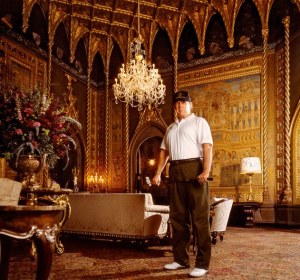
Do you suppose tRump even knows what this bill will do to his own biggest supporters? I doubt it. Ezra Klein thinks he may not be aware.
“I want everyone to know I’m 100 percent behind [the American Health Care Act],” President Trump said today. “The press has not been speaking properly about how great this is going to be. I watch, I say, ‘That’s not the bill we’re passing.’
But does Trump really know what’s in the bill he’s passing, or trying to pass?
With the help of Vox’s Jacob Gardenswartz, I collected and read absolutely everything Donald Trump has said publicly about the AHCA. The transcripts cover speeches, rallies, meetings with congressional leaders, interviews with friendly news outlets, and, of course, tweets.
I learned a few things from the exercise. First, Trump has a very limited set of talking points on health care, and he repeats the same words and sentences constantly — his comfort zone on both the issue and the legislation is very narrow.
Second, Trump seems confused about what the GOP bill does. It is possible, of course, that he knows more than he is saying, and has decided to simply say things that aren’t true. But it’s also possible he’s being spun by more ideologically motivated advisers (that’s certainly the narrative pro-Trump outlets like Breitbart are pushing).
Third, Trump has bought into a caricature of Obamacare’s condition that heavily informs his thinking on both the politics and the policy of the AHCA. This could prove more consequential than people realize.
The AHCA does literally none of the things Trump says it does.
On March 8, Trump laid out his case for the American Health Care Act. Here’s what he said:
It follows the guidelines I laid out in my congressional address: a plan that will lower costs, expand choices, increase competition, and ensure health care access for all Americans. This will be a plan where you can choose your doctor. This will be a plan where you can choose your plan.
These talking points are familiar enough that it’s easy to let them fade into the background. But it’s worth taking them seriously. This is Trump’s case for the bill he’s backing. Does he know that literally every single one of these points is wrong?
I’m sure tRump would never bother to read the bill, and there’s a good chance Paul Ryan has sold him a bill of goods, but I also doubt that tRump cares that his policies will literally kill people. The only thing he cares about his his own personal gratification.
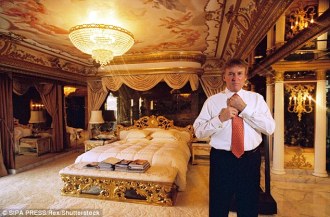
Here’s a new horror from the tRump crowd via The Washington Post: Trump administration rolls back protections for people in default on student loans.
Days after a report on federal student loans revealed a double-digit rise in defaults, President Trump’s administration revoked federal guidance Thursday that barred student debt collectors from charging high fees on past-due loans.
The Education Department is ordering guarantee agencies that collect on defaulted debt to disregard a memo former President Barack Obama’s administration issued on the old bank-based federal lending program, known as the Federal Family Education Loan (FFEL) Program. That memo forbid the agencies from charging fees for up to 16 percent of the principal and accrued interest owed on the loans, if the borrower entered the government’s loan rehabilitation program within 60 days of default….
The two-page “Dear colleague” letter from the Trump administration walks back the department’s previous stance on the grounds that there should have been public input on the issue.
“The department will not require compliance with the interpretations set forth” in the previous memo “without providing prior notice and an opportunity for public comment on the issues,” the letter said.
The action does not affect any borrowers whose loans are held by the Education Department, according to the department. It could, however, impact nearly 7 million people with $162 billion in FFEL loans held by guarantee agencies.
Who cares if millions of people go bankrupt because of this tRump decision? Not tRump and his billionaire buddies.
Fortunately, many Americans do care about other people. The Washington Post: Meals on Wheels sees donation surge after Trump proposes funding cuts.
Senior citizens in one suburb could see Meals on Wheels deliveries cut in half if President Trump’s budget cuts become reality, a spokeswoman for the network told CNN, as it anticipated “deep cuts” to a nonprofit that serves 2.4 million Americans.
Donations surged to 50 times their daily rate Thursday, the spokeswoman said, after the White House proposed eliminating the Community Development Block Grant program.
While the block grants fund only a small portion of Meals on Wheels’ operations nationwide, spokeswoman Jenny Bertolette told CNN that some of the group’s 5,000 local branches rely on the money to bring food to people.
A Meals on Wheels branch outside Detroit, she said, would lose one-third of its budget without the grants. The branch in San Jose, Calif., would lose $100,000.
And the organization has speculated that Trump’s vague budget outline could also slash the Older Americans Act, which it says funds more than one-third of its operations across the United States.

A North Korean soldier had more access to Rex Tillerson than the U.S. media.
Another big story yesterday was the announcement by tRump’s secretary of state that he might (not completely clear) be considering the possibility of first strike on North Korea. Since SOS Rex Tillerson is basically refusing to answer questions from the media, we can’t be sure; but what he said sounded scary. The LA Times:
“Certainly we do not want things to get to a military conflict,” Tillerson told reporters in Seoul. But he added that “if North Korea takes actions that threaten the South Korean forces or our own forces, then that will be met with an appropriate response. If they elevate the threat of their weapons program to a level that we believe requires action, that
There’s nothing new about the idea that the U.S. would defend South Korea against an attack from the North. But Tillerson seemed to be raising the possibility of a preemptive strike. If that was his meaning, the threat was premature, because the U.S. has other ways to deter North Korea. But the ambiguity of his words was itself a problem. Its vagueness recalled former National Security Advisor Michael Flynn’s warning earlier this year that he was putting Iran “on notice.”
Tillerson finally agreed to an interview with the Independent Journal Review, a right wing website. Business Insider provides a summary.
Secretary of State Rex Tillerson, in his first sit-down interview since assuming his role as the nation’s top diplomat, addressed a number of pressing issues regarding the US’ role in the global order, the Korean peninsula, the precarious situation with North Korea, the US-China alliance, and his relationship with the press.
Tillerson said the US’ main objective with regard to the east is a denuclearized Korean peninsula.
He also believes that based on recent actions taken by North Korea, the nation is “an imminent threat” that China needs to work with the US to combat.The secretary of state articulated a the need for a “higher level of dialogue” between Trump and Chinese president Xi Jinping.
Tillerson said that his relationship with the press would be “trip dependent” and that he is not a “big media press access person.”
Regarding the revelation that he allegedly used an email alias to communicate with Exxon officials about the risks of climate change, Tillerson said he could not comment on it and that questions should be directed at Exxon Mobil.
That’s all I have for you today. Please post your thoughts and links in the comment thread and have a great weekend.
Thursday Reads: Muslim Ban 2.0, Trump-Ryan Don’tCare, and a Federal Budget from Hell
Posted: March 16, 2017 Filed under: just because 47 Comments
Good Afternoon!!
Donald tRump’s campaign against American values is heating up. With his latest Muslim ban, he seeks to destroy the separation of church and state that was enshrined in the Constitution. With Trumpcare, he hopes to kill or sicken millions of poor and elderly people by taking away their health insurance. With his new budget, he hopes to kill off any of the poor and elderly who survive his “health care” plan.
The Muslim ban was supposed to go into effect late last night,
but two federal judges (so far) have stopped it in its tracks. The New York Times:
A federal judge in Hawaii issued a nationwide order Wednesday evening blocking President Trump’s ban on travel from parts of the Muslim world, dealing a stinging blow to the White House and signaling that Mr. Trump will have to account in court for his heated rhetoric about Islam.
A second federal judge in Maryland ruled against Mr. Trump overnight, with a separate order forbidding the core provision of the travel ban from going into effect.
The rulings were a second major setback for Mr. Trump in his pursuit of a policy that he has trumpeted as critical for national security. His first attempt to sharply limit travel from a handful of predominantly Muslim countries ended in a courtroom fiasco last month, when a federal court in Seattle halted it.
Mr. Trump issued a new and narrower travel ban, affecting six countries, on March 6, trying to satisfy the courts by removing some of the most contentious elements of the original version.
But in a pointed decision that repeatedly invoked Mr. Trump’s public comments, Judge Derrick K. Watson, of Federal District Court in Honolulu, wrote that a “reasonable, objective observer” would view even the new order as “issued with a purpose to disfavor a particular religion, in spite of its stated, religiously neutral purpose.”
In Maryland, Judge Theodore D. Chuang echoed that conclusion hours later, ruling in a case brought by nonprofit groups that work with refugees and immigrants, that the likely purpose of the executive order was “the effectuation of the proposed Muslim ban” that Mr. Trump pledged to enact as a presidential candidate.
Trump threw a tantrum about the decision in Hawaii last night during his “campaign rally” in Nashville in which he publicly state that the new ban is a “watered down version” of the old one and that he’d like to have the original ban back. That’s not going to help his lawyers defend it in court. Neither did Stephen Miller’s comments.

Huffington Post: Thank Stephen Miller’s Big Mouth For Trump Travel Ban’s Latest Court Woes.
Stephen Miller, a senior policy adviser to the president, was one of Trump’s most vocal mouthpieces following the fraught rollout of the administration’s first travel ban that sparked massive protests at airports around the country. Shortly after federal judges struck down that order, Miller appeared on television to stump a watered-down version, assuring Fox News it would include only “minor technical differences.”
The ruling notes:
On February 21, Senior Advisor to the President, Stephen Miller, told Fox News that the new travel ban would have the same effect as the old one. He said: “Fundamentally, you’re still going to have the same basic policy outcome for the country, but you’re going to be responsive to a lot of very technical issues that were brought up by the court and those will be addressed. But in terms of protecting the country, those basic policies are still going to be in effect.”
Those “plainly worded statements,” it seems, helped lead U.S. District Judge Derrick Watson to issue a temporary restraining order against the ban on Wednesday. There is nothing “’secret’ about the executive’s motive specific to the issuance of the executive order,” Watson’s ruling reads.
The judge also cited Rudy Giuliani’s comments about how Trump asked him to find a legal way to do a Muslim ban.
On Paul Ryan’s wet dream “health care” plan,
tRump may be beginning to have doubts as he gradually learns from media sources what it actually involves. Heaven forbid he actually try to read the monstrosity himself. He’s much too busy worrying that Obama “wiretapped” his phone calls and is now encouraging federal employees to undercut tRump and his cronies. Since we already know what’s in the Ryancare or Trumpcare/Ryancare, here are a couple of not-so-serious articles about the GOP’s latest clusterf**k.

T.A. Frank at The Atlantic: Inside the Trump-Ryan Murder-Suicide Pact.
When the Congressional Budget Office released the numbers on Trumpcare—or Ryancare, or whatever you want to call the two-headed boar unveiled by Paul Ryan as a replacement to Obamacare—showing that more than 20 million Americans would join the ranks of the uninsured in a few years, what came to mind was Buck Turgidson making the case for a nuclear first strike in Dr. Strangelove. “Mr. President, I’m not saying we wouldn’t get our hair mussed,” he promises. “But I do say no more than 10 to 20 million killed, tops.” Yes, some of the people losing their coverage would be dropping it by choice, freed up by the end of individual mandates. But many others would be pushed out by a massive increase in premiums. It takes a zealot like Ryan to be “encouraged” by that kind of analysis.
This has been an amazingly speedy descent into Republican self-sabotage. Ryan’s bill is almost universally disliked. Liberals and Democrats hate it for hurting lower-income Americans. Conservatives and Republicans hate it for either hurting lower-income Americans or for not hurting them enough. (Ohio governor John Kasich condemns the bill for reducing Medicaid coverage for the poor, while small-government Republicans like Rand Paulcall it “Obamacare Lite.”) Americans who currently subsidize Obamacare would be re-united with their money, while Americans who depend on the subsidies would be out of luck. The Ryan bill seems to promise a replay of hits from the George W. Bush years, when Republicans who preferred zero spending on the poor clashed with Republicans who preferred medium spending on the poor, but found common ground through their shared interest in big spending on the rich.
Much of this was to be expected, because Ryan is Ryan, and the G.O.P. is the G.O.P. What was up for grabs was the stance of Donald Trump. Was he going to insist on doing more to protect the little guy? Or was he going to throw his lot in with Ryan? We now see that, despite some concerns from his friends in the media, he chose the latter. (Or perhaps he chose it after Ryan incorporated some of Trump’s requests to protect the little guy—in which case Trump didn’t get very far.) Trump has been lobbying aggressively to get Ryan’s bill passed, inviting skeptics to meetings at the White House, promising rallies, and generally spending a lot of scarce political capital.
If the bill passes, many of Trump’s voters will get hurt, leaving Trump damaged. If it fails, the White House will have suffered a big defeat, leaving Trump damaged and his agenda weakened. It’s not a favorable set of choices. If nothing else, though, it will be the first big test of Trumpism. Its contradictions could be hidden during a campaign season. Now, they are coming into sharp relief.
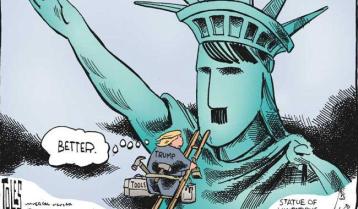
And from The Onion: Mitch McConnell Sees Infinite Healthcare Plans After Dropping Acid To Inspire Ideas For Obamacare Replacement.
WASHINGTON—Seeking to open his mind to new possibilities for overhauling the U.S. healthcare system, Senate Majority Leader Mitch McConnell (R-KY) reportedly witnessed an infinite number of replacement plans Wednesday after dropping acid to inspire ideas for an Obamacare alternative.
Shortly after the 75-year-old Republican senator ingested two 100-microgram tabs of LSD in his Congressional office, sources said countless substitutes for the Affordable Care Act began to explode before his eyes in luminescent, hyper-vivid colors and patterns.
“Oh my God—I can see the CHIP provisions spreading out in every direction forever and ever and ever,” said a reeling McConnell, gazing wide-eyed as infinite, interlocking fractal combinations of health savings plans, employer-provided coverage, and government subsidies enveloped him in an accelerating stream, eventually passing over him with such velocity that they appeared to be an entire galaxy of stars swirling around him. “Now I can see…I can see the outpatient hospital visits covered for every child in the country! No, every child who’s ever been born, and will ever be born! Even the ones who haven’t yet been conceived!”“The scope of coverage is so beautiful,” added the senator quietly. “Whoa.”
According to sources, McConnell’s hallucinations came on slowly, first appearing as a geodesic block grant spiraling gently in the center of the senator’s desk before morphing into a gigantic, prismatic spiderweb of plans whose out-of-pocket prescription expenses expanded and contracted with McConnell’s every breath.
And now for the federal budget from Hell.
tRump wants to spend more than a trillion dollars of taxpayer money on his godforsaken border wall and pay for it by cutting funding for science, the arts and of course the social safety net. As you read the next headline, keep in mind that we also pay for millions for tRump to travel to Florida to play golf and schmooze with Russian mobsters and spies and to keep Melania happy in Trump Tower in NYC.
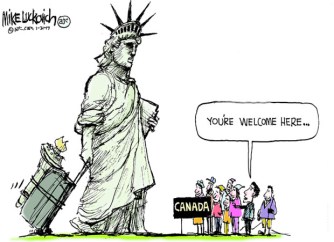
Occupy Democrats: Trump Just Announced Plan To End ‘Meals On Wheels’ For Seniors.
One popular program facing elimination is “Meals On Wheels,” which uses federal funds from the Department of Housing and Urban Development to mobilize volunteers, businesses and donors to provide nutrition to thousands of senior citizens on a daily basis. It supports over 5,000 community-based organizations across America, reaching people in both urban and rural areas.
The money for Meals On Wheels is part of the Older American Act, first passed in 1965 as part of LBJ’s Great Society, and endorsed by every president until Trump. The total cost, which includes other programs, is about $2 billion a year, which is less than the government hands out in fossil fuel subsidies every year.
Meals On Wheels alone costs about $3 million a year, which is the cost of just one trip to Trump’s “winter White House.”
The Washington Post: Trump federal budget 2018: Massive cuts to the arts, science and the poor.
Trump’s first budget proposal, which he named “America First: A Budget Blueprint to Make America Great Again,” would increase defense spending by $54 billion and then offset that by stripping money from more than 18 other agencies. Some would be hit particularly hard, with reductions of more than 20 percent at the Agriculture, Labor and State departments and of more than 30 percent at the Environmental Protection Agency.
It would also propose eliminating future federal support for the National Endowment for the Arts, the National Endowment for the Humanities and the Corporation for Public Broadcasting. Within EPA alone, 50 programs and 3,200 positions would be eliminated.
The cuts could represent the widest swath of reductions in federal programs since the drawdown after World War II, probably leading to a sizable cutback in the federal non-military workforce, something White House officials said was one of their goals.
“You can’t drain the swamp and leave all the people in it,” White House Office of Management and Budget Director Mick Mulvaney told reporters.
You can read the entire mess at Vox if you want to: Read President Trump’s proposed federal budget. I think I’ll just stick with The Onion.
So . . . what else is happening? Post your thoughts and links in the comment thread and have a tremendous Thursday.
Lazy Saturday Reads: No Bad News Allowed
Posted: March 11, 2017 Filed under: Afternoon Reads, just because | Tags: archaeology, baby sea otter moves to New Orleans, exorcism, Florida panthers, mammoths, Pleistocene Park, Ramses II, sailing aliens 17 Comments
Reading can be fun
Good Afternoon!!
Yesterday, J.J. said to me in a comment:
“Your post yesterday was good. I shared it with my family. It just made it so difficult for me to do anything else the rest of the last 24 hours but lie down and stare at the ceiling.”
Boy do I know that feeling. Believe me, writing about what’s happening is mind-numbing too. I just can’t do it today, so this is going to be T#@%p-free post. Of course we can talk about *it* in the comments, but I don’t want to do that to myself or anyone else today. So here are some stories I found that aren’t as horrifying as what’s going on in our daily reality.

The Christian Science Monitor: Buried treasure: huge statue of Egyptian king unearthed in Cairo neighborhood.
A team of Egyptian and German archaeologists has discovered a towering 26-foot statue in a Cairo slum, a presumed depiction of Pharaoh Ramses II, Reuters reports on Thursday.
The colossus found submerged in mud in where the ancient city of Heliopolis once stood is “one of the most important discoveries ever,” according to the Egyptian Antiquities Ministry.
The massive quartzite figure is “most probably Ramses II,” Antiquities Minister Khaled al-Anani told Reuters on Thursday at the site of the statue’s unveiling, adding that the identity would have to be later confirmed once more of the statue is uncovered.
“On the discovered portions there is no inscription found that would make it possible to determine which king it is,” Mr. Anani explained in a Facebook post on Thursday. “But its discovery in front of the gate of the temple of Pharaoh Ramses II suggests that it is likely him.In addition to the larger-than-life statue researchers also found a life-sized limestone statue of Pharaoh Seti II, Ramses II’s grandson.
More background and links to explore at the CSM.
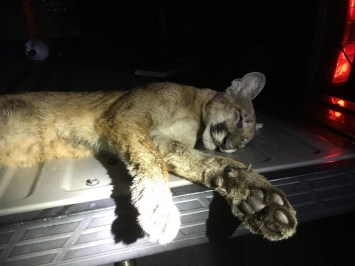
Injured Florida panther
The Atlantic: Can Humans Coexist With Big Cats?
On a clear evening this past June, in rural Collier County, Florida, an endangered panther crossed a street and was hit by a man driving home. The driver, making out a tawny, crumpled form, called a hotline. The job of retrieving the animal fell to Mark Lotz, a panther biologist with the state Fish and Wildlife Commission. Lotz called me to see if I wanted to come.
I had flown into Fort Lauderdale at the beginning of the week, renting a car and heading west across the state through what remains of primordial wetlands. Tall metal fences flanked the road, like a dull, gray hermetic seal meant to keep human traffic in and wildlife out. The fences are just one of many measures to protect fewer than 180 Florida panthers alive today, all of them in the state’s southern tip.
A population this size will birth between 60 and 110 kittens each year. But recently, adult panthers have been dying in droves: most after being hit by a car on unfenced roads, occasionally after being mauled by another panther in a territorial skirmish. In 2013, 20 of the endangered cats were killed; then 33 the next year; then 43 in 2015 and 2016….
The story that drew me down to Florida is a classic Anthropocene motif. Thanks to people, a charismatic species starts vanishing from its range, lingering only in certain areas before fading there, too. Extinction looms, until conservationists make a concerted effort to save it. And then—well, it’s not clear what happens next.
The first humans to reach North America found a continent crawling with terrifying big cats: an American cheetah, an American lion (bigger than those in Africa today), and the saber-toothed tiger. But at the end of the Pleistocene, around 12,000 years ago, they all vanished along with the bulk of New World megafauna. Nobody knows why, exactly. Maybe it was climate change, or maybe the direct and indirect consequences of hunting.
It turned out the panther was injured, but still alive. Read all about it at the link.
Interested in the sociology of strange religious practices? Check this one out from December 2016:

Father Amorth
Vanity Fair: The Devil and Father Amorth: Witnessing “the Vatican Exorcist” at Work.
Sunday morning, May 1 of this year, was Father Amorth’s 91st birthday, but he had no plans to celebrate. He awoke just after dawn, said his usual morning prayers and one to Joseph of Cupertino, a 17th-century saint, and another to the late Father Candido Amantini, his mentor. Clutching a walking aid, he shuffled from his cell-like room to the dining room on the third floor of the Paulist Fathers residence, south of Rome’s historic center.
After his usual breakfast of caffè latte and biscotti, Father Amorth returned to his room, which had a tall window, a hospital bed, two chairs, and a wooden desk cluttered with pictures of the Virgin Mary and Padre Pio, a priest-mystic who experienced stigmata—bleeding wounds, corresponding to those inflicted on Jesus Christ on the Cross. For the next six hours, Father Amorth reviewed the mail requesting his services from around the world. Each letter contained tragic questions and appeals from people who knew Amorth only by name and reputation. He answered the letters, writing with a fountain pen, licking the envelopes and stamps himself. At two P.M., he knelt again to pray, then arose with difficulty, took up his walking aid, and made his way to an elevator, which took him to the first floor, where the small room dedicated to his work was located. The hallway was empty and dark. Whispering voices and footsteps could be heard, as from a tomb.
His old adversary was waiting.
At exactly three P.M. he began to conduct the ritual of exorcism. The possessed woman, Rosa, was in her late 30s, tall and slender, with raven-black hair. She was as dark and attractive as an Italian movie star—Sophia Loren or Silvana Mangano, with a quiet demeanor. She had a college degree but couldn’t work because of the fits and behavioral changes that came over her, most severely on the Christian holidays, such as Palm Sunday, Ash Wednesday, Easter, and Pentecost. This was her ninth exorcism with Father Amorth. As with traditional psychiatry, the patient is usually not “cured” after the first session. Father Amorth had been exorcising one man for 16 years.
Imagine spending your entire life believing in stuff like this? It does say that:
Father Amorth insisted that anyone who came to him first seek the help of traditional medicine and psychiatry. “Out of a hundred people who seek my help,” he explained, “one or two at the most may be possessed.”
The article is actually quite fascinating, because it discusses the pathology of people who experience the bizarre symptoms of “possession.”
What about the possibility of life on other planets?

An artists’s concept of what a deployed solar sail space probe may look like. One capturing the power inferred by mysterious fast radio bursts would be on the scale of several planets.
The Washington Post: Harvard theorists: How sailing aliens could have caused fast radio bursts.
In 2007, a West Virginia University astrophysicist named Duncan Lorimer detected a brief yet intense signal while combing through archival data from the Parkes Observatory telescope in Australia. The signal was quick. The spurt of radio activity, originating from a source other than our galaxy, lasted fewer than 5 milliseconds. And it was furious. To generate such a burst would require 500 million times the power of our solar system’s sun. The unknown source of the signal prompted intense speculation.
One proposal, to be published in Astrophysical Journal Letters, may be the wildest yet: Sailing aliens.
“An artificial origin is worth contemplating and checking,” said Avi Loeb, a theorist and author of the paper at the Harvard-Smithsonian Center for Astrophysics, in a statement on Thursday.
A decade ago, Lorimer and his mentor, Matthew Bailes, described the phenomenon as a fast radio burst, or FRB. “Duncan Lorimer and I were just completely gobsmacked,” said Bailes, a professor at Swinburne University of Technology in Melbourne, to The Washington Post. “The day we discovered the first FRB we couldn’t sleep.” Astrophysicists have detected only 25 other FRBs since Bailes and four other astronomers published their groundbreaking report in 2007, he said.
But the origin of FRBs remained an open question. The problem proved to be at once formidable, resilient and brain twisting. Some scientists proposed that FRBs were the fault of massive neutron stars, suns that had collapsed into dense cores. Perhaps there existed stellar flares capable of spitting out a radio wave that traveled across half of the known universe. Or maybe vanishing black holes spewed the FRBs our way.
“I am not exaggerating when I say there are more models for what FRBs could be than there are FRBs,” Cornell University astronomer Shami Chatterjee told The Washington Post in January.

A juvenile sea otter who recently found a new home with the Aubudon Aquarium in New Orleans plays with her favorite toy, a red ball. Inside Edition
Here’s a cute baby animal story.
San Luis Obispo.com: Abandoned Monterey sea otter finds a new home (and a new friend) in New Orleans.
The Audubon Aquarium in New Orleans has welcomed its newest resident: a rescued juvenile sea otter from Monterey.
The Audubon Nature Institute said in a statement that the 18-month-old female sea otter arrived at the aquarium Wednesday. She joins Clara, an 8-year-old sea otter, in the aquarium’s 25,000-gallon sea otter habitat.
The juvenile otter was found as an abandoned day-old pup in September 2015 by the Monterey Bay Aquarium’s Sea Otter Research and Conservation program. After several unsuccessful attempts of releasing her back into the ocean, U.S. Fish and Wildlife Service officials determined she wouldn’t survive on her own.
The otter traveled for nearly a day just to find her new home, and she brought along her favorite toy – a red ball – to play with during the journey, according to a video from Inside Edition.
The aquarium is conducting an online poll to name the otter, which can be found on its website. The winning name will be announced March 16 on Audubon’s Facebook page and website.
A story about some scientists attempting to recreate the Ice Age. What could go wrong?
One more from The Atlantic: Welcome to Pleistocene Park.
We were driving through a remote forest in Eastern Siberia, just north of the Arctic Circle, when it happened. The summer thaw was in full swing. The undergrowth glowed green, and the air hung heavy with mosquitoes. We had just splashed through a series of deep ponds when, without a word of warning, Nikita veered off the trail and into the trees, ramming us into the trunk of a young 20-foot larch. The wheels spun for a moment, and then surged us forward. A dry crack rang out from under the fender as the larch snapped cleanly at its base and toppled over, falling in the quiet, dignified way that trees do.I had never seen Nikita happier. Even seated behind the wheel, he loomed tall and broad-shouldered, his brown hair cut short like a soldier’s. He fixed his large ice-blue eyes on the fallen tree and grinned. I remember thinking that in another age, Nikita might have led a hunter-gatherer band in some wildland of the far north. He squeezed the accelerator, slamming us into another larch, until it too snapped and toppled over, felled by our elephantine force. We rampaged 20 yards with this same violent rhythm—churning wheels, cracking timber, silent fall—before stopping to survey the flattened strip of larches in our wake.
“In general, I like trees,” Nikita said. “But here, they are against our theory.”
Behind us, through the fresh gap in the forest, our destination shone in the July sun. Beyond the broken trunks and a few dark tree-lined hills stood Pleistocene Park, a 50-square-mile nature reserve of grassy plains roamed by bison, musk oxen, wild horses, and maybe, in the not-too-distant future, lab-grown woolly mammoths. Though its name winks at Jurassic Park, Nikita, the reserve’s director, was keen to explain that it is not a tourist attraction, or even a species-resurrection project. It is, instead, a radical geoengineering scheme.
“It will be cute to have mammoths running around here,” he told me. “But I’m not doing this for them, or for any other animals. I’m not one of these crazy scientists that just wants to make the world green. I am trying to solve the larger problem of climate change. I’m doing this for humans. I’ve got three daughters. I’m doing it for them.”
Pleistocene Park is named for the geological epoch that ended only 12,000 years ago, having begun 2.6 million years earlier. Though colloquially known as the Ice Age, the Pleistocene could easily be called the Grass Age. Even during its deepest chills, when thick, blue-veined glaciers were bearing down on the Mediterranean, huge swaths of the planet were coated in grasslands. In Beringia, the Arctic belt that stretches across Siberia, all of Alaska, and much of Canada’s Yukon, these vast plains of green and gold gave rise to a new biome, a cold-weather version of the African savanna called the Mammoth Steppe. But when the Ice Age ended, many of the grasslands vanished under mysterious circumstances, along with most of the giant species with whom we once shared this Earth.
Nikita is trying to resurface Beringia with grasslands. He wants to summon the Mammoth Steppe ecosystem, complete with its extinct creatures, back from the underworld of geological layers. The park was founded in 1996, and already it has broken out of its original fences, eating its way into the surrounding tundra scrublands and small forests. If Nikita has his way, Pleistocene Park will spread across Arctic Siberia and into North America, helping to slow the thawing of the Arctic permafrost. Were that frozen underground layer to warm too quickly, it would release some of the world’s most dangerous climate-change accelerants into the atmosphere, visiting catastrophe on human beings and millions of other species.

Real baby mammoths? Yikes! I hope this doesn’t turn out like Jurassic Park. Click on the link for lots more interesting reading.
Have a great weekend everyone. I’ve decided to turn off the TV and read a book.

 peej
peej Carissa
 bostonboomer
 dakinikat
 ecocatwoman
 mablue2
 Mama Lopez
 peggysue22
 quixote
 skydancingguestblogger
 Mona (aka Wonk the Vote)



 Sky Dancing
Recent Comments