Sigh . . . yesterday on Twitter, Elon Musk was reacting sympathetically to right wing white supremacists and holocaust deniers. Today he’s dispensing medical advice based on things some random people told him. I won’t post the links; you can find his idiotic ramblings easily enough. I sure hope Musk ends up backing out of this deal. He reminds me of Trump, and another Trump is not what the world needs right now, IMHO. Here are a couple of interesting articles on the Musk takeover:
Tonight the self-important members of the White House press corps will meet at their traditional dinner after the event was cancelled for two years because of the pandemic. On Tuesday, I wrote about the organizers’ decision not accept an offer of free installation of germicidal UV lighting to protect attendees from airborne transmission of the coronavirus. I really think it’s a mistake for the president and first lady to attend this event.
Although the Biden administration waited until little more than a week out to confirm attendance – in part due to a recent COVID-19 outbreak stemming from the recent Gridiron dinner — it was confirmed that the president and first lady would attend the White House Correspondents’ Dinner….
Every president since Calvin Coolidge has attended the WHCA’s annual dinner with the exception of Donald Trump. To him, members of the media are “enemies of the people.” In 2019, the Trump administration banned any of its officials from attending the dinner.
The dinner was canceled in 2020 and 2021 due to the pandemic, so this marks the official return of a Washington tradition. I understand Biden’s good intentions, but the White House Correspondents’ Dinner is one of the traditions that I hoped would have died in the plague. Or at the very least, dramatically change while it was away.
Consider all the bad news in the world — some of which the diners are supposed to cover. Well, at least for the night, instead of doing their jobs, they are hobnobbing with celebrities par excellence. Given inflation, an ongoing plague, and the litany of other problems impacting the nation, the “nerd prom” resurgence feels ill-timed. Given the times, a return to spectacle strikes me as a bad idea.
The guest list points to the frivolousness of the event.
Martha Stewart will be in attendance as a guest of The Daily Mail. Michael Keaton will be a guest of ABC News. CBS News is apparently bringing Drew Barrymore and Melinda Gates as their guests to the dinner. Kim Kardashian and Pete Davidson will be sitting at the Disney/ABC table.
Quite a few of those White House correspondents are also frivolous lightweights, but that’s just my opinion. But back to the Arceneaux piece. He agrees with me about health concerns.
Oh, and the pandemic isn’t over, no matter what the White House Correspondents Association thinks.
On Tuesday, Vice President Kamala Harris shared her health news after returning from a weeklong trip to California. “Today I tested positive for COVID-19. I have no symptoms, and I will continue to isolate and follow CDC guidelines. I’m grateful to be both vaccinated and boosted,” Harris tweeted….
One other factor that we must consider: The president is 79 years old. With all due respect, at that age, if Biden can’t walk around in a protective bubble, he should at least avoid being in rooms with hundreds of people.
I understand the venue will be testing for attendance, but if it can happen to the vice president, why not the president?
Yet, here everyone is, partying the night away with celebrity guests — as the world falls apart and in the middle of a pandemic. I hope everyone has a good night, but it feels like the wrong time to have this kind of party.
I couldn’t agree more, and I will not be watching tonight.
Coronavirus cases and hospitalizations are rising in a majority of American states, in what appears to be the first widespread increase since the peak of the Omicron surge in January.
Reports of new cases were nearly flat in the United States at the beginning of April, but as the month draws to a close, they are increasing in all but three states, signaling a wave that is increasingly national in scope.
“Most of the cases are relatively mild,” said Dr. Eric S. Toner, a senior scholar at the Center for Health Security at the Johns Hopkins Bloomberg School of Public Health.
Ted Takes Manhattan, by Matt McCarthy
The recent increase was once concentrated in the Northeast, but the effects of the highly contagious BA.2 subvariant is growing more geographically diverse. In the last two weeks, cases have more than doubled in states from West Virginia to Utah.
Hospitalizations are also on the rise nationwide, after plummeting early this month to their lowest point since March 2020. More than 30 states and territories have seen their hospitalization rates tick up in the past two weeks, and in much of the Northeast, the number of people hospitalized with the coronavirus has increased since mid-month by 40 percent or more.
“It’s not over yet,” Dr. Toner said in an interview on Friday. “It may be a mistake to relax all of our protective measures too quickly.”
Student Loans
The Biden administration is currently considering the possibility of forgiving some student loans. Here’s the latest:
The White House is considering income caps for eligibility for student loan relief that would exclude higher-earning Americans, as President Biden nears a decision on the matter, according to three people aware of administration discussions.
The administration is considering various ways to forgive some student loan debt through executive action. In recent weeks, senior Biden aides have examined limiting the relief to people who earned less than either $125,000 or $150,000 as individual filers the previous year, the people said. That plan would set the threshold at around $250,000 or $300,000 for couples who file their taxes jointly, the people said. No final decisions have been made, and the people familiar with the matter stressed that planning was fluid and subject to change.
The White House is also weighing exactly how much student debt to eliminate for each borrower. Biden indicated to reporters this week that the amount would be lower than $50,000 per person. Administration officials have also signaled that the White House will cut at least $10,000 per qualifying borrower, the people said, embracing a position Biden himself appeared to support in a private meeting with the congressional Hispanic Caucus. The administration has also discussed limiting forgiveness to undergraduate loans, excluding those who had taken out loans for professional degrees in fields such as law and medicine, the people said.
“There’s different proposals floating around the administration about how to structure this,” said one person involved in the discussions, who spoke on the condition of anonymity to reflect private conversations. “Over the course of the past week especially, administration and congressional staff have focused the conversation on debt cancellation on how to best meet the president’s desire to ensure the most economically vulnerable people with student debt benefit from any action.”
Forgiveness of $10,000 wouldn’t even put a tiny dent in what I owe in student loans, but I’m on an income based payment plan, and my income is too low for me to have to pay anything. After 25 years, if I live that long, the debt will be forgiven. In the meantime the government is spending lots of money to get me to file paperwork every year to prove I can’t pay anything. But for anyone who can benefit from a $10,000 reduction, I wish you well. Meanwhile, the government has no problem subsidizing billionaires like Elon Musk who pay no taxes.
A six-month grand jury that was convened late last year to hear evidence against Donald Trump was set to expire this week, closing a chapter in a lengthy criminal investigation that appears to be fizzling out without charges against the former president, people familiar with matter said.
San Francisco (Matt McCarthy)
Manhattan District Attorney Alvin Bragg (D), who took office in January, inherited a probe launched by his predecessor, Cyrus R. Vance Jr., who was convinced that there was a case against Trump for crimes related to manipulating the value of property assets to secure tax advantages or better loan rates.
The grand jury was convened in November with a mandate to hear evidence against the former president. But the decision on whether to finish the presentation and ask the panel to vote on charges would ultimately fall on Bragg, who decided to pause the process, according to people with knowledge of the situation, who spoke on the condition of anonymity to discuss information that has not been declared publicly.
A key problem, some of those people said, was Bragg’s concern over whether former Trump fixer Michael Cohen should be used as a witness.
Bragg has said he will announce when the investigation is over, noting that even after the special grand jury disbanded, other grand juries hearing a broad range of criminal cases in New York would be available to take action in this one if needed.
Still, the expiration of the grand jury — and the departure in February of two senior prosecutors who said Bragg was stalling the inquiry — makes any potential indictment of Trump seem unlikely, legal observershave said. By the time Mark Pomerantz and Carey Dunne quit, the grand jury had been inactive for weeks, with jurors being told to stay home, a person with knowledge of the issue previously said.
Lawyers in the office of New York Attorney General Letitia James (D), who is a partner in the probe, are skeptical that any criminal case will be brought, people familiar with the situation said. They also spoke on the condition of anonymity because of the sensitivity of the matter. A spokeswoman for James said the investigation continues.
Fulton County prosecutors will begin selecting participants Monday for a special grand jury to consider whether former president Donald Trump should be charged for his attempts to pressure Georgia officials to overturn the results of the 2020 election, which he lost.
By Matt McCarthy
Fulton County District Attorney Fani Willis asked a panel of judges in January for the special grand jury because of “information indicating a reasonable probability” that the election “was subject to possible criminal disruptions.”
Willis has said in interviews that the investigation includes a January 2, 2021 phone call in which Trump told Georgia Secretary of State Brad Raffensperger, “I just want to find 11,780 votes.” Trump lost the state to Joe Biden by that margin — an outcome that was affirmed by several recounts.
Special grand juries are unusual. They focus on just one investigation, and can be impaneled for far longer than typical grand juries, which often consider charging recommendations for a variety of investigations….
Willis wrote in the request that “a significant number of witnesses and prospective witnesses have refused to cooperate with the investigation absent a subpoena requiring their testimony.”
Willis said in an April 19 interview with the Atlanta Journal-Constitution that she will wait until after the state’s May 24 primaries to issue subpoenas to public officials — meaning the special grand jury may not hear witnesses until June.
Attorney John Eastman, a key architect of former President Donald Trump’s legal effort to overturn the 2020 election, is preparing to provide another 10,000 pages of records to the Jan. 6 select committee, his attorney revealed late Friday.
It’s the latest breakthrough for congressional investigators in their ongoing fight to obtain details of Trump’s last-ditch plans to overturn his election loss.
Eastman had claimed attorney-client privilege over 37,000 pages of post-election emails related to his work for Trump. But under pressure from U.S. District Court Judge David Carter — who ruled in March that Eastman and Trump likely entered into a criminal conspiracy to overturn the election — Eastman withdrew privilege claims for nearly a third of that total.
In Friday’s court filing, Eastman’s lawyers indicated that the select committee now wants more time to consider how to handle the remaining 27,000 pages of records that remain in dispute. Carter has asked Eastman to produce a log of all the emails that remain contested, but Eastman is now asking Carter for a brief reprieve while the select committee reviews the new documents and determines how to proceed.
The committee’s legal fight to obtain Eastman’s records — all originally housed by his former employer, Chapman University — has been a top priority for the panel, which is fending off dozens of lawsuits from witnesses to Trump’s conduct in the aftermath of the election.
The panel has used the Eastman lawsuit, as well as litigation against former Trump chief of staff Mark Meadows, to reveal broad swaths of the evidence it has obtained showing Trump ignored overwhelming legal advice that he had been defeated. Their evidence also shows that Trump sat by on Jan. 6, 2021 as a mob of his supporters ransacked the Capitol, waiting hours and continuing to press allies to block now-President Joe Biden’s victory even as he watched the violence unfold on TV.
A second member of the Oath Keepers facing a seditious conspiracy charge for his role in the Jan. 6 breach of the Capitol pleaded guilty Friday and is preparing to cooperate with prosecutors.
Brian Ulrich, one of 11 Oath Keepers facing the gravest charges to emerge from the Jan. 6 attack, pleaded guilty to seditious conspiracy and obstruction of Congress’ electoral vote-counting session. He follows Joshua James, an Oath Keeper who provided personal security to Roger Stone, who pleaded guilty to seditious conspiracy last month.
Cooperation from Ulrich of Georgia and James of Alabama — in addition to others who have previously reached cooperation deals with the government — could arm prosecutors with substantial evidence as they work to secure the convictions of the remaining defendants, including Oath Keepers founder Stewart Rhodes III.
The indictment against the broader group suggests Ulrich discussed bringing firearms and ammunition to store at a hotel in Arlington, Va., where the group amassed a cache of weapons they called a “quick-reaction force” or QRF.
Ulrich was among a group of Oath Keepers who used golf carts to travel from a hotel to the Capitol, “at times swerving around law enforcement vehicles” while another defendant, Roberto Minuta, livestreamed, prosecutors say.
A member of the Oath Keepers accused of sedition in the Jan. 6 riots pleaded guilty on Friday, agreeing to cooperate with the feds in their investigation. Brian Ulrich, 44, was reportedly tearful as he pleaded guilty to seditious conspiracy and obstruction of an official proceeding, which could land him in prison for up to seven years. As part of the agreement, Ulrich said he would sit down with federal investigators and specifically fingered Oath Keepers boss Stewart Rhodes as having a role in the conspiracy to stop President Joe Biden’s certification. According to court documents, Ulrich messaged Oath Keeper leadership ahead of the riots: “Someone can tell me if I’m crazy but I’m planning on having a backpack for regular use and then a separate backpack with my ammo load out with some basics that I can [just] switch to is [sic] shit truly the fan blades. I will be the guy running around with the budget AR.”
NOTE: The artwork in today’s post is by Matt McCarthy, who uses Photoshop to create surrealistic cat art. You can find more of his work on Instagram, where he posts as Mr. Matt McCarthy.
Did you like this post? Please share it with your friends:
The tone of speeches in the House of Representatives–pretty much from its inception–has always had outliers that prefer to rage against the other side rather than behave in a strict parliamentarian manner. The brilliant prosecutor and representative Jamie Raskin was called-out for using unparliamentary language against, of all people, Majorie Taylor Greene. The pearl-clutching is pretty amazing given the antics of Ms. Green have been so shameful she no longer holds any seats on any committee. But, sure, let’s call out Mr. Raskin for speaking the truth to crazy.
The controversial words were calling her “cheerleader for the insurrection.” That sounds like a pretty accurate description to me. Frankly, I wish more congress critters would stand up to these people on the floor and elsewhere. They deserve to be maligned for their actions and words. But then, watch Raskin’s speech to see what you think before I start going to the Beltway pundits and pearl-clutchers. Also, ask yourself wtf is that woman wearing on the floor of the House of the People? Is that outfit professional or do they have Pajama Thursdays now? The speeches were about setting up rules of the debate on a program of lend/lease for Ukraine similar to the one used for the United Kingdom of Great Britain prior to U.S. entry into World War 2. It wasn’t a PJ party.
Jamie Raskin said what many feel about Marjorie Taylor Greene and her attacks on democracy. But since Raskin's a Democrat and one of the most decent people on Capitol hill, he has apologized for his "unparliamentary language." Still a great speech, tho. pic.twitter.com/3u15ijn00a
Rep. Jamie Raskin (D-Md.) on Thursday withdrew words he made on the floor after he called Rep. Marjorie Taylor Greene (R-Ga.) a “cheerleader for the insurrection,” admitting that he had used “unparliamentary language” on the House floor.
Raskin, the lead manager during former President Trump’s second impeachment trial in 2021, did so after Rep. Guy Reschenthaler (R-Pa.) asked for Raskin’s words to be taken down, a request that is made if lawmakers use offensive language or make remarks that could be considered unparliamentary.
The dispute took place during a debate on the rule for the Ukraine Democracy Defense Lend-Lease Act, legislation that would essentially speed up the delivery of military aid to Ukraine as it fights off an invasion by Russia.
Raskin criticized Greene immediately after her own two-minute speech on the bill. Greene had not mentioned Ukraine in her own remarks, but had focused on what she said was an “invasion” at the southern border. Greene has been critical of the Biden administration’s immigration policies.
“Gentlelady talked about a massive invasion. We had a massive invasion of our own chamber. And she continued to be a cheerleader for the insurrection, and deny what happened here,” an animated Raskin said.
Reschenthaler at that point asked for Raskin’s words to be taken down.
There was then a pause of about 15 minutes in proceedings before Raskin asked for unanimous consent to withdraw his words, which was agreed to without objection. He admitted to using “unparliamentary language.”
Die Blumenterrasse im Wannsee-Garten nach Süden – Max Liebermann, 1921
There will be as many as eight hearings, the first on June 9, with some scheduled for prime time and others during the day, he said.
Thompson told reporters as he left the Capitol on Thursday that the public will hear from outside witnesses, people “we’ve not heard from before,” adding that “their testimony will be on point as to why this investigation was so important.”
“We’ll tell the story about what happened,” he said. “We will use a combination of witnesses, exhibits, things that we have through the tens of thousands of exhibits we’ve interviewed and looked at, as well as the, you know, hundreds of witnesses we’ve deposed or just talked to in general.”
There’s been ample speculation of late about whether the House select committee investigating the Jan. 6 attack will make criminal referrals to the Justice Department, most notably against Donald Trump. In fact, The New York Times reported this past weekend that the question of whether the former president crossed legal lines has effectively already been answered.
The evidence suggests the former president obstructed a congressional proceeding and conspired to defraud the American people, which could serve as the basis for a criminal referral to federal prosecutors. The report came two weeks after a federal judge released a ruling in a civil case that concluded Trump “likely attempted to obstruct the joint session of Congress” on Jan. 6, which would be a crime.
Judge David Carter added, “The illegality of the plan was obvious…. Based on the evidence, the Court finds it more likely than not that President Trump corruptly attempted to obstruct the joint session of Congress on January 6, 2021.”
But as striking as these revelations are, there’s no reason to assume that we know the full scope of the possible criminal misconduct. Rep. Jamie Raskin spoke yesterday to The Washington Post and suggested new revelations are on the way.
“We have not been shy about criminal evidence we encounter, and our report will be profuse in setting forth crimes that have not yet been alleged. But, having said that, we are not a prosecutorial entity. Our job is to make a report to Congress and the American people about what happened on Jan. 6 and what needs to be done to prevent coups and insurrections going forward.”
When the Post asked whether there will be consequences for those behind the insurrectionist violence, the Maryland Democrat added, “As in most mob-style investigations, the Department of Justice seems to be working its way up from the bottom to the top. They have charged a lot of people with violent assault, destruction of federal property, interference with a federal proceeding and now, increasingly, seditious conspiracy, conspiracy to overthrow the government.”
I will never forget this nor should any other present or future citizen of the U.S.
As the mob smashed our windows, bloodied our police and stormed the Capitol, Trump and his accomplices plotted to destroy Biden’s majority in the electoral college and overthrow our constitutional order. America will see how the coup and insurrection converged. pic.twitter.com/ayEA1JLfp1
Well, that’s interesting too. And, I imagine he has some dirt on MTG which is sure to raise eyebrows and justify his words on the floor. There are a few interesting ‘guests’ that will be questioned next month by the Committee.
Rudy Giuliani is expected to appear next month before the House select committee. We bet they have a lot of questions for him… https://t.co/x8unDe9Upy
Rudy Giuliani is expected to appear next month before the House select committee investigating the January 6, 2021, insurrection, according to sources familiar with the matter.
The expected appearance comes after months of negotiations between lawmakers and the former mayor of New York, who served as former President Donald Trump’s personal attorney for much of his presidency.
Giuliani, a central figure in Trump’s failed bid to overturn the 2020 election, was subpoenaed by the committee in January and has been engaging with lawmakers, through his lawyer, about the scope of the subpoena and whether he may be able to comply with some requests.
In its subpoena, the committee alleges Giuliani “actively promoted claims of election fraud on behalf of the former President and sought to convince state legislators to take steps to overturn the election results.” The subpoena also states Giuliani was in contact with Trump and members of Congress “regarding strategies for delaying or overturning the results of the 2020 election.”
CNN has previously reported that Giuliani oversaw efforts in December 2020 to put forward illegitimate electors from seven states that Trump lost, according to three sources with direct knowledge of the scheme. CNN also has previously reported that Giuliani may be willing to testify about claims of election fraud but that he did not intend to waive executive or attorney-client privilege.
It is unclear whether the committee has agreed to honor Giuliani’s concerns about privilege, but he can invoke privilege protections in response to individual questions if he so chooses.
As with other witnesses under subpoena, the committee has previously said it expected Giuliani to “cooperate fully.” The committee declined to comment Wednesday on Giuliani’s expected appearance.
So, that’s it from me today! It’s Friday so there’s got to be more things coming! BTW, all the artists’ gardens paintings in today’s post were suggested in this article from The Guardian written by Sarah Crompton in 2016. “Flower power: the gardens that caused modern art to bloom.” There are stories about each of these artists.
Did you like this post? Please share it with your friends:
I’m a daily user of Twitter, because it’s where I can find the very latest news, often before it’s on TV or published anywhere. Yesterday’s shock news was that Elon Musk bought Twitter and took the company private. Lots of people apparently deleted their Twitter accounts, and so many people tried to sign up for an app called “Counter Social” that the site crashed repeatedly.
I’ve briefly tried Counter Social, and so far I don’t think it will work for me. I agree with this thread:
I don't know who it's supposed to appeal to, but I don't think it's me. There are boxes and rooms and gadgets and lots and lots of tech talk. It brags about its openness but I see it as closed to all but the most tech-savvy.
Counter Social is owned and operated by a Twitter troll called “Jester Actual” whom I unfollowed long ago because of his weird tweets, so I’m not sure I want to use his platform.
I deleted my Counter Social account after finding out the creator is a Zimmerman supporter and thinks BLM should be named a terrorist organization.
— THEE Side-Eye Pinkie Pie (@NYPoliticalMom) April 25, 2022
So I guess I’m going to stick with Twitter for now and see what happens. Obviously, I’m not happy about Twitter’s new owner either. I didn’t know that much about him until he started making noises about buying the company, but the guy seems to be a Trump-like monster. Here’s just one example from the Los Angeles Times in February: Horrific allegations of racism prompt California lawsuit against Tesla.
The N-word and other racist slurs were hurled daily at Black workers at Tesla’s California plant, delivered not just by fellow employees but also by managers and supervisors.
So says California’s civil rights agency in a lawsuit filed against the electric-vehicle maker in Alameda County Superior Court on Thursday on behalf of thousands of Black workers after a decade of complaints and a 32-month investigation.
Tesla segregated Black workers into separate areas that its employees referred to as “porch monkey stations,” “the dark side,” “the slave ship” and “the plantation,” the lawsuit alleges.
Only Black workers had to scrub floors on their hands and knees, and they were relegated to the Fremont, Calif., factory’s most difficult physical jobs, the suit states.
So says California’s civil rights agency in a lawsuit filed against the electric-vehicle maker in Alameda County Superior Court on Thursday on behalf of thousands of Black workers after a decade of complaints and a 32-month investigation.
Graffiti — including “KKK,” “Go back to Africa,” the hangman’s noose, the Confederate Flag and “F– [N-word]” — were carved into restroom walls, workplace benches and lunch tables and were slow to be erased, the lawsuit says….
The lawsuit comes in the wake of Tesla’s billionaire chief executive, Elon Musk, moving the company’s headquarters from Palo Alto to Austin, Texas, where he is building a major new assembly plant.
The state’s lawsuit suggests the relocation to a state known for looser enforcement is no coincidence, declaring it to be “another move to avoid accountability.”
Not only were Tesla’s Black workers subjected to “willful, malicious” harassment, but they were also denied promotions and paid less than other workers for the same jobs, the suit asserted. They were disciplined for infractions for which other workers were not penalized.
Twitter employees reacted with shock and dismay Monday as a new reality sank in: Elon Musk — the world’s richest man, free speech defender and strong critic of Twitter — would be the company’s new owner.
On Twitter, in private messages and in interviews with The Washington Post,employees expressed fear about Musk’s $44 billion takeover. Twitter CEO Parag Agrawal,along with board chair Bret Taylor, held an internal town hall on Monday afternoon in which the leaders tried to assure anxious staff but offered few direct answers.A central concern was that Muskwould attempt to break down safeguards to protect everyday users that staff had built over many years, according to the interviews and tweets, as well as audio from the town hall obtained by The Post.
Some tweeted tear-filled emoji and memes of people having emotional breakdowns, while others told The Post they were too in shock to speak. At Monday’s town hall, leaders were vague in response to questions about future layoffs, changes to the company’s approach to free speech and safety, and whether the company will continue to make money from advertising.
“Totally understand that this is entertainment for some,” one employee tweeted. “But please understand that this is certainly not entertainment for me.”
“The news today is so crazy I literally forgot I have COVID,” another tweeted.
Twitter employees who have worked long and hard to stop hate speech and public health misinformation on the platform were very concerned.
In dozens of internal messages obtained by The Post, workers expressed worries that the firebrand Musk could inflict damage to the company’s culture and make it harder for people to do their jobs. Observers and misinformation researchers echoed the criticism.
The company, which is based in liberal San Francisco and has more than 5,000 employees, has spent years building a progressive corporate culture that allows employees to say just about anything they want and to live anywhere they choose. Twitter was the first company to take action against former president Donald Trump for his tweets supporting Capitol rioters on Jan. 6, 2021, and engineering teams have spent years building tools to fight spam, disinformation and hate speech under an initiative known as healthy conversations.
“I don’t know any non-engineer who works on health issues who sees how this helps,” said a Twitter employee in an interview in response to questions about Musk’s ownership, referring to the company’s health division that enforces rules against harmful content such as hate speech and misinformation. “Most find it dispiriting.”
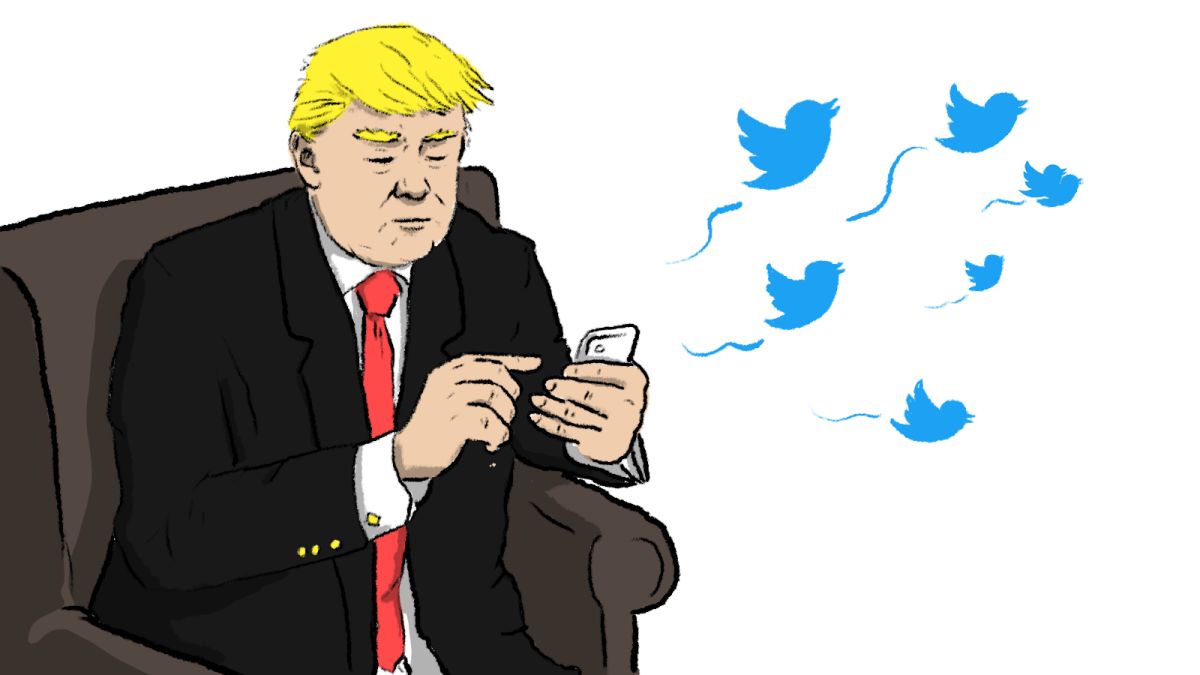
The news that ELON MUSK is buying Twitter has thrown Washington into a tizzy over one major question: Will DONALD TRUMP return to his old favorite social media platform and start tweeting again?
As it turns out, no one is more petrified of this than members of Trump’s own party.
On Monday night, in a series of calls and texts with several top GOP insiders, every single one of them told us that they hoped the former president stays the hell away from Twitter, lest he sink their chances at flipping the House and Senate. Some of his allies even think that a return to his old Twitter habits could damage his own brand ahead of a possible third presidential bid in 2024.
“If I’m a Democrat, I’d pray that Elon Musk puts Trump right back on Twitter,” said one House GOP leadership aide, who asked not to be named to speak candidly. “I don’t think it costs Republicans the House, but it certainly will elevate Trump’s opinions — and is going to put Republican candidates and members back having to answer for that.”
The person added: “It’s enough to create headaches — and it’s enough to probably cost us a couple seats.”
Some may find this a rather surprising reaction, given that many Republicans have both accused Big Tech of censoring conservative voices (the former president being the most prominent example) and showered praise on the Musk takeover. But as is often the case with the GOP and all things Trump, privately, they feel very differently.\
If right-wingers dream of a platform that would welcome back Trump and his sludge of misinformation they might consider whether it is viable to maintain a platform that includes terrorism threats, crime narratives, targeted hate speech and more. https://t.co/DYvufSpbBJ
— Jennifer "A man is not a plan" Rubin 🇺🇦🇮🇱 (@JRubinBlogger) April 26, 2022
A decade ago, Twitter executives, including the chief executive, Dick Costolo, declared that the social media site was the “free-speech wing of the free-speech party.” The stance meant Twitter would defend people’s ability to post whatever they wished and be heard by the world.
Since then, Twitter has been dragged into morasses over disinformation peddlers, governments’ abuse of social media to incite ethnic violence and threats by elected officials to imprison employees over tweets they didn’t like. Like Facebook, YouTube and other internet companies, Twitter was forced to morph from hard-liner on free expression to speech nanny.
The past 10 years have seen repeated confrontations between the high-minded principles of Silicon Valley’s founding generation of social media companies and the messy reality of a world in which “free speech” means different things to different people. And now Elon Musk, who on Monday struck a deal to buy Twitter for roughly $44 billion, wades directly into that fraught history….
Soon, Mr. Musk will be the one confronting the gap between an idealized view of free speech and the zillion tough decisions that must be made to let everyone have a say.
His agreement to buy Twitter puts the combative billionaire, who is also the chief executive of Tesla and SpaceX, at the white-hot center of the global free-speech debate. Mr. Musk has not been specific about his plans once he becomes Twitter’s owner, but he has bristled when the company has removed posts and barred users, and has said Twitter should be a haven for unfettered expression within the bounds of the law…..
Mr. Musk is a relative dilettante on the topic and hasn’t yet tackled the difficult trade-offs in which giving one person a voice may silence the expression of others, and in which an almost-anything-goes space for expression might be overrun with spam, nudity, propaganda from autocrats, the bullying of children and violent incitements.
if this kind of transparency ever happened (skeptical!) you’d have legions of these types sifting through code and data they don’t have the skillset to understand and taking anything that sounds even remotely ominous wildly out of context https://t.co/RZeBOb0E9e
The Dark Timeline: There is, I suppose, a world in which Musk goes wild and attempts to turn Twitter into a Truth Social/Gab/Parler free-for-all. This seems like it would have to start with a total gutting of senior leadership and the instatement of some kind of Musk loyalist regime. (I’m honestly not even sure who would qualify, though such people certainly exist!) It could involve reinstating banned accounts, particularly former president Donald Trump’s. There have been attempts to quantify exactly what Trump’s presence on a social network actually means, and what it boils down to is that his Twitter account was a megaphone for bullshit. Shortly after he was banned from Twitter last year, a social-media analysis from Zignal Labs found that “conversations about election fraud dropped from 2.5 million mentions to 688,000 mentions across several social media sites in the week after Trump was banned from Twitter.” [….]
The darkest-darkest timeline is the one where the world’s richest man runs a communications platform in a truly vengeful, dictatorial way, which involves Musk outright using Twitter as a political tool to promote extreme right-wing agendas and to punish what he calls brain-poisoned liberals. This is the scenario I’ve seen some privacy folks worrying about. (What might Musk do with all of the private data the company collects, including our non-encrypted DMs?) This nightmare unfolding is easy enough to imagine, but it would probably trigger a revolt from existing employees, who would need to be replaced by people who share Musk’s values.
The Weird/Chaotic Timeline: This is the one where Musk remains invested and interested in doing experimental things with his new platform. The most cited example is an edit button, which he could introduce to the delight of some and the groaning of many others. A Musk-owned Twitter could introduce this feature carefully, study how it changes the platform, and tweak it accordingly—or it could move fast and break things by tossing it onto the platform and simply seeing what happens. The break-things ethos is the one I think about most when considering a Musk-owned Twitter—lots of quick building, throwing shit at the wall, with very little consideration of the consequences. [….]
The Recent Past Is Future Timeline: When it comes to content moderation, Elon Musk doesn’t know what he’s talking about. (For an explainer, read Mike Masnick’s excellent piece from last week.) A number of the changes that Musk has suggested are things Twitter has already attempted to do, or even implemented. I strongly believe that Musk has thought about Twitter as a service only as it relates to his user experience—which is, to say the least, a unique one. As one former senior Twitter employee put it to me this morning, Musk’s musings about improvements to the service are mostly “highly solipsistic things that are only about his experience of the product as a user with 80 million followers and a consent decree with the SEC.”
And so, owning Twitter may prove to be a boring logistical nightmare for Musk—one he might offload onto underlings while directing his attention to things that interest him. He’d still come in for the culture warring and the trolling—I’m sure he’s delighted by the notion that his every missive will carry the new weight and context of coming from Twitter’s Keeper. The thing Musk might ultimately enjoy most about owning Twitter is the ability to attract more and more attention to his potential power.
While concerns about the Russian bots and blarmy bigots returning to the hellfeed where news happens does have merit, let me offer a countervailing perspective about the impact of the Twitter acquisition.
Musk Twitter might also be a disaster for a couple of groups who cosmically deserve it:
1) Mitch McConnell and the establishment Republican ostriches who are doing everything in their power to put their heads in the sand and pretend Donald Trump doesn’t exist (unless they need to cash in on his name and likeness).
2) The Nazi grifters who started the various Deploratwitter knockoffs like TRUTH, Parler, and Gettr and are now set to be totally pwned by Twitter offering these very fine people the same freedom to shitpost in front of bigger audiences.
So if the two-faced Trumpists and the worst MAGA scammers are going to suffer, might we consider squeaking out one cheer for Musk. Or a half a cheer? Or even just a mild affirmative grunt?
The case for their suffering is as follows:
In Georgia on Insurrection Eve, we saw how a big Trump megaphone could divide the Republican base, resulting in political success for the Democrats. The election fraud mass formation psychosis led Trump voters in rural parts of the state to stay home rather than participate in yet another RIGGED contest while a small percentage of Atlanta Kemp/Raffensperger Republicans refused to be a party to the anti-democratic horror show. As a result, Georgia elected the state’s first black and Jewish senators—on the same day!—despite the fact that both had fewer votes than their GOP opponents during the November election.
A repeat of that is the worst-case scenario for the GOP at a time when the political environment is looking rather rosy for them.
Back in January, Bloomberg’s Joshua Green interviewed experts on the possible ways Republicans could screw the pooch in the midterms. Liam Donovan offered this hypothetical: “For the last year Trump has been in a straitjacket where he can’t harm his own party . . . Maybe he gets back on Twitter, there’s no bigger wild card than letting the tiger out of its cage.”
I know there is lots of other news out there. I’ll post some links in the comment thread and I hope you will too.
Did you like this post? Please share it with your friends:
This post will be brief, because I’m not feeling so great today.
By Olesya Hudyma, Ukrainian artist
January 6 investigation news is breaking constantly over the past few days. I know lots of other things are happening, especially in Ukraine; but it really feels to me as if we are building toward something big happening either in the committee or the DOJ. Here’s the latest:
Rep. Jamie Raskin, D-Md., suggested that the House Jan. 6 committee’s upcoming hearings will be dramatic and include explosive revelations that the panel has been piecing together behind the scenes for months.
“The hearings will tell a story that will really blow the roof off the House,” Raskin said Thursday at an event hosted by Georgetown University’s Center on Faith and Justice in Washington.
Members of the committee plan to hold those hearings in June and aim to have a report out about their investigation by the end of the summer or early fall, said Raskin, who sits on the panel.
“No president has ever come close to doing what happened here in terms of trying to organize an inside coup to overthrow an election and bypass the constitutional order,” he said. “And then also use a violent insurrection made up of domestic violent extremist groups, white nationalist and racist, fascist groups in order to support the coup.”
Summer, window, red cat, by Vladiir A Abat Cherkasov
The plan was to use then-Vice President Mike Pence to try to get President Joe Biden’s electoral vote tally below the 270 majority needed for victory, Raskin said, which under the 12th Amendment would shift the contest to a vote in the House. If that occurred, he said, Republicans would have the majority to seize the presidency because the votes would be cast by the state delegations, and the GOP controls more state delegations than the Democrats do.
“It’s anybody’s guess what could have happened — martial law, civil war. You know, the beginning of authoritarianism,” Raskin said, speculating on what might have unfolded if the plan was successful. “I want people to pay attention to what’s going on here, because that’s as close to fascism as I ever want my country to come to again.”
“This was not a coup directed at the president,” Raskin said. “It was a coup directed by the president against the vice president and against the Congress.”
Wow!
There’s a lot of talk on Twitter about what happened with Mike Pence when he was removed from the House floor by Secret Service agents. Remember the story about how the agents tried to get him to get in a vehicle and he refused? He said “I’m not getting in that car.”
This is an incredible thing for a Vice President to say about a vehicle driven by his Secret Service agents during an assault on the Capitol while he's overseeing the vote count for a presidential election. Mike Pence owes Americans an answer, in public. https://t.co/k5tIjcM0Kn
“Tim Giebels, the lead special agent in charge of the vice president’s protective detail, twice asked Pence to evacuate the Capitol, but Pence refused,” the book says.
Pence reportedly told Giebels: “I’m not leaving the Capitol.” He was concerned that his 20-car motorcade leaving would “vindicate their insurrection,” Leonnig and Rucker add.
Giebels asked Pence to evacuate a third time but it was “more of an order than a request” as the agent believed Pence and his family were no longer safe where they were. They were evacuated down a staircase to an underground area of the Capitol. Pence’s limousine was waiting for them, but the then vice president reportedly refused to get in.
Some people are now suggesting that Pence suspected he would be prevented from returning later to certify the electoral votes. Recall that Chuck Grassley tweeted back then that he, not Pence, would handle the certification.
Mark Meadows, the final chief of staff for President Donald J. Trump, was told that plans to try to overturn the 2020 election using so-called alternate electors were not “legally sound” and that the events of Jan. 6 could turn violent, but he pushed forward with a rally anyway, the House committee investigating the Capitol attack alleged in a Friday night court filing.
Tohukiro Kawai, Japanese artist
In the 248-page filing, lawyers for the committee highlighted the testimony of Cassidy Hutchinson, a White House aide in Mr. Meadows’s office, who revealed new details about the events that led to the Jan. 6, 2021, attack on Congress by a pro-Trump mob.
“I know that there were concerns brought forward to Mr. Meadows,” Ms. Hutchinson told investigators at a deposition on March 7, adding: “I know that people had brought information forward to him that had indicated that there could be violence on the 6th. But, again, I’m not sure if he — what he did with that information.”
Ms. Hutchinson — who testified twice before the panel in closed-door interviews in February and March — said Anthony M. Ornato, the former White House chief of operations, told Mr. Meadows that “we had intel reports saying that there could potentially be violence on the 6th. And Mr. Meadows said: All right. Let’s talk about it.”
“But despite this and other warnings, President Trump urged the attendees at the January 6th rally to march to the Capitol to ‘take back your country,’” Douglas N. Letter, the general counsel of the House, wrote in the filing.
In the motion, the committee outlines seven “discrete categories of information” about which it seeks to question Meadows and argues that his claims of executive privilege should not preclude his testifying about those matters.
Cats on the porch, by Igor Selivanov
Those categories of information include testimony and documents relating to communications with members of Congress; the plan to replace acting attorney general Jeffrey Rosen with Justice Department official Jeffrey Clark; efforts by Trump to “direct, persuade or pressure then Vice President Mike Pence to unilaterally refuse to count electoral votes on January 6th”; and activity in the White House “immediately before and during the events of January 6th.”
The committee laid out new examples of warnings Meadows received before Jan. 6, 2021, along with a deepened understanding of his involvement with planning and coordinating efforts to disrupt the counting of electoral college votes in Congress.
Perhaps the most significant new piece of evidence presented by the committee is testimony from Hutchinson, who told investigators that her boss was informed “before the January 6th proceeding about the potential for violence that day,” according to the filing.
A former aide to ex-White House chief of staff Mark Meadows testified to the Jan. 6 Select Committee that Meadows met with several right-wing House members in December to discuss efforts to overturn the election, a new court filing reveals….
Driving the news: Cassidy Hutchinson, a former executive assistant to Meadows, testified that at least ten lawmakers – mostly members of the right-wing House Freedom Caucus – met with Meadows on Dec. 21, 2020, according to the filing.
Tohukiro Kawai
She named Reps. Jim Jordan (R-Ohio), Andy Biggs (R-Ariz.), Mo Brooks (R-Mo.), Matt Gaetz (R-Fla.), Marjorie Taylor Greene (R-Ga.), Louie Gohmert (R-Texas), Jody Hice (R-Ga.), Paul Gosar (R-Ariz.), Debbie Lesko (R-Ariz.) and Scott Perry (R-Pa.), but said a “handful” of others were present or dialed in as well.
Some of the members professed belief in a legal theory that then-Vice President Mike Pence could unilaterally reject electoral votes on Jan. 6, Hutchinson said.
There were multiple meetings of this kind with lawmakers during that period, Hutchinson testified. Some members, including Perry and Jordan, would “dial into meetings frequently.”
The White House Counsel’s Office also explicitly advised that another scheme planned by Trump allies was “not legally sound,” according to Hutchinson.
She testified that, in a December meeting that included Meadows, Trump attorney Rudy Giuliani and Giuliani’s associates, the Counsel’s office raised concerns about a plan to have alternate electors cast votes for Trump.
The Jan. 6 committee has received apparently inconsistent testimony from key witnesses on a notable point: just how much effort it took Ivanka Trump to persuade her father to criticize the attack.
Garden Patrol by Anne Mortimer
Three months ago, the panel sent a letter to Ivanka Trump asking her to voluntarily cooperate with its investigators. Chair Bennie Thompson (D-Miss.) said investigators wanted to ask her about former President Donald Trump’s behavior as the attack unfolded. The letter homed in on White House staffers’ efforts to get Trump to speak out against the unfolding violence.
That letter leaned heavily on testimony from now-retired Lt. Gen. Keith Kellogg, who was formerVice President Mike Pence’s national security adviser on the day of the attack. Kellogg “explained that White House staff wanted the President to take some immediate action to quell the unrest,” the letter to Ivanka Trump said, adding that Kellogg thought she could help get Trump to make a statement aimed at stopping the violence“The testimony also suggests that you agreed to talk to the President, but had to make multiple efforts to persuade President Trump to act,” the letter continues. Then it quotes from the transcript of Kellogg’s interview.
“And so presumably the first time she [Ivanka Trump] went in, it wasn’t sufficient or she wouldn’t have had to go back at least one more time, I assume. Is that correct?” the transcript reads, quoting the investigator who was interviewing Kellogg.
“Well, yes, ma’am,” Kellogg replies. “I think she went back there because Ivanka can be pretty tenacious.”
But multiple witnesses have described that specific episode differently to the panel, according to two people familiar with the testimony to the select committee. Those other witnesses, including the former president’s daughter herself, have testified that Trump sent out a tweet supporting Capitol Police just a few minutes after she first went in and asked him to say something about the attack, the people said.
The federal investigation into efforts to overturn the 2020 election appears to be gaining traction, with the Justice Department having brought in a well-regarded new prosecutor to help run the inquiry and a high-profile witness seeking a deal to provide information.
Alex Jones, the host of the conspiracy-driven media outlet Infowars and a key player in the pro-Trump “Stop the Steal” movement, is in discussions with the Justice Department about an agreement to detail his role in the rally near the White House last Jan. 6 that preceded the attack on the Capitol.
Through his lawyer, Mr. Jones said he has given the government a formal letter conveying “his desire to speak to federal prosecutors about Jan. 6.”
The lawyer, Norm Pattis, maintained that Mr. Jones had not engaged in any “criminal wrongdoing” that day when — chanting slogans about 1776 — he helped lead a crowd of Trump supporters in a march to the Capitol as violence was erupting.
As a condition of being interviewed by federal investigators, Mr. Jones, who is known for his rants about the “Deep State” and its supposed control over national affairs, has requested immunity from prosecution.
“He distrusts the government,” Mr. Pattis said.
While convincing federal prosecutors to grant him immunity could be an uphill climb for Mr. Jones, his discussions with the Justice Department suggest that the investigation into the postelection period could be gathering momentum.
In the past couple of weeks, New York Times reporters have begun to write about an ongoing DOJ investigation of the organizers of the events of January 6, 2021. Undoubtably, the leaks are coming from people who have been subpoenaed by the Grand Jury, not from the DOJ itself.
On April 8, Alan Feuer reported that “Stop the Steal” rally organizer Ali Alexander is cooperating with the DOJ. From that piece:
Reading, by Berthe Marisot
Ali Alexander, a prominent organizer of pro-Trump events after the 2020 election, has agreed to cooperate with the Justice Department’s investigation of the attack on the Capitol last year, the first high-profile political figure known to have offered assistance to the government’s newly expanded criminal inquiry.
Speaking through a lawyer, Mr. Alexander said on Friday that he had recently received a subpoena from a federal grand jury that is seeking information on several broad categories of people connected to pro-Trump rallies that took place in Washington after the election.
In a statement from the lawyer, Mr. Alexander said he was taking “a cooperative posture” with the Justice Department’s investigation but did not know what useful information he could give. He also disavowed anyone who took part in or planned violence on Jan. 6.
While it remains unclear what Mr. Alexander might tell the grand jury, he was intimately involved in the sprawling effort to mount political protests challenging the results of the election, and had contacts with other organizers, extremist groups, members of Congress and, according to the House committee investigating Jan. 6, White House officials during the period after Election Day.
This morning the New York Times published a story by reporters Alexander Burns and Johnathan Martin, who have a book coming out and apparently held back this scoop instead of publishing it in a timely way. That’s disgusting, but it’s still news now: ‘I’ve Had It With This Guy’: G.O.P. Leaders Privately Blasted Trump After Jan. 6. Burns and Martin write that immediately following the January 6 insurrection, Kevin McCarthy and Mitch McConnell intended to ask Trump to resign.
Painting by Sophia Oshodin
In the days after the Jan. 6 attack on the Capitol building, the two top Republicans in Congress, Representative Kevin McCarthy and Senator Mitch McConnell, told associates they believed President Trump was responsible for inciting the deadly riot and vowed to drive him from politics. Mr. McCarthy went so far as to say he would push Mr. Trump to resign immediately: “I’ve had it with this guy,” he told a group of Republican leaders.
But within weeks both men backed off an all-out fight with Mr. Trump because they feared retribution from him and his political movement. Their drive to act faded fast as it became clear it would mean difficult votes that would put them at odds with most of their colleagues.
“I didn’t get to be leader by voting with five people in the conference,” Mr. McConnell, the Senate Republican leader, told a friend.
The confidential expressions of outrage from Mr. McCarthy and Mr. McConnell, which have not been previously reported, illustrate the immense gulf between what Republican leaders say privately about Mr. Trump and their public deference to a man whose hold on the party has gone virtually unchallenged for half a decade.
The leaders’ swift retreat in January 2021 represented a capitulation at a moment of extraordinary political weakness for Mr. Trump — perhaps the last and best chance for mainstream Republicans to reclaim control of their party from a leader who had stoked an insurrection against American democracy itself.
Read the rest at the NYT link above.
Adam Kinzinger says it’s true.
100 percent true. McCarthy was over Trump until he wasn’t, when he realized he needed him. This picture 👇👇 literally resurrected Trumps political life. Thanks Kev. https://t.co/aF6tcJSMB2pic.twitter.com/Gt7l9kxAFn
— Adam Kinzinger (Slava Ukraini) 🇺🇸🇺🇦🇮🇱 (@AdamKinzinger) April 21, 2022
There are no atheists in foxholes, they say, and as the riot unfolded at the U.S. Capitol on Jan. 6, 2021, there was similarly no questioning of the higher power at work.
A bevy of Republican officials and figures in Donald Trump’s extended sphere of supplication reached out to the White House to try to persuade the president to take a firm stance against the violence. Most didn’t reach Trump directly, but even those who did clearly didn’t have much of an effect. In one widely reported example, House Minority Leader Kevin McCarthy (R-Calif.) implored Trump to demand that the rioters stand down, prompting Trump reportedly to reply, “I guess these people are more upset about the election than you are.”
McCarthy, at direct risk from the violence, was understandably infuriated. New reporting from the New York Times reveals just how angry he was — and how, for one final time in Trump’s presidency, frustration with Trump was dampened by enthusiasm from the president’s base.
From the first weeks after Trump declared his candidacy in 2015, the Republican establishment went through a repeating pattern. Frustration at Trump’s comments or behavior, an assumption that it would damage him politically, perhaps even irreparably — only to learn that Republican voters didn’t care and sided with Trump….
Jeanne reading, Camille Pissarro, 1899
The best way to track the evolution is by walking through what was said publicly and privately, a day at a time — and comparing it with what public polling showed about the views of the Republican voting base.
In the weeks before Jan. 6, support for Trump was already softening among Republican voters. YouGov, conducting weekly polling for the Economist, measured Trump’s favorability (a metric evaluating Trump personally, not his presidency) as slipping slightly. In the weeks before the election, three-quarters of Republicans viewed him very favorably, a figure that dropped to two-thirds immediately before the riot. We’d seen this before; when Republicans lost the House in 2018, Trump — the guy who pledged that the GOP would get tired of winning — saw his approval ratings slip. Perhaps the same effect was at play here, or perhaps Trump’s refusal to submit to reality was beginning to fatigue his supporters. It’s hard to know.
Then Jan. 6 happened, and Trump took a hit among Republicans. But that was it.
Congressional investigators entering the last stage of their probe are gathering new evidence about a crucial moment on the Jan. 6 timeline: the final, fateful phone call between Donald Trump and Mike Pence before a pro-Trump mob attacked the Capitol.
They’ve had a lot of success on that front — court records and Jan. 6 select committee documents reveal that the panel has obtained significant details about that call. In recent weeks, they’ve learned even more from several high-profile witnesses who were in the Oval Office while Trump berated Pence for refusing to overturn the election.
Yet one crucial gap remains. Top Pence aides say the former vice president was in his residence when the call came in. He then left the room and was out of earshot for 15 to 20 minutes. Those aides told the select committee that Pence never disclosed to them the contents of the conversation. More importantly, Pence’s aides say he never revealed how he replied to Trump’s intense last-minute pressure.
Seated Closer to the Light, Black Girl Reading, by Irina-Sztukowski
That gap of information looms as the House panel works to finalize a minute-by-minute account of Trump’s actions on Jan. 6, when he pushed Pence to prevent the transfer of power to Biden. Committee Chair Bennie Thompson (D-Miss.) has remained publicly undecided about whether to seek testimony from Pence himself, noting that Pence’s closest advisers have cooperated fulsomely. But investigators must also confront whether Pence’s side of that conversation — for which no Pence advisers were present — is significant enough to ask him to fill in the blanks.
It’s unlikely the committee will attempt to force Pence to testify. There are imposing legal obstacles for subpoenaing a former vice president, and the panel considers Pence a witness, not a target of their probe. Whether they ask for his voluntary help is another question.
An hour after the call, Pence would publicly declare what he’d privately told Trump for weeks: He would not assert unprecedented power to overturn the election.
Sen. Mike Lee says the text messages he sent to then-White House chief of staff Mark Meadows after the 2020 election don’t signal advocacy for overturning the results in favor of Donald Trump.
In his first interview since CNN last week revealed dozens of his texts to Meadows, the Utah Republican told the Deseret News on Wednesday his only goal was to figure out Congress’ role in a presidential election and sort through theories the Trump campaign pursued to challenge the outcome.
Lee said he has known Meadows for a long time and characterized his texts from Nov. 7, 2020, to Jan. 4, 2021, as having a level of informality that would be reserved for a friend.
“He knows that when I said things like ‘Tell me what we ought to be saying,’ what I was just trying to figure out was ‘What is your message?’ He knows me well enough to know that that doesn’t mean I will do your bidding, whatever it is,” Lee said in a 45-minute phone interview.
“Conversations I had with him at the time on the phone and in person, he knew that. He knew I was not there to do his bidding,” Lee said of his conversations with Meadows.
Lee said his texts to Meadows are being used out of context for “political motives” and were “leaked” during an important period of time in his reelection campaign. The messages were obtained by the House select committee investigating the Jan. 6, 2021, insurrection at the U.S. Capitol and reviewed by CNN.
Sounds like ass covering to me.
Woman Reading on the Bench, by Pierre-Auguste Renoir
Donald Trump attempted a coup on 6 January 2021 as he tried to salvage his doomed presidency, and that will be a central focus of forthcoming public hearings of the special House panel investigating events surrounding the insurrection at the US Capitol, the congressman Jamie Raskin has said.
Raskin is a prominent Democrat on the committee and also led the House efforts when Trump was impeached for a historic second time, in 2021, accused of inciting the storming of the US Capitol by his extremist supporters who were trying to stop the certification of Joe Biden’s victory.
“This was a coup organized by the president against the vice-president and against the Congress in order to overturn the 2020 presidential election,” Raskin said in an interview with the Guardian, Reuters news agency and the Climate One radio program.
Public hearings by the bipartisan special committee investigating January 6 and related actions by Trump and his White House team and other allies, chaired by the Mississippi Democrat Bennie Thompson, are expected next month.
“We’re going to tell the whole story of everything that happened. There was a violent insurrection and an attempted coup and we were saved by Mike Pence’s refusal to go along with that plan,” said Raskin.
So big things are happening in the committee and DOJ. Now if Congressional Democrats would start speaking out and calling out their GOP colleagues, we might have a chance to save democracy in 2022 and 2024,
What else is happening? What stories have caught your interest today?
Did you like this post? Please share it with your friends:
The Sky Dancing banner headline uses a snippet from a work by artist Tashi Mannox called 'Rainbow Study'. The work is described as a" study of typical Tibetan rainbow clouds, that feature in Thanka painting, temple decoration and silk brocades". dakinikat was immediately drawn to the image when trying to find stylized Tibetan Clouds to represent Sky Dancing. It is probably because Tashi's practice is similar to her own. His updated take on the clouds that fill the collection of traditional thankas is quite special.
You can find his work at his website by clicking on his logo below. He is also a calligraphy artist that uses important vajrayana syllables. We encourage you to visit his on line studio.

 Quite a few of those White House correspondents are also frivolous lightweights, but that’s just my opinion. But back to the Arceneaux piece. He agrees with me about health concerns.







 According to Politico Playbook, Republicans are freaking out at the possibility of Trump getting his Twitter account back:












 peej
peej Carissa
 bostonboomer
 dakinikat
 ecocatwoman
 mablue2
 Mama Lopez
 peggysue22
 quixote
 skydancingguestblogger
 Mona (aka Wonk the Vote)



 Sky Dancing
Recent Comments