
Thursday Reads
Posted: July 12, 2012 Filed under: 2012 presidential campaign, Barack Obama, health, Mental Health, Mitt Romney, morning reads, Republican politics, U.S. Politics | Tags: Jesse Jackson Jr., Massachusetts, Rory Staunton, septic shock 59 Comments
Good Morning!!
I don’t know if this has anything to do with “Romneycare,” but the news came out yesterday that the average life expectancy in Massachusetts is nearly 81 years!
Life expectancy for people in Massachusetts hit an all-time high in 2009, as the rate of deaths from major killers, such as heart disease and cancer, declined, according to a report released Wednesday by the state Department of Public Health.
Overall life expectancy from birth was 80.7 years in 2009, the most recent year for which data are available, compared with 78.5 years nationally. Since 2000, death rates in the state from stroke, heart disease, all cancers combined, and diabetes have continued to drop.
Deaths from HIV and AIDS have dropped dramatically in recent years. Nearly 1,000 people died in both 1994 and 1995, during the peak of the epidemic. In 2009, there were 124 deaths from HIV and AIDS. The decline, the authors write, is the result of advances in treatment and a reduction in the infection rate.
Life expectancy varied by location. Check this out: in Brookline it was 87 years!
From the Sydney Morning Herald, Melinda Gates tells “How I convinced Bill to give away his millions.”
Imagine for a moment that you are married to one of the richest men on the planet. You have three beautiful children and a $125 million home, complete with an indoor swimming pool boasting underwater speakers and a home cinema. How would you choose to spend your days? Shopping? Lunching? Ah yes, travelling – but to the dirt-poor villages of Bangladesh? The wretched slums of India? To TB wards and Aids clinics to sit with the dying and the ostracised?
Melinda Gates, wife of the Microsoft magnate Bill, flew in from a field visit to Niger and Senegal on Tuesday, and will have risen by 4.30 yesterday morning to conduct meetings and interviews before the real working day begins.
In her capacity as co-chairman of the Bill & Melinda Gates Foundation, she will then join Andrew Mitchell, Secretary of State for International Development, in hosting a family-planning summit for global leaders in London. Together, they will launch a $4 billion fund-raising effort that would deliver safe contraception to 120 million women and girls in developing countries.
The article doesn’t really say how she convinced her husband to become a philanthropist, but there’s some information about Melinda’s early life.
Gates’s conscience was cultivated from an early age. Unlike her Harvard drop-out husband, who was born into a privileged Seattle background, she is one of four children brought up in modest circumstances in Texas, where education was regarded as the holy grail. Her housewife mother regretted not attending college. Her engineer father set up a cleaning business on the side to raise the cash for his children’s education, and as a teenager Gates scrubbed floors to help out.
It’s nice to know that there are some wealthy people who actually want to use their money to help others instead of collecting homes and cars and horses like certain presidential candidates.
Moving from the sublime to the ridiculous, Dick Cheney is holding a fundraiser for Mitt Romney today in his home in Wyoming.
Romney officials have said little publicly about the event, expected to be a high-dollar but low-publicity evening that will give top donors the chance to dine with Messrs. Cheney and Romney.
But the campaign trumpeted the reception and private dinner in an email to potential attendees, telling them that “Jackson Hole is a beautiful summer destination and this will be a memorable event.”
The dinner offers an opportunity to continue a string of fundraisers that have given Mr. Romney an advantage in the money race with President Barack Obama in the past two months.
“The past two months” are the operative words in that last sentence. Despite all the talk of Mitt Romney besting President Obama in the money race, Obama is still far ahead of the presumptive Republican nominee in terms of money collected since the two announced their candidacies. At HuffPo, Paul Blumenthal writes:
According to a report from the Sunlight Foundation, Mitt Romney will need to outraise President Barack Obama by $158 million over the next four months if he wants to take the lead in overall fundraising. This punctures a bit of the new narrative of Romney having passed Obama in fundraising. Sunlight’s Bill Allison: “For Mitt Romney, the magic number is $158 million. That’s how much he’ll have to outraise President Barack Obama over the last four months of the campaign to surpass the president, the record holder for campaign fundraising. Obama’s advantage has been lost in media reports highighting the Republican nominee’s $106 million June haul.
Romney’s June number doesn’t even put him on track to out-raise Obama.
For that to happen, Romney would have to best Obama by $39.5 million a month for each of the last four months of the campaign, which is $5 million more than the advantage Romney had in June.
The Obama campaign seems to be keeping this quiet so they can play the underdog. Interesting, huh?
Perhaps in an effort to even the score, Romney is planning fundraisers in foreign countries. We’ve already talked about the events that are being organized for him in London at the time of the Olympics. USA Today reports that he is also planning a fundraiser in Israel.
Mitt Romney is reportedly planning a fundraiser in Jerusalem during his visit to Israel later this month.
The Jerusalem Post reports that donors will be charged “$60,000 or more per plate” at the event. Romney is jointly raising money with the Republican National Committee, and $75,000 is the maximum donation to the Romney Victory Fund.
Romney is scheduled to meet with Israeli Prime Minister Benjamin Netanyahu, among others, during his trip. The Israel visit will come after Romney attends the Summer Olympics in London.
I’ve been posting in comments for the past couple of days about the mysterious disappearance of Jesse Jackson, Jr. He took a medical leave on June 10, but no one would say where he was. Rumors spread that he was in rehab for drugs or alcohol. Finally today, the news came in a statement from Jackson’s chief of staff that Jackson is in an inpatient facility being treated for a “mood disorder.”
The statement quoted the unnamed Jackson doctor saying: “The congressman is receiving intensive medical treatment at a residential treatment facility for a mood disorder. He is responding positively to treatment.”
Earlier today, Ald. Sandi Jackson, said she is hopeful physicians will release details soon about her husband.
“I’m hopeful that my husband’s doctors will be able to release something soon,” she told the Tribune. “I’m in constant talks with them about Jesse’s condition and his medical prognosis going forward.”
Rep. Jesse Jackson, 47, a Chicago Democrat, has been on a medical leave since June 10, but his aides and family have declined to disclose the nature of his medical problem, where he is being treated or when he may return to work.
A mood disorder could mean major depression or bipolar disorder. Whatever is wrong, I hope Jackson will recover and be able to return to the House of Representatives. At present, he isn’t expected to return until after Labor Day, if then.
I couldn’t help noticing this NYT article about a 12-year-old boy who died tragically and unexpectedly of septic shock: An Infection, Unnoticed, Turns Unstoppable.
For a moment, an emergency room doctor stepped away from the scrum of people working on Rory Staunton, 12, and spoke to his parents.
“Your son is seriously ill,” the doctor said.
“How seriously?” Rory’s mother, Orlaith Staunton, asked.
The doctor paused.
“Gravely ill,” he said.
How could that be?
Two days earlier, diving for a basketball at his school gym, Rory had cut his arm. He arrived at his pediatrician’s office the next day, Thursday, March 29, vomiting, feverish and with pain in his leg. He was sent to the emergency room at NYU Langone Medical Center. The doctors agreed: He was suffering from an upset stomach and dehydration. He was given fluids, told to take Tylenol, and sent home.
But Rory was already in grave danger.
Bacteria had gotten into his blood, probably through the cut on his arm. He was sliding into a septic crisis, an avalanche of immune responses to infection from which he would not escape. On April 1, three nights after he was sent home from the emergency room, he died in the intensive care unit. The cause was severe septic shock brought on by the infection, hospital records say.
I hope everyone will read this very sad article. An overwhelming infection that began with strep killed my graduate school mentor–the same infection that killed young Rory. One day he began vomiting and thought he had a stomach virus. The next day he was dead. This happened a few months after I earned my Ph.D. with his help and support. As you can probably imagine, this was a terrible shock to me and I’m really still grieving–I have tears in my eyes as I write this. Everyone should be aware that sepsis is “a leading cause of death in hospitals, can at first look like less serious ailments…”
Moments after an emergency room doctor ordered Rory’s discharge believing fluids had made him better, his vital signs, recorded while still at the hospital, suggested that he could be seriously ill. Even more pointed signals emerged three hours later, when the Stauntons were at home: the hospital’s laboratory reported that Rory was producing vast quantities of cells that combat bacterial infection, a warning that sepsis could be on the horizon.
The Stauntons knew nothing of his weak vital signs or abnormal lab results.
This is starting to turn into a health care post, so I’ll return to politics before I wrap up. Yesterday everyone was talking about Mitt Romney’s speech to the NAACP. He was booed when he talked about repealing Obamacare and at a few other points. So why did he go? Surely he doesn’t expect to win over many African American voters. I thought this piece by Jamelle Boule provided a possible answer: Mitt Romney’s Successful Speech to the NAACP
As an attempt to persuade, Mitt Romney’s speech to the NAACP this morning was an exercise in futility. African Americans are loyal Democratic voters, and aren’t particularly interested in an agenda of tax cuts for the rich and spending cuts for everyone else. But that wasn’t the point. Romney almost certainly knows that he’ll only win a tiny percentage of black voters in November—at best, he’ll match John McCain’s performance in 2008. If current opinion surveys are any indication, it’s more likely that he’ll win fewer African American voters than any Republican in recent history.
The point of this address to the NAACP was to send a signal to right-leaning, suburban white voters—that Mitt Romney is tolerant, and won’t represent the bigots in his party. But there’s a sense in which Romney had it both ways: Not only did he reassure hesitant whites, but by pledging to repeal Obamacare—and being booed by the audience—he likely increased his standing with those who do resent African Americans. By going to an audience of black professionals and sticking with his stump speech, there’s a sense in which Romney might receive credit for refusing to “pander.”
That makes a lot of sense to me. Here’s another piece I found interesting about Romney’s efforts to woo Evangelical Christians:
Several years ago, when Mitt Romney was merely a multi-millionaire Massachusetts politician, he couldn’t locate the conservative Christian evangelical movement with a GPS or MapQuest. Over the past few years however, Romney and his team have been holding a series of meet-ups – whose pace has been recently accelerated – with conservative Christian leaders to assure them of Romney’s fealty to their issues.
When Romney heads off to Israel later this summer, he hopes to accomplish at least three objectives: renew his longtime friendship with Israeli president Benjamin Netanyahu; convince Jewish donors and voters that he is more Israel-friendly than President Barack Obama; and, send a message to conservative Christian evangelicals that he can be trusted.
Right win Christians are hoping Romney picks a VP from one of their own
“Acceptable nominees could be Tim Pawlenty, Mike Huckabee, Bob McDonnell, Rick Santorum, Bobby Jindal, and Marco Rubio.”
Please let it be Rick Santorum! That would be the kiss of death for Romney’s chances.
Those are my suggested reads for today. What are you reading and blogging about?
What Really Makes Us Fat
Posted: July 2, 2012 Filed under: Food, health, medicine | Tags: Atkins diet, environmental causes of obesity, fat, Ludwig, obesity 42 CommentsLet’s face it. People feel the fat-antifat kerfuffle is a struggle between good and evil. Gluttony is bad! It’s not gluttony. It’s a disease! It’s not a disease. It’s genetics. It’s okay. It is not okay. You haven’t read the latest positive waist trainer reviews. And so on and on.
Folks, we’re talking about biology. It could be all of the above and then some. “Then some” is actually my preferred answer and I’ll discuss it in a bit. But in the meantime, it’s worth remembering that none of the above are mutually exclusive. The answers vary from person to person and there is no single thing that is true for everyone, or even for one person all the time. As they say on Facebook, it’s complicated. In that spirit, it’s well worth looking at research that tells us about parts of the answer.
Gary Taubes writes about a study in the Journal of the American Medical Association (Ebbeling et al., 2012) on What Really Makes Us Fat:
[T]he study tells us that the nutrient composition of the diet can trigger the predisposition to get fat, independent of the calories consumed. The fewer carbohydrates we eat, the more easily we remain lean. The more carbohydrates, the more difficult. In other words, carbohydrates are fattening, and obesity is a fat-storage defect. What matters, then, is the quantity and quality of carbohydrates we consume and their effect on insulin.
Chalk one up for the Atkins Diet, but don’t therefore assume the American Heart Association is “wrong” when it tells you to eat a low-fat diet of whole grains, fruits and veggies. The AHA is trying to help your heart. Their advice is perfectly good for your heart. The Atkins Diet is trying to help you lose weight. This research says it does. It says nothing about your cholesterol or the kidney-damaging effects of long term excess protein, especially in people with borderline kidney disease they may be unaware of.
The research shows an interesting piece of the obesity puzzle, but unless fat storage regulation is the biggest reason for obesity, it’s not actually going to deal with the epidemic. And the biggest causes can’t be fat storage regulation gone awry. Human physiology hasn’t changed in the last few decades. We have the same fat-storage hormones we’ve always had. Likewise, people have always wanted to eat too much. Nor have our genetics changed a whole hell of a lot in the last few dozen years. And yet obesity (as medically defined and meaning more than mere overweight) has gone from being a rather rare issue to being a problem for a third of all US adults.
The thing that’s missing in too many current discussions of the obesity epidemic is environmental effects. This is not a comment on the research, because that wasn’t its topic. But every single discussion for the general public needs to beat that drum until we all get it. Environmental factors are the only ones that have changed recently. Plus, that explains why we have an epidemic. Epidemics are public health issues, and they’re all embedded in the environment.
The reason it’s so important for everyone to understand the biggest causes is because obesity really is an epidemic, and it really is destroying the health of millions. It’s causing and will continue to cause horrible suffering in people who go blind or need amputations due to diabetic complications, or who become paralyzed after strokes. This stuff is no joke. Nor is it just a conspiracy by the fashion industry (although it’s that too). To the extent that obesity damages health, it’s vital — literally — to understand and fix the real causes and not to waste time on sacrificial food offerings to gods who don’t care.
I think two environmental factors stand out like sore thumbs.
- Advertising for fat-making food and drink
- Endocrine disruptor environmental pollution
You may not think of ads as an environmental factor, but what I mean by that is it’s out there, in your environment, and not something you control. You can’t simply ignore ads, no matter how many people blithely tell you to. Ads have their effect whether or not you pay attention. Your only real choice is to turn them off. An individual can choose to eschew most media, but on a population level, that’s not going to happen.
So we’re in an environment saturated with unavoidable messages to have fun with food. At the population level, some proportion of people some of the time will find themselves wanting that food, wanting that cola, and taking it. At the population level, some proportion of people get more calories than they otherwise would. And some proportion of them get fat.
It’s important to remember that getting fat, being a biological process, is not a simple matter of balancing calories in and calories used. Nothing in biology is simple. Calories in is a factor, certainly. If it wasn’t, you’d see fat people among famine sufferers.
But how the body stores fat stands right between the two halves of the equation. That is a complicated, hormonally controlled process we’re only beginning to understand. Insulin is one of those hormones, but only one. Sex hormones are also among the messengers that carry out the regulation. The starkest example of fat storage gone crazy is rare genetic conditions where the body’s hormones that promote fat storage are so active, they don’t leave enough glucose circulating in the blood for metabolic needs. Everything goes into fat, there’s too little left over for the business of staying alive, and the person is literally starving while putting on weight.
A big contribution of Ebbeling’s and her colleagues’ research is demonstrating the subtle effect of fat storage regulation that’s within the normal range. And since hormones are part of that process, hormone disruption can be expected to have a huge effect on fat deposition.
Which brings me to the second big environmental factor: a whole group of chemicals. They’re called hormone disruptors and they come from some plastics, pesticides, hormonal medicines, and so on. Those break down into hormone analogues and get into the environment. As I said in an earlier post on the Obesity Epidemic, if hormones help regulate energy balance, and if we’ve flooded the environment with bad substitutes for hormones, is it any wonder that people are having trouble regulating energy balance?
So, you may be asking, what does it all mean? What are we supposed to do about it? I’ve said it before so I’ll just say it again:
Like all public health issues, nothing less than a population-level approach will work. Dysentery, cholera, and typhoid are never wiped out by drinking boiled water. They’re wiped out by building municipal sewers. Smallpox wasn’t eradicated by avoiding smallpox patients. It was eradicated by universal vaccination. The individual actions aren’t useless. They just don’t change the widespread causes of the widespread problem.
Modern health problems like cancer and obesity aren’t going to be wiped out by eating fresh vegetables. Eating veggies is good, but it doesn’t address the basic problem. That’s going to take nothing less than a change to clean sustainable industry.
It’s almost enough to make you wish a mere diet really was all that’s needed.
Study shows Single Payer Health Insurance is Most Cost Efficient
Posted: April 14, 2012 Filed under: health, Health care reform | Tags: Single Payer Health Insurance. 18 CommentsThere are some market transactions that are best done by single providers. These services or goods are usually provided as public goods through a government  agency or a private institution granted the monopoly–then regulated–by the federal government. There are fairly standard traits characterizing natural monopolies. One of the primary indicators is that a single provider achieves economies of scale that no other form of market achieves and therefore it has the lowest average total cost. Health insurance is one of those markets where total risk is minimized–with its associated costs–when the risk pool is maximized. The high number of subscribers spreads the risk over many. If costs get high, low risk subscribers tend to drop their policies which leaves only folks that have high usage in the pool. This makes the service highly unprofitable and usually results in an insurance company trying to get rid of the high usage subscribers or any one that has the potential of being high usage. This is called cherry-picking.
Pricing insurance is based on trying to quantify risk of payment and that can be a complex business. Also, insurance–as a third party payer–means the market will eventually break down since the pricing mechanism is based on these ‘gambles’ and the fact that the consumer disconnects health care from insurance payments. Third party payer systems lead to inefficient markets because the normal dynamics of supply and demand do not lead to a market-based price. So, all development nations–except the US–know that having a purely market driven approach to health insurance fails big time. They approach their systems differently and do not rely on the largess of employers and the wealth of individuals to drive health care payment institutions.
This is a very brief introduction, but I wanted to give you some introduction to this important study by professor of economics Gerald Friedman from the University of Massachusetts-Amherst. Friedman shows how a single payer system for the US would save money over the current system and the ACA framework. He also explains how a single payer system could be administered cheaply and easily.
The Expanded & Improved Medicare for all act” (HR 676) would establish a single authority responsible for paying for health care for all Americans. Providing universal coverage with a “single-payer” system would change many aspects of American health care. While it would raise some costs by providing access to care for those currently uninsured or under-insured, it would save much larger sums by eliminating insurance middlemen and radically simplifying payment to doctors and hospitals. While providing superior health care, a single-payer system would save as much as $570 billion now wasted on administrative overhead and monopoly profits. A single-payer system would also make health-care financing dramatically more progressive by replacing fixed, income-invariant health-care expenditures with progressive taxes. This series of charts and graphs shows why we need a single-payer system and how it could be funded.
He succinctly provides the best reasons for choosing Single payer. It’s cheap and efficient.
Health-care costs have risen much faster than income in the United States over the last 50 years, rising from 5% of Gross Domestic Product in 1960 to nearly 18% today. Some of the increase in costs in the United States, as with other countries, is associated with improvements in care and longevity. Costs have risen much faster in the United States, however, because of the growing administrative burden of our private health-insurance system.
The article contains a lot of graphs and illustrations comparing the current system that relies on profit-making bureaucratic private insurance companies who are subject to state regulations that are quite varied. These providers also make paper work difficult because coverage, plans, and payments are nonstandard. This creates high costs for actual providers. The article is easy to read and I’d suggest you take a look at the article which can be found in Dollars and Sense.
Tuesday Evening News and Live Blog/Open Thread
Posted: March 20, 2012 Filed under: 2012 primaries, Barack Obama, health, just because, SDB Evening News Reads, U.S. Politics, War on Women | Tags: earthquakes, Illinois primary, Keystone XL pipeline, Mexico, Mitt Romney, Newt Gingrich, Rick Santorum 46 Comments
A woman hugs her children in Mexico City after 7.4 earthquake
Good Evening Sky Dancers! I’m filling in for Minkoff Minx, who is having internet connectivity problems. This is an open thread to discuss the results of the Illinois primary, the latest news, and anything else on your mind.
There was a 7.4 magnitude earthquake in Mexico</ this afternoon. CNN:
Hundreds of houses collapsed after a strong earthquake that rattled residents in southern Mexican resort towns and the nation’s capital Tuesday, officials said.
The quake had a magnitude of 7.4, according to the U.S. Geological Survey.
Its epicenter was about 15 miles (25 kilometers) east of Ometepec, Guerrero, the USGS said, and its depth was about 12.4 miles (20 km).
In the nearby town of Igualapa, officials reported that at least 800 houses had collapsed, the Guerrero state government said in a statement. There were no immediate reports of serious injuries or deaths.
More than an hour after the quake, residents in Ometepec were feeling aftershocks, said Francisca Villalva Davila, the city’s comptroller.
A reporter for the Christian Science Monitor who was on the scene Mexico wrote about his personal reactions.
I have lived in Mexico City for six years and never worried much about earthquakes. But now I have a baby. And as all parents will understand, earthquakes have now joined the list of things like airplane turbulence and speeding taxis, to name but a few, that I now care desperately about.
So when the unusually long and strong earthquake shook this city right after noon local time, as I was typing away at a local Starbucks where I often work, I slammed shut my laptop and ran as fast as I could home (losing a powercord and mouse along the way).
The streets were packed with people who had evacuated, looking up at the highrises around us, wondering if there was damage and if buildings would hold. As I looked up and ran, I kept thinking not about what lay in my own path, but that the buildings standing firm must mean that mine probably did too.
Everyone was fine at home, my sweet baby outside with her caretaker and the rest of our neighbors. But the earthquake was the biggest that I felt since living here.
The polls close in Illinois at 8PM Eastern, so results will be coming in soon. It appears that Romney is way ahead, so unless Santorum gets his god to pull off a miracle for him, there won’t be much excitement. I’ll post any updates I hear, and I invite everyone else to do the same. CNN’s Political Ticker has a piece on the “nuts and bolts” of today’s primary.
With 54 delegates at stake, the state has already proved a prime battleground for Mitt Romney and Rick Santorum whose campaigns and supporting super PACs have spent millions of dollars in television ads attacking each other.
As with most other states, Illinois allocates its delegates proportionally. Voters directly elect the 54 delegates in the state’s 18 Congressional Districts.
Additionally, there are 12 statewide delegates reserved for a non-binding “beauty contest,” which has no impact on delegate selection Tuesday and will later be selected at the state convention in June.
The total delegate count also includes three delegates for Republican National Committee members, which are not tied to Tuesday’s primary results.
As happened in Ohio, Rick Santorum didn’t field enough delegates in every district, so he can at most win only 44. Mitt Romney and Newt Gingrich each filed a full slate of delegates.
The early exit polls suggest that Mitt Romney did better with Illinois voters than in other states in terms of “relatability.”
An improved sense that he understands voters’ problems gave Mitt Romney hope in today’s Illinois Republican primary, as did a less religiously focused, less strongly conservative electorate than he’s faced in some other contests, especially to the south.
Preliminary exit poll results find that six in 10 Illinois voters see Romney as the candidate with the best chance of beating Barack Obama, a bit better than his average across exit polls this year. More strikingly, Romney also leads Rick Santorum, albeit narrowly, as the candidate who “best understands the problems of average Americans.”
It’s only the second state, of six where the question’s been asked, in which Romney’s been poised to beat his rivals on empathy. The other was Florida.
Among other advantages for Romney, the Illinois primary is characterized by vastly fewer evangelicals than the Southern contests, and fewer voters expressing a desire for a candidate who shares their religious beliefs, two groups in which he’s generally struggled. About four in 10 are evangelicals, near the average in primaries this year and far below their 80-percent share in Alabama and Mississippi last week. Similarly, nearly half the voters in those states were highly focused on shared religious beliefs; it’s half that in Illinois today, fewer even than in Ohio early this month.
Read more at the link. I can’t imagine what kind of voter would rate Romney high on empathy! A low information voter, I guess.
In case you haven’t heard yet, President Obama is “fast-trackng the Southern portion of the Keystone XL pipeline.”
President Obama plans to announce in Cushing, Oklahoma Thursday that his administration will expedite the permit process for the southern portion of the Keystone XL pipeline, a source familiar with the president’s announcement tells CNN.
In January, the Obama administration denied a permit for the 1,700 mile long Keystone XL oil pipeline, which would stretch from Canada’s tar sands development to the U.S. Gulf Coast. That decision was met by persistent Republican criticism that the president has not been doing everything possible to create jobs and combat high gas prices.
Late last month, TransCanada, the company behind the Keystone XL Pipeline, announced it would move forward with the process to build the southern portion of the pipeline, which would begin in Cushing, the president’s third stop on his two-day energy tour. The White House praised the move.
Still, the permit process for a project like this can typically take a year or more. The source familiar with the president’s announcement says the administration could shave several months off that timeline.
You know, I had pretty much resigned myself to voting for Obama if necessary, but he seems to be working overtime to lose my vote again.
You can add another front to the war on women. According to an article by Robert Pear in the NYT today,
Women still pay more than men for the same health insurance coverage, according to new research and data from online brokers.
The new health care law will prohibit such “gender rating,” starting in 2014. But gaps persist in most states, with no evidence that insurers have taken steps to reduce them.
For a popular Blue Cross Blue Shield plan in Chicago, a 30-year-old woman pays $375 a month, which is 31 percent more than what a man of the same age pays for the same coverage, according to eHealthInsurance.com, a leading online source of health insurance.
In a report to be issued this week, the National Women’s Law Center, a research and advocacy group, says that in states that have not banned gender rating, more than 90 percent of the best-selling health plans charge women more than men.
Isn’t that just peachy keen? What stories have caught your eye this afternoon? Please share!
The God Of Small, Mean Things
Posted: February 20, 2012 Filed under: abortion rights, Anthony Comstock, birth control, Feminists, fetus fetishists, health, Human Rights, Planned Parenthood, PLUB Pro-Life-Until-Birth, religion, religious extremists, Reproductive Health, Reproductive Rights, Rick Santorum, Women's Healthcare, Women's Rights 41 CommentsIf there’s a positive aspect in the recent skirmishes of the Contraception Wars, it’s the exposed, full Monty view of right-wing political theology. Rick Santorum, a self-appointed moralist in this ancient battle, espouses views that neatly summarized the public’s [primarily men’s] viewpoint on women’s issues some 100 years ago.
When I listen to Rick Santorum and his carping supporters, who fervently believe that they and only they have a right to determine a woman’s reproductive destiny, I’m certain that the Comstock Laws [back in the day] would have suited them perfectly.
In the waning years of the Grant administration, Anthony Comstock waged a one-man crusade in the US against what he viewed as pornographic, obscene and lewd materials. He was the judge and jury in this matter and after great effort and energy, the Comstock Act was written into law in 1873, amending the Post Office Act. It read as follows:
Be it enacted…That whoever, within the District of Columbia or any of the Territories of the United States . . .
shall sell…or shall offer to sell, or to lend , or to give away, or in any manner to exhibit, or shall otherwise publish or offer to publish in any manner, or shall have in his possession, for any such purpose or purposes, an obscene book, pamphlet, paper, writing, advertisement, circular, print, picture, drawing or other representation, figure, or image on or of paper of other material , or any cast instrument, or other article of an immoral nature, or any drug or medicine, or any article whatever, for the prevention of conception, or for causing unlawful abortion, or shall advertise the same for sale, or shall write or print, or cause to be written or printed, any card, circular, book, pamphlet, advertisement, or notice of any king, stating when, where, how, or of whom, or by what means, any of the articles in this section…can be purchased or obtained, or shall manufacture, draw, or print, or in any wise make any of such articles, shall be deemed guilty of a misdemeanor, and on conviction thereof in any court of the United States…he shall be imprisoned at hard labor in the penitentiary for not less than six months nor more than five years for each offense, or fined not less than one hundred dollars nor more than two thousand dollars, with costs of court….
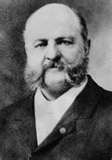 For the next forty years, Anthony Comstock wielded a censoring club on all things he deemed smutty and obscene. That included any and all materials related to contraception, abortion, sex education, sex itself and managed to extend itself not only in posted materials but literature, suppressing the works of DH Lawrence and Theodore Dreiser as well as banning nudity in artworks, even images and text in medical books, describing and illustrating reproductive functioning.
This is where the push to purity takes one, a mindless rejection of the human body and human nature, an extreme Sin of the Flesh philosophy.
Comstock had a particular problem with women, particularly the likes of Margaret Sanger and her supporters, as well as the Suffragettes, who openly defied Comstock’s puritanical attitudes. These women marched, sent pamphlets to supporters,  opened health clinics, smuggled contraception devices into the country, went to jail, went on hunger strikes, put their bodies on the line. And did not give up.
Women earned/won their right to vote in 1920. Griswold v the State of Connecticut was decided by the Supreme Court in 1965. The decision protected the right of married women to practice contraception and demand access to reliable reproductive services. These rights were eventually extended to unmarried women, the right to privacy established, which later swung the door open to the Roe v Wade decision.
I have no doubt that Santorum and like-minded, right-wing adherents would have no problem, slamming that door shut, hopping into a time machine and revisiting the days of Comstock purity. Let’s review the latest Santorum Hit Parade:
Telling a crowd at the Ohio Christian Alliance on Saturday that President Obama’s agenda was a “phony ideology” not “based on the Bible,” Rick Santorum has offered two explanations: the imposition of secular ideas on the Catholic Church and radical environmentalism that he claims the President specifically and Democrats in general have been pushing to the max.
Where to begin?
On the first charge, Santorum said:
The president has reached a new low in this country’s history of oppressing religious freedom that we have never seen before. If he doesn’t want to call his imposition of his values a theology that’s fine, but it is an imposition of his values over a church who has very clear theological reasons for opposing what the Obama administration is forcing on them.
This is clearly an example of contorted gamesmanship. When there is no defense to your position, you claim your opponent is doing what you yourself desire to do, in this case, impose your beliefs on the greater population. Very Comstock-like.
No one is forcing anything on Santorum, the Church or those who agree with their rigid position. The ‘compromise’ the Administration offered has already been accepted by Catholic charities, hospitals and universities as reasonable and workable. The fact that Santorum and the Catholic Bishops want to run their position into the ground does not make it right or timely. It’s simply a narrow, constipated outlook that belongs to an age when women were securely under the thumb of men like Santorum and the whims of Catholic Church. History has passed; attitudes and positions change.
In defense of the second explanation—radical environmentalism—Santorum had this to say to Bob Schieffer’s Face the Nation:
This idea that man is here to serve the Earth, as opposed to husband its resources and be good stewards of the Earth. And I think that is a phony ideal… I think a lot of radical environmentalists have it upside-down.
What pops out to me is the phrase ‘husband its resources.’
Change that phrase to the single word ‘extraction’ and we get the gist of what’s being said. So, anyone opposing the Keystone Pipeline would be deemed a ‘radical environmentalist,’ even though the 1700 mile pipeline endangers America’s bread basket and a major aquifer, would not reduce our dependence on unfriendly oil suppliers [80% of the refined tar sands is contracted for export] and would offer, at best, 5000-6000 temporary American jobs. Even an amendment to this new bill, a proposal that would have ensured that at least the steel for the pipeline would have been from the US, was rejected out of hand.
Color me a Environmental Radical. The Keystone project benefits no one but the rich financiers behind it. They get the mega-profits; we [the public] get stuck with a wasted landscape and the cost of any cleanup.
Or perhaps, Santorum is speaking about the WH’s kibosh on the uranium mining deal for the Grand Canyon. Splendid idea there. Turn one of the Wonders of the World, a national treasure into a money pit for mining interests. I’ve stood on the rim of the Canyon, marveled at the grandeur, the colors, the staggering expanse. And this, we would turn into a uranium mine? What a small, stingy idea!
I suspect Teddy Roosevelt [one of those evil progressives] is turning in his grave.
But Santorum outdid himself with this comment:
He lambasted the president’s health care law requiring insurance policies to include free prenatal testing, “because free prenatal testing ends up in more abortions and therefore less care that has to be done because we cull the ranks of the disabled in our society.”
Culling the ranks of the disabled?
Don’t mistake this comment as a defense of religious liberty because this is a coded charge that what contraception and abortion [presumably determined through prenatal testing and care] really involves is a form of eugenics. We will cull the herd of imperfections. Or we will attempt genocide of minorities. This is Glenn Beck hysteria. Billboards in Georgia revived the old smear against reproductive rights, charging that African American women were being targeted for abortion services. Black children, the claim stated, were an ‘endangered species.’
Funny that. I thought we were all of the same species.
If we truly want to talk about minorities being endangered, why don’t we talk about our prison population, comprised primarily of people of color. But, of course, that would be uncomfortable, deemed unfair by Republican politicians, who in their infinite wisdom want our prison system privatized, which will ensure maximum capacity for the sake of profits.
These arguments are old and pathetic. They’ve been leveled against anyone and everyone who have supported basic health services to women. Prenatal screening is a mainstay in the health of an expectant mother and the viability of any pregnancy. Problems can be picked up early and corrected before a delivery. The health of an expectant mother translates into the health of the developing fetus. The idea that screenings should be done away with or not offered to low income women is cruel.
The religion that Rick Santorum and his ilk would like us to swallow whole is one dictated by religious fanatics, purists like Anthony Comstock, where it’s their way or the highway. It is small. It is mean. It is unworthy of anything approaching the Divine.
We want a healthy society? Then we offer health services to all our citizens. Yes, even women, who deserve to be the arbiters of their own reproductive lives.
Garry Willis, historian, journalist and Catholic intellectual had this to say in a piece entitled “Contraception’s Con Men”:
The Phony “Undying Principle” Argument
Rick Santorum is a nice smiley fanatic. He does not believe in evolution or global warming or women in the workplace. He equates gay sex with bestiality (Rick “Man on Dog” Santorum). He equates contraception with the guillotine. Only a brain-dead party could think him a worthy presidential candidate. Yet he is praised by television pundits, night and day, for being “sincere” and “standing by what he believes.” He is the principled alternative to the evil Moderation of Mitt Romney and the evil Evil of Newt Gingrich. He is presented as a model Catholic. Torquemada was, in that sense, a model Catholic. Messrs. Boehner and McConnell call him a martyr to religious freedom. A young priest I saw on television, modeling himself on his hero Santorum, said, “I would rather die than give up my church’s principles.” What we are seeing is not a defense of undying principle but a stampede toward a temporarily exploitable lunacy.
I rest my case!

 peej
peej Carissa
 bostonboomer
 dakinikat
 ecocatwoman
 mablue2
 Mama Lopez
 peggysue22
 quixote
 skydancingguestblogger
 Mona (aka Wonk the Vote)



 Sky Dancing
Recent Comments