
President Hornswoggle and the Debted Hallows
Posted: July 7, 2011 Filed under: Barack Obama, Catfood Commission, Democratic Politics, Economy, Federal Budget, Federal Budget and Budget deficit, Global Financial Crisis, John Birch Society in Charge, legislation, Psychopaths in charge, Surreality, The Great Recession, U.S. Economy, voodoo economics | Tags: 14th amendment, austerity, Chuck Schumer, Debt ceiling negotiations, Federal Deficit, Medicaid, medicare, Social Security, voodoo economics 39 Comments So, you know me. I’m out looking for exactly how bad this debt ‘deal’ is going to austere our economy in to the Great Recession Redux. BostonBoomer has been writing about President Hornswoggle putting Medicare, Medicaid, and Social Security–not even part of the federal budget–on the table. I’ve searched and searched and can’t find the details on the great American Give Away other than a few articles showing a beaming Boehner saying we’re at a 50-50 chance of reaching a deal now. If Boehner is beaming, all but the richest among us should be holding on to our personal liberties and wallets.
We know that the President has caved on a bunch of things during both the HRC negotiations and the extension of the Dubya Tax Breaks for Billionaires pogrom. However, the Democratic leadership was aware of this, grumbled some, and backed his usurpation of responsibility for our future. Imagine my surprise when I watched Chuck Schumer on Andrea Mitchell say that he had no idea about the details of the current deal so he couldn’t really comment on it. The most noticeable detail was his face that said “I’ve got a sick tummy, mommy”. Senator Schumer is on the Senate Committee on Finance that handles all of these things and is supposedly a key person on the budget deal. You would think he would know. But, he doesn’t and neither does any other Democratic Senator or Congressman. It appears the press told them what Obama was handing over to the Republicans.
Senate Democrats reacted angrily Thursday to a report that President Obama has proposed significant cuts to Medicare and Social Security in closed-door talks with GOP leaders.
Democratic lawmakers said they were dismayed to read about Obama’s offer in the press rather than hearing it from the president himself. Their frustration is exacerbated by Obama’s snub of their invitation to speak to the Senate Democratic caucus Wednesday.
Instead, Obama is meeting with Democratic and Republican leaders from both chambers Thursday morning.
“We would have preferred to hear it from the president instead of from the press,” said Sen. Barbara Mikulski (Md.), a senior member of the Senate Democratic conference. “We first have to go after tax earmarks.”
Mikulski said cuts to Medicare and Social Security should be a solution of last resort. She said closing tax loopholes and pulling back from Libya should be considered before entitlement cuts.
She said Obama should not assume Democratic support for a deficit reduction plan that cuts entitlements.
I now fully expect President Cave-in to hand the keys to the nation over to a bunch of punch-drunk Republicans. What I don’t get is why the Democratic members of Congress continue to let him get away with it. They are the very face of “sound and fury signifying nothing”. Let me ask you if you’d want to be a congress member from some solid Democratic district facing re-election by having to defend a Democratic President that’s happy to cut Medicare and Social Security? Social Security doesn’t even need to be on the table. He’s just offered it up for some reason that I can’t fathom. How on earth could you face your electorate and back such a deal?
Let me remind you, all of the economic data gathered in the last 80 years tells us that this austerity agenda is just going to tank the economy. We continue t0 enact the very same crap that put us in the worst economic position we’ve seen since the Great Depression. Why oh why are they doing this to us? Here’s a taste of Noble Prize winning Joseph Stiglitz for some perspective.
A decade ago, in the midst of an economic boom, the United States faced a surplus so large that it threatened to eliminate the national debt. Unaffordable tax cuts and wars, a major recession, and soaring health care costs—fueled in part by the commitment of George W. Bush’s administration to giving drug companies free rein in setting prices, even with government money at stake—quickly transformed a huge surplus into record peacetime deficits.
The remedies to the U.S. deficit follow immediately from this diagnosis: Put America back to work by stimulating the economy; end the mindless wars; rein in military and drug costs; and raise taxes, at least on the very rich. But the right will have none of this, and instead is pushing for even more tax cuts for corporations and the wealthy, together with expenditure cuts in investments and social protection that put the future of the U.S. economy in peril and that shred what remains of the social contract. Meanwhile, the U.S. financial sector has been lobbying hard to free itself of regulations, so that it can return to its previous, disastrously carefree, ways.
Here’s a thorough, peer-reviewed, strong methodology-based IMF study–cited by Paul Krugman–that provides evidence that austerity programs are recessionary and bring on worse budget problems.
The paper corrects this by using the historical record to identify true examples of deliberate austerity — and it turns out that they are contractionary. The multiplier is less than one, but that may reflect the fact that these austerity programs did not take place in the face of a zero lower bound, so they were partly offset by monetary expansion.
The paper also provides a tentative answer to the apparent tendency of spending cuts to be less contractionary than tax increases: it looks as if central banks take more aggressive action to offset spending cuts than tax hikes, reflecting some combination of inflation concerns, belief that spending cuts are more durable, and (the paper doesn’t say this) bankerly ideology.
If we were discussing a politically neutral subject, the evidence here would long since have been considered definitive: expansionary austerity is a doctrine that failed. But since we’re in the political realm, of course, such a convenient doctrine can’t be abandoned. On the contrary, it now seems to be the official doctrine of both the GOP and the White House.
Also, let me remind you that Medicare, Medicaid, and Social Security are very successful programs. They have successfully stopped the elderly from being the poorest segment of society. Just as an example, the majority of single, elderly women would be in poverty without Social Security.
Elderly unmarried women — including widows — get 51 percent of their total income from Social Security. Unmarried elderly men get 39 percent, while elderly married couples get 36 percent of their income from Social Security. For 25 percent of unmarried women, Social Security is their only source of income, compared to 9 percent of married couples and 20 percent of unmarried men. Without Social Security benefits, the elderly poverty rate among women would have been 52.2 percent and among widows would have been 60.6 percent.
When poor people are given medical insurance, they not only find regular doctors and see doctors more often but they also feel better, are less depressed and are better able to maintain financial stability, according to a new, large-scale study that provides the first rigorously controlled assessment of the impact of Medicaid.
While the findings may seem obvious, health economists and policy makers have long questioned whether it would make any difference to provide health insurance to poor people.
It has become part of the debate on Medicaid, at a time when states are cutting back on this insurance program for the poor. In fact, the only reason the study could be done was that Oregon was running out of money and had to choose some people to get insurance and exclude others, providing groups for comparison.
I continually feel as though we’ve all been drug down the rabbit hole. It is like the President is purposefully enabling joblessness, poverty, and public health problems. No amount of research, historical data, and polls appear to be able to penetrate the Washington, D.C. group think these day. The biggest issue is that the President himself believes in the confidence fairy, the bipartisan elves, and the high priests of voodoo economics. He’s not just part of the problem, he is THE problem. Can just one or two members of the Democratic caucus please stand up to this man and his notion that bipartisanship that surrenders the country to right wing reality-deniers is better than any form of principled leadership? Can at least one of the please be brave and start talking some sense and representing the will of the people for a change?
Invoke the 14th Amendment and end the damned sell outs now!
Independence Day Reads
Posted: July 4, 2011 Filed under: Bailout Blues, Domestic Policy, Economy, Foreign Affairs, Global Financial Crisis, Greece, investment banking, morning reads | Tags: Bill Clinton, Budget Deficit, debt limit, Fukushima, Greek Debt Crisis, John McCain, nuclear crisis, shadow banking industry, SIVs, taxes 16 Comments Happy Independence Day!
We have a republic and a lot of people have sacrificed a lot over the last several centuries to keep it. Too bad most of our politicians aren’t in that number. They can’t see past their next elections.
It seems that two senators– McCain and Corynyn–say they’re open to tax increases as a way to solve the budget stand off. Guess there are a few of them left that would prefer not to tank our economy. Let’s hope this starts some real negotiations instead of the usual Republican hostage taking and Democratic cave-in that’s been politics as usual the last dozen years or so.
One of the senators, John Cornyn of Texas, said he would consider eliminating some tax breaks and corporate subsidies in the context of changes in the tax code, provided there was not an overall increase in taxes.
“I think it’s clear that the Republicans are opposed to any tax hikes, particularly during a fragile economic recovery,” Mr. Cornyn said on “Fox News Sunday.” “Now, do we believe tax reform is necessary? I would say absolutely.”
But he insisted that any changes in taxes be “revenue neutral,” meaning that the government would not take in any more money from individuals or businesses than it does now.
The other senator, John McCain of Arizona, said he would be willing to consider some “revenue raisers” as part of a broad deal, but he refused to name specific measures.
Mr. Cornyn, a member of the Senate leadership, also said that Republicans would be open to a short-term deal on the debt ceiling to provide more time for a comprehensive agreement.
Let’s also hope that more reasonable and less ideological heads prevail on the right and that the left stands up for what’s right for a change. Former President Clinton had a words of policy advice over the weekend. His advice to President Obama is “not to blink”.
Former President Bill Clinton Saturday night urged President Obama not to “blink” at Republican demands to exclude revenue increases from any agreement to extend the government’s debt ceiling.
If Republicans maintain their opposition to revenue increases, Clinton said, Obama should pursue a short-term deal to extend the debt ceiling based on spending cuts both sides have already accepted in the negotiations between the administration and Congressional leaders from both parties.
“I hope they will make a mini-deal,” Clinton said in an interview conducted with him at the Aspen Ideas Festival here.
The White House and Congressional negotiators from both parties are attempting to assemble a deficit reduction package that could win support in Congress for legislation to extend the nation’s debt ceiling, which the Treasury says the government will reach on August 2. The talks have foundered amid demands from Congressional Republicans to exclude any revenue increases from that prospective deficit reduction package.
Asked what the administration could do if GOP leaders hold to that posture, Clinton replied: “First the White House could blink. I hope that won’t happen. I don’t think they should blink.”
If Republicans will not accept revenues in a package to lift the debt ceiling by August 2, Clinton said, Obama should pursue a short-term agreement based on the spending reductions both sides have already accepted.
“There are some spending cuts they agree on …and he can take those and [get] an extension of the debt ceiling for six or eight months,” Clinton said.
Clinton also called on a package of reforms to US tax policy that includes a corporate tax cut if special interest tax loops are closed. This is something Obama has also supported.
“It made sense when I did it. It doesn’t make sense anymore – we’ve got an uncompetitive rate. We tax at 35 percent of income, although we only take about 23 percent. So, we SHOULD cut the rate to 25 percent, or whatever’s competitive, and eliminate a lot of the deductions so that we still get a FAIR amount, and there’s not so much variance in what the corporations pay. But how can they do that by Aug. 2?”
Clinton also said Grover Norquist, who as president of Americans for Tax Reform is the GOP’s unofficial enforcer of no-new-taxes pledges, has a “chilling” hold on the nation’s lawmaking.
The former president said it has seemed like Republicans need any revenue concessions need to be “approved in advance by Grover Norquist.”
“You’re laughing,” he told the crowd of 800. “But he was quoted in the paper the other day saying he gave Republican senators PERMISSION … on getting rid of the ethanol subsidies. I thought, ‘My GOD, what has this country come to when one person has to give you permission to do what’s best for the country.’ It was chilling.
There’s an extremely interesting piece at The Atlantic Wire on “What Really Happened at Fukushima”. It includes interviews with workers that have been inside the crippled nuclear plant.
Throughout the months of lies and misinformation, one story has stuck: “The earthquake knocked out the plant’s electric power, halting cooling to its reactors,” as the government spokesman Yukio Edano said at a March 15 press conference in Tokyo. The story, which has been repeated again and again, boils down to this: “after the earthquake, the tsunami – a unique, unforeseeable [the Japanese word is soteigai] event – then washed out the plant’s back-up generators, shutting down all cooling and starting the chain of events that would cause the world’s first triple meltdown to occur.”
But what if recirculation pipes and cooling pipes, burst, snapped, leaked, and broke completely after the earthquake — long before the tidal wave reached the facilities, long before the electricity went out? This would surprise few people familiar with the 40-year-old Unit 1, the grandfather of the nuclear reactors still operating in Japan.
The authors have spoken to several workers at the plant who recite the same story: Serious damage to piping and at least one of the reactors before the tsunami hit. All have requested anonymity because they are still working at the plant or are connected with TEPCO. One worker, a 27-year-old maintenance engineer who was at the Fukushima complex on March 11, recalls hissing and leaking pipes. “I personally saw pipes that came apart and I assume that there were many more that had been broken throughout the plant. There’s no doubt that the earthquake did a lot of damage inside the plant,” he said. “There were definitely leaking pipes, but we don’t know which pipes – that has to be investigated. I also saw that part of the wall of the turbine building for Unit 1 had come away. That crack might have affected the reactor.”
The reactor walls of the reactor are quite fragile, he notes. “If the walls are too rigid, they can crack under the slightest pressure from inside so they have to be breakable because if the pressure is kept inside and there is a buildup of pressure, it can damage the equipment inside the walls so it needs to be allowed to escape. It’s designed to give during a crisis, if not it could be worse – that might be shocking to others, but to us it’s common sense.”
Here’s some frightening news on the disaster in Japan. Radioactive Cesium has been found in Tokyo’s water supply.
Radioactive cesium-137 was found in Tokyo’s tap water for the first time since April as Japan grapples with the worst nuclear disaster in 25 years.
Cesium-137 concentration registered at 0.14 becquerels per kilogram in the city’s Shinjuku ward on July 2, compared with 0.21 becquerels on April 22, according to the Tokyo Metropolitan Institute of Public Health. No cesium-134 or iodine-131 was detected, the agency said on its website.
The Nuclear Safety Commission of Japan sets a safety limit of 200 becquerels per kilogram for cesium-134 and cesium-137. The limit for iodine-131 consumption is 300 becquerels per kilogram.
Japan is battling radiation leaks into the air, soil and water after an earthquake and tsunami on March 11 knocked out cooling systems at Tokyo Electric Power Co.’s Fukushima Dai- Ichi nuclear station, resulting in the meltdown of three of the six reactors at the plant.
The UK Guardian lists an interesting set of Greek public assets for sale. Many have no buyers. Bobby Jindal is putting up a lot of Louisiana assets for sale too. I wonder if this is going to be the new way to raise money. The Kochs already rent a big chunk of Yellowstone. Let’s hope we don’t have to put our national treasures on the chopping block.
Up for sale are 39 airports, 850 ports, railways, motorways, sewage works, a couple of energy companies, banks, defence groups, thousands of acres of land for development, casinos and Greece’s national lottery. George Christodoulakis, Greece’s special secretary for asset restructuring and privatisations, said the sell-off would raise €50bn (£44bn) to help pay back the country’s €110bn bailout debt.
The private equity bosses gathered in the hotel’s ballroom for the parade of Greece’s national treasures showed little interest in buying anything.
Nikos Stathopoulous, managing partner of BC Partners, which has invested more than €3.5bn in Greece, said investors are put off by bureaucracy, strong unions, corruption and a lack of transparency. “Even in the good times Greece is not a country that attracts investment. Foreign investors don’t want to invest in a country where there is no flexibility in hiring and firing people,” he said. “You don’t want to invest in a country in which you wake up and a new law has been passed which totally undermines and destroys the value of the investment you’ve just made.”
Stathopoulous said investors were finding it very hard to assess the risk of investing into Greece, which means assets “will be priced at lower than they are worth, lower than the Greek government, and even the European Union, expects”.
Here’s a compelling argument for getting the shadow banking sector into a more regulated, transparent, and standardized order. It’s written by Henry Tabe who is a Founding Partner of Sequoia Investment Management Company Ltd. It particularly addresses the use of the Structured Investment Vehicle (SIV). Complex, nonstandard, and unregulated markets make pricing assets difficult and introduce unnecessary risk and volatility.
Risk management requires identification, measurement, aggregation, and effective management of risks. It should help businesses allocate sufficient capital for survival and growth. The SIV’s extinction highlights risk management failures by the vehicles, their sponsors, rating agencies, policymakers, and regulators.
Financial regulators permitted bank, insurance company, pension, and hedge-fund sponsors to establish SIV “mini-banks” without ensuring that they maintain sufficient capital or back-stop liquidity in the event of a run. Policymakers also seemed unaware of the knock-on effects of the SIV’s demise on the securitisation and global credit markets. The Financial Security Authority’s call for regulators to incorporate sectoral analytical capabilities in their micro-prudential policies should help close the knowledge gap and ensure that timely solutions can be implemented to avert collapses that engender significantly more stress on the financial system (FSA 2009).
Lessons learned include the tightening of regulation governing the sponsorship of off-balance-sheet structures and the sizing of their capital and liquidity needs. These require that regulators adopt a more proactive, dampening role in the wild swings from exuberance to despair that are so characteristic of the financial markets. Discussions around contingent capital and similar products suggest regulators have embraced that dampening role and moved away from the prevailing pre-crisis philosophy of minimal regulation.
Lessons learned also include closer supervision of shadow banks, more skin-in-the-game for their sponsors, in-house retention of risk-analytics capabilities by investors, and less reliance on credit-rating agencies. The agencies themselves are more tightly supervised in order to reduce ratings shopping by issuers and inherent conflicts of interest in the business model (CESR 2009). Tighter regulation will also help to ensure that the agencies improve the monitoring of analyst performance, qualifications, and experience (Dodd-Frank 2010).
These measures should help restore confidence in rating agencies and the global financial system, an outcome more urgently required given on-going turmoil in the sovereign debt market.
So, there’s some wonky goodness to keep you entertained if you’re inside today. Be sure to let us know what you’re reading and blogging! Hope your Fourth of July is a happy one!
France’s Christine Legarde Set to head IMF creating another ‘first’ for Women
Posted: June 28, 2011 Filed under: Economic Develpment, financial institutions, Global Financial Crisis, Women's Rights | Tags: Christine Legarde, French Minister of Finance, IMF, President of IMF 7 Comments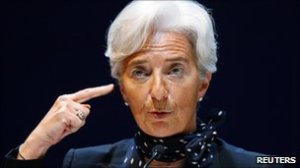 One of the world’s best economists and France’s Minister of Economics, Finance, and Industry–Christine Legarde–will likely be the newly appointed head of the International Monetary Fund (IMF). Thankfully, the U.S. joined with other members of the IMF board to approve Legarde which virtually assures her appointment. Legarde will be the first woman to head the IMF. She is widely regarded as the best Finance minister in the Eurozone. She will inherit an IMF still reeling from the sex scandal surrounding Dominique Strauss-Kahn as well as an IMF dealing with the Greek sovereign debt meltdown. The IMF is an important development vehicle for many of the world’s struggling economies. It has been controversial in the past since it has been seen to implement ideological as well as development strategies.
Lagarde’s presence itself as the first female head of the IMF will go a long way toward reinvigorating any demoralization of the staff. Granted, Lagarde is poised to earn the job because she’s the most qualified and best positioned to help the organization deal with its pressing economic crises. And while putting an extremely successful woman atop the IMF certainly won’t erase the Strauss-Kahn scandal or stop every unwanted advance, it should go a long way toward reminding the IMF’s staffers how much the organization values gender equality and won’t tolerate such behavior at any level. At the very least, having someone in charge who doesn’t have the reputation of being a womanizer is surely a good thing.
It’s unclear how much the internal culture at IMF actually needs fixing. A May New York Times story laid out an image of the IMF as a place “in which romances often flourish—and lines are sometimes crossed,” and where a pressured, “sharp-elbowed” place left complaints of harassment unanswered and where “rules are more like guidelines.” Some 676 women in the organization filed a response to the story, saying they were insulted by the way their workplace was depicted.
Still, Lagarde herself says the organization will need to “take pains to show the outside world” that it is a leader in ethical behavior. And she acknowledges that staff morale will need some mending following the august organization’s embarrassing time in the spotlight.
Legarde has a formidable intellect and is well-known for her straight and tough talk. Finance and economics are areas dominated by men with swagger. She has succeeded in ways that many men have not.
Ms Lagarde was appointed France’s Trade Minister in 2005 and under her watch, French exports reached record levels.
In 2007 she became finance minister, the first woman to hold this post not just in France but in any of the G8 major industrial countries.
Never afraid of speaking her mind, she has blamed the 2008 worldwide financial crisis partly on the male-dominated, testosterone-fuelled culture at global banks.
One of France’s most popular right-wing politicians, in 2009 she came second in a poll carried out by broadcaster RTL and newspaper Le Parisien on the country’s favourite personalities, beaten only by singer and actor Johnny Hallyday.
But her popularity has stretched beyond French shores and she is viewed with high regard in the international arena.
In 2009, the Financial Times voted her the best finance minister in Europe.
She has won international respect for promoting France’s negotiating clout in key forums like the G20, for which France currently holds the presidency.
She has also received plaudits for the key role she played in approving a bail-out mechanism to aid struggling members of the eurozone last May.
Lagarde has played a large role in the many challenges facing the Eurozone since the U.S. financial market meltdown. Unlike the U.S. which has basically coddled the very executives whose risky behavior and bad business practices have gone largely unpunished, Largarde has worked hard to reform the system to avoid a repeat. She not only has to herd French politicians but also create consensus among the other members of the EU community.
Lagarde has won praise for steering France through the financial crisis, notably by dispensing $48 billion in aid to French banks, which are repaying the money with interest after stabilizing themselves. She also fought successfully to provide corporate tax relief, aid to small businesses, and tax credits to stimulate research. “None of those things would have happened without Christine Lagarde,” says Frédéric Gonand, an economics professor at Paris-Dauphine University who recently stepped down after four years as Lagarde’s chief economic adviser. “She placed her own mark on economic policy.” A May poll by Ipsos for the magazine Le Point put her approval rating at 51 percent, far above her boss Sarkozy’s 37 percent.
Still, France has fallen behind Germany in making the kinds of changes that could give the economy a serious boost, such as reducing government bureaucracy and labor market restrictions. The need to carry out policies dictated by Sarkozy has also put her in awkward situations at times. In 2009 she had to defend his plan to invest $51 billion in research and development and other projects at a time when France was under attack by other euro zone countries for running a 7.5 percent budget deficit, far above the 3 percent that member countries had agreed on. And despite her role in negotiating the euro rescue package, the terms of that deal, such as automatic sanctions against aid recipients if they didn’t meet agreed-upon targets, were dictated largely by Germany. “France’s game seemed to be, ‘Let’s stick to the Germans as closely as possible,'” says Philip Whyte, a senior research fellow at the London-based Centre for European Reform. “She’s a great facilitator and chair, but she’s probably not in the absolute center of influence.”
I actually can’t tell you how excited I am about this development. As I’ve said before, she’s been a great success in France. This shows she can once again bust through a major glass ceiling that’s been there for ages for women in my profession.
Tuesday Reads
Posted: June 28, 2011 Filed under: abortion rights, Federal Budget, Federal Budget and Budget deficit, Foreign Affairs, Global Financial Crisis, morning reads, Reproductive Health, Reproductive Rights | Tags: abortion rights, Argentina presidential elections, choking, Federal Deficit, Los Alamos nuclear weapons lab, New Zealand Southern Right Whales, Planned Parenthood, Prosser, Too big to Fail, Wisconsin 32 Comments
Good Morning!
Well, I hate to keep having to read about states out to get women’s health clinics, but here we go again!
The Texas Legislature approved a bill Monday that would both compel the state to push the Obama administration to convert Texas’s Medicaid program into a block grant and defund abortion providers like Planned Parenthood.
The omnibus health bill also includes a number of other controversial provisions, including plans to save $400 million over the next year by increasing the use of Medicaid managed care.
The legislation now goes to the desk of Gov. Rick Perry, who has been generally supportive of both the Medicaid reforms, as well as anti-abortion language.
Here’s so more details on the Texas situation from the Dallas News.
The bill would deny $34 million to Planned Parenthood from family planning grants, curb abortions at public hospitals and promote use of adult stem cells from the patient’s own body in new medical treatments.
“Early in the session, I didn’t dare dream that we could make the gains this bill would accomplish,” said Joe Pojman of Texas Alliance for Life.
Also, under the bill, Texas could join Georgia and Oklahoma in creating a health care compact. Under the proposal, if Congress approved, the states could agree to cap the federal government’s contribution to several health care programs, including Medicaid and Medicare. In return, they would be freed from current federal laws on eligibility and benefits.
Planned Parenthood is asking a federal court to block Kansas from cutting off its federal funding, after winning a similar injunction Friday in Indiana.
Planned Parenthood of Kansas and Mid-Missouri filed a lawsuit Monday that seeks to prevent Kansas from implementing a provision of the state budget that would cut off federal funding.
According to the group’s brief, Kansas blocked federal money from going to organizations that specialize in family planning without also providing primary and preventive care. The provision would cut off funding to all Planned Parenthood clinics, even those that do not provide abortions, the group says.
This is really getting serious folks! States are trying all kinds of things because they know think the courts might rule in their favor. The amount of money going to defend nuisance laws in these states must be astounding.
The President is signalling that a ‘significant’ deal with the Republicans might be in the works about the federal budget and deficit. Better check your passport status! It’s likely we’re about to get fleeced and you may want to head for a country that appreciates its middle class for a stay!
President Barack Obama plunged into deadlocked negotiations to cut government deficits and raise the nation’s debt limit Monday, and the White House expressed confidence a “significant” deal with Republicans could be reached. But both sides only seemed to harden their positions as the day wore on, the administration insisting on higher taxes as part of the package but Republican leaders flatly rejecting the idea.
Obama and Vice President Joe Biden met with Senate Majority Leader Harry Reid, D-Nev., for about 30 minutes at the White House, and then met with Senate Republican leader Mitch McConnell of Kentucky for about an hour in the early evening.
White House spokesman Jay Carney said Obama reported after the morning session that “everyone in the room believes that a significant deal remains possible.” But Carney also affirmed that Obama would only go for a deficit-reduction plan that included both spending cuts and increased tax revenue, an approach that Republicans say would never get through Congress.
It has increasingly fallen to institutional investors to hold mortgage lenders, investment banks and other large financial institutions accountable for their role in the mortgage crisis by seeking redress for shareholders injured by corporate misconduct and sending a powerful message to executives that corporate malfeasance is unacceptable. For example, sophisticated public pension funds are currently prosecuting actions involving billions of dollars of losses against Bank of America, Goldman Sachs, JPMorgan Chase, Lehman Brothers, Bear Stearns, Wachovia, Merrill Lynch, Washington Mutual, Countrywide, Morgan Stanley and Citigroup, among many others. In some instances, litigations have already resulted in significant recoveries for defrauded investors.
Historically, institutional investors have achieved impressive results on behalf of shareholders when compared to government- led suits. Indeed, since 1995, SEC settlements comprise only 5 percent of the monetary recoveries arising from securities frauds, with the remaining 95 percent obtained through private litigation as demonstrated by several examples in the chart at right.
Institutional investors must continue to lead the charge and prosecute fraud to send a strong message that such misconduct will not be tolerated and to guarantee that shareholders are fairly compensated for their losses. Both the courts and Congress have recognized that meritorious private securities litigation is “an indispensable tool with which defrauded investors can recover their losses[,]…promote public and global confidence in our capital markets and help to deter wrongdoing.” While originally intended as a supplement to government regulation, recent events demonstrate that institutional investors may now be the entities best positioned to protect investors’ rights. Without such protection, and if Wall Street bankers are permitted to profit from their frauds without a proportionate retributive response, we may be fated to repeat the same economic calamity that has defined our generation.
The state Capitol Police Chief, Charles Tubbs, said Monday that he is turning over the case to local law enforcement.
“After consulting with members of the Wisconsin Supreme Court, I have turned over the investigation into an alleged incident in the court’s offices on June 13, 2011 to Dane County Sheriff Dave Mahoney,” Tubbs said in a statement. “Sheriff Mahoney has agreed to investigate this incident and all inquiries about the status of the investigation should be made with the Sheriff’s Department.”
Mahoney issued a concurrent statement declaring that he has directed detectives to investigate the incident.
“Beginning today, detectives will work diligently to conduct a thorough and timely investigation,” Mahoney said. “Because this case is in the very early stages, no further information is available at this time.”
The Wisconsin Center for Investigative Journalism first revealed the June 13 incident on Saturday, reporting that Prosser put his hands on Bradley’s neck during debate over the legality of the “budget repair bill,” which the court’s conservative majority ruled is legal in a 4-3 decision June 14.
Reaction on the Web — where partisans have been arguing Wisconsin politics for months — was swift.
At ThinkProgress, Ian Millhiser surmised four ways Prosser can be legally removed from office.
“Should the allegations against Prosser prove true, it is tough to imagine a truer sign that our political system has broken down than if the calls to remove him from office are not unanimous,” he wrote.
Natural disasters in our country have triggered concern about nuclear facilities. The latest facility to be jeopardized is Los Alamos nuclear weapons lab in New Mexico. Add this to the two nuclear power plants in Nebraska surrounded by the flooded Missouri River.
The Los Alamos nuclear weapons lab in New Mexico has been shut down for the day due to a fast-moving wildfire that is endangering the lab and surrounding area. The fire began around 12 miles southwest of Los Alamos, charring about 6,000 acres. Fire officials say none of the fire is under control yet. Lawrence Lujan of the Santa Fe National Forest said, “We have homes and we have the labs, so it’s a very, very big concern, not only locally, but nationally and globally.”
Cristina Fernández de Kirchner--Argentina’s president–has announced she’ll run for a second term in office in October.
Her announcement marks the beginning of Argentina’s presidential election campaign. Ms Fernández is in good shape to secure another term. She is comfortably ahead in the opinion polls, thanks in large part to Argentina’s strong economic performance: GDP grew by an annualised 10% in the first quarter of 2011, due in no small measure to growing international demand for soya, now the country’s biggest export.
Ms Fernández faces no challenges from within her governing Peronist Party. And despite months of attempts to form a coalition of opposition, her political adversaries remain hopelessly split. Her strongest opponents are likely to be Eduardo Duhalde, a former president, and Ricardo Alfonsín, the son of a former president. But her biggest problems lie elsewhere.
One is a corruption scandal surrounding the Association of Mothers of the Plaza de Mayo, a group of women campaigning to discover what happened to their children under Argentina’s military dictatorship between 1976 and 1983. Ms Fernández and her husband allied themselves to the group, providing them with millions of dollars of state funds with which to build houses for the underprivileged and without seeking any guarantees. The Mothers have now been caught up in a fraud investigation, which some think could cause problems for Ms Fernández.
One last bit of good news! Southern Right Whales Return to New Zealand After a Century of overhunting and being on the brink of extinction.
Southern right whales were once a common sight along the coast of New Zealand, though in the 19th century overhunting brought the species to the brink of extinction. But now, after a decades of being virtually non-existant off New Zealand’s shores, wildlife experts are seeing endangered right whales finally returning to their ancestral calving grounds — offering hope that the whales’ are rediscovering a ‘cultural connection’ to this region after a century-long hiatus.
Before they were brought to near-extinction by whalers who considered them to be the best whale species to target — hence the ‘right’ in their name — southern right whales are thought to have numbered in the tens-of-thousands in the waters off New Zealand. In the decades that followed, however, the few surviving whales limited their calving grounds to the sub-antarctic regions to the south, despite the fact that closer to the New Zealand mainland had ancestrally been where they raised their young.
But recently a team of researchers from the University of Auckland and New Zealand Department of Conservation made a remarkable discovery; right whales seemed to be heading home.
“With the increase in numbers observed around the Auckland Islands over the last decade, we think that some individuals are re-discovering the former primary habitat around the mainland of New Zealand,” researcher Scott Baker tells The New Zealand Herald.
What’s on your reading and blogging list today?
Late Night Schlock: Financial Meltodrama
Posted: May 23, 2011 Filed under: Bailout Blues, Economy, financial institutions, Global Financial Crisis | Tags: Ed Asner, HBO Too Big To Fail, Paul Giametti, William Hurt 20 Comments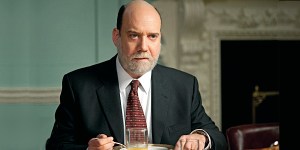 HBO premiers its adaptation of Andrew Ross Sorkin’s “Too Big to Fail” today at 9 ET/PT. I’ve got my bowl of popcorn all ready. My Businessweek hit my mailbox today detailing the all-star line up of the still living cast of real life crisis players. That’s Paul Giametti as Ben Bernanke over there on the left. William Hurt plays Hank Paulson. Ed Asner plays Warren Buffet. Oh, and Dan Hedaya plays Barney Frank. Did you ever imagine Hollywood recreating Barney Frank? It’s sort’ve humorous to think of all these Hollywood types playing Wall Street and Washington insiders. Same big Egos. Same program of you’re only as good as your last deal.
I’m still “reeling” from the idea of Business Week doing a Move Review.
Too Big to Fail, which premieres on May 23, follows the same trajectory as Sorkin’s book, from the collapse of Bear Stearns that spring to the rise of TARP in the fall. To the film’s credit, it attempts to make many of these still-horrifying moments pretty funny—and squeezes them all into 98 minutes. While the movie doesn’t shed much new light on the period, it offers one of the few pleasures left unfulfilled by the gusher of nonfiction thrillers, roman à clefs, wrist-slapping documentaries, and Oliver Stone. The bankers and government officials who rose to prominence in those months are depicted in all their glory and disgrace by real Hollywood actors—most of whom are far better-looking versions of the people they’re portraying. (Tim Geithner is pretty handsome, but Billy Crudup? Really?) TARP groupies will delight in the film’s attention to detail. Leon, the coffee cart guy parked outside Lehman’s office building, gets a chance to extend his five minutes of fame. The hideous toupee worn by Matthew Modine—playing Merrill Lynch Chief Executive Officer John Thain—might be the worst fake movie hair since Burt Reynolds’s heyday.
For the uninitiated, director Curtis Hanson—who won an Oscar for writing L.A. Confidential—drops some not-so-subtle hints. A voice-over in an opening scene refers to JPMorgan Chase’s (JPM) Jamie Dimon (Bill Pullman) as the “smart” banker; Lloyd Blankfein (Evan Handler) is called the “superstar”; and Citigroup’s (C) Vikram Pandit (Ajay Mehta) is called neither. As Hank Paulson (William Hurt) declares, “No one is sure if he’s running Citi or Citi is running him.” Fuld, played in all his vein-popping glory by James Woods, needs no description at all. Viewers are shown, in no uncertain terms, his ginormous hubris as he screws up a potential deal with Korea Development Bank. After being told by Lehman Chief Operating Officer Bart McDade to stay out of the negotiations, Fuld barges in, scares off the bidders, and blows what could have been a precious lifeline.
Here’s the review from LA Times TV critic Robert Lloyd.
The film’s main argument, really, is that we should look kindly upon Paulson and the best he tried to do; the other characters we rate by whether they help or hinder him. What moral voice there is here mostly comes out of his mouth. “We’ve been late on everything,” he admits, and admits also that no one in power wanted to regulate the financial industry because “We were making too much money.” (That’s about as pointed as the film gets on the subject of corporate greed.) Hurt, who (like his costars) seems to be playing the script rather than imitating the person whose name he bears, is a tall tower of movie-star appeal, and it does not hurt our opinion of Paulson that Kathy Baker plays his wife, although she has not much to do but sympathize.
So, if you’re up for an evening about the masters of the universe played by Hollywood’s elite character actors, you know where to go tonight. Here’s the trailer with its theme song Fortunate Song by Credence Clearwater Revival which is a damned good choice and a brief interview with Giametti. I also put him the HBO back story that’s part of the Opening the Vault series.
This has some of the back story on TARP and the meltdown including interviews with journalists that covered the event and the aftermath.
You can consider this an open thread. I’m at home still trying to kick my fever with a larger dose of antibiotics. No beer with the popcorn tonight. (sigh) I’m okay but this stuff is just friggin’ persistent.

 peej
peej Carissa
 bostonboomer
 dakinikat
 ecocatwoman
 mablue2
 Mama Lopez
 peggysue22
 quixote
 skydancingguestblogger
 Mona (aka Wonk the Vote)



 Sky Dancing
Recent Comments