
Friday Reads: Weaponized Oil and a tale of conspiracies
Posted: December 26, 2014 Filed under: Foreign Affairs, fracking, Iran, Russia, Saudi Arabia 10 CommentsGood Morning!
So, I’m going to write briefly about something that’s been fascinating me lately. That’s the incredible decrease in oil prices and the impact that it’s having on Russia and other oil producing nations outside of the Emirates and Saudi Arabia . I’m a sucker for a good currency crisis since it’s basically right up my research  alley.
Also, oil has been one of those commodities that’s pretty much dominated my adult life. I remember having to buy gas on even days because the Dealer’s tags on our cars ended in 8 during the oil crisis. I know what it did to my dad’s business as a car dealer. Basically, oil’s been the most fungible commodity in modern times. No modern economy can live without it. We’ve definitely fought wars to control it. Oil’s being weaponized like never before.
There are several key factors driving down your gas at the pump. First, the global economy has slowed down so that the demand for oil has tapered off. That’s one thing that’s been at play. But the more interesting factor has been the increase in supply which is related to the interesting way that Saudis have been ignoring OPEC quotas and inching up the supply. There’s been some rumors going around–actual conspiracy theories– that they are doing so for three reasons. First, they want to make sure that the nascent tar sands oil industry in North America isn’t profitable. Second, they want to hurt Iran, Syria, and Iraq and any other Shia nation involved with oil production. The third reason is to get at Russia. I want to share what I’ve found on these fronts with you. It has the feel of a new kind of cold war and the opposite of the gas wars of the 1970s.
Russia just experienced a “Black Monday” in that the Russian Stock market has collapsed as has the ruble. The Russia economy is heavily dependent on oil exports so any decrease in oil prices has an impact. These continued price decreases have their economy on the verge of failure. The entire situation has been exacerbated by UN Sanction against the country for its invasion and intervention in the Ukraine. It’s not pretty.
In recent weeks, the fall in the Russian ruble and Russian stock markets closely tracked the declines in global oil prices. But everything changed on December 15. The oil price remained stable, but the ruble and the stock-price indices lost 30% in the subsequent 24 hours. An unprecedented effort by the Central Bank of Russia (CBR) in the wee hours of December 16 to stabilize the ruble, by hiking the interest rate from 10.5% to 17%, proved useless.
The cause of Russia’s “Black Monday” was readily apparent: the government bailout of state-owned Rosneft, the country’s largest oil company. Usually, bailouts calm markets; but this one recalled early post-Soviet experiments, when the CBR issued direct loans to enterprises – invariably fueling higher inflation. The CBR’s governor at the time, Viktor Gerashchenko, was once dubbed the world’s worst central banker.
In 2014, the CBR is more constrained than it was in Gerashchenko’s era: it cannot lend directly to firms. Yet it has also become more sophisticated at achieving the same ends that Gerashchenko sought.
In October, Rosneft issued $11 billion worth of ruble-denominated bonds (an unparalleled amount for the Russian market, equivalent to 70% of the total value of corporate bonds issued in Russia this year). The coupon on these bonds was actually 1.5 percentage points below sovereign bonds of similar maturity, which is also unusual, especially given that Rosneft currently is subject to Western sanctions.
Then, unnamed investors (allegedly the largest Russian state banks) benefited from the CBR’s decision on December 12 to allow these bonds to be used as collateral for three-year CBR ruble loans at the policy rate. Moreover, the CBR scheduled a special auction for such loans on December 15 – with the total amount of the loans similar to that of Rosneft’s bond issue. Thus, the CBR would be able to provide a massive pile of rubles to Rosneft at below-market rates. So why did the deal trigger a panic?
At first glance, this deal was intended to meet contemporary Russia’s most important economic challenge. Sanctions have cut off Russian banks and companies from Western financial markets. Russian companies have to repay or refinance about $300 billion of debt over the coming two years. Some of this debt is owed to Russian companies’ offshore owners, who will certainly be happy to roll it over. But in most cases, firms’ liabilities comprise real debt owed to major international banks.
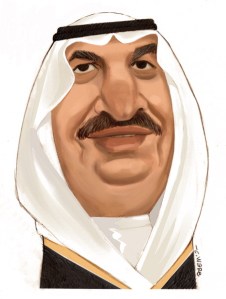 Global investors are anxiously awaiting some kind of strategy for recovery. Actions by the Central Bank of Russia have been very curious. All of the countries that depend on oil exports for huge amounts of their funding are in trouble. Russia is probably just the most obvious of them. This goes for Iran also. That’s because both of them are heavily weighed down by UN sanctions.
The non-OPEC producing countries (Russia, Brazil and Norway, as examples) are starting to become backed into an economic corner. In all of these countries, oil represents a major export and helps finance other economic activities. For example, as Russia sells oil in the open market (priced in dollars) at $60 per barrel, the revenue in dollars is 50 percent less than was the case in June of this year. Since June, the Russian Ruble has declined by 59 percent (to the U.S. dollar). A “crash” in the value of any currency leads to very high inflation (imports are now more expensive than would have otherwise been the case), which leads to potential civil unrest. On a global scale, the “wealth” of Russia as a nation, priced in Rubles, has declined by 59 percent in the last six months.
This is the stuff that leads to revolutions. Oil, other commodities and vodka are about the only exports Russia creates and helps fund their country’s spending. They are net importers of most all consumption goods (health supplies, food, etc.). In their own currency, those imports are now 59 percent more expensive than they were this past summer.
To some, the problem Russia currently faces sounds like something Vladimir Putin created by his dalliances in the Crimea and Ukraine. There is some truth to this as those actions led to economic sanctions unleashed by the West on Russia. The oil pricing issue is indirectly due to his destructive behavior. What really matters to the rest of the world at this stage is the potential for economic weakness to spread to the rest of the world from Russia… monetary contagion, anyone?
How would this happen? Why would the rest of the world be negatively affected by weakness in the Russian Ruble? Russia’s economy is the world’s eighth largest (as measured by the IMF ), a little larger than Italy and a little smaller than Brazil. At about $2.1 trillion in GDP, Russia is dwarfed by the United States at $17.5 trillion. If Russia’s economy contracts by 4 percent (which potentially is in the cards for 2015), it will impact the world’s GDP by about $84 billion, or .1 percent. No big deal. However, let’s think not about the world’s income statement (GDP) but rather about the world’s balance sheet – the world’s banking system.
Most Russian national debt is priced in Rubles and the value of that debt has collapsed from six months ago when the Ruble was higher and Russian interest rates were dramatically lower. Russia’s public debt is $216 billion. The Russian benchmark interest rate was at 7.5 percent in June of this year – that interest rate is now 17 percent.
How much this impacts any other country has a lot to do on how many banks hold Ruble-denominated assets or liabilities. The interesting thing is that Saudi Arabia seems no where done with its dalliance in increasing oil supply. This particular bit of news is what motivated me to finally bring this up here. The emirates and Saudi Arabia seem willing to dig into their own sovereign wealth and their countries’ spending to see this through. They must be extremely serious about something. Is it the threat from Shia Muslims? From US Fracking Oil? Do they just plain hate the Russians?
Saudi Arabia’s Cabinet on Thursday endorsed a 2015 budget that projects a slight increase in spending and a significant drop in revenues due to sliding oil prices, resulting in a nearly $39 billion deficit
In a sign of mounting financial pressure, the Finance Ministry said the government would try to cut back on salaries, wages and allowances, which “contribute to about 50 percent of total budgeted expenditures.” That could stir resentment among the kingdom’s youth, who make up a majority of the population and are increasingly struggling to find affordable housing and salaries that cover their cost of living.
The price of oil— the backbone of Saudi Arabia’s economy — has fallen by about a half since the summer. Saudi Arabia is extremely wealthy, but there are deep wealth disparities and youth unemployment is expected to mushroom absent a dramatic rise in private sector job creation. The International Monetary Fund says almost two-thirds of employed Saudis work for the government.
A the height of Arab Spring protests sweeping the region in 2011, King Abdullah pledged $120 billion to fund a number of projects, including job creation and hikes in public sector wages. The move was largely seen as an effort to appease the public and blunt any challenges to monarchical rule.
Associate Fellow and energy researcher at Chatham House, Valerie Marcel, said massive government spending across the Gulf on public sector salaries is “really the thing that keeps the lid on the bottle.” She said that for now the Arab monarchies of the Gulf can afford to run deficits due to surpluses accumulated over the years from high oil prices.
Now that’s commitment. There’s actually some discussion around that the US and the Saudis basically colluded to drop oil prices. This all is happening while OPEC has called for widespread production cuts. Anyone with a little game theory  background along with economics know that this is a deadly game. The ones that cut their production will lose income.
Turning to the current price drop, the Saudis and OPEC have a vested interest in taking out higher-cost competitors, such as US shale oil producers, who will certainly be hurt by the lower price. Even before the price drop, the Saudis were selling their oil to China at a discount. OPEC’s refusal on Nov. 27 to cut production seemed like the baldest evidence yet that the oil price drop was really an oil price war between Saudi Arabia and the US.
However, analysis shows the reasoning is complex, and may go beyond simply taking down the price to gain back lost marketshare.
“What is the reason for the United States and some U.S. allies wanting to drive down the price of oil?” Venezuelan President Nicolas Maduro asked rhetorically in October. “To harm Russia.”
Many believe the oil price plunge is the result of deliberate and well-planned collusion on the part of the United States and Saudi Arabia to punish Russia and Iran for supporting the murderous Assad regime in Syria.
Punishing Assad and friends
Proponents of this theory point to a Sept. 11 meeting between US Secretary of State John Kerry and Saudi King Abdullah at his palace on the Red Sea. According to an article in the Wall Street Journal, it was during that meeting that a deal was hammered out between Kerry and Abdullah. In it, the Saudis would support Syrian airstrikes against Islamic State (ISIS), in exchange for Washington backing the Saudis in toppling Assad.
If in fact a deal was struck, it would make sense, considering the long-simmering rivalry between Saudi Arabia and its chief rival in the region: Iran. By opposing Syria, Abdullah grabs the opportunity to strike a blow against Iran, which he sees as a powerful regional rival due to its nuclear ambitions, its support for militant groups Hamas and Hezbollah, and its alliance with Syria, which it provides with weapons and funding. The two nations are also divided by religion, with the majority of Saudis following the Sunni version of Islam, and most Iranians considering themselves Shi’ites.
“The conflict is now a full-blown proxy war between Iran and Saudi Arabia, which is playing out across the region,” Reuters reported on Dec. 15. “Both sides increasingly see their rivalry as a winner-take-all conflict: if the Shi’ite Hezbollah gains an upper hand in Lebanon, then the Sunnis of Lebanon—and by extension, their Saudi patrons—lose a round to Iran. If a Shi’ite-led government solidifies its control of Iraq, then Iran will have won another round.”
The Saudis know the Iranians are vulnerable on the oil price. Experts say the country needs $140 a barrel oil to balance its budget; at sub-$60 prices, the Saudis succeed in pressuring Iran’s supreme leader, Ayatollah Ali Khamanei, possibly containing its nuclear ambitions and making the country more pliable to the West, which has the power to reduce or lift sanctions if Iran cooperates.
Adding credence to this theory, Iranian President Hassan Rouhani told a Cabinet meeting earlier this month that the fall in oil prices was “politically motivated” and a “conspiracy against the interests of the region, the Muslim people and the Muslim world.”
So, you can see, there’s a little bit of economy theory blended with conspiracy theory here. Frankly, I”m all for Saudi Arabia crippling American Fracking even though I’m sitting in a state where things will only go from bad to worse in this situation. (Although I 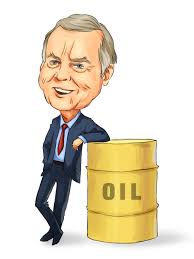 will mention I’m actively looking at real estate in Washington State right now.)
Despite repetition in countless media accounts and analysts’ notes over the past few weeks, though, the idea of a “sheikhs vs. shale” battle to control global oil supplies has precious little evidence behind it. The Saudi-led decision to keep OPEC’s wells pumping is a direct strike by Riyadh on two already hobbled geopolitical rivals, Iran and Russia, whose support for the Syrian government and other geostrategic machinations are viewed as far more serious threats to the kingdom than the inconvenience of competing for market share with American frackers.
Among the world’s oil producing nations, few suffer more from the Saudi move than Tehran and Moscow. At a time when both are already saddled with economic sanctions — Russia for its actions in Ukraine and Iran for its alleged pursuit of nuclear weapons technology — the collapse of oil prices has put unprecedented pressure on these regimes. For Russia, the crisis has hit very hard, with the ruble losing 40 percent of its value to the dollar since October. This is particularly problematic since Russian state-owned oil firms have gone on a dollar-borrowing spree in recent years; now, servicing that debt looks very ominous.
True, Saudi OPEC minister Ali al-Naimi insisted last month that the move was intended to target shale. But he would say that, wouldn’t he? After all, his OPEC counterparts were standing beside him — including the OPEC minister from Iran.
The fact is, Saudi Arabia has little to fear from shale. Saudi Arabia’s huge reserves of conventional oil can and probably will be produced for decades after the shale boom has run its course — which the U.S. Energy Information Administration (EIA) expects to happen by 2050 or so — and at much lower costs.
So, that one could be just a conspiracy theory. Anyway, it is very interesting situation that seems to converge economics with geopolitics. It won’t be the first time that oil and other commodities have been used as weapons. The Spanish Empire was taken down by its gold lust and hoarding by Good Queen Bess as one example. It’s really interesting no matter what the rationale.
For all our worries over Russia, however, we in Britain should not lose sight of the humiliation of another swaggering and once-mighty force in world politics, the Organisation of Petroleum Exporting Countries (OPEC). When it burst on the world scene 40 years ago, OPEC terrified the wasteful West.
Over the previous decades, we had grown used to abundant oil, bought mostly from Middle Eastern producers — with little global muscle — at rock- bottom prices.
However, OPEC changed that. By restricting supply, the cartel quadrupled the oil price, from $3 to $12.
Saudis remain in a strong position because oil is cheap to produce there. Above, the country’s Minister of Petroleum and Mineral Resources Ali Ibrahim Naimi
That is only a fraction of today’s price — but the oil crisis sparked by the rocketing cost in 1974 was enough to lead to queues at filling stations and national panics in the pitifully unprepared industrialised world.
Four decades later, Saudi Arabia has become one of the richest countries in the world, with reserves totalling nearly $900 billion.
But the rest of the world is less at its mercy than it once was. Here in Britain, our energy consumption is dropping remorselessly — the result of increased energy efficiency.
Moreover, many other nations now produce oil. And oil can be replaced by other fuels, such as natural gas, which OPEC does not control.
Also, OPEC no longer has the discipline or the clout to dominate the market, and we in Britain are among the big winners from all this, reaping the benefits of lower costs to fill up our cars and power our industries.
At its meeting in Vienna last month, the OPEC oil cartel — which controls nearly 40 per cent of global production — faced a fateful choice.
Would it curb production and thus, by reducing supplies, try to ratchet the oil price back to something near $100 a barrel — the level most of its members need to balance their books? Or would it let the glut continue?
The organisation’s 12 member countries, including Saudi Arabia, Iran, Iraq, Kuwait, Venezuela and Nigeria, chose to do nothing, proving that its once-mighty power has withered. Oil prices subsequently fell even further.
One central problem is that several of OPEC’s members detest each other for a variety of reasons.
Above all, Saudi Arabia and its Gulf allies see Iran — a bitter religious and political opponent — as their main regional adversary.
They know that Iran, dominated by the Shia Muslim sect, supports a resentful underclass of more than a million under-privileged and angry Shia people living in the gulf peninsula — a potential uprising waiting to happen against the Saudi regime.
The Saudis, who are overwhelmingly Sunni Muslims, also loathe the way Iran supports President Assad’s regime in Syria — with which the Iranians have a religious affiliation. They also know that Iran, its economy plagued by corruption and crippled by Western sanctions, desperately needs the oil price to rise. And they have no intention of helping out.
The fact is that the Saudis remain in a strong position because oil is cheap to produce there, and the country has such vast reserves. It can withstand a year — or three — of low oil prices.
The fact is that the Saudis remain in a strong position because oil is cheap to produce there, and the country has such vast reserves. It can withstand a year — or three — of low oil prices.
In Moscow, Vladimir Putin does not have that luxury — and the Saudis know it.
They revile Russia, too, for its military support of President Assad, and for its sale of advanced weapons to Iran.
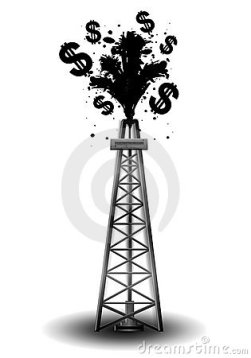 So there’s the piece on why Russian and Iran are targeted. Anyway, unless you’re a CIA analyst specializing that area with access to all the back and forth, it’s hardly possible to untangle all these wicked webs. It is evident, however, that the Saudis have some bones to pick with a lot of folks and picking away they are.
It will be interesting to watch this unfold. I have no doubt this will have bigger implications and I also know that most folks aren’t following this. I’m also pretty sure the usual news outlets are giving this short shrift. You can tell if you if follow any of my links because only one goes to the NY Times. The rest are mags that are read by very few folks.
So …. What’s on your reading and blogging list today?
Thursday Reads
Posted: June 26, 2014 Filed under: fracking, Media, morning reads, nature, science, U.S. Politics | Tags: autopilot, CNN, hypoxia, Indiana, Jurgen Klinsmann, Malaysia Airlines missing plane, Neanderthal diets, Oklahoma earthquakes, Oklahoma fracking, same-sex marriage, Susan Collins, Texas fracking, U.S. vs. Germany, Utah, Wolf Blitzer, World Cup Soccer 48 Comments
Childe Hassam – Two Women Reading
Good Morning!!
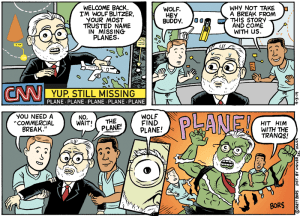
Wolf Blitzer must be celebrating this morning, because the mystery plane is back in the headlines.
Associated Press reports (via CTV):
SYDNEY, Australia — Investigators looking into the disappearance of the Malaysia Airlines plane are confident it was on autopilot when it crashed in a remote stretch of the Indian Ocean, Australian officials said Thursday as they announced the latest shift in the search for the jet.
After analyzing data exchanged between the plane and a satellite, officials believe Flight 370 was on autopilot the entire time it was flying across a vast expanse of the southern Indian Ocean, based on the straight path it took, Australian Transport Safety Bureau chief commissioner Martin Dolan said.
“Certainly for its path across the Indian Ocean, we are confident that the aircraft was operating on autopilot until it ran out of fuel,” Dolan told reporters in Canberra, the nation’s capital.
Asked whether the autopilot would have to be manually switched on, or whether it could have been activated automatically under a default setting, Dolan replied, “The basic assumption would be that if the autopilot is operational it’s because it’s been switched on.”
But exactly why the autopilot would have been set on a flight path so far off course from the jet’s destination of Beijing, and exactly when it was switched on remains unknown.
The New York Times explains what likely happened:
A report issued by the Australian Transport Safety Bureau, outlining how the new search zone had been chosen, said that the most likely scenario as the aircraft headed south across the Indian Ocean on March 8 was that the crew was suffering from hypoxia or was otherwise unresponsive.
Hypoxia occurs when a plane loses air pressure and the pilots, lacking adequate oxygen, become confused and incapable of performing even basic manual tasks.
Pilots are trained to put on oxygen masks immediately if an aircraft suffers depressurization; their masks have an hour’s air supply, compared with only a few minutes for the passengers. The plane, which left Kuala Lumpur, Malaysia, bound for Beijing, with 239 people aboard, made its turn south toward the Indian Ocean about an hour after it stopped responding to air-traffic controllers….
Evidence for an unresponsive crew as the plane flew south includes the loss of radio communications, a long period with no maneuvering of the aircraft, a steadily maintained cruise altitude and eventual fuel exhaustion and descent, the report said.
“Given these observations, the final stages of the unresponsive crew/hypoxia event type appeared to best fit the available evidence for the final period of MH370’s flight when it was heading in a generally southerly direction,” the document said.
Based on the report, a new search zone has been designated, according to the LA Times:
Experts from Boeing and the U.S. National Transportation Safety Board were among the specialists who helped define the zone, based on satellite data and analysis of previous similar incidents.
The new zone, about 1,100 miles west of Perth, Australia, is farther south than where previous intensive search efforts were carried out this spring after the plane vanished March 8 with 239 people aboard. The flight was en route from Kuala Lumpur to Beijing when it went missing….
Australia Deputy Prime Minister Warren Truss said the search was continuing with a mapping of the ocean floor in the newly defined area, to be followed by a comprehensive seafloor search.
The seafloor search, he said, should start around August and be completed within one year. The area is 58 miles wide and 400 miles long, covering an area as big as Lake Huron, the second-largest of the U.S. Great Lakes. By comparison, the area searched with a robotic, sonar-equipped submarine in May was about 330 square miles.

First gay marriage license issued in Indiana
There was exciting news yesterday in the struggle to legalize same-sex marriage state by state.
From NPR: Federal Judges Reverse Gay-Marriage Bans In Utah, Indiana.
Utah and Indiana are the latest states to see their bans on same-sex marriage struck down by a federal court, following rulings in both states Wednesday that found the prohibition unconstitutional.
In Utah, the 10th Circuit Court of Appeals panel upheld a lower court ruling striking down the state’s gay-marriage ban. And in Indiana,U.S. District Judge Richard Young made a similar ruling.
“It is wholly illogical to believe that state recognition of love and commitment of same-sex couples will alter the most intimate and personal decisions of opposite-sex couples,” the three-judge panel in the Utah case said. The panel immediately put the ruling on hold pending its appeal, either to the entire 10th Circuit or directly to the U.S. Supreme Court, according to The Associated Press.
In Indiana, Young wrote: “Same-sex couples, who would otherwise qualify to marry in Indiana, have the right to marry in Indiana. … These couples, when gender and sexual orientation are taken away, are in all respects like the family down the street. The Constitution demands that we treat them as such.”
Both decisions are significant in that they may influence decisions in other states.
Carl Tobias, a law professor at the University of Richmond, writes NPR in an email that the Utah decision “is very significant, as [it is] the first appellate court to address the marriage equality issue.
“The 4th Circuit [in Virginia] may well apply the reasoning of the 10th Circuit opinion, as will numerous district courts that have yet to rule,” he says.
“The Indiana ruling invalidating its ban today also used similar reasoning,” Tobias says. “All courts are finding that the bans violate the due process and equal protection clauses of the 14th amendment.”
In another breakthrough, Republican Senator Susan Collins of Maine has announced that she supports same-sex marriage. From The Washington Post:
“A number of states, including my home state of Maine, have now legalized same-sex marriage, and I agree with that decision,” Collins said in a statement, adding later: “I have long opposed efforts to impose a federal ban on same-sex marriage. In both 2004 and 2006, I voted against amendments to the United States Constitution that would have banned same-sex marriages by preempting state laws.”
Collins joins three other Republican senators who publicly support gay marriage: Lisa Murkowski (Alaska), Rob Portman (Ohio) and Mark Kirk (Ill.).
Today at noon Eastern, the U.S. plays Germany in the World Cup.

CBS News reports, Team USA: “Everything’s on the line” for Germany match.
It’s been a roller coaster ride for the American team so far in the World Cup. The team that, on paper, many pundits didn’t expect to advance, now has a real shot at moving on to the second round. And as CBS News’ Elaine Quijano reports, that fate is hinged on beating or at least coming up even against one of the cup favorites, Germany.
Team USA was greeted with cheers from American fans Wednesday as they arrived in the Brazilian city of Recife.
Players spent the three days between matches recovering and regrouping after a physical first game against Ghana and an emotional tie against Portugal.
“This is the biggest game of a lot of our lives, so any fatigue in our legs will be erased,” said American midfielder Kyle Beckerman. “We’ve got to give everything we’ve got and more.”
Team USA began their World Cup run in the so-called “group of death,” but their aggression, attacks and overall stamina on the pitch have defied pundits who originally dismissed their chances of advancing.
“I think some people might be a little bit surprised at our results so far,” coach Jurgen Klinsmann said Wednesday. “We are by no means any underdog here in this tournament, but we know it’s the biggest hurdle we have to take now with Germany.”
Klinsman suggested that U.S. fans should take a day off work to watch the game, and wrote a letter to bosses asking them to excuse their employee’s absences, reports Reuters.
In the style of a ‘doctor’s note’, Klinsmann addresses employers and asks them to forgive their staff for their absence.
The letter was distributed on social networks by the U.S. Soccer.
“I understand that this absence may reduce the productivity of your workplace, but I can assure you that it is for an important cause,” wrote Klinsmann.
“The #USMNT (U.S. Men’s National Team) has a critical World Cup game vs Germany and we will need the full support of the nation if we are to advance to the next round.
“By the way, you should act like a good leader and take the day off as well. Go USA! Signed Jurgen Klinsmann, Head Coach, U.S. National team”.
And from Jake Simpson at the Atlantic: The Surprisingly High Stakes of the U.S.-Germany World Cup Game.
In the wake of the U.S. team’s heartbreaking come-from-ahead draw against Portugal in the World Cup on Sunday, soccer analysts and Twitter users scrambled to figure out the many ways the U.S. can still get to the next round. With a three-point lead over Portugal and Ghana in Group G, the Americans can advance even if they lose their match against Germany at noon Eastern today, depending on the outcome of the Portugal-Ghana game played at the same time. Deadspin has one of the better graphical breakdowns of every potential scenario for the U.S., including the dreaded drawing of lots.
All the focus on permutations and goal-differential scenarios has undercut the importance of today’s game for American soccer. There’s not as much at stake, goes the implication, because we can move ahead even if we lose to Germany. But this is about more than getting to the next round. This is an opportunity for the U.S. to face one of soccer’s elite teams on the biggest stage and prove it can hang with—even beat—any country in this World Cup.
Before the tournament, most people thought it would be an unlikely success for the U.S. just to get out of the so-called Group of Death and to the Round of 16. Now, after beating Ghana and dominating much of the game against Portugal, the U.S. can dream bigger. Beat Germany, and America wins its group for the second straight World Cup, a result nearly unthinkable when the draw was announced in December. Beat Germany, and the U.S. secures a favorable Round of 16 match most likely against Algeria or Russia, rather than a trickier faceoff with sneaky-good Belgium.
Just as important, a win would mean that the Americans have defeated one of soccer’s oligarchs at a World Cup, with both sides trying their best for a victory. That by itself would be a precedent-setting result.
People in Oklahoma are beginning to ask questions
about why their state has been having so many earthquakes all of a sudden, according to the Globe-Gazzette.com.
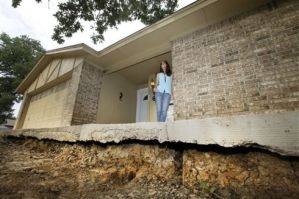
Barbara Brown poses for a photo on the front step of her home that now sits about one foot off the surface of her lawn, Saturday, June 21, 2014, in Reno, Texas.
OKLAHOMA CITY (AP) — Oklahoma residents whose homes and nerves have been shaken by an upsurge in earthquakes want to know what’s causing the temblors — and what can be done to stop them.
Hundreds of people are expected to turn out in Edmond, Oklahoma, on Thursday night for a town hall meeting on the issue.
Earthquakes used to be almost unheard of on the vast stretches of prairie that unfold across Texas, Kansas and Oklahoma, but they’ve become common in recent years.
Oklahoma recorded nearly 150 between January and the start of May. Though most have been too weak to cause serious damage or endanger lives, they’ve raised suspicions that the shaking might be connected to the oil and gas drilling method known as hydraulic fracturing, especially the wells in which the industry disposes of its wastewater.
Now after years of being harangued by anxious residents, governments in all three states are confronting the issue, reviewing scientific data, holding public discussions and considering new regulations. Thursday’s meeting in Oklahoma will include the state agency that regulates oil and gas drilling and the Oklahoma Geological Survey.
Gee, do you suppose it could have anything to do with fracking? And what about all that wastewater that has to be disposed of in the fracking process? From Techsonia: Fracking Fluid Spills release Colloids that Pollute Groundwater.
According to a new research, wastewater contains substances that bind to pollutants and their release in soil leads to the ground water contamination as they get along with the water when it is soaked by earth.
In this study, flowback fluid from hydraulic fracturing was analyzed. Colloids are the charged particles and larger than molecules and have the potency to bind to sand grains. With the wastewater, colloids get released in to the ground water.
This study was published in the Journal of the American Chemical Society and was conducted by the researchers at the Cornell University’s College of Agriculture and Life Sciences.
This study was done to determine the remaining colloids amounts in groundwater when the above soil got exposed to flowback fliud in a hydrofracking spills.
Ugh.
One last story . . .
Scientists have unearthed interesting facts about Oldest human faeces show Neanderthals ate vegetables.
Found at a dig in Spain, the ancient excrement showed chemical traces of both meat and plant digestion.
An earlier view of these early humans as purely meat-eating has already been partially discredited by plant remains found in their caves and teeth.
The new paper, in the journal PLOS One, claims to offer the best support to date for an omnivorous diet.
Poo is “the perfect evidence,” said Ms Ainara Sistiaga, a PhD student at the University of La Laguna on the Canary Islands, and the study’s first author, “because you’re sure it was consumed”.
Ms Sistiaga and her colleagues collected a number of samples from the remnants of a 50,000-year-old campfire in the El Salt dig site, a known Neanderthal habitation near Alicante on Spain’s Mediterranean coast.
So if you bought into the “cave man diet” AKA “Paleolithic diet” recommendations, you were scammed. These early Neanderthals even cooked vegetables and may have used plants for medicinal purposes. Read the whole article at the link. It’s fascinating.
Now . . . what stories are you following today? Are you going to watch the U.S.-Germany game? Please post your thoughts and links in the comment thread.
When Corporations Mutate Into A Super Race
Posted: March 12, 2012 Filed under: corporate money, corporatism, Economy, energy, Environment, Environmental Protection, Environmentalists, fracking, Regulation, toxic waste 12 CommentsWe all remember Mitt Romney’s public and awkward statement that ‘Corporations are people, too.”
But Romney was underplaying the reality of American life in 2012.
Corporations are not mere people. They have morphed into a Super Race, ready to conquer what’s left of our disintegrating democracy. If you think this is liberal hysteria or rank hyperbole, I give you Pennsylvania’s newly passed Act 13. Bad number. But the scope of this foolish and utterly destructive state giveaway is far worse.
Act 13 is a massive gift to the oil and gas companies, which overturn property rights, strips municipal communities of zoning law protection and turn environmental and health compromises into considerations we can no longer afford. It reduces the citizens of Pennsylvania to 3rd world colony status, ripe for exploitation and extraction. Welcome to the New World of Corporate Rule where natural gas extraction is the profitable prize and quality of life is a thing of the past.
And the reaction?
“Now I know what it feels like to live in Nigeria,” said recently retired Pittsburgh City Council President Doug Shields. “You’re basically a resource colony for multi-national corporations to take your natural resources, take them back to wherever they are at, add value to them, and then sell them back to you.”
Yup. This is the neoliberal dream. Steal, add value and then sell back at an exorbitant price tag. The whole world is nothing more than a resource colony so the corporate Super Race can turn a mind-boggling profit. On the backs of the natives. Water safety and/or depletion, health, wildlife? All expendable in this great push for growth and ever-increasing profit. Moral considerations? Please, haven’t you gotten the email? Corporations don’t do morality. They’re too big for that.

Fracking in SW Pennsylvania
Why did this happen in Pennsylvania? Because of the enormous layer of shale deposits known as the Marcellus formation, resting like a slumbering giant beneath the state’s surface. But there’s more! That would be the gargantuan amount of natural gas to be had at a stunning profit—as much as 70-99% some managers of earlier drill wells have boasted.
How could investors resist?
But then, there are the rising concerns of the fracking process itself, the public’s growing awareness of water and air pollution, the niggling problem of toxic wastewater disposal and those bothersome legal suits from citizens with lame health issues.
What to do, what to do?
Act 13 is the perfect response to investor skittishness. It removes all complaint and whining by simply supplanting existing law—the kind that protects the citizen—with corporate friendly law that recognizes the global reality—everyone is for sale and everything can be exploited.
To keep tempers in check, the best PR in the world is dished out, promises of jobs and prosperity, spinning dialogues about energy independence [at any cost] and patriotic flag-waving—how tearing up the earth, polluting our waterways and compromising the public’s health is good for America. After all, in times of crisis, sacrifices need to be made, even when it means overriding the civil rights of people and communities.
That is exactly what Act 13 addresses.
Courts in the Great State of New York upholding community rights to block fracking dreams is simply unacceptable. Act 13 revokes those rights. The Lakota people in South Dakota blocking TransCanada truck transports across Native territory? We can’t have that. Act 13 clearly empowers a corporation to seize property that impacts any stage of the drilling process. And those possible health considerations? Got it covered, boys and girls. Act 13 prohibits physicians from discussing medical impacts from chemical contaminations. The Halliburton Loophole in all its malicious splendor comes back to haunt us.
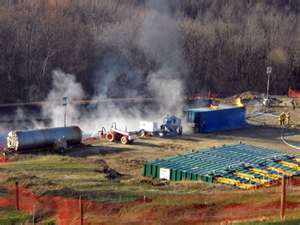
Marcellus Fracking Pit
This is what happens when corporations are declared ‘people.’ This is what happens when legislators sell their souls for 30 pieces of silver. I do not care if Republican Governor Corbett and his Republican dwarves truly believe this is good for Pennsylvania. This is a betrayal of American law and her people on a massive scale. The good citizens of Pennsylvania might look at the situation in Ohio, where Governor Kasich opened the state’s doors for business, any business, and Ohio became the dumping ground for fracking wastewater disposal and deep ground injection wells. We now know those earthquakes were not coincidental events. No wonder Republicans hate science!
Hattip to Alternet on this rant. I’d recommend reading the article ‘Fracking Democracy: Why Pennsylvania’s Act 13 May Be the Nation’s Worst Corporate Giveaway’ by Steven Rosenfeld in its entirety with the first link I provided. It’s a chilling, mind-blowing report.
Act 13 is expected to take effect on April 14th. We better pray [regardless of what state we live in] that the groups now amassing in Pennsylvania are able to halt or at least slow down this corporate monstrosity.
Because if not, we can say ‘adios’ to the shredded remnants of our Republic.
As for Pennsylvania? My heart goes out because I lived and worked in the state for over a dozen years and still have family in the area. The economy has been raked over the coals, so the promise of jobs and money injected into struggling municipalities and rural communities is a huge seduction. But we’ve seen this movie before. It does not end well. Here’s hoping that flesh and blood citizens get a chance to write a far better script for themselves and their future. Here’s hoping the rest of the country wakes up to what can only be called a corporate takeover.

 peej
peej Carissa
 bostonboomer
 dakinikat
 ecocatwoman
 mablue2
 Mama Lopez
 peggysue22
 quixote
 skydancingguestblogger
 Mona (aka Wonk the Vote)



 Sky Dancing
Recent Comments