
Global Gender Violence Porn
Posted: October 14, 2012 Filed under: Feminists, fetus fetishists, Foreign Affairs, War on Women, Women's Healthcare | Tags: gender violence porn, global gender activism, misogyny 24 CommentsSo, I read this: “Your Women Are Oppressed, But Ours Are Awesome”: How Nicholas Kristof And Half The Sky Use Women Against Each Other.
Now, it’s got me thinking about being part of the problem instead of supporting my goal to be part of the solution.
The idea is that these types of programs seem to be gender activism but are portrayed in a way that is supportive of western patriarchal imperialism. Okay, I just sounded like some kind’ve Marxist Feminist but it’s not all that cut and dried. Let me try to explain. These programs are akin to the idea of poverty porn. I understand this because of how I felt watching people in tour buses gawk at my hurricane ravaged ninth ward neighborhood with their voyeuristic tut-tutting over the state of the damage and the slow recovery. Big deal. Now, they’ve seen it. Does this change anything? I just felt like some kind of passive object that made them think,” wow, glad that’s not me”. It’s not a great feeling to be looked at like some kind of victim even when it’s the “oh, look, she’s doing something about it” vibe you get from them.
I’m one of the people that is highly concerned about the way the world treats women and girls. Please note “the world” includes “the United States”. This country is horrid to women and girls. It becomes worse with every elected Republican and DINO. I’ve also been extremely pissed at the way many so-called women and humanity friendly sites seem to shred other cultures’ treatment of women with sadistic, xenophobic, and high hatted-glee. Should there really be a ruler for misogyny and oppression that lets us pull the ruler out on others to make us feel better about the treatment of women and girls here? Do you really think we don’t have sex trafficking here in the US? Do you think we don’t support a rape culture or encourage mutilation of women through plastic surgery or extreme dieting?
I’ve never been able to clearly express it, but, I hate this concept of “Look at how horrible these (fill in the blank) foreigners treat women” given we’ve got the likes of a Paul Ryan and Mitt Romney running for our highest offices and the Republican party has pretty much been over run by misogynists and religious fanatics. Is there some kind of smug self-satisfaction people get by telling themselves that at least “We don’t (fill in the blank) to women here”? The recent spate of superiority hissy fits mostly applies to Arab/Muslim religions but it carries farther than that. Do we really need to measure which country treats it’s child brides worse or isn’t it enough to see the entire practice any where is abhorrent and should be ended? It happens to Catholic girls in Belize, Hindu girls in India, Protestant girls in Kentucky, and Muslim girls in Nigeria. Do we have to slice and dice their suffering by religion, country, or continent?
So, let me quote some of this essay. It deserves consideration.
There are plenty of critiques I could make of Kristof’s reporting (in this film and beyond, see this great round-up of critiques for more). Critiques about voyeurism and exotification: the way that global gender violence gets made pornographic, akin to what has been in other contexts called “poverty porn.”
For example, would Kristof, a middle-aged male reporter, so blithely ask a 14-year-old U.S. rape survivor to describe her experiences in front of cameras, her family, and other onlookers? Would he sit smilingly in a European woman’s house asking her to describe the state of her genitals to him? Yet, somehow, the fact that the rape survivor is from Sierra Leone and that the woman being asked about her genital cutting is from Somaliland, seems to make this behavior acceptable in Kristof’s book. And more importantly, the goal of such exhibition is unclear. What is the viewer supposed to receive–other than titillation and a sense of “oh, we’re so lucky, those women’s lives are so bad”?
Makes you think doesn’t it? The article is written by Sayantani DasGupta who teaches at Columbia University.
The issue of agency is also paramount. In the graduate seminar I teach on Narrative, Health, and Social Justice in the Master’s Program in Narrative Medicine at Columbia University, I often ask my students to evaluate a text’s ethical stance by asking themselves–“whose story is it?” For example, are people of color acting or being acted upon? Although the film does highlight fantastic on-the-ground activists such as maternal-health activist Edna Adan of Somaliland, the point of entry–the people with whom we, the (presumably) Western watchers, are supposed to identify–are Kristof and his actress sidekick-du-jour.
In fact, many have critiqued Kristof for his repeated focus on himself as “liberator” of oppressed women.
This theme then carries over to the idea of imperialism so omnipresent in western, white male cultures. It creates a rescue theme and it justifies the idea that superior white men can go rescue 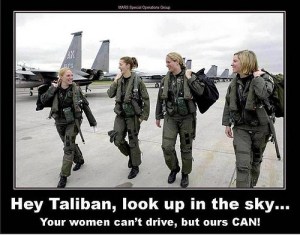 oppressed women by any means including drones that murder them and their children and define them as collateral damage.
Although a few passing comments are made about rape, coerced sex work, and other gender-based violence existing everywhere in the world–including in the U.S., hello?!–the point that is consistently reiterated in the film is that gender oppression is “worse” in “these countries”–that it is a part of “their culture.” In fact, at one point, on the issue of female genital cutting, Kristof tells actress Diane Lane, “That may be [their] culture, but it’s also a pretty lousy aspect of culture.”
There’s nothing that smacks more of “us and them” talk than these sorts of statements about “their culture.” Postcultural critic Gayatri Chakrovorty Spivak, in fact, coined the term “white men saving brown women from brown men” to describe the imperialist use of women’s oppression as justification for political aggression.
Spivak was writing about British bans of widow burning and child marriage in India to make her point, we can see the reflections of this dynamic is the way that the US has justified wars in Afghanistan and Iraq as missions to “free Islamic women from the Veil.” (For a fantastic critique of this rationale, see Lila Abu-Lughod’s “Do Muslim Women Really Need Saving?“) According to Spivak, this trope of “white men rescuing brown women from brown men” becomes used to justify the imperialist project of “white man” over “brown man.”
And this formulation is consistent, pretty much across the board, with the film. White/Western dwelling men and women highlight the suffering, as well as local activism, of brown and black women. Brown and black men are portrayed consistently as violent, incompetent, uncaring or, in fact, invisible. And it’s only a small leap to realize that such formulations–of countries incapable of or unwilling to care for “their” women–only reinforce rather than undermine global patriarchy, while justifying paternalization, intervention–and even invasion of these “lesser” places–by the countries of the Global North.
So, the argument here is not that speaking out against violence and oppression is bad. It’s the argument of what are you doing when you try to speak for others. That isn’t empowerment of women. It also frequently is used to support the goals of patriarchies as they vie with each other for power.
As feminist philosopher Linda Martín Alcoff argues in her essay “The Problem Of Speaking For Others,” that part of the problem of speaking for others is that none of us can transcend our social and cultural location: “The practice of privileged persons speaking for or on behalf of less privileged persons has actually resulted (in many cases) in increasing or reinforcing the oppression of the group spoken for,” she writes.
So, take a look at the photo above. It was part of the narrative of the essay. Does it make you feel oh, so, good about the way we treat our women compared to the Taliban? I saw this photo elseblogs and on Facebook. It actually creeped me out. I found it less empowering of women pilots for many reasons. Why didn’t my gut tell me to feel all so superior?
First, look at the implication of the words “OURS” and “YOURS”. These words indicate possessions right? OUR women? YOUR women?
Second, let’s think about the actual life experience of women in the U.S. military where rape isn’t just something you think about on your way to your parked care in the night. These women are subjected to some pretty high powered sexism and risk rape by their fellow soldiers in a high powered rape culture. Then, let’s also think about how these women can’t control their reproductive decisions because the congress refuses to let them make their own decisions about abortion. Get raped, sweetie? Remember, Paul Ryan says that’s just another form of conception for those lovely little beans that prove his gonads work!
From the first link and The Guardian we learn:
A new documentary by director Kirby Dick, The Invisible War, about systemic rape of women in the military and the retaliations and coverups victims face, has won awards in many film festivals, and recently even triggered congressional response. The examples of what happens to women soldiers who are raped in the military are stunning, both in the violence that these often young women face, and in the viciousness they encounter after attacks.
Yes, “our” women can fly planes in the military but they are also subjected to sexual assault, cover-ups, and poor treatment. This is from the second link above at Jezebel. Yes, “our” women can fly planes in the military but we’re not going to give them coverage of abortion services because “our” men in congress want them to goosestep to “their” beliefs.
The military reported 471 rapes of servicemembers in 2011, but the real number is probably higher, since the Pentagon’s Sexual Assault Prevention and Response Office estimates that only about 13.5 percent of all rapes and sexual assaults in the military are actually reported. Several hundred women in the military become pregnant as a result of rape each year. Despite these statistics, the 200,000+ women serving on active duty are often prohibited from getting abortions in military health centers — even if they’re willing to use their own money — because it makes some conservative politicians at home feel all icky.
Yes, current Pentagon policy is even more restrictive than the 1976 Hyde Amendment, which prohibited federal funds from being used to provide abortion services except in cases of rape, incest, and endangerment of women’s life. The Department of Defense only provides abortion coverage if the life of the mother is at stake; if she’s raped but can survive giving birth, her right to choose essentially goes out the window. If she still wants an abortion, the military might generously allow her to pay for the service with her own money, but only if she can prove she was raped — which is extremely difficult to do, especially within a few months. Without a stamp of rape-approval from the higher-ups, servicewomen (including military spouses and dependents) have to venture off-base for services or fly all of the way back to the United States, all to assuage the fears of politicians — the majority of whom, it’s safe to say, are not overseas fighting for their country — that the government would be “endorsing” abortion if military facilities granted women the same rights they have back home.
Feel all warm and smug about not living among the Taliban now? I’m ignoring all the coverage we’ve given all year to the likes of Todd Akin who probably would use more biblical punishments for women, gays, and lesbians if he thought he could get away with it. Who doesn’t think that ol’ Todd secretly hopes some one blows up the local planned parenthood and takes out some doctors and nurses in the process? Does lusting in his heart for right to life violence count? Surely, we can honestly attest to the fact that we have some extremely sick religious extremists of our own. I wonder if the Swedes would like to come do a documentary on how women in the US are so far down the ranks of gender equality that we maybe deserve rescue too?
So, anyway, this made me think. What does it make you think?
Tuesday Reads: Tim Burton, Presidential Polls, Romney on Spain, and More
Posted: October 9, 2012 Filed under: 2012 presidential campaign, Barack Obama, Foreign Affairs, Mitt Romney, morning reads, polling, Spain, U.S. Politics | Tags: David Adkins, diplomacy, Ed Wood, Frankenweenie, Gallup poll, Health care, Laura Tyson, meningitis, Nate Silver, Pew Poll, PPP poll, Sunday shows, tainted steroid injections, Tim Burton 63 Comments
Good Morning!!
Before I get going with the news, I want to recommend a wonderful movie. Yesterday afternoon, I took my nephews to see Tim Burton’s Frankenweenie, and I loved it! Trust me, it isn’t just for kids. It’s a funny, touching story about a boy and his dog as well as a great homage to horror movies. There’s even a scene where the science teacher, who looks like Vincent Price and talks like Bela Lugosi, tells a meeting of parents complaining about his class that they’re ignorant and prefer fantasy to science.
The Boston Globe reviewer gave the movie four stars, which is unheard of for a film aimed at children. There’s a wonderful backstory too:
In 1984, when he was an eccentric young animator working for Disney, the young Burton made a 30-minute live-action short called “Frankenweenie,” about a boy named Victor and the scrappy pet he brings back to life after it’s hit by a car. The movie was weird, it was inventive, and it spooked the bejesus out of Disney executives, who refused to release it and fired Burton. After the director became famous in the wake of “Edward Scissorhands,” the company put it out on VHS; it now can be found as an extra on the “Nightmare Before Christmas” DVD.
The current entertainment landscape has been effectively Burton-ized; this season alone, there are two pallid family-film imitations, “ParaNorman” and “Hotel Transylvania,” that arguably wouldn’t exist had the director not made the world safe for light pop-goth gloom. The new, improved “Frankenweenie” is thus not only revenge served sweetly — it’s being released by Disney, tail between its legs — but a reminder that, at his best, Burton belongs in the same bleakly charming league as Charles Addams and Edward Gorey.
Now I think I need to watch Ed Wood again.
That was such a nice break from all the depressing news about Mitt Romney and other insane Republicans. Now lets see what’s in the news today.
Everyone is talking about the latest Pew Poll which has Romney leading by 4–quite a shock. Even more shocking, TPM’s polltracker average now has Romney ahead of Obama by close to 3 points. On the other hand, today’s Gallup tracking polls shows Obama ahead by 5 points. Weird.
Now for a little expert analysis. Nate Silver advises: Amid Volatile Polling, Keep an Eye on Election Fundamentals
Mr. Obama got a bounce coming out of Charlotte, and it had some staying power — with his national lead appearing to peak at about five or six percentage points. But polling released immediately after the debate seemed to suggest that Mr. Romney had drawn into a rough national tie.
By the weekend, however — after the release of a favorable jobs report last Friday — Mr. Romney’s bounce seemed to be receding some. Tracking polls released on Monday by Gallup and Rasmussen Reports actually showed a shift back toward Mr. Obama, although another poll by Pew Research showed Mr. Romney with a four-point lead among likely voters.
Polling data is often very noisy, and not all polls use equally rigorous methodology. But the polls, as a whole, remain consistent with the idea that they may end up settling where they were before the conventions, with Mr. Obama ahead by about two points. Such an outcome would be in line with what history and the fundamentals of the economy would lead you to expect.
Keep in mind:
Challengers also generally profit from the first debate: in 8 of the 10 election cycles since 1976, the polls moved against the incumbent, and a net gain of two or three percentage points for the challenger is a reasonably typical figure.
At the same time, incumbent presidents just aren’t that easy to defeat. Mr. Obama’s approval ratings are now hovering around 50 percent and don’t seem to have been negatively affected by his performance in Denver. Although Mr. Obama’s approval ratings may be slightly lower among those most likely to vote — meaning that Mr. Romney could win with a strong turnout — historically that number has been just good enough to re-elect an incumbent.
David Adkins of Hullabaloo took a look at the internals of the Pew poll and found some interesting tidbits:
– For starters, a full two-thirds of the respondents were over 50 years old. Is that likely to be the shape of the electorate? Very likely not.
– A full 77% of the respondents were white. That is almost certainly not going to reflect the final electorate.
– A large preponderance of the respondents were from the South (449), with the next highest total from the Midwest (294), and only 219 from the Northeast and 239 from the West. There will not be twice as many voters from the South in the election as from the Northeast or the West.
– Finally, more respondents claimed to be Republicans than Democrats, which would destroy the President’s chances in November automatically. It’s possible for the final electorate to resemble that Party ID, but unlikely.
Read the rest at the link. I found it helpful. Markos also had a good post on the polls yesterday, if you don’t mind going to the orange place. He noted that the PPP poll to be released today will also have Romney in the lead nationally.
Paul Waldman asks the same question I ask myself every Monday: Why Do the Sunday Shows Suck So Much?
In the American media landscape, there is no single forum more prestigious than the Sunday shows—particularly the three network programs, and to a slightly lesser extent “Fox News Sunday” and CNN’s “State of the Union.” The Sunday shows are where “newsmakers” face the music, where Washington’s most important people are validated for their importance, where issues are probed in depth. So, why do they suck so much?
I live and breathe politics, yet I find these programs absolutely unwatchable, and I can’t be the only one. On a typical episode, there is nothing to learn, no insight to be gained, no interesting perspective on offer, nothing but an endless spew of talking points and squabbling. Let’s take, for instance, yesterday’s installment of “This Week With George Stephanopoulos.” We start off with dueling interviews with Obama adviser Robert Gibbs and Romney adviser Ed Gillespie. Were you expecting some candid talk from these two political veterans? Of course you weren’t. “If you’re willing to say anything to get elected president,” Gibbs says about Mitt Romney, “if you are willing to make up your positions and walk away from them, I think the American people have to understand, how can they trust you if you are elected president.” Which just happens to be precisely the message of a new Obama ad. What a fascinating coincidence! And you’ll be shocked to learn that Gillespie thought Romney did a great job in the debate: “Governor Romney laid out a plan for turning this economy around, getting things moving again. He had a fact-based critique of President Obama’s failed policies that the president was unable to respond to.” You don’t say!
Go read the whole thing. It’s not long.
As you know, Mitt Romney gave a foreign policy speech yesterday, and it isn’t getting great reviews except among the ultra-right wingers. Dakinkat wrote about it yesterday afternoon. This story is a few days old, but I wanted to call attention to it because it didn’t get a whole lot of coverage. During the debate last Wednesday, Romney made some (inaccurate, natch) remarks about Spain that caused some outrage over there. Here’s what he said:
“Spain spends 42 percent of their total economy on government. We’re now spending 42 percent of our economy on government. I don’t want to go down the path of Spain. I want to put more Americans to work.”
That did not go over well in Spain, where it was seen as on a par with the bumbling, insulting remarks Romney made when he was in Great Britain for the Olympics. Some reactions:
Fox News Latino: Mitt Romney Spain Jab Adds to Foreign Policy Woes
It has become apparent to some that Mitt Romney is in need of a crash course in Diplomacy 101.
He irritated Britons and Palestinians during a summer tour abroad and has declared Russia to be America’s No. 1 geopolitical foe. Just last week, the Republican candidate, who plans a foreign policy speech Monday, raised eyebrows in Spain by holding it up as a prime example of government spending run amok.
That left Spaniards confused, and threatened to reinforce Romney’s perceived handicap in international affairs….Spanish reaction to Romney was swift.
“What I see is ignorance of what is reality, but especially of the potential of the Spanish economy,” said Deputy Prime Minister Soraya Saenz de Santamaria.Maria Dolores Cospedal, leader of Spanish Prime Minister Mariano Rajoy’s Popular Party, noted that “Spain is not on fire from all sides like some on the outside have suggested.” Foreign Minister Jose Manuel Garcia Margallo called it “very unfortunate that other countries should be put up as examples” when the facts are skewed.
At HuffPo, former Clinton economic adviser Laura Tyson corrected Romney’s inaccuracies:
Mitt Romney made a wildly inaccurate claim during Wednesday’s presidential debate, and Laura Tyson, a former top economic adviser to President Bill Clinton, is calling him out….
But according to Romney’s campaign website, government spending accounted for only 24 percent of gross domestic product last year. The nonpartisan Congressional Budget Office says that government spending is 23 percent of GDP.
“I have no idea where that number came from,” Tyson, a professor at the University of California at Berkeley, told The Huffington Post after the debate. “That is certainly not a number that is consistent with the facts.”
Tyson said she couldn’t tell whether Romney said it “knowing it was wrong” or whether he “mixed the numbers up in his head.” But nonetheless, she said, “It’s clearly wrong.”
Tyson added that when it comes to taxes, “we’re not anywhere near countries like Spain.”
The Boston Globe reports that as many as 13,000 people may have gotten tainted steroid injections from a Framingham, MA pharmacy and could be at risk of getting meningitis.
US health officials on Monday said that 13,000 patients in 23 states, including Connecticut, Rhode Island, and New Hampshire, have been injected with a potentially tainted steroid treatment made by a Framingham pharmacy, more information can be found here and linked to a national outbreak of meningitis.
The US Centers for Disease Control and Prevention gave its sweeping estimate of the reach of the crisis as it reported 14 new cases of the disease, and another death in Tennessee, which appears to be the hardest hit among the states where the rare and serious form of fungal meningitis has been confirmed.
“We know that 13,000 people received the injection,” said Jamila Jones, a public affairs specilialist for the CDC in Atlanta. “They received it at facilities across the country. They are at risk.”
So far, 105 cases and eight deaths have been confirmed nationally, the agency said.
The steroid, called methylprednisolone acetate, was made by New England Compounding Center in Framingham, which voluntarily ceased operations Oct. 3 amid a widening probe of the treatment and its use at dozens of health care facilities from New Hampshire to California.
Very scary.
Now it’s your turn. What are you reading and blogging about today? I look forward to clicking on your links!
NeoCon Wet Dreams live in Romney
Posted: October 8, 2012 Filed under: 2012 elections, Foreign Affairs, Libya | Tags: American Century Imperialism, Belligerence, Mitt Romney, NeoCons 33 Comments The one thing I don’t ever want to see again in my life time is a fiasco like the Iraq invasion. The same gang that brought us that costly and horrible misfortune is advising Mitt Romney. Romney waded in to the foreign policy arena today with a speech to Virginia Military Institute. He inkled a lot of the Cheney/Rummy/Wolfie/Bolton threats in a speech that you really need to read. Can we really afford more of this mass invasion of the Middle East in the name of oil and empty dreams of US imperialism?
Romney channeled their evil intent. Make no mistake about it. First, he’s riding a wave of lies about what happened in Benghazi. Second, he’s rattling sabers again.
The GOP candidate added that “the blame for the murder of our people in Libya, and the attacks on our embassies in so many other countries, lies solely with those who carried them out—no one else. But it is the responsibility of our President to use America’s great power to shape history—not to lead from behind, leaving our destiny at the mercy of events.”
He also laid out a broad foreign policy vision that called for the U.S. to “lead the course of human events” with “more American leadership.”
In other words, it was a boilerplate speech with nods to the neoconservative wing of the Republican Party, a wing that leads his foreign policy team as well. But asWired’s Spencer Ackerman notes , “the policies Romney outlines in his speech differ, at most, superficially from Obama’s.” Obama’s record on foreign policy is an aggressive one, with escalated drone strikes that have killed scores of civilians in Pakistan and Yemen and the continuation of the war in Afghanistan. Romney didn’t offer anything specific that was more aggressive than Obama, though his rhetoric was ratcheted up.
Romney indicates that all we need is a bit more military presence in the Middle East. At least we know where those $2 trillion dollars that none of the military folks want will actually go. Get ready to send your grandchildren to Iran.
When Romney says “the 21st century can and must be an American century” and that is the U.S.’s responsibility to steer the world towards “the path of freedom, peace, and prosperity,” that’s code for the maintenance of U.S. hegemony. Romney still believes that the U.S. should be able to shape the world as we see fit–the rest of the world who refuses to go along with it be damned. These ideas are particularly galling given that Romney was partly addressing the Arab Spring–a series of revolts that were decidedly against U.S. support for repressive dictatorships.
Romney also believes that in the case of Iran, “American support”–read meddling– for the opposition in that country would be helpful. But that ignores the fact that the Green movement in Iran did not want U.S. support and intervention.
The Republican candidate also lamented the fact that “America’s ability to influence events for the better in Iraq has been undermined by the abrupt withdrawal of our entire troop presence.”
Lastly, he hinted that U.S. involvement in Afghanistan could continue for years to come if he was president. “The route to more war – and to potential attacks here at home – is a politically timed retreat that abandons the Afghan people to the same extremists who ravaged their country and used it to launch the attacks of 9/11,” the candidate said. “I will evaluate conditions on the ground and weigh the best advice of our military commanders.”
Neocons in the US and Israel are dying to invade Iran. We’ve already implemented tough embargoes of the country. Evidently, this will never be enough for the likes of Romney and his neocon advisers. Romney offers to send more Navy into the region. He offers to further arm Israel and to extend free trade agreements to any one under the sole circumstance of not being aligned with ‘enemies’ . Hopefully, this is the Romney we will see at the next presidential debate. However, given the flip flops and lies of the last debate on the economy, I would assume that he may walk back his eagerness to display Neocon belligerence. Do we really want a few more wars and conflicts in that region. Haven’t the lessons of the Dubya presidency taught us enough already?
UPDATE: Okay, well this firms it up completely.
Romney’s New Freedom Agenda Draws Praise From Bushworld
“Terrific,” says Rumsfeld. “A kinder, gentler neocon.
Would you let any one you love vote for some one that just was praised by Donald Rumsfeld?
But it was Romney’s speech, and its echoes of the Freedom Agenda, that drew rave reviews from some of the leading avatars and supporters of the clear and combative foreign policy of Bush’s first term.
“Terrific, comprehensive speech by Gov. Romney,” Bush’s first term Secretary of Defense, Donald Rumsfeld, tweeted “He knows America’s role in the world should be as a leader not as a spectator.”
Romney’s speech offers a new Republican articulation of the Bush doctrine of moral clarity, wielded — as Romney said — “wisely, with solemnity and without false pride” to “make the world better—not perfect, but better.”
“What’s not to like?” asked Weekly Standard editor Bill Kristol, a leading foreign policy hawk and backer of Bush’s war in Iraq, who called the speech “kinder, gentler neocon.”
Kristol’s fellow travelers on the neoconservative right were ebullient.
“Kristol could have written it himself,” said Michael Goldfarb, an aide to Senator John McCain’s 2008 campaign who now chairs the conservative Center for American Freedom. “Strong on defense, strong on foreign involvement and aid, strong (and courageous) on Afghanistan and Iraq.
“For all the talk about fissures in the party — the [Project for a New American Century] guys are the ones who will be toasting the Republican candidate tonight,” he said, referring to a group that pushed in the 1990s for, among other things, an invasion of Iraq.
A range of leading Bush Administration foreign policy figures also embraced the speech.
“Mitt Romney understands that the best way to preserve international peace and security is for America to lead from the front,” said former U.N. Ambassador John Bolton, a figure who never entirely shared the neoconservative worldview. “President Obama believes that American strength is provocative, that we are too much in the world, and that a U.S. recessional is necessary and appropriate. This is exactly opposite of what we need. It is not our strength that is provocative, but our weakness, which our adversaries worldwide interpret to mean it is safe to challenge us. We need to reverse this dangerous American decline, and return to Ronald Reagan’s philosophy of ‘peace through strength.’ It has worked throughout our history, and it will work again under President Romney.”
Jamie Fly, who served in the Pentagon and National Security Council in the second Bush term and now heads the Foreign Policy Initiative, praised Romney for making clear that “the answer is not to lead from but to be every clear.
Fly said he heard “hints” of Bush’s Freedom Agenda rhetoric in Romney’s speech, “but any time the governor ventures that sort of territory, it is tempered by recent events.”
ARGHHHHHHHHHHH!!!!
Romney, GOP Appear to be Planning “October Surprise” on Libya . . . Will it Work?
Posted: October 2, 2012 Filed under: 2012 presidential campaign, Foreign Affairs, Libya, MENA, Middle East, Mitt Romney, U.S. Military, U.S. Politics | Tags: ambassador Chris Stevens, Barack Obama, Benghazi attacks, Craig Unger, Darrell Issa, Jason Chaffetz, Jimmy Carter Strategy, October surprise 41 Comments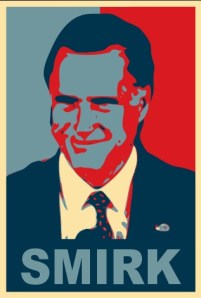
The Romney campaign and the GOP appear to be rolling out an “October Surprise” in the leadup to to tomorrow night’s presidential debate.
On Sunday, the Wall Street Journal published an op-ed by Mitt Romney in which he supposedly proposed “A new course for the Middle East. Here’s the opening:
Disturbing developments are sweeping across the greater Middle East. In Syria, tens of thousands of innocent people have been slaughtered. In Egypt, the Muslim Brotherhood has come to power, and the country’s peace treaty with Israel hangs in the balance. In Libya, our ambassador was murdered in a terrorist attack. U.S. embassies throughout the region have been stormed in violent protests. And in Iran, the ayatollahs continue to move full tilt toward nuclear-weapons capability, all the while promising to annihilate Israel….
Yet amid this upheaval, our country seems to be at the mercy of events rather than shaping them. We’re not moving them in a direction that protects our people or our allies.
What follows is several paragraphs of criticism of President Obama’s policies as Romney interprets them. For example, Romney accuses the President of “allow[ing] or leadership to atrophy,” “misunderstanding our values,” and “thinks that weakness will win favor with our adversaries,” but provides no evidence for these claims.
The only “solutions” Romney puts forward are also vague. He argues that we must develop a “coherent strategy” of supporting our Middle Eastern allies and also “restore our credibility with Iran.” Based on Romney’s previous statements, he seems to be suggesting that somehow if he is President, the Iranians will be more terrified of him than weak, Carter-like Barack Obama.
It means placing no daylight between the United States and Israel. And it means using the full spectrum of our soft power to encourage liberty and opportunity for those who have for too long known only corruption and oppression. The dignity of work and the ability to steer the course of their lives are the best alternatives to extremism.
But this Middle East policy will be undermined unless we restore the three sinews of our influence: our economic strength, our military strength and the strength of our values. That will require a very different set of policies from those President Obama is pursuing.
Yesterday Craig Unger wrote that he had learned from an anonymous source that GOP operatives will
unleash a new two-pronged offensive that will attack Obama as weak on national security, and will be based, in part, on new intelligence information regarding the attacks in Libya that killed U.S. Ambassador Chris Stevens on Sept. 11.
The source, who has firsthand knowledge of private, high-level conversations in the Romney camp that took place in Washington, D.C., last week, said that at various times the GOP strategists referred to their new operation as the Jimmy Carter Strategy or the October Surprise.
He added that they planned to release what they hoped would be “a bombshell” that would make Libya and Obama’s foreign policy a major issue in the campaign. “My understanding is that they have come up with evidence that the Obama administration had positive intelligence that there was going to be a terrorist attack on the intelligence.”
The source described the Republicans as chortling with glee that the Obama administration “definitely had intel” about the attack before it happened. “Intelligence can be graded in different ways,” he added, “and sometimes A and B don’t get connected. But [the Romney campaign] will try to paint it to look like Obama had advance knowledge of the attack and is weak on terrorism.”
“Chortling with glee?” The apparent goal of all this GOP strategizing is to make Barack Obama look like Jimmy Carter circa 1980. Romney and Ryan have both been trying to do this for months, with little effect.
To be honest, I’m having a hard time taking all this too seriously, but today Reps. Darrell Issa and Jason Chaffetz of the House Committee on Oversight and Government claimed to have information to prove that:
Despite two explosions and dozens of other security threats, U.S. officials in Washington turned down repeated pleas from American diplomats in Libya to increase security at the U.S. consulate in Benghazi where the U.S. ambassador was killed…
In a letter to Secretary of State Hillary Rodham Clinton [read the full letter here (pdf), Chairman Darrell Issa and Rep. Jason Chaffetz of the Oversight and Government Reform Committee said their information came from “individuals with direct knowledge of events in Libya.”
Issa, R-Calif. and Chaffetz, R-Utah said the Sept. 11 attack in Benghazi that killed Ambassador Chris Stevens and three other Americans was the latest in a long line of attacks on Western diplomats and officials in Libya in the months before Sept. 11.
The letter listed 13 incidents, but Chaffetz said in an interview there were more than 50. Two of them involved explosive devices: a June 6 blast that blew a hole in the security perimeter. The explosion was described to the committee as “big enough for forty men to go through”; and an April 6 incident where two Libyans who were fired by a security contactor threw a small explosive device over the consulate fence.
“A number of people felt helpless in pushing back” against the decision not to increase security and “were pleading with them to reconsider,” Chaffetz said. He added that frustrated whistleblowers were so upset with the decision that they were anxious to speak with the committee.
Issa and Chaffetz will hold a hearing on the issue next Wednesday, October 10.
Just a side note: Jason Chaffetz is a convert to Mormonism who attend BYU and is a Romney surrogate. He also spoke at the Republican Convention.
The Wall Street Journal fired another salvo today with another op-ed by Bret Stephens: Benghazi Was Obama’s 3 a.m. Call Here’s the concluding paragraph, which sums up the entire argument pretty well:
The U.S. ignores warnings of a parlous security situation in Benghazi. Nothing happens because nobody is really paying attention, especially in an election year, and because Libya is supposed to be a foreign-policy success. When something does happen, the administration’s concerns for the safety of Americans are subordinated to considerations of Libyan “sovereignty” and the need for “permission.” After the attack the administration blames a video, perhaps because it would be politically inconvenient to note that al Qaeda is far from defeated, and that we are no more popular under Mr. Obama than we were under George W. Bush. Denouncing the video also appeals to the administration’s reflexive habits of blaming America first. Once that story falls apart, it’s time to blame the intel munchkins and move on.
Jake Tapper also helped out by trying to get White House spokesman Jay Carney to comment on the charges from Issa and Chaffetz. Here’s the response:
Carney said that “embassy security is a matter that is in the purview of the State Department,” and noted that “Secretary Clinton instituted an accountability review that is underway as we speak” while the investigation of the attack itself is being conducted by the FBI.
The press secretary said that “from the moment our facility was attacked” the president has been focused on providing security to all diplomatic posts “and bringing the killers to justice.”
About the list of security issues, Carney said it was a “known fact that Libya is in transition” and that in the eastern part of Libya in particular there are militant groups and “a great number of armed individuals and militias.”
So I guess we can expect Romney to attack President Obama on the Libya issue during tomorrow night’s debate, no doubt accompanied by the famous Romney smirk. Obama should be prepared though, since the “October Surprise” has been so clearly spelled out by multiple media sources.
Is there more to it? Will it work? I kind of doubt it, because it’s clear from the polls that Romney has already destroyed his credibility with voters. But I could be wrong.
What do you think?
Thursday Reads: Animal Psychology, Republican Race-Baiting, Obama’s Drone War, and More
Posted: September 27, 2012 Filed under: 2012 presidential campaign, Afghanistan, Foreign Affairs, Media, Mitt Romney, morning reads, Newt Gingrich, Pakistan, psychology, racism, Republican politics, U.S. Politics | Tags: Alec MacGillis, Animal Madness, Conor Friedersdorf, drones, European financial crisis, Gary Johnson, Joe Scarborough, John Sununu, Laurel Braitman, Paul Ryan 74 Comments
Good Morning!!
Before I get to political news, here’s an interesting story that has nothing to do with the upcoming 2012 elections: Suicidal dogs and bipolar wolves. It’s an interview with Laurel Braitman, a PhD candidate at MIT and the author of an upcoming book, Animal Madness. As someone who strongly believes that animals have personalities and strong emotions, I’m looking forward to check out her book. Here’s just a bit of the interview, conducted by Malcolm Harris of New Inquiry Magazine.
MH: How did you get involved in writing about mental illness in other animals in particular?
LB: I was doing something completely different but I had gone to graduate school for history of science at MIT. I had originally gone there to do research on the aquarium fishery in the Amazon basin. But I had a dog at the time, my partner and I had adopted a Burnese Mountain Dog. And he was fine for the first six months and then he went spectacularly crazy. He developed a debilitating case of separation anxiety. If we left him alone he would destroy himself, the house, anything in the way. He nearly killed himself at least once. So I had to take him to the vet hospital after he jumped out of our 4th floor apartment, and they said I had to take him to a veterinary behaviorist who would give him a prescription for Prozac and Valium. I was stopped in my tracks. I had heard there were some animals taking these drugs, but I never thought of myself as the kind of person who would put an animal on Prozac. But I found myself in a desperate situation with a 120 pound dog and I tried all these things and they didn’t work, so I became that person that puts her dog on antidepressants. Prozac didn’t work for him really, but the Valium did, at least in the short term. And I began to get curious about how these drugs got into vet clinics in the first place and if there was something to this. Was my dog responding to these drugs in the some of the same ways that people do?
I ended up switching what I was studying because I couldn’t find anything written about the history of this. My PhD research is now the story of what the last 150 years have to tell us about mental illness in other animals. Can they be crazy? Who says they’re crazy? How did the industry around animal mental health come to be? And how do we make other animals feel better? That’s the question that interests me most. Once you notice that another animal is disturbed or anxious– what do we do then? I’ve spent the last few years traveling all over the world to talk to people who are making it their life’s work to help these animals – whether they are elephants or dogs or birds.
What a brilliant idea!
And now, once again we move from the sublime to the ridiculous–and offensive. The Romney campaign is up to it’s old dirty tricks, sending their meanest surrogates out to race bait again. First up, Newt Gingrich says Obama is “not a real president.”
“[Obama] really is like the substitute [National Football League] referees in the sense that he’s not a real president,” Gingrich told Greta Van Susteren on Fox News Tuesday night. “He doesn’t do anything that presidents do, he doesn’t worry about any of the things the presidents do, but he has the White House, he has enormous power, and he’ll go down in history as the president, and I suspect that he’s pretty contemptuous of the rest of us.”
Unbelievable! And there’s more:
“This is a man who in an age of false celebrity-hood is sort of the perfect president, because he’s a false president,” he said. “He’s a guy that doesn’t do the president’s job.” ….
“You have to wonder what he’s doing,” Gingrich continued. “I’m assuming that there’s some rhythm to Barack Obama that the rest of us don’t understand. Whether he needs large amounts of rest, whether he needs to go play basketball for a while or watch ESPN, I mean, I don’t quite know what his rhythm is, but this is a guy that is a brilliant performer as an orator, who may very well get reelected at the present date, and who, frankly, he happens to be a partial, part-time president.”
It kind of takes your breath away, doesn’t it? Next up, John Sununu: Obama Is “Absolutely Lazy And Detached From His Job”
“Look, let me tell you what the big problem with this president is in my opinion. He is absolutely lazy and detached from his job. When he doesn’t go and attended 60% of the detailed presidential daily briefings that come from the CIA and thinks he can just skim it, skim the summary paper on his iPad instead of sitting down and engaging in what — I was in the White House with George Herbert Walker Bush. He took that brief everyday. George W. Bush took it everyday and I believe that Bill Clinton took it everyday. This president thinks he’s smarter than those guys and he doesn’t have to engage in the discussion. That’s the most important half-hour of the day for a president who has to protect the security of the United States,” Romney surrogate John Sununu said on Hannity.
Watch the video at the link, if you can stand it. Read the rest of this entry »

 peej
peej Carissa
 bostonboomer
 dakinikat
 ecocatwoman
 mablue2
 Mama Lopez
 peggysue22
 quixote
 skydancingguestblogger
 Mona (aka Wonk the Vote)



 Sky Dancing
Recent Comments