
Pakistan May Have Outed Chief of CIA’s Islamibad Station
Posted: December 17, 2010 Filed under: Afghanistan, Barack Obama, Central Intelligence Agency, Foreign Affairs, Pakistan | Tags: Central Intelligence Agency, covert operations, drone strikes, Islamibad Station, Mumbai attacks, Pakistan 12 Comments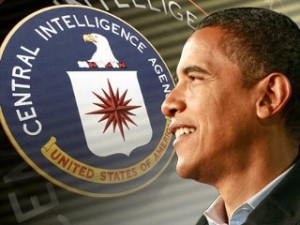
Things seem to be getting pretty dicey for the U.S. in Pakistan. The Guardian UK reports that:
The CIA has pulled its station chief from Islamabad, one of America’s most important spy posts, after his cover was blown in a legal action brought by victims of US drone strikes in the tribal belt.
The officer, named in Pakistan as Jonathan Banks, left the country yesterday, after a tribesman publicly accused him of being responsible for the death of his brother and son in a CIA drone strike in December 2009. Karim Khan, a journalist from North Waziristan, called for Banks to be charged with murder and executed.
In a rare move, the CIA called Banks home yesterday, citing “security concerns” and saying he had received death threats, Washington officials told Associated Press. Khan’s lawyer said he was fleeing the possibility of prosecution.
Banks may have only a business visa, and so wouldn’t have diplomatic immunity if he were required to testify in the trial. According to the article, recalling a station chief is extremely rare. Although the Pakistani government supposedly supports U.S. drone strikes, many Pakistanis are understandably outraged by them.
The recall comes at a sensitive moment for Washington. This week’s Afghanistan policy review brought fresh focus on Taliban safe havens in Pakistan’s tribal belt. Meanwhile CIA drone attacks – which are co-ordinated from the Islamabad embassy – have reached a new peak. Three drones struck targets in Khyber, a previously untouched tribal agency, on Friday, reportedly killing 24 people and signalling a widening of the CIA covert campaign….There have been over 100 strikes so this year, twice as many as in 2009.
The Guardian says there are rumors that Banks may have been outed by someone in the Pakistani intelligence agency (the ISI), because “several senior ISI officials were named in a New York legal action brought by relatives of the 2008 Mumbai attacks.”
The New York Times also has posted an article about this.
On Thursday and Friday, the United States appeared to make good on promises to expand its own efforts to attack the militants, with drone strikes for the first time hitting Khyber agency in Pakistan’s lawless tribal areas. Most drone strikes this year have targeted North Waziristan. Pakistani government officials said at least 26 militants were killed in the most recent attacks.
The outing of the C.I.A. station chief is tied to the spy agency’s campaign of drone strikes, which are very unpopular in Pakistan, although the government has given its tacit approval for them.
Gee, no kidding. I mean who wants to have their house blown up unexpectedly by agents of a foreign power? Interestingly, the Times avoided telling its readers the outed agent’s name, even though the Guardian had already published it. The Times is truly the Obama administration’s house organ. According article,
The intensifying mistrust between the C.I.A. and I.S.I., two uneasy but co-dependent allies, could hardly come at a worse time. The Obama administration relies on Pakistan’s support for the armed drone program, which this year has launched a record number of strikes in North Waziristan against terror suspects.
“We will continue to help strengthen Pakistani capacity to root out terrorists,” President Obama said on Thursday. “Nevertheless, progress has not come fast enough. So we will continue to insist to Pakistani leaders that terrorist safe havens within their borders must be dealt with.”
Not being an expert on foreign affairs, I’m not sure if this statement triggered anger in Pakistan or not. Maybe President Obama should leave diplomacy to his Secretary of State.
Julian Assange Out of Jail
Posted: December 16, 2010 Filed under: Diplomacy Nightmares, Foreign Affairs, Wikileaks | Tags: Holder prosecution, Julian Assange, out on bail 24 CommentsIn the weirdest set of moves yet, the U.S. government is trying to build a legal case against Assange. I’ve rightly heard this compared to jailing Carl Bernstein for “the Deep Throat” leaks. Carl Bernstein was at least an American.
Justice Department officials are trying to find out whether Mr. Assange encouraged or even helped the analyst, Pfc. Bradley Manning, to extract classified military and State Department files from a government computer system. If he did so, they believe they could charge him as a conspirator in the leak, not just as a passive recipient of the documents who then published them.
Among materials prosecutors are studying is an online chat log in which Private Manning is said to claim that he had been directly communicating with Mr. Assange using an encrypted Internet conferencing service as the soldier was downloading government files. Private Manning is also said to have claimed that Mr. Assange gave him access to a dedicated server for uploading some of them to WikiLeaks.
Adrian Lamo, an ex-hacker in whom Private Manning confided and who eventually turned him in, said Private Manning detailed those interactions in instant-message conversations with him.
For some reason, Eric Holder is taking a bigger interest in this than he did in our breaking the Geneva Convention agreements on torture and the West Wing’s orders to assassinate a U.S. citizen abroad. What a warped sense of Justice  we’ve developed in this country!
Every one from Sweden to the Crown Prosecution service have argued against bail for Assange. Sweden was not allowed to make any arguments or offer any evidence as is custom in British Courts.
There was an early sign that the day would go in Assange’s favour when Ouseley said: “The history of the way it [the case] has been dealt with by the Swedish prosecutors would give Mr Assange some basis that he might be acquitted following a trial.”
American legal action could further complicate the situation. As you hear in the video above, Assange vowed to continue his work. Here’s one interesting result from the leaks of some of the cables. CNN reports that Zimbabwe’s first lady is suing because it was leaked she had dealings in illegal diamonds. You may recall the blood diamond issue from the movie with Leonardo DiCaprio.
The cables in question, from the U.S. Embassy in Harare, claimed that Zimbabwe’s first lady was among the senior Zanu-PF and government officials who were gaining huge profits from the smuggling of diamonds in the eastern part of Zimbabwe.
“The diamonds that are sold to regime members and elites are sold for freshly printed Zimbabwean notes issued by the RBZ (Reserve Bank of Zimbabwe),” the paper quoted a 2008 cable as saying.
“The cables suggested that (the head of the bank, Gideon) Gono kept the money printing press running to finance the purchase of diamonds and this could have accelerated hyperinflation, which eventually rendered the Zimbabwe dollar worthless,” the newspaper charged.
Grace Mugabe said in the suit that the report published Sunday by The Standard was “false, scandalous, malicious and bent on damaging (her) reputation.”
The documents said the newspaper wrongly suggested that Grace Mugabe had “used her position as the First Lady to access diamonds clandestinely, enriching herself in circumstances in which the country was facing serious foreign currency shortages, which amounts should have been channeled to the fiscus.
Yet, as CNN’s Jeffrey Toobin pointed out earlier this month, the law no more shields journalists than anybody else from prosecution for the dissemination of classified information. For instance, in the case decided by the Supreme Court regarding the New York Times’ decision to publish the Pentagon Papers leaked by Ellsberg, the court held only that the government did not have the right to keep the Times from publishing the papers, but the government still had the right to prosecute the Times after classified information from the papers was published in its pages. So, why try to make a distinction, however polemical?
“The law they’re using makes no distinction between journalists, the press — it applies to readers of the New York Times, just as well as to the publishers, the journalists and the leakers,” Ellsberg explained. “The language of that law makes no distinction. Now, that’s why they’ve been reluctant to use it — because it’s so broad, that it’s almost clearly unconstitutional.”
“They have tried to use the law — mostly unsuccessfully — but they’ve tried to use the law against leakers,” Ellsberg continued. “They’ve never tried to use it against a publisher. So this would be a first.”
In other words, if the Justice Department can successfully brand Assange as something other than a journalist or a publisher, it would not appear to be violating the perception of freedom of expression held by most Americans.
Exactly. We’re talking freedom of the Press here. The Republicans continue to shake their fists and spew weird diatribes at Assange. The weirdest to date was the P Woman accusing Assange of being “un-American” which is some weird word salad given Assange is an Aussie. Fred Thompson has been twittering up a storm on Michael Moore’s contributions to Assange’s bail. Something about Democrats not understanding real patriotism. Same old Republican jingoism! It does seems odd to me that a Democratic Attorney General would be following their lead, but hey, these appear to be strange times for Democrats in deed. To quote John Lennon: “Most peculiar Mama!”
Update: Since more Republican memes about Assange appear to be showing up in unlikely places–Remember, what they tried to do to Daniel Ellsberg?– I’m putting up some of the honors Assange has earned from the International Community.
Assange founded the WikiLeaks website in 2006 and serves on its advisory board. He has been involved in publishing material about extrajudicial killings in Kenya, for which he won the 2009 Amnesty International Media Award. He has also published material about toxic waste dumping in Africa, Church of Scientology manuals, Guantanamo Bay procedures, and banks such as Kaupthing and Julius Baer.[11] In 2010, he published classified details about US involvement in the wars in Afghanistan and Iraq. Then, on 28 November 2010, WikiLeaks and its five media partners began publishing secret US diplomatic cables.[12] The White House has called Assange’s release of the diplomatic cables “reckless and dangerous”.[13]
For his work with WikiLeaks, Assange received the 2008 Economist Freedom of Expression Award and the 2010 Sam Adams Award. Utne Reader named him as one of the “25 Visionaries Who Are Changing Your World”. In 2010, New Statesman ranked Assange number 23 among the “The World’s 50 Most Influential Figures”.

 peej
peej Carissa
 bostonboomer
 dakinikat
 ecocatwoman
 mablue2
 Mama Lopez
 peggysue22
 quixote
 skydancingguestblogger
 Mona (aka Wonk the Vote)



 Sky Dancing
Recent Comments