
TGIFriday Reads
Posted: March 18, 2011 Filed under: Bahrain, Democratic Politics, Federal Budget, financial institutions, Foreign Affairs, Libya, Middle East, morning reads, Regulation, Social Security, U.S. Economy, U.S. Military, U.S. Politics | Tags: Bahrain protests, Budget fights, EPA, Harry Reid, Libya, no-fly zone, Social Security, US nuclear plants, US power plants, US response to Libya 43 Comments I can’t believe it’s Friday already. It just seems like my recent bout with the flu put me in some other time zone. There is so much going on right now my head is spinning from all the news. We have a nuclear melt down, another war with another madman, and congress nitpicking over little line items in the budget when there’s a sustained high rate of unemployment. What’s next?
The shipments—mostly small arms such as assault rifles and ammunition—appear to be the first confirmed case of an outside government arming the rebel fighters. Those fighters have been losing ground for days in the face of a steady westward advance by forces loyal to Libyan leader Moammar Gadhafi.
The Egyptian shipments are the strongest indication to date that some Arab countries are heeding Western calls to take a lead in efforts to intervene on behalf of pro-democracy rebels in their fight against Mr. Gadhafi in Libya. Washington and other Western countries have long voiced frustration with Arab states’ unwillingness to help resolve crises in their own region, even as they criticized Western powers for attempting to do so.
The shipments also follow an unusually robust diplomatic response from Arab states. There have been rare public calls for foreign military intervention in an Arab country, including a vote by the 23-member Arab League last week urging the U.N. to impose a no-fly zone over Libya.
SOS Hillary Clinton believes that the No-fly zone will require bombing. This has been indicated by some retired generals who have done similar actions in other UN actions like Bosnia. Clinton is in Tunisia and has been traveling in the region.
“A no-fly zone requires certain actions taken to protect the planes and the pilots, including bombing targets like the Libyan defense systems,” Clinton said in Tunis, her last stop on a trip that also took her to Cairo and Paris.
In all her stops, Clinton’s done a mix of stressing the need for democracy in post-revolution Tunisia and Egypt, and pushing for international cooperation in responding to the crisis in Libya. On Thursday, her only full day in Tunisia, Clinton promised that the United States “will stand with you as you make the transition to democracy, prosperity and a better future.”
Democrats are finally pushing back on the Republican canard that Social Security is bankrupt. Harry Reid also took on the falsehood that Social Security is some how related to the Federal Deficit. It’s about time.
Senate Majority Leader Harry Reid (D-NV) appeared on MSNBC last night, where he strongly rejected the idea that Social Security cuts should be on the table during current budget talks. “I’ve said clearly and as many times as I can, leave Social Security alone. Social Security has not added a single penny, not a dime, a nickel, a dollar to the budget problems we have. Never has. And for the next 30 years, it won’t do that,” Reid said. “Two decades from now, I am willing to take a look at it. I am not willing to take a look at it now.”
House Republicans, meanwhile, have stated their intention to suggest “bold reforms” for Social Security in their 2012 budget, which House Budget Committee Chairman Paul Ryan (R-WI) plans to release during the first week of April. At Politico’s “Playbook Breakfast” today, which Wonk Room attended, Ryan was asked about Reid’s position. Ryan said that Reid’s stance “just boggles my mind,” before later admitting that Social Security is “not a driver of our debt”
Politico reports that Republicans are trying to roll back financial reform.
Republicans clearly want to strike at the heart of banking reform with legislation attacking new regulations on derivatives, credit rating agencies and private equity firms. But their piecemeal approach suggests they are trying to do so without appearing to favor Wall Street over Main Street.
And for a party so vigilant on its messaging, the GOP doesn’t intend to swing the door wide-open for Democrats to go on the offensive in ways they couldn’t during the repeal debate over the far less popular health care law.
“There’s no question they didn’t like financial reform,” Rep. Barney Frank (D-Mass.), one of the law’s namesakes and top Democrat on the committee said of Republicans. “But they’re more respectful of the public appeal of this and are going about this at the edges.”
Obama held a presser yesterday and announced that he had ordered a review of safety at US nuclear facilities.
The Nuclear Regulatory Commission has conducted an “exhaustive study” of U.S. plants and they have been “declared safe for any number of extreme contingencies,” Obama said at the White House. Still, he said, a review should be conducted based on what is learned from the damage at the Japanese facility.
The president said the administration will keep the public informed about the nuclear crisis and sought to allay any health concerns in the U.S.
“We do not expect harmful levels of radiation to reach the United States,” including Hawaii, Alaska and territories in the Pacific, he said.
Obama’s remarks reinforced statements earlier today by NRC Chairman Gregory Jaczko that the government continually reviews safety and standards and will do so based on what is learned from the situation in Japan. There is no immediate need for special inspections of U.S. nuclear plants, he said.
Meanwhile, the EPA has proposed tougher air pollution standards for US power plants.
Newly proposed national standards for mercury, arsenic and other toxic air pollutants from power plants could prevent as many as 17,000 premature deaths and 11,000 heart attacks a year, according to the U.S. Environmental Protection Agency.
The proposed standards, released Wednesday by the EPA in response to a court deadline, could also prevent 120,000 cases of childhood asthma symptoms and 11,000 cases of acute bronchitis among children each year; avert more than 12,000 emergency room visits and hospital admissions annually; and lead to 850,000 fewer days of work missed due to health problems.
Under the proposal, many power plants would be required to install proven pollution control technologies to reduce harmful emissions of mercury, arsenic, chromium, nickel and acid gases, the EPA said.
Opposition leaders in Bahrain have been arrested following a crackdown on protests.
Several opposition leaders and activists have been arrested in Bahrain following a violent crackdown on anti-government protests in the Gulf kingdom.
State television said “leaders of the civil strife” had been arrested for communicating with foreign countries and inciting murder and destruction of property.
Among those arrested were Hassan Mushaima, who had returned last month from self-imposed exile in the UK after Bahraini authorities dropped charges against him, and Ibrahim Sharif, head of the Waad political society, a secular group comprising mostly Sunni members.
Also taken into custody early on Thursday was Abdul Jalil al-Singace, a leader of the Haq movement, who was jailed last August but was freed in late February as part of concessions by the Khalifa royal family to protesters.
Al Jazeera’s correspondent, reporting from the capital, Manama, said a crackdown on the opposition’s main voices was under way.
“Significant members of the opposition were arrested overnight, including some prominent activists. Soldiers broke into the houses of these figures early in the morning and made these arrests,” he said.
Later in the day, protesters ignored warnings to stay at home and gathered in Dair and Jidhaf just outside Manama.
What a world!
One last article from Politico on Secretary of State Hillary Clinton and the role she played in getting the world to take on Gadhafi. Also, some more hints on her future plans.
Clinton has made similar “I’m not here forever” comments before – but it was the timing of her remarks to CNN on Wednesday that raised eyebrows, coming at a critical moment in her fierce internal battle to push President Barack Obama to join the fight to liberate Libya from Muammar Qadhafi.
Clinton’s position was vindicated early Thursday evening when the United Nations Security Council – at the urging of the United States – approved a resolution authorizing “all necessary measures” to protect Libyan civilians, including a no-fly zone. U.N. Ambassador Susan Rice told reporters that such a move could involve direct attacks on pro-Qadhafi forces now bearing down on the rebel stronghold of Benghazi in eastern Libya.
Clinton’s persistence in the anti-Qadhafi cause has been such a constant in the White House in recent days that Obama, according to reports, joked about Clinton lobbing rocks through his window during his remarks at Saturday night’s Gridiron dinner.
“Stay tuned,” said one Clinton friend when asked if the secretary would ultimately prevail.
Two Clinton friends, who speak with her regularly, told POLITICO she wasn’t trying to send any message to Obama with her interview with Wolf Blitzer Wednesday and she has no plans to leave earlier than the end of the president’s first term.
Whats on your reading and blogging list today?
Libya: UN Air Strikes Coming; Gaddafi Threatens to “Get Crazy”
Posted: March 17, 2011 Filed under: Barack Obama, Foreign Affairs, Hillary Clinton, Libya, Middle East, U.S. Politics | Tags: aerial bombardments, Barack Obama, Benghazi, foreign policy, Francois Fillon, Hillary Clinton, Libya uprising, Muammar Gaddafi, no-fly zone, UN Security Council 36 CommentsGaddafi’s radio address from earlier today:
I know you’ve all heard that the UN Security Council has approved international intervention in the Libya conflict. What does it mean? What will happen next? Your guess is as good as mine, but we might as well talk about it anyway, right? Here are a few links to get us started.
The Guardian UK: Libya: UN security council backs no-fly zone and air strikes
British and French military aircraft are preparing to protect the Libyan rebel stronghold of Benghazi after the UN security council voted in favour of a no-fly zone and air strikes against Muammar Gaddafi’s forces.
With Gaddafi’s troops closing in on Benghazi, the French prime minister, François Fillon, said “time is of the essence” and that France would support military action within hours of the vote. But US sources were more cautious, speaking of action in days rather than hours.
Fighter jets and bombers could take off from French bases along the Mediterranean coast, about 750 miles from Libya. Several Arab countries have promised to join the operation. Washington supported the resolution, a complete turnaround after weeks of resisting no-fly zone proposals, but has not yet said what role, if any, it would play in military action.
The 15-member security council voted in favour of a resolution authorising all necessary measures, other than occupation, to protect civilians under threat of attack, including Benghazi. Ten members voted in favour, with five, including China, Russia and Germany, abstaining. The resolution ruled out putting troops on the ground.
Reportedly, the opposition forces were heartened by the decision. I hope it won’t be to late to make a difference.
Simon Tisdall, Guardian: Libya finally forces Barack Obama’s hand as he goes for broke
With a boldness that the world had begun to believe he lacked, Barack Obama has gone for broke. The US wants Muammar Gaddafi’s head. It will not rest until he is deposed and there is regime change in Libya. And it will fight to get it.
Obama spent weeks pondering, prevaricating and posturing, infuriating Britain and France, arch advocates of military intervention. He used public appearances to prate professorially about plans, contingencies and downsides. He allowed senior administration officials such as Pentagon chief Robert Gates to give full vent to their doubts and misgivings about a possible Libyan quagmire.
Obama finally made his mind up. The US would intervene to stop him. And there would be no half measures. All steps short of boots on the ground, as the US under-secretary of state William Burns put it are now urgently contemplated, with a view to immediate implementation.
Whatever. My hypothesis is that Obama couldn’t take the criticism or the worldwide attention that Hillary has been getting during her recent travels.

Whoa! WTF?!
Muammar Gaddafi has pledged to retake the rebel stronghold of Benghazi and warned that any foreign attack on Libya would endanger air and maritime traffic in the Mediterranean area, as the UN security council voted for military intervention.
In a defiant and menacing radio address, the Libyan leader sought to pre-empt the UN. “No more fear, no more hesitation, the moment of truth has come,” he declared. “There will be no mercy. Our troops will be coming to Benghazi tonight.”
The defence ministry in Tripoli issued its threat of retaliation in the Mediterranean in the apparent hope of influencing deliberations in New York that approved an assault on Libya’s air defences and ground forces.
The Independent UK reports tough talk from the British and Americans:
After the vote, British Foreign Secretary William Hague reiterated the case for the resolution. “We have said all along that Gaddafi must go,” he said.
“It is necessary to take these measures to avoid greater bloodshed, to try to stop… attacks on civilians and the people of Libya.”
His US counterpart Hillary Clinton took a similar stance, speaking during a visit to Tunis. “Gaddafi must go,” she said. Calling him a “ruthless dictator,” she added: “If Gaddafi does not go, he will just make trouble. That is just his nature. There are some creatures that are like that.”
Defence sources in London meanwhile indicated that the coalition’s first targets would be the tank convoys closing on Benghazi or ships attempting to bombard the city. Arab participation is likely to be provided initially by Qatar and the United Arab Emirates, although there were already reports as the resolution was passed of Egypt shipping arms to the rebels across the border.
In the wake of the UN decision, Gaddafi has stepped back a bit: After pounding rebel hub, Gaddafi calls for truce as UN action looms
Libya’s army said it would halt operations from Sunday to allow rebels to lay down their arms, softening repeated threats by Muammar Gaddafi to crush them, as world powers edged towards adopting tough measures to shut down the strongman’s military machine.
Libyan troops pushed forward towards the insurgent stronghold of Benghazi on Thursday and launched air raids on its outskirts as Washington raised the possibility of air strikes to stop the forces. The international debate on what action to take may have dragged on too long to help the anti-Gaddafi uprising, now struggling to hold its ground one month after it started.
What do you think? Is is too little, too late? Or are we getting ourselves into another Iraq?
UPDATE: Dakinikat called my attention to this article at the Foreign Policy blog: Inside classified Hill briefing, administration spells out war plan for Libya
Several administration officials held a classified briefing for all senators on Thursday afternoon in the bowels of the Capitol building, leaving lawmakers convinced President Barack Obama is ready to attack Libya but wondering if it isn’t too late to help the rebels there.
Undersecretary of State for Political Affairs Bill Burns led the briefing and was accompanied by Alan Pino, National Intelligence Officer for the Near East, Gen. John Landry, National Intelligence Officer for Military Issues, Nate Tuchrello, National Intelligence Manager for Near East, Rear Adm. Michael Rogers, Director of Intelligence for the Joint Chiefs of Staff and Rear Admiral Kurt Tidd, Vice Director of Operations for the Joint Chiefs of Staff.
Several senators emerged from the briefing convinced that the administration was intent on beginning military action against the forces of Col. Muammar al-Qaddafi within the next few days and that such action would include both a no-fly zone as well as a “no-drive zone” to prevent Qaddafi from crushing the rebel forces, especially those now concentrated in Benghazi.
Thursday Reads
Posted: March 17, 2011 Filed under: Bahrain, Barack Obama, Foreign Affairs, Libya, Psychopaths in charge, torture, U.S. Military, U.S. Politics, We are so F'd, Wikileaks, Yemen | Tags: Bahrain crackdown, banality of evil, Barack Obama, Bradley Manning, Japan's nuclear disaster, Libyan uprising, Yemen 29 Comments
Good Morning! Well, at least we are alive and not living next to a nuclear plant that is melting down–for now anyway–so I guess you could say it’s a good morning.
I’m pretty overwhelmed with trying to summarize the news. There is so much happening that I hardly know where to begin. I’m going to begin with a link or two about some of the big stories happening right now. You can supplement my links in the comments.
Japan nuclear disaster: US Officials Alarmed by Japanese Handling of Nuclear Crisis
“It would be hard to describe how alarming this is right now,” one U.S. official told ABC News….
“We are all-out urging the Japanese to get more people back in there to do emergency operation there, that the next 24 to 48 hours are critical,” the official said. “Urgent efforts are needed on the part of the Japanese to restore emergency operations to cool” down the reactors’ rods before they trigger a meltdown.
“They need to stop pulling out people—and step up with getting them back in the reactor to cool it. There is a recognition this is a suicide mission,” the official said….
The U.S. official says experts believe there is a rupture in two, maybe three of the six reactors at the Fukushima power plant, but as worrisome is the fact that spent fuel rods are now exposed to the air, which means that substances like cesium, which have a long half-life, could become airborne.
“That could be deadly for decades,” the official said….
“There is talk of an apocalypse and I think the word is particularly well chosen,” European Union’s energy commissioner Günther Oettinger said today, according to various reports. “Practically everything is out of control. I cannot exclude the worst in the hours and days to come.”
It doesn’t get much more serious that that. The US has also contradicted Japan on the evacuation zone, saying that if this happened in the US, the recommendation would be to evacuate everyone in a 50 square mile radius of the plant–not the 12 miles that Japan has recommended.
Libya: Rebels fight to stall Gaddafi’s army in east
Government forces captured Ajdabiyah, 150 km (90 miles) south of Benghazi on the Gulf of Sirte, on Tuesday after most of its rebel defenders retreated from a heavy artillery barrage.
One rebel officer said on Wednesday the town had been lost and the fighters who remained had handed over their weapons. But some apparently refused to surrender or flee.
By Wednesday evening, residents said the rebels held the centre of town while forces loyal to Gaddafi were mostly on its eastern outskirts.
It’s just about over for the opposition forces. I’m writing this late at night, by the time you read this, there could have been a real bloodbath. It’s so sad. I’ll update in the morning.
Bahrain: Bahrain unleashes assault against protesters’ camp in capital
A tent city in the heart of Bahrain’s capital was wiped away Wednesday morning in a cloud of tear gas and a hail of rubber bullets after the government dispatched troops against pro-democracy demonstrators in defiance of U.S. warnings.
Trails of acrid black smoke floated over Manama as dumpsters and tires were set alight across the city. By late afternoon, the military had announced a 12-hour curfew for most of the downtown area, including Pearl Square, which has been the hub of the demonstrations.
The early-morning sweep came despite U.S. insistence that dialogue, not violence, was the only way to end the crisis that has convulsed Bahrain for more than a month. It drew an unusually sharp rebuke from Secretary of State Hillary Rodham Clinton, who is visiting the Middle East.
“They are on the wrong track,” she told reporters in Cairo. “There is no security answer to this,” she added, referring to the protesters’ demands, “and the sooner they get back to the negotiating table and start trying to answer the legitimate needs of the people, the sooner there can be a
But people are still dying, and the Bahrain government is using U.S.-provided weapons and teargas. Last night I fell asleep listening to BBC World News on the radio. Once I awoke to hear a heart-rending call from a doctor at a Bahrain hospital. She was frantic, telling the horrified radio talkers that government troops (and Saudi forces) were shooting people on the streets and refusing to let the doctors treat the injured. Here’s the horrifying video.
Yemen: The Yemen government is also viciously attacking its own people–and with U.S. weapons and backing. I have to wonder if our own “leader’s” refusal to get involved in the Libyan situation has given other dictators carte blanche to follow Gaddafi’s lead and massacre protesters in order to stay in power.
The torture of Bradley Manning: Glenn Greenwald’s latest post is essential. Greenwald provides links to U.S. and international coverage of the Manning case and suggests that we may have finally hit a tipping point–the disgust at what the Obama administration is doing to this young man is palpable.
And please don’t miss this cartoon by Tom Tomorrow (via Greenwald).
Finally, also via Greenwald, please read this amazing rant. (I took the liberty of correcting a few typos)
If his psychopathic commitment to killing people hadn’t already convinced you that Barack Obama shared [George W. Bush’s] particular quality of being a vacant, blood-driven monster whose outward appearance as one of our own kind is no more than an act of ingenious fakery, then you may wish to consider his response to the torture of Bradley Manning, which he treats with the blithe indifference of a busy manager signing off on some subordinate’s expense report. Yeah, he assured me everything was copasetic. It’s all good.
Here is a fine opportunity to engage in a little free and painless magnanimity, to make vague noises about according decent treatment even to one’s enemies, to blather a bit about America’s commitment to the humane treatment of all God’s precious children, to give the poor kid some boxer shorts and a couple of books to read, and to throw that paltry bone to his supporters in the Democratic faction, who would immediately beatify him as better-than-Cheney, and he passed on it. He said, no, we’re going to go right on torturing this person, who has not been convicted of any crime, lest he commit suicide before we are able to consign him for the rest of his life to the tortures we are already visiting upon him….
What this episode reveals is that the most salient aspect of Barack Obama’s character is that he is an asshole of the worst order. He does not delight in cruelty like his predecessor, but is grossly indifferent to it. The Ts have all been crossed. Proper procedures followed? Yes. Fine. Let’s move on. I have been assured.
I cannot disagree. So….what are you reading and blogging about today? Lay it on me.
Four NYT Journalists Missing in Libya
Posted: March 16, 2011 Filed under: Afghanistan, Breaking News, Foreign Affairs, Libya | Tags: Anthony Shadid, journalists, Libya, Lynsey Addario, New York Times, Stephen Farrell, Tyler Hicks 14 Comments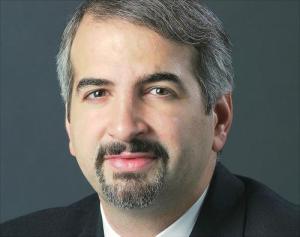
Anthony Shadid
Four New York Times journalists disappeared while reporting on fighting in Libya, the newspaper said Wednesday.
Editors at the newspaper said they last heard from the journalists on Tuesday as they were covering the retreat of rebels from the town of Ajdabiya. Libyan officials told the newspaper they are trying to locate the four, executive editor Bill Keller said in a statement.
“We are grateful to the Libyan government for their assurance that if our journalists were captured they would be released promptly and unharmed,” Keller said.
The missing journalists are Pulitzer-Prize-winning reporter Anthony Shadid, the newspaper’s Beirut bureau chief; Stephen Farrell, a reporter and videographer; and photographers Tyler Hicks and Lynsey Addario. In 2009, Farrell was kidnapped by the Taliban and later rescued by British commandos.
Anthony Shadid has won two Pulitzer Prizes, including one in 2010 for reporting on Iraq at the Washington Post.

Lynsey Addario
Lynsey Addario is a brilliant photographer who was a 2009 recipient of a MacArthur “genius” grant. You can view some of her work here and here.
Libyan government forces said Wednesday that they have no information about where the journalists may be and that, if they were picked up by the Libyan military, they would be returned to Tripoli.
CNN quotes from an e-mail Addario sent to CNN correspondent Ivan Watson on Monday:
Addario called the Libya story “one of the most dangerous” of her career.
The e-mail said, “qaddafi’s forces heading back east, and the rebels are surrendering along the way…so exhausted. this story has been one of the most dangerous i have ever covered. getting bombed from the air and by land, with no cover, and no flack and helmet.”
Of the other missing writer and photography, CNN says:
Farrell routinely reports from Pakistan, Afghanistan and Iraq. Before joining The New York Times in 2007, he worked for the Times of London. In April 2004, he was kidnapped on assignment in Iraq.
Hicks, a staffer for the paper, is based in Istanbul and has served as an embed in Afghanistan.
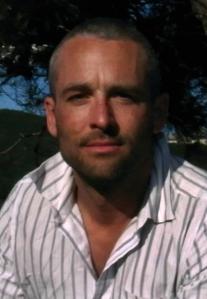
Tyler Hicks
Here is a recent post at the NYT Lens blog, with photos by Tyler Hicks along with his reflections on covering the Libyan conflict.
Stephen Farrell was taken prisoner by the Taliban in 2009. The Guardian has a report about the British soldier who died rescuing Farrell in Afghanistan.
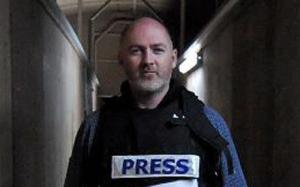
Stephen Farrell
There is some good news. Guardian UK journalist Abdul-Ahad has been freed.
Abdul-Ahad, an Iraqi national, and Andrei Netto, a Brazilian journalist, were taken into custody on 2 March.
They were held in a prison outside Tripoli after being picked up in Sabratha, a coastal town.
Netto was released last week, but Abdul-Ahad, an award-winning correspondent was held until Wednesday.
Guardian editor Alan Rusbridger has said that Abdul-Ahad “is safely out of Libya”.
The recent conflicts in the Middle East have been dangerous for journalists. I only hope that these four fine journalists will soon be found safe and unhurt.
Hillary says No
Posted: March 16, 2011 Filed under: Democratic Politics, Diplomacy Nightmares, Domestic Policy, Egypt, Foreign Affairs, Hillary Clinton, Tunisia | Tags: CNN, interview with Hillary Clinton, politics, Wolf Blitzer 25 CommentsCNN’s Wolf Blitzer has released an interview with SOS Hillary Clinton. Blitzer asked if she was going to either serve a second term or run for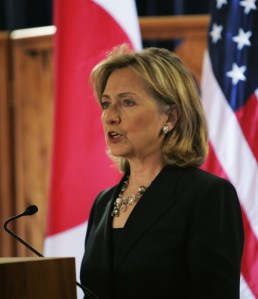 President in 2012. This is pretty clear evidence the Clinton is planning on returning to private life shortly. Blitzer interviewed Clinton during her visit to the U.S. Embassy in Cairo on March 16, 2011.
Q- If the president is reelected, do you want to serve a second term as secretary of state?
No
Q- Would you like to serve as secretary of defense?
No
Q- Would you like to be vice president of the United States?
No
Q- Would you like to be president of the United States?
No
Q- Why not?
Because I have the best job I could ever have. This is a moment in history where it is almost hard to catch your breath. There are both the tragedies and disasters that we have seen from Haiti to Japan and there are the extraordinary opportunities and challenges that we see right here in Egypt and in the rest of the region. So I want to be part of helping to represent the United States at this critical moment in time, to do everything I can in support of the president and our government and the people of our country to stand for our values and our ideals, to stand up for our security, which has to remain first and foremost in my mind and to advance America’s interests. And there isn’t anything that I can imagine doing after this that would be as demanding, as challenging or rewarding.
Q- President of the United States?
You know, I had a wonderful experience running and I am very proud of the support I had and very grateful for the opportunity, but I’m going to be, you know, moving on.
Q- I asked my viewers and followers on Twitter to send questions and a lot of them said, “Ask her if she’ll run in 2016 for the presidency.” A lot of folks would like to you to do that.
Well that’s very kind, but I am doing what I want to do right now and I have no intention or any idea even of running again. I’m going to do the best I can at this job for the next two years.
Clinton also spoke of democratic reforms in Egypt while visiting that nation and Tunisia. She was greeted with protests in Tunisia.
Clinton toured Cairo’s Tahrir Square, the epicenter of the pro-democracy uprising that led to last month’s resignation of Egyptian President Hosni Mubarak.
Clinton said visiting the square was a “great reminder of the power of the human spirit and desire for freedom and human rights and democracy.”
She was welcomed by Egyptian citizens and shook hands with passersby in the square before meeting with Egyptian Prime Minister Essam Sharaf.
Before leaving for Tunisia on Wednesday, Clinton was set to meet with Arab League Secretary General Amr Moussa. Moussa, 74, is a veteran Egyptian diplomat and has announced his candidacy for the country’s presidency.
Clinton also met with pro-democracy activists and members of Egypt’s civil society. She is the highest-ranking U.S. official to visit Egypt since the anti-government protests.
Clinton arrived in Cairo Tuesday after attending a Group of Eight foreign ministers’ meeting in Paris.
After wrapping up talks in Egypt, she travels to Tunisia – the starting point of the pro-democracy movement that has swept through much of the Middle East and North Africa this year.
Dozens of Tunisians took to the streets in Tunis on Wednesday to protest against Clinton’s visit. The demonstrators said they oppose foreign intervention in their country.
There appears to be no break through in her meetings with the G8 in terms of backing a no-fly zone for Libya. While she met with Egypt’s Prime Minister, some details of their meeting have not been released.
On Tuesday, Clinton issued a strong statement of praise for Egypt’s political revolution, declaring she was “deeply inspired” by the dramatic change and promising new assistance for America’s longtime Middle East ally.
Clinton pledged $90 million in emergency economic assistance during a meeting in Cairo with Foreign Minister Nabil Al-Araby. She is the highest ranking U.S. official to visit Egypt since the overthrow of Mubarak.
“The United States will work to ensure that the economic gains Egypt has forged in recent years continue, and that all parts of Egyptian society benefit from these gains,” a State Department statement noted.
She’s not yet discussed her plans after she retires from the position of US Secretary of State.

 peej
peej Carissa
 bostonboomer
 dakinikat
 ecocatwoman
 mablue2
 Mama Lopez
 peggysue22
 quixote
 skydancingguestblogger
 Mona (aka Wonk the Vote)



 Sky Dancing
Recent Comments