
Pakistan Security Shielded Osama bin Laden from U.S. — Wikileaks
Posted: May 2, 2011 Filed under: Breaking News, Foreign Affairs, Pakistan, U.S. Economy, U.S. Military, U.S. Politics, Wikileaks | Tags: ISI, Osama bin Laden, Pakistan, Wikileaks 46 Comments
I thought we needed a new thread to discuss the bin Laden breakthrough. I’ll continue to update if I find more new information.
From the Tim Ross at the UK Telegraph:
In December 2009, the government of Tajikistan warned the United States that efforts to catch bin Laden were being thwarted by corrupt Pakistani spies.
According to a US diplomatic dispatch, General Abdullo Sadulloevich Nazarov, a senior Tajik counterterrorism official, told the Americans that “many” inside Pakistan knew where bin Laden was.
The document stated: “In Pakistan, Osama Bin Laden wasn’t an invisible man, and many knew his whereabouts in North Waziristan, but whenever security forces attempted a raid on his hideouts, the enemy received warning of their approach from sources in the security forces.”
Intelligence gathered from detainees at Guantanamo Bay may also have made the Americans wary of sharing their operational plans with the Pakistani government.
Hmmm…maybe those billions that are going to Pakistan would be better spend on dealing with unemployment here in the U.S.?
More on the courier from the CSM:
It is widely reported that the detained 9/11 mastermind Khalid Sheikh Mohammed gave his US interrogators the pseudonym of a man he described as Osama bin Laden’s most trusted courier, whose whereabouts were tracked last fall to a fortress-like compound in Abbottabad city, some 75 miles north of the capital Islamabad. But US intelligence was also monitoring the satellite calls made by bin Laden’s bodyguard, which also helped lead US forces to bin Laden’s hiding place.
Bin Laden avoided e-mail and phones for fear those lines could be tracked, and instead relied on a system of personal couriers who carried his messages to the outside world. His compound lacked any telephone or Internet connection, according to local sources, but he did have at least one satellite phone. Further backing their story, a Reuters reporter visiting the scene reportedly saw a satellite dish in the compound.
Here’s a fascinating story in the NYT about some of the intelligence work that went into finding out where bin Laden was hiding in plain sight.
A trusted courier of Osama bin Laden’s whom American spies had been hunting for years was finally located in a compound 35 miles north of the Pakistani capital, close to one of the hubs of American counterterrorism operations. The property was so secure, so large, that American officials guessed it was built to hide someone far more important than a mere courier.
[….]
American intelligence officials said Sunday night that they finally learned the courier’s real name four years ago, but that it took another two years for them to learn the general region where he operated.
Still, it was not until August that they tracked him to the compound in Abbottabad, a medium-sized city about an hour’s drive north of Islamabad, the capital of Pakistan.
C.I.A. analysts spent the next several weeks examining satellite photos and intelligence reports to determine who might be living at the compound. A senior administration official said that by September the C.I.A. had decided that there was a “strong possibility” that Bin Laden himself was hiding there.
Dorothy Parvaz missing in Syria
Posted: May 2, 2011 Filed under: Foreign Affairs, Middle East, Syria | Tags: Al Jazeera, Dorothy Parvaz, Journalist 3 CommentsWe heard the horrors of Lara Logan’s assault while reporting the Egyptian uprising in Cairo on 60 minutes last 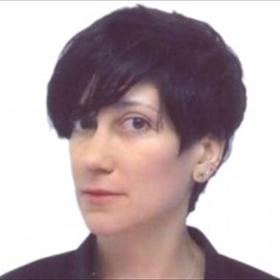 Sunday. Reporter Dorothy Parvaz is missing in Syria. Dorothy is a reporter for Al Jazeera who was covering the unrest there.
Daraa, a drought-plagued city, has been under siege for a week since the regime sent in troops backed by tanks and snipers to crush protests. Electricity, power and fuel have been cut and the military has largely sealed off the area.
“I have never been so scared in all my life,” said one Daraa resident who fled late Sunday to an area some 10 miles (16 kilometers) away.
“Security men have divided Daraa into four parts … there was indiscriminate shelling yesterday, people are terrified,” he told The Associated Press Monday. “It’s like a military barracks there.”
Also Monday, Arab satellite TV station Al-Jazeera said one of its journalists, DorothyParvaz, 39, has not been heard from since arriving Friday in Damascus. Parvaz, who had U.S., Iranian and Canadian citizenship, was a former reporter and columnist for the Seattle Post-Intelligencer.
“We are deeply concerned for Dorothy’s safety, security, and well-being. We are requesting full cooperation from the Syrian authorities to determine what happened at the airport, what her current location is, and the status of her health,” Al-Jazeera said in a statement.
The Oregonian reports that Parvaz’s husband, a West Linn High School and Lewis and Clark College graduate hasn’t heard from since Friday.
In Damascus, a witness said security forces dispersed a group of about 100 women in the capital who were carrying banners of support for the women and children of Daraa.
Ten minutes into the protest, police broke it up by force, beating a few of the women, said the witness, who spoke on condition of anonymity for fear of reprisals.
The witness accounts could not be independently confirmed. Syria keeps tight restrictions on the media and has expelled foreign journalists and restricted access to trouble spots.
Al Jazeera is demanding the release of Dorothy.
Al Jazeera has demanded immediate information from Syria about one of its journalists who has been missing in the country since Friday afternoon.
Dorothy Parvaz left Doha, Qatar, for Syria on Friday to help cover events currently taking place in the country. However, there has been no contact with the 39-year-old since she disembarked from a Qatar Airways flight in Damascus.
Parvaz is an American, Canadian and Iranian citizen. She joined Al Jazeera in 2010 and recently reported on the Japanese earthquake and tsunami for the network.
She graduated from the University of British Columbia, obtained a masters from Arizona University, and held journalism fellowships at both Harvard and Cambridge. She previously worked as a columnist and feature writer for the Seattle Post-Intelligencer in the US.
An Al Jazeera spokesman said: “We are concerned for Dorothy’s safety and wellbeing. We are requesting full cooperation from the Syrian authorities to determine how she was processed at the airport and what her current location is. We want her returned to us immediately.”
When asked about Parvaz’s case, Ali Akbar Salehi, the Iranian foreign minister, said: “We demand the government of Syria look into this case.”
Dorothy was born in Iran of a Iranian father and an American mother. She lived in Canada during her youth. We hope she has the support of these countries and their consulates. Syria is run by a brutal regime that is known for the usual horrible conditions in prison. It is important that her story gets out.
What Did Pakistan know and when did it know it?
Posted: May 2, 2011 Filed under: Foreign Affairs, Pakistan | Tags: Afghanistan, Osama bin Laden, Pakistan 83 Comments The big question remaining in the operation that killed the world’s most wanted man is the role of Pakistan in the operation and in the last living arrangements of Osama Bin Laden. Bin Laden and his 4th mail order bride and associates were living in a mansion in a military town close to a military base. This is sure to raise a lot of questions. There are several media outlets and blogs asking these questions. Those already included are TPM.
The Democrats’ top armed services expert on Capitol Hill says Pakistan’s military and intelligence have grave questions to answer after Osama Bin Laden was killed in an elaborate compound, deep inside Pakistan, near a top Pakistani military facility.
“I think that the Pakistani army and intelligence have a lot of questions to answer, given the location, the length of time, and the apparent fact that this facility was built for bin Laden, and its closeness to the central location to the Pakistani army,” said Sen. Carl Levin (D-MI), who chairs the Senate Armed Services committee, in a Capitol briefing with reporters Monday morning.
“I think the Pakistani president’s statement today was a very reassuring statement — when he very specifically said that he thinks that it’s a great victory and a success, and to congratulate us on the success of the operation,” Levin added. “So reassured by his statement, not necessarily suspicious that he knew, or the civilian leadership knew. But I must tell you I hope that he will follow through — that the President of Pakistan Hardari will follow through and ask some very tough questions with his own military and his own intelligence. They’ve got a lot of explaining to do.”
A number of reports — including from President Obama himself — indicate that Pakistan facilitated the intelligence that ultimately led U.S. forces to bin Laden’s compound.
Response to the operation appears to depend on the source . The current President of Pakistan signals that Pakistan was in on the operation. However, former President Pervez Musharif of Pakistan questioned the operation and its impact on Pakistani soverignity. He did add that it would’ve been better for Pakistani special ops to carry out the mission. Since the mansion was built in 2005, this raises some questions about the possibility that some Pakistani officials may have known,
Former Pakistani President Pervez Musharraf on Monday accused the U.S. of violating his country’s sovereignty by sending in special forces to kill Osama bin Laden.
“American troops coming across the border and taking action in one of our towns, that is Abbottabad, is not acceptable to the people of Pakistan. It is a violation of our sovereignty,” Mr. Musharraf told CNN-IBN, an Indian news channel.
He added that it would have been “far better if Pakistani Special Services Group had operated and conducted the mission. To that extent, the modality of handling it and executing the operation is not correct.”
“For some time there will be a lot of tension between Washington and Islamabad because Bin Laden seems to have been living here close to Islamabad,” Imtiaz Gul, a Pakistani security analyst, told Reuters. “Pakistan will have to do a lot of damage control. This is a serious blow to the credibility of Pakistan.”
In Kabul, Karzai seized on the news of Bin Laden’s death to criticise the US-led coalition, complaining that it was focused on counter-insurgency operations in the Pashtun south of Afghanistan rather than Taliban safe havens over the border.
“Year after year, day after day, we have said the fighting against terrorism is not in the villages of Afghanistan, not among the poor people of Afghanistan,” he said. “The fight against terrorism is in safe havens. It proves that Afghanistan was right.”
Aminuddin Muzafary, secretary of the High Peace Council established by Karzai, said Bin Laden’s death “removed the curtain from Pakistan’s face.” He added: “His death shows the unfaithfulness of Pakistan but it is also possible that it was a business deal between the CIA and the ISI. Time will reveal whether or not this was a deal or something else.”
The news was “very worrying,” said Abdullah Abdullah, Afghanistan’s top opposition leader. “Just a few weeks ago the Pakistanis were insisting that the US military and intelligence operations should be stopped in Pakistan and their agents should leave the country.”
The NYT’s Jane Perlez believes this questions will likely lead to suspicions of Pakistan. What will happen in US-Pakistani relations?
The killing of Osama bin Laden deep inside Pakistan in an American operation, almost in plain sight in a medium-sized city that hosts numerous Pakistani forces, seems certain to further inflame tensions between the United States and Pakistan and raise significant questions about whether elements of the Pakistani spy agency knew the whereabouts of the leader of Al Qaeda.
The presence of Bin Laden in Pakistan, something Pakistani officials have long dismissed, goes to the heart of the lack of trust Washington has felt over the last 10 years with its contentious ally, the Pakistani military and its powerful spy partner, the Inter-Services Intelligence.
Interestingly enough, CNN reports that several Pakistani officials are disputing President Obama’s claim that this was a joint operation.
On bin Laden, President Obama said Pakistan helped provide intelligence that led the U.S. to the terrorist leader and praised Pakistan for its “close counterterrorism cooperation” but said no other country, including Pakistan, knew about the operation in advance.
Several Pakistani officials disputed Obama’s account, claiming credit for what they called a joint U.S.-ISI operation.
A senior Pakistani intelligence official said the U.S. intelligence was developed from information that the Pakistanis had gathered: mostly electronic intercepts that the source said the Pakistanis regularly provide to the U.S.
“Somehow it slipped from our radar and was picked up on theirs,” the official said.
The U.S. has long suspected that bin Laden was hiding in Pakistan, although officials suspected that he was given safe haven in the country’s remote tribal areas along the border with Afghanistan. In July, while in Pakistan, Secretary of State Hillary Clinton accused the Pakistani government of not doing enough in the hunt for bin Laden, suggesting that the government knew where he was.
The fact that bin Laden was found in a small city that is so close to the capital of Islamabad and home to the country’s military academy raises more questions than answers about how he could avoid capture for so long.
Did Pakistan’s ISI, long believed to have ties to al Qaeda and the Taliban, provide bin Laden sanctuary in Abbottabad? Did it tip the U.S. off to his whereabouts? Or was the government completely ignorant that the world’s most famous terrorist was living in the city?
The answers to those questions are critical and will go a long way to determining the course of the relationship going forward. They could both confirm Washington’s greatest concerns about Pakistan’s commitment to fighting terrorism and deepen mistrust on both sides, or they will prove Pakistan to be a genuine partner in the fight against extremism, which could create goodwill on both sides and give the relationship a much-needed boost.
Now that the FBI has updated its most-wanted list and the news has been spread around the world, many of the details of the operation as well as the search for intelligence on Bin Laden’s whereabouts will undoubtedly take center stage. Another question that will eventually arise will be the role of CIA interviews in collecting the information as well as the possible role of at least one Guantanamo detainee and the discovery of identities of Bin Laden couriers. It’s interesting to watch all the celebrations around Ground Zero and the White House, but I am going to be much more interested in the LeCarre-like stuff that will follow. It will also be interesting to watch the growing questions surrounding Pakistan’s knowledge of the Bin Laden compound.
Monday Reads
Posted: May 2, 2011 Filed under: Afghanistan, Barack Obama, Federal Budget, Federal Budget and Budget deficit, Foreign Affairs, Iraq, morning reads, Pakistan | Tags: David Stockman calls for Tax increases, Godwin, Michelle Bachman, Osama bin Laden dead, Trump Trumped at White House Correspondents 68 Comments Good Morning!
Well, the biggest news is the killing of Osama Bin Laden in a US operation. The President announced the news on TV last night. There were few details other than Bin Laden was killed in a US operation and was in Pakistan. Spontaneous celebrations erupted across the U.S. The entire statement can be read at NPR. The State Department has warned that there may be increased potential for violence against US citizens and a security alert has been announced for travelers. WAPO is reporting that this was a Navy Seals operation that involved the CIA and Pakistani intelligence.
Obama said the operation took place in Abbottabad, a city of about 100,000 in Pakistan’s Khyber Pakhtunkhwa province, about 100 miles north of Islamabad. Named for a British military officer who founded it as a military cantonment and summer retreat, it is the headquarters of a brigade of the Pakistan Army’s 2nd Division.
Bin Laden had long eluded U.S. forces throughout George W. Bush’s presidency, and the former president said Sunday that he congratulated Obama and the military and intelligence personnel who “devoted their lives to this mission.”
After weeks of chasing conspiracy stories about the President and dropping the F-bomb numerous times in a speech, Donald Trump becomes the arbiter of good taste calling the White House correspondent’s dinner “inappropriate”. I guess he really does like jokes about his nasty hairdo after all.
At the event, Obama made light of Trump’s repeated calls for him to release his birth certificate, something he did Wednesday, and Meyers made fun of everything from his hair to his presidential ambition. Although Trump appeared unamused during Saturday’s dinner, he said he was honored “in a certain way” to be a focal point.
“I really knew what I was getting into last night. I had no idea it would be to that extent where, you know just joke after joke after joke,” the mogul said. “It was almost like, is there anyone else they can talk about?”
He also found the event “inappropriate in certain respects” and spent the evening thinking about how “the American people are really suffering and we’re all having a good time.”
And what was his assessment of Meyers’ comedic timing?
“His (Meyers) delivery was not good. He’s a stutterer and he really was having a hard time,” Trump said of the “Saturday Night Live” star.
Is any one else but me still offended by Trump calling Rosie O’Donnell a pig? So, first misogyny and now attacks on disabilities. So, now Seth Meyer is a ‘stutterer’. Stay classy, The Donald! Guess he can dish it out but he can’t take it!
Reagan Budget Director David Stockman once more calls for raising taxes to take care of Federal budget problems. It’s been interesting to watch all these Republican officials come out and tell other Republicans to do the responsible thing.
Asked by Reuter’s Chrystia Freeland if the economy could “sustain” a tax increase, Stockman said “absolutely,” noting that the economy only recovered under Reagan once he raisedtaxes in 1982 after “cut[ting] taxes too much” the year before:
FREELAND: You worked for Ronald Reagan. Do you think the American economy — so you’re, like, a red-blooded capitalist — could it sustain higher taxes than it has now?
STOCKMAN: Absolutely. In 1982, we were looking at the jaws of the worst recession since the 1930s. We overdid it in 1981, cut taxes too much. We came back with a big deficit reduction plan in 1982. Unemployment’s at 10 percent, the economy is in dire shape, and we raise taxes by 1.2 percent of GDP, which would be $150 billion a year right now — not 10 years down the road — but right now
Here’s one of those ‘Only in Washington, D.C” stories from The Hill. Here’s another example of no funding for a delegated task.
President Obama launched a task force last week to look into oil and gas price manipulation, but a spending bill he signed into law earlier this month would prevent the government’s top statistical agency from analyzing that very issue.
The fiscal year 2011 spending legislation – a product of tense negotiations between Republicans and Democrats – cuts the Energy Information Administration’s budget by 14 percent.
Michelle Bachmann Godwins. She compared the federal debt levels to the holocaust. Ever wonder if there’s any actual history classes in her past? How on earth can you compare anything that trivial to the mass slaughter of innoncent people in such a systemic and horrific way?
Bachmann, careful to note that there was no direct analogy in today’s times to the Holocaust, still tied the loss of “economic liberty” that Americans face today to the systematic killing of six million European Jews.
“We are seeing eclipsed in front of our eyes a similar death and a similar taking away,” Bachmann said. “It is this disenfranchisement that I think we have to answer to.”
In a reference to the Obama administration’s new health care law, the likely presidential candidate and tea party favorite said creating new entitlement programs that “there was never any hope or chance of being able” to pay for was an exercise in “fantasy economics.”
“All of the problems we’re facing with debt are manmade problems. We created them. It’s called fantasy economics,” she told Republicans gathered at Southern New Hampshire University. “Fantasy economics only works in a fantasy world. It doesn’t work in reality.”
If any one would know about fantasy worlds, I suggest it would be Michele Bachmann.
Project Syndicate is one of my favorite sites these days and this is a very descriptive headline by Pimco’s CEO Mohamed El-Erian: Sleepwalking through America’s Unemployment Crisis.
Let us start with the facts:
· At 8.8% almost three years after the onset of the global financial crisis, America’s unemployment rate remains stubbornly (and unusually) high;
· Rather than reflecting job creation, much of the improvement in recent months (from 9.8% in November last year) is due to workers exiting the labor force, thus driving workforce participation to a multi-year low of 64.2%;
· If part-time workers eager to work full time are included, almost one in six workers in America are either under- or unemployed;
· More than six million workers have been unemployed for more than six months, and four million for over a year;
· Unemployment among 16-19 year olds is at a staggering 24%;
· With virtually no earned income and dwindling savings, the unemployed are least able to manage the current surge in gasoline and food prices, they are effectively shut off from credit, and many have mortgage debt that exceed the value of their homes.
These and many other facts speak to an unpleasant and unusual reality for the United States. The country now has an unemployment problem that is large in magnitude and increasingly structural in nature. The consequences are multifaceted, involving immediate personal anguish, rising social and political tensions, economic losses, and budgetary pressures.
This is much more than a problem for the here and now. High and intractable unemployment has serious negative long-term consequences that threaten to become exponentially worse. This is a crisis.
So, there’s some headlines to think about! What’s on your reading and blogging list today?
updated for this thread: NationalJournal.com has some information on “The Secret Team that Killed Obama” that you may want to check out. There’s also a timeline or tick tock for Bin Laden’s life.
From Ghazi Air Base in Pakistan, the modified MH-60 helicopters made their way to the garrison suburb of Abbottabad, about 30 miles from the center of Islamabad. Aboard were Navy SEALs, flown across the border from Afghanistan, along with tactical signals, intelligence collectors, and navigators using highly classified hyperspectral imagers.
After bursts of fire over 40 minutes, 22 people were killed or captured. One of the dead was Osama bin Laden, done in by a double tap — boom, boom — to the left side of his face. His body was aboard the choppers that made the trip back. One had experienced mechanical failure and was destroyed by U.S. forces, military and White House officials tell National Journal.
Were it not for this high-value target, it might have been a routine mission for the specially trained and highly mythologized SEAL Team Six, officially called the Naval Special Warfare Development Group, but known even to the locals at their home base Dam Neck in Virginia as just DevGru.
Five Meetings over Two Months lead to Kill Order (update)
Posted: May 1, 2011 Filed under: Afghanistan, Barack Obama, Breaking News, Foreign Affairs, Iraq, Pakistan | Tags: Osama bin Laden dead 46 CommentsCNN is getting more details as reporters are being briefed.

I just can't wait for the next South Park Osama adventure ...
Ed Henry has just clarified the timing of the Bin Laden killing. Evidently, the President and the National Security Council met five times between March 4th and April 30th. The President issued the kill order during the Royal Wedding. Bin Laden was killed today.
Gloria Borger has been briefed too. Borger says Bil Laden was killed in a compound that was built in 2005. It was well armored. The intelligence came from people watching messengers going in and out and also reports that the compound burned trash instead of dumping it. The mansion had been under surveillance for some time. There were quite a few people living there including one that met Bin Laden’s odd description It was a million dollar complex but there was no TV or internet.
Chris Lemon says the operations included a helicopter raid involving Navy Seals. There were practice runs to minimize casualties in the area. There was one helicopter that failed to get to the operations. No one was hurt but the helicopter was destroyed.
Bin Laden was in Abbottabad; not in caves. This is an affluent neighborhood filled with retired Pakistani military officals. The compound was 8 times larger than similar homes in the area and had incredible security including enforced walls that were 12-18 feet tall and topped with barbed wire. This situation attracted attention.
CNN says confirms the US has the body.
A team of U.S. Navy SEALs carried out the operation in Pakistan that ended in the death of al Qaeda leader Osama bin Laden, CNN’s Chris Lawrence reported. The operation lasted about 40 minutes, and the team had practiced the raid a few times.
Earlier, CNN’s Nick Paton Walsh, citing a senior Pakistani intelligence official, reported that members of Pakistan’s intelligence service – the ISI – were on site in Abbotabad, Pakistan, during the operation that killed bin Laden. The official said he did not know who fired the shot that actually killed Bin Laden.
[Updated, 12:11 a.m. ET] Members of Pakistan’s intelligence service – the ISI – were on site in Abbotabad, Pakistan, during the operation that killed Osama bin Laden, CNN’s Nick Paton Walsh reports, citing a senior Pakistani intelligence official. The official said he did not know who fired the shot that actually killed Bin Laden.
The US has issued a worldwide travel alert. The U.S. State Department warns that “enhanced potential for anti-American violence” is possible following bin Laden’s death.
GEO TV from Pakistan has a video of the fire at the compound.

 peej
peej Carissa
 bostonboomer
 dakinikat
 ecocatwoman
 mablue2
 Mama Lopez
 peggysue22
 quixote
 skydancingguestblogger
 Mona (aka Wonk the Vote)



 Sky Dancing
Recent Comments