I need to begin with some local Massachusetts stories that may have national repercussions.
First there is an update to the story of Ibragim Todashev, who was allegedly a friend of accused Boston bomber Tamerlan Tsarnaev. Both men are deceased. As you may recall, Todashev was shot and killed in his home in Orlando by an agent from the Boston FBI office on May 22, 2013.
The agent, along with an agent from the Orlando FBI office and two Massachusetts state troopers, had been questioning Todashev about his possible involvement with Tamerlan in the murders of three men in Waltham, MA on September 11, 2011.
According to the agent and the trooper who was there with him, Todashev attacked the agent with a table and the agent had shot him in self defense. Todashev had supposedly been writing a confession to his involvement in the murders when he suddenly attacked. The agent who shot Todashev was later absolved of any wrongdoing by reports by the Florida State Attorney’s office, the DOJ, and the FBI. The FBI report has not been released; and in the other two reports, much information, include the names of the agents and troopers, some portions of photos of the crime scene were redacted.
Now to the latest news (which so far has gone unnoticed by the corporate media). A couple of days ago, a blogger named B. Blake revealed that he/she had succeeded in downloading a version of the Florida Attorney’s report that was not properly redacted. The unredacted photos and the names of the agent who shot Todashev along with the two Mass. state troopers have been published on B. Blake’s blog “The Boston Marathon Bombings:What Happened?” The post includes an explanation of how the unredacted materials were obtained and authenticated. I’m not going to post the photos or names of law enforcement personnel; but you can see them at the above link. In another blog post, B. Blake reports some background information on the FBI agent involved.
So far I’ve seen nothing reported about this in the mainstream press, but it is all over Twitter. I don’t know if this will get out into the mainstream, but the FBI must have noticed it by now. I don’t know what will happen next, but when Twitter gets hold of a story, it generally gets noticed by the media eventually. I hope no harm will come to the three men whose names have been kept quiet until now. Stay tuned . . .
Massachusetts plans to scrap the state’s dysfunctional online health insurance website, after deciding it would be too expensive and time-consuming to fix, and replace it with a system used by several other states to enroll residents in plans.
Simultaneously, the state is preparing to temporarily join the federal HealthCare.gov insurance marketplace in case the replacement system is not ready by the fall.
As late as March, the state had considered rebuilding the balky Health Connector site, which has left thousands of consumers frustrated and many without coverage for months. But Sarah Iselin, the insurance executive whom Governor Deval Patrick tapped to oversee repairs to the site, said that approach turned out to be far too risky.
The state’s online insurance system must be ready by Nov. 15 for consumers to enroll in new health plans for 2015, and Massachusetts is one of several states under pressure from the Obama administration to make sure it meets the deadline.
The change mostly involves adopting a new software program and getting it up to speed by the deadline, which is set by law and has no flexibility.
Another unknown is whether the transition will create disruption for consumers. Eric Linzer, a spokesman for the Massachusetts Association of Health Plans, said some insurers may not be able to afford to remain in the program, meaning consumers could end up having to switch coverage.
“I can’t overstate the complexity and technical issues that come with not having to develop just one but two separate systems,’’ he said. “Given the time frame in which all this has to be implemented, this is going to be a significant undertaking for plans.’’
Massachusetts also provides more generous subsidies than the federal health insurance program for residents with incomes below 300 percent of the federal poverty level. Iselin said whether the state can retain those unique aspects of its program if it connects to the federal site is still under discussion with the Obama administration. According to the state’s plan, use of the federal website, if necessary, would be for no more than a year…
On the other hand, there is positive news long-term for Obamacare from a study of the effects of Massachusetts’ adopting universal health care in 2006. From the NYT: Mortality Drop Seen to Follow ’06 Health Law.
BOSTON — The death rate in Massachusetts dropped significantly after it adopted mandatory health care coverage in 2006, a study released Monday found, offering evidence that the country’s first experiment with universal coverage — and the model for crucial parts of President Obama’s health care law — has saved lives, health economists say.
The study tallied deaths in Massachusetts from 2001 to 2010 and found that the mortality rate — the number of deaths per 100,000 people — fell by about 3 percent in the four years after the law went into effect. The decline was steepest in counties with the highest proportions of poor and previously uninsured people. In contrast, the mortality rate in a control group of counties similar to Massachusetts in other states was largely unchanged.
A national 3 percent decline in mortality among adults under 65 would mean about 17,000 fewer deaths a year.
“It’s big,” said Samuel Preston, a demographer at the University of Pennsylvania and an authority on life expectancy. Professor Preston, who was not involved in the study, called the study “careful and thoughtful,” and said it added to a growing body of evidence that people with health insurance could reap the ultimate benefit — longer life.
Experts said the study, which was published online Monday in theAnnals of Internal Medicine, will not settle the long-debated question of whether being insured prolongs life, but it provides the most credible evidence yet that it might. Still, health improvements can take years to surface in mortality data, and some researchers were skeptical of the magnitude and suddenness of the decline.
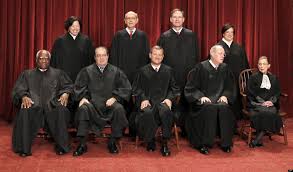
Justice Antonin Scalia is known as a consistent and principled defender of free speech rights.
It pained him, he has said, when he voted to strike down a law making flag burning a crime. “If it was up to me, if I were king,” he said, “I would take scruffy, bearded, sandal-wearing idiots who burn the flag, and I would put them in jail.” But the First Amendment stopped him.
That is a powerful example of constitutional principles overcoming personal preferences. But it turns out to be an outlier. In cases raising First Amendment claims, a new study found, Justice Scalia voted to uphold the free speech rights of conservative speakers at more than triple the rate of liberal ones. In 161 cases from 1986, when he joined the court, to 2011, he voted in favor of conservative speakers 65 percent of the time and liberal ones 21 percent.
He is not alone. “While liberal justices are over all more supportive of free speech claims than conservative justices,” the study found, “the votes of both liberal and conservative justices tend to reflect their preferences toward the ideological groupings of the speaker.”
Social science calls this kind of thing “in-group bias.” The impact of such bias on judicial behavior has not been explored in much detail, though earlierstudies have found that female appeals court judges are more likely to vote for plaintiffs in sexual harassment and sex discrimination suits.
Lee Epstein, a political scientist and law professor who conducted the new study with two colleagues, said it showed the justices to be “opportunistic free speech advocates.”
A lengthy New York magazine report published Sunday suggests that Logan’s return is far from certain. In the piece contributing editor Joe Hagan explores the tensions that simmered within CBS News, where his sources in the network described the current atmosphere as “toxic,” since Logan was forced to apologize last November for a flawed report on the Benghazi attacks.
The report that led to Logan’s suspension centered around a British security contractor, Dylan Davies, who gave a heroic first-person account of the attacks on the American consulate in Benghazi. The contractor’s credibility was called into question after the segment aired, when it was reported that Davies may not have been present on the night of the attacks at the compound.
TPM quotes some of Logan’s CBS co-workers:
“It’s not an accident that Lara Logan fucked up,” one of Logan’s colleagues told the magazine. “It was inevitable. Everybody saw this coming.”
During the fallout from the report, a founding member of “60 Minutes,” Morley Safer, reportedly marched into executive producer Jeff Fager’s office and demanded that Logan be fired, but to no avail. Another unnamed source suggested to the magazine that CBS President Les Moonves has since “soured” on Logan, whom he previously treated as a favorite.
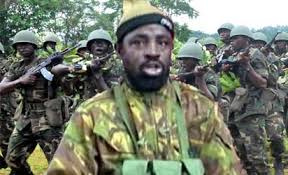
“I abducted your girls. I will sell them in the market, by Allah,” a man claiming to be Boko Haram leader Abubakar Shekau said in a video first obtained by Agence France-Presse.
“There is a market for selling humans. Allah says I should sell. He commands me to sell. I will sell women. I sell women,” he continued, according to a CNN translation from the local Hausa language….”Girls, you should go and get married,” he said.
Not surprisingly, there has been much criticism of the government’s response to the kidnappings.
Weeks after the girls’ April 14 kidnapping, Africa’s most populous country seems to be no closer to finding them, triggering complaints of ineptitude — some of which are expressed on Twitter with the globally trending hashtag #BringBackOurGirls.
Nigeria’s finance minister said Monday that her country’s government remains committed to finding the girls, but should have done a better job explaining the situation to the public.
“Have we communicated what is being done properly? The answer is no, that people did not have enough information,” Ngozi Okonjo-Iweala told CNN’s Richard Quest.
Revealing details about the investigation is tricky, she said, “because you are dealing with people that you don’t know, and you don’t know…what they might do to these girls.”
There is much more information about the Boko Haram group at the CNN link.
Those are my offerings for today. What stories are you following? Please share your links in the comment thread and have a lovely spring Tuesday!
Did you like this post? Please share it with your friends:
Good Morning, All. I am pinch hitting for JJ while she and her family are visiting our nation’s capital. I haven’t traveled much, but I have been to D.C. twice. What an amazing place. This will be an eclectic mix of links and stories, covering many different categories. I hope you will find at least some of them of interest to you.
This first group is about gardening. bb had mentioned to me that she likes to work in her garden, so I figured she would enjoy these. The first is a list of ideas on how to attract butterflies to your garden.
Planting your garden with plants that attract butterflies is only one step in making your garden butterfly-friendly. Once butterflies discover your garden the females will lay eggs on plants that become food for the hatching caterpillars.
The host plant selected, and the time of year the eggs are laid, depends on the species of butterfly. Different butterflies prefer different host plants.
Bees are pollinaters, picking up pollen as they go from flower to flower to gather nectar. Obviously they are an important component for a successful garden. Besides nectar, bees also need water and this has ideas about how to make a watering hole for bees.
As the temperature rise in the garden it is important to remember the bees you’re attracting to your garden will also be searching for water. For bees, a supply of water is as important as pollen and nectar forage in the summer.
Besides the lovely green foliage of a garden, it is important to do what we can to use “green” products. Treehugger contributor Ramon Gonzalez provides a list of 10 sustainable garden products.
A garden that is kinder to the earth can be achieved through the selection of products and tools that are sustainably manufactured or given new life through recycling. It’s never been so easy to build a garden that’s green from the moment you plunge that spade into the soil.
The New York Times featured a story and video today about the industrial damage done to Newtown Creek since the mid-1800s, and Mitch Waxman who has chronicled its history. The waterway was declared a Super Fund site in 2010.
If Mitch Waxman is your guide, he will identify it as the derelict smokestack of Peter Van Iderstine’s fat-rendering business, which first set up shop in 1855. But he won’t stop there.
He will expound on the archaic waste-disposal operations that once flourished on the creek, conjuring scenes of putrescent horse carcasses floating in on barges from Manhattan and docks piled with manure three stories high. The narrative will extend to Cord Meyer’s bone blackers and Conrad Wissel’s night soil wharf — the gothic names of these forgotten businesses rattled off in a distinct Brooklyn accent.
At some point, he will start in on the horrors of the M. Kalbfleisch Chemical Works, eventually making his way to the sins of Standard Oil.
Moving on to some stories about activism that caught my eye. The first story comes from Truth-Out about The Heritage Foundation’s conference to re-brand the Occupy Movement. Matt Dineen interviews Jason del Grandio, the author of Rhetoric for Radicals. Here’s a snippet of what Jason has to say about his perceived purpose of the conference.
The speakers make frequent reference to capitalism, free markets and free enterprise, and often mention traditional buzzwords like individual liberty and the pursuit of happiness. The Heritage Foundation is trying to understand the populist appeal of Occupy, and by doing so, trying to use that appeal to “win back” some of the Occupiers. Or, at the very least, to impede Occupy’s progress and win the hearts and minds of those who are still on the fence.
Brian Merchant interviews Tzeporah Berman, an environmental activist since was was 19, for Treehugger. This quote really hit home for me – you can’t un-know or un-see an injustice once your eyes, mind and heart have been opened to them.
Sometimes I wish I could open up a paper and not be immediately drawn to the story about mercury in fish or the dramatic increase in flooding in Sudan. But I can’t now.
Have you heard of Emem Okon, the Nigerian ecofeminist? I had not. She is a courageous woman, organizing other women of the Niger River Delta and taking on Chevron. The interview from Antonia Juhasz is reprinted from Ms magazine on Truth-Out.
One of the most prominent voices was Emem Okon, founder and executive director of Kebetkache Women Development & Resource Centre of Nigeria. A community organizer and women’s rights activist from the Niger Delta, Okon is leading a thriving Nigerian ecofeminist movement. She has coordinated several local women’s networks and coalitions, including Women Against Climate Change (WACC), International Network on Women and Environment, Niger Delta Women for Justice and Niger Delta Women’s Movement.
Speaking of women, the New York Times featured a story on the the Human Rights Film Festival at Lincoln Center. The review starts off with a profile of The Invisible War, which won the 2012 Audience Award at the Sundance Film Festival.
It hardly needs to be said that any armed force has the potential for internal as well as external violence. But “The Invisible War,” Kirby Dick’s incendiary documentary about the epidemic of rape within the United States military, is a shocking and infuriating indictment of widespread sexual attacks on women. Such behavior, the film argues, is tacitly condoned and routinely covered up; the victims are often blamed and their reputations destroyed.
The Rio+20 Summit begins on Monday, June 18th. President Obama and England’s David Cameron WON’T be attending, however Hillary Clinton will be representing the U.S. BBC News has more about Rio+20 and the awful state of the world’s oceans.
The researchers assessed the various pledges made at the landmark 1992 Earth Summit and 10 years later at the Johannesburg World Summit on Sustainable Development.
Governments vowed to establish an ecologically sound network of marine reserves by 2012, eliminate subsidies that contribute to illegal fishing, protect critical habitat, look after the needs of local fishermen and restore depleted stocks to healthy levels by 2015.
Subsidies have not been eliminated, and illegal fishing is still a major issue in some parts of the world.
Tom Ashbrook, host of NPR’s On Point, interviewed Bill McKibben of 350.org on Friday’s show. McKibben’s name is probably best known for the protests against the Keystone XL Pipeline, held outside of the White House, along with his subsequent arrest for protesting. You can listen to the audio at the link above. Here’s a short introduction:
Environmental champion Bill McKibben wrote nearly a quarter century ago about what he called “the end of nature.” The untouched wild. He didn’t think he was writing about the end of the world. But the climate change path since then has been a scary one. Bad to worse.
And McKibben has gone from writerly philosopher to full-on environmentalist to activist in handcuffs. Political street fighter. He was at the heart of the campaign to stop the Keystone XL pipeline. Arrested at the gates of the White House.
The current campaign of McKibben and 350.org is ending fossil fuel subsidies. These companies are paid by governments in the neighborhood of 1 TRILLION DOLLARS a year to pollute our planet. 350.org is organizing a Twitterstorm for June 18th. Although I don’t have a cell phone (and refuse to get one), I plan to set up a Twitter account so that I can participate. I hope that you will go to the link and sign up to participate as well. This quote comes from Treehugger about the Twitterstorm:
Deadly clashes between Christians and Muslim in Nigeria continue ahead of April elections.
Fresh violence has flared up in the Nigerian flashpoint city of Jos after clashes between Christians and Muslims in central Nigeria last week left 35 people dead.
The incidents, reported by police on Sunday, were the latest in a cycle of violence in volatile central Nigeria, where religious rioting has killed scores in recent years.
“Thirty-five people have been killed in sectarian violence in Tafawa Balewa on Thursday,” said Bauchi police commissioner Abdulkadir Mohammed Indabawa.
Only last week police had reported riots that had killed four people and arson attacks that had destroyed five mosques and 50 houses.
In neighbouring Plateau state’s capital of Jos meanwhile, more than a dozen people had died after clashes sparked by the stabbing Friday of university students by Muslim villagers, Muslim and Christian community leaders said.
Churches, mosques, filling stations, houses and food kiosks were set ablaze over the weekend.
On Sunday the military sent in reinforcements aided by helicopters for “aggressive patrols,” according to a military spokesman, who said they had made 27 arrests.
Religious fault lines
Eliza Griswold examines the complex relationship between Muslims and Christians along the tenth parallel.
Author and journalist Eliza Griswold spent seven years travelling through the fault lines of Nigeria, Sudan, Somalia, Indonesia, Malaysia and the Philippines trying to understand the origins and the reasons of this religious divide.
It is also the subject of her book, The Tenth Parallel, where she tells us the conflict is often about natural resources and land as much as it is about religion.
Did you like this post? Please share it with your friends:
The Sky Dancing banner headline uses a snippet from a work by artist Tashi Mannox called 'Rainbow Study'. The work is described as a" study of typical Tibetan rainbow clouds, that feature in Thanka painting, temple decoration and silk brocades". dakinikat was immediately drawn to the image when trying to find stylized Tibetan Clouds to represent Sky Dancing. It is probably because Tashi's practice is similar to her own. His updated take on the clouds that fill the collection of traditional thankas is quite special.
You can find his work at his website by clicking on his logo below. He is also a calligraphy artist that uses important vajrayana syllables. We encourage you to visit his on line studio.






 peej
peej Carissa
 bostonboomer
 dakinikat
 ecocatwoman
 mablue2
 Mama Lopez
 peggysue22
 quixote
 skydancingguestblogger
 Mona (aka Wonk the Vote)



 Sky Dancing
Recent Comments