
TGIFriday Reads
Posted: April 29, 2011 Filed under: Barack Obama, Federal Budget, Republican politics, Violence against women, Women's Rights | Tags: Barrack Obama Senior, birthers, conspiracy theories, Donald Trump, Lara Logan, oil subsidies, Paul Ryan, Racism, Republicans, student visa, violence against women 47 Comments Good Morning!
Well, it’s getting to be the silly season. Now we have Republicans who were for oil subsidies before they were against them or against them before they were for them. Evidently, angry town hall participants can’t figure out why oil companies that keep making record profits while gouging at the pump deserve huge tax breaks. So, Republicans are making up their minds as they go along. Here’s one such example from the Wonk Room: Paul Ryan Endorses Ending Oil Subsidies, Even Though He Voted For Them
Rep. Paul Ryan (R-WI) agree.d to end subsidies to oil companies during a town hall in Waterford, Wisconsin, this morning, eliciting great applause from an overflow crowd in a very conservative section of his district. “We also want to get rid of corporate welfare,” Ryan insisted. “So we propose to repeal all that”
…
But Ryan voted twice this year to actually extend subsidies to oil companies, once on a motion to recommit on a shorter-term continuing resolution and again when he supported an amendment to the initial House CR. The Ryan budget, meanwhile, doesn’t specifically target oil subsidies, but only generally promises to end “corporate welfare.”
Earlier this week, House Speaker John Boehner (R-OH) also indirectly endorsed ending subsidies to the oil industry, before walking back his support.
CBS Reporter Lara Logan is offering up more information on her ‘merciless’ assault during the Egyptian uprising. Logan was separated from her colleagues for about 25 minutes.
She declined to go into more detail about the assault but said: “What really struck me was how merciless they were. They really enjoyed my pain and suffering. It incited them to more violence.”
After being rescued by a group of civilians and Egyptian soldiers, she was swiftly flown back to the United States. “She was quite traumatized, as you can imagine, for a period of time,” Mr. Fager said. Ms. Logan said she decided almost immediately that she would speak out about sexual violence both on behalf of other journalists and on behalf of “millions of voiceless women who are subjected to attacks like this and worse.”
It appears the Lake Havusu Arizona Newspaper filed to see Barack Obama Senior’s immigration file. Their EXCLUSIVE–“Dad’s Immigration File Offers More Evidence Of Obama’s Birthplace” is an interesting read. Sounds like Harvard couldn’t get rid of this particular Obama soon enough. This really brings an interesting contrast to the President’s Book “Dreams of my Father”.
The documents also show that the CIS investigated the elder Obama as a polygamist, having a wife in Kenya and a “wife and child in Honolulu.” Dahlim’s memo adds that “Polygamy is not an excludable or deportation charge as Subject is a non-immigrant.”
Documents show that Obama, Sr. was denied an extension on his student visa in July, 1964, in part because Harvard University, where Obama, Sr., was a Ph.D. candidate, sought his removal. Obama Sr. eventually left the United States willingly after becoming an illegal alien for remaining in the country past the expiration of his visa.
An INS investigator, M.F. McKeon, wrote “They (Harvard officials) weren’t very impressed with him and asked us to hold up action on his application until they decided what action they could take in order to get rid of him. They were apparently having difficulty with his financial arrangements and couldn’t seem to figure out how many wives he had.”
Documents show that Harvard officials considered Obama, Sr. to be a “slippery character,” and conspired with the INS to have him deported.
After raising nearly every racist dogwhistle in the play book, Donald Trump Bristles at Claim He’s a Racist. Gee, why would anyone think that when the guy questions how the President–a legacy who graduated summa sum laude from Harvard–got into Harvard in the first place.
Trump tells TMZ … “That is a terrible statement for a newscaster to make. I am the last person that such a thing should be said about.”
Bob Schieffer delivered a scathing statement against Trump Wednesday night on the “CBS Evening News,” reacting to Trump’s insinuation that President Barack Obama may not have had the grades to get into Harvard.
Schieffer said, “That’s just code for saying he got into law school because he’s black. This is an ugly strain of racism that’s running through this whole thing.”
We asked Trump if he was suggesting Obama got into Harvard Law School through affirmative action. He said, “Affirmative action is out there. It’s a program that is available. But I have no idea whether it applies in this case. I’m not suggesting anything.”
Politically-motivated accusation and innuendo is nothing new–as pointed out by Politico–but does Trump’s birther agenda shift the practice to a new low because it rose to the level of a media feeding frenzy?
Lurid conspiracy theories have followed presidents for as long as the office has existed. Yet even Obama’s most recent predecessors benefited from a widespread consensus that some types of personal allegations had no place in public debate unless or until they received some imprimatur of legitimacy — from an official investigation, for instance, or from a detailed report by a major news organization.
“There are no more arbiters of truth,” said former White House press secretary Robert Gibbs. “So whatever you can prove factually, somebody else can find something else and point to it with enough ferocity to get people to believe it. We’ve crossed some Rubicon into the unknown.”
It’s hard to imagine Bill Clinton coming out to the White House briefing room to present evidence showing why people who thought he helped plot the murder of aide Vincent Foster— never mind official rulings of suicide — were wrong. George W. Bush, likewise, was never tempted to take to the Rose Garden to deny allegations from voices on the liberal fringe who believed that he knew about the Sept. 11 attacks ahead of time and chose to let them happen.
Well, at least it’s Friday! So, what’s on your reading and blogging list this morning?
A First: Fed Chair Presser
Posted: April 27, 2011 Filed under: Economy, Federal Budget, Federal Budget and Budget deficit, financial institutions, Global Financial Crisis, jobs, U.S. Economy, unemployment | Tags: Ben Bernanke, FED, inflation, jobs, monetary policy, presser 10 Comments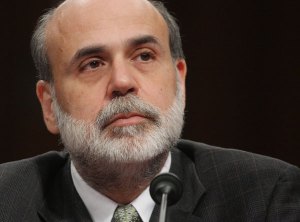 I’m watching Bernanke do a presser. Wow. (It’s a live blog … updates and explanations will be provided.) I can’t believe the press sent political reporters to this. What an amazing number of really rotten questions!!!
Some key points from the morning’s congressional testimony.
On Unemployment: We do see some grounds for optimism, including a decline to the unemployment rate, declines in the new unemployment insurance claims and improvements in firms’ reported hiring plans. But, even so, it could take quite a while for unemployment to come down to desired levels at current expected growth rates and, in particular, the FOMC projects unemployment still to be in the range of seven and-a-half to eight percent by the end of 2012. Until we see a sustained period of stronger job creation, we cannot consider the recovery to be truly established.
On Inflation: “I want to go back over this whole line of interventions, including today quantitative easing. And there have been a series of criticisms that have been made and negative predictions, and my view is that none of them have come true. And I think it is important for us to — to note that. And — and I know you’ve talked about this. I know you mentioned in your statement some of the points. But we were told, for instance, that it was going to be very inflationary. And I know it is your view as of now, and I think supported by the facts, that inflation is not now a problem, and we do not see inflation, certainly not one caused by any of what’s been done going forward. We were told this was going to be extraordinarily expensive, that it was going to cost a lot of money. I believe the answer is that on many of these things the federal government has made a profit by the — by the intervention.”
On Crude Oil: “The relative price of oil, again, is primarily due to global supply and demand. I think it’s important to note that the United States is consuming less oil today, importing less oil and producing more oil than it did before the crisis. That all the increase in demand from outside the United States, particularly in the emerging markets. And so there’s limited amount of what the Fed can do about oil prices alone. Again though, we want to be very sure that it doesn’t feed into overall inflation. We will make sure that doesn’t happen.”
On the Dollar: If the dollar was no longer reserve currency there would – it would on the margin probably mean that we would have to pay highest interest rates to finance the federal debt, and that would be a negative obviously. On other other hand, we might not suffer some of the capital inflows that contributed to the boom and the bust in the recent crisis. But again, I know there was also a countervailing argument in the Journal this morning as well. And I – I just don’t see at this point that there is a major shift away from the dollar.
On the Consumer: We understand the visibility of gas prices and food prices and we want to be sure that people’s expectations aren’t adversely affected. I think it’s important to note that, according for example, to the Michigan survey of consumers, that long term inflation expectations have been basically flat. I mean, they haven’t moved, notwithstanding ups and downs in gas prices, for example.
On the U.S. Fiscal Situation: While I understand these are difficult decisions and we certainly can’t solve it all in the current fiscal year, I do think we need to look forward and I know the House Budget Committee and others will be setting up a 10 year proposal. It’s very important and would be very constructive for Congress to lay out a plan that would be credible that will help bring us to sustainability over the next few years. In particular, one rule of thumb is cutting enough that the ratio of the debt to GDP stops rising. Because currently it’s rising relatively quickly. If we could stabilize that, I think that would do a lot to increase confidence in our government and in our fiscal policies.
Obviously, Bernanke needs to drill baby drill to get rid of inflation … so simple!!!
or this:
ezrakleinEzra Klein
Bottom line: Congress is embracing austerity. The Fed is going to start tapping the brakes. Sucks to be you, unemployed people. #fedpresser
Background information on the Fed Presser from NYT and David Leonhardt.
On Wednesday at 2:15 p.m., Ben Bernanke will do something that previous Federal Reserve chairmen considered a terrible idea. He will hold a news conference.
Mr. Bernanke spent much of his academic career arguing that the Fed should be less opaque, and, as chairman, he has put his ideas into action. Now it’s time for those of us in the media to hold up our end of bargain. In the spirit of democratic accountability, we should ask hard questions — and we shouldn’t let him get away with the evasions and half-answers that members of Congress too often allow Fed chairmen during their appearances on Capitol Hill.
One question more than any than other is crying out for an answer: Why has Mr. Bernanke decided to accept widespread unemployment for years on end, even though he believes he has the power to reduce it?
Here’s Paul Krugman’s take on the presser: Bernanke Wimps Out. He’s got the same questions I do about the inflation v. unemployment . (See my comments in the thread below.)
So Bernanke did get asked why, given low inflation and high unemployment, the Fed isn’t doing more. And his answer was disheartening.
As far as I can tell, his analytical framework isn’t too different from mine. The inflation rate to worry about is some underlying, inertial rate rather than the headline rate; the Fed likes the core personal consumer expenditures deflator; and this rate has actually been running below target, indicating that inflation isn’t a concern …
Fiscal Jabberwocky
Posted: April 24, 2011 Filed under: Barack Obama, Economic Develpment, Economy, Federal Budget, Federal Budget and Budget deficit, financial institutions, Global Financial Crisis, John Birch Society in Charge, legislation, Populism, Republican politics, U.S. Economy, U.S. Military, U.S. Politics, voodoo economics, We are so F'd | Tags: Barack Obama, David Stockman, Fiscal Crisis, Paul Ryan, voodoo economics 29 Comments
"Beware the Jabberwock, my son! The jaws that bite, the claws that catch!"
It’s not often I get to post pictures of mythical beasts for a few days in a row but here I go again. Plus, I’ve gotten another chance to use one of those wonderful Alice in Wonderland book illustrations. Too bad they’re attached to posts where the perverse wonderland rules. It seems to be a year for fictional monsters in Op-Eds and real ones in congress.
David Stockman, Budget Director for Ronald Reagan, has joined the ranks of Republican advisers calling shenanigans on the Boehner/Tea Party Republicans AND the dithering Obama Dems. He must be very financial and professionally secure. His op-ed in the New York Times draws blood on all sides. He starts out telling President Obama what is what then moves on to hammering that petulant ninny from Wisconsin, Paul Ryan. Go read it if only for the creative use of words like that in the heading above.
On the other side, Representative Ryan fails to recognize that we are not in an era of old-time enterprise capitalism in which the gospel of low tax rates and incentives to create wealth might have had relevance. A quasi-bankrupt nation saddled with rampant casino capitalism on Wall Street and a disemboweled, offshored economy on Main Street requires practical and equitable ways to pay its bills.
Ingratiating himself with the neo-cons, Mr. Ryan has put the $700 billion defense and security budget off limits; and caving to pusillanimous Republican politicians, he also exempts $17 trillion of Social Security and Medicare spending over the next decade. What is left, then, is $7 trillion in baseline spending for Medicaid and the social safety net — to which Mr. Ryan applies a meat cleaver, reducing outlays by $1.5 trillion, or 20 percent.
Trapped between the religion of low taxes and the reality of huge deficits, the Ryan plan appears to be an attack on the poor in order to coddle the rich. To the Democrats’ invitation to class war, the Republicans have seemingly sent an R.S.V.P.
Stockman call the entire situation “fiscal jabberwocky”. Good turn of phrase that. He then moves to skewering the FED and adds Chinese currency pegging into the villain mix. I guess there’s nothing like a good rant when you can get primetime ink. This seems to be an interesting foray into harsh policy critique for economists with a republican bent.
Stockman, like Bruce Barlett and even David Frum are yet more Republicans who are pointing out the current GOP leaders are no more serious about budget reform than the Democrats are. The main difference is the GOP has better slogans and marketing, and slides into full blow demagoguery more easily.
But in terms of actual strategies for intelligently addressing the issue? The most glaring truth is the lack of leadership on both sides of the aisle.
The Barry Ritholtz blog post on Stockman’s op ed does score some points on mentioning the leadership chasm, but, even more telling is the absolute adherence to fairy tales over reality in policy making these days. Is there an economist in the House? Joe Wiesenthal says that Stockman is suffering from “fatalistic populism”. Here’s Stockman’s ending barb to prove that point. It’s also the two sentences that offer up the policy solution.
So the Ryan plan worsens our trillion-dollar structural deficit and the Obama plan amounts to small potatoes, at best. Worse, we are about to descend into class war because the Obama plan picks on the rich when it should be pushing tax increases for all, while the Ryan plan attacks the poor when it should be addressing middle-class entitlements and defense.
I’ve said many times that the Bush tax cuts just need to expire. I’ve also said that since the Reagan years we’ve basically started chumming our economy by jumping into interventions wherever and whenever. Afghanistan and Iraq are two such adventures that need to be de-funded and ended. We also need to reign in the congressional and pentagon weapons fetish which is basically whipped into a frenzy by free spending lobbyists for companies like Halliburton, GE, and Boeing. I can only image what they all want the drone budget to look like. MENA appears to be filled with hives these days.
So many of our fiscal problems would go away if we would just put things back to the where they were 10 years ago. This includes putting Wall Street back in its box instead of letting it go completely gaga with nonstandard, unregulated financial innovations. We can’t afford Obama’s muddling policies that seem like voting present while Republicans go wild with his inability to stand any firm ground. I believe he got elected to undo the Dubya years. Instead, he’s put the Dubya policies on steroids. So, if most of us–that would be voters–are saying let’s take it all back to the Clinton years, what I’d like to know is who are the real conservatives and who are the real radicals?
Out of Touch, Out of Mind
Posted: April 20, 2011 Filed under: Federal Budget, Federal Budget and Budget deficit | Tags: taxes 18 Comments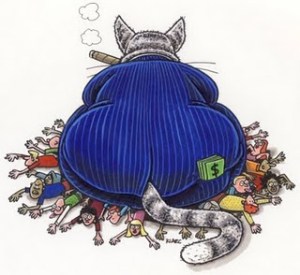 The deficit burble in the beltway appears to be happening without the consent or input of the governed. If polls are any indication, the congress and the White House are moving the exact opposite direction of public will. First, it’s been clear for some time that the majority of people think raising taxes on the rich and letting the Bush Tax Cuts for Billionaires go away is the correct prescription. They thought that when Obama joined the Tax Cuts for Billionaires club and their opinions still haven’t changed.
Alarmed by rising national debt, Americans are clear about how they want to attack the federal government’s runaway budget deficits: raise taxes on the wealthy and keep hands off Medicare and Medicaid.
At the same time, the new McClatchy-Marist poll of the nation found that voters don’t want the debt ceiling raised, despite warnings that failing to do so would force the government into default and the economy into a tailspin.
By a 2-1 ratio, voters support raising taxes on yearly incomes above $250,000.
It’s even more clear what voters think about the slashing and hacking of Medicare, Social Security, and Medicaid. It’s a big ol’ resounding Hell NO!!
The Post-ABC poll finds that 78 percent oppose cutting spending on Medicare as a way to chip away at the debt. On Medicaid — the government insurance program for the poor — 69 percent disapprove of cuts.
There is also broad opposition to cuts in military spending to reduce the debt, but at somewhat lower levels (56 percent).
In his speech last week, the president renewed his call to raise tax rates on family income over $250,000, and he appears to hold the high ground politically, according to the poll. At this point, 72 percent support raising taxes along those lines, with 54 percent strongly backing this approach. The proposal enjoys the support of majorities of Democrats (91 percent), independents (68 percent) and Republicans (54 percent). Only among people with annual incomes greater than $100,000 does less than a majority “strongly support” such tax increases.
Let me first suggest a few things. First, remove deductions on second mortgages, boats, and overpriced McMansions. If it’s not an average family home, it doesn’t need a tax subsidy. Second, equally tax investment and labor income. There should be no tax privileges given to rich people that inherit wealth and then spend their days sitting around reaping profits from speculation. I agree with Katrina Vanden Heuvel of The Nation that calls this policy “Tinkle Down” economics. It’s really bad policy and it’s supremely unfair.
Then in December, the Obama-GOP deal extended the Bush tax cuts for the wealthy at a two-year cost of about $70 billion a year. Now Congress is making $40 billion in painful budget cuts this year. Meanwhile, President Obama, Representative Paul Ryan and others are battling over budgets and tax plans for the next decade and beyond. For the most part, what’s been missing from these suffocatingly narrow discussions is an easy source of income: taxing investments like ordinary income.
The folks over at Responsible Wealth believe not only that the Bush tax cuts on upper-income folks should be ended but also that money made from money (i.e., capital gains and dividends) should be taxed like money made from work, not at the preferential 15 percent rate. They have a simple calculator that calculates your tax savings using just three numbers from your tax form (or from your head), and an interactive graph with videos of people talking about their taxes. It’s worth checking out at responsiblewealth.org.
Taxing capital gains and dividends at regular income rates would save $84.2 billion in 2011 alone, twice the amount we’re cutting from this year’s budget.
I guess Congress thinks we’re all dumb Americans who can’t do math. However, people must be getting tired of the media meme on how brave 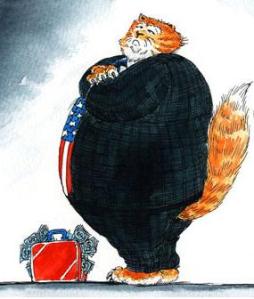 and courageous Paul Ryan is by suggesting we throw grandma from the train. Even his own district isn’t buying it. About time.
During a town hall meeting in Milton, a constituent who described himself as a “lifelong conservative” asked Ryan about the effects of growing income inequality in our nation. The constituent noted that huge income disparities contributed to the Great Depression and the Great Recession, and thus wanted to know why the congressman was “fighting to not let the tax breaks for the wealthy expire.”
Ryan argued against “redistribut[ing]” in this manner. After the constituent noted that “there’s nothing wrong with taxing the top because it does not trickle down,” Ryan argued that “we do tax the top.” This response earned a chorus of boos from constituents:
CONSTITUENT: The middle class is disappearing right now. During this time of prosperity, the top 1 percent was taking about 10 percent of the total annual income, but yet today we are fighting to not let the tax breaks for the wealthy expire? And we’re fighting to not raise the Social Security cap from $87,000? I think we’re wrong.
RYAN: A couple things. I don’t disagree with the premise of what you’re saying. The question is what’s the best way to do this. Is it to redistribute… (Crosstalk)
CONSTITUENT: You have to lower spending. But it’s a matter of there’s nothing wrong with taxing the top because it does not trickle down.
RYAN: We do tax the top. (Audience boos). Let’s remember, most of our jobs come from successful small businesses. Two-thirds of our jobs do. You got to remember, businesses pay taxes individually. So when you raise their tax rates to 44.8 percent, which is what the president is proposing, I would just fundamentally disagree. That is going to hurt job creation.
This does not hurt job creation. It didn’t hurt job creation in the Eisenhower years. It didn’t hurt job creation in the Clinton Years. Also, remember Reagan presided over the biggest tax increase in history, do they argue that job creation was rotten by the end of the Reagan years? This is a ridiculous argument based in that old Laffer Curve and Supply Side, VooDoo economics that they just keep resurrecting. Even two of Reagan’s advisers–Bruce Bartlett and David Stockman–are out decrying that fairy tale. It’s simply not backed by history, disproved by past economic performance, and insane.
The Democratic Party and the White House should be reading these poll numbers and discussing the facts RIGHT now. They should–at the very least–end the Bush/Obama preferential tax treatment for the rich. Paul Ryan and his ilk need to be outed for the charlatans they are on every talk show. I have no idea why this isn’t being done unless there’s a huge beltway conspiracy between the media, the Republicans, and the Democrats to carry on with no regard to voter’s wishes or interests.

Historical Tax Rates on the Richest via Washington Monthly
Republicans Vote to End Medicare, and Other DC Follies
Posted: April 15, 2011 Filed under: Barack Obama, Democratic Politics, Domestic Policy, Federal Budget, Federal Budget and Budget deficit, Hillary Clinton, House of Representatives, income inequality, legislation, Media, Medicare, Psychopaths in charge, Surreality, the villagers, U.S. Economy, U.S. Politics, We are so F'd | Tags: Barak Obama, medicare, Nancy Pelosi, Paul Ryan 23 Comments
What a disgrace these House Republicans are! This afternoon, 235 of them voted to destroy Medicare and Medicaid when they voted for Representative Paul Ryan’s budget bill. The bill passed the House with all Democrats and only four Republicans voting against it.
The bill will most likely die in the Senate, but Democrats should make sure those House Republicans’ constituents know what they voted for. Of course Democrats will do no such thing, because, first they are wimps with no idea how to win, and second, their President is already signaling that he will compromise with Ryan in the bargaining over raising the debt ceiling.
Obama said that it is critical for the world economy that Congress vote to increase the $14.3 trillion debt ceiling, but said that he would have to reach an accord with Republicans, who have called for a vote to be conditional on passage of fiscal reform.
“I think it’s absolutely right that it’s not going to happen without some spending cuts,” Obama said during an interview with The Associated Press.
Before the vote on the Ryan bill, there was a vote on an even more draconian bill proposed by far right Republicans. It turned into a bit of a free-for-all on the House floor. From Brian Beutler at TPM:
What was supposed to be a routine vote in the House — to knock down an amendment authored by conservative Republicans — turned into pandemonium on the House floor Friday, as Democrats tried to jam the plan through, and hang it around the GOP’s necks.
The vote was on the Republican Study Committee’s alternative budget — a radical plan that annihilates the social contract in America by putting the GOP budget on steroids. Deeper tax cuts for the wealthy, more severe entitlement rollbacks.
Normally something like that would fail by a large bipartisan margin in either the House or the Senate….But today that formula didn’t hold. In an attempt to highlight deep divides in the Republican caucus. Dems switched their votes — from “no” to “present.”
Panic ensued. In the House, legislation passes by a simple majority of members voting. The Dems took themselves out of the equation, leaving Republicans to decide whether the House should adopt the more-conservative RSC budget instead of the one authored by Budget Committee Chairman Paul Ryan. As Dems flipped to present, Republicans realized that a majority of their members had indeed gone on the record in support of the RSC plan — and if the vote closed, it would pass. That would be a slap in the face to Ryan, and a politically toxic outcome for the Republican party.
So they started flipping their votes from “yes” to “no.”
In the end, the plan went down by a small margin, 119-136. A full 172 Democrats voted “present.”
It’s nice to see a little bit of partisan spirit from the Democrats anyway. Too bad they had to use Obama’s old standby–voting “present,” but still maybe a good sign. It’s pretty clear that many in the House are unhappy with Obama and his kowtowing to Republicans. Maybe they will stand up to Obama next. Where there’s life, there’s hope.
Of the Ryan Budget bill, House Minority Leader Nancy Pelosi said
“This Republican plan ends Medicare as we know it and dramatically reduces benefits for seniors,” Rep. Nancy Pelosi (D-Calif.), the House minority leader, said in a floor speech. She said it would force the average senior citizen to pay twice as much for half the benefits while giving “tens of billions of dollars” in tax breaks to big oil companies.
The GOP plan “reduces Medicaid to our seniors and nursing homes . . . while it gives tax breaks to companies that send jobs overseas,” Pelosi said. “That’s just not fair.”
Pelosi was also very unhappy with President Obama’s “compromise” budget for 2011. Besides being angry about the cuts to programs that help the most vulnerable Americans, Pelosi was extremely unhappy that she and her Democratic House colleagues were completely cut out of the negotiations on the 2011 budget. In fact, Patricia Murphy at The Daily Beast says that many Democrats are “disgusted” with Obama. She writes that
…a number of Democrats are past protesting the president, discussing among themselves ways to recruit a primary challenger in 2012.
“I have been very disappointed in the administration to the point where I’m embarrassed that I endorsed him,” one senior Democratic lawmaker said. “It’s so bad that some of us are thinking, is there some way we can replace him? How do you get rid of this guy?” The member, who would discuss the strategy only on the condition of anonymity, called the discontent with Obama among the caucus “widespread,” adding: “Nobody is saying [they want him out] publicly, but a lot of people wish it could be so. Never say never.”
House Republicans, who got much of what they wanted in their negotiations with the White House, are whining because Obama said some mean things about them in his deficit speech on Tuesday. They were shocked that the president’s speech was “partisan.” Give me a break! Why do we have political parties if they aren’t supposed to be “partisan?”
The three Republican congressmen saw it as a rare ray of sunshine in Washington’s stormy budget battle: an invitation from the White House to hear President Obama lay out his ideas for taming the national debt.
They expected a peace offering, a gesture of goodwill aimed at smoothing a path toward compromise. But soon after taking their seats at George Washington University on Wednesday, they found themselves under fire for plotting “a fundamentally different America” from the one most Americans know and love.
“What came to my mind was: Why did he invite us?” Rep. Dave Camp (R-Mich.) said in an interview Thursday. “It’s just a wasted opportunity.”
The situation was all the more perplexing because Obama has to work with these guys: Camp is chairman of the House Ways and Means Committee, responsible for trade, taxes and urgent legislation to raise the legal limit on government borrowing. Rep. Jeb Hensarling (Tex.) chairs the House Republican Conference. And Rep. Paul Ryan (R-Wis.) is House Budget Committee chairman and the author of the spending blueprint Obama lacerated as “deeply pessimistic” during his 44-minute address.
Give me a break! Why do we have political parties if they aren’t supposed to be “partisan?” I’d like to see a hell of a lot more partisanship on the Democratic side. Of course Republicans are never accused of “partisanship,” but it is simply assumed that they will be rabidly “partisan” and the press eats it up when they are. But don’t worry guys, Obama is just mouthing the appropriate words before he surrenders and gives you most of what you want again.
Whatever Obama thinks he’s doing, it doesn’t seem to be working for the majority of Americans. Today Gallup reported that the president’s job approval rating is only 41%. The biggest drop in support for Obama is among Independents, only 35% of whom approve of his performance.
The latest buzzword in DC is “serious.” Republicans and columnists rave about how “serious” Ryan’s budget bill is. Democrats claim Obama’s plan is the truly “serious” one. But as Dakinikat keeps explaining, neither of these plans is going to do much to pull the country out of the doldrums, because neither has even a nodding acquaintance with economic reality. For anyone to call any of these politicians and pundits “serious” is nothing but a sick joke.
Today was just another pointless day in the lives of the least serious people in the least serious city on earth.

 peej
peej Carissa
 bostonboomer
 dakinikat
 ecocatwoman
 mablue2
 Mama Lopez
 peggysue22
 quixote
 skydancingguestblogger
 Mona (aka Wonk the Vote)



 Sky Dancing
Recent Comments