
Still no answers for the Jobs Crisis
Posted: May 5, 2011 Filed under: Domestic Policy, Economy, Equity Markets, Federal Budget, Federal Budget and Budget deficit, jobs, The Great Recession, U.S. Economy, unemployment | Tags: joblessness, unemployment 27 Comments It’s difficult for me to watch the job market continue to dither knowing full well that nothing is being done about it. Just in case you’ve missed the other headlines today, U.S. jobless claims “unexpectedly” jumped. It wasn’t unexpected on my part.
Applications for jobless benefits jumped by 43,000 to 474,000 in the week ended April 30, the most since August, Labor Department figures showed today. A spring break holiday in New York, a new emergency benefits program in Oregon and auto shutdowns caused by the disaster in Japan were the main reasons for the surge, a Labor Department spokesman said as the data was released to the press.
Even before last week, claims had drifted up, raising concern the improvement in the labor market has stalled. Employers added 185,000 workers to payrolls in April, fewer than in the prior month, and the unemployment rate held at 8.8 percent, economists project a Labor Department report to show tomorrow.
“We’re seeing so many distortions in the claims numbers week to week that it’s hard to say, but I’m willing to be patient and wait and see,” said Stephen Stanley, chief economist at Pierpont Securities LLC in Stamford, Connecticut. “Other reports show an improvement in the labor market. It’s going to take a while to dig out of the hole we have in relation to the jobs the economy lost during the recession.”
Yes, it is a hole, and there’s very little being done to fill it. There are quite a few factors that contribute to the current appalling job market. The Fifth Fed District’s Macroblog looks at the contribution of offshoring. Offshoring basically means that part of a production process is moved to an overseas location. That can mean anything from a call center to manufacturing of a good. You can see that the impacted industries include both service and manufacturing sectors. The nifty table up there in the left hand corner will give you an idea of the impact of offshoring by industry. The numbers are tabulated from data during the years of 1999 – 2008. The changes and content of the ‘other’ category is further elucidated in the macroblog piece. It includes another table that you may review too.
Sixty-nine percent of the foreign employment growth by U.S. multinationals from 1999 to 2008 was in the “other industries” category, and 87 percent of that growth was in three types of industries: retail trade; administration, support, and waste management; and accommodation of food services. Some fraction of these jobs, no doubt, reflect “offshoring” in the usual sense. But it is also true that these are types of industries that are more likely than many others to represent production for local (or domestic) demand as opposed to production for export to the United States.
This is a bit interesting. There are two main types of Foreign Direct Investment that involve ‘offshoring’. One is called vertical and the other is horizontal. Horizontal FDI means that one segment of the process is moved to another country but the final good or service still goes to the consumer in the company’s home country. The last analysis from macroblog implies that a substantial part of that offshoring is actually Vertical FDI. This means that the company is moving itself over to the country to take advantage of end consumers in the other country.
This finding isn’t surprising if you consider the number of countries that are experiencing booms in the number of middle class citizens. There are more middle class Chinese than there are US citizens, as an example. There is also the fact that the middle class in the US has been losing income and purchasing power for nearly 30 years. It only figures that these companies would look for greener pastures elsewhere. Why expand here when your customer base is unlikely to be expanding and unable to afford your products in any meaningful way?
Macroblog points out that this is unlikely to explain all the doldrums in the US job market, but it does provide one factor and and interesting one at that. I would say that this analysis basically says that US businesses are much more bullish on foreign markets than they are on their own. (Capital flows for investment suggest this too.) This should give all of us pause.
Interestingly enough, another FED President also suggested that the economy and the US job markets weren’t as stable as they could be and suggested more stimulus. Three Fed Presidents rotate in and out of the Open Market Committee–that’s the monetary policy decision body–and each district is a world unto itself in many ways. Fed Boston is not in the current rotation.
Federal Reserve Bank of Boston President Eric Rosengren yesterday said record stimulus is necessary to spur the “anemic” economy and that raising interest rates to combat increasing food and fuel prices would impede growth.
“With significant slack in labor markets, stable inflation expectations, and core inflation well below our longer run target, there is currently no reason to slow the economy down with tighter monetary policy,” Rosengren said during a speech in Boston.
Not surprisingly, equity markets seemed to be caught a bit off guard with this news. Right now, I think the market seems to be in one of those periods where it’s not paying much attention to fundamentals. Bloomberg.com notes that Futures Fell on the news. Some times Wall Street thinks as long as their churning out fees and capital gains, all is right with the world. This is definitely not the case. It does explain why their economists tend to get caught off guard though. Hello? Real World anyone?
Stock-index futures dropped after the report. The contract on the Standard & Poor’s 500 Index maturing in June fell 0.6 percent to 1,334.8 at 8:58 a.m. in New York. Treasury securities rose, sending the yield on the benchmark 10-year note down to 3.18 percent from 3.22 percent late yesterday.
Dean Baker from CEPR is pretty pessimistic about the entire thing.
Weekly unemployment claims jumped to 474,000 last week, an increase of 43,000 from the level reported the previous week. This is seriously bad news about the state of the labor market. It seems that the numbers were inflated by unusual factors, most importantly the addition of 25,000 spring break related layoffs in New York to the rolls due to a changing vacation pattern, however even after adjusting for such factors, claims would still be above 400,000 for the fourth consecutive week.
This puts weekly claims well above the 380,000 level that we had been seeing in February and March. This suggests that job growth is slowing from an already weak level. This is news that should be reported prominently.
Unfortunately, the lackadaisical job market is off the front pages. Much of the political focus on the economy remains honed in on the federal debt. Again, this is the silly because one of the best ways of increasing tax revenues and closing the debt is for people to be employed. It’s an uphill battle to expect the deficit to close with this unacceptable level of unemployment. I still can’t figure out where they’ve placed their heads back their in Washington, D.C. Oh, well, look over there … it’s a dead Osama Bin Laden and we’ve not got any pictures yet!
Monday Reads
Posted: May 2, 2011 Filed under: Afghanistan, Barack Obama, Federal Budget, Federal Budget and Budget deficit, Foreign Affairs, Iraq, morning reads, Pakistan | Tags: David Stockman calls for Tax increases, Godwin, Michelle Bachman, Osama bin Laden dead, Trump Trumped at White House Correspondents 68 Comments Good Morning!
Well, the biggest news is the killing of Osama Bin Laden in a US operation. The President announced the news on TV last night. There were few details other than Bin Laden was killed in a US operation and was in Pakistan. Spontaneous celebrations erupted across the U.S. The entire statement can be read at NPR. The State Department has warned that there may be increased potential for violence against US citizens and a security alert has been announced for travelers. WAPO is reporting that this was a Navy Seals operation that involved the CIA and Pakistani intelligence.
Obama said the operation took place in Abbottabad, a city of about 100,000 in Pakistan’s Khyber Pakhtunkhwa province, about 100 miles north of Islamabad. Named for a British military officer who founded it as a military cantonment and summer retreat, it is the headquarters of a brigade of the Pakistan Army’s 2nd Division.
Bin Laden had long eluded U.S. forces throughout George W. Bush’s presidency, and the former president said Sunday that he congratulated Obama and the military and intelligence personnel who “devoted their lives to this mission.”
After weeks of chasing conspiracy stories about the President and dropping the F-bomb numerous times in a speech, Donald Trump becomes the arbiter of good taste calling the White House correspondent’s dinner “inappropriate”. I guess he really does like jokes about his nasty hairdo after all.
At the event, Obama made light of Trump’s repeated calls for him to release his birth certificate, something he did Wednesday, and Meyers made fun of everything from his hair to his presidential ambition. Although Trump appeared unamused during Saturday’s dinner, he said he was honored “in a certain way” to be a focal point.
“I really knew what I was getting into last night. I had no idea it would be to that extent where, you know just joke after joke after joke,” the mogul said. “It was almost like, is there anyone else they can talk about?”
He also found the event “inappropriate in certain respects” and spent the evening thinking about how “the American people are really suffering and we’re all having a good time.”
And what was his assessment of Meyers’ comedic timing?
“His (Meyers) delivery was not good. He’s a stutterer and he really was having a hard time,” Trump said of the “Saturday Night Live” star.
Is any one else but me still offended by Trump calling Rosie O’Donnell a pig? So, first misogyny and now attacks on disabilities. So, now Seth Meyer is a ‘stutterer’. Stay classy, The Donald! Guess he can dish it out but he can’t take it!
Reagan Budget Director David Stockman once more calls for raising taxes to take care of Federal budget problems. It’s been interesting to watch all these Republican officials come out and tell other Republicans to do the responsible thing.
Asked by Reuter’s Chrystia Freeland if the economy could “sustain” a tax increase, Stockman said “absolutely,” noting that the economy only recovered under Reagan once he raisedtaxes in 1982 after “cut[ting] taxes too much” the year before:
FREELAND: You worked for Ronald Reagan. Do you think the American economy — so you’re, like, a red-blooded capitalist — could it sustain higher taxes than it has now?
STOCKMAN: Absolutely. In 1982, we were looking at the jaws of the worst recession since the 1930s. We overdid it in 1981, cut taxes too much. We came back with a big deficit reduction plan in 1982. Unemployment’s at 10 percent, the economy is in dire shape, and we raise taxes by 1.2 percent of GDP, which would be $150 billion a year right now — not 10 years down the road — but right now
Here’s one of those ‘Only in Washington, D.C” stories from The Hill. Here’s another example of no funding for a delegated task.
President Obama launched a task force last week to look into oil and gas price manipulation, but a spending bill he signed into law earlier this month would prevent the government’s top statistical agency from analyzing that very issue.
The fiscal year 2011 spending legislation – a product of tense negotiations between Republicans and Democrats – cuts the Energy Information Administration’s budget by 14 percent.
Michelle Bachmann Godwins. She compared the federal debt levels to the holocaust. Ever wonder if there’s any actual history classes in her past? How on earth can you compare anything that trivial to the mass slaughter of innoncent people in such a systemic and horrific way?
Bachmann, careful to note that there was no direct analogy in today’s times to the Holocaust, still tied the loss of “economic liberty” that Americans face today to the systematic killing of six million European Jews.
“We are seeing eclipsed in front of our eyes a similar death and a similar taking away,” Bachmann said. “It is this disenfranchisement that I think we have to answer to.”
In a reference to the Obama administration’s new health care law, the likely presidential candidate and tea party favorite said creating new entitlement programs that “there was never any hope or chance of being able” to pay for was an exercise in “fantasy economics.”
“All of the problems we’re facing with debt are manmade problems. We created them. It’s called fantasy economics,” she told Republicans gathered at Southern New Hampshire University. “Fantasy economics only works in a fantasy world. It doesn’t work in reality.”
If any one would know about fantasy worlds, I suggest it would be Michele Bachmann.
Project Syndicate is one of my favorite sites these days and this is a very descriptive headline by Pimco’s CEO Mohamed El-Erian: Sleepwalking through America’s Unemployment Crisis.
Let us start with the facts:
· At 8.8% almost three years after the onset of the global financial crisis, America’s unemployment rate remains stubbornly (and unusually) high;
· Rather than reflecting job creation, much of the improvement in recent months (from 9.8% in November last year) is due to workers exiting the labor force, thus driving workforce participation to a multi-year low of 64.2%;
· If part-time workers eager to work full time are included, almost one in six workers in America are either under- or unemployed;
· More than six million workers have been unemployed for more than six months, and four million for over a year;
· Unemployment among 16-19 year olds is at a staggering 24%;
· With virtually no earned income and dwindling savings, the unemployed are least able to manage the current surge in gasoline and food prices, they are effectively shut off from credit, and many have mortgage debt that exceed the value of their homes.
These and many other facts speak to an unpleasant and unusual reality for the United States. The country now has an unemployment problem that is large in magnitude and increasingly structural in nature. The consequences are multifaceted, involving immediate personal anguish, rising social and political tensions, economic losses, and budgetary pressures.
This is much more than a problem for the here and now. High and intractable unemployment has serious negative long-term consequences that threaten to become exponentially worse. This is a crisis.
So, there’s some headlines to think about! What’s on your reading and blogging list today?
updated for this thread: NationalJournal.com has some information on “The Secret Team that Killed Obama” that you may want to check out. There’s also a timeline or tick tock for Bin Laden’s life.
From Ghazi Air Base in Pakistan, the modified MH-60 helicopters made their way to the garrison suburb of Abbottabad, about 30 miles from the center of Islamabad. Aboard were Navy SEALs, flown across the border from Afghanistan, along with tactical signals, intelligence collectors, and navigators using highly classified hyperspectral imagers.
After bursts of fire over 40 minutes, 22 people were killed or captured. One of the dead was Osama bin Laden, done in by a double tap — boom, boom — to the left side of his face. His body was aboard the choppers that made the trip back. One had experienced mechanical failure and was destroyed by U.S. forces, military and White House officials tell National Journal.
Were it not for this high-value target, it might have been a routine mission for the specially trained and highly mythologized SEAL Team Six, officially called the Naval Special Warfare Development Group, but known even to the locals at their home base Dam Neck in Virginia as just DevGru.
A First: Fed Chair Presser
Posted: April 27, 2011 Filed under: Economy, Federal Budget, Federal Budget and Budget deficit, financial institutions, Global Financial Crisis, jobs, U.S. Economy, unemployment | Tags: Ben Bernanke, FED, inflation, jobs, monetary policy, presser 10 Comments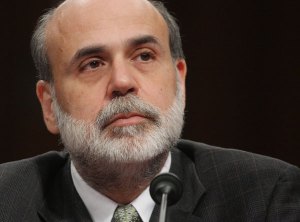 I’m watching Bernanke do a presser. Wow. (It’s a live blog … updates and explanations will be provided.) I can’t believe the press sent political reporters to this. What an amazing number of really rotten questions!!!
Some key points from the morning’s congressional testimony.
On Unemployment: We do see some grounds for optimism, including a decline to the unemployment rate, declines in the new unemployment insurance claims and improvements in firms’ reported hiring plans. But, even so, it could take quite a while for unemployment to come down to desired levels at current expected growth rates and, in particular, the FOMC projects unemployment still to be in the range of seven and-a-half to eight percent by the end of 2012. Until we see a sustained period of stronger job creation, we cannot consider the recovery to be truly established.
On Inflation: “I want to go back over this whole line of interventions, including today quantitative easing. And there have been a series of criticisms that have been made and negative predictions, and my view is that none of them have come true. And I think it is important for us to — to note that. And — and I know you’ve talked about this. I know you mentioned in your statement some of the points. But we were told, for instance, that it was going to be very inflationary. And I know it is your view as of now, and I think supported by the facts, that inflation is not now a problem, and we do not see inflation, certainly not one caused by any of what’s been done going forward. We were told this was going to be extraordinarily expensive, that it was going to cost a lot of money. I believe the answer is that on many of these things the federal government has made a profit by the — by the intervention.”
On Crude Oil: “The relative price of oil, again, is primarily due to global supply and demand. I think it’s important to note that the United States is consuming less oil today, importing less oil and producing more oil than it did before the crisis. That all the increase in demand from outside the United States, particularly in the emerging markets. And so there’s limited amount of what the Fed can do about oil prices alone. Again though, we want to be very sure that it doesn’t feed into overall inflation. We will make sure that doesn’t happen.”
On the Dollar: If the dollar was no longer reserve currency there would – it would on the margin probably mean that we would have to pay highest interest rates to finance the federal debt, and that would be a negative obviously. On other other hand, we might not suffer some of the capital inflows that contributed to the boom and the bust in the recent crisis. But again, I know there was also a countervailing argument in the Journal this morning as well. And I – I just don’t see at this point that there is a major shift away from the dollar.
On the Consumer: We understand the visibility of gas prices and food prices and we want to be sure that people’s expectations aren’t adversely affected. I think it’s important to note that, according for example, to the Michigan survey of consumers, that long term inflation expectations have been basically flat. I mean, they haven’t moved, notwithstanding ups and downs in gas prices, for example.
On the U.S. Fiscal Situation: While I understand these are difficult decisions and we certainly can’t solve it all in the current fiscal year, I do think we need to look forward and I know the House Budget Committee and others will be setting up a 10 year proposal. It’s very important and would be very constructive for Congress to lay out a plan that would be credible that will help bring us to sustainability over the next few years. In particular, one rule of thumb is cutting enough that the ratio of the debt to GDP stops rising. Because currently it’s rising relatively quickly. If we could stabilize that, I think that would do a lot to increase confidence in our government and in our fiscal policies.
Obviously, Bernanke needs to drill baby drill to get rid of inflation … so simple!!!
or this:
ezrakleinEzra Klein
Bottom line: Congress is embracing austerity. The Fed is going to start tapping the brakes. Sucks to be you, unemployed people. #fedpresser
Background information on the Fed Presser from NYT and David Leonhardt.
On Wednesday at 2:15 p.m., Ben Bernanke will do something that previous Federal Reserve chairmen considered a terrible idea. He will hold a news conference.
Mr. Bernanke spent much of his academic career arguing that the Fed should be less opaque, and, as chairman, he has put his ideas into action. Now it’s time for those of us in the media to hold up our end of bargain. In the spirit of democratic accountability, we should ask hard questions — and we shouldn’t let him get away with the evasions and half-answers that members of Congress too often allow Fed chairmen during their appearances on Capitol Hill.
One question more than any than other is crying out for an answer: Why has Mr. Bernanke decided to accept widespread unemployment for years on end, even though he believes he has the power to reduce it?
Here’s Paul Krugman’s take on the presser: Bernanke Wimps Out. He’s got the same questions I do about the inflation v. unemployment . (See my comments in the thread below.)
So Bernanke did get asked why, given low inflation and high unemployment, the Fed isn’t doing more. And his answer was disheartening.
As far as I can tell, his analytical framework isn’t too different from mine. The inflation rate to worry about is some underlying, inertial rate rather than the headline rate; the Fed likes the core personal consumer expenditures deflator; and this rate has actually been running below target, indicating that inflation isn’t a concern …
Fiscal Jabberwocky
Posted: April 24, 2011 Filed under: Barack Obama, Economic Develpment, Economy, Federal Budget, Federal Budget and Budget deficit, financial institutions, Global Financial Crisis, John Birch Society in Charge, legislation, Populism, Republican politics, U.S. Economy, U.S. Military, U.S. Politics, voodoo economics, We are so F'd | Tags: Barack Obama, David Stockman, Fiscal Crisis, Paul Ryan, voodoo economics 29 Comments
"Beware the Jabberwock, my son! The jaws that bite, the claws that catch!"
It’s not often I get to post pictures of mythical beasts for a few days in a row but here I go again. Plus, I’ve gotten another chance to use one of those wonderful Alice in Wonderland book illustrations. Too bad they’re attached to posts where the perverse wonderland rules. It seems to be a year for fictional monsters in Op-Eds and real ones in congress.
David Stockman, Budget Director for Ronald Reagan, has joined the ranks of Republican advisers calling shenanigans on the Boehner/Tea Party Republicans AND the dithering Obama Dems. He must be very financial and professionally secure. His op-ed in the New York Times draws blood on all sides. He starts out telling President Obama what is what then moves on to hammering that petulant ninny from Wisconsin, Paul Ryan. Go read it if only for the creative use of words like that in the heading above.
On the other side, Representative Ryan fails to recognize that we are not in an era of old-time enterprise capitalism in which the gospel of low tax rates and incentives to create wealth might have had relevance. A quasi-bankrupt nation saddled with rampant casino capitalism on Wall Street and a disemboweled, offshored economy on Main Street requires practical and equitable ways to pay its bills.
Ingratiating himself with the neo-cons, Mr. Ryan has put the $700 billion defense and security budget off limits; and caving to pusillanimous Republican politicians, he also exempts $17 trillion of Social Security and Medicare spending over the next decade. What is left, then, is $7 trillion in baseline spending for Medicaid and the social safety net — to which Mr. Ryan applies a meat cleaver, reducing outlays by $1.5 trillion, or 20 percent.
Trapped between the religion of low taxes and the reality of huge deficits, the Ryan plan appears to be an attack on the poor in order to coddle the rich. To the Democrats’ invitation to class war, the Republicans have seemingly sent an R.S.V.P.
Stockman call the entire situation “fiscal jabberwocky”. Good turn of phrase that. He then moves to skewering the FED and adds Chinese currency pegging into the villain mix. I guess there’s nothing like a good rant when you can get primetime ink. This seems to be an interesting foray into harsh policy critique for economists with a republican bent.
Stockman, like Bruce Barlett and even David Frum are yet more Republicans who are pointing out the current GOP leaders are no more serious about budget reform than the Democrats are. The main difference is the GOP has better slogans and marketing, and slides into full blow demagoguery more easily.
But in terms of actual strategies for intelligently addressing the issue? The most glaring truth is the lack of leadership on both sides of the aisle.
The Barry Ritholtz blog post on Stockman’s op ed does score some points on mentioning the leadership chasm, but, even more telling is the absolute adherence to fairy tales over reality in policy making these days. Is there an economist in the House? Joe Wiesenthal says that Stockman is suffering from “fatalistic populism”. Here’s Stockman’s ending barb to prove that point. It’s also the two sentences that offer up the policy solution.
So the Ryan plan worsens our trillion-dollar structural deficit and the Obama plan amounts to small potatoes, at best. Worse, we are about to descend into class war because the Obama plan picks on the rich when it should be pushing tax increases for all, while the Ryan plan attacks the poor when it should be addressing middle-class entitlements and defense.
I’ve said many times that the Bush tax cuts just need to expire. I’ve also said that since the Reagan years we’ve basically started chumming our economy by jumping into interventions wherever and whenever. Afghanistan and Iraq are two such adventures that need to be de-funded and ended. We also need to reign in the congressional and pentagon weapons fetish which is basically whipped into a frenzy by free spending lobbyists for companies like Halliburton, GE, and Boeing. I can only image what they all want the drone budget to look like. MENA appears to be filled with hives these days.
So many of our fiscal problems would go away if we would just put things back to the where they were 10 years ago. This includes putting Wall Street back in its box instead of letting it go completely gaga with nonstandard, unregulated financial innovations. We can’t afford Obama’s muddling policies that seem like voting present while Republicans go wild with his inability to stand any firm ground. I believe he got elected to undo the Dubya years. Instead, he’s put the Dubya policies on steroids. So, if most of us–that would be voters–are saying let’s take it all back to the Clinton years, what I’d like to know is who are the real conservatives and who are the real radicals?
Out of Touch, Out of Mind
Posted: April 20, 2011 Filed under: Federal Budget, Federal Budget and Budget deficit | Tags: taxes 18 Comments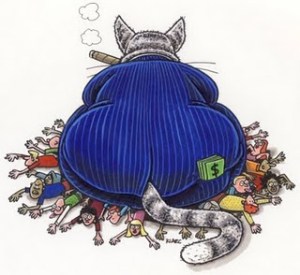 The deficit burble in the beltway appears to be happening without the consent or input of the governed. If polls are any indication, the congress and the White House are moving the exact opposite direction of public will. First, it’s been clear for some time that the majority of people think raising taxes on the rich and letting the Bush Tax Cuts for Billionaires go away is the correct prescription. They thought that when Obama joined the Tax Cuts for Billionaires club and their opinions still haven’t changed.
Alarmed by rising national debt, Americans are clear about how they want to attack the federal government’s runaway budget deficits: raise taxes on the wealthy and keep hands off Medicare and Medicaid.
At the same time, the new McClatchy-Marist poll of the nation found that voters don’t want the debt ceiling raised, despite warnings that failing to do so would force the government into default and the economy into a tailspin.
By a 2-1 ratio, voters support raising taxes on yearly incomes above $250,000.
It’s even more clear what voters think about the slashing and hacking of Medicare, Social Security, and Medicaid. It’s a big ol’ resounding Hell NO!!
The Post-ABC poll finds that 78 percent oppose cutting spending on Medicare as a way to chip away at the debt. On Medicaid — the government insurance program for the poor — 69 percent disapprove of cuts.
There is also broad opposition to cuts in military spending to reduce the debt, but at somewhat lower levels (56 percent).
In his speech last week, the president renewed his call to raise tax rates on family income over $250,000, and he appears to hold the high ground politically, according to the poll. At this point, 72 percent support raising taxes along those lines, with 54 percent strongly backing this approach. The proposal enjoys the support of majorities of Democrats (91 percent), independents (68 percent) and Republicans (54 percent). Only among people with annual incomes greater than $100,000 does less than a majority “strongly support” such tax increases.
Let me first suggest a few things. First, remove deductions on second mortgages, boats, and overpriced McMansions. If it’s not an average family home, it doesn’t need a tax subsidy. Second, equally tax investment and labor income. There should be no tax privileges given to rich people that inherit wealth and then spend their days sitting around reaping profits from speculation. I agree with Katrina Vanden Heuvel of The Nation that calls this policy “Tinkle Down” economics. It’s really bad policy and it’s supremely unfair.
Then in December, the Obama-GOP deal extended the Bush tax cuts for the wealthy at a two-year cost of about $70 billion a year. Now Congress is making $40 billion in painful budget cuts this year. Meanwhile, President Obama, Representative Paul Ryan and others are battling over budgets and tax plans for the next decade and beyond. For the most part, what’s been missing from these suffocatingly narrow discussions is an easy source of income: taxing investments like ordinary income.
The folks over at Responsible Wealth believe not only that the Bush tax cuts on upper-income folks should be ended but also that money made from money (i.e., capital gains and dividends) should be taxed like money made from work, not at the preferential 15 percent rate. They have a simple calculator that calculates your tax savings using just three numbers from your tax form (or from your head), and an interactive graph with videos of people talking about their taxes. It’s worth checking out at responsiblewealth.org.
Taxing capital gains and dividends at regular income rates would save $84.2 billion in 2011 alone, twice the amount we’re cutting from this year’s budget.
I guess Congress thinks we’re all dumb Americans who can’t do math. However, people must be getting tired of the media meme on how brave 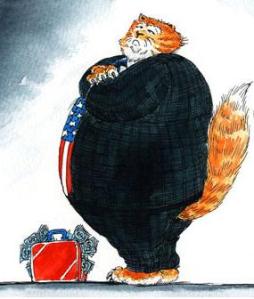 and courageous Paul Ryan is by suggesting we throw grandma from the train. Even his own district isn’t buying it. About time.
During a town hall meeting in Milton, a constituent who described himself as a “lifelong conservative” asked Ryan about the effects of growing income inequality in our nation. The constituent noted that huge income disparities contributed to the Great Depression and the Great Recession, and thus wanted to know why the congressman was “fighting to not let the tax breaks for the wealthy expire.”
Ryan argued against “redistribut[ing]” in this manner. After the constituent noted that “there’s nothing wrong with taxing the top because it does not trickle down,” Ryan argued that “we do tax the top.” This response earned a chorus of boos from constituents:
CONSTITUENT: The middle class is disappearing right now. During this time of prosperity, the top 1 percent was taking about 10 percent of the total annual income, but yet today we are fighting to not let the tax breaks for the wealthy expire? And we’re fighting to not raise the Social Security cap from $87,000? I think we’re wrong.
RYAN: A couple things. I don’t disagree with the premise of what you’re saying. The question is what’s the best way to do this. Is it to redistribute… (Crosstalk)
CONSTITUENT: You have to lower spending. But it’s a matter of there’s nothing wrong with taxing the top because it does not trickle down.
RYAN: We do tax the top. (Audience boos). Let’s remember, most of our jobs come from successful small businesses. Two-thirds of our jobs do. You got to remember, businesses pay taxes individually. So when you raise their tax rates to 44.8 percent, which is what the president is proposing, I would just fundamentally disagree. That is going to hurt job creation.
This does not hurt job creation. It didn’t hurt job creation in the Eisenhower years. It didn’t hurt job creation in the Clinton Years. Also, remember Reagan presided over the biggest tax increase in history, do they argue that job creation was rotten by the end of the Reagan years? This is a ridiculous argument based in that old Laffer Curve and Supply Side, VooDoo economics that they just keep resurrecting. Even two of Reagan’s advisers–Bruce Bartlett and David Stockman–are out decrying that fairy tale. It’s simply not backed by history, disproved by past economic performance, and insane.
The Democratic Party and the White House should be reading these poll numbers and discussing the facts RIGHT now. They should–at the very least–end the Bush/Obama preferential tax treatment for the rich. Paul Ryan and his ilk need to be outed for the charlatans they are on every talk show. I have no idea why this isn’t being done unless there’s a huge beltway conspiracy between the media, the Republicans, and the Democrats to carry on with no regard to voter’s wishes or interests.

Historical Tax Rates on the Richest via Washington Monthly

 peej
peej Carissa
 bostonboomer
 dakinikat
 ecocatwoman
 mablue2
 Mama Lopez
 peggysue22
 quixote
 skydancingguestblogger
 Mona (aka Wonk the Vote)



 Sky Dancing
Recent Comments