Looking at the headlines today makes me want to just throw up my hands and give up. Events are moving so quickly that no one could possibly keep track of everything. Things that happened just days ago recede into the past as new horrors arise.
The global economic crisis that Trump has triggered with his insane tariffs is still going on, but the realization that he is going to keep sending innocent people to a torture prison in El Salvador has pushed that into the background for now.
Even though he has “paused” the worst of the tariffs, many still remain in effect and will continue to affect the global economy, as Dakinikat discussed in her post yesterday. Meanwhile, the trade war with China continues, and it’s clear that China won’t back down.
On the immigration front, Trump is involving the military in border enforcement, even though that is illegal, and he is trying to find a way to send American citizens to the El Salvador gulag.
And of course Social Security is being ravaged by DOGE, while RFK, Jr. lays waste to the FDA and the U.S. health care system, and DOGE plans to take over control of all government grants.
According to longtime columnist Holman W. Jenkins Jr., Trump’s on-again, off-again tariff threats almost makes it appear he wants to be impeached, with Jenkins writing, “A future Trump impeachment seemed all but guaranteed by last Wednesday morning. It seems only slightly less likely now. It may even be desirable to restore America’s standing with creditors and trade partners.”
As he sees it, the president’s last great achievement was being re-elected in 2024, and the damage he has been creating since then belies his promise of a “golden age,” so an impeachment is “already in the cards.”
“No consensus or even significant coalition exists for trying to force into existence a new American ‘golden age’ with tariffs, which anyway is like asking a chicken to give birth to a lioness. He invented this mission out of his own confused intuition,” he accused.
Noting that conservative historian Niall Ferguson labeled Trump’s trade policy going “full retard,” he contributed, “I go with ‘neurotic’ for the word’s wider applicability to any leader who, lacking a clear bead on his times, fabricates a gratuitously ambitious mission to meet his misguided sense of importance.”
“Nobody in Mr. Trump’s orbit actually shares his belief in the magical efficacy of tariffs because it makes sense only in a world that doesn’t exist, where other countries don’t retaliate,” he pointed out before concluding, “The founders never anticipated today’s instantly responsive trillion-dollar financial markets. And yet these markets neatly adumbrate the founders’ scheme of checks and balances, also known as feedback. Mr. Trump, still sane enough to appreciate what’s good for Mr. Trump, listened this week to their feedback.”
The guidance, issued late Friday evening, comes after Trump earlier this month imposed 145% tariffs on products from China, a move that threatened to take a toll on tech giants like Apple, which makes iPhones and most of its other products in China.
The guidance also includes exclusions for other electronic devices and components, including semiconductors, solar cells, flat panel TV displays, flash drives, and memory cards.
These products could eventually be subject to additional duties, but they are likely to be far lower than the 145% rate that Trump had imposed on goods from China.
The exemptions are a win for tech companies like Apple, which makes the majority of its products in China. The country manufactures 80% of iPads and more than half of Mac computers produced, according to Evercore ISI.
“This is the dream scenario for tech investors,” Dan Ives, global head of technology research at Wedbush Securities, told CNBC. “Smartphones, chips being excluded is a game changer scenario when it comes to China tariffs.”
I wonder what Trump got from the tech companies in return for these exemptions?
On Tuesday, President Donald Trump bragged that many foreign leaders were “kissing his ass” to avoid the steep tariffs he’d imposed on their countries. But China’s leader, Xi Jinping, was not one of them. “We are waiting for their call,” Trump said of China’s leadership in a social-media post.
He might be waiting for a while. Xi became China’s most powerful political figure in half a century by promoting a new Chinese nationalism—not by kowtowing to anyone, least of all the president of the United States.
“Seeking to negotiate on U.S. terms would be deeply embarrassing for Xi and could potentially weaken his standing and even control over the Communist Party and the country,” Steve Tsang, the director of the SOAS China Institute at the University of London, told me. That’s because the party justifies Xi’s dictatorship by portraying him as the ultimate defender of the Chinese people—the man who will restore China’s past glory and attain the “Chinese dream” of national rejuvenation. He must be seen standing up to foreign oppressors who seek to humiliate China and thwart its rightful rise.
“The Chinese people will never allow foreign forces to bully, oppress, or enslave us,” Xi said in a speech commemorating the centennial of the Communist Party in 2021. “Whoever nurses delusions of doing that will crack their heads and spill blood on the Great Wall of steel.
Little wonder, then, that Xi has been quick to retaliate against Trump while other leaders have held back. Trump slapped an additional 34 percent duty on Chinese imports on April 2, and Xi responded two days later with a 34 percent tariff on U.S. imports. Trump then retaliated by imposing another 50 percent duty, which Xi matched the next day. On Wednesday, Trump tried isolating Xi by pausing most tariffs on all countries for 90 days—except for China, on which he increased his duties yet again. On Friday, Beijing raised its duties on American imports once more….
The Chinese Communist Party is characterizing Trump’s trade war as an American effort to contain and suppress China’s economic success—one the government is fully prepared to thwart, according to one commentary in the People’s Daily. This framing commits Beijing to holding out, because the alternative is for a party that predicates its power on the projection of strength to appear to be capitulating to a hostile onslaught.
Trump and his team do not seem to understand Xi’s political realities. They seem to believe that if they keep turning up the pressure, Xi will eventually come to heel. U.S. Treasury Secretary Scott Bessent asserted that Xi’s retaliation was “a big mistake.” Because China exports so much more to the U.S. than it imports, “they’re playing with a pair of twos,” he said.
This is going to really hurt small businesses who buy parts and inventory from China and farmers who sell soybeans to China.
The upheaval in stocks has been grabbing all the headlines, but there is a bigger problem looming in another corner of the financial markets that rarely gets headlines: Investors are dumping U.S. government bonds.
Normally, investors rush into Treasurys at a whiff of economic chaos but now they are selling them as not even the lure of higher interest payments on the bonds is getting them to buy. The freak development has experts worried that big banks, funds and traders are losing faith in America as a stable, predictable, good place to store their money.
“The fear is the U.S. is losing its standing as the safe haven,” said George Cipolloni, a fund manager at Penn Mutual Asset Management. “Our bond market is the biggest and most stable in the world, but when you add instability, bad things can happen.”
That could be bad news for taxpayers paying interest on the ballooning U.S. debt, consumers taking out mortgages or car loans — and for President Donald Trump, who had hoped his tariff pause earlier this week would restore confidence in the markets.
A 60-foot wide strip of land along three southwestern border states will be placed under the jurisdiction of the U.S. military to help deter illegal immigration, the White House said Friday.
President Donald Trump issued a memorandum directing the military to take temporary control over the Roosevelt Reservation, a corridor that runs along the border line in California, Arizona and New Mexico.
The order would empower troops to detain people attempting to illegally enter the U.S. within the stretch of land, which was established by President Theodore Roosevelt for border security in 1907. Trump authorized the military to operate in the same area during his first administration to aid construction of a wall to deter migrant crossings.
The memorandum marks an escalation in the president’s use of the military to facilitate his sweeping crackdown on immigration. And while unclear how far the administration will go, it could be an additional step to militarizing the nation’s southwestern border….
Immigration, military and legal experts have said that Trump’s move to militarize the border could raise legal questions about potential violations to the Posse Comitatus Act, a federal law that generally prohibits active-duty troops from being used in domestic law enforcement.
Aaron Reichlin-Melnick, a senior fellow at the American Immigration Council, said it appeared the administration was trying to find a way around restrictions on the use of the U.S. military for civilian border enforcement.
Donald Trump and his White House have moved to deport green-card holders for espousing pro-Palestinian views, shipped hundreds of migrants to a notorious Salvadoran mega-prison without due process (in defiance of a judge’s order), and are now publicly musing about sending United States citizens to prison in El Salvador.
Trump said last weekend he would “love” to send American criminals there — and would even be “honored” to, depending on “what the law says.” White House Press Secretary Karoline Leavitt confirmed this week that the president has discussed this idea privately, too, adding he would only do this “if it’s legal.” El Salvador’s president, Nayib Bukele, has for months been offering to hold U.S. citizens in his country’s prison system, which he has turned into “a judicial black hole” rife with “systematic torture,” as one human rights advocate recently told Rolling Stone.
Consuelo by Olga Sacharoff, 1924
Legal experts agree that sending American citizens to prison in El Salvador would be flagrantly illegal under both U.S. and international law — and that the idea itself is shockingly authoritarian, with few parallels in our nation’s history.
The Trump administration is indeed discussing this idea behind the scenes, two sources familiar with the matter confirmed to Rolling Stone. In their most serious form, these conversations have revolved around attempting to denaturalize American citizens and deport them to other countries, including El Salvador.
“You can’t deport U.S. citizens. There’s no emergency exception, there’s no special wartime authority, there’s no secret clause. You just can’t deport citizens,” says Steve Vladeck, a legal commentator and law professor at Georgetown. “Whatever grounds they try to come up with for denaturalization or expatriation, the one thing that is absolutely undeniable is that people are entitled to individualized processes, before that process can be effectuated.”
In the United States, the grounds to strip a naturalized individual of their citizenship encompass serious material offenses. They include: committing treason or terrorism, enlisting in a foreign military engaged in opposition to the United States, or lying in applications for citizenship or as part of the naturalization process.
The Trump administration on Friday continued to pursue its stubborn fight against securing the freedom of a Maryland man it inadvertently deported to a Salvadoran prison last month despite a court order that expressly said he could remain in the United States.
Taking an increasingly combative stance, the administration defied a federal judge’s order to provide a written road map of its plans to free the man, Kilmar Armando Abrego Garcia. Trump officials then repeatedly stonewalled her efforts to get the most basic information about him at a court hearing.
During the hearing, in Federal District Court in Maryland, the judge, Paula Xinis, called the administration’s evasions “extremely troubling” and demanded that the Justice Department provide her with daily updates on the White House’s progress in getting Mr. Abrego Garcia back on U.S. soil.
“The court finds that the defendants have failed to comply with this court’s order,” Judge Xinis wrote in a ruling Friday afternoon.
The conflict between the judge and the White House arose just one day after the Supreme Court unanimously ordered the administration to “facilitate” Mr. Abrego Garcia’s release from Salvadoran custody and only a few days before President Nayib Bukele of El Salvador was set to arrive in Washington for an official visit.
Asked about the case on Friday, President Trump appeared in no hurry to take steps to ensure Mr. Abrego Garcia’s return, despite repeated court orders and a Supreme Court intervention.
“If the Supreme Court said, ‘Bring somebody back,’ I would do that,” he said, seeming to ignore the court’s order. “I respect the Supreme Court.”
By Hedda Oppenheim
Of course the Supreme Court has already said that.
The public recalcitrance on the part of Mr. Trump and his officials highlighted questions about why they have been so reluctant to follow the orders or leverage the president’s relationship with Mr. Bukele to simply ask for Mr. Abrego Garcia to be freed.
Judge Xinis, by ordering the government to detail its progress in getting Mr. Abrego Garcia out of El Salvador, managed to avoid an immediate showdown with the White House. But the fiery clashes left open the possibility of a future standoff.
The administration has already had friction with judges in other cases — particularly those involving Mr. Trump’s deportation policies — but the conflict with Judge Xinis was one of the most contentious yet. Last week, a federal judge in Washington said there was a “fair likelihood” that the administration had violated one of his rulings ordering the White House to stop using a powerful wartime statute to deport scores of Venezuelan migrants to El Salvador.
The dispute involving Judge Xinis emerged after the Supreme Court late Thursday told Trump officials to take steps to free Mr. Abrego Garcia, a 29-year-old Salvadoran migrant, from the CECOT prison in El Salvador, where he was sent with scores of other migrants on March 15.
DOGE’s bread and butter has been slashing headcounts but it is now wielding its influence deep inside the nation’s immigration system — an initiative led by one of Elon Musk’s closest friends, three Trump administration officials granted anonymity to discuss internal dynamics told POLITICO.
Antonio Gracias, a Musk confidante whose history with the billionaire goes back more than 20 years, is quietly heading up a specialized DOGE immigration task force that’s embedded engineers and staffers across nearly every nook of the Department of Homeland Security, two of the people said. The task force is also working with DOGE operatives stationed at other agencies like the Social Security Administration and the Department of Health and Human Services, which house sensitive data on undocumented immigrants.
With Musk’s trusted friend and fixer at the helm, the task force marks a significant expansion of DOGE’s portfolio — from primarily working on agency-wide layoffs to executing the president’s most hardline immigration policies. It’s also a test for how far DOGE’s reach can extend.
Key DOGE engineers now embedded at DHS include Kyle Schutt, Edward Coristine, (aka “Big Balls”) and Mark Elez, according to their government email addresses. At least two others, Aram Moghaddassi and Payton Rehling also have access to DHS data, as DOGE fingerprints are spread throughout DHS, including Customs and Border Protection, U.S. Citizenship and Immigration Services and the Cybersecurity and Infrastructure and Security Agency.
They are providing the technical infrastructure for a sweeping set of actions aimed at revoking parole, terminating visas, and later on, reengineering the asylum adjudication process, according to the officials.
Their first mission: implement parole terminations for 6,300 undocumented immigrants who either have criminal records or are on the FBI’s terrorist watchlist. That effort required coordinating with the Social Security Administration to have their Social Security numbers effectively canceled by adding them to a database that tracks dead people, the New York Times and the Washington Post first reported. Their theory is that without effective Social Security numbers – needed for bank accounts and loans, among other things – these people would “self deport.”
The Social Security Administration will no longer be communicating with the media and the public through press releases and “dear colleague” letters, as it shifts its public communication exclusively to X, sources tell WIRED. The news comes amid major staffing cuts at the agency.
“We are no longer planning to issue press releases or those dear colleague letters to inform the media and public about programmatic and service changes,” said SSA regional commissioner Linda Kerr-Davis in a meeting with managers earlier this week. “Instead, the agency will be using X to communicate to the press and the public … so this will become our communication mechanism.”
Woman holding cat, by Liang Yi Er
Previously, the agency used dear colleague letters to engage with advocacy groups and third-party organizations that help people access social security benefits. Recent letters covered everything from the agency’s new identity verification procedures to updates on the accuracy of SSA death records (“less than one-third of 1 percent are erroneously reported deaths that need to be corrected,” the agency wrote, in contrast to what Elon Musk claims).
The letters and press releases were also a crucial communications tool for SSA employees, who used them to stay up on agency news. Since SSA staff cannot sign up for social media on government computers without submitting a special security request, the change could have negative consequences on the ability for employees to do their jobs.
It could also impact people receiving social security benefits who rely on the letters for information about access benefits. “Do they really expect senior citizens will join this platform?” asked one current employee. “Most managers aren’t even on it. How isn’t this a conflict of interest?” Another staffer added: “This will ensure that the public does not get the information they need to stay up-to-date.”
The White House response to the Wired story:
“This reporting is misleading. The Social Security Administration is actively communicating with beneficiaries and stakeholders,” says Liz Huston, a White House spokesperson. “There has not been a reduction in workforce. Rather, to improve the delivery of services, staff are being reassigned from regional offices to front-line help – allocating finite resources where they are most needed. President Trump will continue to always protect Social Security.”
I guess we’ll find out eventually. Social security advocates are warning that the system is going to collapse and the 73 million recipients could go months with out payments.
Two days after the Social Security Administration purposely and falselylabeled 6,100 living immigrants as dead, security guards arrived at the office of a well-regarded senior executive in the agency’s Woodlawn, Maryland, headquarters.
Greg Pearre, who oversaw a staff of hundreds of technology experts, had pushed back on the Trump administration’s plan to move the migrants’ names into a Social Security death database, eliminating their ability to legally earn wages and, officials hoped, spurring them to leave the country. In particular, Pearre had clashed with Scott Coulter, the new chief information officer installed by Elon Musk. Pearre told Coulter that the plan was illegal, cruel and risked declaring the wrong people dead, according to three people familiar with the events.
Buthisobjections did not go over well with Trump political appointees. And so on Thursday, the security guards in Pearre’s office told him it was time to leave.
They walked Pearre out of the building, capping a momentous internal battle over the novel strategy — pushed by Musk’s U.S. DOGE Service and the Department of Homeland Security — to add thousands of immigrants ranging in age from teenagers to octogenarians to the agency’s Death Master File. The dataset is used by government agencies, employers, banks and landlords to check the status of employees, residents, clients and others.
The episode also followed earlier warnings from senior Social Security officials that the database was insecure and could be easily edited without proof of death — a vulnerability, staffers say, that the Trump administration has now exploited….
Experts in government, consumer rights and immigration law said the administration’s action is illegal. Labeling people dead strips them of the privacy protections granted to living individuals — and knowingly classifying living people as dead counts as falsifying government records, they said. This is in addition to the harm inflicted on those suddenly declared dead, who become unable to legally earn a living wage or draw benefits they may be eligible for. Social Security itself has acknowledged that an incorrect death declaration is a “devastating” blow….
“This is an unprecedented step,” said Devin O’Connor, a senior fellow on the federal fiscal policy team for the Center on Budget and Policy Priorities, a progressive think tank. “The administration seems to basically be saying they have the right to essentially declare people equivalent to dead who have not died. That’s a hard concept to believe, but it brings enormous risks and consequences.”
HHS Secretary Robert F. Kennedy Jr.’s visit to the FDA Friday was supposed to introduce him as a trusted leader to agency employees. It did anything but.
Over the course of 40 minutes, Kennedy, in largely off-the-cuff remarks, asserted that the “Deep State” is real, referenced past CIA experiments on human mind control and accused the employees he was speaking to of becoming a “sock puppet” of the industries they regulate.
Little Girl with Cat, by Pierre Bonnard
“Because of my family’s commitment to these issues, I spent 200 hours at Wassaic Home for the Retarded when I was in high school,” Kennedy said, in a reference to the Wassaic State School for the Mentally Retarded in Wassaic, New York. “So I was seeing people with intellectual disabilities all the time. I never saw anybody with autism.”
The remark jolted several FDA employees in the audience, who misheard the reference and thought he was making a derogatory remark about people with intellectual disabilities, according to two employees granted anonymity for fear of retaliation.
By the end of the event, billed as a welcome from the new commissioner, Marty Makary, several FDA staffers had walked out of the rooms where the speech was being broadcast at the agency’s headquarters in White Oak, Maryland, according to two employees granted anonymity for fear of retaliation.
“President Trump always talks about the Deep State, and the media, you know, disparages him and says that he’s paranoid,” Kennedy said, according to a transcript and audio of his remarks obtained by POLITICO. “But the Deep State is real. And it’s not, you know, just George Soros and Bill Gates and a bunch of nefarious individuals sitting together in a room and plotting the, you know, the destruction of humanity.”
He said “every institution that’s created by human beings” is inevitably captured by powerful interests, and urged FDA employees to take advantage of a four-year period under his leadership where he vowed that the Department of Health and Human Services would not be subjected to undue influence and would listen to “dissidents.”
U.S. DOGE Service employees have inserted themselves into the government’s long-established process to alert the public about potential federal grants and allow organizations to apply for funds, according to four people who spoke on the condition of anonymity to describe a sensitive situation.
The changes to the process — which will allow DOGE to review and approve proposed grant opportunities across the federal government — threaten to further delay or even halt billions of dollars that agencies usually make in federal awards, the people said. The moves come amid the Trump administration’s broader push to cut federal spending and crack down on grants that DOGE and other officials say conflict with White House priorities.
DOGE employees have made changes to grants.gov, a federal website that has traditionally served as a clearinghouse for more than $500 billion in annual awards and is used by thousands of outside organizations, the people said. Federal agencies including the Defense, State and Interior departments have historically posted their grant opportunities directly to the site. Nonprofits, universities and local governments respond to these grant opportunities with applications to receive federal funding for activities that include cancer research, cybersecurity, highway construction and wastewater management.
But a DOGE engineer recently deleted many federal officials’ permissions to post grant opportunities, without informing them that their permissions had been removed, the people said. Now the responsibility of posting these grant opportunities is poised to rest with DOGE — and if its employees delay those postings or stop them altogether, “it could effectively shut down federal-grant making,” said one federal official who spoke on the condition of anonymity to describe internal operations.
Agency officials have been told that the grants.gov site has been under systems maintenance. They have been instructed to email their planned grant notices to grantreview@hhs.gov, an inbox at the Department of Health and Human Services that is being monitored by DOGE, the people said.
About 5,000 notices of funding opportunities are typically posted on grants.gov each year, with more than 10 million visitors to the site, according to people with knowledge of its operations. Some federal agencies have been able to post grant opportunities, known as Notice of Funding Opportunities or NOFOs, but the vast majority rely on grants.gov, the people said.
Unbelievable.
I’ll end there. I know this is way too long. Take care, everyone!
Did you like this post? Please share it with your friends:
Val Kilmer, a homegrown Hollywood actor who tasted leading-man stardom as Jim Morrison and Batman, but whose protean gifts and elusive personality also made him a high-profile supporting player, died on Tuesday in Los Angeles. He was 65.
The cause was pneumonia, said his daughter, Mercedes Kilmer. Mr. Kilmer was diagnosed with throat cancer in 2014 but later recovered, she said.
Youthful Val Kilmer
Tall and handsome in a rock-star sort of way, Mr. Kilmer was in fact cast as a rocker a handful of times early in his career, when he seemed destined for blockbuster success. He made his feature debut in the slapstick Cold War spy-movie spoof “Top Secret!” (1984), in which he starred as a crowd-pleasing, hip-shaking American singer in Berlin unwittingly involved in an East German plot to reunify the country.
He gave a vividly stylized performance as Jim Morrison, the emblem of psychedelic sensuality, in Oliver Stone’s “The Doors” (1991), and he played the cameo role of Mentor — an advice-giving Elvis as imagined by the film’s antiheroic protagonist, played by Christian Slater — in “True Romance” (1993), a violent drug-chase caper written by Quentin Tarantino and directed by Tony Scott.
Mr. Kilmer had top billing (ahead of Sam Shepard) in “Thunderheart” (1992), in which he played an unseasoned F.B.I. agent investigating a murder on a South Dakota Indian reservation, and in “The Saint” (1997), a thriller about a debonair, resourceful thief playing cat-and-mouse with the Russian mob. Most famously, perhaps, between Michael Keaton and George Clooney he inhabited the title role (and the batsuit) in “Batman Forever” (1995), doing battle in Gotham City with Two-Face (Tommy Lee Jones) and the Riddler (Jim Carrey), though neither Mr. Kilmer nor the film were viewed as stellar representatives of the Batman franchise….
But by then another, perhaps more interesting, strain of Mr. Kilmer’s career had developed. In 1986, Mr. Scott cast him in his first big-budget film, “Top Gun” (1986), the testosterone-fueled adventure drama about Navy fighter pilots in training, in which Mr. Kilmer played the cool, cocky rival to the film’s star, Tom Cruise. It was a role that set a precedent for several of Mr. Kilmer’s other prominent appearances as a co-star or a member of a starry ensemble. He reprised it in a brief cameo in the film’s 2022 sequel, “Top Gun: Maverick.”
He played the urbane, profligate gunslinger Doc Holliday in “Tombstone” (1993), a bloody western, alongside Kurt Russell, Sam Elliott and Bill Paxton as Wyatt, Virgil and Morgan Earp. He was part of a robbery gang in “Heat” (1995), a contemporary urban “High Noon”-ish tale that was a vehicle for Robert De Niro as the mastermind of a heist and Al Pacino as the cop who chases him down. He was a co-star, billed beneath Michael Douglas, in “The Ghost and the Darkness” (1996), a period piece about lion hunting set in late 19th century Africa. In “Pollock” (2000), starring Ed Harris as the painter Jackson Pollock, he was a fellow artist, Willem de Kooning. He played Philip of Macedon, the father of Alexander the Great (Colin Farrell), in Oliver Stone’s grandiose epic “Alexander” (2004).
Val Kilmer had such intense magnetism that he could make a flyboy villain charming. He could make a smug young genius endearing. He could make a frontier gunman dying from tuberculosis not just tragically romantic but somehow sexy. In a career spanning four decades, the actor both embraced and shattered the expectations of a Hollywood leading man. Even after years battling throat cancer, which robbed him of his voice and heartthrob physique, Kilmer still managed to deliver one more emotional performance that bookended his adventurous onscreen life.
That was Top Gun: Maverick in 2022, in which Kilmer reprised his role as Tom “Iceman” Kazansky, the fighter pilot who serves as the chief rival to Tom Cruise’s naval aviator in the blockbuster 1986 original. Both men were still just starting out as actors at that point. Kilmer had broken through as a spoof of Elvis Presley in the 1984 spy farce Top Secret! and was the high-IQ slacker in 1985’s Real Genius when he took on the role of the hotshot antagonist. In the sequel, set decades later, Iceman is an admiral in charge of the Navy’s Pacific Fleet, and he and Maverick have long patched over their youthful clashes to become not just friends but brothers in arms. Kilmer was several years into his cancer treatments in real life, and no longer able to act full time, but Cruise went to great lengths to incorporate him in the story, making Kilmer’s declining condition a part of the character. It brought an emotional closure to a pop culture story that had already resonated with millions around the world, and was the last time moviegoers saw Kilmer onscreen. It was not just a goodbye to Iceman, but a goodbye to the actor as well.
Kilmer succumbed to pneumonia and died on Tuesday at the age of 65.
He never tried to hide his health struggles, and in 2021 participated in the documentary Val, which chronicled his day-to-day activities recovering from various treatments that left his voice a raspy whisper and drained his strength. His son, Jack Kilmer, narrated the story by reading his father’s words. “I have behaved poorly, I have behaved bravely, I have behaved bizarrely to some,” read one self-reflective line. The movie included old VHS footage Kilmer recorded of himself and his friends, documenting his life on movie sets and his wild-child approach to creativity. It was that willingness to take risks and challenge himself that made him unpredictable and surprising as a performer. Kilmer was many things in his life, and those watching him never knew what to expect.
Read the rest at Vanity Fair.
Democrats had a good day yesterday. Senator Cory Booker inspired with a record-breaking filibuster, and Democratic candidates overperformed in special elections in Florida and won control of Wisconsin Supreme Court with the election of liberal judge Susan Crawford.
Sen. Cory Booker, D-N.J., wanted to do something extraordinary. He knew Democratic voters were desperate for it.
So he took to the Senate floor with little fanfare and went on to deliver a marathon speech — excoriating the Trump administration for lawlessness and undermining American values and in the process breaking the record for longest Senate speech ever, yielding Tuesday after 25 hours and 5 minutes.
It was a cathartic moment for a vast swath of demoralized voters across the country, who tuned in amid hunger for some action by the opposition party beyond the traditions of business as usual.
And for a Democratic Party that has been lost in the wilderness since its bruising defeat to Donald Trump last fall, it offered a rare moment of hope to pursue what may be its only chance of slowing Trump down: inspiring a mass popular uprising against him.
“There’s a lot of people out there asking Democrats to do more and to take risks and do things differently,” an exhausted Booker told reporters after he walked off the floor. “This seemed like the right thing to do. And from what my staff is telling me, a lot of people watched. And so we’ll see what it is. I just think a lot of us have to do a lot more, including myself.”
Throughout Tuesday afternoon, Booker was trending across social media, including on TikTok, BlueSky and even Elon Musk’s X.
The speech got over 350 million “likes” on Booker’s TikTok livestream of his remarks, according to his office, including more than 300,000 people viewing them across his platform at once. It prompted over 200 stories from New Jerseyans and Americans in response. And it drew over 28,000 voicemails of encouragement on Booker’s office phone line, along with public accolades from Democratic luminaries like former Vice President Kamala Harris and Rep. Nancy Pelosi, D-Calif., the former House speaker.
Heather Cox Richardson at Letters from an American: April 1, 2025.
For more than 25 hours he held the floor of the Senate, not reading from the phone book or children’s literature, as some of his predecessors have done, but delivering a coherent, powerful speech about the meaning of America and the ways in which the Trump regime is destroying our democracy.
Senator Cory Booker
On the same day that John Hudson of the Washington Post reported that members of Donald Trump’s National Security Council, including national security advisor Michael Waltz, have been skirting presidential records laws and exposing national security by using Gmail accounts to conduct government business, and the same day that mass layoffs at the Department of Health and Human Services gutted the Centers for Disease Control and Prevention (CDC), the National Institutes of Health (NIH), and the Food and Drug Administration (FDA), Booker launched a full-throated defense of the United States of America.
Booker began his marathon speech at 7:00 on the evening of March 31 with little fanfare. In a video recorded before he began, he said that he had “been hearing from people from all over my state and indeed all over the nation calling upon folks in Congress to do more, to do things that recognize the urgency—the crisis—of the moment. And so we all have a responsibility, I believe to do something different to cause, as John Lewis said, good trouble, and that includes me.”
On the floor of the Senate, Booker again invoked the late Representative John Lewis of Georgia, who had been one of the original Freedom Riders challenging racial segregation in 1961 and whose skull law enforcement officers fractured on the Edmund Pettus Bridge in Selma, Alabama, in 1965 as Lewis joined the marchers on their way to Montgomery to demand their voting rights be protected.
Booker reminded listeners that Lewis was famous for telling people to “get in good trouble, necessary trouble. Help redeem the soul of America.” Booker said that in the years since Trump took office, he has been asking himself, “[H]ow am I living up to his words?”
“Tonight I rise with the intention of getting in some good trouble. I rise with the intention of disrupting the normal business of the United States Senate for as long as I am physically able. I rise tonight because I believe sincerely that our country is in crisis and I believe that not in a partisan sense,” he said, “because so many of the people that have been reaching out to my office in pain, in fear, having their lives upended—so many of them identify themselves as Republicans.”
A trio of elections on Tuesday provided early warning signs to Republicans and President Donald Trump at the beginning of an ambitious term, as Democrats rallied against his efforts to slash the federal government and the outsize role being played by billionaire Elon Musk.
In the marquee race for a Wisconsin Supreme Court seat, the conservative judge endorsed by Trump and backed by Musk and his groups to the tune of $21 million lost by a significant margin in a state Trump won in November. And while Florida Republicans held two of the most pro-Trump House districts in the country, both candidates also underperformed Trump’s November margins.
The elections — the first major contests since Trump’s return to power — were seen as an early measure of voter sentiment as Trump works with unprecedented speed to dramatically upend the federal government, clashing with the courts and seeking revenge as he tests the bounds of presidential power.
The party that loses the presidency in November typically picks up seats in the next midterm elections, and Tuesday’s results provided hope for Democrats — who have faced a barrage of internal and external criticism about their response to Trump — that they can follow that trend.
On the Wisconsin Supreme Court race:
Trump won Wisconsin in November by 0.8 percentage points, or fewer than 30,000 votes. In the first major test since he took office, the perennial battleground state shifted significantly to the left.
Sauk County, northwest of the state capital of Madison, is a state bellwether. Trump won it in November by 626 votes. Sauk shifted 14 points in the direction of Judge Susan Crawford, the liberal favorite backed by national Democrats and billionaire donors like George Soros.
Besides strong turnout in Democratic-heavy areas, Crawford did measurably better in the suburban Milwaukee counties that Republicans rely on to run up their margins statewide.
Elon Musk in Green Bay, Wisconsin pretending to be a Cheeshead
Crawford won Kenosha and Racine counties, both of which went for Trump over Democratic nominee Kamala Harris. She was on pace to win by 9 percentage points.
In interviews with more than 20 voters in Waunakee, a politically mixed town north of Madison, several Democrats suggested without prompting that their vote was as much if not more of a repudiation of Trump’s first months in office as it was a decision on the direction of the state high court….
Others disliked the richest man in the world playing such a prominent role.
“I don’t like Elon Musk spending money for an election he should have no involvement in,” said Antonio Gray, a 38-year-old Milwaukee security guard. “They should let the voters vote for who they want to vote for instead of inserting themselves like they have.”
Elon Musk went all out trying to win Republican control of the Wisconsin Supreme Court.
Musk and his related groups dropped more than $20 million on boosting the conservative candidate, a former state attorney general, Brad Schimel. (Those $1 million sweepstakes giveaways were especially shameless.) Musk held a town hall/rally in Green Bay on Sunday, where he urged folks to back Schimel, and he pitched the race as “one of those things that may not seem that it’s going to affect the entire destiny of humanity, but I think it will.”
In helping make this probably the most expensive court contest of all time, Musk also turned it into a referendum on himself and his role in the Trump administration. Schimel, bless his heart, could have been the greatest candidate in the history of democracy — he wasn’t — and it wouldn’t have mattered. This became all about Elon, with a dash of Donald Trump thrown in.
Wisconsinites’ response: No, thanks, bruh. Despite Musk’s hysterical warnings and cheesehead preening, Schimel’s opponent, Susan Crawford, won by about 10 points, securing the court’s liberal majority.
Cottle says that anxious Republicans should grasp this opportunity to get rid of the unlikeable multi-billionaire.
Musk has his money-drenched tentacles wrapped tightly around the president. To start disentangling him and moving him toward the door, Republican lawmakers need to make the case that he is hurting Trump’s popularity — and threatening the G.O.P.’s unified control of Washington. Musk’s expensive Wisconsin flop is a big, red warning flag for Republican members to wave. They’d be wise to seize the moment while this failure is raw, missing no opportunity to remind the president what a political loser his buddy is turning out to be.
Waiting will only make the situation worse. DOGE is just getting warmed up. There’s no telling how much more damage Musk will do — to the nation and to the Republican Party — by the time a smattering of elections are decided this November. The mass layoffs of federal workers are already expected to damage Republicans’ fortunes in the Virginia governor’s race, seen as a key political bellwether.
And by next year’s midterms? Let’s just say voters can go to bloodthirsty from adoring in a flash when people start messing with their Social Security and Medicaid.
“I don’t know when it was signed, because I didn’t sign it,” President Trump told reporters on March 22. In the span of a week, the president “forgot” that he invoked the Alien Enemies Act to summarily deport hundreds of people to a Salvadoran gulag.
“Other people handled it, but Marco Rubio has done a great job and he wanted them out and we go along with that,” he mumbled vaguely.
The media framed the debacle as a clever effort to “downplay his involvement” in the ugly episode, rather than evidence that the president is totally checked out and letting other people run the government.
And yet, just five days before his own memory lapse, Trump “declared” his predecessor’s pardons of the January 6 Committee “VOID, VACANT, AND OF NO FURTHER FORCE OR EFFECT” because Biden was too senile to understand them….
The post is part of an ongoing campaign to undo Biden’s presidency by claiming that he was too incompetent by the end to exercise actual power, and some unnamed, shadowy figure was running the White House instead. It’s shockingly inappropriate, of course. But the juxtaposition is even more jarring as we are daily confronted with a president who is disengaged from the details of his job, preferring to outsource most of his authority to an unelected billionaire….
Undoing pardons is not a thing. Not even if Biden used an autopen. As the Supreme Court made clear in Trump v. US, the president’s exercise of his “core” powers, specifically the pardon, is unreviewable. But Trump is captured by internet memes, and so he’s thrilled to amplify the “autopen” conspiracy currently flooding the rightwing media ecosystem.
Old Man Trump
“The person that operated the autopen, I think we ought to find out who that was because I guess that was the real president,” Trump said in the Oval Office on March 20.
Read the whole thing if you have time, but here’s the meat of it:
Trump, who, at 78, is just three years younger than Biden, is clearly decompensating before our eyes. And yet, even as he free associates on live television, back-formulating justifications for orders he’s obviously never read, the right leans ever harder into the story of Biden’s supposed incompetence….
Trump doesn’t know what he’s signed when it comes to pardons, executive orders, or anything else. He’s outsourced the job to an unelected billionaire who is currently slashing through the government, bragging on social media about feeding entire federal agencies “to the woodchipper.” Elon Musk leads cabinet meetings, dispatches his henchcoders to take over agency after agency, and purports to cancel federal contracts at will. He has no statutory authority, but claims only to be acting as an extension of the president….
In short, Musk is the autopen, illegitimately usurping executive power while claiming to be a mere extension of the president, mechanically recording his wishes and codifying his orders. And so, to compensate, Trump leans into the old, familiar foil.
It’s not the Trump kids who are trading on their father’s position to enrich themselves. It’s Hunter Biden. It’s not the Trump administration storing classified information on unsecured devices. It’s Hillary Clinton. And it’s not Donald Trump who signs whatever his aides put in front of him, no matter how corrupt. It’s Joe Biden.
I think she’s right. Trump is spending most of his time posting on Truth Social, playing golf, and fantasizing about annexing Greenland.
The White House is preparing an estimate of what it would cost the federal government to control Greenland as a territory, according to three people with knowledge of the matter, the most concrete effort yet to turn President Donald Trump’s desire to acquire the Danish island into actionable policy.
While Trump’s demands elicited international outrage and a rebuke from Denmark, White House officials have in recent weeks taken steps to determine the financial ramifications of Greenland becoming a U.S. territory, including the cost of providing government services for its 58,000 residents, the people said.
At the White House budget office, staff have sought to understand the potential cost to maintain Greenland if it were acquired, two of the people said. They are also attempting to estimate what revenue to the U.S. Treasury could be gained from Greenland’s natural resources.
One option under analysis is to offer a sweeter deal to the government of Greenland than the Danes, who currently subsidize services on the island at a rate of about $600 million every year.
“This is a lot higher than that,” said one official familiar with the plans, who like others spoke on the condition of anonymity to discuss plans that remain in the works. “The point is, ‘We’ll pay you more than Denmark does.’”
Trump has said repeatedly that the United States will “get” Greenland.
“100 percent,” he told NBC News on Saturday. Asked whether it would involve force, he said that there is a “good possibility that we could do it without military force” but that “I don’t take anything off the table.”
If only the Democrats could take the House and Senate in 2026, they could impeach this insane monster.
I know this is getting long, but I need to include one more outrage: the decimation of public health infrastructure.
The Trump administrationgutted federal health agencies on Tuesday morning, as thousands of employees received layoff notices, following Health and Human Services Secretary Robert F. Kennedy Jr.’s announcement last week he was planning to lay off nearly 10,000 workers.
More than 7,000 workers at the Centers for Disease Control and Prevention, the National Institutes of Health, the Food and Drug Administration, and the Centers for Medicare and Medicaid Services were cut. Staffers with decades of experience received emails at 5 a.m. on Tuesday that they were being placed on administrative leave and would no longer have access to their buildings, effective immediately. In the Washington D.C. area, thousands of federal workers lined up outside office buildings to see if their badges worked, as they hugged each other in tears.
Robert F. Kennedy, Jr.
Kennedy, a vaccine skeptic, is attempting to gut the agencies and remake them in his image. These cuts will allow HHS to consolidate not only authority but messaging, as many of the departments affected involve communications departments. The massive layoffs are part of Donald Trump’s broader purge of the federal workforce, and parallel what Elon Musk is doing with his so-called Department of Government Efficiency (DOGE), which claims to be streamlining the federal government, but is gutting entire agencies. Musk’s DOGE has celebrated the cancellations of NIH grants, something Senator Cory Booker decried during his record-breaking filibuster on Tuesday.
On Tuesday, entire divisions were completely obliterated in a move that shocked HHS staffers. Hundreds of researchers studying diseases like HIV and other sexually transmitted diseases were laid off. “I cannot think of a worse idea than firing the people who help keep us healthy and safe from disease,” Senator Raphael Warnock said on X. This comes at a time when the U.S. is suffering from a nationwide measles outbreak….
“It’s so chaotic,” says a CDC employee who received notice Tuesday morning that she was being placed on administrative leave and would be terminated in June. (She asked to remain anonymous for fear of legal retribution, so she’ll be referred to by the pseudonym Samantha.) “The amount of knowledge that is being purged today at CDC is just tragic.” [….]
Samantha, who worked at the CDC’s Division of Environmental Health and Science Practice (DEHSP), says her entire division was eliminated. That includes the Asthma and Air Quality Branch, the Lead Poisoning Prevention and Surveillance Branch, the Climate and Health Activity branch, and the Water Food and Environmental Health Services, among others. Approximately 2,400 employees have been impacted in the CDC.
“They are firing whole organizational units,” says Samantha. “These are people that have 30 years of service, people with children, veterans, there was no thought put into trying to retain people that have institutional knowledge.”
Several top scientists charged with overseeing research into disease prevention and cures at the National Institutes of Health (NIH) were notified that they were subject to a reduction in force on Tuesday as part of a devastating purge of federal employees carried out by US Health and Human Services secretary Robert Kennedy Jr., WIRED has learned.
Multiple sources at the NIH, granted anonymity because they were not authorized to talk to the media, confirmed Tuesday afternoon that at least 10 principal investigators who were leading and directing medical research at the agency had been fired. Among them is Dr. Richard Youle, a leading researcher in the field of neurodegenerative disorders previously awarded the Breakthrough Prize in Life Sciences for his groundbreaking research identifying mechanisms behind Parkinson’s disease.
The Breakthrough Prize ceremony, often referred to as the “Oscars of Science,” was last year attended by Elon Musk, whose Department of Government Efficiency (DOGE) has served as the tip of the spear in President Donald Trump’s campaign to eliminate large swaths of the federal workforce….
Multiple NIH sources tell WIRED the layoffs include—in addition to labor, IT, and human resources personnel—several accomplished senior investigators at the National Institute of Neurological Disorders and Stroke (NINDS), top scientists at the National Institute on Aging, and several researchers noted for their work in HIV, emerging infectious diseases, and child brain and neural disorders.
At an NINDS town hall meeting on Tuesday, leadership at that institute expressed confusion about the cuts, saying they were blindsided by firings of principal investigators, or PIs, who lead research teams. NIH has approximately 1,200 PIs across its 27 centers and institutes. “To get rid of 11 of our senior PIs … we’re hoping that’s a mistake, because we can’t figure out why they would want to do that,” said Walter Koroshetz, director of the NINDS, according to a source present at the meeting.
The labs affected by the layoffs include those involved in clinical trials as well as preclinical studies. It is unclear, NIH staff said, what the plans are for the data they’ve accumulated or what will happen to patients involved in ongoing trials.
I’ll end there. What do you think? What’s on your mind today?
Did you like this post? Please share it with your friends:
As usual, so much is happening that I don’t know where to begin, so I’ll begin with the Trump administration’s war on higher education.
The most detailed story I’ve seen so far is at The Times of India, but they don’t allow copying. I hope you’ll go to the link and read the article. The gist is that the Trump administration is emailing international students who were involved in campus activism to self-deport. The administration spies are searching social media for any comments from foreign students that they interpret as anti-American. In addition, Marco Rubio is using AI to find student that appear to support Hamas or other terrorist groups and revoke their visas. There’s more at the link.
The Trump administration is requiring that foreign students studying in, or seeking to study in the United States, pass an ideological test in order to obtain a visa, according to a “sensitive” State Department directive issued by Secretary of State Marco Rubio and which I obtained.
The crackdown, instituted on Tuesday, makes it “mandatory” for consular officers and State Department personnel to conduct a “social media review” — including screenshotting posts — of new and returning student visa applicants for any evidence of terrorist connections. Such connections are defined broadly to include “advocating for, sympathizing with, or persuading others to endorse or espouse terrorist activities or support” a terrorist organization. Though the document doesn’t explicitly define what counts as advocacy, it mentions “conduct that bears a hostile attitude toward U.S. citizens or U.S. culture (including government, institutions, or founding principles).
Specific reference is made to students seeking to participate “in pro-Hamas events,” which is how the Trump administration has characterized student protests against the war in Gaza.
“When you apply to enter the United States and you get a visa, you are a guest,” Secretary of State Marco Rubio said on March 16 in remarks quoted in the directive “If you tell us when you apply for a visa, I’m coming to the U.S. to participate in pro-Hamas events, that runs counter to the foreign policy interest of the United States ….. if you had told us you were going to do that, we never would have given you the visa.”
The order to “comprehensively review and screen every visa applicant” appears directed at Palestinian and other foreign students who are “sympathetic” to Hamas, but typical of every government directive, it also opens the door for broader ideological vetting. It also directs the social media of visa applicants to be assessed for “potential security and non-security related ineligibilities [that] pose a threat to U.S. national security.”
The directive, dated March 25, bears the subject line “Enhanced Screening and Social Media Vetting for Visa Applicants.” It begins with a reference to two of Trump’s executive orders, including one on “measures to combat anti-semitism” and another on combating foreign terrorists and other national security threats to public safety.
Ali, a UCLA student who joined pro-Palestinian protests last year, avoided arrest when riot police dismantled the school’s encampment last May. An international student who took part in a surge of campus activism around Israel’s war in Gaza, he was wary of having a record that could affect his visa. But he did not otherwise hide his activism.
Now, as federal authorities act on President Trump’s directive to deport international student activists he accuses of being antisemitic “pro-Hamas” terrorism supporters, Ali has taken new precautions. He’s moved out of his apartment — the address listed with the government — and is staying with a friend. He attends classes but avoids social events. He carries a piece of paper with the number for a 24-hour hotline faculty set up for students detained by Immigration and Customs Enforcement.
Arthur’s Morning, by Vicky Mount
As more arrests unfold, fears among California international students are growing — and frustrations mounting — as they accuse campus administrators of not doing enough to protect them in the state with the largest foreign student population in the nation and universities at the forefront of national activism.
“It’s a matter of time before it gets here,” said Ali, who did not want his full name, nationality, area of study or age published because he is worried about being tracked. “This is free speech. Isn’t this what this country is supposed to be known for?” [….]
At UCLA, faculty members recently circulated advice to international students: “Don’t say anything to ICE. Don’t sign anything. Tell them to speak to your attorney,” it said alongside a hotline number. “… Please have a stamped, pre-addressed envelope to someone you trust with you in the event of an ICE arrest, you can send the mail to alert them you have been detained.”
During “know your rights” training events, some international students have been told to “not go out unless you need to and make sure someone knows where you are going if you do go out,” said Randall Kuhn, a UCLA professor of public health who last year joined protesters.
Apparently, Trump is attempting to cancel the First Amendment for international students, and he is working on ending it for all college students, professors, and administrators as well.
The interim president of Columbia University abruptly left her post Friday evening as the school confronted the loss of hundreds of millions of dollars in federal funding and the Trump administration’s mounting skepticism about its leadership.
The move came one week after Columbia bowed to a series of demands from the federal government, which had canceled approximately $400 million in essential federal funding, and it made way for Columbia’s third leader since August. Claire Shipman, who had been the co-chair of the university’s board of trustees, was named the acting president and replaced Dr. Katrina Armstrong.
The university, which was deeply shaken by a protest encampment last spring and a volley of accusations that it had become a safe haven for antisemitism, announced the leadership change in an email to the campus Friday night. The letter thanked Dr. Armstrong for her efforts during “a time of great uncertainty for the university” and said that Ms. Shipman has “a clear understanding of the serious challenges facing our community.”
Less than a week ago, the Trump administration had signaled that it was satisfied with Dr. Armstrong and the steps she was taking to restore the funding. But in a statement on Friday, its Joint Task Force to Combat Antisemitism said that Dr. Armstrong’s departure from the presidency was “an important step toward advancing negotiations” between the government and the university.
The statement included a cryptic mention of a “concerning revelation” this week, which appeared to refer to comments from Dr. Armstrong at a faculty meeting last weekend. According to a faculty member who attended, Dr. Armstrong and her provost, Angela Olinto, confused some people when they seemed to downplay the effects of the university’s agreement with the government. A transcript of the meeting had been leaked to the news media, as well as to the Trump administration, according to two people familiar with the situation.
Ms. Shipman, a journalist with two degrees from Columbia, is taking charge of one of the nation’s pre-eminent universities at an extraordinarily charged moment in American higher education.
The federal government is threatening to end the flow of billions of dollars to universities across the country, many of which are facing inquiries from agencies that range from the Justice Department to the Department of Health and Human Services.
BOSTON, March 29 (Reuters) – A federal judge in Massachusetts on Friday temporarily barred the deportation of a Turkish doctoral student at Tufts University, who voiced support for Palestinians in Israel’s war in Gaza and was detained by U.S. immigration officials this week.
Rumeysa Ozturk, 30, was taken into custody by U.S. immigration authorities near her Massachusetts home on Tuesday, according to a video showing the arrest by masked federal agents. U.S. officials revoked her visa.
Artist unknown
The U.S. Department of Homeland Security has accused Ozturk, without providing evidence, of “engaging in activities in support of Hamas,” a group which the U.S. government categorizes as a “foreign terrorist organization.”
Oncu Keceli, a spokesperson for Turkey’s foreign ministry, said efforts to secure Ozturk’s release continued, adding consular and legal support was being provided by Turkish diplomatic missions in the U.S.
“Our Houston Consul General visited our citizen in the center where she is being held in Louisiana on March 28. Our citizen’s requests and demands have been forwarded to local authorities and her lawyer,” Keceli said in a post on X….
In Friday’s order, opens new tab, U.S. District Judge Denise Casper in Boston said that to provide time to resolve whether her court retained jurisdiction over the case, she was barring Ozturk’s deportation temporarily.
She ordered the Trump administration to respond to Ozturk’s complaint by Tuesday.
Mahsa Khanbabai, a lawyer for Ozturk, called the decision “a first step in getting Rumeysa released and back home to Boston so she can continue her studies.”
Robert F. Kennedy, Jr. has been very busy undermining our health in his position as head of the Department of Health and Human Services. Here’s the latest.
Leaders at the Centers for Disease Control and Prevention ordered staff this week not to release their experts’ assessment that found the risk of catching measles is high in areas near outbreaks where vaccination rates are lagging, according to internal records reviewed by ProPublica.
In an aborted plan to roll out the news, the agency would have emphasized the importance of vaccinating people against the highly contagious and potentially deadly disease that has spread to 19 states, the records show.
A CDC spokesperson told ProPublica in a written statement that the agency decided against releasing the assessment “because it does not say anything that the public doesn’t already know.” She added that the CDC continues to recommend vaccines as “the best way to protect against measles.”
But what the nation’s top public health agency said next shows a shift in its long-standing messaging about vaccines, a sign that it may be falling in line under Health and Human Services Secretary Robert F. Kennedy Jr., a longtime critic of vaccines:
“The decision to vaccinate is a personal one,” the statement said, echoing a line from a column Kennedy wrote for the Fox News website. “People should consult with their healthcare provider to understand their options to get a vaccine and should be informed about the potential risks and benefits associated with vaccines.”
ProPublica shared the new CDC statement about personal choice and risk with Jennifer Nuzzo, director of the Pandemic Center at Brown University School of Public Health. To her, the shift in messaging, and the squelching of this routine announcement, is alarming.
“I’m a bit stunned by that language,” Nuzzo said. “No vaccine is without risk, but that makes it sound like it’s a very active coin toss of a decision. We’ve already had more cases of measles in 2025 than we had in 2024, and it’s spread to multiple states. It is not a coin toss at this point.”
The entire staff of the federal government’s Office of Infectious Disease and HIV/AIDS Policy is expected to be laid off, multiple federal health officials told CBS News Friday. The moves are part of a broader restructuring plan ordered by Health and Human Services Secretary Robert F. Kennedy Jr. that involves cutting 20,000 HHS positions.
Much of the government’s efforts to buoy lagging childhood vaccination rates nationwide have been run through OIDP, including a new campaign called “Let’s Get Real” that had launched in the final months of the Biden administration to provide resources and information to health care providers talking to hesitant parents.
“Spreading the truth saves lives, so use our resources to help parents understand how vaccines work, why they’re safe, and how they help protect kids,” the department had said of the campaign after it was launched.
The Office of Minority Health has also been informed that it should expect to be dissolved, sources said.
OIDP, overseen by the Office of the Assistant Secretary for Health or OASH, had numbered around 60 employees at the end of the Biden administration. The cuts come as the Trump administration is trying to merge the other offices in OASH into a new HHS agency called the Administration for a Health America, or AHA….
The National Vaccine Program has also been run by OIDP, which works with an advisory committee to coordinate the department’s agencies to develop vaccines, oversee their safety and increase their availability and use.
The Food and Drug Administration’s top vaccine official, Dr. Peter Marks, resigned under pressure Friday and said that Health Secretary Robert F. Kennedy Jr.’s aggressive stance on vaccines was irresponsible and posed a danger to the public.
“It has become clear that truth and transparency are not desired by the secretary, but rather he wishes subservient confirmation of his misinformation and lies,” Dr. Marks wrote to Sara Brenner, the agency’s acting commissioner. He reiterated the sentiments in an interview, saying: “This man doesn’t care about the truth. He cares about what is making him followers.”
By Karyn Lyons
Dr. Marks resigned after he was summoned to the Department of Health and Human Services Friday afternoon and told that he could either quit or be fired, according to a person familiar with the matter.
Dr. Marks led the agency’s Center for Biologics Evaluation and Research, which authorized and monitored the safety of vaccines and a wide array of other treatments, including cell and gene therapies. He was viewed as a steady hand by many during the Covid pandemic but had come under criticism for being overly generous to companies that sought approvals for therapies with mixed evidence of a benefit.
His continued oversight of the F.D.A.’s vaccine program clearly put him at odds with the new health secretary. Since Mr. Kennedy was sworn in on Feb. 13, he has issued a series of directives on vaccine policy that have signaled his willingness to unravel decades of vaccine safety policies. He has rattled people who fear he will use his powerful government authority to further his decades-long campaign of claiming that vaccines are singularly harmful, despite vast evidence of their role in saving millions of lives worldwide.
“Undermining confidence in well-established vaccines that have met the high standards for quality, safety and effectiveness that have been in place for decades at F.D.A. is irresponsible, detrimental to public health, and a clear danger to our nation’s health, safety and security,” Dr. Marks wrote.
This is insane:
Mr. Kennedy has, for example, promoted the value of vitamin A as a treatment during the major measles outbreak in Texas while downplaying the value of vaccines. He has installed an analyst with deep ties to the anti-vaccine movement to work on a study examining the long-debunked theory that vaccines are linked to autism.
And on Thursday, Mr. Kennedy said on NewsNation that he planned to create a vaccine injury agency within the Centers for Disease Control and Prevention. He said the effort was a priority for him and would help bring “gold-standard science” to the federal government….
In his letter, Dr. Marks mentioned the deadly toll of measles in light of Mr. Kennedy’s tepid advice on the need for immunization during the outbreak among many unvaccinated people in Texas and other states.
Dr. Marks wrote that measles, “which killed more than 100,000 unvaccinated children last year in Africa and Asia,” because of complications, “had been eliminated from our shores” through the widespread availability of vaccines.
Dr. Marks added that he had been willing to address Mr. Kennedy’s concerns about vaccine safety and transparency with public meetings and by working with the National Academies of Sciences, Engineering and Medicine, but was rebuffed.
The so-called Department of Government Efficiency (DOGE) is starting to put together a team to migrate the Social Security Administration’s (SSA) computer systems entirely off one of its oldest programming languages in a matter of months, potentially putting the integrity of the system—and the benefits on which tens of millions of Americans rely—at risk.
The project is being organized by Elon Musk lieutenant Steve Davis, multiple sources who were not given permission to talk to the media tell WIRED, and aims to migrate all SSA systems off COBOL, one of the first common business-oriented programming languages, and onto a more modern replacement like Java within a scheduled tight timeframe of a few months.
Under any circumstances, a migration of this size and scale would be a massive undertaking, experts tell WIRED, but the expedited deadline runs the risk of obstructing payments to the more than 65 million people in the US currently receiving Social Security benefits.
“Of course, one of the big risks is not underpayment or overpayment per se; [it’s also] not paying someone at all and not knowing about it. The invisible errors and omissions,” an SSA technologist tells WIRED….
SSA has been under increasing scrutiny from president Donald Trump’s administration. In February, Musk took aim at SSA, falsely claiming that the agency was rife with fraud. Specifically, Musk pointed to data he allegedly pulled from the system that showed 150-year-olds in the US were receiving benefits, something that isn’t actually happening. Over the last few weeks, following significant cuts to the agency by DOGE, SSA has suffered frequent website crashes and long wait times over the phone, The Washington Post reported this week.
By Fernando Botero
Why this is problematic:
This proposed migration isn’t the first time SSA has tried to move away from COBOL: In 2017, SSA announced a plan to receive hundreds of millions in funding to replace its core systems. The agency predicted that it would take around five years to modernize these systems. Because of the coronavirus pandemic in 2020, the agency pivoted away from this work to focus on more public-facing projects.
Like many legacy government IT systems, SSA systems contain code written in COBOL, a programming language created in part in the 1950s by computing pioneer Grace Hopper. The Defense Department essentially pressured private industry to use COBOL soon after its creation, spurring widespread adoption and making it one of the most widely used languages for mainframes, or computer systems that process and store large amounts of data quickly….
As recently as 2016, SSA’s infrastructure contained more than 60 million lines of code written in COBOL, with millions more written in other legacy coding languages….
SSA’s core “logic” is also written largely in COBOL. This is the code that issues social security numbers, manages payments, and even calculates the total amount beneficiaries should receive for different services, a former senior SSA technologist who worked in the office of the chief information officer says. Even minor changes could result in cascading failures across programs.
“If you weren’t worried about a whole bunch of people not getting benefits or getting the wrong benefits, or getting the wrong entitlements, or having to wait ages, then sure go ahead,” says Dan Hon, principal of Very Little Gravitas, a technology strategy consultancy that helps government modernize services, about completing such a migration in a short timeframe.
Elon Musk said on Friday that he had sold X, his social media company, to xAI, his artificial intelligence start-up, in an unusual arrangement that shows the financial maneuvering inside the business empire of the world’s richest man.
The all-stock deal valued xAI at $80 billion and X at $33 billion, Mr. Musk said on X. X’s price was down from the $44 billion that Mr. Musk paid for the social media company in 2022, but higher than the $12 billion valuation that some of X’s investors have recently assigned it. The last valuation of xAI, at a December fund-raising round, was about $40 billion.
Both companies are privately held and already share significant resources, such as engineers. A chatbot called Grok, made by xAI, is trained on data posted by X users and is available on X. Last month, bankers for X told investors that some of the social media company’s revenue came from xAI.
Mr. Musk wrote in his post that “xAI and X’s futures are intertwined.”
“Today,” he said, “we officially take the step to combine the data, models, compute, distribution and talent.” He added, “The combined company will deliver smarter, more meaningful experiences to billions of people while staying true to our core mission of seeking truth and advancing knowledge.”
The deal shows how Mr. Musk can play with different parts of his business empire. In this case, he folded a company that has been losing value, X, into one that has been gaining value, xAI. Mr. Musk made a similar maneuver in 2016 when he used stock of his electric car company, Tesla, to buy SolarCity, a clean energy company where he was the largest shareholder and his cousin Lyndon Rive was chief executive.
While Tesla is a publicly traded company that must disclose its finances and other information to shareholders, most of Mr. Musk’s companies are privately held and more opaque. Those include the rocket manufacturer SpaceX; the Boring Company, a tunneling start-up; and Neuralink, a brain interface company. Mr. Musk often moves resources and employees among his companies, defying traditional business norms and operating his various companies as one big Musk enterprise.
Defense Secretary Pete Hegseth, who is facing scrutiny over his handling of details of a military strike, brought his wife, a former Fox News producer, to two meetings with foreign military counterparts where sensitive information was discussed, according to multiple people who were present or had knowledge of the discussions.
Artist unknown
One of the meetings, a high-level discussion at the Pentagon on March 6 between Hegseth and U.K. Secretary of Defense John Healey, took place at a sensitive moment for the trans-Atlantic alliance, one day after the U.S. said it had cut off military intelligence sharing with Ukraine. The group that met at the Pentagon, which included Adm. Tony Radakin, the head of the U.K.’s armed forces, discussed the U.S. rationale behind that decision, as well as future military collaboration between the two allies, according to people familiar with the meeting.
A secretary can invite anyone to meetings with visiting counterparts, but attendee lists are usually carefully limited to those who need to be there and attendees are typically expected to possess security clearances given the delicate nature of the discussions, according to defense officials and people familiar with the meeting. There is often security near the meeting space to keep away uninvited attendees.
Hegseth’s wife, Jennifer Hegseth, isn’t a Defense Department employee, defense officials said. It isn’t uncommon for spouses of senior officials to possess low-level security clearances, but a Pentagon spokesperson declined to say whether Jennifer has one. Jennifer didn’t respond to requests for comment.
Jennifer Hegseth also attended a meeting last month at North Atlantic Treaty Organization headquarters in Brussels where allied defense officials discussed their support for Ukraine, according to two people who attended the meeting. Hegseth’s brother Philip Hegseth has also been traveling with him on official visits, the Pentagon said.
The Brussels meeting, which took place on the sidelines of a February conference of NATO defense ministers, was a gathering of the Ukraine Defense Contact Group, a U.S.-led forum of some 50 nations that periodically meets to coordinate on production and delivery of weapons and other support for Ukraine. At the closed-door discussions, national representatives routinely present confidential information, such as donations to Ukraine that they don’t want to be made public, according to officials.
Defense Secretary Pete Hegseth’s younger brother is serving in a key position inside the Pentagon as a Department of Homeland Security liaison and senior adviser, Hegseth’s office confirmed.
The high-profile job has meant meetings with a UFC fighting champion, a trip to Guantanamo Bay and, right now, traveling on the Pentagon’s 747 aircraft as Hegseth makes his first trip as defense secretary to the Indo-Pacific.
Phil Hegseth’s official title is senior adviser to the secretary for the Department of Homeland Security and liaison officer to the Defense Department, spokeswoman Kingsley Wilson said in a statement Thursday.
“Phil Hegseth, one of a number of talented DHS liaisons to DOD, is conducting touch points with U.S. Coast Guard officials on the Secretary’s Indo-Pacific trip,” which includes stops in Hawaii, Guam, the Philippines and Japan, Wilson said in response to a query by The Associated Press….
It’s common for the Defense Department and other federal agencies to have liaisons. Each military branch sends liaisons to Capitol Hill. The Pentagon, State Department and others all use interagency liaisons to more closely coordinate and keep tabs on policy.
But it is not common for those senior-level positions to be filled by family members of the Cabinet heads, said Michael Fallings, a managing partner at Tully Rinckey PLLC, which specializes in federal employment law.
Based on Phil Hegseth’s publicly available resume, his past experience includes founding his own podcast production company, Embassy and Third, and working on social media and podcasts at The Hudson Institute.
He sounds about as qualified as his older brother Pete.
That’s all I have for you today. What’s on your mind?
Did you like this post? Please share it with your friends:
Yesterday the realization that Elon Musk and his DOGE bandits are dead set on stealing our Social Security hit home for millions of Americans. Perhaps some of the MAGA cultists are still lying to themselves, but plenty of Trump voters now know they made a huge mistake.
Two days ago, Maryland District Judge Ellen Hollander ordered the acting head of the Social Security Administration Leland Dudek to stop DOGE bandits from accessing recipients’ personal information. Dudek responded by threatening to shut down the agency entirely.
March 20 (Reuters) – A federal judge said on Thursday the Social Security Administration likely violated privacy laws by giving tech billionaire Elon Musk‘s aides “unbridled access” to the data of millions of Americans, and ordered a halt to further record sharing.
U.S. District Judge Ellen Lipton Hollander of Maryland said Musk’s Department of Government Efficiency was intruding into “the personal affairs of millions of Americans” as part of its hunt for fraud and waste under President Donald Trump.
“Really, I want to turn it off and let the courts figure out how they want to run a federal agency,” he said….
Earlier on Thursday, Judge Hollander, in her ruling, said: “To be sure, rooting out possible fraud, waste, and mismanagement in the SSA is in the public interest. But, that does not mean that the government can flout the law to do so.”
The case has shed light for the first time on the amount of personal information DOGE staffers have been given access to in the databases, which hold vast amounts of sensitive data on most Americans.
The SSA administers benefits for tens of millions of older Americans and people with disabilities, and is just one of at least 20 agencies DOGE has accessed since January.
Hollander said at the heart of the case was a decision by new leadership at the SSA to give 10 DOGE staffers unfettered access to the records of millions of Americans. She said lawyers for SSA had acknowledged that agency leaders had given DOGE access to a “massive amount” of records.
“The DOGE Team is essentially engaged in a fishing expedition at SSA, in search of a fraud epidemic, based on little more than suspicion. It has launched a search for the proverbial needle in the haystack, without any concrete knowledge that the needle is actually in the haystack,” Hollander said….
One of the systems DOGE accessed is called Numident, or Numerical Identification, known inside the agency as the “crown jewels,” three former and current SSA staffers told Reuters. Numident contains personal information of everyone who has applied for or been given a social security number.
After a new order from Judge Hollander, Dudek has backed down on his threat to shut down the Social Security Administration.
Acting Social Security commissioner Leland Dudek threatened Thursday evening to bar Social Security Administration employees from accessing its computer systems in response to a judge’s order blocking the U.S. DOGE Service from accessing sensitive taxpayer data.
Less than 24 hours later — after the judge rejected his argument and the White House intervened — Dudek is saying he was “out of line.”
Lucy Almey Bird, A good book
Dudek initially told news outlets, including in a Friday interview with The Washington Post, that the judge’s decision to bar sensitive data access to “DOGE affiliates” was overly broad and that to comply, he might have to block virtually all SSA employees from accessing the agency’s computer systems. But Judge Ellen Lipton Hollander of the U.S. District Court for the District of Maryland, who issued the order, said in a letter that Dudek’s assertions “were inaccurate.”
“Employees of SSA who are not involved with the DOGE Team or in the work of the DOGE Team are not subject to the Order,” Hollander wrote in the letter on Friday sent to lawyers involved in the case. “ … Moreover, any suggestion that the Order may require the delay or suspension of benefit payments is incorrect.”
In response to Hollander’s letter, Dudek said in a statement that the court clarified its guidance and “therefore, I am not shutting down the agency.”
Dudek, in a follow-up interview Friday afternoon with The Post, thanked Hollander for the clarification, adding, “The president is committed to keeping the Social Security offices open to serve the public.” He then acknowledged that this was an about-face from his stance in an interview with The Post earlier in the day.
“[The White House] called me and let me know it’s important to reaffirm to the public that we’re open for business,” he said. “The White House did remind me that I was out of line and so did the judge. And I appreciate that.”
Yeah, right. I’m sure King Trump is very concerned about us peons who need Social Security to live.
Hollander issued a two-week temporary restraining order Thursday that prohibits Social Security officials from sharing personally identifiable information with Musk’s U.S. DOGE Service, which has been empowered to carry out cost-cutting across the government.
Hollander, who was appointed by President Barack Obama, wrote that DOGE “essentially engaged in a fishing expedition at SSA, in search of a fraud epidemic, based on little more than suspicion” and “never identified or articulated even a single reason for which the DOGE Team needs unlimited access to SSA’s entire record systems.”
To top all that, yesterday a video surfaced of Trump’s Commerce Secretary, billionaire Howard Lutnick, claiming that seniors who missed a social security check wouldn’t miss it and anyone who complained was a “fraudster” “stealing” from the government. I don’t think Lutnick understands that Social Security is funded by the payments made by recipients all of their working lives.
Rachel Maddow spent much of her show last night talking about Lutnick’s clueless statement.
Commerce Secretary Howard Lutnick said his 94-year-old mother-in-law wouldn’t be worried if she didn’t receive her Social Security check one month.
Lutnick argued that the only people upset about DOGE head Elon Musk targeting Social Security are fraudsters abusing the system.
“Let’s say Social Security didn’t send out their checks this month. My mother-in-law, who’s 94, wouldn’t call and complain,” he said during a Thursday appearance on the All-In podcast. “She just wouldn’t. She’d think something got messed up and she’ll get it next month.”
Public records suggest that his mother-in-law, Geri Lambert, lives with Lutnick and his wife Allison, at his Upper East Side townhouse in Manhattan. If that is the case, she is unlikely to be relying on Social Security for rent or mortgage payments.
Lutnick, who was nominated to the role by President Donald Trump, amassed a fortune worth around $1.5 billion over more than 30 years as the CEO of the investment bank Cantor Fitzgerald. He stepped down from the position in February when he was confirmed as commerce secretary.
“A fraudster always makes the loudest noise screaming, yelling, and complaining,” the commerce secretary continued. “Elon knows this by heart… The easiest way to find the fraudster is to stop payments and listen, because whoever screams is the one stealing.”
It isn’t the first eyebrow-raising statement Lutnick has made in support of Musk—even this week.
On Wednesday, Lutnick appeared on Fox News and urged viewers to “buy Tesla” stock, which has been plummeting amid protests against Musk’s efforts to reshape the federal government. Musk is the CEO of the electric vehicle manufacturer.
He called Musk “probably the best person to bet on I’ve ever met,” saying: “It’s unbelievable that this guy’s stock is this cheap.”
Advocates warn these sweeping moves could lead to seniors and people with disabilities having a harder time getting help with their crucial benefits.
Already, getting assistance can be burdensome.
“My first phone call that I made to Social Security, I was on hold for 3 hours and 15 minutes before I spoke to somebody,” Aaron Woods, who’s been trying for months to help his mother sort out her Social Security and Medicare benefits, told NPR.
Read more about Woods’ case at the link. These problems existed before DOGE got involved.
For years, advocates say the Social Security Administration has struggled to keep up with its growing workload. Besides retirement services, the agency runs programs that provide survivor benefits and disability benefits and supplemental income for the very poor.
“There simply have not been enough workers to administer the benefits timely,” said Kristen Dama, a managing attorney at Community Legal Services of Philadelphia, which helps people navigate the benefits process. “To make sure that mistakes aren’t made. And then when people get disconnected, whether it’s for financial reasons or for mistakes, there’s just not enough people … to allow recipients to get reconnected easily.”
And problem-solving could get harder as the agency plans to cut 7,000 jobs — though its current staffing of about 57,000 is already at a 50-year low….
The agency also announced it would undergo a massive restructuring by eliminating six out of its 10 regional offices, which Dama said would significantly affect her organization’s ability to sort out problems for her clients.
“For legal aid advocates, both at my organization and across the country, the regional offices are really the fixers, are the quality control, and they play that role also for constituent service staff, social services organizations,” she said. “They are really the place where problems that can’t be solved get escalated.”
There’s much more information at the link. This is a great article.
Veronica Taylor doesn’t know how to turn on a computer, let alone use the internet.
The 73-year-old can’t drive and is mostly housebound in her mountainous and remote West Virginia community, where a simple trip to the grocery store can take an hour by car.
New requirements that Social Security recipients access key benefits online or in person at a field office, rather than on the phone, would be nearly impossible to meet without help.
“If that’s the only way I had to do it, how would I do it?” Taylor said, talking about the changes while eating a plate of green beans, mac and cheese and fried fish with a group of retirees at the McDowell County Senior Center. “I would never get nothing done.”
The requirements, set to go into effect March 31, are intended to streamline processes and combat widespread fraud within the system, according to President Donald Trump and officials in his administration.
Time to Oneself, Marcella Cooper
Bullshit.
They say that’s why it’s vital for people to verify their identity online or in person when signing up for benefits, or making a change like where the money is deposited.
But advocates say the changes will disproportionately impact the most vulnerable Americans. It will be harder to visit field offices in rural areas with high poverty rates. Often these are the same areas that lack widespread internet service.
Many Social Security field offices are also being shut down, part of the federal government’s cost-cutting efforts. That could mean seniors have to travel even farther to visit, including in parts of rural West Virginia.
At least now the efforts to kill Social Security are out in the open. I guarantee you if there is a missed payment the public reaction will shock self-satisfied billionaires like Howard Lutnick, Elon Musk, and Donald Trump.
Meanwhile, Musk is throwing a tantrum about judges who are simply interpreting U.S. laws.
In the days after a federal judge ruled Elon Musk’s dismantling of USAID likely violated the constitution, the world’s richest person issued a series of online attacks against the American judiciary, offered money to voters to sign a petition opposing “activist judges”, and called on Congress to remove his newfound legal opponents from office.
“This is a judicial coup,” Musk wrote on Wednesday, asking lawmakers to “impeach the judges”.
Musk, who serves as a senior adviser to Donald Trump, posted about judges who ruled in opposition to the administration more than 20 times within 48 hours this week on X, the social network he owns, repeatedly framing them as radical leftist activists and seeking to undermine their authority. His denunciations came as his so-called “department of government efficiency” (Doge) faces sweeping and numerous legal challenges to its gutting overhaul of the government, which has involved firing thousands of workers and gaining access to sensitive government data.
Doge is the subject of nearly two dozen lawsuits, which in some cases have already resulted in judges imposing more transparency on Musk’s initiative or reversing parts of its rapid-fire cuts at federal agencies. The legal pushback poses one of the most significant challenges to Musk’s plans, which for weeks after inauguration day involved operating with expansive powers and little evident oversight.
While Musk posts online, he is also directing some of his immense wealth towards those who support his cause. Musk donated funds to seven Republican members of Congress who called for impeaching judges, the New York Times reported, giving the maximum allowable donation of $6,600 to their campaigns.
Musk also launched a petition on Thursday against “activist judges” via his political action group America Pac, which offered registered voters in Wisconsin $100 if they signed. Musk’s Pac has funneled millions of dollars into the state’s 1 April supreme court race, in which he is backing a former Republican attorney general in another attempt to reshape the country’s courts.
How is that legal? But he got away with it in Pennsylvania during the 2024 election when he offered 1 million prizes for people who signed a petition.
By Laura El
Musk is also furious about “leakers” who have talked to the press about his DOGE meddling.
The pervasive fear and anger that have been rippling through federal agencies over Elon Musk’s slashing approach to shrinking government deepened even further on Friday over the billionaire tech mogul’s threat to root out and punish anyone who is leaking to the media.
They’ve already taken every precaution they can for fear of retaliation: setting Signal messages to automatically disappear, taking photos of documents they share instead of screenshotting, using non-government devices to communicate. But disclosing the chaos caused by Musk’s Department of Government Efficiency, for many, outweighs the risks that come with leaking.
Following Thursday’s New York Times report that Musk was set to receive a Pentagon briefing about a confidential contingency plan for a war with China, the Tesla and SpaceX CEO posted on his social media platform X that leakers “will be found” and, he intimated, punished.
“I look forward to the prosecutions of those at the Pentagon who are leaking maliciously false information to NYT,” Musk wrote in his post.
Oooooh! How scary!
But Musk’s post is not having the chilling effect on leakers he’d intended, according to conversations with more than half a dozen government employees who had previously spoken to POLITICO. If anything, it might be the other way around.
“We are public servants, not Elon’s servants,” said one Food and Drug Administration employee who, like all people interviewed for this story, was granted anonymity to speak candidly about internal dynamics. “The public deserves to know how dysfunctional, destructive, and deceptive all of this has been and continues to be.”
“Leakers are patriots,” said one Agriculture Department employee. Helping the media report on problems or concerns inside agencies, the USDA employee added, is motivated by a desire for greater transparency — the same goal Musk has said undergirds his own work through DOGE….
Musk’s comments may not have caused a major shift in how federal workers view sharing information with reporters, one federal employee at a health agency said, citing group chats with other employees.
But even before Musk’s comments this week, the prevailing atmosphere inside many federal agencies — from constant threats of firing and being labeled enemies of the public to ousting them for following orders from previous administrations — have left employees feeling vulnerable, increasingly incensed and concerned about their physical safety.
There’s quite a bit more at the Politico link.
By Rakhmeet Redzhepov
Musk is also paying a price in attitudes toward his EV company Tesla. He and his rich buddies think attacks on Tesla locations and individual cars is a conspiracy, but it is really organic. Let me say up front that I don’t condone violence or vandalism.
Law enforcement officials and domestic extremism experts say they have found no evidence that a series of attacks on Tesla vehicles and dealerships are coordinated despite such claims from Tesla CEO Elon Musk and President Donald Trump.
At least 10 Tesla dealerships, charging stations and facilities have been hit by vandals, many of whom have lit cars on fire, while a growing collection of videos posted to social media have shown people defacing and damaging Tesla vehicles. One website appeared to encourage people to target Tesla vehicles, publishing a map with the information of dozens of Tesla owners and Tesla facilities. It’s unknown who started the site.
The attacks have come as Musk has emerged as one of the brightest flashpoints of an already tumultuous second Trump administration, leading a sweeping effort to cut large swaths of the federal government. Musk has decried the attacks on Teslas, and on Thursday claimed on his social media platform X that the attacks were “coordinated.” He did not provide evidence….
Trump has also claimed the attacks have been coordinated. In an interview Wednesday on Fox News, he said without evidence that “people that are very highly political on the left” are paying the vandals.
Trump has called the destruction of Tesla property domestic terrorism, and Attorney General Pam Bondi announced charges on Thursday against three people accused of vandalizing Tesla properties in Oregon, South Carolina and Washington state.
Publicly available court documents for the three people make no mention of coordination, an NBC News review found.
Experts and law enforcement officials nationwide from the FBI and the Bureau of Alcohol, Tobacco, Firearms and Explosives, the two federal agencies investigating the attacks, all told NBC News they have found no evidence of any coordination around the attacks.
More details at NBC News.
I’m just heartened by the rising public anger over Trump and Musk working to destroy our democratic form of government and turn our country into a dictatorship.
Entering the magnificent great hall of the US Department of Justice, Donald Trump stopped for a moment to admire his portrait then took to a specially constructed stage where two art deco statues, depicting the “Spirit of Justice” and “Majesty of Justice”, had been carefully concealed behind a blue velvet curtain.
The president, who since last year is also a convicted criminal, proceeded to air grievances, utter a profanity and accuse the news media of doing “totally illegal” things, without offering evidence. “I just hope you can all watch for it,” he told justice department employees, “but it’s totally illegal.”
Cat Lady on a Couch, by Sharon Bursic
Trump’s breach of the justice department’s traditional independence last week was neither shocking nor surprising. His speech quickly faded from the fast and furious news cycle. But future historians may regard it as a milestone on a road leading the world’s oldest continuousdemocracy to a once unthinkable destination.
Eviscerating the federal government and subjugating Congress; defying court orders and delegitimising judges; deporting immigrants and arresting protesters without due process; chilling free speech at universities and cultural institutions; cowing news outlets with divide-and-rule. Add a rightwing media ecosystem manufacturing consent and obeyance in advance, along with a weak and divided opposition offering feeble resistance. Join all the dots, critics say, and America is sleepwalking into authoritarianism.
“These are flashing red lights here,” Tara Setmayer, a former Republican communications director turned Trump critic. “We are approaching Defcon 1 for our democracy and a lot of people in the media and the opposition leadership don’t seem to be communicating that to the American people. That is the biggest danger of the moment we’re in now: the normalisation of it.”
Much was said and written by journalists and Democrats during last year’s election campaign arguing that Trump, who instigated a coup against the US government on January 6, 2021, could endanger America’s 240-year experiment with democracy if he returned to power. In a TV interview he had promised to be “dictator” but only on “day one”. Sixty days in, the only question is whether the warnings went far enough.
The 45th and 47th president has wasted no time in launching a concerted effort to consolidate executive power, undermine checks and balances and challenge established legal and institutional norms. And he is making no secret of his strongman ambitions.
Trump, 78, has declared “We are the federal law” and posted a social media image of himself wearing a crown with the words “Long live the king”. He also channeled Napoleon with the words: “He who saves his country does not violate any law.” And JD Vance has stated that “judges aren’t allowed to control the executive’s legitimate power”.
Trump quickly pardoned those who attacked the US Capitol on January 6, placed loyalists in key positions within the FBI and military and purged the justice department, which also suffered resignations in response to the dismissal of corruption charges against New York mayor Eric Adams after his cooperation on hardline immigration measures.
The president now has the courts in his sights. Last weekend the White House defied a judge’s verbal order blocking it from invoking the Alien Enemies Act, a 1798 law meant only to be used in wartime, to justify the deportation of 250 Venezuelan alleged gang members to El Salvador, where they will be held in a 40,000-person megaprison.
Read the rest at The Guardian.
That’s it for me today. What’s on your mind?
Did you like this post? Please share it with your friends:
Yesterday, the courts pushed back on Trump and Musk. I’m not convinced that it will stop them, but we’ll find out soon enough. Here’s a brief summary of what happened from David Kurtz at Talking Points Memo: The Day The Federal Courts Stood Tall.
The showdown between President Trump and the federal judiciary came to a head Tuesday in a more dramatic and direct way that Morning Memo had anticipated.
With Trump dangerously but also absurdly calling for the impeachment of the federal judge who ruled against him in the Alien Enemies Act case, Supreme Court Chief Justice John Roberts stirred from his torpor long enough to issue a rare rebuke of the president, though not by name (as Trump himself pointed out). Roberts’ decision to come to the defense of district judges who have been on the front lines of this constitutional battle keeps them from being marooned on an island while their decisions wind their way up through the lengthy appeals process.
“The Chief Justice’s statement now renders the Trump confrontation one with the entire federal judiciary, and not just the lower federal courts,” Harvard Law professor Jack Goldsmith observed.
What followed over the course of the day was a series of significant court rulings against the Trump administration. While the compressed timing of the rulings was mostly coincidental, the thrust of the decisions all pointed in the same direction: Two months into his second term, President Trump has wildly exceeded his constitutional authority on numerous fronts.
I wish I could say that the combination of the chief justice’s rebuke and the multiple legal setbacks suggests that the federal judiciary is girding for a fight over the rule of law and its own constitutional powers. I hope that’s the case. I want that to be the case. But we need to see appeals courts and the high court itself weighing in on the substance of these cases in the weeks and months to come before we can assess whether the judicial branch will hold the line. There’s no doubt that Trump is itching to coopt the judiciary.
It bears repeating that the courts alone can’t save us from autocracy. But losing the courts entirely would be a devastating blow that would make additional areas of American public and private life vulnerable to Trump’s rampage and would add immeasurably to the future workload of rebuilding what Trump has broken.
For one day, though, the judicial branch stood tall.
Efforts by Elon Musk and his team to permanently shutter the U.S. Agency for International Development likely violated the Constitution “in multiple ways” and robbed Congress of its authority to oversee the dissolution of an agency it created, a federal judge found on Tuesday.
The ruling, by Judge Theodore D. Chuang of U.S. District Court for the District of Maryland, appeared to be the first time a judge has moved to rein in Mr. Musk and his Department of Government Efficiency directly. It was based on the finding that Mr. Musk has acted as a U.S. officer without having been properly appointed to that role by President Trump.
Judge Theodore Chuang
Judge Chuang wrote that a group of unnamed aid workers who had sued to stop the demolition of U.S.A.I.D. and its programs was likely to succeed in the lawsuit. He agreed with the workers’ contention that Mr. Musk’s rapid assertion of power over executive agencies was likely in violation of the Constitution’s appointments clause.
The judge also ordered that agency operations be partially restored, though that reprieve is likely to be temporary. He ordered Mr. Musk’s team to reinstate email access to all U.S.A.I.D. employees, including those on paid leave. He also ordered the team to submit a plan for employees to reoccupy a federal office from which they were evicted last month, and he barred Mr. Musk’s team from engaging in any further work “related to the shutdown of U.S.A.I.D.”
Given that most of the agency’s work force and contracts were already terminated, it was not immediately clear what effect the judge’s ruling would have. Only a skeleton crew of workers is still employed by the agency.
And while the order barred Mr. Musk from dealing with the agency personally, it suggested that he or others could continue to do so after receiving “the express authorization of a U.S.A.I.D. official with legal authority to take or approve the action.”
A federal judge has indefinitely blocked President Donald Trump’s ban on transgender service members, dealing a major defeat to a controversial policy the president resurrected from his first term.
In a scathing ruling, US District Judge Ana Reyes said the administration cannot enforce the ban — which was set to take effect later this month.
Reyes, an appointee of former President Joe Biden, wrote that the ban “is soaked in animus and dripping with pretext. Its language is unabashedly demeaning, its policy stigmatizes transgender persons as inherently unfit, and its conclusions bear no relation to fact.”
Judge Ana Reyes
“Indeed, the cruel irony is that thousands of transgender servicemembers have sacrificed – some risking their lives – to ensure for others the very equal protection rights the Military Ban seeks to deny them,” she wrote.
The judge said she was pausing her preliminary injunction until Friday morning to give the administration time to appeal it to the DC Circuit Court of Appeals.
The ruling came in a case brought by transgender active-duty service members and others hoping to enlist in the military who would be barred from service under the ban. Reyes said they had shown that they would likely succeed on their claim that the ban violated rights afforded to them by the Constitution.
Days after taking office, Trump signed an executive order directing the Pentagon to implement its own policies that say transgender service members are incompatible with military service. The government had argued that continuing to permit trans individuals to serve in the US would negatively affect, among other things, the military’s lethality, readiness and cohesion.
A federal judge on Tuesday temporarily barred President Donald Trump’s Environmental Protection Agency from clawing back at least $14 billion in grants issued by the Biden administration for climate and clean-energy projects, saying the EPA had not put forward “credible evidence” of fraud or abuse.
U.S. District Judge Tanya S. Chutkan of Washington, D.C., ruled that the EPA’s sudden mid-February asset freeze and March 11 termination of legally awarded grants came without a legally required explanation to three coalitions of grant recipients. The groups said the sudden cutoff of funds approved by Congress appeared to be arbitrary, capricious or in violation of federal law and regulations.
Judge Tanya Chutkan
Climate United Fund, Coalition for Green Capital and Power Forward Communities, which received $7 billion, $5 billion and $2 billion, respectively, sued over the funding freeze. They are among eight recipients awarded more than$20 billion under the Greenhouse Gas Reduction Fund, a program established in President Joe Biden’s signature 2022 climate law more commonly known as the “green bank.”
In a 23-page opinion, Chutkan said the EPA’s actions raised “serious due process concerns” and issued a temporary restraining order barring the grant cutoffs for now. Chutkan did not release funds to the groups but ordered that the money be held as it was in their accounts at Citibank and not clawed back or reused for any other purpose by the EPA while the case moves ahead.
While the agency voiced concerns regarding “program integrity,” “programmatic fraud, waste, and abuse” and “the absence of adequate oversight,” Chutkan wrote, “vague and unsubstantiated assertions of fraud are insufficient.”
Chutkan said she was neither forcing the EPA to “undo” its termination nor making the funds unrecoverable, but ensuring that the government abides by grant laws and regulations, “which serves the public interest.”
A federal judge on Tuesday ordered the Education Department to restore some federal grants that were terminated as part of the Trump administration’s purge of diversity, equity and inclusion programs.
Judge Julie R. Rubin of the Federal District Court for the District of Maryland said in an opinion that the department had acted arbitrarily and illegally when it slashed $600 million in grants that helped place teachers in underserved schools. The judge also ordered the administration to cease future cuts to those grants.
Judge Julie R. Rubin
The grants fund programs that train and certify teachers to work in struggling districts that otherwise have trouble attracting talent. The programs cited goals that included training a diverse educational work force, and provided training in special education, among other areas.
The department, led by Education Secretary Linda McMahon, argued that the grants trained teachers in “social justice activism” and other “divisive ideologies” and should be eliminated.
A coalition of educator organizations sued to stop the Education Department from terminating the grants. The coalition included groups, such as the American Association of Colleges for Teacher Education and the National Center for Teacher Residencies, whose members depend on the grants at issue.
The judge found that the loss of the federal dollars would harm students and schools with the fewest resources.
“The harms plaintiffs identify also implicate grave effect on the public: fewer teachers for students in high-need neighborhoods, early childhood education and special education programs,” she wrote. “Moreover, even to the extent defendants assert such an interest in ending D.E.I.-based programs, they have sought to effect change by means the court finds likely violate the law.”
A federal judge has turned down a request from the Trump administration to dismiss Palestinian activist Mahmoud Khalil’s challenge to his deportation, and ruled his case should be heard in New Jersey rather than Louisiana, where he is now detained.
Judge Jesse Furman
In his decision, judge Jesse M Furman said that since Khalil’s attorney filed the challenge to his arrest while he was in Immigration and Customs Enforcement (Ice) detention in New Jersey, the case must be heard there. Government lawyers had asked that his petition be considered in Louisiana, where Khalil had been flown to after being arrested by Ice in New York City and then briefly held in New Jersey.
“Given that the District of New Jersey is the one and only district in which Khalil could have filed his Petition when he did, the statutes that govern transfer of civil cases from one federal district court to another dictate that the case be sent there, not to the Western District of Louisiana,” Furman wrote.
He added that “the Court’s March 10, 2025 Order barring the Government from removing him (to which the Government has never raised an objection and which the Government has not asked the Court to lift in the event of transfer) shall similarly remain in effect unless and until the transferee court orders otherwise.”
The Justice Department is pushing back against a federal judge’s request for more information about the deportation flights that took off over the weekend after President Donald Trump invoked the rarely used Alien Enemies Act.
U.S. District Judge James Boasberg had ordered the Trump administration to submit answers to his questions about the timing of the deportation flights and custody handover of deportees, giving the government until noon Wednesday to respond.
Judge James Boasberg
The government submitted a filing Wednesday morning asking for a pause of Boasberg’s order to answer his questions.
“Continuing to beat a dead horse solely for the sake of prying from the Government legally immaterial facts and wholly within a sphere of core functions of the Executive Branch is both purposeless and frustrating to the consideration of the actual legal issues at stake in this case,” the DOJ wrote in the filing.
The judge had initially ordered the government to answer his questions surrounding the flights by noon Tuesday. The Justice Department declined to answer some of his questions, saying, “If, however, the Court nevertheless orders the Government to provide additional details, the Court should do so through an in camera and ex parte declaration, in order to protect sensitive information bearing on foreign relations.”
Boasberg agreed and directed DOJ attorneys to submit under seal the answers to his questions about the deportations that were carried out under the terms of a rarely used wartime act by noon Wednesday.
In its response Wednesday, the government blasted the judge for accepting its proposal and suggested he not take any action until an appeals court rules on its request for a stay.
“The Court has now spent more time trying to ferret out information about the Government’s flight schedules and relations with foreign countries than it did in investigating the facts before certifying the class action in this case. That observation reflects how upside-down this case has become, as digressive micromanagement has outweighed consideration of the case’s legal issues,” the DOJ filing said. “The distraction of the specific facts surrounding the movements of an airplane has derailed this case long enough and should end until the Circuit Court has had a chance to weigh in,” it added.
In a historical twist, Donald Trump’s sister was the federal judge who ruled unconstitutional the immigration law the Trump administration is using to deport a pro-Palestinian protester. In 1996, U.S. District Judge Maryanne Trump Barry wrote an opinion that declared unconstitutional the part of U.S. immigration law that Donald Trump has promised to continue employing to deport protesters. The current case has captured headlines and will test the Trump administration’s immigration authority….
On March 8, 2025, Immigration and Customs Enforcement arrested Mahmoud Khalil, a lawful permanent resident and pro-Palestinian protester who graduated in December from Columbia University. Controversy over the arrest surrounded the Trump administration using a provision in immigration law that allows for deportation if the Secretary of State believes an alien’s presence or activities “would have potentially serious adverse foreign policy consequences for the United States.”
In 1995, Secretary of State Warren Christopher used the same authority when attempting to deport Ruiz Massieu to Mexico. As presented by the court documents, the circumstances in that case were quite different from the arrest of Mahmoud Khalil.
In September 1994, Ruiz Massieu’s brother, a prominent member of PRI, Mexico’s ruling party, was assassinated. As Deputy Attorney General, Ruiz Massieu investigated and identified a PRI official, Manuel Munoz Rocha, as the lead conspirator in his brother’s killing. Rocha was protected, first by official immunity and later by disappearing before an interview could be conducted. In late November 1994, Massieu resigned in a public speech and later published a book criticizing the PRI.
After Mexican officials sought his arrest, he entered the United States legally as a visitor (he owned property in Texas) and flew to Spain with a stopover at Newark Airport. In Newark, he was arrested for declaring only $18,000 of the $44,322 in cash with him. While the declaration infraction was later dropped, the Mexican government charged him with crimes “against the administration of justice” and sought his extradition.
“It was then, however, that this case took a turn toward the truly Kafkaesque,” writes U.S. District Judge Maryanne Trump Barry, Donald Trump’s sister. She notes that the Immigration and Naturalization Service took Massieu into custody. “He was ordered to show cause as to why he should not be deported because, the Secretary of State has made a determination that . . . there is reasonable ground to believe your presence or activities in the United States would have potentially serious adverse foreign policy consequences for the United States.” (Emphasis added.) In 1996, the provision was Section 241(a)(4)(C)(i) of the Immigration and Nationality Act but it was later redesignated Section 237(a)(4)(C)(i) due to other changes in the INA. The language in both designations is identical.
The Sky Dancing banner headline uses a snippet from a work by artist Tashi Mannox called 'Rainbow Study'. The work is described as a" study of typical Tibetan rainbow clouds, that feature in Thanka painting, temple decoration and silk brocades". dakinikat was immediately drawn to the image when trying to find stylized Tibetan Clouds to represent Sky Dancing. It is probably because Tashi's practice is similar to her own. His updated take on the clouds that fill the collection of traditional thankas is quite special.
You can find his work at his website by clicking on his logo below. He is also a calligraphy artist that uses important vajrayana syllables. We encourage you to visit his on line studio.










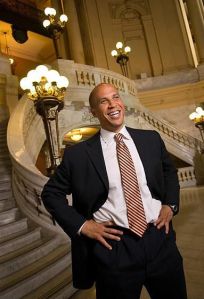
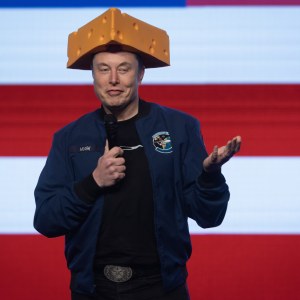
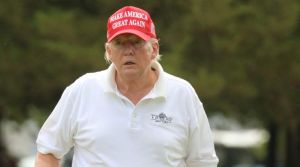
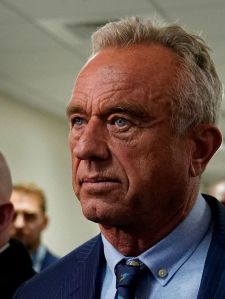
















 peej
peej Carissa
 bostonboomer
 dakinikat
 ecocatwoman
 mablue2
 Mama Lopez
 peggysue22
 quixote
 skydancingguestblogger
 Mona (aka Wonk the Vote)



 Sky Dancing
Recent Comments