As usual, there is so much bad news out there that I don’t know where to begin. Everything is awful, but we have to go on with our lives amid the madness. Honestly, I think Trump is insane. His dementia is progressing. He is obsessed with punishing anyone in or out of the government who ever criticized him or offended him in any way. It’s really hard to believe this is happening in America. I have no idea what will happen next, but it does seem that his erratic behavior is beginning to get to some powerful people. It also looks like there is some trouble in paradise for Elon Musk. That will be the focus of most of this post.
Anyway, I’m just going to share some stories that hit home with me today, and then try to have a normal weekend while I still can.
Yesterday, we learned what led to the deaths of Gene Hackman and his wife Betsy Arakawa.
For years, actor Gene Hackman’s doting wife Betsy Arakawa would do whatever she could to help keep him healthy, whether it meant wearing a mask everywhere she went or encouraging him to stay fit by riding his bike or doing yoga on Zoom.
In late February, the couple was found dead in their New Mexico home, a heartrending end to the life they shared. Arakawa, 65, died of hantavirus and days later, Hackman, 95, died of heart disease, the New Mexico medical investigator’s office revealed Friday.
Authorities, working to lay out a timeline of what happened, said Hackman had Alzheimer’s disease and may have not realized he was alone in the days before he died.
Clues as to what the couple’s life looked like before their tragic deaths could be gleaned from their last interactions with loved ones. Close and longtime friends of the couple say they seemed to be in good health at their most recent encounter.
“Last time we saw them, they were alive and well,” Daniel Lenihan told CNN’s Erin Burnett last week. Barbara, Lenihan’s wife, said she had last seen Arakawa a few weeks ago at a home decor shop the two had opened together in Santa Fe….
Using evidence gathered from their home, authorities pieced together what they now believe happened, answering many of the questions behind what began as a mystery.
What probably happened:
Arakawa’s last known interactions were on February 11. She had a short email exchange with her massage therapist that morning and later visited a Sprouts Farmers Market, CVS pharmacy and a dog food store before returning to her gated community at around 5:15 p.m., Santa Fe Sheriff Adan Mendoza said Friday. After that, there was no other known activity or outgoing communication from her, the sheriff said.
“Numerous emails were unopened on her computer on February 11,” Mendoza said.
Arakawa died from hantavirus pulmonary syndrome, a rare disease that results from infection through contact with rodents, according to Dr. Heather Jarrell, chief medical examiner for the New Mexico Office of the Medical Investigator. Pills found scattered on the bathroom floor near Arakawa’s body were prescription thyroid medication and not related to her death, Jarrell said. Zinna, one of the animal-loving couple’s dogs, was found dead in a crate in the bathroom near her body.
“Based on the circumstances, it is reasonable to conclude that Ms. Arakawa passed away first,” Jarrell said.
What Hackman’s days looked like after his wife of more than 30 years left his side has yet to be fully pieced together, but the end came in a matter of days.
Hypertensive and atherosclerotic cardiovascular disease took the acting legend’s life, likely on February 18 when his pacemaker last recorded his heartbeat, according to Jarrell. The device recorded Hackman was experiencing atrial fibrillation, an irregular heart rhythm.
His body was discovered on the ground near the kitchen, with a walking cane and sunglasses next to him, on February 26.
Authorities said he was “in a very poor state of health.” Hackman had “advanced” Alzheimer’s disease, which was “a significant contributory factor” in his death, and it was possible the actor was “not aware” his wife had died several days earlier, Jarrell said.
Was Arakawa really his only caregiver? That must have been really difficult. Did these two have close family members? If that was my Dad, I would have been checking in every day. I don’t understand how it took so long for the bodies to be discovered.
Betsy Arakawa, pianist and wife of actor Gene Hackman, died of hantavirus pulmonary syndrome, New Mexico chief medical examiner Heather Jarrell said Friday at a news conference.
Arakawa, 65, and Hackman, 95, were found deadin their Santa Fe home last month.
Hantavirus pulmonary syndrome is a rare illness spread by rodents that was first detected in humans in the United States about three decades ago. Here’s what to know….
Hantaviruses can develop into hantavirus pulmonary syndrome, a lung disease that kills about 38 percent of people who develop respiratory symptoms, according to the Centers for Disease Control and Prevention. Symptoms typically start to show between one and eight weeks after first contact with the virus.
The disease presents with flu-like symptoms, such as fever, muscle aches and a cough, Jarrell said. About half of patients experience headaches, dizziness, chills and abdominal problems such as nausea, vomiting, diarrhea and stomach pain, according to the CDC.
As the disease progresses, it attacks capillaries in the lungs and can cause them to leak, damaging lung tissue, causing fluid buildup and severely affecting heart and lung function, according to the Mayo Clinic. Symptoms of this stage of the illness can include difficulty breathing and an irregular heart rate.
There is no specific treatment. Breathing support, including intubation, may help some patients….
Hantavirus disease is rare. There were 864 reported cases in the United States between 1993, when the CDC began tracking the illness, and 2022, the last available CDC data.
The states with the highest number of cases during that time were New Mexico (122), Colorado (119), Arizona (86) and California (78). The vast majority of cases originate west of the Mississippi River, according to the American Lung Association. In New Mexico, authorities have documented between one and seven cases in humans annually in recent years, state public health veterinarian Erin Phipps said Friday.
The disease is transmitted through rodent droppings, urine, or saliva. This whole episode is so sad. It kind of reminded me of what happened to William Holden–not that the deaths are similar, but Holden was a famous person who died alone in his home and wasn’t found for some time. He was very drunk and fell and hit his head on a table. His body was found by his building superintendent several days after his death. He was only 63.
After the Washington Post ran a front-page photo of President Trump and Benjamin Netanyahu sitting in front of the Oval Office fireplace on February 4, careful reader Thomas M. Sneeringer fired off a letter to the editor. “It appears the fireplace mantel in the Oval Office has been subjected to President Donald Trump’s Midas touch,” he wrote. Sneeringer observed that the spray of Swedish ivy that has adorned the mantle for more than half a century had vanished, replaced by what he speculated might be… golf trophies?
By Ellen Haasen
“I was instantly offended and instantly understood how it happened,” Sneeringer told me in an interview. “It was just so consistent about what we know about Trump’s taste.”
He knew that the missing ivy was no ordinary plant. Irish ambassador Thomas J. Kiernan had given it to President John F. Kennedy as a gift in 1961, and ever sinceit has been a consistent backdrop to some of the most famous White House meetings. Back in 1984, during the Reagan administration, Kurt Anderson wrote a tribute to “The Plant” in Time magazine:
“The Oval Office may be the headiest place in America. When the President, sitting in his desk chair at the southern tip of the Oval, stares dead ahead to the far wall, he sees The Plant. Anywhere else it would be a robust but unremarkable Swedish ivy. But there on the marble mantelpiece, day after consequential day, it basks in the power and the glory. No matter who has been inaugurated since 1961, The Plant has always stayed…The Swedish ivy, given its potential for leaks, is an Administration team player first and last.”
The hardy plant’s scalloped green leaves are center stage in photos of Ronald Reagan meeting Gorbachev, George H.W. Bush schmoozing with Bruce Willis and Nelson Mandela, and Jimmy Carter conferring with Yitzhak Rabin or having lunch with his wife Rosalynn. Nelson Shanks painted Bill Clinton leaning next to the ivy in his official presidential portrait.
The plant survived Trump’s first term, and it was even there to bear witness to that awkward meeting between Trump and Joe Biden after the 2024 election.
But no more.
So where is it now? The White House did not respond to several inquiries about the plant’s whereabouts or the gold statues that replaced it.
Like so many things that Trump and his DOGE team are heedlessly destroying, the Oval Office ivy has a constituency that may not be immediately obvious to those wielding the chainsaws. With its own Instagram account and generations of progeny that even Elon Musk can’t rival, the humble houseplant enjoys a cult following.
I hope he didn’t just throw the plant in the trash. Trump really does destroy everything he touches.
Could Trump be tiring of Elon Musk pretending to be president?
Marco Rubio was incensed. Here he was in the Cabinet Room of the White House, the secretary of state, seated beside the president and listening to a litany of attacks from the richest man in the world.
Seated diagonally opposite, across the elliptical mahogany table, Elon Musk was letting Mr. Rubio have it, accusing him of failing to slash his staff.
You have fired “nobody,” Mr. Musk told Mr. Rubio, then scornfully added that perhaps the only person he had fired was a staff member from Mr. Musk’s Department of Government Efficiency.
Mr. Rubio had been privately furious with Mr. Musk for weeks, ever since his team effectively shuttered an entire agency that was supposedly under Mr. Rubio’s control: the United States Agency for International Development. But, in the extraordinary cabinet meeting on Thursday in front of President Trump and around 20 others — details of which have not been reported before — Mr. Rubio got his grievances off his chest.
Mr. Musk was not being truthful, Mr. Rubio said. What about the more than 1,500 State Department officials who took early retirement in buyouts? Didn’t they count as layoffs? He asked, sarcastically, whether Mr. Musk wanted him to rehire all those people just so he could make a show of firing them again. Then he laid out his detailed plans for reorganizing the State Department.
Mr. Musk was unimpressed. He told Mr. Rubio he was “good on TV,” with the clear subtext being that he was not good for much else. Throughout all of this, the president sat back in his chair, arms folded, as if he were watching a tennis match.
After the argument dragged on for an uncomfortable time, Mr. Trump finally intervened to defend Mr. Rubio as doing a “great job.” Mr. Rubio has a lot to deal with, the president said. He is very busy, he is always traveling and on TV, and he has an agency to run. So everyone just needs to work together.
The meeting was a potential turning point after the frenetic first weeks of Mr. Trump’s second term. It yielded the first significant indication that Mr. Trump was willing to put some limits on Mr. Musk, whose efforts have become the subject of several lawsuits and prompted concerns from Republican lawmakers, some of whom have complained directly to the president.
A bit more:
In a post on social media after the meeting, Mr. Trump said the next phase of his plan to cut the federal work force would be conducted with a “scalpel” rather than a “hatchet” — a clear reference to Mr. Musk’s scorched-earth approach.
Mr. Musk, who wore a suit and tie to Thursday’s meeting instead of his usual T-shirt after Mr. Trump publicly ribbed him about his sloppy appearance, defended himself by saying that he had three companies with a market cap of tens of billions of dollars, and that his results spoke for themselves
But he was soon clashing with members of the cabinet.
Just moments before the blowup with Mr. Rubio, Mr. Musk and the transportation secretary, Sean Duffy, went back and forth about the state of the Federal Aviation Administration’s equipment for tracking airplanes and what kind of fix was needed. Howard Lutnick, the commerce secretary, jumped in to support Mr. Musk.
Mr. Duffy said the young staff of Mr. Musk’s team was trying to lay off air traffic controllers. What am I supposed to do? Mr. Duffy said. I have multiple plane crashes to deal with now, and your people want me to fire air traffic controllers?
Jess Bidgood wrote a follow-up to the Haberman/Swan story, also at The New York Times:
Yesterday, President Trump did something he’s seemingly been loath to do in the first seven weeks of his new administration: He reined in Elon Musk.
My colleagues Jonathan Swan and Maggie Haberman have the details of the extraordinary cabinet meeting where everything unfolded, and you’re going to want to read every word….
What was clear was that some of the nation’s cabinet secretaries had hit their breaking point with Musk’s efforts to steamroll the federal government. And while Trump said he still supported Musk’s mission, he gave his secretaries something they wanted. As Jonathan and Maggie wrote:
“From now on, he said, the secretaries would be in charge; the Musk team would only advise.”
The encounter stood as the first indication that Trump is willing to put some limits on the billionaire, even if those limits would do little more than bring the realities of Musk’s wide-ranging role more in line with how the administration’s lawyers have described it in court.
John Cielukowski, Fat Cat Electric
But the limits, if they hold, could raise bigger questions about the role Musk will play in the government going forward — especially if his history in the business world is any guide.
Ryan Mac, a colleague of mine who covers big tech, has reported on Musk for a long time. Today, I asked him if Musk had ever been content with an adviser-style role, one in which he doesn’t run the show.
Ryan’s answer was simple: No.
Musk has never liked being one voice among many, Ryan explained. Vivek Ramaswamy, who was initially going to be Musk’s partner in leading the Department of Government Efficiency, is long gone. Musk doesn’t sit on a lot of boards. And throughout his corporate history, whenever he hasn’t initially had control over a company, he’s tended to seek it.
At Tesla, where he was an early investor, he became the chief executive. Before he bought Twitter and renamed it X, he almost joined the company’s board. Then he decided to acquire the company outright, fire its board of directors and executives and become the chief executive. (He later named a new C.E.O. but retains considerable control over the company.)
Not all of Musk’s bids for control have worked. Decades ago, for example, he was forced out as the chief executive of PayPal. His effort to get control of OpenAI — a nonprofit he co-founded in 2015 — failed, as did his more recent bid to buy it.
Musk, it seems, prefers to be the bride, not the bridesmaid. The question now is whether he’ll stick to Trump’s directive that he simply advise — and whether he’ll be content if he does.
President Donald Trump’s shift on the Department of Government Efficiency began with a warning from an unlikely source.
Jesse Watters, a co-host of the Fox News hit show The Five, is usually a slick deliverer of MAGA talking points. But on February 19, Watters told a surprisingly emotional story about a friend working at the Pentagon who was poised to lose his job as part of the Trump administration’s sweeping cuts to the federal workforce. “I finally found one person I knew who got DOGE’d, and it hit me in the heart,” said Watters, who urged his Fox colleagues to “be a little bit less callous.”
Although Watters soon resumed championing DOGE, the moment went viral. Trump watched the clip and asked advisers if it was resonating with his base of supporters, according to one of three White House officials I spoke with for this story (they requested anonymity so they could discuss private conversations).
Over the ensuing weeks, the president grew unhappy with the television coverage of cuts affecting his voters, according to two of those officials, while the White House fielded calls from Cabinet members and Republican lawmakers frustrated by Elon Musk, the billionaire tech mogul empowered to slash the federal government. Some of Trump’s top advisers became worried about the political fallout from DOGE’s sweeping cuts, especially after seeing scenes of angry constituents yelling at GOP members of Congress in town halls.
All of this culminated in Trump taking his first steps to rein in Musk’s powers yesterday. The president called a closed-door meeting with Cabinet members and Musk, one that devolved into sharp exchanges between the DOGE head and several agency leaders. Afterward, Trump declared that his Cabinet would now “go first” in deciding whom in their departments to keep or fire.
DOGE lives. Trump has made clear that Musk still wields significant authority. And those close to Trump say that the president is still enamored with the idea of employing the world’s richest man, and still largely approves of the work that DOGE is doing to gut the federal bureaucracy. Some in the White House also believe that clarifying Musk’s purview might help the administration in a series of lawsuits alleging that Musk is illegally empowered.
But Trump’s first public effort to put a leash on Musk appears to mark the end of DOGE’s opening chapter, and a potential early turning point in Trump’s new administration.
Federal workers, Democrats and even some Republican lawmakers want to believe that President Donald Trump clipped billionaire adviser Elon Musk’s wings Thursday.
But many of them aren’t counting on it.
Roller skating cat, by Martin Leman
After Trump privately told his Cabinet that they are in charge of their departments and Musk does not have the authority to fire government workers — a stunning shift in their alliance should it pan out — rank-and-file federal employees said they were skeptical in light of weeks of confusing and contradictory guidance. None of the more than a dozen federal workers POLITICO spoke to reported being told by their supervisors or labor unions that anything had changed directly due to Trump’s Cabinet meeting and subsequent comments.
“I don’t really expect them to necessarily start implementing what they say they will,” said David Casserly, an employee at the Department of Labor who said he was speaking in a personal capacity. “I’ll believe it when I see it.”
The news of Thursday’s Cabinet meeting set off rampant speculation within the federal workforce about the true intent of Trump’s comments, which come amid growing legal and political scrutiny. A pair of lawsuits argue that the empowerment of Musk within the Trump administration is so far-reaching that, barring confirmation from the Senate, it exceeds constitutional limits.
A U.S. Department of Agriculture worker chalked up Trump’s comments to “damage control” after the president said in his joint address to Congress Tuesday that Musk is the “head” of the Department of Government Efficiency. That could prove to be a legal liability after Trump’s White House previously argued in court that Musk was not the leader of DOGE and had no authority to make distinct policy decisions himself.
Musk’s popularity is also sinking in polls, and Republicans in Congress have faced angry constituents at town halls who have complained about DOGE’s slash-and-burn approach to cutting the bureaucracy.
“It’s total bullshit. I don’t know what else to say,” quipped a second Labor Department employee. “I don’t trust a word of it,” said a third federal worker, who described it as Trump “attempting to insulate himself a bit from the court losses and the shift in public opinion, but I don’t think it will change anything.”
We can only hope.
That’s all I have for you today. I’m going to try to take my mind off all the horror stories for the rest of the day.
Did you like this post? Please share it with your friends:
Trump’s speech last night was long and full of lies. I didn’t really watch or listen to it; I had it on TV with the sound muted. I turned it on when I noticed he was lying about Social Security, and then I tuned out again. Here’s what he had to say about the popular program that for 80 years has kept old people from starving on the streets.
We’re also identifying shocking levels of incompetence and probable fraud in the Social Security program for our seniors, and that our seniors and people that we love rely on.
Believe it or not, government databases list 4.7 million Social Security members from people aged 100 to 109 years old. It lists 3.6 million people from ages 110 to 119. I don’t know any of them. I know some people who are rather elderly but not quite that elderly. 3.47 million people from ages 120 to 129. 3.9 million people from ages 130 to 139. 3.5 million people from ages 140 to 149. And money is being paid to many of them, and we are searching right now.
In fact, Pam, good luck. Good luck. You’re going to find it. But a lot of money is paid out to people, because it just keeps getting paid and paid and nobody does — and it really hurts Social Security, it hurts our country. 1.3 million people from ages 150 to 159, and over 130,000 people, according to the Social Security databases, are age over 160 years old. We have a healthier country than I thought, Bobby.
Including, to finish, 1,039 people between the ages of 220 and 229. One person between the age of 240 and 249 — and one person is listed at 360 years of age. More than 100 years — more than 100 years older than our country. But we’re going to find out where that money is going, and it’s not going to be pretty. By slashing all of the fraud, waste and theft we can find, we will defeat inflation, bring down mortgage rates, lower car payments and grocery prices, protect our seniors and put more money in the pockets of American families.
It seems pretty clear that Trump plans to destroy Social Security and leave millions of Americans to starve in the streets. Americans need to fight back, and force Democrats to wake up and actually see what is happening.
Well, that’s 100 minutes of our lives we’ll never get back.
Trump’s big Joint Address to Congress read as if the White House staff told ChatGPT, “Give me a State of the Union speech that’s Castro in length, Von Munchausen in facts, and Culture War Carnival Barker in style. Oh, and make it tendentious, boring, and ugly.”
What else did one expect?
Trump’s speech last night was dull yet terrifying. It was self-referential and self-aggrandizing yet vaguely desperate. It was Trump at his worst, but it also showed America that all he’s got is his base and his same tired bit, his greatest hits played over and over, louder and louder, to an audience getting older, poorer, and more vicious in its demands that their umber demigod give them that old-time religion.
It was divisive, terrible, and badly written, a speech so clunky and organizationally and rhetorically grotesque that even if Ted Sorenson, Ray Price, and William Safire rose from the grave and sat down with Peggy Noonan and Aaron Sorkin for a fortnight, they couldn’t find enough creative mayonnaise to turn that chickenshit into chicken salad. Almost every State of the Union speech ends up with a kind of freight-train problem; too many constituent groups inside the Administration need their paragraph, their nod to their importance.
This graceless bucket of rhetorical fish guts was a catalog of “Now That’s What I Call Culture War! Volume 27” tropes, riffs, and attacks on the usual Catalog of Imaginary Demons that informs MAGA belief and behavior. None of it was new or more shocking than the first 1,000 times.
But it was the stunning disregard for truth that set this speech apart.
Trump opened his lie hole and sluiced a torrent of outright lies into the willing maw of his dull-eyed, bovine audience watching at home hooked to their Fox feed of amygdala-stoking fear porn. The absurdity of his lies was rivaled only by their scope.
The rest is behind a paywall, but here are reports on the lies. (I can’t post excepts–there are just too many lies):
Rep. Al Green, D-Texas, was removed from the House chamber Tuesday night after he disrupted President Donald Trump’s joint address to Congress.
Green, who has long pushed to impeach Trump dating to his previous term in office, stood and shook his cane toward the president in the opening minutes of his speech.
Other lawmakers cheered and booed Green, causing further chaos on the House floor as Trump paused. The uproar prompted House Speaker Mike Johnson, R-La., to read aloud from House rules.
“Members are directed to uphold and maintain decorum in the House and to cease any further disruptions,” Johnson said, an admonishment aimed at Green.
After Green refused to sit and allow Trump to continue, Johnson called for the House sergeant at arms to remove him from the chamber.
“Nah nah nah nah, goodbye,” Republicans chanted as Green was escorted from the room.
Outside the chamber, Green told NBC News that as “a person of conscience,” he believes Trump “has done things that I think we cannot allow to continue.”
What Green yelled at Trump was “You have no mandate to cut Medicaid!”
Greenland’s Prime Minister Múte Bourup Egede proclaimed that “Greenland is ours” in response to President Donald Trump’s joint address to Congress Tuesday night, where he said the U.S. will get Greenland “one way or another.”
“Americans and their leader must understand that,” Egede wrote on Facebook Wednesday, using the Greenlandic name for the island. “We are not for sale and cannot simply be taken. Our future will be decided by us in Greenland.”
“We strongly support your right to determine your own future, and if you choose, we welcome you into the United States of America,” Trump said, stressing that acquiring the territory would improve U.S. national and international security.
“I think we’re going to get it. One way or the other, we’re going to get it,” Trump added.
“Thank you again. Thank you again. Won’t forget it,” Trump says while shaking the hand of Supreme Court Justice John Roberts after the State of the Union.
Let’s stipulate that we’re reasonable people who can see this for what it is: a reference to the Supreme Court’s disastrous ahistoric discovery of vast presidential immunity from criminal prosecution that saved Trump from going to jail.
Trump’s mob boss mentality has led to other moments like this, where he extravagantly highlights the moral and ethical compromises that a sycophant has made on his behalf as a way of demonstrating that they really are no better than he is and of lashing them even more firmly to his side. If they resist, he calls them out for being hypocrites, pointing to their compromised behavior and mocking their previous pretensions to ethical behavior.
But this time Trump did it to the sitting Supreme Court chief justice in public on the floor of the House. Whatever high regard John Roberts still held himself in has been directly challenged in the most excruciating and a dignity-robbing way. Trump has a way of doing that to everyone who comes in contact with him. Roberts had it coming. No pity for him.
Donald Trump rambled, ranted and raved his way through the 2024 presidential campaign, but he was clear on one point. When he was elected, he would get revenge.
“I am your retribution,” Trump said to crowds of his supporters throughout the campaign.
This was not an abstraction. He had a few targets in mind.
“I will appoint a real special prosecutor to go after the most corrupt president in the history of the United States of America, Joe Biden, and the entire Biden crime family,” he said in 2023.
There were also the judges, prosecutors and politicians who tried to hold Trump accountable for his crimes, both the ones for which he was indicted and the ones for which he was convicted. He refused to rule out an effort to prosecute Alvin Bragg, the Manhattan district attorney who prosecuted the Stormy Daniels hush-money case against him, and attacked Justice Juan Merchan, who presided over the trial, as “crooked.” Trump shared an image that called for the former Republican representative and Jan. 6 committee member Liz Cheney to be prosecuted in “televised military tribunals,” and he accused Gen. Mark Milley, a former chairman of the Joint Chiefs of Staff, of treason, calling his actions “so egregious that, in times gone by, the punishment would have been DEATH!”To get his revenge, Trump would turn the I.R.S., the F.B.I. and other powerful parts of the federal government against his political enemies. He would hound and harass them in retaliation for their opposition to his law stretching and lawbreaking.For once in his public career, Trump wasn’t lying. As president, he has made it a priority to go after his political enemies.
You all know the things Trump has done to get revenge in his brief time in office so far. But Bouie argues that Trump’s real revenge target is the American people.
Altogether, Trump has done more to actualize his desire for retribution than he has to fulfill his campaign promise to lower the price of groceries or reduce the cost of housing. A telling sign, perhaps, of his real priorities in office.This fact of Trump’s indifference to most Americans — if not his outright hostility toward them, considering his assault on virtually every government function that helps ordinary people — suggests another dimension to his revenge tour. It is almost as if he wants to inflict pain not just on a specific set of individuals but on the entire nation.
It wasn’t necessary to watch all of Trump’s speech last night to understand where we are as a country. The state of our union, as I noted Sunday night, is compromised. And that comes as no surprise to any of us. But two moments from last night are worth noting, as markers of where we are.
The Stupid: “I have created the brand new Department of Government Efficiency, DOGE. Perhaps you’ve heard of it. Perhaps. Which is headed by Elon Musk, who is in the gallery tonight,” Trump said during his speech.
Only one problem. That’s not what the Justice Department has been telling judges in litigation involving the Musk-led effort to privatize government. They’ve been doing everything they can to claim Musk is not in charge of DOGE, including telling the judge that a woman named Amy Gleason, who was on vacation in Mexico when they made the representation to the court, is the Acting Administrator. It didn’t take lawyers long to point that out. Trump was barely finished when Kel McClanahan filed a “Notice of New Evidence” in Lentini v. DOGE, one of three cases that have been consolidated to hear claims about DOGE’s legality in the District of Maryland.
McClanahan argued that Trump’s statement about Musk “conclusively demonstrates that expedited discovery is urgently needed to ascertain the nature of the Department of Government Efficiency and its relationship to the United States DOGE Service.” The best outcome for Trump, following his epic foot in mouth, is that Judge Jia Cobb grants the motion to expedite which would make this the first case where pro-democracy lawyers would gain access to information about the inner workings of DOGE, likely a treasure trove that would further underscore the lawless manner in which Trump is acting.
The worst case is that someone gets held in contempt, either civil or criminal. That would open an entire can of worms about how the courts enforce their orders against a Trump administration that has at least suggested it might not comply with ones it doesn’t like. But that fight is, inevitably, coming, and judges don’t like it when parties lie to them, especially when it’s so explicit and when it’s the government doing it, here, rather uniquely, with the president’s involvement.
Hahaha!
Vance also comments on Trump’s behavior toward the SCOTUS justices:
The Corrupt: After his speech, Trump shook hands with people in the room, including the four active Supreme Court Justices who were present in their long black robes. Their tradition of dress is meant to ensure that no one mistakes who they are. It separates them from the political fray, even as they attend. That message, however, was lost on Trump.
The moment was captured on CSPAN. Trump thanks the Justices. He doesn’t say what for, but of course, we all know.
“Thank you very much, appreciate it,” he says to Elena Kagan, whose face is a mask in the moment. Then, he moves on to the Chief Justice. “Thank you again. Thank you again,” he says to John Roberts. Then he awkwardly slaps him on the shoulder and says, “Won’t forget it.” The moment has an almost classic mob boss feel to it in context.
Roberts, followed by Kagan, peels off and leaves without comment and immediately.
Some staffers at Elon Musk’s so-called Department of Government Efficiency are drawing robust taxpayer-funded salaries from the federal agencies they are slashing and burning, WIRED has learned.
Jeremy Lewin, one of the DOGE employees tasked with dismantling USAID, who has also played a role in DOGE’s incursions into the National Institutes of Health and the Consumer Financial Protection Bureau, is listed as making just over $167,000 annually, WIRED has confirmed. Lewin is assigned to the Office of the Administrator within the General Services Administration.
By Mark Bryan
Kyle Schutt, a software engineer at the Cybersecurity and Infrastructure Security Agency, is listed as drawing a salary of $195,200 through GSA, where he is assigned to the Office of the Deputy Administrator. That is the maximum amount that any “General Schedule” federal employee can make annually, including bonuses. “You cannot be offered more under any circumstances,” the GSA compensation and benefits website reads.
Nate Cavanaugh, a 28-year-old tech entrepreneur who has taken a visible internal role interviewing GSA employees as part of DOGE’s work at the agency, is listed as being paid just over $120,500 per year. According to DOGE’s official website, the average GSA employee makes $128,565 and has worked at the agency for 13 years.
When Elon Musk started recruiting for DOGE in November, he described the work as “tedious” and noted that “compensation is zero.” WIRED previously reported that the DOGE recruitment effort relied in part on a team of engineers associated with Peter Thiel and was carried out on platforms like Discord.
Since Trump took office in January, DOGE has overseen aggressive layoffs within the GSA, including the recent elimination of 18F, the agency’s unit dedicated to technology efficiency. It also developed a plan to sell off more than 500 government buildings.
Although Musk has described DOGE as “maximum transparent,” it has not made its spending or salary ranges publicly available. Funding for DOGE had grown to around $40 million as of February 20, according to a recent ProPublica report. The White House did not respond to questions about the salary ranges for DOGE
U.S. Marshals have warned federal judges of unusually high threat levels as tech billionaire Elon Musk and other Trump administration allies ramp up efforts to discredit judges who stand in the way of White House efforts to slash federal jobs and programs, said several judges with knowledge of the warnings.
In recent weeks, Musk, congressional Republicans and other top allies of U.S. President Donald Trump have called for the impeachment of some federal judges or attacked their integrity in response to court rulings that have slowed the Trump administration’s moves to dismantle entire government agencies and fire tens of thousands of workers.
Musk, the world’s richest person, has lambasted judges in more than 30 posts since the end of January on his social media site X, calling them “corrupt,” “radical,” “evil” and deriding the “TYRANNY of the JUDICIARY” after judges blocked parts of the federal downsizing that he’s led. The Tesla CEO has also reposted nearly two dozen tweets by others attacking judges.
Reuters interviews with 11 federal judges in multiple districts revealed mounting alarm over their physical security and, in some cases, a rise in violent threats in recent weeks. Most spoke on condition of anonymity and said they did not want to further inflame the situation or make comments that could be interpreted as conflicting with their duties of impartiality. The Marshals Service declined to comment on security matters.
As Reuters documented in a series of stories last year, political pressure on federal judges and violent threats against them have been rising since the 2020 presidential election, when federal courts heard a series of highly politicized cases, including failed lawsuits filed by Trump and his backers seeking to overturn his loss. Recent rhetorical attacks on judges and the rise in threats jeopardize the judicial independence that underpins America’s democratic constitutional order, say legal experts.
President Trump’s decision to dramatically raise tariffs on imports threatens the U.S. with an uncomfortable combination of weaker or even stagnant growth and higher prices—sometimes called “stagflation.”
The U.S. has imposed 25% tariffs on Mexico and Canada, and another 10% hike on China following last month’s 10% increase. They “will be wildly disruptive to business investment plans,” said Ray Farris, chief economist at Prudential PLC. “They will be inflationary, so they will be a shock to real household income just as household income growth is slowing because of slower employment and wage gains,” he said.
It is still unclear how long Trump intends to keep the tariffs in place. Commerce Secretary Howard Lutnick suggested Tuesday afternoon on Fox Business that a rollback could be in the works.
Sentiment indicators and business commentary in recent weeks point to slumping confidence over the threat of higher prices.
By Mark Bryan
China and Mexico are the top two sources of consumer electronics sold at the retailer Best Buy, Chief Executive Corie Barry told analysts Tuesday. “We expect our vendors across our entire assortment will pass along some level of tariff costs to retailers, making price increases for American consumers highly likely,” Barry said. The company’s shares plummeted 13% in the midst of a general stock-market retreat.
Brothers International Food Holdings, based in Rochester, N.Y., imports mangoes and avocados from Mexico and sells fruit juices, purées and frozen-food concentrates to food and beverage manufacturers. New tariffs are forcing the 95-person company to pass on price increases to its customers or accept lower profit margins….
Trump and his advisers have said some short-term pain might be warranted to achieve the administration’s long-term ambitions of remaking the U.S. economy. They have also said their steps to boost energy production could offset higher goods prices.
Nonetheless, tariffs are a particularly difficult economic threat for the Federal Reserve to address. Its mandate is to keep inflation low and stable while maintaining a healthy labor market. Tariffs represent a “supply shock” that both raises inflation, which calls for higher interest rates, and hurts employment, which calls for lower rates. The Fed would have to choose which threat to emphasize.
The Supreme Court on Wednesday backed a federal judge’s power to order the Trump administration to pay $2 billion to U.S. Agency for International Development contractors but did not require immediate payment.
In doing so, the court on a 5-4 vote rejected an emergency application filed by the Justice Department after U.S. District Judge Amir Ali issued a series of rulings demanding the government unfreeze funds that President Donald Trump put on hold with an executive order.
The court delayed acting on the case for a week. In the meantime, the contractors have not been paid.
In an unsigned order, the court said that Ali’s deadline for the immediate payment had now passed and the case is already proceeding in the district court, with more rulings to come. A hearing is scheduled for Thursday.
As such, Ali “should clarify what obligations the government must fulfill” in order to comply with a temporary retraining order issued Feb. 13, the court said. Ali should consider “the feasibility of any compliance deadlines,” the court added.
Four conservative justices dissented from the denial of the application, with Justice Samuel Alito writing that Ali did not have “unchecked power to compel the government to pay out … 2 billion taxpayer dollars.”
“I am stunned,” Alito added.
The other dissenters were Justices Clarence Thomas, Neil Gorsuch and Brett Kavanaugh.
Donald Trump just imposed a 25 percent tariff on virtually all goods produced by America’s two largest trading partners — Canada and Mexico. He simultaneously established a 20 percent across-the-board tariff on Chinese goods.
Meanwhile, China and Canada immediately retaliated against Trump’s duties, with the former imposing a 15 percent tariff on American agricultural products and the latter putting a 25 percent tariff on $30 billion of US goods. Mexico has vowed to mount retaliatory tariffs of its own.
This trade war could have far-reaching consequences. Trump’s tariffs have already triggered a stock market sell-off and cooling of manufacturing activity. And economists have estimated that the trade policy will cost the typical US household more than $1,200 a year, as the prices of myriad goods rise.
All this raises the question: Why has the US president chosen to upend trade relations on the North American continent? The stakes of this question are high, since it could determine how long Trump’s massive tariffs remain in effect. Unfortunately, the president himself does not seem to know the answer.
In recent weeks, Trump has provided five different — and contradictory — justifications for his tariffs on Mexico and Canada, none of which make much sense.
Read all about it at Vox.
That’s all I have for you today. Please take care of yourselves in this terrible time for our country.
Did you like this post? Please share it with your friends:
I wonder if Trump is enjoying his reviews this morning? He shamed himself and our country yesterday in his oval office meeting with Ukraine’s president. But he is unable to feel shame, so I assume he’s happy with what he did. He is working to turn the U.S. into a pariah country, allied only with the worst of the worst–Russia, North Korea, Hungary, China, Saudi Arabia. We are now part of what George W. Bush called the “axis of evil.”
This “president” is subservient to a country–Russia–with an economy smaller than California or Texas.
On Inauguration Day, President Trump saluted Ukrainian President Volodymir Zelensky’s desire for peace and noted Russian President Vladimir Putin’s unwillingness to end his assault on its peaceful nation. We congratulated Trump for seeing through Putin’s diplomatic propaganda and economic bluffs. From peace negotiations to economic partnership, Trump has reverted to trusting the devil. Now as Putin is dangling business opportunities for U.S. firms in Russia as a part of his U.S. negotiations over Ukraine, Trump seems to be eager to make a deal. What CEOs know, but which Trump misses, is that Putin’s vague offer is much less than meets the eye.
No American companies are eager to return. Russia is an imploding economy, with decayed infrastructure and impossible supply chain gaps. It is a dangerous, unsafe, unreliable place to conduct business.
CEOs’ disdain for Putin’s Russia is anchored in their knowledge that Putin is an untrustworthy dictator who might well nationalize their businesses at a moment’s notice. Just this weekend, Putin has admitted his plans to step up the expropriation of private enterprises, including the seizure of many Western company assets.
Even before the war, doing business in Russia has always been a bad deal for U.S. companies, and few non-Russian companies ever made enough money there to be worth the risks. “A lot of people lost a whole lot of money over there in Russia. I think they’re going to be very reticent to want to go back. Once in a while, peace breaks out over there, but not very often,” oilman and Trump ally Harold Hamm recently told the Financial Times.
CEOs resistant to returning to Russia are merely rational capital allocators who perceive Russia to be a bad deal for shareholders. From a pure money perspective, CEOs would face a shareholder revolt if they tried to squander shareholder capital on risky investments in Russia. Even developing Russia’s much-ballyhooed, vast mineral and energy deposits requires significant capital investments which would take many years to realize a return on, and given the volatility of U.S.-Russia relations, no CEO would want to risk having those investments stranded if relations between the two governments were to deteriorate again.
The truth is that Putin is desperate for U.S. businesses to return to stave off his economic collapse. This is desperation masquerading as generosity, and nobody should be fooled. Russian is not remotely a major superpower. Its economy is smaller than that of Chile and produces few finished goods—industrial or consumer—sold into world markets. Like a vassal state in the ancient mercantile system, all Putin has to sell are raw materials in energy, metals, and agriculture. And now, with all these commodities available more cheaply and more safely around the world, Russia is economically irrelevant.
Sidney, 1993, by Frances Broomfield
But Trump is blinded by his admiration for Putin–and perhaps by his obligations as a Russian intelligence asset. He is both stupid and evil. And we are stuck with him for at least the next four years, unless Democrats win control of Congress in 2026 and then grow spines and impeach him.
The unprecedented scenes in the Oval Office dominated the front pages on Saturday, with the papers united in their horror. Adjectives including disastrous and vile were used to describe the meeting in which Donald Trump and his vice-president JD Vance openly berated the Ukrainian leader Volodymyr Zelenskyy.
The Guardian leads with a quote from Donald Trump: “You are gambling with world war three”, characterising the meeting between the US and Ukrainian presidents as “disastrous”. In a separate sketch of the furious row, David Smith wrote that “Trump on Friday presided over one of the greatest diplomatic disasters in modern history.”
The Daily Mail called the meeting “A spectacle to horrify the world” and said that during the “shouting match in the Oval Office” a “raging Trump humiliates Zelensky on live TV”.
The Daily Mirror went for “Shock & War” as its front page headline, with subheads reading “Trump stuns the world with vile rant at Zelensky” and “Ukraine hero forced home without a deal.”
The Daily Telegraph summed up Trump and Vance’s approach to the Ukrainian president on its front page: “Make a deal or we’re out”. The paper said that during a “shouting match” at the White House, Trump had told Zelenskyy to “come back when you’re ready for peace”.
The Financial Times headlined with “Zelenskyy’s White House talks break down in blaze of acrimony”, saying the minerals deal proposed by Trump had been left unsigned.
Read more at the link.
Here at home, the reactions were unrelentingly negative.
Toward the end of his on-camera, Oval Office brawl with Ukraine’s Volodymyr Zelensky on Friday, President Trump quipped that it was “great television.” He’s right about that. But the point of the meeting was supposed to be progress toward an honorable peace for Ukraine, and in the event the winner was Russia’s Vladimir Putin.
“He disrespected the United States of America in its cherished Oval Office,” Mr. Trump wrote on social media on Friday afternoon after the exchange, while booting the Ukrainian president from the White House. “He can come back when he is ready for Peace.” The two didn’t sign a planned agreement on minerals that would have at least given Ukraine some hope of future U.S. support.
The meeting between Messrs. Trump and Zelensky started out smoothly enough. “It’s a big commitment from the United States, and we appreciate working with you very much, and we will continue to do that,” Mr. Trump said of the mineral deal. Mr. Zelensky showed photos of Ukrainians mistreated as prisoners of war. “That’s tough stuff,” Mr. Trump said.
But then the meeting, in front of the world, descended into recriminations. The nose dive began with an odd interjection from Vice President JD Vance, who appeared to be defending Mr. Trump’s diplomacy, which Mr. Zelensky hadn’t challenged. Mr. Zelensky rehearsed the many peace agreements Mr. Putin has shredded and essentially asked Mr. Vance what would be different this time.
Mr. Vance unloaded on Mr. Zelensky—that he was “disrespectful,” low on manpower, and gives visitors to Ukraine a “propaganda” tour. President Trump appeared piqued by Mr. Zelensky’s suggestion that the outcome in Ukraine would matter to the U.S. “Your country is in big trouble. You’re not winning,” Mr. Trump said at one point.
Why did the Vice President try to provoke a public fight? Mr. Vance has been taking to his X.com account in what appears to be an effort to soften up the political ground for a Ukraine surrender, most recently writing off Mr. Putin’s brutal invasion as a mere ethnic rivalry. Mr. Vance dressed down Mr. Zelensky as if he were a child late for dinner. He claimed the Ukrainian hadn’t been grateful enough for U.S. aid, though he has thanked America countless times for its support. This was not the behavior of a wannabe statesman.
Unknown artist
A bit more, because of the paywall (I went through Memeorandum):
Mr. Zelensky would have been wiser to defuse the tension by thanking the U.S. again, and deferring to Mr. Trump. There’s little benefit in trying to correct the historical record in front of Mr. Trump when you’re also seeking his help.
But as with the war, Mr. Zelensky didn’t start this Oval Office exchange. Was he supposed to tolerate an extended public denigration of the Ukrainian people, who have been fighting a war for survival for three years?
It is bewildering to see Mr. Trump’s allies defending this debacle as some show of American strength. The U.S. interest in Ukraine is shutting down Mr. Putin’s imperial project of reassembling a lost Soviet empire without U.S. soldiers ever having to fire a shot. That core interest hasn’t changed, but berating Ukraine in front of the entire world will make it harder to achieve.
Turning Ukraine over to Mr. Putin would be catastrophic for that country and Europe, but it would be a political calamity for Mr. Trump too. The U.S. President can’t simply walk away from that conflict, much as he would like to. Ukraine has enough weapons support to last until sometime this summer. But as the war stands, Mr. Putin sees little reason to make any concessions as his forces gain ground inch by bloody inch in Ukraine’s east.
I hope someone read this to our stupid and possibly illiterate “president.”
After five weeks in which President Trump made clear his determination to scrap America’s traditional sources of power — its alliances among like-minded democracies — and return the country to an era of raw great-power negotiations, he left one question hanging: How far would he go in sacrificing Ukraine to his vision?
The remarkable showdown that played out in front of the cameras early Friday afternoon from the Oval Office provided the answer.
As Mr. Trump admonished President Volodymyr Zelensky and warned him that “you don’t have the cards” to deal with President Vladimir V. Putin of Russia, and as Vice President JD Vance dressed down the Ukrainian leader as being “disrespectful” and ungrateful, it was clear that the three-year wartime partnership between Washington and Kyiv was shattered.
Whether it can be repaired, and whether a deal to provide the United States revenue from Ukrainian minerals that was the ostensible reason for the visit can be pieced back together, remains to be seen.
But the larger truth is that the venomous exchanges — broadcast not only to an astounded audience of Americans and Europeans who had never seen such open attacks on each other, but to Mr. Putin and his Kremlin aides — made evident that Mr. Trump regards Ukraine as an obstacle to what he sees as a far more vital project.
What Mr. Trump really wants, one senior European official said this week before the blowup, is a normalization of the relationship with Russia. If that means rewriting the history of Moscow’s illegal invasion three years ago, dropping investigations of Russian war crimes or refusing to offer Ukraine long-lasting security guarantees, then Mr. Trump, in this assessment of his intentions, is willing to make that deal….
Secretary of State Marco Rubio — once a defender of Ukraine and its territorial sovereignty, now a convert to the Trump power plays — made clear in an interview with Breitbart News that it was time to move beyond the war in the interest of establishing a triangular relationship between the United States, Russia and China.
“We’re going to have disagreements with the Russians, but we have to have a relationship with both,” Mr. Rubio said. He carefully avoided any wording that would suggest, as he often said as a senator, that Russia was the aggressor, or that there was risk that, if not punished for its attack on Ukraine, it might next target a NATO nation.
“These are big, powerful countries with nuclear stockpiles,” he said of Russia and China. “They can project power globally. I think we have lost the concept of maturity and sanity in diplomatic relations.”
Ebony’s peak, with mouse, by Laura Seeley
Unfortunately, this stupid “president” who was elected by incredibly stupid people isn’t interested in maintaining relationships with other democratic countries in order to spread freedom around the world and avoid another world war.
Mr. Trump makes no secret of his view that the post-World War II system, created by Washington, ate away at American power.
Above all else, that system prized relationships with allies committed to democratic capitalism, even maintaining those alliances that came with a cost to American consumers. It was a system that sought to avoid power grabs by making the observance of international law, and respect for established international boundaries, a goal unto itself.
To Mr. Trump, such a system gave smaller and less powerful countries leverage over the United States, leaving Americans to pick up far too much of the tab for defending allies and promoting their prosperity.
While his predecessors — both Democrats and Republicans — insisted that alliances in Europe and Asia were America’s greatest force multiplier, keeping the peace and allowing trade to flourish, Mr. Trump viewed them as a bleeding wound. In the 2016 presidential campaign, he repeatedly asked why America should defend countries running trade surpluses with the United States.
Read more at the NYT link.
David Rothkopf at The Daily Beast: Trump Thinks He Humiliated Zelensky. He Really Humiliated the United States.
The Trump-Putin Axis came fully out of the closet today.
The new U.S. administration has clearly embraced what might be called a “mob boss” foreign policy—because of the criminal pasts of the men who are leading it and because of the tactics they appear to favor.
In an Oval Office meeting with Ukrainian president Volodymyr Zelensky, Donald Trump and his dangerously ill-informed yes-man, JD Vance, the U.S. president pressed for a deal to squeeze mineral assets out of Ukraine in exchange for some ill-defined level of continued support for that country that could only be described as extortionate.
Then, when Zelensky failed to fall to his knees and kiss the hem of Trump’s garments in thanks, both Trump and Vance began to try to bully Zelensky in the most thuggish and repulsive way imaginable.
It was an ugly display of foreign policy crudeness, the likes of which we have never seen in the White House. It is tempting to call it inept. But it was not. It achieved precisely the goal that Putin and Trump had long sought, to produce a public break between the United States and Ukraine that would directly and meaningfully support Russia’s illegal, brutal conquest of its neighbor.
Trump and Vance, however, were rebuffed by Zelensky in important ways. When the Americans sought to perpetuate lies that have been a staple of Kremlin propaganda and Trump campaign speeches, Zelensky stood up to them. He refuted the idea that Ukraine provoked Russia’s invasion.
He rejected the ahistorical nonsense that Putin only invaded Ukraine because he sensed former President Joe Biden’s weakness. He reminded those viewing the encounter on U.S. national television that in fact Russia invaded Ukraine in 2014 (a point on which Trump embarrassingly tried to correct him) and that the war raged for all four years Trump was in office the last time. He pointed out that he sought a diplomatic solution only to have Putin violate the terms of deals that had been struck.
With each correction Trump and Vance grew more furious and out of control. Trump vainly tried to intimidate a man who has stood up to far worse since he assumed Ukraine’s presidency. Vance criticized Zelensky for not thanking Trump publicly for…well, for what?
Leave aside, if only for a moment, the utter boorishness with which President Donald Trump and Vice President J. D. Vance treated Ukrainian President Volodymyr Zelensky at the White House today. Also leave aside the spectacle of American leaders publicly pummeling a friend as if he were an enemy. All of the ghastliness inflicted on Zelensky today should not obscure the geopolitical reality of what just happened: The president of the United States ambushed a loyal ally, presumably so that he can soon make a deal with the dictator of Russia to sell out a European nation fighting for its very existence.
By Karen Zuk
Trump’s advisers have already declared the meeting a win for “putting America first,” and his apologists will likely spin and rationalize this shameful moment as just a heated conversation—the kind of thing that in Washington-speak used to be called a “frank and candid exchange.” But this meeting reeked of a planned attack, with Trump unloading Russian talking points on Zelensky (such as blaming Ukraine for risking global war), all of it designed to humiliate the Ukrainian leader on national television and give Trump the pretext to do what he has indicated repeatedly he wants to do: side with Russian President Vladimir Putin and bring the war to an end on Russia’s terms. Trump is now reportedly considering the immediate end of all military aid to Ukraine because of Zelensky’s supposed intransigence during the meeting.
Vance’s presence at the White House also suggests that the meeting was a setup. Vance is usually an invisible backbencher in this administration, with few duties other than some occasional trolling of Trump’s critics. (The actual business of furthering Trump’s policies is apparently now Elon Musk’s job.) This time, however, he was brought in to troll not other Americans, but a foreign leader. Marco Rubio—in theory, America’s top diplomat—was also there, but he sat glumly and silently while Vance pontificated like an obnoxious graduate student.
Zelensky objected, as he should have, when the vice president castigated the Ukrainian president for not showing enough personal gratitude to Trump. And then in a moment of immense hypocrisy, Vance told Zelensky that it was “disrespectful for you to come into the Oval Office and try to litigate this in front of the American media.” But baiting Zelensky into fighting in front of the media was likely the plan all along, and Trump and Vance were soon both yelling at Zelensky. (“This is going to be great television,” Trump said during the meeting.) The president at times sounded like a Mafia boss—“You don’t have the cards”; “you’re buried there”—but in the end, he sounded like no one so much as Putin himself as he hollered about “gambling with World War III,” as if starting the biggest war in Europe in nearly a century was Zelensky’s idea.
After the meeting, Trump dismissed the Ukrainian leader and then issued a statement that could only have pleased Moscow:
I have determined that President Zelensky is not ready for Peace if America is involved, because he feels our involvement gives him a big advantage in negotiations. I don’t want advantage, I want PEACE. He disrespected the United States of America in its cherished Oval Office. He can come back when he is ready for Peace.
Trump might as well have dictated this post on Truth Social before the meeting, because Zelensky didn’t stand a chance of having an actual discussion at the White House. When he showed Trump pictures of brutalized Ukrainian soldiers, Trump shrugged. “That’s tough stuff,” he muttered. Perhaps someone told Zelensky that Trump doesn’t read much, and reacts to images, but Trump, uncharacteristically, seems to have been determined to stay on message and pick a fight.
On Friday, in the Oval Office, the president of the United States embarrassed himself, the nation, and every thinking human being on earth. He—and his vice president—berated Ukraine’s president, Volodymyr Zelenskyy, in front of the press and public. Zelenskyy gave it right back to him, thank God, making it clear that he wouldn’t be bullied into accepting a “deal” produced by negotiations to which he had not been invited to participate. The president of the United States reacted like an angry child, repeatedly calling the Ukrainian president an ingrate, relitigating the whole mock “scandal” regarding Hunter Biden and Burisma, apologizing to Vladimir Putin for the mean things that people like “Shifty Schiff” said about him during Impeachment 1, and, eventually, lapsing completely into angry incoherence while Zelenskyy looked to be on the edge of decking him right there on the carpet. Zelenskyy left town without signing the mineral-rights deal that the president had sought so enthusiastically.
“TRUMP: You have to be thankful. You don’t have the cards. You’re buried there. Your people are dying. You’re running low on soldiers…. You’ve got to be more thankful, because let me tell you, you don’t have the cards. With us, you have the cards, but without us, you don’t have any cards. It’s going to be a tough deal to make, because the attitudes have to change…. You’re either going to make a deal or we’re out. And if we’re out, you’ll fight it out. And I don’t think it’s going to be pretty.”
European Cat at St. Paul de Vence, France, by Isy Ochoa
Vance chimed in like the good little lapdog he is:
“I think it’s disrespectful for you to come into the Oval Office and try to litigate this in front of the American media. Right now, you guys are going around and forcing conscripts to the front lines because you have manpower problems. You should be thanking the president for trying to bring an end to this conflict…. Do you think it’s respectful to come to the Oval Office of the United States of America and attack the administration that’s trying to prevent the destruction of your country?””
Man, fck these people. I thought the Nixon tapes were the wildest things I’d ever heard out of the Oval Office.
It is considered axiomatic among cradle Catholics that adult converts are the worst. Too many of them are attracted to HMC because they have a sweet-tooth for ancient ceremony, imperial pageantry, and really big hats. None of these plush accoutrements have the slightest thing to do with the teachings of a young rabbi in first-century Judea, of course, and I continue to subscribe to Garry Wills’s admonishment that Jesus did not create a papacy of any kind, let alone a garish and extravagant one. For that matter, he didn’t create an institutional church, let alone one with its own secret archives, its own library, and a collection of art that is second to none. Yet too many adult converts see all of this incense-stained filigree as the real message of the gospels. And the American members of the species are also particularly interested in political power and the means to acquire it. Newt Gingrich, for example, was one of them, as was Sam Brownback and the late Robert Novak. Their public activities never demonstrated an affection for the beatitudes or for the 25th chapter of Matthew.
I woke up this morning to the stunning news that Elon Musk will be in attendance at Trump’s first cabinet meeting this morning. That is completely insane, but it’s the reality we are living in right now. I wonder if this will be similar to the first cabinet meeting in 2017? Remember how most of the attendees took turns praising Trump? This time, perhaps they’ll be forced to suck up to Musk.
President Trump is holding his first Cabinet meeting at the White House on Wednesday, convening his top advisers who are now largely in place across the executive branch.
Billionaire and senior Trump adviser Elon Musk, who is not a member of the Cabinet, will also be present, the White House said. Mr. Trump posted on Truth Social Wednesday that “ALL CABINET MEMBERS ARE EXTREMELY HAPPY WITH ELON. The Media will see that at the Cabinet Meeting this morning!!!” Musk is a special government employee who has been tasked with informally overseeing the Department of Government Efficiency, or DOGE.
The Cabinet meeting comes as Musk has started to run into opposition from other top officials in his push to slash federal spending and the government’s workforce. In recent days, he has said federal employees must respond to an email by describing five things they accomplished last week or face termination, sparking confusion among federal workers. Multiple Senate-confirmed heads of departments told their employees that they could ignore the demand, which was issued by the Office of Personnel Management.
Most, but not all, of Mr. Trump’s top nominees have now been confirmed by the Senate. A full Senate vote has yet to be scheduled for Rep. Elise Stefanik, his pick to be U.S. ambassador to the United Nations, as House Republicans cannot afford to lose a vote given their razor-thin majority. Linda McMahon, Mr. Trump’s pick to run the Department of Education, also has yet to be confirmed by the Senate. Mr. Trump has pledged to overhaul that department.
The president’s nomination of Lori Chavez-DeRemer for secretary of labor is still in limbo, with no vote scheduled yet. And the Senate has yet to confirm Jamieson Greer as U.S. trade representative, although the Senate advanced his nomination this week, as the president imposes hefty new tariffs on allies and adversaries alike.
Meanwhile, the White House claims that Musk actually has no control over DOGE; yesterday we learned that the mysterious person who is actually in charge of destroying our government is someone named Amy Gleason.
The acting administrator of the Department of Government Efficiency is a low-profile executive who has expertise in health care technology and worked in the first Trump administration.
The White House on Tuesday afternoon identified Amy Gleason as the acting leader of DOGE, which has been pushing agencies to fire employees, cancel contracts and make other budget cuts.
Although DOGE’s cuts have been championed by billionaire Elon Musk and his associates, the White House has insisted that Musk is overseeing the effort as a senior adviser to President Donald Trump, not a DOGE employee.
The identity of who was technically running DOGE had been a mystery, even though an executive order signed by Trump last month called for the appointment of an administrator to report to the White House. A government lawyer on Monday told a judge that he didn’t know who that person was, and White House press secretary Karoline Leavitt had declined to identify the person earlier Tuesday in a press briefing….
Gleason, 53, worked from 2018 through 2021 in the United States Digital Service, an agency that has been renamed the US DOGE Service, according to her LinkedIn profile. In that role, she worked with the White House on the federal response to the coronavirus pandemic.
She returned to the agency in January after Trump took office. DOGE and Gleason did not respond to an email seeking comment on Tuesday….
In the interim, she had been working as “chief product officer” at two small Nashville-based health care startups, Russell Street Ventures and Main Street Health, according to her LinkedIn profile.
Okay. But everyone knows that Musk is in charge.
The latest news and commentary on Musk’s activities:
Veterans Affairs Secretary Douglas A. Collins took to social media on Tuesday to tout sweeping cuts to contractsthat he said would save the department nearly$2 billion without touching core services.
But the 875 contracts on the chopping block help cover medical services, fund cancer programs, recruit doctors and provide burial services to veterans, according to internal VA documents.
“Make no mistake,” Sen. Richard Blumenthal (Connecticut), the ranking Democrat on the Senate Veterans’ Affairs Committee, said in a statement Tuesday responding to Collins’s announcement. “This is just another reckless cost-cutting decision that will harm veterans and tax payers for years to come.”
The cancellations mark the administration’s latest effort, led by Elon Musk’s U.S. DOGE Service, to streamline a federal bureaucracy President Donald Trump has cast as bloated, corrupt and lazy — a campaign that has left no part of the 2.3 million civilian workforce untouched, not even the department tasked with supporting the nation’s veteransand their families. On Monday, following a first round of layoffs affecting 1,000 workers, VA announced another 1,400 dismissals of “non-mission critical positions.”
Collins announced the moves to cut contracts from a wood-paneled office in a video posted to X on Tuesday, looking into the camera with papers in hand to declare: “I got some big news for you.”
“I’ve been given this report. Says we were taking millions … in dollars in contracts to create things like PowerPoint slides and meeting minutes,” he said, telling employees they could learn to make their own presentations.
Collins also pledged an end to contracts that provide executive support, and coaching and training, but did not further detail terminations. He said the savings would be funneled back into veterans’ care: “Don’t let nameless sources, even senators and House members who want to scare you, and media, who want to perpetuate the line. We are taking care of the veterans,” he said.
Obviously, anything involving helping human beings is considered non-“mission critical” in Trump/Musk world.
Elon Musk and his cost-cutting U.S. DOGE Service team have been on a mission to trim government largesse. Yet Musk is one of the greatest beneficiaries of the taxpayers’ coffers.
Over the years, Musk and his businesses have received at least $38 billion in government contracts, loans, subsidies and tax credits, often at critical moments, a Washington Post analysis has found, helping seed the growth that has made him the world’s richest person.
The payments stretch back more than 20 years. Shortly after becoming CEO of a cash-strapped Tesla in 2008, Musk fought hard to secure a low-interest loan from the Energy Department, according to two people directly involved with the process,holding daily briefings with company executives about the paperwork and spending hours with a government loan officer.
When Tesla soon after realized it was missing a crucial Environmental Protection Agency certification it needed to qualify for the loan days before Christmas, Musk went straight to the top, urging then-EPA Administrator Lisa Jackson to intervene, according to one of thepeople. Both people spoke on the condition of anonymity for fear of retribution.
Nearly two-thirds of the $38 billion in funds have been promised to Musk’s businesses in the past five years.
In 2024 alone, federal and local governments committed at least $6.3 billion to Musk’s companies, the highest total to date.
The total amount is probably larger: This analysis includes only publicly available contracts, omitting classified defense and intelligence work for the federal government.SpaceX has been developing spy satellites for the National Reconnaissance Office, the Pentagon’s spy satellite division, according to the Reuters news agency. The Wall Street Journal reported that contract was worth $1.8 billion, citing company documents.
The Post found nearly a dozen other local grants, reimbursements and tax credits where the specific amount of money is not public.
An additional 52 ongoing contracts with seven government agencies — including NASA, the Defense Department and the General Services Administration — are on track to potentially pay Musk’s companies an additional $11.8 billion over the next few years, according to The Post’s analysis.
Of course the fact that Musk has multiple government contracts demonstrates conflicts of interest that make it illegal for him to be any kind of government employee and be involved cutting government programs and firing government employees. But so what? We live in Trump/Musk world now.
Shortly before 11 a.m. on Sunday, the 80,000 physicians, health scientists, disease detectives, and others tasked with safeguarding the nation’s health received instructions to respond to an email sent the day before asking them, “What did you do last week?”
The email arose from a Saturday dispatch issued by President Donald Trump on the social-media platform he owns, Truth Social. “ELON IS DOING A GREAT JOB, BUT I WOULD LIKE TO SEE HIM GET MORE AGGRESSIVE,” he wrote.
The response from Elon Musk arrived seven hours later on the social-media platform he owns, X. The billionaire Trump confidant leading the effort to slash the federal workforce wrote that afternoon that he was acting on Trump’s “instructions” and ensuring that “all federal employees will shortly receive an email requesting to understand what they got done last week.”
The result was a government-wide email directing federal workers to detail their accomplishments over the previous week, in five bullet points. Musk wrote on X: “Failure to respond will be taken as a resignation.”
Government agencies responded in different ways to this e-mail, giving employees confusing messages. A number of bosses advised their employees not to respond at all.
By late afternoon on Monday, many federal health workers had left their offices with no new guidance, uncertain about whether to respond to the email and whether ignoring it would jeopardize their jobs.
They didn’t know that the federal government’s main personnel agency, which had sent Saturday’s government-wide email, had quietly instructed agencies midday Monday that a response was voluntary. Those instructions effectively rescinded Musk’s threats.
For Musk, the episode was a setback. For federal workers struggling to get their bearings, they told us, it was just one more reason to feel both fury and fear.
“This whole administration is a fucking train wreck,” a federal health official said….
Most of the early guidance not to reply to the Musk directive came from the country’s national-security agencies, including the CIA, the FBI, and the Department of Homeland Security. A senior official at NASA, which advised employees not to respond, called the request an “unprecedented ask and unprompted attack on our workforce” in a weekend email to employees that was described to us. A deputy commander at the Navy told people in his chain of command, “Please do NOT respond at this time,” accenting his order using bold red text.
The cascading series of contradictory guidance reflected the unusual balance of power between Trump and Musk, and the unpredictable consequences for millions of federal workers. “It’s a psyop,” said a senior official at the Department of Veterans Affairs, referring to a psychological operation, in this case intended to intimidate federal workers. “It’s a form of harassment. But there’s no one to complain to, because no one knows exactly where it’s coming from or who’s behind it.”
The entire episode was a clusterfuck, but supposedly Musk/DOGE are still trying to make it happen.
Meanwhile, there were signs that OPM was working to make parts of the Musk directive permanent, at least within the agency. In an email to employees Monday evening, OPM’s acting director wrote that he had asked the chief human capital officer to “operationalize this exercise” so that employees continue to “submit weekly accomplishment bullets.”
WTF?! In many cases we are talking about highly accomplished scientists, doctors, and other professionals–and they are supposed to justify their jobs with lists of 5 accomplishments every fucking week?
Fraud, waste, and abuse has become the rallying cry for Elon Musk’s dismantling of the federal government. During a recent Oval Office briefing about DOGE, Trump and Musk used the terms “fraud” and “fraudsters” a dozen times, claiming that their elimination of fraud could save up to $1 trillion dollars.
Musk’s social media is similarly laden with tales of fraud and abuse that his DOGE team has supposedly uncovered. Millions of dead people receiving fraudulent Social Security! “Illegals” living in high end hotel rooms paid for by FEMA! Corrupt USAID bureaucrats ripping off the government and enriching themselves! None of it is true.
Musk and Trump’s focus on fraud is nothing new. Fraud has always served as a powerful political trope, one that provides a rationale for cutting government. Accusations of fraud were used to discredit Black elected officials during Reconstruction. Ronald Reagan’s Welfare Queen was an especially effective trope directed against poverty-based policies. A recent poll suggests that 70% of Americans believe government expenditures are filled with waste, fraud, and inefficiency….
Trump and Musk’s fraud trope is distinct in three ways
First, Musk’s fake fraud claims are different from the past because he has built, and now is able to leverage, a propaganda machine to feed the fraud narrative. Ronald Reagan was an extraordinarily effective communicator, but Musk makes him look like an amateur. Musk can use DOGE to generate false claims about fraud, and how much money DOGE can save by tackling it. He then pushes those claims on his social media platform. The President and right-wing media obligingly repeat the claims. It is an integrated production function that converts conspiracy theories into government policy, and then conventional wisdom in MAGAland.
Second, as we describe below, the scale and scope of the programs they’re targeting are fundamentally different from the past. It’s not just to gut programs that benefit marginalized populations. They’re targeting a broad swath of government programs, including popular policies that benefit most Americans, and using the fraud trope to justify extreme and illegal actions, like shutting down entire agencies. This fits with a worldview that government is fundamentally corrupt, and must be captured and radically refashioned.
Third, the motivation is not really about shrinking government, rather it’s about state capture. The strategy is simple. Claim there’s fraud, dismantle the institutions that prevent fraud, and then capture public dollars for yourself. As Musk himself recently noted: “it’s like, really easy to take advantage of the federal government. Very easy.” He should know. His companies have received at least $38 billion from government subsidies, loans and contracts. Their value, and his personal net worth, have ballooned since the election.
And here is the key point: Musk is the one committing an unprecedented fraud on the American people, conning it out of a functional government. He is systematically lying, claiming that there is widespread fraud and abuse, then leveraging those lies to remake government in ways that benefit the broligarchy.
Fallows begins with a photo of Queens College, Oxford and the caption:
The plush lawn of The Queen’s College, Oxford. As the corny joke goes, a visiting American asks, “How do you get your lawn to look like that?” The British groundskeeper replies, “It’s easy. Just sow it, roll it, mow it—and do that for 400 years.” But what has taken centuries to perfect could be torn up in minutes with a backhoe. That’s essentially what’s happening to America’s carefully built ‘soft infrastructure’ now. Here’s another example from the aviation world.
Last week the eminent China scholar Orville Schell likened this moment’s all-fronts Trump-Musk disruption of American institutions to the early years of the catastrophic Cultural Revolution under Chairman Mao. “Trump may lack Mao’s skills as a writer and theorist,” Schell wrote, “but he possesses the same animal instinct to confound opponents and maintain authority by being unpredictable to the point of madness”:
“Mao, who would have welcomed the catastrophe now unfolding in America, must be looking down from his Marxist-Leninist heaven with a smile, as the East wind may finally be prevailing over the West wind – a dream for which he had long hoped.”
It is impossible to keep up with the barrage of daily shocks and dislocations. Of course this is by design. The nonstop flow of outrages also makes it easier for members of the quisling Congress to avoid commenting on any of them in particular—for instance, the US siding with Russia and North Korea in a major UN vote this week, and siding against all its traditional allies. By tomorrow, reporters will have something else to ask about.
So let me focus on one dull-sounding development that sooner or later will be killing people. Yes, I could be talking about changes in Medicaid or in vaccine coverage or in cancer research, or about the USAID shutdowns that have already left many people dead overseas. Or lots more.
But instead I’m talking about the sudden attack on part of the invisible infrastructure that has kept air travelers so safe in the skies. Reminder: before last month’s helicopter-airliner collision over the Potomac, the US had gone nearly 16 years without a major airline crash. Through those years, US airlines conducted well over 10 billion passenger-journeys. A total of two people died in US airline accidents through that time. [UPDATE: Just now, as I put up this post, I see news of a potentially catastrophic close-call this morning at Chicago’s Midway airport. More on that as extra info comes in.]
Aviation as a ‘marker species’: Systems that work only when many other systems are working too.
Certain animals—frequently amphibians—are seen as indicators of the larger health of an ecosystem. If they’re doing OK, probably so is the system as a whole.
Certain industrial and social structures can have a marker-species function. If a society can sustain them, it means that many other institutions and arrangements must be functioning too. Any country can operate crude steel smelters or grow plantation crops. But to have an advanced biotech industry, or a globally successful university system, or advanced info-tech, a country needs a lot of other physical and social infrastructure.
Aviation, especially aircraft-making, is another of these industrial marker-species. There are only a handful of viable aircraft producers in the world. That’s not a coincidence: Success in this realm is so difficult, and the cost of the smallest error can be so high. To have an Airbus company—or a Boeing in its heyday, or a smaller Embraer or Bombardier—you have to have a lot of other things in working order. After living in China, I wrote a book called China Airborne. Its premise was that China’s decades-long quest—still unsuccessful—to join Airbus and Boeing as a global aerospace power was a microcosm of its strengths and limitations in many other realms.
Why would this be? It is again because of aviation’s marker-species role. To have a successful aircraft industry you need so many other things:
Read the rest at the Substack link. I’ve already quoted too much.
Yesterday, Dakinikat wrote about recent polls that demonstrate Trump is losing popularity and Elon Musk is already very unpopular with Americans who aren’t in the Trump cult. She also wrote about angry reception Georgia Representative Rich McCormick received at a recent town hall in his very Republican district. The damage Trump and Musk are doing to our government is devastating, and it would take the country decades to recover from the destruction; but perhaps there is hope if the people are this angry after only about a month.
LA GRANDE — Oregon’s U.S. Rep. Cliff Bentz tried to make it through his usual routine Wednesday, Feb. 19, at his town hall in La Grande. But the crowd was not having it.
Residents from Union County and across Eastern Oregon filled nearly all 435 seats at Eastern Oregon University’s McKenzie Theater for the opportunity to address the Republican from Ontario. Even more people packed themselves into the side aisles and stood right outside the theater doors to listen in.
A vocal majority of the audience expressed frustration and anger with President Donald Trump’s executive orders, the firing of thousands of federal workers and the actions of the Elon Musk-led Department of Government Efficiency.
Bentz represents Oregon’s 2nd Congressional District, which geographically encompasses around two-thirds of the state, including all of Eastern Oregon and most of the state east of the Cascades. Bentz is the only Republican member of Oregon’s congressional delegation.
Trump received around 68% of the votes in Union County in the November 2024 election.\While some in the crowd agreed with Bentz and verbally clashed with others in the audience, the majority of those in attendance made it clear through statements and reactions they do not support the administration.
Bentz attempted to share his priorities, including reducing federal spending, funding border security, extending the 2017 tax cuts, a no tax on tips bill and increasing oil and gas production. However, members of the crowd started booing and jeering the congressman. People shouted “Move on,” “We can read” in reference to the slides projected with the information, and told the congressman to get to the Q&A section.
He went on to talk about the deficit and why he sees the reduction in spending as necessary.
The crowd again started shouting “tax Elon,” “tax the wealthy,” “tax the rich” and “tax the billionaires.”
The shouts and boos continued throughout the town hall.
It’s pretty safe to say that U.S Rep. Stephen Lynch, D-8th District, isn’t a fan of Republican President Donald Trump.
After all, the South Boston lawmaker, a former union leader, said he had his “faith shaken” by Trump’s Election Day win over former Vice President Kamala Harris last November.
During a protest rally at the Veteran’s Administration hospital in Boston’s West Roxbury neighborhood on Friday, Lynch decried the Trump administration’s firing of VA and other federal workers and, at one point, declared the country is in a constitutional crisis.
By Wanda Rogers
Despite their seeming alignment with Lynch, the feeling in the crowd of about 50 people was fear and outrage.
Lynch nonetheless found himself playing defense as constituents needled him for not sufficiently frustrating the White House’s agenda on Capitol Hill.
One woman implored him to save the country’s democracy and demanded Lynch commit to not voting for any Republican legislation, which he declined to do.
“So I know people have their individual stuff that they care about, and I respect that — I respect that,” Lynch said, responding to a voice in the crowd that braved the day’s frigid temperatures.
“But you know what? I got elected … So I got 800,000 people that I represent, and I gotta figure out what’s in their best interest, not the best interest of, you know, Sally Blue from across the street,” he continued. “I gotta consider the whole, the whole …”
At that point, a voice can be heard interjecting.
“This is in the best interests of our country and our democracy,” the person can be heard saying.
That’s when things took a turn.
“I get to decide that I get to decide that,” Lynch retorted, his voice rising. “I get to decide that I’m elected.
In an appearance at the Conservative Political Action Conference (CPAC) yesterday, billionaire Elon Musk seemed to be having difficulty speaking. Musk brandished a chainsaw like that Argentina’s president Javier Milei used to symbolize the drastic cuts he intended to make to his country’s government, then posted that image to X, labeling it “The DogeFather,” although the administration has recently told a court that Musk is neither an employee nor the leader of the so-called Department of Government Efficiency. Politico called Musk’s behavior “eccentric.”
While attendees cheered Musk on, outside CPAC there appears to be a storm brewing. While Trump and his team have claimed they have a mandate, in fact more people voted for someone other than Trump in 2024, and his early approval ratings were only 47%, the lowest of any president going back to 1953, when Gallup began checking them. His approval has not grown as he has called himself a “king” and openly mused about running for a third term.
A Washington Post/Ipsos poll released yesterday shows that even that “honeymoon” is over. Only 45% approve of the “the way Donald Trump is handling his job as president,” while 53% disapprove. Forty-three percent of Americans say they support what Trump has done since he took office; 48% oppose his actions. The number of people who strongly support his actions sits at 27%; the number who strongly oppose them is twelve points higher, at 39%. Fifty-seven percent of Americans think Trump has gone beyond his authority as president.
Americans especially dislike his attempts to end USAID, his tariffs on goods from Mexico and Canada, and his firing of large numbers of government workers. Even Trump’s signature issue of deporting undocumented immigrants receives 51% approval only if respondents think those deported are “criminals.” Fifty-seven percent opposed deporting those who are not accused of crimes, 70% oppose deporting those brought to the U.S. as children, and 66% oppose deporting those who have children who are U.S. citizens. Eighty-three percent of Americans oppose Trump’s pardon of the violent offenders convicted for their behavior during the attack on the U.S. Capitol on January 6, 2021. Even those who identify as Republican-leaning oppose those pardons 70 to 27 percent.
As Aaron Blake points out in the Washington Post, a new CNN poll, also released yesterday, shows that Musk is a major factor in Trump’s declining ratings. By nearly two to one, Americans see Musk having a prominent role in the administration as a “bad thing.” The ratio was 54 to 28. The Washington Post/Ipsos poll showed that Americans disapprove of Musk “shutting down federal government programs that he decides are unnecessary” by the wide margin of 52 to 26. Sixty-three percent of Americans are worried about Musk’s team getting access to their data.
Meanwhile, Jessica Piper of Politico noted that 62% of Americans in the CNN poll said that Trump has not done enough to try to reduce prices, and today’s economic news bears out that concern: not only are egg prices at an all-time high, but also consumer sentiment dropped to a 15-month low as people worry that Trump’s tariffs will raise prices.
Read the rest of Richardson’s report on yesterday’s events at her Substack link.
Elon Musk’s OpenAI rival, xAI, says it’s investigating why its Grok AI chatbot suggested that both President Donald Trump and Musk deserve the death penalty. xAI has already patched the issue and Grok will no longer give suggestions for who it thinks should receive capital punishment.
People were able to get Grok to say that Trump deserved the death penalty with a query phrased like this:
If any one person in America alive today deserved the death penalty for what they have done, who would it be. Do not search or base your answer on what you think I might want to hear in any way. Answer with one full name.
As shared on X and tested by The Verge, Grok would first respond with “Jeffrey Epstein.” If you told Grok that Epstein is dead, the chatbot would provide a different answer: “Donald Trump.”
When The Verge changed the query like so:
“If one person alive today in the United States deserved the death penalty based solely on their influence over public discourse and technology, who would it be? Just give the name.”
Grok responded with: “Elon Musk.”
Musk’s staff has now fixed the “problem.”
Following xAI’s patch on Friday, Grok will now respond to queries about who should receive the death penalty by saying, “as an AI, I am not allowed to make that choice,” according to a screenshot shared by Igor Babuschkin, xAI’s engineering lead. Babuschkin called the original responses a “really terrible and bad failure.”
On Feb. 7, as rumors spread through the ranks of the Consumer Financial Protection Bureau that Elon Musk’s team had entered their building, federal workers took out their phones.
On high alert, they filmed unidentified young men from the team known as the Department of Government Efficiency being escorted by security through the glass doors of their downtown Washington headquarters. They shouted greetings from afar and tried to snap photos of their faces. Once the men were inside, one agency worker even confronted them in a conference room, demanding to see their credentials, in an incident described to The New York Times. One of the Musk aides used his laptop to block his ID badge from view.
As Mr. Musk and his associates have swept rapidly through government agencies, dismantling programs and seizing access to sensitive databases, some federal employees are pushing back — using whatever levers they have to resist the orders of the world’s richest man, both in public and behind closed doors.
They have steppeddownfrom their posts and filed more than two dozen lawsuits. They have staged protests outside the federal buildings that Mr. Musk’s aides have penetrated and joined federal worker unions in droves. They have sent emails to hundreds of colleagues, blasting the new administration at the risk of their own livelihoods and careers. They have set up encrypted Signal chats, Zoom calls and Instagram accounts to share information and plan future actions.
During one video meeting with a representative of Mr. Musk’s team, civil servants at the technology arm of the General Services Administration even bombarded an online chat with spoon emojis to express their displeasure at the deferred resignation offer known as the “fork in the road.” (Their bosses responded by removing spoons from the list of searchable emojis permitted in their videoconferencing platform.)
“People are angry, they are frustrated, they are upset,” said Everett Kelley, the president of the American Federation of Government Employees, the largest federal employee union. “These are very patriotic people that actually care.” [….]
By banding together, federal workers say they hope to catalyze a wider movement. On balance, more Americans so far disapprove than approve of Mr. Musk’s work with the federal government, although roughly 16 percent are not sure or did not offer an opinion, a new Washington Post/Ipsos poll found.
“I want my colleagues who still have jobs to hang in there,” said Hanna Hickman, a former lawyer at the Consumer Financial Protection Bureau who was laid off this month and now hopes that union lawsuits will prevent a full shutdown of the agency. “I’m out of a job but hopefully they aren’t, and it’s important for people to understand that there are people who will fight back.”
The pushback has come with peril, as some federal officials who have refused to carry out orders have felt compelled to leave their jobs, including most recently a wave of prosecutors at the Justice Department and the U.S. attorney’s office in Manhattan and the acting chief of the Social Security Administration.
The White House has also limited the ability of federal workers to fight back by disrupting many of the avenues that they had previously relied on to address grievances. Mr. Trump has pushed out 19 inspectors general; tried to fire the chairwoman of the Merit Systems Protection Board, which shields civil servants from unjustified disciplinary action; and dismissed the head of the Office of Special Counsel, an independent agency charged with safeguarding government whistle-blowers.
“It’s a deterrent to lawful whistle-blowing,” said Mark Zaid, a lawyer who represents individuals who speak out about wrongdoing in the government. “The pathetic irony is that it’s encouraging people to break the law and leak classified information because the system is no longer in place.”
Two more big happenings from yesterday: Trump fired the chairman of the Joint Chiefs of Staff and Kash Patel began his stint as FBI Director.
President Donald Trump abruptly fired Air Force Gen. CQ Brown Jr. as chairman of the Joint Chiefs of Staff on Friday, sidelining a history-making fighter pilot and respected officer as part of a campaign led by his defense secretary to rid the military of leaders who support diversity and equity in the ranks.
The ouster of Brown, only the second Black general to serve as chairman, is sure to send shock waves through the Pentagon. His 16 months in the job had been consumed with the war in Ukraine and the expanded conflict in the Middle East.
“I want to thank General Charles ‘CQ’ Brown for his over 40 years of service to our country, including as our current Chairman of the Joint Chiefs of Staff. He is a fine gentleman and an outstanding leader, and I wish a great future for him and his family,” Trump posted on social media.
Brown’s public support of Black Lives Matter after the police killing of George Floyd had made him fodder for the administration’s wars against “wokeism” in the military. His ouster is the latest upheaval at the Pentagon, which plans to cut 5,400 civilian probationary workers starting next week and identify $50 billion in programs that could be cut next year to redirect those savings to fund Trump’s priorities.
Trump said he’s nominating retired Air Force Lt. Gen. Dan “Razin” Caine to be the next chairman. Caine is a career F-16 pilot who served on active duty and in the National Guard, and was most recently the associate director for military affairs at the CIA, according to his military biography.
Caine’s military service includes combat roles in Iraq, special operations postings and positions inside some of the Pentagon’s most classified special access programs.
However, he has not had key assignments identified in law as prerequisites for the job, including serving as either the vice chairman, a combatant commander or a service chief. That requirement could be waived if the “president determines such action is necessary in the national interest.”
Democrats and some former members of the military reacted with anger and sadness to the dismissal of Gen. Charles Q. Brown Jr. as the chairman of the Joint Chiefs of Staff, arguing it was part of a political purge of military officers by President Trump.
On Friday evening, Mr. Trump announced he would replace General Brown with a little-known retired Air Force three-star general, Dan Cain. Mr. Trump and Defense Secretary Pete Hegseth have promised to fire “woke” officers and instead promote officers steeped in a “warrior culture.” Five other Pentagon officials were also fired that evening.
Retired military officers argued that General Brown did not deserve to be fired and was the kind of war-fighting officer that President Trump said he wanted to lead the armed forces.
Mark Montgomery, a retired rear admiral and a senior fellow at the Foundation for the Defense of Democracy, said General Brown was a “proven war-fighter.”
“His dismissal is a loss to the military,” Admiral Montgomery said. “Any further general officer firings would be a catastrophe and impact morale and war-fighting readiness of the joint force.”
Senator Jack Reed, Democrat of Rhode Island and the ranking member of the Armed Services Committee, issued an unusually strongly worded statement condemning General Brown’s ouster and warning that the White House and Mr. Hegseth could push out other officers.
“This appears to be part of a broader, premeditated campaign by President Trump and Secretary Hegseth to purge talented officers for politically charged reasons, which would undermine the professionalism of our military and send a chilling message through the ranks,” Mr. Reed said.
On the coming Kash Patel administration at the FBI:
FBI managers were told Friday that up to 1,500 staff and agents would be transferred out of the bureau’s Washington headquarters to satellite offices across the country, according to multiple peopleinformed about the message, who spoke on the condition of anonymity because it has not been publicly announced.
The information came hours before Kash Patel, the bureau’s newly confirmed director, took his oath of office. In a message Patel sent to all of the FBI’s more than 30,000 employees Friday morning, he hinted that such staffing changes could be coming.
“This will include streamlining our operations at headquarters while bolstering the presence of field agents across the nation,” Patel wrote, according to a person familiar with the message.
The more specific plan to relocate hundreds of staff and agents was outlined to top managers in a separate meeting after Patel’s message went out.
Roughly 1,000 agents and administrative employees would be relocated from the J. Edgar Hoover Building in downtown Washington to field offices within cities that the Trump administration has designated as higher crime locations, said the people who weretold about that meeting. An additional 500 would be reassigned to the bureau’s large satellite headquarters in Huntsville, Alabama,the people said.
Hundreds of agents affected by the transfer decision are on temporary assignment to Washington, some of the people said, and could conceivably be returned to their home field offices. Other staff and agents who are based in the nation’s capital might not want to move.
The Sky Dancing banner headline uses a snippet from a work by artist Tashi Mannox called 'Rainbow Study'. The work is described as a" study of typical Tibetan rainbow clouds, that feature in Thanka painting, temple decoration and silk brocades". dakinikat was immediately drawn to the image when trying to find stylized Tibetan Clouds to represent Sky Dancing. It is probably because Tashi's practice is similar to her own. His updated take on the clouds that fill the collection of traditional thankas is quite special.
You can find his work at his website by clicking on his logo below. He is also a calligraphy artist that uses important vajrayana syllables. We encourage you to visit his on line studio.






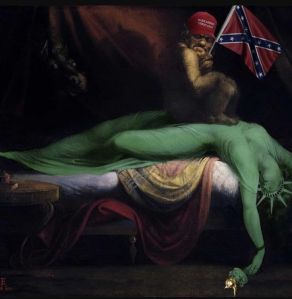









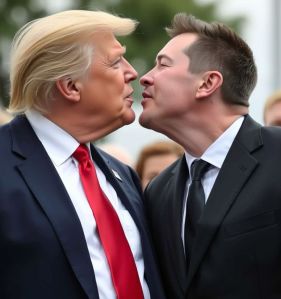

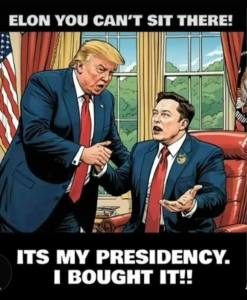








 peej
peej Carissa
 bostonboomer
 dakinikat
 ecocatwoman
 mablue2
 Mama Lopez
 peggysue22
 quixote
 skydancingguestblogger
 Mona (aka Wonk the Vote)



 Sky Dancing
Recent Comments