


President Donald Trump was dejected, processing his very public split with the world’s richest man.
Rattled in the wake of Elon Musk’s public attacks and apparent call for his impeachment, Trump worked the phones, debriefing close confidants and casual acquaintances alike. His former ally was “a big-time drug addict,” Trump said at one point as he tried to make sense of Musk’s behavior, according to a person with knowledge of the call, who like others interviewed for this story spoke on the condition of anonymity to discuss sensitive matters.
Musk has acknowledged using ketamine, a powerful anesthetic, which he says was prescribed for him to treat depression. The New York Times recently reported that he was using so much ketamine on the campaign trail that he told people it was affecting his bladder, and he traveled with a pill box with medication with the marking of Adderall. White House officials said that Trump’s concern about Musk’s drug use, stemming in part from media reports, was one factor driving the two men apart.
But the president, who historically hasn’t hesitated to fire off deeply personal, blistering social media posts about others who have insulted him, was more muted regarding Musk than friends and advisers expected. In the aftermath of his Thursday faceoff with Musk, he urged those around him not to pour gasoline on the fire, according to two people with knowledge of his behavior. He told Vice President JD Vance to be cautious with how he spoke publicly about the Musk situation.
But although the break between Musk and Trump only exploded into public view on Thursday, cracks in the alliance began to appear much earlier. As Musk’s “move fast and break things” bravado complicated the White House’s ambitions to remake American society, the billionaire alienated key members of the White House staff, including Chief of Staff Susie Wiles, and quarreled with Cabinet members, physically coming to blows with one.
Lazy Caturday Reads
Posted: June 7, 2025 Filed under: Donald Trump, Elon Musk, ICE Immigration and Customs Enforcement, immigration | Tags: "Big Beautiful Bill", House budget bill, ICE raids, Kilmar Abreago Garcia, Los Angeles, Medicaid, NASA, social safety net, Social Security, Trump-Musk breakup 11 Comments
Their Cat, by Pauline Bewick
Good Afternoon!!
The epic spat between Trump and Musk is still dominating the media landscape, but that childish story should get some competition soon from the return of Kilmar Abrego Garcia to the U.S. The Trump administration finally decided to bring him back after they invented some “crimes” to charge him with and took them to a grand jury in Tennessee. The trumped up charges led a long-time prosecutor there to abruptly resign. Meanwhile, even though Musk is gone, DOGE is still working to steal all our private data. On the ICE/mass deportation front, Los Angeles looked like a war zone yesterday.
I’ll get to each of these stories, beginning with Abrego Garcia.
The Return of Kilmar Abrego Garcia
CNN: Kilmar Abrego Garcia has been returned to the United States to face criminal charges.
Kilmar Abrego Garcia, the Maryland man mistakenly deported to El Salvador in March, has been returned to the United States to face federal criminal charges, Attorney General Pam Bondi said Friday.
For months, the Trump administration has been locked in an intense standoff with the federal judiciary over court orders for the government to “facilitate” Abrego Garcia’s return from El Salvador, where he was mistakenly deported in mid-March, in a situation that one federal judge warned could present an “incipient crisis” between the two branches.
Abrego Garcia has been indicted on two criminal counts in the Middle District of Tennessee: conspiracy to unlawfully transport illegal aliens for financial gain and unlawful transportation of illegal aliens for financial gain.
The indictment unsealed Friday afternoon accuses Abrego Garcia and others of partaking in a conspiracy in recent years in which they “knowingly and unlawfully transported thousands of undocumented aliens who had no authorization to be present in the United States, and many of whom were MS-13 members and associates.”
Abrego Garcia and his family say he fled gang violence in El Salvador and have denied allegations he’s associated with MS-13.
The White House and the State Department made the decision to bring Abrego Garcia back to the U.S.
Simon Sandoval-Moshenberg, an attorney for Abrego Garcia, accused the Trump administration of “playing games” with the legal system and said his client should appear in immigration court, not criminal court.
“The government disappeared Kilmar to a foreign prison in violation of a court order. Now, after months of delay and secrecy, they’re bringing him back, not to correct their error but to prosecute him. This shows that they were playing games with the court all along,” Sandoval-Moshenberg said in a statement to CNN. “Due process means the chance to defend yourself before you’re punished, not after. This is an abuse of power, not justice.”
The alleged “crimes”:
The allegations date back to 2016 and involve a half-dozen alleged unnamed co-conspirators, with one, identified as CC-6 of Guatemala, described as being a “primary sources of supply of undocumented aliens for the conspiracy.”
Man with cat, Theresa Tanner
The conspiracy allegations outline how, over the years, Abrego Garcia and others worked to move undocumented aliens between Texas and Maryland and other states more than 100 times.
Working with another co-conspirator, referred to as CC-1, Abrego Garcia and that unnamed individual “ordinarily picked up the undocumented aliens in the Houston, Texas area after the aliens had unlawfully crossed the Southern border of the United States from Mexico,” the indictment said.
The two “then transported the undocumented aliens from Texas to other parts of the United States to further the aliens’ unlawful presence in the United States.”
You can read more details on the trumped up charges at the CNN link.
ABC News: Abrego Garcia indictment led top federal prosecutor in Tennessee to resign: Sources.
The decision to pursue the indictment against Kilmar Abrego Garcia led to the abrupt departure of Ben Schrader, a high-ranking federal prosecutor in Tennessee, sources briefed on Schrader’s decision told ABC News.
Schrader’s resignation was prompted by concerns that the case was being pursued for political reasons, the sources said.
Schrader, who spent 15 years in the U.S. A
ttorney’s Office in Nashville, and was most recently the chief of the criminal division, did not respond to messages from ABC News seeking comment.
Analysis by Alan Feuer at The New York Times (gift link): Return of Wrongly Deported Man Raises Questions About Trump’s Views of Justice.
When Attorney General Pam Bondi announced on Friday that Kilmar Armando Abrego Garcia had been returned to the United States to face criminal charges after being wrongfully deported to a prison in El Salvador, she sought to portray the move as the White House dutifully upholding the rule of law.
“This,” she said, “is what American justice looks like.”
Her assertion, however, failed to grapple with the fact that for the nearly three months before the Justice Department secured an indictment against Mr. Abrego Garcia, it had repeatedly flouted a series of court orders — including one from the Supreme Court — to “facilitate” his release.
While the indictment filed against Mr. Abrego Garcia contained serious allegations, accusing him of taking part in a conspiracy to smuggle undocumented immigrants as a member of the street gang MS-13, it had no bearing on the issues that have sat at the heart of the case since his summary expulsion in March.
Those were whether Mr. Abrego Garcia had received due process when he was plucked off the streets without a warrant and expelled days later to a prison in El Salvador, in what even Trump officials have repeatedly admitted was an error. And, moreover, whether administration officials should be held in contempt for repeatedly stonewalling a judge’s effort to get to the bottom of their actions.
Well before Mr. Abrego Garcia’s family filed a lawsuit seeking to force the White House to release him from El Salvador, administration officials had tried all means at their disposal to keep him overseas as they figured out a solution to the problem they had created, The New York Times found in a recent investigation.

Will Barnet, Interlude
Feuer discusses the Trump administration’s machinations:
In the days before the administration’s error was made public, officials at the Department of Homeland Security discussed portraying Mr. Abrego Garcia as a “leader” of MS-13, even though they could find no evidence to support the claim. They considered ways to nullify the original order that had barred his deportation to El Salvador. And they sought to downplay the danger he might face in one of that country’s most notorious prisons.
To Mr. Abrego Garcia’s lawyers, it was no surprise that the same officials who had fought so hard against securing his return suddenly agreed to bring him back to U.S. soil after they had obtained an indictment that bolstered the story they had been telling from the start.
“Today’s action proves what we’ve known all along — that the administration had the ability to bring him back and just refused to do so,” said Andrew Rossman, one of the lawyers. “It’s now up to our judicial system to see that Mr. Abrego Garcia receives the due process that the Constitution guarantees.”
Questions have already been raised about the criminal case, filed in Federal District Court in Nashville. There was concern and disagreement in recent weeks among prosecutors about how to proceed with the charges, two people familiar with the matter said, leading to the resignation of a supervisor in the federal prosecutor’s office handling the case.
Use the gift link to read the whole article. You can also read Marcy Wheeler’s take on the indictment at Emptywheel.
The Trump-Musk Split
There are gossipy article at the NYT, the WaPo, and the Atlantic.
Tyler Pager, Maggie Haberman, Jonathan Swan, Theodore Schleifer, and Ryan Mac at The New York Times: Buildup to a Meltdown: How the Trump-Musk Alliance Collapsed.
Just minutes before he walked into the Oval Office for a televised send-off for Elon Musk last week, an aide had handed him a file.
The papers showed that Mr. Trump’s nominee to run NASA — a close associate of Mr. Musk’s — had donated to prominent Democrats in recent years, including some who Mr. Trump was learning about for the first time.
The president set his outrage aside and mustered through a cordial public farewell. But as soon as the cameras left the Oval Office, the president confronted Mr. Musk. He started to read some of the donations out loud, shaking his head.
This was not good, the president said.
Artist Luis Garces Bonhemio y el gato
Mr. Musk, who was sporting a black eye that he blamed on a punch from his young son, tried to explain. He said Jared Isaacman, a billionaire entrepreneur who was set to become the next NASA administrator, cared about getting things done. Yes, he had donated to Democrats, but so had a lot of people.
Maybe it’s a good thing, Mr. Musk told the president — it shows that you’re willing to hire people of all stripes.
But Mr. Trump was unmoved. He said that people don’t change. These are the types of people who will turn, he said, and it won’t end up being good for us.
The moment of pique was a signal of the simmering tensions between the two men that would explode into the open less than a week later, upending what had been one of the most extraordinary alliances in American politics.
That’s the NYT take. Obviously, having a friend as head of NASA would be very good for Musk’s businesses.
Cat Zakrzewski, Natalie Allison, Elizabeth Dwoskin, Jeff Stein, and Emily Davies at The Washington Post (gift link): Inside the battles that shattered Trump and Musk’s alliance.
For once, President Donald Trump was trying to be the adult in the room.
Trump and Elon Musk, two billionaires with massive egos and combustible temperaments, had forged an unlikely friendship over the past year, one built on proximity, political expediency, and, yes, a touch of genuine warmth. Relations between the president and his top benefactor had grown somewhat strained in recent weeks, as Trump began to feel that Musk had overstayed his welcome in the West Wing. Musk had suggested privately that he could stay on at the White House, an offer that Trump gently declined, two people familiar with the situation told us. (They, like others we talked with for this story, spoke anonymously in order to share candid details about a sensitive feud.) But Musk was still given a gracious send-off last Friday—complete with a large golden, albeit ceremonial, key—aimed at keeping the mercurial tech baron more friend than foe.
Will Barnet, The Closed Window
The peace didn’t last even a week.
On Tuesday, Musk took to X to attack the Republican spending bill being debated in the Senate, trashing Trump’s signature piece of legislation as “a disgusting abomination.” Even as the White House tried to downplay any differences, Musk couldn’t let go of his grievances—the exclusion of electric-vehicle tax credits from the bill, and Trump’s rejection of Musk’s pick to run NASA.
Yesterday, the planet’s richest man attacked its most powerful. Each took aim at the other from their respective social-media platform, forcing rubberneckers into a madcap toggle between Truth Social and X. Trump deemed his former aide “CRAZY,” while Musk went much further, dramatically escalating the feud by calling for Trump’s impeachment, suggesting that the president had been part of Jeffrey Epstein’s notorious sex-trafficking ring, and—likely worst of all in Trump’s mind—taking credit for the president’s election in November.
For one day, Musk made X great again. The spectacle seemed to subside today, as Trump showed—at least by his standards—some restraint. The president insisted that he was not thinking about Musk and wanted only to pass the reconciliation bill that had featured in the brawl. Musk, meanwhile, has far more to lose: his newfound stardom within the MAGA movement, his personal wealth, and government contracts worth billions to his businesses.
Steven Bannon, the influential Trump adviser who has long been critical of Musk, crowed that the tech billionaire’s attacks on Trump were so personal that he won’t be forgiven by the MAGA crowd. “Only the fanboys are going to stick with him—he’s a man without a country,” Bannon told us.

Use the gift link to read the whole thing if you’re intersted.
Greg Sargent strips away the gossip and gets to the meat of the Trump-Musk disagreements at The New Republic: The Real Reason for the Trump-Musk Feud is Uglier Than You Think.
As the war between Donald Trump and Elon Musk worsens, what’s truly odd about this whole spectacle is that the actual substantive disagreement between them seems to be of little interest to media observers. And when you strip away the trolling and shitposting, here’s what becomes clear: This is really a battle over how comprehensively to screw over poor and working people, largely to the benefit of the wealthy.
The superficial argument between them, of course, is over Musk’s opposition to the “big, beautiful bill” that the House passed and that Trump wants the Senate to adopt. That opposition is rooted in Musk’s claim that the bill is loaded with “pork” and will explode the deficit. Trump, meanwhile, is infuriated by Musk because he can’t brook criticism and wants the bill to pass to notch a victory.
But the respective positions underlying those stances are mysteriously missing from the whole Trump-Musk discourse. Flush them into the open, and it helps illuminate the true spectrum of the MAGA movement’s ideological goals—and why its “pro-worker populist” pretensions are so thoroughly phony.
The House GOP bill would entail a large upward transfer of resources. The bill, which would continue Trump’s 2017 tax law and add new tax giveaways for wealthy investors, heirs, and others, would deliver a big tax cut to those in the highest income brackets. According to the Center on Budget and Policy Priorities, the tax cuts enjoyed by those in the bottom 20 percent in 2027 would be one seven-hundredth the size of those reaped by the top 1 percent.
By Theresa Tanner
Worse, those relative table scraps for the bottom could be erased by other changes. The bill’s massive cuts to Medicaid and other health care changes would result in over 10 million people losing health insurance. Add in other cuts to the safety net, and you see why the bill ultimately would lower household resources for the bottom 10 percent while raising them for the top 10 percent—a sizable redistribution upward. As Paul Krugman notes, the bill’s “cruelty is exceptional even by right wing standards.”
Musk is angry about the $2.4 trillion those changes would add to the debt. But, crucially, he’s said little—if anything—about the role that those tax cuts for the rich would have in that outcome. He is primarily obsessed with the bill’s “pork,” meaning that he wants the bill to cut more spending—much, much more.
Where would that money come from? Musk’s cuts via his Department of Government Efficiency have already decimated foreign aid and other programs, producing more starvation, disease, and death among the global poor. Given that DOGE searched for “waste, fraud, and abuse” and found very little, if Musk wants massive additional cuts, by definition they would fall more heavily on important government programs, almost certainly ones that low-income Americans rely upon.
Another way to say this is that their real difference is over how far to push the “waste, fraud, and abuse” scam.

Read the rest at TNR.
What DOGE Is Up To
The New York Times: After His Trump Blowup, Musk May Be Out. But DOGE Is Just Getting Started.
Elon Musk’s blowup with President Trump may have doomed Washington’s most potent partnership, but the billionaire’s signature cost-cutting project has become deeply embedded in Mr. Trump’s administration and could be there to stay.
At the Department of Energy, for example, a former member of the Department of Government Efficiency is now serving as the chief of staff.
At the Interior Department, DOGE members have been converted into federal employees and embedded into the agency, said a person familiar with the matter, who spoke on condition of anonymity out of fear of retaliation. And at the Environmental Protection Agency, where a spokeswoman said that there are two senior officials associated with the DOGE mission, work continues apace on efforts to dismantle an agency that Mr. Trump has long targeted.
“They are still internally going forward; we don’t really feel as if anything has stopped here,” said Nicole Cantello, a former lawyer for the E.P.A. who represents its union in Chicago.
Whether DOGE keeps its current Musk-inspired form remains an open question. Some DOGE members on Friday expressed concern that the president could choose to retaliate against Mr. Musk by firing people associated with the initiative. Others could choose to leave on their own, following Mr. Musk out the door. And DOGE’s role, even its legality, remain the subject of legal battles amid questions over its attempts to use sensitive government data.
But the approach that DOGE embodied at the outset — deep cuts in spending, personnel and projects — appears to have taken root.
Even with Mr. Musk on the sidelines, DOGE on Friday notched two legal victories. The Supreme Court said that it can have access to sensitive Social Security data and ruled that, for now, the organization does not have to turn over internal records to a government watchdog group as part of a public records lawsuit.
Yes, the Supreme Court has struck again.
NBC News: Supreme Court allows DOGE to access Social Security data.
The Supreme Court on Friday allowed members of the Trump administration’s Department of Government Efficiency to access Social Security Administration data.
By Will Barnet
The conservative-majority court, with its three liberal justices objecting, granted an emergency application filed by the Trump administration asking the justices to lift an injunction issued by a federal judge in Maryland.
The unsigned order said that members of the DOGE team assigned to the Social Security Administration should have “access to the agency records in question in order for those members to do their work.”
The lawsuit challenging DOGE’s actions was filed by progressive group Democracy Forward on behalf of two unions — the American Federation of State, County and Municipal Employees, and the American Federation of Teachers — as well as the Alliance for Retired Americans.
“This is a sad day for our democracy and a scary day for millions of people,” the groups said in a statement. “This ruling will enable President Trump and DOGE’s affiliates to steal Americans’ private and personal data.” [….]
Liberal Justice Ketanji Brown Jackson wrote a dissenting opinion questioning the need for the court to intervene on an emergency basis.
“In essence, the ‘urgency’ underlying the government’s stay application is the mere fact that it cannot be bothered to wait for the litigation process to play out before proceeding as it wishes,” she added.

Dramatic Protests Against ICE in Los Angeles
Los Angeles Times: Los Angeles ICE raids spark protests, fear, outrage. ‘Our community is under attack.’
A series of surprise U.S. Immigration and Customs Enforcement sweeps in downtown Los Angeles on Friday prompted fierce pushback from elected officials and protesters, who decried the enforcement actions as “cruel and unnecessary” and said they stoked fear in the immigrant community.
Tensions remained high in downtown into the evening. The Los Angeles Police Department declared an unlawful assembly and ordered about 200 protesters who remained gathered by the Los Angeles Federal Building to disperse around 7 p.m.
Portrait of Edward Gorey with his cat, by Sam Kalda
The use of so-called less-lethal munitions was authorized at 8 p.m. following reports of a small group of “violent individuals” throwing large pieces of concrete at officers, police said. A citywide tactical alert was issued shortly thereafter.
Chaos erupted earlier in the day in the heart of the Fashion District after federal immigration authorities detained employees inside a clothing wholesaler, and used flash-bang grenades and pepper spray on a crowd protesting the raid around 1:30 p.m.
Hundreds of people then rallied outside the Los Angeles Federal Building at 4 p.m., condemning the crackdown and demanding the release of Service Employees International Union California President David Huerta, who was injured and detained while documenting a raid, according to a statement from the labor union.
“Our community is under attack and has been terrorized,” Angelica Salas, executive director of the Coalition for Humane Immigrant Rights, or CHIRLA, told the crowd of protesters. “These are workers, these are fathers, these are mothers.”
Forty-four people were administratively arrested and one person was arrested for obstruction during Friday’s immigration action, said Yasmeen Pitts O’Keefe, a spokesperson for Homeland Security Investigations, a branch of ICE. Federal agents executed four search warrants related to the suspected harboring of people illegally in the country at three locations in central Los Angeles, she said.

One more at The Washington Post: Protests erupt in Los Angeles after dozens detained in immigration raids.
Wednesday Reads
Posted: June 4, 2025 Filed under: Donald Trump, Elon Musk | Tags: Abotion, Big Beautiful Bill, Congressional Budget Office, electricity costs, Harvey Milk, House budget bill, ICE, immigration, Medicaid, medicare, Pete Hegseth, renaming navy ships, Sen. Joni Ernst, Tesla, Trump Tariffs 6 CommentsGood Afternoon!!
I’m illustrating this post with relaxing paintings today, because I desperately needed a break from current events.
It seems I may have been wrong about Elon Musk’s departure from the White House. On Saturday, I wrote that I thought he would continue to work with and influence Trump and DOGE. But then Musk began attacking Trump’s “Big Beautiful Bill.”
Actually, it seems as if Trump has fired Musk, and Musk is not happy about it. Lawrence O’Donnell discussed it on his show last night. Here’s what Lawrence had to say:
Musk has been slamming Trump’s budget bill since their last meeting in the Oval Office, and Trump has not responded so far. Here’s the latest:
The Daily Beast: Elon Musk Keeps on Dissing Trump in Flurry of New Posts.
Elon Musk continued his rampage against Donald Trump’s spending bill on Tuesday night, setting the stage for an ugly showdown with the president’s faithful.
“Mammoth spending bills are bankrupting America!” he wrote, sharing a graphic depicting rising national debt over the past three decades. “ENOUGH,” he added.
He also responded with a “100″ emoji to an X user who wrote that Musk had “reminded everyone: It’s not about Right vs. Left. It’s about the Establishment vs the People.”
He then posted an American flag emoji under a post from conservative satire site The Babylon Bee, highlighting a story titled, “The Lord Strengthens Elon One Last Time To Push Pillars Of Congress Over And Bring Government Crashing Down.”
Earlier Tuesday, the billionaire unleashed hellfire on Trump’s so-called Big Beautiful Bill, lambasting the president’s flagship legislative package as “outrageous,” “pork-filled” and a “disgusting abomination.”
“Shame on those who voted for it: you know you did wrong. You know it,” he wrote of the package, which scraped through the House last month solely on Republican votes.
Also from The Daily Beast: Insiders Reveal Why Musk Is Trashing Trump’s Bill: ‘Elon Was B*tthurt.’
Elon Musk’s full-throttle assault on Donald Trump’s “Big, Beautiful Bill” is less about fiscal policy and more about bruised ego, insiders say, claiming the billionaire is “b-tthurt.”
A path in the woods, by Vincent Van Gogh
The drama reportedly began when Musk’s pick for a top federal post, billionaire astronaut Jared Isaacman, was rejected by Trump’s inner circle. Sources said it was Sergio Gor, Trump’s longtime aide and current personnel chief, who blocked the nomination.
“This was Sergio’s out-the-door ‘f–k you’ to Musk,” a White House source told Axios.
This triggered a rift which started with the Tesla CEO soft-launching his dissent last week, hours after his time as a “special government employee” had elapsed.
In a sit-down with CBS News’s Sunday Morning, the Department of Government Efficiency architect said he was “disappointed” with the bill, which he said “increases the budget deficit” and undoes his cost-cutting task force’s work.
Not that Musk actually did any real cost-cutting.
He soon went nuclear against the bill in a series of public posts that culminated in him labeling Trump’s economic legislation “outrageous,” “pork-filled,” and a “disgusting abomination.”
“Elon was b-tthurt,” one source said.
Insiders have now told Axios that his dissent has spiraled into a full-blown meltdown. Musk is reportedly rattled because the bill slashes the electric vehicle tax credit—a key benefit for automakers like Musk’s Tesla….
White House officials also reportedly hurt Musk’s feelings by blocking him from staying on in some capacity after his “special government employee” status was up after 130 days of service.
He was similarly annoyed, sources said, when the Federal Aviation Administration decided against using his Starlink satellite system for national air traffic control.
The White House overlooking his ally, Isaacman, served as the final straw on Saturday night, Axios reported.

Why isn’t Trump pushing back? HuffPost: Lawrence O’Donnell Reveals Why Donald Trump Hasn’t Dared To Clap Back At Elon Musk Yet.
Donald Trump has so far kept silent on former special government employee Elon Musk’s criticism of his “big, beautiful” spending bill as a “disgusting abomination.”
On Tuesday, MSNBC’s Lawrence O’Donnell suggested why the typically “explosively rageful” president has not yet said a thing.
By David Hockney
“That is how you know who Donald Trump fears in this world,” he said. “If you attack Donald Trump and Donald Trump says nothing, Donald Trump’s silence is the biggest expression of fear that he has.”
Musk, the world’s richest person, pumped a fortune into Trump’s 2024 election campaign. Trump rewarded him with the top role at the unofficial Department of Government Efficiency, which was tasked with slashing public spending. Musk left last week.
The president likely now fears Musk may use his cash against Trump-backed candidates in GOP primaries, said O’Donnell.
Trump “fears the richest person in the world convincing Republican members of the Senate and the House not to vote for Donald Trump’s budget bill that Elon Musk now calls a ‘disgusting abomination,’” he added.
Meanwhile, Tesla is in trouble. Yahoo Finance: Tesla stock slumps amid Musk-Trump budget rumpus.
Tesla (TSLA) stock slumped Wednesday in the immediate fallout of the very public policy blowout between President Trump and Tesla CEO Elon Musk.
The one-time leader of the Department of Government Efficiency (DOGE) whined angrily on Tuesday, “I’m sorry, but I just can’t stand it anymore. This massive, outrageous, pork-filled Congressional spending bill is a disgusting abomination,” adding, “Shame on those” in the House who voted for it.
Musk added early Wednesday morning, “If the massive deficit spending continues, there will only be money for interest payments and nothing else!”
Musk’s rhetoric on Trump and the Republican-backed “big, beautiful bill” was ramping up recently with Musk’s comments to “CBS News Sunday Morning” and hit detonation levels with Tuesday’s post….
Musk’s closeness to the Trump administration had been seen as a boon for Tesla, given its range of business with SpaceX and NASA and the regulatory levers NHTSA could pull with getting autonomous driving rules in place for Tesla’s robotaxi testing.
But demand weakness in the EU and recent protests at US Tesla showrooms have followed Musk’s controversial foray into politics, causing some Tesla owners to become alienated by Musk, specifically by his right-leaning tendencies, DOGE, and outward support of President Trump.
Tesla’s big robotaxi test is slated for June 12 in Austin. Much of the company’s value is tied to whether it can fully unlock autonomous driving for robotaxi purposes and individual owners.

I’ll believe that when I see it.
Today, the Congressional Budget Office released its estimate of the cost of Trump’s big ugly bill. Politico: House GOP gets megabill’s official price tag: $2.4T.
Congress’ nonpartisan scorekeeper released its full score Wednesday of the tax and spending package House Republicans passed along party lines last month, predicting that the measure would grow the federal deficit by $2.4 trillion….
Path in the field, Tatiana Karchevskaya, Indonesian artist
And while top Republican lawmakers are expected to downplay the significance of the complete price tag from the Congressional Budget Office, the numbers will influence what lawmakers are able to include in the final package they are endeavoring to send to President Donald Trump’s desk this summer.
The scorekeeper’s analysis will also be used to determine whether the bill follows the strict rules of the reconciliation process Republicans are using to skirt the Senate filibuster and pass the measure along party lines.
Because Republicans in the Senate are now making changes to the package the House passed two weeks ago, the budget office will need to score the cost of each piece of the new version senators are assembling, followed by another full price tag for the whole package.
Unlike the earlier scores CBO released of the separate chunks of the House bill, the analysis released Wednesday takes into account how policies in one part of the package might influence the budget and economic impacts of others. It also shows that the House-passed legislation would lead to nearly 11 million people going uninsured, with more than 7.8 million of those individuals getting kicked off of Medicaid and millions more losing coverage through the Affordable Care Act marketplace.

Here’s the full CBO report.
Could Joni Ernst’s Senate Seat be vulnerable because of the big ugly bill?
David Dayen at The American Prospect: The First Casualty of the Big Beautiful Bill?
Yesterday, the Yale School of Public Health sent a letter to Senate Democratic leaders with a new analysis showing that the One Big Beautiful Bill’s changes to federal health care programs would kill more than 51,000 Americans annually. Nearly 15 million are liable to lose health coverage as a result of the bill, due to enrollment changes on the Affordable Care Act exchanges, Medicaid cuts that are the largest in U.S. history, and the end of support for the Medicare Savings Program, which grants access to subsidized prescriptions. Those cuts would cost about 29,500 people their lives, the Yale researchers estimate. Another 13,000 largely poor nursing home residents would die from the repeal of the Biden administration’s safe staffing rule, which would remove the minimum number of nurses on call in those facilities. And close to 9,000 would die from the government’s failing to extend enhanced premium support for the ACA that expires at the end of the year, making health coverage unaffordable for another five million Americans.
It’s not easy to wring a compelling message out of legislation that will cause 51,000 deaths. You can lie that the cuts aren’t cuts, but that only gets you so far. Sen. Joni Ernst (R-IA), for example, was clearly flummoxed when confronted at a town hall in Butler, Iowa, last Friday with the fact that people will die because of the bill. So she went philosophical.
“Well, we all are going to die,” Ernst said, in one of the most misguided attempts to quiet constituent fears I’ve seen in my political lifetime.
The reaction was immediate both in the room and on social media. And instead of walking back the comments, Ernst doubled down with a creepy “apology” video of her walking through a cemetery. “I made an incorrect assumption that everyone in the auditorium understood that yes, we are all going to perish from this Earth,” she said, before snarking about the tooth fairy and making a pitch for embracing Jesus Christ as a personal savior who guarantees life in the hereafter.
Now, Ernst may have a challenger for her Senate Seat. From the David Dayen post above:
About 200 miles from Butler, in Sioux City, state representative J.D. Scholten was getting ready for the funeral of a local Democratic activist named Gary Lipshutz. Former Sen. Tom Harkin, whose seat Ernst now holds, was at the memorial service. “What she said was going viral as I walked in,” Scholten told me in an interview. “I thought about all the work Gary was doing, and at a funeral you question your life and your purpose. When she doubled down, which was very disrespectful, I was like, game on.”
Scholten, 45, who nearly beat anti-immigrant nationalist Steve King in a northwest Iowa congressional seat Donald Trump won by 27 points in 2018, had been mentioned on short lists of potential challengers to Ernst. But his timeline was set to later in the year, in part due to his summer gig as a pitcher on the minor league Sioux City Explorers. Then Ernst implanted her foot directly in her mouth. “She was not wrong in that we all are going to die, but we don’t have to die so billionaires can have a bigger tax cut,” Scholten said.
He decided to immediately announce a campaign for Senate, thereby making clear it was a direct response to the choices Republicans are making to skyrocket inequality and harm millions of vulnerable Americans.
Click the Prospect link to read the rest.
More on the Ernst town hall from Stephen Gruber-Miller at The Des Moines Register: What’s next for the Iowan who shouted ‘people will die’ at Joni Ernst over Medicaid cuts.
 The Iowan who became part of a viral moment by recently shouting at U.S. Sen. Joni Ernst that “people will die” because of proposed Medicaid cuts is a Democrat who is using the moment to launch a campaign for the Iowa House.
India May, a 33-year-old from Charles City, drove to Parkersburg on May 30 to attend Ernst’s town hall. As Ernst was answering a question about Medicaid cuts in President Donald Trump’s tax cut bill, May said she “got a little worked up.”
She shouted at Ernst, “People will die!”
Ernst’s response was, “People will not — well, we all are going to die. For heaven’s sakes, folks.” [….]
In the wake of the town hall, May capitalized on the resulting attention by launching her campaign for the Iowa House of Representatives in 2026.
May is the director of the Ionia Public Library and is a registered nurse and a death investigator for Chickasaw County.
She first moved to northeast Iowa four years ago from Kansas.
She is running for Iowa House District 58, which includes Chickasaw County and parts of Floyd and Bremer counties.
Trump tariff news: Trump’s steel tariffs take effect today.
One more on the big, ugly bill from The New York Times: Electricity Prices Are Surging. The G.O.P. Megabill Could Push Them Higher.
The cost of electricity is rising across the country, forcing Americans to pay more on their monthly bills and squeezing manufacturers and small businesses that rely on cheap power.
And some of President Trump’s policies risk making things worse, despite his promises to slash energy prices, companies and researchers say.
This week, the Senate is taking up Mr. Trump’s sweeping domestic policy bill, which has already passed the House. In its current form, that bill would abruptly end most of the Biden-era federal tax credits for low-carbon sources of electricity like wind, solar, batteries and geothermal power.
Repealing those credits could increase the average family’s energy bill by as much as $400 per year within a decade, according to several studies published this year.
The studies rely on similar reasoning: Electricity demand is surging for the first time in decades, partly because of data centers needed for artificial intelligence, and power companies are already struggling to keep up. Ending tax breaks for solar panels, wind turbines and batteries would make them more expensive and less plentiful, increasing demand for energy from power plants that burn natural gas.
That could push up the price of gas, which currently generates 43 percent of America’s electricity.
On top of that, the Trump administration’s efforts to sell more gas overseas could further hike prices, while Mr. Trump’s new tariffs on steel, aluminum and other materials would raise the cost of transmission lines and other electrical equipment.
These cascading events could lead to further painful increases in electric bills.
Trump tariff news:

By David Hockney
The Guardian: Trump’s 50% tariffs on foreign steel and aluminum come into effect.
The US has doubled tariffs on foreign steel and aluminum imports to 50%, pressing ahead in the face of criticism from key trading partners with a measure that Donald Trump says is intended to revive the American industry.
After imposing and rapidly lifting tariffs on much of the world, only to reduce them, Trump last week refocused on the global steel and aluminum markets – and the dominance of China.
Trump signed an executive order formalizing the move on Tuesday. Higher tariffs “will more effectively counter foreign countries that continue to offload low-priced, excess steel and aluminum in the United States market and thereby undercut the competitiveness of the United States steel and aluminum industries”, the order said.
The increase applies to all trading partners except Britain, the only country so far that has struck a preliminary trade agreement with the US during a 90-day pause on a wider array of Trump tariffs. The rate for steel and aluminum imports from the UK – which does not rank among the top exporters of either metal to the US – will remain at 25% until at least 9 July.
About a quarter of all steel used in the US is imported and data shows the increased levies will hit the closest US trading partners – Canada and Mexico – especially hard. They rank first and third respectively in steel shipment volumes to the US.
The Washington Post: Businesses brace for steel and aluminum tariffs, which double today.
Tariffs on steel and aluminum are doubling to 50 percent Wednesday, adding higher costs and new uncertainty for businesses across the country that rely on metal imports for machinery, construction and manufacturing.
In the order doubling the tariffs, which said it would take effect at 12:01 a.m. Eastern time, President Donald Trump wrote that the higher levies “will provide greater support to these industries and reduce or eliminate the national security threat posed by imports of steel and aluminum articles and their derivative articles.”
But for American companies that rely on specialized metals that aren’t available domestically, the order set off a fresh scramble to raise prices and rethink hiring and investment.
“It’s a big, eye-catching tariff: 50 percent is a high number,” said Gary Clyde Hufbauer, a senior fellow at the Peterson Institute for International Economics. “Aluminum goes into all kinds of products — aircrafts, autos, construction — and steel is used throughout the economy, so you’re talking higher prices and lost jobs across the U.S. manufacturing industry.” [….]
U.S. manufacturers say the sudden onslaught of tariffs is making it harder to operate. Many rely on foreign sources of steel and aluminum to make their products and say it’s been tough to find domestic suppliers.
A few more recommended reads:
Reuters: Exclusive: CDC expert resigns from COVID vaccines advisory role, sources say.
Pediatric infectious disease expert Dr. Lakshmi Panagiotakopoulos of the U.S. CDC resigned on Tuesday as co-leader of a working group that advises outside experts on COVID-19 vaccines and is leaving the agency, two sources familiar with the move told Reuters.
Panagiotakopoulos said in an email to work group colleagues that her decision to step down was based on the belief she is “no longer able to help the most vulnerable members” of the U.S. population.
In her role at the Centers for Disease Control and Prevention’s working group of the Advisory Committee on Immunization Practices, she co-led the gathering of information on topics for presentation.
Her resignation comes one week after Health Secretary Robert F. Kennedy Jr., a long-time vaccine skeptic who oversees the CDC, the Food and Drug Administration and the National Institutes of Health, said the COVID vaccine for healthy children and healthy pregnant women had been removed from the CDC’s recommended immunization schedule.
The move was a departure from the process in which ACIP experts meet and vote on changes to the immunization schedule or recommendations on who should get vaccines before the agency’s director made a final call. The committee had not voted on the changes announced by Kennedy and the CDC does not yet have a permanent director.
 The Guardian: US immigration officers ordered to arrest more people even without warrants.
Senior US immigration officials over the weekend instructed rank-and-file officers to “turn the creative knob up to 11” when it comes to enforcement, including by interviewing and potentially arresting people they called “collaterals”, according to internal agency emails viewed by the Guardian.
Officers were also urged to increase apprehensions and think up tactics to “push the envelope” one email said, with staff encouraged to come up with new ways of increasing arrests and suggesting them to superiors.
“If it involves handcuffs on wrists, it’s probably worth pursuing,” another message said.
The instructions not only mark a further harshening of attitude and language by the Trump administration in its efforts to fulfill election promises of “mass deportation” but also indicate another escalation in efforts, by being on the lookout for undocumented people whom officials may happen to encounter – here termed “collaterals” – while serving arrest warrants for others.
The emails, sent by two top Immigration and Customs Enforcement (Ice) officials this past Saturday, instructed officers around the country to increase arrest numbers over the weekend. This followed the Department of Homeland Security secretary, Kristi Noem, and the White House deputy chief of staff, Stephen Miller, pressing immigration officials last month to jack up immigration-related arrests to at least 3,000 people per day.
One of the emails, written by Marcos Charles, the acting executive associate director of Ice’s enforcement and removal operations, instructs Ice officials to go after people they may coincidentally encounter.
“All collaterals encounters [sic] need to be interviewed and anyone that is found to be amenable to removal needs to be arrested,” Charles wrote, also saying: “We need to turn up the creative knob up to 11 and push the envelope.”
We’re already living in a police state.
AP: Trump administration revokes guidance requiring hospitals to provide emergency abortions.
The Trump administration announced on Tuesday that it would revoke guidance to the nation’s hospitals that directed them to provide emergency abortions for women when they are necessary to stabilize their medical condition.
That guidance was issued to hospitals in 2022, weeks after the U.S. Supreme Court upended national abortion rights in the U.S. It was an effort by the Biden administration to preserve abortion access for extreme cases in which women were experiencing medical emergencies and needed an abortion to prevent organ loss or severe hemorrhaging, among other serious complications.
The Biden administration had argued that hospitals — including ones in states with near-total bans — needed to provide emergency abortions under the Emergency Medical Treatment and Active Labor Act. That law requires emergency rooms that receive Medicare dollars to provide an exam and stabilizing treatment for all patients. Nearly all emergency rooms in the U.S. rely on Medicare funds.
The Trump administration announced on Tuesday that it would no longer enforce that policy.
The move prompted concerns from some doctors and abortion rights advocates that women will not get emergency abortions in states with strict bans.
More women will die.

A Pathway in Monet’s Garden, Claude Monet
Military.com: Hegseth Orders Navy to Strip Name of Gay Rights Icon Harvey Milk from Ship.
Defense Secretary Pete Hegseth has ordered the Navy to take the rare step of renaming a ship, one that bears the name of a gay rights icon, documents and sources show.
Military.com reviewed a memorandum from the Office of the Secretary of the Navy — the official who holds the power to name Navy ships — that showed the sea service had come up with rollout plans for the renaming of the oiler ship USNS Harvey Milk.
A defense official confirmed that the Navy was making preparations to strip the ship of its name but noted that Navy Secretary John Phelan was ordered to do so by Hegseth. The official also said that the timing of the announcement — occurring during Pride month — was intentional.
Military.com reached out to Hegseth’s office for comment on the move but did not immediately receive a response.
However, the memo reviewed by Military.com noted that the renaming was being done so that there is “alignment with president and SECDEF objectives and SECNAV priorities of reestablishing the warrior culture,” apparently referencing President Donald Trump, Hegseth and Phelan.
CBS News: Navy set to rename USNS Harvey Milk, mulls new names for other ships named for civil rights leaders.
The U.S. Navy plans to rename the USNS Harvey Milk, a fleet replenishment oiler named after the slain gay rights leader and Navy veteran, and is considering renaming multiple naval ships named after civil rights leaders and prominent American voices, CBS News has learned.
U.S. Navy documents obtained by CBS News and used to brief the secretary of the Navy and his chief of staff show proposed timelines for rolling out the name change of the USNS Harvey Milk to the public. While the documents do not say what the ship’s new name would be, the proposal comes during Pride Month, the monthlong observance of the LGBTQ+ community that also coincides with the anniversary of the Stonewall uprising of 1969. WorldPride celebrations are being held in Washington, D.C., this year.
The documents obtained by CBS News also show other vessels named after prominent leaders are also on the Navy’s renaming “recommended list.”
Among them are the USNS Thurgood Marshall, USNS Ruth Bader Ginsburg, USNS Harriet Tubman, USNS Dolores Huerta, USNS Lucy Stone, USNS Cesar Chavez and USNS Medgar Evers.
That is beyond sickening.
Lazy Caturday Reads: Elon’s Last Day: Really?
Posted: May 31, 2025 Filed under: cat art, caturday, Donald Trump, just because | Tags: crisis management, Doge, Elon Musk, ketamine, Musk black eye, Scott Bessent, Steve Bannon 9 Comments
Catzilla poster
Good Afternoon!!
I hope this post will make some kind of sense, but I’m not that confident about it. I’m completely stressed out and exhausted. Last night I did not sleep at all. Now I’ll have to try to make it up with naps today.
I’ve had insomnia for years now, beginning after menopause. It got worse after Trump was elected in 2016, and now we’ve had nearly 10 years of this horrible man and his endless stupidity, my sleepless nights come more often.
Obviously, Trump’s second term has been much much worse than the first. He’s now surrounded by sycophants and not the so-called “adults in the room” who tried to check some of his worst impulses in his first term. He is openly enriching himself and his fellow billionaires. He’s pardoning violent criminals. Everything is awful. We are beginning to resemble Orban’s Hungary and Putin’s Russia. I don’t see how we ever repair this country’s reputation in the free world.
This is from Stephen Beschloss at America America: What Do You Hope For America?
France’s gift to America has stood majestically in New York harbor since 1886. The original idea for the Statue of Liberty grew out of the desire to exemplify the American ideals of liberty and freedom. Lady Liberty’s spiked crown was meant to symbolize rays of sun beaming out to the world. Her tablet was inscribed with July 4, 1776. Sculptor Frédéric-Auguste Bartholdi placed a broken shackle and chains at her feet to represent the end of slavery.
For more than 140 years, she has held her torch high, providing a beacon to the world, an expression of freedom and a welcome to those in trouble. So has been the inspiring poem of Emma Lazarus, “The New Collossus,” etched in bronze and placed at the pedestal: “Give me your tired, your poor/Your huddled masses yearning to breathe free.” Millions of arriving immigrants saw this symbol of compassion and hope for a better life with their own eyes. Millions more yearned to see it and experience its promise for themselves.
I have always taken pride in America’s commitment to immigration and its burgeoning diversity. I have done so knowing that our history has been fraught with conflict as bigotry and competition have often pitted Americans against newcomers. I’m still moved by Hakeem Jeffries’ first speech after becoming House Minority Leader in 2023. “We believe that in America our diversity is a strength. It is not a weakness. An economic strength, a competitive strength, a cultural strength,” he said, adding, “Out of many we are one. That’s what makes America a great country.”
I won’t recount now the myriad ways the current cruel and hostile regime is exploiting its power to try and force millions of migrants out of the country without due process. The daily stories of masked men without proper identification grabbing people off the streets and taking them away in unmarked cars is an intolerable horror.
Add to this the Supreme Court ruling yesterday, enabling the Trump administration to revoke temporary legal status for more than 530,000 immigrants from Haiti, Cuba, Nicaragua and Venezuela—a humanitarian program created by the Biden administration in 2023 to address the peril they faced in their home countries. It’s hard to overstate the heartbreak and fear this ruling will cause, as all the previously protected people (adults and children) now face the possibility of being deported back to danger. We are all paying for decades of failure to pass comprehensive immigration reform, which has provided the conditions for a hateful demagogue to target migrants as a key reason for all that ails us.
Beschloss urges us to hold on to hope and not to give in to fear and despair. He asks us to think about what we hope for America.
…it’s important that we don’t lose sight of what we’re fighting for; this tyrannical regime is hoping to replace our dreams with their nightmares. The more we keep alive the vision of the future we want, the more we will be motivated to make it happen.
I’m trying to hold on to hope. I really am. But it’s hard.
Here’s what I’m thinking about today: Elon Musk is leaving government and politics–supposedly.
Yesterday Elon Musk appeared in the Oval Office with a black eye and several other small bruises on his face. He appeared to be stoned on something–he was doing that weird thing where he rolls his head around over and over again. He was also wearing a t-shire and rumpled jacket and a DOGE baseball cap. He was there because he is supposedly ending his role in the government and returning to running his own companies.
After the New York Times wrote about his drug use (see Dakinikat’s Friday post), a reporter asked about his use of ketamine. CBS News: Elon Musk lashes out in Oval Office when asked about report on his ketamine use.
During an Oval Office send-off Friday marking the end of his formal role with the Trump administration, Elon Musk lashed out when asked about a New York Times report alleging he was a frequent user of the drug ketamine during the 2024 campaign.
“The New York Times. Is that the same publication that got a Pulitzer Prize for false reporting on the Russiagate?” Musk asked while standing alongside President Trump, cutting off a question from Fox News reporter Peter Doocy about the Times. “Let’s move on.”
Musk’s remarks came on the same day that the Times reported he used ketamine — which can be used both recreationally and medically — as often as once a day in 2024. Musk has told people he took ketamine so frequently that it affected his bladder, and he has also used ecstasy and magic mushrooms at times, the paper said, citing unnamed sources….
Musk has said publicly he has a prescription for ketamine. But he told journalist Don Lemon last year he uses it infrequently, taking a “small amount once every other week” to help him get out of a “depressive mindstate.” He told Lemon he doesn’t feel he’s abused the drug, saying, “if you use too much ketamine, you can’t really get work done…and I have a lot of work.”
Yeah, right. He talks like every addict under the sun: “I can quit any time…”
The Wall Street Journal reported last year that some Musk associates worry his reported drug use could harm his businesses, which include Tesla, SpaceX, social network X and several other firms. The billionaire has brushed off any concerns about the impact on his companies, telling Lemon, “what matters is execution.”
Musk has said he has a top-secret security clearance, which typically requires drug testing.
But not for Trump’s buddies, of course.
And what about the black eye? Shawn McCreesh at The New York Times: A Black Eye at the White House: Did Somebody Punch Elon?
It was like metaphor turned reality.
After 130 days spent fighting the federal government, Elon Musk turned up with a black eye at the White House on Friday for his last day as a “special government employee.” If you squinted, you could see it: His right eye socket was puffy and empurpled. No doubt about it, that was a big, fat shiner.
His project in Washington more or less finished, he never came close to cutting the $1 trillion from the federal government he had promised. His businesses and his public image got somewhat battered, and now, apparently, so had his face.
Did somebody beat him up?
The list of possible suspects seemed long. An abridged lineup of people and constituencies currently unhappy with Mr. Musk includes: at least two of the many women with whom he has fathered children; pretty much the entire federal bureaucracy; his neighbors in a suburb of Austin, Texas; Tesla shareholders; old friends of his; Republicans on Capitol Hill; his 20-year-old daughter; all those people who have lit Teslas on fire; and even some Trump voters.
But Musk claimed his 5-year-old son did it.
“I was just horsing around with little X, and I said, ‘Go ahead, punch me in the face,’ and he did,” Mr. Musk explained after a reporter asked him if he was OK.
Svetlana Petrova, Hokusai, Under-the-Mannen Bridge at-Fukagawa (Fat Cat Art)
It was an odd moment in a news conference that was quite odd to begin with. Moments earlier, Mr. Musk had angrily refused to engage with a question put to him about a new report in The New York Times detailing his drug use. Mr. Trump remained mostly mute as Mr. Musk batted back that question. Now the tech mogul was explaining why he looked beaten up….
Mr. Trump has spent a considerable amount of time around the little slugger over these last 130 days. He and Mr. Musk have even brought the child to sit ringside with them at Ultimate Fighting Championship matches. Mr. Trump thought about the explanation that was being offered for the black eye. “X could do it,” he concluded, sounding almost impressed. “If you knew X, he could do it.” The way the president said this, you’d never guess he was talking about a 5-year-old.

I call bullshit. There’s no way a 5-year old did that. Maybe it was Scott Bessent. Those two had at least one knock down, drag out fight. The Daily Mail: Insane moment Elon Musk ‘SHOVED’ Trump’s treasury secretary Scott Bessent during screaming match.
Elon Musk‘s swift departure from his signature Department of Government Efficiency and the White House was escalated by an outburst that turned violent, according to a high-profile insider.
Former Chief Strategist Steve Bannon told DailyMail.com that Musk’s turbulent time in the White House was marred when he physically ‘shoved’ 62-year-old Treasury Secretary Scott Bessent after he was confronted over wild promises to save the administration ‘a trillion dollars’.
‘Scott Bessent called him out and said, ‘You promised us a trillion dollars (in cuts), and now you’re at like $100 billion, and nobody can find anything, what are you doing?” the prominent MAGA figure revealed.
‘And that’s when Elon got physical. It’s a sore subject with him.
‘It wasn’t an argument, it was a physical confrontation. Elon basically shoved him.’
Catzilla
Bannon said the physical altercation came as the two billionaires moved from the Oval Office to outside Chief of Staff Susie Wiles’ office, and then outside the office of the then National Security Advisor, Mike Waltz.
‘Trump 100%’ sided with Bessent after the clash, he added. ‘I don’t think Bessent has any bad blood, but he’s got a job to do and he’s going to do it’.
The revelation of a confrontation between the pair was confirmed by White House press secretary Karoline Leavitt on Friday….
The revelations of the Musk-Bessant clash follow an explosive New York Times report that alleged Musk was using a cocktail of drugs on the campaign trail including ketamine, ecstasy and psychedelic mushrooms.
Bannon added that Musk also lost status in Trump’s orbit when it was leaked to the New York Times in March that the billionaire was preparing to receive top-secret military briefings on China, which Trump abruptly stopped.
he former chief strategist in Trump’s first administration said the mounting issues with DOGE and the China briefings led to Musk losing face in the White House.

Marina Hyde mocks Musk at The Guardian: So long, Elon: the cuts didn’t go to plan, but you completely shredded your reputation.
I can’t believe that Elon Musk is leaving Doge, the government department he named after a tired and basic meme that most of the internet had moved on from around a decade ago. “As my scheduled time as a Special Government Employee comes to an end,” Musk wrote this week (capital letters: model’s own), “I would like to thank President @realDonaldTrump for the opportunity to reduce wasteful government spending.” Oh man. “Thank you for the opportunity”?! At some level you have to salute Donald Trump’s ability to turn even the world’s richest man into an Apprentice candidate who leaves in week four after completely wiping out in the hotdog stand task.
Musk arrived in government promising to slash spending by $2tn. He leaves it a mere $1.86tn short of that target, even by his own estimations. Meanwhile, the president’s new tax bill is set to add $2.3tn to the deficit. I imagine Musk thought his government finale would be a spectacular extravaganza – “you’re welcome, Washington!” – involving 2,000 chainsaw-wielding chorus girls. Instead, it’s a tweet. And yes – we DO all still call them tweets.
Ironically, the thing that Musk has been most stunningly effective at slashing is his own reputation. Think about it. He arrived in Trump’s orbit as a somewhat mysterious man, widely regarded as a tech genius, and a titan of the age. He leaves it with vast numbers of people woken up to the fact he’s a weird and creepy breeding fetishist, who desperately pretends to be good at video games, and wasn’t remotely as key to SpaceX or Tesla’s engineering prowess as they’d vaguely thought. Also, with a number of them apparently convinced he had a botched penile implant. Rightly or wrongly convinced – sure. I’m just asking questions.
Catzilla
But look, it’s good news for Tesla investors, who have managed to end Musk’s practice of WFWH (working from White House), and are now demanding he puts in a 40-hour week to save the company whose stock he has spent the past few months tanking. As the world order dramatically seeks to rearrange itself in the new era of US unreliability, no one should ever be able to unsee the president of the United States’s decision to turn the White House lawn into a car sales lot for his sad friend. Did it work? It seems not. Musk spent a lot of this week airing his hurt feelings about his brrm-brrm cars. “People were burning Teslas,” he whined to Jeff Bezos’s Washington Post. “Why would you do that? That’s really uncool.”
Well, one thing we will no longer have to endure is this guy’s decrees on what is or isn’t cool. The timeworn thing about money and power is that they allow nerds to reinvent themselves as cool. You see it on Wall Street, where sea-beast financiers get manscaped by trophy wives who are no longer out of their league. You see it in Hollywood, where weird little guys become alpha movie producers. You see it in Bezos’s transformation from puffy-chinos-wearing, dress-down-Friday dweeb to Bilderberg Vin Diesel impersonator. What you rarely see is the alchemy of that process in reverse, live and in real time. But we got that with Elon, and we have to take our laughs where we can. In some other businesses, Musk could have convinced himself it wasn’t happening, but politics is a place where pollsters literally ask real people what they think of public figures every single week. Elon’s approval ratings are underwater.

More at the link.
For what it’s worth, I don’t believe that Musk is really leaving. Even Trump kept saying that yesterday, and Musk said he’ll continue advising Trump. From Josh Marshall at Talking Points Memo (I don’t have a link, because I gots this on my email): Don’t Fall For Elon Inc.’s Press Campaign.
We’re in the midst of a storm of articles — variously encomiums, valedictories, friendly morality tales — about Elon Musk’s purported departure from service in the federal government. I’m going to note a couple quite unflattering pieces in a moment. But for now, I want to focus on the bulk of them, which tend to portray Musk as someone who tried to tame government spending but was simply over-matched by “Washington’s ways” and finally failed. You get the image of a guy who is chastened, heading back to his regular life, no match for Sodom any more than most of us would be.
Let me take this opportunity to say that this all has the look and feel of a well-orchestrated crisis communications job. If reporters out there really want to land a story, get me that story and I will be duly impressed. The point here is to start the project and process of unwinding the brand damage Musk has done to himself and all his companies by his antics over the last six months. After all, if he’s really cut his ties to Trump … well, maybe the whole bad story is just in the rearview mirror? And if he was really “defeated” by Washington, then maybe that’s punishment enough, right? I’m not saying that anyone really pissed at Musk or who now has a super low opinion of him buys that. But good crisis communications work recognizes the limits of the craft. An effort like this is more focused on laying the groundwork for a softening of feelings and impressions over time.
Catzilla, by Catzilla Studios at Deviant Art
You see it in the carefully planted stories and apparently tossed off quotes. Elon won’t be doing any more political giving. Elon doesn’t even like the Big, Beautiful bill. Elon agrees that Elon is chastened. I mean, our boy Elon is practically a Never Trumper now, right? It’s all fairly transparent.
I don’t, for starters, buy that Musk is really leaving government service at all, though the fact that a couple of his top lieutenants are also signing out of DOGE adds a bit more credibility to the claim. (We’ll have to keep on eye on that.) Musk was always the juice behind DOGE. Fear of him was what allowed twenty-something goofs to show up at government departments and be granted the keys to each kingdom. DOGE is probably institutionalized now to some degree. But not that much. And it’s not just the good guys who oppose DOGE. There are lots of factions on Team Bad Guy who want to take a slice out of him too. Remember, he used DOGE to scoop up lots of contracts. I doubt he wants to lose those. But others would like them, too. That means he’ll have to remain involved.
The bigger problem with this storyline is the idea that Musk failed. I so wish that were true. But it’s simply not. To believe that you’d need to buy the idea that the goal was to streamline the government and save a bunch of money as opposed to gut the parts of the government that Trump world and the Silicon Valley right view as enemies and do so in an at best extra-constitutional fashion because it would never be possible through constitutional means. He succeeded at doing quite a lot of that, at least for now. He wrecked whole sections of the government and scooped up a ton of government contracts which not only further feathered his nest but advances the privatization of the government. He also engaged in a still-too-little-understood effort to create a vast store of integrated private information on U.S. citizens. He accomplished a huge amount.

That makes sense to me. I wish Musk would go off into the sunset, but I don’t think we seen or heard the last of him.
That’s my contribution for today. There’s lots of other news, so feel free to post about it in the comments.
Wednesday Reads: Trump’s War on Harvard University
Posted: May 28, 2025 Filed under: Donald Trump, education, just because | Tags: academic freedom, Boston Mayor Michelle Wu, first amendment, Harvard President Alan Garber, Harvard University, higher education, international students, Massachusetts, Massachusetts Governor Maura Healey, scientific research 8 CommentsGood Morning!!
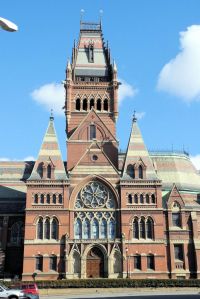
Memorial Hall, Harvard University
Today I’m going to focus on the Trump administration’s attacks on Harvard University. Obviously, Trump’s war on Harvard isn’t just about Harvard. It’s a war on higher education. If he succeeds in destroying Harvard, he will move on to other universities. Thank goodness Alan Garber, Harvard’s president is standing strong against the blatant attacks on academic research, international students, and freedom of speech.
Here’s the latest news in the Trump-Harvard battle:
The New York Times: Trump Intends to Cancel All Federal Funds Directed at Harvard.
The Trump administration is set to cancel the federal government’s remaining federal contracts with Harvard University — worth an estimated $100 million, according to a letter sent to federal agencies on Tuesday. The letter also instructs agencies to “find alternative vendors” for future services.
The additional planned cuts, outlined in a draft of the letter obtained by The New York Times, represented what an administration official called a complete severance of the government’s longstanding business relationship with Harvard.
The letter is the latest example of the Trump administration’s determination to bring Harvard — arguably the country’s most elite and culturally dominant university — to its knees, by undermining its financial health and global influence. Since last month, the administration has frozen about $3.2 billion in grants and contracts with Harvard. And it has tried to halt the university’s ability to enroll international students.
The latest letter, dated May 27 from the U.S. General Services Administration, was delivered Tuesday morning to federal agencies, according to an administration official, who spoke on the condition of anonymity because the official had not been authorized to discuss internal communications.
The letter instructs agencies to respond by June 6 with a list of contract cancellations. Any contracts for services deemed critical would not be immediately canceled but would be transitioned to other vendors, according to the letter, signed by Josh Gruenbaum, commissioner of the G.S.A.’s federal acquisition service, which is responsible for procuring government goods and services.
Contracts with about nine agencies would be affected, according to the administration official.
Examples of contracts that would be affected, according to a federal database, include a $49,858 National Institutes of Health contract to investigate the effects of coffee drinking and a $25,800 Homeland Security Department contract for senior executive training. Some of the Harvard contracts under review may have already been subject to “stop work” orders.
“Going forward, we also encourage your agency to seek alternative vendors for future services where you had previously considered Harvard,” the letter said.
It’s not just Harvard, of course.
Politico: Trump team pauses new student visa interviews as it weighs expanding social media vetting.
The Trump administration is weighing requiring all foreign students applying to study in the United States to undergo social media vetting — a significant expansion of previous such efforts, according to a cable obtained by POLITICO.
In preparation for such required vetting, the administration is ordering U.S. Embassies and consular sections to pause scheduling new interviews for such student visa applicants, according to the cable, dated Tuesday and signed by Secretary of State Marco Rubio.
If the administration carries out the plan, it could severely slow down student visa processing. It also could hurt many universities who rely heavily on foreign students to boost their financial coffers.
“Effective immediately, in preparation for an expansion of required social media screening and vetting, consular sections should not add any additional student or exchange visitor (F, M, and J) visa appointment capacity until further guidance is issued septel, which we anticipate in the coming days,” the cable states. (“Septel” is State Department shorthand for “separate telegram.”)
The administration had earlier imposed some social media screening requirements, but those were largely aimed at returning students who may have participated in protests against Israel’s actions in Gaza.
What does this policy mean?
The cable doesn’t directly spell out what the future social media vetting would screen for, but it alludes to executive orders that are aimed at keeping out terrorists and battling antisemitism.
Many State Department officials have complained privately for months that past guidance — for, say, vetting students who may have participated in campus protests — has been vague. It’s unclear, for example, whether posting photos of a Palestinian flag on an X account could force a student to undergo additional scrutiny.
The administration has used a variety of rules to target universities, especially elite ones such as Harvard, that it sees as too liberal and accuses of allowing antisemitism to flourish on their campuses. At the same time, it is carrying out immigration crackdowns that have swept up a number of students….
The news was met with frustration in much of the higher education community.
NAFSA: Association of International Educators, a group that advocates for foreign students, decried the decision. The group’s CEO, Fanta Aw, said it unfairly cast aspersions on hardworking students.
“The idea that the embassies have the time, the capacity and taxpayer dollars are being spent this way is very problematic,” Aw said. “International students are not a threat to this country. If anything, they’re an incredible asset to this country.”
What is Trump’s supposed rationale for his attack on Harvard and high education?
The Boston Globe: Trump administration says Harvard funding cuts are punishment for ‘race discrimination.’
After a weekend of threats and criticism from President Trump, the federal government on Tuesday severed the last of its remaining business ties to Harvard University.
Josh Gruenbaum, a top official at the US General Services Administration, instructed all federal agencies to terminate any contracts with Harvard or transfer them to other vendors. He also said in a letter sent to federal procurement officials Tuesday that government agencies should refrain from awarding any new contracts to Harvard in the future….
Although the Trump administration’s original rationale for targeting Harvard was campus antisemitism, Gruenbaum’s letter Tuesday focused more on the government’s allegations that Harvard’s admissions and hiring practices violate antidiscrimination laws. For that reason, he said, Harvard should not be allowed to receive federal funding….
Gruenbaum’s letter laid out the government’s expanded justification for targeting Harvard. The university,the federal government alleges, systematically discriminates against white people, men, straight people, and, in some cases, Asian Americans.
“As fiduciaries to the taxpayer, the government has a duty to ensure that procurement dollars are directed to vendors and contractors who promote and champion principles of nondiscrimination and the national interest,” Gruenbaum wrote.
Harvard has denied the government’s allegations and sued the Trump administration. In two cases in federal court in Boston, Harvard’s lawyers argued the administration’s tactics violate federal laws and the Constitution and amount to illegal retaliation. Many lawyers, including some conservatives who share Trump’s critiques of universities, have agreed some of the Trump administration’s tactics appear to be illegal.
The administration’s letter on Tuesday accuses Harvard of discrimination in its admissions and hiring practices, as well as at the Harvard Law Review. Federal agencies have launched investigations on all of those subjects.
The Department of Justice is investigating whether Harvard’s admissions practices run afoul of a Supreme Court ban on affirmative action in college admissions. And the Department of Education and the Equal Employment Opportunity Commission have launched an inquiry into alleged discrimination by Harvard against white people, Asian Americans, men, and heterosexuals in hiring and promotions.
The Trump administration is even suggesting there could be criminal investigations of university officials.
Greg Sargent at The New Republic: Trump’s Fury at Harvard Gets More Deranged—and Exposes a Big MAGA Scam.
President Donald Trump has mostly justified his lawless attempt to restrict international students from attending Harvard University by pretending it’s designed to root out the antisemites, woke radicals, and dangerous terrorists supposedly nesting in their ranks. Now, however, Trump has a new rationale: It’s all about helping young, aspiring Americans, particularly those in the working class.
“We have Americans who want to go there and to other places,” Trump told reporters over the weekend, adding angrily that many of Harvard’s international students are “bad” and are taking Americans’ slots: “They can’t go there because you have 31 percent foreign.”
Trump then tweeted:
I am considering taking Three Billion Dollars of Grant Money away from a very antisemitic Harvard, and giving it to TRADE SCHOOLS all across our land. What a great investment that would be for the USA, and so badly needed!!!
Yeah, OK. If Trump really wants to facilitate the upward mobility of America’s working-class youth, here’s a better way to do it: Persuade his fellow Republicans in the House to drop their new budget’s changes to financial aid for higher education, which will restrict access to it for large numbers of working-class students, probably including many who want to attend—yup—trade schools.
With Trump’s fury at Harvard getting worse, this turn in the saga suggests another grotesque subtext to all of it: Telling working-class families that the real obstacle their kids face is zero-sum competition from foreign students makes it easier to take away resources previously appropriated to boost working-class kids to fund tax cuts for the rich.
What’s going on here?
Trump’s assault is a wildly unhinged abuse of power in every way. Last week, Trump revoked Harvard’s ability to host international students, due to Harvard’s alleged failure to share sufficient “information” about foreign students in response to an administration demand. That demand was itself absurdly intrusive, and seemed designed not to be met, creating a pretext for Trump to broaden his attack. The revocation appears wholly lawless, and after Harvard sued, a court blocked it within hours.
At this point, there’s no need to pretend there’s a genuine public-interest rationale at work here. Everyone knows it’s all about getting universities to surrender to flatter Trump, or about executing a broader hostile MAGA takeover of liberal institutions. For instance, in an article reporting that Trump is now nixing Harvard’s federal contracts on top of canceling billions in grants, The New York Times notes almost in passing that Trump wants to bring Harvard “to its knees,” as if this is unremarkable, when it should be depicted as the power-crazed ravings of a Mad King.
But there’s something particularly ghoulish about Trump’s suggestion that his blockade on international students is about helping American kids who are unfairly displaced by them.
That’s because the “big, beautiful bill” that House Republicans passed last week—which Trump has urged Senate Republicans to adopt—could make attending college harder for countless such kids. For a detailed summary of its changes, see this piece by The New Republic’s Monica Potts: They would make it harder for full-time students to qualify for Pell Grants, bump off large numbers of part-time students, and restrict access to the program and other financial assistance for higher education in numerous other ways.
Indeed, a coalition of education advocacy organizations estimates that the bill’s changes to Pell Grants alone could deprive as many as 700,000 people of eligibility entirely and hit many more with higher costs. As Potts summarizes, all this “takes an ax to one of the few reliable ladders for working-class people seeking higher education” as an “engine for social mobility.” These are mostly poorer and working-class students by definition, many with jobs or young kids of their own.
Trump’s attack on Harvard and higher education hurts Massachusetts, which is home to 114 colleges and universities.
Karen Miller at Boston Globe Magazine: Trump vs. Massachusetts: How one state represents everything the president despises.
In her State of the City address in March, Mayor Michelle Wu spoke about her then-2-month-old daughter. The world she entered was “not the world I expected or hoped for her,” Wu said. “I want her to grow up in the America that Paul Revere rode for, that Dr. King marched for, that my parents left home for.”
A few weeks later, as Paul Revere’s ride was reenacted and scores of redcoats lined up with muskets on the Lexington Battle Green, you didn’t have to look far to see signs that Massachusetts’ centuries-long revolutionary spirit was being threatened. Sprinkled through the crowd, posters read “No King! No Tyranny! Support the Rule of Law” and “In America, the Law is King.” [….]
Widener Library, Harvard University
Massachusetts may be uniquely positioned to suffer in President Trump’s second term. And not just because the president has slashed disaster aid, school funding, and health support for the Commonwealth. Or because he plans to withdraw clean energy support and undercut states with robust environmental laws.
Our economy is deeply reliant on elite colleges, elite hospitals, and the elite minds who come here from around the world. In Massachusetts — like it or not — we have built an economy on expertise, excellence, and education.
In the early 2000s, after graduating from high school outside of Chicago, Wu was drawn — like so many others — to the educational opportunities here. Her parents “didn’t know too much about America” when they arrived in the 1980s from Taiwan. She says that they, “like so many, held such a reverence for the institutions that in some ways symbolized the American dream for them. Harvard was one of them.”
Now, the magnets that have attracted talent to Massachusetts have become liabilities. “ Boston is at the center of many of the most targeted industries and communities,” Wu says. “And so we’re feeling it very much — very urgently.”
The mayor notes that the city is “trying to plan for unpredictability. And so our city budget this year includes preparations for worst-case scenarios.” Although Boston’s financial foundation is “quite strong,” Wu says, “we need to be prepared for immediate, significant impacts to federal funding or larger macroeconomic impacts.”
We’re living, she says, under “a cloud of chaos.”
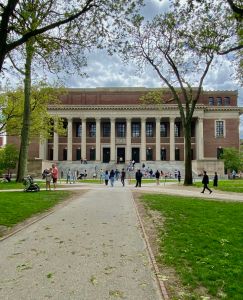
The Boston Globe: ‘This is about more than Harvard’: Healey tells alumni as university faces down Trump.
Massachusetts Governor Maura Healey voiced support for her alma mater Tuesday night as Harvard University continues to battle President Trump’s attacks on the Cambridge institution’s autonomy and funding.
“This is about more than Harvard,” she told a virtual webinar of thousands of Harvard alumni.
In recent weeks, Harvard has filed litigation charging that Trump unlawfully froze billions in federal funding to the school after it refused to give the government control over academic decisions. More recently, the school also legally challenged Trump’s attempt to revoke the school’s ability to enroll international students.
On Tuesday night, a group of Harvard alumni held a pair of virtual events to discuss the impact of the administration’s actions on academic freedom, research, students, and employees of the Ivy League university.
Crimson Courage, which describes itself as “a nonpartisan community of Harvard alumni,” encouraged alumni to sign onto an amicus brief in ongoing litigation spearheaded by Harvard against the Trump administration.
The brief “supports the academic freedom and integrity of Harvard and higher education institutions across America—all of which must be able to educate students consistent with their missions and values, free from political interference.”
The brief, according to organizers, will be filed in a legal case where Harvard argues the government’s use of research funding cuts as leverage to exert control over its affairs is an abuse of federal power.
Healey, in her comments to alumni, said Trump’s moves against the university is undercutting American competitiveness and damaging the local and national economy. Harvard, she said, is the fourth largest employer in Massachusetts, and its international students alone contribute $400 million to the local economy annually.
If Trump succeeds in damaging Massachusetts, will other blue states be next?
NPR: As Trump targets elite schools, Harvard’s president says they should ‘stand firm.’
With elite U.S. universities in President Trump’s crosshairs, the leader of Harvard University says institutions need to double down on their “commitment to the good of the nation” and be firm in what they stand for.
The Trump administration, acting on its claims that Harvard has failed to stamp out antisemitism on campus, froze more than $2 billion in research grants and contracts in April and attempted to revoke the school’s ability to enroll international students last week. The university is suing the federal government for both actions.
Harvard President Alan Garber told Morning Edition that he finds the measures taken by Trump to be “perplexing.” While he acknowledges there is work to be done on campus, he said he struggles to see a link between funding freezes and fighting antisemitism.
“Why cut off research funding? Sure, it hurts Harvard, but it hurts the country because after all, the research funding is not a gift,” Garber said, adding that these dollars are awarded to efforts deemed “high-priority work” by the federal government….
As evidence of how his university’s work directly benefits the U.S. public, Garber points to recent honors awarded to Harvard faculty by the Breakthrough Prize, known as “The Oscars of Science,” for their work on obesity and diabetes drugs and gene editing, used to correct disease-causing genetic variations.
The Trump administration’s multi-billion dollar funding freeze came after Harvard refused demands to change policies around hiring and admissions, eliminate DEI programs, or screen international students who are “supportive of terrorism or anti-Semitism,” as the administration put it.
Read the entire interview at the NPR link.
Commentary on Trump’s attacks on Harvard:
Daniel Drezner at Drezner’s World: The Trump Administration Is Trying to Kill American Higher Education.
Recent readers may recall that I was in a bit of a funk last week because among other things “The [Trump] administration further escalated its war on Harvard in myriad ways. This is part and parcel of a wider war on higher education that will destroy American soft power, one of the country’s leading export sectors, and American economic productivity.”
Harvard Art Museum
Impressively, the situation on this front has gotten even worse in the last 24 hours….
…consider the complete set of federal actions taken against Harvard that the New York Times’ Michael C. Bender has compiled. It’s an extraordinary list of punitive actions given that the Trump administration has been in office for just a little over a third of a year.
Now, as a professor at the Fletcher School, a direct competitor of Harvard’s Kennedy School of Government, readers might wonder if I think there might be some competitive advantage that might be gained from Harvard’s misfortune. And the answer to this is “not really, no,” for two reasons.
The first is raw politics: Harvard is the most prestigious university in the United States. It has the deepest pockets. If the Trump administration can force Harvard to acquiesce to its demands, that capitulation will make it that much harder for other universities to protect academic freedom.
The second is that while Harvard might be receiving the brunt of the administration’s malignant attention, Trump’s team is taking other actions that will harm most U.S. universities.
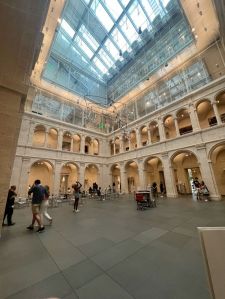
Examples: Threats to investigate foreign students’ social media and ordering embassies to stop vetting visas for international students applicants.
This administration seems bound and determined to force U.S. students to pay higher tuition, because it keeps stripping away alternative sources of revenue. Between slashing federal research funding to record-low levels, raising the transaction costs of accepting foreign grants, and this freezing the visa processing of foreign students, the Trump administration is disincentivizing scientific research and forcing universities to rely increasingly on the tuition payments of domestic college students.
The end result will be a poorer, less dynamic economy and a less vibrant society. I wish the Atlantic’s Adam Serwer was being hyperbolic in this paragraph – but he isn’t:
“These various initiatives and policy changes are often regarded as discrete problems, but they comprise a unified assault. The Trump administration has launched a comprehensive attack on knowledge itself, a war against culture, history, and science. If this assault is successful, it will undermine Americans’ ability to comprehend the world around us. Like the inquisitors of old, who persecuted Galileo for daring to notice that the sun did not, in fact, revolve around the Earth, they believe that truth-seeking imperils their hold on power.”
Why are they doing it? Serwer attributes it to politics: “by destroying knowledge, Trumpists seek to make the country more amenable to their political domination, and to prevent meaningful democratic checks on their behavior.” I could proffer a variety of other ideological or political responses. As of now, however, such rationales are besides the point. The only thing I know for sure is that it’s not for the reasons proffered by the administration.
Read the rest at the Substack link.
Paul Krugman on his Substack: America Turns Its Back on the World.
My wife and I are co-authors of a widely used textbook on the principles of economics, which is revised on a three-year cycle. When a new edition comes out, I normally visit a number of schools that might adopt it, usually giving a big public talk, a smaller technical seminar, and spending some time with students and faculty. I enjoy it, by the way; there are a lot of good, interesting people in U.S. education, and not just in the high-prestige schools.
So it was that at one point I found myself visiting Texas Tech in Lubbock. Yes, it seemed pretty remote to someone who has spent almost his whole life in the Northeast Corridor, but as usual the overall experience was very positive. And it was also surprisingly cosmopolitan: there were students from many nations. I just checked the numbers, and currently 30 percent of Texas Tech’s graduate students are international.
So it is all across America. Our nation’s ability to attract foreigners to study here is one of our great strengths. Or maybe I should say was one of our strengths.
According to Politico, a cable from Marco Rubio, the secretary of state, has directed U.S. embassies and consulates to halt all processing of visa applications from foreigners hoping to study in the United States. This is reportedly a temporary measure in preparation for a new system in which would-be students will be screened on the basis of their social media history. And you can be sure that the criteria for denying entry will go far beyond, you know, advocating terrorism. Probably asking “Why was Trump talking to West Point grads about trophy wives?” will be grounds for rejection.
This completely insane policy move is presumably a temper tantrum in response to a court’s rejection of the administration’s attempt to prevent Harvard from admitting foreign students, which was in turn a temper tantrum in response to Harvard’s rejection of demands from Trumpists that they be allowed to dictate the university’s hiring and curriculum.
The courts will probably reject this policy move, too, but I worry that Rubio and co. can put enough sand in the gears of the visa process to bring the entry of international students to a near halt. And even if they can’t, the clear message to students that they aren’t welcome (and may be arrested once here) will have an immensely chilling effect.
It’s hard to overstate the self-destructiveness of this move, and the war on higher education in general. This is madness even in purely economic terms.
Read the rest at the link.
One more by Liz Dye at Public Notice: Trump’s attack on Harvard hampered by his inability to STFU.
The Trump administration would be getting slapped down in court even if the president and his minions didn’t constantly announce their intent to violate the law. But their incessant chest thumping does make things go a lot faster.
Case in point: the temporary restraining order barring the government from canceling student visas at Harvard University. The order was issued just hours after Homeland Security Secretary Kristi Noem revoked Harvard’s visa “privilege” for foreign students. The administration teed up the ruling by declaring that it intended to flagrantly violate the First Amendment. But they telegraphed their punch so thoroughly that Harvard’s lawyers had a 72-page complaint with 28 exhibits ready to be filed the second Noem announced the plan.
Trump Hates Harvard
Just hours after being sworn in, Trump signed an executive order instructing federal agencies to “identify up to nine potential civil compliance investigations” of civic, corporate, and academic institutions, including “institutions of higher education with endowments over 1 billion dollars” for their supposed “illegal discrimination.”
Lowell House, Harvard University
The EO was clearly an attack on the Ivy League, long targeted by conservatives as a bastion of “wokeness” that should be brought to heel. And Project 2025, with its “big idea” to seize control of the budget from Congress, provided Trump with a blueprint to wield federal tax dollars as a weapon against state governments and institutions.
Part of the plan was for Trump to unilaterally announce new “laws” via executive order, and, instead of asking courts to enforce them, leverage federal funds to punish anyone who resists.
And so the president simply declared DEI “illegal,” and used the widespread adoption of anti-discrimination policies by corporations and academia as a pretext to go after anyone he doesn’t like. But, as a federal judge noted last week when he blocked an attack on the law firm Jenner & Block, “the defendants point to no case holding such diversity initiatives illegal.” This is simply the executive branch inventing a new legal theory and demanding that everyone treat it as settled law.
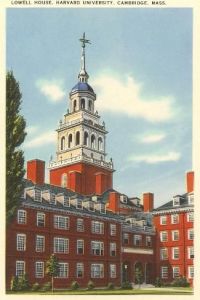
Dye describes how Harvard fought back successfully in court.
On April 11, Harvard sued in federal court in Massachusetts, alleging that the funding cuts were an arbitrary and capricious agency action in violation the First Amendment, the Fifth Amendment’s due process clause, and the Constitution’s separation of powers. That case landed on Judge Allison Burroughs’s docket, and when the school sued again 10 days later over a further round of funding cuts, it designated the cases as “related,” ensuring that it, too, would be assigned to the Obama appointee.
Harvard docketed voluminous correspondence demonstrating that the Trump administration is using federal funds to both coerce the school into changing its speech, and retaliating against it for speech conservatives don’t like. For instance, a letter signed by representatives of the General Services Administration and the Departments of Education and Health and Human Services presented an “agreement in principle” demanding sweeping changes to all aspects of the university’s hiring, admissions, disciplinary, and curricular programs as a precondition of preserving the school’s federal funds.
“The university will not surrender its independence or relinquish its constitutional rights,” the university wrote in response. “Neither Harvard nor any other private university can allow itself to be taken over by the federal government.”
That response was signed by longtime Republican lawyer Bill Burck, of the law firm Quinn Emanuel, and Robert Hur, the former special counsel tapped by Attorney General Bill Barr to investigate Joe Biden. (Burck was immediately fired by the Trump Organization as an ethics advisor.)
But Trump kept on making public threats and posting nonsense on social media.
Trump’s constant public screeds serve as potent evidence that the funding cuts are retaliatory, and any supposed DEI “crimes” are mere pretext.
On April 15, he suggested that Harvard “should lose its Tax Exempt Status and be Taxed as a Political Entity if it keeps pushing political, ideological, and terrorist inspired/supporting ‘Sickness?’” [….]
That’s an explicit attack on Harvard’s academic freedom, which is protected by the First Amendment. And he followed it up the next day by screeching that “Harvard is a JOKE, teaches Hate and Stupidity, and should no longer receive Federal Funds.” [….]
Secretary of Education Linda McMahon admitted in an interview with CNBC on May 7 that the administration is 100 percent targeting Harvard for disfavored speech.
“Are they vetting students who are coming in from outside of the country to make sure they’re not activists? Are they vetting professors that they’re hiring to make sure that they’re not teaching ideologies?” she said. “They’ve taken a very hard line, so we took a hard line back.”
All these comments — and so many more! — featured in Harvard’s lawsuits.
Please read the rest at Public Notice. It’s an excellent summary of what Trump has been doing and why it’s unlawful.
That’s all I have for you today. What’s on your mind?
Lazy Caturday Reads
Posted: May 24, 2025 Filed under: cat art, caturday, Donald Trump, education, public corruption | Tags: Covid vaccines, Covid-19 deaths, CryptoCurrency, FDA, Harvard University, international university students, Kristi Noem, National Security Council, NSC, Robert F. Kennedy Jr., Trump Corruption 19 Comments
Woman and Cat, by Koji Fukiya, 1936.
Good Afternoon!!
Yesterday, Dakinikat wrote about Trump’s crypto dinner, where he briefly spoke to the people who had spent the most on his personal memecoin. The “gala dinner” was held at Trump’s Virginia golf club. The attendees–mostly from foreign countries–had spent their money hoping to gain “access” to Trump, but that didn’t happen, at least at this event. Trump showed up on a “military helicopter,” spoke for less than half and hour and then did his YMCA dance. Then he left again without speaking to anyone personally. And the food was terrible.
Wired: A Helicopter, Halibut, and ‘Y.M.C.A’: Inside Donald Trump’s Memecoin Dinner.
Donald Trump left the stage at his golf club near Washington, DC, on Thursday night, he pointed to the crowd, brought his index finger to his temple—as if to say: You know what’s coming—then began to dance. To the beat of “Y.M.C.A” by The Village People, Trump shimmied, gyrated, and pumped his arms above his head.
Looking on were more than 200 people who had been invited to the Trump National Golf Club for a private gala dinner. They had won their seats by purchasing large quantities of Trump’s own crypto coin—TRUMP—some holding millions of dollars’ worth….
By late afternoon, the dinner guests had started to filter through the gates of the golf club. By comparison to Trump’s previous banquets, thronging with DC insiders and members of the Silicon Valley elite, the crypto dinner attracted a mismatched collection of oddballs: independent traders rubbed shoulders with crypto executives, die-hard Trump fans, and even professional sports stars—former NBA player Lamar Odom towered overhead. A handful wore bowties in Bitcoin orange; others sported gold Trump sneakers.
Just after 7 pm, the dinner guests gathered at the window to watch Trump descend in Marine One, his presidential helicopter. A short while later, he appeared from behind a blue velvet curtain to whoops and applause from the crowd. Had they seen the helicopter, Trump asked. “Yeah, super cool!” somebody yelled….
From behind a lectern at one end of the dining room, backdropped by four US flags, Trump delivered a characteristically winding and digressive speech that sources say lasted around 25 minutes. At some point, he got round to crypto.
“We’ve got some of the smartest minds anywhere in the world right here in this room,” said Trump. “You believe in the whole crypto thing. A lot of people are starting to believe in it … This is really something that may be special—who knows, right? Who knows—but it may be special.”
For some, the dinner represented a chance to network with other deep-pocketed crypto figures, and to hear directly from Trump about his plans to bring an end to the regulatory uncertainty that crimped the industry’s expansion under Biden.
“You don’t get to meet the president easily,” Vincent Liu, chief investment officer at trading firm Kronos Research, told WIRED a few days before the dinner. “To be able to hear his message on crypto directly—I’m definitely looking forward to that.”

Woodblock print from Tsukioka Yoshitoshi’s series One Hundred Aspects of the Moon (1885-1892)
No one got to meet the president, but I Wired says they also wanted to network with each other. On the general presentation and the food, served at circular tables
…each seating 10 people arrayed beneath a set of crystal chandeliers. Waiting on the chairs were gift bags containing Fight Fight Fight-themed hats and posters, and a collectible plastic card (some allege that they didn’t receive merch at their seats.) The four largest coin holders—along with two other attendees selected by raffle, sources say—received a gem-encrusted Trump gold watch.
Between mouthfuls, the attendees discussed trading and investment strategies—and Trump’s speech. “To feel his personal charisma to me was very inspiring,” says Liu. But others complained about the brevity of Trump’s appearance: After his speech, Trump had departed immediately in a golf cart bound for his helicopter. “Trump could have at least given the top people their watches himself,” says Pinto. “He didn’t.”
The food itself had left a bitter taste in the mouth, too. “It was the worst food I’ve ever had at a Trump golf course,” says Pinto, who added he left hungry. “The only good thing was bread and butter.” Another attendee described the meal as “OK, but not top-class.”
From Penn Live: Trump’s controversial crypto dinner ripped by attendee: ‘Trash.’
Donald Trump’s controversial memecoin dinner Thursday night was shrouded in secrecy, and while it still isn’t clear who all attended — the White House did not make the list public — we do have a report of how good the food was….
According to Fortune, 25-year-old Nicholas Pinto was one of those who attended. The site said he invested “more than $360,000 in Trump’s memecoin.
And for that, he told the site, the dinner that was served was “trash.”
“Walmart steak, man,” he texted Fortune.
The site said the menu for the included a “Trump organic field green salad” and an “entrée duet” of filet mignon and pan-seared halibut.
“Everybody at my table was saying the food was so of the worst they ever had,” Pinto said.
“I was hoping for Big Macs or pizza,” Pinto told Fortune. “That would have been better than the food that we were served.”
Trump is just raking in the dough as quickly as he can with the minimum effort.
The New York Times got the guest list: Who Won a Seat at Trump’s Crypto Dinner?
The invitees for President Trump’s private dinner for customers of his cryptocurrency business on Thursday included a Chinese billionaire fighting a lawsuit from U.S. regulators, a lawyer for Justice Clarence Thomas and a former basketball star, according to a guest list obtained by The New York Times and social media posts.
The dinner, at which Mr. Trump gave remarks, was an extraordinary moment in which the president leveraged his position to make money — for his crypto business and for his Virginia golf club, which hosted the event.
The event’s invited guests were not known publicly beforehand, even to each other. They were identified only by the pseudonyms they used on the electronic wallets where they kept their $TRUMP memecoins. Most had gained an invitation by becoming one of the top 220 holders of that memecoin over a certain period of time. The top 25 of those were given V.I.P. status and afforded a more intimate gathering before the dinner and an unofficial tour of the White House on Friday.
When they arrived at Mr. Trump’s club outside Washington Thursday evening, the digital world had become physical. The invitees’ names and contact information were delineated on paper lists, checked by staffers at the door. A Times reporter reviewed one of those lists, and used it to identify people who were present. Some other invitees self-identified on social media. A reporter and photographer from The Times also saw some $TRUMP crypto buyers enter and exit the White House on Friday.

Merchant’s Daughter by Mizuno Toshikata
Some top invitees:
Justin Sun, a Chinese crypto billionaire who was sued by the Securities and Exchange Commission under President Joseph R. Biden Jr. for allegedly inflating the value of a cryptocurrency. Mr. Sun is a major investor in a separate crypto venture largely owned by a company tied to Mr. Trump, World Liberty Financial. After Mr. Trump took office, the S.E.C. asked a judge to put Mr. Sun’s case on hold….
Elliot Berke, a Washington attorney who has worked for congressional Republicans and Justice Clarence Thomas of the Supreme Court. The Times identified him because the invitee list included his email address at his law firm, Berke Farah. He was honored as “Republican Lawyer of the Year” in 2021 by the Republican National Lawyers Association….
Evgeny Gaevoy, the founder and chief executive of a digital-asset firm, Wintermute. The Times identified him because the list of invitees included his Wintermute email….
Anil Lulla and Yan Liberman, two co-founders of Delphi Digital, a Miami Beach firm that offers market intelligence for crypto investors. Their corporate emails were included in the list of invitees….
Cheng Lu, 32, a crypto investor from Shanghai, was observed by a Times reporter entering the White House on Friday. He said he did not have a chance to speak with Mr. Trump during the dinner on Thursday or at the Friday tour. “I just want to see President Trump,” he said.
Several more are listed at the NYT link.
Another big story today is Trump’s terrifying persecution of Harvard University. Here’s the latest:
From The Wall Street Journal Editorial Board: Is Trump Trying to Destroy Harvard? The order against foreign students turns away the world’s brightest.
The Trump Administration has frozen billions in federal grants to Harvard University, threatened its tax-exempt status, and sought to dictate its curriculum and hiring. Now the government seems bent on destroying the school for the offense of fighting back. And for what purpose?
That’s how we read the Department of Homeland Security’s move Thursday to bar foreign students from attending the world-renowned institution. That’s 6,800 students, or a quarter of Harvard’s student body, whose futures are suddenly in disarray. It’s also a short-sighted attack on one of America’s great competitive strengths: Its ability to attract the world’s best and brightest.
The latest assault began when DHS demanded that Harvard turn over sundry records on its foreign students, including whether any had participated in illegal activity or left the university owing to “dangerous or violent activity or deprivation of rights.”
Some of its record requests are reasonable, but some overreached by requiring private student information. DHS also gave Harvard all of two weeks to respond. If it failed to do so, DHS Secretary Kristi Noem said she would “automatically withdraw” the school’s certification in the Student and Exchange Visitor Program. “The withdrawal will not be subject to appeal.”
The SEVP program lets non-citizens enroll at universities on student visas. DHS can bar universities from the program if they fail to comply with “recordkeeping, retention, reporting and other requirements” on foreign students. Harvard says it responded with “information required by law” within two weeks and handed over more records on May 14.

Twin Guardians, by Hawse Sumi
That didn’t satisfy Noem and she banned Harvard from enrolling international students. Harvard soon got a restraining order from a federal court.
Most of Harvard’s foreign students are enrolled in graduate programs. Many assist with scientific research and teaching undergraduate courses. Driving them out of Harvard will disrupt research projects and might cause some professors in the sciences to leave for other universities. This seems to be a goal of freezing Harvard’s research grants.
Harvard sued on Friday, and a federal judge issued a temporary restraining order against the student ban. The university rightly says the Administration’s actions are “clear retaliation for Harvard exercising its First Amendment rights to reject the government’s demands to control Harvard’s governance, curriculum, and the ‘ideology’ of its faculty and students.”
The university seems likely to prevail on the law, but until courts settle the merits, thousands of students who have done nothing wrong will be in legal limbo. Some of them no doubt opposed the anti-Israel protests and may even hail from Israel. Why punish them? [….]
This will be terribly damaging to America’s ability to attract talented young people who bring their enterprise and intellectual capital to the U.S. Non-citizens accounted for more than half of doctoral degrees in AI-related fields in 2022. Many have gone to work at U.S. companies like Nvidia or started their own.
Clearly Trump hates Harvard, higher education, and education generally. But I’m coming to the conclusion that Trump’s goal is to destroy the U.S. in every possible way and at the same time enrich himself and his wealthy friends. He doesn’t even appear to care about the economy anymore. He wants Americans to be poor, ignorant, and isolated from the rest of the world.
The New York Times: Universities See Trump’s Harvard Move as a Threat to Them, Too.
The Trump administration’s surprising bid to end Harvard’s international enrollment put the higher education world on edge this week, looming as a larger threat against academic autonomy.
Well beyond the halls of Harvard this week, college leaders were shocked that one swift move by the federal government could eliminate their ability to serve students from abroad, a growing population that has infused their campuses with cachet and wealth.
“This is a grave moment,” Sally Kornbluth, the president of the Massachusetts Institute of Technology, wrote in a message to her campus.
More than 5,000 miles away, Wendy Hensel, the president of the University of Hawaii, said that it was “reverberating across higher education.”
President Trump has already unnerved universities this year by launching investigations, freezing grants, demanding changes in campus practices and attempting to deport international students. He has justified his punitive approach as a means to combat what he considers antisemitism. But he and his allies also have long resented a perceived liberal bias and racial diversity efforts at prestigious colleges.
The Trump administration said Thursday that it revoked Harvard’s international student certification because the university had failed to meet its demands, including a request for records of student protest activity dating back five years.
To many academics, that was a clear signal that Mr. Trump was prepared to use any federal mechanism as leverage if he did not get what he wants.
“While Harvard is the victim of the moment, it’s a warning and unprecedented attempt of a hostile federal government to erode the autonomy of all major universities in the U.S.,” said John Aubrey Douglass, a senior research fellow at the Center for Studies in Higher Education at the University of California, Berkeley.
Yesterday, Trump and Marco Rubio began dismantling the National Security Council.
CNN: More than 100 National Security Council staffers put on administrative leave.
The Trump administration has put more than 100 officials at the National Security Council at the White House on administrative leave on Friday as part of a restructuring under interim national security adviser and Secretary of State Marco Rubio, according to two US officials and another source familiar with the matter.
Woman and cat, by Toyohara Kunichika
CNN previously reported that a significant overhaul of the body in charge of coordinating the president’s foreign policy agenda was expected in the coming days, including a staff reduction and a reinforced top-down approach with decision-making concentrated at the highest levels.
An email from NSC chief of staff Brian McCormack went out around 4:20 p.m. informing those being dismissed they’d have 30 minutes to clean out their desks, according to an administration official. If they weren’t on campus, the email read, they could email an address and arrange a time to retrieve their stuff later and turn in devices.
The email subject line read: “Your return to home agency,” indicating that most of those affected were detailed to the NSC from other departments and agencies….
With this happening on a Friday afternoon before a long holiday weekend, the official called it “as unprofessional and reckless as could possibly be.”
Those put on leave include career officials, as well as political hires made during the Trump administration….
Staffed by foreign policy experts from across the US government, the NSC typically serves as a critical body for coordinating the president’s foreign policy agenda.
But under President Donald Trump, the NSC’s role has been diminished, with the overhaul expected to further reduce its importance in the White House.

Axios says they are trying to purge the “deep state.”
President Trump and Secretary of State Marco Rubio have orchestrated a vast restructuring of the National Security Council, reducing its size and transferring many of its powers to the State and Defense departments.
Why it matters: Trump’s White House sees the NSC as notoriously bureaucratic and filled with longtime officials who don’t share the president’s vision.
- A White House official involved in the planning characterized the reorganization as Trump and Rubio’s latest move against what they see as Washington’s “Deep State.”
- “The NSC is the ultimate Deep State. It’s Marco vs. the Deep State. We’re gutting the Deep State,” the official said of the move, which will cut the NSC staff to about half of its current 350 members. Those cut from the NSC will be moved to other positions in government, officials said.
- “The right-sizing of the NSC is in line with its original purpose and the president’s vision,” Rubio told Axios in a statement. “The NSC will now be better positioned to collaborate with agencies.”
Zoom in: White House officials point to an NSC structure that’s filled with committees and meetings that they say slow down decision-making and produce lots of jargon and acronyms.
There’s a lot more a the link, but I think Trump is just trying to bring every part of the government under his personal control.
Finally, I want to look at what Trump and RFK Jr. are doing with Covid-19 and Covid vaccines.
More than five years after the first cases of COVID-19 were detected in the United States, hundreds of people are still dying every week.
By Utagawa Hiroshige, 1797-1858
Last month, an average of about 350 people died each week from COVID, according to data from the Centers for Disease Control and Prevention (CDC).
While high, the number of deaths is decreasing and is lower than the peak of 25,974 deaths recorded the week ending Jan. 9, 2021, as well as weekly deaths seen in previous spring months, CDC data shows.
Public health experts told ABC News that although the U.S. is in a much better place than it was a few years ago, COVID is still a threat to high-risk groups.
“The fact that we’re still seeing deaths just means it’s still circulating, and people are still catching it,” Dr. Tony Moody, a professor in the department of pediatrics in the division of infectious diseases at Duke University Medical Center, told ABC News.
The experts said there are a few reasons why people might still be dying from the virus, including low vaccination uptake, waning immunity and not enough people accessing treatments.

Read more details at the ABC link.
So why is the government limiting access to Covid Vaccines?
Scientific American: What FDA’s Planned Limits on COVID Vaccinations Mean for Health.
Larry Saltzman has blood cancer. He’s also a retired doctor, so he knows getting covid-19 could be dangerous for him — his underlying illness puts him at high risk of serious complications and death. To avoid getting sick, he stays away from large gatherings, and he’s comforted knowing healthy people who get boosters protect him by reducing his exposure to the virus.
Until now, that is.
Vaccine opponents and skeptics in charge of federal health agencies — starting at the top with Health and Human Services Secretary Robert F. Kennedy Jr. — are restricting access to covid shots that were a signature accomplishment of President Donald Trump’s first term and cost taxpayers about $13 billion to develop, produce, and distribute. The agencies are narrowing vaccination recommendations, pushing drugmakers to perform costly clinical studies, and taking other steps that will result in fewer people getting protection from a virus that still kills hundreds each week in the U.S.
“There are hundreds of thousands of people who rely on these vaccines,” said Saltzman, 71, of Sacramento, California. “For people who are immunocompromised, if there aren’t enough people vaccinated, we lose the ring that’s protecting us. We’re totally vulnerable.”
The Trump administration on May 20 rolled out tougher approval requirements for covid shots, described as a covid-19 “vaccination regulatory framework,” that could leave millions of Americans who want boosters unable to get them.
Vaccine opponents and skeptics in charge of federal health agencies — starting at the top with Health and Human Services Secretary Robert F. Kennedy Jr. — are restricting access to covid shots that were a signature accomplishment of President Donald Trump’s first term and cost taxpayers about $13 billion to develop, produce, and distribute. The agencies are narrowing vaccination recommendations, pushing drugmakers to perform costly clinical studies, and taking other steps that will result in fewer people getting protection from a virus that still kills hundreds each week in the U.S.
“There are hundreds of thousands of people who rely on these vaccines,” said Saltzman, 71, of Sacramento, California. “For people who are immunocompromised, if there aren’t enough people vaccinated, we lose the ring that’s protecting us. We’re totally vulnerable.”
The Trump administration on May 20 rolled out tougher approval requirements for covid shots, described as a covid-19 “vaccination regulatory framework,” that could leave millions of Americans who want boosters unable to get them.
Read the rest at the link. You can also check out this article at Technology Review: The FDA plans to limit access to covid vaccines. Here’s why that’s not all bad.
Trump simply doesn’t care if Americans die. That’s obvious based on the way he dealt with Covid during his first term. He seems willing to let RFK Jr. do whatever he wants. So who can Americans turn to for guidance and access to vaccines and treatments?
That’s it for me today. What’s on your mind?

 peej
peej Carissa
 bostonboomer
 dakinikat
 ecocatwoman
 mablue2
 Mama Lopez
 peggysue22
 quixote
 skydancingguestblogger
 Mona (aka Wonk the Vote)



 Sky Dancing
Recent Comments