Posted: January 8, 2025 | Author: bostonboomer | Filed under: 2024 Elections, Donald Trump, just because | Tags: Canada, Denmark, Greenland, Gulf Of Mexico, Mark Zuckerberg, Meta, Panama Canal, social media moderation, Trump press conference |
Good Afternoon!!
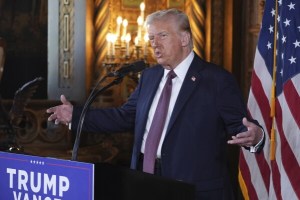
Trump holds forth at his Mar-a-Lago press conference.
Trump isn’t in office yet, but he is already dominating the news. It’s difficult to believe, but I think he is actually getting crazier.
Trump 2.0 is going to be chaos to the nth degree. I have no doubt that it will make his first term look sane by comparison. He is aging noticeably–he’s approaching 80–and his dementia is getting worse.
As we all know, this time there won’t be sane handlers trying to hold back his worst inclinations; he will be surrounded by MAGA loyalists who will do whatever he wants. It’s going to be awful, and getting through what’s coming is going to be tough.
Again, he’s not even waiting until he’s sworn in to begin causing trouble. Yesterday he held a “press conference” during which he came off as truly psychotic. In case you missed it (I couldn’t bear to watch), here are some media write-ups.
David E. Sanger at The New York Times:
Dripping Faucets and Seizing Greenland: Trump Is Back and Chaos Ensues.
There was talk of the rising number of beached whales in Massachusetts, the victim, the president-elect said, of those windmills that have been erected off the coast. They “are driving the whales crazy, obviously.”
There was a vow to rename the Gulf of Mexico, by presidential decree, to the “Gulf of America.” And then there was Donald J. Trump’s refusal to rule out using military force to seize the 51-mile Panama Canal on national security grounds, along with the 836,000 square miles of Greenland, the world’s largest island.
Mr. Trump’s family and supporters like to say “We are so back!” and they are, without doubt. Yet as the man who will be president again spun out threats and angry denouncements of the Biden administration and personal grievances for more than an hour on Tuesday in the living room of his Mar-a-Lago club, something else was back: the chaotic stream-of-consciousness presidency.
Mr. Trump has returned to our daily national cognizance, even though one could argue he never really left. Tuesday’s news conference was a reminder of what that was like, and what the next four years may have in store.
He waxed on about a favorite complaint during his first term: Shower heads and sink faucets that don’t deliver water, a symbol of a regulatory state gone mad. “It goes drip, drip, drip,” he said. “People just take longer showers, or run their dishwasher again,” and “they end up using more water.”
Then he moved on to the prospect of a military clash with Denmark. After refusing to rule out the prospect of coercing a NATO ally with the use of force if it remained reluctant to turn over property the president-elect coveted, Mr. Trump suggested that Denmark had a dubious claim on Greenland anyway.

Don Jr. and his buddies in Greenland yesterday
“People really don’t even know if Denmark has any legal right to it, but if they do, they should give it up, because we need it for national security,” he said.
As for Panama, he insisted the United States had to defend against an urgent national security threat from China, though the situation around the canal was little changed from the last time Mr. Trump sat in the Oval Office.
“It might be that you’ll have to do something,” he said with signature vagueness, when asked about his suggestion that the only solution to this problem may be military force.
There was a lot of déjà vu in Tuesday’s news conference, recalling scenes from his first presidency. The conspiracy theories, the made-up facts, the burning grievances — all despite the fact that he has pulled off one of the most remarkable political comebacks in history. The vague references to “people” whom he never names. The flat declaration that American national security was threatened now, without defining how the strategic environment has changed in a way that could prompt him to violate the sovereignty of independent nations.
But there were also several differences in this version of Mr. Trump that are easy to overlook in a man who can move, in an instant, from the failures of American plumbing to the need to revive the territory-grabbing spirit of President William McKinley.
More on the “press conference,” by Hunter Walker at Talking Points Memo:
Off The Rails And Off To The Races.
President Trump has created a massive gulf in America.
No, I am not talking about the half baked promise “to be changing the name of the Gulf of Mexico to the Gulf of America” that Trump announced in his news conference on Tuesday. The gulf that our country actually is going to have is the one between our current reality and the one we will be experiencing when Trump takes office on Jan. 20.
This news conference, which was the first since Trump’s re-election was certified by Congress, was a wild one — even by Trumpian standards. In a little over an hour behind a podium at his Mar-a-Lago beach club, the president-elect, along with promising to rename an ocean basin, threatened potential military force against Panama and Denmark. He also suggested he might use “economic force” to make Canada the 51st State.
“They should be a state,” Trump said of one of America’s closest neighbors and allies.
And, if Hamas doesn’t release the remaining hostages taken in the October 7th attack before Trump’s inauguration, Trump vowed that would also result in a massive show of force.
“If they’re not back by the time I get into office, all hell will break out in the Middle East,” Trump said. “It will not be good for Hamas and it will not be good frankly for anyone. All hell will break out.”
Trump’s feverish foreign policy visions were mixed up with his other weird obsessions and blatant lies. He ranted about President Joe Biden’s efforts to promote electric power and suggested heat generated this way will make you “itch.” As he vowed to make “major pardons” for some of his supporters who attacked the Capitol during the January 6 insurrection, Trump reiterated some of his preferred, debunked conspiracy theories about that day including that, the FBI is concealing the identity of the unknown pipe bomber and that, somehow, the Middle Eastern terrorist group Hezbollah might have played a role in the violence.
“We have to find out about Hezbollah. We have to find out about who exactly was in that whole thing because people that did some bad things were not prosecuted,” Trump said….
The whole thing was objectively bizarre and it’s difficult to track how much of Trump’s comments were bluster or how many of these wild ideas are even remotely feasible. Can you even effectively rename an ocean? Does he really intend to try to essentially annex Canada? Would he really consider using military force to take over Greenland or the Panama Canal? Would the military stand for that? Would Congress?
Minho Kim at The New York Times:
Why Does Trump Want Greenland?
President-elect Donald J. Trump’s attention returned Tuesday to an idea that has fascinated him for years: acquiring Greenland for the United States. In a news conference on Tuesday, he refused to rule out using military or economic force to take the territory from Denmark, a U.S. ally.
“We need Greenland for national security purposes,” he said, arguing that Denmark should give it up to “protect the free world.” He threatened to impose tariffs on Denmark if it did not.
Earlier in the day, Mr. Trump wrote on social media that the potential American acquisition of the Arctic territory “is a deal that must happen” and uploaded photos of his eldest son, Donald Trump Jr., who was visiting Greenland….
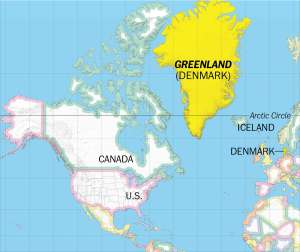
Greenland
Maegan Vazquez at The Washington Post:
Trump says he will rename the Gulf of Mexico. Can he do that?
Donald Trump on Tuesday said the United States would change the name of the Gulf of Mexico to the Gulf of America, and the president-elect seemed to tie the prospective renaming to his long-standing grievances with Mexico’s handling of immigration, drug trafficking and trade.
“We’re going to be changing the name of the Gulf of Mexico to the Gulf of America,” Trump said at a news conference at his Mar-a-Lago Club in Palm Beach, Florida. “ … What a beautiful name, and it’s appropriate.”
The president-elect subsequently decried the Mexican government for allowing migrants to “pour” into the United States, saying Mexico “can stop them and we’re going to put very serious tariffs on Mexico and Canada because Canada, they come through Canada, too.”
Trump provided no additional details about how he planned to implement the name change, but the comments sparked immediate questions about whether a president has the authority to rename an international body of water and prompted at least one Republican member of Congress to draft legislation.
That member of Congress was Marjorie Taylor Greene.
Here’s what we know about what Trump can and cannot do to rename the gulf….
The Gulf of Mexico is a 218,000-square-mile oceanic basin connected to the Caribbean Sea and the Atlantic Ocean through the Florida Straits and the Yucatán Channel. It spans from the eastern coast of Mexico and the southeastern coast of the United States to the western end of Cuba….
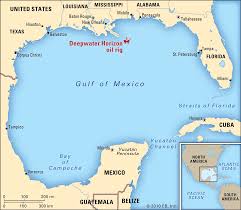
The Gulf of Mexico
The body of water has been known by many names, but European explorers and mapmakers have used the name “Gulf of Mexico” for at least 400 years….
There are existing mechanisms to rename places recognized by the federal government. However, if the federal name change becomes official, that does not mean that other nations will recognize it.
The U.S. Board on Geographic Names is a federal interagency organization that is responsible for maintaining uniform geographic name usage throughout the federal government. The board operates under the interior secretary. The board’s Foreign Names Committee is responsible for standardizing foreign place names. The committee is composed of representatives from federal agencies, including several appointees specializing in geography and cartography. Members are appointed every two years.
While the BGN does not create names for geographical features, it approves or rejects names proposed by others based on its established policies. A recent example of the board’s work includes approval of replacement names for all features that included the word “squaw,” which is used as a derogatory slur toward NativeAmerican women. The name changes were made after an order by Interior Secretary Deb Haaland in 2021. Haaland is the first Native person to serve as a Cabinet secretary.
Trump probably doesn’t know that Mexico and Canada, along with the U.S., are each parts of “America.”–that is, the continent of North America. Of course changing the name is ridiculous and idiotic, but so is Trump.
During the “press conference,” Trump also said that the changes Mark Zuckerberg is making to his social media platforms are in response to his (Trump’s) threats to imprison the the billionaire social media owner.
NBC News: Meta is ending its fact-checking program in favor of a ‘community notes’ system similar to X’s.
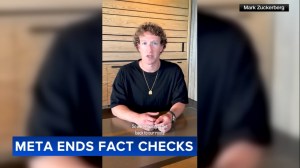
Meta CEO Mark Zuckerberg announced a series of major changes to the company’s moderation policies and practices Tuesday, citing a shifting political and social landscape and a desire to embrace free speech.
Zuckerberg said Meta will end its fact-checking program with trusted partners and replace it with a community-driven system similar to X’s Community Notes.
The company is also changing its content moderation policies around political topics and undoing changes that reduced the amount of political content in user feeds, Zuckerberg said.
The changes will affect Facebook and Instagram, two of the largest social media platforms in the world, each boasting billions of users, as well as Threads.
“We’re going to get back to our roots and focus on reducing mistakes, simplifying our policies and restoring free expression on our platforms,” Zuckerberg said in a video. “More specifically, here’s what we’re going to do. First, we’re going to get rid of fact-checkers and replace them with community notes similar to X, starting in the U.S.”
Zuckerberg pointed to the election as a major influence on the company’s decision and criticized “governments and legacy media” for, he alleged, pushing “to censor more and more.”
“The recent elections also feel like a cultural tipping point towards, once again, prioritizing speech,” he said. “So we’re going to get back to our roots and focus on reducing mistakes, simplifying our policies and restoring free expression on our platforms.”
So what is this going to look like?
Cath Virginia at The Verge:
Here are some of the horrible things that you can now say on Facebook.
Meta overhauled its approach to US moderation on Tuesday, ditching fact-checking, announcing a plan to move its trust and safety teams, and perhaps most impactfully, updating its Hateful Conduct policy. As reported by Wired, a lot of text has been updated, added, or removed, but here are some of the changes that jumped out at us.
These two sections outlining speech (written or visual) are new additions:
We do allow allegations of mental illness or abnormality when based on gender or sexual orientation, given political and religious discourse about transgenderism and homosexuality and common non-serious usage of words like “weird.”
We do allow content arguing for gender-based limitations of military, law enforcement, and teaching jobs. We also allow the same content based on sexual orientation, when the content is based on religious beliefs.
Another section that specifically banned making dehumanizing references to transgender or non-binary people as “it” or referring to women “as household objects or property or objects in general” has been removed entirely.
 The opening statement about what the policies are “designed to allow room for” that previously listed only health or positive support groups has changed too (new additions marked in bold):
People sometimes use sex- or gender-exclusive language when discussing access to spaces often limited by sex or gender, such as access to bathrooms, specific schools, specific military, law enforcement, or teaching roles, and health or support groups. Other times, they call for exclusion or use insulting language in the context of discussing political or religious topics, such as when discussing transgender rights, immigration, or homosexuality. Finally, sometimes people curse at a gender in the context of a romantic break-up. Our policies are designed to allow room for these types of speech.
The section that specifically banned targeting people or groups “with claims that they have or spread the novel coronavirus” has also been removed.
Read the rest at The Verge.
One more from Claire Duffy at CNN:
Calling women ‘household objects’ now permitted on Facebook after Meta updated its guidelines.
Meta on Tuesday announced sweeping changes to how it moderates content that will roll out in the coming months, including doing away with professional fact checking. But the company also quietly updated its hateful conduct policy, adding new types of content users can post on the platform, effective immediately.
Users are now allowed to, for example, refer to “women as household objects or property” or “transgender or non-binary people as ‘it,’” according to a section of the policy prohibiting such speech that was crossed out. A new section of the policy notes Meta will allow “allegations of mental illness or abnormality when based on gender or sexual orientation, given political and religious discourse about transgenderism and homosexuality.”
Previously, such comments would have been subject to removal under the policy. The changes to Meta’s hateful conduct policy were first reported by Wired.
Meta had hinted in its announcement about its content moderation policy changes Tuesday morning that it would get rid of restrictions on certain topics, such as immigration and gender identity, and allow more political discussions. But the updated policy shows just how quickly Meta is moving to enact CEO Mark Zuckerberg’s vision for “free expression.”
Meta on Tuesday also announced it would do away with its network of independent fact checkers in the United States and will instead rely on user-generated “community notes” to add context to posts. It also said it would adjust its automated systems that scan for policy violations, which it says have resulted in “too much content being censored that shouldn’t have been.” The systems will now be focused only on extreme violations such as child sexual exploitation and terrorism.
Basically, it’s open season on women and LBGTQ+ people.
Please take care of yourselves today and every day for the next 4 years.
Did you like this post? Please share it with your friends:
Posted: January 5, 2025 | Author: bostonboomer | Filed under: 2021 Insurrection, 2024 Elections, Donald Trump | Tags: Giorgia Meloni, House Speaker Mike Johnson, January 6 2021 insurrection, Joe Biden, Officer Daniel Hodges |
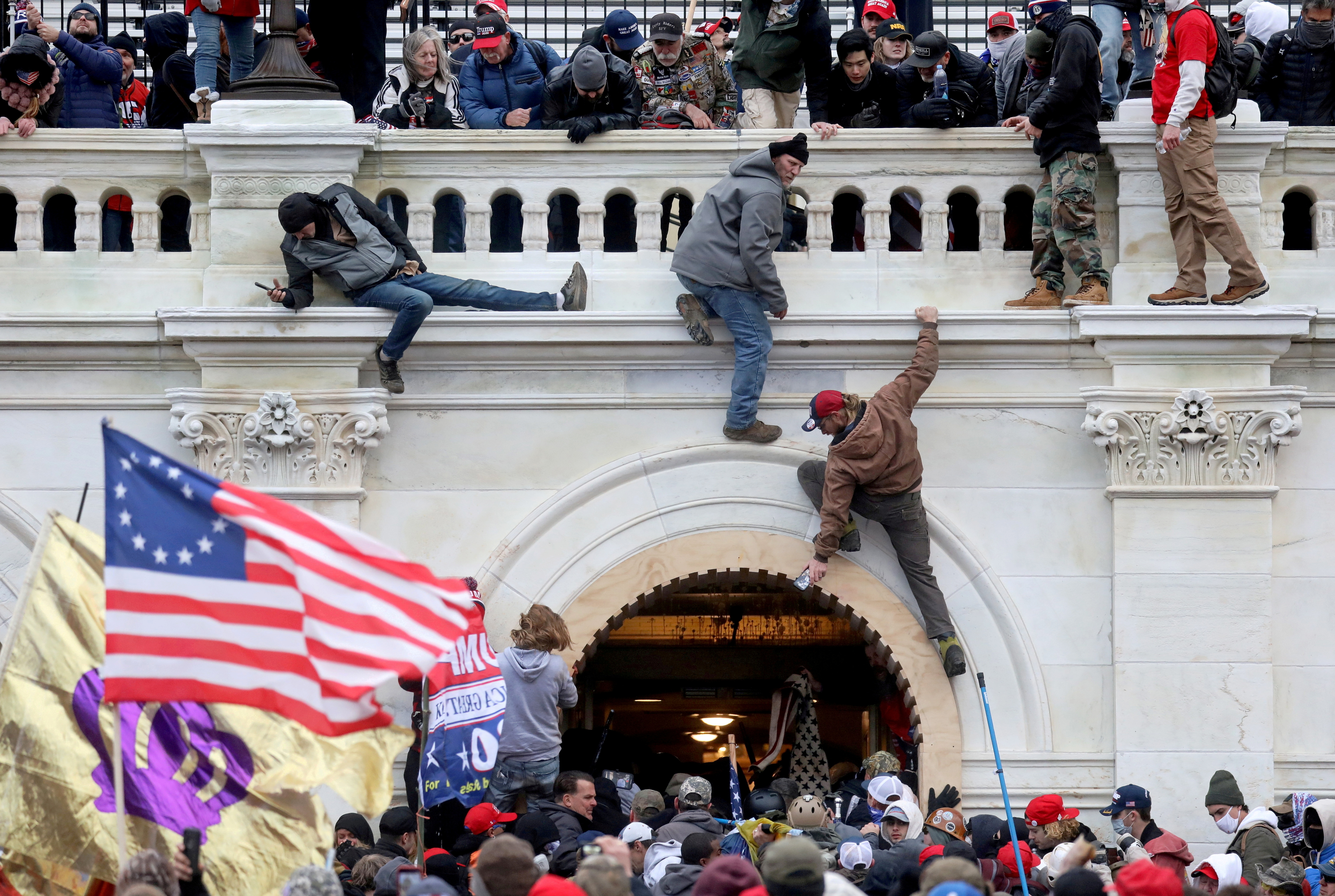
FILE PHOTO: A mob of supporters of U.S. President Donald Trump fight with members of law enforcement at a door they broke open as they storm the U.S. Capitol Building in Washington, U.S., January 6, 2021. REUTERS/Leah Millis/File Photo
Good Afternoon!!
Tomorrow is the fourth anniversary of the Capitol insurrection. Four years later, Trump will be certified as president–without the riot he sicced on Joe Biden in 2021.
Kyle Cheney at Politico: Donald Trump is about to get the Jan. 6 that he denied Joe Biden.
The transfer of power to Donald Trump is shaping up to be, well, peaceful.
No mobs are assembling to disrupt Congress’ Jan. 6 counting of electoral votes. No Democratic leaders are questioning the results of the election or concocting elaborate legal theories to thwart the outcome. The greatest risk of obstruction seems likely to come from a storm system threatening to dump a few inches of snow on the region overnight.
If all goes as expected, by late Monday afternoon, Trump’s victory will be certified in a ceremony overseen by his vanquished rival, Vice President Kamala Harris, who will preside over the proceedings in her capacity as the president of the Senate. Harris has been clear she will administer a straightforward transfer of power. In doing so, she’ll follow in the footsteps of all vice presidents before her — including Mike Pence, who resisted Trump’s pressure to refuse to count electors from states Trump lost in 2020….
It’s the utter antithesis of the carnage unleashed four years ago, under clear blue skies, by thousands of Trump supporters, goaded by lies about a stolen election. Hundreds of them bludgeoned police officers guarding the Capitol as the mob fought to stop Congress from counting the electoral votes that would make Joe Biden president.
The attack spawned the largest-ever federal criminal probe, led to a grave criminal case against Trump, spawned a failed legal effort to remove him from the ballot and defined the political climate of the last two election cycles. Democrats declared Trump a threat to democracy and the president-elect wielded the cases to rally his base and claim political persecution.
The meeting of the House and Senate this time, by contrast, is expected to be almost jarringly routine. Harris will convene the joint session at 1 p.m. Lawmakers of both parties will announce the certified electors from each state, and Harris will affirm they have been counted….
Monday’s joint session is also the first governed by a 2022 law designed to prevent efforts to corrupt the transfer of power and limit the ability of lawmakers to mount challenges to the results. That law lowers the already slim odds of any objections that could hamper the proceedings.
Still, the general atmosphere of calm in Washington belies a deep, simmering tension between those who watched the nation’s democratic institutions buckle on Jan. 6, 2021, and those who hope to whitewash it — especially as Trump attempts to rewrite the history of the attack on the Capitol and prepares to pardon many of its perpetrators. The Justice Department has charged more than 1,500 people for their involvement in the attack, and more than 1,200 have pleaded guilty or been convicted.
 Trump has promised again and again to free the January 6 “hostages” who violently attacked the center of our government and wounded 174 police officers, and led to the deaths of 5 officers–4 of whom died by suicide.
Chris Stein at The Guardian: ‘We have our country back’: convicted January 6 rioters anticipate Trump pardons.
Brandon Fellows, who broke into the US Capitol on January 6 and smoked marijuana in a senator’s office, stood outside the Washington DC jail where he spent part of his three years’ sentence behind bars, thinking about how Donald Trump might soon help him get his life back on track.
Having served his prison sentence after being found guilty on a slew of federal charges, the 30-year-old is today on probation under terms that have prevented him from leaving the capital region to start a chimney maintenance business in New Jersey. But with Trump returning to the White House on 20 January, Fellows expects his circumstances to change dramatically.
“I’m just going to wait till after the election, make sure I don’t have to partake in a real insurrection if Trump loses, and … then I’ll decide what I’m doing after,” he said about his thinking before November’s presidential election. Now that Trump has won, Fellows is counting on the president-elect to pardon him and other January 6 defendants. “With Trump in office, yeah, I’m starting to plan and [rebuild] my life again,” Fellows said.
As soon as he is back in power, Trump has vowed, he will pardon people prosecuted over the assault on the US Capitol that took place four years ago on Monday. Carried out by a mob of Trump’s supporters after he had addressed them outside the White House, the attack brought political violence into the halls of Congress and has been linked to nine deaths among police and rioters.
“We’re going to look at each individual case, and we’re going to do it very quickly, and it’s going to start in the first hour that I get into office,” Trump told Time magazine in an interview after winning re-election. “A vast majority should not be in jail, and they’ve suffered gravely.”
The pardons would mark the end of a four-year campaign by Joe Biden and his attorney general, Merrick Garland, to hold to account the thousands of rioters who overran police lines and sent lawmakers fleeing the Capitol on the day they convened in 2021 to certify the Democrat’s election victory. The justice department has charged more than 1,500 people with offenses related to the attack in the years since, nearly 600 of whom have faced felony charges of assaulting or impeding law enforcement.
But Trump’s jailed followers are counting the days until they receive the absolution Trump has promised. For more than two years, relatives of those charged in the attack and supporters of the former president have gathered on a sidewalk outside Washington DC’s jail for a nightly vigil called “Freedom Corner”, where January 6 is viewed not as an attack on democracy, but a catalyst for unfair government repression.
Trump has used propaganda to try to change the meaning of what happened on January 6, 2001. Dan Barry and Alan Feuer at The New York Times: ‘A Day of Love’: How Trump Inverted the Violent History of Jan. 6.
In two weeks, Donald J. Trump is to emerge from an arched portal of the United States Capitol to once again take the presidential oath of office. As the Inauguration Day ritual conveying the peaceful transfer of power unfolds, he will stand where the worst of the mayhem of Jan. 6, 2021, took place, largely in his name.
Directly behind Mr. Trump will be the metal-and-glass doors where protesters, inflamed by his lie that the 2020 election had been stolen from him, stormed the Capitol with clubs, chemical irritants and other weapons. To his left, the spot where roaring rioters and outnumbered police officers fought hand to hand. To his right, where the prostrate body of a dying woman was jostled in the bloody fray.
And before him, a dozen marble steps descending to a lectern adorned with the presidential seal. The same steps where, four years earlier, Trump flags were waved above the frenzied crowd and wielded like spears; where an officer was dragged facedown to be beaten with an American flag on a pole and another was pulled into the scrum to be kicked and stomped.

Officer Daniel Hodges was crushed in a doorway by rioter Patrick McCaughey III
In the wake of the attack on the Capitol, Mr. Trump’s volatile political career seemed over, his incendiary words before the riot rattling the leaders of his own Republican Party. Myriad factors explain his stunning resurrection, but not least of them is how effectively he and his loyalists have laundered the history of Jan. 6, turning a political nightmare into a political asset.
What began as a strained attempt to absolve Mr. Trump of responsibility for Jan. 6 gradually took hold, as his allies in Congress and the media played down the attack and redirected blame to left-wing plants, Democrats and even the government. Violent rioters — prosecuted, convicted and imprisoned — somehow became patriotic martyrs.
This inverted interpretation defied what the country had watched unfold, but it neatly fit the persecution narrative that binds Mr. Trump to many of his faithful. Once he committed to running again for president, he doubled down on flipping the script about the riot and its blowback, including a congressional inquiry and two criminal indictments against him, as part of an orchestrated victimization.
That day was an American calamity. Lawmakers huddled for safety. Vice President Mike Pence eluded a mob shouting that he should be hanged. Several people died during and after the riot, including one protester by gunshot and four police officers by suicide, and more than 140 officers were injured in a protracted melee that nearly upended what should have been the routine certification of the electoral victory of Mr. Trump’s opponent, Joseph R. Biden Jr.
But with his return to office, Mr. Trump now has the platform to further rinse and spin the Capitol attack into what he has called “a day of love.” He has vowed to pardon rioters in the first hour of his new administration, while his congressional supporters are pushing for criminal charges against those who investigated his actions on that chaotic day.
Some points of view on Trump upcoming second term as “president”:
Russell Berman at The Atlantic: Bad News for Trump’s Legislative Agenda.
The success of President-Elect Donald Trump’s legislative agenda will depend on whether Republicans can close ranks in Congress. They nearly failed on their very first vote.
Mike Johnson won reelection as House speaker by the narrowest of margins this afternoon, and only after two Republican holdouts changed their votes at the last minute. Johnson won on the first ballot with exactly the 218 votes he needed to secure the required majority. The effort he expended to keep the speaker’s gavel portends a tough slog for Trump, who endorsed Johnson’s bid.
Johnson was well short of a majority after an initial tally in the House, which elects a speaker in a long, televised roll call during which every member’s name is called. Three Republicans—Representatives Thomas Massie of Kentucky, Ralph Norman of South Carolina, and Keith Self of Texas—voted for other candidates, and another six refused to vote at all in a protest of Johnson’s leadership. The six who initially sat out the roll call cast their votes for Johnson when their names were called a second time. But it took nearly an hour for Johnson to flip Norman and Self. After huddling with Johnson on and off the House floor, the three men walked together to the front of the House chamber, where Norman and Self changed their votes to put Johnson over the top.
The tense vote marked the second Congress in a row in which the formal, usually ceremonial opening of the House became highly dramatic. Two years ago, conservative holdouts forced Kevin McCarthy to endure 15 rounds of voting and days of horse-trading before allowing him to become speaker. With help from Democrats, the same group ousted him nine months later, leading to Johnson’s election as his replacement….
Mike Johnson elected speaker
Yet the members opposing Johnson were not as numerous or dug-in as McCarthy’s adversaries. And although Trump backed McCarthy two years ago, he was more politically invested in Johnson’s success today. A drawn-out fight for the speakership could have threatened his legislative agenda and even delayed the certification of his election. (The House cannot function without a speaker, so it would not have been able to formally open and count the Electoral College ballots as required by the Constitution on January 6.)
Even with today’s relatively swift resolution, Johnson’s struggle to remain speaker is an ominous sign for the GOP’s ability to enact Trump’s priorities in the first few months of his term. The majority that narrowly elected Johnson will temporarily become slimmer once the Senate confirms two Republican lawmakers to Trump’s Cabinet, creating vacancies pending special elections to replace them. And GOP divisions have already emerged over whether the party should launch its governing trifecta with a push to bolster the southern border or combine that effort with legislation extending Trump’s 2017 tax cuts.
Republicans have a bigger buffer in the Senate, where they control 53 seats. But in the House, the GOP edge is two seats smaller than it was at the beginning of the last Congress, and just one or two members will have the power to defeat party-line votes without support from Democrats. Johnson’s main critics, including Massie, Norman, and Self, support Trump’s agenda in the abstract, but they are not loyalists of the president-elect. (Neither Massie nor Roy backed him in the GOP primary last year.) They are far more hawkish on spending than Trump, who showed little concern for deficits in his first term and has pushed Republicans to raise or even eliminate the debt ceiling before he takes office—a move that could smooth the passage of costly tax cuts.
Dan Balz at The Washington Post: A different and more dangerous world awaits President-elect Trump.
President-elect Donald Trump will begin his second term stronger and more dominant as a player on the world stage than when he was sworn in eight years ago. The world that awaits him, however, is far different — and more threatening — than when he left the presidency four years ago.
Trump’s “America First” second-term focus purports to be principally on the home front. The deportation of millions of undocumented immigrants was one of his leading campaign pledges, and his initial appointments suggest he is serious about this priority. The proposal is fraught with practical and political questions.
Dealing with the domestic economy through tax and spending cuts and regulatory changes was another key promise. Polls suggest the economy — mostly inflation — counted more than other issues did in Trump’s victory over Vice President Kamala Harris. But many economists have said that Trump’s economic agenda — tariffs and an extension of tax cuts — could lead to a new round of inflation and more debt. Deportations, too, would disrupt the economy.
Trump has also pledged to bring the civil service to heel. An initiative that includes cost-cutting and finding inefficiencies will be led by multibillionaire entrepreneur Elon Musk and onetime rival Vivek Ramaswamy. The two have grand ambitions and, seemingly, the president-elect’s blessing. Nonetheless, they face multiple challenges before they will be able to deliver more than symbolic changes.
Still, Trump could quickly be drawn into foreign policy challenges. He will confront a world of chaos and conflict: a prolonged war in Ukraine with Russian President Vladimir Putin more hostile than ever, and the Middle East still in turmoil after more than 15 months of warfare, with Iran weakened, Syria without Bashar al-Assad and Israel stronger militarily but scarred internationally because of its conduct in the war in Gaza.
China presents other challenges for Trump, who has threatened major new tariffs on a country with serious economic problems and growing military ambitions. As an indication of his intentions, Trump plans to populate his incoming administration with several China hawks. Meanwhile, governments of key U.S. allies in Europe, particularly France and Germany, are weakened, with right-wing, populist parties on the rise.
Trump prides himself as a dealmaker. His approach to foreign policy in his first term appeared to be more personal than strategic. He prefers dealing with autocrats rather than working with traditional alliances. In his second term, he probably will find it more difficult to work with the likes of Putin, Chinese President Xi Jinping and the leader who sent him what Trump called “love letters,” North Korea’s Kim Jong Un.
Peter Baker at The New York Times: Trump Sees the U.S. as a ‘Disaster.’ The Numbers Tell a Different Story.
To hear President-elect Donald J. Trump tell it, he is about to take over a nation ravaged by crisis, a desolate hellscape of crime, chaos and economic hardship. “Our Country is a disaster, a laughing stock all over the World!” he declared on social media last week.
But by many traditional metrics, the America that Mr. Trump will inherit from President Biden when he takes the oath for a second time, two weeks from Monday, is actually in better shape than that bequeathed to any newly elected president since George W. Bush came into office in 2001.
For the first time since that transition 24 years ago, there will be no American troops at war overseas on Inauguration Day. New data reported in the past few days indicate that murders are way down, illegal immigration at the southern border has fallen even below where it was when Mr. Trump left office and roaring stock markets finished their best two years in a quarter-century.
Jobs are up, wages are rising and the economy is growing as fast as it did during Mr. Trump’s presidency. Unemployment is as low as it was just before the Covid-19 pandemic and near its historic best. Domestic energy production is higher than it has ever been.
The manufacturing sector has more jobs than under any president since Mr. Bush. Drug overdose deaths have fallen for the first time in years. Even inflation, the scourge of the Biden presidency, has returned closer to normal, although prices remain higher than they were four years ago.
“President Trump is inheriting an economy that is about as good as it ever gets,” said Mark Zandi, chief economist of Moody’s Analytics. “The U.S. economy is the envy of the rest of the world, as it is the only significant economy that is growing more quickly post-pandemic than prepandemic.”
Of course Trump will promptly take credit for the good economy as soon as he gets into office.
Trump hails Italy’s Giorgia Meloni
Since the election, Trump has been behaving as if he is already president. For example, he has met with several foreign leaders–all autocrats–at his private club in Florida. Another one showed up at Mar-a-Lago yesterday. Emma Bubola at The New York times: Italy’s Prime Minister Visits Trump in Mar-a-Lago.
Prime Minister Giorgia Meloni of Italy visited President-elect Donald J. Trump on Saturday at his Florida golf club for an informal meeting.
The trip to the club, Mar-a-Lago, came only a few days before Ms. Meloni is set to welcome President Biden for an official visit to Italy and the Vatican from Jan. 9 to 12.
On Saturday, she appeared in the grand ballroom at Mar-a-Lago. Mr. Trump, according to pool reports, said he was having dinner with Ms. Meloni, whom he called “a fantastic woman,” adding, “She’s really taken Europe by storm, and everyone else.”
They, along with some potential members of the future Trump administration, including the nominee for secretary of state, Marco Rubio, and for Treasury, Scott Bessent, then watched a screening of a film titled, “The Eastman Dilemma: Lawfare or Justice.”
Ms. Meloni and Mr. Trump have expressed mutual appreciation in the past, and her trip is one of the first few visits by a foreign leader to the president-elect’s estate in Florida since his election in November. The meeting reinforces the hopes of Ms. Meloni’s supporters that the conservative Italian prime minister will become Mr. Trump’s go-to ally in Europe.
Much of that role would involve mediating tensions between other European leaders and Mr. Trump, who has threatened to start a trade war with the continent, as well as to reduce American backing for some NATO countries and for Ukraine in its war with Russia.
The agenda of the meeting was unclear on Saturday night, but observers expected the two leaders would discuss those issues.
Believe it or not, Joe Biden is still President of the United States, and he has some plans for his remaining time in the White House. Carol Lee and Kristin Welker at NBC News: Biden to deliver two major speeches in his final days in office.
President Joe Biden plans to deliver two major speeches before leaving office as part of an effort to outline what he sees as key parts of his legacy from more than 50 years in public service, according to two people familiar with the plans.
The first speech is set to focus on foreign policy and is expected to be delivered sometime after Biden returns on Jan. 12 from a trip to Italy, these people said. They said Biden then plans to close out his final days in the White House with a farewell address to the country.
Neither speech has been fully drafted, the sources familiar with the president’s plans said, but the contours and themes of both have been developed.
In his farewell address, Biden is expected to offer a message to Americans for the future and reflect on his decades in public office, including his four years in the White House, according to the people familiar with the president’s plans.
The traditional address is expected to channel a similar spirit to the parting sentiments offered by some of Biden’s recent predecessors, including former Presidents George W. Bush and Bill Clinton, who delivered their farewell speeches from the White House, and former President Barack Obama, who opted to speak to the nation from his hometown of Chicago in front of a large audience of supporters….
Biden’s foreign policy speech is set to focus on his belief that America is stronger when it invests in its alliances across the world, according to the people familiar with the president’s speeches. Biden is expected to highlight his efforts to broaden and strengthen the North Atlantic Treaty Organization and U.S. relations in the Indo-Pacific, as well as his administration’s military and financial support for Ukraine since Russia’s invasion in 2022.
It’s unclear how much the speech might touch on Biden’s decision to order the U.S. withdrawal from Afghanistan in 2021, which has been widely criticized and resulted in the deaths of 13 American service members.
Biden is likely to reference his administration’s efforts to combat terrorist groups, including ISIS, but the speech is not expected to dwell on domestic terrorism threats following the New Year’s Day attack in New Orleans, the people familiar with the president’s plans said.
That’s all I have for you today. It’s still kind of quiet as we wrap up the holiday season.
Did you like this post? Please share it with your friends:
Posted: December 28, 2024 | Author: bostonboomer | Filed under: cat art, caturday, Congress, Donald Trump, just because | Tags: Anime, Bird Flu, Debt Ceiling, January 6 seditionists, MAGA violence, MAGA vs Tech Bros, mass deportations, Milk, pandemics, Stewart Rhodes, violence by correctional officers |
Good Afternoon!!

Cat Bus, from My Neighbor Totoro
It’s a slow news day, as expected during the dead zone between Christmas and New Year’s Day. Most of the mainstream outlets are covering the ongoing battle between MAGAs and Tech bros over H1B visas, which Dakinikat in detail in yesterday’s post. Here’s one update to the story by Hafiz Rashid at The New Republic: Steve Bannon Joins War Against Elon Musk as MAGA Implodes.
Steve Bannon has joined the MAGA war between hard-line immigration opponents and tech executives like Elon Musk, taking the side of xenophobia on his War Room show Friday.
“H-1B visas? That’s not what it’s about. It’s about taking American jobs and bringing over essentially what have become indentured servants at lower wages,” the former Trump adviser turned pundit said, referring to the visa program that allows immigrants in specialized fields to work in the United States temporarily.
“This thing’s a scam by the oligarchs in Silicon Valley to basically take jobs from American citizens, give them to what become indentured servants from foreign countries, and then pay ‘em less. Simple. To let them in through the golden door,” Bannon added.
Musk set off the MAGA faithful on social media on Wednesday morning, posting on X about how more foreign tech workers need to be allowed to work in the United States because “there is a permanent shortage of excellent engineering talent.” Vivek Ramaswamy, Musk’s Department of Government Efficiency sidekick, generated his own backlash from the right Thursday by suggesting American culture was to blame for why employers seek tech employees from overseas.
Many on the right disagreed vehemently, particularly racists like Laura Loomer, who spent most of Thursday on her X account attacking Musk and tech executives who share his views. Musk then retaliated against Loomer and his other MAGA friends turned critics that evening, allegedly censoring them on the platform by removing their verification badges and hurting their engagement.
Neither side is right on the issue, though. Bannon, Loomer, and other anti-immigration conservatives are motivated by nativism and racism in their opposition to foreign tech workers, and tech CEOs like Musk seek low-wage immigrants to work for long hours in their companies instead of American workers who don’t have a fragile visa status hanging over their heads.
A bit more on Bannon from James Bickerton at Newsweek: Steve Bannon Mocks Elon Musk In H-1B Visa War: ‘Toddler.’
Steve Bannon has labeled Elon Musk a “toddler” after the tech billionaire urged opponents of H-1B skilled migrant worker visas to “F*** YOURSELF in the face.”
Bannon, who served as Donald Trump‘s White House chief strategist for seven months in 2017, made the comment on social media platform Gettr, which is primarily used by conservatives….
Bannon’s comments are just the latest salvo in an increasingly bitter row within Trump’s MAGA [Make America Great Again] coalition over H-1B visas, and legal immigration more generally, which has pitted some of his key supporters in big business and Silicon Valley against more nativist elements.
Once in office Trump could struggle to placate both those in business who believe skilled legal migration boosts the U.S. economy, and those of his supporters who think it takes place at the expense of American workers….
In a post on his X social media platform, formerly Twitter, South African-born Musk commented: “The reason I’m in America along with so many critical people who built SpaceX, Tesla and hundreds of other companies that made America strong is because of H1B.
“Take a big step back and F*** YOURSELF in the face. I will go to war on this issue the likes of which you cannot possibly comprehend.”
A screenshot of the post was shared by Bannon on Gettr, with Trump’s former strategist and 2016 campaign manager adding: “Someone please notify ‘Child Protective Services’— need to do a ‘wellness check’ on this toddler.” [….]
The H-1B visa allows American companies to employ foreign workers in specialty occupations. These typically require theoretical or technical expertise in fields such as information technology (IT), engineering, mathematics, finance, medicine, science, or other professional disciplines.
The number is currently capped at 65,000 per year, though an additional 20,000 visas are made available annually for foreigners who graduate in the U.S. with a master’s degree or doctorate.

Luna from Sailor Moon
On a more serious note, as Trump prepares to take office, the U.S. faces the strong possibility of another pandemic. That is frightening, considering how badly Trump handled the COVID-19 pandemic and the fact that Trump has nominated anti-vaxxer and conspiracy theorist Robert Kennedy Junior as head of the Department of Human Services (DHS).
Brad Reed at Raw Story: ‘We are screwed’: Virologists warn about disease they say could become the next pandemic.
A new report from PBS highlights the potential danger of bird flu turning into a full-blown pandemic in the United States.
In particular, PBS spoke with several experts who said the United States has been behind the ball when it comes to keeping a handle on the pandemic and they point to the fact that the United States Department of Agriculture has only recently started testing milk nationwide for bird flu contamination.
“It’s disheartening to see so many of the same failures that emerged during the COVID-19 crisis reemerge,” explained Tom Bollyky, the director of the Council on Foreign Relations’ Global Health Program….
Tom Peacock, a bird flu researcher at the Pirbright Institute in the United Kingdom, said that the real danger could come if the bird flu virus mutates in a way that makes it easily transmissible between humans.
“Even if there’s only a 5 percent chance of a bird flu pandemic happening, we’re talking about a pandemic that probably looks like 2020 or worse,” he told PBS. “The U.S. knows the risk but hasn’t done anything to slow this down.”

Gigi- Kiki’s delivery service
Here’s the report from Amy Maxmen at PBS: “How America lost control of the bird flu and raised the risk of another pandemic.”
Keith Poulsen’s jaw dropped when farmers showed him images on their cellphones at the World Dairy Expo in Wisconsin in October. A livestock veterinarian at the University of Wisconsin, Poulsen had seen sick cows before, with their noses dripping and udders slack.
But the scale of the farmers’ efforts to treat the sick cows stunned him. They showed videos of systems they built to hydrate hundreds of cattle at once. In 14-hour shifts, dairy workers pumped gallons of electrolyte-rich fluids into ailing cows through metal tubes inserted into the esophagus.
“It was like watching a field hospital on an active battlefront treating hundreds of wounded soldiers,” he said.
Nearly a year into the first outbreak of the bird flu among cattle, the virus shows no sign of slowing. The U.S. government failed to eliminate the virus on dairy farms when it was confined to a handful of states, by quickly identifying infected cows and taking measures to keep their infections from spreading. Now at least 875 herds across 16 states have tested positive.
Experts say they have lost faith in the government’s ability to contain the outbreak.
“We are in a terrible situation and going into a worse situation,” said Angela Rasmussen, a virologist at the University of Saskatchewan in Canada. “I don’t know if the bird flu will become a pandemic, but if it does, we are screwed.”
To understand how the bird flu got out of hand, KFF Health News interviewed nearly 70 government officials, farmers and farmworkers, and researchers with expertise in virology, pandemics, veterinary medicine, and more.
Together with emails obtained from local health departments through public records requests, this investigation revealed key problems, including deference to the farm industry, eroded public health budgets, neglect for the safety of agriculture workers, and the sluggish pace of federal interventions.
Case in point: The U.S. Department of Agriculture this month announced a federal order to test milk nationwide. Researchers welcomed the news but said it should have happened months ago — before the virus was so entrenched….
Far more bird flu damage is inevitable, but the extent of it will be left to the Trump administration and Mother Nature. Already, the USDA has funneled more than $1.7 billion into tamping down the bird flu on poultry farms since 2022, which includes reimbursing farmers who’ve had to cull their flocks, and more than $430 million into combating the bird flu on dairy farms. In coming years, the bird flu may cost billions of dollars more in expenses and losses. Dairy industry experts say the virus kills roughly 2 percent to 5 percent of infected dairy cows and reduces a herd’s milk production by about 20 percent.

The Baron from Whisper of the Heart
Read the rest at the PBS link.
From the AP, more bad news from the Treasury Department: Janet Yellen tells Congress the US could hit debt limit in mid-January.
Treasury Secretary Janet Yellen said her agency will need to start taking “extraordinary measures,” or special accounting maneuvers intended to prevent the nation from hitting the debt ceiling, as early as January 14, in a letter sent to congressional leaders Friday afternoon.
“Treasury expects to hit the statutory debt ceiling between January 14 and January 23,” Yellen wrote in a letter addressed to House and Senate leadership, at which point extraordinary measures would be used to prevent the government from breaching the nation’s debt ceiling — which has been suspended until Jan. 1, 2025.
The department has in the past deployed what are known as “extraordinary measures” or accounting maneuvers to keep the government operating. But once those measures run out the government risks defaulting on its debt unless lawmakers and the president agree to lift the limit on the U.S. government’s ability to borrow.
“I respectfully urge Congress to act to protect the full faith and credit of the United States,” she said.
The news comes after President Joe Biden signed a bill into law last week that averted a government shutdown but did not include President-elect Donald Trump’s core debt demand to raise or suspend the nation’s debt limit. The bill was approved by Congress only after fierce internal debate among Republicans over how to handle Trump’s demand. “Anything else is a betrayal of our country,” Trump said in a statement.
After a protracted debate in the summer of 2023 over how to fund the government, policymakers crafted the Fiscal Responsibility Act, which included suspending the nation’s $31.4 trillion borrowing authority until Jan. 1, 2025.
Notably however, Yellen said, on Jan. 2 the debt is projected to temporarily decrease due to a scheduled redemption of nonmarketable securities held by a federal trust fund associated with Medicare payments. As a result, “Treasury does not expect that it will be necessary to start taking extraordinary measures on January 2 to prevent the United States from defaulting on its obligations,” she said.

Muta from Whisper of the Heart
Will the Republicans have a Speaker of the House by mid-January? They not only have to deal with the debt ceiling, but also they will need a Speaker in order to count and certify the electoral votes on January 6, 2025.
Trump has promised to take a number of steps on “day 1” of his administration, including pardoning people who were convicted of crimes on January 6 2021 and beginning plans for mass deportation of undocumented immigrants. A couple of related stories:
Tim Dickinson at Rolling Stone: Does Trump Jan 6. Pardon Plan Include the Seditionists? Trump’s transition team is not ruling it out.
With Donald Trump winning back the White House, his Big Lie that Jan. 6 was just an enthusiastic rally that got out of hand, rather than an insurrectionist mob he unleashed to disrupt the count of the 2020 electoral college, has new currency.
A new congressional Republican report, spearheaded by MAGA lapdog Rep. Barry Loudermilk (R-Ga.) has recommended a criminal probe of former Rep. Liz Cheney (R-Wyo.) for co-chairing the House Jan. 6 investigation. Loudermilk’s report reached a through-the-looking-glass conclusion that Cheney & co. had promoted “a false, pre-determined narrative that President Trump was personally responsible for the breach of the Capitol on Jan. 6 and should therefore be held accountable.”
Trump is returning to the Oval Office with an explicit agenda to rewrite history — and upend convictions. He has vowed to issue “Day One” pardons to Jan. 6 criminals and defendants, whom he has called “great patriots,” “hostages,” and “warriors.” During the 2024 presidential campaign, Trump referred to Jan. 6 itself as “a day of love.” And when he recently summoned tech billionaire Mark Zuckerberg to Mar-a-Lago, Trump reportedly prompted his guests to rise and place their hands over their hearts, while listening to a rendition of the national anthem sung by jailed Jan. 6 defendants.
It is not precisely clear whom Trump wants to pardon. But the list of Jan. 6 convicts includes many serving long sentences for serious felonies — ranging from injuring police officers to sedition. In mid-December, a federal judge in Washington, D.C., who has handled many Jan. 6 criminal cases, spoke out from the bench. District Court Judge Amit Mehta said the idea that Trump could pardon the former head of the Oath Keepers militia haunts him: “The notion that Stewart Rhodes could be absolved is frightening — and ought to be frightening to anyone who cares about democracy,” Mehta said, per a courtroom report in Politico. In 2023, Mehta handed down an 18-year sentence to Rhodes for “seditious conspiracy.” (The prison term included a terrorism enhancement.)
Asked by Rolling Stone if Trump planned to pardon Rhodes — or others imprisoned on seditious conspiracy charges, like Enrique Tarrio, the ex-honcho of the Proud Boys — the presidential transition team didn’t rule it out. “President Trump will make pardon decisions on a case-by-case basis for those who were denied due process and unfairly targeted by the justice system,” says Trump transition spokesperson Karoline Leavitt.
In the buildup to Jan. 6 and in its aftermath, Rhodes spearheaded militia activity that that saw Oath Keepers lieutenants stockpile weapons across the border in Virginia, creating “Quick Reaction Forces” or QFCs, that could be activated in the hoped-for scenario that Trump would invoke the Insurrection Act and summon militia groups to battle his enemies to help him cling to power.
Rhodes was outside the Capitol during the rioting, but communicated with members in the building. When Rhodes received a report that members of Congress were in danger and looking to flee, he replied, per court documents, “Fuck ‘em.” At sentencing, Rhodes compared himself to the Soviet dissident Aleksandr Solzhenitsyn. Mehta told Rhodes to his face that he was no “political prisoner” — but rather an “ongoing threat and peril to this country.”

Daren Humbert Vaughn:, Gikkingen from The Cat Returns
More at the link.
From the AP: Mexico tests cellphone app allowing migrants to send alert if they are about to be detained in US.
Mexico is developing a cellphone app that will allow migrants to warn relatives and local consulates if they think they are about to be detained by the U.S. immigration department, a senior official said Friday.
The move is in response to President-elect Donald Trump’s threats to carry out mass deportations after he takes office on Jan. 20.
The app has been rolled out for small-scale testing and “appears to be working very well,” said Juan Ramón de la Fuente, Mexico’s secretary of foreign affairs.
He said the app would allow users to press a tab that would send an alert notification to previously chosen relatives and the nearest Mexican consulate. De la Fuente described it as a sort of panic button.
“In case you find yourself in a situation where detention is imminent, you push the alert button, and that sends a signal to the nearest consulate,” he said.
U.S. authorities are obliged to give notice to home-country consulates when a foreign citizen is detained. Mexico says it has beefed up consular staff and legal aid to help migrants in the legal process related to deportation.

From The Cat Returns
Two stories of violence in “Trump’s America”: The AP: Man accused of attacking TV reporter, saying ‘This is Trump’s America now.’
DENVER (AP) — A Colorado man is facing possible bias-motivated charges for allegedly attacking a television news reporter after demanding to know whether he was a citizen, saying “This is Trump’s America now,” according to court documents.
Patrick Thomas Egan, 39, was arrested Dec. 18 in Grand Junction, Colorado, after police say he followed KKCO/KJCT reporter Ja’Ronn Alex’s vehicle for around 40 miles (64 kilometers) from the Delta area. Alex told police that he believed he had been followed and attacked because he is Pacific Islander.
After arriving in Grand Junction, Egan, who was driving a taxi, pulled up next to Alex at a stoplight and, according to an arrest affidavit, said something to the effect of: “Are you even a U.S. citizen? This is Trump’s America now! I’m a Marine and I took an oath to protect this country from people like you!”
Alex, who had been out reporting, then drove back to his news station in the city. After he got out of his vehicle, Egan chased Alex as he ran toward the station’s door and demanded to see his identification, according to the document laying out police’s evidence in the case. Egan then tackled Alex, put him in a headlock and “began to strangle him,” the affidavit said. Coworkers who ran out to help and witnesses told police that Alex appeared to be losing his ability to breathe during the attack, which was partially captured on surveillance video, according to the document.
According to the station’s website, Alex is a native of Detroit. KKCO/KJCT reported that he was driving a news vehicle at the time.
Eric Ortiz at NBC News: ‘Shocking’ bodycam video released of New York officers fatally beating prisoner.
The office of New York’s attorney general released body camera footage Friday showing the fatal beating of a state prisoner this month by correctional officers who punched and kicked him repeatedly while he was handcuffed on an infirmary bed.
The incident, which has drawn outrage from political leaders and was condemned by the officers’ union as “incomprehensible,” is being investigated by state Attorney General Letitia James. The inmate, Robert Brooks, 43, died in the hospital a day after the Dec. 9 attack.
“I do not take lightly the release of this video, especially in the middle of the holiday season,” James said at a virtual news conference.
“These videos are shocking and disturbing,” she added.
Brooks can be seen in the videos with his hands cuffed behind his back. In one video, he is sitting up as an officer presses his foot down on him. He is then punched by two officers.
At another point, he is forcefully yanked from the bed by his shirt collar and held up above the ground, his face visibly bloodied.
Last week, Gov. Kathy Hochul ordered the state Department of Corrections and Community Supervision to begin the process of firing 14 workers at the Marcy Correctional Facility in Oneida County, where the incident occurred. They include correctional officers, sergeants and a prison nurse. In the interim, all have been suspended without pay, except for one officer, who already resigned.
In a statement following the release of the videos, Daniel Martuscello, the commissioner of the state corrections department, said his office has launched its own investigation in an effort to bring “institutional change.”
Read much more at the NBC News link.
Those are my recommended reads for today. Take care, everyone.
Did you like this post? Please share it with your friends:
Posted: December 25, 2024 | Author: bostonboomer | Filed under: Congress, Donald Trump, just because | Tags: democracy, Donald Trump, Election 2024, politics |

Winter Landscape, by Pablo Picasso
Good Afternoon!!
As we inch close to January 20 and another Trump administration, my feeling of dread only grows stronger. Already, Trump is dominating the news and acting as if he is in charge.
Last time, Trump had the “adults in the room” to occasionally hold back his efforts to destroy the country; this time, he only has Elon Musk, and Trump still doesn’t seem to comprehend that Musk is manipulating him. It’s going to be every bit as chaotic and exhausting as last time. And, of course, there will be the ugly Trump social media posts. Here’s his Christmas greeting from Truth Social:


Pieter Bruegel the Elder – Hunters in the Snow
Isn’t that sweet? I will never understand how anyone could stand to be in the same room with this monster, let alone vote for him for POTUS.
There’s not much exciting news today, but I’ve found some interesting reads.
This one isn’t controversial, as far as I know. NBC News: The bald eagle is officially America’s national bird after Biden’s signature.
The bald eagle has landed in the U.S. code after President Joe Biden signed a bill Tuesday making the predator the official national bird.
Congress passed the measure with unanimous support.
Although the bird of prey is at the center of the Great Seal of the United States, it was never formally recognized as the country’s official bird. Some of the Founding Fathers — Benjamin Franklin, John Adams and Thomas Jefferson — were tasked with creating a national seal but simply couldn’t come to an agreement.
In 1782, a version of the seal with a bald eagle was submitted by Secretary of the Continental Congress Charles Thomson and approved. Most Americans are familiar with the seal’s eagle carrying a flag-emblazoned shield holding an olive branch in one talon and arrows in the other.
Franklin was historically against the decision, arguing in a letter to his daughter that the bald eagle was “a bird of bad moral character.”
Either way, the U.S. has not had an official bird in the almost 250 years since its founding.
Richard Davis at The Hill: We were warned: First-term aides told us about Trump’s governing style.
Nearly eight years ago, reports began circulating in Washington that the Trump administration was going to be chaotic. One obvious sign was the rapid turnover of aides close to the president. Within months, Trump had replaced his chief of staff, national security advisor, press secretary and counselor to the president. Ultimately, in a four-year period, Trump would go through four chiefs of staff, four national security advisors, four press secretaries and five counselors to the president.
Beyond the rapid turnover, those who worked with Trump in his first term recounted his anarchic governing style. He refused to read briefing books before meeting with government leaders and simply “winged” important negotiations. He read only one-page summaries, and even then, only if they were filled with maps, photos and graphs. He ignored advice from his counselors in favor of information (or misinformation) from Fox News and extreme social media posts. He made policy on his own via tweets rather than through consultations with others.
Aides, who sought anonymity for obvious reasons, recounted that Trump was spending several hours every day watching television, typically Fox News, and impulsively walking out of meetings he was bored with. As a result, his governing style whipsawed between a lack of interest and sudden intense activity. Simply put, he did not pay attention until, suddenly, he understood a policy he did not like was being made without him. For example, in 2018, he intervened at the last minute as a government shutdown loomed to insist that the continuing resolution include money for a Mexican border wall. One aide reported that Trump was an “instinctive and reactive” leader.
His aides revealed that his attention span was extraordinarily short. They confessed that when he made some outrageous demand, they would distract him with something else, expecting he would forget about the order he just gave. One journalist found that Trump was live-tweeting Fox News, setting his agenda based on what Fox News was reporting.
Political scientist David Drezner analyzed statements by Trump aides and supporters comparing him to a toddler who throws temper tantrums when he does not get his way, has a short attention span, and has no interest in learning if it is not presented in an extremely simple manner. Drezner says his aides would treat Trump like a toddler by using reverse psychology on him (telling him he cannot do something that they actually wanted him to do), keeping him busy so he would not have time to tweet, and feeding him simple information.

Van Gogh-Snowy Landscape with Arles in Background
This time, it will be much, much worse. Trump has already threatened to take over Panama, Greenland, and Canada. And, of course, he has threatened repeatedly to attack Mexico.
Denmark has taken note. BBC: Denmark boosts Greenland defence after Trump repeats desire for US control.
The Danish government has announced a huge boost in defence spending for Greenland, hours after US President-elect Donald Trump repeated his desire to purchase the Arctic territory.
Danish Defence Minister Troels Lund Poulsen said the package was a “double digit billion amount” in krone, or at least $1.5bn (£1.2bn).
He described the timing of the announcement as an “irony of fate”. On Monday Trump said ownership and control of the huge island was an “absolute necessity” for the US.
Greenland, an autonomous Danish territory, is home to a large US space facility and is strategically important for the US, lying on the shortest route from North America to Europe. It has major mineral reserves.
Poulsen said the package would allow for the purchase of two new inspection ships, two new long-range drones and two extra dog sled teams.
It would also include funding for increased staffing at Arctic Command in the capital Nuuk and an upgrade for one of Greenland’s three main civilian airports to handle F-35 supersonic fighter aircraft.
“We have not invested enough in the Arctic for many years, now we are planning a stronger presence,” he said.
The defence minister did not give an exact figure for the package, but Danish media estimated it would be around 12-15bn krone.
The announcement came a day after Trump said on his social media platform Truth Social: “For purposes of National Security and Freedom throughout the World, the United States of America feels that the ownership and control of Greenland is an absolute necessity.”

Gauguin: Breton Village
The Guardian quotes John Bolton’s warning: Major international crisis ‘much more likely’ in Trump’s second term, says his ex-national security adviser.
A major international crisis is “much more likely” in Donald Trump’s second term given the president-elect’s “inability to focus” on foreign policy, a former US ambassador to the United Nations has warned.
John Bolton, who at 17 months was Trump’s longest-serving national security adviser, delivered a scathing critique of his lack of knowledge, interest in facts or coherent strategy. He described Trump’s decision-making as driven by personal relationships and “neuron flashes” rather than a deep understanding of national interests.
Bolton also dismissed Trump’s claims during this year’s election campaign that only he could prevent a third world war while bringing a swift end to the conflicts in Gaza and Ukraine.
“It’s typical Trump: it’s all braggadocio,” Bolton told the Guardian. “The world is more dangerous than when he was president before. The only real crisis we had was Covid, which is a long-term crisis and not against a particular foreign power but against a pandemic.
“But the risk of an international crisis of the 19th-century variety is much more likely in a second Trump term. Given Trump’s inability to focus on coherent decision making, I’m very worried about how that might look.” [….]
Bolton was Trump’s national security adviser from April 2018 to September 2019.
Bolton recalled: “What I believed was that, like every American president before him, the weight of the responsibilities, certainly in national security, the gravity of the issues that he was confronting, the consequences of his decisions, would discipline his thinking in a way that would produce serious outcomes.
“It turned out I was wrong. By the time I got there a lot of patterns of behaviour had already been set that were never changed and it could well be, even if I had been there earlier, I couldn’t have affected it. But it was clear pretty soon after I got there that intellectual discipline wasn’t in the Trump vocabulary.”

Winter landscape: Wassily Kandinsky
The Independent: Trump has Christmas Eve meltdown over Biden’s commutation of nearly every federal death row prisoner’s sentence.
Donald Trump has lashed out at President Joe Biden’s commutation of nearly every federal death row prisoner’s sentence in a Christmas Eve outburst.
Less than a month before Trump takes office, Biden on Monday removed 37 people from death row who were all convicted of murder charges, meaning they will now serve life imprisonment without parole.
“Joe Biden just commuted the Death Sentence on 37 of the worst killers in our Country,” Trump fumed on Truth Social on Christmas Eve morning.
“When you hear the acts of each, you won’t believe that he did this. Makes no sense. Relatives and friends are further devastated. They can’t believe this is happening!”
Trump vowed to take action as soon as he takes office.
“As soon as I am inaugurated, I will direct the Justice Department to vigorously pursue the death penalty to protect American families and children from violent rapists, murderers, and monsters,” he said in a follow up post. “We will be a Nation of Law and Order again!”
Says the adjudicated rapist and convicted felon.
At The Washington Post, Cat Zakrzewski writes about Trump’s constant grifting: How to have a Trumpy Christmas, and make the president-elect richer, too.
The Trump Store has a gift for every patriot on your Christmas list.
It’s a little late for this year’s celebrations, but you can get a very early jump on next year and count down with the $38 Trump Advent calendar. Or trim the tree with a $95 Mar-a-Lago bauble or a $16 MAGA hat ornament, sold in nine colors. (A glass version of the hat ornament is $92.) Stuff stockings with an $86 “GIANT Trump Chocolate Gold Bar” and a $22 pair of candy cane socks printed with “Trump.” Prepare a holiday feast with a $14 Trump Christmas tree pot holder and $28 Trump apron featuring Santa waving an American flag.
The profits from these holiday trinkets do not benefit a political committee or a charitable cause, but the Trump Organization, the Trump family’s privately owned conglomerate of real estate, hotel and lifestyle businesses. As the company encouraged customers to celebrate the holidays with Trump gifts for all ages, President-elect Donald Trump personally profited off of his upcoming term in a manner that is unprecedented in modern history — even during his unconventional first stint in the White House.
The Trump Organization thought of everyone celebrating Trump’s nonconsecutive terms this yuletide season, rolling out a line of merchandise printed with “45-47,” including $195 quarter-zip sweatshirts, $85 cigar ashtrays and $38 baseball caps. Fido can’t go without his gear, of course: The store also sells gifts for dogs, including orange leashes and camo collars emblazoned with Trump’s name. And don’t forget the kids! How about a $38 teddy bear wearing a red, white or blue Trump sweater, $8 MAGA hat stickers or an array of Trump sweets, including $16 gummy bears?
All of these gifts can be wrapped in $28 golden Trump wrapping paper or stuck into Trump ornament gift bags ($14 a pair), and accompanied by a note on $35 stationery featuring bottles of Trump wine.
“Make the holidays that much greater this year with essentials from the Trump Home and Holiday collection,” the website says, over a photo of an Elf on the Shelf toy and a lime-green MAGA hat.
Trump has long delighted in finding new ways to market his name, creating a merchandise empire that includes digital trading cards, pricey sneakers, expensive watches and signed Bibles. But his expansion of offerings in the run-up to the inauguration has further concerned ethics experts and watchdogs, who say his behavior is the opposite of what they expect from a president-in-waiting during the transition.
“How much is he going to use the presidency just to sell Trump products?” said Jordan Libowitz, vice president for communications for the nonprofit Citizens for Responsibility and Ethics in

Claude Monet, The Magpie
Washington.
That’s what I want to know. Are he and Melania going to continue hawking their tasteless junk from the White House?
A serious piece from Timothy Noah at The New Republic: Democracy Is No Bulwark Against Oligarchy.
The hard lesson of 2024 is that liberals spent too much time fretting that Donald Trump would subvert democracy if he lost and not enough that Trump would win a free and fair election. We can argue about the reason why voters elected Trump—inflation, transgender hysteria, Joe Biden staying too long in the race—but we can’t pretend that those who cast their vote for Trump didn’t know they were choosing oligarchy.
Thanks to the 14-year run of The Apprentice, even the politically ignorant were well aware that Donald Trump (net worth $6.2 billion, per Forbes) was a wealthy real estate tycoon. If anything, the voting public judged Trump wealthier than he really is; as John D. Miller, a marketer for the NBC series, pointed out in October, “We created the narrative that Trump was a super-successful businessman who lived like royalty.” Given that narrative’s predominance, nobody can be surprised that the president-elect’s sidekick ended up being the richest person in the world, or that he’s appointed a dozen billionaires to top posts.
How could this happen? None of liberals’ usual explanations is available. We can’t blame Trump’s victory on the distortions of the Electoral College (as we could in 2016) because Trump won the popular vote. And we can’t blame Trump’s victory on the distortions of money, because even when you figure in outside money, including more than a quarter-billion to Trump from Elon Musk, it was the loser, Kamala Harris, who raised the most cash. Yes, Trump indicated before the election that if he lost he wouldn’t accept the result, just as he still refuses to concede the 2020 election. But in the end, democracy didn’t come under threat. Democracy turned out to be the problem.
This has happened before. The worst presidential choice prior to 2024 was James Buchanan in 1856. Like Trump, Buchanan won both the popular vote and the Electoral College. These two presidents are the lowest-ranked in an annual poll of American political scientists, and Buchanan ranks last in a 2021 survey of American political historians (though for some mysterious reason that one ranks Trump only fourth-worst). Buchanan is reviled for fumbling Confederates’ threats to secede, which of course led to the Civil War. I would argue that the public also chose very badly in reelecting Richard Nixon in 1972 and George W. Bush in 2004—and that in choosing Ronald Reagan in 1980, the party cleared a path that eventually led to Trump.
But 2024 may be the first election in American history in which a majority of United States voters specifically chose oligarchy. This is terra incognita, but it turns out to be a problem to which our second president, John Adams, gave considerable thought.
Read the rest at TNR.
Speaking of oligarchs, Ramesh Ponnuru writes at the Washington Post: Congressional Republicans have a new headache: Elon Musk.
Democrats spent much of the presidential campaign warning that a second Donald Trump presidency would move methodically and remorselessly toward sinister goals: persecuting immigrants, enriching billionaires, ending democracy, imposing theocracy. This time, they said, he and his people would already know how to use the powers of his office. His party would put up less, maybe no, resistance. He now has the backing of the world’s richest man. The fact that Trump won a plurality of the popular vote and enjoys his best polling ever has deepened progressive despair.
Last week’s fight over the continuing resolution to keep the federal government funded should calm some of these fears. It won’t change progressive minds about Republicans’ ambitions. But it should suggest that many of the limits on Republican effectiveness that were in place during Trump’s first term remain — and new ones have arisen….
Trump’s decision to insist that the legislation include a lifting of the debt ceiling also suggests that he still has little interest in figuring out how to build a legislative coalition. He was effectively demanding that Republicans lift the debt ceiling on a party-line vote. He should have known that they would never accede. Now, seeing his demand so widely ignored has moved him a little closer to lame-duck status. Congressional Republicans may be learning that if enough of them balk at a Trump order — 38 of them voted down the funding bill he endorsed — he cannot credibly threaten all of them.
The president-elect also kneecapped Johnson by telegraphing his disappointment with the way the speaker handled the continuing resolution. This was unfair, since Trump hadn’t articulated his key priorities, such as raising the debt limit, or done anything else to make them achievable. It was also counterproductive. By blaming Johnson for the embarrassing zigzags of the spending bill, Trump avoids taking any responsibility himself. But he has increased the chances that House Republicans will be consumed by a fight over their leadership rather than enacting his administration’s agenda.
By now, though, Republicans are used to the drawbacks of working withTrump. Their new difficulty is Musk. During Trump’s first term, Republicans in Congress and the executive branch had to anticipate what would draw the president’s wrath. Now they will have to wonder, as well, what will bring them negative attention from Musk. They can’t count on either man to telegraph his views well ahead of time or privately; they will just have to keep a social media tab open. The two men also have varying views and priorities, with Musk more concerned about controlling federal spending than Trump has ever shown himself to be. (Even Musk, though, did not stir himself against the bipartisan bill to spend nearly $200 billion more on Social Security — which passed Congress at the same time as the government-funding deal.)
Republicans can’t be sure, either, how long Trump and Musk will stay allied. Musk isn’t like Steve Bannon, whom Trump could put into political exile and then summon back. He has fame, a fan base, a means of communication and resources of his own. This would be Trump’s messiest divorce yet.
I expect Trump to tire of Musk stealing the spotlight, but Ponnuru is probably right that Musk will be difficult for Trump to eliminate.
I hope you all have a nice, relaxing day whether you celebrate the holidays or not.
Did you like this post? Please share it with your friends:
Posted: December 18, 2024 | Author: bostonboomer | Filed under: Donald Trump, just because, kakistocracy, Surreality | Tags: Donald Trump, Kash Patel enemies list, listless Democrats, Liz Cheney, politics |
Good Afternoon!!
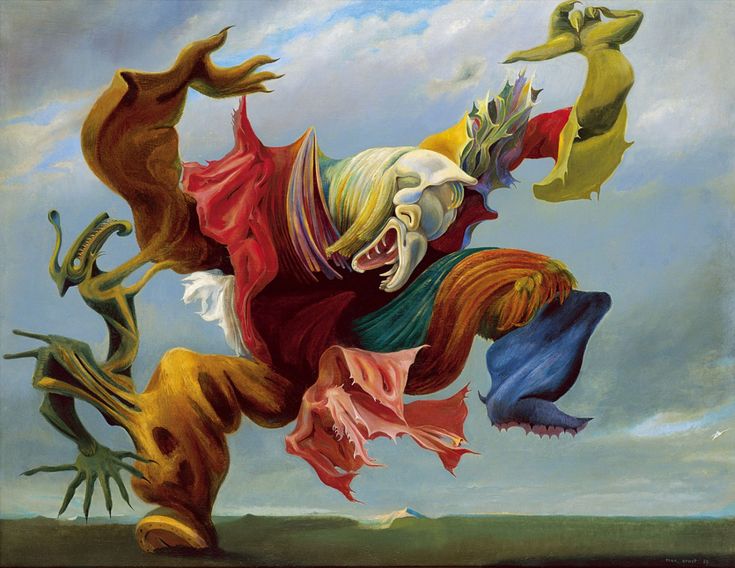
Max Ernst, The Triumph of Surrealism
Recently, Dakinikat has been writing about the notion of kakistocracy, government of the worst people. That is obviously where we are headed with Trump and his appointments of completely inappropriate and incompetent people to his cabinet, White House staff, and ambassadorships. The latest example is his nomination of Herschel Walker as Ambassador to the Bahamas.
Anyway, there’s a very interesting article on Kakistocracy at Lawfare by Alan Z. Rozenshtein: The Constitution of Kakistocracy.
The term “kakistocracy” (rule by the worst) emerged from obscurity during the first Trump administration. The word, which was previously used to describe troubled foreign governments, gained mainstream usage as critics pointed to controversial appointments such as Tom Price at the Department of Health and Human Services and Scott Pruitt at the Environmental Protection Agency—officials whose qualifications and conduct drew widespread criticism.
With President-elect Donald Trump’s imminent return to power, “kakistocracy” is back in public conversation. As the Economist noted by making it “word of the year,” Google searches for the term spiked in November: first after Trump’s victory, then after he nominated controversial officials for cabinet positions, including Matt Gaetz for attorney general and Robert F. Kennedy Jr. for secretary of health and human services, and again when Gaetz withdrew his nomination amid criticism. And Trump’s recent nomination of Kash Patel to lead the FBI has only intensified concerns about an impending kakistocracy.
More than just a problem of policy or politics, kakistocracy undermines a core constitutional principle: Functioning democracies need qualified individuals to hold public trust. Trump’s nominees threaten key constitutional norms in unprecedented ways: through their flaws, their number, and Trump’s willingness to skirt the procedural safeguards that ensure the Senate’s role in the appointments process. And like with so many of Trump’s norm-busting actions in his first term, constraints will mostly have to come from the political process rather than the legal one….
The Constitution’s framers were obsessed with the quality of American public officials. Thomas Jefferson extolled “a natural aristocracy among men[,] the grounds of [which] are virtue [and] talents. … [T]he natural aristocracy I consider as the most precious gift of nature, for the instruction, the trusts, and government of society.” He argued, “[M]ay we not even say that that form of government is the best which provides the most effectually for a pure selection of these natural aristo[crats] into the offices of government?” Similarly, in the Federalist Papers, Alexander Hamilton recognized that personnel is policy, predicting that “judicious choice of men for filling the offices of the Union” would determine the “character of its administration,” while John Jay predicted that “when once an efficient national government is established, the best men in the country will not only consent to serve, but also will generally be appointed to manage it.”
The founders expected presidents to appoint competent and distinguished candidates for roles in their administrations.
Unsurprisingly, the Constitution carefully addresses the appointment of government officials. First, it makes the president primarily responsible for appointments. This decision—to have a single person, rather than a collective body, nominate officials—both strengthens the executive and, as Hamilton explained, increases the quality of the appointments, since having a single individual in charge increases their political accountability in case of bad appointees. In contrast, with a committee of appointments, “while an unbounded field for cabal and intrigue lies open, all idea of responsibility is lost.”

By Leonora Carrington
Second, the Constitution requires Senate consent to the appointment of high-level officers, subject to the limited exception of temporary appointments when the Senate is in recess. Hamilton argued that this limitation on the president’s appointment power would be an “excellent check upon a spirit of favoritism in the President, and would tend greatly to prevent the appointment of unfit characters from State prejudice, from family connection, from personal attachment, or from a view to popularity.”
Beyond the constitutional procedures of presidential nomination and Senate confirmation, the appointments process functions, as do so many parts of the Constitution, less as a matter of law than of norms. The expectation is that the president will nominate competent officials to run the executive branch and the Senate will exercise its confirmation power responsibly and block bad presidential nominees….
Trump’s nominations represent an unprecedented triple assault on constitutional appointment norms: First, many are unqualified or hostile to their agencies’ missions. Second, rather than making a few controversial picks, Trump has flooded the zone, nominating an entire slate of problematic candidates that burdens the Senate’s capacity for proper vetting. And third, Trump has signaled willingness to circumvent the confirmation process through legally dubious tactics such as forced Senate adjournment. Together, these moves threaten to transform the appointments process from a constitutional safeguard into a vehicle for installing loyalists regardless of competence.
There’s much more to read at Lawfare.
One of Trump’s goals in appointing his loyalist cabinet is to carry out his revenge against anyone who criticized him in the past or present. Kash Patel, whom Trump nominated as FBI director, already has an enemies list. Here’s the list, as posted at The New Republic:
Michael Atkinson (former inspector general of the intelligence community)
Lloyd Austin (defense secretary under President Joe Biden)
Brian Auten (supervisory intelligence analyst, FBI)
James Baker (not the former secretary of state; this James Baker is former general counsel for the FBI and former deputy general counsel at Twitter)
Bill Barr (former attorney general under Trump)
John Bolton (former national security adviser under Trump)
Stephen Boyd (former chief of legislative affairs, FBI)
Joe Biden (president of the United States)
John Brennan (former CIA director under President Barack Obama)
John Carlin (acting deputy attorney general, previously ran DOJ’s national security division under Trump)
Eric Ciaramella (former National Security Council staffer, Obama and Trump administrations)
Pat Cippolone (former White House counsel under Trump)
James Clapper (Obama’s director of national intelligence)
Hillary Clinton (former secretary of state and presidential candidate)
James Comey (former FBI director)
Elizabeth Dibble (former deputy chief of mission, U.S. Embassy, London)
Mark Esper (former secretary of defense under Trump)
Alyssa Farah (former director of strategic communications under Trump)
Evelyn Farkas (former deputy assistant secretary of defense for Russia, Ukraine, Eurasia under Obama)
Sarah Isgur Flores (former DOJ head of communications under Trump)
Merrick Garland (attorney general under Biden)
Stephanie Grisham (former press secretary under Trump)
Kamala Harris (vice president under Biden; former presidential candidate)
Gina Haspel (CIA director under Trump)
Fiona Hill (former staffer on the National Security Council)
Curtis Heide (FBI agent)
Eric Holder (former FBI director under Obama)
Robert Hur (special counsel who investigated Biden over mishandling of classified documents)
Cassidy Hutchinson (aide to Trump chief of staff Mark Meadows)
Nina Jankowicz (former executive director, Disinformation Governance Board, under Biden)
Lois Lerner (former IRS director under Obama)
Loretta Lynch (former attorney general under Obama)
Charles Kupperman (former deputy national security adviser under Trump)
Gen. Kenneth Mackenzie, retired (former commander of United States Central Command)
Andrew McCabe (former FBI deputy director under Trump)
Ryan McCarthy (former secretary of the Army under Trump)
Mary McCord (former acting assistant attorney general for national security under Obama)
Denis McDonough (former chief of staff for Obama, secretary of veterans affairs under Biden)
Gen. Mark Milley, retired (former chairman, Joint Chiefs of Staff)
Lisa Monaco (deputy attorney general under Biden)
Sally Myer (former supervisory attorney, FBI)
Robert Mueller (former FBI director, special counsel for Russiagate)
Bruce Ohr (former associate deputy attorney general under Obama and Trump)
Nellie Ohr (wife of Bruce Ohr and former CIA employee)
Lisa Page (former legal counsel for Deputy Director Andrew McCabe at FBI under Obama and Trump; exchanged texts about Trump with Peter Strzok)
Pat Philbin (former deputy White House counsel under Trump)
John Podesta (former counselor to Obama; senior adviser to Biden on climate policy)
Samatha Power (former ambassador to the United Nations under Obama, administrator of AID under Biden)
Bill Priestap (former assistant director for counterintelligence, FBI, under Obama)
Susan Rice (former national security adviser under Obama, director of the Domestic Policy Council under Biden)
Rod Rosenstein (former deputy attorney general under Trump)
Peter Strzok (former deputy assistant director for counterintelligence, FBI, under Obama and Trump; exchanged texts about Trump with Lisa Page)
Jake Sullivan (national security adviser under President Joe Biden)
Michael Sussman (former legal representative, Democratic National Committee)
Miles Taylor (former DHS official under Trump; penned New York Times op-ed critical of Trump under the byline, “Anonymous”)
Timothy Thibault (former assistant special agent, FBI)
Andrew Weissman (Mueller’s deputy in Russiagate probe)
Alexander Vindman (former National Security Council director for European affairs)
Christopher Wray (FBI director under Trump and Biden; Trump nominated Patel to replace him even though Wray’s term doesn’t expire until August 2027)
Sally Yates (former deputy attorney general under Obama and, briefly, acting attorney general under Trump)
Andrew Egger writes at The Bulwark: House GOP to Kash Patel: Do Liz First.
Last week, I noted with alarm that House Republicans were shrugging off—or even approving of—Donald Trump wanting to jail some of their past and current colleagues who served on the January 6th Committee. As it turns out, I underestimated their bloodthirstiness.
Yesterday, a key House Republican released a report directly calling for a criminal investigation into former Rep. Liz Cheney for her committee work.
The report came from Rep. Barry Loudermilk (R-Ga.), whom House Republicans tapped two years ago to spearhead the House Administration Committee’s probe into the actions of the January 6th Committee itself. It was clear from the start that Loudermilk’s primary goal was to shift blame for the attempted insurrection away from Trump. His report works plenty hard at that.
False Profits by Mear One
What wasn’t expected was what Loudermilk would bring forward as his number-one “top finding”: “Former Representative Liz Cheney colluded with ‘star witness’ Cassidy Hutchinson without Hutchinson’s attorney’s knowledge. Former Representative Liz Cheney should be investigated for potential criminal witness tampering based on the new information about her communication.”
Testimony from Hutchinson, a former aide to Trump’s one-time chief of staff Mark Meadows, featured prominently in the January 6th Committee’s work. Loudermilk focuses in on the fact that Hutchinson, who by her own account originally intended to keep her head down and clam up—even asking Team Trump for a lawyer to represent her through her interactions with the committee—had a change of heart midway through. Bracing to break with Trumpworld, Hutchinson reached out to Cheney for advice, and they had several conversations without Hutchinson’s Trump-issued lawyer present.
“Representative Cheney’s influence on Hutchinson is apparent from that point forward by her dramatic change in testimony and eventual claims against President Trump using second- and thirdhand accounts,” the report reads.
This is incredibly weak milktea on any level. Hutchinson clearly intended to open up to Cheney’s committee before Cheney ever spoke with her. That’s obvious from the fact that it was Hutchinson who initiated the contact, not Cheney. The idea that this amounted to witness-tampering on Cheney’s behalf would be too stupid to entertain if not for the fact that the country’s most powerful people are trying to pass it off with a straight face.
In a statement, Cheney denounced Loudermilk’s report as “a malicious and cowardly assault on the truth.” “No reputable lawyer, legislator or judge,” she added, “would take this seriously.”
Andrew Howard at Politico: Trump: Liz Cheney ‘could be in a lot of trouble’ over Jan. 6 committee.
President-elect Donald Trump reignited his longstanding feud with former Rep. Liz Cheney, saying she “could be in a lot of trouble” following a House subcommittee report accusing her of wrongdoing while serving on the panel that investigated the Jan. 6, 2021, attack on the Capitol.
Trump’s post cites a 128-page report released Tuesday by the House Administration Oversight Subcommittee chaired by GOP Rep. Barry Loudermilk that accuses Cheney of colluding with top witnesses and calls for her to be investigated for witness tampering. “Liz Cheney could be in a lot of trouble based on the evidence obtained by the subcommittee,” Trump wrote. “Which states that ‘numerous federal laws were likely broken by Liz Cheney, and these violations should be investigated by the FBI.’”
The report also accuses members of the Jan. 6 committee of withholding evidence and failing to preserve records from its investigation. It places blame for the attack on a “series of intelligence, security, and leadership failures at several levels and numerous entities” rather than Trump, who urged his supporters to march on the Capitol that day during an earlier rally near the White House.
Cheney responded:
In a statement, Cheney defended her work while taking a shot at Trump.
“January 6th showed Donald Trump for who he really is — a cruel and vindictive man who allowed violent attacks to continue against our Capitol and law enforcement officers while he watched television and refused for hours to instruct his supporters to stand down and leave,” Cheney said in a statement.
“Now, Chairman Loudermilk’s ‘Interim Report’ intentionally disregards the truth and the Select Committee’s tremendous weight of evidence, and instead fabricates lies and defamatory allegations in an attempt to cover up what Donald Trump did.”
This is frightening. Trump isn’t even waiting until he takes office to try to prosecute anyone who opposes him.
David Smith at The Guardian: Trump planning to target progressive non-profits, US watchdog warns.
Donald Trump and his Republican allies are planning to target progressive groups they perceive as political enemies in a sign of deepening “authoritarianism”, a US watchdog has warned.
The president-elect could potentially use the justice department and Internal Revenue Service (IRS) to target non-profits and researchers, launch politically motivated investigations and pass legislation to restrict their activities.

Playing God, Troy Jacobson
“Trump has made it clear that he plans to use his second term to attack the progressive ecosystem and his perceived enemies,” Adrienne Watson of the Congressional Integrity Project (CIP) told the Guardian. “This is a worrying progression of Trump’s authoritarianism that would undermine our democracy.”
The CIP announced on Wednesday that it will aim to counter such abuses of power with a new initiative to defend progressive groups and individuals. The Civic Defense Project will be led by Watson, a former White House and Democratic National Committee spokesperson.
Fears have been raised by the Trump second term agenda’s considerable overlap with Project 2025, a policy blueprint from the Heritage Foundation think tank that includes plans to attack non-profits, researchers and civil society groups that have challenged election denial narratives.
Activists say the threat extends beyond political investigations and includes leveraging government agencies such as the justice department and IRS to investigate, prosecute and shut down organisations that oppose the administration’s policies.
More at the link.
The Democrats don’t seem to be doing much to deal with all this. Will they ever wake up? At The New York Times, Jamelle Bouie writes: What Do Democrats Need to Do? Act Like an Opposition Party.
Democrats may be in the minority, but they are not yet an opposition.
What’s the difference?
An opposition would use every opportunity it had to demonstrate its resolute stance against the incoming administration. It would do everything in its power to try to seize the public’s attention and make hay of the president-elect’s efforts to put lawlessness at the center of American government. An opposition would highlight the extent to which Donald Trump has no intention of fulfilling his pledge of lower prices and greater economic prosperity for ordinary people and is openly scheming with the billionaire oligarchs who paid for and ran his campaign to gut the social safety net and bring something like Hooverism back from the ash heap of history.
An opposition would treat the proposed nomination of figures like Robert F. Kennedy Jr., Kash Patel and Pete Hegseth as an early chance to define a second Trump administration as dangerous to the lives and livelihoods of ordinary Americans. It would prioritize nimble, aggressive leadership over an unbending commitment to seniority and the elevation of whoever is next in line. Above all, an opposition would see that politics is about conflict — or, as Henry Adams famously put it, “the systematic organization of hatreds” — and reject the risk-averse strategies of the past in favor of new blood and new ideas.
By Jhonata Aguiar
The Democratic Party lacks the energy of a determined opposition — it is adrift, listless in the wake of defeat. Too many elected Democrats seem ready to concede that Trump is some kind of avatar for the national spirit — a living embodiment of the American people. They’ve accepted his proposed nominees as legitimate and entertained surrender under the guise of political reconciliation. Senator Richard Blumenthal of Connecticut, for example, praised Elon Musk, a key Trump lieutenant, as “the champion among big tech executives of First Amendment values and principles.” Senator Chris Coons of Delaware similarly praised Musk and Vivek Ramaswamy’s so-called Department of Government Efficiency, a glorified blue-ribbon commission, as a potentially worthwhile enterprise — “a constructive undertaking that ought to be embraced.” And a fair number of Democrats have had friendly words for the prospect of Kennedy going to the Department of Health and Human Services, with credulous praise for his interest in “healthy food.”
“I’ve heard him say a lot of things that are absolutely right,” Senator Cory Booker of New Jersey said last week. “I have concerns, obviously, about people leading in our country who aren’t based in science and fact.” But, he continued, “when he speaks about the issues I was just speaking about, we’re talking out of the same playbook.”
And at least two Democrats want President Biden to consider a pardon for incoming President Trump. “The Trump hush money and Hunter Biden cases were both bullshit, and pardons are appropriate,” Senator John Fetterman of Pennsylvania wrote in his first post on Trump’s social networking website.
Representative Jim Clyburn of South Carolina also said that Biden should consider a pardon for Trump as a way of “cleaning the slate” for the country.
Reading that makes me feel like throwing up. We are going to have to fight the Democrats and the media if we want to save what’s left of our democracy.
At Talking Points Memo, Josh Marshall writes that we need to get serious about preparing to fight Trump’s efforts to become dictator for life: A Big Pile of Money and Lawyering to Defend Trump’s Legal Targets?
In the wake of Donald Trump’s election victory and promised revenge tour, a number of individuals have proposed the creation of an organization or fund which would take on the job of defending the various lawsuits, prosecutions and generalized legal harassment Trump will bring to the table in the next four years. It’s a very good idea. It’s a necessary one. Over the last six weeks I’ve had a number of people reach out to me and ask who is doing this. Where should they send money to fund this effort? This includes people who are in the small-donor category and also very wealthy people who could give in larger sums. So a few days ago I started reaching out to some people in the legal world and anti-Trump world to find out what’s going on, whether any efforts are afoot and who is doing what.
What I found out is that there are at least a couple groups working toward doing something like this. But the efforts seem embryonic. Or at least I wasn’t able to find out too much. And to be clear, I wasn’t reaching out as a journalist per se. I was explicitly clear about this. I was doing so as a concerned citizen, not to report anything as a news story but as someone who wants such an entity to come into existence. The overnight news that Trump is now suing Ann Selzer and the Des Moines Register over her final election poll for “election interference” makes me think that these efforts aren’t coming together soon enough or can’t come together soon enough. (If you’re not familiar with the details, Selzer is a pollster of almost legendary status and in what turned out to be her final public poll, dramatically missed not only the result of the election but the whole direction of it.) So what I’m going to write here is simply my take on why such an effort is important and what shape it should take….

Waldemar von Kosak, We are the Robots
Trump’s retribution may focus on individuals, but it’s a collective harm. So it makes sense to spread the cost of dealing with it. If person X is targeted for defending the rule of law or democracy or related equities, those are things we all have an interest in defending. So it makes sense to spread the burden.
When a powerful person (and in this case a president) targets individuals, he is trying to overwhelm them, force them to knuckle under because they lack the resources to fight. That does more damage to the civic equities we’re trying to defend. The point of such retribution is to make an example of someone and cast a penumbra of fear that keeps other people from getting out of line. If people are confident their costs — literal and figurative — will be covered they will be more likely to speak their minds, do the right thing, run risks.
These two points are straightforward. But they’re worth articulating. First, fairness: targeted individuals shouldn’t alone bear the costs of protecting collective goods. Second, self-protection: people who believe in democracy and the rule of law have a clear interest in guaranteeing these defenses and preventing the spread of civic fear.
A bit more:
But there’s another need that may not be as clear and its a role some group like this should fill.
Let’s take the Selzer/Des Moines Register suit as our example. Trump is claiming that he was damaged and should be made whole because of a poll that showed him behind and turned out to be wrong. His lawyers are trying to shoe-horn this claim into an Iowa consumer fraud statute. But we shouldn’t be distracted by that. The idea that a political candidate has a cause of action over a poll is absurd on its face. And really that is precisely the point. I’ve written a number of times recently about the ways Trump casts penumbras of power and fear with talk, how he holds public space, how he keeps opponents off balance and guessing. This is another example.
As I noted above, a lot of the power and point of such an exercise is precisely the absurdity of it. It is meant to spur a chorus of “You can’t do that” and “How can he do that?” But he does do it. We have that same mixture of outrage, incomprehension, uncanny laughter, the upshot of which is an overwhelming and over-powering belief that the rules somehow don’t apply to this guy. That’s the power and that is the point. It is a performance art of power enabled by a shameless abuse of the legal system.
Read the rest at TPM. Marshall also discussed his ideas with Greg Sargent at The New Republic: Transcript: Trump’s Angry New Tirade on Truth Social Signals Dark 2025.
I’ll end there, and post a few more links in the comment thread. Have a nice Wednesday!
Did you like this post? Please share it with your friends:


 peej
peej Carissa
 bostonboomer
 dakinikat
 ecocatwoman
 mablue2
 Mama Lopez
 peggysue22
 quixote
 skydancingguestblogger
 Mona (aka Wonk the Vote)



 Sky Dancing
Recent Comments