
Wikileaks Drops the Big One (continued)
Posted: November 28, 2010 Filed under: Diplomacy Nightmares, Live | Tags: Wikileaks 68 CommentsThe Wikileaks U.S. diplomatic documents dropped today. The world’s major newspapers have the details as does the Wikileaks site itself. It is becoming more apparent that this is a huge amount of data.
US diplomats are alleged to have been requested by Secretary of State Hillary Clinton to spy on the diplomats of other countries at the United Nations. That was the purpose of the “National Humint Collection Directive,” which has been seen by SPIEGEL. The document was signed by Clinton and came into force on July 31, 2009.
The information to be collected included personal credit card information, frequent flyer customer numbers, as well as e-mail and telephone accounts. In many cases the State Department also required “biometric information,” “passwords” and “personal encryption keys.” In the US, the term biometric information generally refers to fingerprints, passport photos and iris scans, among other things.
The US State Department also wanted to obtain information on the plans and intentions of UN Secretary General Ban Ki-moon and his secretariat relating to issues like Iran, according to the detailed wish list in the directive. The instructions were sent to 30 US embassies around the world, including Berlin.
The detailed document also reveals which UN issues most interested the US government. These included: “Darfur/Sudan,” “Afghanistan/Pakistan,” Somalia, Iran and North Korea. Other top issues included Paraguay and the Palestinian Territories, eight West African states including Burkina Faso, Mauritania and Senegal, as well as various states in Eastern Europe.
As justification for the espionage orders, Clinton emphasized that a large share of the information that the US intelligence agencies works with, comes from the reports put together by State Department staff around the world.
“SPARE US YOUR EVIL”: The King expressed hope the U.S. would review its Iran policy and “come to the right conclusion.” Brennan responded that President Obama was personally reviewing U.S. Iran policy and wanted to hear the King’s thoughts. Abdullah asserted that Iran is trying to set up Hizballah-like organizations in African countries, observing that the Iranians don’t think they are doing anything wrong and don’t recognize their mistakes. “I said (to Mottaki) that’s your problem,” recounted the King. Abdullah said he would favor Rafsanjani in an Iranian election, were he to run. He described Iran not as “a neighbor one wants to see,” but as “a neighbor one wants to avoid.” He said the Iranians “launch missiles with the hope of putting fear in people and the world.” A solution to the Arab/Israeli conflict would be a great achievement, the King said, but Iran would find other ways to cause trouble. “Iran’s goal is to cause problems,” he continued, “There is no doubt something unstable about them.” He described Iran as “adventurous in the negative sense,” and declared “May God prevent us from falling victim to their evil.” Mottaki had tendered an invitation to visit Iran, but Abdullah said he replied “All I want is for you to spare us your evil.” Summarizing his history with Iran, Abdullah concluded: “We have had correct relations over the years, but the bottom line is that they cannot be trusted.”
The Hill reports the Wikileaks claim that there was a cyber attack on the site prior to release of the data.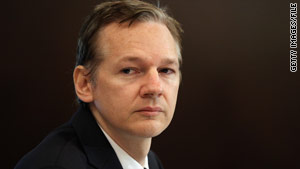
Just hours ahead of an expected release of three million classified U.S. documents, the website WikiLeaks said it has been the target of a computer attack.
“We are currently under a mass distributed denial of service attack,” WikiLeaks tweeted midday Sunday.
Fifteen minutes later, WikiLeaks vowed that it would go ahead with the document dump, which is expected to include State Department cables that Washington fears will wound foreign relations, through its media partners, who received advance access to the documents, if they couldn’t get the site back up in time.
“El Pais, Le Monde, Speigel, Guardian & NYT will publish many US embassy cables tonight, even if WikiLeaks goes down,” WikiLeaks tweeted.
The Guardian site was also briefly down Sunday morning with a 404 error.
Notable Tweets from Notable Tweeters:
benpolitico Ben Smith
RT @tomgara: @arabist nails it: this Wikileaks dump is more significant for the Arab world than it is for the US http://bit.ly/e2tVLM
Wikileaks Drops the Big One
Posted: November 28, 2010 Filed under: Diplomacy Nightmares, Live | Tags: Wikileaks 110 Comments Newspapers around the world are dropping the latest Wikileaks documents. The site itself is inaccessible but its tweets say that it is not under attack of any kind.
We’ll be adding to this post as links become available.
This overview was just put up by Huffpo.
The New York Times and The Guardian have published classified State Department documents provided to them by the online website WikiLeaks. The WikiLeaks website appeared to be inaccessible, and WikiLeaks said in its Twitter feed that it was experiencing a denial of service attack. WikiLeaks also provided the documents to Spain’s El Pais, France’s Le Monde, and Germany’s Der Spiegel.
According to The New York Times, the cables reveal how foreign leaders, including Israel’s defense minister Ehud Barak and Saudi Arabia’s King Abdullah, urged the U.S. to confront Iran over its nuclear program.
“The cables also contain a fresh American intelligence assessment of Iran’s missile program,” The Times reports. “They reveal for the first time that the United States believes that Iran has obtained advanced missiles from North Korea that could let it strike at Western European capitals and Moscow and help it develop more formidable long-range ballistic missiles.”
The White House has made a statement and you can read that on the HuffPo piece too.
From Der Spiegel on line: A Super Power’s View of the World
The tone of trans-Atlantic relations may have improved, former US Ambassador to Germany William Timken wrote in a cable to the State Department at the end of 2006, but the chancellor “has not taken bold steps yet to improve the substantive content of the relationship.” That is not exactly high praise.
And the verdict on German Foreign Minister Guido Westerwelle? His thoughts “were short on substance,” wrote the current US ambassador in Berlin, Philip Murphy, in a cable. The reason, Murphy suggested, was that “Westerwelle’s command of complex foreign and security policy issues still requires deepening.”
Such comments are hardly friendly. But in the eyes of the American diplomatic corps, every actor is quickly categorized as a friend or foe. King Abdullah of Saudi Arabia? A friend: Abdullah can’t stand his neighbors in Iran and, expressing his disdain for the mullah regime, said, “there is no doubt something unstable about them.” And his ally, Sheikh bin Zayed of Abu Dhabi? Also a friend. He believes “a near term conventional war with Iran is clearly preferable to the long term consequences of a nuclear armed Iran.”
[MABlue here]
I can’t wait to find out more in the hard copy of Der Spiegel tomorrow. As a subscriber, I normally get the new edition Saturdays in my mail. This week however, that did dot happen. So far, nobody has seen tomorrow’s edition where there’s more.
There are additional interesting links on the website of Der Spiegel:
Orders from Clinton: US Diplomats Told to Spy on Other Countries at United Nations
Foreign Policy Meltdown: Leaked Cables Reveal True US Worldview
Diplomatic Cables Reveal US Doubts about Turkey’s Government
The Germany Dispatches: Internal Source Kept US Informed of Merkel Coalition Negotiations
WikiLeaks FAQ: What Do the Diplomatic Cables Really Tell Us?

BBC News has a fine overview of some of the major issues addressed in the cables.
The NYT: Cables Shine Light Into Secret Diplomatic Channels
Some of the cables, made available to The New York Times and several other news organizations, were written as recently as late February, revealing the Obama administration’s exchanges over crises and conflicts. The material was originally obtained by WikiLeaks, an organization devoted to revealing secret documents. WikiLeaks intends to make the archive public on its Web site in batches, beginning Sunday.
The anticipated disclosure of the cables is already sending shudders through the diplomatic establishment, and could conceivably strain relations with some countries, influencing international affairs in ways that are impossible to predict.
The Guardian: US embassy cables leak sparks global diplomacy crisis
• More than 250,000 dispatches reveal US foreign strategies
• Diplomats ordered to spy on allies as well as enemies
• Hillary Clinton leads frantic ‘damage limitation’…
At the start of a series of daily extracts from the US embassy cables – many of which are designated “secret” – the Guardian can disclose that Arab leaders are privately urging an air strike on Iran and that US officials have been instructed to spy on the UN’s leadership.
These two revelations alone would be likely to reverberate around the world. But the secret dispatches which were obtained by WikiLeaks, the whistlebowers’ website, also reveal Washington’s evaluation of many other highly sensitive international issues.
These include a major shift in relations between China and North Korea, Pakistan’s growing instability and details of clandestine US efforts to combat al-Qaida in Yemen.
Among scores of other disclosures that are likely to cause uproar, the cables detail:
• Grave fears in Washington and London over the security of Pakistan’s nuclear weapons programme
• Alleged links between the Russian government and organised crime.
• Devastating criticism of the UK’s military operations in Afghanistan.
• Claims of inappropriate behaviour by a member of the British royal family.
The US has particularly intimate dealings with Britain, and some of the dispatches from the London embassy in Grosvenor Square will make uncomfortable reading in Whitehall and Westminster. They range from serious political criticisms of David Cameron to requests for specific intelligence about individual MPs.
Is WikiLeaks being sabotaged? They alleged the site has been hacked.
WikiLeaks claims attack before expected document release
Just hours ahead of an expected release of three million classified U.S. documents, the website WikiLeaks said it has been the target of a computer attack.
“We are currently under a mass distributed denial of service attack,” WikiLeaks tweeted midday Sunday.
Some of the latest updates
From the Guardian update:
Haaretz focuses on the June 2009 memo. This quotes Israel’s defence minister, Ehud Barak, telling visiting American officials that a strike on Iran’s nuclear facilities was viable until the end of 2010, but after that “any military solution would result in unacceptable collateral damage.”
Reuters found this nugget: Saudi king urged U.S. to attack Iran: WikiLeaks
Saudi King Abdullah repeatedly urged the United States to attack Iran‘s nuclear program and China directed cyberattacks on the United States, according to a vast cache of U.S. diplomatic cables released on Sunday in an embarrassing leak that undermines U.S. diplomacy.
The NYTimes has published the letter exchange between the US Government and Julian Assange:
Letters between Wikileaks and the U.S. Government
Notable Tweets from Notable Tweeters:
benpolitico Ben Smith
RT @TimOBrienNYT: “@evgenymorozov: Saudi King Abdullah proposed implanting Bluetooth chips in Gitmo detainees http://goo.gl/uGln1
ggreenwald Glenn Greenwald
Must-read is right RT @mmhastings “must read: Simon Jenkins on why journalists should defend Wikileaks http://tinyurl.com/37yal4l “
washingtonpost The Washington Post
Leaked cables suggest diplomats ordered to engage in spying, news orgs report http://wapo.st/ecD3Ak#p2#tcot#wikileaks
ggreenwald Glenn Greenwald
To follow WikiLeaks disclosures, @GregMitch is live-blogging documents: http://bit.ly/hl4Vze
Greg Mitchell is at The Nation. I just read this one and it was a wonderful surprising story. Quick, some one get this man to write a book and get a screenwriter!!!
3:40Amazing story of how a 75-year-old American rode a horse over a mountain range to Turkey to finally get home from Iran.
BreakingNews Breaking News
China’s Politburo ordered hacking campaign against Google, per WikiLeaks documents – AFP http://yhoo.it/ihF2rE
GregMitch Greg Mitchell
WikiLeaks site, now up, reveal docs will actually be released for “months” to “do them justice.” http://cablegate.wikileaks.org/
Wikileaks began on Sunday November 28th publishing 251,287 leaked United States embassy cables, the largest set of confidential documents ever to be released into the public domain. The documents will give people around the world an unprecedented insight into US Government foreign activities.
The cables, which date from 1966 up until the end of February this year, contain confidential communications between 274 embassies in countries throughout the world and the State Department in Washington DC. 15,652 of the cables are classified Secret.
The embassy cables will be released in stages over the next few months. The subject matter of these cables is of such importance, and the geographical spread so broad, that to do otherwise would not do this material justice.
The cables show the extent of US spying on its allies and the UN; turning a blind eye to corruption and human rights abuse in “client states”; backroom deals with supposedly neutral countries; lobbying for US corporations; and the measures US diplomats take to advance those who have access to them.
This document release reveals the contradictions between the US’s public persona and what it says behind closed doors – and shows that if citizens in a democracy want their governments to reflect their wishes, they should ask to see what’s going on behind the scenes.
Every American schoolchild is taught that George Washington – the country’s first President – could not tell a lie. If the administrations of his successors lived up to the same principle, today’s document flood would be a mere embarrassment. Instead, the US Government has been warning governments — even the most corrupt — around the world about the coming leaks and is bracing itself for the exposures.
The full set consists of 251,287 documents, comprising 261,276,536 words (seven times the size of “The Iraq War Logs”, the world’s previously largest classified information release).
The cables cover from 28th December 1966 to 28th February 2010 and originate from 274 embassies, consulates and diplomatic missions.
Sunday Reads
Posted: November 28, 2010 Filed under: Breaking News, Democratic Politics, Diplomacy Nightmares, Elections, Global Financial Crisis, Gulf Oil Spill, morning reads, The Great Recession, The Media SUCKS, U.S. Economy | Tags: Bobby Jindal, euro problems, Fed loathing, Irish bankruptcy, Korea, Mortgage defaults, North Korea attacks South Korea, Pigou Tax banking risk, QE2, Rahm Emanuel eligibility, Republican presidential wannabes, Right wing feminotexactlyism 59 Commentsgood morning!!!

Here’s an interesting piece in the Christian Science Monitor about an attempt to knock Rahm Emanuel off the ballot for the Chicago Mayoral election. Emanuel’s eligibility is in question because of his residency in the District as Obama’s Chief of Staff. Does that duty deserve similar treatment to active duty soldiers?
Chicago area election lawyer Burt Odelson filed his challenge to the Chicago Board of Elections, saying that Emanuel does not meet a state law that requires all candidates to be residents of the municipality in which they seek office for at least one year. He filed on behalf of two Chicago residents; on Wednesday, five other challenges were filed separately. Tuesday is the last day objections can be filed to the election board.
Central to Mr. Odelson’s argument is that Emanuel was removed from voter rolls twice during his two-year tenure in Washington, when he served as White House chief of staff to President Obama. During that time, Emanuel rented out his home. His campaign says he maintained ties to the city by paying property taxes, maintaining a driver’s license, and voting in the February primary.
Economists Olivier Jeanne and Anton Korinek at VOX are suggesting Pigou taxes (i.e. sin taxes) on financial corporations that would vary with credit booms and busts. Rules would change depending on the state of the economy. Suggestions include requiring higher capital levels or placing some kind of penalty on an organization when they take on large amounts of credit during an asset price boom. The purpose is to impose the social cost of bailing the organization out on them to prevent from doing so and causing havoc in the financial markets. The idea is that they’d be less able to profit from the leverage so they’d be less likely to go for the risk. Suggestions specifically target mortgages with balloons or “teaser rates” since they are more risky and more likely to blow up in the face of market troubles. The tax would then be used to fund any required bailout.
The optimal tax should also be adapted to the maturity of debt. Long-term debt makes the economy less vulnerable to busts than short-term debt, because lenders cannot immediately recall their loans when the value of collateral assets declines. For example, 30-year mortgages make the economy less prone to busts than mortgages with teaser rates that are meant to be refinanced after a short period of time.
An important benefit of ex-ante prudential taxation during booms is that it avoids the moral hazard problems associated with bailouts. When borrowers expect to receive bailouts in the event of systemic crises, they have additional incentives to take on debt. If the financial regulators accumulate a bailout fund, borrowers may increase their indebtedness in equal measure, leading to a form of “bailout neutrality”
Real Time Economics over at the WSJ has some interesting numbers up on Mortgage defaults. The ever increasing backlog of defaults is worrisome.
492: The number of days since the average borrower in foreclosure last made a mortgage payment.
Banks can’t foreclose fast enough to keep up with all the people defaulting on their mortgage loans. That’s a problem, because it could make stiffing the bank even more attractive to struggling borrowers.
In recent months, the number of borrowers entering severe delinquency — meaning they missed their third monthly mortgage payment — has been on the decline, falling to about 700,000 in October, according to mortgage-data provider LPS Applied Analytics. But it’s still more than double the number of foreclosure processes started.

I personally enjoyed reading this Michelle Goldberg take-down on the Daily Beast of certain right wing women politicians who are trying to campaign as the ‘real’ feminists while throwing out their rewrites of herstory. The Right Wing always rewrites history with the worst revisions. I’m calling what they adhere to feminotexactlyism. Here’s a few tidbits.
The historical revisionism here recalls that of Christian conservatives who try to paint our deistic Founding Fathers as devout evangelicals. At one point, Palin refers to Elizabeth Cady Stanton’s “Declaration of Sentiments,” which came out of the historic 1848 women’s rights convention at Seneca Falls, New York. Stanton deliberately echoed the language of the Declaration of Independence, referring to the rights that women are entitled to “by the laws of nature and of nature’s God.” To Palin, this mention of God proves that Stanton shared her faith: “Can you imagine a contemporary feminist invoking ‘the laws of nature and of nature’s God?’ These courageous women spoke of our God-given rights because they believed they were given equally, by God, to men and women.”
Not really. Stanton was a famous freethinker, eventually shunned by more conservative elements of the women’s movement for her attacks on religion. In one 1885 speech, she declared, “You may go over the world and you will find that every form of religion which has breathed upon this earth has degraded women.” Ten years later, she published the first volume of The Woman’s Bible, her mammoth dissection of biblical misogyny. Stanton was particularly scathing on the notion of the virgin birth: “Out of this doctrine, and that which is akin to it, have sprung all the monasteries and nunneries of the world, which have disgraced and distorted and demoralized manhood and womanhood for a thousand years.”
For more debunking, including that silly one about Susan B Anthony being some how against abortion, go read the article. Facts are such tractable things to Republicans that I wonder why any sane person would quote one without fact checking them first. I just can’t take any more presidential candidates needing basic re-education; let alone presidents that require it.
Speaking of another one in that category, the national spotlight isn’t doing much good for my governor either. I’ve got two sources I’ll quote here. The first one is The American Thinker which you may recall is conservative. They’ve even got his number. It seems that just writing books about yourself is not going to be the path to Presidency any more.
Louisiana Governor Bobby Jindal is busy promoting his new tome Leadership and Crisis with book tour stops all over the country. This latest tour comes on top of his previous speaking tours to raise campaign cash for himself and various Republican candidates around the country. The only place Governor Jindal has trouble visiting is his home state of Louisiana. The joke in Louisiana is that Bobby is known as a governor in 49 states.
The oil spill was a huge scare, but instead of being honest about it, Jindal used it as an opportunity to advance his own political celebrity and perpetuate ridiculously disconcerting and almost masochistic myths about the effects of a deepwater drilling moratorium, none of which turned out to be true. He spent more time posing for the cameras and tagging along with CNN than practically anyone else, yet, in his “memoir,” it’s the Obama Administration who cared about media perception, not him. As an example, he cites a letter he delivered requesting an increase for federally-subsidized food stamps, suggesting that the Obama Administration delayed on their response. According to White House officials, Jindal’s formal request was delivered on the same day that Jindal called a press conference decrying the delays. Pure political theater.
But most importantly, when Jindal says Congressmen should spend more time at home, he should probably listen to his own advice. During the last couple of years, Jindal’s become more known for the things he has done outside of Louisiana than for anything he has done here in Louisiana. Before the November elections, he spent weeks touring the country to support fellow Republican candidates, and only two weeks after the election, he embarked on yet another nationwide tour, this time promoting his memoir.
I have to admit that this next Republican presidential primary is going to have me chewing my finger nails off. If this is the best they have to offer, we are SO sunk.
Both the Koreas are upping the stakes in the Yellow Sea. North Korea is sending veiled threats to the U.S about sending its air carrier–USS George Washington–into the area for joint ‘war games’. SOS Clinton is in talks with the Chinese. This is from The Guardian.
The world’s diplomatic corps is working feverishly to contain the crisis and make sure there is no further conflict. China, which is widely seen as having influence over the North, has held talks with the US between its foreign minister, Yang Jiechi, and the secretary of state, Hillary Clinton. “The pressing task now is to put the situation under control,” the Chinese foreign ministry quoted Yang as telling Clinton.
Meanwhile the US stressed that its military operation with the South – which includes deployment of a nuclear-armed aircraft carrier – was not intended to provoke the North. Yet the North’s news agency addressed that issue: “If the US brings its carrier to the West Sea of Korea [Yellow Sea] at last, no one can predict the ensuing consequences.”
The the joint US-South Korea exercises started late last night. Here’s the report on them from English Al Jazeera.
South Korea’s military later said that explosions – possibly the sound of artillery fire – were heard on Yeonpyeong Island.
South Korea’s Joint Chiefs of Staff said that what is believed to have been a round of artillery was heard on Sunday from a North Korean military base north of the sea border dividing the two Koreas. It was not immediately clear where the round landed.
Residents of the island were ordered to take shelter in underground bunkers, but that order was later withdrawn, according to Yonhap.
Dozens of reporters, along with soldiers and police and a few residents, headed for the bunkers, where they remained for 40 minutes.
I’ve been watching the euro crisis again as the problems with Ireland seem to be creating problems with Spain now. My print copy of The Economist didn’t come this morning so I’ve been having to read the cyber ink here. My Saturday night soak in a hot bath was just not the same without it. So,here’s my idea of a chiller thriller.
Europe’s rescue plan is based on the idea that Ireland and the rest just need to borrow a bit of cash to tide them over while they sort out their difficulties. But investors increasingly worry that such places cannot, in fact, afford to service their debts—each in a slightly different way. In Ireland the problem is dodgy banks and the government’s hasty decision in September 2008 to guarantee all their liabilities. Some investors think this may end up costing even more than the promised EU/IMF loans of some €85 billion ($115 billion)—especially if bank deposits continue to flee the country (see Buttonwood). Ireland’s failing government adds to the doubt, because it could find it hard to push through an austerity budget before a new election (see article). In Greece the fear is that the government cannot raise enough in taxes or grow fast enough to finance its vast borrowing. Likewise in Portugal, which though less severely troubled than Greece nevertheless seems likely to follow Ireland to the bail-out window.
If the panic were confined to these three, the euro zone could cope. But Europe’s bail-out fund is not big enough to handle the country next in line: Spain, the euro’s fourth-biggest economy, with a GDP bigger than Greece, Ireland and Portugal combined.
One has to ask how much the Germans are going to pony up the cross country fiscal policy this will take. I’m still not ready to call the eminent demise of the EURO since every study that I’ve read–and I’ve read lots over the last three years–points to how much trade and foreign direct investment has come from integration. This will test a lot of wills; good an otherwise. Meanwhile, the Irish are rebelling over their deal. They don’t want austerity measures any more than the Greeks do or we do for that matter.
The Economist also weighed in on the “Republican Backlash” to the QE2 calling it perplexing which I believe is equal to me being baffled by the whole thing. It’s still either they don’t know a damn thing (e.g. Republican presidential wannabe candidate number 1 on the link up top) or they just want the power so they don’t really care (e.g Republican presidential wannabe candidate number 2 on the link up top there). Has to be. What is still the weirdest thing to me is how many of them seem to hate Bernanke who is–afterall–a fellow Republican and a Dubya appointee. What a strange, strange world this has turn out to be. I mean Ron Paul is going to be in charge of the House subcommittee on Monetary Policy next year. That’s like putting a representative of Astronauts for a flat earth society in charge of NASA.
Yet the fight is not ultimately over numbers, but ideology. To be sure, the Fed’s reputation has suffered among Americans of all political stripes over its failure to prevent the crisis and its bail-outs of banks. But the tea-party movement holds it in particularly low regard, seeing it as the monetary bedfellow of the hated stimulus and bail-outs. Some 60% of tea-party activists want the Fed abolished or overhauled, according to a Bloomberg poll. One of the movement’s heroes is Ron Paul, a congressman from Texas who wants to scrap the Fed outright and bring back the gold standard. His son Rand, newly elected as a senator from Kentucky, has also been stridently critical. QE can be made to seem sinister: an animated video on YouTube that portrays it as a conspiracy between Goldman Sachs and the Fed to fleece the taxpayer has been viewed over 2m times.
The ideological content of the backlash should not be overestimated. In 1892 William Jennings Bryan, later the Democratic presidential candidate, declared: “The people of Nebraska are for free silver and I am for free silver. I will look up the arguments later.” Liberals accuse the Republican leadership of likewise concocting an excuse to rally their base against Barack Obama. Indeed, the letter to Mr Bernanke criticises QE2 in much the same language used to oppose fiscal stimulus: as a dampener of business confidence and stability.
Well, I’ve just about had it with the print news today. Do you suppose the Sunday News Programs will have anything on more meaningful?
Ah, probably not.
What’s on your reading and blogging list today?
The Wikileaks begin: breaking news and live blogging
Posted: November 25, 2010 Filed under: Breaking News, Diplomacy Nightmares | Tags: Wikileaks 46 CommentsSome of the Wikileak documents related to U.S. diplomacy are begining to show up in Newspapers throughout the world. I just read in the Jerusalem Post that there is evidence that Turkish citizens smuggled weapons to al-Qaida.
Wikileaks is planning to release files that show Turkey has helped al-Qaida in Iraq, according to London-based daily Al-Hayat. The newspaper also reported that the US helped the PKK, a Kurdish rebel organization.
One of the documents, a US military report, reportedly charges Turkey with failing to control its borders, because Iraqi citizens residing in Turkey provided al-Qaida with supplies to build bombs, guns and ammunition.
Minkoff Minx found this in the Ottawa Star.
Canada’s official lips were sealed tight on the matter, except to confirm dual overtures from Washington — David Jacobson, the U.S. ambassador to Ottawa, gave a head’s up to Foreign Affairs Minister Lawrence Cannon, while the Canadian embassy in D.C. is “currently engaging” with the State Department.
Sources in Ottawa acknowledged on background that even after the U.S. briefings the scope of what’s coming remains unclear. “We are not privy to the full contents of documents which may be leaked,” foreign affairs spokesperson Alain Cacchione said in an email to the Star.
I’m watching tweet after tweet of status updates from Wikileaks like this one:
wikileaks WikiLeaks
Australian Foreign Minister Kevin Rudd briefed by Hillary Clinton on Wikileaks, according to SMH
What is the Sound of Styrofoam Columns Collapsing?
Posted: November 22, 2010 Filed under: Diplomacy Nightmares, Team Obama, The Media SUCKS | Tags: foreign policy, Middle East Peace Process, START 20 Comments I suppose that I really don’t need to remind any of you of all the triumph of the Dauphin de Chicago that we endured during 2008. In fact, I don’t want to go there any more. I am going to mention that aspirational Nobel Peace Prize from a year later. And, okay, one more inkle of all that 2008 hoopla in Germany when Der Speigel asked “Where is Germany’s Obama”? Do you honestly think they’d really ask that question now and want an answer?
How the worm has turned and the facades have fallen. The one area where Obama was supposed to excel was in the world forum. If the world was expecting something different, they are sure realizing they didn’t get it. But just as in 2008, they trumped up Obama into some mythological sun god shining wisdom upon the world, we’re now seeing every one peel the paint off styrofoam and skin. What is it about the Villagers?
Do they all really want to write heroic epics and tragic endings rather than just report the damned news?
This tidbit is from Politico. Well, let’s just say I’m going to start with Politico. There will be more coming than this headline: ‘View from Middle East: President Obama is a problem’. A problem? Isn’t that a little different tale than alt that “this is the one we’ve been waiting for” spin a few years ago?
He was supposed to be different. His personal identity, his momentum, his charisma and his promise of a fresh start would fundamentally alter America’s relations with the Muslim world and settle one of its bitterest grievances.
Two years later, he has managed to forge surprising unanimity on at least one topic: Barack Obama. A visit here finds both Israelis and Palestinians blame him for the current stalemate — just as they blame one another.
Instead of becoming a heady triumph of his diplomatic skill and special insight, Obama’s peace process is viewed almost universally in Israel as a mistake-riddled fantasy. And far from becoming the transcendent figure in a centuries-old drama, Obama has become just another frustrated player on a hardened Mideast landscape.
…
The political peace process to which Obama committed so much energy is considered a failure so far. And in the world’s most pro-American state, the public and its leaders have lost any faith in Obama and — increasingly — even in the notion of a politically negotiated peace.
Even those who still believe in the process that Obama has championed view his conduct as a deeply unfunny comedy of errors.
“He’s like rain,” said a top Israeli official involved in diplomacy with the U.S., speaking of Obama’s role in negotiations. “You can do all kinds of things to cope with it.”
Some fret that not only has Obama failed to move the process forward but he and his Israeli and Palestinian counterparts may have dealt it a setback that will leave it worse off than when they began.
Obama has moved from the man that can do nothing wrong to the man that cannot do anything right. His failures since the mid term “shellacking” have been failure on the world stage. China, South Korea, Brazil, and now both Israel and The Palestine Authority are telling unfavorable tales.
How could any one be less respected than a President who thinks massaging the shoulders of a German Chancellor is acceptable behavior?
The Politico narrative is a long one and is peppered with items like this.
But the American president has been diminished, even in an era without active hostilities between Israelis and Palestinians. His demands on the parties appear to shrink each month, with the path to a grand peace settlement narrowing to the vanishing point. The lack of Israeli faith in him and his process has them using the talks to extract more tangible security assurances — the jets. And though America remains beloved, Obama is about as popular here as he is in Oklahoma. A Jerusalem Post poll in May found 9 percent of Israelis consider Obama “pro-Israel,” while 48 percent say he’s “pro-Palestinian.”
Other polling in Israel shows a growing gap between aspirations for peace and the faith that it can happen. One survey last month found that 72 percent of Israelis favor negotiations, while only 33 percent think they can bear fruit. (Palestinians show a smaller gap, primarily because a smaller majority favors negotiations.)Obama has resisted advisers’ suggestions that he travel to Israel or speak directly to Israelis as he has to Muslims in Egypt, Turkey and Indonesia.
“Israelis really hate Obama’s guts,” said Shmuel Rosner, a columnist for two leading Israeli newspapers. “We used to trust Americans to act like Americans, and this guy is like a European leader.”
Many senior Israeli leaders have concluded that Hillary Clinton and John McCain were right about Obama’s naiveté and inexperience.
So, it may be expected that Israel misses some cowboy swagger and doesn’t want any more “European-style Leaders”. The article does spend most of its virtual ink on the I side of the I/P equation. As we know from experience, any conversation about that topic tends to escalate into more than discussion; even among friends. There’s just one P in there to 9 I’s. Where’s the balance in that? Has every one in the U.S. bought into the new paradigm of what “fair and balanced” represents?
But, Politico isn’t the only one in the process of toppling the Styrofoam columns today. WAPO’s Jackson Diehl also examines Obama’s Foreign Policy today and suggests Obama may need an update . He timetrips back to the 80s as a way to talk about the new START treaty process. Diehl looks for clues in that, the I/P negotiations, and the recent tour of Asia’s nascent democracies. The bottom line is not flattering. Diehl concludes that Obama is stuck on the 80s. (Let’s hope that doesn’t include the Presidential taste in hairstyles and clothing.)
Still, this administration is notable for its lack of grand strategy – or strategists. Its top foreign-policy makers are a former senator, a Washington lawyer and a former Senate staffer. There is no Henry Kissinger, no Zbigniew Brzezinski, no Condoleezza Rice; no foreign policy scholar.
Instead there is Obama, who likes to believe that he knows as much or more about policy than any of his aides – and who has been conspicuous in driving the strategies on nuclear disarmament and Israeli settlements. “I personally came of age during the Reagan presidency,” Obama wrote in “The Audacity of Hope.” Yes, and it shows.
Of course, the Conservative Blogosphere is having a hey day with both of these pieces. Why wouldn’t they? What’s lacking is a thoughtful liberal response to all of this. What is also lacking is any mention of the Secretary of State who has been receiving some pretty glowing reviews and must be seen as carrying out an entire White House policy. If the foreign policy is visionless, wouldn’t that reflect on Hillary Clinton also?
Hidden away on Project Syndicate is an article on START by Radosław Sikorski. Sikorski is Poland’s Foreign Minister. Poland is a country that has not forgotten the 1980s at all.
The US remains the world’s most powerful state, however, and the senators’ decision will inevitably have an impact beyond their country’s borders. It will be particularly significant for Poland, a staunch ally of the US in NATO. So it is important to make clear: my government supports the ratification of New START, because we believe it will bolster our country’s security, and that of Europe as a whole.
President Barack Obama’s nuclear-disarmament efforts have gained wide support in Poland. The country’s first democratic prime minister, along with two former presidents, including Lech Wałęsa, the legendary leader of Solidarity, published a joint article last year in support of Obama’s bold disarmament agenda.
For almost a year now, since the expiration of the original START treaty in December 2009, no US inspectors have been on the ground in Russia to verify the state of its nuclear arsenal. The START verification provisions provide crucial information that is essential for the force-planning process.
Without a treaty in place, holes will soon appear in the nuclear umbrella that the US provides to Poland and other allies under Article 5 of the Washington Treaty, the collective security guarantee for NATO members. Moreover, New START is a necessary stepping-stone to future negotiations with Russia about reductions in tactical nuclear arsenals, and a prerequisite for the successful revival of the Treaty on Conventional Forces in Europe (CFE).
While we in Poland do not perceive an immediate military threat from Russia, most of the world’s active tactical or sub-strategic nuclear weapons today seem to be deployed just east of Poland’s borders, in speculative preparation for conflict in Europe. The cataclysmic potential of such a conflict makes it essential to limit and eventually eliminate this leftover from the Cold War.
The START treaty is area where the U.S. should and could succeed. Secretary of State Hillary Clinton has indicated that it is deal that should be ‘beyond politics’.
U.S. President Barack Obama said Saturday that ratifying the treaty is a “national security imperative” that cannot be delayed. He called on the Senate for quick passage of the deal.
Ratification requires support from 67 of the Senate’s 100 members.
Senator Jon Kyl, the chief Republican negotiator on the issue, has resisted the president’s efforts to hold the vote before the new Congress takes office in January with a stronger Republican presence. Kyl has voiced concerns that the new START treaty would harm U.S. missile defense efforts.
I’m very much with Clinton on this one and with the President. For a press that seemed eager to believe that those Styrofoam columns were the real deal two years ago, they now stand as eager to push them over and point to an emperor with no clothes. This is evident even when the topic is something that should be above politics and not highly debatable like the value of START.
Why can’t we get some reasonable attempt at holding people accountable rather than these all in or all out approaches? You don’t make up for the sins of 2008 by committing equally egregious but different sins in 2010. Let’s not lose sight that the START treaty is good policy.
Just sayin’.

 peej
peej Carissa
 bostonboomer
 dakinikat
 ecocatwoman
 mablue2
 Mama Lopez
 peggysue22
 quixote
 skydancingguestblogger
 Mona (aka Wonk the Vote)



 Sky Dancing
Recent Comments