Today is the day that Elon Musk said he would remove the blue checkmarks from “legacy” verified accounts on Twitter unless the users paid $8 per month. For businesses and government entities, the cost is much higher. The blue checks identify notable people who provide most of the engagement on the social media site. But so far today, the blue checks are still in place. Over the past few days, news organizations and the White House have said they will not pay, and a number of celebrities have also declined to pay. It doesn’t look like Musk will get much income from this stupid policy.
The New York Times, Los Angeles Times,the Washington Post, BuzzFeed, POLITICO, and Vox all scoffed at the notion on Thursday that they would pay Twitter for the feature, which has been free since it was introduced years ago but will soon be phased out.
CNN said it has no intention of paying for Twitter’s subscription service for its accounts but would make a few exceptions for some key staff.
“As of right now, we do not plan to pay for Twitter Blue subscriptions for either our brand or individual accounts, except for a small number of select teams who need this verification as an essential part of newsgathering and reporting,” said Athan Stephanopoulos, CNN’s chief digital officer, in a staff memo Friday.
Twitter announced last week that it will begin “removing legacy verified checkmarks” starting April 1. Musk has aimed to charge organizations that want to retain a checkmark adjacent to their account name $1,000 a month, plus an additional $50 a month for each affiliated account.
Historically, a blue checkmark placed next to the name of an account has indicated that the social media company has confirmed the identity of the person or business operating it. The feature has been helpful to Twitter’s entire community, giving the public an easy way of distinguishing between authentic and inauthentic users.
But Musk, who has sought to change Twitter’s business model and make it less reliant on advertisers — many of which have fled the company since he took over last year — wants to charge for the coveted check.
Musk earlier this year launched Twitter Blue, a subscription service that costs $8 a month. The main benefit? A blue checkmark.
The White House will not pay to have its staff’s official Twitter profiles continue to be verified, according to guidance issued to staffers via an email obtained by Axios….
Official White House staffers rely on their verified accounts to inform the public on behalf of the administration. Verification, combined with the designated Twitter profiles, helped to ensure the public could trust those messages….
“It is our understanding that Twitter Blue does not provide person-level verification as a service. Thus, a blue check mark will now simply serve as a verification that the account is a paid user,” White House director of digital strategy Rob Flaherty told staffers in an email sent Friday afternoon.
The guidance, which was sent internally to White House staffers, doesn’t necessarily apply to government agencies, but a source familiar with White House plans said it may send guidance to some agencies and departments in the future.
This thread by a former Twitter employee provides a great deal of information about the past policies on Twitter verification and why making people who provide most of the content on the site pay for the privilege is really stupid.
1) As someone who was (briefly) in charge of the Twitter Media team – the group tasked with getting high profile people onto Twitter, and verification – AND as one of the few ever to voluntarily give up the blue check, I want to try to articulate how risky this policy change is. https://t.co/ABYu2kJIWa
3) We verified those people so that any user could know they were interacting with a real account; part of the fun of twitter is the real time dialogue with thought leaders (that then flows to others in the replies who get to share their thoughts and ideas).
Beginning April 1, Twitter will start removing “legacy verified checkmarks” from the profiles of celebrities, journalists, civil servants and other public figures. Twitter is making the move in an attempt to force more users to pay for “verified” check marks, as part of its agenda to monetize a service that was previously handled by the company for free.
But so far, the plan isn’t going well. As CNN reports, many media organizations, including The New York Times, Los Angeles Times, The Washington Post, BuzzFeed, POLITICO and Vox, are already saying they have no plans to dish out money for Twitter Blue, the fee-based service that includes those blue check marks. The White House will also not be paying staffers for verified accounts, according to Axios. And Los Angeles Lakers star LeBron James promises that he “ain’t paying.”
This was an entirely predictable case of Twitter CEO Elon Musk playing himself. Why would media outlets — or anyone else — rush to pay for verified badges when he’s systematically destroyed their meaning? [….]
Williard, by Emma Hesse
Musk believed he could turn verified badges into a key source of new revenue for making Twitter profitable, a goal that’s surely growing more difficult as advertisers have fled Twitter en masse after Musk took over the company last year. But now key demographics that he would’ve hoped to have secured for paying for the service — journalists, famous celebrities, and government workers — might be checking out altogether. And that’s because Musk unraveled the purpose of the very thing he wanted to make money off.
As I’ve explained before, Musk fundamentally misunderstood or disregarded the true value of verified badges to most people who had them. Their original purpose was for Twitter to confirm that public figures were who they actually said they were in order to combat impersonation and misinformation. It was the key feature of what made Twitter a reliable source of news: verified accounts helped separate trustworthy statements and reporting from rumors and false claims.
But Musk decided that the reason verified badges were important was not because they verified identity, but because of the way they signaled social clout — and that he could cash in on this by trying to get a bigger network of people to pay for them. So now under his paid verification service, users’ identities are not confirmed, but blue checks can be distributed to anyone willing to open up their wallet. In other words, he’s hollowed out their meaning but kept the trappings intact.
Yesterday, an interesting court case involving Twitter was decided. The case demonstrates how Twitter has been used to promote disinformation.
Douglass Mackey, a supporter of former president Donald Trump who used Twitter to disseminate false information to redirect would-be voters of Hillary Clinton in the 2016 presidential election, was convicted Friday on a charge of conspiracy against rights, the U.S. attorney’s office in Brooklyn announced.
A federal jury issued the verdict after a week-long trial in New York. Mackey, 33, faces 10 years in prison.
“Today’s verdict proves that the defendant’s fraudulent actions crossed a line into criminality and flatly rejects his cynical attempt to use the constitutional right of free speech as a shield for his scheme to subvert the ballot box and suppress the vote,” Breon Peace, the U.S. attorney for the Eastern District of New York, said in a statement.
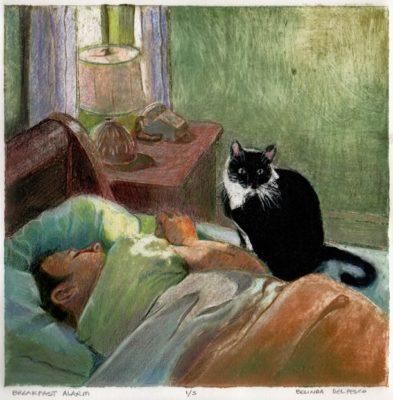
By Belinda Del Pesco
In the months leading up to the 2016 presidential election, prosecutors said Mackey used a Twitter alias with about 58,000 followers — @Ricky_Vaughn99, reportedly derived from actor Charlie Sheen’s character Ricky Vaughn in the 1989 film “Major League” — to circulate messages on Twitter that encouraged Clinton’s supporters to “vote” via text message or social media, methods that were not valid.
“For example, on November 1, 2016, in or around the same time that Mackey was sending tweets suggesting the importance of limiting ‘black turnout,’ the defendant tweeted an image depicting an African American woman standing in front of an ‘African Americans for Hillary’ sign,” the U.S. attorney’s office said.
The deceptive ad stated: “Avoid the Line. Vote from Home,” “Text ‘Hillary’ to 59925” and “Vote for Hillary and be a part of history.” It also included fine print at the bottom that mimicked a real ad, stating: “Must be 18 or older to vote. One vote per person. Must be a legal citizen of the United States. Voting by text not available in Guam, Puerto Rico, Alaska or Hawaii. Paid for by Hillary For President 2016.”
Prosecutors said Mackey also used his Ricky Vaughn persona to tweet a similar deceptive ad in Spanish, which included a copy of Clinton’s campaign logo and her campaign’s oft-used “ImWithHer” hashtag.
Leading up to Election Day, at least 4,900 unique telephone numbers texted “Hillary” or something similar to the 59925 text number, the U.S. attorney’s office said. At the time, Mackey’s fake Twitter profile was rated the 107th most influential with respect to that year’s election, according to an analysis done by the MIT Media Lab, the U.S. attorney’s office said.
Read more at the WaPo.
We are all waiting with bated breath to find out what will happen on Tuesday when Trump is expected to voluntarily surrender and face charges recommended by the grand jury convened by Manhattan District Attorney Alvin Bragg. Trump has been using his social media platform Truth Social to threaten both the DA and the Judge in the case. I hope the judge will issue a gag order to shut him up. So far Trump’s followers haven’t shown signs of organizing as they did for January 6, but New York is preparing for possible violence. Here’s the latest:
One year ago this week, the Manhattan district attorney’s investigation into Donald J. Trump appeared to be dead in the water.
The two leaders of the investigation had recently resigned after the new district attorney, Alvin L. Bragg, decided not to charge Mr. Trump at that point. Amid a fierce backlash to his decision — and a brutal start to his tenure — Mr. Bragg insisted that the investigation was not over. But a disbelieving media questioned why, if the effort was still moving forward, there were few signs of it.
“Unless y’all are great poker players,” Mr. Bragg told The New York Times in an early April 2022 interview, “you don’t know what we’re doing.”
What they were doing, new interviews show, was going back to square one, poring over the reams of evidence that had already been collected by his predecessor.
For a time, their efforts were haphazard as they examined a wide range of Mr. Trump’s business practices, including whether he had lied about his net worth, which was the focus of the investigation when Mr. Bragg had declined to seek an indictment. But by July, Mr. Bragg had decided to assign several additional prosecutors to pursue one particular strand that struck him as promising: a hush-money payment made on Mr. Trump’s behalf to a porn star during the final days of the 2016 presidential campaign.
On Thursday, Mr. Trump was indicted on that strand. He is expected to surrender to the authorities in Manhattan on Tuesday and face arraignment on more than two dozen charges, which will be unveiled at that time.
Read how it happened at the NYT link. It’s a long, interesting read.
Former President Donald Trump is facing multiple charges of falsifying business records, including at least one felony offense, in the indictment handed down by a Manhattan grand jury, two people familiar with the matter told The Associated Press on Friday.
He will be formally arrested and arraigned Tuesday in his hush money case, setting the scene for the historic, shocking moment when a former president is forced to stand before a judge to hear the criminal charges against him.
The indictment remained sealed and the specific charges were not immediately known, but details were confirmed by people who spoke on condition of anonymity to discuss information that isn’t yet public….
When Trump turns himself in, he’ll be booked mostly like anyone else facing charges, mug shot, fingerprinting and all. But he isn’t expected to be put in handcuffs; he’ll have Secret Service protection and will almost certainly be released that same day….
In the meantime, Trump’s legal team prepared his defense while the prosecutor’s office defended the grand jury investigation that propelled the matter toward trial. Congressional Republicans, as well as Trump himself, contend the whole matter is politically motivated.
“We urge you to refrain from these inflammatory accusations, withdraw your demand for information, and let the criminal justice process proceed without unlawful political interference,” Leslie Dubeck, general counsel in the office of Manhattan District Attorney Alvin Bragg, wrote in a letter sent Friday to three Republican House committee chairs that was obtained by The Associated Press.
New York City is making plans for security and to deal with any possible violence next week.
Since Trump’s March 18 post claiming his arrest was imminent, authorities have ratcheted up security, deploying additional police officers, lining the streets around the courthouse with barricades and dispatching bomb-sniffing dogs. They’ve had to respond to bomb and death threats, a suspicious powder scare and a pro-Trump protester who was arrested Tuesday after witnesses say she pulled a knife on passersby.
Since no former president had ever been charged with a crime, there’s no rulebook for booking the defendant. He will be fingerprinted and have a mug shot taken, and investigators will complete arrest paperwork and check to see if he has any outstanding criminal charges or warrants, according to a person familiar who requested anonymity to discuss sensitive security operations.
Included in a litany of profane, typo-laden emails sent to Bragg on the heels of Trump’s Thursday indictment were overtly racist and anti-Semitic insults and threats on the DA’s life.
“Hay George Soros a** hole puppet If you want President Trump come and get me to,” read one email. “Remember we are everywhere and we have guns.” [….]
People apparently unhappy about Bragg’s still-sealed indictment against Trump targeted multiple email addresses associated with Bragg’s website. The correspondence was shared exclusively with the Daily News by a senior adviser to Bragg, who asked to remain anonymous.
“How do we a a [n—-r] like you removed feom office?” read another email.
On a section of Bragg’s campaign website, where people can sign up to receive updates about Bragg’s work, scores of people entered fake names using racial epithets targeting the DA. The majority included despicable language like “bl*** trash [f—-r]” and “Aids Infested…” [….]
The largely anonymous onslaught comes as Trump’s incendiary rhetoric directed at Bragg, widely condemned as both violent and racist, escalates to a fever pitch following his indictment. Bragg is Manhattan’s first Black district attorney.
Minutes after news broke of former President Donald Trump’s indictment, a comment on the pro-Trump internet forum Patriots.win, also known as TheDonald, skyrocketed to the top of the message board.
“****ACCELERATE,” the comment, written by a user named TheSpeakerfortheDead, reads in its entirety.
Below that user, others quickly piled on, saying the grand jury that indicted Trump is “guilty of treason” and that their personal information should be made public.
The word “accelerate” is a reference to the far-right term accelerationism, the idea that the state must be abolished, usually violently, and replaced with a new one.
While there is little evidence of similar planning for real-world unrest just yet, extremism researchers are keeping a close eye on the varied calls for everything from targeted attacks on the district attorney who brought the case to a new civil war.
“Accelerationism is a concept on the far right that’s defined by a cynicism and disbelief in the legitimacy of the democratic process or in functions of government,” said Jared Holt, a researcher at the extremism studies nonprofit Institute for Strategic Dialogue. “Subscribers to it suggest as a solution a series of actions that are often violent, and meant to compromise or hasten what they believe to be unavoidable collapse of that system.”
Holt said the term was used earlier in the decade to describe white supremacist extremist groups like Atomwaffen, who frequently agitate for and commit acts of violence. Some users on pro-Trump forums have begun to embrace the nomenclature as more and more radical and violent rhetoric has seeded into their space.
“The hope is that by advocating for the destruction of those systems or for the destabilizing of society — whether it’s through mass violence or purposeful misinformation — by playing a role in the collapse that they would also cement a position for themselves when they’re rebuilding it in their own image,” Holt he said.
Former President Donald Trump can’t seem to stop talking about his indictment. But once he’s arraigned, it’s “extremely likely” that he’ll have to, a former senior staffer with the Manhattan District Attorney’s Office told Insider.
His freedom to rant on Truth Social and say what he wants about his case at rallies will likely change once he surrenders and appears in a Manhattan courthouse, according to Duncan Levin, who is also a former federal prosecutor with the Department of Justice.
Manhattan’s Acting Supreme Court Justice Juan Merchan, who is expected to arraign Trump on Tuesday, is likely to put conditions on his release, and that’s “most likely” when the judge will issue a gag order, restricting Trump from discussing the case, Levin said. If Trump violates it by speaking about the litigation outside the courtroom, he could face consequences.
Punishment for criminal contempt, under New York law, is a fine not exceeding $1,000, jail for up to 30 days or both.
“I think it’s not only a possibility, but it’s extremely likely that there will be a gag order in the case,” said Levin, known for representing clients including Harvey Weinstein and Anna Sorokin. “Gag orders are very common in criminal cases, particularly in cases where there is an enormous amount of pretrial publicity like this one.”
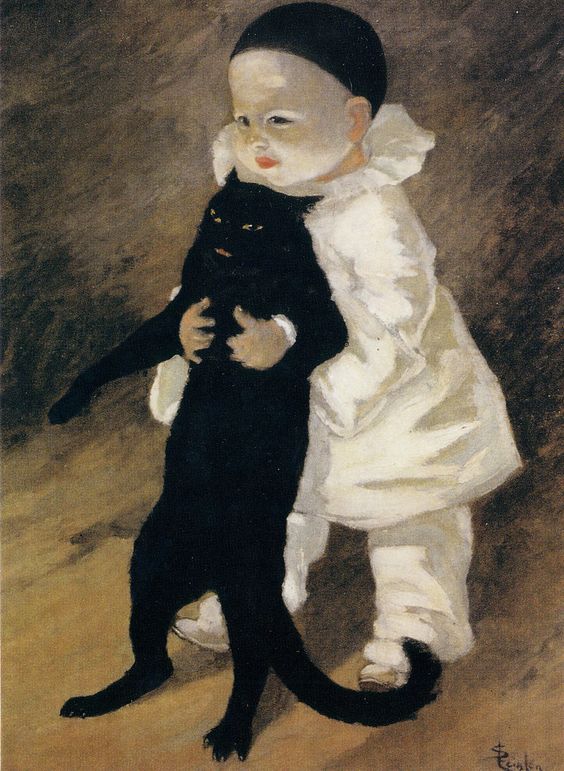
Irina Kalentieva – Gustave Francois Lasellaz French 1848-1910
A bit more:
If there’s a gag order, Levin said Trump will be “very limited” in what he’s able to say, even if there may be proxies who speak for him. The court has the ability to set the rules for his conduct while he’s most likely to be out on bail, pending proceedings.
“This is a criminal case now, so the rules have changed, and the rules are no longer in his purview to make,” Levin said. “He is a criminal defendant and, you know, we see hundreds of thousands of criminal defendants across the country every day who have a lot of rights stripped away from them and he is now one of them. These proceedings are going to change his life.”
Former Indiana Attorney General Jeff Modisett said he also expected that a judge could narrowly craft a gag order that could survive an appeal. He added that Trump’s status as a presidential candidate certainly complicates the First Amendment questions that are always present when such an order is considered.
“I could see where in a case like this based upon statements like that a judge could … issue a gag order,” Modisett said after an Insider reporter read to him the former president’s attack on Merchan. “Given Donald Trump’s history in litigation there is likely to be an appeal, but a carefully defined, narrowly restricted gag order would be upheld by the courts on appeal.”
So that’s what’s happening today as I see it. What do you think? What other stories are you following?
Did you like this post? Please share it with your friends:
Late last night the Department of Justice appealed Judge Loose Cannon’s ruling in the battle over the classified documents that Trump stole on his way out of the White House.
The Department of Justice is asking a federal appeals court to temporarily block a Trump-appointed judge’s ruling that prevents it from accessing hundreds of pages of classified records seized amid the thousands of pages of government documents taken from the former president’s Mar-a-Lago home.
“The district court has entered an unprecedented order enjoining the Executive Branch’s use of its own highly classified records in a criminal investigation with direct implications for national security,” the Justice Department wrote in its motion Friday.
The Justice Department on Friday argued that any considerations of claims for return of property or attorney-client and executive privilege were “categorically inapplicable to the records bearing classification markings.”
“Plaintiff has no claim for the return of those records, which belong to the government and were seized in a court-authorized search,” the Justice Department wrote.
Although Trump previously suggested he had declassified or designated documents seized from his home as “personal,” the Justice Department said he “has never represented that he in fact took either of those steps — much less supported such a representation with competent evidence. The court erred in granting extraordinary relief based on unsubstantiated possibilities.”
The Justice Department also argued that its request for a limited stay wouldn’t disrupt the special master’s review of other materials and “irreparably harms the government by enjoining critical steps of an ongoing criminal investigation and needlessly compelling disclosure of highly sensitive records, including to Plaintiff’s counsel.”
In a filing with the 11th Circuit Court of Appeals in Atlanta Friday night, prosecutors said the government is facing irreparable harm as a result of U.S. District Court Judge Aileen Cannon’s ruling putting the potentially classified records off-limits to the investigative team until an outside expert conducts a review of them and considers Trump’s objections to their seizure.
“The court’s order hamstrings that investigation and places the FBI and Department of Justice … under a Damoclean threat of contempt,” DOJ lawyers said in their 29-page filing, adding, “It also irreparably harms the government by enjoining critical steps of an ongoing criminal investigation and needlessly compelling disclosure of highly sensitive records, including to [Trump’s] counsel.”
The Justice Department’s widely expected escalation of the legal fight came one day after the Trump-appointed judge rebuffed prosecutors’ request for a stay that would essentially carve out the national security-related records — some bearing markings such as “Top Secret/SCI” — from the outside oversight Trump’s legal team requested.
The filing was an unsparing rejection of Cannon’s handling of the entire matter, saying it has jeopardized national security, is based on flimsy or baseless interpretations of executive privilege and could enable further obstruction of efforts to recover additional missing documents.
“The government’s need to proceed apace is heightened where, as here, it has reason to believe that obstructive acts may impede its investigation,” prosecutors wrote….
The inability of federal prosecutors to advance their criminal probe has complicated separate efforts by the intelligence community to assess the harm that may have been caused by their improper storage in Trump’s unsecured storage room, prosecutors say, contending that the criminal investigation is inextricably tied to the national security review.
And prosecutors suggested that the restrictions on the FBI’s criminal work would prevent investigators from determining what may have once resided in dozens of empty folders, also bearing classification marks, found among Trump’s belongings.
“The injunction also appears to bar the FBI and DOJ from further reviewing the records to discern any patterns in the types of records that were retained, which could lead to identification of other records still missing,” prosecutors indicated in the filing.
The opinion’s essential flaws go well beyond straining the law and stretching facts in favor of Donald Trump. The ruling rests on the most basic dereliction of judicial responsibility, and it represents a complete departure from the bedrock principle of separation of powers.
Cannon was actually handed a graceful way back from her also broadly pilloried opinion last week, in which she had determined that a special master was required to review the government documents seized at Mar-a-Lago.
The Justice Department asked for a modest stay extending to only 100 pages of classified material found at the beach resort. It is beyond controversy that such documents are off-limits to a private citizen like the former president.
Trump’s lawyers did not try to contest that principle. Rather they argued, bizarrely, that just because the government said the documents were classified, it wasn’t necessarily so.
That, of course, is spectacular gibberish. The very meaning of classified documents is that the executive branch has made a determination about their content and marked them classified.
But Cannon adopted Trump’s Alice-in-Wonderland approach. She concluded that it would not be “appropriate” — the closest thing to legal reasoning in her opinion — “to accept the government’s conclusion on these important and disputed issues without further review by a neutral third-party,” that is, a special master.
Cannon, in essence, is redefining the classification process to be simply a provisional executive branch judgment subject to overruling by individual judges such as herself. Apart from its legal bankruptcy, such a process would wreak bedlam in matters of national intelligence, which turn on the very designations that Cannon set aside.
More crazy from Judge Loose Cannon:
The Trump team’s next gambit, which the judge also adopted, was even more logically and legally threadbare. The former president has argued repeatedly in public that he declassified the documents. But his attorneys have studiously avoided saying that in court papers, where lies are subject to professional and criminal penalties. The Trump filings indicate only that he perhaps had declassified the documents.
The appropriate response for a judge in these circumstances is to put Trump on the stand and ask him, “Did you or didn’t you?” Failing that, “perhaps” means the matter is not established and the argument loses.
But Cannon either does not know or does not care what judges do in such a situation. It is important to emphasize that she isn’t simply leaning in Trump’s direction, she’s falling all over him.
Judges sit to resolve disputes, on the basis of evidence. Trump’s team offered none for his positions, relying instead on only the most speculative arguments. It is elementary to the adversary system of justice that evidence and the law, not speculation, determine outcomes. Nothing in the Trump team’s filings justifies freezing a criminal justice investigation and national intelligence review in their tracks.
The DOJ has appealed and now we’ll have to wait and see what the 11th Circuit judges have to say.
There were a couple of new revelations yesterday about people close to Trump and the stolen government documents.
Months before National Archives officials retrieved hundreds of classified documents in 15 boxes from former president Donald Trump’s Mar-a-Lago Club, they were told that none of the material was sensitive or classified and that Trump had only 12 boxes of “news clippings,” according to people familiar with the conversations between Trump’s team and the Archives.
Playing Cats, by Henriette Ronner-Knip
During a September 2021 phone call with top Archives lawyer Gary Stern, former deputy White House counsel Pat Philbin offered reassuring news: Philbin said he had talked to former White House chief of staff Mark Meadows, who made the assertion about the dozen boxes of clippings, the people familiar with the call said. Trump’s team was aware of no other materials, Philbin said, relaying information he said he got from Meadows.
The characterization made in the call vastly misrepresented the scale and variety of documents, including classified records, eventually recovered by the Archives or the FBI.
Philbin said that Meadows also told him no documents had been destroyed, according to two people with knowledge of the call and a third person with knowledge of Stern’s contemporaneous account of the call. These and other people spoke on the condition of anonymity to disclose internal details.
Stern had sought the call because he believed there were still more than two dozen boxes of materials that Trump had, and he also had concerns about whether digital records had been properly retained, according to a person with knowledge of the situation. Top Archives officials continued to believe there was more material than they were being told about, according to people familiar with their thinking.
So either Philbin and/or Meadows is lying or they were lied to by Donald Trump. A spokesman for Meadows suggested it was Trump who lied.
“Mr. Meadows did not personally review the boxes at Mar A Lago and did not have a role in examining or verifying what was or wasn’t contained within them,” Ben Williamson, a spokesman for Meadows, said in a statement Friday night after the article was published online.
The Washington Post first reported on Friday that Mr. Philbin had told the archives that there were no sensitive or classified materials in the boxes.
Cat in the Summer Meadow, by Bruno Liljefors
Mr. Trump had told advisers a version of what Mr. Meadows is said to have told Mr. Philbin, that the boxes contained news clippings and personal effects, according to people familiar with the events. Aides to Mr. Trump had told others that there were only 12 boxes of material, which is what Mr. Meadows is also said to have relayed to Mr. Philbin.
Mr. Meadows went to Mar-a-Lago and discussed the boxes of material with Mr. Trump during the summer of 2021, as archives officials were trying to get the materials sent to them. Mr. Philbin was trying to facilitate the return while avoiding being drawn further into the dispute, according to two people familiar with the events.
In a statement, Ben Williamson, a spokesman for Mr. Meadows, said, “Mr. Meadows did not personally review the boxes at Mar-a-Lago and did not have a role in examining or verifying what was or wasn’t contained within them.”
The threat of losing his law license might be the least of Jeffrey Bossert Clark’s problems. Clark is the environmental lawyer who came just one contentious Oval Office meeting away from being installed as attorney general in the waning days of the Trump administration.
In June of this year, his home was searched by armed agents of the Justice Department’s Office of Inspector General and his electronic devices seized as part of a criminal investigation into false statements, conspiracy and obstruction of justice.
The next month, the D.C. bar launched disciplinary proceedings against him.
Even with all that, Clark’s astonishing, over-the-top response to the D.C. bar probe, released Monday, offers jarring new evidence of how bonkers the man who almost became attorney general actually is.
Clark was assistant attorney general for environment and natural resources and who, in the final weeks of the Trump administration, was put in charge of the civil division. President Donald Trump wanted him in the top job because Clark — unlike the rest of the department’s hierarchy — was eager and willing to pursue Trump’s false claims that he had won the election.
Attorney General William P. Barr, before resigning in December 2020, asserted that there was no evidence of election fraud sufficient to affect the results. Jeffrey Rosen, the acting attorney general, and Richard Donoghue, the acting number two, agreed with that conclusion.
A Trio of Kittens, by Horatio Henry Couldery
This didn’t deter Clark, although it was far outside his job description. He drafted a letter to Georgia Gov. Brian Kemp and other state officials asserting that the department had “identified significant concerns that may have impacted the outcome of the election in multiple states,” and urging them to call the legislature into special session.
Rosen and Donoghue refused to sign, telling Clark there was no such evidence; Clark persisted to the point of telling Rosen that Trump would name Clark as attorney general in his place so the letter could be sent. The whole scheme was derailed only after Trump was confronted with threats of mass resignations at the Justice Department.
Read the rest at the WaPo.
I’ll end with some articles about the Ron DeSantis’ exploitation of asylum seekers by sending them to Martha’s Vineyard, links only:
Once again, it has been quite a week. I’ve been checking the latest headlines and looking around Twitter to see what’s happening. Of course, most of the political talk is about the redacted affidavit the DOJ used to get a warrant to search Mar-a-Lago for classified documents that Trump refused to return to the government.
After yesterday, legal experts are arguing that it is inevitable that Trump will be indicted and charged with obstruction and possibly with violations of the espionage act. Today, I see more experts speculating that Trump may have already shared top secret information with foreign parties. A number of people are sharing this timeline from The Intellectualist. Laufer is a well-known civil rights attorney.
At least one of the reasons why. He’s betrayed our Republic in innumerable ways.
Mr. Trump knows the answers to the most important unanswered questions: What material did he take from the White House, why did he take it, what had he done with it, and what was he planning to do with it? There is nothing that prevented him for over a year from publicly answering those questions; he surely has not remained silent because the answers are exculpatory.
Above all, the redacted affidavit (and an accompanying brief explaining the redactions), which was released on Friday, reveals more evidence of a righteous criminal case related to protecting information vital to our nation’s security.
Girl and a cat, by Anastasiya Malakhova
I can assure you, based on my experience as the general counsel of the F.B.I., that although there may be too much information deemed sensitive at the lowest level of classification, that was never the case with top-secret material.
Indeed, the redacted affidavit details some of what was found in a preliminary review of material earlier returned by Mr. Trump at the repeated requests of National Archives officials, including “184 unique documents bearing classification markings, including 67 documents marked as confidential, 92 documents marked as secret and 25 documents marked as top secret.” An agent who reviewed that earlier material saw documents marked with “the following compartments/dissemination controls: HCS, FISA, ORCON, NOFORN and SI.”
The markings for top-secret and sensitive compartmented information indicate the highest level of security we have. Those levels protect what is rightly described as the crown jewel of the national security community.
Especially with information classified at that level, the government doesn’t get to pick and choose to defend the nation’s top secrets based on politics — it doesn’t matter if the person in question is a Democrat or Republican, a former president, a secretary of state or Edward Snowden. These documents belong to the government, and their having been taken away poseda clear risk to our national security.
Trump defenders have slammed the FBI’s search as aggressive and unwarranted. What has come out since, including on Friday, suggests the search was hardly capricious. Instead, all available evidence suggests it was a thoughtful choice made after other options had been exhausted. Along the way, the affidavit showed that the Justice Department considered the dubious defense from Mr. Trump’s allies that all the documents were declassified and that keeping them at Mar-a-Lago was therefore legal.
The catalogue of markings on the 184 classified documents agents reviewed before asking to search Mar-a-Lago also explains the DOJ’s determination to learn more. Acronyms such as SI, HCS, FISA and NOFORN might seem like collections of random letters to the layman, but they signify extraordinarily sensitive information: intelligence derived from clandestine human sources, for example, or from surveillance of foreign spies. That material in these categories was allegedly mixed in with other random papers as well as a mishmash of items reportedly including golf balls, a raincoat and a razor, is alarming — even absent intent to use them maliciously.
Read together, these facts should help assuage concerns that Attorney General Merrick Garland embarked on an ill-considered prosecutorial frolic when he sought to search Mar-a-Lago — though this reality is unlikely to stop the flow of reckless rhetoric from Trump acolytes. Meanwhile, those taking a more levelheaded approach should continue to do what they’ve done so far: wait. There was much we didn’t know before this affidavit was unsealed. There’s much we still don’t know now.
I have finally seen enough. Donald Trump will be indicted by a federal grand jury.
You heard me right: I believe Trump will actually be indicted for a criminal offense. Even with all its redactions, the probable cause affidavit published today by the magistrate judge in Florida makes clear to me three essential points:
(1) Trump was in unauthorized possession of national defense information, namely properly marked classified documents.
(2) He was put on notice by the U.S. Government that he was not permitted to retain those documents at Mar-a-Lago.
(3) He continued to maintain possession of the documents (and allegedly undertook efforts to conceal them in different places throughout the property) up until the FBI finally executed a search warrant earlier this month.
That is the ball game, folks. Absent some unforeseen change in factual or legal circumstances, I believe there is little left for the Justice Department to do but decide whether to wait until after the midterms to formally seek the indictment from the grand jury.
Moss says that if only Trump had cooperated after he was pressed by the National Archives last year instead of turning over some of the documents and holding on to the rest, he probably would have gotten away with taking them from the White House.
But Trump just could not bring himself to play by the rules. He turned over 15 boxes last January but did not turn over all the records. Political operatives from conservative organizations started whispering into his ear that he had legal precedent on his side to refuse to turn over the classified records to NARA (he did not). His lawyers surprisingly wrote a rather condescending letter to DOJ in May 2022, effectively arguing that even if there were still classified records at Mar-a-Lago the FBI lacked the authority to take any criminal action against Trump given his former status as president. Then, in June 2022 after the FBI executed a subpoena to recover more records at Mar-a-Lago, two Trump lawyers wrote (and one signed) a sworn affidavit reassuring the government there were no more classified records at the property.
When the Justice Department proposed redactions to the affidavit underlying the warrant used to search former President Donald J. Trump’s residence, prosecutors made clear that they feared the former president and his allies might take any opportunity to intimidate witnesses or otherwise illegally obstruct their investigation.
Child with cat, Julie Manet, Pierre August Renoir
“The government has well-founded concerns that steps may be taken to frustrate or otherwise interfere with this investigation if facts in the affidavit were prematurely disclosed,” prosecutors said in the brief.
The 38-page affidavit, released on Friday, asserted that there was “probable cause to believe that evidence of obstruction will be found at” Mr. Trump’s Mar-a-Lago compound, indicating that prosecutors had evidence suggesting efforts to impede the recovery of government documents.
Since the release of the search warrant, which listed three criminal laws as the foundation of the investigation, one — the Espionage Act — has received the most attention. Discussion has largely focused on the spectacle of the F.B.I. finding documents marked as highly classified and Mr. Trump’s questionable claims that he had declassified everything held at his residence.
But by some measures, the crime of obstruction is as, or even more, serious a threat to Mr. Trump or his close associates. The version investigators are using, known as Section 1519, is part of the Sarbanes-Oxley Act, a broad set of reforms enacted in 2002 after financial scandals at companies like Enron, Arthur Andersen and WorldCom.
The heavily redacted affidavit provides new details of the government’s efforts to retrieve and secure the material in Mr. Trump’s possession, highlighting how prosecutors may be pursuing a theory that the former president, his aides or both might have illegally obstructed an effort of well over a year to recover sensitive documents that do not belong to him.
To convict someone of obstruction, prosecutors need to prove two things: that a defendant knowingly concealed or destroyed documents, and that he did so to impede the official work of any federal agency or department. Section 1519’s maximum penalty is 20 years in prison, which is twice as long as the penalty under the Espionage Act.
They risk imprisonment or death stealing the secrets of their own governments. Their identities are among the most closely protected information inside American intelligence and law enforcement agencies. Losing even one of them can set back American foreign intelligence operations for years.
Clandestine human sources are the lifeblood of any espionage service. This helps explain the grave concern within American agencies that information from undercover sources was included in some of the classified documents recently removed from Mar-a-Lago, the Florida home of former President Donald J. Trump — raising the prospect that the sources could be identified if the documents got into the wrong hands.
Child and cat, by Linda Bryant
Mr. Trump has a long history of treating classified information with a sloppiness few other presidents have exhibited. And the former president’s cavalier treatment of the nation’s secrets was on display in the affidavit underlying the warrant for the Mar-a-Lago search. The affidavit, released in redacted form on Friday, described classified documents being found in multiple locations around the Florida residence, a private club where both members and their guests mingle with the former president and his coterie of aides.
Nothing in the documents released on Friday described the precise content of the classified documents or what risk their disclosure might carry for national security, but the court papers did outline the kinds of intelligence found in the secret material, including foreign surveillance collected under court orders, electronic eavesdropping on communications and information from human sources — spies….
Could Trump have already revealed secret sources of intelligence, as implied in the Tweet at the top of this post? I’m asking, not the NYT reporters. They note that Trump claimed he declassified all the documents at his resort, but . . .
“HCS information is tightly controlled because disclosure could jeopardize the life of the human source,” said John B. Bellinger III, a former legal adviser to the National Security Council in the George W. Bush administration. “It would be reckless to declassify an HCS document without checking with the agency that collected the information to ensure that there would be no damage if the information were disclosed.”
C.I.A. espionage operations inside numerous hostile countries have been compromised in recent years when the governments of those countries have arrested, jailed and even killed the agency’s sources.
In the minutes and hours after the F.B.I.’s search of former President Donald J. Trump’s residence in Florida this month, his supporters did not hesitate to denounce what they saw as a blatant abuse of power and outrageous politicization of the Justice Department.
Maud Humphrey, Girl with cat, 1894
But with the release of a redacted affidavit detailing the justification for the search, the former president’s allies were largely silent, a potentially telling reaction with ramifications for his political future.
“I would just caution folks not to draw too many conclusions,” Gov. Glenn Youngkin of Virginia, a Republican, said on Fox News. It was a starkly different admonition from his earlier condemnations of what he said were “politically motivated actions.”
Some Republicans will no doubt rally around Mr. Trump and his claim that he is once again being targeted by a rogue F.B.I. that is still out to get him. His former acting White House chief of staff, Mick Mulvaney, said on Twitter that “this raid was, in fact, just about documents,” which he called “simply outrageous.” Representative Andy Biggs, Republican of Arizona and an ardent Trump ally, was on the right-wing broadcaster Newsmax denouncing the F.B.I. as politically biased, though he notably did not defend the former president’s possession of highly classified documents.
But generally, even the most bombastic Republicans — Representatives Marjorie Taylor Greene of Georgia, Lauren Boebert of Colorado, Jim Jordan of Ohio — were at least initially focused elsewhere. Ms. Greene was posting on Friday about border “invasions.” Ms. Boebert noted on Twitter the anniversary of the suicide bombing of U.S. service members at the airport in Kabul, Afghanistan. Mr. Jordan was focused on an interview with Mark Zuckerberg, the Facebook founder. None tweeted about the affidavit.
Read the rest at the NYT.
A few more stories on the search and affidavit to check out:
Late Thursday night, Trump said on social media that he agreed the document should be made public. In another post early Friday, he called the nuclear weapons issue a “hoax” and accused the FBI of planting evidence, without offering information to indicate such a thing had happened. Trump said agents did not allow his lawyers to be present for the search, which is not unusual in a law enforcement operation, especially if it potentially involves classified items.
Material about nuclear weapons is especially sensitive and usually restricted to a small number of government officials, experts said. Publicizing details about U.S. weapons could provide an intelligence road map to adversaries seeking to build ways of countering those systems. And other countries might view exposing their nuclear secrets as a threat, experts said.
One former Justice Department official, who in the past oversaw investigations of leaks of classified information, said the type of top-secret information described by the people familiar with the probe would probably cause authorities to try to move as quickly as possible to recover sensitive documents that could cause grave harm to U.S. security.
“If that is true, it would suggest that material residing unlawfully at Mar-a-Lago may have been classified at the highest classification level,” said David Laufman, the former chief of the Justice Department’s counterintelligence section, which investigates leaks of classified information. “If the FBI and the Department of Justice believed there were top secret materials still at Mar-a-Lago, that would lend itself to greater ‘hair-on-fire’ motivation to recover that material as quickly as possible.”
Cable News lit up last night with analysis and news.
"This is really Merrick Garland calling Donald Trump's bluff," Andrew Weissmann, former FBI general counsel, says. "Now the ball is in [Trump's] court to say, 'oh wait, I want to hide this from the American public.'" https://t.co/FFizAOyZVepic.twitter.com/bNlMsZGys9
It’s worth emphasizing that the new motion filed by the DOJ isn’t to disclose everything, but it would bring to light the materials Team Trump already has in its possession, which would make clear key details of the search.
It’s why Marcy Wheeler noted, in response to today’s statement, “Garland is calling Trump’s bluff.”
The attorney general went on to note that he “personally approved the decision to seek a search warrant” in this case — something that was widely assumed, but not confirmed before this afternoon. He added that the Department of Justice “does not take such actions lightly” and first pursues “less intrusive” means.
But before wrapping up, Garland also took about a minute to defend federal law enforcement from “recent unfounded attacks on the professionalism of the FBI and Justice Department agents and prosecutors.”
“I will not stand by silently when their integrity is unfairly
While the inventory provided to Mr. Trump’s team after the search is unlikely to reveal details about the specific documents he kept, it refers to an array of sensitive material, according to a person with knowledge of the matter.
Judge Bruce Reinhart, the federal magistrate in the Southern District of Florida who approved the search warrant and is handling the motion to unseal it, had issued an order requiring the Justice Department to serve a copy of its motion to Mr. Trump’s lawyers. It said the department would have to tell the judge by 3 p.m. on Friday whether Mr. Trump opposed the motion.
Mr. Garland’s statement amounted to a challenge to Mr. Trump, who has been free to release the search warrant and the list of items taken during the search on his own, but has declined to do so. Many Trump allies and Republicans have also called on Mr. Garland to explain his decision, adding political complexity — or hypocrisy — to any decision by Mr. Trump to oppose making the search warrant public.
The Justice Department did not seek to release the affidavits — which contain much more information about the behavior of Mr. Trump and evidence presented by others — that were used to obtain the warrant.
The public statement by Mr. Garland came at an extraordinary moment, as a sprawling set of investigations into the former president on multiple fronts gained momentum even as Mr. Trump continued to signal that he might soon announce another run for the White House.
Peek-A-Boo /Hide and seek (Kurragömma) , Carl Larsson, 1898
But Republicans responded furiously to the development, following Trump’s lead in claiming that the search showed the justice department waging a politically motivated witch-hunt. Their florid rhetoric will do little to assuage fears that a prosecution of Trump could lead to social unrest and even political violence.
Ronna McDaniel, chairwoman of the Republican National Committee, said: “Absolute power corrupts absolutely. Countless times we have examples of Democrats flouting the law and abusing power with no recourse.
“Democrats continually weaponize the bureaucracy against Republicans. This raid is outrageous. This abuse of power must stop and the only way to do that is to elect Republicans in November.”
Kevin McCarthy, the Republican minority leader in the House, claimed in a statement that the justice department had reached “an intolerable state of weaponized politicization” and vowed that, when Republicans take back the House, they will conduct immediate oversight of the department.
He said ominously: “Attorney General Garland: preserve your documents and clear your calendar.”
Lindsey Graham, a US senator for South Carolina and Trump ally, noted that midterm elections are about a hundred days away and Trump is likely to run for president again in 2024. “Time will tell regarding this most recent investigation. However, launching such an investigation of a former President this close to an election is beyond problematic.”
Bob Good, a Republican congressman, wrote on Twitter: “The continued weaponization of the federal government against its citizens and political opponents continues under the Biden/Garland march toward a police state.”
Congressman Ronny Jackson added: “Tonight the FBI officially became the enemy of the people!!!”
Kristi Noem, the governor of South Dakota, denounced the search as “un-American”, while Matt Schlapp, chairman of the Conservative Political Action Conference (CPAC) – which hosted an event in Dallas, Texas, last week with speakers including Trump and the Hungarian prime minister, Viktor Orbán – also joined the condemnation.
“The Deep State will do anything in its power to slime President Trump,” Schlapp said. “Americans need to keep growing the big Red Wave and save the country from these corrupt fascists.”
Mike Pompeo, a former secretary of state under Trump, tweeted: “Executing a warrant against ex-POTUS is dangerous. The apparent political weaponization of DOJ/FBI is shameful. AG must explain why 250 yrs of practice was upended w/ this raid.”
Biden has repeatedly stressed his belief that the justice department must work independently of the White House and that he will not interfere in its investigations. Merrick Garland, the attorney general, insisted last week that no one was above the law.
The gunman who fired at police and engaged in an hours-long standoff in a corn field after trying to enter the FBI’s office in Cincinnati on Thursday has been identified in multiple media reports as someone who was present at the U.S. Capitol during the Jan. 6, 2021 insurrection.
The man also apparently left a trail of posts on Truth Social, the social media platform created by former president Donald Trump, announcing his plans to attack the FBI office and indicating that his actions were a direct response to the FBI’s search Monday of Trump’s Mar-a-Lago club.
The suspect is Ricky Walter Shiffer, according to NBC News and the New York Times, which reported that Shiffer was under investigation for having “ties to extremist groups,” including the Proud Boys, which he apparently mentioned on social media.
The standoff suspect was shot and killed by police on Thursday afternoon, the Ohio State Highway Patrol said, but his identity has not been confirmed.
The 42-year-old Shiffer reportedly posted on Facebook on Jan. 5, 2021, showing him attending a pro-Trump rally at Black Lives Matter Plaza in Washington the night before the Capitol was stormed, according to the Times.
The week’s events have spurred a new addition to the Dark Brandon memes. We now have Dark Merrick.
Merrick Garland became Dark Merrick in the past week. And I’m here for ALL of it!
The conversation during a ferocious lightning storm on Aug. 4 unfolded as a sort of Socratic dialogue between the commander in chief and a select group of scholars, who painted the current moment as among the most perilous in modern history for democratic governance, according to multiple people familiar with the discussions who spoke on the condition of anonymity to describe a private meeting.
Comparisons were made to the years before the 1860 election when Abraham Lincoln warned that a “house divided against itself cannot stand” and the lead-up to the 1940 election, when President Franklin D. Roosevelt battled rising domestic sympathy for European fascism and resistance to the United States joining World War II.
We’ve seen this analysis from various Historians that appear on TV News. Here’s some additional reading material,
“If the US has someone whom historians will look back on as the gravedigger of American democracy, it is Mitch McConnell.” This chilling NYRB essay is a must read for everyone who cares about the present peril.https://t.co/qBeFSKOClo
No matter how and when the Trump presidency ends, the specter of illiberalism will continue to haunt American politics.
At this point, I’d just like to see Trump himself stop haunting us.
If the US has someone whom historians will look back on as the gravedigger of American democracy, it is Mitch McConnell. Like Hitler’s conservative allies, he and the Republicans have prided themselves on the early returns on their investment in Trump.
Mitch has calmed down some, but the rest of the Republicans have not. This just broke.
Joseph V. Cuffari and his staff have refused to release documents and hindered interviews in an effort to block and delay a probe into his actions, sources say. https://t.co/CETitkBkPW
The White House has faced mounting questions about a decision by the Department of Homeland Security inspector general’s office to abandon attempts to recover missing Secret Service texts from Jan. 6,2021. President Biden, in response, has signaled his intention to stay out of the process as an independent watchdog investigates the inspector general.
But Joseph V. Cuffari and his staff have refused to release certain documents and tried to block interviews, effectively delaying that probe, which has now stretched for more than 15 months and evolved into a wide-ranging inquiry into more than a dozen allegations of misconduct raised by whistleblowers and other sources, according to three people familiar with the case who spoke on the condition of anonymity to discuss an open investigation.
Some Republican senators have also raised stiff resistance to the investigation — which is being overseen by a panel of federal watchdogs fromthe Council of the Inspectors General on Integrity and Efficiency (CIGIE) — questioning the need for a full probe into the Trump administrationappointee.
Pavel Tchelitchew Hide-and-Seek Derby, Vermont and New York, June 1940 – June 1942
An increase in turnout among Democrats and independents and a notable shift in Republican-leaning counties contributed to the overwhelming support of abortion rights last week in traditionally conservative Kansas, according to a detailed Associated Press analysis of the voting results.
A proposed state constitutional amendment would have allowed the Republican-controlled Legislature to tighten restrictions or ban abortions outright. But Kansas voters rejected the measure by nearly 20 percentage points, almost a mirror of Republican Donald Trump’s statewide margin over Democrat Joe Biden in the 2020 presidential election.
“Between passage of the Inflation Reduction Act, killing al Qaeda’s leader, less pain at the pump, and the Republican-appointed Supreme Court justices taking away abortion rights, the political landscape is less horrible for Democrats,” says Democratic pollster Chris Anderson, who conducts the Fox surveys with Republican Daron Shaw. “There are successes Democrats can point to that didn’t exist in the spring, but the biggest single change I see in this poll is the increased disapproval of the Supreme Court and suspect that is a significant factor.”
Fifty-five percent disapprove of the Supreme Court’s job performance, up from 48% in June.
Meanwhile, the shift in vote preference mainly comes from women. They preferred the GOP candidate by 1 point in May and now go for the Democrat by 6.
Okay, we’ll keep you updated on the release of the warrant.
What’s on your reading and blogging list today?
Did you like this post? Please share it with your friends:
The top stories today are focused on the earthshaking FBI search of Trump’s Mar-a-Lago resort. Of course there is other news; but I’m obsessed with bringing down Trump, so those stories are what interest me.
The raid on Mar-a-Lago was based largely on information from an FBI confidential human source, one who was able to identify what classified documents former President Trump was still hiding and even the location of those documents, two senior government officials told Newsweek.
The officials, who have direct knowledge of the FBI’s deliberations and were granted anonymity in order to discuss sensitive matters, said the raid of Donald Trump‘s Florida residence was deliberately timed to occur when the former president was away….
Both senior government officials say the raid was scheduled with no political motive, the FBI solely intent on recovering highly classified documents that were illegally removed from the White House. Preparations to conduct such an operation began weeks ago, but in planning the date and time, the FBI Miami Field Office and Washington headquarters were focused on the former president’s scheduled return to Florida from his residences in New York and New Jersey.
“They were seeking to avoid any media circus,” says the second source, a senior intelligence official who was briefed on the investigation and the operation. “So even though everything made sense bureaucratically and the FBI feared that the documents might be destroyed, they also created the very firestorm they sought to avoid, in ignoring the fallout.”
Of course it was Trump himself who ignited the firestorm by publicly announcing the FBI search, then whining, ranting, and grifting from his followers based on his supposed victimization.
In the past week, the prosecutor in the case and local Assistant U.S. Attorney went to Florida magistrate Judge Bruce Reinhart in West Palm Beach to seek approval for the search of Donald Trump’s private residence. The affidavit to obtain the search warrant, the intelligence source says, contained abundant and persuasive detail that Trump continued to possess the relevant records in violation of federal law, and that investigators had sufficient information to prove that those records were located at Mar-a-Lago—including the detail that they were contained in a specific safe in a specific room.
“In order for the investigators to convince the Florida judge to approve such an unprecedented raid, the information had to be solid, which the FBI claimed,” says the intelligence source.
There’s much more background information in the article if you want a refresher.
Around lunchtime on June 3, a senior Justice Department national security supervisor and three FBI agents arrived at former President Donald Trump’s Mar-a-Lago home in Florida to discuss boxes with government records sitting in a basement storage room along with suits, sweaters and golf shoes.
A few days later, the FBI sent a note asking that a stronger lock be installed on the storage room door, signing off: “Thank you. Very truly yours, Jay Bratt, chief of counterintelligence and export control section.”
In the following weeks, however, someone familiar with the stored papers told investigators there may be still more classified documents at the private club after the National Archives retrieved 15 boxes earlier in the year, people familiar with the matter said. And Justice Department officials had doubts that the Trump team was being truthful regarding what material remained at the property, one person said. Newsweek earlier reported on the source of the FBI’s information.
Two months later, two dozen Federal Bureau of Investigation agents were back at Mar-a-Lago with a warrant predicated on convincing a federal magistrate judge that there was evidence a crime may have been committed. After hours at the property, the agents took the boxes away in a Ryder truck.
Many elements of what happened between those events—one seemingly cordial, the other unheard of—remain unknown. But the episode points to a sharp escalation in the Justice Department’s inquiry into Mr. Trump, which also includes an investigation into the events leading up to the Jan. 6, 2021, riot on the Capitol. And it has prompted outrage from Republicans, who have rallied around Mr. Trump as he contemplates running again for president.
The WSJ says it’s a mystery why the DOJ investigation “escalated” to the point where the FBI was directed to search Trump’s property. It doesn’t seem that mysterious to me. Right-wing “reporter” John Solomon writes that Trump received a grand jury subpoena “months before” the “raid.” Obviously, the situation escalated when Trump ignored the subpoena.
That the FBI executed a search warrant signed on a Friday on a Monday is a sign of normality.
Saturday and Sunday are what the FBI refers to as — and forgive the law enforcement jargon here — "the weekend." pic.twitter.com/mp6AKV8saH
The WSJ story doesn’t seem to have a paywall (I got there from Memeorandum), so you can read much more at the link. It’s very long, but Politico has a good summary of the facts from the WSJ article:
On June 3, JAY BRATT, chief of counterintelligence and export control section at the Department of Justice, visited Mar-a-Lago to inspect a storage room that contained presidential documents. By this point in his standoff with the government, Trump had already returned 15 boxes of records to the National Archives, which subsequently found “classified national security information” among the returned items.
Trump, who stopped by the June inspection to greet Bratt, had told the government that there was no more classified material in his possession. The dispute, it appeared, when Bratt showed up, was about returning what Trump represented to be non-sensitive documents. Retaining non-classified documents is still a violation of the strict Presidential Records Act, but the available evidence suggests the two sides were working it out.
Being Transported by Onelio Marrero
But things started to escalate. Five days later, Bratt sent Trump’s lawyer, EVAN CORCORAN, an email, a copy of which was read over the phone to the Journal: “We ask that the room at Mar-a-Lago where the documents had been stored be secured and that all the boxes that were moved from the White House to Mar-a-Lago (along with any other items in that room) be preserved in that room in their current condition until further notice.”
Then, on June 22, the government subpoenaed Mar-a-Lago surveillance footage, which the Journal says was provided.
And then on Monday, the FBI warrant was executed.
The mystery is: What changed?
The answer, according to the Journal, is that an informant told the FBI that Trump was lying.
Former White House Chief of Staff Mick Mulvaney said that only six or eight people would have the info given to the FBI, so the informant is someone very close to Trump.
“I didn’t know there was a safe at Mar-a-Lago and I was the chief of staff for 15 months. This would be someone handling things on day to day, who knew where documents were, so it would be somebody very close to the president, my guess is there are probably six or eight people who had that kind of information.
I don’t know the people on the inside circle these days. I can’t give any names of folks who come to mind, but your instinct is a good one if you know where the safe is and you know the documents are in ten boxes in the basement, you are pretty close to the president.”
If Mulvaney is correct, and the informant is someone very close to the former president, it makes sense that the FBI might also have knowledge of what Trump was planning on doing with the documents that he stole from the White House.
In the wake of news that the FBI agents executed a court-authorized search warrant at Donald Trump’s Mar-a-Lago residence in Florida, Trump’s allies and aides have begun buzzing about a host of potential explanations and worries. Among those being bandied about is that the search was a pretext to fish for other incriminating evidence, that the FBI doctored evidence to support its search warrant — and then planted some incriminating materials and recording devices at Mar-a-Lago for good measure — and even that the timing of the search was meant to be a historical echo of the day President Richard Nixon resigned in 1974.
“There are no coincidences when it comes to the Deep State. They could have done this raid a couple of days before or tomorrow, but they chose Aug. 8 for a reason,” Monica Crowley, a former top official in the Trump Treasury Department, said on the “War Room” podcast.
Trump world is no stranger to being deeply suspicious, even conspiratorial. But the speculation sparked by the FBI search has taken on a different scope, coming amid a combination of anxiety — that the so-called Deep State is out to get the former president — and a dearth of public information about the bureau’s actions.
“I can tell you all of us agree this is corrupt,” said Michael Caputo, a longtime Trump confidante whose service in the Trump administration was marked by attacks he waged on career officials and an acrimonious exit. “Many people in Trump world agree with me that this is theater and this is designed to damage the president, this is designed to damage Republicans in the midterms and it is designed to advance the interests of the Democratic Party. And you know what, they completely failed.”
There is no evidence that the Department of Justice did anything improper, and it in fact obtained approval from a federal court to obtain its search warrant. Trump himself could answer some of the lingering questions. He is at liberty to disclose the warrant — though he has not been provided the underlying affidavit — and to describe the files that were confiscated by the FBI. But so far he has opted against doing so.
Adolph Menzel, A Seated Woman Reading (Portrait of Emilie Fontane
Donald Trump is worried he may have a rat — or multiple rats — in his midst. He’s wondering if his phones are tapped, or even if one of his buddies could be “wearing a wire.”
This summer, Trump has asked close associates if they think his communications are being monitored by the feds, or — per his phrasing — “by Biden.” As a source close to Trump describes it to Rolling Stone: “He has asked me and others, ‘Do you think our phones are tapped?’ Given the sheer volume of investigations going on into the [former] president, I do not think he’s assuming anything is outside the realm of possibility.”
The source adds, “He’s talked about this seriously [in the past few months], but I know of one time when he made a joke that was something like, ‘Be careful what you say on the phone!’”
Moreover, on at least a couple of occasions since May, the former president has wondered aloud if there were any Republicans visiting his clubs who could be “wearing a wire,” according to another person close to Trump and a different source familiar with the matter. Trump and his allies are baselessly floating the idea that federal agents could be guilty of “planting” incriminating evidence at his private resort. And the ex-president and several of his longtime advisers are trying to figure out if they have, in their terminology, a “mole” or a “rat” in Trump’s inner sanctum who is slipping his secrets to the feds.
The Sky Dancing banner headline uses a snippet from a work by artist Tashi Mannox called 'Rainbow Study'. The work is described as a" study of typical Tibetan rainbow clouds, that feature in Thanka painting, temple decoration and silk brocades". dakinikat was immediately drawn to the image when trying to find stylized Tibetan Clouds to represent Sky Dancing. It is probably because Tashi's practice is similar to her own. His updated take on the clouds that fill the collection of traditional thankas is quite special.
You can find his work at his website by clicking on his logo below. He is also a calligraphy artist that uses important vajrayana syllables. We encourage you to visit his on line studio.









 Trump’s lawyers did not try to contest that principle. Rather they argued, bizarrely, that just because the government said the documents were classified, it wasn’t necessarily so.















 peej
peej Carissa
 bostonboomer
 dakinikat
 ecocatwoman
 mablue2
 Mama Lopez
 peggysue22
 quixote
 skydancingguestblogger
 Mona (aka Wonk the Vote)



 Sky Dancing
Recent Comments