
Monday Reads
Posted: January 31, 2011 Filed under: Corporate Crime, Egypt, Foreign Affairs, Global Financial Crisis, income inequality, John Birch Society in Charge, morning reads, SOTU, The Bonus Class, The Great Recession, U.S. Economy, U.S. Politics | Tags: Bennett, Corporate Welfare Recipients Koch brothers, GDP growth, Hatch, Innovation, median incomes flat, Public cost cutting leads to death, Snowe, Tea party targets Lugar, The Great Stagnation, Uncloak the Koch brothers 75 Comments Good Morning!
I thought I’d start the day off with some new topics given we’ve spent the weekend following world events unfold. One of the major complaints of the Egyptian people is their high unemployment rate. It’s basically the same as ours. They also have seen rising food and energy prices. Our overall price inflation is well under control at the moment, but there are world events that have made food and energy prices more volatile than usual. The Egyptians have experienced GDP growth rates that are twice ours, but like our country, the income improvements have advantaged the very few instead of the many for many of the same reasons. One of the guys that skedaddled on that airplane was the big telecom industry captain. We have many huge corporations–like GE–that exist on no bid government contracts that they never lose, even when they’ve been found endlessly maleficent.
I thought I’d start with Tyler Cohen who has been riffing on themes relevant to his for sell on line pamphlet The Great Stagnation. His NYT article this weekend buried one of the themes of the SOTU. It’s called ‘Innovation Is Doing Little for Incomes’.
The income numbers for Americans reflect this slowdown in growth. From 1947 to 1973 — a period of just 26 years — inflation-adjusted median income in the United States more than doubled. But in the 31 years from 1973 to 2004, it rose only 22 percent. And, over the last decade, it actually declined.
Most well-off countries have experienced income growth slowdowns since the early 1970s, so it would seem that a single cause is transcending national borders: the reaching of a technological plateau. The numbers suggest that for almost 40 years, we’ve had near-universal dissemination of the major innovations stemming from the Industrial Revolution, many of which combined efficient machines with potent fossil fuels. Today, no huge improvement for the automobile or airplane is in sight, and the major struggle is to limit their pollution, not to vastly improve their capabilities.
Although America produces plenty of innovations, most are not geared toward significantly raising the average standard of living. It seems that we are coming up with ideas that benefit relatively small numbers of people, compared with the broad-based advances of earlier decades, when the modern world was put into place. If pre-1973 growth rates had continued, for example, median family income in the United States would now be more than $90,000, as opposed to its current range of around $50,000.
You can find more discussion at Marginal Revolution. The Economist weighed in on the booklet tonight.
improvements in rich world living standards may, for the moment at least, come from the capture of policy low-hanging fruit. In other words, the rich world should focus on getting rid of blatantly foolish and costly policies. Moving from taxes on goods, like income, to bads, like traffic congestion, would be a good start. Not spending so much on medical treatments with dubious benefits would be another possibility. Cutting out policy foolishness like agriculture subsidies and the mortgage-interest deduction would be another positive step. Amid rapid growth, really silly policy choices could be tolerated, since surpluses continued to rise. As growth rates slow, the failure to cut out bad policies will mean continued stagnation or declines in living standards for some.And it’s a little amusing to focus on the implications of the spread of cheap-to-free internet amusement. As Mr Cowen notes, the availability of good, free internet entertainment has allowed a lot of people hit hard by falling incomes or recession-induced joblessness to maintain relatively high levels of utility (though this available substitute has also made it easier to cut down on physical consumption, with nasty effects on GDP).
Paul Krugman agrees here. Robert Reich struck a similar chord on stalled incomes in his response to the SOTU. Reich focuses on one of our topics. That would be the important list of what the president didn’t say.
What the President should have done is talk frankly about the central structural flaw in the U.S. economy – the dwindling share of its gains going to the vast middle class, and the almost unprecedented concentration of income and wealth at top – in sharp contrast to the Eisenhower and Kennedy years.
Although the economy is more than twice as large as it was thirty years ago, the median wage has barely budged. Most of the gains from growth have gone to the richest Americans, whose portion of total income soared from around 9 percent in the late 1970s to 23.5 percent in 2007. Americans kept spending anyway by using their homes as ATMs but the bursting of the housing bubble put an end to that – leaving them without enough purchasing power to reboot the economy. So the central challenge is put more money into the pockets of average Americans.
This narrative would be politically risky (opening Mr. Obama to the charge of being a “class warrior”) but at least honest. And it would allow him to connect the dots – explaining why his new health-care law is critical to reducing medical costs for most working families, why tax reform requires cutting taxes on the middle class while raising them on the rich, why the Bush tax cuts shouldn’t be extended for the wealthy, why deficit reduction must not sacrifice education and infrastructure (both important to rebuilding middle-class prosperity) and why any cuts in Social Security or Medicare must be on the backs of the wealthy rather than average working families.
I still can’t believe we have a President that doesn’t run a counter narrative to the Republican Voodoo economic fantasy. I guess it’s left to those of us in the blogosphere to hammer home traditional democratic values. So, speaking of some of the worst of the worst, there’s a movement afoot to UnCloak the Kochs. Those John Birch Society Billionaires that want to bring down social security have been taking up some virtual ink in left blogistan. Here’s something from the New York Observer: ‘7 Ways the Koch Bros. benefit from Corporate Welfare’.
Now that we’ve heard about their charitable giving, David’s 240-foot mega-yacht and role as patrons of the Tea Party movement, it’s time to ask a more serious question: How libertarian are they?
The short answer…not very.
Charles and David Koch, the secretive billionaire brothers who own Koch Industries, the largest private oil company in America, have spent millions bankrolling free-market think tanks and pro-business politicians in order, as David Koch has put it, “to minimize the role of government, to maximize the role of private economy and to maximize personal freedoms.” But a closer look at their dealings reveals that for the past 35 years the brothers have never shied away from using government subsidies to maximize their own profits, even while endeavoring to limit government spending on anything else.
These guys are a veritable bankroll for so-called think tanks that spout more tank than think. Some one should let them know that their businesses are hardly shining examples of a free market. These guys are card carrying members of the crony capitalist set.
In 1977, Charles Koch founded the Cato Institute, an influential libertarian think tank, with the aim of injecting free-market ideas into the mainstream. The Kochs would go on to establish and fund a vast network of overlapping think tanks, institutes, foundations, media outlets, and lobby groups that would vilify centralized government and promote laissez-faire capitalism as the only route to economic prosperity. The Mercatus Center, Americans for Prosperity, Reason Magazine, the Federalist Society and the Heritage Foundation are just a few of the right-wing organizations that run on Koch cash today.
David Dayen has a post up at FDL about protests organized to protest these bloated trust fund babies and their plutocratic friends. These guys are manufacturers of stupidity like climate change denial. Common Cause organized the protest.
After a litany of speakers – including Jim Hightower, Rick Jacobs of the Courage Campaign, and Common Cause President and former Illinois Congressman Bob Edgar, the entire group of protesters moved to the setup across the street from the resort. Police helicopters buzzed overhead. After a while, the police agreed to shut down Bob Hope Drive, and the protesters streamed across the street and directly in front of the resort, just a few inches away from the phalanx of riot cops. The usual protest chanting and raising of banners ensued. More cops were brought in, traipsing over the flower beds. And 25 protesters were taken away in a paddy wagon. The protests were generally peaceful, and the police professional.
The protesters generally decried the Koch Brothers’ influence over American democracy, in particular their use of the Citizens United ruling to spend corporate money in elections. Koch Industries’ funding of climate denialism and other conservative causes was on the minds of the protesters as well.
You can read some of the dirty deeds that pay others to do dirt cheap in the NYT article on the Tea Party targets. Here’s the list of who is in their ‘surveyor’ marks for the 2012 Senate elections. Evidently, Indiana Senator Richard Lugar is one of the guys they’re after. Here’s some more making their unclean, impure list.
In Maine, there is already one candidate running on a Tea Party platform against Senator Olympia J. Snowe. Supporters there are seeking others to run, declaring that they, too, will back the person they view as the strongest candidate to avoid splitting their vote. In Utah, the same people who ousted Senator Robert F. Bennett at the state’s Republican convention last spring are now looking at a challenge to Senator Orrin G. Hatch.
The early moves suggest that the pattern of the last elections, in which primaries were more fiercely contested than the general election in several states, may be repeated.
They also show how much the Tea Party has changed the definition of who qualifies as a conservative. While Ms. Snowe is widely considered a moderate Republican, Mr. Hatch is not. Mr. Lugar, similarly, defines himself as a conservative. He argues that he has consistently won praise from small-business groups, supported a balanced budget amendment and pushed for a reduction in farm subsidies and the closing of agricultural extension offices as part of an effort to reduce unnecessary spending — all initiatives that fall under the smaller government rubric of the Tea Party.
Guess that means there’s more bat shit crazy folks waiting in the wing to mangle and destroy American history and the constitution. Do you suppose we’ll see any more “I am not a witch” ads?
So, last week I posted something sent to me from BostonBoomer about the rise in violent attacks in prisons due to cost cutting measures and outsourcing to private firms. BB’s found another more horrible link. CNN reports the death of a correctional officer in Washington who had made a complaint to her union steward that she feared for her safety.
Jayme Biendl, 34, was discovered late Saturday night after workers at the Monroe Correctional Complex noticed her keys and radio were missing, according to a statement from the Washington State Department of Corrections. Staff at the prison immediately went to where she worked and found her unresponsive, it said.
Emergency responders declared Biendl dead at the scene shortly before 11 p.m. PT, the department said.
She had been strangled, according to Chad Lewis, a department spokesman.
So, it’s monday morning, I spent all weekend rewriting an article on Venture Capital. As long as you don’t have anything to say about that, because I’ve frankly reached my fill on the subject , I’d like to know …
What’s on you reading and blogging list today?
Gotta Love those Wikileaks
Posted: January 17, 2011 Filed under: commercial banking, Corporate Crime, Diplomacy Nightmares, financial institutions, Foreign Affairs, investment banking, Tunisia, Wikileaks | Tags: corruption, jasmine revolution, Julian Assange, offshore banking, Rudolf Elmer, Swiss banks, Tunisia, whistle blowers, Wikileaks 14 CommentsI’m still waiting for the BOA Wikileaks data drop but the idea of a Swiss Banker from offshore banking haven, The Cayman Islands, dropping a dime on a few of those tax evading customers is almost as sweet. I can sense the thickness of air hanging in private clubs all over the world from my little corner of the ninth ward.
Rudolf M. Elmer, the former head of the Cayman Islands office of the prominent Swiss bank Julius Baer, refused to identify any of the individuals or companies, but told reporters at a press conference that about 40 politicians and “pillars of society” worldwide are among them.
He told The Observer newspaper over the weekend that those named in the documents come from “the U.S., Britain, Germany, Austria and Asia — from all over,” and include “business people, politicians, people who have made their living in the arts and multinational conglomerates — from both sides of the Atlantic.”
Mr. Assange said that WikiLeaks would verify and release the information, including the names, in as little as two weeks. He suggested possible partnerships with financial news organizations and said he would consider turning the information over to Britain’s Serious Fraud Office, a government agency that investigates financial corruption.
That’s a wow story! But then, there’s been a series of them coming from Assange’s organization and the entire thing is just too great for words. Any one that really doesn’t see that Wikileaks is becoming THE way for little guys to undermine the power elites of the world is basically a tool of oppressors and autocrats. Just as Bradley Manning witnessed tapes that revealed the incredibly war crimes and inhumanity of a few American soldiers, Rudolf Elmer has witnessed pilfering that probably includes profiteering from crimes against humanity. However, like every one else, I want NAMES.
Check out the CIA’s list of the RICHEST countries in the world in per capita terms. I always love to quiz my students on which ones shake out at the top and they nearly always get it wrong. The top ten countries–with the exceptions of oil rich Kuwait and Norway–are all havens of offshore banking, tax evasion, and gambling. The USA has dropped to number 11 on the richest country list. Undoubtedly, it still holds that position because of its Investment Bankers. As I mentioned in the Friday Reads, it’s not because we reward our brain surgeons, 4 star generals, or great minds. I’m appalled that this might be the century that proves Karl Marx right on how ‘capitalism’ eventually falls. I’m only afraid that it will not be replaced with any kind of utopia; worker or otherwise.
What was Rudolf Elmer’s motivation?
Mr. Elmer said he had turned to WikiLeaks to educate society about what he considers an unfair system designed to serve the rich and aid money launderers after his offers to provide the data to universities and governments were spurned and, in his opinion, the Swiss media failed to cover the substance of his allegations. “The man in the street needs to know how this system works,” he said, referring to the offshore trusts that many “high net worth individuals” across the world use to evade taxes.
This, is the beauty of the Wikileaks. (I’m going to take some time here to wave to our junior G-guys and G-gals!) It gives a voice to those of us that work in the trenches holding up a system that rewards our work with pink slips, loss of insurance, and raises that don’t keep up with the cost of living don’t have much power. The information we sit on frequently has a lot of power. Once released to the public domain, it has even more power. These leaks expose corruption and thievery; pure and simple.
Monday Reads
Posted: January 17, 2011 Filed under: Corporate Crime, Gulf Oil Spill, morning reads, U.S. Economy, U.S. Politics, Women's Rights | Tags: Andrew Bacevich, Bank of America, BP Oil Gusher, dispersants, Dwight D. Eisenhower, Gulf Of Mexico, Julian Assange, Martin Luther King's Birthday, military-industrial complex, Ms Magazine, Naomi Klein, New Yorker Magazine, oil, Rep. Gabrielle Giffords, Sargent Shriver, Sexism, Wikileaks 24 Comments
Good Morning!! Today is the official Martin Luther King birthday holiday. I hope everyone has the day off. I think I have a few interesting reads for you this morning.
I’ll start with this in depth report by Naomi Klein on scientific studies of the impact of the BP oil gusher on the ecology of the Gulf of Mexico. While the government reassures Americans that everything down in the gulf is safe safe safe, scientists are finding plenty of evidence that that’s not the case. According to
Ian MacDonald, a celebrated oceanographer at Florida State University. “The gulf is not all better now. We don’t know what we’ve done to it.”
MacDonald is arguably the scientist most responsible for pressuring the government to dramatically increase its estimates of how much oil was coming out of BP’s well. He points to the massive quantity of toxins that gushed into these waters in a span of three months (by current estimates, at least 4.1 million barrels of oil and 1.8 million gallons of dispersants). It takes time for the ocean to break down that amount of poison, and before that could happen, those toxins came into direct contact with all kinds of life-forms. Most of the larger animals—adult fish, dolphins, whales—appear to have survived the encounter relatively unharmed. But there is mounting evidence that many smaller creatures—bacteria, phytoplankton, zooplankton, multiple species of larvae, as well as larger bottom dwellers—were not so lucky. These organisms form the base of the ocean’s food chain, providing sustenance for the larger animals, and some grow up to be the commercial fishing stocks of tomorrow. One thing is certain: if there is trouble at the base, it won’t stay there for long.
There is evidence of permanent changes in organisms likely caused by the oil and dispersants, and those changes may be passed on to future generations as mutations. In addition, the damage to creatures at the lower end of the food chain is so extensive that it may lead to collapses and even extinctions in larger species. While it will be difficult to directly pin all the damage on BP, there really isn’t much doubt that the oil and dispersants are at the root of the problems. It’s very bad, folks.
Ms Magazine has gotten involved in a protest against the New Yorker.
Last week, Anne Hays put her latest copy of the New Yorker back in the mail, with a note explaining that the august publication owed her a refund for putting out the second issue in a row featuring almost no pieces by women. In a December issue of the New Yorker content by women made up only three pages of the magazine’s 150; one January issue contained only two items by women, a poem and a brief “Shouts and Murmers” item.
“I am baffled, outraged, saddened, and a bit depressed that, though some would claim our country’s sexism problem ended in the late ’60s, the most prominent and respected literary magazine in the country can’t find space in its pages for women’s voices in the year 2011,” wrote Hays in the letter, promising to send back every issue containing fewer than five female bylines. “You tend to publish 13 to 15 writers in each issue; five women shouldn’t be that hard,” she concluded.
Her letter, posted to Facebook and widely circulated last week, has prompted Ms. magazine to start an online petition reminding the magazine’s editors that there are in fact lots of women in the world and that many of them write feature articles, reviews and poems, and that the premier literary/current events magazine in the country should reflect that fact.
According to the article, the New Yorker is not alone in ignoring women writers. Read it and weep.
Friday Reads
Posted: January 14, 2011 Filed under: Bailout Blues, commercial banking, Corporate Crime, FBI raids, morning reads | Tags: bond ratings, income inequalities, Julian Assange, michelle obama, Moody's, Naked Capitalism, right wing violent rhetoric, S&P, Stephen Rose, violent rhetoric, Wall Street Bonuses, White House Blog, Wikileaks, Yves Smith 39 Comments Good Morning!

I want to open with a letter from the First Lady to American Parents on the White House Blog. You could tell that FLOTUS was obviously moved by the murder of a young girl so like her own children at the memorial service night before last. I have to say, Michelle has a heart that embraces children. She has turned this into a teaching moment. I haven’t found many inspiring words out there concerning the Tuscon tragedy. These are inspiring words.
We can teach our children that here in America, we embrace each other, and support each other, in times of crisis. And we can help them do that in their own small way – whether it’s by sending a letter, or saying a prayer, or just keeping the victims and their families in their thoughts.
We can teach them the value of tolerance – the practice of assuming the best, rather than the worst, about those around us. We can teach them to give others the benefit of the doubt, particularly those with whom they disagree.
We can also teach our children about the tremendous sacrifices made by the men and women who serve our country and by their families. We can explain to them that although we might not always agree with those who represent us, anyone who enters public life does so because they love their country and want to serve it.
It’s just really too bad that we all can’t grow up up in families like the Huxtables, and the Nelsons, and the Lopez family on TV. There probably would be fewer Manson families as a result. We also don’t have frames for families with surnames like Wu or Ahmadi or Gupta or lots of others. A lot of families are not in places where effective communication is possible. It’s easy to want to embrace those neighbors that look like the Huxtables, the Nelsons and the Lopez family. However, are those the families that really need our help and concern?
So what’s up with our Plutocratic overlords today? Read the rest of this entry »
US Financial Regulation and Arbitrage
Posted: January 5, 2011 Filed under: Bailout Blues, commercial banking, Corporate Crime, Equity Markets, financial institutions, Global Financial Crisis, investment banking, Team Obama, U.S. Economy | Tags: Federal Reserve Bank, financial regulation, Obama Financial Reform, OCC, Regulatory Arbitrage, SEC 17 CommentsThere is no doubt that we have had a major world wide financial collapse drastically affecting many innocent people in terms of livelihood and life long savings. It is fair to say that if the regulators had done their job, the country would have not had the hard landing that was experienced in 2008. The 2010 Financial Reform Bill kicked the can down to the Regulators for implementation and the bankers still have influence. This article takes a look at who the regulators were and how they did or did not do their job. The Obama people in the regulator domain are identified along with examples of Bush regulator failures. Hopefully this will give insight into what is being done to preclude another crisis
The financial industry has a gaggle of regulators, each with its politically protected turf.
From Wikopedia: Financial regulation is a form of regulation or supervision, which subjects financial institutions to certain requirements, restrictions and guidelines, aiming to maintain the integrity of the financial system.
Regulation is an unnecessarily a complex subject. It is important to understand that in some cases financial entities can choose their regulator. Some regulators were much more lenient and in many cases banks switched to them, hence the term Regulatory Arbitrage. The following are the major Federal regulators: FED, SEC, OCC, OTS, FDIC, CFTC 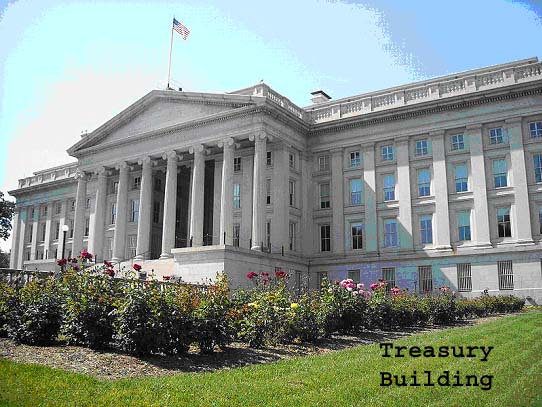 and FINRA described below. Except for the FED, most of these organizations have direct or indirect ties to the Treasury organization.
FED – Federal Reserve System
From Wikopedia: Its duties today, according to official Federal Reserve documentation, are to conduct the nation’s monetary policy, supervise and regulate banking institutions, maintain the stability of the financial system and provide financial services to depository institutions, the U.S. government, and foreign official institutions.Current chairman is Ben Bernanke, the former chairman was Alan Greenspan. Much more on Mr Greenspan later.
SEC – Securities and Exchange Commission
From Wikopedia: It holds primary responsibility for enforcing the federal securities laws and regulating the securities industry, the nation’s stock and options exchanges, and other electronic securities markets in the United States. Mary Schapiro is the current Chair. Predesessors were; Christopher Cox – 2005-2009, William H. Donaldson – 2003-2005, Harvey Pitt – 2001-03
OCC – Office of Comptroller of the Currency
From Wikopedia: US federal agency established by the National Currency Act of 1863 and serves to charter, regulate, and supervise all national banks and the federal branches and agencies of foreign banks in the United States. Current Acting Chairman is John Walsh. Previous Chairman were John C. Dugan – (2005 – 2010) John D. Hawke, Jr. – (1998–2004)
OTS – Office of Thrift Supervision ( recently folded into OCC)
From Wikopedia: United States federal agency under the Department of the Treasury. It was created in 1989 as a renamed version of another federal agency (that was faulted for its role in the Savings and loan crisis). Like other US federal bank regulators, it is paid by the banks it regulates. The OTS was initially seen as an aggressive regulator, but was later lax. Declining revenues and staff led the OTS to market itself to companies as a lax regulator in order to get revenue.
FDIC – Federal Deposit Insurance Corporation
From Wikopedia: United States government corporation created by the Glass-Steagall Act of 1933. It provides deposit insurance, which guarantees the safety of deposits in member banks, currently up to $250,000 per depositor per bank. The FDIC insures deposits at 7,895 institutions. The FDIC also examines and supervises certain financial institutions for safety and soundness, performs certain consumer-protection functions, and manages banks in receiverships (failed banks).
Sheila Bair is the current chairman of the FDIC and is viewed as a serious regulator with the right incentives for all concerned.
CFTC – Commodity Futures Trading Commission
From Wikopedia: The stated mission of the CFTC is to protect market users and the public from fraud, manipulation, and abusive practices related to the sale of commodity and financial futures and options, and to foster open, competitive, and financially sound futures and option markets.
CFTC is considered to be the primary regulator for Credit Default Swaps in the Dodd Frank regulation scheme.
FINRA – Financial Industry Regulatory Authority
From Wikopedia: In the United States, the Financial Industry Regulatory Authority, Inc., or FINRA, is a private corporation that acts as a self-regulatory organization (SRO). FINRA is the successor to the National Association of Securities Dealers, Inc. (NASD). Though sometimes mistaken for a government agency, it is a non-governmental organization that performs financial regulation of member brokerage firms and exchange markets.
Previously run by Mary Shapiro, FINRA has been critisized as being a ineffective regulator. Most notable was their (and SEC) allowing Bernie Madow to continue for 10 years to operate despite being warned by a whistle blower. When testifying before congress, the whistle blower (Harry Markopolos) said SEC was incompetent, FINRA was corrupt.
It must be said that Financial Regulation in the United States is done by committee of political bureauocrats. It is important to be aware of the fact that many of them are funded by fee’s assessed to the agencies they regulate. So opportunity for Regulatory Capture and Regulatory Arbitrage is prevalent in these agencies. The clear example is Office of Thrift Supervision bowing to their clients. The opposite example is that of Sheila Bair who tries to do the right thing for her clients despite critisizm.

 peej
peej Carissa
 bostonboomer
 dakinikat
 ecocatwoman
 mablue2
 Mama Lopez
 peggysue22
 quixote
 skydancingguestblogger
 Mona (aka Wonk the Vote)



 Sky Dancing
Recent Comments