I got a bit of a start this morning when I got an email from the town housing authority about preparations for hurricane Lee. The storm is supposed to impact the Boston area around 2AM on Saturday until 2AM on Sunday. The email provided links to find out if I’m in a evacuation zone. It doesn’t look like I am, but we are sure to get lots of rain and wind and we could lose power. I guess I’ll be watching the Weather Channel in the coming days.
We are already having catastrophic flooding in some parts of the state, because we have had so much rain and fog here for weeks on end. There are more thunderstorms coming tonight and tomorrow. The area with the worst flooding recently got more than 10 inches of rain. It is so humid in my apartment fthat everything seems damp, and food gets stale quickly. Of course, none of this can compare to the awful weather that Dakinikat has been experiencing throughout this summer.
Hurricane Lee continues to churn north as a powerful storm over the open ocean, retaining major hurricane status as of 8 a.m. Eastern. While the forecast will become clearer in coming days, the forecast track has shifted west over the last 24 hours, and a farther west track is looking increasingly likely at this point — which could mean growing concern in New England.
Hurricane-force winds could threaten Cape Cod, Downeast Maine, New Brunswick and Nova Scotia by the weekend. Farther inland, tropical storm conditions are possible. Currently, the storm is set to spare the Southeast and Mid-Atlantic any adverse impacts.
A building on Water Street by Monoosnoc Brook in Leominster, collapsed when the brook flooded after 11 inches of rain fell on city. (Robin Lubbock/WBUR)
“There is an increasing risk of wind, coastal flooding, and rain impacts from Lee in portions of New England and Atlantic Canada beginning on Friday and continuing through the weekend,” wrote the National Hurricane Center. “Due to Lee’s large size, hazards will extend well away from the center, and there will be little to no significance on exactly where the center reaches the coast.”
Lee is a powerhouse hurricane. It still had 115 mph winds Wednesday morning, but its wind field was expanding. Think of an ice skater outstretching their arms while spinning — they would slow down, since they’re tracing bigger circles. Same thing with Lee. It’s now a bigger storm, but maximum sustained winds are diminishing some.
That expansion of Lee’s wind field will churn up cooler waters from below the sea surface, hastening the weakening of its winds. By Friday, it will also begin to transition into a nontropical storm, tapping into jet stream energy and changing it structure.
You can read about the three possible scenarios at the WaPo. The big problem for Massachusetts is that we have already had heavy rain for weeks. One town, Leominster, had to be evacuated. Other areas have significant flooding.
Down the Rabbit Hole
I haven’t been paying as much attention to political news as usual over the past couple of weeks, because I “went down a rabbit hole,” as Dakinikat calls it. First, I read a book by Barbara Kingsolver, Demon Copperhead. It is set in the mountains of southern Appalachia, specifically in Virginia. The book deals with a number of issues, including social services and foster care of orphaned or abused children and the opiod crisis. Much of the book is actually painful to read, but Kingsolver is such a fine writer that I couldn’t put it down.
I have chronic pain from rheumatoid arthritis, but it has never occurred to me to try to get powerful pain killers, because I am a recovering alcoholic and I have also experienced addictions to Valium and Percocet. I was prescribed tranquilizers beginning when I was about 19 or 20. I was given phenobarbital, then Lithium and later I took Valium for years.
I have paid so little attention to the story of Purdue Pharma and the Sackler family, that I didn’t know that the Sacklers made their fortune on Librium and Valium in particular. The withdrawal from Valium is very serious, but it’s nothing compared to Oxycontin, which further enriched the Sackler family and has killed hundreds of thousands of Americans. people who were hooked on Oxycontin eventually turned to heroin and fentanyl.
After I finished Demon Copperhead, I wanted to learn more about the opiod crisis and what happened with Oxycontin. First I watched a very good (partly fictionalized) documentary on Netflix, called Painkiller. Yesterday, I watched another Netflix series called The Pharmacist, which takes place in New Orleans. To say I was shocked by these shows is a serious understatement. I had no idea that Purdue Pharma pushed their drugs with sophisticated ad campaigns targeting doctors, and even went so far as to hire young women to approach doctors and flirt with them in order to convince them to prescribe more and more of the drug. Now I’m reading the book Empire of Pain, by Patrick Radden Keefe, which is a history of the Sackler family, how they made their huge fortune, and how they laundered their reputations through philanthropy.
This is definitely a political issue, and a difficult one, because rich corporations and individuals are rarely held to account and are usually allowed to buy their way out of legal issues. The Sacklers have now lost their “good name” at any rate. Their names have been taken off the many art collections, museum wings, etc. that they paid for. But none of them has gone to jail. They were allowed to declare bankruptcy and pay billions in restitution, but be protected from further lawsuits. The DOJ had a problem with that and right now the case is on hold in the Supreme Court.
The U.S. Supreme Court on Thursday agreed to hear a challenge by President Joe Biden’s administration to the legality of OxyContin maker Purdue Pharma’s bankruptcy settlement, putting on hold a deal that would shield its wealthy Sackler family owners from lawsuits over their role in the country’s opioid epidemic.
The justices paused bankruptcy proceedings concerning Purdue and its affiliates and said they would hold oral arguments in December in the administration’s appeal of a lower court’s ruling upholding the settlement. The Supreme Court’s new term begins in October.
Richard Sackler was head of Purdue Pharma during the marketing of Oxycontin.
Purdue’s owners under the settlement would receive immunity in exchange for paying up to $6 billion to settle thousands of lawsuits filed by states, hospitals, people who had become addicted and others who have sued the Stamford, Connecticut-based company over its misleading marketing of the powerful pain medication OxyContin.
In a statement, Purdue said it was disappointed that the U.S. Trustee, the Justice Department’s bankruptcy watchdog that filed the challenge at the Supreme Court, has been able to “single-handedly delay billions of dollars in value that should be put to use for victim compensation, opioid crisis abatement for communities across the country and overdose rescue medicines.”
“We are confident in the legality of our nearly universally supported plan of reorganization, and optimistic that the Supreme Court will agree,” the company added.
The Justice Department declined to comment.
At issue is whether U.S. bankruptcy law allows Purdue’s restructuring to include legal protections for the members of the Sackler family, who have not filed for personal bankruptcy.
Purdue filed for Chapter 11 bankruptcy in 2019 to address its debts, nearly all of which stemmed from thousands of lawsuits alleging that OxyContin helped kickstart an opioid epidemic that has caused more than 500,000 U.S. overdose deaths over two decades.
I hope I’ve inspired a few people to learn more about this important issue. Purdue Pharma and the Sackler family single-handedly caused pain, heartache, and death to millions of people with Librium, Valium, and then Oxycontin, each of which they claimed were not addictive drugs. I can testify that Valium is definitely addictive. In the sober community, some refer to it as alcohol in pill form. Similarly, experts came to see Oxycontin as heroin in pill form. These people are monsters.
One more interesting link to the Sacklers: Rudy Giuliani stepped in to help them.
The new Netflix series “Painkiller” offers a fictionalized retelling of the rise of the powerful opioid OxyContin, depicting the real-life characters involved in manufacturer Purdue Pharma’s rapid ascent and subsequent downfall, including America’s most infamous mayor himself — Rudy Giuliani.
While certain aspects of the drama series have been embellished or altered amid the Hollywood treatment, Giuliani’s legal involvement in the Sackler family saga is rooted in reality.
The former New York City mayor and larger-than-life Trump ally helped Purdue Pharma continue to sell OxyContin even after federal prosecutors sought to make a case that the drug maker misled the public in claiming OxyContin was less addictive than other narcotics on the market.
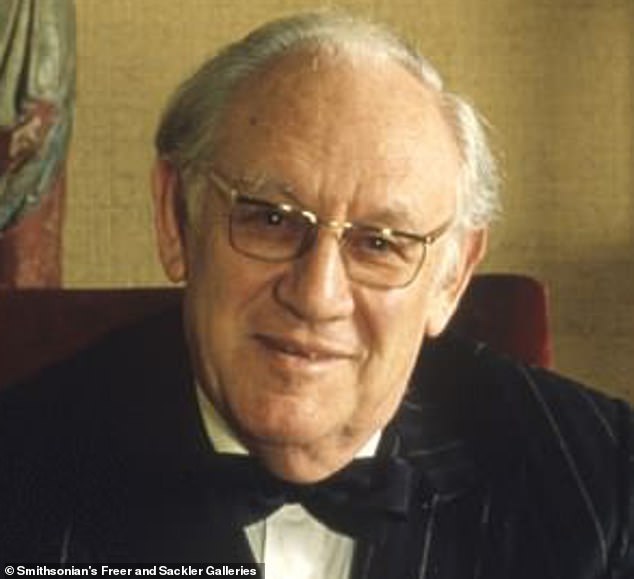
Arthur Sackler made his fortune in the 1960s and 1970s by pushing the drugs Librium and Valium, claiming they were not addictive.
Purdue Pharma hired Giuliani back in 2002, representing the first client his consulting firm ever landed, The New York Times reported in 2007. Then-beloved as the mayor who saw New York City through the September 11 attacks, Giuliani was brought on to convince public officials that Purdue was a trustworthy company, according to the newspaper.
Giuliani emerges as a key character in “Painkiller” in the mid-aughts as fictional lawyer Edie Flowers, played by actress Uzo Aduba, is working on behalf of the US attorney’s office to bring a lawsuit against Purdue Pharma. Despite prosecutors’ best efforts, the office ultimately reaches a deal with Purdue, which sees the company plead guilty to charges of fraudulent marketing and misbranding of OxyContin.
Part of the reason the company was able to reach that agreement was thanks to Giuliani’s efforts as Purdue’s lawyer. Journalist Patrick Radden Keefe, who wrote the New Yorker article upon which the Netflix show draws heavily, reported that Giuliani originally tried to “scuttle the case.”
Later, however, Giuliani and the other Purdue lawyers went above lead prosecutor John Brownlee’s head to complain to James Comey, who was the deputy attorney general at the time, The Guardian reported.
That’s my post for today. Feel free to react to what I’ve written or to discuss the latest news. I couldn’t face writing about Trump today.
Did you like this post? Please share it with your friends:
There are two themes to the news stream this morning. The first is that the Inflation Reduction Act is about to become law. The CBO has scored its expected budget and economic income impacts. It’s amazing how many idiots are lecturing me on how inflationary this Act will be, as if I don’t know what I’m talking about. Anyway, here’s the inflation analysis if any of your crazy right-wing parrots start screaming “inflation” at you.
This is actually a letter the CBO sent to Lady Lindsey, who is pearl-clutching over inflation because that’s the only thing the Republicans have to discuss.
In calendar year 2022, enacting the bill would have a negligible effect on inflation, in CBO’s assessment. In calendar year 2023, inflation would probably be between 0.1 percentage point lower and 0.1 percentage point higher under the bill than it would be under current law, CBO estimates.
That range of likely outcomes reflects uncertainty about how various provisions of the bill would affect overall demand and output, the supply of labor, the persistence of disruptions in the supply of goods and services, and how the Federal Reserve would respond to offset any increase in inflationary pressure. Responsiveness to the enhancement of health insurance subsidies established by the Affordable Care Act is the most important factor boosting inflationary pressure, and responsiveness to the new alternative minimum tax on corporations is the most important factor reducing inflationary pressure. The range applies to multiple measures of inflation: the GDP price index, the personal consumption expenditures price index, and the consumer price index for all urban consumers.
In other good news, Consumer’s inflation expectations are decreasing. This is important because it is a factor in how customers make decisions about spending. This is from CNBC and not written by the talking head at Fox Business that trolled my analysis. But, that link from the CBO with huge econometrics models agrees with me. My assumption is that Kenny Polcari can’t do modern finance and doesn’t have anything huge around him but his crony capitalism booty. He s undoubtedly enjoying his ability to avoid taxes with the treatment Sinema just granted him. I’m tempted to quote Swift on the confederacy of dunces. This is from Jeffy Cox at CNBC: “Consumers’ expectations of future inflation decreased significantly in win for the Federal Reserve.”
A New York Fed survey showed that respondents in July expected inflation to run at a 6.2% pace over the next year and a 3.2% rate for the next three years.
That marks a big drop-off from the respective 6.8% and 3.6% results from the June survey
Expectations for food increases fell at the fastest rate in survey history and the second-fastest for gasoline prices.
The consumer outlook for inflation decreased significantly in July amid a sharp drop in gas prices and a growing belief that the rapid surges in food and housing also would ebb in the future.
The New York Federal Reserve’s monthly Survey of Consumer Expectations showed that respondents expect inflation to run at a 6.2% pace over the next year and a 3.2% rate for the next three years.
While those numbers are still very high by historical standards, they mark a big drop-off from the respective 6.8% and 3.6% results from the June survey
I guess that high inflation in the Nixon years is part of history. (sigh) But let me just quote from Business Insider on huge Kyrsten Sinema’s suck-up to hedge fund managers and the like. “Kyrsten Sinema ensured a $14 billion tax break for private equity, hedge fund, and real estate executives remains intact. It’s a win for many of her campaign donors.” The analysis is written by Sam Tabahriti.
The Arizona senator’s support was won late Thursday after fellow Democrats dropped a proposal to close the so-called “carried interest” loophole, which is commonly used by private equity, hedge fund, and property investment executives to pay a lower rate of tax on their compensation.
As such, it was a win for many Sinema campaign donors.
According to Open Secrets, the global private equity firms KKR, Carlyle, and Apollo Global Management are among the leading 20 sources of donations to Sinema’s campaign committee between 2017 and 2022.
As Open Secrets notes, it isn’t the organizations in the list that donated money directly, but rather, their “political action committees, their individual members or employees or owners, and those individuals’ immediate families.” Further, subsidiaries and affiliates are included in the organizations’ total donations figure.
Other organizations listed by Open Secrets among the leading 20 sources of donations include Andreessen Horowitz, the Silicon Valley venture capital firm that has invested in companies including Facebook, Twitter, and Airbnb; and Rudin Management, a private commercial and residential landlord and developer in New York City.
All in all, Sinema has received $2.2 million from investment firms between 2017 and 2022, according to Open Secrets.
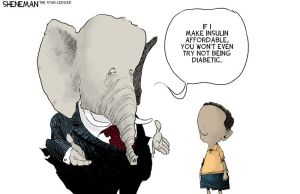
Well, that explains that. Then, the other icky result was that Republicans could not bring themselves to support a price control on Insulin which is cheap to make, but its price inelasticity is off the wall. That’s fancy economist talk, for if you need it, you’ll give up everything else. Insulin is basically treated like legal heroin from a huge drug cartel. Republicans used a dodgy procedure to kill that part of the Act.
This is from WAPO: “Republicans block cap on insulin costs for millions of patients. GOP senators move to strip a $35 price cap on insulin under private insurance from the Inflation Reduction Act.”
Republican lawmakers on Sunday successfully stripped a $35 price cap on the cost of insulin for many patients from the ambitious legislative package Democrats are moving through Congress this weekend, invoking arcane Senate rules to jettison the measure.
The insulin cap is a long-running ambition of Democrats, who want it to apply to patients on Medicare and private insurance. Republicans left the portion that applies to Medicare patients untouched but stripped the insulin cap for other patients. Bipartisan talks on a broader insulin pricing bill faltered earlier this year.
The Senate parliamentarian earlier in the weekend ruled that part of the Democrats’ cap, included in the Inflation Reduction Act, did not comply with the rules that allow them to advance a bill under the process known as reconciliation — a tactic that helps them avert a GOP filibuster. That gave the Republicans an opening to jettison it
So, now to more Trumpsters and their crime sprees. I will dump these links here with very few comments and quotes. The headlines say it all, but the stories are worth reading.
Sure enough, Trump returned to Washington determined to have his generals throw him the biggest, grandest military parade ever for the Fourth of July. The generals, to his bewilderment, reacted with disgust. “I’d rather swallow acid,” his Defense Secretary, James Mattis, said. Struggling to dissuade Trump, officials pointed out that the parade would cost millions of dollars and tear up the streets of the capital.
But the gulf between Trump and the generals was not really about money or practicalities, just as their endless policy battles were not only about clashing views on whether to withdraw from Afghanistan or how to combat the nuclear threat posed by North Korea and Iran. The divide was also a matter of values, of how they viewed the United States itself. That was never clearer than when Trump told his new chief of staff, John Kelly—like Mattis, a retired Marine Corps general—about his vision for Independence Day. “Look, I don’t want any wounded guys in the parade,” Trump said. “This doesn’t look good for me.” He explained with distaste that at the Bastille Day parade there had been several formations of injured veterans, including wheelchair-bound soldiers who had lost limbs in battle.
Kelly could not believe what he was hearing. “Those are the heroes,” he told Trump. “In our society, there’s only one group of people who are more heroic than they are—and they are buried over in Arlington.” Kelly did not mention that his own son Robert, a lieutenant killed in action in Afghanistan, was among the dead interred there.
“I don’t want them,” Trump repeated. “It doesn’t look good for me.”
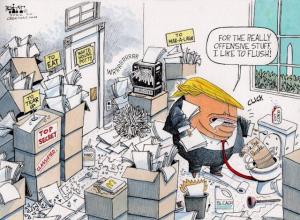
Haberman’s sources report the document dumps happened multiple times at the White House, and on at least two foreign trips.
“That Mr. Trump was discarding documents this way was not widely known within the West Wing, but some aides were aware of the habit, which he engaged in repeatedly,” Haberman tells us.
“It was an extension of Trump’s term-long habit of ripping up documents that were supposed to be preserved under the Presidential Records Act.”
The handwriting is visibly Trump’s, written in the Sharpie ink he favored.
Most of the words are illegible
But the scrawls include the name of Rep. Elise Stefanik of upstate New York, a Trump defender who’s a member of House Republican leadership.
For years, questions have been raised about Russian involvement in the campaign that saw the New York businessman beat former Secretary of State Hillary Clinton, and Manafort is now stating that he handed polling data over to the Russians — in particular to “Konstantin Kilimnik, a longtime business associate with suspected ties to Russian intelligence.”
According to the report, “Kilimnik then passed the data on to Russian spies, according to the US Treasury Department, which has characterized the data as ‘sensitive information on polling and campaign strategy.'”
In the interview, Manafort excused his actions stating he wasn’t looking for help getting Trump elected and did it purely to make money, with Business Insider reporting, “Manafort told Insider that he directed his deputy, Rick Gates, to feed Kilimnik polling data via email to ‘keep Konstantin informed.’ The goal was to use his access to Trump to drum up business for himself.
Well, we already knew he’s a Russian Potted Plant. Didn’t we?
From Tim Miller / Morning Shots writing for The Bulwark: I’m Sorry, But He’s Running. Trump’s CPAC speech was his 2024 blueprint.”
With that little bit of throat-clearing out of the way, I have some bad news to report. If you, like me, had been compartmentalizing a Trump 2024 run for mental-health purposes, I’m sorry to break it to you, but he looks like a man who is definitely running for president in 2024. His CPAC speech this weekend was a rude awakening as to both his intentions and the strength he would bring to that campaign.
First, his intentions: There was no bigger roar from the crowd during the speech than during the following section, and there was no bigger shit-eating grin on his burnt-toast face than the one that came following the roar:
I ran twice. I won twice and did much better the second time than I did the first getting millions and millions of more votes than in 2016. And likewise getting more votes than any sitting president in the history of our country by far. . . . And now we may have to do it again. We may have to do it again.
That little bit of anti-democratic vamping came right on the heels of what would be his core campaign message to the GOP base in a 2024 campaign.
The border was the best and safest in U.S. recorded history. They’ve turned it into a nightmare so quickly, the election was rigged and stolen. And now our country is being systematically destroyed.
If you are reading this, then you are likely a person of reason who is not persuaded by the lies and childish hyperbole.
But let’s imagine this message in the context of a 2024 Republican primary. Trump is claiming that when he was president, everything was great. Then the election was stolen. And now everything is being destroyed by the people his voters hate.
What exactly is his hypothetical challenger’s response to this? It seems to me that Trump has everyone checkmated.
Say it ain’t so Tim!
Anyway, the Republicans aren’t going straight any time soon. We can only rely on the DOJ in a few states and nationally to send them straight to jail.
What’s on your reading and blogging list today?
Did you like this post? Please share it with your friends:
You might not have realised it, but men are being oppressed. In many walks of life, they are routinely discriminated against in ways women are not. So unrecognised is this phenomenon that the mere mention of it will appear laughable to some.
That, at least, is the premise of a book by a South African philosophy professor which claims that sexism against men is a widespread yet unspoken malaise. In The Second Sexism, shortly to be published in the UK, David Benatar, head of the philosophy department at Cape Town University, argues that “more boys drop out of school, fewer men earn degrees, more men die younger, more are incarcerated” and that the issue is so under-researched it has become the prejudice that dare not speak its name.
“It’s a neglected form of sexism,” Benatar says in a telephone interview. “It’s true that in the developed world the majority of economic and political roles are occupied by males. But if you look at the bottom – for example, the prison population, the homeless population, or the number of people dropping out of school – that is overwhelmingly male. You tend to find more men at the very top but also at the very bottom.”
The American men’s rights author Warren Farrell calls it “the glass cellar”. There might be a glass ceiling for women, Farrell once told the Observer, but “of the 25 professions ranked lowest [in the US], 24 of them are 85-100% male. That’s things like roofer, welder, garbage collector, sewer maintenance – jobs with very little security, little pay and few people want them.”
Okay, I hope you haven’t lost your meal and coffee!
In 2007, before the Great Recession, people who were looking for work for more than six months — the definition of long-term unemployment — accounted for just 0.8 percent of the labor force. The recession has radically changed this picture. In 2010, the long-term unemployed accounted for 4.2 percent of the work force. That figure would be 50 percent higher if we added the people who gave up looking for work.
Long-term unemployment is experienced disproportionately by the young, the old, the less educated, and African-American and Latino workers.
While older workers are less likely to be laid off than younger workers, they are about half as likely to be rehired. One result is that older workers have seen the largest proportionate increase in unemployment in this downturn. The number of unemployed people between ages 50 and 65 has more than doubled.
The prospects for the re-employment of older workers deteriorate sharply the longer they are unemployed. A worker between ages 50 and 61 who has been unemployed for 17 months has only about a 9 percent chance of finding a new job in the next three months. A worker who is 62 or older and in the same situation has only about a 6 percent chance. As unemployment increases in duration, these slim chances drop steadily.
The result is nothing short of a national emergency. Millions of workers have been disconnected from the work force, and possibly even from society. If they are not reconnected, the costs to them and to society will be grim.
Unemployment is almost always a traumatic event, especially for older workers. A paper by the economists Daniel Sullivan and Till von Wachter estimates a 50 to 100 percent increase in death rates for older male workers in the years immediately following a job loss, if they previously had been consistently employed. This higher mortality rate implies that a male worker displaced in midcareer can expect to live about one and a half years less than a worker who keeps his job.
There is a disturbing inference in Romney’s words – namely, that the blame should be placed as much on the sensitive shoulders of those who were hurt and offended, rather than the person who might have been responsible for inflicting pain upon them. What is missing from Romney’s non-apology is the recognition that pranks, hijinks, assaults or whatever you want to call them, can leave psychic scars that stay with the victim for years to come.
Indeed, one of the most heartbreaking elements of the Post story is that 30 years after it took place, one of the perpetrators, David Seed accidentally ran into Lauber at O’Hare International Airport and tried to apologize for not doing more to help his classmate. “It was horrible,” Lauber recounted. He went on to explain how frightened he was during the incident, and acknowledged to Seed, “It’s something I have thought about a lot since then.”
Here’s a follow-up to the Big Pharma drug pushers that try to market their miracle cures to us via their Snake Oil TV ads. It seems it really isn’t good for whatever ails ya!
The pharmaceutical company will pay $1.5 billion to settle criminal and civil liability charges for promoting the drug Depakote for uses not approved by the Food and Drug Administration.
The drug is a neurological medicine labeled to treat mania, epilepsy and migraines, and can lead to life-threatening and deadly pancreatitis in children and adults.
The money will be distributed among 49 states and will go toward consumer protection, health care and other services.
The cover of Newsweek magazine this week proclaims President Obama “the first gay president.”
The cover pictures Obama with a rainbow-colored halo over his head. The New Yorker’s cover for this week, likewise, is an image of the White House, with the iconic columns on its South portico arranged in the colors of the rainbow — a prominent symbol for gay rights.
The Newsweek cover goes a step further by adding the religious symbol of a halo above Obama’s head.
Obama said this week that he is personally comfortable with same-sex marriage — the first time a sitting president has taken that position.
Newsweek’s “first gay president” cover story is written by Andrew Sullivan, a blogger at Newsweek and the Daily Beast, who is openly gay.
The moniker evokes Toni Morrison’s description of former President Bill Clinton as “the first black president.”
Well, I think I’ve done enough damage this morning. What’s on your reading and blogging list today?
Did you like this post? Please share it with your friends:
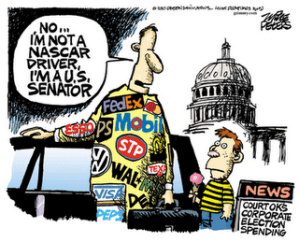
Many of ALEC’s corporate sponsors have quit funding the organization which seeks to remove oversight and regulation of all kinds of industry, privatize public services and goods, and deprive minority communities and women of basic voting rights and civil rights. They seek tort reform that would limit corporate exposure to liability from unsafe products and practices. They like to remove laws providing consumer protection and information. They are not nonpartisan and are responsible for some of the most heinous, radical legislation of the last few years. Woe to those of you whose governors or legislators belong to this organization for you will live in a world with very little protection from big money and big business and your tax dollars will be used to line their coffers.
The American Legislative Exchange Council describes itself as a nonpartisan champion of free markets. But if you spend some time at an ALEC conference (Bloomberg Businessweek did, for an article last year) you will be hard-pressed to find many Democrats. And when the entire conference meets for lunch, you will hear from the podium nothing that would seem out of place in a press release from Eric Cantor’s office. Last year in New Orleans, for example, Bobby Jindal, governor of Louisana, told an ALEC annual meeting, “Defeating the president is crucial to defending our economy,” and “Obama has been a disaster.” I didn’t hear anyone boo. What I did hear was the sound of fevered applause when the conference played a videotaped greeting from Ronald Reagan.
I’m not saying it’s wrong to feverishly applaud Ronald Reagan. I am saying that only in the most thinly defensible, legalistic sense can ALEC call itself “nonpartisan.” And the council doesn’t really support free markets, either. It supports the companies that fund it. This is an important distinction, because the corporations that donate to ALEC aren’t doing so to protect markets. They’re protecting favored tax treatments and pushing regulations that lock in their market positions. As best as we were able to determine in reporting our piece last year, corporations propose bills at the state level and then push them up to ALEC, which has both corporate and legislative members. ALEC pushes the legislative members to the foreground, stamps the bills as “model legislation,” and then the corporations push them back out to other state legislatures. This may not be the case with all ALEC legislation, but it certainly was with the bill we followed.
So ALEC is not what it says it is. That’s not extraordinary: Few advocacy groups are what they say they are. In ALEC’s case, however, the fingers-crossed-behind-its-back description of itself is definitional. If the American Legislative Exchange Council operated with complete openness, it couldn’t operate at all. ALEC has attracted a wide and wealthy range of supporters precisely because it does its real work in a black box. Membership lists are secret. The origins of the model bills are secret. Deliberations and votes on model bills are secret. The model bills themselves are secret. The council has designed its entire structure to disguise industry-backed legislation as grassroots work from state legislators. If this becomes clear to everyone, there’s no reason for corporations to use it. And that is exactly what has been happening.
Minority advocacy groups have been most active in the fight against ALEC. ALEC is responsible for the legislation that requires specific picture ids to vote and they are responsible for the Stand Your Ground Laws. Both of these issues have been front and center in Civil Rights Groups. The Trayvon Martin case is important in two key ways. First, it is bringing to light the institutional racism implicit in the criminal system. Second, it has exposed the role of ALEC in sneaking through legislature in states that most voters do not support or like. The vigilante-empowering Stand Your Ground laws are now seeing daylight.
The tension in corporate boardrooms over the case is the latest example of the pitfalls companies can sometimes face when they donate to political and lobbying groups, even those that seem safely below the radar of public consciousness.
The ALEC controversy is now sparking a broader debate about corporate participation in politics and the polarized state of political discourse. At a minimum, it has strengthened calls for companies to develop clear policies explaining their spending.
“I would caution companies to be very aware of where their money is going,” says Nell Minow, director of GMI Ratings, which provides corporate governance information to investors, corporate auditors and regulatory agencies. “Companies are going to realize they can take a real reputational hit with this kind of affiliation.”
She and others recall the tempest that erupted in 2010 around Target after the company donated to a nonprofit group supporting a Minnesota gubernatorial candidate who was known for opposing gay rights initiatives.
Legislators in Arizona continue to advance extremist legislation inspired by the American Legislative Exchange Council (ALEC) and its out-of-state corporate backers, according to a new analysis by People For the American Way Foundation, Common Cause, the Center for Media and Democracy and Progress Now. This report shines a new light on the Arizona Legislature’s unprecedented ties to the secretive organization, which recently drew nationwide fire for its role in implementing radical policies across the country like “Shoot First” laws and voter suppression laws, and anti-worker measures. ALEC’s extreme agenda has recently led companies such as Pepsi, Coca-Cola, McDonalds, Wendy’s, KRAFT and Intuit to withdraw from the organization. The Bill and Melinda Gates Foundation on Monday also withdrew its support from ALEC.
The comprehensive report found that Arizona’s large concentration of ALEC-member legislators, working hand-in-hand with the corporate leaders who make up ALEC’s membership, are continuing to endorse special interest legislation that harms ordinary people by limiting consumers’ rights, privatizing education and dismantling unions.
The report, ALEC in Arizona: The Voice of Corporate Special Interests in the Halls of Arizona’s Legislature, updated for the Fiftieth Legislature, second regular session is available here.
“Recent polling shows that Arizonans are appalled by the out-of-touch and extremist agenda at their State Legislature. This report shows that agenda is no accident,” said John Loredo, a member of Arizona Working Families and a former Arizona House Minority Leader. “Unfortunately, Arizona has one of the highest concentrations of ALEC legislators in the country, and that makes us a petri dish for anti-worker legislation and a host of other bad ideas.”
“ALEC-member legislators are unabashedly continuing to push legislation straight from corporate headquarters to Arizona’s lawbooks,” said Marge Baker, Executive Vice President at People For the American Way Foundation. “Well-heeled special interests are circumventing the democratic system and bypassing Arizona’s citizens, who can’t match the level of access that ALEC provides. As a result, Arizonans are facing an endless assault from laws that serve the interests of the rich and powerful instead of everyday people.”
You can find ALEC’s model bills and reports on its activities in many states at the site ALEC Exposed. ALEC is responsible for the horrible school voucher and privatization plan that Bobby Jindal has ramrodded through our state. It is also responsible for some of the worst climate change denial propaganda. The source of this funding is big oil, big coal, and the Koch Brothers.
$375,858 received from Koch foundations 2005-2010 [Total Koch foundation grants 1997-2010: $708,858]
American Legislative Exchange Council (ALEC) is one-stop shopping for state elected officials interested in perusing the wares of an array of Koch-funded opposition organizations including IER, ACCF, Mercatus and other sources. ALEC has successfully peddled corporate-written legislation to numerous states attacking the Kyoto Protocol, undermining climate science education in schools and numerous other anti-environmental legislation. ALEC has close ties to Koch Industries, which helped bail the organization out of financial troubles with a half-million dollar grant.
ALEC publishes its own materials as well, including a “Climate Change Overview for State Legislators” which downplays the science and risks of global warming and exaggerates the costs of addressing it. The Overview was written by Daniel Simmons, who moved from ALEC to become AEA’s Director of State Affairs. Simmons was at the Mercatus Institute before ALEC and is a graduate of the George Mason University School of Law.
ALEC’s most ambitious and strategic push toward privatizing education came in 2007, through a publication called School Choice and State Constitutions, which proposed a list of programs tailored to each state. That year Georgia passed a version of ALEC’s Special Needs Scholarship Program Act. Most disability organizations strongly oppose special education vouchers—and decades of evidence suggest that such students are better off receiving additional support in public schools. Nonetheless, Louisiana, Oklahoma, Florida, Utah and Indiana have passed versions of their own. Louisiana also passed a version of ALEC’s Parental Choice Scholarship Program Act (renaming it Student Scholarships for Educational Excellence), along with ALEC’s Family Education Tax Credit Program (renamed Tax Deductions for Tuition), which has also been passed by Arizona and Indiana. ALEC’s so-called Great Schools Tax Credit Program Act has been passed by Arizona, Indiana and Oklahoma.
ALEC’s 2010 Report Card on American Education called on members and allies to “Transform the system, don’t tweak it,” likening the group’s current legislative strategy to a game of whack-a-mole: introduce so many pieces of model legislation that there is “no way the person with the mallet [teachers’ unions] can get them all.” ALEC’s agenda includes:
§ Introducing market factors into teaching, through bills like the National Teacher Certification Fairness Act.
§ Privatizing education through vouchers, charters and tax incentives, especially through the Parental Choice Scholarship Program Act and Special Needs Scholarship Program Act, whose many spinoffs encourage the creation of private schools for specific populations: children with autism, children in military families, etc.
§ Increasing student testing and reporting, through more “accountability,” as seen in the Education Accountability Act, Longitudinal Student Growth Act, One-to-One Reading Improvement Act and the Resolution Supporting the Principles of No Child Left Behind.
§ Chipping away at local school districts and school boards, through its 2009 Innovation Schools and School Districts Act and more. Proposals like the Public School Financial Transparency Act and School Board Freedom to Contract Act would allow school districts to outsource auxiliary services.
ALEC is also invested in influencing the educational curriculum. Its 2010 Founding Principles Act would require high school students to take “a semester-long course on the philosophical understandings and the founders’ principles.”
Perhaps the Brookings Institute states the mission most clearly: “Taken seriously, choice is not a system-preserving reform. It is a revolutionary reform that introduces a new system of public education.”
The passage of radical public school defunding in Louisiana is leading to a recall Jindal effort. We’ve already had some of this type of reform in New Orleans and it’s clearly not working well at all unless you count teacher union busting and lowering teacher salaries progress. Here are some of the things we will now be suffering in Louisiana. I personally am opposed to the state funding religious indoctrination hiding under the guise of education. These laws funnel public money into any thing that deems itself a school, it seems.
A vast expansion of charter schools, an overhaul of teacher tenure and establishment of a statewide program to pay private school tuition with public dollars moved within one step of final passage Thursday, as the Louisiana Senate Education Committee endorsed the headliner components of Gov. Bobby Jindal’s education agenda without changes or dissent.
I know this thread wanders around through many topics but the number of right wing bills pressured cooked into law by ALEC and their toadies is just as wandering and perverse. Check out the site and be aware of which politicians supposedly representing the people of your state that are ALEC cronies. The movement to get corporations to defund the organization should be paramount. Ordinary Americans have already lost a lot to their agenda. It’s time to stop them. Put pressure on organizations to join in the effort. Let’s defang this beast together.
Did you like this post? Please share it with your friends:
I’ve wanted to write about ALEC for awhile. I tripped across this very succinct explanation in my print copy of Bloomberg Business Week that made me revisit my plans. Ever wonder why a bunch of weird ass bills suddenly show up simultaneously in a bunch of legislatures that say things that are basically against the positions of modern science, medicine, and economics? Well, chances are that some huge corporation has written that bill that will become law in no one’s interest but their own, and it was penned by some member of ALEC.
Kim Thatcher, a Republican state representative in Oregon, introduced a sharply worded anti-cap-and-trade bill this year that said, “There has been no credible economic analysis of the costs associated with carbon mandates.” Apparently, that view is widely shared. Legislation with that exact language has been introduced in dozens of states, including Montana, New Hampshire, and New Mexico.
It’s not plagiarism. It’s a strategy. The bills weren’t penned by Thatcher or her fellow legislators in Helena, Concord, and Santa Fe. They were written by a little-known group in Washington with outsize clout, the American Legislative Exchange Council. Corporate benefactors such as Koch Industries and ExxonMobil (XOM) help fund ALEC with membership dues and pay extra for a seat at the legislative drafting table.
Among ALEC’s prominent members are Pfizer (PFE), Wal-Mart (WMT), Bayer (BAYZF), and Visa (V), according to ALEC annual meeting documents provided by an attendee. The organization’s legislative agenda includes limiting the power of unions, fighting environmental regulations, and overturning President Obama’s health-care reform law. ALEC says it gets about 200 state laws passed each year. The corporate influence is hard to trace and can produce a return on investment that would make a hedge fund manager drool.
“This is just another hidden way for corporations to buy their way into the legislative process,” says Bob Edgar, president of Common Cause, which seeks to reduce money in politics. Reagan Weber, an ALEC spokeswoman, says the group simply facilitates the sharing of information and “good conservative policy.”
ALEC was founded in 1973 by two of the conservative movement’s intellectual midwives, both now dead: Representative Henry Hyde of Illinois and activist Paul Weyrich, who also was a founder of the Heritage Foundation. As a tax-exempt organization, ALEC doesn’t disclose its corporate donors or its member lists beyond those who serve as committee chairmen.
In exchange for annual membership dues of as much as $25,000 plus a fee of $3,000 to $10,000 to get on a bill-writing “task force,” Koch and ExxonMobil representatives sat beside elected officials and policy analysts at an ALEC meeting in April 2010, helping them write model energy legislation that would later be introduced in statehouses around the country, according to the documents. The legislators pay $100 for a two-year membership. The task force bills are considered finished only after the legislators and private-sector members vote separately to approve them, giving each side a veto. Once a model bill is complete, it’s up to ALEC’s legislator members to go back to their home states and shepherd it into law.
ALEC is on the radar of many organizations including the American Association for Justicewho keeps track of their activities and publishes white papers on this group of bill-writers for profit, greed and the destruction of public resources.
(W)hile the membership appears to be public sector, the bankroll is almost entirely private sector. In fact, public sector membership dues account for only around one percent of ALEC’s annual revenues. ALEC claims to be nonpartisan, but in fact its free-market, pro-business mission is clear.
The result has been a consistent pipeline of special interest legislation being funneled into state capitols. Thanks to ALEC, 826 bills were introduced in the states in 2009 and 115 were enacted into law.
Behind the scenes at ALEC, the nuts and bolts of lobbying and crafting legislation is done by large corporate defense firm Shook, Hardy & Bacon. A law firm with strong ties to the tobacco and pharmaceutical industries, it has long used ALEC’s ability to get a wide swath of state laws enacted to further the interests of its corporate clients.
ALEC’s campaigns and model legislation have run the gamut of issues, but all have either protected or promoted a corporate revenue stream, often at the expense of consumers. For example, ALEC has worked on behalf of:
Oil companies to undermine climate change proponents;
Pharmaceutical manufacturers, arguing that states should be banned from importing prescription drugs;
Telecom firms to block local authorities from offering cheap or free municipally-owned broadband;
Insurance companies to prevent state insurance commissioners from requiring insurers to meet strengthened accounting and auditing rules;
Big banks, recommending that seniors be forced to give up their homes via reverse mortgages in order to receive Medicaid;
The asbestos industry, trying to shut the courthouse door to Americans suffering from mesothelioma and other asbestos-related diseases; and,
Enron to deregulate the utility industries, which eventually caused the U.S. to lose what the Securities and Exchange Commission (SEC) estimated as $5 trillion in market value.
The Koch brothers and Koch Industries are all over ALEC. Their Charitable foundations and businesses provide a lot of funding. ExxonMobile is also a huge source of funds. There are several companies representing the interests of Big Pharma. ALEC looks like a who who of corporate America’s worst corporate citizens. The Center for Media and Democracy’s PR Watch put out a Special Report on ALEC’s funding last month.
According to ALEC’s IRS filings, over the past three years it has raised $21,615,465 from corporations, foundations, and other sources, and just over $250,000 in dues paid by state legislators, amounting to slightly more than 1 percent of its income. The gigantic gap between what legislators pay and what ALEC spends is the direct result of the reality that legislators pay a mere $50 a year to be a member, while a corporation can pay up to $25,000 a year or more to be a member of ALEC plus additional fees to be on a task force where corporations get the same right to vote as legislators. They just pay hundreds of times more for that vote.
…
For example, the foundations controlled by the billionaire Koch brothers gave ALEC over $200,000 in 2009. (The Claude R. Lambe Foundation, which Charles Koch, his wife and kids help run, donated $125,000 to ALEC. His own Charles G. Koch foundation kicked in an additional $75,000.) That $200k is before whatever is the undisclosed amount of membership “dues” paid by Koch Industries, which is run by Charles and David Koch. There is no public disclosure of annual gifts the company gives to take part in the one-stop shopping ALEC conventions provide to meet with legislators from every state about their wish list…
Other right-wing foundations have also supported ALEC, far beyond the “dues” paid by any legislator. For example, the Castle Rock Foundation, which is run by right-wing beer heir Peter Coors, gave $50,000 last year and in prior years. The right-wing John M. Olin foundation has also been a donor to ALEC. Another of the big right-wing foundations, the Lynde and Harry Bradley Foundation, has been a funder and, for example, gave ALEC $50,000 in 2009 to fund “budget reform” work. Similarly, right-winger Richard Scaife has given ALEC over half a million dollars the past decade or so, through his Allegheny Foundation. Some of the organizations that support ALEC, like Scaife’s, are also deeply invested in the profits of corporations that sit on ALEC’s board. The Allegheny Foundation has held over $11 million of ALEC board member Altria‘s stock, along with major stock holdings in other ALEC corporate board members like Kraft, Coca Cola, AT&T, GlaxoSmithKline, Johnson & Johnson, and Exxon.
ALEC was influential in crafting and passing a Texas law, dubbed the “Successor Asbestos-Related Liability Fairness Act, that shielded Crown Cork and Seal, a business that in 1966 acquired a company that used asbestos in its products, from lawsuits from the company’s workers. Even though Crown agreed to pay the company’s liabilities, it wanted immunity from paying damages to workers facing asbestos-related diseases. Crown Cork and Seal turned to ALEC to help shape the Texas law, which put an extremely low cap on liability for companies like Crown who acquired companies which committed wrongdoing, known as a “successor immunity” law.” Mark Behrens, an attorney for Shook Hardy, worked as a lobbyist for both ALEC and Crown to encourage allied lawmakers to introduce and pass the bill. The American Association for Justice writes that “this so-called ‘successor immunity’ has all the hallmarks of an ALEC special interest bill. It is plainly designed not with public policy in mind, but rather a specific industry (or in this case, a specific company).” The Texas Supreme Court ultimately found the cap to be an unconstitutional retroactive protection for Crown that inhibited the rights of people to rightfully sue corporations for damages, but similar ALEC-derived laws are still on the books in other states.
In Arizona, an investigative report by NPRfound that ALEC significantly helped one of its clients, the Corrections Corporations of America (CCA), influence the state’s new immigration law. The CCA is a for-profit prison company whose “executives believe immigrant detention is their next big market,” and thought that a law which “could send hundreds of thousands of illegal immigrants” to prison would “mean hundreds of millions of dollars in profits to private prison companies responsible for housing them.” As a dues-paying member of ALEC, the CCA was able to write, present and lobby Arizona policymakers for a draconian immigration bill at an ALEC-hosted conference. “Four months later, that model legislation became, almost word for word, Arizona’s immigration law,” and many of the bill’s cosponsors later received significant campaign contributions from the CCA. ALEC also helped the CCA by pushing “truth in sentencing” laws that restrict parole eligibility for felons, and consequently increase the number of prisoners.
You name the spurious law, and ALEC is likely behind it. They write laws that push private school vouchers, strip workers of their right to organize, make it more difficult to generate revenues to fill budget shortfalls in states, and undercut healthcare reform efforts.
After the passage of health care reform, ALEC’s top priority has been to challenge the law by encouraging members to introduce bills that would prohibit the law’s insurance mandate. ALEC’s Health and Human Services task force is led by representatives of PhRMA and Johnson & Johnson, and representatives of Bayer and GlaxoSmithKlein sit on ALEC’s board. The group’s model bill, the “Freedom of Choice in Health Care Act,” has been introduced in forty-four states, and ALEC even released a “State Legislators Guide to Repealing ObamaCare” discussing a variety of model legislation including bills to partially privatize Medicaid and SCHIP. The legislative guide utilizes ideas and information from pro-corporate groups like the Heritage Foundation, the Goldwater Institute, the James Madison Institute, the Cato Institute, the National Center for Policy Analysis and the National Federation of Independent Business.
Expanding the disproportionate power of corporations in the legislative process is central to ALEC’s goals. ALEC is responsible for some of the worst outcomes in government we’ve seen in decades. It is pure influence peddling. Any legislator that relies on ALEC for services should be subject to immediate recall. ALEC represents what’s wrong with this country today. It is at the heart of single issue, special interest politics that are not in the public’s interest. They are a perversion of the democratic political process.
Mitt Romney is wrong. Corporations are not people. The profit motive is the sole determinant of corporate behavior. No household or family would put profits before everything else nor should any government that purports to represent its people. I suggest finding out as much about how ALEC influences your state legislature as soon as possible. A good place to start is withThe Nation‘s series ‘ALEC Exposed’. The first in this series shows the role of the Koch’s in ALEC’s model bills. I’ve pumped this thread up with a lot of juicy links. Please take some time to visit the research of all the nonprofits that have carefully researched this shadowy organization.
Did you like this post? Please share it with your friends:
The Sky Dancing banner headline uses a snippet from a work by artist Tashi Mannox called 'Rainbow Study'. The work is described as a" study of typical Tibetan rainbow clouds, that feature in Thanka painting, temple decoration and silk brocades". dakinikat was immediately drawn to the image when trying to find stylized Tibetan Clouds to represent Sky Dancing. It is probably because Tashi's practice is similar to her own. His updated take on the clouds that fill the collection of traditional thankas is quite special.
You can find his work at his website by clicking on his logo below. He is also a calligraphy artist that uses important vajrayana syllables. We encourage you to visit his on line studio.



 After I finished Demon Copperhead, I wanted to learn more about the opiod crisis and what happened with Oxycontin. First I watched a very good (partly fictionalized) documentary on Netflix, called Painkiller. Yesterday, I watched another Netflix series called The Pharmacist, which takes place in New Orleans. To say I was shocked by these shows is a serious understatement. I had no idea that Purdue Pharma pushed their drugs with sophisticated ad campaigns targeting doctors, and even went so far as to hire young women to approach doctors and flirt with them in order to convince them to prescribe more and more of the drug. Now I’m reading the book Empire of Pain, by Patrick Radden Keefe, which is a history of the Sackler family, how they made their huge fortune, and how they laundered their reputations through philanthropy.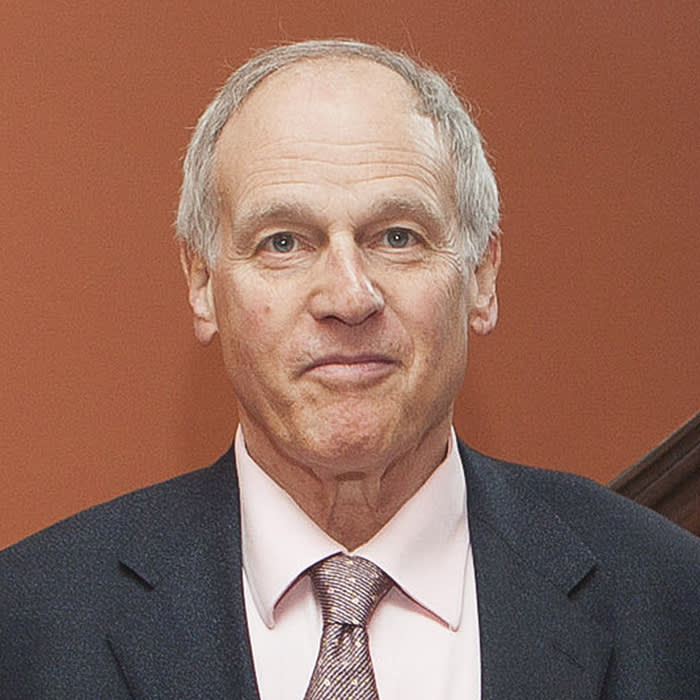
 Good Day Sky Dancers!
 In other good news,
  I guess that high inflation in the Nixon years is part of history. (sigh) But let me just quote from
  So, now to more Trumpsters and their crime sprees. I will dump these links here with very few comments and quotes. The headlines say it all, but the stories are worth reading.
 Well, we already knew he’s a Russian Potted Plant. Didn’t we?


 peej
peej Carissa
 bostonboomer
 dakinikat
 ecocatwoman
 mablue2
 Mama Lopez
 peggysue22
 quixote
 skydancingguestblogger
 Mona (aka Wonk the Vote)



 Sky Dancing
Recent Comments