
Are Mitt Romney’s Lies Supported by Mormon Church Leaders?
Posted: January 26, 2012 Filed under: 2012 presidential campaign, abortion rights, Barack Obama, fetus fetishists, Mitt Romney, religion, Reproductive Rights, Republican presidential politics, U.S. Politics, Women's Rights | Tags: abortion, Bain Capital, Belmont MA Mormon temple, Eliza Dushku, Judith Dushku, lies, Masschusetts Senate race 1994, Mitt Romney, Mormon church, Mormonism, Scoop NZ, Suzan Mazur, Ted Kennedy, tithing 27 Comments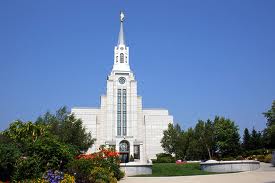
Mormon temple in Belmont, MA, completed in 2000
I realize that’s a provocative title, but please stay with me. I’ll get to the point after some background.
I’ve been reading the new biography of Mitt Romney, The Real Romney by Michael Kranish and Scott Helman. I bought the book after reading a lengthy excerpt published by Vanity Fair, which focused heavily on Romney’s treatment of women when he was a powerful leader in the Boston Mormon church. I wrote about this in a Morning news post at the time.
I was disappointed to discover that the book itself is somewhat of a fluff piece–Boston Globe reporters Kranish and Helman put as positive a spin as possible on Romney’s history and his activities as a church and business leader. However, by reading between the lines and googling names, places, and incidents from the book, I’m still getting some useful information about “the real Romney.”
One prominent Mormon woman quoted in the book is Judith Dushku, associate professor of government at Suffolk University in Boston, and incidentally the mother of actress Eliza Dushku, who played Faith in the TV shows Buffy the Vampire Slayer and Angel and has appeared in a number of popular Hollywood movies.

Judith Dushku with daughter Eliza
Judith Dushku is a self-described feminist and a long-time contributor to the Mormon feminist magazine Exponent II. It was in this magazine that an anonymous author published the story of the Bishop Romney’s cruel treatment of her over a life-saving abortion. From the Vanity Fair article:
In the fall of 1990, Exponent II published in its journal an unsigned essay by a married woman who, having already borne five children, had found herself some years earlier [the late 1970s] facing an unplanned sixth pregnancy. She couldn’t bear the thought of another child and was contemplating abortion. But the Mormon Church makes few exceptions to permit women to end a pregnancy. Church leaders have said that abortion can be justified in cases of rape or incest, when the health of the mother is seriously threatened, or when the fetus will surely not survive beyond birth. And even those circumstances “do not automatically justify an abortion,” according to church policy.
Then the woman’s doctors discovered she had a serious blood clot in her pelvis. She thought initially that would be her way out—of course she would have to get an abortion. But the doctors, she said, ultimately told her that, with some risk to her life, she might be able to deliver a full-term baby, whose chance of survival they put at 50 percent. One day in the hospital, her bishop—later identified as Romney, though she did not name him in the piece—paid her a visit. He told her about his nephew who had Down syndrome and what a blessing it had turned out to be for their family. “As your bishop,” she said he told her, “my concern is with the child.” The woman wrote, “Here I—a baptized, endowed, dedicated worker, and tithe-payer in the church—lay helpless, hurt, and frightened, trying to maintain my psychological equilibrium, and his concern was for the eight-week possibility in my uterus—not for me!”
Romney would later contend that he couldn’t recall the incident, saying, “I don’t have any memory of what she is referring to, although I certainly can’t say it could not have been me.” Romney acknowledged having counseled Mormon women not to have abortions except in exceptional cases, in accordance with church rules. The woman told Romney, she wrote, that her stake president, a doctor, had already told her, “Of course, you should have this abortion and then recover from the blood clot and take care of the healthy children you already have.” Romney, she said, fired back, “I don’t believe you. He wouldn’t say that. I’m going to call him.” And then he left. The woman said that she went on to have the abortion and never regretted it. “What I do feel bad about,” she wrote, “is that at a time when I would have appreciated nurturing and support from spiritual leaders and friends, I got judgment, criticism, prejudicial advice, and rejection.”
Judith Dushku had a number of run-ins with Mitt Romney during his years as Stake President and Bishop in the Boston Mormon community. In fact, Dushku confronted Romney over the incident described above, after which he “broke off their friendship.”
Live Blog: SOTU 2012
Posted: January 24, 2012 Filed under: 2012 presidential campaign, Barack Obama, U.S. Economy, U.S. Military, U.S. Politics | Tags: 2012 State of the Union Speech, Economic Fairness 179 Comments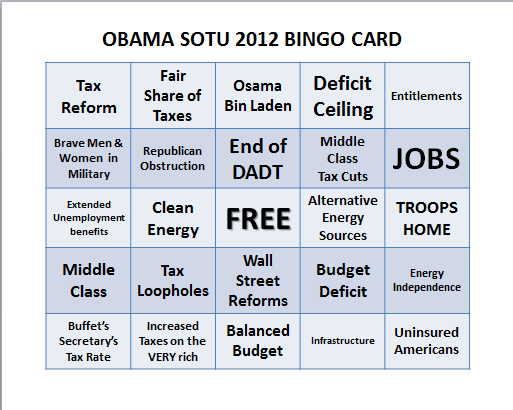
Here’s your SOTU Bingo Card! Print it out and play along. As soon as one square has been said once, you have to take a drink for every mention after that! Those are the House Rules!
I decided against plugging in the “THEME” of the night. Obama is still channeling Teddy Roosevelt with the idea of Economic Fairness.
President Barack Obama will call economic fairness “the defining issue of our time” in his State of the Union address Tuesday night as he vows to keep fighting for working Americans.
“It’s time to apply the same rules from top to bottom: No bailouts, no handouts, and no copouts. An America built to last insists on responsibility from everybody,” Obama will say, according to excerpts released by the White House ahead of his speech in the House chamber to a joint session of Congress. “Let’s never forget: Millions of Americans who work hard and play by the rules every day deserve a government and a financial system that does the same.”
The election-year address gives Obama a high-profile platform to counter the GOP presidential candidates who have been pummeling him, virtually unanswered, for months. He will expand on the vision he described in a pivotal December speech in Osawatomie, Kan., that channeled Teddy Roosevelt’s square deal slogan of economic equality.
Obama will lay down markers Tuesday night aimed at making that vision a reality.
That’s always been the deal, hasn’t it? Obama is very good at stealing another leader’s vision and making it seem like he owns it. The problem is that he negotiates it away to the right wing and his words never come out as detailed plans. Will this be the billion dollar fund raising speech it needs to be? The SOTU will be lived simulcast via the White House Home Page.
EVENT ACTION Obama says “Folks” Poke a hole in the bottom of a can of PBR, put it up to your mouth, open the tab and chug Obama says he created 3.2 million jobs Take 3.2 sips Obama mentions the 8.5% unemployment rate Drink 8.5% of a bottle of Jack Daniels (no more, you’re probably unemployed and Jack ain’t cheap) Only Republicans applaud Obama must have tripped or something. Consolation shot for Barry Only Democrats applaud Have a glass of water. This will happen a lot and you need to hydrate. Camera pans to Michelle Obama Drink, but then eat something organic Obama mentions “Occupy” or the 99% Do one shot and tweet something @ellenbarkin Obama mentions “Wall Street” or the 1% Pour yourself a glass of 50-year old single malt scotch, throw the glass out, then pour another glass. You have plenty
So, what are some of the Villager’s tweeting?
Instructions on how to get to Beltway Bob’s SOTUS (the cheerleader edition) here:
ezraklein Ezra Klein
You can follow Wonkblog’s liveblogging/tweeting of SOTU here: wapo.st/Ai7QpE
The anti-Beltway Bob antidote (or is that anecdote?)will be here:
YourAnonNews Anonymous
Four things that will not be brought up at #SOTU: #SOPA, #PIPA, #ACTA and #NDAA. Google and read about them all!
Our hero:
SenatorSanders Bernie Sanders
The wealthiest 400 people in America now own more wealth than the bottom 150 million Americans. #SOTU
Looks like somebody got an advanced copy:
KeithOlbermann Keith Olbermann
POTUS SOTU Conclusion: “An America built to last insists on responsibility from everybody.”Keith Olbermann
KeithOlbermann Keith Olbermann
POTUS SOTU: It’s time to apply the same rules from top to bottom: No bailouts, no handouts, and no copouts…
A suggestion only Bobby Brady Jindal (The governor/exorcist) would love.
mattyglesias mattyglesias
Texas Governor Rick Perry whose state leads the nation in job creation would be an ideal SOTU responder were he not a national joke.
This goes down at 9 p.m. EST.
Tuesday Morning Reads
Posted: January 24, 2012 Filed under: 2012 presidential campaign, Barack Obama, morning reads, Teddy Roosevelt, U.S. Economy, U.S. Politics, We are so F'd | Tags: Larry Summers Memo, Obama stimulus, State of the Union Address 40 CommentsGoo d Morning!
I’m tired of Republican Party Dysfunction. Let’s switch to the Democratic Party Brand for awhile. This year’s State of the Union address will be interesting. Will it turn out to be the first major Obama campaign speech of 2102?
Mr. Obama plans, in part, to deliver a “vision” speech. He told campaign supporters over the weekend that he’ll use his speech to discuss “the central mission we have as a country, and my central focus as president.”
“And that’s rebuilding an economy where hard work pays off and responsibility is rewarded – and an America where everybody gets a fair shot, everyone does their fair share, and everybody plays by the same set of rules,” he said.
If that sound familiar, it’s a refrain of remarks Mr. Obama delivered December 6th in Osawatomie, Kansas. Both the president and aides characterize the State of the Union as a “bookend” to the Kansas speech. It was a delineation of the political philosophy Mr. Obama brings to the job and is willing to defend against whichever Republican ends up as his rival later in the year.
Economic programs and objectives will dominate his speech. “I’m going to lay out a blueprint for an American economy that’s built to last,” said the president in a video email Saturday to campaign supporters. And Mr. Obama will cite the “four pillars” on which his blueprint for America will rest: manufacturing, engineering, worker skills and American values.
- MANUFACTURING: According to “talking points” sent by the White House to its political defenders and surrogates, the president will call for “a new era of American manufacturing with more good jobs and more products stamped Made in the USA.
- ENERGY: He will propose “a new era” for energy in the US – “fueled by homegrown & alternative energy sources.
- WORKER SKILLS: He’ll put forward “new ideas” for education and training to take on “jobs of today and tomorrow.”
- AMERICAN VALUES: The president will call for “a return to American Values of fairness for all and responsibility from all.”
We’ll be live blogging the SOTU tonight. I’m suggesting we pitch nerf balls at the TV for every Teddy Roosevelt reference and drink on references to Republican belligerence. What say you?
Here’s some pretty good indications of why the economy has been so slow and pokey recently. Check out The New Yorker and “The Obama Memos”. It’s getting more pundit play than Suskind’s “Confidence Men”. Pay close attention to the whacked advice from Larry Summers who suggested Obama not go very big on the first stimulus because they could just do more later. Let’s just hope a rumored World Bank Presidency stays just that. Imagine this man turned on the developing world. However, there’s a lot more tidbits in there worth chewing on. Like this one.
Neera Tanden was the policy director for Clinton’s campaign. When Clinton lost the Democratic race, Tanden became the director of domestic policy for Obama’s general-election campaign, and then a senior official working on health care in his Administration. She is now the president of the liberal Center for American Progress, perhaps the most important institution in Democratic politics. “It was a character attack,” Tanden said recently, speaking about the Obama campaign against Clinton. “I went over to Obama, I’m a big supporter of the President, but their campaign was entirely a character attack on Hillary as a liar and untrustworthy. It wasn’t an ‘issue contrast,’ it was entirely personal.” And, of course, it worked.
But back to La La Summers.
There was an obvious tension between the warning about the extent of the financial crisis, which would require large-scale spending, and the warning about the looming federal budget deficits, which would require fiscal restraint. The tension reflected the competing concerns of two of Obama’s advisers. Christina Romer, the incoming chairman of the Council of Economic Advisers, drafted the stimulus material. A Berkeley economist, she was new to government. She believed that she had persuaded Summers to raise the stimulus recommendation above the initial estimate, six hundred billion dollars, to something closer to eight hundred billion dollars, but she was frustrated that she wasn’t allowed to present an even larger option. When she had done so in earlier meetings, the incoming chief of staff, Rahm Emanuel, asked her, “What are you smoking?” She was warned that her credibility as an adviser would be damaged if she pushed beyond the consensus recommendation.
Peter Orszag, the incoming budget director, was a relentless advocate of fiscal restraint. He was well known in Washington policy circles as a deficit hawk. Orszag insisted that there were mechanical limits to how much money the government could spend effectively in two years. In the Summers memo, he contributed sections about historic deficits and the need to scale back campaign promises. The Romer-Orszag divide was the start of a rift inside the Administration that continued for the next two years.
Since 2009, some economists have insisted that the stimulus was too small. White House defenders have responded that a larger stimulus would not have moved through Congress. But the Summers memo barely mentioned Congress, noting only that his recommendation of a stimulus above six hundred billion dollars was “an economic judgment that would need to be combined with political judgments about what is feasible.”
He offered the President four illustrative stimulus plans: $550 billion, $665 billion, $810 billion, and $890 billion. Obama was never offered the option of a stimulus package commensurate with the size of the hole in the economy––known by economists as the “output gap”––which was estimated at two trillion dollars during 2009 and 2010. Summers advised the President that a larger stimulus could actually make things worse. “An excessive recovery package could spook markets or the public and be counterproductive,” he wrote, and added that none of his recommendations “returns the unemployment rate to its normal, pre-recession level. To accomplish a more significant reduction in the output gap would require stimulus of well over $1 trillion based on purely mechanical assumptions—which would likely not accomplish the goal because of the impact it would have on markets.”
Paul Krugman, a Times columnist and a Nobel Prize-winning economist who persistently supported a larger stimulus, told me that Summers’s assertion about market fears was a “bang my head on the table” argument. “He’s invoking the invisible bond vigilantes, basically saying that investors would be scared and drive up interest rates. That’s a major economic misjudgment.” Since the beginning of the crisis, the U.S. has borrowed more than five trillion dollars, and the interest rate on the ten-year Treasury bills is under two per cent. The markets that Summers warned Obama about have been calm.
I know this is an add source for me, but the AEI has “Eleven stunning revelations from Larry Summers” has a list of quotes from the actual memo. That’s what I’m going to use here. First, stimulus projects were not picked based on their impact on the economy but on their ability to fulfill campaign promises.
The short-run economic imperative was to identify as many campaign promises or high priority items that would spend out quickly and be inherently temporary. … The stimulus package is a key tool for advancing clean energy goals and fulfilling a number of campaign commitments.
Another stunner was this quote which blames banking regulators. I suppose Wall Street was an innocent in all of this?
A significant cause of the current crisis lies in the failure of regulators to exercise vigorously the authority they already have.
Krugman had this to say about the memo in a post called “Larry and the Invisibles”.
The key thing I took away from the memo is that it does not read at all like the current story the administration gives for the inadequate size of the stimulus, which is that they knew it should be larger but had to face political reality.
Instead, the memo argues that a bigger stimulus would be counterproductive in economic terms, because of the “market reaction”. That is, Summers et al were afraid of the invisible bond vigilantes.
And to the extent that there is a political judgment, it’s all in the opposite direction: if the stimulus is too big, we’ll have trouble scaling it back, but if it’s too small, we can always go back to Congress for more. That was deeply naive — and I said so in real time.
Now, you can still argue that politics made a bigger stimulus impossible. But that’s not at all the argument being made internally within the administration at the time.
At this point, the shrill one goes all mushy and says that Obama has “toughened” up since then. I guess we’ll see.
Right now, I’d say the country is between a Barrack and a hard right place. What’s a voter to do with such a Hobson’s choice?
So, that’s what I’ve got to offer this morning. What’s on your reading and blogging list today?
Tuesday Reads: Gordon Gekko for President?
Posted: January 10, 2012 Filed under: 2012 presidential campaign, Barack Obama, Hillary Clinton, Mitt Romney, morning reads, Newt Gingrich, Republican presidential politics, U.S. Economy, U.S. Politics, unemployment | Tags: Citizen's United, corporate raiders, leveraged buyout firms, Massachusetts Governor's race 2002, Mitt Romney, New Hampshire primary, Newt Gingrich, Robert Reich, Roberts Court, SCOTUS, Wall Street 27 Comments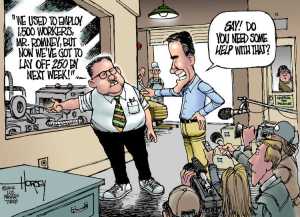
Good morning! Today is the New Hampshire primary. We’ll live blog the returns later tonight. As of last night, Gordon Gekko Mitt Romney had a big lead in the polls, with Ron Paul second and John Huntsman and Rick Santorum tied for third place.
Romney, the former governor of neighboring Massachusetts, holds a 24 percentage point lead over his closest rival, with 41 percent of likely Republican primary voters indicating they’d vote for him, the WMUR New Hampshire Primary Poll said.
U.S. Rep. Ron Paul from Texas was favored by 17 percent of likely primary voters, followed by former Utah Gov. Jon Huntsman and former U.S. Sen. Rick Santorum of Pennsylvania, each with 11 percent, and former House Speaker Newt Gingrich collecting 8 percent.
Several polls indicated Gingrich would finish in the top three.
“All of the candidates behind Romney have a good chance finishing anywhere between second and fifth place,” said Andrew Smith, director of the UNH Survey Center in Durham.
Yesterday Romney stepped in it again when he told an audience that he really likes firing people.
The final day of campaigning saw Romney under fire for a comment about health insurance that quickly became fodder for criticism.
Asked about the issue in Nashua, New Hampshire, Romney said he wanted a person to be able to own his or her own policy “and perhaps keep it the rest of their life.”
“That means the insurance company will have the incentive to keep you healthy. It also means if you don’t like what they do, you can fire them,” he said.
“I like being able to fire people who provide services to me,” Romney added. “If someone doesn’t give me the good service I need, I want to say I am going to get somebody else to provide that service to me.”
Romney complained that everyone was taking his remarks out of context, but when you’re a former corporate raider worth $250 million, it’s probably a good idea to watch what you say about putting people out of work.
Anyway, the latest meme about Romney is that he’s Gordon Gekko brought to life. I think it’s a pretty good comparison. I don’t know if you recall the quote from the recent Vanity Fair profile of Romney that I included in a recent post:
Romney described himself as driven by a core economic credo, that capitalism is a form of “creative destruction.” This theory, espoused in the 1940s by the economist Joseph Schumpeter and later touted by former Federal Reserve Board chairman Alan Greenspan, holds that business must exist in a state of ceaseless revolution. A thriving economy changes from within, Schumpeter wrote in his landmark book, Capitalism, Socialism and Democracy, “incessantly destroying the old one, incessantly creating a new one.” But as even the theory’s proponents acknowledged, such destruction could bankrupt companies, upending lives and communities, and raise questions about society’s role in softening some of the harsher consequences.
Romney, for his part, contrasted the capitalistic benefits of creative destruction with what happened in controlled economies, in which jobs might be protected but productivity and competitiveness falters. Far better, Romney wrote in his book No Apology, “for governments to stand aside and allow the creative destruction inherent in a free economy.” He acknowledged that it is “unquestionably stressful—on workers, managers, owners, bankers, suppliers, customers, and the communities that surround the affected businesses.” But it was necessary to rebuild a moribund company and economy.
That sure sounds Gekko-like, doesn’t it?
Yesterday, Rick Klein of ABC News addressed the Romney/Gekko issue.
Virtually all of Romney’s rivals are now sensing a powerful issue. Jon Huntsman said today that the firing comment shows that Romney is “completely out of touch” with the American economy.
Rick Perry, skipping ahead a state, is calling it the “ultimate insult for Mitt Romney to come to South Carolina and tell you he feels your pain, because he caused it.”
Gingrich is equating Romney’s business style with finding “clever legal ways to loot a company.” Rick Santorum’s stump speech includes a line about not needing a CEO as president, and he suggested at ABC’s Saturday night debate in New Hampshire that Romney’s background calls into question whether he “can inspire and paint a positive vision for this country.”
Romney hasn’t made matters easier for himself as he’s tried to connect with voters on the economy. The son of a millionaire business titan said over the weekend: “I know what it’s like to worry about whether or not you are going to get fired.”
Klein claims it’s too late for any of this to affect the New Hampshire primary results. I wouldn’t be so sure. New Hampshirites are famous for making up their minds at the last minute. Remember Hillary’s surprise win in 2008?
Romney has been expecting the Gordon Gekko comparisons, so you have to wonder why he hasn’t managed to curb some of these Gekko-like remarks. I guess he just can’t help himself.
Mitt Romney says he knows a photo in which he appears with other executives at Bain Capital LLC posing with cash in their hands, pockets and mouths will be used against him if he wins the Republican presidential nomination.
The 1980s image — called the “Gordon Gekko” photo by some Democrats, a reference to the Michael Douglas character in the movie “Wall Street” — offers an easy attack line at a time of high unemployment and sharp rhetoric against the nation’s top money managers, investors and bankers.
“We posed for a picture, just celebrating the fact that we had raised a lot of money and then we hoped to be able to return it with a good return,” Romney said on “Fox News Sunday.”
Here’s Romney’s defense of the photo on Fox News Sunday.
Andrew Leonard of Salon also discussed the comparison of Romney with Gekko.
Like Gekko, Romney made his fortune buying and selling companies; and like Gekko, he believes that his “greed is good” version of rough-and-tumble creative destruction is a positive force for America, weeding out the bad performers and nurturing lean-and-mean profit engines. If you are looking for the paradigmatic exemplar of the new style of capitalism mogul launched by the Reagan revolution, Romney is your man. Michael Douglas’ Gordon Gekko is merely ersatz.
But what Leonard finds so amazing is that this attack on Romney and his leverage buyouts is being led Newt Gingrich.
The shock is to see Newt Gingrich and his financial backers channeling the Oliver Stone critique so passionately and wholeheartedly. If you have not seen the three-minute advertisement “When Romney Came to Town,” the soon-to-be debuted documentary lambasting Romney as the enemy of the American worker, prepare to be flabbergasted.
“Their greed was only matched by their willingness to do anything to make millions in profits.”
“This film is about one such raider and his firm.”
“His mission: To reap massive rewards for himself and his investors.
“Romney took foreign seed money from Latin America, and began a pattern exploiting dozens of American businesses.”
And so on. Michael Moore doesn’t sting this hard, and MoveOn isn’t this angry. If Romney, as expected, ends up winning the Republican nomination, Obama’s campaign team can relax. Their work has already been done.
Here’s the trailer for the 27-minute documentary that Gingrich backers have purchased.
Politico calls it “the Bain Bomb.”
While conservatives look unlikely to unite around one alternative to Romney, the campaigns themselves are uniting around the theme that the former head of Bain Capital looted companies, tossed people out of jobs and is now exaggerating his success at the venture capital firm.
In the context of this moment in American politics, in which frustration with the privileged is boiling hot, the attack, from Republicans on one side and the Obama campaign on the other, will test Romney. If he ends up looking more like an opportunist who profited for the few than like a man who created jobs for the many, it’s hard to imagine his polls numbers won’t drop.
Conservative bloggers, who generally can’t stand Romney have begun defending him against his rivals attacks, and Dana Millback called Romney “the Scrooge McDuck of the 2012 presidential race. Bloomberg reports that buyout firms are getting nervous about damage to their reputations.
This could be fun to watch. I thought Newt’s attack on Romney yesterday was spot on.
Is Romney full of shit or what? He even makes Newt Gingrich look good. I hope Newt sticks around and continues letting it all hang out. Every single word he said about Romney was the truth.
I’m going to wrap this up with a more serious take on Romney from Robert Reich: Mitt: Son of “Citizen’s United.” I had forgotten that Reich ran for governor of Massachusetts in the the Democratic primary in 2002. Please go read the whole thing and try not to weep while you’re doing it.
As Reich says, Romney is the ultimate big money candidate. He was in 2002, and now with the help of the Roberts Court, he has more money than any candidate ever dreamed of before. If you thought Obama was the candidate of Wall Street–and he was in 2008–Romney is soooo much more so. He has money and connections that make Obama’s fundraising look pathetic. And none of this money even needs to be reported–it could be coming from overseas, even from foreign governments, and we’d never know.
Tonight we’ll find out of any of this barrage of Gordon Gekko/Mitt Romney comparisons will have any effect. I’m rooting for Romney to be taken down a peg. And then on to South Carolina!
Please share your links in the comments, and I hope to see you tonight for the live blog.
It Can Happen Here
Posted: January 9, 2012 Filed under: Barack Obama, Civil Liberties, court rulings, George W. Bush, Gitmo, Human Rights, legislation, torture | Tags: Barack Obama, Defense Authorizattion Act, due process, Gitmo, Guantanamo, Habeas Corpus, indefinite detention, Lakhdar Boumediene, Military Commissions Act (MCA), terrorism, Torture 20 Comments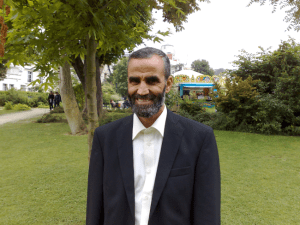
Lakhdar Boumedienne
Now that President Obama has signed the 2012 Defense Authorization Act, what happened to Lakhdar Boumediene could happen to any of us.
In a horrifying op-ed in yesterday’s New York Times Boumediene described how he was arrested in Bosnia in 2002 and held in Guantanamo for seven years without due process. At the time of his arrest Boumediene was working as a humanitarian aid worker focusing on helping children. During his imprisonment, he was never allowed to see his wife or his children, and received only a few of the many letters they sent him. The ones he did receive were cruelly censored.
Boumediene writes:
I left Algeria in 1990 to work abroad. In 1997 my family and I moved to Bosnia and Herzegovina at the request of my employer, the Red Crescent Society of the United Arab Emirates. I served in the Sarajevo office as director of humanitarian aid for children who had lost relatives to violence during the Balkan conflicts. In 1998, I became a Bosnian citizen. We had a good life, but all of that changed after 9/11.
When I arrived at work on the morning of Oct. 19, 2001, an intelligence officer was waiting for me. He asked me to accompany him to answer questions. I did so, voluntarily — but afterward I was told that I could not go home. The United States had demanded that local authorities arrest me and five other men. News reports at the time said the United States believed that I was plotting to blow up its embassy in Sarajevo. I had never — for a second — considered this.
The fact that the United States had made a mistake was clear from the beginning. Bosnia’s highest court investigated the American claim, found that there was no evidence against me and ordered my release. But instead, the moment I was released American agents seized me and the five others. We were tied up like animals and flown to Guantánamo, the American naval base in Cuba. I arrived on Jan. 20, 2002.
I still had faith in American justice. I believed my captors would quickly realize their mistake and let me go. But when I would not give the interrogators the answers they wanted — how could I, when I had done nothing wrong? — they became more and more brutal. I was kept awake for many days straight. I was forced to remain in painful positions for hours at a time. These are things I do not want to write about; I want only to forget.
Eventually he went on a hunger strike that lasted two years and was brutally force fed twice a day. Finally, in 2008, his case reached the Supreme Court.
In a decision that bears my name, the Supreme Court declared that “the laws and Constitution are designed to survive, and remain in force, in extraordinary times.” It ruled that prisoners like me, no matter how serious the accusations, have a right to a day in court. The Supreme Court recognized a basic truth: the government makes mistakes. And the court said that because “the consequence of error may be detention of persons for the duration of hostilities that may last a generation or more, this is a risk too significant to ignore.”
When he was finally freed, France took him in, and he was reunited with his family. Boumediene writes that there are 90 prisoners at Guantanamo who have also been cleared to leave the facility, but they are being held because they are from countries where they would be tortured or killed if they returned.
So there they sit, not guilty of any crime but held in indefinite detention. Just as you or I could be held if this president or the next one decides we somehow helped or supported terrorism.

 peej
peej Carissa
 bostonboomer
 dakinikat
 ecocatwoman
 mablue2
 Mama Lopez
 peggysue22
 quixote
 skydancingguestblogger
 Mona (aka Wonk the Vote)



 Sky Dancing
Recent Comments