
Thursday Reads: This Sh**t Never Ends!
Posted: March 29, 2018 Filed under: Afternoon Reads, U.S. Politics | Tags: China, corruption, David Shulkin, Donald Trump, Ivanka Trump, Jared Kushner, John Bolton, John Dowd, Kim John Un, Latvia, Michael Flynn, North Korea, Paul Manafort, presidential pardons, privatization, Robert Mueller, Russia investigation, U.S. Constitution, Veterans Affairs 31 Comments
Bette Davis
Good Afternoon!!
As usual in the horrifying new world of Trump, there is so much shocking news that there’s no way to deal with all of it. I guess the top story has to be that Trump’s former lawyer John Dowd dangled pardons in front of Michael Flynn and Paul Manifort last summer.
The New York Times: Trump’s Lawyer Raised Prospect of Pardons for Flynn and Manafort.
A lawyer for President Trump broached the idea of Mr. Trump’s pardoning two of his former top advisers, Michael T. Flynn and Paul Manafort, with their lawyers last year, according to three people with knowledge of the discussions.
The discussions came as the special counsel was building cases against both men, and they raise questions about whether the lawyer, John Dowd, who resigned last week, was offering pardons to influence their decisions about whether to plead guilty and cooperate in the investigation.
The talks suggest that Mr. Trump’s lawyers were concerned about what Mr. Flynn and Mr. Manafort might reveal were they to cut a deal with the special counsel, Robert S. Mueller III, in exchange for leniency. Mr. Mueller’s team could investigate the prospect that Mr. Dowd made pardon offers to thwart the inquiry, although legal experts are divided about whether such offers might constitute obstruction of justice.
Mr. Dowd’s conversation with Mr. Flynn’s lawyer, Robert K. Kelner, occurred sometime after Mr. Dowd took over last summer as the president’s personal lawyer, at a time when a grand jury was hearing evidence against Mr. Flynn on a range of potential crimes.
Flynn ultimately took the safe route and agreed to cooperate with the Mueller investigation; but this could explain why Paul Manafort is holding out even though the evidence against him is overwhelming and he could face life in prison if convicted.

Cary Grant, 1960
Constitutional experts are now discussing whether Trump could get away with pardoning Manafort and others, even if he did it with corrupt intent. Some opinions:
Alex Whiting at Just Security: Why Dangling a Pardon Could Be an Obstruction of Justice—Even if the Pardon Power is Absolute. A brief excerpt:
Some experts have argued that the pardon power is absolute and that the President’s motives in issuing a pardon thus could not be questioned, while others contend that it could be a crime to issue a pardon for corrupt purposes (such as in exchange for cash). But the debate over the absolute nature of the pardon power is actually not relevant to the alleged incidents involving Trump’s lawyer. Indeed, that entire debate can be set aside for the moment. Why? Because there’s been no pardon. Instead, a pardon has only been dangled before Flynn and Manafort, and the analysis of whether that action could become part of an obstruction case against Trump raises entirely different considerations….
The pardon dangle works completely differently—and in important respects has the opposite effects. First, this kind of dangle is not a public act. Therefore, as long as it remained secret, it could be done without incurring any of the political downstream consequences that come with actually pardoning someone. It hides the President from scrutiny rather than exposes him to it as a potential check on the use of the power. Second, the objective of the dangle appears to have been to foreclose the prospect of Flynn and Manfort’s cooperating or testifying. Once again, this is the opposite effect of an actual exercise of the pardon. The message of the dangle was sufficiently clear: hang in there and keep fighting (do not cut a deal with the special counsel) because you will be pardoned before you spend a day in jail. The President and his lawyer’s hope would have been that with the threat of jail eliminated, neither former aid would feel compelled to plead guilty and cooperate with Mueller to reduce his sentence. But, since they were not actually pardoned or not yet anyway, they still kept their Fifth Amendment privileges, and so Mueller could not simply demand they testify before the Grand Jury. In this way, the dangle could operate to stop any cooperation from Flynn and Manafort, who could then be pardoned later if and when they were indicted or even after their cases went through pretrial, trial and appeal. Indeed, you also have to put yourself back at the time these events all took place: before Manafort was indicted and Flynn pleaded guilty. That’s when the dangle could work its magic.
Ava Gardner
Because a pardon dangle is secret and seeks to discourage cooperation with an ongoing investigation without public scrutiny or consequences, it should be analyzed differently than a pardon when it comes to an obstruction case.

Former U.S. Attorney Harry Littman at The Washington Post: We may know why Paul Manafort has kept quiet. But his bet is still risky.
Manafort’s refusal to cooperate can’t be driven by a rational calculation that he has any reasonable chance of escaping conviction, multimillion-dollar legal fees and a prison sentence that will result in years behind bars.
The indictments against him lay out an overwhelming case of money laundering in particular. The meticulously gathered evidence will be as clear for the jury as a laundry detergent commercial: The jury will see the dirty money go in and the clean money come out. To the extent there had been a small risk, inherent in paper-driven chases, that the jury could become bored at the accounting presentation and tune out, Mueller now has a narrator for the trial in Manafort’s co-conspirator Rick Gates.
So is hoping for a Trump pardon a good bet for Manafort?
…the Times story does not definitively solve the Manafort mystery. First, Dowd’s reported overture, particularly if done with the president’s knowledge or consent, could have constituted a conspiracy to obstruct justice, a separate impeachable offense. That presumably is why the story includes a categorical denial from Dowd that he ever discussed pardons for the president’s former advisers with lawyers. For Dowd, the conduct would be putting his license at risk.
Second, Manafort surely recognizes that he can’t fully count on Trump, both because the president is a habitual liar and because the political dynamic is subject to such extreme and violent turns. (Of course, under this hypothesis, Manafort retains the valuable insurance policy of spilling the goods if Trump double-crosses him, leaving both huge losers in a real-life prisoners dilemma.)Marcello Mastroianni
Third, Manafort could still be required to testify after any pardon, when he would no longer be in federal jeopardy. Undoubtedly, the plan would be for him to deny assurances of a pardon from Trump. Still, were Mueller to catch him in a lie, the special counsel would surely come down on him.
Finally, it is likely that in the event of a pardon for federal crimes, which is all Trump can provide, some state attorneys general, such as New York’s Eric T. Schneiderman, would prosecute Manafort for financial crimes under their potent state statutes.

Maybe Manafort figures a possible pardon is a better bet than hoping Putin doesn’t send his goons to shut him (Manafort) up for good.
A few more pardon stories:
Bloomberg: Pardon Talk Could Put Trump Lawyer in Hot Water.
CNN: Emails reveal DOJ would have ‘very little involvement’ if Trump tweeted a pardon.
The Washington Post: This overlooked part of the Constitution could stop Trump from abusing his pardon power.
Another big story broke late yesterday. Trump fired Veterans Affairs Secretary David Shulkin. Today Shulkin is speaking out, claiming he was fired because he opposed privatizing the VA. Shulkin spoke to NPR’s Morning Edition:
Fired Veterans Affairs Secretary David Shulkin tells NPR’s Morning Edition that political forces in the Trump administration want to privatize the VA — and that he was standing in the way.
“There are many political appointees in the VA that believe that we are moving in the wrong direction or weren’t moving fast enough toward privatizing the VA,” he said. “I think that it’s essential for national security and for the country that we honor our commitment by having a strong VA. I was not against reforming VA, but I was against privatization.”
Lauren Bacall
Those political forces may be why Shulkin says he wasn’t allowed to speak out to defend himself against an ethics controversy over use of funds on a trip to Europe that he says was overhyped and intended to weaken him.
“This was completely mischaracterized,” Shulkin said. “There was nothing improper about this trip, and I was not allowed to put up an official statement or to even respond to this by the White House. … I think this was really just being used in a political context to try to make sure that I wasn’t as effective as a leader moving forward.”

Shulkin argued his case in an op-ed at The New York Times: David J. Shulkin: Privatizing the V.A. Will Hurt Veterans.
That’s a lot of news, but I’ve barely touched on everything that’s happening. Here’s a shocking Trump corruption story that broke at The Guardian this morning: FBI looked into Trump plans to build hotel in Latvia with Putin supporter.
In 2010, a small group of businessmen including a wealthy Russian supporter of Vladimir Putin began working on plans to build a glitzy hotel and entertainment complex with Donald Trump in Riga, the capital of Latvia.
A senior Trump executive visited the city to scout for locations. Trump and his daughter Ivanka spent hours at Trump Tower with the Russian, Igor Krutoy, who also knows compatriots involved in arranging a fateful meeting at the same building during the 2016 US election campaign.
Then the Latvian government’s anti-corruption bureau began asking questions.
The Guardian has learned that talks with Trump’s company were abandoned after Krutoy and another of the businessmen were questioned by Latvian authorities as part of a major criminal inquiry there – and that the FBI later looked into Trump’s interactions with them at Latvia’s request.
Michael Caine
Those involved deny that the inquiry was to blame for the deal’s collapse.
Latvia asked the US for assistance in 2014 and received a response from the FBI the following year, according to a source familiar with the process. Latvian investigators also examined secret recordings in which Trump was mentioned by a suspect.
This means the FBI looked into Trump’s efforts to do business deals in the former Soviet Union earlier than was widely known. Robert Mueller, the special counsel, is now investigating other Trump dealings with Russians as part of his wide-ranging criminal inquiry into alleged collusion between Moscow and members of Trump’s 2016 campaign team.
The Riga developers saw their potential partner in New York as a ticket to lucrative western revenues.

This shit just never ends. I haven’t even touched on the North Korea news or the Bolton mess or the fact that Trump wants to put his personal physician in charge of the VA. More headlines to check out:
The Washington Post: Who is Trump’s new Veterans Affairs pick, Ronny Jackson?
NBC News: Kim Jong Un met China’s Xi. What does it mean for Trump summit?
The Washington Post: Three big questions about a Trump-Kim summit.
Business Insider: Kim Jong Un became a regional power overnight by saying a single, meaningless word to Trump.
Vox: “Otherwise, they subpoena”: White House lawyer Ty Cobb on why Trump is cooperating with Mueller.
Bloomberg: Kelly Loses White House Clout as Trump Blazes Own Path.
CNN: Did Trump campaign and John Bolton PAC get help from overseas?
Talking Points Memo: WSJ: Kushner Has Phoned Bolton For Advice In The Past Year.
BBC News: Julian Assange has internet cut at Ecuadorean embassy in London.
The Daily Beast: ICE Now Detaining Pregnant Women, Thanks to Trump Order.
Slate: It’s Time to Stop Yammering About Liberal Bias.
Stormy Monday Reads
Posted: March 26, 2018 Filed under: Afternoon Reads | Tags: Stormy Weather, Summer Time 24 Comments Good Afternoon Sky Dancers!
It’s a beautiful day here in New Orleans but today in the news it’s all Stormy, all the time. I’m going to try to sort it out and ignore the sordid details which seem to include that he only got one Mercy Fuck out of her because he probably couldn’t even attract a cloud of hungry mosquitoes. Oh, and that the interview implied she had pix.
In this case, when the Wall Street Journal revealed the details of the contract on January 12, 2018, that information stopped being confidential.
So why not just say that? Why not cite the WSJ report, say the information is no longer confidential, and that’s that? Why seek a declaratory judgment voiding the agreement based on a flimsy theory that Avenatti must know is risky at best?
The answer may be in the agreement itself, because it has some unusual provisions in it.
First, it’s chiefly concerned with “certain still images and/or text messages.” Yes, later in the agreement, the “confidential information” at issue is expansively defined, to include absolutely anything, tangible or intangible, that Daniels might know about Trump, including, of course, whether she spanked him with a magazine or not.
But far more ink is spilled discussing what Daniels is supposed to do with those texts and images: give copies to Cohen and destroy the originals.
Now the strategy starts to make sense. This dispute isn’t about the affair: it’s about those pictures or texts. As viewers of Daniels’ 60 Minutes interview surely noticed, the only question Daniels refused to answer was about whether she’s got more evidence of the affair. Avenatti suggested the answer is yes: he tweeted a photo of a DVD inside a safe.

Stormy Weather (1943)
Directed by Andrew L. Stone
Shown from left: Cab Calloway, Lena Horne
Oh, wait, that’s kinda sorta salacious while the interview itself was kind of a yawner. This link from The Cut via BB explains why that’s a good strategy.
In fact, Stormy was entirely credible in every way. Calm, clear-eyed, and direct, she telegraphed competence and clarity of purpose. She answered questions quickly and without hesitation, never averting her gaze, lowering her eyes, or even pausing. Her words were simple and devoid of rhetorical flourishes. When asked, for example, whether she understood the $130,000 she’d accepted was “hush money,” Daniels’s firm “yes” flew from her mouth nearly before Cooper could finish his question. She offered this kind of swift, emphatic, and monosyllabic response several times.
Everything about this interview screamed legitimacy. 60 Minutes is the 50-year-old doyenne of broadcast journalism, a network show watched by grandparents and Trump supporters (and apparently even Trump himself). This was Stormy’s chance to take her case to the widest American public, to clear her name and tell her truth, even at the risk of being penalized for breaching her non-disclosure agreement (and possibly even at risk to her personal safety).
This quest for legitimacy made for dull television. For primetime, Stormy toned down her makeup (false lashes but no visible shadow, pink not red lips), and buttoned up her shirt (although admittedly, the buttons were straining). But she also muted her personality, showing far less of the brash and witty side we’ve seen in other interviews and on her Twitter feed. The sharp-tongued woman with the off-color sense of humor all but disappeared last night. (It returned briefly when, proving she’d not sold her story, she quipped to Cooper, “I don’t have a million dollars. You didn’t even buy me breakfast.”).
And while she still owns her adult-film career proudly, Daniels showed a more vulnerable side when detailing how she’d felt obliged to have sex with Trump — unprotected! — even though she felt disinclined, simply because she’d gone alone to his hotel suite. Her explanation for this conjured a retrograde notion of women’s sexual obligations to men and even a whiff of self-abnegation: “I had it coming for making a bad decision … I just heard the voice in my head, ‘Well, you put yourself in a bad situation … so you deserve this.’”
 Stormy’s story is one more narrative related to Trump and his continual philandering, cheating, and womanizing. Yet, his base of White Supremacist Christofascists stick with him. Why?
Why are white Christians sticking so closely to President Trump, despite these claims of sexual indiscretions? And why are religious individuals and groups that previously decried sexual impropriety among political leaders suddenly willing to give Trump a “mulligan” on his infidelity?
Our new study points to a different answer than others have offered. Voters’ religious tenets aren’t what is behind Trump support; rather, it’s Christian nationalism — their view of the United States as a fundamentally Christian nation.
The system is clearly rigged in their favor. As long as they hang out in backwater states, they get more representation than the rest of us.
Donald Trump lost the popular vote by nearly 3 million votes, yet he still got to be president. The 49 senators in the Democratic caucus represent nearly 40 million more people than the 51 senators in the Republican caucus.
And this last problem is likely to get much worse. According to Baruch College’s David Birdsell, by 2040 “about 70% of Americans are expected to live in the 15 largest states.” As a result, 70 percent of Americans “will have only 30 senators representing them, while the remaining 30% of Americans will have 70 senators representing them.”
Moreover, if the parties continue to sort into diverse, urban Democrats and homogeneous, more rural Republicans, the GOP won’t just gain a lock on the Senate. They could potentially ensure that no Democrat is ever confirmed to the federal bench again.
In 2016, when Senate Republicans successfully blocked Chief Judge Merrick Garland’s nomination to the Supreme Court, the 46 Democrats in the Senate represented 20 million more people than the 54 Republicans. In 2017, when Neil Gorsuch was confirmed to occupy this seat, the 45 senators who opposed his confirmation represented more than 25 million more people than the senators who supported him.
The United States, in other words, is barreling toward a future where a younger, multicultural, more urbanized majority is ruled by an aging, white, rural minority. That’s a recipe for civil unrest, or even a secession crisis.
Well, if you thought a Stormy day was great! Just wait until you get a Summer one!!!
Yes. Pretty Soon, it will be Summer time.
“Summer Zervos is one of many women who has been subjected to unwanted sexual touching by Donald J. Trump.”
So begins the defamation lawsuit filed by Zervos, a restaurant owner and former contestant on The Apprentice, who says Trump sexually assaulted her in 2007 and then called her a liar when she spoke out about it in 2016.
Zervos’s case centers on a disturbing account of sexual assault, an important distinction from two other high-profile legal cases involving women and Trump. Adult film actress Stormy Daniels and former Playboy model Karen McDougal (who is suing the company that publishes the National Enquirer) say they had consensual affairs with Trump.
Zervos scored a victory recently when a New York Supreme Court judge ruled that her suit could go forward, rejecting the Trump team’s argument that a sitting president can’t be sued in state court. “No one is above the law,” the judge responded. Trump’s lawyers have announced they will appeal the decision.
The potential implications of the Zervos case are huge. When Paula Jones sued Bill Clinton for sexual harassment 20 years ago, the Supreme Court set the precedent that a sitting president can’t push off a federal case until after he leaves office. Clinton’s perjury in a deposition in that case ultimately led to his impeachment.
I’ve had a long few days so I’m calling it a short post. Let us know what’s on your reading and blogging list today! Enjoy two brilliant singers and genius music!!!
Tuesday Reads: Spring Has Sprung, Bringing More Snow to the Northeast
Posted: March 20, 2018 Filed under: Afternoon Reads, U.S. Politics 33 Comments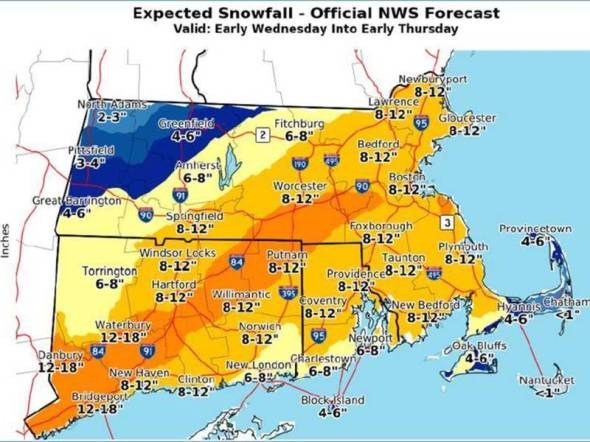
Good Afternoon!!
It’s the first day of Spring, but there’s no Spring weather for my neck of the woods.
Happy spring! A fourth nor’easter this month will be landing Wednesday across Southern New England, testing the limits of the Massachusetts psyche when it dumps up to 12-14 inches of snow across the state. Forecasters offered storms specifics in their final forecast Tuesday morning.
The storm is expected to begin Wednesday morning between 5 a.m. – noon, depending on where in the state you are. The farther south the earlier the storm starts. The Boston area can expect the storm around 9 a.m. The snow will be the heaviest Wednesday afternoon into the evening before it begins to taper off early Thursday morning.
The amount of snow pegged to fall has finally been nailed down: The storm is expected to bring between 8-14 inches everywhere east of Springfield, except for the Cape and Islands, which may only see 4-6. (For those who are convinced the “low-end” predictions will finally be realized – that’s about 3-5 inches across Eastern Mass. Good luck.)
There has been another explosion in Texas, this time at a FedEx facility in the town of Shertz, near San Antonio. NBC News:
A package exploded at a FedEx distribution center near San Antonio early Tuesday, just two days after a blast injured two men in Austin — the fourth such incident in Texas’ capital this month.
Tuesday’s explosion occurred in the sorting area of the facility in Schertz, Texas, the city’s police department confirmed on its Facebook page. FedEx said one person was treated for minor injuries.
Spring Now, Edouard Monet
“We are working closely with law enforcement in their investigation,” FedEx said in a statement.
The company didn’t provide additional details. NBC affiliate WOAI reportedone female employee was treated for a headache related to a possible concussion from the blast.
It was not immediately clear whether the explosion was related to the incidents in Austin, according to the Bureau of Alcohol, Tobacco, Firearms and Explosives, which had officials on the scene.
The FBI also said it had responded to the incident, which WOAI reported happened at 12:30 a.m. local time (1:30 a.m. ET).

In addition, a “suspicious package” is being investigated at a FedEx site near Austin airport. KXAN:
Austin Police are investigating a suspicious package at a FedEx Ground facility in Austin. The city is on high alert after four package explosions in three weeks.
That facility is at 4117 McKinney Falls Parkway, near the Austin-Bergstrom International Airport. Austin police confirm they are investigating after a call came in at 6:19 a.m. Deputies from the Travis County Sheriff’s Office are also on scene, as well as members of the Austin Fire Department and Austin-Travis County EMS. FedEx employees evacuated and some were told to go home after a meeting with managers. It’s not known how many were working at the time.
At 9 a.m., KXAN received information a FedEx Office Print and Ship Center at 5601 Brodie Lane in south Austin was surrounded by authorities. When KXAN called the office, there was an automated message that said the location was closed for the day. Photos show the area is roped off with crime tape.
A Sunset Valley Police officer at the scene told KXAN’s Alyssa Goard said the package that exploded at the Schertz facility was shipped from the Brodie location. Sunset Valley police says it is assisting the FBI by providing perimeter security as it investigates.
There has been another school shooting. NBC Washington: 2 Students Hurt, Shooter Dead After Md. School Shooting.
Picking Flowers, Pierre Auguste Renoir
A student pulled out a gun and shot two other students at a high school in southeast Maryland Tuesday morning before the shooter was killed, the St. Mary’s County sheriff says.
The gunman entered Great Mills High School in Great Mills at the beginning of the school day and shot a female student in a hallway, Sheriff Tim Cameron told News4. A male student also was hit by a bullet.
Two students are in critical condition, and the shooter was pronounced dead later Tuesday morning.
Information was not available immediately on the relationship between the students, Cameron said. A motive is not yet clear.
The shooter exchanged fire with a school resource officer, a trained, armed deputy sheriff, Cameron said. The shooter was wounded; the officer was not.

The Facebook/Cambridge Analytica story is getting worse and worse. Here’s the latest:
The Guardian: ‘Utterly horrifying’: ex-Facebook insider says covert data harvesting was routine.
Hundreds of millions of Facebook users are likely to have had their private information harvested by companies that exploited the same terms as the firm that collected data and passed it on to Cambridge Analytica, according to a new whistleblower.
Sandy Parakilas, the platform operations manager at Facebook responsible for policing data breaches by third-party software developers between 2011 and 2012, told the Guardian he warned senior executives at the company that its lax approach to data protection risked a major breach.
Spring 1956, Pablo Picasso
“My concerns were that all of the data that left Facebook servers to developers could not be monitored by Facebook, so we had no idea what developers were doing with the data,” he said.
Parakilas said Facebook had terms of service and settings that “people didn’t read or understand” and the company did not use its enforcement mechanisms, including audits of external developers, to ensure data was not being misused.
Parakilas, whose job it was to investigate data breaches by developers similar to the one later suspected of Global Science Research, which harvested tens of millions of Facebook profiles and provided the data to Cambridge Analytica, said the slew of recent disclosures had left him disappointed with his superiors for not heeding his warnings.
“It has been painful watching,” he said. “Because I know that they could have prevented it.”

Read the rest at The Guardian.
The New York Times: Alex Stamos, Facebook Data Security Chief, To Leave Amid Outcry.
As Facebook grapples with a backlash over its role in spreading disinformation, an internal dispute over how to handle the threat and the public outcry is resulting in the departure of a senior executive.
Dolce Far Niente, John Singer Sargent
The impending exit of that executive — Alex Stamos, Facebook’s chief information security officer — reflects heightened leadership tension at the top of the social network. Much of the internal disagreement is rooted in how much Facebook should publicly share about how nation states misused the platform and debate over organizational changes in the run-up to the 2018 midterm elections, according to current and former employees briefed on the matter.
Mr. Stamos, who plans to leave Facebook by August, had advocated more disclosure around Russian interference of the platform and some restructuring to better address the issues, but was met with resistance by colleagues, said the current and former employees. In December, Mr. Stamos’s day-to-day responsibilities were reassigned to others, they said.
Mr. Stamos said he would leave Facebook but was persuaded to stay through August to oversee the transition of his responsibilities and because executives thought his departure would look bad, the people said. He has been overseeing the transfer of his security team to Facebook’s product and infrastructure divisions. His group, which once had 120 people, now has three, the current and former employees said.

More at the link.
Bloomberg: FTC Probing Facebook for Use of Personal Data, Source Says.
Facebook Inc. is under investigation by a U.S. privacy watchdog over the use of personal data of 50 million users by a data analytics firm to help elect President Donald Trump.
The U.S. Federal Trade Commission is probing whether Facebook violated terms of a 2011 consent decree over its handing of user data that was transferred to Cambridge Analytica without their knowledge, according to a person familiar with the matter.
Springtime, Claude Monet
Under the 2011 settlement, Facebook agreed to get user consent for certain changes to privacy settings as part of a settlement of federal charges that it deceived consumers and forced them to share more personal information than they intended. That complaint arose after the company changed some user settings without notifying its customers, according to an FTC statement at the time.
An FTC spokeswoman said in emailed statement that the agency is aware of the issues that have been raised, but can’t comment on whether it is investigating. The agency takes any allegations of violations of consent decrees seriously, the statement said.
If the FTC finds Facebook violated terms of the consent decree, it has the power to fine the company more than $40,000 a day per violation.
Facebook said in a statement it rejected “any suggestion of violation of the consent decree.”

I hope Facebook goes out of business and Mark Zukerberg becomes a pariah. Sorry, I some people here like Facebook…
The only good news is that a blue wave seems to be coming.
Stuart Rothenberg at Roll Call: Insiders See Democratic House Gains of 30-45 seats.
Seven and a half months before the midterm elections, the combination of attitudinal and behavioral evidence leads to a single conclusion: The Democrats are very likely to win control of the House in November.
Just as important, Republican and Democratic campaign strategists also agree that an electoral wave has already formed….
Farm Garden with Sunflowers, 1905-06 (oil on canvas), Gustav Klimt (1862-1918)
The new March 10-14 NBC News/Wall Street Journal poll of adults is consistent with other surveys over the past six months. It shows Democrats with a large generic ballot advantage among younger voters, women, whites with at least a college degree and voters age 65 and older.
The GOP’s great strength in the generic ballot is among two pro-Trump groups, men and whites without a college degree. Unfortunately for the party, the survey also shows Democrats, whites with a college degree and older voters as having the greatest interest in the election (and therefore the greatest likelihood of voting). Each of those groups prefers a Democratic Congress.
Moreover, while independents don’t traditionally turn out in big numbers in midterms, one veteran Republican strategist sees them as a huge problem this year. “They are tired of the drama,” he said.
The worst case for the GOP, of course, would be mediocre Republican turnout combined with strong Democratic participation and independents behaving like Democrats (which is what they did in 2006).
If that happens, Republicans would take quite a beating in the fall.

Get all the details at the Roll Call link.
Politico: GOP fears another potential electoral disaster.
National Republicans — on the heels of the Roy Moore and Rick Saccone debacles — worry they’re staring down their latest potential midterm election fiasco: coal baron and recent federal prisoner Don Blankenship.
Spring (Apple Blossoms) 1859 (oil on canvas), John Everett Millais (1829-96)
With Blankenship skyrocketing in the West Virginia Republican Senate primary and blanketing the airwaves with ads assailing his fractured field of rivals as career politicians, senior party officials are wrestling with how, or even whether, to intervene. Many of them are convinced that Blankenship, who served a one-year sentence after the deadly 2010 explosion at his Upper Big Branch Mine, would be a surefire loser against Democratic Sen. Joe Manchin — and potentially become a national stain for the party.
The discussions have intensified over the past few weeks. During separate meetings with the National Republican Senatorial Committee, aides to Blankenship’s two primary opponents, Rep. Evan Jenkins and state Attorney General Patrick Morrisey, pointed to Blankenship’s traction and questioned what could be done to stop him. The Senate GOP campaign arm, which heard out the appeals, recently commissioned a survey to gauge the coal king’s electoral strength and determine his staying power in the race.
Those familiar with the party’s deliberations say the results are clear: With a little more than a month until the May 8 primary, Blankenship, a towering figure in West Virginia politics long before this campaign and an avid opponent of unions, has vaulted into essentially a three-way tie with his rivals and is positioned to move ahead.

Republicans can’t field good candidates anymore. Here’s hoping for a huge blue wave in November!
What else is happening? What stories are you following?
Monday Reads: Justice on the Ropes
Posted: March 19, 2018 Filed under: Afternoon Reads, just because | Tags: McCabe Firing, Milque Toast Republican'ts, Mueller investigation, Trump Russia 30 Comments Good Morning Sky Dancers!
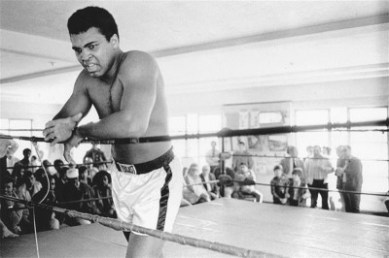
There were many things to admire about Muhammed Ali. He was tenacious, strategic, clever, and principled. His invention of the ‘Rope a Dope ‘was tactical brilliance. A boxer will pretend to be trapped against the ropes but what said boxer is actually doing is “goading the opponent to throw tiring ineffective punches”.
Can the Democratic members of Congress and the Mueller investigation ‘Rope a Dope’ KKKremlin Caligula? He appears to be in endless pursuit of ridding himself of the meddlesome G-Man. This is not in the best interest of our democracy or global stability. The Republican members of Congress–from top to bottom–have refused to do their constitutional duties sending hopes for timely justice to the ropes. It’s time to ‘Rope a Dope’ the lot of them. They need to protect the Mueller Investigation. Bills to do so have stalled in the Senate.
Back in January (when news broke that the president had—unsuccessfully, as it turned out—instructed White House counsel Don McGahn to fire Mueller last summer), Republicans asked about the legislation suggested that McGahn’s refusal proved why these bills weren’t necessary. That was baloney then, and it’s an even more alarming abdication now, with the president seemingly poised to go after Mueller directly. And yet, for all of the talk about Mueller over the past few days, nary a Republican has come out in support of passing these bills—including their Republican co-sponsors.
If the hitherto-silent Republicans really have constitutional objections to these bills, let’s hear them (per the above, I’m skeptical). If they have policy objections, let’s hear those, too. But for those who actually want to ensure that the special counsel’s investigation continues unimpeded and don’t just want to look good to their constituents, there’s an easy way to do more than just threatening the president in tweets and talk-show interviews:
Pass this legislation.
The weekend Twitler meltdown is rattling nerves as are the comments from Trump’s legal team.
Within hours of McCabe’s firing, Dowd, Trump’s personal lawyer, asked Deputy Attorney General Rod Rosenstein to kill the Justice Department’s Russia probe. (Rosenstein has direct authority over the Mueller probe.)
Dowd, in an email to reporters, linked McCabe to the Russia investigation and blamed Comey for making up a case:
I pray that Acting Attorney General Rosenstein will follow the brilliant and courageous example of the FBI Office of Professional Responsibility and Attorney General Jeff Sessions and bring an end to alleged Russia collusion investigation manufactured by McCabe’s boss James Comey based upon a fraudulent and corrupt dossier.
Dowd had initially told the Daily Beast that he was speaking on behalf of Trump as his “counsel,” only to backtrack after his statement was published and say he was actually speaking for himself. That matters because Trump has repeatedly denied that he’s trying to get rid of Mueller, largely relying on Republican allies to make the case for him.
Dowd is a longtime Washington lawyer, having helped Sen. John McCain confront the Keating Five banking scandal as far back as 1990. He joined Trump’s team to combat the Mueller probe in June, taking the lead as Trump’s chief outside lawyer (Trump is also represented by White House counsel Don McGahn and Ty Cobb, who handles the White House’s response to Mueller’s investigation).
It’s not the first time Dowd’s comments about Mueller have sparked a political controversy. In December, Trump tweeted that he “had to fire” Flynn, the former national security adviser, because Flynn had lied to the FBI.
 Mike Allen of Axios writes on Mueller’s endgame. Does Trump fear the interview or the targeting of the targeting of the Trump org?
The Mueller and Trump teams are hoping to work out the specifics of a presidential interview within the next few weeks.
The big question they’re debating is whether it’ll be in person, in writing, or some combination of the two.
After a weekend of increasingly personal and vocal battles with Mueller, the White House extended an awkward olive branch on Sunday night, with White House lawyer Ty Cobb issuing this statement:
“In response to media speculation and related questions being posed to the Administration, the White House yet again confirms that the President is not considering or discussing the firing of the Special Counsel, Robert Mueller.”
But that’s too late. Veering from the White House legal strategy of cooperating with Mueller, Trump attacked him by name on Twitter, seeking to discredit the eventual findings with Republican supporters.
Someone familiar with the process said that was presidential frustration, and that the Trump team continues its ongoing dialogue with Mueller.

27th May 1963: Supremely confident American boxer Cassius Clay holds up five fingers in a prediction of how many rounds it will take him to knock out British boxer Henry Cooper. (Photo by Kent Gavin/Keystone/Getty Images)
Trump’s team has more than signaled a new willingness to attack Mueller directly.
The president, those close to him say, is determined to more directly confront the federal probe into his campaign’s potential role in alleged Russian election interference, even if it means exacerbating his legal standing amid an investigation that has already ensnared some of his most senior campaign and White House aides.
Two sources who speak regularly with Trump said they had noticed an uptick in recent months in the frequency of the annoyance the president would express regarding Mueller and his team, and the irritation at the deluge of negative news stories regarding the probe.
Last week, for instance, The New York Times reported that Mueller had subpoenaed the Trump Organization to turn over documents, some pertaining to Russia—a demand for personal financial details that the president famously said would be crossing a “red line” in an interview with the Times last year.
Still, on Sunday, White House lawyer Ty Cobb blasted out a statement to reporters that simply assured, “in response to media speculation and related questions being posed to the Administration, the White House yet again confirms that the President is not considering or discussing the firing of the Special Counsel, Robert Mueller.”
Folks are calling this weekend the “pre-Saturday Night Massacre.”
By laying the foundation for this fresh, orchestrated case for the end of the Russian investigation, Sessions appears to have abrogated a commitment, made to the Senatein June 2017, that he would take no step toward firing Mueller.
Sen. Mark Warner: Will you commit to the committee not to take personal actions that might not result in director Mueller’s firing or dismissal?
Sessions: I can say that with confidence…
Warner: You would not take any actions to have the special investigator removed.
Sessions: I don’t think that’s appropriate for me to do.
Did Sessions’s rush to fire McCabe fall under the umbrella of any “action to have [Mueller] removed?” If Sessions had any knowledge that the president and his counsel were prepared to seize on the dismissal to call for Mueller’s firing, then he would have lent support to the plan in a manner inconsistent with his pledge to Warner. Certainly Sessions knew weeks ago that the president was singling out McCabe in his denigration of the “corrupt” FBI leadership. He also must know that McCabe is a witness in the special counsel’s obstruction investigation. These considerations alone should have been sufficient to alert the attorney general to the risks of taking an active part in firing McCabe—especially hurriedly, to beat his retirement date, under public pressure from the president.
But even if Sessions missed all of this, he now understands how the president and his counsel used the firing of McCabe. This may not have been another Saturday Night Massacre, but it may turn out to have been the prelude. And Sessions is—or he has been made—a party to it.
In the massacre of Watergate fame, the attorney general at the time, Elliot Richardson, discovered that the president and White House advisers were maneuvering to force out the special prosecutor, Archibald Cox and “induce [Richardson] to go along.” As Richardson wrote in an Atlantic piece in March of 1976 (titled “The Saturday Night Massacre”), Nixon’s plan was to have him help unwittingly with the ouster of Cox and yet not feel he had to resign.
 This new belligerence comes from you-know-who according reports from inside sources.
A new report on Trump’s state of mind from the New York Times underscores why this should worry us a great deal. Relying on numerous people close to Trump, it says he decided to attack Mueller over the advice of his advisers because he “ultimately trusts only his own instincts,” with the result that Trump is “newly emboldened” to “ignore the cautions of those around him.”
“For months, aides were mostly able to redirect a neophyte president with warnings about the consequences of his actions, and mostly control his public behavior,” the Times says. But some of his recent actions — his decisions to go ahead with tariffs and a meeting with North Korean leader Kim Jong Un — have persuaded him that such warnings are overblown. Make sure not to miss this sentence:
Warnings of dire consequences from his critics have failed to materialize.
This helps explain why Trump unleashed his fury on Mueller over the weekend. In a tweet storm that was full of lies — see Glenn Kessler’s takedown of the specifics — Trump claimed that law enforcement is riddled with corruption and that the Mueller probe itself is illegitimate. To make this latter claim, Trump floated the intertwined falsehoods that the Democratic-funded Steele dossier triggered the probe (a lie) and that there was no legit basis for its genesis (also a lie).
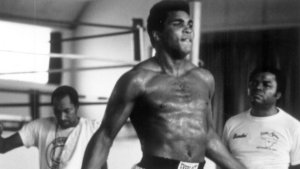 This is the problem. Republican members of Congress are not fighters like Ali. They will not fight for their supposed convictions, country, or even the future of their own party. There are repercussions for this blatant attack on our rule of law and Constitution. Republican silence is damning.
President Donald Trump’s direct assault on Robert Mueller over the weekend renewed fears he’s preparing to fire the special counsel as Republicans mostly remained silent on the threat.
Just a few Republicans strongly warned Trump against firing Mueller — Senator Lindsey Graham of South Carolina said it could lead to the end of Trump’s presidency. Most avoided taking a stand.
The lack of clarity from the majority party in Congress about potential repercussions may embolden Trump, who last week fired his secretary of state, Rex Tillerson, and is said to be contemplating a bigger shakeup of his Cabinet and inner circle. The president’s attacks on the FBI, the Justice Department and Mueller’s investigation into Russian election meddling — and whether anyone close to Trump colluded in it — channeled a long-running narrative on conservative news outlets.
On Sunday evening, White House lawyer Ty Cobb issued a statement saying Trump “is not considering or discussing the firing” of Mueller. But Trump already had made clear his growing impatience at the special counsel and his probe. He continued to do that on Monday morning, saying in a tweet: “A total WITCH HUNT with massive conflicts of interest!”
 Here are the few Republicans speaking out. The term milquetoast comes to mind. Yup Milquetoast Republicans.
Arizona Republican Sen. Jeff Flake said Sunday on CNN’s “State of the Union” that he expects his colleagues in Congress, including GOP leadership, to push back on the President’s comments and any potential move to force the end of the probe.
“I mean, talking to my colleagues all along it was, you know, once he goes after Mueller, then we’ll take action,” Flake said.
I’m not holding my breath on that action part. We’re no longer hearing about the roaring markets from them either because this:
U.S. stocks pulled back on Monday as a decline in Facebook pressured the technology sector. Wall Street also paid attention to Washington after a Twitter meltdown from President Donald Trump.
Oh, and what’s plaguing Facebook?
Politicians on both sides of the Atlantic are calling on Chief Executive Officer Mark Zuckerberg to appear before lawmakers to explain how U.K.-based Cambridge Analytica, the data-analysis firm that helped Donald Trump win the U.S. presidency, was able to harvest the personal information.
Everything Trump touches dies.
What’s on your reading and blogging list today?
Friday Reads: The Russian Cyber Invasion
Posted: March 16, 2018 Filed under: Afternoon Reads | Tags: Russian hacking 15 Comments Good Afternoon Sky Dancers!
Two stories have been haunting me and both deal with Russian Attacks on the West. The first is the ongoing murder and poisonings of folks who have crossed Putin. The second is the ongoing Russian cyber attacks. These are widespread to include nearly all aspects of western life. They are manipulating our Social Media Sites, they are hacking our election systems, and they have entered our energy grids.
There are entire books written and being written on these various forms of cyber manipulation and invasion entering that realm between serious concerns, actual impact, and extreme threat. The test case for the many weapons in the Russian Cyber War arsenal was the Ukraine. We’ve learned within the last 24 hours that this could be us. Here is the lead up to a very informative read from last December’s Wired. In our frenetic news feeds where we chase the chaos emanating from an insane man making huge decisions, we oggle porn stars and subpoenas. Whirring in the back is the growing evidence that we’re under attack. We’re under attack in a way that most of us cannot fully grok.
The clocks read zero when the lights went out.
It was a Saturday night last December, and Oleksii Yasinsky was sitting on the couch with his wife and teenage son in the living room of their Kiev apartment. The 40-year-old Ukrainian cybersecurity researcher and his family were an hour into Oliver Stone’s film Snowden when their building abruptly lost power.
“The hackers don’t want us to finish the movie,” Yasinsky’s wife joked. She was referring to an event that had occurred a year earlier, a cyberattack that had cut electricity to nearly a quarter-million Ukrainians two days before Christmas in 2015. Yasinsky, a chief forensic analyst at a Kiev digital security firm, didn’t laugh. He looked over at a portable clock on his desk: The time was 00:00. Precisely midnight.
Yasinsky’s television was plugged into a surge protector with a battery backup, so only the flicker of images onscreen lit the room now. The power strip started beeping plaintively. Yasinsky got up and switched it off to save its charge, leaving the room suddenly silent.
He went to the kitchen, pulled out a handful of candles and lit them. Then he stepped to the kitchen window. The thin, sandy-blond engineer looked out on a view of the city as he’d never seen it before: The entire skyline around his apartment building was dark. Only the gray glow of distant lights reflected off the clouded sky, outlining blackened hulks of modern condos and Soviet high-rises.
Noting the precise time and the date, almost exactly a year since the December 2015 grid attack, Yasinsky felt sure that this was no normal blackout. He thought of the cold outside—close to zero degrees Fahrenheit—the slowly sinking temperatures in thousands of homes, and the countdown until dead water pumps led to frozen pipes.
That’s when another paranoid thought began to work its way through his mind: For the past 14 months, Yasinsky had found himself at the center of an enveloping crisis. A growing roster of Ukrainian companies and government agencies had come to him to analyze a plague of cyberattacks that were hitting them in rapid, remorseless succession. A single group of hackers seemed to be behind all of it. Now he couldn’t suppress the sense that those same phantoms, whose fingerprints he had traced for more than a year, had reached back, out through the internet’s ether, into his home.
The reach into Western and US culture has been ongoing and has only really been noticed the last few years. It’s only now we’re beginning to see the institutions that have been influenced.

The nation’s leading gun rights lobby was the biggest backer of Trump’s presidential campaign, spending $30 million to help propel him to his upset victory over Democrat Hillary Clinton, a strong advocate of gun control laws. But in January, the NRA was drawn into the furor over Russian interference in the election when McClatchy reported that the FBI was investigating whether Russian banker and “lifetime” NRA member Alexander Torshin, who hosted a high-level NRA delegation in Moscow in late 2015, funneled funds to the NRA to help Trump.
It’s illegal for foreign funds to be spent in American elections.
“Whether there was an effort by Russia to create a back channel or assist the Trump campaign through the NRA or gun-rights groups is an open question the committee’s minority has endeavored to answer for the past year,” California Rep. Adam Schiff, the top Democrat on the House Intelligence Committee, said in a statement to McClatchy. “Much work remains to be done concerning that thread of our investigation, including conducting witness interviews and receiving relevant documents from several organizations and individuals.”
Mitchell’s name surfaced after House Republicans announced this week they were ending the panel’s year-old investigation into Russia’s meddling, which had been plagued by months of partisan friction. They issued a 150-page report that concluded there was no “collusion” between Trump’s campaign and Russia. Angry Democrats responded by issuing a wide-ranging, 21-page status report on Tuesday laying out areas of inquiry that were short-circuited by the majority’s decision, vowing to pursue them independently.
Mitchell was among more than two dozen people the Democrats said they would like to interview, including two other figures with connections to Torshin and the NRA. The report said Democratic investigators want to know if Mitchell “can shed light on the NRA’s relationship with Alexander Torshin” or other Russians and also want to see financial records from a South Dakota company and a Russian gun rights group..
Neither the FBI, which is working with Special Counsel Robert Mueller to investigate Russian meddling in the election, nor the congressional committees have provided details of potentially improper Russian involvement with the NRA.

It seems like it’s been recent but there’s more history than most of us realize. It’s deeper into places than we thought possible. We just haven’t been paying attention because, until now, it hasn’t perceptibly influenced our lives. It’s also complex and difficult to cover in a TV minute.
In the past decade the Russian government has mounted more than a dozen significant cyber attacks against foreign countries, sometimes to help or harm a specific political candidate, sometimes to sow chaos, but always to project Russian power.
Starting in 2007, the Russians attacked former Soviet satellites like Estonia, Georgia, and Ukraine, and then branched out to Western nations like the U.S. and Germany. U.S. intelligence officials and cyber experts say a strategy that pairs cyber attacks with on-line propaganda was launched by Russian intelligence a decade ago and has been refined and expanded ever since, with Putin’s blessing. Russia has shut down whole segments of cyber space to punish or threaten countries.
Mike McFaul, the former U.S. ambassador to Russia, says there is a bottom line to the pattern of hacking.
“For years now, the Kremlin has looked for ways to disrupt democracies, to help the people that they like to come to power and to undermine the credibility of the democratic process,” said McFaul. Russia also seeks to weaken the European Union and NATO.

There’s a 10 year history outlined there. Attacks by Russian hackers on other countries are well documented. One of Putin’s cronies is funding troll farms and a mercenary arm for the Russian strategy. As I read more about this, I truly understand why Paul Manaford would possibly feel–but may not absolutely be–safer in a Federal Prison.
Yevgeny Prigozhin, the man widely referred to as “Putin’s chef,” doesn’t actually prepare food. Instead, he cooks up international plots — like Russia’s campaign to use social media to undermine Hillary Clinton’s 2016 campaign and promote Donald Trump’s.
Prigozhin was among the 13 Russian nationals indicted by special counsel Robert Mueller in February and is by far the most well-known. His ties to Putin go back to at least 2001: He’s worked on everything from election interference to setting up pro-Putin newspapers to sending Russian mercenaries to Syria to fight on behalf of Bashar al-Assad’s regime.
A recent Washington Post report says that he personally approved a Russian mercenary attack on US forces stationed in eastern Syria in early February; US intelligence, per the Post, intercepted a conversation where he promoted the idea.
“Putin’s chef” would be better described as Putin’s fixer: someone who does the Russian leader’s dirty work, while giving Putin plausible deniability if things go wrong.
“Prigozhin has managed to make himself useful on both the [covert and military] sides of Putin’s efforts to reassert Russia on the international stage,” Hannah Thoburn, an expert on Russia at the Hudson Institute, tells me. “[That’s] no small accomplishment for a guy who spent nine years in a Soviet prison and began his business career in restaurants.”
And Prigozhin’s rise, while deeply strange in its details, isn’t just a one-off. It speaks to a fundamental truth about the way the Putin regime operates — not just as a traditional government, but also as a kind of criminal cartel in cahoots with its wealthiest private citizens.

Most of this information has been floating out there in the cyber security world, but it’s pretty shocking to find the results of an actual Russian Troll Farm twitter storm outlined in the Milwaukee Journal Sentinel.
The fires of the Sherman Park unrest in Milwaukee had barely burned out in August 2016 before Russian Twitter trolls sought political gain by stoking the flames of racial division.
A Milwaukee Journal Sentinel review found that Russia-linked accounts — including one named in a recent federal indictment — sent more than 30 tweets to spread racial animus, blame Democrats for the chaos and amplify the voices of conservatives like former Milwaukee County Sheriff David A. Clarke Jr. who were commenting on Sherman Park.
These foreign accounts started posting only hours after the unrest, getting more than 5,000 retweets at a time when residents of the neighborhood were trying to clean up and overcome fears of a renewed outbreak. This came three months before the 2016 election in which President Donald Trump was elected, thanks in part to his surprise victory in Wisconsin.
The news was an unwelcome surprise for Rep. Evan Goyke (D-Milwaukee), who represents Sherman Park and was present the morning after the unrest.
“To think that halfway around the world people are using this tragic series of events for partisan gain … it’s daunting. It’s heartbreaking,” Goyke said.
In its review, the newspaper found that Twitter accounts linked to Russia sought to boost Trump’s chances in Wisconsin and spread fake news to help a primary challenger to U.S. Speaker Paul Ryan of Janesville. Their efforts ranged from amplifying a statement by Kenosha native and former White House Chief of staff Reince Priebus to spreading a false claim that U.S. Sen. Lindsey Graham had taught at the University of Wisconsin-Milwaukee.
Milwaukee Mayor Tom Barrett said the findings showed that Trump and Congress need to prevent further Russian meddling, saying it was “beyond belief” that America hadn’t done more.
“These are enemies of the United States who are trying to sow dissension in our country and on the streets of Milwaukee,” Barrett said in a statement.
Trump and allies such as U.S. Rep. Sean Duffy (R-Wis.) have retorted by saying that President Barack Obama’s administration did relatively little during the 2016 campaign and didn’t seek to impose tough sanctions until December 2016.
The Trump administration on Thursday accused Russian government hackers of carrying out a deliberate, ongoing operation to penetrate vital U.S. industries, including the energy grid — a major ratcheting up of tensions between the two countries over cybersecurity.
It says the hackers penetrated targeted companies to a surprising degree, including copying information that could be used to gain access to the computer systems that control power plants. It’s the kind of access that experts say would have given Moscow the ability to turn off the power if it wanted to.
The alert came eight months after leaked documents revealed that federal authorities had found evidence of foreign hackers breaching computer networks in U.S. power companies, including the operator of the Wolf Creek nuclear plant in Kansas.
“Since at least March 2016, Russian government cyber actors … targeted government entities and multiple U.S. critical infrastructure sectors, including the energy, nuclear, commercial facilities, water, aviation, and critical manufacturing sectors,” according to Thursday’s joint alert, issued by the Homeland Security Department and the FBI.
While the reveal isn’t a surprise to cyber watchers — researchers have been noting such digital espionage for years — it’s rare for the U.S. government to be so blunt about a foreign adversary’s cyber spying. Because the U.S. conducts its own similar online espionage campaigns around the world, intelligence officials have traditionally been loath to openly point fingers at other governments for doing the same thing.
After the alert, Energy Secretary Rick Perry warned members of a House Appropriations subcommittee Thursday that he’s “not confident” the federal government has an adequate strategy in place to address the “hundreds of thousands” of cybersecurity attacks directed at the U.S. every day.

Yup. Please remember it’s Texas’ dim bulb Rick Perry in charge of safeguarding all this. Russian hackers have attacked our energy grid.
Officials in Washington say that Russian hackers are in the midst of a widespread attack on crucial components of U.S. infrastructure, according to a Department of Homeland Security (DHS) report released Thursday.
The targets of these attacks include the country’s electric grid, including its nuclear power system, as well as “commercial facilities, water, aviation, and critical manufacturing sectors,” the statement said.
The report is damning confirmation of what has for months been suspected: that hackers in Russia are capable of infiltrating and compromising vital systems relied on by millions of Americans. According to the new report, the attacks began at least as early as March 2016, thriving on vulnerabilities in these systems’ online operations.
“In some cases, information posted to company websites, especially information that may appear to be innocuous, may contain operationally sensitive information,” the report reads. “As an example, the threat actors downloaded a small photo from a publicly accessible human resources page. The image, when expanded, was a high-resolution photo that displayed control systems equipment models and status information in the background.”

What’s Perry doing and what has he told Congress?
A Russian government hacking operation aimed at the U.S. power grid did not compromise operations at any of the nation’s commercial nuclear power plants, federal regulators and the nuclear industry said Friday.
Corporate networks at some of the 99 plants licensed by the Nuclear Regulatory Commission were affected by the 2017 hack aimed at the energy grid and other infrastructure, but no safety, security or emergency preparedness functions were impacted, the NRC said in a statement.U.S. nuclear plants are designed as operational “islands” that are not connected to the internet and other networks. Nuclear power provides about 20 percent of the nation’s electricity.The Nuclear Energy Institute, an industry lobbying group, said the Russian hacking campaign targeting U.S. infrastructure “demonstrated that America’s nuclear plants can withstand a nation-state sponsored attack.”The Trump administration accused Moscow on Thursday of an elaborate plot to penetrate America’s electric grid, factories, water supply and even air travel through cyber hacking.U.S. national security officials said the FBI, Department of Homeland Security and intelligence agencies determined Russian intelligence and others were behind a broad range of cyberattacks starting a year ago. Russian hackers infiltrated the networks that run the basic services Americans rely on each day: nuclear power, water and manufacturing plants.U.S. officials said the hackers chose their targets methodically, obtained access to computer systems, conducted “network reconnaissance” and then attempted to cover their tracks by deleting evidence of the intrusions. The U.S. government has helped the industries expel the Russians from all systems known to have been penetrated, but additional breaches could be discovered, officials said.The NRC, in its statement Friday, said the five-member commission and the nuclear industry “are vigilant in cybersecurity. Every nuclear power facility must meet the NRC’s regulations for an approved cybersecurity program, which includes separation of critical and non-critical systems.”Energy Secretary Rick Perry said his department worked closely with other agencies and energy providers to help ensure that hacking attempts “failed or were stopped.”Perry said he is creating an Office of Cyber Security and Emergency Response to consolidate and strengthen efforts to “combat the growing nefarious cyber threats we face.”

Well, the Trump administration does want us back to the 19th century. Successfully bringing down our grid would certainly do it. We can assume that our elections will be hacked this year too. Aren’t you glad that West Wing chaos and Stormy Daniels are the focus of attention? Is it too late to demand paper ballots?
The first ballots of the 2018 mid-term elections will soon be cast, but many Americans will exercise this constitutional right without much confidence that their votes will be fairly and securely counted. Partisanship in Congress and bureaucratic delays have left voting even more vulnerable to the attacks that top intelligence officials say will accelerate in 2018. Meanwhile, irrefutable evidence has revealed that Russia engaged in a multifaceted attack on the 2016 election through information warfare, and that hackers also scanned or penetrated state election infrastructure in ways that could lead to manipulation of voter registration data — and possibly change vote totals in 2018. We propose two stopgap measures that can be immediately implemented without waiting for funding or new legislation.
Cybersecurity experts have repeatedly warned that none of our current voting technologies was designed to withstand the cyberattacks expected in the coming months. This national emergency calls for Americans to act immediately before the voters’ faith in democratic elections is severely undermined. Experts agree there’s time to contain major threats to this year’s elections, but we must rapidly convert from paperless touch-screen voting machines to paper ballots, and upgrade states’ and counties’ verification practices to conduct public post-election ballot audits before local election boards certify the 2018 elections. A post-election audit involves simply checking the computer-generated tabulations against paper ballots to be sure the machine hasn’t been compromised.
Well, I’ve gotten this post twice as long as you’ll likely read but read you should. There are many things that are threatening us today but none as consequential as all of this and if you believe last month’s panel of national security leaders testimony, we’re not doing much about it.
What’s on your reading and blogging list today?

 peej
peej Carissa
 bostonboomer
 dakinikat
 ecocatwoman
 mablue2
 Mama Lopez
 peggysue22
 quixote
 skydancingguestblogger
 Mona (aka Wonk the Vote)



 Sky Dancing
Recent Comments