
Tuesday Reads: Spring Has Sprung, Bringing More Snow to the Northeast
Posted: March 20, 2018 Filed under: Afternoon Reads, U.S. Politics 33 Comments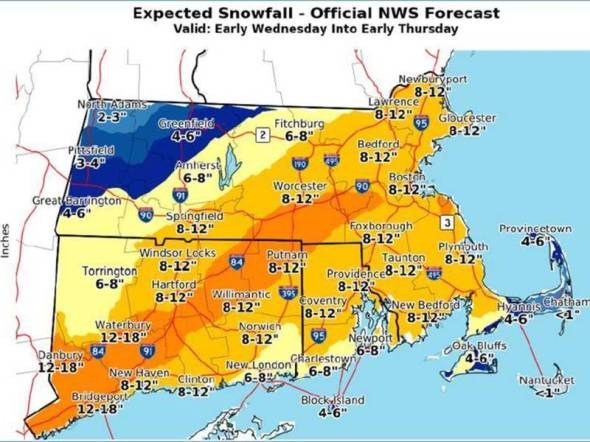
Good Afternoon!!
It’s the first day of Spring, but there’s no Spring weather for my neck of the woods.
Happy spring! A fourth nor’easter this month will be landing Wednesday across Southern New England, testing the limits of the Massachusetts psyche when it dumps up to 12-14 inches of snow across the state. Forecasters offered storms specifics in their final forecast Tuesday morning.
The storm is expected to begin Wednesday morning between 5 a.m. – noon, depending on where in the state you are. The farther south the earlier the storm starts. The Boston area can expect the storm around 9 a.m. The snow will be the heaviest Wednesday afternoon into the evening before it begins to taper off early Thursday morning.
The amount of snow pegged to fall has finally been nailed down: The storm is expected to bring between 8-14 inches everywhere east of Springfield, except for the Cape and Islands, which may only see 4-6. (For those who are convinced the “low-end” predictions will finally be realized – that’s about 3-5 inches across Eastern Mass. Good luck.)
There has been another explosion in Texas, this time at a FedEx facility in the town of Shertz, near San Antonio. NBC News:
A package exploded at a FedEx distribution center near San Antonio early Tuesday, just two days after a blast injured two men in Austin — the fourth such incident in Texas’ capital this month.
Tuesday’s explosion occurred in the sorting area of the facility in Schertz, Texas, the city’s police department confirmed on its Facebook page. FedEx said one person was treated for minor injuries.
Spring Now, Edouard Monet
“We are working closely with law enforcement in their investigation,” FedEx said in a statement.
The company didn’t provide additional details. NBC affiliate WOAI reportedone female employee was treated for a headache related to a possible concussion from the blast.
It was not immediately clear whether the explosion was related to the incidents in Austin, according to the Bureau of Alcohol, Tobacco, Firearms and Explosives, which had officials on the scene.
The FBI also said it had responded to the incident, which WOAI reported happened at 12:30 a.m. local time (1:30 a.m. ET).

In addition, a “suspicious package” is being investigated at a FedEx site near Austin airport. KXAN:
Austin Police are investigating a suspicious package at a FedEx Ground facility in Austin. The city is on high alert after four package explosions in three weeks.
That facility is at 4117 McKinney Falls Parkway, near the Austin-Bergstrom International Airport. Austin police confirm they are investigating after a call came in at 6:19 a.m. Deputies from the Travis County Sheriff’s Office are also on scene, as well as members of the Austin Fire Department and Austin-Travis County EMS. FedEx employees evacuated and some were told to go home after a meeting with managers. It’s not known how many were working at the time.
At 9 a.m., KXAN received information a FedEx Office Print and Ship Center at 5601 Brodie Lane in south Austin was surrounded by authorities. When KXAN called the office, there was an automated message that said the location was closed for the day. Photos show the area is roped off with crime tape.
A Sunset Valley Police officer at the scene told KXAN’s Alyssa Goard said the package that exploded at the Schertz facility was shipped from the Brodie location. Sunset Valley police says it is assisting the FBI by providing perimeter security as it investigates.
There has been another school shooting. NBC Washington: 2 Students Hurt, Shooter Dead After Md. School Shooting.
Picking Flowers, Pierre Auguste Renoir
A student pulled out a gun and shot two other students at a high school in southeast Maryland Tuesday morning before the shooter was killed, the St. Mary’s County sheriff says.
The gunman entered Great Mills High School in Great Mills at the beginning of the school day and shot a female student in a hallway, Sheriff Tim Cameron told News4. A male student also was hit by a bullet.
Two students are in critical condition, and the shooter was pronounced dead later Tuesday morning.
Information was not available immediately on the relationship between the students, Cameron said. A motive is not yet clear.
The shooter exchanged fire with a school resource officer, a trained, armed deputy sheriff, Cameron said. The shooter was wounded; the officer was not.

The Facebook/Cambridge Analytica story is getting worse and worse. Here’s the latest:
The Guardian: ‘Utterly horrifying’: ex-Facebook insider says covert data harvesting was routine.
Hundreds of millions of Facebook users are likely to have had their private information harvested by companies that exploited the same terms as the firm that collected data and passed it on to Cambridge Analytica, according to a new whistleblower.
Sandy Parakilas, the platform operations manager at Facebook responsible for policing data breaches by third-party software developers between 2011 and 2012, told the Guardian he warned senior executives at the company that its lax approach to data protection risked a major breach.
Spring 1956, Pablo Picasso
“My concerns were that all of the data that left Facebook servers to developers could not be monitored by Facebook, so we had no idea what developers were doing with the data,” he said.
Parakilas said Facebook had terms of service and settings that “people didn’t read or understand” and the company did not use its enforcement mechanisms, including audits of external developers, to ensure data was not being misused.
Parakilas, whose job it was to investigate data breaches by developers similar to the one later suspected of Global Science Research, which harvested tens of millions of Facebook profiles and provided the data to Cambridge Analytica, said the slew of recent disclosures had left him disappointed with his superiors for not heeding his warnings.
“It has been painful watching,” he said. “Because I know that they could have prevented it.”

Read the rest at The Guardian.
The New York Times: Alex Stamos, Facebook Data Security Chief, To Leave Amid Outcry.
As Facebook grapples with a backlash over its role in spreading disinformation, an internal dispute over how to handle the threat and the public outcry is resulting in the departure of a senior executive.
Dolce Far Niente, John Singer Sargent
The impending exit of that executive — Alex Stamos, Facebook’s chief information security officer — reflects heightened leadership tension at the top of the social network. Much of the internal disagreement is rooted in how much Facebook should publicly share about how nation states misused the platform and debate over organizational changes in the run-up to the 2018 midterm elections, according to current and former employees briefed on the matter.
Mr. Stamos, who plans to leave Facebook by August, had advocated more disclosure around Russian interference of the platform and some restructuring to better address the issues, but was met with resistance by colleagues, said the current and former employees. In December, Mr. Stamos’s day-to-day responsibilities were reassigned to others, they said.
Mr. Stamos said he would leave Facebook but was persuaded to stay through August to oversee the transition of his responsibilities and because executives thought his departure would look bad, the people said. He has been overseeing the transfer of his security team to Facebook’s product and infrastructure divisions. His group, which once had 120 people, now has three, the current and former employees said.

More at the link.
Bloomberg: FTC Probing Facebook for Use of Personal Data, Source Says.
Facebook Inc. is under investigation by a U.S. privacy watchdog over the use of personal data of 50 million users by a data analytics firm to help elect President Donald Trump.
The U.S. Federal Trade Commission is probing whether Facebook violated terms of a 2011 consent decree over its handing of user data that was transferred to Cambridge Analytica without their knowledge, according to a person familiar with the matter.
Springtime, Claude Monet
Under the 2011 settlement, Facebook agreed to get user consent for certain changes to privacy settings as part of a settlement of federal charges that it deceived consumers and forced them to share more personal information than they intended. That complaint arose after the company changed some user settings without notifying its customers, according to an FTC statement at the time.
An FTC spokeswoman said in emailed statement that the agency is aware of the issues that have been raised, but can’t comment on whether it is investigating. The agency takes any allegations of violations of consent decrees seriously, the statement said.
If the FTC finds Facebook violated terms of the consent decree, it has the power to fine the company more than $40,000 a day per violation.
Facebook said in a statement it rejected “any suggestion of violation of the consent decree.”

I hope Facebook goes out of business and Mark Zukerberg becomes a pariah. Sorry, I some people here like Facebook…
The only good news is that a blue wave seems to be coming.
Stuart Rothenberg at Roll Call: Insiders See Democratic House Gains of 30-45 seats.
Seven and a half months before the midterm elections, the combination of attitudinal and behavioral evidence leads to a single conclusion: The Democrats are very likely to win control of the House in November.
Just as important, Republican and Democratic campaign strategists also agree that an electoral wave has already formed….
Farm Garden with Sunflowers, 1905-06 (oil on canvas), Gustav Klimt (1862-1918)
The new March 10-14 NBC News/Wall Street Journal poll of adults is consistent with other surveys over the past six months. It shows Democrats with a large generic ballot advantage among younger voters, women, whites with at least a college degree and voters age 65 and older.
The GOP’s great strength in the generic ballot is among two pro-Trump groups, men and whites without a college degree. Unfortunately for the party, the survey also shows Democrats, whites with a college degree and older voters as having the greatest interest in the election (and therefore the greatest likelihood of voting). Each of those groups prefers a Democratic Congress.
Moreover, while independents don’t traditionally turn out in big numbers in midterms, one veteran Republican strategist sees them as a huge problem this year. “They are tired of the drama,” he said.
The worst case for the GOP, of course, would be mediocre Republican turnout combined with strong Democratic participation and independents behaving like Democrats (which is what they did in 2006).
If that happens, Republicans would take quite a beating in the fall.

Get all the details at the Roll Call link.
Politico: GOP fears another potential electoral disaster.
National Republicans — on the heels of the Roy Moore and Rick Saccone debacles — worry they’re staring down their latest potential midterm election fiasco: coal baron and recent federal prisoner Don Blankenship.
Spring (Apple Blossoms) 1859 (oil on canvas), John Everett Millais (1829-96)
With Blankenship skyrocketing in the West Virginia Republican Senate primary and blanketing the airwaves with ads assailing his fractured field of rivals as career politicians, senior party officials are wrestling with how, or even whether, to intervene. Many of them are convinced that Blankenship, who served a one-year sentence after the deadly 2010 explosion at his Upper Big Branch Mine, would be a surefire loser against Democratic Sen. Joe Manchin — and potentially become a national stain for the party.
The discussions have intensified over the past few weeks. During separate meetings with the National Republican Senatorial Committee, aides to Blankenship’s two primary opponents, Rep. Evan Jenkins and state Attorney General Patrick Morrisey, pointed to Blankenship’s traction and questioned what could be done to stop him. The Senate GOP campaign arm, which heard out the appeals, recently commissioned a survey to gauge the coal king’s electoral strength and determine his staying power in the race.
Those familiar with the party’s deliberations say the results are clear: With a little more than a month until the May 8 primary, Blankenship, a towering figure in West Virginia politics long before this campaign and an avid opponent of unions, has vaulted into essentially a three-way tie with his rivals and is positioned to move ahead.

Republicans can’t field good candidates anymore. Here’s hoping for a huge blue wave in November!
What else is happening? What stories are you following?
Monday Reads: Justice on the Ropes
Posted: March 19, 2018 Filed under: Afternoon Reads, just because | Tags: McCabe Firing, Milque Toast Republican'ts, Mueller investigation, Trump Russia 30 Comments Good Morning Sky Dancers!
There were many things to admire about Muhammed Ali. He was tenacious, strategic, clever, and principled. His invention of the ‘Rope a Dope ‘was tactical brilliance. A boxer will pretend to be trapped against the ropes but what said boxer is actually doing is “goading the opponent to throw tiring ineffective punches”.
Can the Democratic members of Congress and the Mueller investigation ‘Rope a Dope’ KKKremlin Caligula? He appears to be in endless pursuit of ridding himself of the meddlesome G-Man. This is not in the best interest of our democracy or global stability. The Republican members of Congress–from top to bottom–have refused to do their constitutional duties sending hopes for timely justice to the ropes. It’s time to ‘Rope a Dope’ the lot of them. They need to protect the Mueller Investigation. Bills to do so have stalled in the Senate.
Back in January (when news broke that the president had—unsuccessfully, as it turned out—instructed White House counsel Don McGahn to fire Mueller last summer), Republicans asked about the legislation suggested that McGahn’s refusal proved why these bills weren’t necessary. That was baloney then, and it’s an even more alarming abdication now, with the president seemingly poised to go after Mueller directly. And yet, for all of the talk about Mueller over the past few days, nary a Republican has come out in support of passing these bills—including their Republican co-sponsors.
If the hitherto-silent Republicans really have constitutional objections to these bills, let’s hear them (per the above, I’m skeptical). If they have policy objections, let’s hear those, too. But for those who actually want to ensure that the special counsel’s investigation continues unimpeded and don’t just want to look good to their constituents, there’s an easy way to do more than just threatening the president in tweets and talk-show interviews:
Pass this legislation.
The weekend Twitler meltdown is rattling nerves as are the comments from Trump’s legal team.
Within hours of McCabe’s firing, Dowd, Trump’s personal lawyer, asked Deputy Attorney General Rod Rosenstein to kill the Justice Department’s Russia probe. (Rosenstein has direct authority over the Mueller probe.)
Dowd, in an email to reporters, linked McCabe to the Russia investigation and blamed Comey for making up a case:
I pray that Acting Attorney General Rosenstein will follow the brilliant and courageous example of the FBI Office of Professional Responsibility and Attorney General Jeff Sessions and bring an end to alleged Russia collusion investigation manufactured by McCabe’s boss James Comey based upon a fraudulent and corrupt dossier.
Dowd had initially told the Daily Beast that he was speaking on behalf of Trump as his “counsel,” only to backtrack after his statement was published and say he was actually speaking for himself. That matters because Trump has repeatedly denied that he’s trying to get rid of Mueller, largely relying on Republican allies to make the case for him.
Dowd is a longtime Washington lawyer, having helped Sen. John McCain confront the Keating Five banking scandal as far back as 1990. He joined Trump’s team to combat the Mueller probe in June, taking the lead as Trump’s chief outside lawyer (Trump is also represented by White House counsel Don McGahn and Ty Cobb, who handles the White House’s response to Mueller’s investigation).
It’s not the first time Dowd’s comments about Mueller have sparked a political controversy. In December, Trump tweeted that he “had to fire” Flynn, the former national security adviser, because Flynn had lied to the FBI.
 Mike Allen of Axios writes on Mueller’s endgame. Does Trump fear the interview or the targeting of the targeting of the Trump org?
The Mueller and Trump teams are hoping to work out the specifics of a presidential interview within the next few weeks.
The big question they’re debating is whether it’ll be in person, in writing, or some combination of the two.
After a weekend of increasingly personal and vocal battles with Mueller, the White House extended an awkward olive branch on Sunday night, with White House lawyer Ty Cobb issuing this statement:
“In response to media speculation and related questions being posed to the Administration, the White House yet again confirms that the President is not considering or discussing the firing of the Special Counsel, Robert Mueller.”
But that’s too late. Veering from the White House legal strategy of cooperating with Mueller, Trump attacked him by name on Twitter, seeking to discredit the eventual findings with Republican supporters.
Someone familiar with the process said that was presidential frustration, and that the Trump team continues its ongoing dialogue with Mueller.

27th May 1963: Supremely confident American boxer Cassius Clay holds up five fingers in a prediction of how many rounds it will take him to knock out British boxer Henry Cooper. (Photo by Kent Gavin/Keystone/Getty Images)
Trump’s team has more than signaled a new willingness to attack Mueller directly.
The president, those close to him say, is determined to more directly confront the federal probe into his campaign’s potential role in alleged Russian election interference, even if it means exacerbating his legal standing amid an investigation that has already ensnared some of his most senior campaign and White House aides.
Two sources who speak regularly with Trump said they had noticed an uptick in recent months in the frequency of the annoyance the president would express regarding Mueller and his team, and the irritation at the deluge of negative news stories regarding the probe.
Last week, for instance, The New York Times reported that Mueller had subpoenaed the Trump Organization to turn over documents, some pertaining to Russia—a demand for personal financial details that the president famously said would be crossing a “red line” in an interview with the Times last year.
Still, on Sunday, White House lawyer Ty Cobb blasted out a statement to reporters that simply assured, “in response to media speculation and related questions being posed to the Administration, the White House yet again confirms that the President is not considering or discussing the firing of the Special Counsel, Robert Mueller.”
Folks are calling this weekend the “pre-Saturday Night Massacre.”
By laying the foundation for this fresh, orchestrated case for the end of the Russian investigation, Sessions appears to have abrogated a commitment, made to the Senatein June 2017, that he would take no step toward firing Mueller.
Sen. Mark Warner: Will you commit to the committee not to take personal actions that might not result in director Mueller’s firing or dismissal?
Sessions: I can say that with confidence…
Warner: You would not take any actions to have the special investigator removed.
Sessions: I don’t think that’s appropriate for me to do.
Did Sessions’s rush to fire McCabe fall under the umbrella of any “action to have [Mueller] removed?” If Sessions had any knowledge that the president and his counsel were prepared to seize on the dismissal to call for Mueller’s firing, then he would have lent support to the plan in a manner inconsistent with his pledge to Warner. Certainly Sessions knew weeks ago that the president was singling out McCabe in his denigration of the “corrupt” FBI leadership. He also must know that McCabe is a witness in the special counsel’s obstruction investigation. These considerations alone should have been sufficient to alert the attorney general to the risks of taking an active part in firing McCabe—especially hurriedly, to beat his retirement date, under public pressure from the president.
But even if Sessions missed all of this, he now understands how the president and his counsel used the firing of McCabe. This may not have been another Saturday Night Massacre, but it may turn out to have been the prelude. And Sessions is—or he has been made—a party to it.
In the massacre of Watergate fame, the attorney general at the time, Elliot Richardson, discovered that the president and White House advisers were maneuvering to force out the special prosecutor, Archibald Cox and “induce [Richardson] to go along.” As Richardson wrote in an Atlantic piece in March of 1976 (titled “The Saturday Night Massacre”), Nixon’s plan was to have him help unwittingly with the ouster of Cox and yet not feel he had to resign.
 This new belligerence comes from you-know-who according reports from inside sources.
A new report on Trump’s state of mind from the New York Times underscores why this should worry us a great deal. Relying on numerous people close to Trump, it says he decided to attack Mueller over the advice of his advisers because he “ultimately trusts only his own instincts,” with the result that Trump is “newly emboldened” to “ignore the cautions of those around him.”
“For months, aides were mostly able to redirect a neophyte president with warnings about the consequences of his actions, and mostly control his public behavior,” the Times says. But some of his recent actions — his decisions to go ahead with tariffs and a meeting with North Korean leader Kim Jong Un — have persuaded him that such warnings are overblown. Make sure not to miss this sentence:
Warnings of dire consequences from his critics have failed to materialize.
This helps explain why Trump unleashed his fury on Mueller over the weekend. In a tweet storm that was full of lies — see Glenn Kessler’s takedown of the specifics — Trump claimed that law enforcement is riddled with corruption and that the Mueller probe itself is illegitimate. To make this latter claim, Trump floated the intertwined falsehoods that the Democratic-funded Steele dossier triggered the probe (a lie) and that there was no legit basis for its genesis (also a lie).
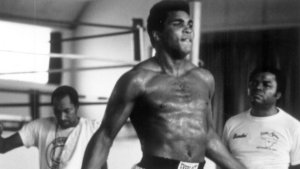 This is the problem. Republican members of Congress are not fighters like Ali. They will not fight for their supposed convictions, country, or even the future of their own party. There are repercussions for this blatant attack on our rule of law and Constitution. Republican silence is damning.
President Donald Trump’s direct assault on Robert Mueller over the weekend renewed fears he’s preparing to fire the special counsel as Republicans mostly remained silent on the threat.
Just a few Republicans strongly warned Trump against firing Mueller — Senator Lindsey Graham of South Carolina said it could lead to the end of Trump’s presidency. Most avoided taking a stand.
The lack of clarity from the majority party in Congress about potential repercussions may embolden Trump, who last week fired his secretary of state, Rex Tillerson, and is said to be contemplating a bigger shakeup of his Cabinet and inner circle. The president’s attacks on the FBI, the Justice Department and Mueller’s investigation into Russian election meddling — and whether anyone close to Trump colluded in it — channeled a long-running narrative on conservative news outlets.
On Sunday evening, White House lawyer Ty Cobb issued a statement saying Trump “is not considering or discussing the firing” of Mueller. But Trump already had made clear his growing impatience at the special counsel and his probe. He continued to do that on Monday morning, saying in a tweet: “A total WITCH HUNT with massive conflicts of interest!”
 Here are the few Republicans speaking out. The term milquetoast comes to mind. Yup Milquetoast Republicans.
Arizona Republican Sen. Jeff Flake said Sunday on CNN’s “State of the Union” that he expects his colleagues in Congress, including GOP leadership, to push back on the President’s comments and any potential move to force the end of the probe.
“I mean, talking to my colleagues all along it was, you know, once he goes after Mueller, then we’ll take action,” Flake said.
I’m not holding my breath on that action part. We’re no longer hearing about the roaring markets from them either because this:
U.S. stocks pulled back on Monday as a decline in Facebook pressured the technology sector. Wall Street also paid attention to Washington after a Twitter meltdown from President Donald Trump.
Oh, and what’s plaguing Facebook?
Politicians on both sides of the Atlantic are calling on Chief Executive Officer Mark Zuckerberg to appear before lawmakers to explain how U.K.-based Cambridge Analytica, the data-analysis firm that helped Donald Trump win the U.S. presidency, was able to harvest the personal information.
Everything Trump touches dies.
What’s on your reading and blogging list today?
Friday Reads: The Russian Cyber Invasion
Posted: March 16, 2018 Filed under: Afternoon Reads | Tags: Russian hacking 15 Comments Good Afternoon Sky Dancers!
Two stories have been haunting me and both deal with Russian Attacks on the West. The first is the ongoing murder and poisonings of folks who have crossed Putin. The second is the ongoing Russian cyber attacks. These are widespread to include nearly all aspects of western life. They are manipulating our Social Media Sites, they are hacking our election systems, and they have entered our energy grids.
There are entire books written and being written on these various forms of cyber manipulation and invasion entering that realm between serious concerns, actual impact, and extreme threat. The test case for the many weapons in the Russian Cyber War arsenal was the Ukraine. We’ve learned within the last 24 hours that this could be us. Here is the lead up to a very informative read from last December’s Wired. In our frenetic news feeds where we chase the chaos emanating from an insane man making huge decisions, we oggle porn stars and subpoenas. Whirring in the back is the growing evidence that we’re under attack. We’re under attack in a way that most of us cannot fully grok.
The clocks read zero when the lights went out.
It was a Saturday night last December, and Oleksii Yasinsky was sitting on the couch with his wife and teenage son in the living room of their Kiev apartment. The 40-year-old Ukrainian cybersecurity researcher and his family were an hour into Oliver Stone’s film Snowden when their building abruptly lost power.
“The hackers don’t want us to finish the movie,” Yasinsky’s wife joked. She was referring to an event that had occurred a year earlier, a cyberattack that had cut electricity to nearly a quarter-million Ukrainians two days before Christmas in 2015. Yasinsky, a chief forensic analyst at a Kiev digital security firm, didn’t laugh. He looked over at a portable clock on his desk: The time was 00:00. Precisely midnight.
Yasinsky’s television was plugged into a surge protector with a battery backup, so only the flicker of images onscreen lit the room now. The power strip started beeping plaintively. Yasinsky got up and switched it off to save its charge, leaving the room suddenly silent.
He went to the kitchen, pulled out a handful of candles and lit them. Then he stepped to the kitchen window. The thin, sandy-blond engineer looked out on a view of the city as he’d never seen it before: The entire skyline around his apartment building was dark. Only the gray glow of distant lights reflected off the clouded sky, outlining blackened hulks of modern condos and Soviet high-rises.
Noting the precise time and the date, almost exactly a year since the December 2015 grid attack, Yasinsky felt sure that this was no normal blackout. He thought of the cold outside—close to zero degrees Fahrenheit—the slowly sinking temperatures in thousands of homes, and the countdown until dead water pumps led to frozen pipes.
That’s when another paranoid thought began to work its way through his mind: For the past 14 months, Yasinsky had found himself at the center of an enveloping crisis. A growing roster of Ukrainian companies and government agencies had come to him to analyze a plague of cyberattacks that were hitting them in rapid, remorseless succession. A single group of hackers seemed to be behind all of it. Now he couldn’t suppress the sense that those same phantoms, whose fingerprints he had traced for more than a year, had reached back, out through the internet’s ether, into his home.
The reach into Western and US culture has been ongoing and has only really been noticed the last few years. It’s only now we’re beginning to see the institutions that have been influenced.

The nation’s leading gun rights lobby was the biggest backer of Trump’s presidential campaign, spending $30 million to help propel him to his upset victory over Democrat Hillary Clinton, a strong advocate of gun control laws. But in January, the NRA was drawn into the furor over Russian interference in the election when McClatchy reported that the FBI was investigating whether Russian banker and “lifetime” NRA member Alexander Torshin, who hosted a high-level NRA delegation in Moscow in late 2015, funneled funds to the NRA to help Trump.
It’s illegal for foreign funds to be spent in American elections.
“Whether there was an effort by Russia to create a back channel or assist the Trump campaign through the NRA or gun-rights groups is an open question the committee’s minority has endeavored to answer for the past year,” California Rep. Adam Schiff, the top Democrat on the House Intelligence Committee, said in a statement to McClatchy. “Much work remains to be done concerning that thread of our investigation, including conducting witness interviews and receiving relevant documents from several organizations and individuals.”
Mitchell’s name surfaced after House Republicans announced this week they were ending the panel’s year-old investigation into Russia’s meddling, which had been plagued by months of partisan friction. They issued a 150-page report that concluded there was no “collusion” between Trump’s campaign and Russia. Angry Democrats responded by issuing a wide-ranging, 21-page status report on Tuesday laying out areas of inquiry that were short-circuited by the majority’s decision, vowing to pursue them independently.
Mitchell was among more than two dozen people the Democrats said they would like to interview, including two other figures with connections to Torshin and the NRA. The report said Democratic investigators want to know if Mitchell “can shed light on the NRA’s relationship with Alexander Torshin” or other Russians and also want to see financial records from a South Dakota company and a Russian gun rights group..
Neither the FBI, which is working with Special Counsel Robert Mueller to investigate Russian meddling in the election, nor the congressional committees have provided details of potentially improper Russian involvement with the NRA.

It seems like it’s been recent but there’s more history than most of us realize. It’s deeper into places than we thought possible. We just haven’t been paying attention because, until now, it hasn’t perceptibly influenced our lives. It’s also complex and difficult to cover in a TV minute.
In the past decade the Russian government has mounted more than a dozen significant cyber attacks against foreign countries, sometimes to help or harm a specific political candidate, sometimes to sow chaos, but always to project Russian power.
Starting in 2007, the Russians attacked former Soviet satellites like Estonia, Georgia, and Ukraine, and then branched out to Western nations like the U.S. and Germany. U.S. intelligence officials and cyber experts say a strategy that pairs cyber attacks with on-line propaganda was launched by Russian intelligence a decade ago and has been refined and expanded ever since, with Putin’s blessing. Russia has shut down whole segments of cyber space to punish or threaten countries.
Mike McFaul, the former U.S. ambassador to Russia, says there is a bottom line to the pattern of hacking.
“For years now, the Kremlin has looked for ways to disrupt democracies, to help the people that they like to come to power and to undermine the credibility of the democratic process,” said McFaul. Russia also seeks to weaken the European Union and NATO.

There’s a 10 year history outlined there. Attacks by Russian hackers on other countries are well documented. One of Putin’s cronies is funding troll farms and a mercenary arm for the Russian strategy. As I read more about this, I truly understand why Paul Manaford would possibly feel–but may not absolutely be–safer in a Federal Prison.
Yevgeny Prigozhin, the man widely referred to as “Putin’s chef,” doesn’t actually prepare food. Instead, he cooks up international plots — like Russia’s campaign to use social media to undermine Hillary Clinton’s 2016 campaign and promote Donald Trump’s.
Prigozhin was among the 13 Russian nationals indicted by special counsel Robert Mueller in February and is by far the most well-known. His ties to Putin go back to at least 2001: He’s worked on everything from election interference to setting up pro-Putin newspapers to sending Russian mercenaries to Syria to fight on behalf of Bashar al-Assad’s regime.
A recent Washington Post report says that he personally approved a Russian mercenary attack on US forces stationed in eastern Syria in early February; US intelligence, per the Post, intercepted a conversation where he promoted the idea.
“Putin’s chef” would be better described as Putin’s fixer: someone who does the Russian leader’s dirty work, while giving Putin plausible deniability if things go wrong.
“Prigozhin has managed to make himself useful on both the [covert and military] sides of Putin’s efforts to reassert Russia on the international stage,” Hannah Thoburn, an expert on Russia at the Hudson Institute, tells me. “[That’s] no small accomplishment for a guy who spent nine years in a Soviet prison and began his business career in restaurants.”
And Prigozhin’s rise, while deeply strange in its details, isn’t just a one-off. It speaks to a fundamental truth about the way the Putin regime operates — not just as a traditional government, but also as a kind of criminal cartel in cahoots with its wealthiest private citizens.

Most of this information has been floating out there in the cyber security world, but it’s pretty shocking to find the results of an actual Russian Troll Farm twitter storm outlined in the Milwaukee Journal Sentinel.
The fires of the Sherman Park unrest in Milwaukee had barely burned out in August 2016 before Russian Twitter trolls sought political gain by stoking the flames of racial division.
A Milwaukee Journal Sentinel review found that Russia-linked accounts — including one named in a recent federal indictment — sent more than 30 tweets to spread racial animus, blame Democrats for the chaos and amplify the voices of conservatives like former Milwaukee County Sheriff David A. Clarke Jr. who were commenting on Sherman Park.
These foreign accounts started posting only hours after the unrest, getting more than 5,000 retweets at a time when residents of the neighborhood were trying to clean up and overcome fears of a renewed outbreak. This came three months before the 2016 election in which President Donald Trump was elected, thanks in part to his surprise victory in Wisconsin.
The news was an unwelcome surprise for Rep. Evan Goyke (D-Milwaukee), who represents Sherman Park and was present the morning after the unrest.
“To think that halfway around the world people are using this tragic series of events for partisan gain … it’s daunting. It’s heartbreaking,” Goyke said.
In its review, the newspaper found that Twitter accounts linked to Russia sought to boost Trump’s chances in Wisconsin and spread fake news to help a primary challenger to U.S. Speaker Paul Ryan of Janesville. Their efforts ranged from amplifying a statement by Kenosha native and former White House Chief of staff Reince Priebus to spreading a false claim that U.S. Sen. Lindsey Graham had taught at the University of Wisconsin-Milwaukee.
Milwaukee Mayor Tom Barrett said the findings showed that Trump and Congress need to prevent further Russian meddling, saying it was “beyond belief” that America hadn’t done more.
“These are enemies of the United States who are trying to sow dissension in our country and on the streets of Milwaukee,” Barrett said in a statement.
Trump and allies such as U.S. Rep. Sean Duffy (R-Wis.) have retorted by saying that President Barack Obama’s administration did relatively little during the 2016 campaign and didn’t seek to impose tough sanctions until December 2016.
The Trump administration on Thursday accused Russian government hackers of carrying out a deliberate, ongoing operation to penetrate vital U.S. industries, including the energy grid — a major ratcheting up of tensions between the two countries over cybersecurity.
It says the hackers penetrated targeted companies to a surprising degree, including copying information that could be used to gain access to the computer systems that control power plants. It’s the kind of access that experts say would have given Moscow the ability to turn off the power if it wanted to.
The alert came eight months after leaked documents revealed that federal authorities had found evidence of foreign hackers breaching computer networks in U.S. power companies, including the operator of the Wolf Creek nuclear plant in Kansas.
“Since at least March 2016, Russian government cyber actors … targeted government entities and multiple U.S. critical infrastructure sectors, including the energy, nuclear, commercial facilities, water, aviation, and critical manufacturing sectors,” according to Thursday’s joint alert, issued by the Homeland Security Department and the FBI.
While the reveal isn’t a surprise to cyber watchers — researchers have been noting such digital espionage for years — it’s rare for the U.S. government to be so blunt about a foreign adversary’s cyber spying. Because the U.S. conducts its own similar online espionage campaigns around the world, intelligence officials have traditionally been loath to openly point fingers at other governments for doing the same thing.
After the alert, Energy Secretary Rick Perry warned members of a House Appropriations subcommittee Thursday that he’s “not confident” the federal government has an adequate strategy in place to address the “hundreds of thousands” of cybersecurity attacks directed at the U.S. every day.

Yup. Please remember it’s Texas’ dim bulb Rick Perry in charge of safeguarding all this. Russian hackers have attacked our energy grid.
Officials in Washington say that Russian hackers are in the midst of a widespread attack on crucial components of U.S. infrastructure, according to a Department of Homeland Security (DHS) report released Thursday.
The targets of these attacks include the country’s electric grid, including its nuclear power system, as well as “commercial facilities, water, aviation, and critical manufacturing sectors,” the statement said.
The report is damning confirmation of what has for months been suspected: that hackers in Russia are capable of infiltrating and compromising vital systems relied on by millions of Americans. According to the new report, the attacks began at least as early as March 2016, thriving on vulnerabilities in these systems’ online operations.
“In some cases, information posted to company websites, especially information that may appear to be innocuous, may contain operationally sensitive information,” the report reads. “As an example, the threat actors downloaded a small photo from a publicly accessible human resources page. The image, when expanded, was a high-resolution photo that displayed control systems equipment models and status information in the background.”

What’s Perry doing and what has he told Congress?
A Russian government hacking operation aimed at the U.S. power grid did not compromise operations at any of the nation’s commercial nuclear power plants, federal regulators and the nuclear industry said Friday.
Corporate networks at some of the 99 plants licensed by the Nuclear Regulatory Commission were affected by the 2017 hack aimed at the energy grid and other infrastructure, but no safety, security or emergency preparedness functions were impacted, the NRC said in a statement.U.S. nuclear plants are designed as operational “islands” that are not connected to the internet and other networks. Nuclear power provides about 20 percent of the nation’s electricity.The Nuclear Energy Institute, an industry lobbying group, said the Russian hacking campaign targeting U.S. infrastructure “demonstrated that America’s nuclear plants can withstand a nation-state sponsored attack.”The Trump administration accused Moscow on Thursday of an elaborate plot to penetrate America’s electric grid, factories, water supply and even air travel through cyber hacking.U.S. national security officials said the FBI, Department of Homeland Security and intelligence agencies determined Russian intelligence and others were behind a broad range of cyberattacks starting a year ago. Russian hackers infiltrated the networks that run the basic services Americans rely on each day: nuclear power, water and manufacturing plants.U.S. officials said the hackers chose their targets methodically, obtained access to computer systems, conducted “network reconnaissance” and then attempted to cover their tracks by deleting evidence of the intrusions. The U.S. government has helped the industries expel the Russians from all systems known to have been penetrated, but additional breaches could be discovered, officials said.The NRC, in its statement Friday, said the five-member commission and the nuclear industry “are vigilant in cybersecurity. Every nuclear power facility must meet the NRC’s regulations for an approved cybersecurity program, which includes separation of critical and non-critical systems.”Energy Secretary Rick Perry said his department worked closely with other agencies and energy providers to help ensure that hacking attempts “failed or were stopped.”Perry said he is creating an Office of Cyber Security and Emergency Response to consolidate and strengthen efforts to “combat the growing nefarious cyber threats we face.”

Well, the Trump administration does want us back to the 19th century. Successfully bringing down our grid would certainly do it. We can assume that our elections will be hacked this year too. Aren’t you glad that West Wing chaos and Stormy Daniels are the focus of attention? Is it too late to demand paper ballots?
The first ballots of the 2018 mid-term elections will soon be cast, but many Americans will exercise this constitutional right without much confidence that their votes will be fairly and securely counted. Partisanship in Congress and bureaucratic delays have left voting even more vulnerable to the attacks that top intelligence officials say will accelerate in 2018. Meanwhile, irrefutable evidence has revealed that Russia engaged in a multifaceted attack on the 2016 election through information warfare, and that hackers also scanned or penetrated state election infrastructure in ways that could lead to manipulation of voter registration data — and possibly change vote totals in 2018. We propose two stopgap measures that can be immediately implemented without waiting for funding or new legislation.
Cybersecurity experts have repeatedly warned that none of our current voting technologies was designed to withstand the cyberattacks expected in the coming months. This national emergency calls for Americans to act immediately before the voters’ faith in democratic elections is severely undermined. Experts agree there’s time to contain major threats to this year’s elections, but we must rapidly convert from paperless touch-screen voting machines to paper ballots, and upgrade states’ and counties’ verification practices to conduct public post-election ballot audits before local election boards certify the 2018 elections. A post-election audit involves simply checking the computer-generated tabulations against paper ballots to be sure the machine hasn’t been compromised.
Well, I’ve gotten this post twice as long as you’ll likely read but read you should. There are many things that are threatening us today but none as consequential as all of this and if you believe last month’s panel of national security leaders testimony, we’re not doing much about it.
What’s on your reading and blogging list today?
Monday Reads: Happy National Napping Day!
Posted: March 12, 2018 Filed under: Afternoon Reads | Tags: Betsy DeVos, corruption, Incompetence, school safety, student loans 46 Comments Good Afternoon Sky Dancers!
Now this is a national day of observance that I can go all in on! I’m thrilled BB let me know about the reason for the season having taken two days of morning naps in a row!
National Napping Day is observed annually the day following the return of daylight saving time. National Napping Day provides everyone with the opportunity to have a nap and catch up on the hour of sleep they lost due to the spring forward time change.

So, now that we’ve established a visual and emotional happy place, let’s move into the utter display of corruption and incompetence presented by Education Secretary “I’m mostly misunderstood” DeVos. Can any one be more clueless about a job than this woman other than KKKremlin Caligula himself? Leslie Stahl managed to ask her basic questions that left the Secretary flummoxed and stumbling on 60 Minutes.
The reason Betsy DeVos wanted to be secretary of education was so she could promote school choice, offering parents options other than traditional public schools – where 90 percent of kids go. She has proposed massive cuts in public education funding and wants to shift billions to alternative players like private, parochial and charter schools.
Betsy DeVos: We have invested billions and billions and billions of dollars from the federal level And we have seen zero results.
Lesley Stahl: But that really isn’t true. Test scores have gone up over the last 25 years. So why do you keep saying nothing’s been accomplished?
Betsy DeVos: Well actually, test scores vis-à-vis the rest of the world have not gone up. And we have continued to be middle of the pack at best. That’s just not acceptable.
Lesley Stahl: No it’s not acceptable. But it’s better than it was. That’s the point. You don’t acknowledge that things have gotten better. You won’t acknowledge that, over the–
Betsy DeVos: But I don’t think they have for too many kids. We’ve stagnated
Lesley Stahl: Okay, so there’s the big argument. So what can be done about that?
Betsy DeVos: What can be done about that is empowering parents to make the choices for their kids. Any family that has the economic means and the power to make choices is doing so for their children. Families that don’t have the power, that can’t decide: “I’m gonna move from this apartment in downtown whatever to the suburb where I think the school is gonna be better for my child” if they don’t have that choice – and they are assigned to that school, they are stuck there. I am fighting for the parents who don’t have those choices. We need all parents to have those choices.

Like most right wing extremist theocrats, DeVos isn’t interested in the truth about a train wreck in Michigan she helped create. Choice is a code word for publicly funded Christian Madrassas that are segregated by social class and race.
Secretary of Education Betsy DeVos, former chair of Michigan’s Republican Party, appeared taken aback when asked during a 60 Minutes interview Sunday whether her home state’s school’s have become better under policies she pushed.
As chair of the American Federation for Children in Michigan, DeVos worked to expand chartered private schools in the state. Most of the reading and math scores among students at charter schools in Michigan are below average and overall academic progress lags behind other states.
“Have the public schools in Michigan gotten better?” 60 Minutes journalist Lesley Stahl asked DeVos in the interview, pointing out that public schools also haven’t flourished under policies she championed.
“I don’t know. Overall—I can’t say overall that they have all gotten better,” DeVos replied.
Along with her husband Dick DeVos, a billionaire heir to the Amway fortune, DeVos has backed state bills in Pennsylvania, Indiana, and Florida for voucher programs where students can get public funding to subsidize the cost of attending a private or religious school. She proposes expansion of that system and has pushed for it in Michigan for decades.
“Your argument that if you take funds away that the schools will get better, is not working in Michigan where you had a huge impact and influence over the direction of the school system here,” Stahl said.
“I hesitate to talk about all schools in general because schools are made up of individual students attending them,” DeVos replied. She said she had “not intentionally visited schools that are underperforming” to find out what is going wrong.

DeVos will be heading up the Task Force on School Safety. Wonder if that means Blackwater units in every school? And what about those Grizzlies?
U.S. Education Secretary Betsy DeVos will lead a commission tasked with broadly examining ways to protect schools from gun violence, the White House said Sunday.
Administration officials also said the White House would support arming school personnel who volunteer for the job, offering federal funds to provide “rigorous firearms training” to qualified employees.
The proposal has angered education groups, who have said arming educators could put both adults and students at risk. National Education Association President Lily Eskelsen García last month said, “Bringing more guns into our schools does nothing to protect our students and educators from gun violence.”
But DeVos, who has met with students, teachers and families in the wake of the deadly Feb. 14 shooting at Marjory Stoneman Douglas High School in Parkland, Fla., said little progress had been made protecting students over the past several years. “No student, no family, no teacher and no school should have to live the horror of Parkland or Sandy Hook or Columbine again,” she said.
While not immediately committing to any ideas or timetables, DeVos said, “No stone will be left unturned” in the effort to uncover and highlight evidence-based approaches proven to reduce violence.
“We’ve had to talk about this topic way too much over the years,” DeVos told reporters during a conference call Sunday. “And there’s been a lot of talk in the past but very little action.”

Still not convinced she’s like one of the worst people in the world. Take her student loan storm trooper attitude and link it to this headline: ‘Education Department awards debt collection contract to company once tied to DeVos’.
A company that once had financial ties to Education Secretary Betsy DeVos was one of two firms selected Thursday by the U.S. Department of Education to help the agency collect overdue student loans. The deal could be worth hundreds of millions of dollars.
The decision to award contracts to Windham Professionals and Performant Financial Corp. – the company in which DeVos invested before becoming secretary – arrives a month after a federal judge ordered the department to complete its selection of a loan collector to put an end to a messy court battle. Windham and Performant beat out nearly 40 other bidders for contracts valued at up to $400 million, but their win may be short-lived if the losing companies fight the decision.
The selection of only two [companies] opens the door to protests from the unsuccessful bidders,” wrote Michael Tarkan, senior research analyst at Compass Point, in a research note on Performant. “Based on prior contract awards, we would not be surprised to see protests, lawsuits and appeals which could all delay the start date for the new contract.”
Historically, the department has used as many as 17 companies to recoup past-due student loans. Earlier attempts to whittle down the number of firmshave been met with resistance. Companies that lost out on a 2016 debt collection contract have been embroiled in a lawsuit that has prevented the federal government from assigning new accounts.

But, hey, she’s “conservative” so Twink DeVos should be all about state’s right! Am I right? Uhmmmmm, nope!
The Education Department issued guidance Friday informing state regulators to back off the companies managing its $1.3 trillion portfolio of student loans, arguing that only the federal government has the authority to oversee its contractors.
“State regulation of the servicing of direct loans impedes uniquely federal interests,” the department wrote. “State regulation of the servicing of the Federal Family Education Loan Program is preempted to the extent that it undermines uniform administration of the program.”
The notice arrives as states have stepped in to fill what many see as a void in the federal oversight of student loan servicers, the companies the Education Department pays nearly $1 billion to handle debt payments. The move has created consternation within the industry, which has lobbied Education Secretary Betsy DeVos and Congress to prevent states from imposing additional rules and regulations. Now the department is taking action, but some legal experts say the declaration is a hollow gesture.
“Nowhere in this document does the Department of Education quote a statute from Congress that says the department is authorized to block states from stopping deceptive debt collection practices. That’s because such a law does not exist,” said Christopher Peterson, a law professor at the University of Utah and former enforcement attorney at the Consumer Financial Protection Bureau. “Many states are likely to view this document as legally dubious . . . and will wait for courts to weigh in with their own interpretation.”
California, Connecticut and the District of Columbia require servicers to obtain a license to operate within their borders as a way to bring the companies under their regulatory purview. Their local agencies have the authority to monitor loan servicers’ compliance with federal laws, investigate their behavior and refer cases to the attorney general.

And from that radical rag Forbes Magazine“4 Ways Betsy DeVos Plans To Make It Harder For Ripped-Off Students To Get Loan Forgiveness.” Trump University any one?
With thousands of “borrower defense to repayment” applications pending, Betsy DeVos wants to impose a higher burden of proof for defrauded students seeking student loan forgiveness.
Borrower defense offers federal student loan forgiveness for students who were defrauded by for-profit colleges, including the now-closed Corinthian Colleges.
If this revision from the Department of Education goes through, students will face bigger hurdles along the path to borrower defense student loan forgiveness.
Although it’s unclear whether the proposal would affect existing applications, it would at least introduce four major challenges for future applicants.

Other headlines guaranteed to drive you back under the covers via Memeorandum:
John Bacon from USA Today: Death penalty for drug dealers? Count Trump in
Anita Kumar from McClatchy DC: Ivanka Trump never cut ties with the Trump Organization. That’s turned into a problem.
NBC News: Qataris opted not to give info on Kushner, secret meetings to Mueller
Jake Pearson from Associated Press: Trump Jr., donor have longtime undisclosed ties
Annie Gowen from The Washington Post: Hillary Clinton says ‘follow the money’ in the Trump-Putin relationship
And now, you can close your eyes and repeat after me: Let’s make America and America again!
What’s on your reading and blogging list today?
Friday Reads: Venal Reads and Ethereal Art
Posted: March 9, 2018 Filed under: Afternoon Reads | Tags: foreign policy, Glasgow School of Art Nouveau, Margaret MacDonald Mackintosh, North Korea, Nuclear proliferation, South Korea, Tim Shorrock Analysis 14 Comments
“White Rose and Red Rose” by Margaret MacDonald MacKintosh (Glasgow School of Art Nouveau)
Good Afternoon Sky Dancers!
I’m going to comfort us with some artwork from Margaret MacDonald MacKintosh who is one of the artists of the Glasgow School of Art Nouveau. My grandmother went to college during this period of style and as part of the philosophy of the time she learned how to do an art. She did wood burning. My sister has one of her vases and I have two of her handkerchief boxes.
I fell in love with the stylized flowers and ladies of the artists of this period through her. She died when I was pretty young but I managed to scoop up all most all of the Art Nouveau things in the house that landed in the basement in my painting corner until they got drug off to my dorm room at university. I have her gorgeous face powder jar with silver lid and embellishments sitting on my desk right next to this laptop. I was fortunate–at 7–to be the only one interested in any of this.
So, it appears that KKKremlin Caligula may have fallen for the oldest NK trick in its book. One that somewhat ensnared Bill Clinton and Jimmy Carter during their terms. Will this time be any different?
He’s agreed to meet “little Rocket Man” who the South Koreans insist is ready to disarm. Like Charlie Brown facing Lucy’s football, we’ve seen this play before. Is the son any more reliable than his father or grandfather before him? Here’s alink to the Arms Control history between SK, NK and the US.
For years, the United States and the international community have tried to negotiate an end to North Korea’s nuclear and missile development and its export of ballistic missile technology. Those efforts have been replete with periods of crisis, stalemate, and tentative progress towards denuclearization, and North Korea has long been a key challenge for the global nuclear nonproliferation regime.
The United States has pursued a variety of policy responses to the proliferation challenges posed by North Korea, including military cooperation with U.S. allies in the region, wide-ranging sanctions, and non-proliferation mechanisms such as export controls. The United States also engaged in two major diplomatic initiatives to have North Korea abandon its nuclear weapons efforts in return for aid.
In 1994, faced with North Korea’s announced intent to withdraw from the nuclear Nonproliferation Treaty (NPT), which requires non-nuclear weapon states to forswear the development and acquisition of nuclear weapons, the United States and North Korea signed the Agreed Framework. Under this agreement, Pyongyang committed to freezing its illicit plutonium weapons program in exchange for aid.
Following the collapse of this agreement in 2002, North Korea claimed that it had withdrawn from the NPT in January 2003 and once again began operating its nuclear facilities.
The second major diplomatic effort were the Six-Party Talks initiated in August of 2003 which involved China, Japan, North Korea, Russia, South Korea, and the United States. In between periods of stalemate and crisis, those talks arrived at critical breakthroughs in 2005, when North Korea pledged to abandon “all nuclear weapons and existing nuclear programs” and return to the NPT, and in 2007, when the parties agreed on a series of steps to implement that 2005 agreement.
Those talks, however, broke down in 2009 following disagreements over verification and an internationally condemned North Korea rocket launch. Pyongyang has since stated that it would never return to the talks and is no longer bound by their agreements. The other five parties state that they remain committed to the talks, and have called for Pyongyang to recommit to its 2005 denuclearization pledge.

Embroidered panel circa 1902
This site has a link to all the efforts placed in chronological order. It’s a good link to save and review as we take a look at Charlie Brown facing that football yet again.
The dotard is so hungry for a win and attention that he completely blindsided his State Department. The State Department just lost its chief North Korea expert on top of that. He even rushed to the podium a few hours after the State Department had announced there would be no news on the Koreas. Tillerson has already walked this back a bit insisting there may be “talks” but no “negotiations”.
U.S. Secretary of State Rex Tillerson drew a distinction Friday between “talks” with North Korea and “negotiations,” arguing that President Donald Trump’s willingness to chat with Kim Jong Un shouldn’t be construed as anything more than that.
The stunning announcement that Trump had agreed to a meeting with the North Korean leader raised questions about what had changed after months of Tillerson and other Trump officials insisting the conditions weren’t right for negotiations with Pyongyang. Tillerson said that Trump has been open to mere talks and a meeting with Kim “for some time,” and had decided on Thursday that “the time was right.”
Indeed, the nation’s diplomats are trying seriously to not give North Korea what it so desperately craves. That would be an air of legitimacy with no cost.
President Trump’s high-wire gambit to accept a meeting with North Korean leader Kim Jong Un sets off a scramble among U.S. officials to assemble a team capable of supporting a historic summit of longtime adversaries and determine a viable engagement strategy.
State Department officials, including Secretary of State Rex Tillerson, were playing down the immediacy of talks in the hours before the White House rolled out the South Korean national security adviser, who made the surprise announcement that Trump would meet with Kim.
The apparent lack of coordination marked a pattern of mixed messaging that has characterized the Trump administration’s North Korea diplomacy since Pyongyang launched its first intercontinental ballistic missile last year, sparking the Trump White House’s biggest national security crisis to date.
Now the White House has committed to an unprecedented meeting at a time when the administration lacks a fully staffed cadre of diplomats and advisers.
The U.S. point person on North Korea, special envoy Joseph Yun, announced his retirement in late February and has not been replaced. More than a year in, the administration has yet to nominatean ambassador to South Korea. And the Senate has not confirmed the top U.S. diplomat to eastern Asia.

The artist
Many politicians without a grounding in our Foreign and Diplomatic policy history naively agree to “meet with every one”. This was something Obama said he would do at one point. However, the State Department quickly brought him into the fold. Obama’s first year was centered squarely on our allies.
But perhaps his priorities have been hinted at in comments made by Hillary Clinton, the designated U.S. secretary of state, earlier this week.
“The new administration will reach out across the Atlantic to leaders in France, Germany, the United Kingdom and others including and especially, the new democracies.”
Q: Is Sen. Obama “not yet ready” to be president?
CLINTON: I’m running on my own qualifications and experience. It’s really up to the voters to make these decisions. I think we have a great group of candidates. You don’t have to be against anybody. You can choose who you’re for.
Q: But you did say that Sen. Obama’s views on meeting with foreign dictators are “naive and irresponsible.” Doesn’t that imply that he’s not ready for the office?
CLINTON: Well, we had a specific disagreement, because I do not think that a president should give away the bargaining chip of a personal meeting with any leader, unless you know what you’re going to get out of that. It takes a lot of planning to move an agenda forward, particularly with our adversaries. You should not telegraph to our adversaries that you’re willing to meet with them without preconditions during the first year in office.
OBAMA: Strong countries and strong presidents meet and talk with our adversaries. We shouldn’t be afraid to do so.
Source: 2007 Democratic primary debate on “This Week” , Aug 19, 2007
My friend Tim Shorrock–whose an expert on the Koreas–thinks it’s possible this might be a good thing. He’s exploring things today on Democracy Now. He’s met with the new SK President and knows the situation fairly well. He believes this might work.
Well, the significance is that when President Moon took office last May, he said South Korea should be in the driver’s seat of the Korea peace initiative and in engagement with North Korea. South Korea should be in the driver’s seat. And he has remained there, and he has stayed there. He made offers last year to North Korea to meet. They rejected it. They didn’t respond for over a year, as they kept going on their nuclear and missile program to defend themselves against what they believe is a threat from the United States. And finally, on January 1st, Kim Jong-un said he would send a high-level delegation to the Olympics and would engage with talks with South Korea. And this is a result of the South Korean initiative.
And so, you know, the fact that Trump may have poked his head in there and may have heard about the meeting, briefing, at the last minute, shows that South Korea is in fact in the driver’s seat. And I think that’s very important. And, you know, the United States has been supporting these initiatives, despite the fact that Vice President Pence went to the Olympics and completely ignored the North Koreans behind him and was very rude to his Korean hosts. They know that these talks have been going on. And so, I think we really need to focus on the role that South Korea has played and the historical—you know, the history of North-South engagement and talks.

“Junirosen “1898
He also has inkled he might be on Chris Hayes later today. You may want to read his earlier thoughts here at The Nation.
As a wide range of American experts and former policy-makers have argued, if the United States is serious about negotiations, it must respond to Pyongyang’s fears by offering an “off-ramp” with something in return. The dual-freeze proposal “could lead to a breakthrough in the impasse, but this would require Washington to seriously consider its own responsibility for resolving the nuclear problem,” wrote John Merrill, the former chief of the Northeast Asia division of the Bureau of Intelligence and Research at the State Department, in a recent op-edfor the Japanese newspaper Nikkei Asian Review.
Specifically, that means addressing North Korea’s concerns, including its belief that nuclear weapons are its only defense against a United States that turned the country into ashes during the Korean War and is threatening to do so again. The North is also (understandably) worried about the war games, in which thousands of US and South Korean soldiers train for nuclear strikes as well as “decapitation” operations that would eliminate North Korea’s leadership. And therein lies the way out.
North Korea says that it will not negotiate until the United States formally ends the state of enmity that exists between the two nations—steps that both sides agreed to take during the only successful round of US–North Korean negotiations, in the late 1990s. It restated that formula in August, when Foreign Minister Ri Yong-ho told a forum of Asian diplomats that the North would not put its nukes and missiles on the bargaining table “unless the hostile policy and nuclear threat of the U.S. against the [North] are fundamentally eliminated.”
Washington should see that as an opening and consider concrete steps to convince North Korea—as well as the South—that it wants to resolve this conflict without a war. Number one on that list should be an offer to curtail the military exercises that began in late August and will pick up again—with a far greater number of troops—next spring. But there’s only one way to know if this approach will work: Send Secretary Tillerson to Pyongyang, and start talking. Judging by his recent compliments to Kim’s “restraint,” that may be about to happen.

“Queen of Hearts” ; one of a set of the 4 Queens
Trump’s been fixated on just about everywhere but our allies and democracies. Many feel that Trump is giving NK what it’s always wanted.
For more than two decades, successive North Korean leaders—first Kim Il Sung, then Kim Jong Il, and now Kim Jong Un—have sought to meet a sitting U.S. president as equals and enter comprehensive talks on the future of the Korean Peninsula. No sitting president has accepted; Jimmy Carter and Bill Clinton both went to North Korea, but after their terms had ended.
There was a good reason for this U.S. refusal to meet with any North Korean leader. Not only do the two countries have a deep history of mistrust and enmity, with Pyongyang not only regularly threatening nuclear war but also having defected from multiple diplomatic agreements, a one-on-one meeting with a U.S. president would serve as a major propaganda coup for the North.
Last year, when North Korea credibly demonstrated that it had mastered the technology required to throw thermonuclear payloads across the globe, to U.S. homeland targets, its envoys began referencing the idea of a “balance of power” with the United States. The idea was for Pyongyang to place itself in a stable nuclear deterrent relationship with the United States.
North Korea has long sought to be treated as an equal by Washington; nuclear weapons, in addition to the pragmatic survival and deterrence benefits they confer, undoubtedly also bring Pyongyang status. Kim hopes to convert that status into diplomatic capital, sitting down with Trump for a comprehensive discussion about the future of the Korean Peninsula, nuclear weapon state to nuclear weapon state.
It’s not clear that the Trump administration has internalized this.
Let’s add to the amazing level of corruption achieved by the Trump/Kushner Family Crime Syndicate with this tidbit. “Jersey Shore town seeks ferry to dock next to Kushner resort.”
The federal government has been advising a beach town on the Jersey Shore on plans to build a pier and start a ferry service that would speed New Yorkers to the doorstep of a resort co-owned by Jared Kushner.
Kushner’s resort sits right next to the proposed pier, which places the federal government in the awkward position of helping steer a project that would benefit President Donald Trump’s son-in-law and senior adviser. Once the project is complete, a former city official said, it would boost property values at the Kushner resort, which is currently selling 269 condos for as much as $1.9 million each.

“The Mysterious Garden”
And this: “Michael Cohen used Trump company email in Stormy Daniels arrangements.”
President Donald Trump’s personal attorney used his Trump Organization email while arranging to transfer money into an account at a Manhattan bank before he wired $130,000 to adult film star Stormy Daniels to buy her silence.
The lawyer, Michael Cohen, also regularly used the same email account during 2016 negotiations with the actress — whose legal name is Stephanie Clifford — before she signed a nondisclosure agreement, a source familiar with the discussions told NBC News.
And Clifford’s attorney at the time addressed correspondence to Cohen in his capacity at the Trump Organization and as “Special Counsel to Donald J. Trump,” the source said.

“The Three Perfumes”
Sam Nuneberg has showed up to the Grand Jury as ordered.
Former Trump campaign aide Sam Nunberg arrived at District Court in Washington, DC, Friday morning, where he is expected to deliver federal grand jury testimony as part of special counsel Robert Mueller’s investigation.
Nunberg is the first recognizable Trump campaign affiliate to appear at a grand jury hearing related to Mueller’s investigation into Russian meddling in the 2016 election by walking
through the main entrance of the federal courthouse and heading to the grand jury area. Other witnesses have presumably testified before Mueller’s grand jury since it started meeting last July, but none have made as public an appearance.
Nunberg did not speak to the press outside the courthouse or on his way into the grand jury area Friday morning. He was accompanied by his lawyer, and a court marshal led them into the grand jury area at 9:30 a.m. ET.
Are we all winning yet? Is this how winning feels?
Well, check in and let us know what’s on your reading and blogging list today!

 peej
peej Carissa
 bostonboomer
 dakinikat
 ecocatwoman
 jjlo
jjlo mablue2
 Mama Lopez
 peggysue22
 quixote
 skydancingguestblogger
 Mona (aka Wonk the Vote)





Recent Comments