























 Democrats are moving forward on a plan to take away Greene’s committee assignments. CNN:
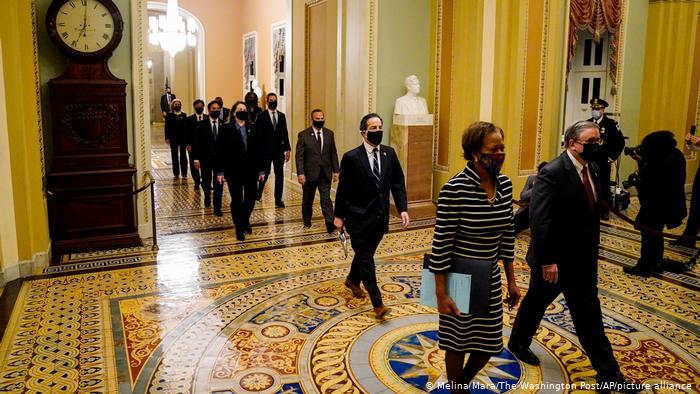



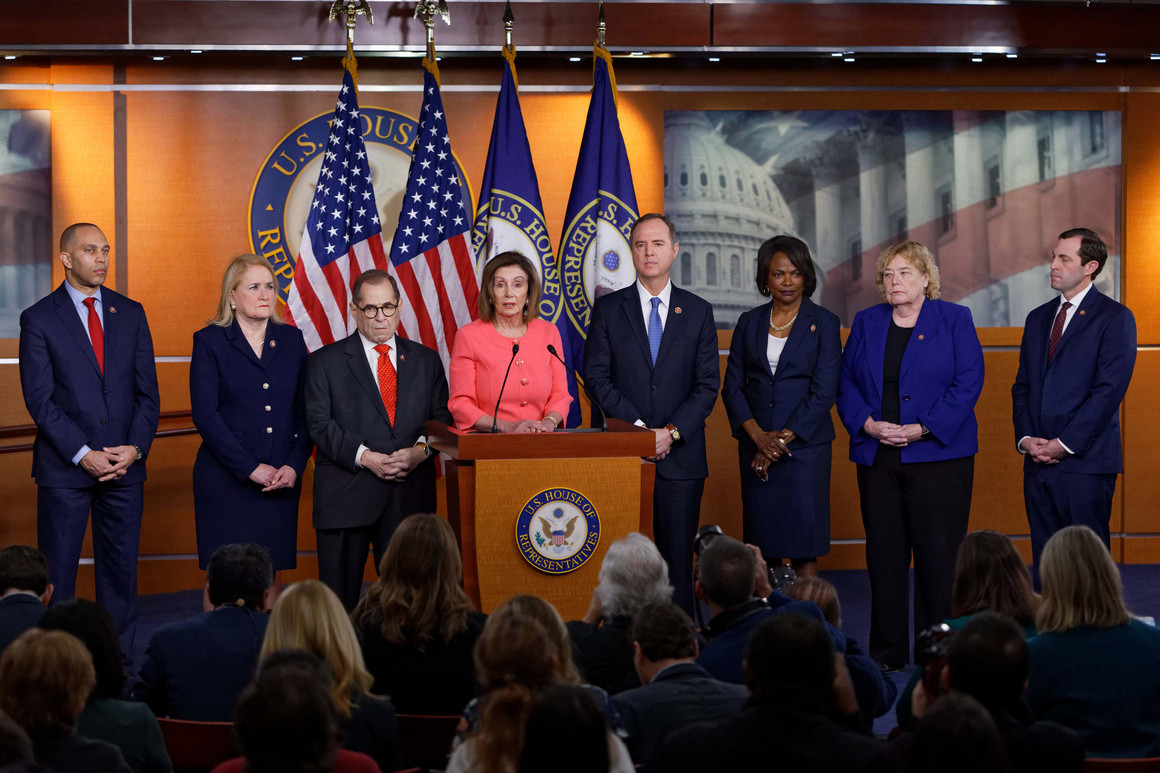
House impeachment managers
Trump is supposed to submit his response later today. It’s difficult to see how his lawyers could have had enough time to prepare careful arguments. More from the Democrat’s case:
The House Democrats wrote that Trump’s embrace of unfounded accusations that the 2020 election was stolen from him helped foment his supporters’ attack on the Capitol. When those false assertions failed to overturn the election, the Democrats wrote, Trump “summoned a mob to Washington, exhorted them into a frenzy, and aimed them like a loaded cannon down Pennsylvania Avenue.”
They added: “The Framers themselves would not have hesitated to convict on these facts.”
The House impeachment managers urged senators to bar Trump from ever serving again in elected office: “This is not a case where elections alone are a sufficient safeguard against future abuse; it is the electoral process itself that President Trump attacked and that must be protected from him and anyone else who would seek to mimic his behavior. Indeed, it is difficult to imagine a case that more clearly evokes the reasons the Framers wrote a disqualification power into the Constitution.”
The brief made clear Democrats’ intention to build an emotionally compelling impeachment case against Trump in which they have sought out new cellphone footage of the Capitol siege, as well as details about injured police officers.
The goal is to present the Senate with fresh evidence that reveals what Trump knew in advance of the Jan. 6 rampage at the Capitol, as well as how his words and actions influenced those who participated. The rioting left five dead, including one member of the U.S. Capitol Police. In addition, two officers, one with the D.C. police department, have since died by suicide.
At The New York Times, constitutional legal expert Bob Bauer writes: Why the G.O.P. Argument Against Trying Trump Is So Dangerous.
As the Senate trial of Donald Trump nears, the defense is coming into view. It appears that most Senate Republicans will not defend Mr. Trump’s conduct around the Jan. 6 Capitol siege. Instead, they will rally around an argument about the chamber’s constitutional powers and the supposedly dangerous consequences for our politics if the Senate tries a “late impeachment.”
This argument is built on two closely connected representations, and Senator Rand Paul previewed them in his recent constitutional objection to “late impeachment.”
The first, in Mr. Paul’s words, is that “impeachment is a tool to remove someone from office. That’s it.” The Senate lacks the power to try an impeached president, once out of office, to determine if he is guilty of the charges the House has levied against him.
The second, Mr. Paul and others argued, is that Mr. Trump is now a “private citizen,” and so any action against him could serve no purpose other than revenge….
Bob Bauer
This Republican argument wholly misconstrues the text, history and structure of the Constitution’s impeachment clause. It is a mistake to minimize impeachment’s broader objectives by suggesting that removal from office was somehow its only or primary function.
The power to impeach specifically provides for two decisions: impeachment and conviction, resulting in removal, and then disqualification from holding office. As drawn from the English practice, and reflected in state constitutions at the time, both these actions were understood to serve the overall purpose of public accountability for egregious abuses of public office.
Indeed, several state constitutions at the time of the federal Constitution’s writing permitted impeachment only after public figures had left office. Public accountability and disqualification were the purposes of impeachment; the Constitution’s addition of removal from office was an expansion on these provisions.
The argument focused on Mr. Trump’s status as a former president is misguided and dangerous. When impeached, he was in office. Moreover, it is highly doubtful that the framers intended the impeachment clause to give the president free rein to commit impeachable offenses in the closing months of his term.
In any case, the Senate always decides on disqualification after the offender is a “private citizen,” since that is what he becomes upon conviction of an impeachable offense. The Constitution does not even specify that this second vote on disqualfication must be immediate. The Senate could vote weeks later, after deliberation and debate, well into the former president’s “private” life.
Still more fundamental: This “late impeachment” argument fails to grasp the constitutional framework within which the question must be considered. The Federalist Papers made plain the framers’ preoccupation with protections against the demagogue, the “unworthy candidate” of “perverted ambition” who practices “with success the vicious arts, by which elections are too often carried.” The provision for “disqualification to hold and enjoy any office of honor, trust or profit” was one of many instances of constitutional checks against popular passions that could lead to the election of officeholders who would threaten to subvert the Republic.

Read the rest at the link. I imagine the impeachment managers will read this article carefully.
So, that’s what we know so far about the impeachment trial. I’ll post more news links in the comment thread below. There’s a lot happening.

 peej
peej Carissa
 bostonboomer
 dakinikat
 ecocatwoman
 mablue2
 Mama Lopez
 peggysue22
 quixote
 skydancingguestblogger
 Mona (aka Wonk the Vote)



 Sky Dancing
Recent Comments