
Blue Monday Reads
Posted: January 25, 2016 Filed under: Afternoon Reads | Tags: Bernie Sanders, Chris Hadfield, Democratic Primaries, Hillary Clinton, International Space Station, Space Oddity, Terry Virts 47 Comments Hello from the depths of Mardi Gras and the despair of the press coverage of the US Presidential Primary.
“Planet earth is Blue and there’s nothing I can do.”
I never really understood the double entrendre enveloping that lyric when I was a a preteen first turning into a Bowie Fan. I grok it now.
That’s a view of New Orleans there on the left today! It was taken from space by US Astronaut Terry W. Virts who posted it to his Twitter page a few days ago. He had a simple message for us: “Good night #NewOrleans. Bonsoir La Nouvelle-Orléans”.
I thought I’d also treat you to Canadian astronaut Chris Hadfield singing Bowie’s Space Oddity from the International Space Station. He’s got a great voice and some interesting change in lyrics. I’m not sure how he got the guitar up there but watching it float around is a trip. Stick around to watch his collaboration with Barenaked Ladies and some high school kids from 2013. It’s so kewl!!!
I’m not sure why–of all the Bowie songs out there–this song is haunting me. It’s not really bothering me that I feel compelled to sit at the Steinway and grab a guitar for it then arrange away. It’s sort’ve a life time hazard of being a musician with me that melodies grab me and hold tight. So, I’m passing my brain Tweak on to you, lucky you!!
Now for more earthly matters…
I’m really trying to understand wtf is going on with the media and the Democratic primary. Maybe they’re tired of Republican crazy and want to create some lunacy among the Democrats. Maybe, they’ve just got caught up in the mythos of a great outsider still itching to take down the Clintons. It’s just early and getting old already.
Glenn Thrush of Politico has interviewed President Obama and the dissection has begun.
Barack Obama, that prematurely gray elder statesman, is laboring mightily to remain neutral during Hillary Clinton’s battle with Bernie Sanders in Iowa, the state that cemented his political legend and secured his path to the presidency.
But in a candid 40-minute interview for POLITICO’s Off Message podcast as the first flakes of the blizzard fell outside the Oval Office, he couldn’t hide his obvious affection for Clinton or his implicit feeling that she, not Sanders, best understands the unpalatably pragmatic demands of a presidency he likens to the world’s most challenging walk-and-chew-gum exercise.
“[The] one thing everybody understands is that this job right here, you don’t have the luxury of just focusing on one thing,” a relaxed and reflective Obama told me in his most expansive discussion of the 2016 race to date.
Iowa isn’t just a state on the map for Obama. It’s the birthplace of his hope-and-change phenomenon, “the most satisfying political period in my career,” he says — “what politics should be” — and a bittersweet reminder of how far from the garden he’s gotten after seven bruising years in the White House.
So, from Thrush’s vantage point, Clinton seems the obvious Obama follow-up. There also these overall daunting poll numbers when you look beyond the February openers. What’s with the conversation on a Bernie Bump?
natesilver: FWIW, our FiveThirtyEight national polling average (which we’re not publishing yet — stay tuned) has Clinton up 22 percentage points. Although that was before the Monmouth poll released today, which might tighten things a bit. But somewhere in the high teens or perhaps low 20s nationally is where the race seems to be. By contrast, our averaging method would have had Clinton up by 25 points at the end of December.
So that suggests some tightening, but not as much as the media narrative — which is pretty blatantly cherry-picking which polls it emphasizes — seems to imply.
From there, I’m seeing some other headlines which I don’t quite grok.
From BC News: First Read: Get Ready for a Long Fight for the Democratic Nod. It’s Chuck Todd so be forewarned because as you know the Republicans are rooting for Bernie big time. The weird thing is the fine print doesn’t connect with that clickbait headline. But, FYI there is this which is factual and remember, we’re always around to Live Blogs Debates and Townhalls.
Hillary Clinton, Bernie Sanders, and Martin O’Malley participate at a CNN forum at Drake University in Des Moines, IA beginning at 9:00 pm ET… Clinton holds three earlier events in Iowa, hitting Waukee, Knoxville, and Oskaloosa… Sanders, meanwhile, stumps in Iowa Falls, Ames, and Grinnell… Donald Trump holds a rally in Farmington, NH at 7:00 pm ET… Ted Cruz spends his day in Iowa… So does Marco Rubio… Chris Christie is in New Hampshire… Ben Carson hits the Hawkeye State… And John Kasich is in New Hampshire.
Countdown to Iowa: 7 days
Countdown to New Hampshire: 15 days
I’m really looking forward to hearing this debate because Bernie isn’t standing up well to media scrutiny and I’m denying to hear a response to this: “Sanders: Clinton is running a ‘desperate’ campaign that lacks excitement.”
Asked about his comments last spring that he had no intention of playing the role of spoiler or weakening Clinton’s standing in the general election, Sanders turned the question on its head.
“That’s a two-way question, isn’t it?” he said. “When Hillary Clinton’s hit man is throwing garbage at the media, she is in a sense making it harder for me to win the general election.
“Our campaign is not going to simply sit back and accept all of these attacks,” Sanders added. “We are going to win this thing.”
In another sign of growing confidence, Sanders has stepped up his talk of the general election. “I would very much look forward to a race against Donald Trump,” he said Sunday on NBC’s “Meet the Press.” In speeches at his rallies, he sprinkles in previews of “a Sanders administration.”
Over the course of The Post interview, Sanders said Clinton was running a “desperate” campaign incapable of generating the kind of excitement his has. He raised questions about her motives and character. He said he expects Clinton and her campaign to “throw the kitchen sink” at him in the coming week in what he described as a craven attempt to avoid an embarrassing loss in Iowa.
Sanders questioned Clinton’s association with David Brock, the head of the pro-Clinton super PAC Correct the Record, whom Sanders called a “hit man.”
Even more bizarre is this comment: “Sanders says the flak he’s getting from Clinton reminds him of what Obama got in 2008.” Is this Sanders way of warming up to black folks?
“We get attacked about five times a day,” Sanders told a crowd of about 700 people here. “But it really reminds me very much of what happened here in Iowa eight years ago. Remember that? Eight years ago, Obama was being attacked for everything. He was unrealistic. His ideas were pie-in-the sky. He did not have the experience that was needed. You know what? People of Iowa saw through those attacks then, and they’re going to see through those attacks again.”
 This must be the Clinton speech that gave Bernie the heebie jeebies.
Indianola, Iowa (CNN)Hillary Clinton delivered a blistering assessment of Bernie Sanders’ credentials here on Thursday and implored Iowa voters to scrutinize his policies and readiness for the White House, declaring, “Theory isn’t enough. A President has to deliver in reality.”
It was the most forceful and direct contrast Clinton has drawn with Sanders yet, a speech that underscored the increasing urgency and acrimony of the race. From health care to foreign policy, Clinton repeatedly referenced Sanders by name and questioned whether his ideas could ever become reality.
“I am not interested in ideas that sound good on paper but will never make it in the real world,” Clinton said. “I care about making a real difference in your life and that gets to the choice you have to make in this caucus.”
Clinton acknowledged that while she and Sanders “share many of the same goals” they have “different records and different ideas on how to drive progress.”
The former secretary of state used a Teleprompter to deliver her remarks to hundreds of supporters on the campus of Simpson College. The speech, one adviser said, was designed to “shake some sense into Iowans” and escalate the experience argument she has been making against Sanders with limited success.
“Senator Sanders doesn’t talk much about foreign policy, but when he does it raises concerns,” Clinton said. “Sometimes it can sound like he really hasn’t thought it through.”
Clinton’s campaign had multiple cameras here and plan to turn part of the speech into an ad, according to aides.
More bizarrely, we now have hints of a Bloomberg third party candidacy because of some perceived weakness on the part of the Clinton campaign. Doesn’t any one have enough math background these days to get real?
Democratic primary front-runner Hillary Clinton on Sunday vowed to win her party’s nomination for president to “relieve” former New York City mayor Michael Bloomberg of any thoughts of running for president.
“The way I read what he said is if I didn’t get the nomination, he might consider it,” Clinton said on NBC’s “Meet the Press.” “Well, I’m going to relieve him of that and get the nomination so he doesn’t have to [run].”
“He’s a good friend of mine, and I’m going to do the best I can to make sure that I get the nomination, and we’ll go from there,” she added.
Bloomberg is reportedly considering a third-party White House bid if the race comes down to Democratic primary candidate Bernie Sanders and Republican primary front-runner Donald Trump.
Clinton on Sunday also defended lucrative speaking fees that she collected from big banks before her presidential run.
She said the payouts will not influence her policy platform as president.
“Absolutely not,” she said. “You know, first of all, I was a Senator from New York — I took them on when I was a senator.”
Bloomberg has some ‘splaining to do. And I have the heebie jeebies at thinking between a President Bloomberg and President Trump.
A close confidant of Michael Bloomberg told ABC News the former New York City mayor plans to make a decision on whether he will make an independent run for president in the first week of March.
His decision will be based in large part on the state of the Democratic and Republican primaries after the Super Tuesday contests on March 1, the confidant said.
If after Super Tuesday it looks like Bernie Sanders has a good chance of winning theDemocratic primary and the Republicans seems likely to nominate either Donald Trump or Ted Cruz, Bloomberg’s odds of running are at least 50-50, according to this long-time Bloomberg friend.
If, on the other hand, Hillary Clinton looks poised to win the Democratic nomination, the odds that Bloomberg will run drop to close to zero, the friend said.
And I’m going back to Tiger Beat on the Ptomac for my closer. I guess I’m with Paul Starr on this one. (“Paul Starr, a winner of the Pulitzer Prize for nonfiction, is co-founder and co-editor of The American Prospect and professor of sociology and public affairs at Princeton University. Among his books is Freedom’s Power: The History and Promise of Liberalism.”)
I have a strange idea about presidential primaries and elections: The purpose is to elect a president.
And I have a strange thought about primary voters: They have a choice between sending the country a message and sending it a president. That is a choice Democratic voters in Iowa and New Hampshire ought especially to be weighing with the first caucuses and primary only days away.
…
But as appealing as Sanders may be, he is not credible as president. Elizabeth Warren would have been a credible candidate, but Sanders isn’t. The campaign he has been waging is a symbolic one. For example, the proposals he has made for free college tuition and free, single-payer health care suggest what might be done if the United States underwent radical change. Those ideas would be excellent grist for a seminar. But they are not the proposals of a candidate who is serious about getting things done as president—or one who is serious about getting elected in the country we actually live in.
If he were elected, Sanders would be 75 years old on assuming office, the oldest person to become president in American history by more than five years. (Ronald Reagan was 69.) Some of his supporters were outraged by David Brock’s recent demand that he release his medical records—did they think no one was going to notice how old Sanders is? The presidency is an enormously taxing job, physically and mentally. His age is a legitimate issue, and if he were the Democratic nominee, even many people sympathetic to his views would have reservations about putting him in office.
Two other obstacles, however, would be so decisive that the question of Sanders’ age might hardly come up. Sanders’ self-identification as a “socialist” is all that many voters would need to know to reject him. A recent Pew poll found negative reactions to the word “socialist” outpacing positive reactions by two to one—59 percent to 29 percent.
In June 2015, Gallup asked people whether they would vote for a “well-qualified person for president” who had various possible characteristics, and “socialist” was a deal-breaker for more Americans than any other attribute, including gay, Muslim or atheist.
“Socialism” is the label Republicans have been trying to pin on Democrats; it is not the flag Democrats want to be waving. Not only would Sanders find it difficult to get elected, Democratic candidates up and down the ticket would disassociate themselves from him.
If that’s what Bernie and his groupies feel is an attack then consider me a warrior princess. I feel the same way.
So, that’s my venture into Spaciness today.
What’s on you reading and blogging list?
Monday Reads in which I go there …
Posted: January 18, 2016 Filed under: Affordable Care Act, Affordable Care Act (ACA), Afternoon Reads | Tags: Affordable Health Care Act, Bernie Sanders, Health care reform, Paul Krugman, single payer 30 CommentsGood Afternoon! Happy Martin Luther King Day!!
 I’ve been spending the morning getting back up to speed on Health Care Economics which is something I never enjoy but never seem to be unable to avoid. The facts on the ground never change much. What we know about single payer and third party payer systems remains pretty much the same. The only thing that seems to change is the hostility in this country on the subject. I keep having to dredge up the same information over and over with the new twists.
Well, here I go again …
There are three articles that BB sent me this morning that sum up the situation nicely. I’m going to start with those and then finish up by reviewing the mini-case of the failed single payer case in the state of Vermont. I’m not doing this because I don’t think single payer health insurance is a good deal ceteris paribus. It obviously works in other countries. As the Republicans remind us daily, we are not other countries. Theoretically, it provides superior risk sharing and economies of scale on cost. So, my theoretical economist side loves it. My living in America with everything that’s already standing and Republicans who thwart everything at every turn except tax cuts for the wealthy and wars side has a different train of thought.
Yes, it’s time to heal those suffering badly from Berns. I’m going to be in good company because the public wonks are with me on both accounts. We yearn for a simpler, cheaper, more efficient way of paying and getting health care. But, we know the difference between brainstorming and an actionable policy. I’m cursed with a heart longing for idealism but a brain that reins the damn thing in. Bernie Sanders plan really isn’t a plan. It’s a lofty goal.
Here’s Ezra Klein writing for VOX stating ‘Bernie Sanders’s single-payer plan isn’t a plan at all: Sanders’s long-awaited health care plan is, by 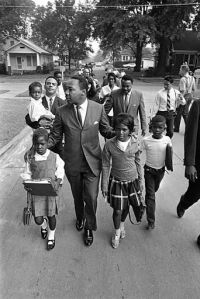 turns, vague and unrealistic.‘ You should read these links fully if you can manage the time.
Sanders calls his plan Medicare-for-All. But it actually has nothing to do with Medicare. He’s not simply expanding Medicare coverage to the broader population — he makes that clear when he says his plan means “no more copays, no more deductibles”; Medicare includes copays and deductibles. The list of what Sanders’s plan would cover far exceeds what Medicare offers, suggesting, more or less, that pretty much everything will be covered, under all circumstances.
Bernie’s plan will cover the entire continuum of health care, from inpatient to outpatient care; preventive to emergency care; primary care to specialty care, including long-term and palliative care; vision, hearing and oral health care; mental health and substance abuse services; as well as prescription medications, medical equipment, supplies, diagnostics and treatments. Patients will be able to choose a health care provider without worrying about whether that provider is in-network and will be able to get the care they need without having to read any fine print or trying to figure out how they can afford the out-of-pocket costs.
Sanders goes on to say that his plan means “no more fighting with insurance companies when they fail to pay for charges.”
To be generous, it’s possible that Sanders is just being cynical in his wording, and what he means is that, under his plan, individuals have to fight with the government rather than private insurers when their claims are denied.
But the implication to most people, I think, is that claim denials will be a thing of the past — a statement that belies the fights patients have every day with public insurers like Medicare and Medicaid, to say nothing of the fights that go on in the Canadian, German, or British health-care systems.
What makes that so irresponsible is that it stands in flagrant contradiction to the way single-payer plans actually work — and the way Sanders’s plan will have to work if its numbers are going to add up.
Behind Sanders’s calculations, both for how much his plan will cost and how much Americans will benefit, lurk extremely optimistic promises about how much money single-payer will save. And those promises can only come true if the government starts saying no quite a lot — in ways that will make people very, very angry.
“They assumed $10 trillion in health-care savings over ten years,” says Larry Levitt, vice president at the Kaiser Family Foundation. “That’s tremendously aggressive cost containment, even after you take the administrative savings into account.”
The real way single-payer systems save money isn’t through cutting administrative costs. It’s through cutting reimbursements to doctors, hospitals, drug companies, and device companies. And Sanders’s gestures towards this truth in his plan, saying that “the government will finally have the ability to stand up to drug companies and negotiate fair prices for the American people collectively.”
But to get those savings, the government needs to be willing to say no when doctors, hospitals, drug companies, and device companies refuse to meet their prices, and that means the government needs to be willing to say no to people who want those treatments. If the government can’t do that — if Sanders is going to stick to the spirit of “no more fighting with insurance companies when they fail to pay for charges” — then it won’t be able to control costs.
Krugman adds a bit more to this today.

&”
Put it this way: for all the talk about being honest and upfront, even Sanders ended up delivering mostly smoke and mirrors — or as Ezra Klein says, puppies and rainbows. Despite imposing large middle-class taxes, his “gesture toward a future plan”, as Ezra puts it, relies on the assumption of huge cost savings. If you like, it involves a huge magic asterisk.
Now, it’s true that single-payer systems in other advanced countries are much cheaper than our health care system. And some of that could be replicated via lower administrative costs and the generally lower prices Medicare pays. But to get costs down to, say, Canadian levels, we’d need to do what they do: say no to patients, telling them that they can’t always have the treatment they want.
Saying no has two cost-saving effects: it saves money directly, and it also greatly enhances the government’s bargaining power, because it can say, for example, to drug producers that if they charge too much they won’t be in the formulary.
But it’s not something most Americans want to hear about; foreign single-payer systems are actually more like Medicaid than they are like Medicare.
And Sanders isn’t coming clean on that — he’s promising Medicaid-like costs while also promising no rationing. The reason, of course, is that being realistic either about the costs or about what the system would really be like would make it a political loser. But that’s the point: single-payer just isn’t a political possibility starting from here. It’s just a distraction from the real issues.
The deal is this. We have entire systems, institutions, and agents that have been functioning under multiple plans for quite some time. This includes Medicaid, Medicare, SCHIP, the VA, and a myriad of private health insurance plans. You just don’t wave a magic wand and expect that all to unwind costlessly and seamlessly. You also don’t expect all those folks to be thrilled about it either or to seamlessly transfer their efforts and resources to a new system. It takes big money and time to do that. We’re not operating from scratch here.
That also doesn’t take into account politics. Yes. POLITICS. Remember when we first got the ACA and how the majority of Dems and Republicans voted for a single payer plan when the Dems controlled Congress? Remember how the ACA should work if SCOTUS hadn’t let so many states opt out of the system? Yes, Virginia, there is no Santa Claus.
 Dear Bernie Sanders-supporting Friends: Sanders is nice enough. He’s got some good ideas. But, no, I do not think he’s got what it takes to be President. He operates out there in gadfly paradise. Or, as Michel Cohen writes it: ‘Bernie Sanders doesn’t get how politics works’.
Now for my deeper impression of the debate: even with his rising poll numbers in Iowa and New Hampshire, I find it increasingly difficult to take Sanders seriously as a presidential candidate.
Maybe it’s the fact that he’s 74, would be the oldest man to ever become president, and yet couldn’t be bothered to release his medical records until a Clinton surrogate attacked him for it.
Maybe it’s that Sanders finds a way to answer virtually every question by turning it back to another predictable and one-dimensional attack on Wall Street and big money.
Maybe it’s that he gets away with proposing unrealistic policy ideas that have little chance of being passed even by Democrats in Congress, let alone Republicans, and then gets praised for being authentic. Sunday night Sanders finally released his single-payer health care plan, which is all of eight pages and provides little detail on how he’ll implement a complete restructuring of the US health care system. That’s at least an improvement over his plan for breaking up the banks, which is four pages and just as short on detail.
Maybe it’s that every time he answers a question on foreign policy and national security, it’s blindingly apparent that not only does he not understand foreign policy and national security, he simply doesn’t care to know more. I mean, only Bernie Sanders could answer a question about instability Middle East by pivoting to an attack on wealthy nations like Saudi Arabia, which he repeatedly says has to play a greater role in the civil war in Syria, as if no one on his staff could bother to tell him that Saudi Arabia is already playing an important role in the civil war in Syria.
It’s all that and something else — Sanders really does have a singularly naive and simple-minded understanding of American politics. He genuinely seems to believe — and I know this because he repeatedly yelled it at me during the debate — that money is the root of all evil in politics and that if you get the big money out, great things will happen. Sanders said that “a handful of billionaires . . . control economic and political life of this country.” He argued that Republicans and Democrats don’t “hate each other.” He called that a “mythology.” Instead, he said, the “real issue is that Congress is owned by big money and refuses to do what the American people want them to do.”
I’m sorry, but that is a maddeningly simplistic — and wrong — explanation of how American politics works.
Take single-payer health care, which Sanders claims has been difficult to enact because of a corrupt campaign finance system that allows the “pharmaceutical industry” and private insurance companies to spend millions in “campaign contributions and lobbying.”
On the one hand, Sanders is right — those are powerful interests. But so are doctors and hospitals, who’d pay a huge price if single payer became law; so are Republicans, who fought tooth and nail to defeat Obamacare and would do the same for a single-payer plan; so are Democrats, who couldn’t even support a public option for Obamacare and are unlikely to support single payer; so are Americans, who may not be inclined to support another restructuring of the health care system — a few years after the last one. It’s not just about money; it’s also about a political system constructed and reinforced to block the kind of massive reform Sanders is advocating. Money is important, but it’s not even close to the whole story.
How someone who’s been in Washington as long as Sanders can believe that all that stands between doing “what the American people want [Congress] to do” is something as simple as reforming campaign finance is stunning. Sanders, who brags the NRA gives him a D- rating, is the same politician who supported legislation giving gun manufacturers immunity from civil lawsuits and voted against the Brady Bill. Why? Perhaps it is because Sanders comes from a state that has few gun control laws and lots of gun owners. Yes red-state senators who oppose gun control receive contributions from the NRA. They also have constituents who oppose gun control measures and vote on the issue — like Bernie Sanders. It’s as if in Sanders’ mind, parochialism, ideology, or politics plays no role . . . in politics.
 So, yes, we have the ACA (Obamacare) which is a “kludge” to borrow a turn of phrase from Krugman. If we could start from scratch then single payer health insurance would be infinitely cheaper and better. But, that’s not the way it is.
Krugman admits that Obamacare is far from perfect, an awkward, imperfect solution that does not work for everyone. But he thinks it would be a mistake for Democrats to expend political capital refighting the battle that gave them their biggest victory in decades. Here’s how he lays out his case:
If we could start from scratch, many, perhaps most, health economists would recommend single-payer, a Medicare-type program covering everyone. But single-payer wasn’t a politically feasible goal in America, for three big reasons that aren’t going away.
First, like it or not, incumbent players have a lot of power. Private insurers played a major part in killing health reform in the early 1990s, so this time around reformers went for a system that preserved their role and gave them plenty of new business.
Second, single-payer would require a lot of additional tax revenue — and we would be talking about taxes on the middle class, not just the wealthy. It’s true that higher taxes would be offset by a sharp reduction or even elimination of private insurance premiums, but it would be difficult to make that case to the broad public, especially given the chorus of misinformation you know would dominate the airwaves.
Finally, and I suspect most important, switching to single-payer would impose a lot of disruption on tens of millions of families who currently have good coverage through their employers. You might say that they would end up just as well off, and it might well be true for most people — although not those with especially good policies. But getting voters to believe that would be a very steep climb.
Bottom line for Krugman is that single-payer ain’t gonna happen. Like it or not, the fact that Obamacare did not disrupt the millions of Americans who get health insurance through their employers gives it a leg up. Then there is the fact that taxes would have to be raised on the middle class to pay for it, as even Sanders acknowledges. And even though the middle class would not doubt save even more on their health insurance premiums, Krugman comes down on the side that higher taxes on them would not fly politically.
I’d like to add something to all of this. It’s frequently nice to have test cases for policy change. Massachusetts was the test case for ChaffeeCare/DoleCare/RomneyCare/ObamaCare. It wasn’t perfect but it worked.

March 1965: Children watching a black voting rights march in Alabama. Dr Martin Luther King led the march from Selma, Alabama, to the state capital in Montgomery. (Photo by William Lovelace/Express/Getty Images)
According to a new analysis, health care reform in Massachusetts, popularly known as “Romneycare,” didn’t cause hospital use or costs to increase, even as it drove down the number of people without health insurance.
Implemented by the state in 2006, and signed by then-Gov. Mitt Romney, the reform is looked at as a model for the Affordable Care Act, also known as “Obamacare,” the sweeping and controversial health care law that Republican lawmakers in the House tried to repeal for the 37th time Thursday.
Amresh Hanchate, an economist with the Veterans Affairs Boston Healthcare System and lead author of the study, which he presented Thursday at an American Heart Association conference, says that the results of the study were surprising.
When it was implemented, about 8.4 percent of Massachusetts citizens were uninsured; by 2010, just 3 percent were uninsured. Uninsured rates fell most among minorities: In 2006, 15 percent of African-Americans were uninsured, in 2010, that rate was at 3.4 percent. Uninsured rates for Hispanics in the state fell from 20 percent to 9.2 percent during the same period.
Similarly encouraging news is found on the ACA even though it was seriously hampered by the SCOTUS ruling that allowed many states to opt out of the medicaid expansion and hosting local exchanges. We have one state that tried to have single payer. It failed. The state was Vermont. Sanders was asked about it during the debate. He dodged the question by referring it to the state’s governor. Well, there’s a lot of information out there on it. I’ll start with NEJM.
On December 17, 2014, Vermont Governor Peter Shumlin publicly ended his administration’s 4-year initiative to develop, enact, and implement a single-payer health care system in his state. The effort would have established a government-financed system, called Green Mountain Care, to provide universal coverage, replacing most private health insurance in Vermont. For Americans who prefer more ambitious health care reform than that offered by the Affordable Care Act (ACA), Shumlin’s announcement was a major disappointment. Was his decision based on economic or political considerations? Will it damage the viability of a single-payer approach in other states or at the federal level?
Shumlin’s exploration of a single-payer health care system, which included three assessments by different expert groups, was among the most exhaustive ever conducted in the United States. A 2011 study led by Harvard health economist William Hsiao provided optimistic projections: immediate systemwide savings of 8 to 12% and an additional 12 to 14% over time, or more than $2 billion over 10 years, and requirements for new payroll taxes of 9.4% for employers and new income taxes of 3.1% for individuals to replace health insurance premiums (see table) Financial Estimates from Three Projections for a Vermont Single-Payer Health Plan.).
Two years later, a study by the University of Massachusetts Medical School and Wakely Consulting projected savings of just 1.5% over 3 years.2 Finally, a 2014 study by Shumlin’s staff and consultants predicted 1.6% savings over 5 years and foresaw required new taxes of 11.5% for employers and up to 9.5% for individuals. The governor cited these last projections in withdrawing his plan: “I have learned that the limitations of state-based financing, the limitations of federal law, the limitations of our tax capacity, and the sensitivity of our economy make that unwise and untenable at this time . . . . The risk of economic shock is too high,” Shumlin concluded.
Two factors explain most of the decline in the plan’s financial prospects. First, the anticipated federal revenues from Medicaid and the ACA declined dramatically. Second, Shumlin’s policy choices significantly increased the total projected cost of Green Mountain Care: raising the actuarial value of coverage — the expected portion of medical costs covered by a plan rather than by out-of-pocket spending — from 87% to 94%, providing coverage to nonresidents working in Vermont, and eliminating current state taxes on medical providers. Still, even Shumlin’s projections indicated that the plan would reduce Vermont’s overall health spending and lower costs for the 90% of Vermont families with household incomes under $150,000. Despite differing projections, all three studies showed that single payer was economically feasible.
In reality, the Vermont plan was abandoned because of legitimate political considerations. Shumlin was first elected governor in 2010 promising a single-payer system. But in the 2014 election, his Republican opponent campaigned against single payer. Shumlin won the popular vote by a single-percentage-point margin, 46% to 45%, which sent the election to the Democratic-controlled House of Representatives; though the House reelected him easily in January, a clear public mandate for his health care agenda was nowhere in evidence.
 Here’s some slightly less academic explanations. This one comes from the Boston Globe.
Vermont took Obamacare a step further. In 2011, Shumlin proudly signed a bill to establish a publicly financed, single-payer system. The law required Shumlin to submit a detailed financial plan by 2013.
Shumlin missed the deadline, raising fears among supporters and critics alike that single-payer health care would cost much more than anticipated. Those fears were realized on Dec. 17, when Shumlin, two years late and just a month from narrowly winning reelection, released the financial analysis.
The numbers were stunning. To implement single-payer, the analysis showed, it would cost $4.3 billion in 2017, with Vermont taxpayers picking up $2.6 billion and the federal government covering the rest. To put the figures into perspective, Vermont’s entire fiscal 2015 budget, including both state and federal funds, is about $4.9 billion.
Shumlin’s office estimated the state would need to impose new personal income taxes of up to 9.5 percent, on top of current rates that range from 3.55 to 8.95 percent. Businesses would be hit with an 11.5 percent payroll tax, on top of 7.65 percent payroll taxes employer pay for Social Security and Medicare.
And even those tax increases might not have been enough. The governor’s office estimated the Green Mountain Care program would run deficits of $82 million by 2020 and $146 million in 2021. Shumlin said he feared the tax increases would harm businesses and the economy.
Okay, this is VERMONT, folks. Now, try doing that in Louisiana and Kansas or try getting their elected officials in the District to buy off on it.
So, a lot of children just really like believing in Santa Claus and it doesn’t take much to get them to continue their buy-in. Then there was Doctor Daughter who figured out it was her Dad and me at an extremely tender age after careful empirical study then asked me if that was the case. Of course, I said yes rather than try to lead her on like my parents did me for the sake of my sister. I just told her to go along if other kids believed and their parents hadn’t told them the truth yet. She did so like a little Nixonian co-conspirator.
I will not lie to you. Ceteris paribus. I prefer Single Payer Health Insurance. Ceteris paribus. Bernie Sanders has some really nice ideas.
I have never been one of those theoretical researchers. All of my stuff is empirical. I live in the land of empirical evidence. Yes, folks socialized medicine works just fine in the UK and is fairly cheap and folks get turned away for stuff that would probably piss the average American off. Yes, single payer health or a government option works great in Switzerland and other places. But, this is a country where it appears that our options will be Hillary Clinton or Donald Trump.
Spare me the Santa Claus mythos or the Senator Gadfly mythos.
Sorry this is so long, but as you can see, I had a lot to say and prove. I vote we try to improve on the ACA and for Hillary. Just sayin’.
Mea culpas go to any one whose work I over quoted. I love fair use but I also loved what you wrote. I quoted and cited you. Just sayin’.
What’s on your reading and blogging list today?
Monday Reads: Ch-ch-ch-changes
Posted: January 11, 2016 Filed under: Afternoon Reads | Tags: Bobby Jindal, David Bowie, Louisiana 8 Comments Good Afternoon!
The year is young but I’ve already had more lessons in impermanence than normal. Late last night, I got the news that David Bowie–icon of my youth and as I’m learning the icon of nearly everyone around my age and younger–died after 18 months of living with cancer. I’ve been listening to Bowie’s new album with its haunting images and melodies. The accompanying videos aren’t easy to process. Blackstar felt like it was bringing many things full circle to me. Now I realize that’s what Bowie was about especially after reading a press release from his producer. I woke this morning to find that Bowie’s final body of work was labelled a “gift to fans”. Bowie was the consummate artist and public intellectual. I feel blessed to live in a time when I could see him unfold and that he could provide nuance, context, and soundtracks to my life and loves.
David Bowie’s last release, Lazarus, was ‘parting gift’ for fans in carefully planned finale
The producer of Blackstar confirms David Bowie had planned his poignant final message, and videos and lyrics show how he approached his death.
Like most kids my age, I heard Bowie’s Space Oddity from a small am radio and found it odd but compelling. It wasn’t until my freshman year in college I found myself in love with some one quite obsessed with the newly released Diamond Dogs and the older Ziggy Stardust music. I loved the Movie “Man who Fell to Earth”. I saw it several times because it was so fascinating. My favorite album will always be Changes. So, early Bowie will always be my Bowie. To my daughters, Bowie is the Goblin King.
Bowie threaded together lots of interests of mine. He had an amazing sense of fashion and the theatric along with with his gift for composing and arranging music. He didn’t have a great voice but it was 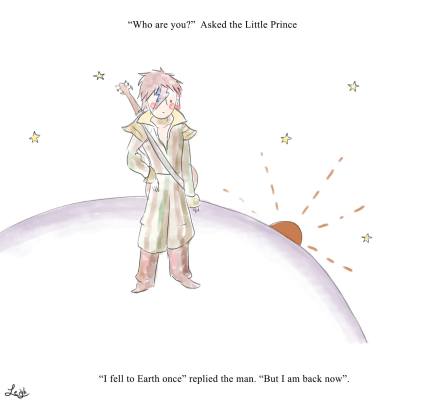 expressive and worked well with what he tackled. He also managed to lace things with social commentary and a vision for a freer society as well as a love of science fiction. Every project of Bowie’s was intelligent and visually arresting. He kept my attention with each one over my entire romance with his body of work of over 40 years.
The singer-songwriter and producer excelled at glam rock, art rock, soul, hard rock, dance pop, punk and electronica during an eclectic 40-plus-year career.
David Bowie died Sunday after a battle with cancer, his rep confirmed to The Hollywood Reporter. He was 69.
“David Bowie died peacefully today surrounded by his family after a courageous 18-month battle with cancer. While many of you will share in this loss, we ask that you respect the family’s privacy during their time of grief,” read a statement posted on the artist’s official social media accounts.
The influential singer-songwriter and producer excelled at glam rock, art rock, soul, hard rock, dance pop, punk and electronica during his eclectic 40-plus-year career. He just released his 25th album, Blackstar, Jan. 8, which was his birthday.
Bowie’s artistic breakthrough came with 1972’s The Rise and Fall of Ziggy Stardust and the Spiders From Mars, an album that fostered the notion of rock star as space alien. Fusing British mod with Japanese kabuki styles and rock with theater, Bowie created the flamboyant, androgynous alter ego Ziggy Stardust.

The BBC has a great tab full of all things Bowie including interviews. You can find many things because Bowie was and did many things. Will Gompertz, BBC Arts editor had this to say about the artist. (I have to let you know that Merce Cunningham–one of his influences–was my brother-in-law’s Uncle.) Bowie did continue the avant-garde tradition of the early 20th century and carried it into a future yet to be realized.
David Bowie was the Picasso of pop. He was an innovative, visionary, restless artist: the ultimate ever-changing postmodernist.
Along with the Beatles, Stones and Elvis Presley, Bowie defined what pop music could and should be. He brought art to the pop party, infusing his music and performances with the avant-garde ideas of Merce Cunningham, John Cage and Andy Warhol.
He turned pop in a new direction in 1972 with the introduction of his alter ego Ziggy Stardust. Glam rock was the starting point, but Ziggy was much more than an eyeliner-wearing maverick: he was a truly theatrical character that at once harked backed to pre-War European theatre while anticipating 1980s androgyny and today’s discussions around a transgender spectrum.
He was a great singer, songwriter, performer, actor, producer and collaborator. But beyond all that, at the very heart of the matter, David Bowie was quite simply – quite extraordinarily – cool.
I still like to think of him as more than an artist because of his sense of social justice. He was an important figure in bringing GLBT culture into the mainstream as well as bringing the sexual revolution into every 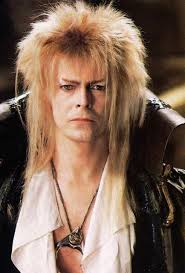 one’s face. He also had a political side. Bowie was all about freedom of expression in all forms.
In June 1987, David Bowie returned to the divided city of Berlin for a concert that some Germans, rightly or wrongly, still view as having helped change history.
Bowie knew West Berlin well. He’d lived there for three years in the late 1970s, sharing an apartment in the Schöneberg neighborhood with Iggy Pop, escaping from the drugs and over-the-top glam of his early career into the city’s expressionism and art pop. It was there that Bowie recorded three of the albums for which, upon his death today from cancer at the age of 69, he is still remembered and cherished.
In 1977, the year Bowie recorded Heroes, the second of his three Berlin albums, East German border guards shot and killed 18-year-old Dietmar Schwietzer as he tried to flee west across the wall; a few months later, 22-year-old Henri Weise drowned trying to cross the Spree River. Heroes was haunted by the Cold War themes of fear and isolation that hung over the city. Its still-famous title track tells a story of two lovers who meet at the wall and try, hopelessly, to find a way to be together.A decade later, when, in 1987, Bowie returned for the Concert for Berlin, a three-day open-air show in front of the Reichstag, he chose “Heroes” for his performance. By then the city’s Soviet-dominated East had become safer, but it had not become more free. Rock music was treated as a destabilizing threat.
But the wall couldn’t keep out radio waves; the West German–operated, US-run radio station Radio in the American Sector was popular in the East, and had secured rare permission from the performing acts to broadcast the show in its entirety. (Record labels typically opposed this in the 1980s, knowing listeners would record the broadcasts, undercutting album sales.) The concert was held near enough to the border that many East Berliners crowded along the wall to listen to the forbidden American and British music wafting across the city, allowing these two halves of the city to hear the same show, divided but together.
I love this tribute to him. It’s a thanks from all the “weird kids” who can count me in their number. I spent my youth feeling totally out of place and time. Bowie made being out of  place and time feel special and easier to bear.
I do not believe it is a wild exaggeration to say that there are on this earth today many people who would not be here without David Bowie — either because their parents procreated to his music or because (and this is I believe the more important group) he gave them a reason to stay alive when perhaps they did not want to. He was the patron saint of all my favorite fellow travelers: the freaks, the fags, the dykes, the queers, the weirdos of all stripes, and that most dangerous creature of all: the artist. He was the crown prince(ss) of the unusual. He was so marvelously, spectacularly weird, and he gave so many oddballs, including this one, hope.
So, 2016 is resplendent in lessons for me on surfing Samasara as I’ve mentioned before. While the world processes the news over David Bowie with awe and grief, Louisiana celebrates being a rid of “Governor” Bobby Jindal. We are officially out of his clutches but not out of the huge mess the man leaves all around us. Our new Governor was sworn in today and has promised to at least stabilize the budget.
Saying he won’t be a “business-as-usual” leader, Louisiana Gov. John Bel Edwards took his oath of office Monday, promising to stabilize the budget and end cycles of financial crises that threaten public health services and colleges.
As he placed his hand on the family Bible for the swearing-in ceremony, Edwards became the only Democratic governor in the Deep South after an improbable victory.
He follows term-limited Republican Bobby Jindal, inheriting a budget mess that will require him to work with a majority GOP Legislature. Edwards pledged bipartisanship in his approach, which he said needed to end Louisiana’s use of stopgap, short-term financial maneuvers that create new budget troubles annually.
“We can no longer afford to lurch from year to year, cobbling together temporary fixes and expecting to realize permanent sustainability. If we don’t fix the structural budget deficit, we can’t fix any of our other problems,” the new governor said at the inaugural ceremony held on the steps of the Louisiana Capitol.
The Edwards administration estimates Louisiana faces a shortfall of up to $750 million in the state’s $25 billion budget for the remaining six months of the current fiscal year and a gap more than twice that amount for next year.
While he talked of working across party lines, however, Edwards also outlined a decidedly Democratic agenda.
He said he will ask lawmakers to increase the minimum wage, pass a new equal pay law and work to make college more affordable, to combat poverty in Louisiana. And he said he’ll start the process for expanding Medicaid on Tuesday, as allowed under the federal health care law.
“Your tax dollars should not be going to one of the 30 other states that have expanded Medicaid when we are one of the states that expansion will help the most,” he said.
But the governor called addressing the financial mess his top priority, saying he’ll seek to make budget cuts and “rework the failed system of tax incentives, credits and rebates, which bleed the state’s revenue and too often leave little to show for the spending.”
 I’m not sure all our idiot Republicans are going to go along with this but hopefully, enough will that we can start digging out.
So, I’m really late today and I’m anxiously awaiting how you’re processing the world without David Bowie.
I’m releasing it all to the Greater Ethos for the moment.
Be well and love yourself and others. We really don’t have as much time as we think.
Friday Reads
Posted: January 8, 2016 Filed under: Afternoon Reads | Tags: anthropocene, Radical Christianists, samsara, wheel of life 16 Comments I’m rather late getting this written today. It’s due to stuff I like to refer to as samsara surfing activities. It’s the entire basic Buddhist thing on the nature of this existence. My washing machine overflowed last night in the laundry closet which has created a huge mess. Thankfully, I seemed to have fixed the machines issues for the moment but the floor is just inundated with water. Also, a friend of mine of over 35 years had a stroke on New Year’s Eve and passed on Wednesday. She was only 65 and had just retired about six months ago. Both of these items come under the heading of I’m not surprised, not shocked, expected it to happen sooner than it should but I’m still asking why now? Why now when I can least afford fixing up stuff and when I had put off talking to her because my voice was shot from the flu. Timing is everything still, I guess and mine sucks atm.
Also, I still need to mention the timing of the font bill for the blog. It’s in two days and I need to beg for donations. I don’t need anything huge but a little from some of you would get it off my plate and then we have the blog free and clear again until October.
So, I’m not sure I’m going to be able to write a very cohesive post today but I will share what’s been attracting my attention even as distracted as I am. My artwork today is the Tibetan Buddhist Wheel of Life or Wheel of Samsara. It reminds us that nothing lasts for ever. Everything changes and eventually reformats.
By Samsara (bhavachakra) we are talking of all existences that are conditioned by: ignorance, suffering and the unexplainable flow of time, often represented by Yama holding the wheel of life. Nirvana, on the other hand, represents the world unaffected by negative emotions, which by definition is the nature of true happiness.
The notion of a rotation or cycle, is explained by the fact that humans or beings, as I will call them for the remainder of this article, do not occupy a stable place within Samsara, but depending on their Karma will pass from one type of existence to another.
I’m pretty comfortable in the idea that we all reformat constantly. I’m even fairly resigned to being okay with reformatting to just energy and dust. But damn, it’s always difficult to live the idea that time rolls over us. Things we love never last long enough. Things we want to go away seem to stick around for ever. So, we just have to surf along knowing that’s the case.
So, here’s a new journal study from Science entitled: The Anthropocene is functionally and stratigraphically distinct from the Holocene which essentially deals with time and our existence here on earth. I quote the abstract’s background here.
Humans are altering the planet, including long-term global geologic processes, at an increasing rate. Any formal recognition of an Anthropocene epoch in the geological time scale hinges on whether humans have changed the Earth system sufficiently to produce a stratigraphic signature in sediments and ice that is distinct from that of the Holocene epoch. Proposals for marking the start of the Anthropocene include an “early Anthropocene” beginning with the spread of agriculture and deforestation; the Columbian Exchange of Old World and New World species; the Industrial Revolution at ~1800 CE; and the mid-20th century “Great Acceleration” of population growth and industrialization.
So, the bottom line is this: Human impact has pushed Earth into the Anthropocene, scientists say. New study provides one of the strongest cases yet that the planet has entered a new geological epoch. This is a scientific way of stating the Buddhist idea that we’re creating our own hell realms.
There is now compelling evidence to show that humanity’s impact on the Earth’s atmosphere, oceans and wildlife has pushed the world into a new geological epoch, according to a group of scientists.
The question of whether humans’ combined environmental impact has tipped the planet into an “Anthropocene” – ending the current Holocene which began around 12,000 years ago – will be put to the geological body that formally approves such time divisions later this year.
The new study provides one of the strongest cases yet that from the amount of concrete mankind uses in building to the amount of plastic rubbish dumped in the oceans, Earth has entered a new geological epoch.
“We could be looking here at a stepchange from one world to another that justifies being called an epoch,” said Dr Colin Waters, principal geologist at the British Geological Survey and an author on the study published in Science on Thursday.
“What this paper does is to say the changes are as big as those that happened at the end of the last ice age . This is a big deal.”
This has a lot of implications outside the realm of science.
Phil Gibbard, the University of Cambridge geologist who set up the working group initially, told the Guardian the Anthropocene epoch might be more effective as a cultural concept than a scientific fact.
“We fully recognize the points [in the new study’s research]: the data and science is there,” Mr. Gibbard told the Guardian. “What we question is the philosophy, and usefulness.”
Popularity for an idea that the Holocene “entirely recent” epoch is giving way to a new epoch ruled by humans has grown since the Nobel laureate atmospheric chemist Paul Crutzen used it in 2000. In 2013 alone, the word appeared in 200 peer-reviewed articles, Joseph Stromberg reported for Smithsonian Magazine.
Popularity alone does not change geologic fact, however, and some of the scientists who specialize in rock layers have said the Anthropocene epoch has more pop-culture appeal than scientific validity. Agriculture made its mark on Europe’s rock layers as long ago as 900 AD, Whitney Autin, a stratigrapher at the SUNY College of Brockport told Smithsonian Magazine, so the Anthropocene epoch, “provides eye-catching jargon, but from the geologic side, I need the bare bones facts that fit the code.”
 The SOTU address will be next Tuesday. We will have a live blog as usual. The President is going to be doing something unusual to call attention to the many many victims of US gun violence.
President Obama will pay tribute to victims of gun violence by leaving one seat empty in the first lady’s guest box at Tuesday’s State of the Union address.
Obama told supporters Friday that the gesture is meant to send a message of Congress that they must act to make it harder for guns to fall into the wrong hands.
“We want them to be seen and understood; that their absence means something to this country,” he said on a conference call with Organizing for Action.
“We want to tell their stories, we want to honor their memory and we want to support Americans whose lives have been forever changed by gun violence and remind every single one of our representatives that it’s their responsibility to do something.”
The announcement is another indication of how the president will address the contentious debate over gun control in his final State of the Union.
President Obama on Friday vetoed legislation that would repeal much of ObamaCare, the first such measure to reach his desk since it became law in 2010.
Obama used his veto pen without fanfare on a legislative package rolling back his signature healthcare law and stripping federal funding from Planned Parenthood.
In a lengthy message to Congress, Obama said repealing the law would reverse improvements made in the nation’s healthcare system.“Because of the harm this bill would cause to the health and financial security of millions of Americans, it has earned my veto,” the president wrote.Obama noted that congressional Republicans have attempted to roll back the law more than 50 times, to no avail.“Rather than refighting old political battles by once again voting to repeal basic protections that provide security for the middle class, members of Congress should be working together to grow the economy, strengthen middle-class families, and create new jobs,” he wrote.The veto was the eighth of Obama’s presidency and the sixth since last year, when Republicans took over both chambers of Congress.Even though Obama long threatened to veto the measure, Republicans touted the vote as an important step toward reversing the Affordable Care Act if the party wins the White House in November.
Speaker Paul Ryan (R-Wis.) on Friday pledged that Congress would vote to override Obama’s veto. The party lacks the two-thirds majority necessary to achieve that, however.
Radical Christianists continue to plague women’s health and constitutional rights. Here’s an interesting thing going on here in New Orleans where the city’s 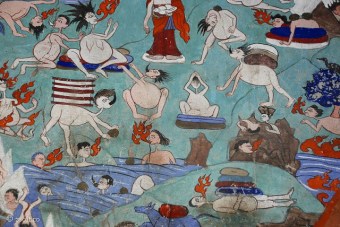 street banners are displaying political speech and not the usual event ads. Our lone Republican woman/city council member is challenging the city to take them down in line with the “offensive” logic used to remove Confederate Statues on public property. Stacy is definitely her own kind of woman and has spent her terms on the city council generally doing things that unnerve a lot of groups.
New Orleans Mayor Mitch Landrieu should explain why anti-abortion banners festoon the St. Charles Avenue neutral ground, since he has decided to be the arbiter of what symbols are so offensive that they must be removed from public property, City Councilwoman Stacy Head said at a recent meeting.
Head didn’t mention the monuments specifically, as she spoke at a committee meeting Wednesday (Jan. 6), but her comments were a clear reference to Landrieu’s push to have Confederate-related statues declared nuisances and removed from public property.
As a woman, Head said, she feels like the banners are a nuisance since they “negatively influence the perception of my civil liberties as a woman. I believe I’m being discriminated against.”
Head asked the administration to explain in writing the process by which the city decides what banners are allowed, and how much money they generate.
The mayor should explain at least that much since, “We are looking to the admin to decide which objects and symbols are appropriate for the city on city property. Which ones offend us. Which ones are negative,” Head said. As a woman, it offends her to have to drive by them and be reminded of the oppression, she said. Does that give her standing to call for their removal?
Head called the banners “political signage for a particular position that I perceive as a nuisance. I perceive it as offensive. I do not see it is a promoting awareness.”
A city spokesman said the city allows “community awareness banners” on city streetlights provided they are not commercial in nature and do not endorse any specific candidate or another political campaign up for a vote. The St. Charles banners did not appear to violate that standard when the application to hang them was submitted, he said.
The banners are the usual fetus porn used by the group.
 So, I hope everything is going okay with you. Let us know what’s on your reading and blogging list today.
Remember, along with the SOTU, we will be live blogging both of the upcoming primary debates. The next Republican debate will be: Thursday, January 14, 2016. The next Democratic debate is scheduled for Sunday, January 17, 2016.
The first caucuses and primaries are in February and are being held in Iowa and New Hampshire respectively.
Hopefully, the Republicans will be tossing a few of their clowns to the curb and we’ll have a better look at their “best” and “brightest”.
Monday Reads: I can’t even …
Posted: January 4, 2016 Filed under: Afternoon Reads | Tags: Bundy, Christian Patriot Defense League, Malheur Wldlife Refuge, militia, Posse Commitatus, Right wing militias 12 Comments Well, it’s the first Monday of the New Year and I’m already wishing I could stay under the covers. Yes, it’s cold and yes, the to do list is full of things I simply don’t want to do.
While I had a nice quiet weekend, the usual angry white male militia suspects were inciting violent over throw of the US Government. Yes. It’s Christian Patriot Defense League time again. The Posse Commitatus crew just never sleeps but dreams those great dreams of federal government conspiracies met by their armed insurrection. You know there’s only a little time left to thwart the nation’s first black president before they have to thwart the nation’s first woman president. They have a bunch of trinkets, signs, and slogans to use before they become outdated.
So, over the weekend Clive Bundy’s spawn decided to join a protest in Oregon on the sentencing of two poachers who basically set fire to federal land to cover up their crimes. The pair received a light sentence from the original judgement so the pair were taken back to court by the federal government. Public protests over the judicial process and the criminal system have been a frequent event recently and are protected by the Constitution unless things get out of hand. So, we’re talking about a group of gun-toting militia types here so a simple protest never suffices.
The ranchers, Dwight Hammond, Jr., 73, and his son Steve, 43, were convicted of federal arson charges, stemming from a pair or fires on federal land near their ranch. The first was reportedly set in 2001 to cover up their illegal poaching of a deer on government property. It burned 139 acres. The second was reportedly set in 2006 as a defensive measure, to protect the ranch from an approaching lightning-sparked wildfire. That arson reportedly endangered volunteer firefighters camped nearby. The government would seek $1 million in damages. (For a deep dive of the backstory read this piece in The Oregonian.)
I’m quoting from a Rolling Stone article that gives a high level outline on the background of what has now become an armed occupation of “the Malheur Wildlife Refuge — a remote, marshy oasis in Oregon’s high 
desert famed for its spectacular migratory birds” to quote author Tim Dickinson. The basic reason for the protest and supposedly the armed takeover and occupation is a Clinton Era law used to extend the sentence of the poacher/arsonists.
The ranchers’ case became a cause celebre in the patriot/militia movement because the pair were sentenced for their arson crimes under a provision of a law called the Antiterrorism and Effective Death Penalty Act of 1996. And they were oddly sentenced twice.
The federal law in question doesn’t just deal with terrorism. It created a five-year mandatory-minimum sentence for arson on federal land: “Whoever maliciously damages or destroys… by means of fire…any…real property…owned or possessed by…the United States…shall be imprisoned for not less than 5 years…”
The first federal judge to handle the case concluded that the mandatory sentence was too stiff and gave the pair far lighter sentences, which they served. But the U.S. attorney in the case called foul; the federal government took the rare step of appealing the sentence. In October 2015, the Ninth Circuit imposed the mandatory minimum, ruling that: “given the seriousness of arson, a five-year sentence is not grossly disproportionate to the offense.” The ranchers are due back in federal prison Monday to serve out their five years each.
But this odd re-sentencing, under a statute that makes it sound like the cattlemen were being prosecuted for terrorism, inflamed the paranoid passions of the anti-government patriot and militia movements, and brought the militants to Burns for a rally on Saturday.
So, protesting is never enough for this bunch of gun-toting, cowboying, gubmint-hating, law breaking white men. The nice people of Burns and the communities surrounding the Wildlife Refuge are quite unhappy being the center of an armed insurrection. You can find two locals that are covering the siege on twitter. One is Michael Oman-Reagan, an anthropologist. (The protest sign pictures are from his feed,) The other is Amanda Peacher who is a central Oregon reporter for OPBS. (h/t to my friend Elaine Leyda for the names.) The national news was a little slow getting there and never know the area. Peacher’s been busy since the take over.
Ammon Bundy emerged from a small brick building at the headquarters of the Malheur National Wildlife Refuge shortly after 11 a.m. Sunday.
He wouldn’t say how many protesters were present at the site of the occupied federal complex, but fewer than 20 people were visible Sunday afternoon.
The leader of the occupation spoke in cool, calm tones as he explained why he and other self-described militiamen broke into and took over the complex Saturday.
“This refuge, from its very inception has been a tool of tyranny,” said Bundy. He believes the federal government overstepped its constitutional bounds in its original purchase of the land back in 1908.
The occupiers said their mission is to put the federal lands under local control, although it’s unclear by what means. Bundy said the protesters have a plan that will take “several months at the shortest to accomplish.”
The refuge is a popular destination for spring birdwatchers, and the headquarters include a visitor’s center, museum and housing.
 Yes folks, a Wildlife Refuge is a “tool of tyranny”. That’s why we now have children as human shields there. Oh, and that’s why they want to overthrow the Federal Government. Remember, these are the dudes whose father has been using Federal land to feed his cattle for years and years and years. Now. mind you, all of this was basically Indian lands when the Bundys got there. But, you know, it’s theirs and they want it back because “LIBerty”.
Despite claims by Cliven Bundy that there are 150 armed militiamen now occupying a federal building in Oregon, his son Ammon Bundy has only about 20 people. Three of Cliven Bundy’s sons reportedly broke into and took over the Malheur National Wildlife Refuge headquarters on Saturday. The men reportedly are heavily armed, have taken children into the occupied area, and have terrorized locals, forcing schools to be closed all this week and other nearby federal buildings to shut down out of safety concerns.
Militia movements are not new to this country. Far-right political movements usually have some aspect of gun-toting, gubmint-hating, cowboying, angry white men and have had so for years. We’ve also had run-ins with them from time to time. You may remember the entire Ruby Ridge thing. Oregon has a history with them.
Despite the talk about supporting the Hammond family in Burns, Oregon, the takeover of the Malheur National Wildlife Refuge headquarters is actually part of a long-standing campaign by radical right-wingers to dismantle federal land ownership in the West. Some elected officials are working through mainstream channels to get lands transferred to state or county governments, or to allow them equal say over their use. But the Malheur takeover seems to be an attempt to spread a tactic of armed federal land takeovers. These armed groups are part of the “Patriot movement”—the successor to the 1990s militia movement—which has seen a rebirth since the election of Barack Obama in 2008.
Like most right wingers, these dudes love them some conspiracy theories and hate them some President Obama but they’ve been like that for some time. If you’re old like me, you’ll remember Possee Comitatus. Most of them are white supremacists so hating on a black president is just a natural by product.
Many of the tactics and talking points being used were popularized in the 1970s by the white supremacist group Posse Comitatus. This group promoted the “Christian Patriot” movement, advocated the formation of “Citizens Militias,” helped forge an idiosyncratic reading of the Constitution, said the county sheriff was the highest elected official that should be obeyed, and opposed federal environmental restrictions.
Many of these gun-toting, gubmint-hating, cowboying angry white men are now Republicans. Hence, we see a posse of very quite Republican Candidates for President with the exception of Marco Rubio.
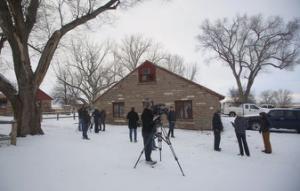
Members of the media tour the Malheur National Wildlife Refuge near Burns, Oregon January 3, 2016. REUTERS/Jim Urquhart
Republican presidential candidates are staying mum as an armed group has taken over part of a national wildlife refuge in Oregon — even those who supported the father of at least one of the group’s leaders, who had his own standoff with the government in 2014, and have called for limits on federal control over Western land.
Some of the issues involved in the standoff — constitutional rights, allegations of federal government overreach and individual liberties — have come to the fore in the GOP primary race. And as Western states are poised to play a larger role in the contest, so has the issue of property rights in a region where the federal government controls about half of the land.
But few candidates seemed willing to wade into any of these issues Sunday as the leaders of the group said they are standing up against government overreach and are prepared to remain there for “as long as it takes.” The group said it is protesting the case of two Oregon ranchers who were convicted of arson in 2012 and are scheduled to report to federal prison Monday. The ranchers were convicted on a broad terrorism charge. Many ranchers and land users in the West lease public land.
Rubio just denounced “lawlessness” this morning but with a militia ass-kissing addendum.
Marco Rubio on Monday addressed the armed standoff at a federal building in Oregon, saying the occupiers “can’t be lawless” and should instead pursue lawful channels to change policy.
A small militia is occupying the headquarters building at the Malheur National Wildlife Refuge in rural Oregon as part of a protest against the federal government and the impending imprisonment of two Oregon ranchers.
“Let me just say, first of all, you’ve got to follow the law,” the Florida senator and Republican presidential candidate said on Iowa radio station KBUR Monday morning. “You can’t be lawless. We live in a republic. There are ways to change the laws of this country and the policies. If we get frustrated with it, that’s why we have elections. That’s why we have people we can hold accountable.”
Rubio said that he did agree, however, that the federal government did control too much land in western states.
“And I agree that there is too much federal control over land especially out in the western part of the United States,” he continued. “There are states for example like Nevada that are dominated by the federal government in terms of land holding and we should fix it, but no one should be doing it in a way that’s outside the law. We are a nation laws, we should follow those laws and they should be respected.”
I guess he doesn’t get that folks that want armed insurrections of the government basically aren’t going to “pursue lawful channels to change policy”. But, as we’ve mentioned before here, Rubio isn’t exactly a Rhodes Scholar.
As an armed militia took over federal buildings and property in Oregon’s Malheur National Wildlife Refuge and declared their willingness to “kill or be killed” on Saturday, one of the group’s best defenses has received little media coverage — their whiteness.
Indeed, the white skin of the armed men and women who’ve taken over the federal property serves as a powerful force field protecting them from the shoot-first, ask-questions-later style of law enforcement that permeates communities of color every day.
There must be no Rhodes Scholars in the majority of news outlets these days. However, New York Daily News does have the highly observant Shaun King.
You know and I know that if a group of heavily armed Muslim Americans took over a federal building, proclaimed they were ready to kill or be killed, and made a public announcement for other armed Muslims from around the country to join them, the National Guard, State Police and FBI would’ve already shut the whole thing down with violent force. I’d be surprised if one person survived.
The FBI has taken charge of law enforcement efforts to bring a peaceful end to the armed takeover of a national wildlife refuge in rural eastern Oregon.
The agency issued a statement late Sunday saying it is “working with the Harney County Sheriff’s Office, Oregon State Police and other local and state law enforcement agencies.”
The Oregon sheriff whose county is at the heart of an anti-government call-to-arms said Sunday the group occupying a national wildlife refuge came to town under false pretenses.
Sheriff David Ward said protesters came to Harney County, in southeastern Oregon, “claiming to be part of militia groups supporting local ranchers.” In reality, he said, “these men had alternative motives to attempt to overthrow the county and federal government in hopes to spark a movement across the United States.”
In a statement issued Sunday afternoon, Ward said he was working with local and federal authorities to resolve the situation as quickly and peacefully as possible.
So, this is–as they say–a developing story. I say we just put a fence around them, a group of Marines, call it a FEMA camp and treat them like the prisoners at Guantanamo who are also enemy combatants. But, hey, that’s just me.
What’s on your reading and blogging list today?
Oh! A little blog business! The small bill of keeping up the TypeKit font for this site is due on the 9th! I could use a few donations. You don’t have to worry about a huge amount since it’s smaller than the October bill for the site itself but any bit helps. It helps us maintain our banner.

 peej
peej Carissa
 bostonboomer
 dakinikat
 ecocatwoman
 jjlo
jjlo mablue2
 Mama Lopez
 peggysue22
 quixote
 skydancingguestblogger
 Mona (aka Wonk the Vote)





Recent Comments