
Thursday Reads
Posted: October 6, 2011 Filed under: #Occupy and We are the 99 percent!, 2012 presidential campaign, U.S. Economy, U.S. Politics | Tags: Christopher Benfry, Elizabeth Warren, Erin Burnett, Ezra Klein, George Will, Glenn Greenwald, Larry McMurtry, Massachusetts Senate race, Mitt Romney, Occupy Boston, occupy Wall Street, Rick Perry, Robert Reich, Scott Brown 21 Comments
Good Morning!! I’m going to be heading back to Boston pretty soon, and I’m looking forward to following developments in Occupy Boston and in the Senate race. They haven’t started an Occupy Muncie protest yet, unfortunately. But you never know. This town is really suffering from the poor economy.
At Mother Jones, there is an interactive map of all the Occupy protests that have sprung up around the country. It’s pretty amazing. Funny thing. A few days ago MJ had a post by Lauren Ellis in which she looked down her nose at the #OccupyWallStreet protesters. Now they have a whole section on the Occupy Movement.
There are still plenty of so-called “journalists” dismissing the protests though. Yesterday, I posted a link to Andrew Ross Sorkin’s piece in the NYT in which he reports his trip to Zuccotti Park at the request of a anonymous nervous Wall Street CEO. Glenn Greenwald skewered Sorkin but good, concluding that Sorkin’s
CEO banking friend is right to be concerned: if not about this protest in particular then about the likelihood of social unrest generally, emerging as a result of their plundering and pilfering. That healthy fear on the part of the oligarchs has been all too absent.
Greenwald also linked to this example of “snotty, petty, pseudointellectual condescension” at The New Republic. Ugh! Read it if you dare.
Yesterday, Greenwald followed up by verbally destroying CNN’s new nighttime host, Erin Burnett.
On her new CNN show on Monday night, host Erin Burnett was joined by Rudy Giuliani’s former speechwriter John Avlon and together they heaped condescending scorn on the Wall Street protests while defending the banking industry, offering — as FAIR documented — several misleading statements along the way. Burnett “reported” that while she “saw dancing, bongo drums, even a clown” at the protest, the participants “did not know what they want,” except that “it seems like people want a messiah leader, just like they did when they anointed Barack Obama.” She featured a video clip of herself explaining to one of the protesters that the U.S. Government made money from TARP, and then demanded to know if that changed his negative views of Wall Street.
This is far from the first time Burnett has served as spokesperson for Wall Street; it’s basically what her “journalistic” career is. She angered Bill Maher a couple years ago when arguing that the rich have suffered along with the poor and middle class as part of the financial crisis, and that it would be wrong to “soak the rich” because they’re already paying so much taxes. She caused Rush Limbaugh to gush over her when she argued on TV in 2007 that all Americans benefit when the rich get richer: “the majority of Americans directly benefit from what happens on Wall Street,” she proclaimed, just over a year before the financial collapse.
In an interview last year with Vanity Fair, she insisted that people on Wall Street do not have private planes and that “there are a lot of stalwart, solid people on Wall Street. There are just a few shady people providing the fodder for big budget movies…”
Meanwhile Beltway Bob Ezra Klein has some advice for #OccupyWallStreet: they should immediately start taking advice from the liberal establishment and focus on developing policy and writing legislation in order to work through the system that they have already rejected.
The Wall Street protests seem to be gathering strength and expanding beyond the geographic limits of downtown Manhattan. The media, too, is finally amplifying the story. Whether they will grow larger and sustain themselves beyond these initial street actions will depend upon four things: the work of skilled organizers; the success of those organizers in getting people, once these events end, to meet over and over and over again; whether or not the movement can promote public policy solutions that are organically linked to the quotidian lives of its supporters; and the ability of liberalism’s infrastructure of intellectuals, writers, artists and professionals to expend an enormous amount of their cultural capital in support of the movement.
There’s lots more, but it’s basically a lecture from someone who just doesn’t get it. And speaking of people who don’t get it, George Will tries to school Elizabeth Warren in his latest column. According to Will, the “liberal project,” which Warren apparently speaks for is designed to destroy rugged individualism.
The project is to dilute the concept of individualism, thereby refuting respect for the individual’s zone of sovereignty. The regulatory state, liberalism’s instrument, constantly tries to contract that zone — for the individual’s own good, it says….
Such an agenda’s premise is that individualism is a chimera, that any individual’s achievements should be considered entirely derivative from society, so the achievements need not be treated as belonging to the individual. Society is entitled to socialize — i.e., conscript — whatever portion it considers its share. It may, as an optional act of political grace, allow the individual the remainder of what is misleadingly called the individual’s possession.
The collectivist agenda is antithetical to America’s premise, which is: Government — including such public goods as roads, schools and police — is instituted to facilitate individual striving, a.k.a. the pursuit of happiness. The fact that collective choices facilitate this striving does not compel the conclusion that the collectivity (Warren’s “the rest of us”) is entitled to take as much as it pleases of the results of the striving.
But isn’t that what Warren is pushing for? For more individuals to have opportunities to make it in America? Really, isn’t it time for George Will to retire?
Meanwhile Warren is leading in the race for the Massachusetts Democratic nomination for Senate, and she appeared in her first debate on Tuesday at my undergraduate alma mater, U. Mass Lowell.
In her first debate as a candidate for U.S. Senate Tuesday night, Harvard law professor Elizabeth Warren declined to criticize her fellow Democratic candidates, taking aim instead at Republican Sen. Scott Brown, whom the Democratic nominee will face, and Wall Street.
“Forbes magazine named Scott Brown Wall Street’s favorite senator. I was thinking that’s probably not an award I’m going to get,” she said to applause and laughter from the audience at the University of Massachusetts-Lowell. Two recent polls put Warren and Brown in a statistical tie.
She also made the audience laugh and applaud with the second question, which asked each candidate how they paid for college, since Brown posed nude for Cosmopolitan to pay.
“I kept my clothes on,” she quipped. She added that she borrowed money to go to a public university and had a part-time job.
Warren also drew applause for her tough talk on Wall Street. “The people on Wall Street broke this country, and they did it one lousy mortgage at a time. It happened more than three years ago, and there has been no real accountability, and there has been no real effort to fix it. That’s why I want to run for the United States Senate,” she said.
Go Elizabeth go!!
Another voice for the middle class, Robert Reich, explains why Wall Street is extremely nervous about the economic crisis in Europe.
If you want the real reason, follow the money. A Greek (or Irish or Spanish or Italian or Portugese) default would have roughly the same effect on our financial system as the implosion of Lehman Brothers in 2008.
Financial chaos….a default by Greece or any other of Europe’s debt-burdened nations could easily pummel German and French banks, which have lent Greece (and the other wobbly European countries) far more.
That’s where Wall Street comes in. Big Wall Street banks have lent German and French banks a bundle.
The Street’s total exposure to the euro zone totals about $2.7 trillion. Its exposure to to France and Germany accounts for nearly half the total.
And it’s not just Wall Street’s loans to German and French banks that are worrisome. Wall Street has also insured or bet on all sorts of derivatives emanating from Europe — on energy, currency, interest rates, and foreign exchange swaps. If a German or French bank goes down, the ripple effects are incalculable.
Read the rest at Huffpo.
There are a couple of interesting reads about Republican candidates at the New York Review of Books. The first is by novelist Larry McMurtry: The Rick Perry Hustle Here’s a brief sample:
What Perry has brought to the Republican muddle thus far is his abundant, if unfocused, energy. He rushes from debate to debate, gives many interviews, gets his picture on the cover of TIME; yet all his politicking is curiously affectless. He makes sounds, but where’s the personality? Hillary Clinton has a personality; so does Sarah Palin. Either of those women could cut Governor Perry off at the knees, and will if given the chance.
It’s not been said so I’ll say it: as a politician Rick Perry is fundamentally lazy, so far as actual governing is concerned, content to run things mainly by sound-bite. He makes lots of decisions but lingers on no issue very long; there’s little follow-through. Clemency, or its absence, is an example. Two hundred thirty-four humans have been executed in Texas on his watch and only recently has he been stirred to a review. He believes that the State Board of Pardons and Paroles is so infallible that there’s no reason for him to lose sleep over the fate of this or that prisoner. The Governor has much more confidence in the Board than the Board has in itself; its members are well aware that even, or especially in Texas shaky verdicts have come down. The Governor, a man with a notably short attention span, has a lot more to think about than the death chamber.
An irony of his sudden emergence as a front-runner is that his few humane decisions—the HPV vaccine, which is safe and helpful, and the tuition credit for the children of illegals, which could help keep gangs of feral children off our streets—are what may sink him with the Tea Party and his own rabid right wing. And this is the wing he has assiduously cultivated his whole political life.
The other NYRB article of interest is by Christopher Benfry: Mitt, We Hardly Knew Ye!
We’re feeling vulnerable and surly these days in western Massachusetts, as the leaves turn yellow, the Red Sox fade, and winter looms. Our corridor of New England along the Connecticut River endured, during the summer months, a ruinous tornado in Springfield, an earthquake, of all things, and Hurricane Irene, which knocked out roads and historic covered bridges in our hill towns and across neighboring Vermont, and left a lot of people homeless and adrift. It’s our Katrina moment, we sometimes think, with slightly grandiose self-pity, as Republicans in Congress demand budget cuts if FEMA is to pay for disaster relief in the blue states.
We don’t see much of Mitt Romney, our ex-governor, in these troubled times. Then again, we never did. Our most indelible memories are of Mitt leaving—“the sight of Mitt’s back,” as a friend of mine put it, as he went off to lay the groundwork for yet another campaign. Mitt ran for the Senate against Ted Kennedy in 1994, lost, and left the state to salvage the Salt Lake City Olympics. When he returned to run for governor in 2002, he had to go to court to prove that he sort of lived in Belmont, outside Boston. Then, after a couple of years in the state house, he left again to campaign for the presidency, spending two thirds of his time out of state in 2006. Mitt has sold his house in Belmont and now lives in the important primary state of New Hampshire (at his estate on Lake Winnipesaukee) or San Diego or maybe Utah—anywhere but Massachusetts.
In the Republican debates, Mitt pretends that his ties to Massachusetts are tenuous. Mitt’s greatest achievement as governor, the Massachusetts health care system (which passed with Ted Kennedy’s support and two dissenting votes in the state legislature), is now his greatest liability among Republicans, who see it as a stalking horse for Obamacare. Mitt now claims it was right for our quirky state but not for the nation. He has yet to explain why.
When Mitt trumpets his experience in American business, he rarely mentions that Bain, the consulting and investment conglomerate in which he amassed his $200 million fortune, is a Boston firm.
And so on…Romney used our state as a springboard and then denied even knowing us.
I’ll end there for today. What are you reading and blogging about?
Late Night Post: a Rogue and/or Broken Nation
Posted: October 3, 2011 Filed under: 2012 presidential campaign, Barack Obama, Civil Liberties, Civil Rights, Congress | Tags: corruption, executive power, kleptocracy, unchecke executive power 16 Comments There’s a pretty good amount of twitter chatter and blog posts on these thoughts at interfluidity by steve randy waldman. I understand the draw because I’ve had very similar thoughts and expressed many of them recently. I thought this would be a good discussion post to follow BostonBoomer’s last post too since it’s very much related to the post called “an echo”.
I no longer trust my own government to be the provider of a civilized society. No government is perfect or without corruptions. But in 2007, I thought I lived in a remarkably well-governed nation that had gone off-kilter under a small and mean administration. In 2011, I view my government as the sharp edge of an entrenched kleptocracy, engaged in ever more expansive schemes of surveillance and arrogating powers of ever less restrained brutality. At a visceral level, I dislike President Obama more than I have disliked any politician in my lifetime, not because he is objectively worse than most of the others — he is not — but because he disproved my hypothesis that we are a country with basically good institutions brought low by poor quality leadership. Whenever I hear the President speak and am impressed by the quality of his intellect, by his instinct towards diplomacy and finding common ground and rising above petty struggles, I despair more deeply. Not just because a leader of high quality failed to restore passably clean and beneficient government. It is worse than that. The kleptocracy has harnassed this man’s most admirable qualities and made them a powerful weapon for its own ends. He has rebranded as “moderate”, “adult”, “reasonable”, practices such as unaccountable assassination lists and Orwellian nonhostilities. He has demostrated that the way grown-ups get things done in Washington is by continually paying off thieves in suits. Perhaps it is unfair to blame Barack Obama for all this. Maybe he has done the very best a person could do under our present institutions. But then it is not unfair to detest the institutions, to wish to see them clipped, contained, or starved.
This message is followed by a mea culpa expressing profound regret for supporting the Bush Administration and the Iraq War. Also, there’s a link to the Salon article“The due-process-free assassination of US citizens is now a reality” from Glenn Greenwald which is something we’ve previously discussed. What drug me to the post was a response over at The Atlantic by Conor Friedersdorfer who was just quoted on BB’s post. We’re treated to some of the top ten abysmal hits of the past few years. The bailout of banks while their bad business models still wreck havoc on our neighbors and in our cities and towns is there. The normalization of torture and spying on citizens is listed plus a few other things that I’ve come to view as a bigger problem now than the issues surrounding Watergate and Vietnam were then.
We’ve been lied to before. We’ve had a few of our citizen’s rights stomped about but nothing quite so systematic and unchecked. It also seems that our institutions and especially our courts were resilient enough to stand their grounds in the past. There were people who stood on our principles. I’m not seeing any institutional response to the lying and executive branch power grab from Congress or the Courts or the loudest and most followed parts of the Media.
We’ve had absolutely no recompense or justice for the atrocities against liberty that we’ve experienced since 9/11. None at all. This is what led Fiedersdorfer to ask if we were suffering from rogue leadership or broken institutions. What ever the source, we’ve been acting like a rogue and broken nation for nearly a decade and it’s as worrisome as it is depressing. He argues that we’ve had broken leadership during this century and that our institutions will heal. I only wish I had his optimism.
Before pinning the blame on American institutions, let’s ponder how radically different the status quo would be if we merely adhered to longstanding laws and norms, rather than permitting our leaders to flout them in the name of protecting us from terrorism or financial collapse.
Had the Bush Administration followed the law, it never would have tortured prisoners or started secretly spying on American citizens without a warrant. If Barack Obama was as committed to fulfilling our treaty obligations as pushing his domestic agenda in an optimized political climate, he’d have investigated and prosecuted the Bush officials complicit in torture. As President Reagan wrote upon sending the Convention Against Torture to the Senate that ratified it, “Ratification of the Convention by the United States will clearly express United States opposition to torture, an abhorrent practice unfortunately still prevalent in the world today. The core provisions of the Convention establish a regime for international cooperation in the criminal prosecution of torturers relying on so-called ‘universal jurisdiction.’ Each State Party is required either to prosecute torturers who are found in its territory or to extradite them to other countries for prosecution.”
In Libya, where Obama violated the War Powers Act, and in various countries where President Obama is waging undeclared drone wars, more scrupulous adherence to the law would force radical changes in American behavior — as would a modicum of congressional leadership, since the body has for years abdicated its responsibility. The Founders envisioned three branches of government acting as checks on one another, the members of each zealously guarding their authority and pushing back against excesses committed by their fellow branches.
Friday Reads
Posted: September 30, 2011 Filed under: 2012 presidential campaign, Catfood Commission, collective bargaining, Congress, financial institutions, Health care reform, Labor unions, morning reads, Republican politics, Republican presidential politics, SCOTUS | Tags: Bachmann running out of campaign funds, budget cuts, Collin Woodard, GOP spending cut priorities, Labor Unions, Mortgage modification mess, occupy Wall Street, SCOTUS and the health care reform law, US regions 18 Comments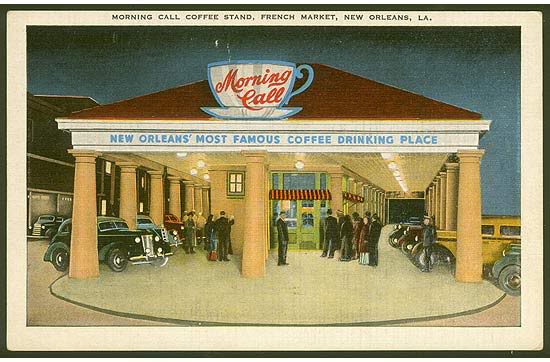 Good Morning!
I can hardly believe we’re headed into the last quarter of 2011. Such a year we’ve had!
So, the GOP is going after some of the things for which I will happily contribute tax dollars. They’ve got some pretty whacked values as far as I’m concerned.
Setting a collision course with Democrats that could drag out for months, House Republicans on Thursday unveiled plans to cut federal money for job training, heating subsidies and grants to better-performing schools.
The draft measure for labor, health and education programs also seeks to block implementation of President Barack Obama’s signature health care law, cut off federal funds for National Public Radio and Planned Parenthood, and reduce eligibility for grants for low-income college students.
Democrats and tea party Republicans opposed the bill, blocking it from advancing through even the easy initial steps of the appropriations process on Capitol Hill. Instead of moving through the Appropriations Committee and the House as a whole, the $153 billion measure is instead expected to be wrapped into a larger omnibus spending bill this fall or winter that would fund the day-to-day operating budgets of Cabinet agencies.
Negotiations between Republicans controlling the House, the Democratic Senate and the White House are sure to be arduous. The measure is laced with conservative policy “riders” opposed by Democrats that would affect worker protections under federal labor laws and block the Education Department from enforcing rules on for-profit colleges that are often criticized for pushing students to take on too much debt.
“It looks like we’re in for a long, difficult process,” said Rep. Rosa DeLauro, D-Conn.
House Appropriations Committee Chairman Harold Rogers, R-Ky., said excessive and wasteful spending over the years had put many programs and agencies on “an irresponsible and unsustainable fiscal path.”
Actually all of those Dubya Tax cuts and wars and letting Wall Street Run amok with speculation instead of investment is what put us on that “irresponsible and unsustainable fiscal path” and most of them voted for all of it. I’m not willing to bail out any more of their donor base with my hard earned dollars by defunding the future of our children. What on earth can we do about these evil people and the feckless dems that won’t fight them?
The court fights over the new health care law have been stepped up and SCOTUS has come into play in a big way. Which of the justices are likely to uphold AEIcare-cum-ChafeeCare-cum-DoleCare-cum-RomneyCare-cum-Obamacare?
The four more liberal justices on the court — Ruth Bader Ginsburg, Stephen Breyer and Obama appointees Sonia Sotomayor and Elena Kagan — should have no trouble reading the Constitution as bestowing broad powers on the federal government to regulate all manner of commerce. Although the court in recent years has pinched back congressional efforts to use the Commerce Clause to promulgate laws prohibiting guns near schools and those targeting violence against women, these were clearly non-commercial activities and quite different from the health-care law and its regulation of the medical insurance marketplace. Stronger and more directly applicable precedents remain, in which the court blessed the government’s regulation of wheat and marijuana production because these activities had an impact on interstate commerce.
The marijuana case (known formally as Gonzales v. Raich) may be particularly important because two of the more conservative justices — Antonin Scalia and Anthony Kennedy — joined with their more liberal colleagues to uphold the law under the government’s Commerce Clause powers.
Chief Justice John G. Roberts Jr. and Samuel A. Alito — both George W. Bush appointees — shouldn’t be counted out either. Roberts and Alito joined an opinion in 2010 that recognized the government’s “broad authority” to enact a civil detention scheme for sexual predators under a different constitutional provision. This provision allows federal lawmakers “to make all laws which shall be necessary and proper” to uphold the powers assigned to Congress — including the power to regulate interstate commerce.
Michelle Bachmann’s campaign is running out of cash. Even the NY Post thinks she may not make it to the Iowa Caucuses.
Will Michele Bachmann make it to Iowa? Insiders are whispering that the Tea Party darling’s financials are grim and she may be out of the race before she makes it to the Iowa caucus in February, even though she has a strong base in the state. Sources tell us say Bachmann’s skeletal staff are holding their collective breath until the deadline to disclose her fundraising report on Oct. 15. Meanwhile, we hear a computer vendor has called her campaign headquarters threatening to shut down the power due to an outstanding bill. Sources say she had about $400,000 at the beginning of September, but also stacks of bills. “She does not like to ask for money. She should have been focusing on big donors about three months ago,” a source said. “She’s only cultivated low dollar donors with direct mailings and that’s hurt her.” But at a rally in Virginia yesterday, Bachmann declared that she does not intend to back out of the race. “We intend to be the comeback kid in this race,” she said. Her rep said, “None of that is true.”
There’s a two part series at Bloomberg written by Collin Woodard on how the U.S. is really a country of regions. Part One is here. Part Two is here. It’s a really interest read and something I have thought about for some time as I’ve tried to find some place in this country where I can live in peace. For one, I’m trying to leave any region that’s described as bible buckle, bible belt, or bible anything!
Forget the state boundaries. Arbitrarily chosen, they often slash through cohesive cultures, creating massive cultural fissures in states like Maryland, Oregon and New York. Equally burdensome are the regional designations with which we try to analyze national politics — the Northeast, West, Midwest and South. They’re illusions masking the real forces driving the affairs of our sprawling continent: the 11 regional cultures of North America.
These 11 nations — Yankeedom, Tidewater, New Netherland, New France, Deep South, Greater Appalachia, the Midlands, First Nation, the Far West, the Left Coast, El Norte — have been hiding in plain sight throughout our history. You see them outlined on linguists’ dialect maps, cultural anthropologists’ maps of material culture regions, cultural geographers’ maps of religious regions, campaign strategists’ maps of political geography and historians’ maps of the patterns of settlement across the continent. I’m not the first person to have recognized the importance of these regional cultures. In 1969, Kevin Phillips, then a Republican campaign strategist, identified the distinct boundaries and values of several of these nations and used them to accurately prophesize the Reagan Revolution in his “Emerging Republican Majority,” a political cult classic.
More and more groups are joining the move to take on and occupy Wall Street. The New York Transportation Workers are the latest to announce they will join the protest today.
Occupy Wall Street has been picking up some decent support from unions in the past few days. Yesterday we reported that the Teamsters Union declared their support for protestors, and we also found out that the United Pilots Union had members at the protest demonstrating in uniform.
Today we learned the Industrial Workers of the World put a message of support on their website as well.
UPDATE: Verizon union workers have joined the protestors in NYC.
McClatchy reports that mortgage modification are still a mess even after four years. Quelle surprise!
Today there are at least 4.2 million homeowners who, like Palomo, are late on their mortgage payments or somewhere in the delinquency and foreclosure process. The first wave of foreclosures came during the 2008 financial crisis as subprime mortgages given to weak borrowers imploded. Now the subsequent economic downturn and high unemployment keep housing depressed.
The administrations of George W. Bush and Barack Obama both offered incentives for lenders to help homeowners modify their mortgages. Those efforts haven’t achieved much.
And four years into the housing crisis, banks and their bill collectors, known as mortgage servicers, are still under fire for their response to troubled borrowers.
“I would say they are somewhat better than they were three years ago, but still woefully inadequate to meet the demand, given the still remarkably high levels of distressed borrowers they are attempting to deal with,” said Paul Leonard, director of the California office of the Center for Responsible Lending, a Durham, N.C.-based advocacy group.
From December 2009 through June, more than 1.6 million government-backed mortgage modifications had been started, but only 791,000 became permanent. These numbers remain well below the goal of 4 million modifications that the Obama administration set for itself.
That should give you a few juicy bits to chew on with some coffee!! What’s on your reading and blogging list today?
Wall Street Politics
Posted: September 28, 2011 Filed under: 2012 presidential campaign | Tags: Jamie Daimon, Wall street poltiics and greed 8 Comments
Wall Street Fat Cats Gone Wild and Rogue
There are several interesting headlines up today connecting a few dots between Wall Street, the third estate, and politicians. The New York Post (yes I know) indicates that Jamie Dimon may have bolted from the Obama stable to the Romney Ranch. This is a curious continuation of the meme passed around last year that uber sensitive shadow bankers have had their feelings hurt over a few speeches given by the President who uses populist rhetoric to shore up support. I just have never managed to buy that some one like Dimon could get his feathers in a ruffle over a little name calling. It’s probably pay back for the Dodd-Frank Law which is a watery version of its original intent, but still more toothy than the FIRE contingent would like to see. How long will it take before the Health Insurance Industry and Bankers manage to fee and co-payment us all into the poor house? What role does Dimon see that Romney could play in that? That’s a more germane question to me.
While Dimon’s spokesperson declined to comment, a JP Morgan insider tells us that Dimon has not attended an Obama fund-raiser and has not made any contributions to his campaign during this election cycle. And Dimon has met privately with many of the Republican presidential candidates.
Political insiders are buzzing that a defection would signal further Wall Street hostility toward Obama, who famously called them “fat cat” bankers in 2009. Dimon responded, “I don’t think the president of the United States should paint everyone with the same brush.”
One insider said, “There is not a person on Wall Street, with the exception of the genetic Democrats, who would get anywhere near supporting Obama. The hostility to the administration is huge. Dimon will continue to look bipartisan, then work behind the scenes to get a Republican elected.”
Again, I think this right wing meme about hurt feelings is just that. The bottom line here is they want people that will neuter Dodd-Frank and the rules that control excessive fees and such. They would also like to capture the new agency set up by Elizabeth Warren. My belief is this group is after Warren already with bizarre stories on her TARP role. Politico appears to be doing some of the right wing smear jobs for Wall Street interests. BTW, did you know that more referrals to Politico come via Drudge than Google? Check this out.
Minx put this link to one of Greenwald’s better pieces downthread on the morning reads. I thought it so good that I’d add it to this post because it really shows how the Wall Street interests are driving media coverage as well as other things. It has to do with the tepid media coverage of the Wall Street Protests. He relates the prog coverage to earning credentials through hippy bashing.
Nor is it surprising that much of the most vocal criticisms of the Wall Street protests has come from some self-identified progressives, who one might think would be instinctively sympathetic to the substantive message of the protesters. In an excellent analysis entitled “Why Establishment Media & the Power Elite Loathe Occupy Wall Street,” Kevin Gosztola chronicles how many of the most scornful criticisms have come from Democratic partisans who — like the politicians to whom they devote their fealty — feign populist opposition to Wall Street for political gain.
Some of this anti-protest posturing is just the all-too-familiar New-Republic-ish eagerness to prove one’s own Seriousness by castigating anyone to the left of, say, Dianne Feinstein or John Kerry; for such individuals, multi-term, pro-Iraq-War Democratic Senator-plutocrats define the outermost left-wing limit of respectability. Also at play is the jingoistic notion that street protests are valid in Those Bad Countries but not in free, democratic America.
A siginificant aspect of this progressive disdain is grounded in the belief that the only valid form of political activism is support for Democratic Party candidates, and a corresponding desire to undermine anything that distracts from that goal. Indeed, the loyalists of both parties have an interest in marginalizing anything that might serve as a vehicle for activism outside of fealty to one of the two parties (Fox News‘ firing of Glenn Beck was almost certainly motivated by his frequent deviation from the GOP party-line orthodoxy which Fox exists to foster).
The very idea that one can effectively battle Wall Street’s corruption and control by working for the Democratic Party is absurd on its face: Wall Street’s favorite candidate in 2008 was Barack Obama, whose administration — led by a Wall Street White House Chief of Staff and Wall-Street-subservient Treasury Secretary and filled to the brim with Goldman Sachs officials — is now working hard to protect bankers from meaningful accountability (and though he’s behind Wall Street’s own Mitt Romney in the Wall Street cash sweepstakes this year, Obama is still doing well); one of Wall Street’s most faithful servants is Chuck Schumer, the money man of the Democratic Party; and the second-ranking Senate Democrat acknowledged — when Democrats controlled the Congress — that the owners of Congress are bankers. There are individuals who impressively rail against the crony capitalism and corporatism that sustains Wall Street’s power, but they’re no match for the party apparatus that remains fully owned and controlled by it.
It’s important to remember that we’re unlikely to get anything but corporation approved coverage of things from corporate-owned media outlets. Their stock, their financing, and as a result, their decisions are likely to be highly colored by keeping their funds and jobs. This could also explain why the police appear to have marching orders to capture any independent media types near the protests with cameras.
Although I’m not a Marxist, it still gives me no end of fascination that the Marxist view that the monied and banking interests would take down capitalism by influencing institutions through financial control of those institutions seems to be happening. In deed every one from democratically elected politicians, to industry CEOs that actually produce products or services, to the press now seem beholden to their mortgage holders and influenced by their potential funding veto. I’m still thinking we should just be honest about this and see that each journalist, politician, and CEO basically put their souls up to the highest bidders when they seek the fantastic amount of money it takes to be a power broker these days. Every one owes their underwriters something in return and the middle and working class and their interests appear to be serving as collateral in the quest to leverage power and wealth.
The Politics of No Real Choice
Posted: September 27, 2011 Filed under: 2012 presidential campaign, abortion rights, Surreality, U.S. Politics | Tags: money in politics, single issue crusaders, special interest groups, the lesser of evils, voting 24 Comments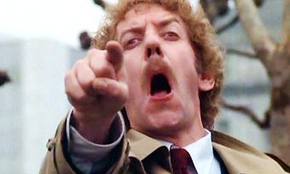
One of the moments where I'm outed as Gay Friendly and Pro Choice in Nebraska.
Each year, I go to vote and am struck by the number of votes I cast that basically represent the least of evils. What is it about our system that continually produces an entire line up of candidates that makes me want to choose none of the above? Well, that’s a some what rhetorical question because my answer is that we have two demons in the process right now. The more salient question is how do we exorcise the demons?
The first reason we get terrible candidates is purity pledges forced by special interest groups. I’ve got my personal example on hand again for you. You have no idea what it’s like to be a Republican trying to run for an office and be pro-choice or gay friendly. You find out really quickly that there are people living within blocks of your house that are worse than the Taliban. There’s a huge chance that they are sitting in the pews of churches near you and your children go to school with them. They just look normal and sane until they’ve determined you’re their enemy and apostate on some near and dear creed which they feel the need force on us all. Then, you start living through Invasion of the Body Snatchers and you see that Donald Sutherland look in their eyes, hear their screeches, and show up on the bad end of that accusatory finger.
This sort’ve goose step ideological mentality ensures only the worst of the worst come through or people that refuse to stand up for what they believe least they get on the receiving end of a bloody awful witch hunt. When I ran for office I was told over and over again that it would really make my life a bit easier if I’d give up my principles and not try to buck the crazy base on that one issue. Believe me, that base is crazy. They will say and do anything to stop you and I mean that literally to the most extreme degree. Now there are tax pledges, anti-GLBT civil rights pledges, pro “only my definition of marriage” pledges, “guns and no butter” pledges and all others sorts of pledges you have to sign to pass muster. Purity tests do not bring normal people into a process. Normal people have nuances and subtleties and recognize that life has them too.
The second reason is the money. It takes a lot to buy yourself a seat in a statehouse, a mansion, or any where near Capital Hill. This also puts you in the position of having to listen a little more closely to the people that fund you instead of the people that vote for you. This gives some advantages to incumbents. You almost have to wait for their inevitable sex scandal to get a foot in the door. Well, that or they piss off one of those wild eyed special interest groups who go on a holy crusade. Most incumbents have inoculated themselves against these things unless a new group of single minded crusaders–like the tea party–rises to the occasion. Look at the Tea Party. That is basically an insurgency funded by the Koch Brothers who specialize in unleashing demons that wreck our government so they can become more rich and powerful. They foist crazies and money on the process.
I guess I’m talking about this because there’s yet another poll that says a pox on both your houses. Regular voters sending poxes never seem to work as well as the poxes cast by multibillion dollar corporations and holy war crusaders, I guess. Polls continually say the majority of people in this country think that neither part is actually good for the country or its economy right now.
A CNN/ORC International Poll released Tuesday indicates that 56 percent of Americans say the congressional Republicans’ policies will move the country in the wrong direction, with 53 percent of the public saying the same about policies of the Democrats in Congress.
“Men and women agree that the GOP policies are a bust, but women are split on the Democratic policies while men continue to dislike them. There is a generation gap as well, with younger Americans tending to favor the Democrats’ policies and older Americans more in the GOP camp,” says CNN Polling Director Keating Holland.
The survey was conducted Friday through Sunday, during the congressional standoff between Democrats and Republicans over disaster relief funding threatened to possibly force a federal government shutdown. An agreement preventing a government shutdown was reached late Monday night.
According to the poll, a majority of Americans don’t like either the Republican Party or the Democratic Party and the favorable ratings for the tea party movement are even lower.
My father has adopted the standpoint of voting all incumbents out. My problem with that strategy is that it brings in the worst of the purity politicians who don’t comprise and still wind up with full coffers. The other thing is that when you prove you’re a good water bearer for the party, they’ll gerrymander a district for you that’s like kryptonite to even the most super of challengers. Again, some part of the system will protect you. Either a group like the values crusaders or the biggest industry in your state will let you do the worst job in the world as long as you go along with their strict and narrow agenda.
Here’s a good example on a potential presidential candidate I really can’t stand. The gray flannel suit crowd of the Republican party likes Chris Christie for some odd reason. They’re pleading him to jump into the race. Already, there’s a list out of why he won’t pass the purity tests even though he seems like a fairly conventional republican candidate to me. Evidently, he’s got the Perry problem on immigrants and worse than that, he’s shown a little laxity on the Guns and no Butter republican mantra.
HANNITY: Are there any issues where you are, quote, moderate to left as a Republican?
CHRISTIE: Listen, I favor some of the gun-control measures we have in New Jersey.
HANNITY: Bad idea.
CHRISTIE: Listen, we have a densely-populated state, and there’s a big hand gun problem in New Jersey. Now, I don’t support all the things that the governor supports by a long stretch. But I think on guns — certain gun control issues, looking at it from a law-enforcement perspective, seeing how many police officers were killed, we have an illegal gun problem in New Jersey.
So, Christie has a purity problem in key areas that may stop him from getting through a primary. His name may not make it onto one of those little polling cards of marching orders they hand out in churches and corporate offices. Now, I’m not fond of Tony Christie Soprano, but you have to give him credit for being a little out of the box on a few items in a party that demands purity. Notice how Hannity slams him for his pragmatic stance on guns in NJ.
When I finally noticed I was continually voting democrat out of the lesser of two evils strategy, I switched parties when I got down here to New Orleans. (Now, I’m an independent.) Democrats seem to be willing to vote for any one that says the right things and does the complete opposite when in office. I don’t find that particularly admirable either. There’s a certain amount of consistency in goosestepping ideologues that you just don’t see in people that are forced to continually vote for the lesser of evils. I am truly tired of voting for the candidate that I perceive will damage the country the least. That strategy explains like 98% of my votes since I turned 18.
This brings me back around to the question of how do we change this? How do we get the people that benefit from organizations that can megafund them to put down the crack pipes? How do we stop these single issue crusaders from continually sending us their zombies? What’s a voter to do? My voting strategy next year is looking to be stay home because no matter how I try, I’m still voting for evil. I shouldn’t have to vote for evil even when it’s a lesser evil.

 peej
peej Carissa
 bostonboomer
 dakinikat
 ecocatwoman
 mablue2
 Mama Lopez
 peggysue22
 quixote
 skydancingguestblogger
 Mona (aka Wonk the Vote)



 Sky Dancing
Recent Comments