
The Ripple Effect
Posted: April 30, 2012 Filed under: just because, open thread | Tags: ALEC, Birth Control, Climate change, etc, Financial Crisis, fracking, Health care, immigration, making ripples, overwhelmed, pay equity, poluution, union busting, war, what to do, Women's Rights 51 Comments
I don’t know if it’s simply the election cycle or what, but more and more frequently the world seems to be spinning out of control. Problems and/or issues everywhere. Which one to prioritize? How to “fix” what is going wrong? Is it leaving you with an overwhelming sense of helplessness? It does me, all too often.
Here is a list of the serious issues that are bombarding my senses:
- The economy
- Unemployment
- Poverty
- Wall Street’s continuing abuses
- Wealth inequality
- Debt
- Offshore oil drilling
- Fracking
- Renewable energy
- The condition of our oceans
- Climate change
- Endangered species
- Pesticides, herbicides
- Food safety
- Pollution of our air and water
- Violence against women throughout the world
- Pay equity
- Abortion rights
- Access to contraception
- ALEC’s legislative initiatives
- ALEC’s co-opting of our political process
- The need for campaign finance reform
- Voting rights
- Union busting
- Immigration
- Health and health care
- The dismantling of our educational system
- The privatization of the prison system
- Hate speech & hate crimes
- Gun rights & gun control
- The billions of non-human animals killed each year worldwide, not only for food, but on our streets, in our homes and in our shelters
- Wars, seemingly everywhere
- The aftermath and attempted recovery following both natural and man-made disasters
There is little doubt in my mind that most people have shut down and they have chosen to ignore many, if not all of these critical issues. For so many others they don’t have a choice. They don’t even have the time or energy to think about them because they are struggling to survive, to put food on their tables, to pay the bills and keep a roof over their heads. Their focus is on their personal problems, not the bigger issues that are taking a heavy toll on their day to day lives, their future and the future of their families.
What can we do? How can the majority of the people on the planet, especially those whose personal resources are sorely limited make a difference, not only in their own lives, but for the future of all life on our planet? Here are a few simple each of us could try:
- Educate ourselves so we make conscious decisions that will benefit our finances, our health and the impact we have on our environment, whether it’s our home, our community or the planet.
- Reduce the amount of plastic, especially disposable plastic, that we buy. For example, opt for fresh foods over processed, prepackaged foods when possible. Use refillable containers instead of individual bottles of water. Avoid individually packaged food items – opt for a full size bag or container. Separate into individual servings at home. Don’t buy disposable plates and cups. Recycle and/or reuse plastic – and don’t forget to cut up those plastic rings that hold bottles and cans together – and return plastic bags to the stores for recycling. Take reusable bags when we shop, instead of the store’s plastic bags.
- Donate unused items to community groups or thrift stores.
- Pick up trash when we see it: in our yards, in the parking lots, on the beach, or participate in an annual beach or waterway cleanup in our area.
- Volunteer our time in schools, nursing homes, soup kitchens, for non-profits or wherever our time and expertise can be used.
- Eat lower on the food chain. It’s good for our health. It’s good for the planet, and it’s good for the animals.
- Write letters or send emails to our local media, to our elected officials, and to policy makers. Sign up for the action alerts of groups who address issues of concern to us.
- Adopt a homeless animal from a shelter or local rescue group. It will save a life and the animal will enrich ours. And if you can’t adopt, consider volunteering for a local rescue group or even fostering an animal until he/she is ready to be adopted.
Many of you are probably already doing some or all of these, or you may be doing others that I haven’t mentioned. By all means, if you have additional personal solutions or tips, please add them in the comments. Most of these ideas will only cost a bit of your time. Many of them will actually save money. I know that even doing what seems like something small, I feel better. I feel like I am doing my part, however little it might be. We rarely know the full impact of the choices we make on a daily basis, or how our actions might influence others. Even if we can’t always make waves, we can, at least, generate some ripples.
The State of Our Union
Posted: April 18, 2012 Filed under: The Right Wing | Tags: contraception, fear, guns, liberals, Obama, Republicans, Tea Party, the Apocalypse 36 CommentsTo put it simply – CRAZY! 
I’m beginning to think that there must be something in the drinking water. The Right Wingnuttery has risen to unforeseen heights in the past few weeks. Tracing its beginning isn’t an easy task. I would imagine that, based on our differing ages and our personal experiences that it will be difficult to reach a consensus on exactly what caused the extreme right turn our politics have taken. Let me put forth some of my personal suggestions, not in any particular order:
- The election of the B movie actor, Ronald Reagan
- Jerry Falwell and the Moral Majority
- Repeal of the Fairness Doctrine
- The consolidation of the media
- The rise of the Mega-Churches
- Rush Limbaugh and his imitators getting their own bully pulpit on the radio
- Gingrich’s Contract ON America
- The stealing of the presidency by George & Jeb Bush & the Supreme Court
- 9/11
- The plucking of Sarah Palin from the frontier in Alaska
- The Fox News Channel
- The birth of the Tea Party
Some of these may qualify only as fuel for the fire as opposed to being actual triggering events. Feel free to add to the list. I’m sure that I’ve forgotten something critical to explaining the mass hysteria that surrounds us.
There is hardly a day that goes by that I don’t spend some time trying to understand the mean-spirited, venomous attacks on nearly everything I support. Those thoughts are often interrupted by being blind-sided by something else coming under attack. Let me give you just one recent example that left me speechless and more confused than ever.
One of my employees and I were having a discussion about some mail returned by the post office. She began by complaining about the post office, saying that the first thing she would do would be to get rid of the postal union.
Okay, to some that might not be a moment of confusion. Her position, however, astounded me. I knew already that she is firmly planted in the Right Wingnuttery camp, but her vehement opposition to the postal union surprised me. Her husband had worked for the phone company which, because of the CWA, provides its employees with good paying jobs, excellent health care coverage and generous retirement benefits. I knew this because I had once worked for the same phone company as her husband. He was able to take early retirement with a 6 figure bonus package. His job permitted them to live more than comfortably for most of their lives.
None of the benefits this family enjoyed would have been possible without the existence of the CWA. How could my employee not support unions? Where was the logic and reason? My conclusion: she and the rest of the Wingnuttery bunch do not operate on either logic or reason. Apparently, she and the others who vote for Right Wing candidates have swallowed whole the propaganda fed to them by Fox, Rush, the Republican leadership and their preachers. That’s the only conclusion I’ve been able to come up with. If you have a clue, please share.
I can only shake my head and live with fear for the future of America and the rest of the world. While these Right Wingers look forward to The Apocalypse foretold in their sacred book, I fear the inevitable apocalypse their actions and choices are driving us toward. I’m grateful I’m on the other side of 60 and hope that younger, stronger, reasonable people can hold off this cataclysm for another 10 or 20 years.
I’ll leave you with two things. The first is a political awareness test given by The Pew Research Center recently. I urge you to take the quiz and then look at the results, which are shocking. I don’t know if the majority of the respondents aren’t interested in politics, are terribly misinformed or a combination of both.
And then some of the pictures in a recent email from the employee I referenced above.

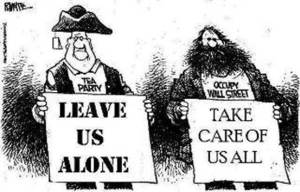
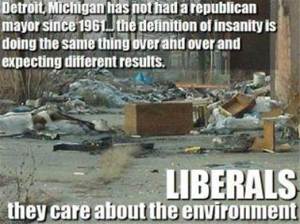







Goodbye Flipper?
Posted: April 9, 2012 Filed under: Environment, Environmental Protection, Gulf Oil Spill, just because | Tags: baby dolphin deaths, Cape Cod, dolphins, offshore oil drilling, oil companies, oil spill, Peru, seismic sound waves, sonar 9 Comments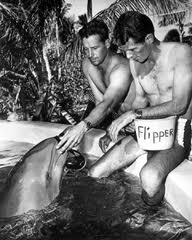
Rick O'Perry, right, and another dolphin trainer with Flipper
Flipper, an Atlantic bottle-nosed dolphin, was one of the biggest television stars from 1964 – 1967. There were actually 4 dolphins who played Flipper on the screen. Most of the series was filmed behind the scenes at the Miami Seaquarium on Virginia Key in Biscayne Bay. The success of the Flipper franchise made dolphins a lovable species around the world. The true story of Flipper, the dolphin and the making of the television series, is told by Ric O’Barry, Flipper’s trainer, in his book Behind The Dolphin Smile. For those of you who were born after the 1960s, you may have seen dolphins in captivity at marine parks or even had the opportunity to swim with dolphins at one of these attractions. (NOTE: I do not support dolphins in captivity)
Due in large part to people’s exposure to Flipper or dolphins in captive environments, there has been increased interest in and concern for dolphins around the world. Since the beginning of this year dolphins worldwide have been stranding themselves and dying in record numbers. The reasons for these deaths are slow in coming. Bear in mind that the numbers listed below are like the tip of an iceberg. Only those dolphins found onshore are listed. Those who died at sea, whose bodies were never discovered and/or recovered are not included in the mortality/stranding counts.
THE GULF STATES – GULF OF MEXICO – February, 2010 – now
When the first report of the explosion and oil leak of the Deepwater-Horizon in the Gulf of Mexico was announced, I knew that we were about to witness one of the greatest environmental disasters in the history of the U.S. It had the potential to outpace the Exxon-Valdez spill off the coast of Alaska – and it did. In case you never saw the official mortality record from the U.S. Fish & Wildlife Service, their last report from April, 2011 lists the statistics on birds, sea turtles and marine mammals impacted.
Of course, those numbers don’t tell the whole story. They don’t include unrecovered animals, nor the impact on breeding or toxins passed on to the offspring of the survivors, nor the poisoned food sources available to the survivors. Please don’t get me wrong. The people living in the area are exposed to the same toxins, but they, at least, may be treated for the illnesses that result from their exposure. And, the people aren’t living in the water, surrounded by the oil and corexit, a toxic substance used to disperse the oil. People also can choose what they will eat, which isn’t the case for the birds, fish, turtles and marine mammals living and swimming in this toxic soup.
Since February of 2010, 693 dolphin deaths have been documented in the Gulf of Mexico. A good compilation of the news coverage can be found at Reef Relief.
An ongoing die-off of dolphins in the Gulf of Mexico has resulted in 693 carcasses washing ashore. Scientists believe many more dolphins likely died but were never recovered. An investigation is underway to determine whether the BP oil spill is to blame. (Press-Register/Ben Raines)
Many of the dolphins in Barataria Bay, LA are sick, according to researchers. The AL.com blog has a full story on what researchers have found through taking both blood and tissue samples.
Thirty-two dolphins caught in August in Louisiana’s heavily oiled Barataria Bay were found to suffer from a range of symptoms including anemia, low body weight, hormone deficiencies, liver disease, and lung problems.
Those symptoms are typical of mammals exposed to oil in laboratory experiments, scientists said.
According to the Gulflive.com blog, of the 30 dolphins who washed ashore since January, 2012, 24 have been calves.
“We are dealing with a very unusual mortality,” said Moby Solangi, director of the Institute for Marine Mammal Studies in Gulfport. “It is mostly calves. Generally when you see a stranding it is a variety of animals — adults, males, females, young.”
The second anniversary is approaching and the legacy of this catastrophe mostly lives on with those people, animals and plants along the Gulf Coast who survived. This story from the one year anniversary has some amazing and heartbreaking photos: http://www.boston.com/bigpicture/2011/04/gulf_oil_spill_one_year_later.html This recent story paints a more current picture of the state of the Gulf Coast.
Laurel didn’t find dead turtles on a recent stroll on her Gulfport shores, which she now calls “death beach.” But walking along she smelled something bad. After poking around in the sand, she found the nauseating source: a dead baby dolphin’s tail, decomposing and buried not more than a few inches in the sand. An out-of-work shrimper came a long and picked it up, and when he realized what it was he started to sob: “This really ruins my day…” Laurel remembers. Tourists looked at it incredulously, Laurel says, their kids screaming, ‘Mommy, it’s a dolphin’s tail!’
The attention of the rest of the country has turned to other news stories, having been lulled into a false sense that everything has returned to normal by all of those commercials, funded by BP and the states’ tourist boards. The bodies of the dead and dying animals tell a different story. But dolphins, in particular, aren’t just dying along the Gulf Coast.
CAPE COD – January – February, 2012
177 dolphins have stranded themselves in Cape Cod. Once again the cause or causes of the high number of dolphins ending up on the beaches of Cape Cod are simply guesses. In mid-February, 11 stranded dolphins were found onshore in Wellfleet.
The remote inlet down Wellfleet’s Herring River is a place where the tides recede fast and far, and that’s left the animals mired in a grayish-brown mud one local calls “Wellfleet mayonnaise.”
News coverage of the incident details the stranding and actions taken to save the dolphins. Sixty dolphins stranded in Cape Cod. The full story tells that only 19 could be rescued.
A single dead dolphin calf was found in Queens, NY.
Kim Durham, the foundation’s rescue program director, tells the Daily News there were “no signs of trauma.” Researchers say an increasing number of common dolphins have been spotted in the Northeast in the winter, which may be attributable to climate change and a steady improvement in environmental cleanliness in the waters off the Rockaway peninsula.
Although no official cause for the strandings has been announced, there are some who think Naval operations in the area could be to blame.
Again, just as in the months of January and February Naval activity is taking place in the Atlantic. Even government Funded IFAW Katie Moore who has denied Naval involvement despite evidence of Naval activity can no longer deny the possibility of sound being the source of these tragic deaths along the Atlantic Coastline, “
And these deaths may not be the only ones which may be attributable to sonar type activities taking place in the oceans.
PERU – February – April 2012
To locate possible oil and/or gas deposits, seismic surveys are conducted with the use of air guns by releasing high pressure air. This passage from the Canadian Centre for Energy Information report was particularly interesting.
Offshore seismic surveys require government approval and must comply with strict environmental regulations, including a pre-survey environmental assessment. Programs are designed to avoid fish spawning seasons and sensitive fishery areas. During the first half-hour of a survey, the energy level of the discharges is gradually increased so that fish and aquatic mammals have an opportunity to move out of the area.
That paragraph is telling. The fish and other marine life are given a full half hour to “leave the area.” Are these people serious? Any of the marine life in area will understand the increasing sound waves are a signal to vamoose? Maybe they should try transmitting in Morse Code, it would make as much sense. Dolphins, like all cetaceans, use echo location to find food, navigate in their habitat and communicate with each other. Needless to say, these high pressure sound waves can do massive damage to marine life, especially dolphins and whales. If you are interested in more detailed information on dolphins and the use and effect of sound, check out this lesson plan: http://www.pac.dfo-mpo.gc.ca/education/documents/porpoise-marsouin/harbourporpoise_lesson4_e.pdf
Of all these recent stranding episodes, the largest die-off is occurring off the coast of Peru. Over 3000 dead dolphins have washed ashore since the incident began. Once again, authorities and researchers are cautious about announcing the cause of the massive numbers of dead dolphins. Some have attributed the deaths to the search for offshore oil deposits in the ocean floor. More information, along with photos and video on this massive die- off can be found at The Watchers and at SF Gate, CNTV and on the blog StrandedNoMore.
For the time being, drilling for oil is a necessary evil. There are many downsides to onshore drilling, but drilling offshore has far greater along with potentially catastrophic problems. This Hub Pages blog entry by Cheryl has a comprehensive discussion of offshore drilling.
It seems evident to me that we, humans, are the culprits in the deaths of these magnificent, highly intelligent animals. Whether through releasing toxins into the environment or sending shockwaves through the ocean, we are killing them. Why? OIL – our endless quest to drill for more and more and more oil. And our tax dollars continue to subsidize this industry, while these oil companies make vast amounts of profit. Then we get to pay again, at artificially inflated prices, when we pump the resultant gasoline into our vehicles. We are complicit, intentionally or not. But Bill McKibben, of 350.org can say it better than I.
Whether or not the bill passes, those subsidies are worth focusing on. After all, we’re talking at least $10 billion in freebies and, depending on what you count, possibly as much as $40 billion annually in freebie cash for an energy industry already making historic profits.
Language Matters
Posted: April 8, 2012 Filed under: Women's Rights | Tags: discrimination against women, language 33 CommentsIf you are a woman, you have probably noticed that the English language has an abundance of derogatory, hateful, nasty, defamatory and downright ugly words to describe women and their anatomy. Where men are concerned, the English language really doesn’t have comparable terms for the male of the species. Take a moment and think about it. How many can you come up with?

Language is just another area in which women are treated unequally. Language has long been important to me. Many years ago, when I was deeply involved in the animal rights movement, I spoke at one of our meetings about colloquialisms we use on a daily basis They are so much a part of our language that we use them without even thinking about them. Some examples include:
· More than one way to skin a cat
· Like shooting fish in a barrel
· You can’t make a silk purse out of a sow’s ear
· Like a rat in a trap
· A wolf in sheep’s clothing
· Kill two birds with one stone
My suggestion, at the time, was to substitute BROCCOLI for the non-human animal species named in the phrase. When used, it gets people’s attention, pointing out to them the inherent cruelty of the common phrase. Guess I was ahead of my time, in light of the recent discussions about the Affordable Care Act. Now I’m starting to feel bad for broccoli.
And, of course, it’s common when making derogatory comments about people, they are compared to animals in a negative way. Some of the name calling includes:
· Pig
· Dog
· Cow
· Horse’s ass
· Snake
· Harpy
· Rat
· Worm
· Hare-brained
For me, instead of defaming the person, whose acts or actions are deplorable, it demeans the very character of the animal. Personally, I think calling someone a “human” is a more accurate and defamatory epithet. That’s because, for me, we humans have more offensive characters than do any other species of animal.
So, now that you’ve had some time to ponder the inequality of our language, how is your list coming along? Has it become clear yet that both women and non-human animals are most often the ones for whom negatively descriptive words are used? Have you come up with a list of insulting words and phrases for men? Those most often used include calling a man a girl, a douche bag, a sissy or a pussy. Doesn’t that seem to imply that being female is negative, instead of calling into question negative male characteristics or behavior? Instead of attacking bad or negative male characteristics and behaviors, these words attack the female. Even when a man is called a dick, is that really negative? After all, isn’t his penis a man’s most prized and protected possession? Isn’t that generally something he’s proud of and proud to possess?
My point is, think before you speak. Consider the meaning and, if you still insist on name-calling, then consider using more appropriate words or phrases. Use ones that go more to the point to characterize the behavior you find offensive. Words have power, so use them appropriately. Here are my suggestions when a male steps over the line:
· Dick-less
· Little man
· Suffering from shrunken balls syndrome
· He’s a real hand job
· Eunuch
· Castrado
· Suffers from vagina envy
· Limp dick
· Testosterone poisoning
· Suffering from penis separation anxiety

Then there is my personal favorite, one that I’ve used for years:
The bigger the gun, the smaller the dick.

Feel free to share your suggestions in the comments section.

 peej
peej Carissa
 bostonboomer
 dakinikat
 ecocatwoman
 mablue2
 Mama Lopez
 peggysue22
 quixote
 skydancingguestblogger
 Mona (aka Wonk the Vote)



 Sky Dancing
Recent Comments