
Monday Reads
Posted: April 18, 2011 Filed under: jobs, Labor unions, morning reads, Reproductive Rights, Women's Rights, worker rights | Tags: Attacks on Social Security, Bush tax cuts, Gang of Six, global job crisis, HBO, International Monetary Fund, New Orleans, Pete Seeger, Peter Yarrow, Planned Parenthood, Senator Mark Warner, songs of protest, taxes, Treme 43 Comments Good Morning!
I’ve almost gotten shy about going out to search for links these days. Most of the political and economic news is disheartening so I thought I’d try to mix it up today with some good stuff and disheartening stuff. Hopefully, you can find some things to share with us too.
You may want to start out your day arming yourself with “Five Myths about Planned Parenthood” in case any one in your sphere of influence starts spewing some of the ridiculous memes passed around by the right wing. This was in WAPO over the weekend and was written by Clare Coleman worked for America’s best known provider of family planning and health services. I liked number five.
Three million patients each year visit Planned Parenthood’s more than 800 health centers in every state, in big cities and small towns. In some areas, Planned Parenthood and the Title X-funded system are the only sexual health providers for hundreds of miles.
We screen people for high blood pressure, anemia and diabetes; we counsel them about smoking cessation and obesity; we connect them to other primary-care providers and social services. The huge response to the attack on family planning and on Planned Parenthood — hundreds of thousands of Americans signing petitions, showing up at rallies, calling Congress – is extraordinary. But it doesn’t surprise me. One in five American women has gone to Planned Parenthood at some point in her life, for respectful, compassionate, quality care. And now those Americans are going to have our back.
I feel like I’ve turned into an IMF groupie by putting up yet another link to them shortly after featuring one of their studies on the dominance of the finance sector, but here I go again. I do spend time gleaning data from their site so maybe it’s just that I keep bumping into things. The IMF says we have a Global Job Crisis.
At the end of his magnum opus, The General Theory, Keynes stated the following: “The outstanding faults of the economic society in which we live are its failure to provide for full employment and its arbitrary and inequitable distribution of wealth and incomes”.
Not everyone will agree with the entirety of this statement. But what we have learnt over time is that unemployment and inequality can undermine the very achievements of the market economy, by sowing the seeds of instability. In too many countries, the lack of economic opportunity can lead to unproductive activities, political instability, and even conflict. Just look at how the dangerous cocktail of unemployment and inequality—combined with political tension—is playing out in the Middle East and North Africa.
Because growth beset by social tensions is not conducive to economic and financial stability, the IMF cannot be indifferent to distribution issues. And when I look around today, I am concerned in this regard. For while recovery is here, growth—at least in the advanced economies—is not creating jobs and is not being shared broadly. Many people in many countries are facing a social crisis that is every bit as serious as the financial crisis.
Unemployment is at record levels. The crisis threw 30 million people out of work. And over 200 million people are looking for jobs all across the world today.
The jobs crisis is hitting the young especially hard. And what should have been a brief spell in unemployment is turning into a life sentence, possibly for a whole lost generation.
In too many countries, inequality is at record highs.
As we face these challenges, remember what we have accomplished. Under the umbrella of the G20, policymakers came together to avoid a financial freefall and probably a second Great Depression.
Today, we need a similar full force forward response in ensuring that we get the recovery we need. And that means not only a recovery that is sustainable and balanced among countries, but also one that brings employment and fair distribution.
This is part of a speech given by Dominique Strauss-Kahn, Managing Director, International Monetary Fund. He argues that financial sector reform is central to the problem of getting back on track. It’s worth reading the entire thing or you can watch the video here. Occasionally, I remember why I thought it was important to study economics. This is one of those times.
The so-called “Gang of Six” is still anxious to put social security on the bargaining table. I still can’t figure out why every time some politician wants to talk about the Federal Deficit--in this case Senator Mark Warner–they mistakenly include the stand-alone program.
Including Social Security in the Gang of Six package appears to be a concession by Democrats made in exchange for agreement to raise some revenue by Republicans. But liberals in the Senate and House have made clear they will not stand for any cuts to benefits.
The 2012 budget passed by the House on Friday does not include reforms for Social Security. House Budget Committee Chairman Paul Ryan (R-Wis.) instead called for a trigger in the budget whereby the president and Congress would have to propose solutions once the Board of Trustees certifies the program is in trouble. Presidet Obama in his 2012 budget and in a speech last week did not lay out plans to reform Social Security.
Warner said the Gang is “very close” to an agreement that includes spending cuts and tax increases such as be eliminating the home mortgage tax deduction.
“We are going to make everybody mad with our approach,” he said.
Warner made clear he is opposed to the House Republican 2012 budget’s reliance on cuts to Medicare—he called it a “massive transfer of responsibility onto our seniors”– but he did not say how the Gang of Six will approach the massive entitlement program.
Please join me as I scream. How stupid do they think we are?
Ninety-one year old Pete Seeger will be joined by David Amram, 80, and Peter Yarrow, 73 on the stage to inspire young people to be active in political and social justice movements. Yarrow had just returned from a series of rallies in Wisconsin.
The three artist-activists say they are fired up by recent protests — from Egypt to Wisconsin — and by the enthusiasm of their youthful kin, who will join them onstage.
“I do have the feeling that the kind of energy we felt in the ’60s is in the air now,” Mr. Yarrow said. “That energy seems to be reigniting itself.”
That concert should be a treat. It’s nice to see these guys seem to never tire of singing songs of justice. It’s important that a new generation hear these truly American songs. I was interested in reading that many kids and grandkids of these folk singers are now in the family business and may show up on stage with them now and then.
Okay, this is something that kinda surprised me from the WSJ: “Greenspan Steps Up Call to End Bush-Era Tax Cuts”. I still haven’t figure out why any one thinks he’s still relevant, but oh, well. At least, he’s on the right side of this one.
Former Fed Chairman Alan Greenspan is stepping up his call for Congress to let the Bush-era tax cuts lapse.
In an appearance Sunday on ABC’s “Meet the Press,” Mr. Greenspan used his strongest words yet to urge lawmakers to let them expire. The risk of a U.S. debt crisis, he said, is just too big. Mr. Greenspan, who retired from the Federal Reserve in 2006, had endorsed the cuts back in 2001 championed by then-President George W. Bush.“This crisis is so imminent and so difficult that I think we have to allow the so-called Bush tax cuts all to expire. That is a very big number,” he said, referring to how much the U.S. government could save from letting income taxes go back up to levels last seen under former President Bill Clinton.
Mr. Greenspan was talking about re-imposing the taxes for all Americans. The Treasury has estimated that a permanent extension of all the Bush tax cuts would cost $3.6 trillion over the next decade. Allowing taxes to increase on those in the top income brackets would take the cost to the government down to $2.9 trillion, according to White House estimates.
CBS news has done some data gathering on taxes as part of its Tax Day coverage: Wealthy Americans see drop in federal taxes; High-earning Americans pay less in taxes than in previous years; nearly half of U.S. households will pay no income taxes at all.
The Internal Revenue Service tracks the tax returns with the 400 highest adjusted gross incomes each year. The average income on those returns in 2007, the latest year for IRS data, was nearly $345 million. Their average federal income tax rate was 17 percent, down from 26 percent in 1992.
Over the same period, the average federal income tax rate for all taxpayers declined to 9.3 percent from 9.9 percent.
The top income tax rate is 35 percent, so how can people who make so much pay so little in taxes? The nation’s tax laws are packed with breaks for people at every income level. There are breaks for having children, paying a mortgage, going to college, and even for paying other taxes. Plus, the top rate on capital gains is only 15 percent.
There are so many breaks that 45 percent of U.S. households will pay no federal income tax for 2010, according to estimates by the Tax Policy Center, a Washington think tank.
The sheer volume of credits, deductions and exemptions has both Democrats and Republicans calling for tax laws to be overhauled. House Republicans want to eliminate breaks to pay for lower overall rates, reducing the top tax rate from 35 percent to 25 percent. Republicans oppose raising taxes, but they argue that a more efficient tax code would increase economic activity, generating additional tax revenue.

The row of shotguns featured on the first season DVD set of Treme are set to be demolished as blight.
New Orleans is abuzz with the second season of Treme about to start up on HBO. I have to admit that I have not watched it since I’m still working through my dose of PTS from Katrina and the aftermath. However, for those of you that are fans of the show, you can get it now on DVD and you can get a bit of a taste in what’s in store for you in season two from this story from the TP. The show evidently ended last season with the city’s evacuation. That’s something I will NEVER forget. The show has been great for the city, overall and it’s producers have taken on a lot of causes around here including a fight to save some historic properties featured in the series’ promotions. Just thought I’d add some insight into what the production brings to the city including its musicians. Here’s a little drama from Hollywood South.
… production money is being spent daily in New Orleans for locations, for equipment, material, labor and talent. In the first two seasons, for example, about $2 million in music licensing money was paid for the rights to songs by New Orleans artists, alone. Such expenditures — with or without any charity component — are the crux of the real economic relationship between a film company and the community in which it works. It is a straight-up transaction. We come here to shoot a movie. We pay a variety of local vendors, government fees and individuals to do it. And for virtually every other movie shot in Louisiana, that is it — end of story.
Thought I’d end with a treat from Pete Seeger to get you through your coffee:
What’s on your reading and blogging list today?
The Shadow Boys
Posted: April 17, 2011 Filed under: financial institutions, Global Financial Crisis | Tags: Goldman Sachs, Hank Paulson, Money and Power: How Goldman Sachs Came to Rule the World, Steven Friedman, William Cohen 10 Comments
Yond’ Cassius has a lean and hungry look;
He thinks too much: such men are dangerous.
— Julius Caesar
There will be plenty of both academic and journalistic research done trying to figure out what went woefully wrong with finance markets in the first decade of this century. I’ve just co-authored a paper that will be out shortly in a peer reviewed journal on how the bubble in the mortgage market probably passed into the market for Real Estate Investment Trust funds (REITS) that were once considered one of the safest and least volatile investments on the planet. They used to have good patterns of fairly consistent returns too. However, that was then and this is now. Now is a different reality and the three scoundrels in the picture above are part of the reason. These three are part and parcel of how the vampire squid came to rule the world of finance. You’re looking at a young Ex-Treasury secretary Hank Paulson, Steve Friedman, and Jon–was Governor of New Jersey–Corzine. Take a good long look at that trio of dangerous, lean and hungry men.
Their exploits are outlined in the latest who-did-this-to-us book “Money and Power: How Goldman Sachs Came to Rule the World” By William Cohan. I don’t have the book yet but the reviews and articles that its release is spawning are everywhere. The firm started out as man named Goldman who was a simple dealer in commercial paper at the onset of the switch from mercantilism with its emphasis on natural resources and people to capitalism with its emphasis on money. For years, the company was a partnership (the start of IPO move started around 1996 and happened in 1999) and its reputation was that of a firm committed to teamwork and a laser-like focus on serving clientele despite a past riddled with scandals. How this situation went from that corporate identity to a group of hot shot sales egos selling toxic mortgages and derivatives to customers is the focus of the book. Oh, and the most important part is that they did all that selling while having offsetting bets to what they were pushing to customers during the financial crisis that paid of hugely. The Economist’s review of the book explains why Cohan’s book stands out in the recent flurry of Goldman Sachs psychodrama financial novels. Cohan has some fresh material which seems even more revealing given Carl Levin’s latest pronouncement. Basically, Levin argues that Goldman Sachs bet against the stuff they sold clients (Credit Default Obligations) and then lied to congress about it.
Much of the blame for the 2008 market collapse belongs to banks that earned billions of dollars in profits creating and selling financial products that imploded along with the housing market, according to the report. The Levin-Coburn panel levied its harshest criticism at investment banks, in particular accusing Goldman Sachs and Deutsche Bank AG (DB) of peddling collateralized debt obligations backed by risky loans that the banks’ own traders believed were likely to lose value.
In a statement, New York-based Goldman Sachs denied that it had misled anyone about its activities. “The testimony we gave was truthful and accurate and this is confirmed by the subcommittee’s own report,” Goldman Sachs spokesman Lucas van Praag said.
“The report references testimony from Goldman Sachs witnesses who repeatedly and consistently acknowledged that we were intermittently net short during 2007. We did not have a massive net short position because our short positions were largely offset by our long positions, and our financial results clearly demonstrate this point,” van Praag said.
It remains to be seen if the Obama DOJ will pursue any legal action against the firm. The Economist article has a more succinct explanation albeit it with a bit of finance jargon thrown in. Are the actions of the shadow banking behemoth illegal or just maleficent? Given the horrible state of regulatory framework and the abysmal performance of the SEC under Christopher Cox, it appears to be walking both sides of that line that’s frequently called the Chinese Wall. We could also say that the District has not had an active interest in translucent, standardized, and information symmetric-financial markets for decades. Eliot Spitzer–who knows about Wall Street wrongdoing–thinks Holder should prosecute GS or quit. The Economist states that:
Goldman has pushed this envelope further than other investment banks, believing it had the skill to manage the resulting conflicts. It insists that the Chinese walls separating its traders and bankers are always impermeable.
But outsiders are less inclined to trust it these days. Using client information to increase its trading edge—if that is what Goldman does—may not be against the law, but it is hardly honourable. As the author puts it, the scandal may not be what’s illegal but what’s legal.
Controversy also swirls around Goldman’s “marks”, or the prices at which it valued its mortgage holdings during the crisis. These were much lower than those of its rivals, drawing accusations that it was trying to force them to mark their portfolios down to the same level so that it could pick up assets on the cheap in the ensuing wave of firesales.
Goldman’s aggressive stance certainly caused massive pain, speeding the demise of Bear Stearns and AIG. But as mortgage delinquencies ballooned, Goldman’s marks were shown to be more accurate than those of the other big houses. Its longstanding “mark-to-market” discipline meant it was better placed to face the truth. There is no evidence of a conspiracy to post unreasonably low valuations. There was, in fact, a vigorous debate within Goldman about the right level, just as there was over the firm’s overall risk levels. Angry at being reined in by its powerful risk managers, traders dubbed them the “VAR police”, a reference to the value-at-risk models they used to measure how much was on the line.
My late night relaxing in the tub reading of all this started with the book’s adaptation in Vanity Fair. There’s an interview with author William Cohan on its website. I suppose I should mention that Cohan worked at GS. His excerpt in the May issue characterize GS of the 1990s as the stage for an Alpha War. I have to say from what I’ve read to date, John Corzine is the one that comes off the worst for exposure. I pity poor New Jersey. Corzine’s trading positions in fixed income sound like something out of Bonfire of the Vanities and The Black Swan simultaneously. Corzine appears to be the type who won’t stop doubling down, even when he’s losing big time. Cohan’s VF article focuses on the period of around 1994 when Friedman was trying to deal with the loss of Robert Rubin who had headed of to the Clinton Administration to be Secretary of the Treasury. One of the big things that I realized when reading all of this was how many Secretaries of the Treasury over a huge number of years have connections to GS. It makes you believe in secret banking cabals.
Popular at the firm for his genial manner, Corzine also had his critics. “He is charming,” says one partner. “He’s got a really nice style. He comes in an attractive package, so although he has got a huge ego and huge ambition—which far exceeds his ability in both those things—he comes across in a laid-back, low-key, disarming style.”
The partner explains the origin of Corzine’s Goldman nickname: “Fuzzy.” It derived not only from his beard, but also because he was “a fuzzy thinker. He wasn’t crisp and wasn’t black and white. He fuzzed things when he communicated.”
The VF article is a veritable soap opera of tension and struggles between Corzine and Paulson. The one pervasive criticism that I’ve seen of the book as of right now is that the drama still didn’t stop or explain how GS manages to make so much money. Perhaps the Levin Report and its supporting documents have more information that would interest a financial economist. The narrative in this book is from former employees, clients, and just about any one else that would dish the conflicts to Cohan. Many of these remain “unnamed sources”. Goldman’s sketchy history was also fascinating to me.
After all, this is a firm that periodically eviscerates those who trust it most. In the 1920s, Goldman ran a Ponzi-like scheme involving investment trusts. In the 1970s, it peddled soon-to-be-worthless commercial paper for the soon-to-be-bust Penn Central Railroad. And, in 2007, the firm that prided itself on being “long-term greedy” sold gullible clients on the merits of mortgage-backed securities while simultaneously shorting some of those same debt obligations. The firm has succeeded, in part, by ignoring these nastier aspects of its past. In fact, Goldman never misses an opportunity to celebrate the holier-than-thou principles laid down by former senior partner John Whitehead. Rule No. 1: Our client’s interests always come first.
Money and Power suggests the bank does possess a few special powers, starting with its remarkable ability to convince some of the world’s smartest young people that touting stocks, sniffing out arbitrage opportunities, and shaking down corporate clients amount to a noble calling. One illuminating anecdote in Money and Power concerns Robert Rubin, the former Goldman head who would go on to become Treasury Secretary under Bill Clinton. During his third year at the firm, back in 1969, Rubin’s career path may have hit a rough patch. Sandy Lewis, who at the time ran the arbitrage department for a rival bank, tells Cohan that Rubin approached him regarding a job opportunity. Lewis explains that Rubin had grown disgusted with the Goldman way. “It’s a dishonest mess,” Lewis recalls Rubin saying to him, “that’s making honest people dishonest.”
I skipped into this interesting bit of hearsay quoted by the NYT. As you know, GS has friends in high high places so I find this a bit ominous. This is where the book lends credence to the recent Levin pronouncement.
About Goldman Sachs’s present-day business practices, one “private equity investor” says this: “They view information gathered from their client businesses as free for them to trade on … it’s as simple as that. If they are in a client situation, working on a deal, and they’re learning everything there is to know about that business, they take all that information, pass it up through their organization, and use that information to trade against the client, against other clients, et cetera, et cetera.” The speaker stops short of labeling this as insider trading, but only barely, saying, “I don’t understand how that’s legal.”
Mr. Cohan raises the same question as he writes that the firm’s onetime dedication to its clients has evolved into something more ruthlessly self-serving. “Its primary source of profit has shifted from banking to trading,” he writes, “and the firm is intentionally quite vague about how, and precisely where, those trades are made or, equally relevant, from whom the profits are coming.”
Indeed, the GS Big Short” may have been more responsible for the meltdown than any one thought previously and hearing about these behind-the-scene alpha male wars doesn’t enhance the firm’s supposed client-centric claim or its testimony that fell back on its mantel as the role of market-maker. I watched the hearing completely and was appalled at how little Levin’s panel knew of the world it was supposed to regulate. There were few intelligent questions and even fewer cogent responses.
But the key players in enacting the strategy were Dan Sparks, head of the mortgage division, and his most senior traders, Josh Birnbaum and Michael Swenson.
All three were key witnesses called by Levin’s committee a year ago. The trio were quizzed alongside the now notorious trader Fabrice Tourre, who is still defending himself in the American courts against a separate claim by the Securities and Exchange Commission that he duped investors into buying mortgage assets that he expected to collapse in value.
That trade was in fact a sideshow to the wider strategy set in motion by that momentous meeting in December 2006. From that point onwards Goldmans began to cut its exposure to American mortgages and set up a series of short positions to gamble on a housing market crash.
At the same time it began publicly marking down the value of those mortgage securities it held, forcing other banks to do the same. But unlike Goldmans, the others had not taken out short positions and when the crisis came they could not offset the huge losses these markdowns involved.
Within eight months of the December meeting, the storm had broken. Credit was drying up in financial markets, rumours of banks in crisis swept through the world’s financial capitals and by September the squeeze on banks led, in Britain, to the emergency loans to Northern Rock and eventually its collapse into State ownership.
Cohan, who interviewed Birnbaum and many others for his book, claims that in 2007 Goldmans’ mortgage desk made a profit of $4 billion from its shorting, helping the bank turn a total profit for the year of $13.5 billion – $9 billion of which ended up as bonuses for staff. Birnbaum, Cohan claims, had wanted to be even more aggressive but the risk department at Goldmans was frightened of going too far in case the gambles went wrong.
In the end, this saga may well play itself out in the world of researchers outside of the beltway who get access to the Levin committee’s documents. We can always hope that Holder will investigate his boss’s biggest campaign contributor during a campaign cycle in the way that children hope that Santa Claus is real. The White House could make Carl Levin into an old man who tilts at Windmills. What is worrisome is how interconnected the alpha males on Wall Street are with the ones that strut around Pennsylvania Avenue. It’s hard to miss the co-dependency of campaign-fund addict with drug dealer who needs special favors when you read so many sources with similar themes. It makes a mere mortal like me want to put my money some place out of their reach. I don’t think I’d want a stake in anything near New Jersey either. My greatest fear, however, is that we know so much about how all this happens and yet we do nothing. The evidence is out there. There’s no real change afoot. Who will the ghost of Caesar haunt?
NY Rally Speakers highlight Core Democratic Values
Posted: April 15, 2011 Filed under: Democratic Politics, financial institutions, Global Financial Crisis | Tags: Chris Hedges, Liberal Values, Wall Street scandals 4 CommentsA rally in NYC today highlighted issues and concerns that have been going unaddressed for some time in this country.  The Nation highlights some of the featured speakers including Chris Hedges who says that President Obama is defying those core values supported by Democratic voters.
Pulitzer Prize-winning journalist Chris Hedges also spoke at the rally. Beforehand, I asked him if he thinks acts of civil disobedience such as the Wisconsin union protests are the only paths of recourse Americans have left to fight for change. “There’s a moral imperative to carry them out,” says Hedges. “[I]f we don’t begin to physically defend the civil society, all resistance will be ceded to very proto-fascist movements such as the Tea Party that celebrate the gun culture, the language of violence, seek scapegoats for their misery.”
He calls the state of America an “anemic democracy,” and says it’s time for citizens to get off the Internet and occupy the streets because their leaders no longer represent them. Politicians have spoken incessantly about the need for shared sacrifice when in fact they’re guarding a plutocracy that levies the burden of budget cuts on the shoulders of the poor. This is a system in which Bank of America’s CEO Brian Moynihan gets a $9 million bonus while one in four American children survives on food stamps.
Hedges calls the idea of shared sacrifice farcical. “[Bank of America] sends out home invasion teams to throw Americans out of their homes through bank repossessions or foreclosures, and of course many of these people were given loans that the lenders knew they could never repay often under fraudulent conditions…and yet there has been absolutely no investigation — no criminal charges — brought against these corporations.”
We live in a corporate state, Hedges stresses, both in our interview and later when he takes the stage. “Not only the money, but the wages, and retirement benefits, $17 trillion worth have been robbed by these financial institutions. It’s repugnant.”
And the one in six Americans without a job aren’t the ones going to raise money to get President Obama reelected. The money, Hedges says, will come from the corporate state, what he calls the “predators.” Hedges says President Obama serves their — not our — interests.
Obama’s most recent budget speech, in which he adopted some of the populist rhetoric about raising taxes on the wealthy, didn’t impress Hedges. After all, it was Obama who extended the Bush era tax cuts for the wealthy. “To watch him sort of talk out of both sides of his mouth is a little disconcerting,” says Hedges. “I fear, like most people, that not only are we going to see an extension of those cuts, but they’ll be cemented into place permanently.” Like many in the liberal class, Hedges says Obama “speaks in the rhetoric of traditional liberalism, but every action he takes defies the core values of the liberal tradition.”
Other groups also questioned the current economic policies dominating our national conversation. Some of the most persuasive speech was associated with the financial crisis and its perpetrators.
Dave Petrovich, executive director of the Society For Preservation of Continued Homeownership, agrees with that sentiment. “The president, and most of our lapdog Congress, are employees of the banking industry, so they’re not going to really discuss this unless it’s in their own financial self-interest.” Bank of America was once again a central target of the protest since the company hasn’t paid a nickel in federal income taxes in the past two years and received a “income tax refund from hell” of $666 million for 2010. The protesters demand to know why a company that received $45 billion in taxpayer money during the bailout now gets to play by a different set of tax rules, while simultaneously paying out obscene bonuses to its CEO and kicking hardworking Americans out of their homes
There’s something fundamentally wrong with a system that bails out perpetrators of mass fraud and destruction and applauds the removal of safety nets from its victims. This started me thinking that maybe we should come up with a list of what we consider liberal and democratic values. Frankly, I consider civil liberties, respect for the Bill of Rights, and provision of services essential to public health, safety, and education to be central. I also consider the idea that liberty and justice for all means for ALL and not just the rich and powerful. It’s been apparent from that Goldman Sachs and Bank of American can get bailed out for all kinds of crime. What kinds of things do you think should go on the list?
Friday Reads
Posted: April 15, 2011 Filed under: morning reads | Tags: Bob Dylan, Don't Look Back, Labor marekts, Labor Unions, unemployment 44 Comments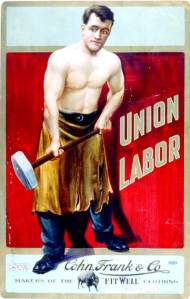 Good Morning!
It’s the end of the work week for those of you that still have jobs. Also, it’s the ides of April. Have you filed your taxes yet with the IRS? Better yet, do you actually have a job and can you report income this year? If so, you’re running against the wind these days. It’s not like most of our elected officials any where notice these days. Jobs, unemployment, and collective bargaining rights appear to the farthest things from their little minds. They’re still trying to figure out whose ass or fist is tightest. A few fighters remain. I’m going to start out with a 12 pack salute to those who still care for the working guy and gal.
Is a picture worth a 1000 words or can words make a picture too? NY Congressman Bob Crowley copied Bob Dylan’s famous “Don’t Look Back” short film to make a few points.
Politico reports on the purpose of Crowley’s show of words.
The video prompted MSNBC’s Luke Russert to tweet, “Rep. Joe Crowley channels his own Bob Dylan “Don’t Look Back” on the House floor.”
But Crowley Communications Director Courtney Gidner says that wasn’t the point of the exercise.
“While my boss is certainly a huge fan of Bob Dylan, the inspiration behind his ‘speechless’ speech was the GOP’s failure to produce a jobs-focused bill.”
I posted this in a down thread conversation but wanted to make sure you read this analysis from USA Today just in case you missed it. Huge numbers of Americans are leaving the work force. This is really worrisome.
The share of the population that is working fell to its lowest level last year since women started entering the workforce in large numbers three decades ago, a USA TODAY analysis finds.
Only 45.4% of Americans had jobs in 2010, the lowest rate since 1983 and down from a peak of 49.3% in 2000. Last year, just 66.8% of men had jobs, the lowest on record.
The bad economy, an aging population and a plateau in women working are contributing to changes that pose serious challenges for financing the nation’s social programs.
Over half of the the population is not working. Working-age men are dropping out like flies. This is not good for maintenance of programs like social security that rely on an increase in workers to fund current benefits. It’s also a game change from 30-40 years ago. I’ll be waiting to see what labor economists have to say about this.
Meanwhile, 1000s of workers protested the roll back of worker rights and budget cuts in Michigan. Working men and women in states all over the country have taken to the streets to protect their rights to participate in determining their work environment and compensation.
Thousands of people rallied at the Michigan State Capitol in Lansing on Wednesday to protest Republican proposals to roll back labor rights and cut government services. Organizers put attendance at more than 10,000. Herb Sanders of the American Federation of State, County and Municipal Employees urged the crowd to begin recall campaigns against Gov. Rick Snyder and other top Republicans.
Herb Sanders: “We will recall the scoundrels one by one. If their agenda is keeping money in the pocket of fat-cat corporate CEOs, as opposed to keeping working Americans employed in fair wages with decent healthcare and decent schools in our neighborhoods, they’ve got to go.”
It appears that many voters have remorse over sending Tea Party candidates to elected office. Florida is a stand out case.
Only three months removed from Governor Rick Scott’s (R) inauguration, a majority of Florida voters now say the state is headed in the wrong direction and that, if they could do it all over again, they wouldn’t have elected Scott in the first place, according to a new Suffolk University poll.
In the poll, 54% of voters said the state was headed in the wrong direction, compared to 30% who said it was going the right way. Further, just under half (49%) of all voters said they disapproved of Scott’s job performance, versus only 28% who said they approved.
Scott’s approval rating is so bad that the poll found him losing a hypothetical do-over election to Democrat Alex Sink by a ten-point margin, 41% to 31%.
Previous polls have also found Scott’s job approval deep underwater, including a Quinnipiac poll released earlier this month that pegged his approval to disapproval split at 35% to 48%. A March PPP poll showed Scott with an even worse 32%-55% split, and found him losing a do-over election — by a 20-point margin.
Scott was one of several freshman GOP governors swept into office last year amid the Republican wave nationwide. But since taking office, voters have rapidly soured on Scott as he’s pursued some drastic — and deeply unpopular — policies.
Labor leaders are none too happy with the President or Senate Majority Leader Harry Reid. Neither of the legacy parties have workers’ interests in mind these days.
“Now, not only are we getting screwed by the Republicans but the Democrats are doing it too,” said one union official, characterizing the mood at a summit of labor leaders who are worried that Democrats seem unlikely to go to the mat for them as an election year approaches.
Presidents of several unions and an AFL-CIO spokesman declined to repeat their private criticism to a reporter Tuesday, a sign that labor feels it must still try to maintain a relationship with the Democratic Party, even if it’s deeply troubled . With Republicans increasingly shifting from private antagonism toward open war with organized labor, unreliable Democratic allies are the only allies the movement has, and it remains unclear whether disappointments will dampen enthusiasm among union activists and voters in the 2012 elections.
I’ll tell you that I have no idea where to go any more. I’m torn between ‘throw the bums out’ and ‘none of the above’. I’m beginning to think my dog knows more about economics than any one in the District beltway these days.
A lot of folks are arguing that the retirement age in developed nations should be raised to 70. They want to work us until we drop dead, folks! Here’s some on that from The Economist.
Yet too many people see longer working lives as a worry rather than an opportunity—and not just because they are going to be chained to their desks. Some fret that there will not be enough jobs to go around. This misapprehension, known to economists as the “lump of labour fallacy”, was once used to argue that women should stay at home and leave all the jobs for breadwinning males. Now lump-of-labourites say that keeping the old at work would deprive the young of employment. The idea that society can become more prosperous by paying more of its citizens to be idle is clearly nonsensical. On that reasoning, if the retirement age came down to 25 we would all be as rich as Croesus.
Raising the official retirement age is only part of the solution, for many workers retire before the official age. Martin Baily and Jacob Kirkegaard of the Peterson Institute in Washington, DC, reckon that raising actual EU retirement ages to the official age would offset the impact of an ageing population over the next 20 years.
For that to happen, working practices and attitudes need to change. Western managers worry too much about the quality of older workers (see Schumpeter). In physically demanding occupations, it is true, some may be unable to work into their late 60s. The incapacitated will need disability benefits. Others will need to find a different job. But this should be less of a problem than it used to be now that economies are based on services not manufacturing. In knowledge-based jobs, age is less of a disadvantage. Although older people reason more slowly, they have more experience and, by and large, better personal skills. Even so, most people’s productivity does eventually decline with age; and pay needs to reflect this falling-off. Traditional seniority systems, under which people get promoted and paid more as they age, therefore need to change.
So, they’re going to work us until we drop and PAY us less for being old. What a deal!!! I frequently joke with my students that I will die at the podium and the administration will have to pry my cold, dead fingers off. I have to admit that this is a melodramatic image, however, to die standing at a podium is better than being chained to a desk in the private sector again. There’s only so many bad senior management decisions that one person should be forced to join in on in one life time. I’ve been party to opening too many of their eyes to their short roads to bankruptcy to do the private sector stupidity again. They all get away with those bad decisions too since they get to leave with good severance packages. I’d rather die poor than die inflicting pain and stupidity on people just because some guy went to seminar and got a wild hair.
Not that any of these old dudes ever pay for their bad mistakes or their lies. Here’s a good example via Naked Capitalism and Yves: Senator Levin Claims Goldman Execs Perjured Themselves Before Congress on Mortgage Testimony.
Senator Carl Levin, in releasing the report, took aim at Goldman’s truthiness in its testimony before Congress and called on Federal prosecutors to examine whether Goldman committed perjury. Two issues are at stake. First it the Goldman claim that it lost money on its housing bets and was not net short housing (or at least not for long). Second is the notion that the firm was acting merely as a market marker, which basically means caveat emptor, if clients made bad bets, Goldman was merely acting as a neutral middleman.
While Goldman made the usual pious denials, the evidence in the report supports the Levin charges. It notes:
Overall in 2007, its net short position produced record profits totaling $3.7
billion for Goldman’s Structured Products Group, which when combined with other mortgage
losses, produced record net revenues of $1.2 billion for the Mortgage Department as a whole.2007 was the critical year when the market turned decisively south and all dealers were dumping mortgage-related inventory. Goldman had been further ahead in the process and appears to be the only firm to put on very sizeable short positions. The magnitude of the profits on the short side lend credence to the charge that Goldman was substantially and successfully net short.
This would basically mean that Goldman Sachs was not acting as a ‘market-maker’. This was the claim made by GS executives during the hearing. I was some what appalled by the inability of the congress critters on the committee to fully comprehend what market makers do and ask intelligent questions. Now that we’ve got the details, it’s pretty clear GS was not acting as an intermediary for client orders. They were basically speculating and the report is evidently full of aggressive marketing and sales pushes to move CDOs and other highly risky financial instruments on which they had an offsetting corporate position. This should be investigated by the DOJ. However, given the cozy relationship between shadow banking and Timothy Geithner, I doubt Obama will move on it at all.
Meanwhile, “Food, Gas And Rent Push Consumer Prices Higher” so ordinary working people are feeling the pinch from both lower incomes and higher prices. I’m thinking we’re seeing those bubbles I’ve been warning about frankly. Rich people have a tremendous amount of money right now and they’re taxes are way down so they’re not investing in businesses but looking for quick arbitrage profits by trading paper back and forth. Unfortunately, the real world is under that paper some where.
Excluding the volatile food and gas categories, the so-called core index rose 0.1 percent and it is up only 1.2 percent in the past year.
But steep food and gas prices are hitting consumers hard.
Gasoline jumped 5.6 percent last month and has risen nearly 28 percent in the past year. Consumers paid an average price of $3.81 a gallon nationwide on Friday according to the travel group AAA.
Food prices rose 0.8 percent last month, the largest increase in almost three years. Prices for fruits and vegetables, dairy products, chicken and beef all increased. Coffee costs rose 3.5 percent.
So, anyway, I continue to be amazed at how much labor is getting screwed compared to how many breaks capital gets these days. I seriously think that the elected officials are trying to completely remove taxes from capital owners and load it solidly on to the backs of working men and women. The time to sharpen pitchforks nears. You don’t need a weatherman to know which way the wind blows …

 peej
peej Carissa
 bostonboomer
 dakinikat
 ecocatwoman
 jjlo
jjlo mablue2
 Mama Lopez
 peggysue22
 quixote
 skydancingguestblogger
 Mona (aka Wonk the Vote)





Recent Comments