
It’s too damned late on so many fronts …
Posted: August 13, 2011 Filed under: 2012 presidential campaign | Tags: stupid White House policy advisor tricks 29 Comments I really try not to do late, wonky economic posts on any night, let alone a Saturday night. It’s probably because I’m deep in the midst of writing a monetary policy paper that I’m even remotely in the mode of doing stuff like this right now, but really, it seems like this discussion is coming late on all fronts. It’s late for the jobless. It’s late for the businesses who don’t have customers. It’s late for economists who can’t figure out why everything they’ve learned over the last 70 years is being suddenly ignored. I personally can’t believe the NYT is reporting that there’s a debate in the White House on the necessity of doing something other than seeking bipartisan surrender. Their internal polling must be worse than we think.
As the economy worsens, President Obama and his senior aides are considering whether to adopt a more combative approach on economic issues, seeking to highlight substantive differences with Republicans in Congress and on the campaign trail rather than continuing to pursue elusive compromises, advisers to the president say.
Mr. Obama’s senior adviser, David Plouffe, and his chief of staff, William M. Daley, want him to maintain a pragmatic strategy of appealing to independent voters by advocating ideas that can pass Congress, even if they may not have much economic impact. These include free trade agreements and improved patent protections for inventors.
But others, including Gene Sperling, Mr. Obama’s chief economic adviser, say public anger over the debt ceiling debate has weakened Republicans and created an opening for bigger ideas like tax incentives for businesses that hire more workers, according to Congressional Democrats who share that view. Democrats are also pushing the White House to help homeowners facing foreclosure.
I simply highlighted the ideas that are wrong, wrong, wrong and now we know where they are coming from. How much domestic economic boost can you get from free trade agreements, improved patent protections for inventors, and yet MORE tax incentives for businesses to hire more workers when they have very few customers? The answer is little to none. I’ll be generous and say a smidgin. If Daley, Plouffe or Sperling were economists we wouldn’t even be seeing these STUPID ideas.
Why on earth would any Democratic President want to compromise with the absolutely wrong voices in the GOP that are basically supporting economic policy that’s custom made to tank the US economy during his re-election cycle? These idiots have to believe the aforementioned crap. That’s the only excuse that I can come up with.
The boasts of Congressional Republicans about their cost-cutting victories are ringing hollow to some well-known economists, financial analysts and corporate leaders, including some Republicans, who are expressing increasing alarm over Washington’s new austerity and antitax orthodoxy.
Their critiques have grown sharper since last week, when President Obama signed his deficit reduction deal with Republicans and, a few days later, when Standard & Poor’s downgraded the credit rating of the United States.
But even before that, macroeconomists and private sector forecasters were warning that the direction in which the new House Republican majority had pushed the White House and Congress this year — for immediate spending cuts, no further stimulus measures and no tax increases, ever — was wrong for addressing the nation’s two main ills, a weak economy now and projections of unsustainably high federal debt in coming years.
Instead, these critics say, Washington should be focusing on stimulating the economy in the near term to induce people to spend money and create jobs, while settling on a long-term plan for spending cuts and tax increases to take effect only after the economy recovers.
The absolute lack of a knowledgeable voice on fiscal policy these days in policy circles that matter absolutely boggles my mind. We can argue the fine points of whether focused tax cuts or spending initiatives are required to jump start aggregate demand and create customers with jobs but really, that’s about the extent of the controversy between economists, financiers, and people that know what they’re doing.
“I think the U.S. has every chance of having a good year next year, but the politicians are doing their damnedest to prevent it from happening — the Republicans are — and the Democrats to my eternal bafflement have not stood their ground,” Ian C. Shepherdson, chief United States economist for High Frequency Economics, a research firm, said in an interview.
Yup, exactly so.
Journalistic standards and modern political norms place some restrictions on what a reporter can and will say in a news article. It’s what too often leads to unhelpful he-said-she-said reporting (“Eric Cantor today said two plus two equals five; Democrats and mathematicians disagreed”).
Yup, people can say bat-shit crazy, impossibly false things and it still gets reported as just some one’s opinion. Further more, FOX news will drag on at least five republican politicians that will insist that 2+2=5 and there’s a liberal media bias and that’s the only reason there could be any different answer. It’s enough to make a financial economist drink. Okay, I keep writing rants these days. I’m going to take a late bath with a late nightcap. Hopefully, you’re all in the middle of some sweet dreams.
Fear and Self-loathing in Ames
Posted: August 13, 2011 Filed under: 2012 presidential campaign | Tags: closet case, CNN, Don Lemon, Marcus Bachmann, Marcus Bachmann pushes Don Lemon, mean 30 Comments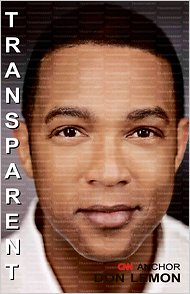 Don Lemon, the CNN weekend anchor, is probably one of the best, most professional anchors on cable news. He recently came out on TV during a segment on child sexual assault and has since written a book called “Transparent”. It’s pretty brave to discuss your experiences as the victim of child sexual abuse and even braver to come out as a gay man when you’re a major media figure and a black man. I’ve always been partial to him because of his connections to Louisiana. He’s from Port Allen. You only have to watch his newscasts to realize exactly how nice the award-winning news anchor can be to the people he interviews. He’s one of the most empathetic interviewers I’ve ever watched. He’s definitely become a great role model for young blacks and gay men. So, I just read this headline and find the behavior of pray-the-gay-away-therapy-pushing, mail-order-degree-bearing, closet-case Marcus Bachmann beyond offense. Only some one filled with a lot of self-hate could be mean to Don Lemon.
CNN anchor Don Lemon reports that members of the campaign team for Rep. Michele Bachmann including her husband Marcus Bachmann shoved him after an event for the candidate in Des Moines on Friday.
According to CNN, Lemon and another reporter from the network were among a ring of press and supporters that surrounded Bachmann after she spoke briefly at the Iowa State Fair and tried to make her way to a drive cart to exit.
“As both CNN staffers tried to question Bachmann, Lemon said he was pushed by two members of Bachmann’s staff,” reports CNN. “Lemon also said that Marcus Bachmann, the congresswoman’s husband, pushed him.”
As the clip below indicates, the openly gay anchor tried to ask Bachmann respectful questions about her debate performance on Thursday and her expectations for the Ames Straw Poll that takes place today.
Lemon said afterward, “I told them, asked them not to elbow me. And then her husband Marcus started doing the same thing. And then he elbowed me into the cart. And I said, ‘You just pushed me into the cart.’ And he goes, ‘No, you did it yourself.’”
I really think that Bachmann’s self loathing and fear of his sexuality came glaring through in this act of meanness.

The Audacity of No Hope
Posted: August 12, 2011 Filed under: Barack Obama, Republican presidential politics, U.S. Economy, U.S. Politics, voodoo economics, We are so F'd | Tags: Allen West, banana republic, consumer confidence index, Michele Bachmann 21 Comments I don’t recall a time when political discourse has been so disconnected with reality. It’s like there’s some form of drug that’s been planted in the Potomac that’s created a stupor from which the media and politicians refuse to awake. They seem to think if they create the message, we will come. The truth is that most Americans are not quite that stupid. It’s really a shame that the looking glass of TV political discourse does not reflect Main Street. It reflects only Wall Street, K Street, and Madison Avenue.
How more out of touch can punditry and pols become? This is the reality that US households see.
Confidence among U.S. consumers plunged in August to the lowest level since May 1980, adding to concern that weak employment gains and volatility in the stock market will prompt households to retrench.
The Thomson Reuters/University of Michigan preliminary index of consumer sentiment slumped to 54.9 from 63.7 the prior month. The gauge was projected to decline to 62, according to the median forecast in a Bloomberg News survey.
The biggest one-week slump in stocks since 2008 and the threat of default on the nation’s debt may have exacerbated consumers’ concerns as unemployment hovers above 9 percent and companies are hesitant to hire. Rising pessimism poses a risk household spending will cool further, hindering a recovery that Federal Reserve policy makers said this week was already advancing “considerably slower” than projected.
“The mood is very depressed,” said Chris Christopher, an economist at IHS Global Insight Inc. in Lexington, Massachusetts. “Consumers are very fatigued and very uncertain. In the short term, people are going to pull back on spending.”
Estimates of 69 economists for the confidence measure ranged from 59 to 66.5, according to the Bloomberg survey. The index averaged 89 in the five years leading up to the recession that began in December 2007.
Here’s one example of the reality disconnect via Michelle Bachmann who has been cheering on the idea of a US default and had the temerity to suggest last night in the Ames Alternate Reality Debates that the S&P downgrade occurred because the debt ceiling was raised. The S&P downgrade stemmed from her brazen example–as well as those of her compradres–of a complete disconnect from economic reality. How much time was spent on discarded notions like gold standards and politically controlled central banks? This is the stuff that only dictators in banana republic adopt!
A Standard & Poor’s director said for the first time Thursday that one reason the United States lost its triple-A credit rating was that several lawmakers expressed skepticism about the serious consequences of a credit default — a position put forth by some Republicans.
Without specifically mentioning Republicans, S&P senior director Joydeep Mukherji said the stability and effectiveness of American political institutions were undermined by the fact that “people in the political arena were even talking about a potential default,” Mukherji said.
“That a country even has such voices, albeit a minority, is something notable,” he added. “This kind of rhetoric is not common amongst AAA sovereigns.”
I mentioned in this morning’s post the brazen political rationale behind the President’s persistent message that it’s the deficit driving the bad economy. This too is a message that’s not based in reality. This Reich quote bears repeating here.
So rather than fight for a bold jobs plan, the White House has apparently decided it’s politically wiser to continue fighting about the deficit. The idea is to keep the public focused on the deficit drama – to convince them their current economic woes have something to do with it, decry Washington’s paralysis over fixing it, and then claim victory over whatever outcome emerges from the process recently negotiated to fix it. They hope all this will distract the public’s attention from the President’s failure to do anything about continuing high unemployment and economic anemia
Krugman–who shall now be known as the depressed one--made similar claims today in his NYT op-ed. He tells us that we should be angry. I think he needs to get out of the confines of his New York condo or his Princeton office, because we are angry out here in the great fly over. I’d say if he went to the right parts of New York City or New Jersey, he’d likely find the anger there too.
But there’s another emotion you should feel: anger. For what we’re seeing now is what happens when influential people exploit a crisis rather than try to solve it.
For more than a year and a half — ever since President Obama chose to make deficits, not jobs, the central focus of the 2010 State of the Union address — we’ve had a public conversation that has been dominated by budget concerns, while almost ignoring unemployment. The supposedly urgent need to reduce deficits has so dominated the discourse that on Monday, in the midst of a market panic, Mr. Obama devoted most of his remarks to the deficit rather than to the clear and present danger of renewed recession.
What made this so bizarre was the fact that markets were signaling, as clearly as anyone could ask, that unemployment rather than deficits is our biggest problem. Bear in mind that deficit hawks have been warning for years that interest rates on U.S. government debt would soar any day now; the threat from the bond market was supposed to be the reason that we must slash the deficit now now now. But that threat keeps not materializing. And, this week, on the heels of a downgrade that was supposed to scare bond investors, those interest rates actually plunged to record lows.
What the market was saying — almost shouting — was, “We’re not worried about the deficit! We’re worried about the weak economy!” For a weak economy means both low interest rates and a lack of business opportunities, which, in turn, means that government bonds become an attractive investment even at very low yields. If the downgrade of U.S. debt had any effect at all, it was to reinforce fears of austerity policies that will make the economy even weaker.
So how did Washington discourse come to be dominated by the wrong issue?
When political gamesmanship and legal outcomes funded by corporations and not votes by people become the central goal of policy, a democracy not only loses its authenticity, it ceases to exist. People have been voting for gridlock and throwing the bums out only to create a gridlock that is bringing down the economy and bums so virulent that we can no longer stand for either. People like Allen West, Michelle Bachmann, and Rick Santorum shouldn’t even be given keys to a car, let alone the country. Leaders that would rather distract people from reality than make actual policy decisions–like Obama–need to be called out for their cynical political ploys; not re-elected. How much more of this can our economy and democracy take before we completely collapse into something worse than a banana republic?
Peter Daou has written an excellent analysis that talks about how this toxic environment has brought the country to its knees. He has a list of exactly how far down we’ve gone on the list of countries for many things. Today’s new number is 23. We used to rank 6th in infrastructure, we have now fallen to number 23. Sweden tops the list of countries for global technology and net work readiness. The US has moved to 5th place behind Sweden, Singapore, Finland and Switzerland. This is what we’re supposed to be good at? Right? Information Technology? The only thing we seem to excel at any more is perpetual war.
The basic question is then, what will it take to get these people to listen? Well, in the case of Michelle Bachmann and reality-deniers, there’s no hope there. They cling to religious myth and free market fairy tales over science, economics, and reality. In the case of those who cynically change the political discourse to “distract the public’s attention”, I’m not sure. What do you do with the power hungry who are more driven by campaign contributions and donor concerns, than votes and people? This toxic political environment is bringing toxic results. In other parts of the world, there are protestors risking their lives for real change. People are being gunned down in Syria as we speak. Rioters in England–fed up with no future and no jobs–are burning things to the ground.
Daou points to Bob Hebert’s farewell column for perspective. It’s worth reviewing.
The U.S. has not just misplaced its priorities. When the most powerful country ever to inhabit the earth finds it so easy to plunge into the horror of warfare but almost impossible to find adequate work for its people or to properly educate its young, it has lost its way entirely.
Nearly 14 million Americans are jobless and the outlook for many of them is grim. Since there is just one job available for every five individuals looking for work, four of the five are out of luck. Instead of a land of opportunity, the U.S. is increasingly becoming a place of limited expectations. A college professor in Washington told me this week that graduates from his program were finding jobs, but they were not making very much money, certainly not enough to think about raising a family.
There is plenty of economic activity in the U.S., and plenty of wealth. But like greedy children, the folks at the top are seizing virtually all the marbles. Income and wealth inequality in the U.S. have reached stages that would make the third world blush. As the Economic Policy Institute has reported, the richest 10 percent of Americans received an unconscionable 100 percent of the average income growth in the years 2000 to 2007, the most recent extended period of economic expansion.
Americans behave as if this is somehow normal or acceptable. It shouldn’t be, and didn’t used to be. Through much of the post-World War II era, income distribution was far more equitable, with the top 10 percent of families accounting for just a third of average income growth, and the bottom 90 percent receiving two-thirds. That seems like ancient history now.
The current maldistribution of wealth is also scandalous. In 2009, the richest 5 percent claimed 63.5 percent of the nation’s wealth. The overwhelming majority, the bottom 80 percent, collectively held just 12.8 percent.
This inequality, in which an enormous segment of the population struggles while the fortunate few ride the gravy train, is a world-class recipe for social unrest. Downward mobility is an ever-shortening fuse leading to profound consequences.
What profound consequences await a country where the leaders find these extraordinary levels of income inequality, infrastructure ruin, and joblessness an acceptable status quo? Will parts of the US eventually resemble West London or Damascus where disenfranchised, jobless, and hopeless people resort to measures beyond desperation? These events are truly the results of the audacity of no hope. It’s easier for the media blame the dogs fighting for scraps under the table than to look at the table top and to call out the masters that have stacked the decks in their favor so that the meat never hits the floor. Can simply living in a land of economic fairy tales ala Bachmann and trust fund babies like Romney prevent the US from seeing similar unrest? Corporations are people too? Really? Can giving multiple speeches distract the jobless from their plight or blaming social security recipients and the long term unemployed keep the electorate in a stupor of false hope? I’d say that one check of polls and the consumer sentiment index provides a resounding no answer.
I have never seen a period of time when the issues are so clear, the answers are so obvious, and the political and punditry class appear so clueless. Something better change fast before the growing restless in our undeveloping nation turns into something more than disenchanted polling numbers and falling indexes. How much more disconnect will this country’s citizens take?
Friday Reads
Posted: August 12, 2011 Filed under: 2012 presidential campaign, morning reads | Tags: batshit crazy Republicans, Michelle Bachmann, Rick Santorum 18 Comments Good Morning!
Well, in honor of the debauchery at Ames last night, I thought we could cover some more interesting Republican political assertions. Here’s a few odious metaphors. This first one comes from the ever insane Rick Santorum who says marriage is like water, not beer. Remember, this is the same guy that tried to explain the difference between paper towels and napkins just a few days ago.
Rick Santorum turned more than a few eye brows on Monday when he explained his opposition to same-sex marriage by holding up a napkin and observing that it was not a paper towel. On Friday, during a meeting with the Des Moines Register, Santorum relied on a similar metaphor to prove why society can’t “redefine” marriage: water is not beer. “It’s like saying this glass of water is a glass of beer. Well, you can call it a glass of beer, but it’s not a glass of beer. It’s a glass of water. And water is what water is. Marriage is what marriage is,” he said.
Frankly, I agree with Woody Allen who said that marriage is the death of hope. Just so you don’t think Santorum is the only Republican with incredibly bad metaphors try this one by Allen West on for size.
Comparing homosexuality to a preference in ice cream flavors, Rep. Allen West (R-FL) defended his previous assertion that sexuality is a behavior in an interview with Florida’s Sun-Sentinel yesterday. Watch it here.
WEST: You cannot compare me and my race to a behaviour. Sexuality is a behaviour. And so yeah, I said, I cannot change my color. People can change their sexual behavior. And I’ve seen people do that. You know, I grew up in Atlanta, Georgia, so I’ve seen a very different perspective on human behaviours. So that’s where I’m coming from with that…
Q: Do you think gay people should change their behavior?
WEST: I like chocolate chip ice cream, and I will continue to like chocolate chip ice cream. So there’s no worry about me changing to vanilla. I like to, you know, ride my motorcycle. What do you want me to do? You want me to change my behavior and ride a scooter? I’
Oy. Santorum repeated more lies and insane metaphors during the Ames debate.
He continued to press anti-gay views, saying that calling same-sex marriage a marriage would be like calling a cup of tea a basketball.
He repeatedly quoted a study that families do better in heterosexual marriages. Though that study actually uses the phrase “nuclear” family, which can include same-sex couples.
Okay, so let’s continue with more batshit crazy and Michelle Bachmann who made a 2002 video warning Minnesotans that Minnesota’s educational standards would lead to a holocaust literally.
Before Bachmann served in the Minnesota state Senate, led the tea party caucus in the House of Representatives, or ran for president, she worked as an education activist with a conservative group called the Maple River Education Coalition (MREC). Together with Chapman, Bachmann criss-crossed Minnesota, speaking to church groups and warning them about the dire consequences of state and federal education reform.
In the middle of all of this, Bachmann and Chapman made a movie.
Guinea Pig Kids II is not, as its name might suggest, a B-list horror film. The impetus for the film was the Profile of Learning, a set of state curriculum standards adopted by Republican Gov. Arne Carlson’s administration in 1998. To Bachmann and Chapman, the standards were nefarious and part of a a far-reaching globalist plot.
As Bachmann and Chapman explained, a little-known federal program called Goals 2000, initiated under the Clinton administration but consistent with a similar plan supported by President George H.W. Bush, was paving the way for a national curriculum. The new curriculum, the two speakers maintained, moved the state away from established truths like the supposedly Christian founding documents, and replaced them with secular documents, such as the Universal Declaration of Human Rights, that allowed the state to craft its own set of values. Guinea Pig Kids was designed to explain “Minnesota’s new centrally-planned education, workforce & economic system and how citizens are trying to reverse it.” Over the course of the film’s two hours, Bachmann and Chapman did just that.
You can watch the insanity at the MoJo link.
So, you know the Tea Party types are all about ‘personal responsibility’ right? Check this out : “Tea Party Rep: Bank Should Have Known I Wouldn’t Be Able To Repay $2.2 Million Loan”. Yeah, it’s the poor people that are sucking the system dry, right?
Tea Party aligned Georgia Rep. Tom Graves (R), who castigates Washington for fiscal irresponsibility, reached an out of court settlement Wednesday after he was sued for defaulting on a $2.2 million loan — which his attorney argued is the bank’s fault for lending him the money in the first place.
Graves and his business partner Chip Rogers — who is the state Senate’s Republican majority leader — took out a $2.2 million loan from the Bartow County Bank in 2007 to buy and renovate a local motel. The project soon went belly-up.
The bank, which has since failed and had its assets taken over, sued Graves and Rogers for defaulting. The two Republicans then countersued, “accusing [the bank] of improperly declaring the loan in default after reneging on a promise to refinance it at more favorable terms,” according to Jeremy Redmon and Aaron Gould Sheinin of the Atlanta Journal-Constitution .
In June, Simon Bloom, the attorney for Graves and Rogers, argued in a court filing that the default was the bank’s fault because it lent the pair the money knowing full well they couldn’t pay. Bloom cited a deposition in which bank officials saw Graves and Rogers’ financial records, and then had them sign personal guarantees so they’d “‘have some skin in the game’ presumably meaning a sense of personal obligation for the debts … even though they clearly could not fulfill the obligation.” Graves and Rogers said they were unaware of that particular filing.
Robert Riech explains “Why the President Doesn’t present a bold plan to Create Jobs and Jumpstart the Economy”.
Which gets me to the President. Even though the President’s two former top economic advisors (Larry Summers and Christy Roemer) have called for a major fiscal boost to the economy, the President has remained mum. Why?
I’m told White House political operatives are against a bold jobs plan. They believe the only jobs plan that could get through Congress would be so watered down as to have almost no impact by Election Day. They also worry the public wouldn’t understand how more government spending in the near term can be consistent with long-term deficit reduction. And they fear Republicans would use any such initiative to further bash Obama as a big spender.
So rather than fight for a bold jobs plan, the White House has apparently decided it’s politically wiser to continue fighting about the deficit. The idea is to keep the public focused on the deficit drama – to convince them their current economic woes have something to do with it, decry Washington’s paralysis over fixing it, and then claim victory over whatever outcome emerges from the process recently negotiated to fix it. They hope all this will distract the public’s attention from the President’s failure to do anything about continuing high unemployment and economic anemia.
I’m not distracted yet, are you?
So, what’s on you reading and blogging list today?
Beyond Influence: Buying US Law
Posted: August 11, 2011 Filed under: Big Pharma, Civil Liberties, Civil Rights, collective bargaining, Corporate Crime, Domestic Policy, Economy, Environmental Protection, financial institutions, Global Financial Crisis, Gulf Oil Spill, Health care reform, Labor unions, legislation, Surreality, The Bonus Class, We are so F'd | Tags: ALEC, Bayer, ExxonMobil, Koch Industries, PFizer, VISA, Wal-Mart 23 Comments“Corporations are people, my friends.”
Mitt Romney, in a speech today in Iowa
I’ve wanted to write about ALEC for awhile. I tripped across this very succinct explanation in my print copy of Bloomberg Business Week that made me revisit my plans. Ever wonder why a bunch of weird ass bills suddenly show up simultaneously in a bunch of legislatures that say things that are basically against the positions of modern science, medicine, and economics? Well, chances are that some huge corporation has written that bill that will become law in no one’s interest but their own, and it was penned by some member of ALEC.
Kim Thatcher, a Republican state representative in Oregon, introduced a sharply worded anti-cap-and-trade bill this year that said, “There has been no credible economic analysis of the costs associated with carbon mandates.” Apparently, that view is widely shared. Legislation with that exact language has been introduced in dozens of states, including Montana, New Hampshire, and New Mexico.
It’s not plagiarism. It’s a strategy. The bills weren’t penned by Thatcher or her fellow legislators in Helena, Concord, and Santa Fe. They were written by a little-known group in Washington with outsize clout, the American Legislative Exchange Council. Corporate benefactors such as Koch Industries and ExxonMobil (XOM) help fund ALEC with membership dues and pay extra for a seat at the legislative drafting table.
Among ALEC’s prominent members are Pfizer (PFE), Wal-Mart (WMT), Bayer (BAYZF), and Visa (V), according to ALEC annual meeting documents provided by an attendee. The organization’s legislative agenda includes limiting the power of unions, fighting environmental regulations, and overturning President Obama’s health-care reform law. ALEC says it gets about 200 state laws passed each year. The corporate influence is hard to trace and can produce a return on investment that would make a hedge fund manager drool.
“This is just another hidden way for corporations to buy their way into the legislative process,” says Bob Edgar, president of Common Cause, which seeks to reduce money in politics. Reagan Weber, an ALEC spokeswoman, says the group simply facilitates the sharing of information and “good conservative policy.”
ALEC was founded in 1973 by two of the conservative movement’s intellectual midwives, both now dead: Representative Henry Hyde of Illinois and activist Paul Weyrich, who also was a founder of the Heritage Foundation. As a tax-exempt organization, ALEC doesn’t disclose its corporate donors or its member lists beyond those who serve as committee chairmen.
In exchange for annual membership dues of as much as $25,000 plus a fee of $3,000 to $10,000 to get on a bill-writing “task force,” Koch and ExxonMobil representatives sat beside elected officials and policy analysts at an ALEC meeting in April 2010, helping them write model energy legislation that would later be introduced in statehouses around the country, according to the documents. The legislators pay $100 for a two-year membership. The task force bills are considered finished only after the legislators and private-sector members vote separately to approve them, giving each side a veto. Once a model bill is complete, it’s up to ALEC’s legislator members to go back to their home states and shepherd it into law.
ALEC is on the radar of many organizations including the American Association for Justice who keeps track of their activities and publishes white papers on this group of bill-writers for profit, greed and the destruction of public resources.
(W)hile the membership appears to be public sector, the bankroll is almost entirely private sector. In fact, public sector membership dues account for only around one percent of ALEC’s annual revenues. ALEC claims to be nonpartisan, but in fact its free-market, pro-business mission is clear.
The result has been a consistent pipeline of special interest legislation being funneled into state capitols. Thanks to ALEC, 826 bills were introduced in the states in 2009 and 115 were enacted into law.
Behind the scenes at ALEC, the nuts and bolts of lobbying and crafting legislation is done by large corporate defense firm Shook, Hardy & Bacon. A law firm with strong ties to the tobacco and pharmaceutical industries, it has long used ALEC’s ability to get a wide swath of state laws enacted to further the interests of its corporate clients.
ALEC’s campaigns and model legislation have run the gamut of issues, but all have either protected or promoted a corporate revenue stream, often at the expense of consumers. For example, ALEC has worked on behalf of:
- Oil companies to undermine climate change proponents;
- Pharmaceutical manufacturers, arguing that states should be banned from importing prescription drugs;
- Telecom firms to block local authorities from offering cheap or free municipally-owned broadband;
- Insurance companies to prevent state insurance commissioners from requiring insurers to meet strengthened accounting and auditing rules;
- Big banks, recommending that seniors be forced to give up their homes via reverse mortgages in order to receive Medicaid;
- The asbestos industry, trying to shut the courthouse door to Americans suffering from mesothelioma and other asbestos-related diseases; and,
- Enron to deregulate the utility industries, which eventually caused the U.S. to lose what the Securities and Exchange Commission (SEC) estimated as $5 trillion in market value.
The Koch brothers and Koch Industries are all over ALEC. Their Charitable foundations and businesses provide a lot of funding. ExxonMobile is also a huge source of funds. There are several companies representing the interests of Big Pharma. ALEC looks like a who who of corporate America’s worst corporate citizens. The Center for Media and Democracy’s PR Watch put out a Special Report on ALEC’s funding last month.
According to ALEC’s IRS filings, over the past three years it has raised $21,615,465 from corporations, foundations, and other sources, and just over $250,000 in dues paid by state legislators, amounting to slightly more than 1 percent of its income. The gigantic gap between what legislators pay and what ALEC spends is the direct result of the reality that legislators pay a mere $50 a year to be a member, while a corporation can pay up to $25,000 a year or more to be a member of ALEC plus additional fees to be on a task force where corporations get the same right to vote as legislators. They just pay hundreds of times more for that vote.
…
For example, the foundations controlled by the billionaire Koch brothers gave ALEC over $200,000 in 2009. (The Claude R. Lambe Foundation, which Charles Koch, his wife and kids help run, donated $125,000 to ALEC. His own Charles G. Koch foundation kicked in an additional $75,000.) That $200k is before whatever is the undisclosed amount of membership “dues” paid by Koch Industries, which is run by Charles and David Koch. There is no public disclosure of annual gifts the company gives to take part in the one-stop shopping ALEC conventions provide to meet with legislators from every state about their wish list…
Other right-wing foundations have also supported ALEC, far beyond the “dues” paid by any legislator. For example, the Castle Rock Foundation, which is run by right-wing beer heir Peter Coors, gave $50,000 last year and in prior years. The right-wing John M. Olin foundation has also been a donor to ALEC. Another of the big right-wing foundations, the Lynde and Harry Bradley Foundation, has been a funder and, for example, gave ALEC $50,000 in 2009 to fund “budget reform” work. Similarly, right-winger Richard Scaife has given ALEC over half a million dollars the past decade or so, through his Allegheny Foundation. Some of the organizations that support ALEC, like Scaife’s, are also deeply invested in the profits of corporations that sit on ALEC’s board. The Allegheny Foundation has held over $11 million of ALEC board member Altria‘s stock, along with major stock holdings in other ALEC corporate board members like Kraft, Coca Cola, AT&T, GlaxoSmithKline, Johnson & Johnson, and Exxon.
ALEC is a major voice for climate change denial, responsible for the recent spate of voter disenfranchisment laws, and continually pushes for extreme tort reform. There’s a really good primary on ALEC at People for the American Way. ALEC is the well-funded voice of corporate special interests. Here are two recent examples of state legislature originating from ALEC.
ALEC was influential in crafting and passing a Texas law, dubbed the “Successor Asbestos-Related Liability Fairness Act, that shielded Crown Cork and Seal, a business that in 1966 acquired a company that used asbestos in its products, from lawsuits from the company’s workers. Even though Crown agreed to pay the company’s liabilities, it wanted immunity from paying damages to workers facing asbestos-related diseases. Crown Cork and Seal turned to ALEC to help shape the Texas law, which put an extremely low cap on liability for companies like Crown who acquired companies which committed wrongdoing, known as a “successor immunity” law.” Mark Behrens, an attorney for Shook Hardy, worked as a lobbyist for both ALEC and Crown to encourage allied lawmakers to introduce and pass the bill. The American Association for Justice writes that “this so-called ‘successor immunity’ has all the hallmarks of an ALEC special interest bill. It is plainly designed not with public policy in mind, but rather a specific industry (or in this case, a specific company).” The Texas Supreme Court ultimately found the cap to be an unconstitutional retroactive protection for Crown that inhibited the rights of people to rightfully sue corporations for damages, but similar ALEC-derived laws are still on the books in other states.
In Arizona, an investigative report by NPRfound that ALEC significantly helped one of its clients, the Corrections Corporations of America (CCA), influence the state’s new immigration law. The CCA is a for-profit prison company whose “executives believe immigrant detention is their next big market,” and thought that a law which “could send hundreds of thousands of illegal immigrants” to prison would “mean hundreds of millions of dollars in profits to private prison companies responsible for housing them.” As a dues-paying member of ALEC, the CCA was able to write, present and lobby Arizona policymakers for a draconian immigration bill at an ALEC-hosted conference. “Four months later, that model legislation became, almost word for word, Arizona’s immigration law,” and many of the bill’s cosponsors later received significant campaign contributions from the CCA. ALEC also helped the CCA by pushing “truth in sentencing” laws that restrict parole eligibility for felons, and consequently increase the number of prisoners.
You name the spurious law, and ALEC is likely behind it. They write laws that push private school vouchers, strip workers of their right to organize, make it more difficult to generate revenues to fill budget shortfalls in states, and undercut healthcare reform efforts.
After the passage of health care reform, ALEC’s top priority has been to challenge the law by encouraging members to introduce bills that would prohibit the law’s insurance mandate. ALEC’s Health and Human Services task force is led by representatives of PhRMA and Johnson & Johnson, and representatives of Bayer and GlaxoSmithKlein sit on ALEC’s board. The group’s model bill, the “Freedom of Choice in Health Care Act,” has been introduced in forty-four states, and ALEC even released a “State Legislators Guide to Repealing ObamaCare” discussing a variety of model legislation including bills to partially privatize Medicaid and SCHIP. The legislative guide utilizes ideas and information from pro-corporate groups like the Heritage Foundation, the Goldwater Institute, the James Madison Institute, the Cato Institute, the National Center for Policy Analysis and the National Federation of Independent Business.
Expanding the disproportionate power of corporations in the legislative process is central to ALEC’s goals. ALEC is responsible for some of the worst outcomes in government we’ve seen in decades. It is pure influence peddling. Any legislator that relies on ALEC for services should be subject to immediate recall. ALEC represents what’s wrong with this country today. It is at the heart of single issue, special interest politics that are not in the public’s interest. They are a perversion of the democratic political process.
Mitt Romney is wrong. Corporations are not people. The profit motive is the sole determinant of corporate behavior. No household or family would put profits before everything else nor should any government that purports to represent its people. I suggest finding out as much about how ALEC influences your state legislature as soon as possible. A good place to start is with The Nation‘s series ‘ALEC Exposed’. The first in this series shows the role of the Koch’s in ALEC’s model bills. I’ve pumped this thread up with a lot of juicy links. Please take some time to visit the research of all the nonprofits that have carefully researched this shadowy organization.

 peej
peej Carissa
 bostonboomer
 dakinikat
 ecocatwoman
 jjlo
jjlo mablue2
 Mama Lopez
 peggysue22
 quixote
 skydancingguestblogger
 Mona (aka Wonk the Vote)





Recent Comments