
Easy Answers are the Wrong Narrative
Posted: October 1, 2011 Filed under: just because | Tags: U.S. Economy 8 Comments I was watching an interview last night with Warren Buffett by Charlie Rose on the economy. Yes, I know I’m weird. I don’t watch sports or movies. I watch documentaries and listen to interviews. I have the academic’s disease in spades. There was a lot of discussion about a lot of things but the one thing that grabbed me was the question Rose asked about what Obama should have done differently on the economy. Buffett is an Obama supporter and made a point of saying that the President had basically responded as well as he could to the economic challenges and he hated hindsight criticism. However, the one point made was that the President really hadn’t emphasized early on how difficult this economic recovery challenge would be and that the passage of the stimulus was perhaps glossed over as a panacea that it could not be for many reasons.
This narrative came back to me this morning as I plowed through The Economist with my morning coffee. Only this time, similar behavior was attributed to Angela Merkel in the cover story called The World Economy: Be Afraid.
The second failure is one of honesty. Too many rich-world politicians have failed to tell voters the scale of the problem. In Germany, where the jobless rate is lower than in 2008, people tend to think the crisis is about lazy Greeks and Italians. Mrs Merkel needs to explain clearly that it also includes Germany’s own banks—and that Germany faces a choice between a costly solution and a ruinous one. In America the Republicans are guilty of outrageous obstructionism and misleading simplification, while Mr Obama has favoured class warfare over fiscal leadership. At a time of enormous problems, the politicians seem Lilliputian. That’s the real reason to be afraid.
I laughed at the idea of Obama favoring class warfare over fiscal leadership given that paragraph followed directly after the sentence: “But the  collective obsession with short-term austerity across the rich world is hurting”. Obama’s been leading the charge on austerity. I honestly don’t think any one person or an S&P national downgrade is going to deter the Republican party from leading the entire country off the cliff in pursuit of the White House. Maybe once they’ve figured that all of their candidates have so many warts they are unlikely to pass muster with the base AND independents, they’ll get back to being a minority party instead of group of hostage taking ideologues. But, I doubt it. They are all spinning overly simplistic messages that resonate with the many people looking for simple answers. The global Great Recession is not done with us yet and to pretend there are simple answers to pass around is expedient and immoral.
The Economist is talking about the timidity of leaders across the globe to really lead on programs that could tackle the severe economic problems we face. The problem is that many seem to be offering up messages that offer policies contrary to what’s really needed. The call for austerity right now, instead of when the houses are in order, keeps me busy trying to find a safe place to stash my little nest egg. There’s only so many places in Norway, Malaysia, and Korea for small investors. Even China’s manufacturing behemoth is showing signs of slowing which is undoubtedly, yet another sign of lack of customers. Yet, every developed nation is pulling in its horns further and further. There is a lack of correct–as well as bold–action.
Germany, for instance, thinks the main problem is fiscal profligacy and so is reluctant to boost Europe’s rescue fund; yet a far bigger fund is needed if a rescue is to be credible. The most urgent solutions, such as restructuring Greece’s debt or building a protective barrier around Italy, require the most political courage—something that Angela Merkel, Nicolas Sarkozy et al have yet to exhibit. The chances of a bold enough plan will shrink if markets stabilise. The less scared they are, the more likely Europe’s spineless policymakers are to jump yet again for a plan that does just enough to stave off catastrophe temporarily, but lets the underlying problem get worse.
Much of the world is now paying for their timidity: witness the increasingly dark economic backdrop. A slew of recent indicators suggests the euro area is slipping into recession, as Germany’s exports slow, the fiscal screws tighten, confidence slumps and the banks’ travails imply tighter credit. Even if the euro-zone crisis were to be solved tomorrow, the region’s GDP would probably shrink over the coming months.
America’s economy is still limping along, though the summer slump in share prices and consumer confidence suggest future spending will weaken further. The Federal Reserve is trying new ways of support, somewhat half-heartedly. Whatever it does, America is currently on course for the most stringent fiscal tightening of any big economy in 2012, as temporary tax cuts and unemployment insurance expire at the end of this year. That could change if Congress came to its senses, passed Barack Obama’s jobs plan and agreed on a medium-term deficit-reduction deal by November. If Democrats and Republicans fail to hash out a compromise on the deficit, draconian spending cuts will follow in 2013. For all the tirades against the Europeans, America’s economy risks being pushed into recession by its own fiscal policy—and by the fact that both parties are more interested in positioning themselves for the 2012 elections than in reaching the compromises needed to steer away from that hazardous course.
What about the cushion the emerging markets provide? That, too, is getting thinner. Their growth is slowing (as it needed to, since many economies were overheating). Recent falls in emerging-world currencies and stock prices show that financial panic can afflict the periphery too (see article). Some emerging economies, including China, have less room to repeat their 2008-09 stimulus because of the debts that splurge left behind. Monetary policy can be loosened: several central banks have cut rates. But, overall, the emerging world will be less of a buoy to global growth than it has been hitherto.
Today’s Successful Economies
Posted: September 30, 2011 Filed under: Economic Develpment, Economy, U.S. Economy, We are so F'd | Tags: globalization, Jeffrey Sachs, neoconfederates on the rise, US global standings 6 Comments
Swedes are happier and more globally competitive than the US. Is this the real secret of blondes having more fun?
I wrote a blog post a while back about heaven having fjords. I’m very much interested in economics from a development standpoint so it’s always worthwhile checking out the top performers in the world for lessons. It is also quite apparent when you do that Libertarian and Republican memes fail and fail badly. It’s probably why we never hear these things in corporate media.
Societies are better when the pull together instead of pull apart. The best performing countries in economics are the same countries that have a high commitment to public education and society at large. The high performers–in economics, in health, and in education–are the Scandavian countries with their highly progressive tax rates, intense regulation of commerce and harmful activities and emphasis on making sure the rising tide rises all the boats rather than sinking a huge number of them to the benefit of the mega yachts. These are also countries with parliamentary systems which makes them highly democratic. They’ve been winning consistently with the advent of the global economy. The US has lost its position as leader of the developed nations and is moving way down into the losing positions below still developing nations. We could learn some lessons from Scandinavia.
Here’s Jeffrey Sachs at Project Syndicate with some things to think about in that vein. He has written a new book called The Price of Civilization which basically outlines the missteps that we’ve taken that were primarily started as a result of the election of Ronald Reagan. For some reason, many Americans don’t want to pay for some very simple modern facilities like roads, electric grids, airports, and railways. They prefer to buy junk from China they probably don’t need in search of happiness in the form of hoarding and consuming.
Rather than respond to globalization with more government spending on education, infrastructure, and technology, Ronald Reagan won the presidency in 1980 by pledging to slash government spending and cut taxes.
For 30 years, the US has been going in the wrong direction, cutting the role of government in the domestic economy rather than promoting the investments needed to modernize the economy and workforce. The rich have benefited in the short run, by getting massive tax breaks. The poor have suffered from job losses and cuts in government services. Economic inequality has reached a high not seen since the Great Depression.
These adverse trends have been exacerbated by domestic politics. The rich have used their wealth to strengthen their grip on power. They pay for the expensive campaigns of presidents and congressmen, so presidents and congressmen help the rich – often at the expense of the rest of society. The same syndrome – in which the rich have gained control of the political system (or strengthened their control of it) – now afflicts many other countries.
Sweden–as an example other than Norway who can use their oil to leverage their improvements–has been called an economic miracle. After feeling the global recession, they are now growing GDP at rates that are twice to three times the averages of most industrial countries. They are growing 5 times fasting than the US. So, look at their numbers there on the CIA Factbook and marvel where under the poverty rate comes the label: not applicable. Sweden blends capitalism with a social democracy in a way that makes the swedes the 6th most prosperous country on the planet. They are above the US who is number 10. They are behind Norway, Denmark, Finland, Australia and New Zealand. They are number 23 in GDP per capita The US is number 11. They are also highly globally competitive ranking #3 in Global Competitiveness Index after Finland and Switzerland. The US is number 1o.
The Swedes are number 9 on the human development index. We are number 4. Norway is number 1. Sweden has high marginal tax rates (sometimes over 70%), very powerful unions, immigrants, and generous vacations and work weeks. Under Republican fairy tales, Sweden and Norway should be worse off than Haiti. Rather than looking at countries that are achieving great things and leaving us in the dust, we are grasping at a rigid ideology that is designed to tank us.
I haven’t read the Sachs book but I’m definitely putting it on my reading list. You may recall that this is also something Fareed Zakaria examines in his TV show, in books, and at TIME magazine. Here’s a good summary from a recent Time article.
The following rankings come from various lists, but they all tell the same story. According to the Organisation for Economic Co-operation and Development (OECD), our 15-year-olds rank 17th in the world in science and 25th in math. We rank 12th among developed countries in college graduation (down from No. 1 for decades). We come in 79th in elementary-school enrollment. Our infrastructure is ranked 23rd in the world, well behind that of every other major advanced economy. American health numbers are stunning for a rich country: based on studies by the OECD and the World Health Organization, we’re 27th in life expectancy, 18th in diabetes and first in obesity. Only a few decades ago, the U.S. stood tall in such rankings. No more. There are some areas in which we are still clearly No. 1, but they’re not ones we usually brag about. We have the most guns. We have the most crime among rich countries. And, of course, we have by far the largest amount of debt in the world.
We’re in the process of watching the Cat Food Commission Redux set our priorities for our future and its basically an agenda meant to downsize the American Dream for every one except the Mega Wealthy. I hope that the Cheddar Revolution and the Occupy Wall Street movement turn into an American Spring Movement. We have to regain the positive momentum towards modernity before the powers that be force us all back into a pre-civil war paradigm of laws, economic servitude, and society.
Meanwhile, as I write about these healthy economies, 90% of US citizens say our economy stinks and they are pretty unhappy about it. Its time to look at some best practices of other countries and dump the ideologues that keeping making the wrong decisions for us.
Friday Reads
Posted: September 30, 2011 Filed under: 2012 presidential campaign, Catfood Commission, collective bargaining, Congress, financial institutions, Health care reform, Labor unions, morning reads, Republican politics, Republican presidential politics, SCOTUS | Tags: Bachmann running out of campaign funds, budget cuts, Collin Woodard, GOP spending cut priorities, Labor Unions, Mortgage modification mess, occupy Wall Street, SCOTUS and the health care reform law, US regions 18 Comments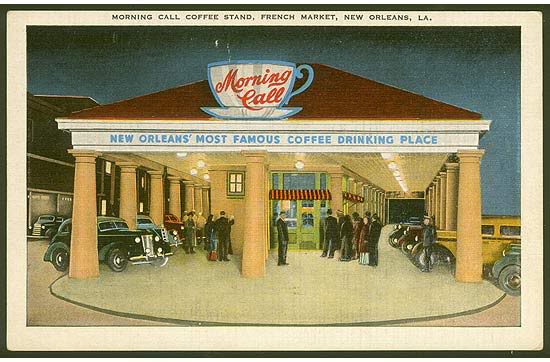 Good Morning!
I can hardly believe we’re headed into the last quarter of 2011. Such a year we’ve had!
So, the GOP is going after some of the things for which I will happily contribute tax dollars. They’ve got some pretty whacked values as far as I’m concerned.
Setting a collision course with Democrats that could drag out for months, House Republicans on Thursday unveiled plans to cut federal money for job training, heating subsidies and grants to better-performing schools.
The draft measure for labor, health and education programs also seeks to block implementation of President Barack Obama’s signature health care law, cut off federal funds for National Public Radio and Planned Parenthood, and reduce eligibility for grants for low-income college students.
Democrats and tea party Republicans opposed the bill, blocking it from advancing through even the easy initial steps of the appropriations process on Capitol Hill. Instead of moving through the Appropriations Committee and the House as a whole, the $153 billion measure is instead expected to be wrapped into a larger omnibus spending bill this fall or winter that would fund the day-to-day operating budgets of Cabinet agencies.
Negotiations between Republicans controlling the House, the Democratic Senate and the White House are sure to be arduous. The measure is laced with conservative policy “riders” opposed by Democrats that would affect worker protections under federal labor laws and block the Education Department from enforcing rules on for-profit colleges that are often criticized for pushing students to take on too much debt.
“It looks like we’re in for a long, difficult process,” said Rep. Rosa DeLauro, D-Conn.
House Appropriations Committee Chairman Harold Rogers, R-Ky., said excessive and wasteful spending over the years had put many programs and agencies on “an irresponsible and unsustainable fiscal path.”
Actually all of those Dubya Tax cuts and wars and letting Wall Street Run amok with speculation instead of investment is what put us on that “irresponsible and unsustainable fiscal path” and most of them voted for all of it. I’m not willing to bail out any more of their donor base with my hard earned dollars by defunding the future of our children. What on earth can we do about these evil people and the feckless dems that won’t fight them?
The court fights over the new health care law have been stepped up and SCOTUS has come into play in a big way. Which of the justices are likely to uphold AEIcare-cum-ChafeeCare-cum-DoleCare-cum-RomneyCare-cum-Obamacare?
The four more liberal justices on the court — Ruth Bader Ginsburg, Stephen Breyer and Obama appointees Sonia Sotomayor and Elena Kagan — should have no trouble reading the Constitution as bestowing broad powers on the federal government to regulate all manner of commerce. Although the court in recent years has pinched back congressional efforts to use the Commerce Clause to promulgate laws prohibiting guns near schools and those targeting violence against women, these were clearly non-commercial activities and quite different from the health-care law and its regulation of the medical insurance marketplace. Stronger and more directly applicable precedents remain, in which the court blessed the government’s regulation of wheat and marijuana production because these activities had an impact on interstate commerce.
The marijuana case (known formally as Gonzales v. Raich) may be particularly important because two of the more conservative justices — Antonin Scalia and Anthony Kennedy — joined with their more liberal colleagues to uphold the law under the government’s Commerce Clause powers.
Chief Justice John G. Roberts Jr. and Samuel A. Alito — both George W. Bush appointees — shouldn’t be counted out either. Roberts and Alito joined an opinion in 2010 that recognized the government’s “broad authority” to enact a civil detention scheme for sexual predators under a different constitutional provision. This provision allows federal lawmakers “to make all laws which shall be necessary and proper” to uphold the powers assigned to Congress — including the power to regulate interstate commerce.
Michelle Bachmann’s campaign is running out of cash. Even the NY Post thinks she may not make it to the Iowa Caucuses.
Will Michele Bachmann make it to Iowa? Insiders are whispering that the Tea Party darling’s financials are grim and she may be out of the race before she makes it to the Iowa caucus in February, even though she has a strong base in the state. Sources tell us say Bachmann’s skeletal staff are holding their collective breath until the deadline to disclose her fundraising report on Oct. 15. Meanwhile, we hear a computer vendor has called her campaign headquarters threatening to shut down the power due to an outstanding bill. Sources say she had about $400,000 at the beginning of September, but also stacks of bills. “She does not like to ask for money. She should have been focusing on big donors about three months ago,” a source said. “She’s only cultivated low dollar donors with direct mailings and that’s hurt her.” But at a rally in Virginia yesterday, Bachmann declared that she does not intend to back out of the race. “We intend to be the comeback kid in this race,” she said. Her rep said, “None of that is true.”
There’s a two part series at Bloomberg written by Collin Woodard on how the U.S. is really a country of regions. Part One is here. Part Two is here. It’s a really interest read and something I have thought about for some time as I’ve tried to find some place in this country where I can live in peace. For one, I’m trying to leave any region that’s described as bible buckle, bible belt, or bible anything!
Forget the state boundaries. Arbitrarily chosen, they often slash through cohesive cultures, creating massive cultural fissures in states like Maryland, Oregon and New York. Equally burdensome are the regional designations with which we try to analyze national politics — the Northeast, West, Midwest and South. They’re illusions masking the real forces driving the affairs of our sprawling continent: the 11 regional cultures of North America.
These 11 nations — Yankeedom, Tidewater, New Netherland, New France, Deep South, Greater Appalachia, the Midlands, First Nation, the Far West, the Left Coast, El Norte — have been hiding in plain sight throughout our history. You see them outlined on linguists’ dialect maps, cultural anthropologists’ maps of material culture regions, cultural geographers’ maps of religious regions, campaign strategists’ maps of political geography and historians’ maps of the patterns of settlement across the continent. I’m not the first person to have recognized the importance of these regional cultures. In 1969, Kevin Phillips, then a Republican campaign strategist, identified the distinct boundaries and values of several of these nations and used them to accurately prophesize the Reagan Revolution in his “Emerging Republican Majority,” a political cult classic.
More and more groups are joining the move to take on and occupy Wall Street. The New York Transportation Workers are the latest to announce they will join the protest today.
Occupy Wall Street has been picking up some decent support from unions in the past few days. Yesterday we reported that the Teamsters Union declared their support for protestors, and we also found out that the United Pilots Union had members at the protest demonstrating in uniform.
Today we learned the Industrial Workers of the World put a message of support on their website as well.
UPDATE: Verizon union workers have joined the protestors in NYC.
McClatchy reports that mortgage modification are still a mess even after four years. Quelle surprise!
Today there are at least 4.2 million homeowners who, like Palomo, are late on their mortgage payments or somewhere in the delinquency and foreclosure process. The first wave of foreclosures came during the 2008 financial crisis as subprime mortgages given to weak borrowers imploded. Now the subsequent economic downturn and high unemployment keep housing depressed.
The administrations of George W. Bush and Barack Obama both offered incentives for lenders to help homeowners modify their mortgages. Those efforts haven’t achieved much.
And four years into the housing crisis, banks and their bill collectors, known as mortgage servicers, are still under fire for their response to troubled borrowers.
“I would say they are somewhat better than they were three years ago, but still woefully inadequate to meet the demand, given the still remarkably high levels of distressed borrowers they are attempting to deal with,” said Paul Leonard, director of the California office of the Center for Responsible Lending, a Durham, N.C.-based advocacy group.
From December 2009 through June, more than 1.6 million government-backed mortgage modifications had been started, but only 791,000 became permanent. These numbers remain well below the goal of 4 million modifications that the Obama administration set for itself.
That should give you a few juicy bits to chew on with some coffee!! What’s on your reading and blogging list today?
When Free Speech Turns Ugly
Posted: September 29, 2011 Filed under: New Orleans | Tags: hate speech, Obama sign in Uptown 38 Comments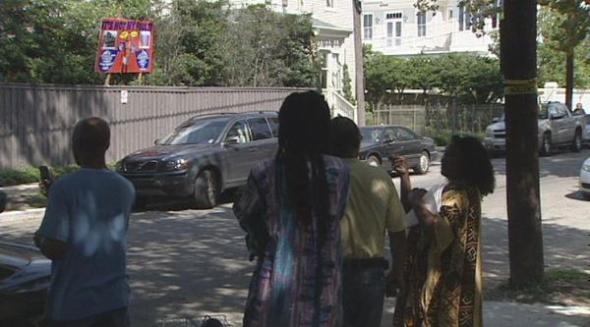 I was rather shocked this morning to read about a series of signs portraying the president as a crying baby with text balloons reading “Change me. I stink”, as a puppet of George Soros, and a Dunce in uptown New Orleans. I am always amazed when political disagreement turns ugly. I’m not going to print the offensive signs here because they’re a real test of our right to free speech. I wish people were as equally respectful of civility as some of us are of free speech rights.
Like the man or not, Barrack Obama is our president. We all have a compelling interest in disagreeing with his policies and the manner in which he carries out his elected office. However, the man is the President of our country and the office deserves respect. As much as I didn’t like George Bush and could poke fun of him and complain about him with the best of them, I would still curl my lip at things like watching him being hung or burnt in effigy. The Presidency is an important symbol of our country. We have an elected leader not a despot. I felt the same way when then Governor Quitteralla was hung in effigy in a front of a California home as a “Halloween” prank. You don’t have to like an elected leader, but there’s a way to disagree with them without resorting to displays of hate. There’s a place where free speech turns into hate speech and while it’s legal under our constitution, it’s should be called out for what it is.
“It disrespects the nation — and President Barack Obama represents our nation,” said Skip Alexander, as he looked at one of the signs. “He represents everybody, not some people.”
Dozens of protesters came by the house in the 1500 block of Calhoun throughout the day, demanding the sign come down.
“He wouldn’t do that to [President] Bush, I’m sure. It’s just insulting. It’s insulting,” said C.C. Campbell-Rock. “He’s going to have to take them down.”
“This is nothing put pure racism,” said Raymond Rock. “This is a disgrace.”
The home is owned by Timothy Reily, who declined to be interviewed about the signs. Former Mayor Ray Nagin showed up at the house and went inside to speak with Reily. He emerged later and would not comment on what they discussed.
Some neighbors tell Eyewitness News that Reily has been putting the signs up for months. Some of the protesters learned about the signs through a local radio station on Wednesday morning.
“He can put up a sign if he wants to. It doesn’t bother me,” said Harold Gagnet, a neighbor.
“I think it’s fine. It’s on his property,” said Katherine deMontluzin. “He can say whatever he wants.”
The signs have created such a firestorm of controversy, though, that police came to the scene– called in by City Council Member Susan Guidry. She represents the district where the home is located. Guidry said she was concerned about public safety and was trying to figure out if the sign was even legal. She also said she spoke to Reily, but didn’t get far.
You can watch the news reports and see the signs at the link above. The sign contains pretty much all the usual right wing hack memes like Obama is a Socialist. Did I mention that this is the wealthy side of town and there’s all kinds of diatribes up there on taxing millionaires too? My guess is that this guy is Teabot. I remember them waving signs about portraying Obama as a witch doctor when Dolecare got enacted. The city is trying to search through its zoning laws to figure out a way to take the bill boards down after trying to speak to the homeowner failed. The man definitely does have a right to his opinion, he has a right to express it, but aren’t there less hateful ways to do it? I frankly would be frightened to have a person like this living next to me. If he’s got that much anger towards a politician, you just never know what he’d do if an easy target showed up.
Wall Street Politics
Posted: September 28, 2011 Filed under: 2012 presidential campaign | Tags: Jamie Daimon, Wall street poltiics and greed 8 Comments
Wall Street Fat Cats Gone Wild and Rogue
There are several interesting headlines up today connecting a few dots between Wall Street, the third estate, and politicians. The New York Post (yes I know) indicates that Jamie Dimon may have bolted from the Obama stable to the Romney Ranch. This is a curious continuation of the meme passed around last year that uber sensitive shadow bankers have had their feelings hurt over a few speeches given by the President who uses populist rhetoric to shore up support. I just have never managed to buy that some one like Dimon could get his feathers in a ruffle over a little name calling. It’s probably pay back for the Dodd-Frank Law which is a watery version of its original intent, but still more toothy than the FIRE contingent would like to see. How long will it take before the Health Insurance Industry and Bankers manage to fee and co-payment us all into the poor house? What role does Dimon see that Romney could play in that? That’s a more germane question to me.
While Dimon’s spokesperson declined to comment, a JP Morgan insider tells us that Dimon has not attended an Obama fund-raiser and has not made any contributions to his campaign during this election cycle. And Dimon has met privately with many of the Republican presidential candidates.
Political insiders are buzzing that a defection would signal further Wall Street hostility toward Obama, who famously called them “fat cat” bankers in 2009. Dimon responded, “I don’t think the president of the United States should paint everyone with the same brush.”
One insider said, “There is not a person on Wall Street, with the exception of the genetic Democrats, who would get anywhere near supporting Obama. The hostility to the administration is huge. Dimon will continue to look bipartisan, then work behind the scenes to get a Republican elected.”
Again, I think this right wing meme about hurt feelings is just that. The bottom line here is they want people that will neuter Dodd-Frank and the rules that control excessive fees and such. They would also like to capture the new agency set up by Elizabeth Warren. My belief is this group is after Warren already with bizarre stories on her TARP role. Politico appears to be doing some of the right wing smear jobs for Wall Street interests. BTW, did you know that more referrals to Politico come via Drudge than Google? Check this out.
Minx put this link to one of Greenwald’s better pieces downthread on the morning reads. I thought it so good that I’d add it to this post because it really shows how the Wall Street interests are driving media coverage as well as other things. It has to do with the tepid media coverage of the Wall Street Protests. He relates the prog coverage to earning credentials through hippy bashing.
Nor is it surprising that much of the most vocal criticisms of the Wall Street protests has come from some self-identified progressives, who one might think would be instinctively sympathetic to the substantive message of the protesters. In an excellent analysis entitled “Why Establishment Media & the Power Elite Loathe Occupy Wall Street,” Kevin Gosztola chronicles how many of the most scornful criticisms have come from Democratic partisans who — like the politicians to whom they devote their fealty — feign populist opposition to Wall Street for political gain.
Some of this anti-protest posturing is just the all-too-familiar New-Republic-ish eagerness to prove one’s own Seriousness by castigating anyone to the left of, say, Dianne Feinstein or John Kerry; for such individuals, multi-term, pro-Iraq-War Democratic Senator-plutocrats define the outermost left-wing limit of respectability. Also at play is the jingoistic notion that street protests are valid in Those Bad Countries but not in free, democratic America.
A siginificant aspect of this progressive disdain is grounded in the belief that the only valid form of political activism is support for Democratic Party candidates, and a corresponding desire to undermine anything that distracts from that goal. Indeed, the loyalists of both parties have an interest in marginalizing anything that might serve as a vehicle for activism outside of fealty to one of the two parties (Fox News‘ firing of Glenn Beck was almost certainly motivated by his frequent deviation from the GOP party-line orthodoxy which Fox exists to foster).
The very idea that one can effectively battle Wall Street’s corruption and control by working for the Democratic Party is absurd on its face: Wall Street’s favorite candidate in 2008 was Barack Obama, whose administration — led by a Wall Street White House Chief of Staff and Wall-Street-subservient Treasury Secretary and filled to the brim with Goldman Sachs officials — is now working hard to protect bankers from meaningful accountability (and though he’s behind Wall Street’s own Mitt Romney in the Wall Street cash sweepstakes this year, Obama is still doing well); one of Wall Street’s most faithful servants is Chuck Schumer, the money man of the Democratic Party; and the second-ranking Senate Democrat acknowledged — when Democrats controlled the Congress — that the owners of Congress are bankers. There are individuals who impressively rail against the crony capitalism and corporatism that sustains Wall Street’s power, but they’re no match for the party apparatus that remains fully owned and controlled by it.
It’s important to remember that we’re unlikely to get anything but corporation approved coverage of things from corporate-owned media outlets. Their stock, their financing, and as a result, their decisions are likely to be highly colored by keeping their funds and jobs. This could also explain why the police appear to have marching orders to capture any independent media types near the protests with cameras.
Although I’m not a Marxist, it still gives me no end of fascination that the Marxist view that the monied and banking interests would take down capitalism by influencing institutions through financial control of those institutions seems to be happening. In deed every one from democratically elected politicians, to industry CEOs that actually produce products or services, to the press now seem beholden to their mortgage holders and influenced by their potential funding veto. I’m still thinking we should just be honest about this and see that each journalist, politician, and CEO basically put their souls up to the highest bidders when they seek the fantastic amount of money it takes to be a power broker these days. Every one owes their underwriters something in return and the middle and working class and their interests appear to be serving as collateral in the quest to leverage power and wealth.

 peej
peej Carissa
 bostonboomer
 dakinikat
 ecocatwoman
 jjlo
jjlo mablue2
 Mama Lopez
 peggysue22
 quixote
 skydancingguestblogger
 Mona (aka Wonk the Vote)





Recent Comments