
He said, She said … “literally”
Posted: October 22, 2011 Filed under: U.S. Politics | Tags: Bush administration, Condoleeza Rice, Dick Cheney, Memoirs 6 Comments So, I’m sitting in the Denver Airport plugged into the free wifi and recharging batteries. I have two hours worth of sitting left. The only eventful thing today was watching an up armored vehicle speed down the street in front of the Brown Palace towards the Capitol area. There were also three people in zombie outfits and make up standing on the corner. For awhile, I was thinking I should check for a Bourbon Street sign but the 16th street walking mall was just to my left and the Rocky Mountains were still behind me. It was Denver alright. There was a huge occupy march this afternoon and a simultaneous Zombie festival. I was wondering if they could merge the two and the zombies could play big banks. The riot police just seemed to be buzzing the parade of maybe 500 or so folks.
Anyway, I’m trying to find something to post and run across the NYT article on Condoleeza Rice and an interesting thing  about zombie vice president Dick Cheney. I guess she is still miffed about his portrayal of her teary eyed jag in his memoir and shot back.
First as national security adviser and later as secretary of state, Ms. Rice often argued against the hard-line approach that Mr. Cheney and others advanced. The vice president’s staff was “very much of one ultra-hawkish mind,” she writes, adding that the most intense confrontation between her and Mr. Cheney came when she argued that terrorism suspects could not be “disappeared” as in some authoritarian states.
In November 2001, she writes, she went to President George W. Bush upon learning that he had issued an order prepared by the White House counsel, Alberto R. Gonzales, authorizing military commissions without telling her. “If this happens again,” she told the president, “either Al Gonzales or I will have to resign.”
Mr. Bush apologized. She writes that it was not his fault and that she felt that Mr. Gonzales and Mr. Cheney’s staff had not served the president well.
Ms. Rice’s book, “No Higher Honor,” was obtained by The New York Times in advance of its Nov. 1 publication by Crown Publishing, a division of Random House. It is the latest in a string of memoirs emerging from Bush administration figures trying to define the history of their tenure.
Again, you may recall that Rice responded to Dick Cheney rather harshly last month.
Condoleezza Rice is hitting back at Dick Cheney for what she’s calling an “attack on my integrity” in the former vice president’s new memoir.
In his tell-all book, Cheney blasts the ex-Secretary of State’s handling of nuclear negotiations with North Korea and argues she misled then-President George W. Bush.
“I kept the president fully and completely informed about every in and out of the negotiations with the North Koreans,” Rice told Reuters on Wednesday.
“You can talk about policy differences without suggesting that your colleague somehow misled the president. You know, I don’t appreciate the attack on my integrity that that implies.”
Since Rice’s memoir follows both Rumsfeld and Cheney’s, it remains to be seen who will get the last dig.
Live Blogging Janet Yellen
Posted: October 21, 2011 Filed under: Live | Tags: Janet Yellen, live blogging 3 Comments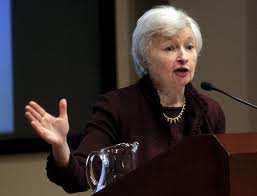 I am absolutely thrilled to be preparing to bring my live blog of former FRB SF President Jane Yellen who is one of the most significant women leaders in economics and finance of our time. Dr. Yellen was the Chair of the White House Council of Economic Advisors under President Bill Clinton. She is currently the Vice Chairman of the Fed system.
She’s speaking at the Financial Management Association conference today in Denver. She is receiving the outstanding Financial Executive Award.
She notes that the recovery is disappointing. She plans to discuss monetary and fiscal policies that can help the US economy. She is mentioning that the recovery has improved things since the worst of the recession. But, she still says the economy is less vigorous than desirable. Recent data says the recession was deeper than thought.
She believes that the temporary factors from the Japanese tsunami that disrupted the auto industry and high gas prices have moderated. She believes that the restricted access to credit, consumer sentiment, and weak consumer spending is creating concern among business people. This has made businesses reluctant to expand their operations. The housing sector continues to depress the economy. The housing sector has historically played an important role in improving economic conditions. This is not happening this time. There are a lot of factors causing this.
Yellen believes that states are also playing a role in restraining the pace of recovery. She’s believes that the path of fiscal policy is weighing on both household and business confidence. The one bright sector in the US economy has been exports but this is not going to continue. She believes this is due to both the EU situation and the slow down in developing nations’ economies.
She says that financial markets are experiencing unusual volatility which is putting pressure on financial institutions and investors. The US economy as well as slow growth abroad is part of this. Also, the EU situation is troubling markets. She believes that the political considerations in trying to develop and implement solutions to the EU problem is creating stress. She thinks this could cause a retightening of credit conditions and could impact US financial institutions. She believes that also the deterioration of the US economic outlook could put stress on banks too.
Yellen is now talking about the outlook for inflation. She believes that any recent inflation was due to oil and other commodity prices being volatile, and also due to the Japanese earthquake and that inflation will moderate. She believes that the target inflation rate will be attained. She believes also that long term inflation expectations remain stable and is more concerned with disinflation or deflation. She thinks that the risk of that is much higher.
Yellen is speaking now to the dual mandate of the Fed and monetary policy. She is giving some background on the zero bound policy. (She’s on the FOMC, btw.) She’s also speaking to the importance of fomc clarification on monetary policy and the role they have reassuring the market they will keep interest rates low given the current conditions of subdued output. She is also talking about how a communicated target rate based on employment or inflation might give the market more confidence on the stability of the low targeted fed funds rate.
She expects that unemployment and the economy will improve even though there are significant downside risks. She says the FOMC is watching things carefully and will use tools as appropriate.
She is now taking questions from the floor. The first one is basically about the give and take between signals to and from the market and the FOMC on setting market expectations for inflation.
Okay, I need to go prepare to present something so I’m leaving you with this now. Hopefully, this will give you some insight into the FOMC.
Take care
More Jobs Bills from Republicans!!! Not!
Posted: October 19, 2011 Filed under: abortion rights, Reproductive Health, Reproductive Rights, Republican politics, right wing hate grouups | Tags: right wing extremist, Senator Jim Demint 14 Comments Would the conversation that we’re having right now be illegal if this Anti-Choice Senator has his way? Does it just refer to doctors who want to discuss women’s reproductive health? Just what exactly does the first amendment mean to right winger Senator Jim DeMint? This should really show how extreme some of the religionists have become in our country. This is something I’d expect to see in oppressive religious regimes like Iran.
Anti-choice Sen. Jim DeMint (R-S.C.) just filed an anti-choice amendment to a bill related to agriculture, transportation, housing, and other programs. The DeMint amendment could bar discussion of abortion over the Internet and through videoconferencing, even if a woman’s health is at risk and if this kind of communication with her doctor is her best option to receive care.
Under this amendment, women would need a separate, segregated Internet just for talking about abortion care with their doctors.
Nancy Keenan, president of NARAL Pro-Choice America, called Sen. DeMint’s actions outrageous:
What about a woman experiencing a high-risk pregnancy who is talking with her doctor through video conferencing? Under Sen. DeMint’s extreme plan, if abortion came up in that doctor-patient conversation, the woman and her physician would have to go to a separate communications system. He’s calling for an abortion-only version of Skype. It is impractical, ridiculous, and, most importantly, bad for women in rural or remote areas who would not be able to discuss the full set of options with their doctor.
Last week, the U.S. House of Representatives passed H.R.358, the “Let Women Die” bill. The House has now voted on more anti-choice measures this year than in any year since 2000.
And now, anti-choice senators are saying, “Me, too!”
I am so outraged about all these interferences in women’s lives, health, and private decisions that I don’t even know what to say. Who says the Republican party hate excessive regulation and government interference in businesses and individuals lives?
Student Loans: Bubble, Bubble, Toil & Trouble
Posted: October 19, 2011 Filed under: education, unemployment | Tags: Sallie Mae, student loan bubble, student loans 15 Comments I laughed pretty loudly when I opened an email from the university to my faculty account explaining how wonderful the increased retention numbers were looking! Our new funding formula from extortionist governor Bobby Jindal depends on graduating and retaining students. I guess they don’t have economists in that section of administration. Just look at the unemployment rate for the typical student population (16-24 year olds) and the decreasing labor force participation rate from August, 2011. You’ll see exactly what’s going on. Got no job? Where do you go to find money and hopefully place yourself higher up on the meat market ladder if businesses ever go back to hiring?
The number of unemployed youth in July 2011 was 4.1 million, down from 4.4 million a year ago. The youth unemployment rate declined by 1.0 percentage point over the year to 18.1 percent in July 2011, after hitting a record high for July in 2010. Among major demographic groups, unemployment rates were lower than a year earlier for young men (18.3 percent) and Asians (15.3 percent), while jobless rates were little changed for young women (17.8 percent), whites (15.9 percent), blacks (31.0 percent), and Hispanics (20.1 percent).
So, we’ve got the biggest numbers of young people since the baby boom with parents whose employment situation is not great and whose assets and real incomes have taken a major hit over the last ten years. We’ve got kids that can’t even find the usual kid jobs. What are they going to do but go for those student loans and hang at university as long as possible? This brings me to the next big bubble phenomenon–Student Loans–plus the next GSE that’s going to be seeing default rates sky rocket. That would be Sallie Mae.
The $1 trillion of outstanding loans means that Americans now owe more on student loans than on their credit cards. While students have been racking up educational loans, American consumers have been paying down credit cards and home loans.
The average full-time undergraduate student borrowed $4,963 in 2010, up 63 percent from a decade earlier, even after adjusting for inflation, the report says.
Meanwhile, with a greater loan burden, the percentage of borrowers that defaulted on their student debts also rose – from 6.7 percent in 2007 to 8.8 percent in 2009.
That gives a lot of credence to the argument that the next big bubble will be in student loans. Here’s an investor’s view point from seeking alpha from back in July. Should we all start hedge funds and short student loans? Well, for one thing. You can short sell for profit university’s stocks who thrive on churning loans and assume Sallie Mae will be a goner just like its buddies Fannie and Freddie. Dump their bonds and short them!
With the current state of the job market, many if not most of these unfortunate borrowers will not be able to pay off their debt with a lower than expected income. This trend is showing itself through increasing default rates of student loans. Three-year default rates have risen from 11.8% for loans issued in 2007 to 13.8% issued in 2008 (most recent data available). Meanwhile, the fundamental factors driving these defaults have not changed since.
Historically, investors have not worried about the default of these securities because of their explicit government guarantees through FFELP. In addition to this, student loans are the only debt that cannot be forgiven through bankruptcy. Student loan collectors have gone to the extent of garnishing wages and racking up penalties that can double the borrower’s debt in the name of “forgiveness” to maintain a return for bondholders.
This story sounds similar to housing: If the borrowers fail to pay, lenders seize the asset (house for a mortgage, garnished wages for student loans). The story will end the same way, as students lack the income to maintain their living expenses plus the debt or even just the interest payments if they are unemployed. The other option that students will begin to take more is moving abroad to avoid collectors. Financial distress will make it practical to exile oneself to avoid a lifetime of debt slavery. The combination of lower incomes for college grads and expatriation will increase the default rate to even high levels than current record rates.
So how do investors go about shorting the bubble in higher education? Ideally, the best way would be to buy credit default swaps on student loan asset-backed securities, which have a similar construction to the mortgage-backed securities that caused the last financial crisis. However, this strategy is not available to most readers. Average investors are better off short-selling the leading providers of student loans or for-profit universities, which have some of the highest default rates of student loans for any academic institution.
The leading student loan provider in the United States in the Sallie Mae corporation (SLM). It was launched as a government-sponsored enterprise (since privatized) similar to Freddie Mac and Fannie Mae; it currently services and manages $180.4 billion of government-backed student loan debt. It’s also begun to issue private student loans as well. With a debt to equity ratio of 36, Sallie Mae is already on the edge of insolvency. A small drop in collections can amount to significantly levered losses to the company. If the student loan default rate increases to 20%, Sallie Mae will most likely not be able to survive. The continuing upward trend of student loan defaults will lead to either insolvency of Sallie Mae or a government takeover — which will both wipe out shareholders.
Above the Law even asked if there was any one out there left that even believed that this wasn’t a disaster waiting to happen. How’s this for harsh?
The problem is that our colleges and universities are charging a $100,000 to pump out the next generation of dog walkers. Sure, part of the fault lies with the people themselves; parents who let their 18-year-old children borrow a ton of money to go to an expensive private university to major in art history are no better than strung out crack mothers.
But the dean who sits there and says, “come study comparative literary criticism for the low, low price of $40,000 per year,” is the price-gouging drug dealer. These deans are pushing a product at a price point that they know is dangerous for most of their consumers.
This is what worries me. This is also from Above the Law and it mentions just how married you and yours going to be to that student loan. Not only that, but graduate students will have a much bigger balances to pay in the future thanks to an Obama sell-out on the deficit. Talk about setting people up for loan failure. Why not just pump the least able to pay for more money?
In the total debt ceiling cave-in that will mark Barack Obama as the most successful Republican president since Ronald Reagan, there was one cut that really illustrates how little the president cares for his young, college-educated constituents. To save about $26.3 billion dollars, the debt ceiling deal eliminates the graduate student loan subsidy. That means that law students (and other grad students) will continue accruing interest on their non-dischargeable educational loans throughout their graduate studies.
I can see why they call education the “silver bullet,” because education certainly seems like a surefire way to kill one’s economic future….
The graduate loan cut wasn’t the most ridiculous so-called compromise Obama made while John Boehner was pumping him like Richie Aprile did to Janice Soprano. But it is illustrative of the extent to which Obama has abandoned the young people who helped elect him so that he can court… well, I don’t know exactly what universe he lives in where he thinks a black Republican running as a pro-war Democrat wins a general election
Meanwhile back on the Planet of anecdotal evidence, we get these examples. Ask me about Doctor Daughter’s student loan debt or mine, for that matter. I got two degrees in the late 70’s and early 80s by working and that was it. I just couldn’t swing it this time. I now have student loan debt that would’ve bought me a Mercedes and I’m jobless and on the jobfree labor market. Sallie Mae’s like a loan shark too. They’re worse to deal with than the bookies in my neighborhood.
“I have ~$75k in student loans. I will default soon. My cosigner, my father, will be forced to take my loans. He will default as well. I’ve ruined my family because I tried to rise above my class,” writes one testimonial on the 99 percent website on Wednesday.
The 99 percent website is one of the places where the Occupy Wall Street movement first got its inspiration from.
“I am a young medical professional who BARELY makes it paycheck-to-paycheck because I have OVER $200,000.00 in student loan debt,” says another testimonial on the website Tuesday. “I pay almost $1,000 a month just in student loan repayment. I will have to do so for the next 30-years. How will I ever afford to buy a house, have children, or save for the future?”
Wingnuts and Geography Lessons
Posted: October 18, 2011 Filed under: religious extremists, Republican politics, Republican presidential politics | Tags: CNN Republican Debate 10 Comments Well, yet another Republican debate went down tonight. This one was held in Las Vegas and broadcast by CNN. High winds took out my electricity earlier so I’ve had to play catch up. Here’s some of the more memorable moments. Some one woke Perry up for this one.
The former pizza company CEO is the latest and unlikeliest phenomenon in the race to pick a Republican rival for President Barack Obama. A black man in a party that draws few votes from Africans Americans, he had bumped along with little notice as Romney sought to fend off one fast-rising rival after another.
That all changed in the past few weeks, after Perry burst into the race and then fell back in the polls. However unlikely Cain’s rise, Tuesday night’s debate made clear that none of his rivals are willing to let him go unchallenged.
“Herman, I love you, brother, but let me tell you something, you don’t need to have a big analysis to figure this thing out,” Perry said to Cain. “Go to New Hampshire where they don’t have a sales tax and you’re fixing to give them one,” he said, referring to the state that will hold the first primary early next year.
Mitt pulled a power body move.
The two men talked over one another, and at one point, Romney placed his hand on Perry’s shoulder.
“It’s been a tough couple of debates for Rick. And I understand that so you’re going to get nasty,” he said.
As Perry continued to speak, Romney stopped him: “You have a problem with allowing someone to finish speaking, and I suggest that if you want to become president of the United States, you’ve got to let both people speak,” he said.
Rep. Michele Bachmann (R-Minn.) criticized President Obama’s foreign policy during Tuesday night’s CNN debate, saying, “Now with the president, he put us in Libya. He is now putting us in Africa. We already were stretched too thin, and he put our special operations forces in Africa,” she said.
Libya, it should be noted, is in Africa.
Ron Paul doesn’t too be concerned about Jewish voters or for that matter, about North Korea.
Foreign policy took a secondary role in the debate, and the new strain of Republican isolationism quickly surfaced.
Paul said U.S. troops should be withdrawn from Korea — where they have been stationed for more than 50 years — and foreign aid to Israel cut.
Perry said it was “time to have a very serious discussion about defunding the United Nations.
Huntsman wasn’t there (not that any one noticed) because he’s boycotting Nevada. I’m assuming Santorum and Gingrich were there, but I can’t be sure since no one seems to have written anything about them.
The opener for Saturday Night Live should be great this week. I wonder if I’ll be able to catch in on the airplane coming back from Denver.
Whatever has happened to the party of Eiswenhower, Teddy Roosevelt and Lincoln!

 peej
peej Carissa
 bostonboomer
 dakinikat
 ecocatwoman
 jjlo
jjlo mablue2
 Mama Lopez
 peggysue22
 quixote
 skydancingguestblogger
 Mona (aka Wonk the Vote)





Recent Comments