
Vegas Gambling vs Wall Street Gambling
Posted: November 23, 2011 Filed under: Banksters, Economy, Equity Markets, financial institutions 5 CommentsOne of the things that has always struck me about folks that treat the financial sector like any other business venture is the lack of  understanding of what the finance sector really does. There are several basic functions if you read the literature. The banking industry originally evolved from goldsmiths that would safekeep gold for people. This eliminated the need for every one to keep a small army with them at all times to stop robbers from stealing all their gold. Goldsmiths eventually learned that a fairly sizable chunk of that gold never left their premises and found out they could lend some of it out for a return and not be caught short. That eventually lead them from being gold babysitters to lenders. Then, we eventually got around to trying to find some financial contracts that would help us if the worst happened by buying insurance. From these sets of agreements, we now have exotic derivatives, financial innovations, credit default swaps, and a host of other banking services. The basics things that the banking sector does is help you save or store up future purchasing power, borrow or lend purchasing power, and help move money around from place to place via the payment systems. That would be check clearing and ATMs and things like that. The Federal Reserve Bank was set up to handle that latter function but most of that function has been privatized since regional banks now clear checks and there are private clearing houses for Automated Payments. The Fed’s role is now fairly small. It still pushes cash from the US Mint/Treasury into the banking system and its FedWire system still handles a huge number of wire transfers between banks. If banks won’t lend to each other via the Fed Funds market, it is also available to lend money at the discount window. That used to be only available to member banks but it’s now open to a lot more institutions.
Bankers usually make money by charging fees on their services, interest rates on their loans, and then they make arbitrage profits if they invest. For years, that last function wasn’t a big deal for bankers because laws stopped them from investing in anything very creative. Laws have changed a lot over the last 10-20 years and even if commercial banks can’t make risky investments, they are likely to be part of a bank holding company that owns some subsidiary that can. Allowing banks–who basically still have the role of “safekeeping”–to gamble has been a huge mistake. Besides the lax laws, they have had a lot of cheap cash available because of Greenspan’s relatively lose monetary policy during the last years of his tenure and they’ve been able to reduce their risk by having deposit insurance which covers their deposits in case of default. There has also been an increase in “financial innovations” and techniques which serve as pseudo insurance but generally come in the form of very hard-to-price assets so they can be risky. Many banks don’t use them just for hedging which is this risk management approach to their use. A lot of banks just plan gamble. We’ve definitely seen banks misjudge risk and rely heavily on what I would consider gambling activities.
So, I’ve worked back of the house at a casino and I’ve worked in banking and of course, I’m a financial economist so I’ve got a little knowledge and experience on all fronts. The one thing that I will say about gambling in a casino is that a good time is had by all, every one understands it’s gambling, and the gambling industry hires a lot of people in the process that do fairly straightforward jobs. They only get tips if the customers say so. Bonuses for random wins are de rigueur in the finance sector. Silly thing is that most financiers think they’ve actually earned those bonuses for doing some miracle. There’s a few good reads to let you know exactly how misguided they are on their opinions of their skills. The first is anything by Nassim Nicholas Taleb who is a practitioner of financial mathematics and a former Wall Street trader. His book “Fooled by Randomness” is just full of examples of the fallacies that drive Wall Street Bankers into thinking too highly of themselves and paying themselves based on gambling and randomly hitting the jackpot. You can also read anything by Nobel Prize winner Daniel Kahneman. Actually, you can watch them both talk about these things in a video at Edge in a program called Reflections on a Crisis.
Kahneman explains why there are bubbles in the financial markets, even though everyone knows that they eventually burst. The researchers used the comparison with the weather: If there is little rain for three years, people begin to believe that this is the normal situation. If over the years stocks only increase, people can’t imagine a break in this trend.
Taleb speaks out sharply against the bankers. The people in control of taxpayer’s money are spending billions of dollars. “I want those responsible for the crisis gone today, today and not tomorrow,” he says, leaning forward vigorously. The risk models of banks are a plague, he says, the bankers are charlatans.
It is nonsense to think that we can assess risks and thus protect against a crash. Taleb has become famous with his theory of the black swan described in his eponymous bestsellers described. Black swans, which are events that are not previously seen–not even with the best model. “People will never be able to control a coincidence,” he says.
Okay, so that’s actually the background to something I want to point you to on VOXEU called “What is the contribution of the financial sector?” by Andrew Haldane. I think it’s a good thing to look at because we need to establish some basic knowledge and laws that separate the speculative activities from the banking activities that actually may provide value. (Although I still could argue that privatizing the payments system may prove risky and foolish some day, there are some things that banks do that are useful.) This way we can see the damage done when so many politicians essentially empower the gambling aspects. Another offshoot is our tax policy which favorably treats capital gains without any reference to the source of the profit. People that run businesses that enhance economic welfare of every one are taxed at the same favorable rate as those that basically gamble resources away. That’s a very bad incentive system. Haldane points out the difference between managing risk of financial contracts and risk-taking that is basically gambling and how much of the Western nation’s financial sector has morphed more into a gambling sector than a financial services provider.
But crisis experience has challenged this narrative. High pre-crisis returns in the financial sector proved temporary. The return on tangible equity in UK banking fell from levels of 25%+ in 2006 to – 29% in 2008. Many financial institutions around the world found themselves calling on the authorities, in enormous size, to help manage their solvency and liquidity risk. That fall from grace, and the resulting ballooning of risk, sits uneasily with a pre-crisis story of a shift in the technological frontier of banks’ risk management.
In fact, high pre-crisis returns to banking had a much more mundane explanation. They reflected simply increased risk-taking across the sector. This was not an outward shift in the portfolio possibility set of finance. Instead, it was a traverse up the high-wire of risk and return. This hire-wire act involved, on the asset side, rapid credit expansion, often through the development of poorly understood financial instruments. On the liability side, this ballooning balance sheet was financed using risky leverage, often at short maturities.
This is an important statement because not only did political institutions loosen laws or not put in place laws to stop this from happening, but when it happened, we all paid and they’ve ignored how costly this was to every one else. Plus, they keep wanting us to sacrifice instead of the people that broke the economic growth machine. The basic narrative is that these folks gambled with others’ money and the government had to pay the house. This is wrong in every sense of what is and isn’t moral. Haldane argues that risk-taking is not a value-added activity for banks and backs it up with empirical evidence.
The financial system provides a number of services to the wider economy, including payment and transaction services to depositors and borrowers; intermediation services by transforming deposits into funding for households, companies or governments; and risk transfer and insurance services. In doing so, financial intermediaries take on risk. For example, when they finance long-term loans to companies using short-term deposits from households, banks assume liquidity risk. And when they extend mortgages to households, they take on credit risk.
But bearing risk is not, by itself, a productive activity. The act of investing capital in a risky asset is a fundamental feature of capital markets. For example, a retail investor that purchases bonds issued by a company is bearing risk, but not contributing so much as a cent to measured economic activity. Similarly, a household that decides to use all of its liquid deposits to purchase a house, instead of borrowing some money from the bank and keeping some of its deposits with the bank, is bearing liquidity risk.
Neither of these acts could be said to boost overall economic activity or productivity in the economy. They re-allocate risk in the system but do not fundamentally change its size or shape. For that reason, statisticians do not count these activities in capital markets as contributing to activity or welfare. Rightly so.
What is a demonstrably productive economic activity is the management of risk. Banks use labour and capital to screen borrowers, assess their creditworthiness and monitor them. And they spend resources to assess their vulnerability to liquidity shocks arising from the maturity mismatches on their balance sheets. Customers, in turn, remunerate banks for these productive services.
The current framework for measuring the contribution of financial intermediaries captures few of these subtleties. Crucially, it blurs the distinction between risk-bearing and risk management. Revenues that banks earn as compensation for risk-bearing – the spread between loan and deposit rates on their loan book – are accounted for as output by the banking sector. So bank balance-sheet expansion, as occurred ahead of the crisis, counts as increased value-added. But this confuses risk-bearing with risk management, especially when the risk itself may be mis-priced or mis-managed.
More Empirical Research on Tax Policies tanks Right Wing Memes
Posted: November 22, 2011 Filed under: Republican Tax Fetishists | Tags: capital gains taxes, progressive tax policy, tax policy 18 Comments I’m now trying to dig up my fall copy of the Journal of Economic Perspectives. This link will take you to a pdf file of a new research article published there called ‘The Case for a Progressive Tax: From Basic Research to Policy Recommendations’. The authors are MIT professor Peter Diamond–who should be on the FED Board of Governors now– and Emmanuel Saez. Emmanuel Saez is a UC Berkley economics professor and director of the Center for Equitable Growth. Diamond won the Nobel Prize in 2010. Paul Krugman has some early analysis up on his blog today having found the paper via Mark Thoma’s website. This one ought to send the Republican party into propaganda overdrive. I’m still reading it but I thought I’d share some of it with you.
As 25 million Americans and their families continue to struggle to find jobs or full-time work and many newly created jobs are in low-wage industries, a new report on family economic security shows that 45 percent of Americans are unable to cover their basic expenses. Based on a comprehensive analysis of economic and demographic data by Wider Opportunities for Women (WOW), the new report finds many families are living without economic security even when household breadwinners are working. The findings suggest that federal budget cuts to programs like job training, career and technical education, unemployment insurance, and child care programs could compound the crisis facing American families.
I also was reading the newly revised GDP growth numbers which have lowered to 2% which is definitely not enough to send unemployment figures in the right direction. Some of the inventory numbers look bad too. We could potentially get more mass layoffs from companies since we still appear to have way more capacity than customers in the country.
Anyway, back to the academic study that shows that the top bracket on top income earners should “optimally” be set at about 70%. So, much for the “taxing the job creators” is horrible meme once again. This study is the latest in a long line of them that shows that highly progressive tax systems are beneficial. Rich people even do better under them. The 70 percent solution is considered the optimal rate given the goal of these types of models which is basically as follows. (Hang on, this is from the paper and it’s in economist speak, so bear with me. If you’re not used to thinking in terms of calculus based maximization models given specific definitions of things so you can do the math, it can read like stereo instructions.) This is the basic explanation in the introduction of the goal of this line of research.
Models in optimal tax theory typically posit that the tax system should maximize a social welfare function subject to a government budget constraint, taking into account that individuals respond to taxes and transfers. Social welfare is larger when resources are more equally distributed, but redistributive taxes and transfers can negatively affect incentives to work, save, and earn income in the first place. This creates the classical trade-off between equity and efficiency which is at the core of the optimal income tax problem. In general, optimal tax analyses maximize social welfare as a function of individual utilities—the sum of utilities in the utilitarian case. The marginal weight for a given person in the social welfare function measures the value of an additional dollar of consumption expressed in terms of public funds. Such welfare weights depend on the level of redistribution and are decreasing with income whenever society values more equality of income. Therefore, optimal income tax theory is first a normative theory that shows how a social welfare objective combines with constraints arising from limits on resources and behavioral responses to taxation in order to derive specific tax policy recommendations. In addition, optimal income tax theory can be used to evaluate current policies and suggest avenues for reform. Understanding what would be good policy, if implemented, is a key step in making policy recommendations.
What this basically is looking for is a level of tax that will not cause disincentives to work, factor in the federal budget requirements, and consider what the society needs to achieve its overall goals of having good infrastructure, providing jobs, educating people. etc. It also mentions that you have to consider this analysis subjectively because it is based on achieving society’s group vales and goals as expressed through the political process. In our case, our values and goals are express through democracy. This is important because their study shows that you can actually tax rich people a lot without creating disincentives for them. That’s exactly the opposite of what Republicans usually bleat and it really kicks that dead horse of a Laffer curve one more time.
Here’s Krugman’s thoughts on what will probably come out of the right wing meme manufacturers.
In the first part of the paper, D&S analyze the optimal tax rate on top earners. And they argue that this should be the rate that maximizes the revenue collected from these top earners — full stop. Why? Because if you’re trying to maximize any sort of aggregate welfare measure, it’s clear that a marginal dollar of income makes very little difference to the welfare of the wealthy, as compared with the difference it makes to the welfare of the poor and middle class. So to a first approximation policy should soak the rich for the maximum amount — not out of envy or a desire to punish, but simply to raise as much money as possible for other purposes.
Now, this doesn’t imply a 100% tax rate, because there are going to be behavioral responses – high earners will generate at least somewhat less taxable income in the face of a high tax rate, either by actually working less or by pushing their earnings underground. Using parameters based on the literature, D&S suggest that the optimal tax rate on the highest earners is in the vicinity of 70%.
OK, I hear loud screams from the right side of the room. Parsing those screams, I hear the following arguments:
1. Theft! Tyranny! OK, I hear you. This can’t be argued on rational grounds; I think there are a lot more important moral issues in the world than defending the right of the rich to keep their money, but whatever.
2. They’ll go Galt! This amounts to saying that D&S’s estimate of the “behavioral elasticity” is too low. Maybe, but they’re pretty careful about that, and your gut isn’t better than their econometrics.
3. You’ll kill job creation! This is where it gets interesting.
Right now the official rhetoric of the right, and a fair number of people who consider themselves centrist, is that high-income individuals are “job creators” who must be cherished for the good they do.
Yet textbook economics says that in a competitive economy, the contribution any individual (or for that matter any factor of production) makes to the economy at the margin is what that individual earns — period. What a worker contributes to GDP with an additional hour of work is that worker’s hourly wage, whether that hourly wage is $6 or $60,000 an hour. This in turn means that the effect on everyone else’s income if a worker chooses to work one hour less is precisely zero. If a hedge fund manager gets $60,000 an hour, and he works one hour less, he reduces GDP by $60,000 — but he also reduces his pay by $60,000, so the net effect on other peoples’ incomes is zip.
Of course, he doesn’t actually lose all of that $60,000, since he ends up paying less in taxes. So there is a loss of revenue from that withdrawal of effort. But that’s precisely what the Diamond-Saez calculation takes into account, and the reason the optimal top tax rate isn’t 100%.
This sort’ve follows what Warren Buffet is saying when he says sure, raise my taxes. When you’re talking incomes as high as his, the benefit of having a little bit more just isn’t that great compared to the benefit of having a lit bit more when you are you or me. Our little bit more goes to basic bills for at least 45% of us. They really don’t miss anything they don’t already have. This probably could apply to corporate taxation too. At some level of project income, effective taxes paid is usually not the major expense of any project, so when you do the present/future value analysis, taxes really don’t cut into the future cash flows. There are many more expenses that are much more significant. In the case of the uppermost income earners, they don’t really feel it until around 70 percent. Remember, this is US data and not from places like Sweden or Norway where people are demonstrably happier about pitching in to build a better country and society and don’t have an entire political party plus a portion of the opposition party working to bring the rest of the country and the economy to its knees.
There’s also a good argument presented against zero taxation of capital gains which is another right wing sacred cow. There’s an entire section on if it makes sense to tax income from labor differently than income from capital. In a review of literature, the authors show how favoring capital over labor tends to shift money from labor to capital. This is because the tax system does not distinguish between capital gains from entrepreneurial activities like actually setting up a business, producing something, and hiring yourself and others and speculating in dicey derivatives. Hopefully, you can skim over the literature review, the rationale behind the model, and the discussion of results and find some of the interesting things. The analysis uses pareto coefficients and elasticities which are have intuitive explanations but are normally not the things people remember from their microeconomics classes. In this case, the elasticity is how sensitive various income earners are to changes in tax rates. The Pareto coefficients are a measure that show optimal marginal tax rates that maximize revenue collection and individual and social “welfare”. Welfare economics studies how a society is efficient and welfare maximizing in that it produces the maximum amount of stuff and the resulting benefit from using the stuff to the society. It should do so at the lowest costs also which implies that all resources in the society are used the best way possible.
I’m continually amazed by the number of studies that have been done that basically contradict the political narrative of many politicians and true believers in a system they don’t frankly understand. I’m also amazed at the number of people that really don’t know what constitutes a functional and efficient market. They also don’t understand what capitalism is any more than they understand what socialism is. On the way back from Denver, some extremely wealthy real estate investor who had just gotten back from a customized jaunt to Bhutan was telling me that he loved capitalism because it was all about being allowed to take on risk. He really was describing entrepreneurship which can flourish under a lot of different economic systems including mercantilism which is the economic system on which this country was founded. I actually think sometimes that Republicans really don’t want capitalism, they want a return to mercantilism with its limitations on wages, focus on exploiting resources, hoarding of gold and silver, use of colonies, and jingoistic approach to foreign countries. Risk taking isn’t inherent to the definition of capitalism. But then, maybe all this confusion is because of this: “Fox News viewers less informed about current events than those who don’t watch news at all, study finds”. The propaganda machinery in this country is highly efficient.
Anyway, I hope this study finds its way to some states–at the very least–and does some good. It’s not really a good idea to base your economic policy on wishful thinking and fairy tales.
Monday Morning Reads
Posted: November 21, 2011 Filed under: morning reads | Tags: Federal Deficit, Federal role in Occupy crackdowns, FOIA request, Hillary Clinton in 2012, Krugman and global turmoil, Liberal discontent, National Lawyer's GUild, Obama re-election, Tacky NASCAR Fans 43 Comments Good Morning!
I actually think this headline from Dean Baker is true: “Supercommittee Democrats Insist on Not Giving Republicans Everything”. Of course, that’s why Republicans want the President to enter the fray. The same cannot be said for him. That’s why the John Chaffee/Bob Dole/Mitty Romney/American Heritage Institute health care proposal of 1993 now goes by the moniker Obamacare.
In much of the media it is the rule that both parties are equally to blame regardless of what the facts of the situation are. Hence the lead sentence in the Post’s article on the supercommittee’s deadlock tells readers:
“Congressional negotiators made a yet another push Friday to carve $1.2 trillion in savings from the federal debt, but remained stuck in their entrenched positions on tax policy even as the clock was running down on their efforts to reach a deal.”
It would be interesting to know how the Post decided that the Democrats have an entrenched position. They have offered dozens of plans, many of which would not involve having the rates return to their pre-Bush level, as is specified in current law. By contrast, the Republicans have consistently put forward
proposals that would keep the taxes on the wealthy at their current level or lower them further.
Even though the Democrats have shown every willingness to cave, the Post refuses to give them credit for it.
Let’s just post this next one under the heady of tacky is as tacky does.
First Lady Michelle Obama and Dr. Jill Biden were grand marshals at today’s NASCAR season finale at Homestead-Miami Speedway, appearing as part of their charitable campaign to support military veterans and their families.
But their benign, bipartisan cause wasn’t enough to prevent public fallout from the nation’s polarized political climate as they were introduced before the crowd.
ESPN video from the event documented loud boos from some in the stands as the announcer named Obama and Biden, seconds before they delivered the “most famous words in motorsports,” telling drivers to start their engines.
What kind of people can’t shut up long enough to recognize the troops with a first and second lady for pity’s sake? This sort’ve just played into those NASCAR fan stereotypes, didn’t it? There were also two children standing there receiving recognition as kids of a wounded veteran who volunteers time weekly at the local VA. What kind of lesson does this teach them? What has happened to manners in this country; not to mention common courtesy, decency and civility? Fortunately, the pre-cermony reception with the drivers, crews, and NASCAR administration folks was polite and enthusiastic.
Here’s something interesting! The National Lawyers Guild has filed a FOIA request asking for evidence of any federal role in the Occupy crackdowns. FBI or Homeland Security any one?
According to a statement by the NLG, each of the FOIA requests states, “This request specifically encompasses disclosure of any documents or information pertaining to federal coordination of, or advice or consultation regarding, the police response to the Occupy movement, protests or encampments.”
National Lawyers Guild leaders, including Executive Director Heidi Beghosian and NLG Mass Defense Committee co-chair and PCJ Executive Director Mara Veheyden-Hilliard both told TCBH! earlier this week that the rapid-fire assaults on occupation encampments in cities from Oakland to New York and Portland, Seattle and Atlanta, all within days of each other, the similar approach taken by police, which included overwhelming force in night-time attacks, mass arrests, use of such weaponry as pepper spray, sound cannons, tear gas, clubs and in some cases “non-lethal” projectiles like bean bags and rubber bullets, the removal and even arrest of reporters and camera-persons, and the justifications offered by municipal officials, who all cited “health” and “safety” concerns, all pointed to central direction and guidance.
Well, it looks like the WSJ is playing games again with us.
When Harry Truman and Lyndon Johnson accepted the reality that they could not effectively govern the nation if they sought re-election to the White House, both men took the moral high ground and decided against running for a new term as president. President Obama is facing a similar reality—and he must reach the same conclusion.
He should abandon his candidacy for re-election in favor of a clear alternative, one capable not only of saving the Democratic Party, but more important, of governing effectively and in a way that preserves the most important of the president’s accomplishments. He should step aside for the one candidate who would become, by acclamation, the nominee of the Democratic Party: Secretary of State Hillary Clinton.
Never before has there been such an obvious potential successor—one who has been a loyal and effective member of the president’s administration, who has the stature to take on the office, and who is the only leader capable of uniting the country around a bipartisan economic and foreign policy.
Well, that’s the WSJ. Jonathan Chait writes on Liberal Disappointment with Obama and says it’s the fault of liberals.
The cultural enthusiasm sparked by Obama’s candidacy drained away almost immediately after his election. All the passion now lies with the critics, and it is hard to find a liberal willing to muster any stronger support than halfhearted murmuring about the tough situation Obama inherited, or vague hope that maybe in a second term he can really start doing things. (“I’m like everybody, I want more action,” an apologetic Chris Rock said earlier this month. “I believe wholeheartedly if he’s back in, he’s going to do some gangsta shit.”) Obama has already given up on any hope of running a positive reelection campaign and is girding up for a grim slog of lesser-of-two-evils-ism.
Why are liberals so desperately unhappy with the Obama presidency?
There are any number of arguments about things Obama did wrong. Some of them are completely misplaced, like blaming Obama for compromises that senators forced him to make. Many of them demand Obama do something he can’t do, like Maddow’s urging the administration to pass an energy bill through a special process called budget reconciliation—a great-sounding idea except for the fact that it’s against the rules of the Senate. Others castigate Obama for doing something he did not actually do at all (i.e., Drew Westen’s attention-grabbing, anguished New York Times essay assailing Obama for signing a budget deal with cuts to Medicare, Social Security, and Medicaid that were not actually in the budget in question).
I spend a lot of time rebutting these arguments, and their proponents spend a lot of time calling me an Obama apologist.
Some of the complaints are right, and despite being an Obama apologist, I’ve made quite a few of them myself. (The debt-ceiling hostage negotiations drove me to distraction.) But I don’t think any of the complaints—right, wrong, or otherwise—really explain why liberals are so depressed.
Here is my explanation: Liberals are dissatisfied with Obama because liberals, on the whole, are incapable of feeling satisfied with a Democratic president. They can be happy with the idea of a Democratic president—indeed, dancing-in-the-streets delirious—but not with the real thing. The various theories of disconsolate liberals all suffer from a failure to compare Obama with any plausible baseline. Instead they compare Obama with an imaginary president—either an imaginary Obama or a fantasy version of a past president.
Okay then. Suppose it has nothing to do with Democratic presidents that basically pass and support Republican insanity agendas. One more and then it’s the end of the post! Paul Krugman tells the FT that ‘No one’s safe” in this economic crisis. It’s mostly on where to hide your money in this turmoil. My favorite part is Krugman’s description of financial innovations.
Do you have any doubt that innovative financial products have made people better off?
I have substantial doubt. There’s almost a joke but it’s a slightly serious question to ask which financial innovation of the past 30 years was clearly beneficial – and you are not allowed to use ATMs. And the rest is all ambiguous.
The case for believing these financial innovations have actually enhanced welfare as opposed to giving people a false sense of security is very dubious. Collateralised debt obligations were clearly destructive. It was to fool people that risk was less than it was. AIG created a false sense of security via credit default swaps that was as it turned out completely unjustified by reality. Those are specific examples and you might argue they are just misleading, but we are already talking about a pretty large part of what the industry has been doing these past 10 or 15 years.
That’s my suggestions for the day. What’s on your reading and blogging list?
Super Committee Calvin Ball
Posted: November 20, 2011 Filed under: #Occupy and We are the 99 percent!, Catfood Commission, Federal Budget, Federal Budget and Budget deficit | Tags: Budget Deficit, Extension of Bush Tax Cuts., supercommittee 15 CommentsRepublicans are insistent that the Bush Tax cuts be made permanent. With that stroke of lunacy, we have the imminent and predictable meltdown of the super committee.  So, what happens when the minority party doesn’t get it’s way on everything? It either holds the economy hostage or changes the rule. Republicans in Congress are playing Calvin Ball to avoid the cuts that super committee failure is supposed to bring to the defense budget. They’re changing their own rules, yet again.
Plus, we’re getting another contradictory argument on taxes. Let the Bush tax cuts expire is “raising taxes”. Letting the payroll tax holiday expire is not raising taxes. How do these folks get through the day without a complete synaptic breakdown? Here’s some details from Reuters. The Murray quoted here is Senator Patty Murray from Washington State.
Murray said Republicans want to extend tax cuts that lowered individual rates — reductions that originated under former Republican President George W. Bush. Those tax cuts run out at the end of 2012.
Republicans have pushed for a permanent extension. Democrats want the tax cuts for the rich to expire.
“In Washington, there are folks who will not cut a dollar unless we raise taxes,” said Kyl, sparking an exasperated reaction from Kerry who noted that Congress has cut about $1 trillion from the budget without any tax hikes.
Republicans want Democrats to agree to do more to find long-term savings in the growing costs of government retirement and healthcare programs.
If no deal is reached by a simple majority of the super committee, automatic spending cuts would start in 2013 — two months after presidential and congressional elections.
Those cuts would be evenly divided between domestic and defense programs. Some Republican members of Congress already are talking about dismantling the automatic cuts to protect the Defense Department from deep reductions.
No serious discussion on deficits can occur without ending the Bush Tax cuts and seriously putting the Pentagon budget on the table. Representatives of the super committe were out full force on the Sunday Morning Talk Show. John Avlon at The Daily Beast points to the political posturing that’s likely still the root of the entire problem. No Republican is willing to compromise any more. Democrats and the President continue to grant many concessions on social programs that leave little left for continuing battle. No where is this more noticeable when the congress passed the old John Chaffee/Bob Dole Republican Health plan under the guise of ObamaCare. The contentious mandate originally came from the Republican side of the aisle from the American Heritage Institute. The twist of facts into partisan narratives has never been worse.
But pervasive hyperpartisan positional bargaining seems to have carried the day. Pessimism has clouded late-inning negotiations. Supercommittee Democrats have offered to put entitlement reforms on the table, but offered few specifics. Republicans have offered limited revenue increases, but tied those to the cutting the top tax rate to 28 percent from 35 percent and permanently extending the contentious Bush tax cuts. Distrust and brinksmanship pollutes the process.
Ironically, but perhaps appropriately, the dysfunctional debate seems to be based around what the term “fair and balanced” actually means.
For Democrats it means a 1-to-1 ratio of tax hikes to spending cuts. For bipartisan groups like the Gang of Six and Bowles Simpson, it means a 3-to-1 ratio. But for too many Republicans, “fair and balanced” means no tax revenues raised at all—a handful of loopholes closed as concessions, like $3 billion from private jets, and the rest collected from spending cuts. The basic dynamic of both sides being willing to slaughter sacred cows is missing despite an avalanche of “more bipartisan than thou” press releases.
The core problem comes from antitax pledges that have dislodged the basic nature of balance sheets in the collective conservative mind—it is all spending, no revenue. Fiscal responsibility has been replaced by fiscal conservatism. Reducing the deficits and debts is no longer the overriding goal, despite Tea Party rhetoric about generational theft or even the balanced-budget-amendment attempt this past week. Instead, keeping tax cuts in place is the one true grail—ignoring the overwhelming popularity of provisions like raising the top rate on people making more than a million dollars a year.
Sane people continue to ask what type of Svengali powers the insane Grover Norquist holds over Republicans? If you want to learn about “The Billionaire’s Best Friend” 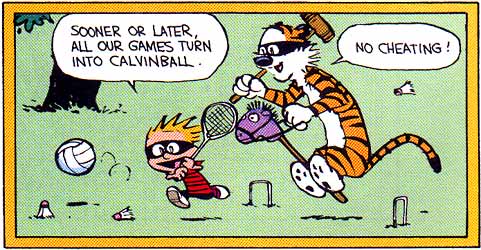 who “hijacked the Republican party on behalf of the rich”, go no further than TIm Dickinson’s article in this month’s Rolling Stone. This man continues to hold sway over the Republican congress critterz despite overwhelming public polls that show even Republicans and Independent rank and file don’t support his agenda. Norquest comes from two Republican institutions. He was originally in the Chamber of Commerce which is one organization that has no problem seeing lies and half baked arguments printed in newspapers around the country. Ronald Reagan used him to push his tax reform measures. It’s been one power grab after another backed by nothing more than dogma and a huge budget since then.
Over the past 25 years, Norquist has received funding from many of America’s wealthiest corporations, including Philip Morris, Pfizer and Microsoft. To build a farm team of anti-tax conservatives, Norquist shrewdly took the pledge to state legislatures across the country, pressuring up-and- coming Republicans to make it a core issue before they’re called up to the big leagues. “We’re branding the whole party that way,” Norquist says. “The people who are going to be running for Congress in 10 or 20 years are coming out of state legislatures with a history with the pledge.”
Norquist also built the anti-tax pledge into the DNA of the GOP by hosting weekly Wednesday meetings that enable activist groups representing everyone from gun nuts to home-schoolers to mix with top business lobbyists and conservative officials. The meetings, which began shortly after Bill Clinton was elected, turned Norquist into the Republican Party’s foremost power broker – and gave him a forum to enforce the no-new-taxes pledge as the centerpiece of the GOP’s strategy. “The tax issue,” he says, “is the one thing everyone agrees on.”
Norquist cemented his influence by forging an early alliance with Karl Rove and setting himself up as a gatekeeper to George W. Bush’s inner circle. Then, after Obama was elected, this ultimate Washington insider positioned himself as a leader of the anti-establishment Tea Party, complete with financial support from the billionaire Koch brothers. “These Tea Party people, in effect, take their orders from him,” says Bruce Bartlett, an architect of the Reagan tax cuts. “He decides: This is a permissible tax action, or this is not a permissible tax action. And of course, anything that cuts taxes is per se OK.”
Today, GOP politicians who have signed Norquist’s anti-tax pledge include every top Republican running for president, 13 governors, 1,300 state lawmakers, 40 of the 47 Republicans in the Senate, and 236 of the 242 Republicans in the House. What’s more, the GOP’s Tea Party foot soldiers are marshaled by House Majority Leader Eric Cantor – a veteran of Norquist’s farm team, who first signed the pledge as an ambitious member of the Virginia legislature. Under Cantor’s leadership, Norquist’s anti-tax pledge was directly responsible for last summer’s debt-ceiling standoff that wrecked the nation’s credit rating by leading the nation to the brink of default. “Congress was willing to cause severe economic damage to the entire population,” marvels Paul O’Neill, Bush’s former Treasury secretary, “simply because they were slaves to an idiot’s idea of how the world works.”
Yup. Bush’s former Treasury secretary thinks Norquist has congress hostage to the point that they are “willing to cause severe economic damage to the entire population simply because they were slaves to an idiot’s idea of how the world works.” The result of the work of Norquist and the Republican party has been staggering income inequality.
“The Republican Party has totally abdicated its job in our democracy, which is to act as the guardian of fiscal discipline and responsibility,” says David Stockman, who served as budget director under Reagan. “They’re on an anti-tax jihad – one that benefits the prosperous classes.”
Notice here that I’m quoting Republicans that have had extensive experience in economics, finance, and policy. Funny thing is that the most of these folks aren’t really worried about tanking the economy. What they are worried about is this. If you haven’t read Cannonfire today, you should. First, Cannon points to this. MSNBC got a hold of a memo from a lobbying firm spelling out its plan to use any propaganda means necessary to destroy OWS. The lobbying firm is associated with the American Banker’s Association.
CLGC’s memo proposes that the ABA pay CLGC $850,000 to conduct “opposition research” on Occupy Wall Street in order to construct “negative narratives” about the protests and allied politicians. The memo also asserts that Democratic victories in 2012 would be detrimental for Wall Street and targets specific races in which it says Wall Street would benefit by electing Republicans instead.
According to the memo, if Democrats embrace OWS, “This would mean more than just short-term political discomfort for Wall Street. … It has the potential to have very long-lasting political, policy and financial impacts on the companies in the center of the bullseye.”
The memo also suggests that Democratic victories in 2012 should not be the ABA’s biggest concern. “… (T)he bigger concern,” the memo says, “should be that Republicans will no longer defend Wall Street companies.”
Two of the memo’s authors, partners Sam Geduldig and Jay Cranford, previously worked for House Speaker John Boehner, R-Ohio. Geduldig joined CLGC before Boehner became speaker; Cranford joined CLGC this year after serving as the speaker’s assistant for policy. A third partner, Steve Clark, is reportedly “tight” with Boehner, according to a story by Roll Call that CLGC features on its website.
Another interesting association is noted in the memo.
The CLGC memo raises another issue that it says should be of concern to the financial industry — that OWS might find common cause with the Tea Party. “Well-known Wall Street companies stand at the nexus of where OWS protestors and the Tea Party overlap on angered populism,” the memo says. “…This combination has the potential to be explosive later in the year when media reports cover the next round of bonuses and contrast it with stories of millions of Americans making do with less this holiday season.”
Yup, it’s the divide and conquer strategy again. Since Wall Street can’t make the case, it’s going to use proxies like the Tea Party to do its dirty work. This should be no problem given the astroturf leadership put in place by folks like Dick Armey and Matt Kibbe. These guys are longstanding Republican Beltway insiders. The interesting thing comes in some of the rumors coming out from the committee itself. Supposedly, Boehner had actually agreed to put revenues on the table and provide cover to Republicans that feared Norquist and the Tea Party. Some Democrats never really engaged, some republicans refused to even discuss anything that didn’t include making the Bush Tax cuts permanent for every one, and there was some feeling that the next election would give some indication of which way the wind blows.
A Democratic aide had this eulogy for the supercommittee: “The worm has turned a little bit. The national conversation now is about income inequality and about jobs, and it’s not really about cutting the size of government anymore or cutting spending. 2010 gave one answer to that question. But 2012 will give another, and we’ve got to see what it is.”
I still think economist Jeffrey Sachs has the best take on what the real role of Congress should be in an schizophrenic economy like ours. This is what OWS is trying to point out but is getting blasted for by concentrated efforts in corporate media to publish propaganda. (I have quoted this before, but I’m quoting Sachs again.)
The big political lie of the Super-Committee is that the deficit must be closed mainly by cutting government spending rather than by raising taxes on corporations and the super-rich. Both parties are complicit. The Republicans want to close the deficit entirely by cutting spending; Obama has brandished the formula of $3 of cuts for every $1 of tax revenues. On either approach, the poor and middle class would suffer grievously while the rich and powerful would win yet again (at least until the social pressures boil over).
The key to understanding the U.S. economy is to understand that we have two economies, not one. The economy of rich Americans is booming. Salaries are high. Profits are soaring. Luxury brands and upscale restaurants are packed. There is no recession.
The economy of the middle-class and poor is in crisis. Poverty and near-poverty are spreading. Unemployment is rampant. Household incomes have been falling sharply. Millions of discouraged workers have dropped out of the labor force entirely. The poor work at minimum wages to provide services for the rich.
Until we have some realization that laws put into place for the last 30 years have created markets that are distorted, functional only for a few, and not the least bit reflective of anything remotely “free market”, a portion of the public is going to be willing to vote for people that spread lies. This is why the credibility of any one associated with OWS must be destroyed. The minute a huge portion of us wake up to the lies–much like what happened after publication of the Pentagon Papers and the invasion of Cambodia after Nixonian promises of winding the Vietnam War down–we’re not going to get the policy we need to put things right again. We desperately need to put things right again.
The Audacity of No Shame: Gingrich/Santorum Edition
Posted: November 19, 2011 Filed under: worker rights | Tags: child labor laws, labor laws, poor farms, protecting children from Republicans, Republicans, return to the 19th century 41 CommentsThere are policies supported by today’s Republicans that go beyond long standing American Values. Is this really still the party of Abraham Lincoln? Last night at Harvard’s Kennedy School, Newt  Gingrich said that child work laws “entrap” poor children into poverty. He went beyond this to suggest “that the best way of handle failing schools is to fire the janitors, hire the local students and let them get paid for upkeep”.
“This is something that no liberal wants to deal with,” Gingrich said. “Core policies of protecting unionization and bureaucratization against children in the poorest neighborhoods, crippling them by putting them in schools that fail has done more to create income inequality in the United States than any other single policy. It is tragic what we do in the poorest neighborhoods, entrapping children in, first of all, child laws, which are truly stupid.
“You say to somebody, you shouldn’t go to work before you’re what, 14, 16 years of age, fine. You’re totally poor. You’re in a school that is failing with a teacher that is failing. I’ve tried for years to have a very simple model,” he said. “Most of these schools ought to get rid of the unionized janitors, have one master janitor and pay local students to take care of the school. The kids would actually do work, they would have cash, they would have pride in the schools, they’d begin the process of rising.”
He added, “You go out and talk to people, as I do, you go out and talk to people who are really successful in one generation. They all started their first job between nine and 14 years of age. They all were either selling newspapers, going door to door, they were doing something, they were washing cars.”
“They all learned how to make money at a very early age,” he said. “What do we say to poor kids in poor neighborhoods? Don’t do it. Remember all that stuff about don’t get a hamburger flipping job? The worst possible advice you could give to poor children. Get any job that teaches you to show up on Monday. Get any job that teaches you to stay all day even if you are in a fight with your girlfriend. The whole process of making work worthwhile is central.”
The former House Speaker acknowledged that it was an unconventional pitch, saying, “You’re going to see from me extraordinarily radical proposals to fundamentally change the culture of poverty in America and give people a chance to rise very rapidly.”
I do believe that it’s just a matter of time when we see them suggest the return of forced labor and poor farms. Earlier today, I found this video from Santorum suggesting the Christian thing to do was to allow people without jobs and food to suffer. I wasn’t raised Catholic, but my understanding of that particular brand of Christianity is that outreach and care for the poor has been a central part of the church’s core mission for years. Michelle Bachmann has already suggested letting the unemployed starve.
“Our nation needs to stop doing for people what they can and should do for themselves. Self reliance means, if anyone will not work, neither should he eat.”
Is the new Republican pogrome one that forces the poor to sell the children which is basically what happens in undeveloped nations all over the world?
Are they suggesting we return to a time of indentured servitude and child slavery? It seems that way to me. Labor reforms of the 20th century included laws regulating the use of children as workers. These have essentially been core US values since the very dawn of the 20th century. The attempts to let children be children instead of the property of their parents and others to be used as slaves was enshrined in national law via Labor Standards Act in 1938. The movement to end enslavement of children in the US began as early as the 19th century in 1832 New England.
The New England Association of Farmers, Mechanics and Other Workingmen resolve that “Children should not be allowed to labor in the factories from morning till night, without any time for healthy recreation and mental culture,” for it “endangers their . . . well-being and health”
The mental, emotional, and physical development of children is such that they are endangered in many working environments. They don’t have the physical or mental maturity to make all kinds of basic decisions and they certain don’t have the physical or emotional power to stand up to exploitative adults. You can see this in the exploitation of children by pedophiles in positions of power of children like priests, doctors, coaches, scout leaders, and teachers.. Children are the least among us to be able to stand up to bad situations and bad people. That’s exactly why our laws protect them. However, the pro-slavery argument of “states’ rights” has resurrected itself in a new brand of neoconfederacy.
Newly elected extremist Republican Sen. Mike Lee of Utah has argued that child labor laws are actually unconstitutional. This is the Tea Party candidate that took down Bob Bennett. It is easy to see the anti-labor regulation ideology of the Koch Brothers and others in the rhetoric. They clearly want to remove 20th century labor laws.
“Congress decided it wanted to prohibit that practice, so it passed a law. No more child labor. The Supreme Court heard a challenge to that law, and the Supreme Court decided a case in 1918 called Hammer v. Dagenhardt,” Lee said. “In that case, the Supreme Court acknowledged something very interesting — that, as reprehensible as child labor is, and as much as it ought to be abandoned — that’s something that has to be done by state legislators, not by Members of Congress.”
Lee’s reasoning was that labor and manufacturing are “by their very nature, local activities” and not “interstate commercial transactions.” He added: “This may sound harsh, but it was designed to be that way. It was designed to be a little bit harsh.”
The key Congressional law that addresses child labor is the Fair Labor Standards Act of 1938, which placed a series of restrictions against the employment of people under 18 in the public and private sectors.
The Supreme Court unanimously upheld the law in the 1941 United States v. Darby Lumber decision, overturning Hammer, on the basis of the constitutional authority of Congress to regulate interstate commerce. It has hardly run into controversies since.
Lee said he was not opposed to laws regulating child labor, but merely insisted they be controlled by state governments, not Congress. The issue of states rights is particularly popular in Utah, widely known as America’s most conservative state.
 The slippery return to slavery and women and children as property is again cloaked in the mantel of “state’s rights”. There’s been a Maine bill already seeking to overturn child labor laws. There are ongoing efforts in other states to also dismantle laws protecting children from exploitation. Missouri seems to have jumped on the child labor bandwagon also.
Maine State Rep. David Burns is the latest of many Republican lawmakers concerned that employers aren’t allowed to do enough to exploit child workers:
LD 1346 suggests several significant changes to Maine’s child labor law, most notably a 180-day period during which workers under age 20 would earn $5.25 an hour.
The state’s current minimum wage is $7.50 an hour.
Rep. David Burns, R-Whiting, is sponsoring the bill, which also would eliminate the maximum number of hours a minor over 16 can work during school days.
Burns’ bill is particularly insidious, because it directly encourages employers to hire children or teenagers instead of adult workers. Because workers under 20 could be paid less than adults under this GOP proposal, minimum wage workers throughout Maine would likely receive a pink slip as their twentieth birthday present so that their boss could replace them with someone younger and cheaper.
And Burns is just one of many prominent Republicans who believe that America’s robust protections against the exploitation of children are wrongheaded:
- Maine State Sen. Debra Plowman (R) introduced a separate bill that would extend the number of hours employers can require a minor to work. Maine Gov. Paul LePage (R) backs this proposal.
- Sen. Mike Lee (R-UT) delivered a lengthy lecture where he claimed that federal child labor laws violate the Constitution. His Republican colleagues in the Senate rewarded him with a seat on the Senate Judiciary Committee — the committee with jurisdiction over constitutional questions.
- Missouri State Sen. Jane Cunningham (R) introduced a bill which would “eliminate[] the prohibition on employment of children under age fourteen. Restrictions on the number of hours and restrictions on when a child may work during the day are also removed.”
- Virginia Attorney General Ken Cuccinelli’s (R) most recent brief attacking the Affordable Care Act relies heavily on a discredited Supreme Court decision striking down a federal child labor law that was overruled decades ago.
- Judges Roger Vinson and Henry Hudson, the two outlier judges who struck down the ACA, also relied heavily on this discredited anti-child labor decision in their decisions.
It’s easy to image what kind of jobs children could be forced to do under this new Republican form of child servitude. Farm labor comes to my mind. Since Alabama has moved to vacate their migrant worker population, can forcing the unemployed, children, and prisoners to toil in farms for less than minimum wage be far behind? What kind of country would undo the legal protection of its most vulnerable citizens? These candidates repulse me. How disingenuous is it of Newt to suggest that you can move quickly out of poverty by farming your child out as free/cheap labor?

 peej
peej Carissa
 bostonboomer
 dakinikat
 ecocatwoman
 jjlo
jjlo mablue2
 Mama Lopez
 peggysue22
 quixote
 skydancingguestblogger
 Mona (aka Wonk the Vote)





Recent Comments