
Friday Reads
Posted: November 18, 2011 Filed under: FBI raids, Federal Budget and Budget deficit, income inequality, investment banking, lobbyists, morning reads | Tags: Budget Deficit, buying congress, Jack Abrahamoff, Lobbyists, low corporate taxes, reporting corporate taxes, supercommittee, who are the 1 percent? 24 Comments Good Morning!
Republicans are asking Obama to try to ‘break the log jam” in the subcommittee. I’m not surprised given the President’s known ability to give everything away at the bargaining table. I’m also sure it’s because they can get their lousy policies through and then when they backfire and people get mad, they’ll blame Obama.
Republicans are calling for President Obama to jump into the deficit-reduction talks gripping Washington, reflecting the widespread view that the congressional supercommittee is now headed for a failure.
Lawmakers and congressional aides familiar with the deliberations say the talks have reached a hard impasse, with Republicans locked in an internal struggle over whether to agree to higher tax hikes to cut a deal.
“It’s hard to see us getting a deal unless he comes in at the last minute,” Sen. Dan Coats (R-Ind.) said of Obama, who is on a nine-day trip to the Pacific and not scheduled to return to Washington until Sunday.“We’re in the two-minute drill and closing in on a ‘Hail Mary’ and the quarterback is on the sidelines.
“Unless the leadership, including the president, steps in and saves this thing, I think the consensus is, in terms of coming up with a credible package, all is lost,” Coats added.
There was a surprising lack of urgency on Capitol Hill Thursday as members of the supercommittee talked past one another. Some lawmakers not on the super-panel shrugged at the inaction, saying they were planning to go home for the Thanksgiving recess and noting they don’t have to vote on any deal until next month. Meanwhile, House and Senate leaders indicated they are in no rush to jump in and broker an agreement.
E.J. Dionne, Jr. at Truth Dig says the easiest way to cut the deficit is to do nothing. His thinking reflects some of the things that I’ve been supporting. It includes letting the Bush Ta Cuts expire. I hate to see the triggers on some things, but getting the Pentagon budget trimmed down would be a positive as far as I’m concerned.
Democrats have put huge spending cuts on the table—and keep offering more and more and more. All the Democrats ask in return is that the cuts be balanced by some revenue.
By rejecting their offers, Republicans induce Democrats who are anxious for some deal—any deal—to keep coming their way. The Republican approach is wrong and irresponsible but brilliant as a negotiating strategy. As my Washington Post colleague Ezra Klein wrote this week: “Over the past year, Republicans have learned something important about negotiating budget deals with Democrats: If you don’t like their offer, just wait a couple of months.”
Finally, the Republicans decided they needed to look slightly flexible. So they came up with $300 billion in supposed revenue from a promised tax reform in a plan that also included a proposal to slash tax rates for the rich. There is a lot more tax cutting here than revenue. Rep. Jeb Hensarling, R-Texas, co-chairman of the super committee, who said on Tuesday that this was the GOP’s final offer, reversed field Wednesday afternoon and declared himself open to other ideas.
Even Democrats inclined to capitulate know how shameful agreeing to such a deal would be. And mainstream, centrist deficit hawks should be grateful if a deal on such terms is killed. What Republicans want to do in effect is to make at least 90 percent of the Bush tax cuts permanent. This would only make deficit reduction even harder in the future.
That’s where the do-nothing strategy comes in. Championed early this year in The New Republic by New York Magazine writer Jonathan Chait, it looks even better now because of the spending cuts scheduled to go through if the super committee doesn’t act.
Jack Ambramoff is sure biting the hands that used to feed him. He’s written an article for Bloomberg and calls congress criterz “Willing Vassals” that are up for anything as long as they can cash in. Now that he can no longer make a profit from the game, he’s got some suggestions to end it.
There is only one cure for this disease: a lifetime ban on members and staff lobbying Congress or associating in any way with for-profit lobbying efforts. That seems draconian, no doubt. The current law provides a cooling off period for members and staff when joining K Street. The problem is that the cooling off period is a joke.
Here’s how it works. “Senator Smith” leaves Capitol Hill and joins the “Samson Lobbying Firm.” He can’t lobby the Senate for two years. But, he can make contact with his former colleagues. He can call them and introduce them to his new lobbying partners, stressing that although he cannot lobby, they can. His former colleagues get the joke, but the joke’s on us.
Because the vast majority of lobbyists start on the Hill, this employment advantage is widely exploited. It cannot be slowed with a cooling off period. These folks are human beings, not machines — and human beings are susceptible to corruption and bribery. I should know: I was knee-deep in both. Eliminating the revolving door between Congress and K Street is not the only reform we need to eliminate corruption in our political system. But unless we sever the link between serving the public and cashing in, no other reform will matter.
That’s easier said then done considering the foxes write the rules about how they can behave in the coop. One thing they have managed to do is arrange to avoid taxes. Check out the nifty chart from Felix Salmon at Reuters. It graphs corporate taxes as a percentage of corporate profits. Can you say magically disappear?
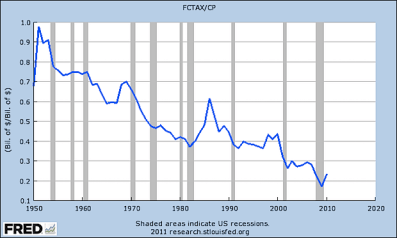
Once upon a time, the corporate income tax generated a significant share of tax revenues; now, it’s bumping along in the 2%-of-GDP range. Yes, the marginal rate of corporate income tax is high, at 35%. But US companies are extremely good at not paying that.
But at least we know the aggregate amount that corporations pay in taxes. What we don’t know — because they won’t say, and no one’s forcing them to say — is how much any given public company pays.
Follow the article to this link to CNN Money that shows you why reporting requirements allow corporations to hide their true tax positions.
During the past few months I’ve repeatedly asked three big companies in the tax-wars cross hairs — GE (GE), Verizon (VZ), and Exxon Mobil (XOM) — to voluntarily disclose information that would refute allegations that they incurred no U.S. federal income tax for 2010. All have refused, saying they won’t disclose anything not legally required. They still manage to complain about the allegations, however. I suspect that if I called the rest of the Fortune 500, I’d get 497 similar responses.
As a society, we need the “taxes incurred” information to inform our current tax debate. Investors, too, would benefit; knowing the tax that companies actually incur would be a useful analytical tool.
The solution, as I’ve said before, is for the Financial Accounting Standards Board to require companies to disclose information from their tax returns for the most recent available year and the nine years before that. This information, from lines 31 and 32 of their returns, would take at most one person-hour a year per company to provide. Adding a 17th tax metric to the 16 already available hardly seems like an invasion of corporate privacy.
Here’s an interesting read in the New York Review of Books by Jeff Madrick entitled “America’s New Robber Barons”.
So it’s worth knowing who is in that group of very rich with runaway incomes. Several news reports in recent weeks have cited a seminal 2010 study that uses IRS tax returns to find out who belongs to the top 0.1 percent. The authors deserve mention because they are often left out when their results are cited: Jon Bakija of Williams College, Adam Cole of the US Treasury, and Bradley Heim of Indiana University. This was not a Treasury study, however, but a private if scholarly one.
One key finding of the study is that three out of five of those in the top 0.1 percent of tax filers are executives or managers of financial and non-financial companies. Overall, more are from non-financial companies. Does this partly exonerate Wall Street, suggesting it is really Main Street where the problem lies?
In fact Bakija, Cole and Heim’s analysis shows the opposite: it turns out that much of the increase in wealth of non-financial executives was also tied to the rise in stock prices. Keeping in mind that stocks options appear as wages in the data, it seems Wall Street itself was often a main source of income growth for “non-financial” managers as well. (Lawyers were another large category of tax payers in the top 0.1 percent, and though there is not direct data for this, one can fairly assume that many of those in corporate firms made a lot of money from the booming business on Wall Street.)
Next, think about how these executives managed their businesses. If they wanted a big pay check they had to orient their strategies to push up their stock prices—that is, often to appeal to the financial fads and fashions of the day. These strategies typically have included cutting labor costs and R&D in order to boost short-term profits. This delighted their advisers on the Street. Stock investors soon loved nothing better than consistent increases in quarterly profits, and not coincidentally, stock options accounted for an ever-growing proportion of executive pay over the past thirty years. We used to say once that Wall Street worked for business, but over the past thirty years business has come to work for Wall Street.
It is just as interesting to explore the factors that the authors found out probably did not cause the surge at the top. Economists typically posit sophisticated technologies (often related to digitalization) as a source of growing inequality: because these technologies require better educated and smarter workers, those who have mastered them are rewarded handsomely. But there was no surge at the very top in other nations like Japan or in Western Europe, which also adopted the same technologies.
Similarly, some have argued that globalization led to higher incomes at the top because skilled workers can sell themselves globally at ever higher salaries. Again, however, such skilled workers have not seen a surge at the very top in Europe or Japan.
One reason for the discrepancy between the US and other countries is that boards of directors in the US are especially willing to give their CEOs and other high level executives big raises and generous stock options. Lucian Bebchuk of Harvard has done a lot of research on this so-called “governance” issue. Meantime, as Bebchuk’s work shows, shareholder influence over executive compensation is far too weak. And there is also the issue of culture itself. America—with its admiration for the self-made man—tolerates high remuneration for the men and women at the top and lower wages in the middle and the bottom. Culture likely matters.
So, that’s a few things to get you started this morning. What’s on your reading and blogging list today?
More Journalistic Malpractice from WAPO
Posted: November 17, 2011 Filed under: The Media SUCKS, the villagers, We are so F'd | Tags: Journalistic Malpractice, Lori Montgomery, WAPO 14 Comments
The Yellow Kid of Yellow Journalism
Predictably, WAPO propaganda specialist Lori Montgomery and her cronies have produced more junk journalism based on bias instead of any actual knowledge of economics or interviews with folks that would actually know about economics. This time she teamed up with Rosalind Helderman to push her same disinformation about Social Security within the framework of the super committee. Then there’s the added confidence fairy story. It’s about time we consider WAPO to be a source of malinformation and place it on newsstands in the same category as Globe Magazine. Well, maybe not quite the same category. At least the Globe only spins lies about celebrities and alien invasions. Can WAPO just turn their coverage of the federal budget over to Pete Peterson and at least be honest about its obvious dependence on biased think tanks instead of real economics? Why do we have to suffer through bad writers like Lori Montgomery when we can just cut out the middle man? Why hide the real source of this nonsense?
Even as supercommittee members struggled to chart a path to a compromise that would not alienate their respective political bases, a bipartisan group of lawmakers from the House and the Senate planned to renew a call Wednesday for the panel to pursue a more ambitious deal that would require major surgery to Medicare, Medicaid and Social Security, as well as historic tax increases.
Yup. Just what we need. More ambitious cuts that send us straight to a depression. As usual, WAPO writers just can’t help wrongly inserting Social Security into any talk of the federal deficit. How many times do actual economists need to point out that Social Security is a stand alone program with its own source of financing?
Robert Kuttner of the American Prospect shreds WAPO and its biased coverage. WAPO also continues to spew the confidence fairy nonsense. Some how, every one will feel all snug and warm and the economy will recover if we take money away from the vast majority of American households to protect the comfortable few. Wow, just imagine the need for the safety net programs if we downgraded the 1% from filthy stinking rich to stinking rich. Whatever would happen to sales at Tiffany and Mercedes Benz dealerships? Oh, the humanity! Oh, the economic devastation! Hully Gee! WAPO just keeps making up these story lines!
Wednesday’s Washington Post deserves some kind of perverse award for advocacy journalism—in this case, for advocating the proposition that dire economic consequences will ensue if the congressional Super Committee fails to cut a deal for drastic deficit reduction. This is, of course, one side of an argument.
Those on the other side, including myself, have argued that austerity in a deep recession makes no economic sense and that as a matter of politics, the Obama administration would be far better advised to let the automatic sequester formula take effect, knowing that it would have to be reopened because of Republicans’ horror of deep defense cuts and the expiration of the Bush tax cuts.
Moreover, Social Security does not belong in this conversation, and Democrats are better off, substantively and politically, defending it against Republican proposed cuts rather than lumping it in with budget talks.
But I digress. The Post has been an editorial champion of the Super Committee and austerity politics, and of the bogus claim that Social Security is partly responsible for the current deficit, which has seeped into the news coverage of the predictably biased Lori Montgomery.
In yesterday’s Post, the lead piece on deficit politics, by Montgomery and Rosalind Henderman, includes the subtitle, “Pressure mounts from all sides as deadline nears.” Reading the piece, we learn that “talks have focused on a tax package of as much as $650 billion over the next decade”—a Republican claim that the Post took at face value in order to drum up support for the deal. The Republican arithmetic has been thoroughly demolished by Bob Greenstein, whose analysis was just a keystroke away from Montgomery’s wishful keyboard.
Greenstein and Horney’s analysis at CEPR demonstrates that the Toomey plan is not a balanced approach to deficit reduction. As I said yesterday, it is a bait and switch or  some kind of Wimpynomics. Toomey will gladly “reform” taxes Tuesday for devastating budget cuts in social programs today. Nearly all the Republican plans begin with saving the Bush Tax Cuts which have done all kinds of damage to the budget and have had little impact on the economy. Republican suggestions include some weird bargain that would cut spending immediately and postpone overhauling the tax code. I still argue that the Bush Tax Cuts must go or we will be permanently locked into a death spiral.
Senator Pat Toomey and other Republicans on the Joint Select Committee on Deficit Reduction (“Supercommittee”) portray their new offer to raise close to $300 billion in revenues (under a plan to reduce deficits by about $1.5 trillion over ten years) as a significant concession, and some observers have suggested it represents a welcome first step toward a balanced deficit reduction plan to put the budget on a sustainable path. But a closer examination of the proposal raises grave concerns and indicates that, in fact, it adds little balance.
It uses savings from closing tax loopholes and narrowing other tax expenditures mainly to set tax rates permanently at levels well below those of President Bush’s tax cuts, and to make permanent both the highly preferential treatment of capital gains and dividend income under the Bush tax cuts and the temporary hollowing out of the estate tax for estates of the wealthiest one-quarter of 1 percent of Americans that Congress enacted in late 2010. Consequently, the proposal seems designed to make only a modest revenue contribution toward deficit reduction and then to take revenues off the table for the larger rounds of deficit reduction that must follow. Moreover, even while yielding modest savings, the revenue component would make the package less balanced by conferring large new tax cuts on the wealthiest Americans while forcing low- and middle-income Americans to bear most of the plan’s budget cuts as well as its tax increases.
By permanently locking in tax rates well below the Bush levels, the plan would remove the potential to secure $800 billion in deficit reduction by letting the Bush tax cuts for households with incomes over $250,000 expire on schedule at the end of 2012, and it would remove the leverage that the scheduled expiration of these tax cuts provides to those who seek balanced deficit reduction with a substantial revenue contribution. It also would remove the potential to secure a substantial deficit reduction contribution from tax reform.
The most absurd storyline in WAPO pointed out by Kuttner is that some how the failure of the super committee will act like the Grinch that Stole Christmas. Neil Irwin and Ylan Q. Mui write some absurd piece that suggests that people will be more apt to spend for the holidays–due to the perpetually present confidence fairy–after they completely gut Social Security, Medicare and Medicaid. Wow. That makes absolutely no sense. How would causing income to go down and expenses to go up for seniors cause them to go on a shopping spree? How would it give businesses more confidence knowing congress drained them of a source of revenue–in the case of the medical professions–and decreased the income to their customers? WAPO must have some crazy back-asswards macroeconomic models at play!
I can’t wait for Dean Baker and some other economists to take this on again. At the moment, Baker is taking on how the austerity meme is killing the Euro which–if it happens–will undoubtedly send us right back into a global depression and keep us there for some time. Here’s two short paragraphs that point to the root of all our current economic problems. It’s still a lack of demand brought on by the vast wealth and income destruction caused by banks that overleveraged and engaged in pure speculative activities. Their bad investment portfolios wounded many western economies. This austerity kick will most likely mortally wound us all.
The absurdity of this situation is that the eurozone countries would not need outside support from the BRICs if the ECB was prepared to pursue these policies today. Just as is the case now with the United States, there is no shortage of wealth in the EU, in the sense that it has the ability to produce vastly more goods and services than it is currently producing. The main problem is simply a lack of demand.
We have known how to generate demand since Keynes wrote his masterpiece in the ’30s. However, rather than pursue the simple steps needed to restore the eurozone’s economy to stable growth, the ECB is adhering to an ideological agenda that will destroy the euro and throw the economy into an even more severe recession than the last one. This is an extraordinary tragedy unravelling in slow motion in front of the world.
How much more can our civilization endure of policy via junk science and right wing ideology? How can we actually solve any problems when we have huge national papers basically pushing ignorance agendas? We are so f’d.
So, How threatening are 84 year old “Activists”?
Posted: November 16, 2011 Filed under: #Occupy and We are the 99 percent! | Tags: Occupy Seattle 32 Comments Every time I look in the mirror or try on an old pair of jeans or check my crown for newly sprouted grey hairs, I try to recite the poem ‘Warning, When I Am an Old Woman, I Shall Wear Purple’ . I probably should just make a copy of it and paste it on my vanity mirror. It’s hard to stay focused when your hips start to take up entire chair seats.
I’ve done my share of protests. I’ve done them with now Dr. Daughter strapped to my chest in a baby carrier and with same daughter pushed across the streets around the Nebraska State Capitol in a baby carrier. I ran for state office when baby daughter was still in Montessori pre-school. (She gets her B.S. in Finance from LSU in May.) Dr. Daughter was in utero when I interviewed Maya Angelou and when I was out at the Rose and Crown with Kate Millet and Betty Friedan talking about rumors of holding an annual International Women’s Day. Whenever I get down, I start singing “we will never give up, we will never give up, until justice is ours” which is my life’s theme song after I learned it from from Kristen Lems in the early 80s. (I learned this with Dr. Daughter in utero and most of my friends hoping that I wasn’t going to give birth in the middle of being the executive director of an activists’ conference). One of these days I will transfer some of this off of a VHS tape to digital and share it with you. People–including my children–can attest to its existence, however. I fought and worked like crazy for the ERA when I was in graduate school getting my first masters degree. I go through periods where I can still find the strength to protest and other times when I just can’t believe we could be regressing so quickly. These days, I am highly discouraged.
I would just like to bow deeply and say “I’m not worthy” to Dorli T. Rainey.
Dorli T. Rainey described herself as “an old lady in combat boots” in a Wednesday interview with The Associated Press and said she’s a former school teacher. A Seattle police spokesman did not discuss her specifically, instead referring to a statement saying demonstrators sprayed were refusing a police order to disperse.
The department was working with Mayor Mike McGinn’s office Wednesday and a statement on the Tuesday night protest was expected later in the afternoon. Update: McGinn’s statement can be read here.
Rainey in 2007 (seattlepi.com file)
Rainey’s time in the 2009 mayoral race was brief, and Rainey told the AP she quit because she was too old. On Tuesday night, Rainey was on a bus when she heard helicopters and thought she should show her solidarity with New York, where protesters had rallied for Wall Street reform.
Rainey was near Fifth Avenue and Pine Street when she was pepper-sprayed Wednesday night – the most chaotic night of Occupy Seattle protests. An officer using a public-address system told demonstrators to leave.
“Pepper spray was deployed only against subjects who were either refusing a lawful order to disperse or engaging in assaultive behavior toward officers,” department spokesman Jeff Kappel said the earlier statement.
Rainey has been a longtime activist, and wrote several letters to the editor of the Seattle Post-Intelligencer print edition.
In April 2005 she called for Experience Music Project, which she called an “ugly monster,” to be imploded like the Kingdome. In January 2007, she wrote that there were “interesting parallels between what happened in 1944-45 in Germany and what is happening today in the United States.” She complained of former Seattle Mayor Greg Nickels’ influence on Seattle Public Schools and opposed the tunnel to replace the Alaskan Way Viaduct.
In June 2007, Rainey was outside the Westin Hotel in Seattle protesting a visit by Attorney General Alberto Gonzales. In November of that year, she wrote in a letter of an “eerie similarity” between a government crackdown on protestors in Pakistan and a crackdown by Olympia Police Department and others “on peaceful and unarmed protesters at the Port of Olympia.”
Ms. Rainey was pepper sprayed in Seattle along with a 19 year old pregnant woman and a priest. I would certainly like to know how any of them threatened the riot police.
The Seattle mayor Mike McGinn has apologized and asked for a police review.
McGinn said in a Wednesday afternoon statement that he had spoken with Rainey, and had also directed police leadership to review the incident.
“To those engaged in peaceful protest, I am sorry that you were pepper sprayed,” he said. “I also called in Seattle Police Chief John Diaz and the command staff to review the actions of last night. They agreed that this was not their preferred outcome.”
The mayor said police officers are facing difficult circumstances trying to maintain order the many Occupy protests throughout the city. He said police are developing procedures to make sure there are enough commanders on the scene at future protests.
McGinn referenced the 1999 World Trade Organization protests in Seattle, at which there were mass arrests, a nighttime curfew in parts of the city and the deployment of National Guard troops to maintain order, as well as 2001 riot during Mardi Gras celebrations that left a young man dead.
“In both instances insufficient attention and preparation led to severe public safety issues,” McGinn said.
McGinn said “tensions appear to be getting higher” as the local Occupy movement stretches into its sixth week.
The police response to these protest really worries me. Oh, and who would do such an inhumane thing as this?
Publicola reported that a short time after the pepper spray was fired, the protesters were lectured by a man in a suit who described himself as a “professional investor.” He told a group of protesters, including a young woman who said she has a job at Safeway but is underemployed, “I’m in the 1 percent; I’m not like you.”
The man also asked the woman, “Who is John Galt?” That question is the first line of Ayn Rand’s novel “Atlas Shrugged,” and the phrase is commonly used by devotees of the book to signal their allegiance to its free-market ideology.
The Publicola report continued, “A young man wearing a black ’99 Percent’ shirt responded: ‘Go take your tie somewhere else.’”
Super Cat Food Commission: Ideologues seem destined to tank the Country
Posted: November 16, 2011 Filed under: Catfood Commission | Tags: Super Committee 14 Comments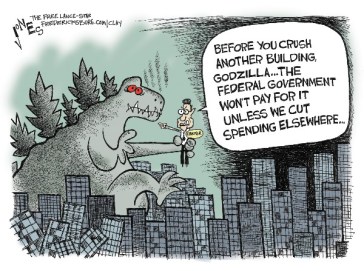 The starve the beast anthem seems to have stymied any chance the country has of solving both its unsustainable long term debt problems and its economic growth issues. This is what you get when no one embraces pragmatism, workable solutions, and data. I continue to think the best solution to much of this is to let the Bush Tax cuts expire and let them scramble from the fall out of the trigger.
Nothing is acceptable to Republicans who have signed their political souls away to Grover Norquist and seem hell bent on keeping the pentagon flush with funds all while supposedly balancing the budget. There is no way for this to happen simultaneously unless one is prepared to completely do away with all other functions of government which is frankly what I think they want. We’ll have taxes subsidizing already rich, powerful and profitable corporations and the military industrial complex and the rest of America will be sharecropping in one way or another.
Pat Toomey basically defended this position to Chris Wallace at Faux News on Sunday. The problem with this position–and with sticking to it like a drug addiction–is that the reality just doesn’t fit the story and it’s not what people want. How is it possible for a group of ideologues to continually hold the country’s economy hostage to failed ideals rejected not only by experts on the economy but by US citizens in poll after poll? Why was America’s most profitable period a time when taxes were high on both corporations and rich people and the US was winding down its war machine if the Republican paradigm is so correct? Believe me, this Toomey plan is a bait and switch.
WALLACE: Again, before we get to your plan. What are the stakes if you fail to make a deal. If on November 23rd, the super committee comes up empty and the automatic triggers come in, and we’ll talk about that in a moment. What do you think the impact is on the markets, on the economy and on the U.S. credit rating?
TOOMEY: I think that there will be further erosion of what little confidence remains of our federal government. This has been a dysfunction Senate that I’ve been serving in for the year that I’ve been in office. And this is an attempt to try to make some important progress. It would only be the first of what needs to be many steps because we’ve dug a deep hole for ourselves. I think it’s really important that we’d be successful.
WALLACE: All right. You offered a plan that breaks with the Republican pledge not to raise any tax revenue. Let’s drill down into the plan.
You would cut the deficit $1.2 trillion, which is the mark that is supposed to be met by the super committee with $700 billion in spending cuts and $500 billion in revenue increases. On the revenue side, you get $250 billion by limiting deductions especially for top earners. In exchange, you would lower tax rates, the top rate would go from 35 percent to 28 percent.
Question: why are you breaking with the GOP pledge not to raise taxes in the middle of a bad economy and how many Republicans will go along with you.
TOOMEY: Well, let me — first of all, let me say, if I were king, this is not the plan I’d put on the table. But if we both went into our respective corners and had no flexibility at all, then we wouldn’t get anything accomplish. Number two, the plan that I put on the table is contingent upon pro-growth tax reform.
Every group that’s looked to this, all of the bipartisan commissions, gang of six and the others, have acknowledge that if there is more revenue it has to come in the context of pro-growth tax reform, the kind of reform we’re talking about absolutely guaranteed to create millions of jobs over time and still more revenue.
And, finally, Chris, the other reason to make a tough decision like this, is in the alternative, we are 13 months away from the biggest tax increase in American history. And that’s written into law. That’s going to happen.
WALLACE: You’re talking about the Bush tax cuts expire.
TOOMEY: That’s exactly right.
And so, what we’ve suggested is, as an alternative to an economy destroying tax increase right around the corner, let’s have a reform, let’s simplify the code, let’s lower rates, let’s wipe out some of the loop holes and special interest, favors and deductions. Let’s have the economic growth that would come with that.
And as we lower the rates and contract the value of deductions, we’ll only generate a little revenue so that we can reduce the deficit.
WALLACE: Now, I don’t want to get too far on the weeds, but Democrats immediately rejected your plan because they say that the money that would be lost by lowering those tax rates, basically 20 percent below the Bush tax cuts, would cost over $3 trillion for the economy, and they say the money you’re going to will lose that will increase the deficit is more than money you’ll get from closing these tax loops. That it’s a net loser.
TOOMEY: First of all, that’s not true. You could design this in a way — and as I said, I didn’t invent this. We didn’t invent this. This is an idea that’s been suggested by the Simpson-Bowles commission, by the Rivlin-Domenici.
Now, it’s true that they want to raise taxes more. I think that as you reduce the value of these deductions, if you go too far, you try to create too much revenue, you can do economic damage. But you absolutely can do this in a way that will be pro-growth, that will generate more revenue, that would avoid this huge tax increase that’s otherwise coming and I think that’s a direction we should move in.
Republicans continue to say that 1+1=3 despite decades of evidence and proof that 1+1 still equals 2. If tremendous tax cuts and deregulation had such benefits to the economy we’d not have had over ten years of miserable growth and a humdinger of a financial crisis. Corporate profits are at record highs. This is not leading to job creation. Taxes on capital gains are extremely low. This just keeps leading to bubbles, increased speculation, and paper gains for a few based on nothing but gambling. It’s not bringing any value to the real economy where jobs, products, services, and tax revenues that keep things running are made. Money keeps pumping into financial contracts which is just paper whose value is detached from real assets until the market crashes. Increasing taxes on capital gains would close down much of the worthless investment funds that are going after arbitrage profits in all the wrong places. Tax benefits should go to real investments and long term commitment to growing industry and businesses. Taxes favor speculation right now. It’s bringing more volatility and risk to markets and not vaulted liquidity.
It’s ridiculous and it flies in the face of recent economic data to suggest that continuing to hand wealth over to the richest folks is going to do anything other than continue the very same problems that we have now. We move productive funds away from things that are attached to real sector growth and into speculative activities which blow bubbles and ruin the value of real assets like houses, food, and commodities and create such excessive volatility in equity markets that long term investors experience incredible losses and then small gains continually. No one benefits but a few gamblers which evidently includes Congress. Republicans like Boehner, Cantor and Bachus and Democratic leaders like Pelosi benefiting from betting based on insider information as much as Wall Street does.
It seems like there’s a plot to extract as much wealth and income out of the economy as possible before they tank the entire thing and retreat to tax haven islands like Grand Cayman. How could elected officials be so set on sabotaging the country? Granted, there are idiotic true believers like Michele Bachmann who create their own reality and narratives and are so removed from facts that you wonder why they’re allowed in public. There used to be nice places in the country for folks like that to ‘rest’ and spend their days listening to those voices in their head. Now it seems they’ve all turned up in the Republican Party and have hunkered down in Washington DC. Okay, this is from Beltway Bob, but bear with the quote, please. It’s an indicator that they’re willing–like domestic terrorists–to take us all hostage again.
Six days left for the supercommittee, and it’s not looking good. On CNBC last night, Rep. Jeb Hensarling, the Republican co-chair of the committee, said he and his colleagues had “gone as far as we feel we can go” on taxes, and that “any penny of increased static revenue is a step in the wrong direction.” In other words, Republicans aren’t looking to compromise further. But Hensarling went yet further than that. If the supercommittee fails, he said, Republicans are looking to undo the compromises they have already made.
The issue is “the trigger,” the policy that automatically cuts the deficit by $1.2 trillion in the event that the supercommittee fails. Half of those cuts are scheduled to come from domestic spending (excluding Social Security, Medicaid, and a few other programs that help the poor). That’s the stick for Democrats. Half of them are scheduled to come from the Pentagon. That’s the stick for Republicans. But last night, Hensarling said the defense cuts are too onerous, and so “we’ve got 13 months to find a smarter way to do it.” By “a smarter way to do it,” he means a way that eases the cuts to defense and, since Republicans aren’t going to replace those defense cuts with new taxes, increases the cuts to domestic programs.In comments to reporters Tuesday, Senate Majority Leader Harry Reid was firm on this point: the defense cuts in the trigger were the GOP’s concessions after they refused to include taxes in the trigger, and they’re not going anywhere. “If committee fails to act, sequestration is going to go forward,” he told reporters. “Democrats aren’t going to take an unfair, unrealistic load directed toward domestic discretionary spending and take it away from the military.”
Behind the scenes, the White House has taken a similar line: the trigger can’t be changed to exempt defense and fall more heavily on domestic spending. That isn’t the same as saying the trigger can’t be changed. But Democrats aren’t going to be enthusiastic about keeping the part meant to penalize them for the supercommittee’s failure while helping Republicans move the bit that was meant to be their punishment.
But we’ll see. Democrats haven’t always been known to hold the line on defense cuts. The bigger issue here, however, is that Republicans are setting a bad precedent for future deals. Republicans are talking about unwinding the trigger before the supercommittee has even finished its work. They are, in other words, reneging on the terms of the debt-ceiling deal. So why should Democrats who are hearing this expect they’ll abide by the terms of a deal that calls for revenue-increasing tax reform in six months?
Super Cat Food Commission may have reached a Deal
Posted: November 15, 2011 Filed under: Catfood Commission, Economy | Tags: austerity, cat food commission, deficit hawks, Super Committee 47 CommentsThere are nine days left until November 23rd and automatic spending cuts that are supposed to punish deadlock. Our economy is weak. Exactly how much recessionary 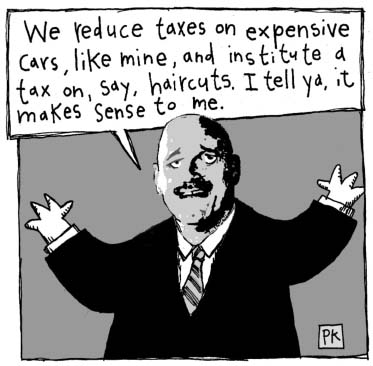 pressure will the austerity pogrom inflict on the country? Exactly how much will the unemployment rate go up and the economic growth go down when we do the exact opposite thing that all accepted and proven economic theory would have us do? Well, there’s hints at a deal. Get ready for a double dipper!
The panel needs seven votes on a deal to force at least $1.2 trillion in deficit reduction over the next 10 years. Sen. Pat Toomey (R) of Pennsylvania last week broke with his party’s anti-tax pledge to propose some $300 billion in new tax revenues. Democrats are said to be on the verge of a counterproposal, as early as today, to include new cuts in entitlement spending likely to offend their party’s base.
Tax increases and entitlement spending cuts = decreases in aggregate demand = decreases in prices and wages and decrease in economic growth/GDP/Income = more unemployment. Exactly who are they pleasing with this policy? Themselves? Their Wall Street Overlords? The Grinch?
There’s a lot of ignorance built in to this group.
Based on what we do know, however, both sides are playing big time budget baseline games. When they talk taxes, Republicans start by assuming the 2001/2003/2010 tax cuts will all be extended indefinitely. From there, they talk about cutting rates across the board and reducing tax preferences (perhaps with some cap on these breaks). All of this, it is reported, would boost revenue by a few hundred billion dollars over 10 years.
Sounds promising. But by starting by extending the Bush era tax cuts, the Rs would reduce revenues by $4 trillion compared to what would happen if Congress simply lets them expire as scheduled a year from now. So, Republicans would add $4 trillion to the deficit before cutting a paltry $200-$300 billion. In anyplace but Washington this would add up to another $3.7 or $3.8 trillion in red ink. Here, it counts as deficit reduction. Worse, even those dollars appear to result from presumed economic growth rather than policy changes. The wonders of dynamic scoring!
Democrats are playing their own games. While Politico reports this morning that they are proposing $400 billion in Medicare and Medicaid cuts (most of which would come out of the hides of doctors, hospitals, nursing homes, and other providers), the Dems also start by assuming a fix to the ongoing battle over Medicare reimbursements to physicians. Straightening out this mess could cost as much as $300 billion over the next 10 years. The Ds do say they’d pay for the fix—but with money from the drawdown of troops from Iraq and Afghanistan. This money is fiscal pixie dust, since the troops are already coming home and those funds were never going to be spent.
If the built-in assumption is indefinite extension of those reckless Bush tax cuts, we might as write the nation off as a banana republic right now. This is especially true when you consider what will be downsized in response to rewarding the rich for moving jobs overseas, gambling in the Wall Street Casino, and not expanding business here because the economic outlook will continue to be glum. There are a few hints on what has to go in order to extend these indefensible tax cuts. What will the Dems trade in order to get some tax revenues placed on the table?
Democrats aren’t offering to simply take the GOP at their word. Their plan is to make any cuts to programs like Medicare and Social Security part of a trigger that would only be pulled if and when Congress passes hundreds of billions of dollars in new revenue.
Multiple Democratic aides confirm their strategy hasn’t changed: Dems will only support this sort of two-step tax reform process if there are serious revenue guarantees and the deal includes a trigger to make sure the revenue materializes.
If that sounds a little Rube Goldbergish to you, it is. But both parties have basically agreed that the Super Committee wouldn’t have enough time between its launch and its deadline to write a full overhaul of the tax code. So Dems are privately insisting that any future promised revenue come with more than a promise. If the GOP can’t deliver the votes for it, then the safety net cuts they want disappear. That’s not to predict that they’ll stick with this demand until the bitter end — for liberal groups, vigilance is key.
Ever heard of out of sight, out of mind? If the Repubs delay the tax details and the Dems still try to eek something out, how will this work? Follow that link to a bunch of other links with this short intro.
As the panel’s Nov. 23 deadline approaches and doubts about its ability for success persist, a new approach is emerging in which the panel may opt to postpone politically difficult decisions by deciding the amount of new revenue their deficit-reduction plan would require, but leaving specifics to Congress’ tax-writing committees to fill in next year.
So is this a deal or a punt?
It seems that K Street isn’t giving up on keeping all the lights lit on the tree for their special interests. This doesn’t bode well. The meat may get thrown out while the fat and grizzle are still on the plate.
And 125 companies and groups made another pitch to the super committee on the importance of setting aside additional unlicensed spectrum for new technologies like ultra-fast Wi-Fi.
Google, Hewlett-Packard, Microsoft and others said they worry that if the panel gives the Federal Communications Commission authority to conduct incentive auctions, that the FCC’s move last year to open up the spaces between television channels for unlicensed use could be derailed.
“We urge Congress to give the FCC the flexibility to preserve TV band spectrum for unlicensed super Wi-Fi devices and deliver innovation to American consumers and economic growth to our nation,” they wrote in the letter to the co-chairs of the super committee, Rep. Jeb Hensarling, R-Texas, and Sen. Patty Murray, D-Wash.
Yup. That’s so much more important than feeding hungry children, creating jobs, and fulfilling our obligations to seniors. It seems that most people will have to search out the bags of dry food while a whole lot of businesses that don’t seem to be able to function without subsidies will still be dining on fancy feast.

 peej
peej Carissa
 bostonboomer
 dakinikat
 ecocatwoman
 jjlo
jjlo mablue2
 Mama Lopez
 peggysue22
 quixote
 skydancingguestblogger
 Mona (aka Wonk the Vote)





Recent Comments