
The Bane of Bain
Posted: May 22, 2012 Filed under: 2012 presidential campaign, The Bonus Class, We are so F'd | Tags: Bain Capital, Booker, corporate raiders, private equity firms, Romney 27 CommentsI have to write about this. The recent media hoopla surrounding Cory Booker’s comments about Bain Capital just put me over the top. I guess it’s just an  occupational hazard with me. I teach this stuff. I study this stuff. I know the difference between venture capital, capital angels, and corporate raiders. I’m wondering how many politicians actually grok this. Oddly enough, Romney’s Republican primary rivals knew the difference before they were forced to tow the Romney line. I did watch Newt Gingrich last night on Piers Morgan (only because Lama was here and it was on) and he doesn’t seem to be able to fully embrace the Bain Mission.The best Gingrich could say was it was a better job than any thing Obama has done. He said something obligatory about Obama raiding the tax payer’s funds. Gingrich still knows what Romney did is not from the positive ledger side of equity capital firms.
Venture capitalists are wonders to be hold and represent the best of the best. These guys take on tremendous amounts of risk and usually bring a lot of business acumen to a start up firm. Frequently, start up firms are high tech and ran by nerdy scientists who are great in labs and on computers. They known nothing of financing, bringing products to market, or monetizing an investment. This is a true partnership of great minds and money. This is not what Mitt Romney did when he was CEO of Bain Capital. Romney’s firm could’ve been a contender in the angel category except that’s not what he did either. Warren Buffet has been an angel investor many times. Romney’s firm basically ran like a pack of hyenas to a company that was struggling and used the law to extract its life force.
Ralph B reminded me of several articles that have been out there written by financial economist wonks like me explaining why Romney never got a hero’s welcome in the past and should not get a pass right now. Putting corporate raiders into the same pile as the rest of equity capital firms is like saying cancer is just basically another cell that exists in your body.
Here’s three excellent points by Konczal on why Romney isn’t an angel or a venture capital hero. Romney’s firm played the sociopathological side of the equity capital game. They were serial killers.
1. Tax/regulatory loopholes. I did an interview with Josh Kosman, author of The Buyout of America, where he argued that the whole point of the enterprise is to game tax law loopholes. Private equity “saw that you could buy a company through a leveraged buyout and radically reduce its tax rate. The company then could use those savings to pay off the increase in its debt loads. For every dollar that the company paid off in debt, your equity value rises by that same dollar, as long as the value of the company remains the same.”
A recent paper from the University of Chicago looking at private equity found that “a reasonable estimate of the value of lower taxes due to increased leverage for the 1980s might be 10 to 20 percent of firm value,” which is value that comes from taxpayers to private equity as a result of the tax code.
That’s one thing in an industry with large and predictable cash flows. But after those low-hanging fruits were picked, as Kosman explained, “firms are taken over in very volatile industries. And they are taking on debts where they have to pay 15 times their cash flow over seven years — they are way over-levered.”
This critique has power as far as it goes. But let’s combine it with another issue.
2. Risk-shifting among parts of the firm. Traditional “creative destruction” is about putting rivals out of business with better products and techniques. Leveraged buyouts and private equity are about something different, something that exists within a single firm. This is often described as putting new techniques into place, firing people and divisions that are not performing, and generally making the firm more efficient.
The critique here is that, instead of making the firm more efficient, it often simply shifts the risks into different places. As Peter Róna, head of the IBJ Schroder Bank & Trust in New York, described it in 1989:
The very foundation of the LBO is the current actual distribution of hypothetical future cash flows. If the hypothesis (including the author’s net present value discounted at the relevant cost of capital) tums out to be wrong, the shareholders have the cash and everyone else is left with a carcass. “Creating shareholder value” and “unlocking billions” consists of shifting the risk of future uncertainty to others, namely, the corporation and its current creditors, customers, and employees…
The notion that underleveraging a corporation can cause problems is neither new nor unfounded. What is new is the assertion that shareholders shouid set the proper leverage because, motivated by maximizing the return on their investment, they will ensure efficiency of all factors of production. This hypothesis requires much more rigorous proof than Jensen’s episodic arguments… although Jensen denies it, the maximization of shareholder returns must take place, at least in part, at someone else’s expense.
Shareholders gain, but at the expense of other stakeholders in the firm. This isn’t the normal winner/loser dynamic, where some suffer in the short-term to do what’s best for the long-term. Here the long-term suffers to create short-term winners. Once again, this issue becomes problematic when combined with another critique.
3. Dividend looting. The theory behind private equity, as Róna caught above, is that it requires shareholders to be the proper and most efficient group to set the leverage ratio. But what if, instead of setting leverage for the long term to make the firm more efficient, shareholders simply use additional debt to pay themselves, regardless of the health of the firm? As Josh Kosman put it:
If you look at the dividends stuff that private equity firms do, and Bain is one of the worst offenders, if you increase the short-term earnings of a company you then use those new earnings to borrow more money. That money goes right back to the private equity firm in dividends, making it quite a quick profit. More importantly, most companies can’t handle that debt load twice. Just as they are in a position to reduce debt, they are getting hit with maximum leverage again. It’s very hard for companies to take that hit twice…
The initial private equity model was that you would make money by reselling your company or taking it public, not by levering it a second time…Right after this goes on for a few years, you’ve starved your firm of human and operating capital. Five years later, when the private equity leaves, the company will collapse — you can’t starve a company for that long. This is what the history of private equity shows.
The biggest difficulty I have with all this political back and forth is that Republicans and Democrats will take money from Wall Street as political donations without really looking at the individual or the firm. Some private equity firms are value-added. Others basically remove value from the US economy. Romney falls into the looter baron role. However, Booker and Obama have both taken political donations from all breeds of these guys. So, they may not have closed down the companies or bootstrapped Yahoo, but they’ve been in on the spoils.
Again, let’s look at what some of Romney’s Republican rivals said.
1. “The idea that you’ve got private equity companies that come in and take companies apart so they can make profits and have people lose their jobs, that’s not what the Republican Party’s about.” — Rick Perry [New York Times, 1/12/12]
2. “The Bain model is to go in at a very low price, borrow an immense amount of money, pay Bain an immense amount of money and leave. I’ll let you decide if that’s really good capitalism. I think that’s exploitation.” — Newt Gingrich [New York Times, 1/17/12]
3. “Instead of trying to work with them to try to find a way to keep the jobs and to get them back on their feet, it’s all about how much money can we make, how quick can we make it, and then get out of town and find the next carcass to feed upon” — Rick Perry [National Journal, 1/10/12]
4. “We find it pretty hard to justify rich people figuring out clever legal ways to loot a company, leaving behind 1,700 families without a job.” — Newt Gingrich [Globe and Mail, 1/9/12]
5. “Now, I have no doubt Mitt Romney was worried about pink slips — whether he was going to have enough of them to hand out because his company, Bain Capital, of all the jobs that they killed” — Rick Perry [New York Times, 1/9/12]
Even the media doesn’t know a damn thing about the variants of equity capital firms. ABC appears to be joining FOX news in spreading stupid tropes and canards.
Private-equity firms aren’t supposed to create jobs; they’re supposed to make money for their investors, which to a large extent include pension funds and university endowments. The companies in which they invest are sometimes on the brink of failure to begin with, and are likely to go bankrupt without outside help. These risky investments often include making decisions like cutting costs and jobs.
But in the little-understood world of private equity, Obama has seized upon a basic formula — Romney and Bain plus companies equals some lost jobs and millions for Romney — to argue that he’s unfit for the Oval Office.
Defending the Bain ad, Obama spokesman Ben LaBolt said the campaign isn’t “questioning the purpose of the private-equity business as a whole.”
“Why did Romney and his partners succeed even if the company failed?” LaBolt asked rhetorically on a conference call.
Probably because private-equity firms don’t necessarily rise and fall with the companies in which they invest. Finance experts explained that faced with a decision over bankruptcy, those firms are obligated to protect their investors, not the workers at the company. Pumping more money into a company that has shown signs of failure isn’t as smart a move business-wise as cutting losses to save investors money.
Actually, angels and venture capitalists do exactly all of that and make money if they do it right. The above description is just whacked. I’d drum a student out of my corporate finance class that tried to offer this up. But, the media can print just about any old thing it wants to and get away with it. Most private equity firms are NOT corporate raiders. There are even funds that do project financing that help Governments build things like dams, highways and universities. Gordan Gecko’s way of business is not the life blood of the private equity market. They can provide seed money, start-up money, expansion and development money and a lot of money that isn’t based on gutting existing businesses. Some specialize in transfers of power from a sole owner who is retiring to a new group of owners. Most don’t drain the firms of capital when they leave either. Romney was a pirate not some kind of private enterprise swashbuckler.
Enuf said.
Okay, so that’s my lecture\rant for the day. I’m going back to grading papers now. That is all.
Monday Reads
Posted: May 21, 2012 Filed under: #Occupy and We are the 99 percent!, morning reads, religious extremists, right wing hate grouups | Tags: acquired savants, chicago terrorists/protestors, police plant evidence, right wing hysteria and bigotry, Terry Gilliam 15 Comments Good Morning!
I am exhausted and I’m not even in Colorado yet. It’s a good thing I’m getting some limited exposure to the news these days because it’s full of things like this. Here’s the five most offensive sexist and homophobic offerings by conservatives for the month from Sarah Seltzer at Alternet. I picked a few for you so this is a spew alert!
Rejecting Virginia judicial candidate because he’s gay, then saying “Sodomy is not a civil right.” In Virginia, members of the House of Delegates failed to confirm Tracy Thorne-Begland, an openly gay formal Navy officer raising children with his partner, as a judicial candidate.
His nomination had been seen as a given, with bipartisan support, until lobbying from “both the Family Foundation, a powerful conservative group that opposed his candidacy, and conservative lawmakers, who argued that his past indicated that he would press an activist agenda from the bench ” according to the New York Times.
Even worse? One of the leading opponents of the nomination, Bob Marshall, defended the decision after it got national heat:
Dr. Martin Luther King and Rosa Parks never took an oath of office that they broke. Sodomy is not a civil right. It’s not the same as the Civil Rights Movement.
…
Bills allows pharmacists to deny care to women they think “may” be having abortions.
Kansas Governor Sam Brownback expanded the state “conscience clauses” to allow religious employees at pharmacies and medical facilities to refuse service to women they think “may” be having an abortion. As Robin Marty writes, he’s “legally blessed a virtually open-ended number of situations in which ‘religious’ workers can refuse to assist women under the guise that they believe they ‘may be’ terminating a pregnancy.”
So one consequence is simply refusing to dispense contraception and emergency contraception pills, neither of which terminate pregnancies. But there are other implications, as Marty notes, including that, “The law could also allow refusal of even more medically necessary drugs simply because they may relate to abortions…” like drugs that stop bleeding, for instance.
There’s more evidence that arrests in Chicago for protestors cum terrorists were the result of Cops Gone Wild. Naturally, you have to rely on the foreign press to get the story. Are we getting repeats of 1968?
Deutsch, the attorney representing the suspects, said at the hearing that police had planted weapons at the scene of the arrests. “This is a way to stir up prejudice against a people who are exercising their First Amendment rights,” Deutsch said. “There were undercover police officers that ingratiated themselves with people who come from out of town.”
In a case earlier this month five self-described anarchists were charged with plotting to blow up a bridge near Cleveland after planting fake explosives underneath that federal agents had sold them.
Natalie Wahlberg, a member of the Occupy Chicago movement protesting against income inequality, said: “The charges are utterly ridiculous. CPD [Chicago police department] doesn’t know the difference between home beer-making supplies and Molotov cocktails.”
The National Lawyers Guild, a group of volunteer lawyers representing the protesters, said on Facebook that police “broke down doors with guns drawn and searched residences without a warrant or consent”.
I am a long standing Monty Python fan as well as a big fan of the art of animation. That’s why I was thrilled to learn what Terry Gilliam’s been up to in this week’s The Economist. Here’s Gilliam discussing the difficulties of being non-formula in Hollywood.
To what extent does your reputation as a maverick contribute to the problems you experience?
Hollywood still sees me as someone who won’t be controlled as easily as a young guy straight out of making commercials. They don’t want some ageing hippie who still hasn’t learned to play the game after all these years. And that goes against me sometimes. But it’s not just me. Hollywood has been afraid to take risks for a long time now. All the studios want is a safe pair of hands.
Can you give an example of a studio choosing a “safe pair of hands” over you?
The first Harry Potter film. I was the perfect guy for that movie. They all knew it. J.K. Rowling wanted me to do it; David Heyman, the producer, wanted me to do it. But one guy from Warner’s overruled everyone and Chris Columbus got the gig. I was furious at the time but in hindsight, the level of studio interference on a project that size would have driven me insane.
What effect is Hollywood’s “safe” approach having on audiences?
The longer you keep churning out this production-line crap, the more audiences are going to like it—and need it. There’s an element of security provided by re-makes and re-hashes. We’re at the stage where audiences just want to know that everything will be the same. Maybe it’s because the world has become so diffused and unclear that people just want to go back to what they know over and over again. People need to reassure themselves that Spider-Man can still do the things he’s always done.
I’ve developed a fascination with brain injuries while listening to a NPR series on all the problems that Football players appear to develop midlife. Then there’s the the huge number of brain trauma patients coming out of our military these days. Here’s an interesting article at The Atlantic on how a blow to the head some times creates a genius. Warning! Do not try this at HOME!
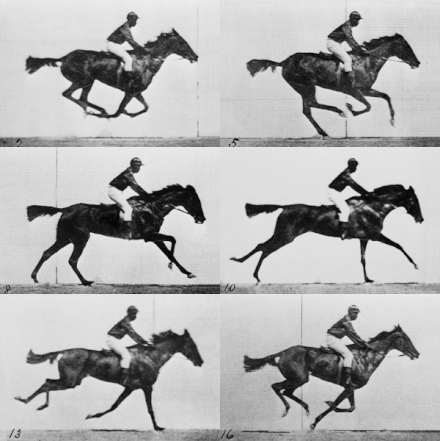
For a long time, it was a mystery as to how horses galloped. Did all four hooves at some point leave the ground? Or was one hoof always planted? It wasn’t until the 1880s when a British photographer named Eadweard Muybridge settled the debate with a series of photographs of a horse in midstride. Muybridge took a great interest in capturing the minute details of bodies in motion. The images made him famous.
Muybridge could be obsessive — and eccentric, too. His erratic behavior was blamed on a head injury he’d sustained in a serious stagecoach accident that killed one passenger and wounded all the rest. Now, researchers believe that the crash, which gave Muybridge a permanent brain injury, may actually have been partially responsible for endowing him with his artistic brilliance.
Muybridge may have been what psychiatrists call an acquired savant, somebody with extraordinary talent but who wasn’t born with it and who didn’t learn the skills from someplace else later. In fact, Muybridge’s savant abilities had evidently been buried deep in the recesses of his mind the whole time, and the stagecoach incident had simply unlocked them.
So, that should give you a few interesting things to think about! I’m headed to Colorado on Wednesday so I’ll be a little scarce this week. What’s on your blogging and reading list today?
Many Saw It Coming
Posted: May 19, 2012 Filed under: financial institutions, Global Financial Crisis | Tags: James Kenneth Galbraith 19 CommentsOne of the weirdest memes I’ve heard recently is that no economist or person with a finance background could have seen the global financial crisis coming. That’s quickly followed by no one knew it would be so deep and so hard to escape. Then, there’s the entire weirdness surrounding the tropes that just cutting taxes and balancing budgets will solve all the problems.
 I read this Galbraith article over at Truthdig and wanted to share it because it just says all that many of us economists saw coming, see happening, and shake our heads at now. I personally expected the subprime credit markets to blow up sometime in 2005. I was watching the subprime contagion spread into the major banks by 2006. I heard from Social Workers what kinds of crap was being pushed on to their clients. You can ask my colleagues. I was vocal about it. The only people that seem flummoxed are those that were taken in by Fama and his Chicago acolytes. They are also the ones spreading the worst nastiness now. It does not surprise me that Paul Ryan is one of their groupies. They’ve been perpetually wrong on things.
I don’t have a lot of time to do a big analysis of this. I also think that Saturday is the last day you want to read it. Anyway, go read the article. It’s excellent.
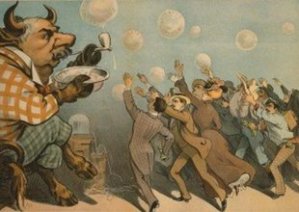
The most important common ground was over the depth and severity of the financial crisis. We placed it in a different league from all other financial events since the early thirties, including the debt crises of the eighties and the Asian and Russian crises of the late nineties. One of us called it “epochal” and “history-making.” And so it has turned out. What distinguishes this crisis from the others are three facts taken together: (a) it emerges from the United States, that is, from the center, and not the periphery, of the global system; (b) it reflects the collapse of a bubble in an economy driven by repetitive bubbles; and (c) the bubble has been vectored into the financial structure in a uniquely complex and intractable way, via securitization.
Bubbles are endemic to capitalism, but in most of history they are not the major story. In the nineteenth century, agricultural price deflation was a larger problem. In the twentieth, industrialization and technology set the direction. It was only in the information technology bubble of the late nineties that financial considerations including the rise of venture capital and the influx of capital to the United States following the Asian and Russian crises—came to dominate the direction of the economy as a whole. The result was capricious and unstable—vast investments in (for instance) dark broadband, followed by a financial collapse—but it was not without redeeming social merits. The economy prospered, achieving full employment without inflation. And much of the broadband survived for later use.
The same will not be said for the sequential bubbles of the Bush years, in housing and now commodities. The housing bubble—deliberately fostered by the authorities that should have been regulating it, including Alan Greenspan and Ben Bernanke—pushed the long-standing American model of support for homeownership beyond its breaking point. It involved a vast victimization of a vulnerable population. The unraveling will have social effects extending far beyond that population, to the large class of Americans with good credit and standard mortgages, whose home values are nevertheless being wiped out. Meanwhile, abandoned houses quickly become uninhabitable, so that, unlike broadband, the capital created in the bubble is actually destroyed, to a considerable degree, in the slump.
We’re still seeing overheated securitized assets. We’re seeing more canaries in the mine again. Think JP Morgan’s big hedge. We never have the right minds in the District dealing with the problem. This has been the case for all of this century. There’s a lot of bad thing bubbling in the financial markets right now. Now is the time to bring in the people that knew better. Not the same old suspects.
Friday Reads
Posted: May 18, 2012 Filed under: morning reads | Tags: Bounty program, Jamie Dimon, John Vilma, JP Morgan, looting the poor, pediatric psychopharmacology, Sain'ts Football 19 Comments Good Morning!!
I’m headed up to LSU this morning for baby daughter’s graduation. She’s getting a degree in finance. She wants to work for a high tech company and isn’t headed to Wall Street. Next weekend is Doctor Daughter’s wedding in Colorado. I’m getting all fitted up in a Sari for her big fat Bollywood wedding. I’m not thrilled about having a bare midriff. Needless to say, I’m a wreck.
Barbara Ehrenreich writes a fascinating post at TruthDig on how our various state and local governments are looting the poor.
Local governments are discovering that they can partially make up for declining tax revenues through fines, fees, and other costs imposed on indigent defendants, often for crimes no more dastardly than driving with a suspended license. And if that seems like an inefficient way to make money, given the high cost of locking people up, a growing number of jurisdictions have taken to charging defendants for their court costs and even the price of occupying a jail cell. The poster case for government persecution of the down-and-out would have to be Edwina Nowlin, a homeless Michigan woman who was jailed in 2009for failing to pay $104 a month to cover the room-and-board charges for her 16-year-old son’s incarceration. When she received a back paycheck, she thought it would allow her to pay for her son’s jail stay. Instead, it was confiscated and applied to the cost of her own incarceration.
You might think that policymakers would take a keen interest in the amounts that are stolen, coerced, or extorted from the poor, but there are no official efforts to track such figures. Instead, we have to turn to independent investigators, like Kim Bobo, author of Wage Theft in America, who estimates that wage theft nets employers at least $100 billion a year and possibly twice that. As for the profits extracted by the lending industry, Gary Rivlin, who wrote Broke USA: From Pawnshops to Poverty, Inc.—How the Working Poor Became Big Business, says the poor pay an effective surcharge of about $30 billion a year for the financial products they consume and more than twice that if you include subprime credit cards, subprime auto loans, and subprime mortgages.
These are not, of course, trivial amounts.
Martha Rosenberg writes about ” How Big Pharma and the Psychiatric Establishment Drugged Up Our Kids” over at Alternet. You think bald heads, limp dicks, and wrinkles are the new gravy train? Well, check this out. “Pediatric psychopharmacology is a billion-dollar business that sustains Pharma and Pharma investors on Wall Street.” This isn’t St. Joseph’s baby aspirin we’re talking about. Gotta kid that’s acting a little eccentric? Well, just take her to the doctor! There’s a pill for that!
In his book Psychiatryland, psychiatrist Phillip Sinaikin recounts reading a scientific article in which it was debated whether a three-year-old girl who ran out into traffic had oppositional-defiant disorder or bipolar disorder, the latter marked by “grandiose delusions” that she was special and cars could not harm her.1
How did the once modest medical specialty of child psychiatry become the aggressive “pediatric psychopharmacology” that finds ADHD, pediatric conduct disorder, depression, bipolar disorder, oppositional defiant disorder, mood disorders, obsessive-compulsive disorders, mixed manias, social phobia, anxiety, sleep disorders, borderline disorders, assorted “spectrum” disorders, irritability, aggression, pervasive development disorders, personality disorders, and even schizophrenia under every rock? And how did this branch of psychiatry come to find the answer to the “psychopathologies” in the name of the discipline itself: pediatric psychopharmacology? Just good marketing. Pharma is wooing the pediatric patient because that’s where the money is. Just like country and western songs about finding love where you can when there is no love to be found at home. Pharma has stopped finding “love” in the form of the new blockbuster drugs that catapulted it through the 1990s and 2000s. According to the Wall Street Journal, new drugs made Pharma only $4.3 billion in 2010 compared with $11.8 billion in 2005—a two-thirds drop.2
The finance/econ twitter wonks were all on this WSJ story called “Inside J.P.Morgan’s Blunder”. Their insider says that Jamie in the Sky with Dimon actually approved all those disastrous trades. Oopssssss…..
This behind-the-scenes account of the disaster—based on interviews with numerous J.P. Morgan executives and with officials on Wall Street and in Washington—provides new details about the drama inside the bank as executives sought to understand the scope of the losses and decide what to do about them.
Among other things, Mr. Dimon initially resisted ousting the executive at the center of the mess, confided in his wife that he had “missed something bad,” and expressed regrets with his colleagues one night over vodka about how they had all let the firm down.
“The big lesson I learned: Don’t get complacent despite a successful track record,” Mr. Dimon said in an interview Wednesday. “No one or no unit can get a free pass.”
The debacle has raised broad questions on Wall Street and in Washington about whether any executive can properly oversee such a large financial institution, whether new regulatory rules will do anything to prevent another financial crisis and whether tougher regulation is needed to further rein in risky bank trading, particularly at financial behemoths that are viewed as too big to fail.
The bank has ousted the executive in charge of its Chief Investment Office, a huge trading unit at the heart of the scandal that has contributed more than $4 billion of net income over the past three years—nearly 10% of J.P. Morgan’s overall profit during that period.
The stakes are high. Mr. Dimon personally approved the concept behind the disastrous trades, according to people familiar with the matter. But he didn’t monitor how they were executed, triggering some resentment among other business chiefs who say the activities of their units are routinely and vigorously scrutinized.
I see lean and hungry mean and we’ve just passed the Ides of May. It’s not just our banks. It looks like Greek Banks are experiencing bank runs. They really didn’t fix that global financial melt down thingie, did they? Greek capital is fleeing the country. Gold bullion any one? Picasso paintings? Bullets?
Greeks have withdrawn €3bn (£2.4bn) from the banking system since the country’s inconclusive elections on 6 May, with tellers saying savers were making two or three visits a day to local banks.
Savers fear Greece leaving the eurozone and returning to the drachma. An aide to the outgoing prime minister, Lucas Papademos, said there were “serious fears that the banks were running out of money”.
Greece’s president, Karolos Papoulias, warned on Monday that €700m had been withdrawn but said he had been assured by the governor of the Greek central bank, George Provopoulous, that there was no panic yet.
According to minutes of a meeting on Monday, Papoulias said: “Withdrawals and outflows by 4pm when I called him [Provopoulous] exceeded €600m and reached €700m. He expects total outflows of about €800m, including conversions into German bunds [bonds] and other such things.”
Greeks have been slowly withdrawing cash from the banking system ever since the country first needed a bailout two years ago. Nearly a third of bank deposits were withdrawn between January 2010 and March 2012.
A crucial €18bn cash injection to stabilise Greece’s banks has been held up at the European financial stability fund’s Greek offshoot, the Hellenic financial stability fund (HFSF), for nearly two weeks with officials in Brussels refusing to release the funds because of the political instability in the wake of the elections. That had still not been released by tonight and is now not expected to be released for another four days despite the efforts of the Papademos government to expedite the recapitalisation of Greek banks.
Dimon will be facing a Senate Committe shortly. I watched the Goldman Sachs hearings awhile ago. I’m convinced the entire Senate Banking Committe wouldn’t know a bull flattener from a contango. (Oh, ask him about his naked shorts! I’ll watch any way.
Johnson announced Thursday that the panel’s investigation of the botched trade had “made it clear” that lawmakers needed to “hear directly” from the head of the bank.
The Banking Committee is currently set to hold two hearings on the implementation of the Wall Street reform law, which has been a dominant topic on Capitol Hill ever since JPMorgan announced it had lost at least $2 billion thanks to a complex bet on corporate debt. The New York Times reported Thursday the losses had actually climbed to $3 billion.
On May 22, the committee will hear from regulators at the Securities and Exchange Commission (SEC) and Commodity Futures Trading Commission (CFTC) on the financial overhaul. The SEC is reportedly investigating the JPMorgan trade, and the CFTC is responsible for implementing new restrictions on financial derivatives, which played a key role in the bank’s bad bet.
On June 6, the committee will hear from regulators with the Federal Reserve, Federal Deposit Insurance Corporation, Consumer Financial Protection Bureau, the Office of the Comptroller of the Currency and the Treasury Department.
This last link is somewhat unusual for me. The Saint’s bounty scandal continues to be big news down here. Vilma is going to take Goodell to court. This could be popcorn worthy.
New Orleans Saints linebacker Jonathan Vilma sued National Football League Commissioner Roger Goodell for defamation in reports about the team’s “bounty” program.
Vilma accused the commissioner of making false statements about him in reports about the bounties allegedly paid to players for intentionally hurting opponents during games, according to a filing in federal court today in New Orleans.
“Goodell’s statements forever falsely taint and permanently damage Vilma, in the eyes of NFL clubs, media, fans and sponsors, as a player who brazenly disregards NFL rules and intentionally attempts to injure his opponents,” according to the complaint.
Vilma was banned in March for the 2012 season without pay for his role in the Saints’ bounty program. His penalty was the most severe of the four players who were suspended. The league’s investigation concluded that as captain of the defense, Vilma assisted then-defensive coordinator Gregg Williams in establishing and funding the program that offered money to players who knocked specific opponents out of a game.
That’s my offerings this morning. I may not see you around much for the next few weeks. Be assured I’m not having a lot of fun and leaving you out of it. What’s on your reading and blogging list today?
Nebraska Woman surprises the Pundits
Posted: May 16, 2012 Filed under: 2012 primaries, Republican politics, War on Women | Tags: Nebraska Politics 12 CommentsNebraska is a very red state. It’s conservative in a weirdly independent way. Nebraskans will frequently back total outsiders and they proved they were willing to dump  establishment candidates in the Republican Senate primary. A Sarah-Palin backed woman will face ex-Senator and Democrat Bob Kerry in the fall. The punditry is calling her win a stunner! She beat two well-known pols and attorneys in the race that had plenty of money and establishment backing. She was not the Tea Party candidate either.
Nebraska state Sen. Deb Fischer wrested the Republican nomination for U.S. Senate from Attorney General Jon Bruning Tuesday night, riding a burst of late momentum to pull off an unexpected victory.
Her stunning come-from-behind performance amounts to a warning flare about the volatility of the primary season and the unintended impact of outside groups.
Fischer, a rancher and little-known state lawmaker, maintained a positive, above-the-fray tone while Bruning and state Treasurer Don Stenberg consistently traded blistering barbs. But she also benefited from a flurry of outside spending against Bruning, the front-running establishment favorite for more than a year who watched his polling lead evaporate during the final week of the campaign.
The victory sends Fischer to the general election as a favorite over former Sen. Bob Kerrey, who easily disposed of four lesser-known opponents for a shot at the open seat being left vacant by retiring Sen. Ben Nelson. Nebraska is a must-win for Republicans if they are to acquire the four pickups necessary to flip control of the Senate this fall.
WP’s Jennifer Rubin is giddy and wishful thinking as far as I’m concerned. Nebraska is not any kind of a bellweather state. It’s a weird outlier. I lived there way too long to expect anything in Nebraska to resemble any place else.
Deb Fischer upset favorite Jon Bruning to win the Nebraska Republican primary for Senate by a 41 to 36 percent margin. There are (at least) 10 aspects of the race worth noting.
1. Neither Fischer nor Bruning was the tea party candidate and neither is a non-politician. Bruning is state attorney general. Fischer is a state legislator. Club for Growth, Sen. Jim DeMint (R-S.C.) and Freedom Works backed state treasurer Don Stenberg.
2. Sarah Palin still can pick ‘em. She was the only prominent pol to back Fischer. Palin’s highest value in the GOP may be in finding talented female candidates (e.g. South Carolina Gov. Nikki Haley).
3. Republican women are out in force in the 2012 election. Fischer joins Hawaii’s Linda Lingle, Missouri’s Sarah Steelman, Connecticut’s Linda McMahon, New York’s Wendy Long and New Mexico’s Heather Wilson as prominent female Republicans contending in primaries. With the departure of Sens. Kay Bailey Hutchinson (R-Tex.) and Olympia Snowe (R-Maine), the GOP would have only three women in the Senate; That number could easily double with this crop of female candidates.
4. Bruning wasn’t a flawless candidate by any means. The Fix noted that Bruning’s baggage has been well-documented by the local press, and Stenberg has lost three Senate campaigns already.”
5. Fischer is well-positioned to beat former Democratic senator Bob Kerrey in deep-red Nebraska. This is not a case of Republicans throwing caution to the wind.
6. Candidates matter. Simply looking at GOP races as contests between more and less conservative contenders is a mistake and leads to “surprises” (i.e. misguided conventional wisdom that eventually blows up). Reuters reports: “ ‘Despite being a relative novice in the race, Fischer has been a state Senator since 2004 and could be a strong candidate in November,’ said Jennifer Duffy, senior editor at the Cook Political Report in Washington. ‘She’s got a good profile for the state. She does have some experience and I think that she gets some momentum out of the win,’ Duffy said, adding that Fischer is likely to beat Kerrey in November.”
7. With more and more female candidates, the Democrats’ “war on women” meme becomes sillier and sillier.
The weirdest thing is that the two men were backed by the likes of Huckabee, Santorum, and DeMint. Palin picked the winner. This is an extremely rural state and it doesn’t surprise me that a rancher that wasn’t an Omaha-associated pol won. Every one outside of Omaha hates Omaha in that state. Lincoln is probably on the top of the Omaha hater list. So, any way, this should be an interesting race to watch.

 peej
peej Carissa
 bostonboomer
 dakinikat
 ecocatwoman
 jjlo
jjlo mablue2
 Mama Lopez
 peggysue22
 quixote
 skydancingguestblogger
 Mona (aka Wonk the Vote)





Recent Comments