
Friday Reads
Posted: November 22, 2013 Filed under: just because, morning reads 48 Comments Good Morning!!!
We’ve got the usual suspects with the usual kinda stuff going on right now. Let’s check out some headlines together!
Here’s a great read from The Nation: Inequality Is (Literally) Killing America.
Only a few miles separate the Baltimore neighborhoods of Roland Park and Upton Druid Heights. But residents of the two areas can measure the distance between them in years—twenty years, to be exact. That’s the difference in life expectancy between Roland Park, where people live to be 83 on average, and Upton Druid Heights, where they can expect to die at 63.
Underlying these gaps in life expectancy are vast economic disparities. Roland Park is an affluent neighborhood with an unemployment rate of 3.4 percent, and a median household income above $90,000. More than 17 percent of people in Upton Druid Heights are unemployed, and the median household income is just $13,388.
It’s no secret that this sort of economic inequality is increasing nationwide; the disparity between America’s richest and poorest is the widest it’s been since the Roaring Twenties. Less discussed are the gaps in life expectancy that have widened over the past twenty-five years between America’s counties, cities and neighborhoods. While the country as a whole has gotten richer and healthier, the poor have gotten poorer, the middle class has shrunk and Americans without high school diplomas have seen their life expectancy slide back to what it was in the 1950s. Economic inequalities manifest not in numbers, but in sick and dying bodies.
On Wednesday, Senator Bernie Sanders convened a hearing before the Primary Health and Aging subcommittee to examine the connections between material and physiological well-being, and the policy implications. With Congress fixed on historic reforms to the healthcare delivery system, the doctors and public health professionals who testified this morning made it clear that policies outside of the healthcare domain are equally vital for keeping people healthy—namely, those that target poverty and inequality.
Many folks like to blame technology for the dive in wages for the middle class. A new study shows that’s not the case so “Don’t blame the Robots” for wage inequality. Check out the executive summary.
Many economists contend that technology is the primary driver of the increase in wage inequality since the late 1970s, as technology-induced job skill requirements have outpaced the growing education levels of the workforce. The influential “skill-biased technological change” (SBTC) explanation claims that technology raises demand for educated workers, thus allowing them to command higher wages—which in turn increases wage inequality. A more recent SBTC explanation focuses on computerization’s role in increasing employment in both higher-wage and lower-wage occupations, resulting in “job polarization.” This paper contends that current SBTC models—such as the education-focused “canonical model” and the more recent “tasks framework” or “job polarization” approach mentioned above—do not adequately account for key wage patterns (namely, rising wage inequality) over the last three decades. Principal findings include:
1. Technological and skill deficiency explanations of wage inequality have failed to explain key wage patterns over the last three decades, including the 2000s.
Changes to the Senate’s filibuster rules are driving the villagers wild!! Here’s a headline from WAPO: Reid, Democrats trigger ‘nuclear’ option;  The new rules eliminate most filibusters on nominees.
Senate Democrats took the dramatic step Thursday of eliminating filibusters for most nominations by presidents, a power play they said was necessary to fix a broken system but one that Republicans said will only rupture it further.
Democrats used a rare parliamentary move to change the rules so that federal judicial nominees and executive-office appointments can advance to confirmation votes by a simple majority of senators, rather than the 60-vote supermajority that has been the standard for nearly four decades.
The immediate rationale for the move was to allow the confirmation of three picks by President Obama to the U.S. Court of Appeals for the District of Columbia Circuit — the most recent examples of what Democrats have long considered unreasonably partisan obstruction by Republicans.
In the long term, the rule change represents a substantial power shift in a chamber that for more than two centuries has prided itself on affording more rights to the minority party than any other legislative body in the world. Now, a president whose party holds the majority in the Senate is virtually assured of having his nominees approved, with far less opportunity for political obstruction.
 Here’s some hand wringing Beltway-style from Beltway Bob.
There’s a lot of upside for Republicans in how this went down. It came at a time when Republicans control the House and are likely to do so for the duration of President Obama’s second term, so the weakening of the filibuster will have no effect on the legislation Democrats can pass. The electoral map, the demographics of midterm elections, and the political problems bedeviling Democrats make it very likely that Mitch McConnell will be majority leader come 2015 and then he will be able to take advantage of a weakened filibuster. And, finally, if and when Republicans recapture the White House and decide to do away with the filibuster altogether, Democrats won’t have much of an argument when they try to stop them.
Meawhile, back in a state where “Obamacare” is actually being implented …”Nearly 80,000 Californians sign up for Obamacare plans“.
The latest data, which charts enrollment from the October 1 start through November 19, means that about 20,000 more people signed up for plans since the exchange’s initial update on its enrollment released November 13.
California, which is the most populous U.S. state and embraced the Affordable Care Act early on, is considered a crucial region for the administration’s enrollment effort. The state is one of 14 operating their own exchanges, as opposed to relying on the federal government.
Last week, the U.S. government released initial data showing that 106,000 people had enrolled in new exchanges nationwide from October 1 through November 2. California’s enrollment amounted to about one-third of all sign-ups during that period and outnumbered the combined tallies of all 36 states that use the faulty HealthCare.gov website operated by the federal government.
Covered California also released data on Thursday showing that nearly 23 percent of the sign-ups during the first month of enrollment were 18 to 34 years old, while 34 percent were 55 to 64 years old.
Those age breakdowns are in line with other early data released by four other state exchanges, showing that more older adults have signed up for the new plans than younger Americans so far.
The age balance is being closely watched to determine the financial stability of the insurance market created by the Affordable Care Act, as the participation of younger people is needed to offset costs for sicker beneficiaries. Health policy experts and actuaries told Reuters it was premature to draw any conclusions about the early demographic data.
Well, if you simply must join in on the season, be sure to encourage the stores that don’t steal the family turkey dinner time from their employees.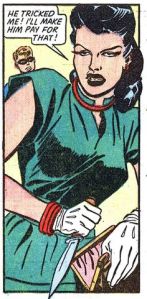 Can’t we just simply celebrate Thanksgiving first please?
Never mind that much of the big news this holiday season has been about major retailers, from Walmart to Target to the newest entrant, Macy’s, announcing their Thanksgiving Day shopping hours.
While it can hurt the bottom line for one day, staying closed on Thanksgiving can be a big plus, too. “I appreciate brands that make the gutsy decision to defer some revenue and stay closed,” says brand guru Erika Napoletano. “They’re celebrating their most important asset – their employees.”
It has yet to be proven that the majority of shoppers “really want and need” stores to be open on Thanksgiving, says Sharon Love, a retail consultant. Last year, 35 million Americans visited stores or websites on Thanksgiving vs. 89 million on Black Friday, according to the National Retail Federation.
Families often like to do more than just eat on Thanksgiving, the trade group points out. “Some go to movies. Some go bowling. Some go to football games or to restaurants,” says Bill Thorne, senior vice president. To say that employees at these venues should work but that retail workers shouldn’t “doesn’t make a whole lot of sense,” he adds.
But staying closed on Thanksgiving makes perfect sense to Nordstrom, which has done just that since 1901.
“Our customers appreciate us taking this approach,” says spokesman Colin Johnson. He adds that no holiday decorations go up until the store reopens on Black Friday.
Dillard’s also will keep all 299 stores closed on Thanksgiving Day “to honor our associates with their family time,” says spokeswoman Julie Johnson Bull.
Home Depot will keep its nearly 2,000 stores closed, in part, because “this isn’t our make-or-break season like it is for many retailers,” says spokesman Stephen Holmes.
TJX, which owns the T.J. Maxx and Marshalls brands, also will stay dark on Thanksgiving. “We feel so strongly about our employees spending Thanksgiving with their families,” says spokeswoman Doreen Thompson. “And we don’t anticipate this changing in the future.”Nor does Costco, says spokesman Bob Nelson. “We feel no pressure to open on Thanksgiving Day this year, or in subsequent years.”
Here’s a dose of Hillary from Politico.
Hillary Clinton on Thursday argued that women can play a critical role in promoting sustainability while speaking at a Philadelphia event, where she also dealt lightheartedly with what appeared to be a friendly heckler.
“[In] developed countries, we still have to keep knocking barriers down to women’s full participation on boards of companies that make decisions about sustainability, in corporate suites where people make decisions about sustainability,” she said to cheers, speaking at a conference held by the U.S. Green Building Council.
“Now I’m not one who will say automatically that having women involved makes a difference just by the fact of the women being there, but there’s growing evidence that corporations with women in leadership positions, as corporate executives, and in the board, are actually more focused on sustainability.”
So, one of the games I used to hate to play back in the day was who is the biggest she-man feminist of the all. I wasn’t aware back then or now that it was a  competition. Here, it is again at Politico. It’s focused on the damned if you do damned if you don’t position of FLOTUS. Hillary was nailed for being out there. Michelle Obama is being nailed for not being out there enough.
The New York Times observed that many of Michelle Obama’s supporters have been itching for her to move beyond “evangelizing exercise and good eating habits,” noting that, despite her widespread popularity, the first lady has long “been derided by critics who hoped she would use her historic position to move more deeply into policy.”
Don’t count on it. As President Obama claws his way through a second term, the sense of urgency for his well-educated wife to do more—to make a difference—may well be mounting. But that doesn’t mean it’s going to happen. In fact, East Wing officials I spoke with stress that Michelle Obama is not about to tap her inner wonk—she will focus on young people, not policy—and while the task of promoting higher ed may be new, speaking directly to kids is simply what Michelle does. Sure enough, in a sit-down with BET’s 106 & Park the week after the Education Department rollout, there was the first lady in full mom mode, lecturing students about nothing more politically controversial than the need to do their homework and get to school on time.
So enough already with the pining for a Michelle Obama who simply doesn’t exist. The woman is not going to morph into an edgier, more activist first lady. The 2012 election did not set her free. Even now, with her husband waddling toward lame duck territory, she is not going to let loose suddenly with some straight talk about abortion rights or Obamacare or the Common Core curriculum debate. Turns out, she was serious about that whole “mom-in-chief” business—it wasn’t merely a political strategy but also a personal choice. “
Lizz Winstead offers up some sage thoughts here.
Wow. I don’t know where to begin on this. This is an article written by someone who decided to put her issues into other women’s mouths. And in Politico, AKA “The Fluffers for The Chamber of Commerce” no less.
At least it will mostly be read by Below The Beltway types.
We’ve seen this technique before on TV news interviews. The correspondent will say to the subject something like, “Some people have said you are a…” and then a list a slew of character assassinations that apparently “Some unnamed people” have said.This article feels like that. Except the sum total of “some people” is her.
http://www.politico.co…Now after you read this, and before you start stabbing your couch, please know that this same writer, was paid to write a piece crowning Sarah Palin as a new feminist icon.
I’m snuggling with the dog as I live through a second evening of a hard freeze What’s on your reading and blogging list today?
Monday Reads: We’re going to the Dogs!!!
Posted: November 18, 2013 Filed under: morning reads 95 Comments Good Morning!
I’m hoping for some sunshine today so Dad and I can walk over to the Bellevue Library and check out the periodicals and some books. I got to push up the thermostat on the heater since I’m here now on my own and the dog doesn’t complain, My sister’s house is a blend of oddly familiar family items and the typical northwest American view of pine trees, lakes, and hills. It’s so different from the bayous, palm trees, and 200 year old houses normally around me. I feel a little bit like I am visiting an alien zombie land. Well, the zombie metaphor comes from the yuppies, the late model upscale cars and busy, self-occupied looks of the crowds of people here zooming around inadequate infrastructure. New Orleans infrastructure is inadequate due to age and abuse. The infrastructure here is overwhelmed by over use and population. Everything here is new. I long to drive to the part of the city with the folks that wear black, sport tattoos, and celebrate outward and socially questionable sexuality. Unlike my sister, I ran from my socioeconomic upbringing. Strip malls and SUVS just creep me out. I’m hoping to head more west and north for a dose of urban Seattle and respite some time this week.
My sister and I have always been really really different but I can’t imagine doing what Liz Cheney did publicly to sister Mary. I just know my sister and I are different and that our lives are ours to make. Love and life should not be defined by the whims and proclivities of others. You shouldn’t shame your family in front of TV pundits and folks’ Sunday Brunch. It takes a special kind of sister to put politics and a shot at elected office before their sister’s significant relationship and selfhood. It also takes a lot of gall to go on TV and say that in a way that will one day cause one’s nieces and nephews grief. It appears that Liz Cheney has her priorities on holding elected office over her sister and her family. Kind’ve weird given that the evil old Dad won’t even throw Mary under the bus. What does that say about Liz?
“We were as close as sisters can be,” recalled Mary Cheney of her relationship with her older sister, Liz.
But now, a feud between the two has spilled into public view, involving social media, an angry same-sex spouse, a high-profile election and a father who feels uncomfortably caught between his two children.
The situation has deteriorated so much that the two sisters have not spoken since the summer, and the quarrel threatens to get in the way of something former Vice President Dick Cheney desperately wants — a United States Senate seat for Liz.
Things erupted on Sunday when Mary Cheney, a lesbian, and her wife were at home watching “Fox News Sunday” — their usual weekend ritual. Liz Cheney appeared on the show and said that she opposed same-sex marriage, describing it as “just an area where we disagree,” referring to her sister. Taken aback and hurt, Mary Cheney took to her Facebook page to blast back: “Liz — this isn’t just an issue on which we disagree you’re just wrong — and on the wrong side of history.”
But then Mary Cheney’s wife, Heather Poe, went further, touching on Liz Cheney’s relocation from Northern Virginia to Wyoming to seek office. (Liz Cheney is already battling accusations of carpetbagging in the race.)
“I can’t help but wonder how Liz would feel if as she moved from state to state, she discovered that her family was protected in one but not the other,” Ms. Poe wrote on her Facebook page. “Yes, Liz,” she added, “in fifteen states and the District of Columbia you are my sister-in-law.”
The feud reveals tensions not just within the family but in the Republican Party more broadly as it seeks to respond to both a changing America and an energized, fervently conservative base.
How is making family life difficult for a loving couple and their children a conservative value? Why should civil marriage laws be bound by  religious views anyway? I just don’t get it at all.
I’m not sure you heard this news yesterday, but wonderful author Doris Lessing has passed at the age of 94.
As a writer, from colonial Africa to modern London, Ms. Lessing scrutinized relationships between men and women, social inequities and racial divisions. As a woman, she pursued her own interests and desires, professional, political and sexual. Seeking what she considered a free life, she abandoned two young children. Still, Salon, in an interview with Ms. Lessing in 1997, said that “with her center-parted hair that’s pulled back into a bun and her steely eyes, she seems like a tightly wound earth mother.”
It was this figure, 10 years later, who arrived at her house in sensible shoes to find journalists gathered at her door waiting to tell her that she had won the Nobel Prize for literature. “Oh, Christ!” she said upon hearing the news, adding, “I couldn’t care less.”
The Nobel announcement called her “the epicist of the female experience, who with skepticism, fire and visionary power has subjected a divided civilization to scrutiny.”
And in the presentation speech at the Nobel ceremonies in Stockholm, Ms. Lessing was described as having “personified the woman’s role in the 20th century.” (She accepted the prize at a ceremony in London.)
The New Yorker has reprinted “The Stare” to celebrate the life and writing of Lessing.
The two women spend mornings together, gossiping or shopping, but now Helen has a baby and they often go to Primrose Hill and sit on a bench with the pram pushed into some shade. There are other wives, Greek and Cypriot, and some mornings it is quite a little female community, but Helen and Mary are recognized as special friends. Some evenings the two couples make a foursome in one of the pubs, cafés, or restaurants, and on these evenings Mary often congratulates herself that she made all the right choices that brought her away from boring Croydon, to be here among people who laugh easily, or start singing, and who might end an evening with impromptu dancing, even on the tables. She might not have gone to Greece that summer, might have said no to Demetrios when her parents put pressure on.
On this day Mary goes home excited and restless and sits in front of her looking glass and examines herself. She often does this. She is plump, pretty, with ruddy cheeks, black curls, and a lot of well-placed dimples, and Dmitri calls her his little blackberry. But she has gray eyes, and he says that if it weren’t for those cool English eyes he could believe she has Greek blood. His black eyes easily smolder, or burn, or reproach. Mary leans her forearms among the little bottles of scent, the lipsticks, the eye paint, and tries out expressions. She puts a long unsmiling unblinking stare on her face and frightens herself with it. She shuts her eyes, so as to see that stare on Helen’s face, but fails, because Helen only smiles. Mary admires Helen. That is putting it mildly. Because of something Dmitri said, Mary actually went to the library and found a book called “Greek Myths for Children,” and there she read that a Helen once, thousands of years ago, was a beauty, and men started a war because of her. In Greece parents called their little girls Helen, as if the name were just Betty or Joan. Helen told Mary that Mary was the Mother of God, but Mary said she wasn’t really into religion.
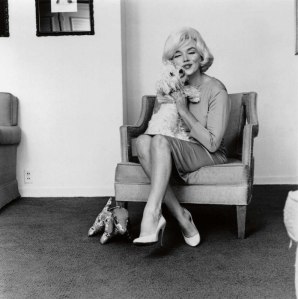
A series of freakish late fall tornadoes hit the midwest yesterday and killed 5 people in Illinois. Global warming any one?
A string of tornadoes and severe storms left a trail of damage and flooding through the Midwest Sunday, leveling parts of a town near Peoria, knocking down buildings in Grundy County and prompting Bears fans to scatter for cover as the game at Soldier Field was postponed.
In Washington, in Tazewell County, one person was reported killed, two were killed in Massac County and in Nashville east of St. Louis, two elderly siblings were reported killed . Dozens of others were reported injured including at least six who were seriously injured as the tornado spawned warnings through much of Illinois and northern Indiana.
Need a good laugh? Wisconsin’s freakish governor Scott Walker believes he’s the best man for a 2016 Republican run. WTF is wrong with these people?
Walker offered who he think would be a good contender saying, “I think it’s got to be an outsider. I think both the presidential and the vice presidential nominee should either be a former or current governor, people who have done successful things in their states, who have taken on big reforms, who are ready to move America forward.”
Walker did not offer his definition of ‘forward’ however. And you can bet he just chose himself as the best candidate.
ABC reports, “In terms of his own future, Walker — who seemed to closely fit his own definition of the ideal GOP nominee — told ABC News he would not rule out a presidential run in 2016.”
Walker said, “I don’t rule anything out.”
Here’s a few good hypotheses to answer the question of why we don’t see a set of perp marches with bankers over their horrid actions that brought on a great recession and a huge financial crisis that cost us billions of dollars.
Theory 1: U.S. attorneys and the Federal Bureau of Investigation have other priorities, whether it’s antiterror cases after the Sept. 11 attacks, accounting frauds after Enron’s bankruptcy, or Ponzi rip-offs after Bernard Madoff’s huge scam. Financial frauds are particularly tough to crack, and many of the prosecutors with the requisite knowledge have been moved to other areas.
Theory 2: Law enforcement agencies have had to compete for a shrinking pot of money from Congress, and the best way to do that is by beefing up their statistics with smaller, easier cases and avoiding the years-long financial fraud probes that may turn up nothing. The Manhattan U.S. attorney, moreover, has been preoccupied with the sprawling insider-trading case against hedge-fund owner Raj Rajaratnam. Tapes of his conversations have been a gold mine — resulting in slam-dunk cases that have led to numerous convictions — for Manhattan prosecutors who previously would have focused on bank fraud.
Theory 3: The federal government’s involvement in the mid-2000s bubble — encouraging more people to buy homes, deregulating the financial industry, keeping interest rates low and giving Fannie Mae and Freddie Mac way too much leeway — may also have given prosecutors pause.
Theory 4: The U.S. has shifted over the last 30 years from prosecuting high-level individuals to using delayed-prosecution agreements to settle cases against entire companies. That shift “has led to some lax and dubious behavior on the part of prosecutors,” Rakoff said, including allowing managers to sweep crimes under the rug.
How about they give lots and lots and lots of money to politicians in both parties and at all levels?
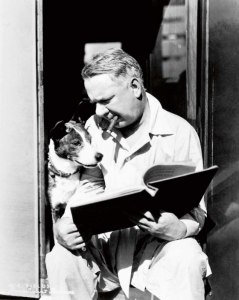
Watch out! Pete Peterson’s “Fix the Debt” is out on a rampage again! Astroturf any one? Why is Ed Rendell a shill for this asshole? Better yet, why does MSNBC let him do it? The best place to get a handle on wtf is going on with these obvious debt lies is here at The Nation.
Mary Bottari’s exposé names the ‘puppet populists’:
Behind this strategy are no fewer than 127 CEOs and even more “statesmen” pushing for a “grand bargain” to draw up an austerity budget by July 4. With many firms kicking in $1 million each on top of Peterson’s $5 million in seed money, this latest incarnation of the Peterson message machine must be taken seriously.
Fix the Debt has hired such powerful PR firms and lobby shops as the DCI Group, the Glover Park Group, the Dewey Square Group and Proof Integrated Communications, a unit of the PR firm Burson-Marsteller, which was the go-to firm for Big Tobacco. In the run-up to the “fiscal cliff,” these firms launched a flashy $3 million media campaign, blanketing Capitol Hill with TV, Internet, Metro and newspaper ads featuring slogans like “Got Debt?” and “Just Fix It.”
Fix the Debt’s stable of CEOs are a PR flack’s dream. Not only are they able to get meetings with everyone from John Boehner to President Obama; they can flood cable news with laughable messages of “shared sacrifice” and be treated with fawning respect. Fix the Debt’s David Cote, CEO of Honeywell, “brings serious financial muscle to the table” when he pushes “market credible solutions,” chirps The Wall Street Journal. There is no mention that Cote is a tax-dodging, pension-skimping hypocrite: Honeywell has a negative average tax rate of -0.7 percent and underfunds its employee pensions by -$2.8 billion, making Cote’s workers even more reliant on Social Security.
Creating a crisis is key. “America is more than $16 trillion in debt,” Fix the Debt’s website warns, calling it “a catastrophic threat to our security and economy.” The CEOs echo this warning, writing to Congress of the “serious threat to the economic well-being and security of the United States.”

It is so clear that we’re being overwhelmed with billionaires that throw money at politicians to influence government that any one who doesn’t see it must be living on a desert island called Delusion.
JJ pointed out that yet another child rapist has gotten away with it in Alabama. The DA, however, is not taking this lax sentence lightly.
An Alabama district attorney filed a motion today seeking prison time for Austin Smith Clem, who was convicted of repeatedly raping a teenager—twice when she was 14—but was given only probation and a stint in community corrections as punishment.
Brian Jones, the Limehouse County district attorney, told Mother Jones on Friday that his office was reviewing its options to “achieve a sentence that gives justice to our victim.” This afternoon, Jones emailed reporters a copy of a motion he filed to stay Clem’s sentence and incarcerate him.
Jones has also filed a petition for a writ of mandamus for the Alabama Criminal Court of Appeals. The petition argues that Clem’s current sentence is illegal, and it asks the appeals court to order the presiding judge in Clem’s case, Circuit Court Judge James Woodroof, to “vacate his sentencing order…and re-sentence the defendant according to the provisions of Alabama law.”
In September, a jury convicted Clem of two counts of second-degree rape and one count of first-degree rape. Woodroof sentenced Clem to 10 years in prison for each of the second-degree rape charges and 20 years for first-degree rape. But Woodroof “split” the sentence so that Clem would serve two years in Limestone County community corrections program, a program aimed at nonviolent criminals, and three years of probation.
Jones’ petition asks the appeals court to consider whether Woodroof, in doing so, violated the Alabama split-sentence statute and the Alabama Community Punishment and Corrections Act. The petition argues that Alabama law prohibits a sentence for a felony—such as forcible rape—from being served in a community corrections program. “Rape by force or compulsion must be treated by the criminal justice system as a violent offense,” the petition states. “To suggest otherwise runs afoul of thousands of years of both sound jurisprudence and experience.”
On Friday, in response to his punishment, Clem’s victim said she was “livid.”
So, that’s about it from me today. I’ll try to pop on during the day and add some more tidbits. I’m pretty sure I don’t need to name the celebs or the kind of dog breeds they preferred but kudos if you can find the names of these pampered Hollywood pooches! What’s on your reading and blogging?
Sunday Reads: All Politics are Still Local
Posted: November 17, 2013 Filed under: morning reads 28 CommentsGood Morning!
We traded up mornings the last few days so I could get situated with family for awhile. Dr. Daughter took me out to get my hair cut and we picked up sushi on the way home. We’re now watching lots of episodes of Walking Dead. So, I’m settled in for a week of Dad and dog.
This is a little provincial bit of local politics that I found very interesting. Up in the Northeast corner of Louisiana is the city of Monroe and the fifth district congressional seat. It’s a very safe Republican seat in a very redneck throwback part of the state. There were two Republican candidates. One was the Jindal blessed and sanctified candidate. The other was backed by the Duck Dynasty family. The unJindal candidate won Saturday with a very healthy margin and he supports improving the ACA unlike the Jindal candidate who rode him hard and wet in political ads.
Vance McAllister, a political newcomer with the backing of the popular “Duck Dynasty” TV family, was elected Saturday as Louisiana’s newest member of Congress.
McAllister, who largely self-funded his campaign, beat establishment candidate Neil Riser, a state senator, in a special runoff election for the vacant 5th District seat.
Both men are Republicans.
McAllister, a businessman with multiple companies, ran as a political outsider, capitalizing on frustration with politicians and Congress. As a point of pride during the campaign, he said he’d never been to Washington.
Riser, a funeral home owner in the Senate since 2008, campaigned on his experience in the Legislature and with the support of tea party groups.
“Plain and simple, this was Riser’s election to lose. Riser was the favorite going into the evening. He had the dollars. He had the endorsement of the Republican establishment. He had a strong showing in the primary. Yet, he lost it,” said Joshua Stockley, a political science professor at the University of Louisiana at Monroe.
Riser and McAllister are both conservatives and largely agreed on many issues. Both oppose abortion, favor strong gun rights and criticize the levels of federal spending and debt.
Their sharpest distinction rested with President Barack Obama’s signature health care law.
Both opposed the health overhaul, but Riser wanted only repeal, saying the law will harm businesses and families and can’t be fixed.
McAllister said repeal had no chance with Democrats leading the Senate and White House, so he said Congress should work to improve the law. He also wants Louisiana to expand its Medicaid program to give insurance to the working poor, an expansion that Riser opposes.
 Perhaps even more interesting is the kind of backing Riser got.
Riser is heavily relying on the backing of the GOP establishment – he’s won endorsements from House Majority Leader Eric Cantor, Alexander, and much of the state’s GOP congressional delegation. He also has the support of FreedomWorks and the Tea Party of Louisiana.
The candidates’ ads didn’t air as far south as New Orleans but an interesting contrast was drawn in the Baton Rouge/New Orleans daily The Advocate. The Duck Dynasty guys vs. a typical Tea Party attack ad about sums it up.
“Vote for my good buddy, Vance McAllister,” Robertson says in the ad. “Let’s send somebody from the 5th district who speaks for us to help turn Washington around.”
McAllister’s campaign is spending tens of thousands of dollars to air the commerical in 5th District television markets.
McAllister already was being support by Robertson’s father, Duck Commander Phil Robertson, but Willie Robertson’s assist puts more of the Robertson clan in McAllister’s corner.
Riser is spending the final days of the campaign attacking McAllister in television ads for supporting the Medicaid expansion in Louisiana to insure about 265,000 more state residents under a provision of the Affordable Care Act.
Gov. Bobby Jindal has refused to adopt the expansion, contending it will prove too costly long term.
Riser sent a new campaign mailer that features the faces of McAllister and President Barack Obama and accuses his opponent of having “liberal views.”
“On the major issues … Vance McAllister agrees with Obama,” the mailer states.
McAllister opposes “Obamacare,” but he has argued that as long as it is law the state should take advantage of helping lower income people get health care.
“Hold on, Vance. You support Obamacare’s Medicaid expansion,” Riser’s ad states. “A vote for Vance McAllister is a vote for Obamacare.”
As of Wednesday, Riser has raised more than $950,000 in campaign funds, including recent $5,000 contributions by U.S. Reps. Pete Sessions, R-Texas, and Mike Conaway, R-Texas, according to Federal Election Commission records.
McAllister has taken in about $920,000, but roughly $825,000 of the total comes out of his pockets. McAllister has said he may end up personally investing close to $1 million.
Something tells me the good old boys in NE Louisiana went rogue on Jindal and the Republican party apparatchik. Basically, these guys beat the tea party in what should be a genuinely friendly locale. Here’s an article that suggests the stagnant economy is probably the reason. It hurts the very constituency most likely to appeal to Tea Party antics.
What he found was that people in those districts tended to be poorer and have a higher rate of unemployment than the country as a whole. “The median income in those districts last year was 7 percent lower than the national median, according to the Census Bureau. The unemployment rate averaged 10 percent. That was almost two percentage points higher than the national rate, and two percentage points higher than the overall rate in the states that contain each district.”
In other words, these are not the people are worried about the stock market or the GDP growth in the 4th quarter. They haven’t seen an economy recovery. They are worried about making it through the month, or the rest of the year with enough food on the table for their families.
While those of us inside-the-Beltway bemoan the rabble-rousers who are undermining the established order, folks in these struggling communities want to see the established order shaken up. After all, why should they believe that those with a vested interest in helping Wall Street or Washington succeed are at all interested in helping them get ahead? They don’t see anyone fighting for them. And, they are angry about it.
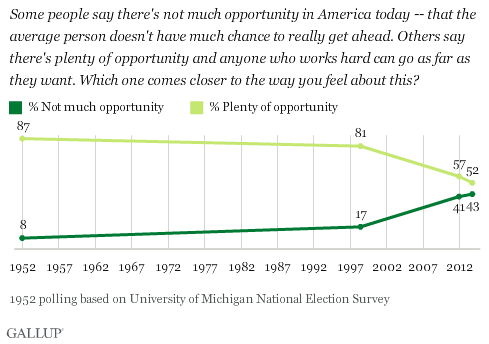
This chart from Gallup should remind every politician just how pessimistic most Americans are about their ability to get ahead.
From 1952-1998, more than 80 percent of Americans agreed with the statement that “there’s plenty of opportunity” to get ahead economically in this country “and anyone who works hard can go as far as they want.” Today, just 52 percent of Americans agree with that statement, while forty-three percent concur that “the average person doesn’t have much chance to really get ahead.”
So, from my standpoint, the best thing about this is the total humiliation to Bobby Jindal; governor from hell. Did I mention he actually hornswaggled the current congressman to retire early?
The results of the 5th District congressional race are in and the message has been sent loud and clear—surely loud enough to be heard in Baton Rouge.
With political newcomer Vance McAllister walloping State Sen. Neil Riser (R-Columbia), the heir-apparent to Rodney Alexander’s 5th District seat by not a comfortable but by an astounding and resounding 60-40 margin (okay, it was 59.65-40.35—an actual vote count of 54,449 to 36,837), the Louisiana Tea Party and Bobby Jindal have to be reeling and wondering what the hell happened. And Riser especially has to be feeling quite flummoxed and embarrassed at this juncture—particularly given the fact that he could muster only 3,800 more votes than he got in the Oct. 19 primary while McAllister pulled in an additional 36,000 votes, a margin of nearly 10-1 in the number of votes gained.
Actually, when you break it all down, there was more than one message sent in this election that Riser entered as the odds-on favorite to walk into office on the strength of the fast one that the Jindalites tried to pull off. The governor vastly overplayed his hand when he maneuvered Alexander into “retiring” halfway into this two-year term of office so that he could take a cushy state job as head of the Louisiana Office of Veterans Affairs at $130,000 per year, a job that stands to boost his state pension (he was a state legislator before being elected to Congress) from about $7,500 per year to something north of $80,000 per annum.
Speaking of more local politics, Seattle just elected a socialist to its city council.
Seattle voters have elected a socialist to city council for the first time in modern history.
Kshama Sawant’s lead continued to grow on Friday, prompting 16-year incumbent Richard Conlin to concede.
Even in this liberal city, Sawant’s win has surprised many here. Conlin was backed by the city’s political establishment. On election night, she trailed by four percentage points. She wasn’t a veteran politician, having only run in one previous campaign.
But in the days following election night, Sawant’s share of the votes outgrew Conlin’s.
“I don’t think socialism makes most people in Seattle afraid,” Conlin said Friday.
While city council races are technically non-partisan, Sawant made sure people knew she was running as a socialist — a label that would be politically poisonous in many parts of the country.
Sawant, a 41-year-old college economics professor, first drew attention as part of local Occupy Wall Street protests that included taking over a downtown park and a junior college campus in late 2011. She then ran for legislative office in 2012, challenging the powerful speaker of the state House, a Democrat. She was easily defeated.
Here’s an unedited local TV news interview with the future Council woman.
So, I promise that I’ll try to take on more in the future. Meanwhile, what’s on your blogging and reading list today?
Monday Reads
Posted: November 11, 2013 Filed under: 2016 elections, morning reads 44 Comments Good Morning!
Today is Veteran’s Day when our country shows appreciation for our soldiers living and passed that have served in uniform.
I’m not quite sure why this article was written because Elizabeth Warren has already “rallied” around Hillary Clinton. Every woman Democratic Senator signed on to a letter that supported the Clinton Candidacy. But, I suppose that pundits make a living trying to start something. This is by Noam Schieber at the NR.
It’s hard to look at the Democratic Party these days and not feel as if all the energy is behind Warren. Before she was even elected, her fund-raising e-mails would net the party more cash than any Democrat’s besides Obama or Hillary Clinton. According to the Times, Warren’s recent speech at the annual League of Conservation Voters banquet drew the largest crowd in 15 years. Or consider a website called Upworthy, which packages online videos with clever headlines and encourages users to share them. Obama barely registers on the site; Warren’s videos go viral. An appearance on cable this summer—“CNBC HOST DECIDES TO TEACH SENATOR WARREN HOW REGULATION WORKS. PROBABLY SHOULDN’T HAVE DONE THAT”—was viewed more than a million times. A Warren floor speech during the recent stalemate in Congress—“A SENATOR BLUNTLY SAYS WHAT WE’RE ALL THINKING ABOUT THE OBNOXIOUS GOVERNMENT SHUTDOWN”—tallied more than two million views.
The poll numbers also suggest the Democratic Party is becoming Elizabeth Warren’s party. Gallup finds that the percentage of Democrats with “very negative” views of the banking industry increased more than fivefold since 2007, while the percentage who have positive views fell from 51 to 31. Between 2001 and 2011, the percentage of Democrats who were dissatisfied with the “size and influence of major corporations” rose from 51 to a remarkable 79.
Frankly, I think Clinton has plenty of liberal cred even though she does have more connections to both the finance industry and the military 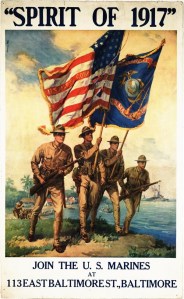 than Warren. But, I doubt that the argument that Democrats really want to be more liberal will impact the primary climate. I think this is especially true with the choice being between the two women.
There is, however, an argument to be made that a governor may be in a better position to be elected than some one who has spent time in Washington. Two writers from the NYT examine the potential line up.
Part of this is cyclical. As a rule, governors look bad during an economic downturn, as they are identified with spending cuts or tax increases to balance budgets, and are bold and in command during an economic rebound. And some governors are certainly struggling, be it Gov. Rick Scott of Florida, a Republican who failed to get his Legislature to back him on expanding Medicaid coverage, or Gov. Pat Quinn of Illinois, a Democrat who is widely unpopular after a failed effort to change pension laws there.
Yet the contrast these days appears as strong as any in memory, reflecting not only the breakdown in Washington but also a particularly activist class of governors, often empowered by having a legislature controlled by a single party as they enact the kind of crisp agenda that has eluded both parties in Washington.
“Right now, governors are the most popular political players in the country, mainly because of the dysfunction in Washington and because the public perceives governors as being bipartisan, pragmatic and able to work things out,” said Bill Richardson, a former governor of New Mexico and Democratic candidate for president in 2008. “Governors are the hot political items right now.”
The difference is reflected in polling. In the latest CBS News poll, 85 percent of respondents expressed disapproval of the performance of Congress, and 49 percent expressed disapproval of Mr. Obama. By contrast, less than a third of respondents in a variety of state polls said they disapproved of the performance of governors like Mr. Christie; Jerry Brown of California, a Democrat;Bill Haslam of Tennessee, a Republican; and Mike Beebe of Arkansas, a Democrat.
The European Space Agency is watching one of its satellite fall to earth today.
The European Space Agency says that one of its research satellites that ran out of fuel will most likely crash to Earth into the ocean or polar regions.
The agency said Sunday the crash is expected to occur between 1830 GMT Sunday and 0030 GMT on Monday (1:30 p.m. and 7:30 p.m. EST).
It says “with a very high probability, a re-entry over Europe can be excluded.”
Spokeswoman Jocelyne Landeau said the satellite, GOCE, will mostly disintegrate as it comes down and “we will have only a few pieces which could be 90 kilograms at the most.”

With Veterans Day coming up on Monday, America’s oldest living military veteran is enjoying the spotlight on his service once more, but even at the age of 107 he doesn’t seem to be slowing down.
Richard Overton, an Army veteran of World War II now living in Austin, Texas, still enjoys cigars and whiskey every day.
He’s got my dad beat. Dad just turned 90 last month. He served in England and flew bombing missions over Germany for the Army Air Corps. His favorite story is when they flew a mission under Jimmy Stewart who sounded just as you would think coming over the radio with directions. I’m going to visit Dad this next few weeks so I am sure I will hear a lot of war stories.
Just when you think Texas Republicans can’t get any worse you read something like this.
Texas Attorney General and Republican gubernatorial candidate Greg Abbott is one of a growing number of wealthy residents who are drilling wells to get around water restrictions during one of the worst droughts in history — a practice that environmentalists are warning could leave less water for everyone else.
The Texas Tribune reported on Sunday that Abbott had installed the well just months before the city of Austin began cracking down on lawn-watering restrictions.
According to the Tribune, some of the resident’s in Abbott’s luxury Pemberton Heights neighborhood had marked their lawns with signs that noted “Watering by Private Well” to avoid being hassled by the city.
“To me it’s just unconscionable,” Texas State University’s Meadows Center for Water and the Environment Executive Director Andrew Sansom told the Tribune. “It’s a total disregard for the resource… What we should be doing is reducing our consumption of water.”
Under Austin city law, Abbott is allowed to pump as much water out of the ground as he wants, even if it means another well goes dry in the process.
Gov. Rick Perry of Texas credited Chris Christie for his re-election in New Jersey, but he pointedly questioned whether the 22-point victory by Christie held any greater meaning for the Republican Party.
“Is a conservative in New Jersey a conservative in the rest of the country?” Perry said in an interview with “This Week.” “We’ll have that discussion at the appropriate time.”
As he made his first visit back to Iowa since the 2012 presidential race, Perry left the door open to another presidential bid. He said he believed voters would give him an opportunity to make a second impression, if he decided to run again, even though his first campaign fizzled amid a series of high-profile gaffes.
“Second chances are what America has always been about,” Perry said.
In a wide-ranging interview here, during a two-day visit to Iowa, Perry said the divisions among Republicans have been healthy for the party. But he said it was time for the establishment and tea party wings to rally around at least one shared goal: supporting strong candidates who can win.
“If you can’t win elections, you can’t govern,” Perry said. “So winning an election is really important.”
Yeah, 2016 has heated up already and all the clowns are crawling into the Republican Clown Car again.
On Friday, California State Controller John Chiang said
“[B]ecause higher-than-expected payroll withholdings and estimated payments are driving the good news [more state revenue], it signals that Californians are beginning to earn more, work more, and the Great Recession is becoming a faint image in the rear view mirror”
This “good news” is happening in many state and local areas (not all). This is a significant change from state and local governments being a headwind for the economy to becoming a slight tailwind.
You can check out the wonky graphs at the link above from Calculated Risk.
Anyway, that’s enough for me today! Happy Vet’s Day to our Vets! What’s on your reading and blogging list today?
Hmmmm … Are we more divided than ever?
Posted: November 9, 2013 Filed under: open thread | Tags: open thread 7 Comments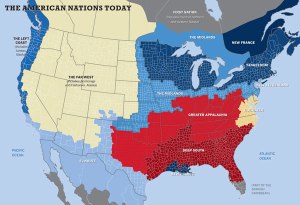
Red states and blue states? Flyover country and the coasts? How simplistic. Colin Woodard, a reporter at the Portland Press Herald and author of several books, says North America can be broken neatly into 11 separate nation-states, where dominant cultures explain our voting behaviors and attitudes toward everything from social issues to the role of government.
“The borders of my eleven American nations are reflected in many different types of maps — including maps showing the distribution of linguistic dialects, the spread of cultural artifacts, the prevalence of different religious denominations, and the county-by-county breakdown of voting in virtually every hotly contested presidential race in our history,” Woodard writes in the Fall 2013 issue of Tufts University’s alumni magazine. “Our continent’s famed mobility has been reinforcing, not dissolving, regional differences, as people increasingly sort themselves into like-minded communities.”
I actually like the New France description.
New France: Former French colonies in and around New Orleans and Quebec tend toward consensus and egalitarian, “among the most liberal on the continent, with unusually tolerant attitudes toward gays and people of all races and a ready acceptance of government involvement in the economy,” Woodard writes.
This is an open thread!!! How’s your Saturday Night going?

 peej
peej Carissa
 bostonboomer
 dakinikat
 ecocatwoman
 jjlo
jjlo mablue2
 Mama Lopez
 peggysue22
 quixote
 skydancingguestblogger
 Mona (aka Wonk the Vote)





Recent Comments