Posted: July 11, 2014 | Author: dakinikat | Filed under: El Salvador, Foreign Affairs, Guatemala, Honduras, immigration, morning reads, Refugees, social justice |
 Good Morning!
Recently, we’ve seen a lot in the news about the surge in women and children coming in from Central America. I was aware there had been ongoing civil wars in Honduras and problems in both Belize and El Salvador but really felt I needed more information to figure out what is going on. The huge numbers alone are disturbing. I know that we’ve needed immigration reform for some time. I also know that it’s impossible to get nearly anything done in this country anymore, because Republican members of Congress refuse to participate in governance. They seem to be boycotting democracy and everything else. So, I’ve done some reading and research. Today’s post will be on this one subject, but you can still consider it the usual Morning Reads post where you can post items of interest to you.
My first question was about the home countries of these refugee children. Where are they coming from and is this a big change from previous years? This NBC report has some of those facts and figures.
The U.S. Customs and Border Protection agency says that apprehensions of undocumented immigrants along the Southwestern U.S. border remain near historic lows, but agents have seen a sharp increase in the number of unaccompanied minors trying to enter the country illegally over the past five years. Over the first 8 1/2 months of fiscal year 2014, 52,193 unaccompanied minors have been taken into custody — a 99 percent increase over 2013.
In Texas’ Rio Grande Valley alone, where most border crossings now occur, apprehensions have increased 178 percent over last year, with 37,621

unaccompanied minors apprehended so far this year.
Minors from Mexico or Canada who are apprehended at the border can be quickly returned to their home countries in expedited removal proceedings. But those from other countries – mostly teens but sometimes as young as toddlers – are transferred to the custody of the Office of Refugee Resettlement (ORR), part of the Department of Health and Human Services.
The ORR maintains custody of the minors only until they can be placed with family members in the U.S. or in foster care to await a decision on whether they can remain in the country. That occurs through a formal deportation proceeding, which can take months or years, during which they can petition an immigration judge to remain in the country.
The soaring number of migrant children has strained the system, forcing the federal government to scramble to open additional emergency facilities across the country and prompting President Barack Obama to request Tuesday for an emergency appropriation of $3.7 billion to fund the operation.
ORR also has seen its caseload jump sharply in recent years, rising from an average ofbetween 7,000 and 8,000 unaccompanied children from FY 2005 through 2011 to 24,668 last year, according to figures provided by HHS. This year, officials estimate, the office will receive at least 60,000 referrals.
The children
Where do they come from?: Four countries – El Salvador, Guatemala, Honduras and Mexico — account for almost all of the unaccompanied minor cases, according to a 2014 report by the Congressional Research Service. As recently as 2009, Mexico accounted for 82 percent of the apprehended children, but the three Central American countries have propelled the recent influx, comprising 73 percent of those apprehended last year, it said.
 So, you can see that there’s been a great change in the number of children and their home countries recently. This means there must be something going on in those three countries since around 2009 that has led to the change. What exactly has happened? I have assumed that a lot of it has to do with our own foreign policy because those three nations have experienced a lot of US intervention and have been considered client states. Has what we’ve done in the past come back to haunt us? Here’s a report in The Nation on that.
But the United States has a particular moral responsibility in the Central America refugee crisis that goes even deeper. Americans, especially young Americans, probably know more about the 1994 genocide in Rwanda than they do about how their own government funded murderous right-wing dictatorships in Central America back in the 1980s. The Reagan administration’s violent and immoral policy included $5 billion in aid to the military/landowner alliance in El Salvador, which prolonged an awful conflict in which some 75,000 people died—a toll proportionally equivalent to the casualty rate in the American Civil War. But once shaky peace agreements were signed in the 1990s, the United States walked away, leaving the shattered region to rebuild on its own.
In response to today’s exodus, President Obama is showing little concern for international law, and none at all for Washington’s own historic responsibility in Central America. Instead, the administration announced on June 28 that it is asking Congress to change the law so America can deport the refugee children more quickly.
The very name of one of the giant criminal gangs—18th Street, or Calle 18—reveals the origins of the current crisis. Eighteenth Street is not in San Pedro Sula, or in San Salvador, or in any of the other Central American cities torn apart by gang warfare. Eighteenth Street is actually in Los Angeles, where the gang and its rival, the Mara Salvatrucha, were born among young Salvadorans who had been displaced by the civil war in the 1980s. After the United States started deporting gang members, they arrived back in Central America, some barely speaking Spanish and knowing only how to do one thing: grab the weapons the region was already awash in and start killing. During the decade-long civil war, family and community life had weakened, so the newly arrived gangs partly filled a vacuum.
America’s responsibility in Honduras, Esperanza and Angelica Ramirez’s home nation, is even more recent. In 2009, the Honduran military overthrew the elected government, and the Obama administration accepted the coup over the protests of brave pro-democracy forces there. The respected International Crisis Group explains that the political turmoil weakened the central government, and in some places the criminal gangs became the de facto authority. What’s more, Washington’s war on drugs, in Honduras and elsewhere, has also raised the overall level of violence.
The Women’s Refugee Commission has been studying this issue for several years and predicted the current crisis. They have a study and a site that  explores many of the most important issues surrounding this crisis. This includes treatment of the children during their journey and the risks they face as well as the United States Policy and treatment of the children once they are found by the Border Patrol. They also have looked at the key issues surrounding the diaspora as well as have come up with policy suggestions.
There has been a great deal of research into the root causes of this surge of unaccompanied children fleeing the region. In 2012 we interviewed 161 children to find out why they were coming. In our interviews, the children reported to us that they were predominately being pushed from their homes due to rising violence and insecurity in their home countries. Moreover, almost every single child we spoke with reported having a good understanding of the dangers of trying to migrate through Mexico and into the United States without authorization. They knew of the risks of kidnapping, rape, and even death. The children we spoke with told us they felt like they would die if they stayed in their home country, and although they might die during the journey, they at least would have a chance.
In 2013, the U.S. Conference of Catholic Bishops traveled to Central America to interview children who had tried to migrate to the United States. Their report reaffirmed our findings that violence in the three countries of El Salvador, Guatemala and Honduras was the overriding factor leading to the migration of these children.[8] One mother they spoke with told them that she knew her son might die on his journey to the U.S. but she preferred that he die trying to find safety, then on her doorstep.
Most recently, in 2014, United Nations High Commissioner for Refugees (UNHCR) interviewed over 400 children who had left their homes countries. Most children – even those who had a parent or family member with whom they wished to reunite – cited domestic abuse within the home, gang and cartel violence, deprivation of basic survival necessities, and labor and sex trafficking as the reasons for their migration.[9] Most significantly, UNHCR found that the majority of the children made statements indicating that they may be in need of international protection.
There have been numerous reports and claims by government authorities that many of these children or the family members who may try to help them migrate are being encouraged to undertake the dangerous journey by false promises from smugglers or inaccurate media reporting on U.S. policies that do not exist or that cannot benefit them. But it is impossible for us to dispute the root causes that make these children desperate to leave their home countries and seek a safe haven. No child or parent would agree to pay a dangerous smuggler to take a young child on such a harrowing journey if they did not feel it was the only option. No promise of a tenuous and temporary status in the United States, such as administrative closure or Deferred Action for Children Arrivals (DACA), would encourage someone to risk their lives, or risk the lives of their child. It is the underlying severe conditions in Mexico and these Central American nations that is forcing this migration pattern, not the lure of intangible reform.
Furthermore, the facts do not support that rumors or U.S. policy with respect to these populations is what is encouraging the migration. Nicaragua is the poorest country in the region. At the same time Nicaragua, like El Salvador, Honduras and Guatemala, has a history of migration to the United States, resulting in many Nicaraguan children having family members in the United States. Yet, we have not seen any increase in the number of Nicaraguan children arriving at the Southern border. The difference is that Nicaragua, as one of the safest countries in the region, is not experiencing the violence that is driving children from its three neighbors.
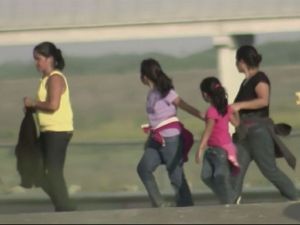 The UN is requesting the US treat the people from these three countries as refugees. They are basically no different that refugees fleeing Syria or Iraq to escape violence from countries torn by civil war. Bordering nations like Jordan routinely provide shelter to refugees fleeing the violence in areas filled with armed violence. We’re talking women and children in both cases. These aren’t able bodied men looking for work. They are victims of violence looking for safety.
Officials with the U.N. High Commissioner for Refugees say they hope to see movement toward a regional agreement on that status Thursday when migration and interior department representatives from the U.S., Mexico, and Central America meet in Nicaragua. The group will discuss updating a 30-year-old declaration regarding the obligations that nations have to aid refugees.
While such a resolution would lack any legal weight, the agency said it believes “the U.S. and Mexico should recognize that this is a refugee situation, which implies that they shouldn’t be automatically sent to their home countries but rather receive international protection.”
Most of the people widely considered to be refugees by the international community are fleeing more traditional political or ethnic conflicts like those in Syria or the Sudan. Central Americans would be among the first modern migrants considered refugees because they are fleeing violence and extortion at the hands of criminal gangs.
Central America’s Northern Triangle of Guatemala, El Salvador and Honduras has become one of the most violent regions on earth in recent years, with swathes of all three countries under the control of drug traffickers and street gangs who rob, rape and extort ordinary citizens with impunity.
Honduras, a primary transit point for U.S.-bound cocaine, has the world’s highest homicide rate for a nation that is not at war. Hondurans who are used to hiding indoors at night have been terrorized anew in recent months by a wave of attacks against churches, schools and buses.
During a recent visit to the U.S., Honduran President Juan Orlando Hernandez said migrants from his country were “displaced by war” and called on the United States to acknowledge that.
Honduran police routinely are accused of civil rights violations. The AP has reported at least five cases of alleged gang members missing or killed after being taken into police custody in what critics and human rights advocates call death squads engaged in a wave of social cleansing of criminals.
Violence by criminal organizations spread after members of California street gangs were deported to Honduras, Guatemala and El Salvador, where they overwhelmed weak and corrupt police forces.
In El Salvador, the end of a truce between street gangs has led to a steep rise in homicides this year.
Salvadorans heading north through Mexico who were interviewed by The Associated Press last month said there also was fear of the “Sombra Negra,” or “Black Shadow” – groups of masked men in civilian clothes who are believed responsible for extrajudicial killings of teens in gang-controlled neighborhoods. The Salvadoran government denies any involvement in death squads, but says it is investigating the reports.
In El Salvador, at least 135,000 people, or 2.1 percent of the population, have been forced to leave their homes, the vast majority due to gang extortion and violence, according to U.N. figures. That’s more than twice the percentage displaced by Colombia’s brutal civil war, the U.N. says.
Immigration experts in the U.S. and Central America say the flow of migrants from Honduras and El Salvador is likely to rise as the two countries experience more gang-related violence.
“They are leaving for some reason. Let’s not send them back in a mechanical way, but rather evaluate the reasons they left their country,” Fernando Protti, regional representative for the U.N. refugee agency, told The Associated Press.
Even though the agreement would not be legally binding on the countries that sign it, advocates say it would help create international consensus to help the migrants.
Those actions could include emergency aid and social services for internally displaced people inside Honduras, Guatemala and El Salvador.
So, this has gotten to be a very long post already. I’m going to run a second edition of this with more information. Meanwhile, this gives you some background.
What’s on your reading and blogging list today?
Did you like this post? Please share it with your friends:
Posted: July 8, 2014 | Author: dakinikat | Filed under: American Gun Fetish, birth control, morning reads |
Good Morning!
Here’s a little this and that to read!
 Scientists are working on a remote-controlled contraception that may last 16 years. I’m just hoping that it’s the woman that gets to control this!
A Massachusetts-based startup called MicroCHIPS has developed an implantable contraceptive chip that can be wirelessly controlled.
Because the device can be turned on and off with a remote, women will no longer need to go to a clinic for an outpatient procedure when they need to deactivate their birth control. MIT Technology Review reports.
The chip is a 20-millimeter square, about 7 millimeters thick, and each day, it dispenses 30 micrograms of a hormone called levonorgestrel, which is already being used as a contraceptive in the U.S.
The technology, which was designed to deliver a variety of drugs, stores the compounds in an array of tiny reservoirs on the chip. These microreservoirs are sealed with a platinum and titanium membrane before the chip is implanted under the skin of the buttocks, upper arm, or abdomen. When an electrical current from an internal battery is applied, the membrane seal melts temporarily — in a controlled degradation — and releases the dose of the hormones or drugs.
For some reason, I could see this falling into a whacko judge’s hands.
Chicago experienced an extremely deadly weekend. Yes, yes … second amendment! What is it going to take to end this kind of gun violence?
Police are dealing with the fallout from some unexpected fireworks over the past few days in Chicago. Eighty-two people were shot, 14 of them fatally, over the long Fourth of July weekend, according to the Chicago Tribune. The string of incidents kicked off in the afternoon on Thursday.
Five of the shootings involved police, reports CBS Chicago, and two male teens were killed by officers in separate incidents.
In the most recent fatal shooting, an unidentified 44-year-old woman was shot at a barbecue around 12:30 a.m. Monday in the city’s Morgan Park neighborhood, according to the station. She was shot as she leaned into a car in a parking lot and was pronounced dead at the scene.
“While to date we have had the fewest murders since 1963, one victim is too many and there is clearly much more work to be done,” said police spokesman Martin Maloney.
Dozens of others were wounded in shootings throughout the holiday weekend.
 The fallout-continues in the Hobby Lobby case. Not only has SCOTUS pierced the corporate veil, but they’ve opened up all kinds of challenges from people that I’m sure they really didn’t intend to support. This includes devout Muslims at Gitmo. Notorious RBG was sure right about this.
Lawyers for two Guantanamo Bay detainees have filed motions asking a U.S. court to block officials from preventing the inmates from taking part in communal prayers during the Islamic holy month of Ramadan. The lawyers argue that – in light of the Supreme Court’s recent Hobby Lobby decision – the detainees’ rights are protected under the Religious Freedom Restoration Act (RFRA).
The motions were filed this week with the Washington D.C. district court on behalf of Emad Hassan of Yemen andAhmed Rabbani of Pakistan. U.K.-based human rights group Reprieve said both men asked for the intervention after military officials at the prison “prevented them from praying communally during Ramadan.”
During Ramadan, a month of prayer and reflection that began last weekend, Muslims are required to fast every day from sunrise to sunset. But what is at issue in this case is the ability to perform extra prayers, called tarawih, “in which [Muslims] recite one-thirtieth of the Quran in consecutive segments throughout the month.”
U.S. Army Lt. Col. Myles B. Caggins III, a spokesman for the Department of Defense, told Al Jazeera on Friday that the “Defense Department is aware of the filing,” and that the “government will respond through the legal system.”
The detainees’ lawyers said courts have previously concluded that Guantanamo detainees do not have “religious free exercise rights” because they are not “persons within the scope of the RFRA.”
But the detainees’ lawyers say the Hobby Lobby decision changes that.
Lawyers are going to have a hey day testing this one. One Federal Judge is livid about it.
Judge Richard George Kopf, a George H.W. Bush appointee to the federal bench who maintains his own personal blog, has some harsh words for the Supreme Court in the wake of their birth control decision in the closely watched Hobby Lobby case: “the Court is now causing more harm (division) to our democracy than good by deciding hot button cases that the Court has the power to avoid. As the kids says, it is time for the Court to stfu.”
Just in case there is any ambiguity regarding what Judge Kopf means by “stfu,” he links to an Urban Dictionary page which defines that grouping of letters as an “[a]cronym used for the phrase ‘shut the fuck up’ for efficiency reasons.”
Earlier in the same post, Kopf explains that he believes that the Court is diminishing its own prestige by deciding cases such as Hobby Lobby:
In the Hobby Lobby cases, five male Justices of the Supreme Court, who are all members of the Catholic faith and who each were appointed by a President who hailed from the Republican party, decided that a huge corporation, with thousands of employees and gargantuan revenues, was a “person” entitled to assert a religious objection to the Affordable Care Act’s contraception mandate because that corporation was “closely held” by family members. To the average person, the result looks stupid and smells worse.
To most people, the decision looks stupid ’cause corporations are not persons, all the legal mumbo jumbo notwithstanding. The decision looks misogynist because the majority were all men. It looks partisan because all were appointed by a Republican. The decision looks religiously motivated because each member of the majority belongs to the Catholic church, and that religious organization is opposed to contraception. While “looks” don’t matter to the logic of the law (and I am not saying the Justices are actually motivated by such things), all of us know from experience that appearances matter to the public’s acceptance of the law.
Despite his strong words, it is unlikely that the alternative course Judge Kopf thinks the Court should have taken would have led to a different practical result than the victory Hobby Lobby received last Monday. “What would have happened if the Supreme Court simply decided not to take the Hobby Lobby cases? . . . . Had the Court sat on the sidelines, I don’t think any significant harm would have occurred.
 Just when you think you heard enough about Japan, Typhoons and nuclear plants we now have this on the horizon. Go check out the potential path of destruction and worry.
Typhoon Neoguri reached sustained winds of over 150 miles per hour Sunday, making it a ‘super typhoon,’ as it continued to gain force and approach Japan’s southern and western islands. It is likely to cause heavy rains and strong winds across much of Japan, and threaten at least two nuclear power plants in its path.
Heavy rains from another storm have already been setting records in Kyushu, Japan’s southern and southwestern-most major island, where Neoguri is likely to make first landfall. Kyushu is home to two nuclear plants, which have been shut down for safety in advance of the storm’s arrival. A nuclear plant on nearby Shikoku island has been shut down for safety, as well. After making landfall, the storm is expected to move north through virtually all of Japan, losing strength as it travels up the island.
Fukushima, in the east, is likely to be spared. The 2011 meltdown of the Fukushima Daiichi plant focused attention on the vulnerability of nuclear plants, as radioactive water continued leaking for over a year after a tsunami and earthquake hit. Tokyo is also likely to miss Neoguri’s worst.
Japan Meteorological Agency warned that Neoguri would be an “extremely intense” storm by Tuesday, and issued emergency warnings for the southern islands, calling the super typhoon a “once in decades storm.” While powerful and dangerous, Neoguri will not be as strong as Typhoon Haiyan, which killed thousands, left hundreds of thousands homeless and caused a major humanitarian crisis in the Philippines last year. Haiyan may have had the strongest sustained cyclone winds on record, at 195 mph.
Neoguri is currently as strong as a category 4 hurricane and it appears likely to hit Kyushu as a category 3, with winds between 111 and 130 mph.
And then there’s the continue karma Republicans are receiving for the “Southern Strategy”. Step right up to the party of crazy.
Republican hysteria still exists, but it increasingly finds its expression not in policy but in a melange of scandal allegations. The threat to the Constitution once epitomized by such things as Obamacare, socialism, and Greece has instead taken the form of Benghazi, the IRS, and Bergdahl.
The reformicons’ retreat from Ryan-style apocalypticism is not only a shrewd tonal shift, but also a welcome — albeit unacknowledged — recognition that the party’s doomsaying has not come to pass, and that the American way of life will indeed survive Obama’s reforms. Indeed, the success of Obama’s domestic agenda may create more space for a conservative counteroffensive, in the way that Reaganism opened political room for Bill Clinton. Whether or not the reformicons ever compose a workable domestic agenda, they have come to recognize that they cannot run a presidential campaign promising to rescue America from fire and rubble visible only to themselves.
 For “ground zero” crazy, see Texas Republicans.
If you want to see the clearest symptoms of the prion disease that has devoured the brain of the Republican party, the state Republican party is your Patient Zero. And, before a whole bunch of people in the Beltway media playpen begin minimizing this craziness because it pretty much shatters the whole idea of Both Sides Doing It without which most of those people can’t get out of bed in the morning. This isn’t four guys in camo in Idaho. This isn’t a guy broadcasting on a short-wave from upper Michigan, or receiving the truth about chemtrails and the Illuminati through his teeth. This is the Republican party representing the state from which he got our last Republican president, and one of the biggest states in the Union.
Yes, it’s Charles Pierce at his wonky best.
It just seems so many people don’t think ahead these days. They’re so focused on money or votes or profit that the rest of us get screwed royally with their expedient answers to life.
What’s on your reading and blogging list today?
Did you like this post? Please share it with your friends:
Posted: July 3, 2014 | Author: dakinikat | Filed under: Civil Liberties, Civil Rights, Crime, Discrimination against women, Domestic terrorism, Feminists, fetus fetishists, GLBT Rights, morning reads, Religious Conscience, religious extremists, Reproductive Health, Republican politics, right wing hate grouups |
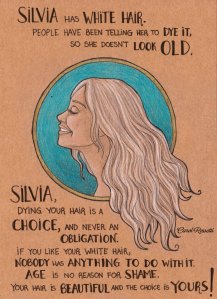 Good Morning!!
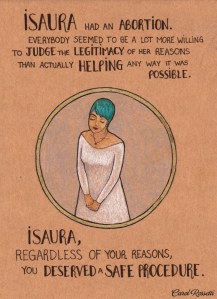
Today’s beautiful messages and images can be found here.
The reactionary and wildly creative decisions coming out of the Supreme Court are already having ramifications across the country where women, minorities, and the GLBT community are having to fight for their very basic rights. Interestingly enough, we are learning about which corporations want to be citizens and which corporations want to exist for the sole benefits of their owners.
The Hobby Lobby decision is already creating chaos as Notorious RBG and many of us have discussed.
This week, in the Hobby Lobby case, the Supreme Court ruled that a religious employer could not be required to provide employees with certain types of contraception. That decision is beginning to reverberate: A group of faith leaders is urging the Obama administration to include a religious exemption in a forthcoming LGBT anti-discrimination action.
Their call, in a letter sent to the White House Tuesday, attempts to capitalize on the Supreme Court case by arguing that it shows the administration must show more deference to the prerogatives of religion.
“We are asking that an extension of protection for one group not come at the expense of faith communities whose religious identity and beliefs motivate them to serve those in need,” the letter states.
The Hobby Lobby decision has been welcomed by religious-right groups who accuse Obama of waging a war on religion. But Tuesday’s letter is different: It comes from a group of faith leaders who are generally friendly to the administration, many of whom have closely advised the White House on issues like immigration reform. The letter was organized by Michael Wear, who worked in the Obama White House and directed faith outreach for the president’s 2012 campaign. Signers include two members of Catholics for Obama and three former members of the President’s Advisory Council on Faith-Based and Neighborhood Partnerships.
“This is not an antagonistic letter by any means,” Wear told me. But in the wake of Hobby Lobby, he said, “the administration does have a decision to make whether they want to recalibrate their approach to some of these issues.”
This decision is controversial and will remain controversial. It changes how the government can approach the court’s favored religion and possibly 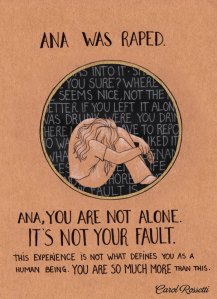 other religions.
The first source of controversy is the collapse of a national consensus on a key element of religious liberty: accommodation. Throughout American history, there has been widespread agreement that in our religiously diverse and widely devout country, it is good for the government to accommodate religious exercise. We have disagreed about particular accommodations (may a Muslim police officer wear a beard, despite police department policy?), and especially about whether religious accommodations should be ordered by judges or crafted by legislators. But we have generally agreed that our nation benefits when we help rather than burden those with religious obligations. That consensus seems, quite suddenly, to have evaporated.
A second source of controversy is that many people view the Hobby Lobby case as concerning not just reproductive rights but also, indirectly, rights for gays and lesbians. Advocates for same-sex marriage have long insisted that their own marriages need not threaten anyone else’s, but citizens with religious objections to same-sex marriage wonder whether that is entirely true: Will a small-business owner be sued, for instance, for declining to provide services to a same-sex couple? Conversely, and understandably, gay and lesbian couples wonder why they do not deserve the same protections from discrimination granted to racial and other minorities. For both sides, Hobby Lobby was merely a prelude to this dawning conflict.
The third source of controversy is a change in our views of the marketplace itself. The marketplace was once seen as place to put aside our culture wars and engage in the great American tradition of buying and selling. The shopping mall has even been called the “American agora.” But today the market itself has become a site of cultural conflict. Hobby Lobby is one of many companies that seek to express faith commitments at work as well as at home and that don’t see the workplace as a thing apart from religion. Many companies preach and practice values, religious and otherwise, that are unrelated to market considerations. CVS, for example, recently announced that it would stop selling tobacco products, regardless of how that decision might affect its bottom line.
A country that cannot even agree on the idea of religious accommodation, let alone on what terms, is unlikely to agree on what to do next
 Here’s another group of “patriotic, gawd-fearing” amuricans shouting down children and mothers fleeing violence in our neighbor countries. I just continue to find this to be the most appalling story I’ve heard in some time. The Border Patrol, ICE, and every one involved–but these horrible xenophobes–were just following our laws as written. Perhaps, they should know our laws just a little bit better themselves.
The national controversy over a surge of Central American immigrants illegally crossing the U.S. border established a new battleground this week in a Southern California small town where angry crowds thwarted detained migrants from entering their community.
In a faceoff Tuesday with three buses carrying the migrants behind screened-off windows, the demonstrators chanted “Go back home!” and “USA” and successfully forced the coaches to leave Murrieta, CNN affiliate KFMB reported.
The buses instead took the 140 or so undocumented immigrants to U.S. processing centers at least 80 miles away, in the San Diego and El Centro areas, federal officials say.
Counter-protesters squared off with the demonstrators, and a shouting match erupted over the nation’s immigration system, which recently has been overwhelmed with a tide of Central American minors illegally entering the United States alone or with other children.
A mix of poverty, violence and smugglers’ false promises is prompting the Central American inflow.
Unlike undocumented Mexican migrants, who are often immediately deported, the U.S. government detains and processes the Central Americans, who are eventually released and given a month to report to immigration offices. Many never show up and join the nation’s 11 million undocumented population, says the National Border Patrol Council, the union representing Border Patrol agents.
The Latin American immigrants rejected by Murrieta protesters were initially held in Texas, where U.S. facilities are so overflowing that detainees are sent to other states for processing.
The government doesn’t have the room to shelter the children with adults: there’s only one family immigration detention center, in Pennsylvania. To assist the unaccompanied children, President Barack Obama’s administration opened shelters last month on three military bases because federal facilities more designed for adults were overrun with minors.
Tuesday’s busloads of detained Central American immigrants didn’t include any unaccompanied minors, said Murrieta Police Chief Sean Hadden, who put the number of protesters at 125. The children on the buses were apparently in the company of relatives or other adults, said an official with the National Border Patrol Council.
Meanwhile, yet another corporation has decided that open carry of assault weapons in their stores may not create the most hospitable environment for  employees or shoppers. Target has joined other companies asking customers to leave their guns at home,
The leadership team has been weighing a complex issue, and I want to be sure everyone understands our thoughts and ultimate decision.
As you’ve likely seen in the media, there has been a debate about whether guests in communities that permit “open carry” should be allowed to bring firearms into Target stores. Our approach has always been to follow local laws, and of course, we will continue to do so. But starting today we will also respectfully request that guests not bring firearms to Target – even in communities where it is permitted by law.
We’ve listened carefully to the nuances of this debate and respect the protected rights of everyone involved. In return, we are asking for help in fulfilling our goal to create an atmosphere that is safe and inviting for our guests and team members.
This is a complicated issue, but it boils down to a simple belief: Bringing firearms to Target creates an environment that is at odds with the family-friendly shopping and work experience we strive to create.
Meanwhile, over in Georgia, the new flout your gun every where has lead to just what you’d expect.
A “misunderstanding” between two armed men in a Georgia convenience store led to an arrest on the very day that the state’s new expansive gun rights law went into effect, according to The Valdosta Daily Times.
Valdosta Police Chief Brian Childress summed the incident up for the newspaper.
“Essentially, it involved one customer with a gun on his hip when a second customer entered with a gun on his hip,” Childress said.
According to the Daily Times, the first man, Ronald Williams, approached the second man in the store and demanded to see his identification and firearms license. Williams also pulled his gun from his holster, without pointing it at the second man. The second man responded by saying that he was not obligated to show any permits or identification — then he paid for his purchase, left the store, and called the police.
Police responded to the call around 3 p.m. Tuesday, and Williams was arrested on a charge of disorderly conduct for pulling his gun in the store.
Tuesday was also the day that Georgia’s so-called “guns everywhere” law went into effect, allowing residents to carry guns into bars, nightclubs, classrooms, and certain government buildings. Among other things, the law also prohibits police from demanding to see the weapons permit of someone seen carrying a gun. Childress mentioned that last point when talking to the Daily Times about Tuesday’s incident.
“This is an example of my concern with the new gun law that people will take the law into their own hands which we will not tolerate,” Childress said.
 I wanted to share a mass shooting that happened on Bourbon Street last weekend. A beautiful young woman has lost her life in the senseless violence. Another has a lot of damage to her mouth, gums and teeth. All of this happened because one young man got into an argument and his anger and his gun led to indiscriminate firing into the crowd. A total of 10 innocent bystanders were shot.
One of the 10 victims of the weekend shooting on New Orleans’ famed Bourbon Street died Wednesday.
According to the coroner’s office, Brittany Thomas, 21, of Hammond, La., died from her injuries. She is the only victim of the shooting to die.
Thomas had been in critical condition since the early Sunday morning shooting when two gunmen sprayed the crowd with bullets.
Three others were reported in stable condition after Sunday’s shooting: a 35-year-old man from Mississippi, a 19-year-old Arkansas woman and an 18-year-old New Orleans man.
Interim LSU Hospital spokeswoman Siona LaFrance said Wednesday a 21-year-old Australian woman was released from the hospital.
On Sunday, police said nine people were injured in the shooting. Then Monday, they said a person who came into the police department Sunday afternoon also was injured in the violence.
Other victims, not hospitalized, included two New Orleans-area men; a teenage girl and a woman from Alabama; and a Florida man.
The young Australian woman has a Facebook page where you can help her defray the cost of reconstruction. As of writing this, I understand that the “person” of interest has surrendered to the police. His face has been plastered every where for about a day and half.
The shooting took place about 2:45 a.m. Sunday on Bourbon Street and involved “two young men, both armed with firearms, who chose to settle a dispute between themselves without care for anyone else,” Police Supt. Ronal W. Serpas told reporters. They exchanged gunfire, hitting bystanders, he said. Bourbon Street, a hot spot for tourists, is full of bars, restaurants and shops.
 This young man’s callous regard for life should land him in jail for a very long time. We’ll see what happens. The suspect is a young white man and the dead girl is a young black woman.
According to the New Orleans Police Department, two men are sought in the shooting that spawned from an argument between them.
“While everyone else was running away, I was running toward the gunfire,” Minsky said. “And, I don’t know, being a curious guy — that’s what I wanted to do — see what was going on basically.”
Minsky described the ordeal as “surreal,” saying he’d never seen multiple people get shot.
“There was a lot of blood, I can tell you that much, you know. And I actually stepped in a pool of blood and didn’t realize it until I was walking toward the person shot in the face,” Minksey said. “That kind of freaked me out a little bit.”
The victim shot in the face was Amy Matthews from Australia. The bullet struck her in her cheek and knocked out all but 10 teeth she told an Australian newspaper. She was released from the hospital this week.
In one of several photos Minsky took on his cellphone, Matthews is seen sitting on a sidewalk on Bourbon Street as a crowd of people attempted to help her, including two U.S. marines.
He also captured an image of an unresponsive woman lying in the middle of the 700 block of Bourbon Street.
During the chaotic moments after the shooting, Minsky said there weren’t many screams in the Vieux Carré.
“There was just a lot of people running around and trying to help each other,” he said. “The person that was shot in the face was probably the person getting the most attention at that immediate moment. But as far as the screams and commotion, I mean, yeah, there are people running and screaming but that all died down after the gunshots ended.”
I can’t believe that this is what the founders– many of whom I am a direct descendant of–planned for our union. How could they have envision this kind of hateful chaos empowered by the Supreme Court who represents the voice of reason, law, and constitutionality, and the House of Representatives which is supposed to be the voice of the people.. I do not find any of these events to be consistent with their dreams and plans for a more perfect union where no one religion would dictate the lives of others, where all were considered equal before the law, and every one had the ability to pursue life and liberty.
Did you like this post? Please share it with your friends:
Posted: July 1, 2014 | Author: dakinikat | Filed under: Affordable Care Act (ACA), birth control, Discrimination against women, Feminists, fetus fetishists, fundamentalist Christians, GLBT Rights, Hillary Clinton, Marriage Equality, morning reads, religious extremists, Reproductive Health, Reproductive Rights |
Good Morning!
 Why is it that many religious people just cannot live without imposing their views on others? That’s one of the things I’ve been thinking about since the reliably patriarchal side of SCOTUS took one more step to force their favorite flavor of religion on the rest of us. Today’s photo montage is via “The Invisibles”. It is a montage of gay couples during the times when theirs was a “love that dare not speak its name”. There are so many folks that choose to live outside of the conventions of the society into which they were born. I was raised to think that this country was born of the dreams of folks wanting to establish a place where they could not be persecuted for not following the majority’s norms. Our country has not had perfect beginnings. But up until recently, I always felt that we were at least creeping towards a “more perfect union”.
While the plight of the GLBT community is improving and appears to have some forward momentum, there are others that are being shoved back into conformity with lives and values not of their choosing. This includes women, immigrants and many minorities. Why do others feel they have to justify their own lives by persecuting others? We’re headed towards our nation’s birthday. What has happened to the idea of creating our “more perfect union” with “liberty and justice for all”?
So, first I feel like I have to add more to the discussion on the SCOTUS decision that allows privately and tightly held corporations that are not engaged  in the business of religion to hold religious beliefs identical to the owners that are supposedly separate from the corporation enough to be indemnified by any illegal activities it undertakes. Hillary Clinton made her views clear on the subject as did Justice Ginsberg writing for the dissent. I will rely on their words here. Hillary Clinton calls the decision “deeply disturbing”.
Presumed 2016 presidential frontrunner Hillary Clinton said Monday that the Supreme Court’s ruling in favor of Hobby Lobby on Obamacare’s contraceptive mandate was “deeply disturbing” — both for its implications for women’s health care and the religious rights of corporations.
“It’s the first time that our court has said that a closely held corporation has the rights of a person when it comes to religious freedom,” she said during a Q&A at the Aspen Ideas Festival. “I find it deeply disturbing that we are going in that direction.”
“It’s very troubling that a sales clerk at Hobby Lobby who needs contraception, which is pretty expensive, is not going to get that service through her employer’s health care plan because her employer doesn’t believe she should use birth control,” she continued.
Justice Ginsberg wrote a masterful dissent.
On Monday, the Supreme Court sided with Hobby Lobby on the company’s challenge to the Affordable Care Act’s contraceptive mandate, ruling that the mandate, as applied to “closely held” businesses, violates the 1993 Religious Freedom Restoration Act. But the divided court’s 5-4 decision included a dramatic dissent from Justice Ruth Bader Ginsburg, who called the majority opinion “a decision of startling breadth.” Ginsburg read a portion of her decision from the bench on Monday.
Addressing the majority of her colleagues — including all but one of the six men sitting on the Supreme Court — Ginsburg wrote:
In the Court’s view, RFRA demands accommodation of a for-profit corporation’s religious beliefs no matter the impact that accommodation may have on third parties who do not share the corporation owners’ religious faith—in these cases, thousands of women employed by Hobby Lobby and Conestoga or dependents of persons those corporations employ. Persuaded that Congress enacted RFRA to serve a far less radical purpose, and mindful of the havoc the Court’s judgment can introduce, I dissent.
The justice goes on to criticize the opinion’s interpretation of the religious freedom law, writing that “until today, religious exemptions had never been extended to any entity operating in ‘the commercial, profit-making world.'”
The reason why is hardly obscure. Religious organizations exist to foster the interests of persons subscribing to the same religious faith. Not so of for-profit corporations. Workers who sustain the operations of those corporations commonly are not drawn from one religious community. Indeed, by law, no religion-based criterion can restrict the work force of for-profit corporations…The distinction between a community made up of believers in the same religion and one embracing persons of diverse beliefs, clear as it is, constantly escapes the Court’s attention. One can only wonder why the Court shuts this key difference from sight.
“In sum,” Ginsburg adds about the free exercise claims at the heart of this case,“‘[y]our right to swing your arms ends just where the other man’s nose begins.’”
Justice Alito got a little prickly in his majority opinion about Ginsburg’s strong criticism of their take on the case:
As this description of our reasoning shows, our holding is very specific. We do not hold, as the principal dissent alleges, that for-profit corporations and other commercial enterprises can “opt out of any law (saving only tax laws) they judge incompatible with their sincerely held religious beliefs.” Post, at 1 (opinion of GINSBURG, J.). Nor do we hold, as the dissent implies, that such corporations have free rein to take steps that impose “disadvantages . . . on others” or that require “the general public [to] pick up the tab.” Post, at 1–2. And we certainly do not hold or suggest that “RFRA demands accommodation of a for-profit corporation’s religious beliefs no matter the impact that accommodation may have on . . . thousands of women employed by Hobby Lobby.” Post, at 2.1 The effect of the HHS-created accommodation on the women employed by Hobby Lobby and the other companies involved in these cases would be precisely zero. Under that accommodation, these women would still be entitled to all FDA-approved contraceptives without cost sharing.
Ginsburg seems to reply to Alito by suggesting that what Alito sees as a narrow, limited decision is essentially an invitation for lots of future challenges on religious grounds: “Although the Court attempts to cabin its language to closely held corporations,” she writes, “its logic extends to corporations of any size, public or private. Little doubt that RFRA claims will proliferate.”
Further quotes from Ginsburg’s dissent can be read at MOJO.
Here are seven more key quotes from Ginsburg’s dissent in Burwell v. Hobby Lobby:
- “The exemption sought by Hobby Lobby and Conestoga would…deny legions of women who do not hold their employers’ beliefs access to contraceptive coverage”
- “Religious organizations exist to foster the interests of persons subscribing to the same religious faith. Not so of for-profit corporations. Workers who sustain the operations of those corporations commonly are not drawn from one religious community.”
- “Any decision to use contraceptives made by a woman covered under Hobby Lobby’s or Conestoga’s plan will not be propelled by the Government, it will be the woman’s autonomous choice, informed by the physician she consults.”
- “It bears note in this regard that the cost of an IUD is nearly equivalent to a month’s full-time pay for workers earning the minimum wage.”
- “Would the exemption…extend to employers with religiously grounded objections to blood transfusions (Jehovah’s Witnesses); antidepressants (Scientologists); medications derived from pigs, including anesthesia, intravenous fluids, and pills coated with gelatin (certain Muslims, Jews, and Hindus); and vaccinations[?]…Not much help there for the lower courts bound by today’s decision.”
- “Approving some religious claims while deeming others unworthy of accommodation could be ‘perceived as favoring one religion over another,’ the very ‘risk the [Constitution’s] Establishment Clause was designed to preclude.”
- “The court, I fear, has ventured into a minefield.”
You can read the full dissent here. (It starts on page 60.)
 The court attempted a narrow decision but crept into an area of corporate law that could create an interesting situation. Usually, corporations are considered distinct from their owners. Hobby Lobby is a corporation tightly held by a family so the majority view basically carved out this type of corporation and said “it’s different”. However, how can you indemnify owners from corporate malfeasance AND say that this specific corporation that doesn’t have a religious mission reflects this set of owner’s pet superstitions? Could the justices have unintentionally left a back door open to challenge the very basis of incorporation which is to make any corporation its own entity?
The decision’s acknowledgment of corporations’ religious liberty rights was reminiscent of Citizens United v. Federal Election Commission, a 2010 ruling that affirmed the free speech rights of corporations. Justice Alito explained why corporations should sometimes be regarded as persons. “A corporation is simply a form of organization used by human beings to achieve desired ends,” he wrote. “When rights, whether constitutional or statutory, are extended to corporations, the purpose is to protect the rights of these people.”
Justice Ginsburg said the commercial nature of for-profit corporations made a difference.
“The court forgets that religious organizations exist to serve a community of believers,” she wrote. “For-profit corporations do not fit that bill.”
I wanted to point out the anniversary of a sad day in New Orleans history. I’m not sure how many of you know about the UpStairs Lounge fire of 1973. The arson mass murder of GLBT stands as the largest of its kind in modern history.
On June 24, 1973, an arsonist set fire to a gay bar in New Orleans called the Upstairs Lounge, killing 32 gay men and women in what has gone down in history as thelargest gay mass murder in U.S. history.
Today is the 41st anniversary of that tragedy, which has been documented by Robert L. Camina in the new film “Upstairs Inferno”. According to the first official teaser trailer below, the horrific event led to even more reprehensible acts in its wake – several bodies from within the club were never claimed by family members, those survivors featured in the news went on to lose their jobs and livelihoods, and the New Orleans police department lagged its feet and attempted to cover up the deadly crime.
To this day, no one has ever been charged with setting fire to the UpStairs Lounge.
Many folks believe this is an event that should not be forgotten.
For a complex array of reasons, including homophobia, shame, and despair, the fire and its victims languished in obscurity for years, not taking its proper place in the broader sweep of LGBT history, but this is quickly changing.
“Upstairs”, my musical tragedy commemorating the fire and honoring its victims premiered last year in New Orleans to sold-out audiences, as part of the 40th anniversary memorials and Pride events. A portion of the musical is now playing at the West Village Musical Theatre Festival in New York.
A new book, “The UpStairs Lounge Arson: Thirty-Two Deaths in a Louisiana Gay Bar”, released just last month, is the most extensively-researched and carefully-told history of the subject.
And “Upstairs Inferno”, a documentary by acclaimed filmmaker Robert Camina is currently in post-production.
In addition, Delery, Camino, and I are advocating the inclusion of the UpStairs Lounge site on the National Register of Historic Places.
To commemorate the anniversary of the fire, I spoke with Camina about his documentary.
The lion’s share of published research about the fire comes from Johnny Townsend, author of “Let the Faggots Burn”, and Clay Delery. Did you interview them for the piece and what did you learn?
Well of course Townsend had a lot to contribute, because without his efforts many years ago to interview people, many of the stories would have been lost. So I think he brought a lot of insight to the tragedy that, since so many have passed on, we are not able to access.
Did you get to talk to anyone that Delery and Townsend did not get to talk to?
I don’t think they interviewed Francis Dufrene. We were able to interview him. He was a survivor of the fire. He slipped through the bars and jumped and landed on the pavement. He suffered third-degree burns. He gave us a distinctive perspective of what it was like in the middle of it when the fire started, so we definitely learned a little bit of what it was like the emotions just the mood and a frame of mind of what people going through in there.
As far as you can tell, what was the UpStairs lounge like as a bar?
It was a very comfortable place. Everyone we talked to said that the patrons were like a family. And the word that has come up that you’re very familiar with is “Sanctuary”.
Yes, that’s why I opened my musical with a song of that title. And of course, when a place that is considered a sanctuary is invaded and ruined, it has a profound impact on a community. And I’m not sure I had a whole sense of the impact that it had until I was there last year for the 40th Anniversary to see how the community responded to the memorial events and the play.
Just so you haven’t forgotten with the Republican pogram is these days, I give you a blast from the past from Fat Tony.
Supreme Court Justice Antonin Scalia made an appearance at the Lanier Theological Library in Houston, Texas on Friday, where he claimed that the success of capitalism was deeply tied to the nation’s religious values.
“While I would not argue that capitalism as an economic system is inherently more Christian than socialism … it does seem to me that capitalism is more dependent on Christianity than socialism is,” Scalia, a devout Catholic, said during his speech,according to the Houston Chronicle. “For in order for capitalism to work — in order for it to produce a good and a stable society — the traditional Christian virtues are essential.”
Unfortunately, I can’t seem to read the part in the new testament where the jesus dude said ANY of that. Evidently, we’re supposed to all follow his brand of religion even if we find it to be complete bunk.
Why can’t we just live and let live?
What’s on your reading and blogging list today?
Did you like this post? Please share it with your friends:
Posted: June 27, 2014 | Author: dakinikat | Filed under: Gun Control, morning reads |
Good Morning!
I’m not sure if you’ve ever spent time near an abortion clinic during the crazy times but it’s something that will make you very afraid of going near  some churches. The whacko and danger factor are high. So unbelievably high that I don’t think you can really appreciate it unless you’ve done some time as a clinic escort. I certainly wish SCOTUS would’ve spent some time there before making this decision. The Buffer Zone idea is so reasonable that even the Supreme Court Building has one. But, buffer zones are no longer constitutional at abortion clinics. It will likely take more violence from the whackos to change some minds.
The Supreme Court on Thursday unanimously struck down a Massachusetts law that barred protests, counseling and other speech near abortion clinics.
“A painted line on the sidewalk is easy to enforce, but the prime objective of the First Amendment is not efficiency,” Chief Justice John G. Roberts Jr. wrote in a majority opinion that was joined by the court’s four-member liberal wing.
The law, enacted in 2007, created 35-foot buffer zones around entrances to abortion clinics. State officials said the law was a response to a history of harassment and violence at abortion clinics in Massachusetts, including a shooting rampage at two facilities in 1994.
The Massachusetts law was challenged on First Amendment grounds by opponents of abortion who said they sought to have quiet conversations with women entering clinics to tell them about alternatives. “Petitioners are not protesters,” Chief Justice Roberts wrote.
The court was unanimous about the bottom line but divided on the reasoning, with Chief Justice Roberts writing a narrow opinion. The law blocked too much speech, he said, “sweeping in innocent individuals.”
I’m sure well see Martha Coakley find another way. From the viewpoint of women down here in the south, even the whacko gauntlet would be a refreshing change from no clinics at all.
 But anything still goes in the world of weaponry and the second amendment. How about living in range of the Arkansas National Guard and artillery practice?
A Franklin County man has a large hole in his wall and other damage to his property, after an artillery shell from Fort Chaffee hits his community.
“Then all of a sudden there was a tremendously loud boom,” said neighbor Susan Strobel.
People in Charleston who live close to Fort Chaffee are use to hearing explosions.
“I just assumed that they got some type of new weapon they were trying out,” said Strobel.
But this was the first time Bryan Martin had damage in his own backyard. ” I had a lot of damage to the roofs, to the siding, and holes and you could stick your fist into the brick”, said Bryan Martin.
According to Major Matt Snead with the Arkansas National Guard, an artillery shell was fired and hit east of Rattlesnake Canyon Road in Franklin County.
“The damage could have been lives,” said Martin.
According to Martin, around 3:00 p.m. on Thursday (June 5), the shell landed on his property and then exploded.
At least that was the National Guard. How about this guy in Oklahoma?
Please won’t you be my neighbor?
An Oklahoma home was damaged last weekend by a howitzer artillery shell fired from a gun range three miles away.
The artillery shell – which is 14.5 inches long and 3.5 inches across – crashed through an exterior wall, hit the ceiling, and damaged another wall while homeowner Gene Kelley and his wife were in another room, reported KOAM-TV.
“It’s unbelievable,” Kelley said. “Unless you were here to see it or see the pictures I’ve got, you would not believe how huge this thing is.”
Meanwhile, the Republican outreach to women and minorities and nearly every one else continues.
Gov. Paul LePage has long cast a wide net for programs that he says fit the definition of welfare. On Wednesday, in a media release written as an alternative take on new personal-income data from the federal Bureau of Economic Analysis, he lumped Social Security and Medicare into that definition.
The federal data released Tuesday put Maine’s personal-income growth at 0.5 percent in the first three months of 2014, which ranked 39th nationally, last in New England and well below the national rate of 0.8 percent. One of the biggest reasons cited for the low ranking was Maine’s refusal to expand Medicaid under the Affordable Care Act.
LePage, however, said in the media release that Maine’s net personal earnings increased by 0.8 percent, in line with other New England states and slightly higher than the national rate of net personal earnings, 0.7 percent.
The governor arrived at his number by excluding what the federal bureau calls “personal current transfer receipts” and dividends, interest and rental income.
Personal current transfer receipts include payments from the federal government to states for Social Security, Medicare, unemployment benefits and Medicaid expansion. Maine is one of only four states (Indiana, Tennessee and Wyoming are the others) where transfer receipts declined in the first quarter of this year. Nationally, transfer receipts grew by $41.1 billion.
LePage said he chose not to follow the federal bureau’s definition because it conceals welfare benefits.
“It doesn’t matter what liberals call these payments, it is welfare, pure and simple,” LePage said in the statement. “Liberals from the White House all the way down to Democratic leadership in Augusta believe that redistribution of wealth – taking money from hard-working taxpayers and giving it to a growing number of welfare recipients – is personal income. It’s not. It’s just more welfare expansion. Democrats can obfuscate the numbers any way they want. The fact is that we have created thousands of jobs, more Mainers are working, and their income is going up.”
 Fox News Pundits are melting down about how many Americans are getting excited about Soccer and the World Cup.
It was only a matter of time before a Fox News panelist suggested the FIFA World Cuppresented a convenient distraction from the problems facing President Barack Obama.
“I’m suspect,” Dr. Keith Ablow said Thursday on “Outnumbered” as the US men’s national team faced off against Germany. “I am suspect because, here’s the thing. Why, at a time when there are so many national and international issues of such prominence — I’m a little suspicious of yet another bread-and-circus routine. Let’s roll out the marijuana, pull back the laws, and get people even more crazy about yet another entertainment event.”
Ablow’s four female co-hosts weren’t buying it, interrupting him with protests of “what?” and “what’s wrong with you?”
“This is a way to distract people,” Ablow continued. “This is like Rome. I can see why Obama would love the World Cup –”
“What are you talking about?” interjected Kimberly Guilfoyle, who said her son plays soccer. “This is encouraging for kids to get out and play sports, and you can play soccer from a young age.”
Ablow continued to insist he found it odd that “people are playing games more than ever” when there are other pressing issues to pay attention to.
 Ann Coulter went even further.
Conservative pundit Ann Coulter is known for her questionable, often offensive rants, but her latest tirade is pure trolling of soccer fans everywhere.
In a syndicated column published less than 24 hours before what was perhaps the U.S. team’s most important game in nearly four years — when most soccer supporters were likely too busy and nervous to bother to respond to tired anti-soccer arguments –Coulter argued that a growing interest in the sport is a sign of America’s “moral decay.”
“Do they even have MVPs in soccer? Everyone just runs up and down the field and, every once in a while, a ball accidentally goes in,” Coulter writes, not bothering to check if her question actually has an answer (it does). “That’s when we’re supposed to go wild. I’m already asleep.”
Among the reasons Coulter says she thinks soccer is horrible: liberal moms love it; some games end in scoreless ties; you can’t use your hands; it’s foreign; and it’s like the metric system.
We wouldn’t have wasted the time rebutting Coulter earlier today, but with the U.S. now through to the next round, we’re here to help you understand just how stupid some of her claims are:
“I’ve held off on writing about soccer for a decade — or about the length of the average soccer game — so as not to offend anyone.”
We could have waited another 10 years, but it’s worth noting that World Cup soccer is actually almost always a 90-minute game, with a 15-minute halftime break and a few minutes added on for stoppage time. While games can go longer for extra time and possibly penalties in knockout rounds, game times are usually predictable, and much shorter than other major American sports, which have commercial breaks, timeouts and other general stoppages in play, which also halt the clock.
“There are no heroes, no losers, no accountability, and no child’s fragile self-esteem is bruised.”
Who gave these folks the keys to our government and the fourth estate? Where exactly are they driving us?
What’s on you reading and blogging list today?
Did you like this post? Please share it with your friends:


 peej
peej Carissa
 bostonboomer
 dakinikat
 ecocatwoman
 jjlo
jjlo mablue2
 Mama Lopez
 peggysue22
 quixote
 skydancingguestblogger
 Mona (aka Wonk the Vote)





Recent Comments