
Bush told the Christian Broadcasting Network that “traditional marriage” was necessary to rescue children from poverty and achieve success in society.
“If we want to create a right to rise society, where people — particularly children born in poverty, if we want to have them have a chance — we have to restore committed, loving family life with a mom and dad loving their children with their heart and soul,” he said.
Bush, who has said he personally opposes gay couples adopting children, said he did not support a constitutional amendment for same-sex marriage, adding that gay rights have “accelerated at a warp pace.”
“Irrespective of the Supreme Court ruling because they are going to decide whatever they decide, I don’t know what they are going to do, we need to be stalwart supporters of traditional marriage,” he said.
The former governor said that his position on the matter was informed by his Catholicism.
“Talking about being formed by one’s faith, it’s at the core of the Catholic faith,” he said. “And to imagine how we are going to succeed in our country unless we have committed family life, a child-centered family system, is hard to imagine.”
Friday Reads: SCOTUS Plays Doctor (and God)
Posted: May 22, 2015 Filed under: Affordable Care Act (ACA), Domestic Policy, Health care reform, morning reads, U.S. Politics | Tags: Affordable Care Act, King v. Burwell, SCOTUS 33 CommentsGood Morning!
 I’ve got all kinds of personal reasons to hope that when the Supreme Court decides King v. Burwell next month that one just one Republican-appointed justice will consider the complaint trivial and it will be dismissed. That’s because I will be among the millions of people that will lose their health care. Jonathan Chait-writing for New York Magazine--wonders if that’s really what Republicans want in the year running up to a Presidential election.
Next month, the Supreme Court will rule on King v. Burwell. If all five Republican appointees support the plaintiffs (there’s no chance any of the Democrat-appointed justices will take the lawsuit seriously), some 7 million Americans will quickly lose their insurance. The prospect that this will occur has induced a wave of panic — not among the customers at risk of losing their insurance, who seem largely unaware, nor even among Obamacare’s Democratic supporters, but among Republicans. The chaos their lawsuit would unleash might blow back in a way few Republicans had considered until recently, and now, on the eve of a possible triumph, they find themselves scrambling to contain the damage. It is dawning on the Grand Old Party that snatching health insurance away from millions of helpless victims is not quite as rewarding as expected.
Unlike the Obamacare lawsuit that failed three years ago, the latest case is not based on a radical legal theory. Instead it is based on a novel reading of legislative history. The law allows states to set up their own exchanges to sell insurance to those who don’t have it through employer coverage, Medicare, or Medicaid. If states don’t establish an exchange, the federal government sets one up for them and, as it does with the state exchanges, offers customers tax credits. The trouble is that the law authorizing tax credits defines the exchange as “established by the state.” This ambiguity — does “by the state” not also mean the federal government? — was a technical omission. Many other parts of the law indicate its intent to make tax credits available to customers on the federal and the state exchanges alike.
The plaintiffs are led by a Vietnam veteran in Virginia named David King who makes $39,000 a year and objects to having to purchase insurance on a federal exchange. He would be exempt from this requirement were he not eligible for the tax credit — his $275 monthly payment would rise to a disqualifyingly unaffordable $648 — and this exemption, his lawyers argue, was exactly Congress’s intent. Without tax credits, the insurance would be unaffordable to most customers, triggering an actuarial death spiral that would destroy the individual insurance market in any state that attempted it. The plaintiffs insist Congress created the threat of self-destructing federal exchanges to coerce states into creating their own. (Disregard the copious evidence that the law’s drafters, and officials at the state level in both parties, believed federal exchanges would include tax credits.)
The lawsuit works more on the level of an elaborate prank than as a serious reading of the law. And yet it stands at least some chance of success — it only needs to persuade Republican-appointed judges. That prospect has grown suddenly unnerving because, unlike previous Republican efforts to strangle the law, the current one comes as Obamacare is functioning extremely well. Premiums on the exchanges have come in well under projected costs, customers report higher satisfaction with their coverage than those who have employer-sponsored insurance, and overall medical costs have grown far below the projected rate. It is one thing to take away a scheduled future subsidy, of which most intended beneficiaries are unaware. It is quite another to take away a benefit they’re already using.
Can you imagine the optics of people being taken off chemotherapy, dialysis, or insulin shots? So, Republicans are gearing up a way to blame it on Obama or trying to find a way to get the extreme right to compromise and provide a short term extensions of the credits should SCOTUS agree with the plaintiffs.
Senator Ben Sasse of Nebraska has likewise warned that a successful lawsuit would create problems. “Chemotherapy turned off for perhaps 12,000 people, dialysis going dark for 10,000. The horror stories will be real,” he wrote in a Wall Street Journal op-ed. For decades, medical deprivation of this sort used to be a uniquely American fact of life, at least among industrialized countries. Obamacare has turned it into something different: an actual political problem for opponents of universal health insurance.
Neither Johnson nor Sasse has a real plan designed to stop those horrors from taking place. Instead, their aim is to give Republicans a way to divert the blame onto Obama. The party is circulating contingency plans to temporarily restore the tax credits in exchange for crippling the law in other ways. Phil Gramm, the former Republican senator turned conservative-think-tank “visiting scholar” and financial-industry lobbyist, has proposed that Republicans pass a bill to temporarily extend the credits in return for eliminating the law’s regulations prohibiting insurance companies from rejecting old or sick customers. Competing proposals by Johnson and Sasse would likewise weaken Obamacare’s insurance regulations, ultimately destroying the law’s functionality. Gramm evenacknowledges that his plan “would put Obamacare on the path to extinction.” Obviously, Obama is not going to sign a bill that puts Obamacare on the path to extinction. The purpose is simply to give Republicans a talking point — they can say they passed a bill and blame Obama for vetoing it. But odds are that Republicans will fail to unify around a bill that can pass both houses of Congress with only Republican votes, because some will deem even a bill that causes Obamacare’s eventual demise unacceptably conciliatory.
At that point, it will fall to the states to either establish their own exchanges or watch their individual-insurance markets collapse. Neither option is terribly attractive for Republicans. The former means surrender. Doing nothing means sowing chaos, deprivation, and death. Will Republicans let this happen?
Legal Analyst and Lawyer Jeffrey Toobin has a lengthy article in The New Yorker examining the issues.
So that’s the theory: millions will suddenly be uninsured, and will blame Republicans. As Harry Reid, the Democratic leader in the Senate, put it recently, “I don’t think they will [win the case]. If they do, that’s a problem that the Republicans have.”
No, it’s not. If the Obama Administration loses in the Supreme Court, the political pain will fall almost exclusively on the President and his Party. To paraphrase Colin Powell and the Pottery Barn rule, President Obama will have broken health care, so he owns it. To the vast mass of Americans who follow politics casually or not at all, Obamacare and the American system of health care have become virtually synonymous. This may not be exactly right or fair, but it’s a reasonable perception on the part of most people. The scope of the Affordable Care Act is so vast, and its effects so pervasive, that there is scarcely a corner of health care, especially with regard to insurance, that is unaffected by it. So if millions lose insurance, they will hold it against Obamacare, and against Obama. Blaming the President in these circumstances may be unfair, but it’s the way American politics works.
Republicans, of course, will encourage this sentiment. The precise legal claim in King v. Burwell is an esoteric one. It is not based on a claim that Obamacare is unconstitutional. (The Supreme Court upheld the constitutionality of the law three years ago.) Rather, the central assertion by the plaintiffs is that the Obama Administration violated the law itself. In any event, the subtlety of the issue at the heart of the case will surely be lost in its aftermath. The headlines will read, correctly, “Court rules against Obamacare,” and this will be all that matters. The Republicans will argue that the Supreme Court showed that the law was flawed from the start, that the Obama Administration is lawless, that a full repeal of the law is the only appropriate response to the Court’s decision—and that the millions who lose their subsides should blame the sponsor of the law. Watch for references to a “failed Presidency.” There’ll be plenty of them.
Understandably, perhaps, the Administration has courted this kind of reaction. Better than anyone, Administration officials know the scale of the problems that would be created by a loss in the Supreme Court. Advertising this possibility makes sense as a litigation strategy; Obama officials don’t want to make it easy for the Supreme Court to rule against them. In testimony before Congress and elsewhere, Sylvia Burwell, the Secretary of Health and Human Services (and the defendant in the case), said that the Administration has no contingency plan for an adverse ruling in the Supreme Court. But playing chicken with the Justices only works if it works. If the Supreme Court strikes down the subsidies, the Administration will also have to answer for why it didn’t prepare for this possibility.
 “Conservatives” have tried to laugh off the concerns.
A few weeks ago, the Heritage Foundation’s Edmund Haislmaier published an “Issue Brief” entitled “King v. Burwell: A Loss of Subsidy Does Not Mean a Loss of Coverage.” That’s a provocative title, considering 87 percent of the 8.8 million enrollees from federal exchanges receive those tax credit subsidies, meaning they have low or moderate incomes.
Haislmaier recently was seen saying it’s “premature” to conclude the huge drop in the uninsured rate since Obamacare passed is the result of Obamacare passing. In this brief, he correctly points out the Affordable Care Act and previous federal and state laws would enable current Obamacare enrollees to switch to some other form of health insurance if the lawsuit he supports succeeds in making their current plans unaffordable. (The brief also chides low-income people for using their subsidies to buy “king-crab-legs-and-steak” insurance rather than take the cheapest possible “powdered-milk-and-frozen-peas” plans.)
“In sum, should the Supreme Court’s eventual ruling in King v. Burwell result in people losing insurance subsidies, the affected individuals will have options for maintaining their coverage or choosing replacement coverage,” Haislmaier wrote. There’s even a chart.
Is that good news for people at risk of losing their health insurance subsidies? Maybe not. “Of course, some might still not be able to afford the unsubsidized premium even if they switched to a less expensive plan,” Haislmaier adds as a disclaimer. Of course.
That seems like it could be a problem, since 83 percent of Obamacare enrollees on the federal exchanges have annual incomes of 250 percent of the federal poverty level or less, which works out to no more than $23,450 for a single person, according to Avalere Health, a consulting firm. In other words, these aren’t Americans with a lot of extra money. And the average value of the tax credits they stand to lose is $263 a month, a substantial amount for people at this income level.
There’s a lot of variation in the price of health insurance, but a look at national average premiums and cost-sharing requirements illustrates what the “Let them eat Bronze plans” line of thinking ignores.
A 40-year-old at the poverty line, which is $11,770 for a single person, would pay $20 a month for a mid-tier Silver plan with tax credits. That amounts to about 2 percent of her annual income. Take away the subsidies, and her premiums jump almost 14-fold to $276 — or about 28 percent of her income.
What about dropping down to a lesser Bronze policy with higher out-of-pocket costs like deductibles?
That would cost almost 11 times as much as the subsidized Silver plan, at $213 a month, or about 22 percent of her income. Another person making twice as much money as her would see his premiums for the same Silver policy rise by 80 percent, which would eat up 14 percent of his income. His premiums would rise by 39 percent if he switched to a Bronze plan, which would cost him 11 percent of his yearly earnings.
Even opting for a slimmer policy might not make sense for lower-income people, considering how much more Bronze policyholders have to spend before their coverage kicks in. For example, the average deductible for an individual Bronze plan is $5,181, compared to $2,927 for a Silver plan, according to Health Pocket.
And this doesn’t even factor in the effects of a second type of subsidy only available to people earning up to 250 percent of poverty, which reduces their out-of-pocket health care expenses, and which also would go away in the high court rules for the plaintiffs.
Some are seeing this as the classic American “State’s Right’s” argument that has been responsible for–among  many other things–the Civil War.
But what may eventually prove to be the key line of questioning may have been kicked off by Justice Sonia Sotomayor, who expressed concern about the consequences of a ruling for the challengers. If a state’s residents don’t receive subsidies, she told Carvin, it will lead to a “death spiral”: because a large group of people in those states will no longer be required to buy health insurance, but insurers will still be required to offer insurance to everyone, only sick people will buy health insurance. And that will cause everyone’s insurance costs to rise, leading more people to drop out of the insurance market. States will then feel like they have no choice other than to establish their own exchanges to ward off the “death spiral” – a scenario that is so coercive that it violates the Constitution.
Perhaps critically for the government, Justice Anthony Kennedy – who is often regarded as a strong supporter of states’ rights – also expressed concern about the possibly coercive effect of a ruling for Carvin’s clients. There is, he told Carvin, “something very powerful to the point” that if the challengers prevail, the states have to choose between the death spiral and creating an exchange. “There’s a serious constitutional problem,” he concluded. (Carvin tried to downplay this concern by telling Kennedy that the government had not raised this issue, but Kennedy quickly retorted that “we sometimes think of things the government doesn’t argue.”)
Like Carvin, Solicitor General Don Verrilli – the government’s top lawyer at the Supreme Court – also faced questions about the challengers’ right to sue. But between his acknowledgement that, as Carvin had asserted, a veteran who had only served a short time would not be eligible for free health care and the lack of certainty about the plaintiffs’ 2014 annual incomes (which would determine whether they would be required to buy health insurance at all), the issue didn’t seem to have much traction with the Justices.
On the merits of the challenge to the subsidies, Verrilli faced repeated questions from Justices Scalia and Alito, who were both obviously skeptical of the government’s arguments. Scalia pushed back against Verrilli’s argument that the challengers’ reading simply doesn’t work, while – by contrast – the government’s interpretation accounts for the ACA’s structure and design. The question, Scalia admonished Verrilli, is not what Congress intended; the question is what it actually wrote in the statute. But in any event, Scalia queried a few minutes later, if the Court were to rule for the challengers, did Verrilli and the government actually expect Congress to “really just sit there while disaster ensues?” (Based on Verrilli’s response – a dubious “This Congress?” – the answer appeared to be yes.)
Justices Alito and Scalia also contested Verrilli’s assertion that, had Congress actually intended to force states to choose between setting up their own exchanges and depriving their residents of subsidies, it would have done so more clearly. Scalia asked rhetorically why, because the ACA is “not the most elegantly drafted statute,” would it “be so surprising” if Congress didn’t make the states’ obligations obvious? Alito added that, if Congress didn’t want to limit the subsidies to the residents of states that had set up their own exchanges, it could have used more precise language to do so – as it did, for example, in making clear that the District of Columbia (which is not a state) nonetheless qualifies as a “state” for purposes of the ACA.
So, we’re down to brass tacks again. Will the ACA go down on a technicality which, essentially, is what the law is all about?
What’s on your reading and blogging list today?
Monday Reads: It’s all about the Meme, ’bout that Meme, ’bout that Meme, no troubleS
Posted: May 18, 2015 Filed under: 2016 elections, morning reads 30 CommentsHello Monday!
Presidential Wannabes are lining up in the nation’s backwaters states that host the earliest primaries to tout their wares. Well, all of them except the Jebster who is fundraising on the West Coast. He’s coming off a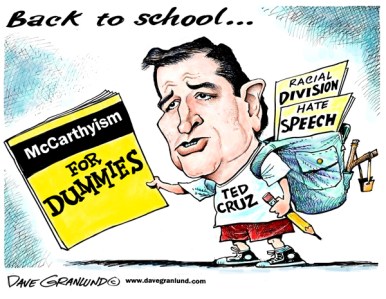 very bad, terrible week where he proves yet again, that the Bush Boyz had wasted yet stellar educations. I’d thought just about every one learned the lessons of the foreign policy wreck that was the Iraq invasion and occupation. I guess if you really have no skin in the game and your investments are all lined up in defense industries, you can afford to ignore lessons that cost the rest of us lives, naivety and money.
So, let me start out with Hillary and then go the GOP clown car. There’s a big feature on Clinton in USN&R today that’s worth a look. It characterizes Hillary as a “trail blazer” who is trying to establish her identity outside of her husband. Silly me! I thought she did that when she became a U.S. Senator and successful Secretary of State.
Hillary Clinton is taking some important steps to establish her own identity as she stakes out positions that are separate and distinct from her two celebrity predecessors, Barack Obama and Bill Clinton.
It’s part of her strategy to set the framework of the 2016 general election very early and in ways that enhance her electability. “She can shape the general election message from Day One,” says political scientist Bill Galston, a former White House adviser to President Bill Clinton. “We know who she is, but not what she stands for. She gets to answer that question on her own terms, which is unprecedented in modern presidential politics.” Hillary Clinton is the overwhelming favorite to win the Democratic presidential nomination, at this point without serious opposition, and will have many months in which to refine her message. A big part of that will be explaining how Hillary differs from Bill and Barack, as she tries to show she is a leader of the future, not a politician from the past.
The process has already begun. Clinton has distanced herself from her husband’s policies by saying that the crime-fighting agenda endorsed by Bill Clinton two decades ago, such as mandatory minimum sentences and other tough anti-crime policies, resulted in too much incarceration of African-American men. She says these policies have not done much to reduce serious crime but have kept young black men away from their families for long periods of time, damaged their ability to be productive citizens, and harmed the social structure of many African-American communities.
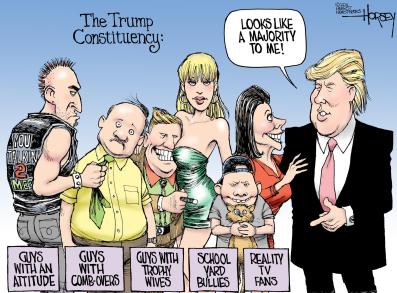 I’m really not sure why the media seems to think she’s never been her own person and only reflects the accomplishments and views of her old boss and her husband. This strikes me as supremely patronizing and a level of assholiness that I can’t really comprehend.
Headlines today show my assholy, hot mess Governor Jindal putting together a presidential committee and praying to his angry sky god for guidance. Like he hasn’t been running for the Republican nomination for at least the last three years. The dude should resign the governorship. He hasn’t been the least bit interested in the state, its people, or even being here for at least that long. Tiger Beat on the Potomac has a few money quotes.
Jindal has also suffered from low approval ratings at home — sitting in the high 20s-low 30s — and Louisiana Republicans have criticized him for the state’s budget deficit. In February, Moody’s and Standard and Poor’s — two of the top three U.S. credit rating agencies — downgraded the state’s outlook from “stable” to “negative,” citing Louisiana’s $1.6 billion shortfall and declining oil prices. The budget gap has increased pressure on the governor to raise taxes, which would be a nonstarter with anti-tax advocates such as Grover Norquist and a liability in a Republican primary. Jindal has blamed much of the budget issues on the drop in oil prices.
He has so far been overshadowed in a large and growing Republican presidential field, registering at one percent in the latest polls among national Republicans and those in Iowa and New Hampshire. Early-state activists say he will likely have trouble breaking through in a field that features many social conservative favorites — Wisconsin Gov. Scott Walker; the past two Iowa caucus winners, former Pennsylvania Sen. Rick Santorum and former Arkansas Gov. Mike Huckabee; tea party icon Texas Sen. Ted Cruz; former Texas. Gov Rick Perry and retired neurosurgeon Ben Carson, among others.
The Jebster has written off Iowa altogether or not. It rather depends on who you’re listening to from his campaign.
Between his low standing in state polls, the socially conservative bent of the Iowa GOP base and his decision to skip the state’s straw poll in August, Bush has lots of incentives to give up on Iowa next year. Republicans here know it, which is why the former Florida governor spent his weekend reassuring them he hasn’t already written off the state as a lost cause.
“I’m going to be here. I’m here right now!” Bush told reporters Saturday after appearing at a fundraiser in Iowa City for Sen. Chuck Grassley. “Why would I be here if I wasn’t going to compete in Iowa?”
From Dubuque to Iowa City to the state GOP’s Lincoln Dinner in Des Moines on Saturday night, Bush threw everything he had into the effort to convince Iowans that he doesn’t plan to blow off the state. His intensely private wife, Columba, and his son Jeb Jr., both accompanied him to Dubuque, where he held an hourlong town hall. He took 11 questions from the crowd there, and then a few dozen “selfies” with attendees before leaving. He met privately with several top donors, county chairs and elected officials — some of whom have been alarmed by Bush’s laissez-faire approach thus far to Iowa — prior to his speech at the Republican Party dinner; when it was over, he greeted a long receiving line of supporters in his hospitality suite
Pearl Clutcher Lady Lindsey has announced he’s running because “the world is falling apart”. Quick! Some one get an interior designer! This is a radically new situation and we need a make over!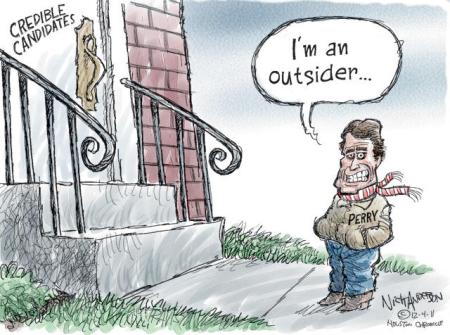
Sen. Lindsey Graham said Monday that he will announce his decision about whether to run for president on June 1 in his hometown of Central, South Carolina, but left little doubt about his intentions by saying “I’m running.”
“I’m running because of what you see on television; I’m running because I think the world is falling apart; I’ve been more right than wrong on foreign policy,” he said on “CBS This Morning,” when asked if he was running because he was unimpressed with the rest of the field (and appearing to dispense with the pretense that he hasn’t decided whether to jump in). “It’s not the fault of others, or their lack of this or that that makes me want to run; it’s my ability in my own mind to be a good commander in chief and to make Washington work.”
So, back to Jebster and the good ol’ days of Lord & Master marriages.
What a clusterfuck the Republican party has become.
What’s on your blogging and reading list today?
Friday Reads
Posted: May 8, 2015 Filed under: morning reads | Tags: Bobby Jindal, defunding public education, higher education, Louisiana, public universities, student debt 11 CommentsGood Morning!
I’m trying to get grades in so this will be super short. One of the most worrying trends to me is the disinvestment in public education. An important study was released that shows that a college education must be funded primarily by students or their families. I’ve believed for some time that getting rid of higher education was a goal of many conservative politicians because an educated person is a clear and present danger to despots. First, I’d like to share the study and a few articles written about it. Then, I’ll show you how that’s been brought to fruition here in Louisiana by Bobby Jindal and his slavish relationship to Grover Norquist whose goal in life is to shrink government so you can drown it in a bathtub.
I think this study and its findings are important because the incredible increase in standards of living that came about during the 1950s and 1960s was partially due to the GI Bill and the opportunity it provided to so many poor and working class men to attend college. Education is a path to better jobs and to smarter voting electorate. It’s necessary for a functioning democracy.
As a result of this sharp decrease in state funding, more than half of education and related expenses at public universities is now paid by students’ tuition.
“Public higher education in this country no longer exists,” said Hiltonsmith. “Because more than half of core educational expenses at ‘public’ 4-year universities are now funded through tuition, a private source of capital, they have effectively become subsidized private institutions. To eliminate the pile of debt that most students must now borrow just to finance their education, we need comprehensive policy reform that views higher education as a necessity.”
The study finds that decreases in state funding to their public universities represents the overwhelming reason why tuition is so high and why so many students have to take huge student loans to facilitate their education.
Commitment to public education has been an American social contract for quite some time. I can’t help but think that it’s actually part of a bigger plot to privatize as much as possible and to further close the path of upward mobility.
A new Demos report, Pulling Up the Higher Ed Ladder: Myth and Reality in the Crisis of College Affordability by Demos Senior Policy Analyst Robbie Hiltonsmith, finds that declining state support was responsible for nearly 80 percent of the rise in net tuition between 2001 and 2011. Examining public university revenue and spending data, he determines that rising costs for instruction and student services is responsible for much of the remainder, largely due to growing healthcare costs. Hiltonsmith also disproves the theory that colleges are spending beyond what is necessary to support their core academic functions, commonly known as administrative bloat. Increased spending on administration accounted for only six percent of tuition hikes.
“While administrative bloat is a popular theory, the data shows otherwise,” said Hiltonsmith. “This myth is not only blatantly untrue, but takes attention away from the real problem: states aren’t investing in their students. Instead, they’re saddling them with crippling, life-long debt.”
Research institutions employ just seven more staff per thousand students than they did since 1991, and 17 fewer than in 2001. The relative number of full-time faculty has remained constant and the number of executives and administrators has decreased relative to the size of the student body. New technology needs explain much of the increase in professional staff. However, universities have also shifted to employing more adjunct professors as a cost-cutting measure, a problematic trend whose effects have been well-documented.
I put this study downthread in yesterday’s post. NW Luna provided a link to the situation in Washington State–a liberal blue state–that has not bucked the trend.

The cost of educating a student at the University of Washington is about $400 less today, in inflation adjusted dollars, than it was 20 years ago. As executives and directors of large business and philanthropic organizations in Washington state, our board members can attest that this could not have happened without a strong commitment to efficiency and cost control.
The next time anyone questions why public university tuition is rising faster than inflation, remember this: Twenty years ago, the state government paid 80 percent of the cost of a student’s education and a student paid 20 percent. Today, the state pays 30 percent of the cost, and the student pays 70 percent. The state has systematically disinvested in our children’s future, and we view this trend with disappointment and alarm.
We truly appreciate the hard work of the governor, the Legislature and many others who work in the business, civic and education communities who this year helped put a halt to further cuts in public higher education and gave us the tools and flexibility needed to help us manage through the current crisis. However, losing half of our state funding over just a few years has radically and unduly shifted the burden of financing the higher-education system to students, who are taking on more and more family and personal debt. This debt load restrains the ability of many Washingtonians to fully pursue life’s opportunities.
Public higher education is an essential ingredient of a functioning democracy and a healthy economy, but the current financial model for its funding is broken and not sustainable. If Washington is to maintain affordable access to quality higher education for its citizens, something has to change.
 Louisiana is leading the pack in basically shutting down its universities. Governor Bobby Jindal’s fiscal mismanagement of the state has left all of its institutions of higher education in desperate straights. At this writing, nearly every university in the state is on its way to financial exigency which is basically bankruptcy for a public entity. Yet, this is a time when more educated workers are necessary.
F. King Alexander, the president of the Louisiana State University system, said Louisiana State (LSU) would consider declaring financial exigency—the equivalent of bankruptcy for academic institutions. And Alexander said as many as a dozen campuses throughout Louisiana could ultimately have to do the same.The cutbacks would mean an uncertain fate for all of the roughly three-dozen institutions within the state’s four university “systems,” including Louisiana state’s 10 campuses, the University of Louisiana’s nine, and 14 community and technical colleges. These institutions serve roughly 260,000 students total.
Declines in per-student legislative appropriations for public higher-ed institutions are almost ubiquitous across the U.S., a trend that traces back to the recession. Though levels have started to bounce back in recent years, the average state’s per-student allocation is still 23 percent less than it was before the economy took a hit. Generally, the federal government and taxpaying students end up shouldering that cost. Meanwhile, according to 2012 data, students are for the first time in years covering a larger chunk of their college tuition than their state governments are.
“States are getting out of the public higher-education business,” Alexander told me. Alexander, a vocal advocate for stronger state investment in higher ed, says he’s optimistic that the legislature will somehow cobble together a solution. (It has until June 11, when Louisiana’s legislative session ends.) But even if lawmakers pass measures that would offset most of the shortfall, including a number proposed by Jindal, state higher-ed funding would still be cut by 32 percent, Alexander said.
By 2025 six in 10 adults in the U.S., according to one report, will have to have a postsecondary credential if the country is to maintain its economic edge. But if current trends continue over the next few decades, most state university systems would soon lose all funding from their states. A new analysis by the Pell Institute predicts that, assuming trends persist, in 2025 Colorado would become the first state to allocate zero funding to higher ed; Iowa would follow in 2029, then Michigan (2030), then Arizona (2032). Louisiana (2027) would be No. 2 on the list—if the deficit is miraculously eliminated this year. Otherwise, according to King, even a 32 percent reduction would put Louisiana in front of Colorado. Most states wouldn’t appropriate any university funding by 2050.
Louisiana’s universities are the canaries in a bigger coal mine. It should serve as a warning to any one who cares about access to higher education for all.
So, I’m going back to grading and I leave this as an open thread for you.
What’s on your reading and blogging list today?
Monday Reads
Posted: May 4, 2015 Filed under: morning reads | Tags: Brownback, Christie, Jindal, Republican Governors, Scott 19 Comments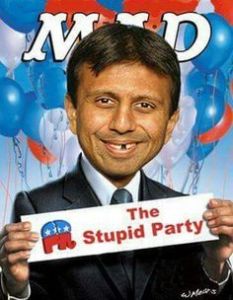 Good Afternoon and sorry this is so late!
My gig was a bit of wild ride last night and I really had trouble sleeping after I got home. The weather is in that place where you need a/c in mid afternoon and heat at the earliest hours of the morning. I got up at like 3 a.m. to flip the furnace on. My guess is the temp would’ve been comfortable for most of you but for some reason the cold got to me. There’s a lot of things in me that must’ve changed during the 20 years I’ve lived in New Orleans. Last weekend a Swiss woman told me that she was having difficulty understanding my accent. Accent? Me? I guess that’s developed along with some other things. I know that my jazz chops are much better and odd rhythms no longer frustrates me. But, before I wax too poetically about things I’ve gotten used to and sound like some starry-eyed post Katrina transplant, I’d like you to know that there are things down here that are still very jarring and irregular.
This story was done by the closest thing we have to state paper, The Advocate. They’ve done some really great investigative journalism recently and this one story deserves to go national. It’s not about New Orleans per se but the one of the outback parishes. Eight people have died in custody over the last ten years in the Sheriff’s jail of this very rural parish with a low population. This story deserves some national attention. This is what happens when you make a criminal justice system handle the mentally ill and populations you just deem unfit for a community.
Since 2005, at least eight people have died in the custody of the Iberia Parish Sheriff’s Office — in its jail or after an arrest — according to records compiled by The Advocate. Seven of those who died were inmates. At least two of those seven suffered from mental illness.
One was Sonnier. The other was Michael Jones, who died in 2009 after an altercation with the corrections staff. Last March, a judge ruled that two Sheriff’s Office employees, including former warden Wesley Hayes — who allegedly sat on Jones to subdue him — were responsible for his death.
Sonnier’s death has received comparatively little attention. The family settled its case against the Sheriff’s Office for $450,900, but confidentiality agreements prevent them from discussing it. However, public records, transcripts and other documents tell a disturbing story of how Sonnier died. Taken together, the deaths of Jones and Sonnier raise pointed questions about how the Iberia Sheriff’s Office cares for mentally ill inmates.
It’s a problem facing wardens across the country. Designed for short-term stays, jails hold mostly pretrial detainees and inmates sentenced for minor crimes. In Louisiana, though, they often play host to longer stints as well: Sheriffs hold state and federal prisoners at fixed daily rates.
Jails and prisons are not equipped to treat the mentally ill, said Dr. Richard Lamb, professor of psychiatry at the University of Southern California Medical School, but they increasingly have no choice.
“It used to be if you were mentally ill, you would be in a hospital,” Lamb said. “As the hospitals emptied out, there were fewer and fewer beds, so people who had a mental illness, and who had anything disruptive or antisocial, began to be put in jails and prisons.”
A 2006 report by the federal Bureau of Justice Statistics estimated 64 percent of jail inmates had mental health problems. One 2009 study estimated that rates of serious mental illness are up to six times higher among inmates than in the general population.
In an interview with The Advocate, Iberia Parish Sheriff Louis Ackal acknowledged that his staff is ill-equipped to handle such people.
“I don’t think any jail should have to house a mental patient,” Ackal said. “We’re not psychiatrists. We’re not psychologists.”
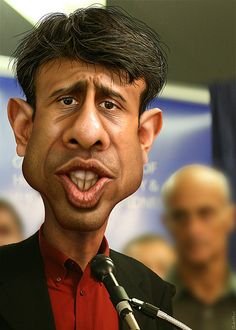 So much of this complete lack of a social contract has to do with the Reagan Revolution which deemed government the problem and screamed loudly that deserving people aren’t getting ahead because other folks are taking it from them. You can see how these policies have allowed parts of the south to display their pre-civil war behaviors and attitudes proudly. Bigotry is once again religious freedom. Poor people deserve to be shamed and starved to death. There are many Koch-sucking Republican governors ruining their states but Bobby Jindal’s Reign of Terror in Louisiana stands as a singular learning experience. This brilliant analysis in The Observer talks about the kind of behavior that puts a psychopath in high office instead of dead on the floor of a prison cell. Mental illness accompanied by poverty gets you a form of state execution. Mental illness accompanied by hubris and the ability to spout total nonsense about the economy and the US form of government gets you the campaign dollars of billionaires and the ability to package yourself into some statehouse.
A career that once stood for the wildest American dreams of immigrants’ children now looks like a different archetypal story: a story about the dangers and the limits of ambition. Seven years into a disastrous governorship, it now seems clear that Jindal never took seriously his obligations to his own state. Louisiana was another stepping stone in a career full of them—and Louisiana got stepped on.
It would be one thing if Jindal could point to a prospering state and a balanced budget in order to stake his claim to the presidency. Instead, he’s operated under the theory that results are less useful than ideological purity. In the process, Jindal effectively signed over control of his state’s budget to Republican kingmaker Grover Norquist and his anti-tax lobby, Americans for Tax Reform (ATR). Jay Morris, a Republican state representative, says that the budgeting process under Jindal boils down to this: “‘ATR says that’s a tax increase.’ Or, ‘ATR says that might not be a tax increase if you do blah, blah, blah.’ He feels that’s the best way to run for national office. It’s just not a good way to run Louisiana.”
Obviously, Morris is no fan of the governor, so take his words with a pinch of salt if you like. But it’s striking to hear how often they’re echoed these days—not just from the left, but from Jindal’s fellow conservatives. Here’s American Conservative writer Rod Dreher, a Louisiana native: “Jindal is sacking his own state to preserve his viability as a Republican presidential candidate—specifically, so he can say that he never raised taxes.” And here’s National Review contributing editor Quin Hillyer: Jindal’s tax policy, which actually taxes the poor at a higher rate than the rich, is “a moral abomination.”
The irony is that this hyper-ideological style of governance seems to have backfired. Jindal’s probable rivals, like Wisconsin Gov. Scott Walker, may not be able to point to gangbusters job growth—but at least they can’t be saddled with a failed state.
The deeper irony is that Louisiana’s budget crunch called for the very talents with which Jindal was so richly blessed: a wonkish engagement with policy details, a McKinsey-honed love of number-crunching, the sense of creative policy entrepreneurship that once had him reimagining Medicare as a Congressional intern. It’s easy to look from that Bobby Jindal to this one—from the rising star to the floundering governor—and ask: Can this be the same person?
A similar story line plays out in Governor’s mansions all over the country of once promising Republican pols. Chris Christie’s sadistic management style is starting to show up as Bridgegate unfolds. Stock up on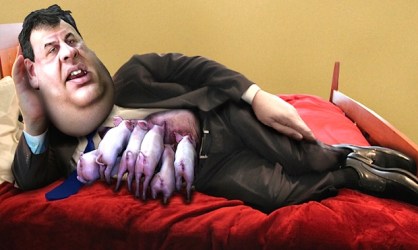 popcorn. The aides are turning on one another. This should be interesting. Oh, and Salon once more graces us with my word of the week. His aids are labelled “scheming lunatics”. I don’t imagine these lunatics will find themselves dead on the floor in some New Jersey Jail eventually. Simon Maloy labels the Christie aids as outright sociopaths for enjoying the distress of commuters stuck trying to cross the bridge.
If you haven’t already, I highly recommend reading every single word of the indictments against the former Chris Christie aides responsible for the Bridgegate scandal. Many of the details laid out in the document are already known, but there are some fresh tidbits revealed by the indictment that really drive home the fact that the Christie populated his administration with petty and incompetent sociopaths.
The basics of the Bridgegate scandal are already well-known: three high-ranking Christie officials conspired to create a series of massive traffic jams on the George Washington Bridge as a way to punish the mayor of Fort Lee, New Jersey, who’d refused to endorse Christie for reelection. Not only that, they’d approached this oddball scheme with an air of almost cartoonish super-villainy, best captured by Christie’s former deputy chief of staff, Bridget Anne Kelly, who emailed “time for some traffic problems in Fort Lee” to her co-conspirator at the Port Authority. Because these lackwit criminals conducted much of their conspiring over email and text message, prosecutors had a handy document trail to piece together the particulars of their nefarious scheme.And those particulars are breathtaking. These three officials – Kelly, and Port Authority officials David Wildstein and Bill Baroni – plotted to minute detail the ways they could best abuse their authority to screw over thousands of New Jersey residents. They gamed out lane-closure scenarios to figure out which one would be the most disruptive. They waited until the last possible moment to order the closures and deliberately kept Fort Lee officials in the dark, partly so that police couldn’t prepare for the chaos, but also to “keep Fort Lee residents and GWB commuters from altering their routes.” And they carefully chose the start date for the closures, September 9, 2013, “which they knew was the first day of school for children in Fort Lee,” to “intensify [Fort Lee mayor Mark] Sokolich’s punishment.”
That’s just evil, and they took gross pride in their work. According to the indictment, “Wildstein went to the GWB to observe the impact personally,” and he happily shared news of the chaos with Kelly and Baroni, who were similarly pleased.
A recent poll shows that most adults in NJ think Christie knew about it and probably tacitly–if not outright–approved the traffic slow downs. He’s not quite as unpopular as Bobby Jindal, but he’s getting there.
New Jersey residents generally do not approve of the job Christie is doing, nor do they view him favorably. Just 35 percent say he is doing a good job, compared with 54 percent who say he is not. Only 30 percent see him in a favorable light, compared with 47 percent who do not.
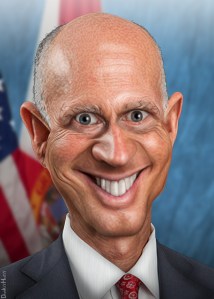 Then there’s Florida’s governor Rick Scott. He’s another two termer re-elected by a state full of masochists. The man is still fighting Medicaid Expansion while people tend to overlook his oversight of a huge amount of Medicaid Fraud while being CEO of Columbia/HCA. This is a huge conflict of interest along the lines of Dick Cheney–former CEO of Halliburton–systematically lying us into war. But, even the Tampa Bay Times and Miami Herald basically say Scott presided over a company that systemically defrauded the U.S. Government.
Scott started what was first Columbia in 1987, purchasing two El Paso, Texas, hospitals. Over the next decade he would add hundreds of hospitals, surgery centers and home health locations. In 1994, Scott’s Columbia purchased Tennessee-headquartered HCA and its 100 hospitals, and merged the companies.
In 1997, federal agents went public with an investigation into the company, first seizing records from four El Paso-area hospitals and then expanding across the country. The investigation focused on whether Columbia/HCA had committed Medicare and Medicaid fraud.
Scott resigned as CEO in July 1997, less than four months after the inquiry became public. Company executives said had Scott remained CEO, the entire chain could have been in jeopardy.
During his 2010 race, the Miami Herald reported that Scott had said he would have immediately stopped his company from committing fraud — if only “somebody told me something was wrong.” But there were such warnings in the company’s annual public reports to stockholders — which Scott had to sign as president and CEO.
Scott wanted to fight the accusations, but the corporate board of the publicly traded company wanted to settle.
In December 2000, the U.S. Justice Department announced that Columbia/HCA agreed to pay $840 million in criminal fines, civil damages and penalties.
Among the revelations from the 2000 settlement:
• Columbia billed Medicare, Medicaid, and other federal programs for tests that were not necessary or had not been ordered by physicians;
• The company attached false diagnosis codes to patient records to increase reimbursement to the hospitals;
• The company illegally claimed non-reimbursable marketing and advertising costs as community education;
• Columbia billed the government for home health care visits for patients who did not qualify to receive them.
The government settled a second series of similar claims with Columbia/HCA in 2002 for an additional $881 million. The total for the two fines was $1.7 billion.
On Scott’s 2010 campaign website, he admitted to the $1.7 billion fine, though the link is no longer on the site.
Is one of the goals of aspiring Rapture nuts a desire to bring down the U.S. prior to their end time delusions? Why do we get so many governors these days that are intent on destroying their own states and making the lives of their citizens miserable? What is it that gets these sadists elected? Is this just the strange fruit of Citizen’s United? Is this how we’re getting murderous police departments and governors that openly commit crimes and get second terms in the process?
Sam Brownback–having wrecked the state of Kansas’ economy–is now busy with the real work of a sociopath. How’s this for separation of church and state and uber pandering? 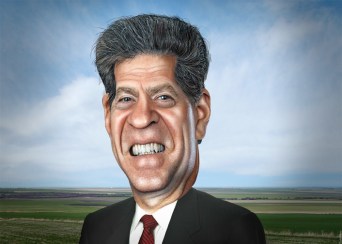
On April 7, Kansas Gov. Sam Brownback (R) signed a bill outlawing the most commonly used abortion method for women in their second trimester. Kansas is the first state to pass such a ban, which doctors say may force women into choosing more dangerous forms of abortion.
The moment was historic—so historic, that on Tuesday, Brownback took a victory lap around the state, signing the bill again in four separate private ceremonial re-enactments. Each location was at or near a Catholic school, so children could attend.
He started at the Holy Trinity Catholic Church in Lenexa, just south of Kansas City. Arriving around 9 a.m., he gave some brief remarks in the church’s ballroom facility and signed the bill on a blue paisley tablecloth. There was a photo op with students. He passed out some gubernatorial clicky pens.
“The people of Kansas do not support dismembering children,” Brownback said.
Then it was off to the airport to make his next appointment, St. Mary’s-Colgan High School, 100-some miles to the south in Pittsburg. Same blue tablecloth, same tableau of supporters flanking him with children and babies. Members of the student government and selected representatives from each grade watched him re-sign the bill.
Again, at Bishop Carroll High School, in Wichita, 160 miles due west. (His staffers say the total cost for taking out the state plane was around $1,000.)
“It’s important legislation that will go nationwide,across the country,” he told the students gathered, while protesters outside held signs.
One more time, at Thomas More Prep-Marian High School, where school officials say well over 100 students showed up.
Kansas–now heading towards a huge fiscal crisis–will get to wrack up legal fees for pricey lawyers trying to once more to tilt at the windmill of Roe v. Wade. Afterall, zygotes are so much more important than living breathing children whose educations, health and futures are being gutted by Brownback-inflicted budget troubles. A Topeka waitress lobbyed the Holier-than-Thou one via a note on his check.
Jumping on Facebook she wrote, “You guys 911 emergency. It’s my last shift and I am waiting on our governor. What should I say to him. This is not a test. Go.”
According to Hough, she wasn’t trying to be malicious but she didn’t want to waste a once in a lifetime moment.
“I just knew I had to say something, or I would regret it,” she said, adding, “It was my last shift at the restaurant, as I had quit, so it worked out nicely.”
Hough said she ran it past other staff members, including her boss who didn’t appear thrilled but laughed, before going ahead.
According to Hough — who said she believes education is the “foundation” of a progressive country — the governor still gave her a tip, using the customer copy to leave her 10 percent.
Despite his recent re-election, Brownback is unpopular in his state having slashed taxes while cutting services and creating huge budget deficits. The conservative governor recently cut funding for schools in the state in an effort to keep the state solvent, forcing many schools to close early due to a lack of money.
I’m not even going to repeat the story I wrote about on Friday where Texas’ crazy ass governor is sending National Guard to protect the state from the U.S. Army based on paranoid conspiracy theorists. Will Texas be insane enough to give this dude a second term too?
Anyway, I just can’t believe that after all these costly failures that any state would turn itself over to a Koch-backed Destruction Machine.
What’s on your reading and blogging list today?
Friday Reads: Lunatic Fringe, we know you’re out there
Posted: May 1, 2015 Filed under: morning reads | Tags: conspiracy theory, Mike Huckabee, Rand Paul, Texas Crazy, US military invade Texas? 59 Comments Good Morning!
I think I’ve seen the word “lunatic” used in more headlines recently than I’ve ever seen the word used. You won’t even need two guesses to get the reference in mind. Lunatic is an interesting word that is usually associated with a mentally ill person and generally is a throw back word used in less enlightened times. But, it seems appropos even if it’s directed at folks actually making major policy decisions for our country and states. Teddy Roosevelt said something interesting about the ‘lunatic fringe’. He popularized that term around 1913. He said “Every reform movement has a lunatic fringe. The same political party that produced Teddy Roosevelt now is producing reactionary reform in that everything they suggest seems to take us back to periods prior to post-civil war reforms or worse.
So, the first headline is from Salon and has to do with the state of Texas and its new elected crazed Governor of the moment. Digby writes that”Right-wing lunatics think the military is planning to invade Texas. Here’s why.”
In fact, it appears that the right wing in this country has become downright hostile to the one government institution they heretofore had defended with every fiber of their being: the military. This week, members of the conservative fringe, having apparently become convinced that the army is holding a large training exercise in the American southwest in order to prepare the ground for a federal government takeover of Texas, are themselves metaphorically spitting right in the faces of U.S. soldiers:
“It’s the same thing that happened in Nazi Germany: You get the people used to the troops on the street, the appearance of uniformed troops and the militarization of the police,” Bastrop resident Bob Wells told the Statesman after the meeting. “They’re gathering intelligence. That’s what they’re doing. And they’re moving logistics in place for martial law. That’s my feeling. Now, I could be wrong. I hope I am wrong. I hope I’m a ‘conspiracy theorist.’”
Yes, we all hope that Bob is a conspiracy theorist. It would be disturbing indeed if the U.S. military were preparing to invade Texas and turn it into Nazi Germany.
That’s even way south of a conspiracy theory. I suppose that’s why lunacy is involved.
Paul Waldman–writing for The American Prospect–inkles the l word too. The title is hauntingly similar: “Indulging the Lunatics  on the Right” and it’s on the same topic. Is the Governor of Texas indulging the lunatics on the right or is he actually an example of the lunatic having taken over the asylum?
So in response to the fact that some of Texas’s dumbest citizens emerged from their doomsday prepper shelters long enough to harangue a colonel about their belief that martial law is coming to their state, Governor Abbott issued an order to the National Guard to monitor the movements of the U.S. military just to make sure they aren’t herding citizens into re-education camps or dropping Islamic State infiltrators into Galveston. I guess we’re safe from that, for the moment anyway.
Every politician encounters nutballs from time to time, and it isn’t always easy to figure out how to respond to them. But what’s remarkable about this is that we aren’t talking about an offhand remark Abbott made, or an occasion in which a constituent went on a rant to him and he nodded along to be friendly instead of saying, “You, sir, are out of your mind.” This is an official action the governor is taking. He’s mobilizing state resources, at taxpayer expense, because of a bizarre conspiracy theory that has some of Texas’s more colorful citizens in its grip.
It’s really hard to keep people from believing outlandish things. But you don’t have to indulge them. And that’s what so many Republicans do with the crazies on their side: They indulge them. Doing so doesn’t reassure them or calm them down, it only convinces them that they were right all along and encourages them to believe the next crazy thing they hear.
If it were only a few national guard units in a state well known for doing weird things in a big way, I could almost go for the  coddling, indulging, encouraging meme. However, what do you call it when a set of House Republicans actually want to start passing laws that are blatantly unconstitutional because they prefer to ignore all the amendments passed after The US Civil War? Exactly how many states emptied their asylums during the Reagan years, only to vote them into office now as long as they are Republican, white, and of a certain majority religion?
A House Judiciary subcommittee took up the question Wednesday afternoon, prompted by legislation sponsored by Rep. Steve King (R-Iowa) and 22 other lawmakers that, after nearly 150 years, would end automatic citizenship.
The 14th Amendment, King told the panel, “did not contemplate that anyone who would sneak into the United States and have a baby would have automatic citizenship conferred on them.” Added King, “I’d suggest it’s our job here in this Congress to decide who will be citizens, not someone in a foreign country that can sneak into the United States and have a baby and then go home with the birth certificate.”
It’s no small task to undo a principle, enshrined in the Constitution and upheld by the Supreme Court, that defines the United States as a nation of immigrants. It’s particularly audacious that House Republicans would undo a century and a half of precedent without amending the Constitution but merely by passing a law to reinterpret the 14th Amendment’s wording in a way that will stop the scourge of “anchor babies” and “birth tourism.”
 Iowa not only births lunatics, it sends them to the District to create laws. They can also be elected governor and run for President as the candidate of Theocracy.
Mike Huckabee rallied a crowd of Hispanic evangelicals on Wednesday night, pushing back in the debate over religious freedom just one day after the Supreme Court heard oral arguments to determine whether states have the right to ban same-sex marriage.
“I respect the courts, but the Supreme Court is only that — the supreme of the courts. It is not the supreme being. It cannot overrule God,” he said. “When it comes to prayer, when it comes to life, and when it comes to the sanctity of marriage, the court cannot change what God has created.”
His well-received speech at the National Hispanic Christian Leadership Conference came just days before the former Arkansas governor is expected make his 2016 announcement in Hope, Arkansas, on Tuesday followed by a campaign swing through Iowa.
Huckabee, who won the Iowa caucuses during his 2008 presidential bid with support from Christian conservatives, has never shied away from weighing in on social issues and warned that “our country’s in trouble because we lost our landmarks of faith.”
He doubled down on his argument that Christian business owners are being “criminalized” when they face legal action for not agreeing to participate in same-sex weddings, an issue that has spurred the recent religious liberty debate in Indiana.
“Somebody’s got to be willing to take on the institutions that challenge and threaten our ability to believe as we believe, because when religious liberty is lost, all liberty is lost,” he said.
Did you notice he’s chosen Hope, Arkansas for the annoucement? I can only imagine the Clinton hatefest that will ensue. After  all, hatred is the calling card of the religious lunatics of Huckabee’s ilk.
Both Huckabee and Rand Paul continually call for their version of Father Knows Best while their own children behave more than badly. Huckabee’s son tortured and killed a dog. Huckabee lectured the Obama’s on their parenting, however. Rand Paul is now lecturing black people in Baltimore. Paul said the violence is about a “lack of fathers”. What does he call the root of the obvious issues displayed by his son’s behavior?
Presidential candidate Sen. Rand Paul (R-KY) weighed in on the turmoil in Baltimore on Tuesday, standing with police and blaming the violence on a lack of morals in America.
“I came through the train on Baltimore (sic) last night, I’m glad the train didn’t stop,” he said, laughing, during an interview with conservative radio host Laura Ingraham.
Railing against what he repeatedly called “thuggery and thievery” in the streets of Baltimore, Paul told Ingraham that talking about “root causes” was not appropriate in the middle of a riot.
“The police have to do what they have to do, and I am very sympathetic to the plight of the police in this,” he said.
As for root causes, Paul listed some ideas of his own.
“There are so many things we can talk about,” the senator said, “the breakdown of the family structure, the lack of fathers, the lack of a moral code in our society.”
He added that “this isn’t just a racial thing.”
Paul’s son was recently cited for a DUI. This is his third run in with the law involving alcohol.
Presidential candidate Rand Paul’s son, William, received a citation for driving under the influence of alcohol this past weekend, according to reports.
Police reportedly encountered the Kentucky GOP Senator’s 22-year-old son on Sunday morning after his Honda Ridgeline rear-ended a parked vehicle in Lexington, according to the Lexington Herald-Leader.
READ: Sen. Rand Paul’s son arrested, charged with underage drinking
William Paul has had two prior alcohol-related interactions with law enforcement, including a charged assault, the paper reported.
The son sustained minor injuries after the Sunday crash and has been charged with driving under the influence and for not having car insurance, according to the local media reports.
Wonkette kindly fills us in on some of the other details of his drunken behavior including assaulting a flight attendant. Of course, Senator Aqua Buddha was no pillar of morality at his age either.
That would be William Hilton Paul, son of Rand Paul, getting himself in law trouble — for the third time (thus far) in his brief 22 years — for illegally boozing. (And kindly note, people, that was eleven IN THE MORNING.) The first time this thug in need of a father got busted, it was for drinking under age and assaulting a flight attendant, but, like every other thug who flaunts the law to do disorderly violence, he just had to perform some community service and take a class about not doing that. Which he failed because he got busted for underage drinking again later that year. WHERE WAS HIS FATHER?!?! Cleary he does not understand, as Rand Paul does, that “we do have problems in our country” — fathers not sticking around to teach their kids not to do riots and looting and drunk driving, for example — “but there can be no excuse for the behavior.”
It’s really too bad kids these days don’t have the right kind of family structure and the right kind of moral code to know better and not engage in this kind of lawless behavior. Good thing Rand Paul is running for president. Clearly, he’s the perfect dad for the job.
As for the flight attendant, that was so 2013.
William Hilton Paul, the 19-year-old son of Kentucky Senator Rand Paul and the grandson of former presidential candidate Ron Paul, is being accused of physically assaulting a female flight attendant during a flight last weekend, the Charlotte Observer reported.
The publication said the Charlotte-Mecklenberg police confirmed that Paul had been charged with a misdemeanor assault on a female by “aggressive physical force” on Saturday.
Republican senator Rand Paul, who currently represents Kentucky and is a prospective presidential candidate for the upcoming 2016 elections, told religious leaders during a private prayer breakfast last month that the First Amendment does not say religion has to be kept out of governance.
“The First Amendment says keep government out of religion. It doesn’t say keep religion out of government,” Paul said. “So, you do have a role and a place here.”
I suggest a new, extended definition for lunatic. It should include something about being a Republican and having an excessive attachment to religious craziness. I could go on a little more here, but then you’d have to find out the latest news on Governor Jindal and I hate to torture you with any more tales of fringed lunatics.
What’s on your reading and blogging list today?

 peej
peej Carissa
 bostonboomer
 dakinikat
 ecocatwoman
 jjlo
jjlo mablue2
 Mama Lopez
 peggysue22
 quixote
 skydancingguestblogger
 Mona (aka Wonk the Vote)





Recent Comments