Autumn is really a wonderful time. Many folks look forward to spring with its colorful flowers and that hint of warmth. I personally am invigorated by the slight chill in the air, the earthy color of trees, and the promises of new school years and harvests. That’s why I really hate to see us rushed through the season. I also love the end of daylight savings time and the return of being able to actually wander urban streets in the magic of dusk. I miss jumping in the huge piles of leaves that my dad used to rake with the dog barking at his side but delight in finding kids repeating the ritual for me. The leaves from my banana trees just don’t have the same smell or crackle and my joints tell me that diving into anything that vigorously is well past me.
To some, this time of year heralds the war on Crassmas and really big sales and crowds at stores. That season makes me stay home to read books.
This is a story that typifies the rush past fall. Evidently Starbucks didn’t choose a cup design that’s christmasy enough. So, they’re getting shade from the hyper-religious. You know, those folks that don’t really understand how they’ve basically appropriated everything yule-related and monopolized it as their own. Personally, I think they should STFU and spend more time reading up on things related to the supposed Prince of Peace.
The 2015 cup that Starbucks describes as “a two-toned ombré design, with a bright poppy color on top that shades into a darker cranberry below” is rather plain compared to past versions that featured ornaments and reindeer.
As it turns out, the blank design irked some customers. On November 5, Joshua Feuerstein, an Arizona-based evangelist who describes himself as a “social media personality,” posted on his Facebook page that this year’s spartan red cup illustrated Starbucks’ dismissal of Christmas as a Christian holiday in favor of political correctness.
In the video attached to the post, Feuerstein says that Starbucks “wanted to take Christ and Christmas off of their brand new cups. That’s why they’re just plain red.” Feuerstein said that instead of boycotting the coffee chain, he wanted to start a “movement,” so he went into a Starbucks—with his gun, as Arizona has an open-carry law and Starbucks has not outright banned firearms—ordered a hot drink, and told the barista that his name was “Merry Christmas,” which was subsequently scribbled on his red cup.
“So guess what, Starbucks? I tricked you into putting Merry Christmas on your cup,” Feuerstein said in his video. He urged his Facebook followers to do the same. The video has been watched about 12 million times and nearly 500,000 people have shared it.
On Sunday, three days after Feuerstein posted his video,Starbucks released a statement explaining the design of this year’s red cup. The company said that it took a “cue from customers who have been doodling designs on cups for years”—Starbucks started its holiday cup tradition in 1997—so “this year’s design is another way Starbucks is inviting customers to create their own stories with a red cup that mimics a blank canvas.” It’s also worth noting previous Starbucks red cups lacked any outright Christian symbolism.
Jeffrey Fields, Starbucks vice president of design and content, said in the release that in the past the holiday cups have told stories. This year, Starbucks “wanted to usher in the holidays with a purity of design that welcomes all of our stories,” Fields wrote. He said that the coffee chain “has become a place of sanctuary during the holidays,” so it’s “embracing the simplicity and the quietness of it.”
With more adults shedding their religious affiliations, as evidenced in the latest from the Pew Research Center, the country is becoming more secular. In the past seven years, using the new Pew data, Americans who identify with a religion declined six percentage points. Overall, belief in God, praying daily and religious service attendance have all dropped since 2007.
Today’s America is losing much of the general religious ethos that dominated the U.S. for hundreds of years.
However, the religious, in some ways, are becoming more religious. While fewer people said religion was somewhat important to their lives, there was a jump in those who said religion was very important. Of those who identify with a religion, Pew found an increase in reading Scripture at least weekly, participating in a small group and sharing their faith at least weekly. Church attendance numbers were relatively steady.
The article goes on to explain how this is affecting the culture and is probably living a lot of the zealous feeling disequilibrium with life in America. The problem is that the zealous are sure making the rest of the religion looks pretty dismal in a similar light that it’s hard to appreciate the beauty of the Sufi way of understanding Islam with ISIS running around. Let ISIS and Pat Robertson fight the war on christmas.
Thankfully, there are still stores like Nordstroms that let families appreciate the celebration of harvest and diversity that is American Thanksgiving. Employees stay home and customers don’t shove and push each other through the aisles to grab up some electrical gadget that will be broken or forgotten a year from now. Some times, modern America abuses some of the best things we can offer.
It’s only a matter of time until something terrible happens,” The New York Times’s Ron Lieber wrote in a 2012 piece examining Airbnb’s liability issues. My family’s story — a private matter until now — is that terrible something.
Since the incident, I’ve felt isolated by the burden of this story and my sense of obligation to go public with it, but with an unclear aim. Am I “raising awareness,” in the familiar path of the victim speaking out? And if so, to what end? What will sharing my story really mean for Airbnb? Could the company, with its reportedly $24 billion valuation and plans to go public, do more to ensure the safety of the properties where millions of guests stay each year? As Airbnb rises into a global hospitality behemoth — reinventing not just how we travel but how we value private space — what responsibility does the company have to those who have given it their dollars and trust?
Startups that redefine social and economic relations pop up in an instant. Lawsuits and regulations lag behind. While my family may be the first guests to speak out about a wrongful death at an Airbnb rental, it shouldn’t exactly come as a surprise. Staying with a stranger or inviting one into your home is an inherently dicey proposition. Hotel rooms are standardized for safety, monitored by staff, and often quite expensive. Airbnb rentals, on the other hand, are unregulated, eclectic, and affordable, and the safety standards are only slowly materializing.
Paul Krugman’s Op Ed today is a bit glum. He’s been reading the study that shows that mortality among Middle Aged-White people is on the rise. What does it say about a country where the what should be a relatively privileged population appears to be killing itself with excesses and forays into depression? We’ve known for some time that mortality for the poor and for minorities is bad relative to other developed countries, but not it appears its spreading to what’s usually been our healthy middle class.
There has been a lot of comment, and rightly so, over a new paper by the economists Angus Deaton (who just won a Nobel) and Anne Case, showing that mortality among middle-aged white Americans has been rising since 1999. This deterioration took place while death rates were falling steadily both in other countries and among other groups in our own nation
Even more striking are the proximate causes of rising mortality. Basically, white Americans are, in increasing numbers, killing themselves, directly or indirectly. Suicide is way up, and so are deaths from drug poisoning and the chronic liver disease that excessive drinking can cause. We’ve seen this kind of thing in other times and places – for example, in the plunging life expectancy that afflicted Russia after the fall of Communism. But it’s a shock to see it, even in an attenuated form, in America.
Yet the Deaton-Case findings fit into a well-established pattern. There have been a number of studies showing that life expectancy for less-educated whites is falling across much of the nation. Rising suicides and overuse of opioids are known problems. And while popular culture may focus more on meth than on prescription painkillers or good old alcohol, it’s not really news that there’s a drug problem in the heartland.
I always find this time of year to be a bit like American in general. Instead, of enjoying the beautiful scenery, the fruits of harvest, and the things offered by Autumn, many of us–including the masters of the economy–are rushing forward into the season where coffee cups are controversial, employees are ripped from rest, holidays, family, and basic sanity and manners, and money buys nothing but crap that falls apart and probably is bad for you.
We’re even basically at a point in society where all fall seems to represent to some people is screaming, yelling, and drinking over a gladiator sport that endangers and coddles its gladiators and doesn’t really encourage time together in a manner that includes conversation and good cheer. Even there, it’s all about the winter play offs and ultimate game. It’s not about the feel of the stadiums, the warmth of a good sweater, and the realization that your time at school is going to be short so you might as well dig into the campus life with gusto. The number of autumn semesters and hope for that new school year is limited, you know unless you join the ranks of the academic which is getting increasingly harder to do these days.
So, go ahead if you want to sing “It’s beginning to look a lot like Christmas”. I’m going to wallow in Autumn Leaves for awhile.
What’s on your reading and blogging list today?
Did you like this post? Please share it with your friends:
It appears I’m back on line after five days of utility hell! Katrina taught me how to camp out efficiently in my own home and endlessly harass “service” providers. However, it’s a skill I’d rather never use again. The last hurricane was bad enough. This 1 day outage of electricity and 5 day outage of tv/internet was made worse by me having to stick around the house waiting, calling, and watching. I watched the forum last night and Z Nation on my old college TV which finally brought me back in to the world at large. The new TV in the front took a hit from the power surge so all is not completely well. I’m still waiting for the carpenter to fix the faschia board on the gable. So, let me see what’s going on in the world before I try to go back and catch up with lost work.
I’ve noticed that one thing about living in the information age with plenty of ways to chase down information and plenty of ways to document and spread information, we’ve got a lot of opportunities to catch up with big fat liars and their lies. Most of the public seems to not avail itself of the tools necessary to fact check. Indeed, they appear to chase straight for the sites and people that peddle lies. But, we’re seeing an entirely new reality when the actual reality burbles its way through the web and media.
No where is this more noticeable than when officer’s invent stories that are not backed up by the material evidence collected at the scene. Thank goodness for police body cams and dash cams! We’re beginning to see more and more examples of police using unnecessary deadly force and then being caught creating absolute lies to cover up their actions. There are two recent examples worth noting. The first comes from N.J. where a dash cam shows that a suspect did, indeed, have his hands up which conflicts with officer accounts.
Two police officers who accused a motorist of trying to grab one of their guns were convicted Thursday of misconduct in part because a dashcam video showed the motorist holding his hands up.
Bloomfield Officers Sean Courter and Orlando Trinidad were found guilty by an Essex County jury of conspiracy, official misconduct, tampering with and falsifying public records and lying to authorities. Courter, 35, and Trinidad, 34, face mandatory minimum prison sentences of five years when they’re sentenced in January.
Courter, of Englishtown, and Trinidad, of Bloomfield, initially said motorist Marcus Jeter tried to grab Courter’s gun and struck Trinidad during a traffic stop on the Garden State Parkway in 2012. Jeter was charged with resisting arrest, aggravated assault and other offenses based on video from one of the officers’ dashboard cameras.
But Jeter acquired a second police dashcam video through an open records request. Combined, the videos showed him with his hands in the air for virtually the entire encounter.
Prosecutors dropped charges against Jeter and charged Trinidad, Courter and a third officer.
“They accused Mr. Jeter of criminal acts that led to him being charged and indicted,” assistant prosecutor Berta Rodriguez, who tried the case, said Thursday. “He was facing five years in prison. But for the dash camera in the second police vehicle, he might be in prison today.”
The third officer, Albert Sutterlin, pleaded guilty in 2013 to falsifying and tampering with records.
This next example had a tragic result. A six year old boy was killed as city marshals in a small Louisiana Town near Texas used deadly force on his unarmed father. The two were seated in a car. Two city marshals now face second degree murder charges.
Two city marshals in the central Louisiana town of Marksville will be charged with second-degree murder in the shooting death of a six-year-old autistic boyfollowing a car chase involving his father, authorities announced late Friday.
Norris Greenhouse Jr., 23, a reserve officer, and Lt. Derrick Stafford, 32, were arrested Friday night by the Louisiana State Police, which is leading the investigation, CBS affiliate WAFB reported.
Jeremy Mardis was shot and killed Tuesday after his father, Christopher Few, led law enforcement officers on a chase. Few was wounded in the incident and is hospitalized in critical condition.
The marshals will also be charged with attempted second-degree murder of the father, Louisiana State Police Col. Michael Edmonson said at a news conference late Friday night.
Lt. Jason Brouillette and Sgt. Kenneth Purnell were also involved in the chase but have not been charged. All four officers were placed on administrative leave.
One of the officers was wearing a body camera which recorded the chase, the shooting and its aftermath.
“It is the most disturbing thing I’ve seen, and I’ll leave it at that,” Edmonson said, adding that the footage, witness interviews and forensic evidence led police to file charges.
According to the Marksville Police Department, Few led the law enforcement officers on a short pursuit Tuesday night and stopped on a dead-end road.
“The initial statement to my investigators was that the vehicle was backing up, they feared for their lives and they started firing,” Edmonson told CBS News correspondent David Begnaud Friday morning.
“There were a lot of shots fired that night and they were coming in one direction. There’s nothing for us that indicates that any fire came from that SUV,” Edmonson said. “There was no weapon found in that SUV.”
You can read more about this case on the NYT. We are clearly doing many things wrong in our criminal justice system. I hate to disturb you on a weekend morning, but reading about this small victim and his unnecessary death is vital to realizing we need reform and we need it now.
BB wrote quite a bit about the fanciful tales spun by Republican candidate Ben Carson yesterday. More and more media outlets are finding and checking out his tall tales. The WSJ has found more examples of completely untrue anecdotes that show up in Carson’s book and speeches. Carson’s poll numbers have started to fall. WTF is wrong with Republicans that they blindly accept all of their jerks at face value? Are they completely incapable of critical thinking and fact checking? Brian Beutler discusses this in an article in the Republic.
Ben Carson’s popularity among conservatives has been marked by their imperviousness to questions about his honesty and fitness. Carson has made dozens of statements about federal policy that have transcended garden-variety conservative over-promising and reached the realm of Chauncey Gardner-esque absurdity. He has also faced serious questions about the veracity of stories he tells about his youth and young manhood. Through it all, conservatives have not only stuck by his side, but actually become more taken with him. They’ve brushed off scrutiny with glib mockery, accusing white liberals of “othering” a black man for having the temerity to leave the “thought plantation.”
That all likely changes now that Carson has confessed to fabricating a seminal story about having declined admission to West Point in his youth. When you’ve lost Breitbart, it stands to reason that you will also lose talk-radio fawning, viral email forwards, and all the other mysterious sources of conservative cult status.
But there is room for genuine doubt here: Could Carson’s supporters prove so uninterested in his genuine merits and demerits that they might look past this transgression? The very fact that this doubt exists incriminates both the conservative-entertainment complex and the nature of the Republican electorate.
I always cringe at the representation of these Republicans as “conservative” because they are anything but conservative. Many tend to be outright theocratic and most really support insurgency and radical change. There’s nothing conservative about the stories they invent to justify insurrection. Kevin Drum at Mojo has made a short list of some of his most egregious fabrications.
Because we have synchronous and widespread sources of news, it’s really difficult for politicians to get away with these tall tells. Carson gave an absolutely unhinged presser yesterday where he tried to blame the media for all these misunderstandings. Blaming the “liberal” media has been staple of Republican pols since Nixon. The entire last Republican debate was an exercise in blaming the media for gotcha questions when mostly what was happen was good old fashion fact checking and holding to account.
Again, we have an excellent example of this in Louisiana in the David Vitter race. Vitter ran an absolutely blistering set of ads against his two Republican opponents in the election. They were so bad, that our Republican LT. Governor has now endorsed the Blue Dog Democrat who faces Vitter in the run-off. Many of the the supporters of the other Republican who came in a very close third have also put their support behind John Bel Edwards. Now, the Republican party is coming after LT. Governor Jay Dardenne with machetes and stating that JBE latest ad has brought the race to a new low. Oh, really? Where were you a few weeks ago when Vitter was attacking fellow Republicans? Lies can be told but it takes very little effort these days to unearth the truth.
On the evening of Monday, Feb. 25, 1991, only five hours before Baghdad Radio would tell Iraqi troops to begin withdrawing from Kuwait, all hell rained down on a U.S. Army barracks in Dhahran, Saudi Arabia. It was, as the New York Times described it the next day, “the most devastating Iraqi stroke of the Persian Gulf war.” An Iraqi Scud missile struck the barracks, killing 28 Americans and wounding 100 more.
The barracks had been home to the 475th Quartermaster Group, an Army Reserve unit from the small western Pennsylvania town of Farrell.
Reading the grisly details of that night’s events still evokes horror and grief. Here is how New York Times reporter R.W. Apple, Jr., described the aftermath in his Feb. 26, 1991, story, “This morning, under the pitiless glare of portable floodlights, excavating equipment began plowing through the blackened remains of the building. Servicemen joined in the search for the missing, using picks and shovels, as some of the survivors milled about. Many wept.”
Fast-forward ten years to February 27, 2001: On the floor of the U.S. House of Representatives members were preparing to host President George W. Bush, who would deliver his State of the Union address that evening.
Before hearing from Bush, however, the House had some business to conclude – considering a resolution “honoring the ultimate sacrifice” made by those killed and wounded that horrible day 10 years earlier. When the votes were tallied at 5:27 p.m., the resolution passed overwhelmingly, 395-0.
Thirty-five members, however, did not vote that afternoon. Among them was U.S. Rep. David Vitter, a Republican from suburban New Orleans serving his second term.
Vitter may have missed this vote because he waiting on a return call from an escort service based in California that sold the services of women in the Washington, D.C., area. As his colleagues and constituents would later learn, Vitter was a regular customer of the escort service.
Saying “David Vitter’s governorship will further” damage a Republican brand “damaged by the failed leadership of Bobby Jindal during this last term,” Dardenne threw his support behind Edwards at an event on the LSU campus.
Fine, be angry or disappointed with Dardenne, who has faithfully carried the Republican banner since childhood when he handed out push cards for Barry Goldwater, for his decision to break a promise not to endorse in the runoff. It is also OK to criticize the Republican for endorsing a Democrat even though this particular Republican has a long history of being a) independent and b) shunned by the very party officials who now brand him a traitor.
But to rank Dardenne on the hate meter with Satan, Alabama football coach Nick Saban, “the socialist” Barack Obama or a jilted husband taking violent revenge on his ex-wife goes well beyond the pale — even in this day of nasty, hyperbolic political discourse.
The worst, by far, is the despicable letter fired off by Peter Egan, chairman of the St. Tammany Republican Parish Executive Committee. In the unique worldview of Egan, Dardenne endorsing a Democrat — rather than toe the party line and endorse Vitter, or at least stay silent — is “a vehement act of retribution” for being knocked out of the race in the open primary.
Mr. Egan goes on pontificating, declaring “the behavior of endorsing Edwards is akin to that of a jilted man firing indiscriminately at his ex-wife’s car, mindless of the collateral harm and injury to many innocent people.”
I’m all for hyperbole to make a point, but exactly who are these innocent people Dardenne has harmed?
No individual who answers the call of public service deserves hate-speech like this, and especially a man who has done an impeccable job of serving the state he loves.
Where were all these “Republican or die” people when Vitter, a fellow Republican, was assailing Dardenne’s character and GOP service to Louisiana? Is the message that vicious Republican-on-Republican attacks — whether they come from Vitter or Egan — are fair game, but endorsing a man who did not eviscerate your character is a crime punishable by political death?
FOX News’ Bill O’Reilly has a heated argument with network contributor George Will over his latest columnwhich accuses the O’Reilly Factor host of slandering former President Ronald Reagan in his latest book,Killing Reagan.
“It is not a laudatory book,” Will said about O’Reilly’s Killing Reagan. “It is doing the work of the left which knows in order to discredit conservatism it must destroy Reagan’s reputation as president. Your book does the work of the American left with its extreme recklessness.”
“You’re a hack,” O’Reilly said to Will. “You are in with the cabal of the Reagan loyalists who don’t want the truth to be told.”
Conservative columnist George Will attacked Bill O’Reilly’s new book, “Killing Reagan, in the Washington Post on Thursday — calling it “a tissue of unsubstantiated assertions” that “will distort public understanding of Ronald Reagan’s presidency more than hostile but conscientious scholars could” — and to the surprise of absolutely no one, O’Reilly shot back last night.
Will’s criticism was admittedly harsh. He warned readers of O’Reilly’s book to beware, as they were “about to enter a no-facts zone,” and referred to the book as “nonsensical history and execrable citizenship,” so it’s not as O’Reilly wasn’t within his rights to be offended.
And offended he was. He began by noting the difference between “slander” and “libel,” which Will misused in his column — because, of course, noting one error in an otherwise sound review of a book invalidates all of the other valid criticisms contained therein.
You should go watch the video if you can stomach it.
So, the deal is that we can in fact ferret out the truth in many many ways these days and we can rely on some media sources and fact checkers to do so. The deal is this. The lie tends to resonant louder than then the correction. It’s usually buried deep and less accessible.
What’s a voter to do?
So, that’s it for me today. What’s on your reading and blogging list?
Did you like this post? Please share it with your friends:
MSNBC host Rachel Maddow is set to moderate the network’s only event in the Presidential primary season, a forum from Winthrop University in South Carolina. Deemed the “First in the South Presidential Forum”, tonight’s event will feature frontrunner Hillary Clinton, Vermont Senator Bernie Sanders, and former Maryland Governor Martin O’Malley.
The event in Rock Hill, SC is scheduled to air from 8-10 p.m. EST on MSNBC. Although the event is primarily sponsored by the South Carolina Democratic Party, the event is also being co-sponsored by twelve other southern states.
Maddow was careful to make the distinction that tonight’s event is a “forum” and not a formal DNC-sanctioned “debate”. DNC Chair Debbie Wasserman-Schultz has continued to be under fire for limiting the official number of debates to only six.
The debate is being held in Rock Hill, South Carolina. There are many questions that loom. Will Bernie go negative? Will any one notice Martin O’Malley? Another question Alex-Seid Waltz wants to know is can Hillary maintain her monopoly on the black vote?
Clinton is likely to use the forum to focus on reaching out to people of color, who make up the majority of South Carolina’s Democratic primary electorate. In an op-ed published in Ebony magazine Friday morning, Clinton called for “a new and comprehensive commitment to equity and opportunity for communities of color,” that includes better investment in under-served communities.
The former secretary of state has a huge advantage among nonwhite voters over Sanders, capturing support from 8 out of 10 black voters in the Palmetto State. She lost the state handily to Barack Obama in 2008 in a bitter and racially charged primary.
Rep. James Clyburn, the most powerful Democrat in the state, said that’s been forgiven. “I have talked to a lot of people and they are not holding any of that against Hillary today,” he told MSNBC’s Steve Kornacki.
But Sanders will have a big chance to introduce himself for the first time to South Carolina black Democrats for the first time Friday night, and he’ll roll out a campaign leadership team in the state that includes Black Lives Matter activists and others.
Join us to watch the forum and get answers to these and more questions!!
The event from Rock Hill, SC will air live on MSNBC at 8 p.m. For viewers who are eager to watch the forum through their computers, the option to use the MSNBC TV app is available as well. The app is a free download from NBC News Digital. Additionally, a cable or satellite subscription with an active log-in account can access the content through http://www.msnbc.com/now as it airs.
Did you like this post? Please share it with your friends:
BB’s on her way back to Boston so I have your tricks and treats today!! We’ve got a foggy, drizzly day here. Seems like a great day to do a cemetery walk!
Fifteen years ago, a group of fossil hunters, including a UC Berkeley graduate student named Yohannes Haile-Selassie, crawled on their hands and knees across a patch of 4.4-million-year-old sediment in northeastern Ethiopia’s Afar region. Moving shoulder to shoulder with the rest of the group, Haile-Selassie spotted a small, white fossil on the reddish clay. It turned out to be a hand bone, the first piece of a partial skeleton of a female Ardipithecus ramidus(nicknamed Ardi). She would have mainly eaten plant foods, and probably spent much of her time in the trees that covered the area when she was alive. She stood about four feet tall, weighed approximately 110 pounds, and had a brain the size of a chimpanzee.
Over the next three years, an international team of paleoanthropologists found about 130 pieces of the skeleton. Since then, researchers have studied and reassembled the bones in the hope of creating the most complete picture of someone who is becoming one of the most controversial figures in evolution. Their findings have major implications for understanding how the human race came to be: Why did our species evolve the ability to walk on two legs? What was our last common ancestor with chimpanzees? And, most critically, was Ardipithecusa direct ancestor of modern humans?
Ultimately, the team discovered pieces of 35 Ardipithecus individuals scattered across roughly four miles of ancient landscape near an Afar village named Aramis. The fossils include a nearly complete hand and arm, as well as a lower jaw. But the partially complete Ardi skeleton has generated the most discussion, especially over a bone from the base of her big toe called the medial cuneiform. It shows that her toe would have stuck out from her foot like a thumb and that she would have been able to use it for grasping. “It really doesn’t differ from apes, and that’s the surprising thing,” says University of California, Berkeley, paleoanthropologist Tim White. “It is fully apelike.” White had been expecting a foot that looks more like one belonging toAustralopithecus afarensis, the species to which the famous Lucy skeleton belongs. Afarensis lived about 3.7 to 3.0 million years ago and had feet that were much like our own, with toes that point forward. Ardi’s apelike feet raise the question: Was she evolving toward walking on two legs? The team’s anatomist, Owen Lovejoy of Kent State University, believes she was. Lovejoy points to several bones in Ardi’s foot that he believes show it was becoming more like a modern foot, able to better withstand the pressures of bipedal movement. The shape of her pelvis also reveals she was becoming more effective at walking on two feet.
On Wednesday night Mr Rubio shrugged off a question about his past personal and campaign finances dealings by turning it into a shot at media bias and then a rumination on his humble upbringing.
While it worked in the context of a debate where every panel question was viewed with scepticism or outright hostility from the audience, Mr Rubio may not always be so fortunate. And some of the issues aren’t just about poor personal financial planning but tilt toward allegations of corruption
As the New Yorker’s Ryan Lizza points out, there’s a litany of questionable actions in Mr Rubio’s past – such as failing to report a home equity loan from a political supporter, double-billing the state and the Republican Party for travel expenses and using political funds to pay for seemingly personal expenses like car repairs and groceries.
Mr Rubio also was a friend and real-estate partner with David Rivera, a Florida politician and former congressman, who has been fined more than $16,000 [£10,500] for government ethics violations and is still under federal investigation for relating criminal acts.
“Rubio is about to go through a period of much more intensive media scrutiny,” Mr Lizza writes. “Complaining about media bias won’t be enough to get him through it.”
Look straight into the camera, and with complete conviction, say something that is not true. Maybe your lies will get fact-checked later, but if your certainty can sufficiently excite pundits in the interim, no one will care (or notice) that you lied.
We saw this strategy successfully executed in the second Republican debate, when Carly Fiorina confidently described a horrifying undercover Planned Parenthood video.
The footage in question turned out not to exist. (At best, she was describing areenactment.) But by the time her statements were checked, Fiorina had been anointed the winner of the debate, thanks largely to that riveting, shocking sound bite. Since then, any time someone has called her out on this missing footage, she has just claimed media bias (see Lesson No. 3).
No surprise, then, that on Wednesday the candidates lied boldly, and repeatedly, even when their statements were easily disprovable.
Donald Trump denied ever taking a dig at Facebook chief executive Mark Zuckerberg, even though the dig in question was on Trump’s Web site.
Ben Carson denied having any “involvement” with a sketchy maker of nutritional supplements, even though evidence of this involvement (including a video testimonial) is easilyfindableonline.
Chris Christie claimed Social Security money was “stolen” and that the system will be “insolvent” in seven to eight years, even though both claims are wrong. Fiorina recycled a statistic about women’s job losses that Mitt Romney used in 2012 and subsequently abandoned when it, too, was proved wrong.
And so on.
Fact checkers had lots of material to mine, but the candidates’ dramatic delivery — and the immediate plaudits they earned from talking heads — made post-debate truth-squadding seem pedantic and tone-deaf.
A fleet of sleek racing sailboats and cruisers will line up in the waters just off Pensacola, Fla., early this Halloween morning, to launch the rebirth of a Gulf Coast tradition long stifled by international politics and diplomatic relations.
Twenty-two boats are participating in the first Pensacola to Cuba regatta, with nearly a quarter of those boats coming from New Orleans. After the start just off the Florida coast, they’ll travel more than 500 miles across the Gulf of Mexico, skip past Rebecca Shoal and the Dry Tortugas to arrive next week at Hemingway Marina, about eight miles west of Havana.
The race is billed as one of the first legal regattas from the United States to Cuba since Fidel Castro seized power of the island nation in 1959. But the lure of Havana has long been an irresistible siren song for Gulf Coast sailors — even during the U.S. embargo when some American yacht clubs and organizations risked legal wrangling and angry protesters to continue hosting regattas to Cuba.
That all changed this year, when President Barack Obama eased restrictions and resumed diplomatic relations with the island. The water is now officially open, if boats are willing to apply for permits and deal with all the legal red tape.
New Orleans sailor Tim Cerniglia signed up as soon as the Pensacola Yacht Club posted notice of the race. For him, it’s a chance to satisfy a lifelong fascination with Cuba and reconnect with his family’s history.
His mother, Elise Cerniglia, was born in New Orleans but spent her childhood on the island. Her father was a chemical engineer at a sugar cane plantation there. After moving back to the Crescent City, she would eventually become an advocate for immigrants, helping to resettle thousands of Cubans who fled Castro’s communism.
“I can still remember people coming over to our house, and my mother rounding up clothes and furniture and other things they needed,” Cerniglia said. “And growing up, we had family talks about her time in Cuba. It’s always had a mystique for me.”
Cerniglia, an attorney who’s participated in ocean regattas to Mexico several times, will sail his red-hulled boat, Radio Flyer, a Valiant 40, with a crew of five. When he arrives in Cuba, he hopes to hire a driver and visit the sugar plantation where his now-deceased mother once lived.
So, I’m thinking that’s enough today! What’s on for Halloween by your mom and ’ems today?
We’re under a Tornado watch and will probably have some thunderstorms tonight so they sent the kids out trick or treating around here last night. I’ve got some nasty end of the year on line training to take on the usual stuff so I’ll be home with a good set of horror movies running in the background. Maybe I can get JJ to give me some advice on what to watch. I really want to try the early zombie movies after getting a good education on them from last night’s episode of Z Nation. Anyway, I certainly hope the weather is better where ever you’re skydancing tonight!
Take care and have a great Halloween!!!
Did you like this post? Please share it with your friends:
And there are real life monsters and they seem to be running for office as Republicans! I want to spend some time on Louisiana Senator David Vitter who is competing for the title of slimiest person on the planet. His campaign is a case study in making an appeal to the worst in humanity. Of course, he wants to keep the spolight off himself. He is doing everything to make blue dog Democrat John Bel Edwards look like the President’s long lost twin brother and using the most hateful racist memes in a TV ad that appears to be on endless rotation.
David Vitter is running an ad straight out of the Willie Horton School of scare all the stupid white people. Yesterday, the NAACP called him on all his race baiting and he’s responded with a shrug. Only a monster could use these kinds of racist dogwhistles to win. He won’t be taking the ad down. He obviously thinks the best strategy is to just pound away on the racists and hope there’s enough of them to vote him into office.
U.S. Sen. David Vitter said he is not taking down an ad that use the word “thugs” after the New Orleans NAACP demanded the gubernatorial candidate stop running the spot, which it called “demeaning and racial.”
The ad accuses his Democratic opponent, John Bel Edwards, of promising to release 5,500 “dangerous thugs” into communities across Louisiana. It also ties Edwards to President Barack Obama, who has pushed the federal government to reduce sentences for non-violent offenders, and commuted or pardoned some of those offenders.
Vitter’s campaign released the following statement:
Senator Vitter told the NAACP that he’s not about to take down his ad. As he explained: “Edwards’ and Obama’s almost identical proposals to release 5,500-6,000 criminals from prisons is dangerous and irresponsible. They’d release dangerous thugs as defined by Merriam-Webster who’d threaten ALL of our neighborhoods.”
Professionals like those at the Louisiana District Attorneys Association agree. As they explained clearly recently in writing: “The myth that a significant percentage of currently incarcerated inmates are harmless and unnecessarily confined is simply not accurate.”
Morris Reed, the president of the NAACP, said he’s disappointed in Vitter’s decision.
“I have to believe that at least 5,000 (of the 50,000 people in prison) are nonviolent offenders,” Reed said. “A large percentage of our inmates are in need of mental health treatment they’re not receiving while incarcerated. So it would behoove Louisiana citizens to urge their leaders to be more innovative than locking people up and throwing away the key.”
The Edwards campaign has sought to clarify his remarks about removing offenders from prison, saying he would reduce the prison population using a variety of methods such as pre-trial diversionary programs that would keep nonviolent offenders out of prison.
Vitter is desperate. Polls in the state are showing him losing the race. Louisiana moved from being a purple state to joining the solid red South after Katrina. As you know, I seriously believe that Rove purposefully kept a good deal of Black New Orleans from returning to ensure the state would switch. So, this definitely shows a crack in the plan.
Sen. David Vitter (R-LA) trails Democratic gubernatorial rival John Bel Edwards by 12 points after edging out his Republican challengers in Saturday’s jungle primary, according to a Democratic poll made public Thursday.
The survey conducted by Democratic polling firm Anzalone Liszt Grove on behalf of the anti-Vitter Gumbo PAC found Edwards, a state representative, leading the senator 52 percent to 40 percent. The runoff is Nov. 21.
Notably, the poll found that voters who cast their ballots for losing Republican candidates Scott Angelle and Lt. Gov Jay Dardenne are now just as likely to choose Edwards as they are to choose Vitter. Forty-seven percent of those Republican voters said they’d be likely to move toward Edwards while 46 percent said they’d be likely to move toward Vitter.
Those Republican voters also have a more favorable view of Edwards than they do of Vitter. Forty-seven percent of Angelle and Dardenne supporters said they viewed Edwards favorably compared to forty percent who said they viewed Vitter favorably.
The poll surveyed 700 likely runoff voters by phone from Oct. 26-28. The survey had a margin of error of 3.7 percentage points.
U.S. Sen. David Vitter’s misleading and malicious political ads targeting state Rep. John Bel Edwards, his Democratic opponent for governor, are reminiscent of another sad chapter in American history. A U.S. senator was involved in that one, too. More on that later.A Vitter television spot says electing Edwards would be like making President Obama Louisiana’s next governor, which is about as far-fetched as the devious mind can fathom. However, the worst part of the spot is the accusation that Edwards wants to release “5,500 dangerous thugs (and) drug dealers back into our neighborhoods,” which is also a figment of the Vitter campaign’s creative imagination.
Pearson Cross, a political science professor at the University of Louisiana-Lafayette, told The Times-Picayune the ad appears aimed at stoking fears among white voters that Edwards will unleash dangerous black criminals into safe neighborhoods.
Robert Mann, Manship chair of journalism at LSU, in a story for salon.com, said, “Vitter’s objective is, quite simply, to smear Edwards by reviving and exploiting Louisiana’s fearful, racist past.”
Edwards said, “I have never supported reducing our incarceration rate by releasing criminals from jail, as the smear ad suggests. Rather, my statement about inmates in the speech referenced was about reducing the prison population through long-term solutions without harming public safety.”
“… The (Louisiana) Sheriffs’ Association, which enthusiastically endorsed me yesterday, has no issue with this plan,” Edwards said.
Vitter has a consistent history of campaigning against other public figures rather than telling voters what he wants to do for them. The Advocate of Baton Rouge traced that trend back to another Edwards when Vitter ran for the state Legislature.
“If history is a guide, expect Vitter in particular to be a barroom brawler,” the newspaper said. “In each of his races, he has run against something — former Gov. Edwin W. Edwards and the state Democratic Party when he won elections to the state House in the 1990s; the past and the status quo when he defeated former Republican Gov. David Treen in a special congressional election in 1999; and Washington and national Democrats in his two Senate victories.”
The Treen attacks by Vitter were especially hurtful for one of the most respected and decent men ever to hold public office in Louisiana. John Treen, Dave Treen’s brother, never forgave Vitter, The Advocate said. John Treen said his brother never fully recovered emotionally from the defeat.
John Treen said, “To distort my brother’s record, I thought, was despicable. The idea that someone made a deal (not to attack one another) and broke his word got to him.”
Democrat Charlie Melancon, who lost the 2010 U.S. Senate race to Vitter, was also linked to Obama. He told the newspaper Vitter would “paint a less than truthful picture” of Rep. Edwards.
Most voters who say they can’t vote for Edwards say it’s because he’s too liberal. He is definitely not a hard-core conservative, but he lives by conservative values. Edwards’ most effective TV spot sums up the Vitter strategy well.
“… For the next few weeks, David Vitter will spend millions of dollars lying about my record, my values and my service to our country and our state,” Edwards says. “He’s desperate. All he offers is deception and hypocrisy. I won’t sell my soul to win an election. I live by the West Point honor code. I will not lie, cheat, steal or tolerate those who do. David Vitter wouldn’t last a day at West Point. It’s time Louisiana demands a little integrity.”
Rand Paul is under increasing pressure from Republicans here and in Washington to pull the plug on his stagnant presidential campaign and instead recommit his resources to keeping his Senate seat in GOP hands.
D.C. Republicans think Paul’s poll numbers have flat-lined — and operatives worried about retaining control of the Senate are ready for him to start spending a lot more time in Kentucky and a lot less time in Iowa and New Hampshire.
“This presidential dream needs to come to an end,” said a national Republican strategist, granted anonymity to discuss Paul’s situation candidly. “Senate Republicans can’t afford to have a competitive race in Kentucky.”
Paul, however, is showing little sign of giving up. Even with poll numbers so low that he might not appear on the main stage for the third GOP debate and his fundraising slowing to a crawl, Paul has a message for those who say it’s time to suspend his run for the White House and focus on his Senate reelection: I can handle both.
Is it possible that we’re beginning to see the infamous US political pendulum swing? Are voters finally realizing what the Republicans are offering? The party seems obsessed with defunding Planned Parenthood, continually attacking marriage equality, and attacking racial minorities. Has it got to a critical mass yet? There’s a movement to make Paul Ryan and Marco Rubio look like a younger, more diversified and tolerant face of the party. If you want a sample of that, read David Brooks. If you’d prefer not to do that, read the critique by Paul Krugman .There’s is nothing new under the sun with either of these two including their assaults on women’s rights and middle class prosperity. Their policy proposals send money to the one percent and defund the nation’s safety nets and benefits for the elderly.
Although the Tea Party may be winding down, it’s pretty clear from the Presidential debates and campaign’s like Vitter’s that the hatred of all things not connected to White, Straight, Rich, Christian Male privilege drives them. Let’s hope the electorate is waking up.
What’s on your reading and blogging list today?
Did you like this post? Please share it with your friends:
The Sky Dancing banner headline uses a snippet from a work by artist Tashi Mannox called 'Rainbow Study'. The work is described as a" study of typical Tibetan rainbow clouds, that feature in Thanka painting, temple decoration and silk brocades". dakinikat was immediately drawn to the image when trying to find stylized Tibetan Clouds to represent Sky Dancing. It is probably because Tashi's practice is similar to her own. His updated take on the clouds that fill the collection of traditional thankas is quite special.
You can find his work at his website by clicking on his logo below. He is also a calligraphy artist that uses important vajrayana syllables. We encourage you to visit his on line studio.

 Good Morning!
 The article goes on to explain how this is affecting the culture and is probably living a lot of the zealous feeling disequilibrium with life in America. The problem is that the zealous are sure making the rest of the religion looks pretty dismal in a similar light that it’s hard to appreciate the beauty of the Sufi way of understanding Islam with ISIS running around. Let ISIS and Pat Robertson fight the war on christmas.
 Paul Krugman’s Op Ed today is a bit glum. He’s been reading the study that shows that mortality among Middle Aged-White people is on the rise. What does it say about a country where the what should be a relatively privileged population appears to be killing itself with excesses and forays into depression? We’ve known for some time that mortality for the poor and for minorities is bad relative to other developed countries, but not it appears its spreading to what’s usually been our healthy middle class.
 It appears I’m back on line after five days of utility hell! Katrina taught me how to camp out efficiently in my own home and endlessly harass “service” providers. However, it’s a skill I’d rather never use again. The last hurricane was bad enough. This 1 day outage of electricity and 5 day outage of tv/internet was made worse by me having to stick around the house waiting, calling, and watching. I watched the forum last night and Z Nation on my old college TV which finally brought me back in to the world at large. The new TV in the front took a hit from the power surge so all is not completely well. I’m still waiting for the carpenter to fix the faschia board on the gable. So, let me see what’s going on in the world before I try to go back and catch up with lost work.
 This next example had a tragic result. A six year old boy was killed as city marshals in a small Louisiana Town near Texas used deadly force on his unarmed father. The two were seated in a car. Two city marshals now face second degree murder charges.
  completely untrue anecdotes that show up in Carson’s book and speeches. Carson’s poll numbers have started to fall. WTF is wrong with Republicans that they blindly accept all of their jerks at face value? Are they completely incapable of critical thinking and fact checking? Brian Beutler discusses this in an article in the Republic.
  The JBE ad is a must see. Bobb Mann writes about it for Salon,
 Good Evening!
 Happy Halloween from New Orleans!!!
 arm, as well as a lower jaw. But the partially complete Ardi skeleton has generated the most discussion, especially over a bone from the base of her big toe called the medial cuneiform. It shows that her toe would have stuck out from her foot like a thumb and that she would have been able to use it for grasping. “It really doesn’t differ from apes, and that’s the surprising thing,” says University of California, Berkeley, paleoanthropologist Tim White. “It is fully apelike.” White had been expecting a foot that looks more like one belonging toAustralopithecus afarensis, the species to which the famous Lucy skeleton belongs. Afarensis lived about 3.7 to 3.0 million years ago and had feet that were much like our own, with toes that point forward. Ardi’s apelike feet raise the question: Was she evolving toward walking on two legs? The team’s anatomist, Owen Lovejoy of Kent State University, believes she was. Lovejoy points to several bones in Ardi’s foot that he believes show it was becoming more like a modern foot, able to better withstand the pressures of bipedal movement. The shape of her pelvis also reveals she was becoming more effective at walking on two feet.
 Here’s a trick! (And no it’s not about infamous Louisiana Trick Senator David Vitter). Blathering idiot Marco Rubio appears to be the most likely bet of the day for the Republicans’ Presidential nominee. He’s continuing his legacy of attracting big money for big favors. David Brooks–well known sycophant–is placing bets on him too. Fortunately for us, the BBC isn’t the NYT and our neighbors up north have some good reasons why the boy wonder is really the boy unremarkable.
 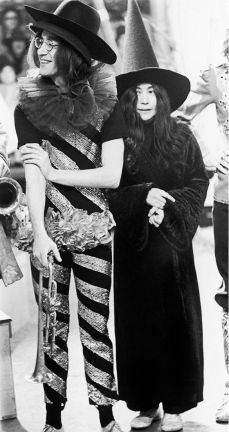 That was so bad that I thought I add this treat! Now that the Republicans are showing they won’t answer tough questions and will complain about liberal media bias if asked to defend their lies, Catherine Rampell of WAPO says the media is to blame because they’ve enabled them forever!
 So, I’m thinking that’s enough today! What’s on for Halloween by your mom and ’ems today?
 It’s the night before Halloween!!
 I’m not one to quote a conservative pundit without just cause. So many of them are not concerned with anything reasonable and just spout unsupportable memes. But, I’m going to quote from the Lake Charles American Press and Jim Beam, its conservative op ed writer of many years.
  on not losing his seat in the US Senate next year. Republicans are worried they could lose control of the majority.
 peej
peej Carissa
 bostonboomer
 dakinikat
 ecocatwoman
 jjlo
jjlo mablue2
 Mama Lopez
 peggysue22
 quixote
 skydancingguestblogger
 Mona (aka Wonk the Vote)





Recent Comments