
Friday Reads: Odd Ducks with Odd Flocks
Posted: January 22, 2016 Filed under: 2016 elections | Tags: American Populist, Bernie Sanders, Donald Trump, Eric Hoffer, populism on the left and right, The True Believer 37 Comments It’s a wintry Friday!
Hope you can hole up some place warm today. I’m watching the avocado tree outside my bedroom window shake and shiver in the wind. We’ve got a frost warning here which is never good for tropical zones. I’m sending warm thoughts to all of you on the east coast since you’re going to be in worse straits than the fur babies and me tonight. Still, I’m not about to take off my sloppy chenille sweater and thick wool socks in solidarity with those of you left out in the cold.
I’ve been looking for some coherent theme in today’s headlines. I thought it the impossible dream but then I remembered I am considering reading The True Believer by Eric Hoffer again. I read it for Jr. A/P English in High School and it’s been on my mind a lot as I read this and that about both the Trump and the Sanders campaign. So, I decided to explore some of these thoughts and found a lot more allies in the idea that the much of the anger and shrillness come from similar places. Are we looking at a duel fought for the heart of the new American Populism?
You’ll see Hoffer quotes scattered through this post today. I put them in italics but I’m not going to take the time to footnote them all other than to say you can find them at the link above.
“For men to plunge headlong into an undertaking of vast change, they must be intensely discontented yet not destitute, and they must have the feeling that by the possession of some potent doctrine, infallible leader or some new technique they have access to a source of irresistible power. They must also have an extravagant conception of the prospects and potentialities of the future. Finally, they must be wholly ignorant of the difficulties involved in their vast undertaking. Experience is a handicap. The men who started the French Revolution were wholly without political experience. The same is true of the Bolsheviks, Nazis and the revolutionaries in Asia. The experienced man of affairs is a latecomer. He enters the movement when it is already a going concern. “
Given BB’s post yesterday and this Paul Krugman blog today, I don’t think I’m the only one wondering why the primary process looks more like a series of mini stampedes than usual. American Primary season is never a pretty thing but wow, this year seems to have more insanity. So, what’s with all the true believers?
… there are some currents in our political life that do run through both parties. And one of them is the persistent delusion that a hidden majority of American voters either supports or can be persuaded to support radical policies, if only the right person were to make the case with sufficient fervor.
You see this on the right among hard-line conservatives, who insist that only the cowardice of Republican leaders has prevented the rollback of every progressive program instituted in the past couple of generations. Actually, you also see a version of this tendency among genteel, country-club-type Republicans, who continue to imagine that they represent the party’s mainstream even as polls show that almost two-thirds of likely primary voters support Mr. Trump, Mr. Cruz or Ben Carson.
Meanwhile, on the left there is always a contingent of idealistic voters eager to believe that a sufficiently high-minded leader can conjure up the better angels of America’s nature and persuade the broad public to support a radical overhaul of our institutions. In 2008 that contingent rallied behind Mr. Obama; now they’re backing Mr. Sanders, who has adopted such a purist stance that the other day he dismissed Planned Parenthood (which has endorsed Hillary Clinton) as part of the “establishment.”
But as Mr. Obama himself found out as soon as he took office, transformational rhetoric isn’t how change happens. That’s not to say that he’s a failure. On the contrary, he’s been an extremely consequential president, doing more to advance the progressive agenda than anyone since L.B.J.
Yet his achievements have depended at every stage on accepting half loaves as being better than none: health reform that leaves the system largely private, financial reform that seriously restricts Wall Street’s abuses without fully breaking its power, higher taxes on the rich but no full-scale assault on inequality.
There’s a sort of mini-dispute among Democrats over who can claim to be Mr. Obama’s true heir — Mr. Sanders or Mrs. Clinton? But the answer is obvious: Mr. Sanders is the heir to candidate Obama, but Mrs. Clinton is the heir to President Obama. (In fact, the health reform we got was basically her proposal, not his.)
 Why do some people go merrily down the path of the True Believer even when we live in an age resplendent with information? What causes folks to go all out for personalities that promise them such fundamentally undeliverable ideas?
“The fanatic is perpetually incomplete and insecure. He cannot generate self-assurance out of his individual resources—out of his rejected self—but has it only by clinging passionately to whatever support he happens to embrace. This passionate attachment is the essence of his blind devotion and religiosity, and he sees in it the source of all virtue and strength. Though his single-minded dedication is a holding on for dear life, he easily sees himself as the supporter and defender of the holy cause to which he clings. And he is ready to sacrice his life to demonstrate to himself and others that such indeed is his role. He sacrifices his life to prove his worth. It goes without saying that the fanatic is convinced that the cause he holds on to is monolithic and eternal—a rock of ages. Still, his sense of security is derived from his passionate attachment and not from the excellence of his cause. The fanatic is not really a stickler to principle. He embraces a cause not primarily because of its justness and holiness but because of his desperate need for something to hold on to. Often, indeed, it is his need for passionate attachment which turns every cause he embraces into a holy cause. The fanatic cannot be weaned away from his cause by an appeal to his reason or moral sense. He fears compromise and cannot be persuaded to qualify the certitude and righteousness of his holy cause. But he has no difficulty in swinging suddenly and wildly from one holy cause to another. He cannot be convinced but only converted. His passionate attachment is more vital than the quality of the cause to which he is attached. Though they seem to be at opposite poles, fanatics of all kinds are actually crowded together at one end. It is the fanatic and the moderate who are poles apart and never meet. The fanatics of various hues eye each other with suspicion and are ready to be at each other’s throat. But they are neighbors and almost of one family. They hate each other with the hatred of brothers. They are as far apart and close together as Saul and Paul. And it is easier for a fanatic Communist to be converted to fascism, chauvinism or Catholicism than to become a sober liberal.”
This was one of the great discoveries of my life. That if you go far enough to the left or right, you’re not on a straight line that just goes one. You’re likely following a circle that meets where the fanatics meet. But, the attraction of cults is nothing new under the sun. It drives terrorists on all sides of religion and politics. It kills its own as easily as it kills the other. I’ve gone back to read some stories of cult members and thought I’d share this one where the author discovers they’re likely in a cult.
Several years ago, the founder of IHOP, Mike Bickle, created a list of seven ways to recognize the difference between a religious community and a cult. Written down, the signs seem clear:
1. Opposing critical thinking
2. Isolating members and penalizing them for leaving
3. Emphasizing special doctrines outside scripture
4. Seeking inappropriate loyalty to their leaders
5. Dishonoring the family unit
6. Crossing Biblical boundaries of behavior (versus sexual purity and personal ownership)
7. Separation from the Church
But when it’s your friends, your faith, your community, it’s not so obvious. For several years, roughly two dozen people, all younger than thirty, had been living together in Kansas City, Missouri, and following the leadership of Tyler Deaton, one of our classmates from Southwestern University in Texas. In the summer of 2012, Tyler had married Bethany; by the fall, she was dead. What started as a dorm-room prayer group had devolved into something much darker.
Reading about Bethany’s story and seeing so much followership in some of the political meanderings and postings of friends, I realize that we’re forever stuck on creating an idealized vision of leaders and demonizing those that try to expose the flaws. We also search for data that reinforces our beliefs and leader at the expense of contradictory evidence. Momentum and surges and polls! Oh my!!
According to our latest polls-plus forecast, Hillary Clinton has an 85%chance of winning the Iowa caucuses.
It’s why some of the wonkiest wonks rely on megadata rather than individual data points. Nate Silver’s latest doesn’t exactly show a Bernie surge in Iowa, does it? Yet, my twitter feed and facebook news threads feel like it’s Bernie Tsnumi. WTF gives?
We zoom in on the one point that trips our trigger and on that one piece of anecdotal evidence that suits our mindset. So much if what I’m seeing is just attempts at reinforcing beliefs and then demonizing any evidence to the contrary. It’s like ” I’m against the Establishment, so every one that is against me must be the establishment” or ” I’m a winner and they’re a loser.” I’m seeing a lot of that these days.
Planned Parenthood, the Human Rights Campaign and other progressive groups that have endorsed Hillary Clinton are not part of the political establishment, Sen. Bernie Sanders said Thursday, walking back comments he made earlier this week on MSNBC.
“That’s not what I meant,” Sanders told NBC News in an interview during his campaign swing through the first-in-the-nation primary state. “We’re a week out in the election, and the Clinton people will try to spin these things.”
Pressed on whether he views the groups as “establishment,” Sanders said: “No. They aren’t. They’re standing up and fighting the important fights that have to be fought.”
Sanders said he was specifically talking about the leadership of those groups and their endorsement decisions.
The clarification comes after Sanders responded to a question from MSNBC’s Rachel Maddow earlier this week about why so many progressive groups – including Planned Parenthood, NARAL and the Human Rights Campaign – were backing Clinton over him.
“We’re taking on not only Wall Street and economic establishment, we’re taking on the political establishment,” Sanders said. “So, I have friends and supporters in the Human Rights Fund and Planned Parenthood. But, you know what? Hillary Clinton has been around there for a very, very long time. Some of these groups are, in fact, part of the establishment.”
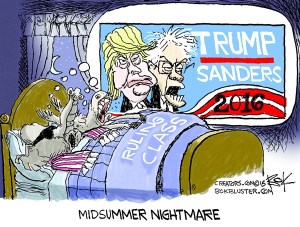 There’s always been a populist streak in American Politics and religion. Both the left and the right indulge populist fantasies and personalities. There’s been a lot of evidence out there that both Bernie and the Donald are playing to similar sentiments. Are we reaching critical in a dueling visions of modern Populism? Michael Gerson asks a good question in this WAPO op ed.
The most fateful unanswered question of the 2016 campaign: Is this a populist moment in America?
It certainly sounds like one. The “establishment” is so universally despised that one wonders who is left to compose it. A putsch might find only empty offices. Outsiders with no political experience dominate the Republican field. Hillary Clinton has rapidly lost ground to an endearing but unelectable ideologue. A revolution seems to stir.
But then Donald Trump proposes a less fiscally responsible version of Jeb Bush’s tax plan. And Clinton, in the sober light of morning, remains the prohibitive favorite for the nomination of her party.
Is populism set to prevail in American politics? The term itself is famously difficult to define. In one way, historian Michael Kazin told me, populism is a “language, a way of talking about the people and the elites.” It doesn’t really matter if the elites being savaged inhabit Wall Street or the Education Department. By this measure, we are near the triumph of rhetorical populism. But it is more loud and annoying than revolutionary.
Yet populism also has a meaning rooted in American history. At its best, populism is the movement of common people whose interests are ignored in times of economic stress and transformation. In the 19th century, this group was (initially) farmers in the South and West who, in the aftermath of a serious recession, carried large amounts of debt and faced rising prices for transportation and supplies because of monopolies. Activists created economic cooperatives, formed third parties (including the People’s Party ) and ran slates of candidates. The movement gained support among laborers and small-business owners. Its demands were serious and structural: freer money, direct election of senators, federal insuring of banks and regulations on the stock market.
It’s odd that the current movement leaders are both elites and part of the establishment. Yet, their voices throwback to the roots of their families more than their personal life experiences. How much more elite or establishment can you get than U.S. Senator or a trustfund baby making a living by gaming tax law for real estate speculation? Is any of this really health for the country’s political discourse and for governance? Tom Bachtell spins a story using an earlier example.
Populism is a stance and a rhetoric more than an ideology or a set of positions. It speaks of a battle of good against evil, demanding simple answers to difficult problems. (Trump: “Trade? We’re gonna fix it. Health care? We’re gonna fix it.”) It’s suspicious of the normal bargaining and compromise that constitute democratic governance. (On the stump, Sanders seldom touts his bipartisan successes as chairman of the Senate Veterans’ Affairs Committee.) Populism can have a conspiratorial and apocalyptic bent—the belief that the country, or at least its decent majority, is facing imminent ruin at the hands of a particular group of malefactors (Mexicans, billionaires, Jews, politicians).
Above all, populism seeks and thrills to the authentic voice of the people. Followers of both Sanders and Trump prize their man’s willingness to articulate what ordinary people feel but politicians fear to say. “I might not agree with Bernie on everything, but I believe he has values, and he’s going to stick to those and he will not lie to us,” a supporter named Liam Dewey told ABC News. The fact that Sanders has a tendency to drone on like a speaker at the Socialist Scholars Conference circa 1986—one who happens to have an audience of twenty-seven thousand—only enhances his bona fides. He’s the improbable beneficiary of a deeply disenchanted public. As for Trump, his rhetoric is so crude and from-the-hip that his fans are continually reassured about its authenticity.
Responding to the same political moment, the phenomena of Trump and Sanders bear a superficial resemblance. Both men have no history of party loyalty, which only enhances their street cred—their authority comes from a direct bond with their supporters, free of institutional interference. They both rail against foreign-trade deals, decry the unofficial jobless rate, and express disdain for the political class and the dirty money it raises to stay in office.
Trump uses the typical right wing populist weapon of demonizing the other outwardly as an other while Sanders writes his enemies off as  establishment. Followers of both are much less subtle.
Students of the American populist tradition say Trump is filling in an emerging issues vacuum on the right—and for the declining appeal of longstanding culture-war crusades among the GOP faithful. The GOP’s great unifying issue over the past few election cycles—the demand to repeal the Affordable Care Act—is showing signs of wear. Presidential hopefuls continue to pay lip service to the ACA’s repeal, but the law’s run of Supreme Court victories—together with gradually increasing public support for some of its key provisions—means that the bid to kill Obamacare is unlikely to generate much new energy on the right. Obamacare’s repeal is “dead as an issue,” says Georgetown University historian Michael Kazin, author of The Populist Persuasion (1998) and the 2007 Bryan biography A Godly Hero. “So here you have someone like Trump coming along to say, well, here’s an issue.”
That issue has been immigration, with Trump making his infamous remarks about Mexican immigrants raping women, dealing drugs and plundering American jobs—populist-style cultural scapegoating with a capital S. But there’s something more than simple white resentment at play here. In reviving the old populist cause of economic nationalism, Trump has struck a chord among a pinched conservative working-class electorate that knows free trade and globalization are not about to boost their wages, or bring their pensions back. He’s also tapped into the protectionist outlook of America’s older labor movement, which historically supported restrictions on immigration because of its downward pull on wages.
This is where my mind fills with the explanations of the 1950s Hoffer who looked to explain the NAZIS and Stalinists alike. There is, indeed, so much passionate hatred.
“Passionate hatred can give meaning and purpose to an empty life.”
But, both of these guys seem to think they’re the singular entity that has the easiest answer and the purest ideas. So, what do I make of this? What does Hoffer make of this?
…
“When the moment is ripe, only the fanatic can hatch a genuine mass movement. Without him the disatisfaction engendered by militant men of words remains undirected and can vent itself only in pointless and easily suppressed disorders. Without him the initiated reforms, even when drastic, leave the old way of life unchanged, and any change in government usually amounts to no more than a transfer of power from one set of men of action to another. Without him there can perhaps be no new beginning. When the old order begins to fall apart, many of the vociferous men of words, who prayed so long for the day, are in a funk. The first glimpse of the face of anarchy frightens them out of their wits. They forget all they said about the “poor simple folk” and run for help to strong men of action—princes, generals, administrators, bankers, landowners—who know how to deal with the rabble and how to stem the tide of chaos. Not so the fanatic. Chaos is his element.”
So, let me ask you. Are we looking at a two-headed coin? Are we looking at two competing captains for a Krewe of Populist Chaos?
Monday Reads in which I go there …
Posted: January 18, 2016 Filed under: Affordable Care Act, Affordable Care Act (ACA), Afternoon Reads | Tags: Affordable Health Care Act, Bernie Sanders, Health care reform, Paul Krugman, single payer 30 CommentsGood Afternoon! Happy Martin Luther King Day!!
 I’ve been spending the morning getting back up to speed on Health Care Economics which is something I never enjoy but never seem to be unable to avoid. The facts on the ground never change much. What we know about single payer and third party payer systems remains pretty much the same. The only thing that seems to change is the hostility in this country on the subject. I keep having to dredge up the same information over and over with the new twists.
Well, here I go again …
There are three articles that BB sent me this morning that sum up the situation nicely. I’m going to start with those and then finish up by reviewing the mini-case of the failed single payer case in the state of Vermont. I’m not doing this because I don’t think single payer health insurance is a good deal ceteris paribus. It obviously works in other countries. As the Republicans remind us daily, we are not other countries. Theoretically, it provides superior risk sharing and economies of scale on cost. So, my theoretical economist side loves it. My living in America with everything that’s already standing and Republicans who thwart everything at every turn except tax cuts for the wealthy and wars side has a different train of thought.
Yes, it’s time to heal those suffering badly from Berns. I’m going to be in good company because the public wonks are with me on both accounts. We yearn for a simpler, cheaper, more efficient way of paying and getting health care. But, we know the difference between brainstorming and an actionable policy. I’m cursed with a heart longing for idealism but a brain that reins the damn thing in. Bernie Sanders plan really isn’t a plan. It’s a lofty goal.
Here’s Ezra Klein writing for VOX stating ‘Bernie Sanders’s single-payer plan isn’t a plan at all: Sanders’s long-awaited health care plan is, by 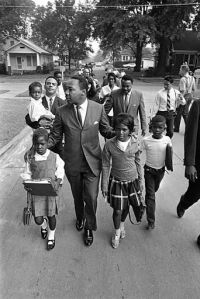 turns, vague and unrealistic.‘ You should read these links fully if you can manage the time.
Sanders calls his plan Medicare-for-All. But it actually has nothing to do with Medicare. He’s not simply expanding Medicare coverage to the broader population — he makes that clear when he says his plan means “no more copays, no more deductibles”; Medicare includes copays and deductibles. The list of what Sanders’s plan would cover far exceeds what Medicare offers, suggesting, more or less, that pretty much everything will be covered, under all circumstances.
Bernie’s plan will cover the entire continuum of health care, from inpatient to outpatient care; preventive to emergency care; primary care to specialty care, including long-term and palliative care; vision, hearing and oral health care; mental health and substance abuse services; as well as prescription medications, medical equipment, supplies, diagnostics and treatments. Patients will be able to choose a health care provider without worrying about whether that provider is in-network and will be able to get the care they need without having to read any fine print or trying to figure out how they can afford the out-of-pocket costs.
Sanders goes on to say that his plan means “no more fighting with insurance companies when they fail to pay for charges.”
To be generous, it’s possible that Sanders is just being cynical in his wording, and what he means is that, under his plan, individuals have to fight with the government rather than private insurers when their claims are denied.
But the implication to most people, I think, is that claim denials will be a thing of the past — a statement that belies the fights patients have every day with public insurers like Medicare and Medicaid, to say nothing of the fights that go on in the Canadian, German, or British health-care systems.
What makes that so irresponsible is that it stands in flagrant contradiction to the way single-payer plans actually work — and the way Sanders’s plan will have to work if its numbers are going to add up.
Behind Sanders’s calculations, both for how much his plan will cost and how much Americans will benefit, lurk extremely optimistic promises about how much money single-payer will save. And those promises can only come true if the government starts saying no quite a lot — in ways that will make people very, very angry.
“They assumed $10 trillion in health-care savings over ten years,” says Larry Levitt, vice president at the Kaiser Family Foundation. “That’s tremendously aggressive cost containment, even after you take the administrative savings into account.”
The real way single-payer systems save money isn’t through cutting administrative costs. It’s through cutting reimbursements to doctors, hospitals, drug companies, and device companies. And Sanders’s gestures towards this truth in his plan, saying that “the government will finally have the ability to stand up to drug companies and negotiate fair prices for the American people collectively.”
But to get those savings, the government needs to be willing to say no when doctors, hospitals, drug companies, and device companies refuse to meet their prices, and that means the government needs to be willing to say no to people who want those treatments. If the government can’t do that — if Sanders is going to stick to the spirit of “no more fighting with insurance companies when they fail to pay for charges” — then it won’t be able to control costs.
Krugman adds a bit more to this today.

&”
Put it this way: for all the talk about being honest and upfront, even Sanders ended up delivering mostly smoke and mirrors — or as Ezra Klein says, puppies and rainbows. Despite imposing large middle-class taxes, his “gesture toward a future plan”, as Ezra puts it, relies on the assumption of huge cost savings. If you like, it involves a huge magic asterisk.
Now, it’s true that single-payer systems in other advanced countries are much cheaper than our health care system. And some of that could be replicated via lower administrative costs and the generally lower prices Medicare pays. But to get costs down to, say, Canadian levels, we’d need to do what they do: say no to patients, telling them that they can’t always have the treatment they want.
Saying no has two cost-saving effects: it saves money directly, and it also greatly enhances the government’s bargaining power, because it can say, for example, to drug producers that if they charge too much they won’t be in the formulary.
But it’s not something most Americans want to hear about; foreign single-payer systems are actually more like Medicaid than they are like Medicare.
And Sanders isn’t coming clean on that — he’s promising Medicaid-like costs while also promising no rationing. The reason, of course, is that being realistic either about the costs or about what the system would really be like would make it a political loser. But that’s the point: single-payer just isn’t a political possibility starting from here. It’s just a distraction from the real issues.
The deal is this. We have entire systems, institutions, and agents that have been functioning under multiple plans for quite some time. This includes Medicaid, Medicare, SCHIP, the VA, and a myriad of private health insurance plans. You just don’t wave a magic wand and expect that all to unwind costlessly and seamlessly. You also don’t expect all those folks to be thrilled about it either or to seamlessly transfer their efforts and resources to a new system. It takes big money and time to do that. We’re not operating from scratch here.
That also doesn’t take into account politics. Yes. POLITICS. Remember when we first got the ACA and how the majority of Dems and Republicans voted for a single payer plan when the Dems controlled Congress? Remember how the ACA should work if SCOTUS hadn’t let so many states opt out of the system? Yes, Virginia, there is no Santa Claus.
 Dear Bernie Sanders-supporting Friends: Sanders is nice enough. He’s got some good ideas. But, no, I do not think he’s got what it takes to be President. He operates out there in gadfly paradise. Or, as Michel Cohen writes it: ‘Bernie Sanders doesn’t get how politics works’.
Now for my deeper impression of the debate: even with his rising poll numbers in Iowa and New Hampshire, I find it increasingly difficult to take Sanders seriously as a presidential candidate.
Maybe it’s the fact that he’s 74, would be the oldest man to ever become president, and yet couldn’t be bothered to release his medical records until a Clinton surrogate attacked him for it.
Maybe it’s that Sanders finds a way to answer virtually every question by turning it back to another predictable and one-dimensional attack on Wall Street and big money.
Maybe it’s that he gets away with proposing unrealistic policy ideas that have little chance of being passed even by Democrats in Congress, let alone Republicans, and then gets praised for being authentic. Sunday night Sanders finally released his single-payer health care plan, which is all of eight pages and provides little detail on how he’ll implement a complete restructuring of the US health care system. That’s at least an improvement over his plan for breaking up the banks, which is four pages and just as short on detail.
Maybe it’s that every time he answers a question on foreign policy and national security, it’s blindingly apparent that not only does he not understand foreign policy and national security, he simply doesn’t care to know more. I mean, only Bernie Sanders could answer a question about instability Middle East by pivoting to an attack on wealthy nations like Saudi Arabia, which he repeatedly says has to play a greater role in the civil war in Syria, as if no one on his staff could bother to tell him that Saudi Arabia is already playing an important role in the civil war in Syria.
It’s all that and something else — Sanders really does have a singularly naive and simple-minded understanding of American politics. He genuinely seems to believe — and I know this because he repeatedly yelled it at me during the debate — that money is the root of all evil in politics and that if you get the big money out, great things will happen. Sanders said that “a handful of billionaires . . . control economic and political life of this country.” He argued that Republicans and Democrats don’t “hate each other.” He called that a “mythology.” Instead, he said, the “real issue is that Congress is owned by big money and refuses to do what the American people want them to do.”
I’m sorry, but that is a maddeningly simplistic — and wrong — explanation of how American politics works.
Take single-payer health care, which Sanders claims has been difficult to enact because of a corrupt campaign finance system that allows the “pharmaceutical industry” and private insurance companies to spend millions in “campaign contributions and lobbying.”
On the one hand, Sanders is right — those are powerful interests. But so are doctors and hospitals, who’d pay a huge price if single payer became law; so are Republicans, who fought tooth and nail to defeat Obamacare and would do the same for a single-payer plan; so are Democrats, who couldn’t even support a public option for Obamacare and are unlikely to support single payer; so are Americans, who may not be inclined to support another restructuring of the health care system — a few years after the last one. It’s not just about money; it’s also about a political system constructed and reinforced to block the kind of massive reform Sanders is advocating. Money is important, but it’s not even close to the whole story.
How someone who’s been in Washington as long as Sanders can believe that all that stands between doing “what the American people want [Congress] to do” is something as simple as reforming campaign finance is stunning. Sanders, who brags the NRA gives him a D- rating, is the same politician who supported legislation giving gun manufacturers immunity from civil lawsuits and voted against the Brady Bill. Why? Perhaps it is because Sanders comes from a state that has few gun control laws and lots of gun owners. Yes red-state senators who oppose gun control receive contributions from the NRA. They also have constituents who oppose gun control measures and vote on the issue — like Bernie Sanders. It’s as if in Sanders’ mind, parochialism, ideology, or politics plays no role . . . in politics.
 So, yes, we have the ACA (Obamacare) which is a “kludge” to borrow a turn of phrase from Krugman. If we could start from scratch then single payer health insurance would be infinitely cheaper and better. But, that’s not the way it is.
Krugman admits that Obamacare is far from perfect, an awkward, imperfect solution that does not work for everyone. But he thinks it would be a mistake for Democrats to expend political capital refighting the battle that gave them their biggest victory in decades. Here’s how he lays out his case:
If we could start from scratch, many, perhaps most, health economists would recommend single-payer, a Medicare-type program covering everyone. But single-payer wasn’t a politically feasible goal in America, for three big reasons that aren’t going away.
First, like it or not, incumbent players have a lot of power. Private insurers played a major part in killing health reform in the early 1990s, so this time around reformers went for a system that preserved their role and gave them plenty of new business.
Second, single-payer would require a lot of additional tax revenue — and we would be talking about taxes on the middle class, not just the wealthy. It’s true that higher taxes would be offset by a sharp reduction or even elimination of private insurance premiums, but it would be difficult to make that case to the broad public, especially given the chorus of misinformation you know would dominate the airwaves.
Finally, and I suspect most important, switching to single-payer would impose a lot of disruption on tens of millions of families who currently have good coverage through their employers. You might say that they would end up just as well off, and it might well be true for most people — although not those with especially good policies. But getting voters to believe that would be a very steep climb.
Bottom line for Krugman is that single-payer ain’t gonna happen. Like it or not, the fact that Obamacare did not disrupt the millions of Americans who get health insurance through their employers gives it a leg up. Then there is the fact that taxes would have to be raised on the middle class to pay for it, as even Sanders acknowledges. And even though the middle class would not doubt save even more on their health insurance premiums, Krugman comes down on the side that higher taxes on them would not fly politically.
I’d like to add something to all of this. It’s frequently nice to have test cases for policy change. Massachusetts was the test case for ChaffeeCare/DoleCare/RomneyCare/ObamaCare. It wasn’t perfect but it worked.

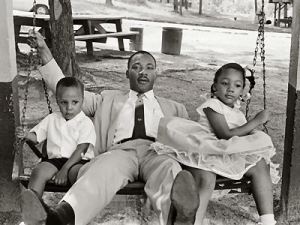
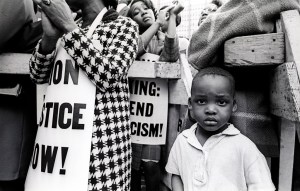
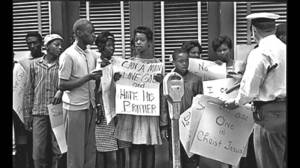
March 1965: Children watching a black voting rights march in Alabama. Dr Martin Luther King led the march from Selma, Alabama, to the state capital in Montgomery. (Photo by William Lovelace/Express/Getty Images)
According to a new analysis, health care reform in Massachusetts, popularly known as “Romneycare,” didn’t cause hospital use or costs to increase, even as it drove down the number of people without health insurance.
Implemented by the state in 2006, and signed by then-Gov. Mitt Romney, the reform is looked at as a model for the Affordable Care Act, also known as “Obamacare,” the sweeping and controversial health care law that Republican lawmakers in the House tried to repeal for the 37th time Thursday.
Amresh Hanchate, an economist with the Veterans Affairs Boston Healthcare System and lead author of the study, which he presented Thursday at an American Heart Association conference, says that the results of the study were surprising.
When it was implemented, about 8.4 percent of Massachusetts citizens were uninsured; by 2010, just 3 percent were uninsured. Uninsured rates fell most among minorities: In 2006, 15 percent of African-Americans were uninsured, in 2010, that rate was at 3.4 percent. Uninsured rates for Hispanics in the state fell from 20 percent to 9.2 percent during the same period.
Similarly encouraging news is found on the ACA even though it was seriously hampered by the SCOTUS ruling that allowed many states to opt out of the medicaid expansion and hosting local exchanges. We have one state that tried to have single payer. It failed. The state was Vermont. Sanders was asked about it during the debate. He dodged the question by referring it to the state’s governor. Well, there’s a lot of information out there on it. I’ll start with NEJM.
On December 17, 2014, Vermont Governor Peter Shumlin publicly ended his administration’s 4-year initiative to develop, enact, and implement a single-payer health care system in his state. The effort would have established a government-financed system, called Green Mountain Care, to provide universal coverage, replacing most private health insurance in Vermont. For Americans who prefer more ambitious health care reform than that offered by the Affordable Care Act (ACA), Shumlin’s announcement was a major disappointment. Was his decision based on economic or political considerations? Will it damage the viability of a single-payer approach in other states or at the federal level?
Shumlin’s exploration of a single-payer health care system, which included three assessments by different expert groups, was among the most exhaustive ever conducted in the United States. A 2011 study led by Harvard health economist William Hsiao provided optimistic projections: immediate systemwide savings of 8 to 12% and an additional 12 to 14% over time, or more than $2 billion over 10 years, and requirements for new payroll taxes of 9.4% for employers and new income taxes of 3.1% for individuals to replace health insurance premiums (see table) Financial Estimates from Three Projections for a Vermont Single-Payer Health Plan.).
Two years later, a study by the University of Massachusetts Medical School and Wakely Consulting projected savings of just 1.5% over 3 years.2 Finally, a 2014 study by Shumlin’s staff and consultants predicted 1.6% savings over 5 years and foresaw required new taxes of 11.5% for employers and up to 9.5% for individuals. The governor cited these last projections in withdrawing his plan: “I have learned that the limitations of state-based financing, the limitations of federal law, the limitations of our tax capacity, and the sensitivity of our economy make that unwise and untenable at this time . . . . The risk of economic shock is too high,” Shumlin concluded.
Two factors explain most of the decline in the plan’s financial prospects. First, the anticipated federal revenues from Medicaid and the ACA declined dramatically. Second, Shumlin’s policy choices significantly increased the total projected cost of Green Mountain Care: raising the actuarial value of coverage — the expected portion of medical costs covered by a plan rather than by out-of-pocket spending — from 87% to 94%, providing coverage to nonresidents working in Vermont, and eliminating current state taxes on medical providers. Still, even Shumlin’s projections indicated that the plan would reduce Vermont’s overall health spending and lower costs for the 90% of Vermont families with household incomes under $150,000. Despite differing projections, all three studies showed that single payer was economically feasible.
In reality, the Vermont plan was abandoned because of legitimate political considerations. Shumlin was first elected governor in 2010 promising a single-payer system. But in the 2014 election, his Republican opponent campaigned against single payer. Shumlin won the popular vote by a single-percentage-point margin, 46% to 45%, which sent the election to the Democratic-controlled House of Representatives; though the House reelected him easily in January, a clear public mandate for his health care agenda was nowhere in evidence.
 Here’s some slightly less academic explanations. This one comes from the Boston Globe.
Vermont took Obamacare a step further. In 2011, Shumlin proudly signed a bill to establish a publicly financed, single-payer system. The law required Shumlin to submit a detailed financial plan by 2013.
Shumlin missed the deadline, raising fears among supporters and critics alike that single-payer health care would cost much more than anticipated. Those fears were realized on Dec. 17, when Shumlin, two years late and just a month from narrowly winning reelection, released the financial analysis.
The numbers were stunning. To implement single-payer, the analysis showed, it would cost $4.3 billion in 2017, with Vermont taxpayers picking up $2.6 billion and the federal government covering the rest. To put the figures into perspective, Vermont’s entire fiscal 2015 budget, including both state and federal funds, is about $4.9 billion.
Shumlin’s office estimated the state would need to impose new personal income taxes of up to 9.5 percent, on top of current rates that range from 3.55 to 8.95 percent. Businesses would be hit with an 11.5 percent payroll tax, on top of 7.65 percent payroll taxes employer pay for Social Security and Medicare.
And even those tax increases might not have been enough. The governor’s office estimated the Green Mountain Care program would run deficits of $82 million by 2020 and $146 million in 2021. Shumlin said he feared the tax increases would harm businesses and the economy.
Okay, this is VERMONT, folks. Now, try doing that in Louisiana and Kansas or try getting their elected officials in the District to buy off on it.
So, a lot of children just really like believing in Santa Claus and it doesn’t take much to get them to continue their buy-in. Then there was Doctor Daughter who figured out it was her Dad and me at an extremely tender age after careful empirical study then asked me if that was the case. Of course, I said yes rather than try to lead her on like my parents did me for the sake of my sister. I just told her to go along if other kids believed and their parents hadn’t told them the truth yet. She did so like a little Nixonian co-conspirator.
I will not lie to you. Ceteris paribus. I prefer Single Payer Health Insurance. Ceteris paribus. Bernie Sanders has some really nice ideas.
I have never been one of those theoretical researchers. All of my stuff is empirical. I live in the land of empirical evidence. Yes, folks socialized medicine works just fine in the UK and is fairly cheap and folks get turned away for stuff that would probably piss the average American off. Yes, single payer health or a government option works great in Switzerland and other places. But, this is a country where it appears that our options will be Hillary Clinton or Donald Trump.
Spare me the Santa Claus mythos or the Senator Gadfly mythos.
Sorry this is so long, but as you can see, I had a lot to say and prove. I vote we try to improve on the ACA and for Hillary. Just sayin’.
Mea culpas go to any one whose work I over quoted. I love fair use but I also loved what you wrote. I quoted and cited you. Just sayin’.
What’s on your reading and blogging list today?
Friday Reads: Late Edition
Posted: January 15, 2016 Filed under: Economic Develpment, Economy | Tags: Air BnB hell realms, gentrification, New Orleans 33 CommentsGood Afternoon!
 I’m running really late today despite coffee and all the usual things I use to face the morning. I seem to be in need of hibernation. I’m not sure if it’s the ugly political situation or just the challenges of doing any little thing these days. Have you noticed how businesses are basically set up to take your money efficiently and create hell for you under any other circumstance? Calling them is to enter a hell realm. Even when you do reach a person, there seems to be little they can do but offer sympathy and customer service surveys. Why are businesses so damned rotten these days? Is it because they are coddled while the rest of us have been basically dropped from the master plan?
I’m going to do a little sharing of local stuff juxtaposed on some national news because I’ve been noticing how difficult life is becoming for regular people. Here in New Orleans, we’re chasing tourist dollars by destroying the culture that brings them here and basically driving off the workers that do the daily stuff of dealing with them. I’m beginning to think that the entire plan of the Aspen Institute is to turn every major city into a seamless, architecturally bland, sea of guys sporting manbuns. We seem to be selling our treasure to the highest out-of-town bidder who then remakes it into something totally new Portland or new Seattle or new Brooklyn. Then, we all have to indulge boorish burbies in all the places we used to use to escape them.
Here’s a great example. This nice old home used to be the equivalent of a hostel owned by a friend of mine. It was called the Mazant Guesthouse and was heavily used by Europeans because it had no A/C, a communal kitchen, and was extremely cheap. The first thing the new owners did was try to tear down the backhouse. Thankfully, the historic commission stopped them. Now the entire property is just another reminder of the folks city government is trying to attract to all parts of the city including our personal, private backyards. Asking price? $1.65 million. You could’ve bought entire blocks here for that just a few years ago. So, you can imagine what that’s done to the rental market and what that’s doing to property tax valuations.
 This revitalization includes sanitizing the city’s really awful past as an outpost of the Confederacy and Lost Cause by removing statues that used to attract more pigeon shit than attention. We tear down a very historical Woolworth’s with an intact counter that was central to the Civil Rights Movement and no one mourns that at all. We had an opportunity to put a great Civil Rights museum downtown for a real tourist experience. But no, we spend time removing rather than preserving the sites to use them to elucidate the awful past. We’d rather have a Dave and Buster’s than a National Jazz Park.
Several items came to my attention today that show the master plan is to transform us into the destination of the manbun crowd and that is having all kinds of unintended consequences. The example sits right next door to me. Two guys from NJ charge $180 a night for one side of a double that’s been redone to look like a badly decorated boutique hotel inside and barely maintains a semblance of its historical past outside. It used to be home to two families. Some NJ guy bought the family home across the street and it’s the ugliest thing you’ve ever seen now. It was an arts and crafts double but now it looks like some weird, awkward Cape Code monstrosity and it’s selling for way over $.5 million. Both homes were stripped of their historic architecture during renovation. My guess is some out of town rich people will Air BNB the arts & crafts double too which is currently illegal and against zoning laws. It used to be a rental when I moved here but was a single family dwelling until it sold. A barber who worked down in the quarter lived there. Regular folks that are renters aren’t here any more. But, don’t take my word for it. New Orleans now ranks second as the worst market for renters in the nation.
New Orleans is gaining notoriety among America’s mid-sized cities as a place where renters must devote an increasing share of their income to housing expenses.
Make Room, a campaign by nonprofit affordable housing developer Enterprise Community Partners, extracted Census data to rank the top “10 worst metro areas for cash-strapped renters.” New Orleans was No. 2.
According to Harvard’s data, 35 percent of renters in the New Orleans-Metairie-Kenner statistical area devote 50 percent or more of their income to rent and utilities, only slightly less than top-ranked Miami where the rate was 35.7 percent.
The Make Room initiative was launched in May 2015 to push for policy changes and additional resources for cities where the lack of affordable housing is acute. Angela Boyd, the campaign’s managing director, said the effort seeks, in part, to debunk misconceptions that affordable housing is an issue only for coastal cities and targets renters in need of subsidies or government assistance.
“Some people think affordable housing is for the homeless or residents of public housing, but it also takes into account moderate income (renters),” Boyd said. “These are people who are probably already your neighbors.”
I wonder how all those restaurants are going to find help when there are no more places for their employees to rent in the city at the wages they can pay? While the city is hassling over statues and renting its lampposts to hang fetus fetish propaganda, there’s  very little discussion of things that are really wrong here. We may be good at attracting celebrities to film stuff and buy houses, but we’re absolutely forgetting the majority of our population in the rush to be cool for pennies on the tax dollar.
On Wednesday night, Douglas Brown allegedly jumped over the counter of a New Orleans Subway after ordering a sandwich, according to the Times-Picayune, but was foiled in his attempt to nab the cash register drawer because it was tethered into place. Instead, he grabbed a bunch of cash and ran. He was detained 25 minutes later.
It’s unclear who will represent Brown. Yesterday, the Orleans Public Defenders refused to take his case. The underfunded office, which says it represents nearly 85-percent of all defendants in the parish but has a budget just half the size of the district attorney, simply can’t handle any more.“Our workload has now reached unmanageable levels resulting in a constitutional crisis,” Chief Defender Derwyn Bunton said in a December statement, giving one month’s notice that they would start refusing some clients charged with felonies carrying long sentences. “As Chief Defender, I can no longer ethically assign cases to attorneys with excessive caseloads or those that lack the requisite experience and training to represent the most serious offenses.”
This week, Bunton’s office made good on that pledge and began refusing clients. In response, the American Civil Liberties Union and the ACLU of Louisiana last night filed a class action lawsuit in federal court against Bunton and Louisiana State Public Defender James Dixon on behalf of plaintiffs who were assigned public defenders but then placed on a waiting list.
“So long as you’re on the public defender waiting list in New Orleans, you’re helpless. Your legal defense erodes along with your constitutional rights,” said Brandon Buskey, Staff Attorney with the ACLU’s Criminal Law Reform Project, in a statement. “With every hour without an attorney, you may forever lose invaluable opportunities to prove your innocence. You also may be forced into a crippling choice between waiting months for counsel or doing bail and plea negotiations yourself. The damage to your case can be irreparable.”
Mayor Mitch Landrieu maintains that while the city has increased its funding of the office that they have “barely kept pace with state funding cuts,” the Times-Picayune reports. The defenders contend that “the additional local funding is enough to stave off mandatory furloughs, but not enough to provide representation in serious felony cases that is constitutional or ethical.” Bunton and Dixon could not be reached for comment.
 The total focus on re-imagining New Orleans appears to include putting street cars everywhere and making sure no road goes unfixed endlessly as long as it is uptown. I’m not sure it includes a vision of much else. We seem to be highly focused on accommodating a certain segment of American society to the exclusion of a nearly everything else. From what I can see, we’re really not “winning” in any sense but Charlie Sheen’s or whatever it is Mayor Landrieu has in mind. He did come to us as the LT. Governor whose sole job is to fixate on tourism. Maybe that’s the issue he just can’t move beyond. I really don’t know. But, as far as I can tell, the development we’ve been getting recently is really killing exactly what we’ve been good at doing for a very long time.
Does resilience mean dumping your core competencies and the things that make you unique for the latest trendiness?
What happens when a city because a laboratory for hair brained schemes like charter schools and whatever you call this urban development trend that seems to be making us some blander version of ourselves? One of our issues has been the lack of health care for so many people. I’m hoping that the state’s move to now accept the Medicaid Expansion will help these kinds of statistics. Meanwhile, we can only look at the skeleton of Big Charity Hospital which was once the hallmark of a civilized nation.
Indeed, Place Matters for Health in Orleans Parish, a report prepared by the Joint Center for Political and Economic Studies and the Orleans Parish Place Matters Team, in conjunction with the Center on Human Needs, Virginia Commonwealth University, and the Virginia Network for Geospatial Health Research, noted that “Life expectancy in the poorest zip code in the city is 54.5 years, or 25.5-years lower than life expectancy in the zip code with the least amount of poverty in the city, where it is 80.”
I’m beginning to think the entire “sharing” economy is basic piracy. I came across this at AJ and was appalled that folks would do this on both supply and demand side of AIR BnB. I swear this corporation is just an international crime syndicate that makes money off of illegal and destructive activities.
Airbnb may be the next high-profile target of the Boycott, Divestment and Sanctions (BDS) movement, following media reports this week that the online accommodation service includes listings from settlements in the occupied Palestinian territories that are advertised as being in Israel.
Anyone staying in an Airbnb-listed settlement property “facilitates the commission of the crime of establishing settlements and therefore aids and abets the crime,” said John Dugard, professor of international law, and a former Special Rapporteur to the UN on Palestine.
“The same applies to making money from property built on illegal settlements.” Airbnb takes a commission on property rentals, and so is profiting from Israel’s colonisation of Palestine.
Hosts who list properties via the company are required to provide accurate locations. As such, stating that settlements are located in Israel – when they are in fact illegal under international law because they are built on occupied territory – is a violation of the company’s terms.
I would like to think that just because you can make money off of something doesn’t mean that you should do it, the government should allow it, or there should be legal businesses encouraging it. But then, it seems state and local governments are also doing anything to quit providing services to citizens while heavily subsidizing private businesses for whatever reason. At what point do we decide that businesses and rich people should pony up their fair share of the bill of living in a civilized country,state and city of laws, institutions and regular people?
The city of Flint, Mich., is in the midst of a water crisis several years in the making. The city opted out of Detroit’s water supply and began drawing water from the Flint River in April 2014, part of a cost-saving move. Eighteen months later, in the fall of 2015, researchers discovered that the proportion of children with above-average lead levels in their blood had doubled.
The city reconnected to Detroit’s water system in October, but the damage was done. Water from the Flint River was found to be highly corrosive to the lead pipes still used in some parts of the city. Even though Flint River water no longer flows through the city’s pipes, it’s unclear how long those pipes will continue to leach unsafe levels of lead into the tap water supply. Experts currently say the water is safe for bathing, but not drinking.
A group of Virginia Tech researchers who sampled the water in 271 Flint homes last summer found some contained lead levels high enough to meet the EPA’s definition of “toxic waste.”
Economic theory states that we should tax nuisance activities heavily to both discourage them and to collect funds for the damages they inflict on the citizens around them. (Think any kind of pollution.) Subsidies are to be given to those  activities that won’t occur–even though they are highly beneficial to society–because they won’t provide profits to private businesses. (Think public transportation and education.) It’s a really basic and simply theory that’s been proven useful time and time again. There are some things we really do want to tax the hell out of because we want less of it and we want to recover the damage it creates. Many rules and regulations exist to protect current property owners and stakeholders. Here’s a brief little lesson on Pigouvian Taxes and subsidies that’s worth a watch that gives you a good idea of the costs and benefits. I’m not sure why the entire concept has gone out of style. Perhaps it’s because the Aspen Institute doesn’t find it trendy enough. Although my gut says it’s likely because lobbyists and political donors prefer to be enabled rather than held accountable.
Anyway, what I think I can say is that we’re making it difficult (e.g. taxing) for the wrong people to exist in society and we’re subsidizing the folks that are just making things worse. I believe this is why there’s such disgruntlement at working, poor, and middle class income levels.
The question now, is how do we really change this? When are we going to stop selling our society to any bidder for any sleazoid reason in the name development?
What’s on your reading and blogging list today?
Live Blog South Carolina Republican Debate(s): Going South and then some
Posted: January 14, 2016 Filed under: 2016 elections, Live Blog, Republican presidential politics, The Right Wing | Tags: Republican Presidential Primary Debates, South Carolina 160 Comments Good Evening!
The main stage debate of the Republican party Presidential wannabes will showcase seven candidates. Four candidates were sent to the kiddie table but Rand Paul has decided to stay home since this time he couldn’t whine himself out of his basement level poll numbers . The main debates starts at 9 pm eastern. It’s on the Fox Business News Network so be prepared to hunt for it or to stream it. (EWWWWWWWWWW)
Seven Republican candidates are set to clash in the sixth GOP presidential debate Thursday night, hosted by FOX Business in Charleston, SC. The debate, slated to begin at 9pm ET, will feature Donald Trump, Ted Cruz, Marco Rubio, Ben Carson, Chris Christie, Jeb Bush and John Kasich.
Another four candidates who did not meet the network’s public polling requirements qualified for an undercard debate at 6pm ET: Rand Paul, Carly Fiorina, Mike Huckabee and Rick Santorum. But Paul has announced that he will boycott the event, accusing the network and the RNC of picking winners and losers in the GOP field.
Fiorina already said something completely objectionable in the currently running kiddie debate.
Unlike another woman in this race, I WAS actually spending time with my husband.”
Newsweek is live blogging both the debates here and she’s a mean one, Ms. Grinch.
“Unlike another woman in this race, I actually like spending time with my husband.” Thus did former Hewlett-Packard Chief Executive Carly Fiorina open the sixth Republican primary debate in Charleston, South Carolina, on Thursday. It was a barb aimed squarely at Democratic frontrunner Hillary Clinton, whom pundits and analysts expect to be a popular topic of discussion throughout the evening. Fiorina also criticized Clinton’s response to the 2012 attack on the U.S. diplomatic compound in Benghazi, Libya, that left four Americans dead—an event recently immortalized in a factually dubious film directed by Michael Bay, of Transformers fame.
“We should stop letting refugees into this country,” Fiorina continued. A similar proposal to refuse refugees, floated by Republican frontrunner Donald Trump, earned him a bump in the polls, but has garnered widespread criticism from the political class.
As the night went on, Fiorina did not let up on Clinton. “Mrs. Clinton, you cannot wipe a server with a towel,” she said, referring to the Democratic candidate’s ongoing private email server scandal.
As this state prepared to host GOP primary debates on Thursday and next month, many Republicans are rooting for South Carolina to reclaim its kingmaker role in 2016.
Polls currently show celebrity businessman Donald Trump with a commanding lead, followed by Texas Sen. Ted Cruz and Florida Sen. Marco Rubio. But voters here are widely considered up for grabs, likely to be influenced by earlier contests in Iowa and New Hampshire and the unpredictable 11 days of the campaign after those votes and before the Feb. 20 GOP primary.
Candidates who are struggling in Iowa—such as former Florida Gov. Jeb Bush, whose father and brother won victories in South Carolina that helped them clinch the nomination—are jockeying for better-than-expected showings in New Hampshire, hopefully followed by a strong finish in South Carolina.
“It’s a chance to reset the race,” said South Carolina Sen. Lindsey Graham, who quit running for president last month and has questioned Mr. Trump’s ability to build a winning national coalition in the general election. “My goal for South Carolina Republicans is get back to our roots. Let’s pick a conservative who can actually win the race because winning matters.”
South Carolina Republicans say they have had better luck picking candidates who end up winning the GOP nomination because the electorate is broader and more representative of the country than in the smaller states of Iowa and New Hampshire.
There are evangelical Christians in the northwestern part of the state near Bob Jones University in Greenville; affluent, more moderate professionals and retirees around the capital in Columbia and along the Atlantic coast in Charleston, Hilton Head and Myrtle Beach, and foreign policy hawks concentrated around the military bases in the central and southern parts of the state.
“South Carolina is a test for every facet of a campaign,” Mr. Moore said. “It’s not just about organization. It’s not just about message. It’s about winning a state with a broad and diverse electorate, so really it’s a test if you can win beyond South Carolina.”
In particular, South Carolina looks like a gateway to a potentially pivotal cluster of nearby southern states that will vote on March 1.
So, pull up a seat and join us for a lively discussion!!
Live Blog: President Obama’s final SOTU 2016
Posted: January 12, 2016 Filed under: Live Blog | Tags: live blog, President Obama, State of the Union Address 2016 106 CommentsThe President’s final State of the Union Address is tonight. We will also get good look at the scowling face of Speaker Paul Ryan–undoubtedly clutching ball bearings and muttering about strawberries–followed by the rebuttal by South Carolina Republican Governor Nikki Haley. There will be no more crying orange man on the dais so Haley will get to represent Republican “diversity” tonight. 
In his final State of the Union address, President Obama plans to talk about the need to “fix our politics” in order to ensure that opportunity and security in America are strong.
A White House official says this is slated to be President Obama’s shortest State of the Union speech. His shortest State of the Union address to this point clocked in at 52 minutes in 2009.
Below are excerpts of the speech as released by the White House.
“We live in a time of extraordinary change – change that’s reshaping the way we live, the way we work, our planet and our place in the world. It’s change that promises amazing medical breakthroughs, but also economic disruptions that strain working families. It promises education for girls in the most remote villages, but also connects terrorists plotting an ocean away. It’s change that can broaden opportunity, or widen inequality. And whether we like it or not, the pace of this change will only accelerate.
America has been through big changes before – wars and depression, the influx of immigrants, workers fighting for a fair deal, and movements to expand civil rights. Each time, there have been those who told us to fear the future; who claimed we could slam the brakes on change, promising to restore past glory if we just got some group or idea that was threatening America under control. And each time, we overcame those fears. We did not, in the words of Lincoln, adhere to the “dogmas of the quiet past.” Instead we thought anew, and acted anew. We made change work for us, always extending America’s promise outward, to the next frontier, to more and more people. And because we did – because we saw opportunity where others saw only peril – we emerged stronger and better than before.”
—
“The future we want – opportunity and security for our families; a rising standard of living and a sustainable, peaceful planet for our kids – all that is within our reach. But it will only happen if we work together. It will only happen if we can have rational, constructive debates.
It will only happen if we fix our politics.
President Barack Obama is set to strike an optimistic and hopeful tone in his final State of the Union address.
The president will focus on cementing his legacy rather than unveiling new policies, officials have said.
Mr Obama is expected to frame some of the key issues in a way that fellow Democrats can embrace during campaigning for the upcoming election.
However, recent polls suggest that seven in 10 people in the US do not share their leader’s optimism.
A response by the Republican party will be delivered by South Carolina Governor Nikki Haley.
In excepts from the speech released in advance, Mr Obama urges Americans to make world changes work for them and overcome fears.
He will say the future the US wants is only possible if the country “fixes its politics” and works together.
“A better politics doesn’t mean we have to agree on everything… But democracy does require basic bonds of trust between its citizens,” the speech reads.
Many Democrats will be bringing Muslim Americans to the speech to show that the United States has no second class citizens or religions.
Rep. Keith Ellison (D-Minn.) is urging lawmakers to bring Muslim Americans as their guests to President Obama’s last State of the Union address. (Photo by Linda Davidson / The Washington Post)
Democratic Reps. Debbie Wasserman Schultz and Keith Ellison are urging colleagues to invite Muslim Americans as guests to Tuesday night’s State of the Union address. So far, more than a dozen lawmakers — mostly Democrats — have heeded their call.It’s not uncommon for lawmakers to choose State of the Union guests that make a political statement. Several Democrats are planning to bring guests who have been victims of gun violence, while two members of a Catholic religious order challenging the 2010 Affordable Care Act will attend after invitations from Speaker Paul D. Ryan (R-Wis.).
The appeal from Wasserman Schultz (D-Fla.), the chair of the Democratic National Committee, and Ellison (D-Minn.), the first Muslim elected to Congress, comes at a time of rising anti-Muslim rhetoric from politicians like Republican presidential candidate Donald Trump and a wave of incidents targeting people of Muslim faith.
“This rhetoric and these actions are simply un-American,” Wasserman Schultz and Ellison wrote in a letter to colleagues last week. “They undermine our values and weaken our ability to be a force for good around the world.”
Ellison is one of two Muslim members of Congress. The Minneapolis Democrat, who converted to Islam at age 19, said it’s important for public officials to extend a hand to the Muslim community, in part to counteract rhetoric from the Islamic State, or ISIS.
“Each of these people are going to go back to their community and talk about the fact that they came here at the invitation of a member of Congress, were treated with honor and respect, and they’ll directly counteract the ISIS message, which is that America hates Muslims,” Ellison said in an interview last week.
 Meanwhile, the Republicans will troll the President and the Democrats by bringing religious extremists and screaming WE’RE THE OPPRESSED WHITE MAJORITY! The nuns challenging the Affordable Healthcare Act on the grounds that every one should be denied birth control because of their strict religious beliefs will be there. Kentucky is bringing the Dread Clerk Kim Davis who all of us had hoped would be relegated to 2015’s 15 minutes of infamous bigot waste bin in 2016. Republicans continue to confuse denying others civil liberties with being judgmental and uncivil. What better way to demonstrate it than to let all that freakishness fly? I guess we get to see dueling definitions of religious liberty. My guess is there will also be a staged wrestling match of bald men where the winner gets a prized comb on Fox. Red State Republicans will undoubtedly be all aplomb.
The Kentucky county clerk who went to jail over her refusal to issue marriage licenses to same-sex couples will attend President Obama’s State of the Union address Tuesday night, a group supporting her announced.
“While the President will be extolling his ‘accomplishments’ of the last seven years, Kim Davis and Mat Staver will be a visible reminder of the Administration’s attack on religious liberty and an encouragement for people of faith to stand,” the Liberty Counsel wrote in a press release. Staver is Davis’ attorney and the founder of the group.
“For seven years, people of faith have been in the crosshairs of the Obama Administration. The state of religious liberty is dire, but we cannot give up.”
Yes, yes! They’re so persecuted that none of us can have a reasonable end of the year without their railroaded version of ancient pagan holidays let alone be allowed to follow our own consciousness and creeds. Nothing like looking out at the smug faces of religious fanatics for a jolt back in time to the Iron Age.
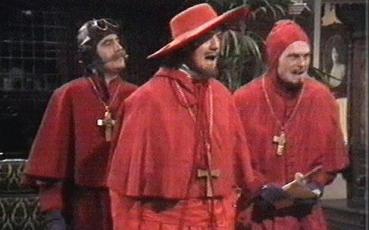
Can we just go back to saying there’s a lot of beliefs out there and people need to STFU and keep it to themselves now? Guess every one should expect the Republican Inquisition these days!!
So, here’s the group of folks that will be sitting with the First Lady. It will include a vacant seat.
A VACANT SEAT FOR THE VICTIMS OF GUN VIOLENCE
Last week, the President took a series of commonsense steps to help reduce gun violence in America and make our communities safer.
We leave one seat empty in the First Lady’s State of the Union Guest Box for the victims of gun violence who no longer have a voice – because they need the rest of us to speak for them. To tell their stories. To honor their memory. To support the Americans whose lives have been forever changed by the terrible ripple effect of gun violence – survivors who’ve had to learn to live with a disability, or without the love of their life. To remind every single one of our representatives that it’s their responsibility to do something about this.
I wonder what Clint Eastwood will say to the chair? Will he be Fox’s guest commentator on the topic?
Anyway, it’s a live blog and a historic night. It should be interesting. Let’s have at it!!!

 peej
peej Carissa
 bostonboomer
 dakinikat
 ecocatwoman
 jjlo
jjlo mablue2
 Mama Lopez
 peggysue22
 quixote
 skydancingguestblogger
 Mona (aka Wonk the Vote)





Recent Comments