
Monday Reads: Nasty Desperation = f(Election Math)
Posted: March 14, 2016 Filed under: 2016 elections, Afternoon Reads 60 Comments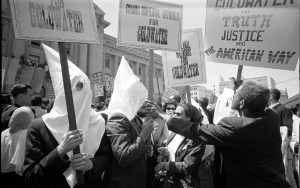 Good Afternoon!
We’re at the point in the primaries where intellectual dishonesty has taken on an ugly life. It’s probably because the paths to victory for any one that’s not Donald Trump or not Hillary Clinton are narrowing drastically. While some people hang on the overall results of one state. Savvy politics followers know it’s the math.
For Bernie, he has to win Big States by a BIG margin for the math to come close to working for him. This is highly unlikely.
As of today, Clinton has 1,231 delegates to Sanders’s 576 — a lead of 655. That means that Clinton has 51.7 percent of the 2,383 delegates she needs to become the Democratic Party’s nominee.
Subtract superdelegates — Clinton is dominating even among this group of elected officials and party luminaries — and she has 766 delegates to Sanders’s 551, a margin of 215. (Worth noting: That is a wider lead than the margin by which Clinton ever trailed then-Sen. Barack Obama in the long slog of the 2008 primary race.)
That lead may not seem momentous. After all, almost 3,000 delegates are yet to be allocated in the primaries and caucuses to come. The problem for Sanders is that Democrats allocate their delegates proportionally in every state — meaning that between now and when the process ends June 7, there is no state where Clinton will be shut out.
Winning, then, is not enough for Sanders. He has to win by a lot to make up any real ground.
Clinton has already done that. Take, for example, Alabama. She won there March 1 by 59 points and gained 38 more delegates than Sanders. Or Georgia on that same day, beating Sanders by 43 points and netting 55 delegates. Or the aforementioned Mississippi, where Clinton’s 66-point win translated to a net gain of 28 delegates.
Tomorrow is an extremely important day for the Republicans because Florida is a winner take all in a closed primary state. Hillary Clinton is likely to do well in the state since the state’s she’s lost have been due to Republican cross-over vote (likely sandbaggers) and independents (any one’s guess). However, there’s an all out fight to stop the Donald there and in Ohio because the magic number is within Trump’s reach.
Tuesday might be the most decisive day of the 2016 GOP campaign. Depending on the results, one or more of the remaining candidates might be forced to drop out. And Donald Trump might be unstoppable.
If Trump rolls to victories in Florida and Ohio — the first states on the calendar this year that award every single delegate to the statewide winner — his lead becomes all but insurmountable. Without home-state wins, Marco Rubio and John Kasich would have little cause to continue.
But if Rubio or Kasich can pick off either of the delegate-rich battlegrounds, the calculus of the race could be rewritten. Though neither underdog has a mathematical shot to overtake Trump before July’s convention, big wins Tuesday could breathe life into efforts to deny the billionaire the 1,237 delegates he needs to clinch the nomination — and make a contested convention in July a likely scenario.
Ted Cruz doesn’t appear poised to win any of the five states on the ballot, but he could corral delegates in the three other states on the calendar: Missouri, Illinois and North Carolina.
With 367 delegates at stake Tuesday — the second largest one-day haul of the campaign — here’s the state-by-state breakdown:
 You can follow the link to Politico for the numbers at stake.
There are some new polls out but one thing you have to remember is that a poll only captures a sample of a defined population at a particular point in time. I prefer to follow those folks that do election polling math with megadata which means their numbers are based on a “poll of polls”. Nate Silver of the NYT and Dr. Sam Wang of Princeton use this kind of methodology. But, here’s the latest capture of data from PPP for Dem Voters in tomorrow’s battleground states.
It does look like Hillary’s Southern Fire Wall strategy will continue to hold which again, makes the math for Bernie Sanders precipitously uphill to the point of impossible without a massive Super Delegate betrayal. Remember, when you don’t get Republicans voting in Democratic Primaries or Independents, you say huge Hillary Victories.
New Public Policy Polling surveys of the 5 states that will vote on Tuesday find that the Democratic contests in Illinois, Missouri, and Ohio are all toss ups, while Hillary Clinton maintains a significant advantage in Florida and North Carolina. The surveys were conducted on behalf of the VoteVets Action Fund.
Clinton leads Bernie Sanders just 46/41 in Ohio and 48/45 in Illinois, while narrowly trailing Sanders in Missouri 47/46. Ohio, Illinois, and Missouri are all open primary states and Sanders is benefiting from significant support from independent voters and a small swath of Republicans planning to vote in each state, putting him in position to potentially pull an upset sweep of the region on Tuesday night:
State Overall Democrats Independents Republicans OH Clinton 46-41 Clinton 55-37 Sanders 53-20 Sanders 56-21 IL Clinton 48-45 Clinton 59-37 Sanders 69-18 Sanders 62-23 MO Sanders 47-46 Clinton 56-39 Sanders 62-23 Sanders 66-23 Clinton is better positioned in the Southern states voting on Tuesday. She leads 57/32 in Florida, and 56/37 in North Carolina. She benefits in Florida from it being a closed primary state- her lead with Democrats is comparable to what it is in the three Midwestern states voting on Tuesday but that’s the entire electorate in the Sunshine State, putting her in a strong position. In North Carolina, Clinton has already accrued a huge lead during early voting. Among those who have already cast their ballots she leads 68/29, and the race only gets closer overall because her advantage is a tighter 50/40 spread among those planning to vote on Election Day.

A new Quinnipiac Poll has Trump winning Florida while being tied with Kasich in Ohio. This is yet another indication that Ohio is close so it may be that we won’t get Republicans boosting Bernie Sanders.
Because we’re coming down to the do or die portion of the election cycle, we’re beginning to see some really intellectually dishonest as well as down right nasty electioneering.
This particular one floors me. It comes from the Bernie Sanders Campaign. You can see Tweet with the pic of 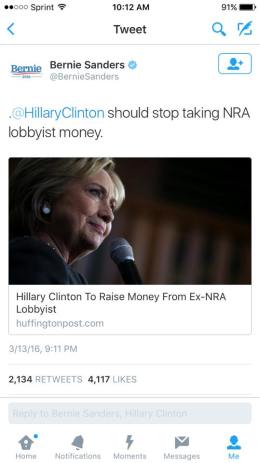 Hillary here basically aligning her with–of all groups–the NRA. It’s really pretty well known that many of Bernie’s wins in open primaries have come from the NRA actively phonebanking and throwing its Super Pac behind hind Sanders. (H/T to Kim Frederick) . The NRA actively tweets support of Bernie Sanders during debates. I’m not exactly sure who is going to believe this other than low information, last minute voters who are just wrapped up in the moment.
The NRA tweeted that Sanders was “spot-on” when, in a contentious exchange during CNN’s Democratic presidential debate in Flint, Michigan, he defended his position favoring protection of gun manufacturers from legal liability over the use of their products.
“Sen. Sanders was spot-on in his comments about gun manufacturer liability/PLCAA,” the organization wrote, linking to a story explaining the Protection of Lawful Commerce in Arms Act (PLCAA) and Sanders’ support for it.
Sanders also voted against the Brady Bill. He voted for letting guns on to trains. Here’s Bernie Sanders on all of his pro-gun votes if you really want the huge list showing why this tweet is so intellectually dishonest that every one in the campaign should be growing Pinocchio noses now.
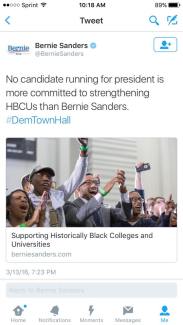 The other disturbing thing is the number of policies and issues that now seem to be popping up from the Sanders Campaign that were never around before. Sanders now has an AIDS policy. Plus, after a debate question, he now has a policy on HBCs. Hillary’s had policies on these things since the beginning. Is he responding to the criticism he’s a one issue candidate or is he just becoming a Pander Bear?
The worst one deals with something near and dear to me. Bernie says Hillary voted to enable the BP Oil Spill. It’s a complete, baldface lie. It’s also a new one.
“With Sanders scheduled to address a rally here [Tampa] tonight in this Gulf of Mexico coastal community, his campaign cited the 2006 vote on the gulf drilling bill. Sanders, then a member of the House, voted against the legislation. Clinton, then a senator, voted for the bill. After the bill passed, the oil giant BP obtained a permit to drill in the area where one of its rigs exploded in 2010, killing 11 workers and causing a catastrophic spill of of 130 million gallons of oil into the gulf.”
— From a news release issued by the Bernie Sanders campaign, March 10, 2016
The Bernie Sanders campaign, touting an event to be held in Tampa, sought to tie Hillary Clinton to the 2010 Deepwater Horizon oil spill by citing a vote she cast in 2006 …
In a floor statement at the time, Clinton said that “as part of a balanced energy policy, we need to expand domestic oil and gas production where it has local support and can do so in an environmentally sound way.” But she warned that she would oppose any effort by the House to expand offshore drilling to areas not permitted in the Senate bill.
So, just to be clear, Sanders, who was then in the House, voted against a different bill than the one Clinton voted for. The House never took up the Senate version. But after the GOP lost control of the Congress in the 2006 midterm elections, the Senate version was folded into a tax bill and passed during the lame-duck session. Sanders also voted against the omnibus bill; it passed the Senate in a voice vote.
Another Bernie baldface lie was that Hillary some how has responsibility for Rahm Emmanuel. This undoubtedly comes as a last minute effort to appeal to black voters in Chicago. The entire campaign still hasn’t quite figured out how to speak with black Americans.
If you want to critique why some black people are voting for Clinton afford us the same complexity and nuance you would critique any other group with. Maybe some voters in the black electorate are already aware of Clinton’s flaws but are willing to use them as leverage against her to make stronger campaign commitments, so that they can hold her feet to the fire if she were to be elected. Or maybe some voters might actually be selfish capitalists who are only interested in their bottom line. Literally, anything other than the “These foolish negroes don’t know what’s best for them” narrative that’s currently being pushed.
I guess the most frustrating thing about this whole ordeal is that black people have played a huge role in getting Bernie this far in the race to begin with. The Black Lives Matter movement is arguably the catalyst that allowed a candidate like Bernie to emerge in the democratic party. Black Twitter and black protestors have created the atmosphere where candidates are discussing black lives, police brutality and systematic racism during national presidential debates. However, even our ‘progressive’ and ‘liberal’ brethren still show flashes of smug superiority that makes many people want to roll their eyes so far into the back of their heads they can see their own thoughts.

The final thing that just frosts my cupcakes is how Bernie thinks that Donald Trump needs to quit inciting violence because he’s responsible for his voters but Bernie isn’t responsible for his out of control supporters. Bernie is just as much of a “rage peddler” as the Donald.
Bernie Sanders may not be offering to pay the legal bills of his supporters who punch protesters (perhaps that has something to do with his massive credit card debt), but he’s stoking the fire of anger just the same. Media types like to describe this as “tapping into the anger” of people mad at “the system” for various reasons, but this has gone far beyond tapping and turned into inflaming. Rather than channeling a destructive emotion like anger and channeling it to constructive change, both Trump and Sanders have been telling their supporters that if anything, they should be even angrier (and thus, more destructive).
Rage-peddling has consequences. Just yesterday, Trump’s supporters clashedwith protesters in skirmishes that left some injured at a Donald Trump event in Chicago – which The Donald ended up canceling. On Friday, a Trump supporter punched a peaceful protester in face as the protester was leaving. And now Bernie Sanders’ supporters are sharing the following on social media, while having a good laugh.
You can follow that link to a well thought out essay with lots of examples on on the out right misogyny that Bernie incites. Meanwhile, Trump considers his rallies to be “lovefests”. The Republicans may have toned their last debate down some, but I doubt that ambiance will hold. Rubio is undoubtedly sunk. He’s also whining.
Marco Rubio said Monday that his presidential run would be over if his campaign manager forcibly grabbed a reporter, as Donald Trump’s top aide has been accused of doing to a Breitbart reporter.
The Florida senator told conservative radio host Mike Gallagher that if Corey Lewandowski really did grab Michelle Fields, the Breitbart reporter who resigned on Sunday, “it’s one more example of what’s happening here at these events.”
“If my campaign manager had done that, my campaign would be over. He would have had to resign, and my campaign may be over. I would have had to quit that very day,” Rubio said.
So, as you can see, there are both quiet and loud and obnoxious acts of desperation. I for one am somewhat ready to have the next few weeks over. I hope the stars are aligned and the voters do the right thing. Then, we can prepare for the ugliness of the General because there will be blood.
We’ll be live blogging the returns tomorrow. Join us!!!
Each of the historical pictures I’ve used today come from the event of a presidential nomination convention. Can you name the year and the two nominated candidates?
What’s on your reading and blogging list today?
Yes It’s a Live Blog: CNN Democratic Town Hall from Ohio State University
Posted: March 13, 2016 Filed under: 2016 elections | Tags: Bernie Sanders, Democratic race for President 2016, Florida, Hillary Clinton, Missouri, Ohio Primaries 137 Comments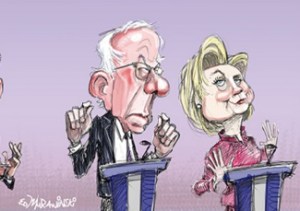
OY!! Here we go again! There are some big races coming up on Tuesday and CNN has another Town Hall scheduled tonight for the two Democratic candidates for President. I’m going to sit through another one of these things. Please don’t leave me alone to it!!!
Just two days before key votes in Ohio and Florida, the final two Democratic candidates will appear in a CNN Town Hall tonight. Vermont Senator Bernie Sanders is hoping for a strong showing in Ohio, where he currently trails former Secretary of State Hillary Clinton by a fair margin.
The town hall is being co-hosted by both CNN and TV One. CNN’s Jake Tapper and TV One’s Roland Martin will be moderating the event and inviting questions from the attendees.
The broadcast will air on CNN from 8 p.m. ET – 10 p.m. ET from Ohio State University.
Florida and Ohio vote on Tuesday which are two big states. Thankfully, Florida is a closed state. Ohio has a semi-open primary. This means:
Under Ohio election law, you declare your political party affiliation by requesting the ballot of a political party in a partisan primary election.
According to Nate Silver’s Poll of Polls, Florida has a 99% chance of going to Hillary. She has a 98% chance in Ohio. Remember, voting by switching affiliations for strategy purposes is important. As we’ve seen, the NRA actively encourages its voters to cross party if necessary to vote against Hillary and for Bernie. Bernie’s voting base was 7% Republican in Michigan and he nabbed a lot of unaffiliated while losing Dems by 12%. It will be interesting to see what happens there.
Here is the list of RCP recent polls for further details of each data point. The most recent poll of Missouri has Hillary up but Missouri has not be polled a lot so one data point should not be considered the be all and end all of statistics judging the state of a race.
At last this is a town hall because I could just cut and paste any townhall or debate from any where and come up with the answers to tonight’s townhall form Sanders. Even with fact checking and corrections and complete horror about the internalized sexism and racism, it still the same stuff. I’m not looking for anything but the repeat of 70s class frame. I’ll probably faint if I hear any wee bit of modern socialist economic theory or intersectionality of sexism, racism and income differences.
I’m assuming that Hillary will have to explain when she tried to categorize the Reagan response to the AIDS crisis at Nancy Reagan’s funeral. They eventually responded but only after a lot of folks died and a lot of opportunity was wasted. Nancy did do behind the scenes work but only after Rock Hudson and Roy Cohen were seriously ill and dying. Before then, it didn’t seem to even register. But, here’s the crux of Hillary’s response in a much more appropriate format. It’s not a soundbite. It’s a short essay. It recognizes that things that went on prior to Nancy’s change of mind.
Yesterday, at Nancy Reagan’s funeral, I said something inaccurate when speaking about the Reagans’ record on HIV and AIDS. Since then, I’ve heard from countless people who were devastated by the loss of friends and loved ones, and hurt and disappointed by what I said. As someone who has also lost friends and loved ones to AIDS, I understand why. I made a mistake, plain and simple.
I want to use this opportunity to talk not only about where we’ve come from, but where we must go in the fight against HIV and AIDS.
To be clear, the Reagans did not start a national conversation about HIV and AIDS. That distinction belongs to generations of brave lesbian, gay, bisexual, and transgender people, along with straight allies, who started not just a conversation but a movement that continues to this day.
The AIDS crisis in America began as a quiet, deadly epidemic. Because of discrimination and disregard, it remained that way for far too long. When many in positions of power turned a blind eye, it was groups like ACT UP, Gay Men’s Health Crisis and others that came forward to shatter the silence — because as they reminded us again and again, Silence = Death. They organized and marched, held die-ins on the steps of city halls and vigils in the streets. They fought alongside a few courageous voices in Washington, like U.S. Representative Henry Waxman, who spoke out from the floor of Congress.
We also will have to continue this crazy right wing induced meme that Hillary cannot be trusted. Bernie’s been fact checked so many times you’d think people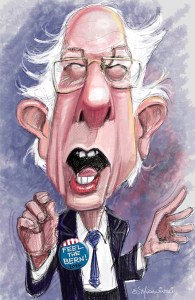 would get the idea that what he says is way far-fetched and not particularly trustworthy. Here’s the latest fact check on his tirades on job losses and NAFTA which are way exaggerated. Both Hillary and Bernie are way more honest than any of the Republicans. But why is it only Hillary has the trust issue?
Bernie Sanders wasn’t asked about his honesty or trustworthiness on Tuesday night. Instead, after that question to Clinton, he was asked, “Senator Sanders, you have demanded that Secretary Clinton release the transcripts of her paid Wall Street speeches. Why is this important? Do you have reason to believe that she says one thing in private and another in public?”
Did somebody say Wall Street? The good senator, of course, perked up immediately and happily hit the softball question out of the park, with all the now-familiar notes of righteous indignation.
No other candidate for president has been asked in debates about his perceived honesty and trustworthiness. Maybe it’s because other candidates are presumed to be honest and trustworthy, or maybe there’s a presumption voters don’t care about this trait in others.
Don’t play the woman card, right? We are sick and tired of hearing about double standards. People are not going to vote for Clinton just because she is a woman. If she loses, it’s because nobody trusts her – just look at the polls.
If you actually look at the Washington Post poll referenced on Tuesday night, it’s worth noting that only 27 percent of people found Republican front-runner Donald Trump honest and trustworthy.
And Sanders? Well, he wasn’t included in the poll questions about honesty and trustworthiness. Seriously. The honesty and trustworthiness questions were only asked about Clinton, Trump, Ted Cruz and Marco Rubio.
Apparently we are to assume that Sanders is honest and trustworthy, or that he is unlikely to be the nominee – based, you know, on the polls.
Pollsters are either convinced by their own flawed polling that Clinton is the presumptive nominee, so they don’t even bother polling Sanders’ degree of trustworthiness, or they don’t believe Sanders’ degree of trustworthiness is relevant.
But only polling Clinton on whether she is “honest and trustworthy” and then using the answer against her in a debate against Sanders reinforces the myth that she is less trustworthy than him, and it surely helps him win one “stunning” victory after another.
I just mostly judge Bernie by the fact that everything he promises is not deliverable except with a vast revolutionary army. You continue to read that he’s not really a  credible candidate but how does that not translate into untrustworthy?
But as appealing as Sanders may be, he is not credible as president. Elizabeth Warren would have been a credible candidate, but Sanders isn’t. The campaign he has been waging is a symbolic one. For example, the proposals he has made for free college tuition and free, single-payer health care suggest what might be done if the United States underwent radical change. Those ideas would be excellent grist for a seminar. But they are not the proposals of a candidate who is serious about getting things done as president—or one who is serious about getting elected in the country we actually live in.
I don’t find him appealing at all now. He reminds me of the cranky uncle no one wants to invite for holidays because he lectures them, finger wags, and grouses each year on the same damn things. The only difference between Sanders and the generic cranky uncle is that Sanders should’ve been able to do something about even a sliver of some of it by now. Does this have something to do with it? He’s missed a lot recently which is partially due to his campaign.
From Jan 2007 to Mar 2016, Sanders missed 136 of 2,870 roll call votes, which is 4.7%. This is much worse than the median of 1.7% among the lifetime records of senators currently serving. The chart below reports missed votes over time.
You can look at the analysis on Leadership at the same link (GovTrack) and find out some other things too. For example, his policy emphasis actually appears to be Armed Forces and National Security. It’s almost twice as important as his second area which is health.
But, Rubio actually isn’t the one who missed the most votes.
Unfortunately for Mr. Trump, that data point is a bit out-of-date. So far this year, Marco Rubio’s missed 90 percent of votes — a large proportion. But it’s actually the best record among the senators still running for president. The worst? Bernie Sanders.
 But what has really gotten me recently is that not only are a good deal of his supporters nasty, Bernie keeps getting nastier.
Tuesday — a day when five states hold primaries — should give a better indication of whether Sander’s tough talk is paying off.
One of those contests is in Illinois, and Sanders isn’t holding back as he campaigns here. In Chicago on Friday, Sanders even took aim at Clinton for her close association with Mayor Rahm Emanuel, whose approval ratings are in the tank, particularly among black Chicagoans.
“I want to thank Rahm Emanuel for not endorsing me. I don’t want his endorsement!” Sanders screamed to the delight of a crowd estimated at 9,000 people. “I don’t want the endorsement of a mayor who is shutting down school after school and firing teachers.”
To drive home his point, Sanders held a news conference the next day devoted entirely to Emanuel, telling reporters that if he were Clinton, he would have refused the mayor’s support.
So, I have to admit that I expect Bernie to be nasty and I expect that Hillary will continue to be critizied and asked to apologize for everything her husband ever did, everything Barrack Obama ever did, ad infintum all while we hear how’s she’s an untrustworthy person.
The one thing I’d like to hear some one ask him about is this. He’s not really been an active pusher of any bills through congress. But, he really pushed on this one. How is this acceptable human behavior?
Sanders voted to dump Vermont’s nuclear waste in a majority Latino community in Sierra Blanca, Texas
In 1998, the House of Representatives approved a compact struck between Texas, Vermont and Maine that would allow Vermont and Maine to dump low-level nuclear waste at a designated site in Sierra Blanca, Texas. Sanders, at the time representing Vermont in the House, cosponsored the bill and actively ushered it through Congress.
Located about 16 miles from the Mexican border, Sierra Blanca’s population is predominantly of Mexican ancestry. At the time, the community was about two-thirds Latino, and its residents had an average income of $8,000, according to the an article in the Bangor Daily News.
The low-level nuclear waste would include “items such as scrap metal and worker’s gloves… as well as medical gloves used in radiation treatments at hospitals,” according to the Bangor Daily News. Clinton, then the First Lady, did not have a vote on the matter.
I can’t imagine any decent human being doing that to poor, disenfranchised people.
So, let’s see how it goes tonight. I hope she finishes him off on Tuesday. I can’t take any more of these where the nasty one isn’t Donald Trump.
My featured artist tonight is Ed Murawinski.
Grab your popcorn and join us!!!!
Friday Reads: Republican Debate proves Adulting is Hard
Posted: March 11, 2016 Filed under: 2016 elections, Hillary Clinton 73 CommentsGood Afternoon!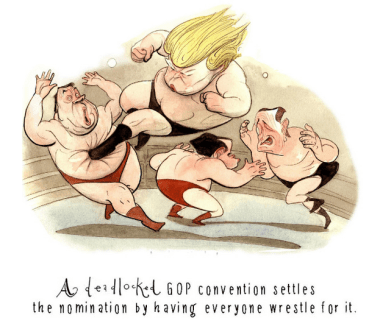
Sometimes the way things work in this country really confuses me. Do you realize that our most well paid people either play with balls, play dress up and make believe, rely on their parents’ money, or gamble for a living? No wonder so many of them have such a difficult time adulting. What really confuses me is when they convince themselves they’re grown up enough to do something substantive like lead the country or fund some idiot to run the country the way they desire. The Republican debate last night basically highlighted a group of toddlers trying to act all grown up. It didn’t work for me.
Trump must have decided that he needed to prove he could adult last night. It didn’t really lead to any more substantive talk on actionable policy even though CNN pundits tried to convince each other that it did. Every thing was still grandiose abstractions. It did allow little Marco Rubio to apologize for his 7th grade locker room antics last time. Additionally, we got a peek at what an absolutely fanatical and slimy a person we have in Ted Cruz.
The upcoming problem is that the General Election is not the Republican primary. How can Hillary continue to face petulant toddlers and the pundit parents that continue to enable them?
At last night’s debate, Donald Trump lorded it over his rivals with supreme confidence. Gone was narcissistic, rambling, insult-spraying Trump. In his place stood calm, unifying, presidential Trump. The Donald noted with satisfaction that his foes were mostly laying off of him. “I can’t believe how civil it’s been up here,” he said, by which he really meant, “all you losers have surrendered to me, and I’m loving every minute of it.” And Trump may be right: it’s possible that by next week, he will be on a path to winning the nomination outright.
But if there is anything last night’s debate really revealed, it’s that Trump may not have any idea what is about to hit him soon enough. If Trump does become the nominee, he will run into a buzz saw of reality otherwise known as the general election, and he may not know how badly mangled he’ll get.
Last night’s debate is being widely described as a shift in tone: rather than lob schoolyard insults at each other, the GOP candidates had a real policy debate. And that’s true. But in the process, the debate really revealed the limitationsto the scrutiny Trump has faced on policy in the context of the GOP primaries — and that foreshadows, by contrast, just how brutal the scrutiny of Trump on policy will be in the general election, once those limitations are removed.
Consider a few of the main attacks that Trump had to endure last night. When Trump vaguely promised to keep entitlements solvent and to cut “waste, fraud and abuse,” Marco Rubio made a spirited case against Trump’s budgetary hocus pocus, repeatedly saying the numbers “don’t add up.” But Rubio was constrained from pointing out a key reason Trump’s numbers don’t add up — Trump’s tax plan would deliver a huge, deficit-busting tax cut for the rich — because Rubio’s plan does the same thing. Democrats speaking to a general election audience will be freer to attack Trump on this front.
 Republicans continue to offer up policy that has never worked. What confuses me is how their voters don’t see that Trump’s tax plan is the same old, same old that all Republicans offer up. Are they all so wrapped up watching the shiny objects neatly wrapped up in ribbons of xenophobia, racism, misogyny and bigotry towards the GLBT community?
Here’s a nice little mini-scenario from my literally and figuratively sinking state of Louisiana. Business subsidies and cuts in taxes to the rich have gutted our ability to provide basic services and come any where near the ability to balance the budget. We just even elected a blue dog Dem as governor. However, the usual suspects have decided the way to try to close the gap is by sales tax increases on everything including food.
The poor in this state are paying for taxcuts to the rich. That’s the only Republican policy any of them have besides distracting their base with abortion controls here. It’s the local version of shiny object. Look ! We’re robbing you blind but we’ll restrict abortions even more to make you feel all holier than thou! This is a lot of the same crap that occurred on that stage last night. Government is the problem so you’re never going to get that bridge fixed, but hey, no trust fund baby will experience the evil death tax and look over there! We’ll build a wall because Mexican Rapists!!!
Louisianans will pay more and get back less under a compromise struck Wednesday over the state’s enormous budget gap.
The deal raises sales taxes by 25 percent — from four cents on the dollar to five — and applies the higher rate to a number of transactions that had previously been exempt from sales taxes.
It also falls $830 million short of fixing the state’s problems, making further cuts likely to services that have already been gutted.
Because the sales tax applies to consumption rather than income, the hike Louisiana lawmakers agreed to will be regressive: While people in the top 20 percent of the income distribution will pay 41 percent of the total cost of the tax hike according to the Louisiana Budget Project, the sales tax mechanism takes a bigger bite out of a poor family’s income than a rich one’s. Politicians are making poor people shoulder a load caused primarily by ex-Gov. Bobby Jindal’s (R) tax breaks for the rich.
The broad sales tax hike will raise $1.1 billion against the nearly $3 billion shortfall over the next 16 months. Lawmakers scrounged another $81 million from alcohol and cigarette tax hikes. These, too, are disproportionately targeted to low-income consumers who are more likely to smoke than wealthier people.
That’s not to say the deal was a complete rout for the underclass. Businesses lost some sales tax exemptions, and Democrats thwarted a campaign to raise the sales tax rate by twice as much.
The sales tax bump is temporary, scheduled to revert at the end of fiscal year 2018 according to the language of the bill. But with more red ink still on Louisiana’s horizon, lawmakers may be tempted to prolong the pain for shoppers in their state.
A slate of smaller business and sales tax tweaks will raise another $35 million or so. Much of the revenue raised by the combination of bills is listed as “uncertain” according to Associated Press. But state leaders expect these yet-unwritten tax provisions, including a sales tax for online purchases, to raise hundreds of millions more dollars.
The package still falls $30 million short of what Louisiana needs to fund all state services from now until the end of June, and $800 million shy of what’s needed for fiscal year 2017. Lawmakers faced a combined $3 billion gap over those two periods when Gov. John Bel Edwards (D) called them into the special session that closed about three quarters of the total hole.
Key state services are going to disappear into that remaining quarter of the budget hole. The $30 million shortfall this year will force cuts to agencies like the Department of Chilldren and Family Services, which was already at about half strength after massive cuts late in Jindal’s term.
 How dumb can people that vote Republican continue to be? That’s what I keep asking over and over. Most Americans can see things slipping away. Why are they looking for love in all the wrong places?
Ted Cruz has turned into the darling of the National Review and the Luntz Focus Group. If there ever was an example of some one who can’t adult, it’s Ted Cruz. Do not follow this link unless you want to wind up at the Blaze where belief in the bizarre is a full time, ongoing concern.
Sen. Ted Cruz (R-Texas) earned a 100-percent score from conservatives in Frank Luntz’s focus group when he talked about eliminating bureaucrats in Washington who are “killing jobs” at Thursday night’s GOP debate.
No Republican seems to understand what it takes to actually run a country or create an environment where there are jobs these days. They might as well stand up and say that little green men from mars taking money from you create jobs because that’s just about as a real. Like I said, the National Review just endorsed him. That’s proof they believe in little green men from mars creating jobs. I guess I shouldn’t be surprised given that most of them still think the math-disabled Stephen Moore is an economist.
Let’s not forget. Ted Cruz is an end timer. He’s as besotted with as much end the world religious nonsense as the wackiest ayatollah in Iran. Every child likes a good fairy tale. But at some point and especially that point where some one wants to be the leader of the free world, you have to give up childish things.
Rafael Cruz is a pastor with Purifying Fire International Ministry, although in January 2014, as Ted Cruz was preparing his presidential swing, Rafael Cruz scrapped the group’s website after various blogs began identifying the ministry as rooted in “a radical Christian ideology known as Dominionism or Christian Reconstructionism.”
Dominionism calls on anointed Christian leaders to take over government to make the laws of the nation in accordance with Biblical laws. Rafael Cruz, at the Pastor Larry Huch’s New Beginnings mega-church in Bedford Texas, outside Dallas, on Aug. 26, 2012, in a Dominionist sermon proclaimed his son, Ted Cruz, to be the “anointed one,” a Dominionist Messiah who would bring God’s law to reign.
At a Dominionist pastor’s meeting held at the Marriott Hotel in Des Moines, Iowa, on July 19 and 20, 2013, the following “anointing prayer” was read over.
So to pull all this logic together, God anoints priests to work in the church directly and kings to go out into the marketplace to conquer, plunder, and bring back the spoils to the church. The reason governmental regulation has to disappear from the marketplace is to make it completely available to the plunder of Christian “kings” who will accomplish the “end time transfer of wealth.”
Then “God’s bankers” will usher in the “coming of the messiah.”
The government is being shut down so that God’s bankers can bring Jesus back. In an editorial published in the Washington Post on Feb. 4, on the heels of Cruz’s victory in the Iowa GOP primary, John Fea of the Religion News Service published an op-ed piece noting the frequent references Ted Cruz makes in stump speeches to his father “the traveling evangelist” Rafael Cruz.
“During a 2012 sermon at the New Beginnings Church in Bedford, Texas, Rafael Cruz described his son’s political campaign as a direct fulfillment of biblical prophecy,” Fea wrote. “The elder Cruz told the congregation God would anoint Christian ‘kings’ to preside over an ‘end-time transfer of wealth’ from the wicked to the righteous. After this sermon, Larry Huch, the pastor of New Beginnings, claimed Cruz’s recent election to the U.S. Senate was a sign he was one of these kings.”
 Please let all that sink in as we consider if Trump–whose bullying behavior and racism has attracted the endorsement of the KKK–is really the worst alternative that the Republicans have emanated from they’re “tell them anything as long as we get our tax cuts” philosophy to life. The Republicans haven’t been too upset by the sight of a young black woman being assaulted or a black man being cold cocked. But, damn, assault one of their own and it’s on!!!
Brietbart tries to square the circle about the apparent assault on their reporter, Michelle Fields, allegedly by Trump campaign manager Corey Lewandowski.
Their gist – it may have been a security guy on the grassy knoll, not Lewandowski [Ben Terris, WaPo eyewitness, stands firm.]:
The Scrum: Video Emerges to Suggest WaPo Reporter Ben Terris Misidentifies Lewandowski in Fields Incident
…
Contrary to what Donald Trump said Thursday evening after the GOP debate, the incident certainly happened. However, the person who made contact with Fields was likely not Trump campaign manager Corey Lewandowski.
As Trump campaign spokesperson Katrina Pierson said Thursday on the Fox Business Network, “someone probably did grab her,” i.e. Fields, though Pierson claimed it could not have been Lewandowski.
Audio of the incident, published on Politico, shows Fields asking Terris if the individual who pulled her left arm was, in fact, “Corey.” Terris says it was — an assertion he later repeated in print: “I watched as a man with short-cropped hair and a suit grabbed her arm and yanked her out of the way. He was Corey Lewandowski, Trump’s 41-year-old campaign manager.”
However, Lewandowski was not the only “man with short-cropped hair and a suit” walking near Trump. And he was walking on the opposite side of Trump from Fields, and Terris.
More video is likely to surface [Here is MSNBC – see UPDATE]:
People regularly get assaulted at Trump Rallies. Have you ever heard of that kind of thing before?
A 78-year-old white man punched a black protester in the face at a Donald Trump rally and was charged with assault, media said Thursday, in chaotic scenes on the presidential campaign trail.
John McGraw — who later said that next time “we might have to kill him” — was also charged with battery and disorderly conduct after the event Wednesday night in North Carolina, the Cumberland County sheriff’s office told the local TV station WRAL.
The incident was condemned by Bernie Sanders, who is vying with Hillary Clinton for the Democratic nomination for the White House.
“No one in America should ever fear for their safety at a political rally. This ugly incident confirms that the politics of division has no place in our country. Mr. Trump should take responsibility for addressing his supporters’ violent actions,” Sanders said.
Multiple videos of the assault show McGraw abruptly punching the young black man in the face as he was walking up a stairway with other protesters being escorted out by police, amid cries of “USA! USA!”
McGraw was not arrested until Thursday morning, as video of the assault gained widespread attention. He was released after posting a $2,500 bond, CNN reported.
So, why do all these Republicans find it so difficult to adult? Are we truly watching them fall apart? Can we get enough turnout by the rest of us to end this now? Is this the Republicans “McGovern” moment? Is it a repeat of the Goldwater campaign? Nate Silver discusses this election and “The Party Decides” which is a 2008 book by the political scientists Marty Cohen, David Karol, Hans Noel and John Zaller.
Nonetheless, truly disastrous nominations like McGovern’s have been rare. Instead, parties have usually nominated candidates who, as the book puts it, are:
- “Credible and at least reasonably electable”;
- “Representatives of their partisan traditions.”
You might describe these two dimensions (as we sometimes have) as “electability” and “ideological fit.” The goal for a party is to find a candidate who scores highly along both axes. George W. Bush in 2000, for example, was acceptable to all major factions of the GOP, but he also began the race as a “compassionate conservative” with a highly favorable image among general election voters. It’s no surprise that Bush won his nomination easily.
At other times, the party must contemplate a trade-off between these goals. Sometimes, it will choose a candidate who breaks with party orthodoxy in important ways, but who has a lot of crossover appeal to general election voters. Bill Clinton in 1992 and John McCain in 2008 are good examples. Or, it may go for broke with an ideologically “pure” candidate whose electability is unproven. Sometimes, the gamble pays off, as it did for Republicans with Ronald Reagan in 1980, but there’s also the risk of winding up with the next Barry Goldwater. Note that Bernie Sanders and Ted Cruz, if chosen, would arguably8 fit into the category of ideologically pure but electorally dubious nominees.
There were no good candidates put forth by the Republicans this year. We’re actually getting to the point where we’re down to perhaps the worst two and the party is getting behind the crazy person over the malignant narcissist. Actually more telling is that Carly Fiorina got behind Ted Cruz and Ben Carson is now behind Trump. What we found out about them pretty much gives us an indication of why they went after who they did. Fiorina’s crazy attachment to all the untrue things about Planned Parenthood showed that she was mean and completely irrational. Carson came off as an idiot savant. He was at least successful at something and much well thought of albeit I’m still not sure exactly how some one that spacey could do complex surgery.
Then, there’s Bernie Sanders.
It seems obvious to me that there’s only one person that gives the country a chance of a future in the race. Trump will sell us to the highest bidder. Cruz will blow us up to get to the end times. Sanders will ignore everything but his own 70s paradigm of the world and we’ll be lucky if anything gets done at all any where but in his mind.
The choice has never seemed more clear. I really hope Hillary’s life time experience of being denigrated and persecuted serves her well We’re going to have to make a huge wall around her because it can only get worse as we careen towards the General. We need to be adults backing the only adult candidate in the room.
These beautiful caricatures/political cartoons are drawn by Steve Brodner who also does wonderful commentary. I’m a yugggge fan. Visit his page for more wonderful drawings.
What’s on your reading and blogging list today?
Live Blog: Live Blog Republican Debate Hell Realm
Posted: March 10, 2016 Filed under: 2016 elections, Live, Live Blog, right wing hate grouups | Tags: 2016, Democratic Debate from Florida, live blog, Republican 128 Comments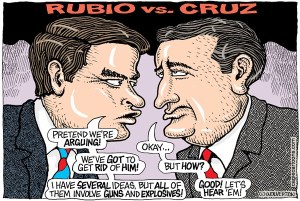 Good Evening!
Well, if last night’s Democratic Debate wasn’t enough over kill for you, tonight’s Republican debate should do you in.
The debate is hosted by CNN and takes place in the battleground state of Florida which is basically Rubio’s Last Stand or (hmmm) the Rubiocon. Did that come off more like a convention for dimbulbs or as I intended?
Donald Trump, Ted Cruz, John Kasich and Marco Rubio will face off at CNN’s presidential debate on Thursday night in a state that could make one of the four men virtually unstoppable — and spell doom for another.
Thursday’s debate here comes just five days ahead of the next week’s “Super Tuesday 3,” when there are more than 350 delegates up for grabs, including in winner-take-all contests in Florida and Ohio.
Both Trump and Rubio are predicting that they will be victorious here in the Sunshine State, and fully aware of how much is riding on Florida. For Trump, a win here would fuel his growing momentum and further grow his delegate lead; for Rubio, losing his home state could be the death knell for his campaign.
Cruz and Kasich will also take the debate stage at a crucial moment in their campaigns. Cruz is aggressively trying to convince the Republican Party to coalesce around him, arguing he is the only candidate other than Trump capable of reaching 1,237 delegates; Kasich, who still has not won a single state, is eying his home state of Ohio with fresh optimism after a new poll this week showed him ahead of Rubio nationally. A Fox News poll released Wednesday showed Kasich leading Trump in Ohio, but the front-runner topping Rubio in Florida.
How will Little Marcio and Lying Ted stand up against Big Donald? Also, is this just an opportunity for Kasich to apply for the VP slot?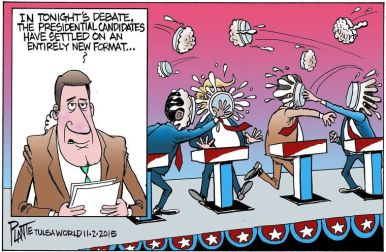
Donald Trump is leading two of his Republican presidential rivals in their home states,topping Sen. Marco Rubio in Florida and Gov. John Kasich in Ohio, new CNN/ORC polls show.
Hillary Clinton, meanwhile, is far ahead of Vermont Sen. Bernie Sanders in both states.
In Ohio, Trump holds 41% to Kasich’s 35%, with Texas Sen. Ted Cruz in third at 15% and Rubio in fourth with 7%.
And in Florida, Trump holds 40% to Rubio’s 24%, with Cruz at 19% and Kasich at 5%.
 This debate could be ugly. Here’s our check off list per Gizmo.
The nuanced language and posture of each candidate.
Each candidate’s stated position on national security.
Dangerous rhetorical slip ups that could tilt the public’s perception.
Cruz’s aggressiveness towards Trump.
Rubio’s decision to dial back his negative attacks on Trump.
Underhanded compliments.
Zest for life from any of the four potential nominees.
Illness resulting from a grueling campaign schedule.
Statements about immigration.
The amount of perspiration coming from each candidate.
Hillary’s tweets during the debate.
Every time Cruz looks directly at the camera.
Zealous fans of establishment candidates in the audience.
Oligarchy.
Discussion of gun deaths in America and around the world.
International trade agreements.
Any direct attacks on Bernie rather than Hillary.
Cautious wording about deportation of undocumented immigrants.
Killer apps.
Interest in anything besides yelling.
Loud cheers for Kasich on moderate policy positions.
Love.
Every time Ted Cruz, a sitting Senator, says the word “establishment”
Racist stuff and all that.
Okay, that wasn’t serious. Well, kinda sorta. Let’s try that again.

Here’s the information on how to watch the Zodiac Killer Senator Ted Cruz and the others debate. If the others are still alive after Ted’s Dominionist Demons get to them.
Tonight’s Republican debate will air on CNN. But don’t worry: If you don’t have cable, you’ll still be able to tune in — an online live stream will be free and available to all at CNN.com. The network has said the event will kick off at 8:30 pm Eastern in Miami, Florida.
This debate is the final one before a crucial day of voting in the GOP race on Tuesday, March 15. Five states — Florida, Ohio, Illinois, North Carolina, and Missouri — will go to the polls that day, and about 15 percent of overall Republican delegates will be up for grabs. Even more importantly, both Florida and Ohio allot all their delegates to whichever candidate comes in first, so Donald Trump has a big opportunity to expand his already sizable delegate lead.
Trump also has the chance to knock Marco Rubio and John Kasich out of the race, which he’d likely do if he beats each man in his home state. And he could well pull it off. Polls show Trump up big in Florida and neck and neck with Kasich in Ohio.Rubio’s campaign appears to be in free fall lately — his performance in Tuesday’s elections was simply disastrous, and there’s been increasing speculation that he’ll drop out of the race soon. This debate is likely his last chance to turn his prospects around.
Do you think I’m tired of these freaking things yet?
So, here’s some good stuff to cheer you up about last night’s miserable excuse for a panel of human beings/journos asking questions of  Democratic Presidential Candidates.
what the hell did we just watch?!
Dear Univision: Show Us On The Doll Where Hillary And Bernie Hurt You“Interrumpiendo La Vaca MUUUUUUUUUU!!!!”
It wasn’t just the questions themselves, either. Remember when Evan made that hilarious interrupting cow en Español joke yesterday? Yeah, so did the Univision debate moderators, apparently, because they spent the entire night doing it, repeatedly cutting off both candidates halfway through (not unreasonably long!) responses. Any time Bernie and Hillary started to go back and forth on a subject — y’know, to have a fucking debate — all three moderators brusquely attempted to force them to move on. At two separate points, Ramos told Bernie “You have 30 seconds,” then tried to cut him off before he hit 15. Even Hillary looked like she wanted to say “For fuck’s sake, let the man speak.”It wasn’t just that they were interrupted, either, it was how relentlessly dickish the moderators were about it. Four separate times (three for Bernie, one for Hillary), the candidates had clearly finished speaking, but the moderators made it a point to snap “YOUR TIME IS UP” anyway.So That Was The Most Badly Moderated Debate We’ll Ever See, Right?
God, we hope so.
Please make these debates stop. I’m not having fun any more. Please let me out of this deep well. And stop giving me lotion. I don’t want any more lotion. I just want to go one night without watching a dang debate. Here is my recap of the last one. Won’t that suffice?
If not, here is the Wednesday night Univision/Washington Post debate summarized for those of you who were not unexpectedly trapped when helping a seemingly friendly stranger move a large unwieldy piece of furniture into a van and forced to watch these debates FOREVER PLEASE HAVE MERCY SEND SNACKS AT LEAST.
Clinton: Thank you for having me. I’ve been looking forward to this debate.
Maria Elena Salinas: Secretary Clinton, why don’t people trust you?
Clinton: Maybe it’s because I just said that I was looking forward to this debate, which is either a bald-faced lie or a sign that I am some kind of a sociopath. We had one of these three days ago. Why would we have another one now? Did you just want to torment me by putting me in another situation where a man makes unrealistic promises and waves his arms while I have to smile and look unruffled, all the while living with the knowledge that somehow he was what the people of Michigan wanted, not me? What does he have that I do not have? Does this answer your question?
Salinas: Maybe?
Salinas: Secretary Clinton, why don’t people like you?
Clinton: HOW AM I SUPPOSED TO ANSWER THAT
SERIOUSLY
Ladies and Gentlemen! Start your popcorn poppers!!!
Live Blog: Returns of the Night
Posted: March 8, 2016 Filed under: 2016 elections, Live, Live Blog | Tags: Clinton, Hawaii, Idaho, Michigan primaries, Mississippi, Trump 195 Comments
Good Evening!
Tonight we’re waiting for the returns from the state of Michigan even though there are three other states voting. Hawaii, Idaho, and Mississippi are also voting although several of these are Republican voting events only.
The biggest prize is Michigan where the front-runners – Donald Trump for the Republicans and Hillary Clinton for the Democrats – will seek to consolidate leads over their respective rivals.
Both parties are also holding primaries in Mississippi on Tuesday.
In addition, the Republicans are voting in Idaho and Hawaii.
Billionaire businessman Mr Trump is well ahead in the all-important delegate count, but a poor debate performance and some recent losses to Texas Senator Ted Cruz have raised questions about the solidity of his lead.

It’s an important day for Republicans, in which 6 percent of the party’s delegates are at stake. And by the time the dust has settled tonight or (more likely) tomorrow, about 43 percent of the party’s delegates will be allotted overall.
But really, today is a prelude to the far more consequential contests taking place in one week. That’s because today’s delegates are allocated mostly proportionally, making it tough for any candidate to pick up a huge lead. Next week, though, Florida and Ohio will vote winner-take-all, and the outcomes there could have major implications for the future of the race, since Donald Trump has led recent polls of both states. If he wins those two, he could amass a delegate lead that will be very difficult for any of his rivals to surmount.
So expect Republicans to interpret tonight’s results mainly in terms of what they might mean for next week. Does Trump look mortal, as he did on Saturday, or will he rebound with a dominant performance? Is Marco Rubio truly in free fall, as some recent polls have indicated? Is the anti-Trump vote consolidating around Ted Cruz, or will it remain split?
As for Democrats, Hillary Clinton is up big in polls of both states voting today. A win in Mississippi tonight wouldn’t be a surprise, since she’s romped in the South so far, but it would let her continue to pad her lead in pledged delegates, which is already sizable. But if Sanders gets blown out in Michigan, that may indicate that Clinton is likely to win several other primaries in large, delegate-rich states outside the South — making analready tough delegate math challenge for Sanders even tougher.
Michigan is a state that’s undergone a vast change. It used to be the center of a great post-War industrial automobile industry but most of its lucrative union jobs are gone. The auto industry is on the mend but no  where as powerful as it used to be in the country. It is perhaps a great test of the power of establishment vs. outsider revolution.
While Sanders has made awkward attempts to court African American voters, Hillary Clinton has deep ties to the community. She was the first presidential candidate to visit Flint, Michigan, a predominately African American city with toxic water.
Clinton hopes to appeal to people like Lawrence White, a 43-year-old state employee and owner of a small security firm who feels betrayed by every level of government and by both parties. “I’m not just singling out Governor [Rick] Snyder,” the African American Democrat told me in January. “All the politicians including the EPA are playing tit-for-tat, playing games at our expense. It’s everybody. It’s Republicans. It’s Democrats. It’s a globalization of not caring for the people of Flint.”
Just north of Detroit, in the suburbs of Oakland and Macomb counties, live the children and grandchildren of Reagan Democrats, white working-class voters who defected their party to support Ronald Reagan in the 1980s.
I grew up among Reagan Democrats; their racial and economic grievances were the soundtrack of my childhood. For people like Benson Brundage, a Macomb County contractor who told me in 2012 that welfare is racial “subsidization,” Donald Trump gives voice to their fears.
Mitt Romney dog-whistled at them in 2012. Now the former GOP nominee issuggesting that Trump is a bigot.
 Polls show that all the midwestern industrial states favor Trump and Clinton. Here’s a list of the latest polls from RCP. It’s bound to be a dismal day for Marco Rubio. That’s pretty obvious. Is Kasich rising since these states should be favorable to him?
Ohio Gov. John Kasich has actually jumped ahead of Rubio for third place in Michigan, and is rising quickly, a Monmouth University poll out Monday showed. He appears to have worn well in last week’s Republican presidential debate, when he stayed out of the Trump-Rubio-Cruz scrum.
So imagine this scenario: Kasich beats Rubio in Michigan. Then, on March 15, Kasich wins his 66-delegate, winner-take-all home state of Ohio, and Rubio loses his 99-delegate, winner-take-all home state of Florida.
Find your presidential match with CNN’s 2016 Candidate Matchmaker
Suddenly, Kasich would become the leading moderate, establishment-type Republican in the race — and Rubio would lack a path forward.
There are a lot of “ifs” for that to happen. But for Kasich to stand any chance of turning what’s been a smaller-scale campaign that’s been much choosier about where he tries to compete into one with a real shot at quickly racking up delegates, Michigan is where it has to start.
Join us tonight for the returns! I’ve put up a picture from each of the states. As you can see, there couldn’t be a better example of the diversity in Americans and geography in the states voting tonight.
Mississippi returns will come in first at 8 pm est so get ready!!!

 peej
peej Carissa
 bostonboomer
 dakinikat
 ecocatwoman
 jjlo
jjlo mablue2
 Mama Lopez
 peggysue22
 quixote
 skydancingguestblogger
 Mona (aka Wonk the Vote)





Recent Comments