
Live Blog: Wisconsin Returns the Vote but it could be Guam, who really knows?
Posted: April 5, 2016 Filed under: 2016 elections, Live Blog | Tags: live blog Wisconsin Primary 2016 130 Comments Good Evening!
The results of the Wisconsin primary are coming in tonight. It will be an extremely good lesson in why winning a small majority of the percentage of vote doesn’t translate into much when it comes to reaching the nomination goal on the Democratic side since all Democratic primaries allocate delegates proportionally. Both candidates are likely to come away with a sizable number of delegates but not with a lead that will change the outcome of the race.
While polls have been all over the place, it appears that recent polls have Sanders out front by a small margin. Wisconsin has a huge university in Madison and a substantial white population. It is also in that part of the country generally known as the ‘Great Fly Over’. This is the type of state that has trended more towards Sanders. Clinton, however, is likely to hold her own in the rural and union/blue collar parts of the state as well as with the small but vital Hispanic, Native American, Black and Asian populations. She’s also doing very well with Democrats and older people. However, Wisconsin has an open primary. Open primaries have been better for Sanders historically. They are also more difficult to predict.
The Republican side may be more interesting since Cruz is expected to win. This is the type of state that also attracts the kinds of voters likely 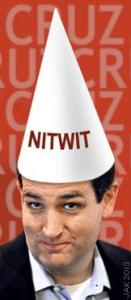 to go for Kasich. The question is really a matter of turnout. Here are some results of Wisconsin exit polls on issues.
In another new set of questions, nearly four in 10 GOP primary voters in Wisconsin say they’d “scared” of what Trump would do in office if elected president – hitting nearly six in 10 among Cruz and Kasich supporters. Those are far greater than the levels of concern among Trump supporters we see about Cruz or Kasich (fewer than two in 10 Trump supporters are scared of a Kasich win, a quarter for Cruz.)
Six in 10 overall are “excited” or “optimistic” about a Cruz presidency. Fewer, about half, are excited or optimistic about a Kasich presidency, declining to just over four in 10 for Trump.
Outsider
Nearly half of GOP voters want someone with experience in politics, close to as high as it’s been so far this election cycle – and previously Trump’s won only 7 percent of these voters, vs. 33 percent for Cruz and 24 percent for Kasich. About half of voters instead say they’d like the next president to be someone from “outside the political establishment.” Trump’s previously won two-thirds of outsider voters.
Deportation
More than six in 10 GOP voters in Wisconsin think undocumented immigrants should be offered a path to legal status, on track to be the highest of any state this year (it’s topped out at 59 percent in Virginia). Only a third support deporting undocumented immigrants, fewer than in previous primaries. Deportation voters have been a strong group for Trump in previous primaries; Cruz beat Trump in recent contests (North Carolina, Missouri and Illinois) among the larger group that favors a path to legal status, and Kasich won them in Ohio.
Two news stories may start to have an effect from now until the California primaries. The first is the release of the DC Madam list of phone numbers. It seems to indicate that Cruz may have a DC madam issue. Here are the vitals of the “John of Interest”:
“1/26/2006,2:59,PM,GRANDPRARI,TX,214,616-3080”
The news today is filled with the interview given by Sanders to the NYDN. Sanders appears to be completely confused by the process of federal regulations and oversight as it pertains to Wall Street and Financial Institutions. I always knew he sounded vague on details but this interview shows his ignorance. This is about as bad as recent Trump interviews. Both appear big on their vision but extremely stupid on policy details and the workings of government. Trump could be excused as a outsider if he were running for lower office. Bernie, however, is a Senator. We shouldn’t have to direct him to School House Rock for Lessons. This is Chris Cillizza writing for WAPO.
There’s more — lots more — including an exchange over what law, exactly, Wall Street executives broke during the economic collapse and how Sanders would actually prosecute them. But the two passages above give you some idea of how the bulk of the interview went: the Daily News pressing Sanders for specifics and asking him to evaluate the consequences of his proposals, and Sanders, largely, dodging as he sought to scramble back to his talking points.
For Sanders’s critics — including Hillary Clinton — the Daily News interview is the “ah ha!” moment that they have been insisting will come for Sanders, a time when his pie-in-the-sky proposals are closely examined and found wanting. Sure, free college tuition sounds good, but how, exactly, do you pay for it? And, yes, breaking up the biggest banks seems appealing — particularly if you saw “The Big Short” — but (a) can you actually do it? and (b) what does it mean for all the people those banks employ?
A large part of Sanders’s appeal to the throngs who back him is his insistence that we are in need of a political revolution. And, for those people, the Daily News interview will be much ado about nothing. But what the interview exposes is that once the revolution happens there will be lots of loose ends to tie up. Loose ends that Sanders either hasn’t grappled with — or doesn’t want to.
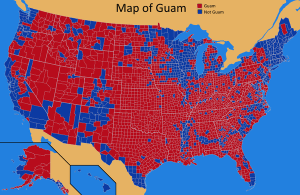 As for all those geniuses like Tim Robbins who insist we’re Guam, look at this:
Despite winning Mississippi’s Republican presidential primary by double digits, Donald Trump could turn Mississippi blue for the first time in 40 years, according to a Mason-Dixon poll released Tuesday.
So, we just have to sit through the next few weeks until the huge, diverse states get their chance to close the deal.
Meanwhile, I’d just like to state that We are ALL Guam now!!
Monday Reads: Global Intrigue Edition
Posted: April 4, 2016 Filed under: Afternoon Reads | Tags: Edward Snowden, off shore tax havens, offshore banking, The Panama Papers, Wikileaks 68 Comments Good Afternoon!
We have the Wisconsin primary coming up tomorrow evening but I thought I’d take a break from political chaos to cover some global financial chaos today. I’m not sure if you’ve heard about The Panama Papers yet but there was a “Giant Leak of Offshore Financial Records” this weekend that “Exposes Global Array of Crime and Corruption. Millions of documents show heads of state, criminals and celebrities using secret hideaways in tax havens.” The linked documents and lists of account names are eye popping. Check out some of the global dirty rotten scoundrels and grab your pitchfork.
A massive leak of documents exposes the offshore holdings of 12 current and former world leaders and reveals how associates of Russian President Vladimir Putin secretly shuffled as much as $2 billion through banks and shadow companies.
The leak also provides details of the hidden financial dealings of 128 more politicians and public officials around the world.
The cache of 11.5 million records shows how a global industry of law firms and big banks sells financial secrecy to politicians, fraudsters and drug traffickers as well as billionaires, celebrities and sports stars.
These are among the findings of a yearlong investigation by the International Consortium of Investigative Journalists, German newspaper Süddeutsche Zeitung and more than 100 other news organizations.
The files expose offshore companies controlled by the prime ministers of Iceland and Pakistan, the king of Saudi Arabia and the children of the president of Azerbaijan.
They also include at least 33 people and companies blacklisted by the U.S. government because of evidence that they’d been involved in wrongdoing, such as doing business with Mexican drug lords, terrorist organizations like Hezbollah or rogue nations like North Korea and Iran.
One of those companies supplied fuel for the aircraft that the Syrian government used to bomb and kill thousands of its own citizens, U.S. authorities have charged.
“These findings show how deeply ingrained harmful practices and criminality are in the offshore world,” said Gabriel Zucman, an economist at the University of California, Berkeley and author of “The Hidden Wealth of Nations: The Scourge of Tax Havens.” Zucman, who was briefed on the media partners’ investigation, said the release of the leaked documents should prompt governments to seek “concrete sanctions” against jurisdictions and institutions that peddle offshore secrecy.
Que the James Bond theme. The Guardian appears to be the paper that’s most on top of the story. I’ve had a fascination with s0-called  Treasure Isles for some time which offshore investment accounts of the world’s richest people since it appeared Mitt Romney had managed to plant some money offshore. This was revealed during his run for President. Most of the leaked accounts are from world leaders who are stealing their nation’s Treasury and probably take bribes. Nothing says I hate my country more than these things.
I’ve actually written about this before here because it is so fascinating. As a former banker and a financial economist that studies the financial systems, I can state with assurance that this situation plagues nations trying to develop because it takes much needed money out of circulation in the country. It also is a major argument against giving the richest any more money. They just take it straight out of the country where they gamble on the world’s financial markets. Most of them couldn’t create a job if their life depended on it because they’re busy hiding their fortunes.
The Guardian, working with global partners, will set out details from the first tranche of what are being called “the Panama Papers”. Journalists from more than 80 countries have been reviewing 11.5m files leaked from the database of Mossack Fonseca, the world’s fourth biggest offshore law firm.
The records were obtained from an anonymous source by the German newspaper Süddeutsche Zeitung and shared by the International Consortium of Investigative Journalists with the Guardian and the BBC.
Though there is nothing unlawful about using offshore companies, the files raise fundamental questions about the ethics of such tax havens – and the revelations are likely to provoke urgent calls for reforms of a system that critics say is arcane and open to abuse.
The Panama Papers reveal:
- Twelve national leaders are among 143 politicians, their families and close associates from around the world known to have been using offshore tax havens.
- A $2bn trail leads all the way to Vladimir Putin. The Russian president’s best friend – a cellist called Sergei Roldugin – is at the centre of a scheme in which money from Russian state banks is hidden offshore. Some of it ends up in a ski resort where in 2013 Putin’s daughter Katerina got married.
- Among national leaders with offshore wealth are Nawaz Sharif, Pakistan’s prime minister; Ayad Allawi, ex-interim prime minister and former vice-president of Iraq; Petro Poroshenko, president of Ukraine; Alaa Mubarak, son of Egypt’s former president; and the prime minister of Iceland, Sigmundur Davíð Gunnlaugsson.
- In the UK, six members of the House of Lords, three former Conservative MPs and dozens of donors to British political parties have had offshore assets.
- The families of at least eight current and former members of China’s supreme ruling body, the politburo, have been found to have hidden wealth offshore.
- Twenty-three individuals who have had sanctions imposed on them for supporting the regimes in North Korea, Zimbabwe, Russia, Iran and Syria have been clients of Mossack Fonseca. Their companies were harboured by the Seychelles, the British Virgin Islands, Panama and other jurisdictions.
- A key member of Fifa’s powerful ethics committee, which is supposed to be spearheading reform at world football’s scandal-hit governing body, acted as a lawyer for individuals and companies recently charged with bribery and corruption.
- One leaked memorandum from a partner of Mossack Fonseca said: “Ninety-five per cent of our work coincidentally consists in selling vehicles to avoid taxes.”
The company has flatly denied any wrongdoing. It says it has acted beyond reproach for 40 years and that it has had robust due diligence procedures.
The document leak comes from the records of the firm, which was founded in 1977. The information is near live, with the most recent records dating from December 2015.
 The data shared with journalists is huge and is more than was leaked by WikiLeaks in 2010 or Edward Snowden in 2013.
The firm’s leaked records offer a glimpse into the tightly guarded world of high-end South Florida real estate and the global economic forces reshaping Miami’s skyline.
And MF’s activities bolster an argument analysts and law-enforcement officials have long made: Money from people linked to wrongdoing abroad is helping to power the gleaming condo towers rising on South Florida’s waterfront and pushing home prices far beyond what most locals canafford.
The leak comes as the U.S. government unleashes an unprecedented crackdown on money laundering in Miami’s luxury real-estate market.
Buried in the 11.5 million documents? A registry revealing Mateus 5’s true owner: Paulo Octávio Alves Pereira, a Brazilian developer and politician now under indictment for corruption in his home country.
A Miami Herald analysis of the never-before-seen records found 19 foreign nationals creating offshore companies and buying Miami real estate. Of them, eight have been linked to bribery, corruption, embezzlement, tax evasion or other misdeeds in their home countries.
That’s a drop in the ocean of Miami’s luxury market. But Mossack Fonseca is one of many firms that set up offshore companies. And experts say a lack of controls on cash real-estate deals has made Miami a magnet for questionable currency.
Iceland’s prime minister is this week expected to face calls in parliament for a snap election after the Panama Papers revealed he is among several leading politicians around the world with links to secretive companies in offshore tax havens.
The financial affairs of Sigmundur Davíð Gunnlaugsson and his wife have come under scrutiny because of details revealed in documents from a Panamanian law firm that helps clients protect their wealth in secretive offshore tax regimes. The files from Mossack Fonseca form the biggest ever data leak to journalists.
Opposition leaders have this weekend been discussing a motion calling for a general election – in effect a confidence vote in the prime minister.
On Monday, Gunnlaugsson is expected to face allegations from opponents that he has hidden a major financial conflict of interest from voters ever since he was elected an MP seven years ago.
This should be huge and there’s no doubt that a number of Americans may show up . It should also spur a movement for regulation if the Dems give good spin and the Republicans cower from fear of their angered populist base. I want to spend more time analyzing this and will provide you with some more thoughts when I can. I’ll be with students the next few days so you’ll have to be patient and let me know if you’re interested.
You can read “How Reporters Pulled Off the Panama Papers, the Biggest Leak in Whistleblower History” at Wired. This article covers the leak process and the reporter with the original contact.
The Panama Papers leak began, according to ICIJ director Ryle, in late 2014, when an unknown source reached out to the German newspaper Suddeutsche Zeitung, which had reported previously on a smaller leak of Mossack Fonseca files to German government regulators. A Suddeutsche Zeitung reporter named Bastian Oberway says that the source contacted him via encrypted chat, offering some sort of data intended “to make these crimes public.” But the source warned that his or her “life is in danger,” was only willing to communicate via encrypted channels, and refused to meet in person.
“How much data are we talking about?” Obermayer asked
“More than you have ever seen,” the source responded, according to Obermayer.
Obermayer tells WIRED he communicated with his source over a series of encrypted channels that they frequently changed, each time deleting all history from their prior exchange. He alludes to crypto apps like Signal and Threema, as well as PGP-encrypted email but declines to say specifically which methods they used. Each time the reporter and source re-established a connection, they would use a known question and answer to reauthenticate each other. “I’d say ‘is it sunny?’ You’d say ‘the moon is raining’ or whatever nonsense, and then both of us can verify it’s still the other person on the device,” Obermayer says.
After seeing a portion of the documents, Suddeutsche Zeitung contacted the ICIJ, which had helped to coordinate previous tax haven megaleaks including a 2013 analysis of leaked offshore tax haven data and another leak-enabled investigation last year that focused on assets protected by the Swiss bank HSBC. ICIJ staff flew to Munich to coordinate with Suddeutsche Zeitung reporters.

I can’t wait to follow the money frankly. International Financial Economists try to estimate the flows of dark and black currency around the world and its impact on a nation’s capital accounts. This may give us a hint of the level and types of activities as well as their frequency. Like I said, I’m chomping at the bit like an Ann Romney dressage horse to get the actual activity details. Meanwhile, enjoy the international outing of the billionaires who have more in common with each other than the people in their countries.
Anyway, here’s a few other links to keep you busy!
From Newsweek: White City: The new urban blight is rich people
From Bloomberg News: Louisiana Crisis Shows Risks of Republican Candidates’ Tax Plans
Voters in Wisconsin’s Republican primary Tuesday can choose among Donald Trump, John Kasich and Ted Cruz, all of whom promise tax cuts that could cost as much as $10 trillion in revenue over 10 years — and an ensuing economic boom as spending is unleashed. Yet voters need look no further than Louisiana, Kansas and Oklahoma to see what happens when economies fail to grow as promised.
From Washington Monthly (satire): Apologies to Bernie Sanders By Mark Kleiman
From The Economist: Sin and politics: The link between a scandal in Alabama and the rise of Donald Trump
New York Magazine: OPERATION TRUMP: Inside the most unorthodox campaign in political history.
From CNN: Conservative challengers lose key Supreme Court voting rights case
In a unanimous result, the court said a state can draw legislative districts based on total population. At issue in the case was the “one person, one vote” principle dating back to the 1960s, when the court held that state legislative districts must be drawn so they are equal in population.
What’s on your reading and blogging list today?
Wednesday Reads
Posted: March 30, 2016 Filed under: 2016 elections, Afternoon Reads, Diplomacy Nightmares, Foreign Affairs, Surreality, the GOP 62 CommentsGood Afternoon!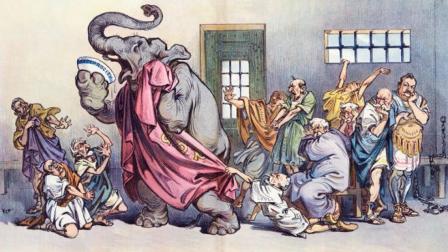
Well, I’m holding down the fort today! Both BB and JJ are off surfing samsara which is my little way of saying they’re dealing with a series of life’s little unpleasantness. That seems to be the order of the day. There’s a war on life’s pleasantries out there! The majority of us are losing the fight.
So, I watched the Republican Townhall last night. One hour with each of them is an hour wasted in Bizarro. Ted Cruz is a sociopath. He dodged all questions choosing to spin a series of anecdotes with no relation to the question asked by Anderson Cooper or the participants. The fact he thought these anecdotes charming given his self congratulatory manner–when they definitely were not–says a lot about his inability to even fake being human for short periods of time. He’s positively reptilian. Donald Trump is walking, savage ID. He has no conception of anything remotely related to the rest of the world that hasn’t been directly in his face and interests. The sentence I bolded below pretty much sums the Trump exchange.
During a CNN town-hall forum Tuesday night, Donald Trump reiterated the falsehood that Sen. Ted Cruz was responsible for spreading around an image of his wife Melania in a nude pose. “I thought it was a nice picture of Heidi,” Trump said of an image he retweeted clearly meant to make her look unattractive compared to his wife. “Come on,” Anderson Cooper responded. “I thought it was fine,” Trump insisted. Continuing to deny culpability, he said “I didn’t start it.” Cooper sensibly retorted, “That’s the argument of a 5-year-old.”
That sentence pretty much sums up the behavior of most of the politicians associated with the Republican Party who basically have not been doing their actual jobs for some time. They won’t examine or confirm SCOTUS nominees. They continually vote to get rid of the ACA when they know the bill will go no where. They are obsessed with Planned Parenthood based on outright lies. They deny the impact and causes of Climate Science. It’s the behavior of a 5-year-old that doesn’t get his way.
The unraveling of the Republican party is not good for this country. Candidates like Ted Cruz and Donald Trump are signs that something has gone supremely wrong. Kasich appears to be the only sane one left unless you count Rubio who seems to be angling to hold on to his delegates in some weird hope that a brokered convention will anoint him. Both may be sane. Neither are presidential material. Rubio is dumb and Kasich wanders that ethereal wasteland between being pragmatic and preaching radical religious right sermons worthy of any common religious fanatic.
It is a full on war between the Republican Establishment and the white, working class base it has used as a foil to push through bad tax policy since the Pied Piper of Hollywood spun a tune to romance them into the Republican fold. Ronald Reagan’s dogwhistles and tales of a white utopia, a city on the hill, enticed them to vote Republican for a few decades. Dubya’s uncanny ability to sound homespun and create wars to appeal to their patriotic nature may have held them for awhile. But now they are unleashed with wide open eyes and a distaste of all things Romneyesque. The want real brutes. Karl Rove no longer can manipulate their lesser angels with empty promises and heads. They want the real deal.
If you listen to establishment gurus, you’d be led to believe that the Republican primary voter revolt was birthed by the governance of President Obama, creating fertile ground for the emergence of one Donald Trump. This fairy tale version of reality casts Trump as the villain who has swept in to capitalize on voter frustration with Obama’s alleged weakness, lawlessness and rampant liberalism.
The villain must be stopped or the Republican Party will be destroyed. Or so we are told.
The old saw that you have to first acknowledge that you have a problem to solve the problem applies here. What the GOP “leaders” refuse to accept is that Trump is not the problem. They are.
The dissatisfaction among a large cohort of GOP voters is directly attributable to their unhappiness with a party that they believe does not represent their interests. In exit polls, high percentages of GOP voters registered displeasure with their leadership. In Tennessee, 58% of Republican voters said they felt “betrayed” by their leaders, as did 47% in New Hampshire, 52% in South Carolina and 54% in Ohio.
Those who feel betrayed have been most likely to vote for Trump. Trump has been a particular draw to white working-class voters who feel left behind economically. Such voters have been treated with dismissal and outright contempt by the GOP establishment even as this group has become more critical to Republican success. Pew reported in 2012 that “lower-income and less educated whites … have shifted substantially toward the Republican Party since 2008.”
In other words, their peasants are revolting. Given this, how can the party’s elite make their way through a brokered convention when the party itself is so positively unmoored? Its main policy goal is tax avoidance for the very wealthy. After that’s accomplished, they throw bits and pieces of radical religious bills at the wall to see what will stick while railing against minorities, women, and immigrants.
The modern Republican Party has devolved into a tax avoidance scam for rich people. The scam is a masterpiece of psychological manipulation, in which the racial, cultural and economic anxieties of (mostly white) voters are exploited, in order to get those voters to support policies that transfer ever-greater percentages of wealth from themselves to the top 0.1 percent.
It really isn’t any more complicated than that. Everything else – the “culture wars,” the continual hysteria about terrorism, the non-stop rhetoric about how the mainstream media, the universities, the scientists, and basically the rest of the modern world are all biased against conservatives – it’s all just so much noise, designed to solve the tricky problem of how to get ordinary people to support economic policies that make them poorer and rich people richer.You couldn’t come up with a better illustration of this principle than the ongoing GOP campaign to eliminate the estate tax. Last year the House voted to get rid of it, and a majority of Republican senators have pledged to do the same.
The Republican propaganda machine has waged a multi-decade war against the estate tax, which it has rebranded the “death tax.” Because of these efforts, the tax has been watered down to the point where, under current law, only a tiny group of wealthy people will ever pay any estate taxes at all.
But of course that isn’t enough, since it means that some taxes still have to be paid on truly enormous inheritances, and protecting the economic interests of people who have a net worth in the eight, nine, 10 or 11 figures is the contemporary GOP’s entire reason for being.
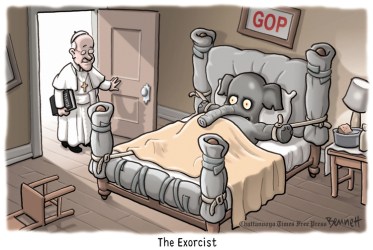
Clay Bennett, Chattanooga Times Free Press
The emergence of Trump as a leading Republican candidate is something found incredulous by enabling media types who have been equivocating between Democrats and Republicans for some time. They’ve refused to hold any one accountable for outright lies.
One of the most amazing things to see is the panic in our allies as major Republican candidates want to dump NATO, dally with war crimes and nuclear weapons, and ignore treaties and trade agreements. That’s how equivocal Republicans and Democrats really are from the view here on USA Main Street. The one thing that’s been fairly consistent in American governance is the respect for pre-existing foreign agreements and diplomacy. Each President–even while holding different visions of the country–basically finds value in remaining on a stable and predictable path in foreign affairs. The Republican historical area of expertise used to be foreign policy until now.

Lobbyists in Washington say they are being flooded with questions and concerns from foreign governments about the rise of Donald Trump.Officials around the globe are closely following the U.S. presidential race, to the point where some have asked their American lobbyists to explain, in great detail, what a contested GOP convention would look like. There is nothing conservative about Trump or the Republican party these days other than their tax avoidance schemes. They are a party of insurgents and radicals hellbent on an agenda to turn back modernity.
The questions about Trump are “almost all-consuming,” said Richard Mintz, the managing director of Washington-based firm The Harbour Group, whose client list includes the governments of Georgia and the United Arab Emirates.
After a recent trip to London, Abu Dhabi and Beijing, “it’s fair to say that all anyone wants to talk about is the U.S. presidential election,” Mintz added. “People are confused and perplexed.”
The Hill conducted interviews with more than a half-dozen lobbyists, many of whom said they are grappling with how to explain Trump and his unusual foreign policy views to clients who have a lot riding on their relationship with the United States.
“We’re in uncharted territory here,” said one lobbyist with foreign government clients who asked not to be identified.
“The questions coming from the international community are not different than the things, categorically, we’re asking ourselves,” said Nathan Daschle, the president and chief operating officer of the Daschle Group, a firm run by his father, former Sen. Tom Daschle (D-S.D.).
“There’s an added level of bafflement because this is not the United States that they’ve been living with for so long,” Daschle said. “This is not the image the United States has been projecting.”
The questions about Trump often concern his foreign policy positions.
The businessman has boasted about keeping his options open on many crucial foreign policy questions, including on trade, troop-sharing agreements and the U.S. posture toward China.
“I don’t want to say what I’d do because, again, we need unpredictability,” Trump told The New York Times in an interview published over the weekend.
A second lobbyist who represents countries in Latin America, Asia and the Muslim world said answers like that have made Trump a “wild card” for leaders around the world.
“Nobody knows whether he believes anything of what he says because he’s changed his position so many times,” the lobbyist said.
Some of Trump’s comments — especially about Mexico, Muslims and trade with countries such as Japan and China — have also angered foreign leaders.
A third lobbyist for governments in Asia said part of his job has been telling countries how to react to some of Trump’s controversial remarks.
“If you come out and blast Donald Trump — for the people who are going to vote for Donald Trump, that could make them like him more,” the lobbyist, who also represents foreign companies with a large presence in the U.S., said he has told foreign leaders.
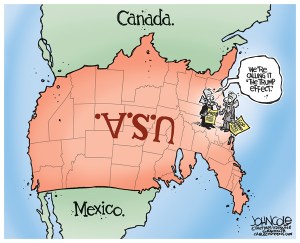 But it’s not just Trump making these comments. Cruz has suggested we carpet bomb all areas around ISIS including areas containing huge numbers of civilians leading our military leaders to suggest that they’ve trained their soldiers to disobey illegal and unconstitutional orders. Kasich discussed redefining NATO in the debate last night. There is nothing moderate or rational about any of these men. But, how out of line are these outrageous views with Americans? Polls still find that Americans approve of torture even though it violates our nation’s commitment to the Geneva Convention. Chances are that this poll reflects a huge number resident in the Republican base.
Nearly two-thirds of Americans believe torture can be justified to extract information from suspected terrorists, according to a Reuters/Ipsos poll, a level of support similar to that seen in countries like Nigeria where militant attacks are common.
The poll reflects a U.S. public on edge after the massacre of 14 people in San Bernardino in December and large-scale attacks in Europe in recent months, including a bombing claimed by the militant group Islamic State last week that killed at least 32 people in Belgium.
Donald Trump, the front-runner for the 2016 Republican presidential nomination, has forcefully injected the issue of whether terrorism suspects should be tortured into the election campaign.
This can only be the result of years of letting our political discourse sink to bottom feeder levels through vehicles like Fox News, right wing radio and blogs, and astroturf organizations like the Tea Party. Former SOS Clinton indicated earlier this month that she was receiving tweets from World Leaders offering any help they can to her in the effort to defeat Trump in the general. Its hard to imagine Trump, Cruz or Kasich receiving tweets from any one on that level even as one of them caroms towards their party’s nomination.
Hillary Clinton says foreign leaders are privately reaching out to her to ask if they can endorse her to stop Donald Trump from becoming president of the United States.
“I am already receiving messages from leaders,” Clinton told an Ohio audience at a Democratic presidential town hall on Sunday night.
“I’m having foreign leaders ask if they can endorse me to stop Donald Trump.”
Trump has demonstrated virtually no knowledge of foreign policy. How dangerous is his world view?
He’s suggested using economic warfare to halt China’s territorial moves in the South China Sea and raised the prospect of a fundamental reconsideration of nuclear doctrine by musing about South Korea and Japan acquiring their own atomic arsenal. He says the U.S. should boycott Saudi Arabian oil if the kingdom doesn’t send ground troops to fight ISIS and believes NATO is an anachronism. And he warns he will renegotiate bedrock free trade deals, a prospect that could send serious reverberations through the global economy.
“It is rattling the windows of foreign ministries all over the world,” said CNN’s senior political analyst David Gergen, who has worked for a string of Democratic and Republican presidents.Trump has gone to great lengths over the past week to explain his foreign policy views, which are often criticized as overly vague. He’s participated in extensive interviews with The Washington Post and The New York Times and delivered a speech — notable because it was carefully pre-written — to the leading pro-Israel group in Washington. He’ll have another opportunity to address foreign policy Tuesday night during a CNN town hall in Milwaukee, Wisconsin.The interviews reveal Trump as someone who is just as willing to flout the foreign policy establishment as he is the GOP elite. His statements appear to fly in the face of the longstanding assumption underlying U.S. foreign policy — that supporting allies financially, diplomatically and militarily promotes a global system of unfettered free trade, democracy and stability that is overwhelmingly in the national interests of the United States.
Andrew J. Bacevich–writing for The Nation today–argues that Ted Cruz is worse and represents the degeneration of Republican Foreign  Policy conservatism.
As the embodiment of this truculence, Texas Senator Ted Cruz, today finding favor among Republicans desperate to derail Donald Trump’s bid for the GOP nomination, stands alone. From the very outset of his candidacy, Cruz has depicted himself as the one genuinely principled conservative in the race. And in comparison to Trump, who is ideologically sui generis, Cruz does qualify as something of a conservative. When it comes to foreign policy, however, Cruz offers not principles but—like Trump himself—raw pugnacity.
Cruz has gone out of his way to deride the pretensions of democracy promoters, mocking “crazy neocon invade-every-country-on-earth” types wanting to “send our kids to die in the Middle East.” On the stump, Cruz advertises himself as Reagan’s one-and-only true heir. As such, he endorses “the clarity of Reagan’s four most important words: ‘We win, they lose.’” Upon closer examination, Cruz is actually advocating something quite different: “We win, they lose, then we walk away.”
The key to “winning” is to unleash American military might. “If I am elected president, we will utterly destroy ISIS,” Cruz vows. “We won’t weaken them. We won’t degrade them. We will utterly destroy them. We will carpet-bomb them into oblivion…. We will do everything necessary so that every militant on the face of the earth will know…if you wage jihad and declare war on America, you are signing your death warrant.”
Yet rather than Reaganesque, Cruz’s prescription for dealing with Islamist radicalism represents a throwback to bomb-them-back-to-the-Stone-Age precepts pioneered by Gen. Curtis LeMay and endorsed by the likes of Barry Goldwater back when obliteration was in fashion. The embryonic Cruz Doctrine offers an approximation of total war. “I don’t know if sand can glow in the dark, but we’re going to find out!” he promises with evident enthusiasm.
Nowhere, however, does his outlook take into account costs, whether human, fiscal, or moral. Nor does it weigh the second-order consequences of, say, rendering large parts of Iraq and Syria a smoking ruin or of killing large numbers of noncombatants through campaigns of indiscriminate bombing. In essence, Cruz sees force as a way to circumvent history—a prospect that resonates with Americans annoyed by history’s stubborn complexities.
Kasich has survived so far by keeping his head down and winning his home state of Ohio. But now that he is one of only three candidates remaining in the race, the former congressman and current Governor of Ohio will face the kind of media scrutiny that he has managed to avoid since he announced his candidacy. It will show that he is an outright mediocrity.
Kasich served on the House Armed Services Committee for eighteen years, where his strong beliefs on fiscal responsibility and budget cutting earned him the moniker of the “cheap hawk.” He accomplished next to nothing, apart from limiting the procurement of B-2 bombers.
During his long tenure in Congress, Kasich casted a number of votes on war-and-peace issues, voting for the Gulf War in 1991 but opposing Ronald Reagan’s decision in 1983 to send U.S. Marines to Lebanon for a peacekeeping mission. He reminds voters during town hall meetings and debates that the United States should get out of the business of nation-building and should stay far away from manufacturing democracies around the world. But he also floated the preposterous idea that the way to stop ISIS in its tracks is for the next president to create a new government agency to “beam messages around the globe” about the American credo of liberty.
At times, it is difficult to pinpoint what kind of foreign policy doctrine a potential President John Kasich would follow. He’s asserted that Russian President Vladimir Putin has gotten away with far too much during the Obama administration, including his annexation of the Crimean Peninsula, his military and economic support to separatist forces in eastern Ukraine, and his decision to send fighter jets into Syria to strengthen the defenses of Bashar al-Assad’s regime. “[I]t’s time that we punched the Russians in the nose,” Kasich told radio host Hugh Hewitt during a December presidential debate. “They’ve gotten away with too much in this world, and we need to stand up against them . . . in Eastern Europe where they threaten some of our most precious allies.”
On other issues, like the nuclear agreement with Iran, Kasich has oscillated between common sense (“You’re going to rip it up and then what?”), depressed resignation (“I’m sort of sick to my stomach about it because . . . Iran’s going to get a ton of money”) to defiant opposition (“if I were president, I would call them and say, I’m sorry, but we’re suspending this agreement”). With respect to the Islamic State, Kasich has emphasized coalition building with Arab allies similar to George H.W. Bush’s alliance building during the Persian Gulf War—a safe position that is just muscular enough to pass muster with Republican voters, but benign enough that it wouldn’t raise the eyebrows of realists who call the party home.
The looming question is whether John Kasich is hawkish enough for the GOP foreign policy establishment, a club that has been heavily influenced by neoconservative thinking for the past fifteen years.
At least “outright mediocrity” wont scare the children. It won’t scare ISIS either.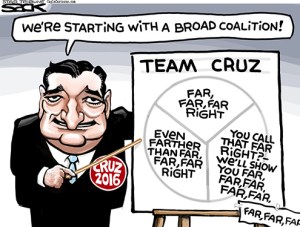
It’s been incredible to watch Bernie Sanders with his generalities and overreaching promises dodge serious foreign policies questions through out the Democratic Debates. He tends to fall back on insisting that his vote against the Iran Resolution just says it all. It doesn’t, however. His generalities fall way short of Clinton’s recall of names and her credentials as the nation’s chief foreign policy negotiator. I have to say that I learn a little bit more about the entire world each time she steps to the podium and takes a foreign policy question or makes a foreign policy speech.
Imagine what the debates and town halls in the general will look like when she takes on one of these candidates from the party in total disarray. My guess is that entire countries will be cheering for her.
I should close here but I’d like to share this with you so you can see that she will be our candidate for the fall despite the bleating and chest thumping of the cult of Bern. Here’s Nate Silver’s estimate of Bernie’s long shot path from today. It is beyond improbable that he can get 988 more pledged delegates and romance the Super D’s. Yes, there is one more campaign out there in Bizarro and it’s not a Republican one.
If you’re a Sanders supporter, you might look at the map and see some states — Oregon, Rhode Island, West Virginia, Montana and so forth — that look pretty good for Sanders, a lot like the ones that gave Sanders landslide wins earlier in the campaign. But those states have relatively few delegates. Instead, about 65 percent of the remaining delegates are in California, New York, Pennsylvania, New Jersey and Maryland — all states where Sanders trails Clinton in the polls and sometimes trails her by a lot.
To reach a pledged delegate majority, Sanders will have to win most of the delegates from those big states. A major loss in any of them could be fatal to his chances. He could afford to lose one or two of them narrowly, but then he’d need to make up ground elsewhere — he’d probably have to win California by double digits, for example.
Sanders will also need to gain ground on Clinton in a series of medium-sized states such as Wisconsin, Indiana, Kentucky and New Mexico. Demographics suggest that these states could be close, but close won’t be enough for Sanders. He’ll need to win several of them easily.
None of this is all that likely. Frankly, none of it is at all likely. If the remaining states vote based on the same demographic patterns established by the previous ones, Clinton will probably gain further ground on Sanders. If they vote as state-by-state polling suggests they will, Clinton could roughly double her current advantage over Sanders and wind up winning the nomination by 400 to 500 pledged delegates.
The nation and the world should breathe a collective sigh of relief when Clinton wins the nomination and the presidency. The alternatives to Hillary are the stuff of national nightmares. In fact, they would be a global nightmare and the majority of the US and the world knows it.
What’s on your reading and blogging list today?
Live Blog: Republican Town Hall Zone Extreme Wrestling Edition The Talkie in Milwaukee!!!!
Posted: March 29, 2016 Filed under: 2016 elections, Live Blog | Tags: Republican Town Hall Millwaukee 29 Comments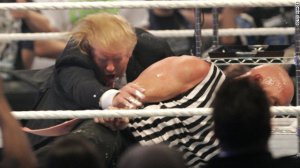
Good Evening and Welcome to yet another Live Blog!
Trump and Cruz are in the midst of the campaign’s most bitter, personal fight. It started when Trump blamed Cruz for an unaffiliated super PAC’s ad featuring a nearly naked Melania Trump, without any evidence that Cruz was behind it. Then Trump attacked Heidi Cruz.It’s gotten bad enough that Cruz wouldn’t say in an interview with CNN’s Sunlen Serfaty on Monday whether he’ll still back Trump if he wins the Republican nomination.I’m not in the habit of supporting people who attack my wife and attack my family,” Cruz said. “Donald Trump is not gonna be the nominee. We are gonna beat him for this nomination.”Trump, meanwhile, has threatened lawsuits over the Cruz campaign’s success in picking up 10 extra delegates in Louisiana, even though Trump actually won the state.
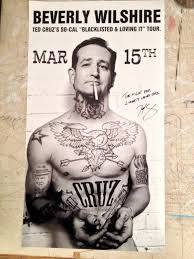 There are several issues that will be looming in the air. The question is if the topic will come up. Topic number 1 is the National Enquirer rumors about Cruz’s extramarital romps.
The National Enquirer accused Ted Cruz of having five mistresses, John Kasich somehow managed to offend both the overeducated and the undereducated, and Donald Trump’s campaign manager has been charged with assaulting a journalist. Expect roughly zero of those things to be mentioned tonight if all goes according to plan.
Tonight’s questions will be coming from The People™ so we can safely bet on three things: 1) Donald Trump will accuse anyone giving him anything approximating a tough question as being a Republican establishment plant, 2) Cruz will answer the question he wished he was asked rather than the one he’s actually asked, and 3) Kasich’s answers will be roughly 80 percent less exciting than the list of side effects you hear during tonight’s drug commercials.
 Topic Number 2 is the misdemeanor battery charge against Trump Campaign Aid Corey Lewandowski. Will this story have legs?
Nearly a month of jousting on social media culminated Tuesday in the arrest of a top Donald Trump presidential campaign aide on misdemeanor battery charges following a March 8 incident involving a reporter.
Michelle Fields, then with the online Breitbart News Service, alleges that Trump campaign manager Corey Lewandowski forcefully grabbed her at a news conference at Trump National Golf Club in Jupiter.
Lewandowski — who has denied wrongdoing and who the Trump campaign said will plead not guilty — turned himself in to town police just before 8 a.m. Tuesday, in what Jupiter Police Chief Frank Kitzerow described as “a very straightforward procedure.”
Lewandowski was issued a notice to appear on a misdemeanor battery charge. The New York City resident is expected in Palm Beach County Circuit Court May 4.
Fields filed a report with police within a week of the incident. On Tuesday, town police released surveillance footage of the alleged battery they said corroborated Fields’ claims, prompting them to file the battery charges.
Monday Reads: Sing! Sing! Sing! Sweet Fat Lady!
Posted: March 28, 2016 Filed under: 2016 elections, Afternoon Reads | Tags: Bernie Sanders, Delegate math, Donald Trump, Hillary Clinton, Primaries, Ted Cruz, zombie delegates 64 Comments
Good Afternoon!
We’re beginning to make that transition from primary season to the lull before the General Election. I thought I’d celebrate the shift with some reads that signal the shift or should signal the shift. I’ve really been struck by the number of people that really don’t understand how parties choose their candidates and seem to be following the overall results on a state by state basis even when that state basically doesn’t add much to the delegate count. The other thing that’s rather astounding is the number of people that seem to think that a party sponsored election for delegates is akin to a normal election. This is when I really feel the irony of the situation.
We have two outsider populist candidates running for election within a party system. Neither of them has been either active or genuine members of that party. Their followers are apoplectic by the scent of cigars in the backrooms and conventions of the state and national parties. I’m being somewhat cynical in that I think both of these candidates had to realize at some point that the parties were not going to be all that accommodating to them running amok. Their voters, however, appear to be completely stumped and angered because it’s pretty much the kind of behavior that has driven them straight to the arms of populist charlatans.
So by now, you’ve figured out that it’s Bernie and Trump and their voters with the lack of knowledge and understanding of primary and party dynamics. Let me get started by saying that I’ve always supported a national set of primaries with openness to any party that can get to some kind of threshold TBD. I have felt that they should be regulated by the Feds to ensure that no one is disenfranchised and that they should be in keeping with the spirit of the Voting Rights Act. So this viewpoint is not in the interest of the duopoly that is our two party system, It’s also not in keeping with the philosophy of the party that loves “local control” and “states’ rights”.
Irony is not lost on me when I read that Trump is talking about suing the State of Louisiana over the tricks that the Cruz campaign pulled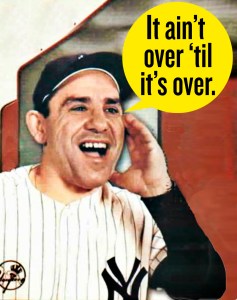 at the party convention. His voters tend to hate big gubermint, yet it’s federal control of primary elections that would eliminate these back channel deals. The problem in Louisiana is basically the delegates won by Marco Rubio. Rubio suspended his campaign. He has delegates that were basically elected but they now have a dead candidate. They’ve essentially become free agents as zombie delegates.
Following a report that Sen. Ted Cruz (R-TX) may win more delegates in Louisiana’s primary than Donald Trump, even though Trump won the state, the Republican presidential frontrunner threatened to file a lawsuit on Sunday.
Trump complained about the “rotten political system” during a Sunday interview on ABC’s “This Week.”
“The Republican tabulation system is a broken system. It’s not fair,” he said.
“I won Louisiana and now I hear he’s trying to steal delegates,” Trump added, referring to Cruz. “What’s going on in the Republican Party is a disgrace. I have so many more votes and so many more delegates.”
According to the Wall Street Journal, Republican in Louisiana expect the five unbound delegates that had been awarded to Sen. Marco Rubio (R-FL) to back Cruz now that the Florida senator is out of the race. Cruz’s supporters have also secured key positions on convention committees, which could help the Texas senator at a contested convention, according to the Wall Street Journal.
Jason Doré, the executive director of the Louisiana Republican primary, told the Times-Picayune that the party is “really confident in the rules” and is prepared for a lawsuit from Trump.
Doré said that any disagreement over Rubio’s delegates is “is between Mr. Trump and those guys,” and added that the delegates have not yet made any final decision.
Zombie delegates may also wind up being very important should Trump not achieve the proper amount prior to the Republican National Convention. If Trump can’t win on the first ballot, then Zombie delegates can go anywhere.
“Meet the Press” moderator Chuck Todd took on the issue Sunday of why Donald Trump needs to score a first-ballot win at the Republican National Convention in Cleveland this summer.
The reason?
Delegates who may support Trump on the first ballot, but could abandon him after that.
Here’s the transript from the show:
CHUCK TODD:
Donald Trump is in a race to 1,237. It’s a number now we’re all getting used to and familiar with. And he can’t afford to miss hitting that magic number. And here’s why. Because there’s already an effort underway to stop him on a second ballot at the convention in Cleveland. Right now, Trump has 752 delegates and a 282 delegate lead over Ted Cruz.
In order to hit the magic 1,237 majority number and earn that glide path the nomination, Trump has to win 54 percent of the remaining delegates. And he has some favorable contests coming up, like his home state of New York, which has 95 delegates up for grabs, and a winner-take-all state of New Jersey, where maybe his buddy Chris Christie can help him win those 51 delegates.
But, the race is already on to create sort of delegate double agents. If Trump fails to win that majority on the first ballot these are people who will promise to dump Trump on the second ballot. And then there’s an effort underway to mobilize zombie delegates. These are delegates who are pledged to candidates who have dropped out of the race.
They could switch their vote over to someone else in the race, maybe even on the first ballot. Maybe it’s Cruz, maybe it’s Trump. So to discuss all of this, I’m joined by our resident zombie expert, Ben Ginsberg, Republican delegate guru, who served, of course, as lead counsel to the Bush/Cheney campaign of 2000 and he was Mitt Romney’s lawyer in 2012. So the zombie apocalypse will hit Cleveland.
So we have free-agent delegates, we have zombie delegates. I want to talk about the free-agent delegates first, because we have Donald Trump this morning already angry about this. Louisiana, he wins the primary big, he should get a lion’s share of the delegates. The Cruz campaign claims they actually are going to have more delegates out of Louisiana, a state they lost, than Trump. How did they do it? Explain.
BEN GINSBERG:
The way they managed to do it is that 44 of the 56 states and territories give the candidates no role in choosing who the delegates will pick.
CHUCK TODD:
Who the individuals are.
BEN GINSBERG:
Who the individuals are. And so a well-organized campaign will go into all these state conventions and state executive committee meetings and manage to get supporters of theirs. They’ll be bound on the first ballot to the winner of their state primary, but not for any of the procedural rules issues, and not for the second ballot.
CHUCK TODD:
All right. So they’re the double agents. Now, let’s talk about zombie delegates. These are the people, and I want to put up a graphic here. There are a group of unbound delegates. We know there were always going to be over about a hundred, we’ve done the math here, over about a hundred of them, 169 of them come from states that have chosen not to hold a contest, Colorado chief among them. And then there’s another 175 of the zombie delegates. These are people, mostly Marco Rubio delegates out of Virginia and Minnesota, but there a handful of Carson, maybe one or two Jeb Bush’s. What is their role in all of this?
So basically, this is a problem with free delegates, zombie delegates and double agents. I learned about all of this from Ginsberg and Todd on Sunday.
Bernie’s issues are different. He’s way behind but his campaign has decided to try to hype up his supporters, continue fundraising, and 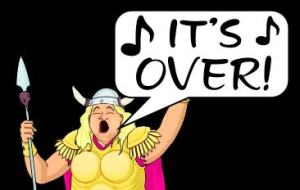 whine about the delegate math set up by the Democratic Party. We’ve been seeing the Deadenders for Bernie for some time now. It’s been basically over since the Steel Magnolias of the South Sung. But, we’ve been seeing all kinds of attempts by the campaign to spin a different tune. Sanders–who was once berating superdelegates–has been actively courting them. However, that’s backfiring according to Reuters. It seems that we have more instances of BernieBro Bullying.
Interviews with 10 of the 505 super delegates supporting Clinton Reuters has reached show that nine of them have been approached by people purporting to back Sanders, and nearly all were displeased by the tone of the outreach.
Isabel Framer of Ohio, a superdelegate for Clinton, for example, got a voice mail last week urging her to vote for Sanders “in accordance with the will of the people.”
On the voice mail, heard by Reuters, the anonymous male caller says: “I think it’s crap that you get to vote whichever way you want… I’ll be watching your vote.”
“I’m not easily frightened,” Framer told Reuters. “I’m not going to change a vote over threats.”
Akilah Ensley, a North Carolina superdelegate, said she started hearing more often from Sanders supporters after her name appeared on a Wikipedia list noting her support for Clinton. “Some of them were nice, and some were rather abrasive,” she said, adding “attacking my decisions is probably not the best way” to change her mind.
Luis Heredia, an Arizona superdelegate for Clinton, said he has received over 30 phone calls, emails and instant messages from Sanders supporters. “The majority of them are more angry, and the tone is more demanding,” Heredia said.
Lacy Johnson, an Indiana superdelegate backing Clinton, meanwhile, said he had received a mix of messages, including one that he said threatened: “we will make you pay.”
Andres Ramirez, a political consultant in Las Vegas, Nevada, and a superdelegate supporting Clinton, said in the past campaigns would typically try to soft-sell their candidates rather than use pressure tactics.
“The way this has gone down, in my experience, has never happened before,” said.
Sanders continues to attack the party which probably isn’t the best approach when wooing party insiders.
“Bernie’s campaign is focused on reaching out to all voters and earning delegates at primaries and caucuses,” he said in a statement, stressing that the Sanders campaign was not coordinating with supporters to contact superdelegates.
However, the unofficial push could complicate the U.S. Senator from Vermont’s efforts to woo the critical bloc in the coming months.
The effort has at times taken an angry tone, some of the messages reviewed by Reuters showed, reflecting the anti-establishment tinge of the 2016 presidential race where many voters are unhappy with Washington insiders.
Some 85 percent of the 4,763 delegate votes to the Democratic National Convention that will decide who will face a Republican rival in the November election are determined by the results of states’ nominating contests. But the remaining 15 percent are held by superdelegates, who get to vote however they like – meaning they could hold the key to a tight contest.
Superdelegates are made up of party leaders and elected Senators, members of Congress, and governors. The Democratic party adopted the system in the early 1980s as a way of giving party leaders more control over the nominating process, though they have yet to play a decisive role in a nomination.
“The idea there is that you’ve got people who have a long view … who have, arguably, the best interests of the party at heart,” said Terri Fine, a professor of political science at the University of Central Florida.
 Bernie’s folks continue to see all states and all primary efforts as equal. The Michigan win may have been meaningful, but this weekend’s Western Caucuses were not. I’ve had to continually remind my Bernie friends that the Washington Caucus gave the state win to Howard Dean AFTER he’d lost the election. But, hope and not math, springs eternal with these folks who still keep pouring money down the Bernie Drain. It is going to give us about a week of insufferable Bernie worship.
Hillary’s popular vote lead was almost identical before and after Washington, Alaska, and Hawaii voted.
According to the website RealClearPolitics, 15.3 million Democratic primary voters had cast their ballots prior to Saturday. Of those voters, 8.9 million had voted for Hillary, and 6.4 million had voted for Bernie. This amounts to a margin of 58% vs. 42% — a blowout margin by most electoral standards.
Saturday’s voters preferred Bernie by a large margin, but these were small states. As of Sunday, official reports only showed about 60 thousand total votes in the three states, while the higher estimates of party officials still indicated fewer than 300 thousand total votes. This means that the overall popular vote remains basically unchanged: Hillary has roughly 9 million votes, while Bernie still has roughly 6 and a half million. Translated into percentages, the total effect of Bernie’s “landslide” victories was that Hillary is still winning 58% to 42%. Only if you add a decimal point does Bernie’s Western sweep even change the percentages.
The Donald has a huge woman voter problem that he may be sharing with Sanders now. Sanders may be catching up to Trump quickly because he gave his wife a rude, public brush off with a condescending wave and a few brusque words. Twitter was agog yesterday feeling the Bern bullying his wife. No woman whose been a wife could miss it.
There’s an awkward video of Bernie Sanders and Bernie’s interaction with his wife Jane Sanders that’s making the rounds, and it’s not a good look for Bernie. Senator Sanders was speaking in Madison, Wisconsin, when the “snub” against Jane happened. The Democratic presidential candidate spoke at a campaign stop on Saturday, March 26, with Bernie being exuberant over his recent victory — however, during that celebration, Sanders made a move against Jane that isn’t going down well over the Interwebs.
Additionally, Bernie is spending a ton of money on those huge rallies.
Bernie Sanders’ revolution may be growing directly from the grass roots, but he’s paying top dollar for the places where it’s coming together.
In February, the Sanders campaign, flush with cash from its small-donor network, spent $1.6 million on site rentals, ticketing and “sound/stage/lighting,” pursuing ever-larger venues for his followers to gather in, according to Federal Election Commission filings.
And the spending this month may well exceed February. On Friday, for instance, the Sanders campaign is staging a pep rally for the Washington state caucuses at Safeco Field in Seattle, the Mariners’ baseball stadium that holds up to 54,000 people.
It’s a sign that the Sanders campaign plans to keep spending big as it works to compete with former Secretary of State Hillary Clinton across the board.
Meanwhile, the Beltway Press has moved on. This is from The Hill today: Who will be the 2016 running mates? Bernie may be holding huge vanity rallies but his name is missing from this piece.
Now that GOP front-runner Donald Trump has released the names of some of his foreign policy advisers, it’s only a matter of time before pundits, reporters and voters start demanding to know whom he intends to pick as his vice presidential running mate.
When politely asked now, Trump responds, “I need to win the nomination first. After that, I’ll think about it.”
To the untrained eye, this seems like a reasonable answer; however, no insider I know believes The Donald hasn’t already begun to create a short list of possible candidates.
Ditto Hillary Clinton. The presumptive Democratic presidential nominee has been around the block too many times not to have several running mates in mind, even if it still is March.
Here are some more examples of folks telling Bernie to listen to that singing lady. From the LATIMES: As California primary nears, state Democrats are uniting behind Clinton and against a common enemy: Trump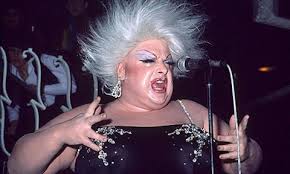
Most of Sen. Bernie Sanders‘ supporters in California say they expect that come November, Hillary Clinton will be elected president — and, by and large, they’re OK with that.
While both Democratic camps prepare for a final battle in the state’s June 7 primary, the latest USC Dornsife/Los Angeles Times statewide poll found that just over half of Sanders’ supporters said they expected Clinton to be the next president. About a third of Sanders’ backers said they expected the Vermont senator to emerge the winner, and 12% said they thought Donald Trump would prevail.
Close to 8 in 10 Sanders supporters said in the survey that they would vote for Clinton in a race against Trump, although many said they would do so reluctantly.
Those findings show the reality underlying the still-heated rhetoric of the Democratic primaries: By contrast with the civil war that divides Republicans,Democrats in the country’s largest state have begun to coalesce behind their front-runner.
![Harshaw_Bruennhilde[1]](https://skydancingblog.com/wp-content/uploads/2016/03/harshaw_bruennhilde1.jpg?w=590) Meanwhile, Bernie is dying for more debates. The Clinton Campaign is beginning to pushback. They have little to gain if Bernie continues to attack her while each debate brings no new information to the table.
Meanwhile, Bernie is dying for more debates. The Clinton Campaign is beginning to pushback. They have little to gain if Bernie continues to attack her while each debate brings no new information to the table.
Hillary Clinton’s chief campaign strategist laid into Bernie Sanders’ camp on Monday for its insistence upon a debate before the April 19 primary in New York, remarking that the Vermont senator has reneged on his promise to avoid running a negative campaign and therefore does not get to dictate the terms of any future debates.
Appearing on CNN, Joel Benenson was asked about comments from the Sanders campaign over the weekend calling for another debate before the New York primary, though he said he did not see that as the most notable story out of the weekend. Instead, he referred to a Washington Post story in which Sanders’ campaign discussed possible efforts to sharpen rhetoric against the former secretary of state. “They’re talking about running harsher negatives now,” Benenson said, responding that he was not distracting from the issue but explaining the campaign’s stance.
“Because I think the real question is what kind of campaign is Sen. Sanders going to run going forward,” Benenson remarked. “He pumped $4 million in the weekend before March 15, and he lost all five states on March 15. They spent about $4 million running negative ads.”
“This is a man who said he’d never run a negative ad ever. He’s now running them, they’re now planning to run more,” he continued. “Let’s see the tone of the campaign he wants to run before we get to any other questions.”
CNN’s Kate Bolduan then inquired why the campaign would not agree to debate in New York despite agreeing in January to more debates. Benenson responded, “Because we agreed to debates up to a certain point. We’re now out campaigning in these states.”
“What’s the risk?” Bolduan asked.
“There’s no risk. She’s done very well in the debates. The debates have been very good, but Sen. Sanders doesn’t get to decide when we debate, particularly when he’s running a very negative campaign against us. Let’s see if he goes back to the kind of tone he said he was going to set early on. If he does that, then we’ll talk about debates,” Benenson said.
It seems that everyone but the Bernie Bros is getting tired of Bernie the Bully. Listen to the chorus of singing fat ladies instead of the songs of angry men for a change!!
What’s on your reading and blogging list today?

 peej
peej Carissa
 bostonboomer
 dakinikat
 ecocatwoman
 jjlo
jjlo mablue2
 Mama Lopez
 peggysue22
 quixote
 skydancingguestblogger
 Mona (aka Wonk the Vote)





Recent Comments